World

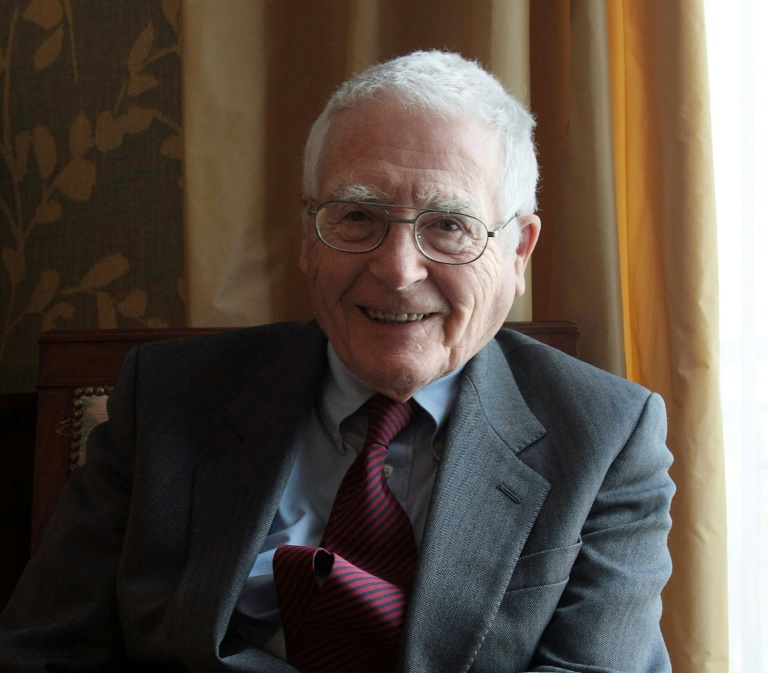
James Lovelock, famed UK scientist behind Gaia theory

The independent British scientist James Lovelock, who has died on his 103rd birthday, was hugely influential for his Gaia theory that Earth is a single self-regulating system — and later his dire warnings about climate change.  

In a wide-ranging career that lasted more than three quarters of a century, Lovelock worked on viruses, the ozone layer, told NASA there was no life on Mars and helped shape — even sometimes reluctantly — the environmental movement. 

His ideas were often at odds with conventional wisdom — generating admiration and sometimes vilification from his peers. He often had to wait for the world to catch up.

The unorthodox scientist, inventor and author worked in a barn-turned-laboratory for decades, though the price for that freedom was a lack of institutional backing.

On the eve of his 101st birthday in 2020, Lovelock told AFP he was enjoying being in lockdown with his wife in southern England as the coronavirus pandemic swept the country.  

“I grew up as an only child hardly meeting anyone — it isn’t any great hardship for me,” he said, adding that the sunny weather and lack of other people were “maximally desirable”.

Despite his declared antisocial tendencies, Lovelock was unfailingly polite and almost impishly charming.

And as ever forging his own path, he said that the world had “overreacted” to Covid.

“Climate change is more dangerous to life on Earth than almost any conceivable disease,” he said.

“If we don’t do something about it, we will find ourselves removed from the planet.”

– ‘Giant’ –

Born on July 26, 1919, Lovelock grew up in south London between the two World Wars, starting out as a photographic chemist.

In 1948, he earned a PhD in medicine and worked in the virus department of Britain’s National Institute for Medical Research for two decades.

In 1957, he invented the machine used to detect the hole in the ozone layer. 

In the early 1960s, as NASA were determined to find life on Mars, Lovelock was under contract at the Jet Propulsion Lab in California.

But Lovelock told his employers there almost certainly wasn’t any life Mars — then designed an experiment to prove it.

A decade later he announced his Gaia theory, describing Earth as an interconnected superorganism.

At a stroke, it helped redefine how science perceives the relationship between our inanimate planet and the life it hosts.

At first the notion was ridiculed by his peers and was even embraced by “Mother Earth” environmentalists, which further annoyed the hard-nosed empiricist.

By the 1990s, however, the complex interplay of all life forms with the water, air and rocks around them — Earth’s geo-bio-chemical balancing act — was accepted by many as self-evident.

Johan Rockstrom, director of the Potsdam Institute for Climate Impact Research, said the Gaia theory had galvanised a new generation of prominent Earth system scientists. 

“Our academic careers are all inspired, in one way or another, by James Lovelock,” he told AFP just a few months before the scientist’s death. 

“He was one of the giants on whose shoulders we all stand.”

– Along with Darwin –

Lovelock later became known as something of a prophet of climate doom with his 2006 book “The Revenge of Gaia” and its 2009 sequel “The Vanishing Face of Gaia”, though he later walked back his most dire predictions.

Never one to shy away from unconventional thinking, Lovelock said humanity might be able to buy time with ambitious technological solutions — many of which remain deeply controversial in climate circles.

“Many different ways to keep Earth cool have been suggested,” he mused to AFP in 2020.

“One idea I find attractive is a sunshade in heliocentric orbit” — essentially a giant sun umbrella in space.

While Lovelock was known for his willingness to take an unorthodox position, fellow scientists said that he was also eager to collaborate with others. 

“He will be remembered for his warm, fun-loving personality, his truly innovative thinking, his clarity of communication, his willingness to take bold risks in developing his ideas, and his abilities to bring people together and learn from them,” said Richard Betts, Head of Climate Impacts Research at Britain’s Met Office Hadley Centre. 

In 2020, AFP asked Lovelock what he would most like to be remembered for.

“The concept of the self-regulating Earth, I suppose,” he replied, saying he had his career at NASA to thank for “stumbling” upon Gaia. 

And he was sanguine about the significance of his legacy. 

“It is as important, in its own way, as Darwin’s thoughts on evolution,” he said.

“We are both students of this great system that we happen to live in.”

Fed attacks US inflation with another interest rate hike

The US Federal Reserve on Wednesday again raised the benchmark interest rate by three-quarters of a percentage point in its ongoing battle to tamp down raging price pressures that are squeezing American families.

It was the second straight 75 basis point increase, and the fourth rate hike this year, as US central bankers move aggressively to cool the strongest surge in inflation in more than four decades, without derailing the world’s largest economy.

While the Fed noted signs that the US economy is slowing, it signaled plans to continue to increase borrowing costs.

President Joe Biden is facing political backlash for surging prices, which he has mainly blamed on the Russian invasion of Ukraine that has sent global food and energy prices soaring. 

Biden insists the US economy will avoid a recession, but even as his approval ratings have cratered, he has supported the Fed in its battle to quell inflation.

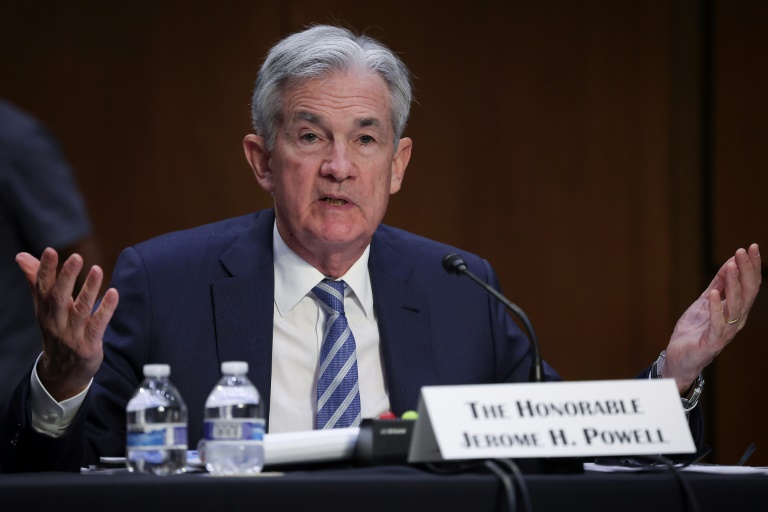
Fed Chair Jerome Powell and others have made it clear they are willing to risk a downturn and will keep raising interest rates until they see solid evidence that inflation is moving back towards the two percent goal.

In a vote that was unanimous — unlike the decision made in June — the policy-setting Federal Open Market Committee raised the policy lending rate to a range of 2.25 to 2.5 percent, after starting the year near zero.

“Recent indicators of spending and production have softened,” the FOMC statement said. 

But “inflation remains elevated, reflecting supply and demand imbalances related to the pandemic, higher food and energy prices, and broader price pressures,” the statement said, adding that it expects ongoing rate increases “will be appropriate.”

Economists say this has been the most aggressive Fed tightening cycle since the 1980s, when stagflation — a wage-price spiral and stagnant growth — crippled the US economy.

The challenge for policymakers is to quell inflation before it becomes dangerously entrenched without sending the world’s largest economy into a recession that would reverberate around the globe.

Powell has argued that the US economy is on solid footing and able to withstand the rate increases, and Wednesday’s statement noted that “job gains have been robust in recent months, and the unemployment rate has remained low.” 

But the FOMC also made clear it is “strongly committed to returning inflation to its two percent objective” — and prepared to do more if that goal is threatened.

All eyes will be on Powell’s press conference starting at 2:30 pm (1830 GMT) for indications of whether he thinks the Fed may be able to ease up or will continue the aggressive moves.

– Recession risk –

Policymakers seemed to acknowledge that some factors are beyond their control.

“Russia’s war against Ukraine is causing tremendous human and economic hardship. The war and related events are creating additional upward pressure on inflation and are weighing on global economic activity,” the statement said.

While prices have continued to rise, with home prices hitting a new record, rising mortgage rates have slowed housing sales for five straight months.

But global oil prices are trending down, with the US benchmark WTI falling below $95 a barrel from a peak of more than $123 a barrel in March, and gasoline prices at the pump have fallen more than 70 cents from the record of just over $5 a gallon in mid-June.

Meanwhile, the job market has remained strong, and surveys show inflation expectations in the months ahead have started to trend lower.

Policymakers want to engineer a “soft landing,” taming inflation without causing a downturn, but economists warn they face an increasingly narrow path to success and it would be easy to overshoot by being too aggressive.

GDP in the first quarter contracted 1.6 percent, and the first reading on the April-June period is due out Thursday. 

Though the consensus forecast calls for modest growth, many economists expect a downturn. 

Two quarters of negative growth are generally considered a sign the economy is in recession, although that is not the official criteria.

“The Fed is now stuck between a rock and a hard place, with no easy way out without the economy feeling pain,” KPMG chief economist Diane Swonk said in an analysis, noting that “Powell has started to underscore that reality by admitting a recession could occur.”

“Brace yourself,” Swonk said on Twitter, likening the surge in inflation to a cancer that will spread if left untreated.

She said the benchmark interest rate likely will have to rise to a range of 3.75-4.0 percent, which would mean another 150 basis points of increase in coming months.

Kansas City Fed President Esther George dissented at the June meeting, warning that moving too fast could be “unsettling” and raise recession fears, but voted for the big rate hike this time.

Boeing sees progress on 787 but warns on supply chain

Boeing said Wednesday it is close to receiving regulatory approval to resume 787 jet deliveries, a move that could help reverse lackluster profits, but warned that its production ramp-up for the 737 MAX would be slowed by supply chain problems.

The US aviation giant’s two most popular commercial planes figured prominently in its mixed quarterly earnings report, with the lack of revenue from the 787 Dreamliner again a big drag.

Shares gyrated following the announcement. 

A resumption of 787 deliveries will restore a key source of revenue, but a more protracted 737 MAX ramp-up suggests Boeing won’t deliver as many of those planes as quickly as had been expected.

“A lot of things good happened over the quarter,” said Chief Executive Dave Calhoun, who described the company as “on the verge” of garnering approval from US air safety officials on the 787, though he declined to give a precise target date.

Calhoun reported no sign of overall slowdown in the sector, telling analysts that “this general recession thing so far hasn’t impacted our aviation industry.” 

“Will it at some moment? Maybe,” he said, while noting that air travel appears to have been “prioritized fundamentally to a higher slot” by consumers tired of pandemic restrictions.

– Engine trouble –

Calhoun however warned that the company had no timetable for lifting production of the MAX to 38 per month from the current level of 31, calling “limited” engine capacity a “constraint” on the company’s outlook.

“Some investment has to get made and capacity has to expand for the engine suppliers to keep up with what I believe will be continued robust demand,” Calhoun said.

Boeing Chief Financial Officer Brian West told analysts to expect MAX deliveries in the “low 400s” in 2022 after previously estimating around 500.

For the quarter ending June 30, Boeing reported a 67 percent plunge in quarterly profits to $193 million, as revenues declined 1.9 percent to $16.7 billion.

The company missed analyst estimates for revenues and earnings-per-share, but stock prices initially rose after the report, as Boeing confirmed it still expects to have positive cash flow in 2022.

On the 787, the company has been working with the Federal Aviation Administration to address a series of manufacturing issues uncovered in 2020 and since.

Boeing took a $3.5 billion charge for additional rework costs on the 787 in the fourth quarter of 2021. It said in April it also expects another $2 billion in “abnormal costs” for the 787.

At the end of June, Boeing had 120 Dreamliner planes in inventory and was producing the jet “at very low rates,” the company said in a filing.

On Wednesday, the company said it was working with US air safety officials on “final actions” to resume 787 deliveries. 

– China haze –

The enhanced regulatory scrutiny of the 787 and other Boeing planes comes on the heels of a pair of crashes in 2018 and 2019 on the 737 MAX, which led to a lengthy global grounding of the plane.

But the MAX has since returned to service, enabling Boeing to resume deliveries and announce significant new orders, including at the Farnborough Airshow earlier this month.

But Boeing still has 290 MAX planes in inventory. A key wild card remains when deliveries will resume in China, where the MAX has still not returned to service. 

“While we expect 737 MAX deliveries to our customers in China to resume in 2022, subject to final regulatory approvals, risk remains around the timing and rate of those deliveries,” Boeing said in a securities filing Wednesday.

Despite the latest Farnborough orders, Boeing’s backlog of orders in the pipeline lags that of archrival Airbus, but Calhoun told CNBC Wednesday he is not worried about the difference.

“We don’t need to close that gap,” Calhoun said, adding that the aviation industry is “supply constrained for as far as I can see.”

Boeing’s job is “to deliver against our backlog,” he said. “My job is to make sure I’ve got a big enough backlog to continue to increase my rate, stay stable in production and satisfy our customers every step of the way.”

By early afternoon, shares were flat at $155.87.

Climate, collectors blamed for S.Africa's succulents decline

Climate change and collectors of rare plants are decimating succulents in South Africa, government researchers said Wednesday, warning hundreds of these rugged species are at risk of extinction. 

Succulents growing in the country’s semi-arid regions are experiencing unprecedented rates of decline following a rapid rise in global demand for collectable plants driven by Asia, according to the South African National Biodiversity Institute (SANBI), a government research body. 

“Over the past three years plant material confiscated from plant traffickers by law enforcement agencies has increased annually by over 250 percent,” the institute said in a statement. 

SANBI said more than 200 succulents — typically thick, fleshy plants that retain water to survive dry weather conditions — have been added to an International Union for Conservation of Nature (IUCN) Red List of threatened species, which was updated last week.  

Unique species growing in the Succulent Karoo — a region shared between South Africa and Namibia which includes some of the world’s most biodiverse desert and semi-desert areas — are particularly sought after, it said.

The plants are often sold on social media, it added.

“People buying these plants, most of them don’t realize that they’re breaking the law,” said Craig Hilton-Taylor, who heads the IUCN’s Red List unit.

“They’re completely ignorant or naive about illegal plant trade… they just think, ‘Oh, that’s a nice thing to buy for my house or my garden’,” he said. 

Global warming is also contributing to the decline, the institute said. 

The region has suffered from a prolonged, severe drought over the past decade. 

This has taken a toll on many species in the region, including the critically endangered giant quiver tree. Its population is set to decline 90 percent by 2080, SANBI said. 

“A combination of illegal collection, long-term droughts related to climate change, and ongoing land degradation as a result of livestock overgrazing and mining are creating a devastating storm causing unprecedented loss of biodiversity in the world’s richest desert ecosystem,” it said. 

Beatings, constant hunger — Ukrainian recalls detention by Russians

Ihor Talalay was helping evacuate citizens from the Ukrainian city of Mariupol in March when Russian forces captured him, marking the start of a harrowing three-months ordeal for the 25-year-old.

“It was extremely difficult. What kept me going was the thought that I want to see justice and victory over those who are doing these terrible things to me,” Talalay said, adding some of what he experienced was too painful to recall.

Speaking with several others at the Vienna-based Organization for Security and Co-operation in Europe (OSCE) on Wednesday, Talalay said he was moved several times through various detention facilities in the Donetsk region.

The worst part was when he was kept in a three-by-three-metre (9.8 foot) cell with around 30 others, all standing up. Some would return to the cell with torture marks from electricity.

He said besides beatings, he and others suffered “constant hunger”, being given only a handful of porridge twice a day and a watery soup.

Earlier this month, an OSCE report expressed “grave concern” about alleged mistreatment of tens of thousands of Ukrainians at so-called filtration centres set up by Russia in Ukraine.

The report described “harsh interrogations and humiliating body searches in such centres”.

It added those found to have collaborated with Kyiv “often simply disappear” with some allegedly transferred to Russian-controlled territories, where they are detained or even murdered.

Media Initiative for Human Rights (MIHR), a Kyiv-based Ukrainian NGO, said on Wednesday that it had identified at least 18 such filtration centres.

Whereas “filtration processes” were in place in insurgency-wrecked eastern Ukraine even before Russia’s invasion of Ukraine on February 24, they have become “systematised” and are being carried out “on a very huge, overwhelming scale,” according to Stanislav Miroshnychenko, a Ukrainian journalist who now works at MIHR.

Another witness, Yurii Berezovskyi, said he lived in constant fear in Luhansk after Russian forces occupied the region. He was detained and questioned before deciding to try to flee via Russia.

“I was lucky because I was let go. But (the Russians) said ‘We can come back’… The most terrible and scary part in all of this is you don’t know where you’ll end up,” the 32-year-old former music teacher said.

Olha Tabachuk, also speaking to reporters after addressing a meeting of OSCE delegates, said her family had not heard from her son, 38, since he was detained while helping Ukrainians evacuate.

“I don’t know whether he is alive or not… It’s pure terror… I can’t believe this is happening in the modern day,” the 62-year-old said.

The OSCE, the world’s largest security body founded in 1975, currently has 57 member states, including Russia.

Ukraine moves closer to grain exports, strikes Russian-held bridge

Ukraine on Wednesday said it had restarted operations at its blockaded Black Sea ports as it moved closer to resuming grain exports with the opening of a coordination centre to oversee a UN-backed deal. 

Progress towards fulfilling the landmark agreement came as Kyiv’s artillery struck a key bridge in Moscow-controlled territory in south Ukraine, damaging an important supply route as Ukrainian forces look to wrest back the Kherson region.

German authorities said Russia’s state energy giant Gazprom drastically cut gas deliveries to Europe via the Nord Stream pipeline to about 20 percent of capacity in a move decried in the EU as revenge for Western sanctions over the invasion.

Ukraine and Russia last week agreed a plan with the help of Turkey and the United Nations to allow grain stranded by Moscow’s naval blockade to be exported from three ports.

Kyiv has said it hopes to begin sending out the first of millions of tonnes of grain “this week” despite a missile strike by Russia over the weekend on the port in Odessa. 

Ukraine’s navy said “work has resumed” at the export hubs to prepare for ships to be escorted through the mine-infested waters to reach world markets.

As part of the deal, a coordination centre involving Ukrainian and Russian representatives opened in Istanbul to monitor the safe passage for shipping along established routes and oversee inspections for banned weapons. 

The blockage of deliveries from two of the world’s biggest grain exporters has contributed to a spike in prices that has made food imports prohibitively expensive for some of the world’s poorest countries.

– ‘Leave Kherson’ –

Fighting has continued to rage on the ground in Ukraine despite the push to get the grain out, and Kyiv struck back by hitting the vital Antonivskiy bridge over the Dnipro river in a move that threatens to cut supply lines to Russian troops. 

Ukraine’s Defence Ministry said on Twitter the strikes on bridges over the Dnipro created an “impossible dilemma” for Russia: “retreat or be annihilated by the Ukrainian army”.

Kirill Stremousov, the deputy head of the Russian-installed regional administration in Kherson, confirmed the bridge had been hit overnight and traffic had been halted.

But he sought to downplay the damage, insisting that the attack would not affect the outcome of the hostilities “in any way”.  

Ukrainian forces in recent weeks have been clawing back territory in the Kherson region, which fell to Russian forces easily and early after their invasion launched on February 24.

Their counter-offensive, supported by Western-supplied long-range artillery, has seen its forces push closer to Kherson city, which had a pre-war population of under 300,000 people.

Russian forces “should leave Kherson while it is still possible. There may not be a third warning,” Ukrainian presidential advisor Mykhaylo Podolyak said on Twitter after the attack.

Meanwhile the leader of pro-Russian separatists in eastern Ukraine called on Moscow to conquer key cities across the country. 

“Today the time has come to liberate Russian cities, founded by Russians: Kyiv, Chernigiv, Poltava, Odessa, Dnipro, Kharkiv, Zaporizhzhia, Lutsk,” Denis Pushilin said on Telegram.

Russia sought to capture the capital Kyiv in the early days of its invasion but later retreated, focussing its efforts on Ukraine’s east Donbas region. 

In the battered Donetsk region — part of the Donbas — AFP journalists saw a house hit in an intense artillery exchange around the ravaged frontline city of Bakhmut.

A worker was inside the courtyard when the shell hit and was saved by emergency rescuers who cut a hole in a steel fence using an axe. 

“I heard a whistle. And I don’t remember anything. It exploded and I was thrown into the barn by the explosion,” 51-year-old Roman told AFP.

Ukraine’s emergency services said that Russian artillery had hit a hotel in Bakhmut, leaving two people dead and five injured.

– Gas ‘power play’ –

Deepening an energy crisis in Europe sparked by the war, Germany’s energy regulator said gas flows via the key Nord Stream pipeline had dropped to 20 percent of capacity on Wednesday from 40 percent.

EU states have rejected Gazprom’s claims of technical problems and accuse the Kremlin of squeezing supplies in retaliation for Western sanctions over Moscow’s war in Ukraine.

Kremlin spokesman Dmitry Peskov blamed EU sanctions for the limited supply.

“Technical pumping capacities are down, more restricted. Why? Because the process of maintaining technical devices is made extremely difficult by the sanctions adopted by Europe,” Peskov said.

But Berlin has dismissed the explanation and government spokeswoman Christiane Hoffmann called the reductions a “power play” by Moscow.

The European Union has been bracing for the cutbacks and on Tuesday agreed a plan to reduce gas consumption by 15 percent this winter to break its dependence on Russia.

bur-acl/gw

Antibiotic taken after sex drastically reduces STDs: study

An antibiotic taken after sex without a condom can drastically reduce the rate of three bacterial STDs among high-risk groups, data from a clinical study showed Wednesday.

The research was presented at the 24th International AIDS conference in Montreal, where it was hailed as a major development.

“This has the capacity to change the guidelines” on clinical practice, Steven Deeks, an HIV expert at the University of California, San Francisco (UCSF), who was not involved in the study, told AFP.

Doxycycline reduced rates of gonorrhea and chlamydia by more than 60 percent among men who have sex with men (MSM), and also appeared highly effective against syphilis, but there weren’t enough cases to reach statistical significance.

The trial was halted early because researchers found the drug was undeniably working and it would have been unethical to continue testing.

The study comes amid rising rates of these diseases, particularly among MSM, whose use of condoms has declined since the advent of effective HIV pre-exposure prophylaxis (PrEP) pills.

A previous trial by French researchers, which used doxycycline as a post-exposure prophylaxis (PEP), showed it was effective against syphilis and chlamydia among MSM, but not for gonorrhea.

For the new study, researchers recruited around 500 people, mostly MSM but also some transgender women and gender diverse people, at sites in San Francisco and Seattle.

Some were taking HIV PrEP, while others were living with HIV.

In both of the groups, around two-thirds received doxycycline, while a third did not. They were followed to monitor their outcomes every three months.

The pill, dosed at 200 milligrams, was given within three days of exposure. Participants could continue to take it as needed depending on how much sexual contact they were having.

The intervention reduced the incidence of STDs by 62 percent in the group living with HIV, and 66 percent in the group on HIV PrEP.

Side effects were mild and adherence levels remained high.

“We now have two studies that support the use of doxycycline as PEP in men who have sex with men,” study lead Annie Luetkemeyer of UCSF told reporters at the AIDS conference.

“I really think we’re at a place where we need to think very strongly about rolling this out and how to incorporate this into guidelines.”

She stressed, however, that right now the data supports the treatment as targeted intervention among high risk groups that have a high prevalence of STDs — not everyone.

More study is also needed to better understand the potential impacts on antibiotic resistance, the authors said.

Researchers want to know if it could increase resistance from STDs — which is thought more possible for gonorrhea than chlamydia and syphilis — from so-called “bystander” bacteria that live on the body and in the throat.

They also want to probe the potentially disruptive impact on the gut microbiome.

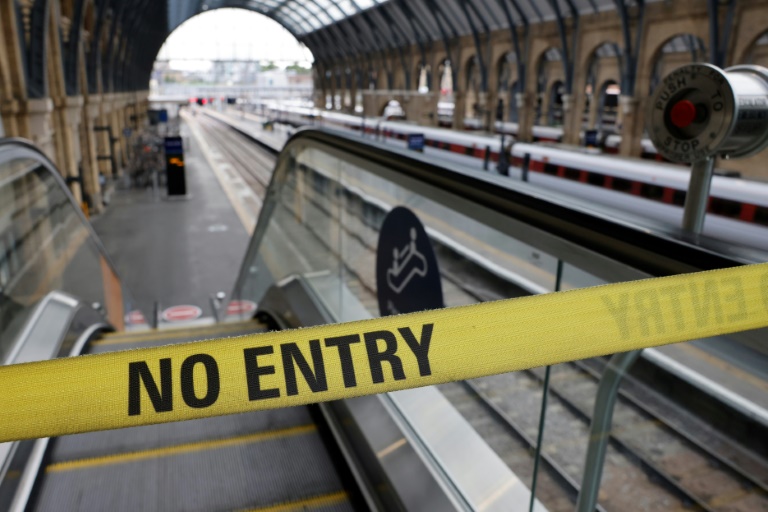
Fresh nationwide rail strikes hit UK

Around 40,000 British railway workers staged a walkout on Wednesday, a month after the largest strike in 30 years as the UK battles its worst cost-of-living crisis in decades.

The nationwide walkout over pay and conditions brought the rail network to a virtual standstill with only one in five training running and caused major disruption to rush-hour commuters as many simply stayed at home.

With inflation at a 40-year high and set to worsen, the cost-of-living crisis presents a major challenge to Foreign Secretary Liz Truss and former finance minister Rishi Sunak, who are vying to replace Prime Minister Boris Johnson in a leadership contest.

London Underground trains and buses ran as normal, but Eurostar reduced the number of trains though the Channel Tunnel as a knock-on effect, despite its staff not joining the walkout.

Mick Lynch, general secretary of the RMT rail union, argues strikes are necessary as wages have failed to keep pace with UK inflation, currently at 9.4 percent and on course to keep rising.

“Network Rail have not made any improvement on their previous pay offer and the train companies have not offered us anything new,” he said.

Wednesday’s 24-hour strike came after RMT staged a three-day walkout last month, also virtually paralysing the rail network.

“The government need to stop their interference in this dispute so the rail employers can come to a negotiated settlement with us,” said Lynch.

The government urged union bosses and train operators to resolve the dispute.

“They don’t need to speak to ministers to resolve this because their employers are the people who have the mandate to negotiate this,” Transport Minister Grant Shapps told Sky News.

“This is just… trying to distract attention,” he added. 

The opposition Labour Party leader Keir Starmer demoted a senior MP, Sam Tarry, for joining a picket line in defiance of his instructions, after the politician posted about his participation on social media.

The London MP was sacked from his frontbench role with responsibility for transport after Starmer said that the party’s role was to try to resolve the dispute, not to go on picket lines.

Services were expected to resume early Thursday.

The Aslef trade union, which represents train drivers, announced a fresh strike for August 13.

UK scientist James Lovelock, prophet of climate doom, dies aged 103

Influential British scientist James Lovelock, famed for his Gaia hypothesis and pioneering work on climate change, has died at the age of 103, his family announced Wednesday.

The legendary scientist’s family said in a statement that Lovelock died Tuesday on his 103rd birthday as the result of complications from a fall.

“To the world he was best known as a scientific pioneer, climate prophet and conceiver of the Gaia theory,” it said, noting he was also a “loving husband and wonderful father with a boundless sense of curiosity”.

Responding to the news Mary Archer, chair of the Science Museum Group’s board of trustees, described him as “arguably the most important independent scientist of the last century”. 

“Jim Lovelock was decades ahead of his time in thinking about the Earth and climate and his unique approach was an inspiration for many,” she added in a statement.

In the 1970s, Lovelock came up with the Gaia hypothesis that Earth is a single, self-regulating super-organism made up of all its life forms, which humans are destroying.

The notion was at first ridiculed by his peers but helped to redefine how science perceives the relationship between our inanimate planet and the life it hosts.

Lovelock became known as a prophet of climate doom.

With his 2006 book “The Revenge of Gaia”, he issued a terrifying warning: if humankind failed to radically curtail greenhouse-gas emissions, there would, quite literally, be hell to pay.

“We have left it far, far too late to save the planet as we know it,” Lovelock told AFP in 2009.

Pixie-like and unfailingly polite, Lovelock spent much of his career as a self-described “independent scientist”, but the price for freedom was a lack of institutional backing.

Lovelock’s ideas were often at odds with conventional wisdom, ahead of their time or, in the case of climate change, unbearably grim. 

In a 2020 interview with AFP, he warned that the world had lost perspective in responding to the coronavirus, and should focus on a far more formidable foe: global warming.

“Climate change is more dangerous to life on Earth than almost any conceivable disease,” he said. 

“If we don’t do something about it, we will find ourselves removed from the planet.” 

Born in 1919, Lovelock grew up in south London between the two World Wars, and studied chemistry, medicine and biophysics in the UK and the US.

As his brilliance emerged, he was quickly drafted by Britain’s National Institute for Medical Research, where he worked for 20 years.

In the 1950s, he invented the machine used to detect the hole in the ozone layer.

In the early 1960s, NASA lured him to California to investigate possible life on Mars.

With another NASA scientist, he analysed the atmosphere on the planet, looking for a chemical imbalance and gases reacting with each other, which would hint at life.

They found nothing, putting a dampener on hopes of finding life on Mars.

Scientists now think that Earth’s nearest neighbour may once have been warm and wet and possibly have supported microbial life.

Stocks advance ahead of US rate decision, dollar steady

European and US stock markets advanced while the dollar was largely steady on Wednesday as attention switched to the Federal Reserve and the size of its upcoming interest rate hike.

Tuesday saw a steep drop on Wall Street as traders pored over more company earnings that pointed to fallout caused by decades-high inflation.

After markets closed both Google and Microsoft reported disappointing earnings, but shares in both companies shot higher as trading got under way.

“The takeaway for many apparently is that their results and/or guidance was better than feared,” said market analyst Patrick J. O’Hare at Briefing.com.

Shares in Google jumped 6.6 percent and Microsoft stock climbed 4.8 percent.

They helped fuel a 2.5-percent rally in the tech-heavy Nasdaq Composite.

“Unlike a lot of other companies, it would appear that investors have a higher tolerance for misses from the likes of Microsoft and Google, although when you dig into the details, the numbers are still very good,” said Michael Hewson at CMC Markets.

But with both companies trading close to their lowest levels this year “a lot of bad news was probably already in the price,” he added.     

The blue-chip Dow was 0.4 percent higher in late morning trading, while the broader S&P 500 rose 1.4 percent.

In Europe, shares in London rose 0.6 percent, Paris climbed 0.8 percent and Frankfurt added 0.5 percent.

While traders will continue to sift over company results and economic data early in the US trading session, attention will later shift to the Fed’s rate decision.

Central banks are seeking to combat runaway prices by hiking interest rates, even though that risks pushing economies into recession.

The US central bank is widely tipped to announce a 0.75-percentage-point increase in interest rates, with traders particularly interested in any indications whether it will keep up this pace of rate hikes.

“This increase in the interest rate is already very much priced in,” noted Naeem Aslam, chief market analyst at Avatrade.

He added that should the Fed indicate a plan to raise rates by another 75 basis points at its next meeting, “that would be highly bullish for the dollar”. 

Focus was also on gas prices as Russian energy giant Gazprom slashed deliveries of the fuel to Europe via the Nord Stream pipeline.

EU states have accused Russia of squeezing supplies in retaliation for Western sanctions over Moscow’s war in Ukraine.

The price of natural gas reference, Dutch TTF, rose only marginally after strong gains on Tuesday after Gazprom announced the cut.

On the corporate front, Switzerland’s scandal-hit banking giant Credit Suisse appointed a new chief executive as higher litigation costs and financial market volatility pushed it deeper into the red.

Ulrich Koerner, head of asset management at the bank, takes the reins from Thomas Gottstein on Monday.

The bank has been hit by a series of scandals and crises including the implosions of financial services firms Greensill and Archegos last year.

After starting the day lower on the Swiss stock exchange, Credit Suisse shares rose one percent.

– Key figures at around 1530 GMT –

New York – Dow: UP 0.4 percent at 31,888.11 points

EURO STOXX 50: UP 1.0 percent at 3,609.42

London – FTSE 100: UP 0.6 percent at 7,348.23 (close) 

Frankfurt – DAX: UP 0.5 percent at 13,166.38 (close)

Paris – CAC 40: UP 0.8 percent at 6,257.94 (close)

Tokyo – Nikkei 225: UP 0.2 percent at 27,715.75 (close)

Hong Kong – Hang Seng Index: DOWN 1.1 percent at 20,670.04 (close)

Shanghai – Composite: DOWN 0.1 percent at 3,275.76 (close)

Euro/dollar: UP at $1.0132 from $1.0126 Tuesday

Pound/dollar: UP at $1.2042 from $1.2030 

Euro/pound: UP at 84.14 pence from 84.09 pence

Dollar/yen: UP at 137.19 yen from 136.95 yen

Brent North Sea crude: UP 2.2 percent at $106.67 per barrel

West Texas Intermediate: UP 2.6 percent at $97.49 per barrel

burs-rl/kjm

Close Bitnami banner
Bitnami