World

Croatia opens bridge around Bosnia to get to Dubrovnik

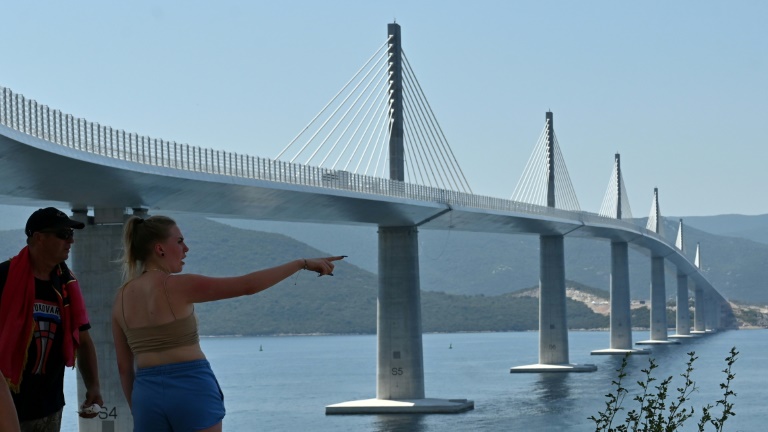
Croatia on Tuesday celebrated the opening of a long-awaited bridge linking its southern Adriatic coast including Dubrovnik with the rest of the country, bypassing a narrow strip of Bosnian territory.

The 2.4-kilometre (1.5-mile) span reaches out from the Croatian mainland to the Peljesac peninsula that connects with the southern part of Croatia’s coastline nestled between the sea and the Dinaric Alps.

Festivities started early Tuesday with musical performances and a boat race, while dozens of pedestrians snapped pictures on the bridge ahead of a ceremony this evening featuring a speech by Croatian Prime Minister Andrej Plenkovic and a video address by Chinese Premier Li Keqiang.    

“This bridge represents the unification of Croatia, joining of the south and the north,” said Ivan Vranjes, a 45-year-old native of Split, who was visiting from abroad. 

During a ceremony in Dubrovnik earlier in the day, the country’s prime minister also praised the completion of the bridge, citing the benefits it will bring ahead of Croatia’s joining of the Schengen free-travel zone.  

“This bridge is not a luxury, it is our necessity,” Plenkovic said. “This is a wonderful day for Croatia.”

The link will bring an end to the untold hours spent by commuters, merchants, and tourists at the Bosnian border and is one of the country’s most ambitious infrastructure projects since Croatia declared independence from Yugoslavia in 1991.

– Balkan patchwork –

It was the bloody dissolution of the federation, however, that left a patchwork of divisions across the Balkans, with the frontiers between its six former republics transformed into international borders.

Bosnia maintained its coastal access in the end, but its small outlet leading to the Adriatic Sea cut right through Croatia. 

As a result, around 90,000 people, including residents in the country’s tourism hotspot of Dubrovnik, remained cut off from the rest of the country until now. 

The hard border brought lines and red tape for traders, and headaches for tourists hoping to get south by road.

Inhabitants of the picturesque region of red wines, pebble beaches and oyster farms are looking forward to the end of their geographic isolation caused by the Bosnian border.

The hours-long waits at the border and fears over missing the day’s last ferry will now become a thing of the past, they say.  

“It was really exhausting and made people living here bitter,” Sabina Mikulic, owner of a hotel, glamping site, and winery in Orebic — the peninsula’s largest town” told AFP.

– EU funded, Chinese made –

The opening of the bridge has been a long time coming and not without controversy. 

Croatia took its first stab at building the bridge in 2007 only for the project to stall five years later due to budgetary constraints.

In 2017, the European Union — which Croatia joined in 2013 — allocated 357 million euros ($365 million), roughly 85 percent of the cost.

A Chinese firm was selected in 2018 to build the bridge — marking the first significant Chinese involvement in an infrastructure project in Croatia.

But not all were happy with the bridge’s construction, with officials in Bosnia claiming it would hamper its maritime access by preventing high-tonnage vessels from entering its lone port. 

Zagreb eventually agreed to increase the height of the bridge to 55 metres (181 feet) in an attempt to quell the dispute.

The opening of the bridge comes as Croatia is angling for a tourism rebound this year as it hopes to attract pre-pandemic levels of visitors.

The country of 3.8 million people attracts millions of tourists every year hoping to soak up the sun along its stunning coast dappled with more than 1,000 islands and islets.

For retired piano teacher Smilja Matic, who has vacationed for years in the Croatian village of Komarna near the entrance to the new bridge, the link to the mainland is a win for locals and tourists alike.

“It means a new life for locals and for people who travel by plane to Dubrovnik, like me. It’s major progress,” she told AFP.

Outside of tourism, the bridge will likely serve as a boon for businesses and traders as well. 

For decades, oyster farmer Mario Radibratovic was subjected to hours of extra travel to bring his perishable shellfish north to market due to waiting times at the border.

But with the opening of the bridge, the journey north will shrink dramatically. 

For the 57-year-old, the opening of the bridge will bring “immeasurable relief”.

“We are finally becoming part of Croatia,” Radibratovic told AFP who farms oysters and mussels in the village of Mali Ston.

“Until now we felt like second-class citizens.”
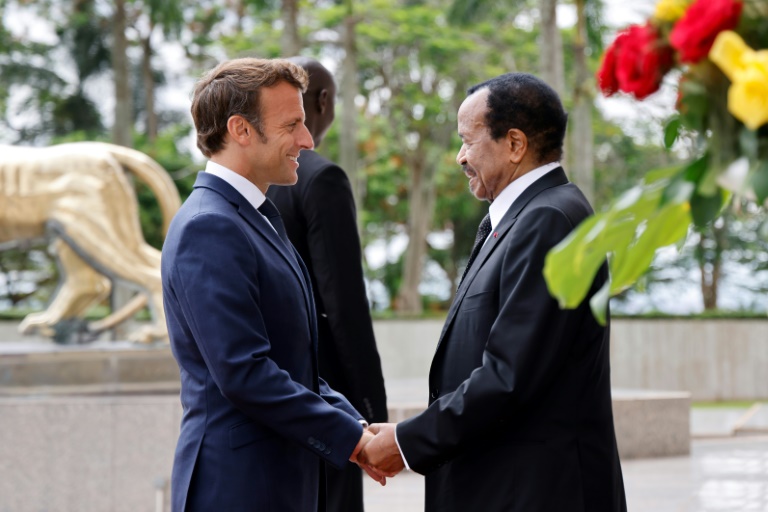
France committed to Africa's security, says Macron

French President Emmanuel Macron on Tuesday declared his country would support Africa’s need for security as he embarked on a three-nation tour aimed at renewing France’s relations with the continent.

Touching on a long-standing grievance in France’s former African colonies, Macron also announced French archives on its colonial era in Cameroon would be opened up so that historians could “shed light” on “painful moments”.

In a speech in the Cameroonian capital Yaounde, Macron promised France “will not relinquish the security of the African continent”, where a jihadist campaign in the Sahel is now shaking countries to the south.

“France remains resolutely committed to the security of the continent, acting in support and at the request of our African partners,” Macron told a gathering of French expatriates.

France is reconfiguring its posture in the Sahel after falling out with the military junta in Mali, the epicentre of a bloody 10-year-old jihadist campaign in the region.

After a pullout from Mali that is expected to be completed in the coming weeks, France’s Barkhane anti-jihadist force will have around 2,500 troops in the Sahel, just under half of the deployment at its peak, say French officers.

The force will also make a tactical shift, acting more in a support role for local forces than in taking the lead, they say.

Macron landed late on Monday on a three-day tour that will also take him to Benin and Guinea-Bissau. 

He met on Tuesday with Cameroon’s 89-year-old president, Paul Biya, an iron-fisted ruler who has been in power since 1982.

In his speech, Macron said the reconfigured mission will extend “beyond the Sahel, to the Gulf of Guinea and second-layer countries which now have to face terrorist groups which are expanding and shaking up the whole region”.

The jihadist insurgency began in northern Mali in 2012 and hit neighbouring Niger and Burkina Faso in 2015.

Across the region, thousands of people have been killed and more than two million have fled their homes.

Sporadic cross-border attacks have also occurred on coastal countries to the south, sparking fears of an expansion by the jihadists to the Gulf of Guinea.

Macron also pledged French support for countries fighting jihadists in the Lake Chad region, where an older insurgency launched by Nigeria’s Boko Haram is also raging.

These include Cameroon, whose Far North region, which reaches into the Lake Chad basin, has suffered repeated attacks.

– History archives –

Macron, at a press conference with Biya, said France’s archives on colonial rule in Cameroon would be opened “in full” and hoped historians from both countries would work together to investigate “painful moments”.

French colonial authorities brutally repressed armed Cameroonian nationalists before the country’s independence in 1960.

Macron, 44, is the first French president born after the colonial era and has repeatedly said he will turn the light on dark episodes during colonial rule.

These incidents have also fuelled a narrative by critics who say it is meddling once more in the continent under the guise of security.

Last year, France returned more than a dozen artefacts looted from Benin by colonial forces, soothing a source of friction between Paris and its former possession.

– Africa ‘priority’ –

Macron’s swing through central and western Africa is his first trip to the continent since he was re-elected in April.

France has followed with concern the emergence of Russia, China and others in seeking footholds in an area it still considers part of its sphere of influence.

The tour “will show the commitment of the president in the process of renewing the relationship with the African continent”, a French presidential official, who asked not to be named, said ahead of the trip.

It will signal that the African continent is a “political priority” of his presidency, the official said.

Macron on Tuesday also hit out at “nonsense” that he said had been doing the rounds as a result of the Ukraine war.

“We are being attacked by certain people who maintain that European sanctions (against Russia) are the cause of the world food crisis, including in Africa.

“This is completely false. It’s just that food, like energy, have become Russian weapons of war,” he said.

He hit out at “the hypocrisy, particularly on the African continent” that denied the Ukraine conflict was a war.

EU to cut Russian gas use as missiles strike Ukraine

The European Union agreed to reduce gas consumption to break its dependence on Russia on Tuesday, as missile strikes on Ukraine’s Black Sea coast cast doubt on a grain export deal.

The effort to help Germany wean itself off Russian gas for the winter came as Turkey announced a meeting in Russia next week between Turkish President Recep Tayyip Erdogan and his Russian counterpart Vladimir Putin.

Erdogan wants Turkey — on good terms with both Moscow and Kyiv — at the centre of diplomatic efforts to halt the five-month war, just as the EU took another big step to cut ties to Moscow.

The EU gas use cut, approved by energy ministers in Brussels, was hailed as an effective response to Russia’s manipulation of its energy wealth as an economic weapon.

The plan nominally commits EU countries to reduce their gas use by 15 percent during the winter, although exceptions were carved out for some countries and Hungary rejected the deal as “useless”. 

“We have made a huge step towards securing gas supplies for our citizens and economies for the upcoming winter,” said Czech industry minister Jozef Sikela, whose country holds the rotating EU presidency.

“I know the decision was not easy, but I think at the end, everybody understands that this sacrifice is necessary,” he added.

Hungary was the only country to oppose the plan, which passed on a majority vote, further isolating Budapest as the only member state reluctant to go further against Russia.

“This is an unjustifiable, useless, unenforceable and harmful proposal that completely ignores national interests,” said Hungarian Foreign Minister Peter Szijjarto.

The deal “serves purely communication purposes, and aims to save the credibility of some Western European politicians”, he added. 

– German ‘mistake’ –

Germany, the EU’s economic powerhouse, is hugely dependent on Russian gas. Berlin takes a major share of the 40 percent of EU gas imports that came from Russia last year. 

“It is true that Germany, with its dependence on Russian gas, has made a strategic mistake but our government is working… to correct this,” German Economy Minister Robert Habeck said. 

The plan asks member states to voluntarily reduce gas use by 15 percent — based on a five-year average for the months in question — starting next month and over the subsequent winter through March.

The target will be adapted to the situation of each country, taking into account their level of stocks and whether or not they have pipelines to share gas. 

Exceptions were given for island states like Ireland, Cyprus or Malta and to Spain or Portugal, which have limited links to the interconnected gas supply grid. 

Baltic countries will be exempted if their electricity connections with Russia’s grid were to be cut.

In the final proposal, EU member countries also rewrote an earlier European Commission plan to give Brussels — rather than the member states — the power to impose gas use cuts in an emergency.

The regulation now foresees the possibility to trigger a “Union alert” that would make the target mandatory, but the decision would lie with member states, a statement said.

The deal landed a day after Gazprom said it is cutting daily gas deliveries intended for Europe to about 20 percent of capacity from Wednesday.

Gazprom claimed technical reasons for choking off supply, but EU Energy Commissioner Kadri Simson dismissed this claim.

“This is a politically motivated step and we have to be ready for that and exactly for that reason the pre-emptive reduction of our gas demand is a wise strategy,” she said.

The extent of Russia’s split with the West over Ukraine was also underlined by Moscow’s announcement that it would quit the International Space Station after 2024.

Until now space exploration was one of the few areas where cooperation between Russia, the United States and its allies had not been wrecked by tensions over Ukraine and elsewhere.

The decision to leave the ISS programme “has been made”, Roscosmos chief Yury Borisov told Putin.

– Strikes near Odessa –

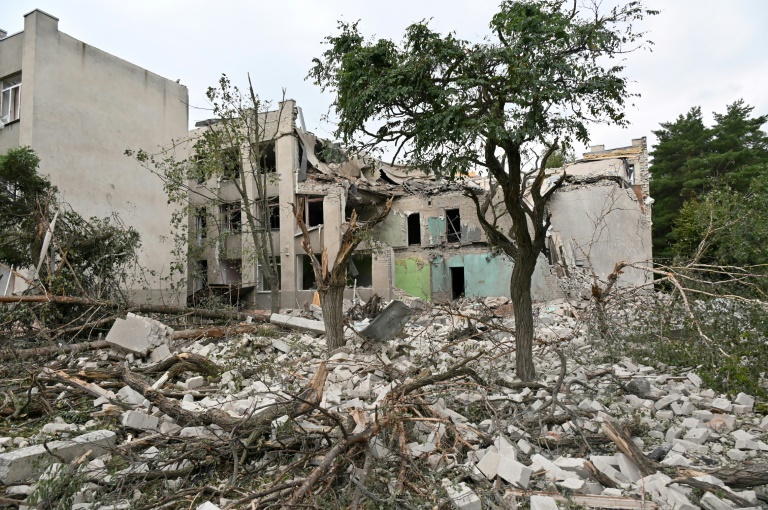
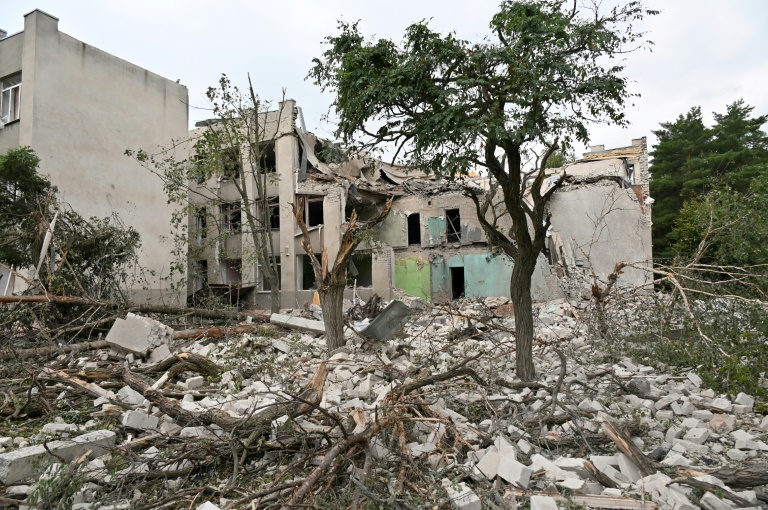
Meanwhile, fighting continued in Ukraine. Kyiv said Russian forces launched multiple missile strikes at targets on the Black Sea coast near the southern port city of Odessa and in Mykolaiv. 

The attacks come days after Russian strikes hit Odessa, calling into question a breakthrough deal to resume exports of grain from Ukraine, that have been disrupted by Moscow’s invasion.

Rescuers were working on the ground near Odessa where “residential buildings” near the coast were hit in the strikes, Ukraine’s southern military command said on Facebook.

bur-arp/dc/raz

EU to cut Russian gas use as missiles strike Ukraine

The European Union agreed to reduce gas consumption to break its dependence on Russia on Tuesday, as missile strikes on Ukraine’s Black Sea coast cast doubt on a grain export deal.

The effort to help Germany wean itself off Russian gas for the winter came as Turkey announced a meeting in Russia next week between Turkish President Recep Tayyip Erdogan and his Russian counterpart Vladimir Putin.

Erdogan wants Turkey — on good terms with both Moscow and Kyiv — at the centre of diplomatic efforts to halt the five-month war, just as the EU took another big step to cut ties to Moscow.

The EU gas use cut, approved by energy ministers in Brussels, was hailed as an effective response to Russia’s manipulation of its energy wealth as an economic weapon.

The plan nominally commits EU countries to reduce their gas use by 15 percent during the winter, although exceptions were carved out for some countries and Hungary rejected the deal as “useless”. 

“We have made a huge step towards securing gas supplies for our citizens and economies for the upcoming winter,” said Czech industry minister Jozef Sikela, whose country holds the rotating EU presidency.

“I know the decision was not easy, but I think at the end, everybody understands that this sacrifice is necessary,” he added.

Hungary was the only country to oppose the plan, which passed on a majority vote, further isolating Budapest as the only member state reluctant to go further against Russia.

“This is an unjustifiable, useless, unenforceable and harmful proposal that completely ignores national interests,” said Hungarian Foreign Minister Peter Szijjarto.

The deal “serves purely communication purposes, and aims to save the credibility of some Western European politicians”, he added. 

– German ‘mistake’ –

Germany, the EU’s economic powerhouse, is hugely dependent on Russian gas. Berlin takes a major share of the 40 percent of EU gas imports that came from Russia last year. 

“It is true that Germany, with its dependence on Russian gas, has made a strategic mistake but our government is working… to correct this,” German Economy Minister Robert Habeck said. 

The plan asks member states to voluntarily reduce gas use by 15 percent — based on a five-year average for the months in question — starting next month and over the subsequent winter through March.

The target will be adapted to the situation of each country, taking into account their level of stocks and whether or not they have pipelines to share gas. 

Exceptions were given for island states like Ireland, Cyprus or Malta and to Spain or Portugal, which have limited links to the interconnected gas supply grid. 

Baltic countries will be exempted if their electricity connections with Russia’s grid were to be cut.

In the final proposal, EU member countries also rewrote an earlier European Commission plan to give Brussels — rather than the member states — the power to impose gas use cuts in an emergency.

The regulation now foresees the possibility to trigger a “Union alert” that would make the target mandatory, but the decision would lie with member states, a statement said.

The deal landed a day after Gazprom said it is cutting daily gas deliveries intended for Europe to about 20 percent of capacity from Wednesday.

Gazprom claimed technical reasons for choking off supply, but EU Energy Commissioner Kadri Simson dismissed this claim.

“This is a politically motivated step and we have to be ready for that and exactly for that reason the pre-emptive reduction of our gas demand is a wise strategy,” she said.

The extent of Russia’s split with the West over Ukraine was also underlined by Moscow’s announcement that it would quit the International Space Station after 2024.

Until now space exploration was one of the few areas where cooperation between Russia, the United States and its allies had not been wrecked by tensions over Ukraine and elsewhere.

The decision to leave the ISS programme “has been made”, Roscosmos chief Yury Borisov told Putin.

– Strikes near Odessa –

Meanwhile, fighting continued in Ukraine. Kyiv said Russian forces launched multiple missile strikes at targets on the Black Sea coast near the southern port city of Odessa and in Mykolaiv. 

The attacks come days after Russian strikes hit Odessa, calling into question a breakthrough deal to resume exports of grain from Ukraine, that have been disrupted by Moscow’s invasion.

Rescuers were working on the ground near Odessa where “residential buildings” near the coast were hit in the strikes, Ukraine’s southern military command said on Facebook.

bur-arp/dc/raz

Amazon hikes Prime subscription in five European countries

Amazon Prime customers in five European countries learned Tuesday that they face double-digit price increases for the platform’s expedited delivery service.

Amazon said the rises were due to increased operating costs as fuel prices have jumped higher.

Beginning in mid-September, customers in France will have to pay 43 percent more for an annual subscription. Italians face a 38.6-percent hike, Spaniards 30.3 percent, and Britons and Germans 20 percent.

The rises take the price of Prime, which in addition to rapid delivery includes access to its Prime Video service, to 49.90 euros in Italy and Spain. It will be 89.90 euros in France and Germany, and 95 pounds (around 112 euros) in Britain.

That leaves the service less costly than in the United States, where it rose by 17 percent in February to $139 per year (137 euros).

While the price hikes are much higher than inflation, analysts believe that the service costs Amazon much more than it charges and is used to lure and keep customers.

Market intelligence firm Foxintelligence estimated last year that European members of Prime bought on average twice as much on Amazon than non-members. 

A handful of angry customers announced their intention to cancel the service on Twitter.

However, Amazon representatives in France were unfazed.

“What we could see in the United States was there wasn’t an opt-out surge because more and more services are offered via Prime and it still allows consumers to realise very considerable savings,” said the firm.

IMF cuts global growth outlook due to US, China slowdowns

Surging inflation and severe slowdowns in the United States and China prompted the IMF Tuesday to downgrade its outlook for the global economy this year and next, while giving an even starker assessment of what may lie ahead.

“The outlook has darkened significantly since April,” said IMF chief economist Pierre-Olivier Gourinchas. “The world may soon be teetering on the edge of a global recession, only two years after the last one.”

“The world’s three largest economies, the United States, China and the euro area are stalling with important consequences for the global outlook,” he said at a briefing.

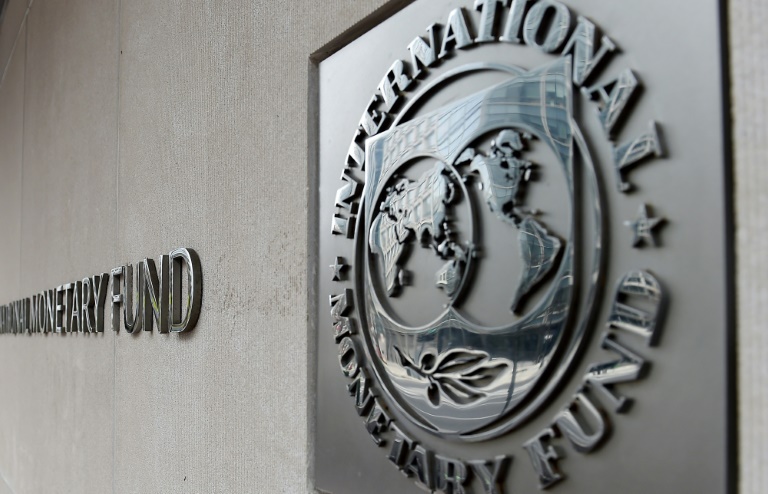
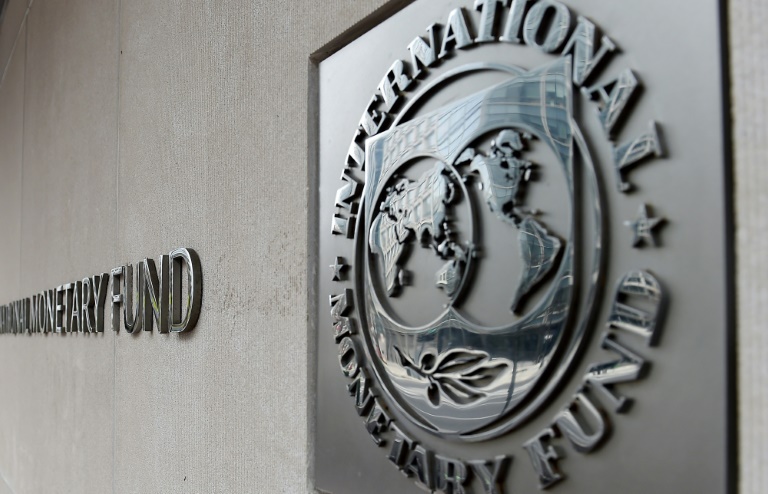
In its latest World Economic Outlook, the International Monetary Fund cut the 2022 global GDP estimate to 3.2 percent, four-tenths of a point lower than the April forecast, and about half the rate seen last year.

Last year’s “tentative recovery” from the pandemic downturn “has been followed by increasingly gloomy developments in 2022 as risks began to materialize,” the report said.

“Several shocks have hit a world economy already weakened by the pandemic,” including the war in Ukraine which has driven up global prices for food and energy, prompting central banks to raise interest rates sharply, the IMF said.

Ongoing Covid-19 lockdowns and a worsening real estate crisis have hindered economic activity in China, while the Federal Reserve’s aggressive interest rate hikes are slowing US growth sharply.

But the bad news may not stop there, IMF warned, saying that “risks to the outlook are overwhelmingly tilted to the downside,” and if they materialize could push the global economy into one of the worst slumps in the past half-century.

Key among concerns is the fallout from the Ukraine war including the potential for Russia to cut off natural gas supplies to Europe, as well as a further spike in prices and the specter of famines due to the war’s chokehold on grain supplies.

In an ominous warning, the WEO said “such shocks could, if sufficiently severe, cause a combination of recession accompanied by high and rising inflation (‘stagflation’).”

That would slam the brakes on growth, slowing it to 2.0 percent in 2023. The global growth rate has only been slower five times since 1970, the report said. 

Gourinchas said that would be “getting really close to a global recession.”

– Inflation priority –

The top priority for policymakers is to rein in soaring prices, even if it means pain for their citizens, the fund said, since the damage caused by out-of-control inflation would be much worse.

Gourinchas, in a blog post about the report, noted that the “synchronized” moves by major central banks to deal with the inflation threat “is historically unprecedented, and its effects are expected to bite.”

“Tighter monetary policy will inevitably have real economic costs, but delaying it will only exacerbate the hardship,” he said.

The IMF now sees consumer prices jumping 8.3 percent this year, nearly a full point higher than previously forecast, while emerging market economies face a 9.5 percent increase in consumer prices.

But, “further supply-related shocks to food and energy prices from the war in Ukraine could sharply increase headline inflation.”

That would increase the pain for poor nations least able to withstand the shock, where food makes up a larger share of family budgets.

– US, China slowdown –

While the global economy did a bit better than expected in the first three months of the year, it appears to have “shrunk in the second quarter — the first contraction since 2020,” the IMF said.

The IMF downgraded growth forecasts for most countries, including big revisions for the United States and China, cutting more than a point off the prior forecasts.

The fund now sees US growth this year of just 2.3 percent, amid slowing consumer spending and rising interest rates, and the report said a recession — defined by two quarters of negative growth — may already have begun.

Gourinchas said the US has a “very narrow path” to avoid a downturn, and even a “small shock” could tip the economy into recession.

China’s economy is expected to slow dramatically in 2022, expanding just 3.3 percent — the lowest in more than four decades with the exception of the 2020 pandemic crisis — due to continuing Covid concerns and a “worsening” property crisis, the report said.

“The slowdown in China has global consequences: lockdowns added to global supply chain disruptions and the decline in domestic spending are reducing demand for goods and services from China’s trade partners,” the report said.

There were some exceptions to the gloomy outlook, including upgrades for Italy, Brazil and Mexico, as well as for Russia which is still expected to contract but is benefiting from rising oil prices due to Western sanctions, the WEO said.

IMF cuts global growth outlook due to US, China slowdowns

Surging inflation and severe slowdowns in the United States and China prompted the IMF Tuesday to downgrade its outlook for the global economy this year and next, while giving an even starker assessment of what may lie ahead.

“The outlook has darkened significantly since April,” said IMF chief economist Pierre-Olivier Gourinchas. “The world may soon be teetering on the edge of a global recession, only two years after the last one.”

“The world’s three largest economies, the United States, China and the euro area are stalling with important consequences for the global outlook,” he said at a briefing.

In its latest World Economic Outlook, the International Monetary Fund cut the 2022 global GDP estimate to 3.2 percent, four-tenths of a point lower than the April forecast, and about half the rate seen last year.

Last year’s “tentative recovery” from the pandemic downturn “has been followed by increasingly gloomy developments in 2022 as risks began to materialize,” the report said.

“Several shocks have hit a world economy already weakened by the pandemic,” including the war in Ukraine which has driven up global prices for food and energy, prompting central banks to raise interest rates sharply, the IMF said.

Ongoing Covid-19 lockdowns and a worsening real estate crisis have hindered economic activity in China, while the Federal Reserve’s aggressive interest rate hikes are slowing US growth sharply.

But the bad news may not stop there, IMF warned, saying that “risks to the outlook are overwhelmingly tilted to the downside,” and if they materialize could push the global economy into one of the worst slumps in the past half-century.

Key among concerns is the fallout from the Ukraine war including the potential for Russia to cut off natural gas supplies to Europe, as well as a further spike in prices and the specter of famines due to the war’s chokehold on grain supplies.

In an ominous warning, the WEO said “such shocks could, if sufficiently severe, cause a combination of recession accompanied by high and rising inflation (‘stagflation’).”

That would slam the brakes on growth, slowing it to 2.0 percent in 2023. The global growth rate has only been slower five times since 1970, the report said. 

Gourinchas said that would be “getting really close to a global recession.”

– Inflation priority –

The top priority for policymakers is to rein in soaring prices, even if it means pain for their citizens, the fund said, since the damage caused by out-of-control inflation would be much worse.

Gourinchas, in a blog post about the report, noted that the “synchronized” moves by major central banks to deal with the inflation threat “is historically unprecedented, and its effects are expected to bite.”

“Tighter monetary policy will inevitably have real economic costs, but delaying it will only exacerbate the hardship,” he said.

The IMF now sees consumer prices jumping 8.3 percent this year, nearly a full point higher than previously forecast, while emerging market economies face a 9.5 percent increase in consumer prices.

But, “further supply-related shocks to food and energy prices from the war in Ukraine could sharply increase headline inflation.”

That would increase the pain for poor nations least able to withstand the shock, where food makes up a larger share of family budgets.

– US, China slowdown –

While the global economy did a bit better than expected in the first three months of the year, it appears to have “shrunk in the second quarter — the first contraction since 2020,” the IMF said.

The IMF downgraded growth forecasts for most countries, including big revisions for the United States and China, cutting more than a point off the prior forecasts.

The fund now sees US growth this year of just 2.3 percent, amid slowing consumer spending and rising interest rates, and the report said a recession — defined by two quarters of negative growth — may already have begun.

Gourinchas said the US has a “very narrow path” to avoid a downturn, and even a “small shock” could tip the economy into recession.

China’s economy is expected to slow dramatically in 2022, expanding just 3.3 percent — the lowest in more than four decades with the exception of the 2020 pandemic crisis — due to continuing Covid concerns and a “worsening” property crisis, the report said.

“The slowdown in China has global consequences: lockdowns added to global supply chain disruptions and the decline in domestic spending are reducing demand for goods and services from China’s trade partners,” the report said.

There were some exceptions to the gloomy outlook, including upgrades for Italy, Brazil and Mexico, as well as for Russia which is still expected to contract but is benefiting from rising oil prices due to Western sanctions, the WEO said.

Faster growth may help bacteria remove lake plastic waste: study

Chemicals leaking from plastic waste make bacteria grow faster in European lakes, according to research published Tuesday that authors said could provide a natural way to remove plastic pollution from freshwater ecosystems.

Microplastics have been found in virtually every corner of the globe — from the highest glaciers to the bottom of the deepest sea trench — but the impact of plastic pollution in lakes is less well researched than in oceans. 

When plastic materials such as carrier bags break down in water, they release simple carbon compounds slightly different to those produced when organic matter such as twigs and leaves disintegrate. 

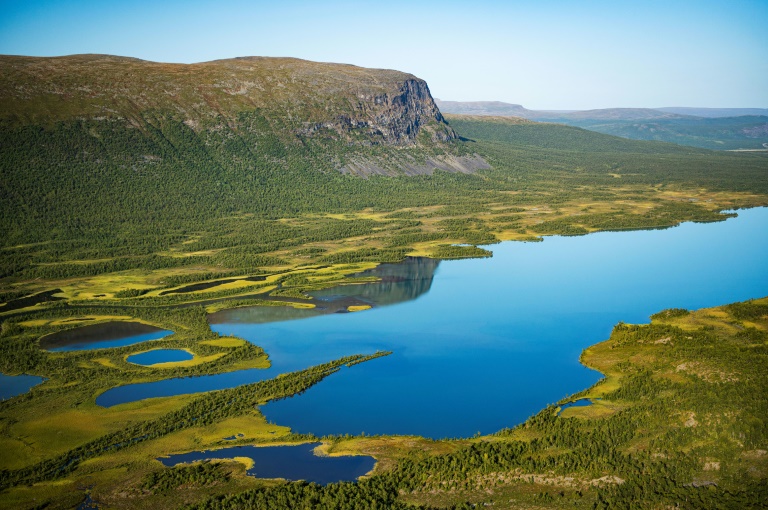
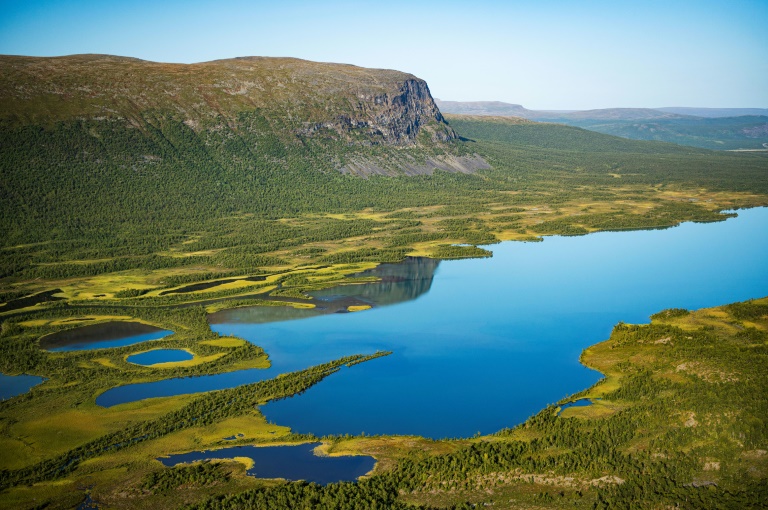
Researchers from the University of Cambridge wanted to see what effect these compounds had on bacteria populations in 29 lakes across Scandinavia. 

They cut up plastic bags from four major British shopping chains and mixed them with water until the carbon compounds were released.

They then filled glass bottles with water from each lake, mixing a small amount of the plastic water into half of these samples.

In the water with plastic-derived compounds, the bacteria had doubled in mass within 72 hours and already absorbed around half of the carbon present in the samples. 

Overall, they found that the bacteria in the plastic water samples grew nearly twice as easily (1.72 times) as the lake bacteria with no plastic water added. 

Andrew Tanentzap, from the University of Cambridge’s Department of Plant Sciences, said the study showed the profound impact plastic pollution is likely having on bodies of freshwater where the waste is present. 

“It’s almost like the plastic pollution is getting the bacteria’s appetite going,” he said. 

“This suggests that plastic pollution is stimulating the whole food web in lakes, because more bacteria means more food for the bigger organisms like ducks and fish.”

The study examined how bacteria react to plastic carbon compounds in lakes with different depths, locations, surface temperatures and organic matter content.

It showed that bacteria were better at removing plastic pollution in lakes with fewer unique natural carbon compounds because there were fewer natural food sources.

The results suggested that in some places, specific types of bacteria could be harnessed to help break down plastic waste.

“But you’d want to know more about the ecosystem balance before committing to doing that,” first study author Eleanor Sheridan told AFP.

She also cautioned against assuming that bacteria alone could solve the growing ecological disaster posed by plastic waste.

Plastics are “not only damaging to ecosystems on a macro level, they also contain chemicals that leach out and last beyond when a plastic bag is fished out of the water,” Sheridan said. 

“I hope that this increases awareness of the multitude of different effects that just one type of pollution can have on the environment.”

Faster growth may help bacteria remove lake plastic waste: study

Chemicals leaking from plastic waste make bacteria grow faster in European lakes, according to research published Tuesday that authors said could provide a natural way to remove plastic pollution from freshwater ecosystems.

Microplastics have been found in virtually every corner of the globe — from the highest glaciers to the bottom of the deepest sea trench — but the impact of plastic pollution in lakes is less well researched than in oceans. 

When plastic materials such as carrier bags break down in water, they release simple carbon compounds slightly different to those produced when organic matter such as twigs and leaves disintegrate. 

Researchers from the University of Cambridge wanted to see what effect these compounds had on bacteria populations in 29 lakes across Scandinavia. 

They cut up plastic bags from four major British shopping chains and mixed them with water until the carbon compounds were released.

They then filled glass bottles with water from each lake, mixing a small amount of the plastic water into half of these samples.

In the water with plastic-derived compounds, the bacteria had doubled in mass within 72 hours and already absorbed around half of the carbon present in the samples. 

Overall, they found that the bacteria in the plastic water samples grew nearly twice as easily (1.72 times) as the lake bacteria with no plastic water added. 

Andrew Tanentzap, from the University of Cambridge’s Department of Plant Sciences, said the study showed the profound impact plastic pollution is likely having on bodies of freshwater where the waste is present. 

“It’s almost like the plastic pollution is getting the bacteria’s appetite going,” he said. 

“This suggests that plastic pollution is stimulating the whole food web in lakes, because more bacteria means more food for the bigger organisms like ducks and fish.”

The study examined how bacteria react to plastic carbon compounds in lakes with different depths, locations, surface temperatures and organic matter content.

It showed that bacteria were better at removing plastic pollution in lakes with fewer unique natural carbon compounds because there were fewer natural food sources.

The results suggested that in some places, specific types of bacteria could be harnessed to help break down plastic waste.

“But you’d want to know more about the ecosystem balance before committing to doing that,” first study author Eleanor Sheridan told AFP.

She also cautioned against assuming that bacteria alone could solve the growing ecological disaster posed by plastic waste.

Plastics are “not only damaging to ecosystems on a macro level, they also contain chemicals that leach out and last beyond when a plastic bag is fished out of the water,” Sheridan said. 

“I hope that this increases awareness of the multitude of different effects that just one type of pollution can have on the environment.”

Iraq to free Briton jailed in antiquities case: lawyer

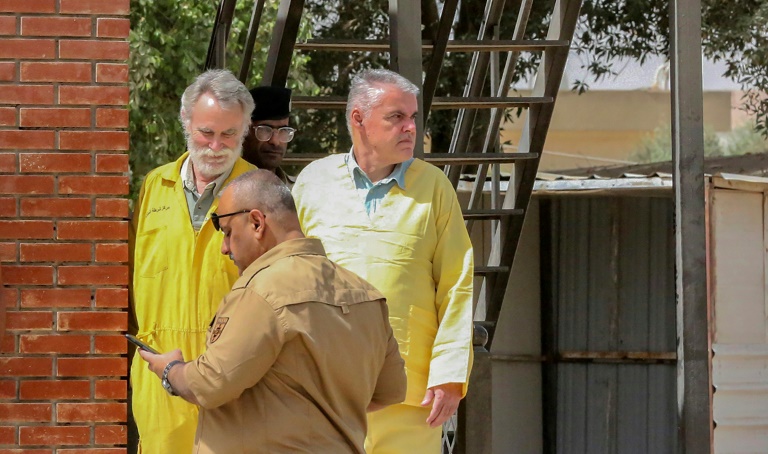
An Iraqi court has overturned the conviction and 15-year sentence handed to a British pensioner last month for antiquities smuggling, the retiree’s lawyer said Tuesday.

James Fitton had been charged under a 2002 law against “intentionally taking or trying to take out of Iraq an antiquity,” the maximum penalty for which under the country’s legal code is death by hanging. 

The conviction has been “overturned today by the Court of Cassation and my client will soon be free”, lawyer Thaer Saoud told AFP.

The retiree’s son-in-law, Sam Tasker, told AFP in a phone call that the family was “very pleased by the decision, but we are still waiting for his release.” 

Fitton stood trial alongside German national Volker Waldmann, who was acquitted. Both men had pleaded not guilty.

Fitton’s lawyer launched the appeal just over a month ago.

According to statements from customs officers and witnesses, Fitton’s baggage contained about a dozen stone fragments, pieces of pottery or ceramics.

When the judge in the original trial asked Fitton why he tried to take the artefacts out of Iraq, the retired geologist cited his “hobby” and said he did not mean to do anything illegal.

“I didn’t realise that taking them was against the law,” Fitton had said, adding that some of the ancient sites were open and unguarded.

But the judge in the original trial concluded there was criminal intent and sentenced Fitton to 15 years, rather than death, because of his “advanced age”.

On his Facebook page on Tuesday, Fitton’s lawyer published the judgement that had been handed down by the Court of Cassation, overturning the original verdict.

It said that the charge against Fitton had been cancelled, and that he would be freed for lack of evidence.

The court also ruled that there had been no “criminal intent” on the Briton’s part, Saoud said.

He added that his client would be released “in the next few days, as soon as the proceedings are completed”.

The Fitton case comes at a time when the war-ravaged country, whose tourism infrastructure is almost non-existent, is tentatively opening to visitors.

Iraq — home to the famed city of Babylon in ancient Mesopotamia — is seeking to safeguard its archaeological heritage amid a rampant market for smuggled artifacts.

The authorities crack down severely on attempts to deal in antiquities illegally.

Much of the country’s ancient cultural heritage has been looted for decades because of the many conflicts it has suffered, particularly after the US-led invasion of 2003 that ousted dictator Saddam Hussein.

The arrival of the Islamic State group in 2014 boosted the illegal sale of antiquities as the jihadists sought to bolster their coffers by smuggling out and selling ancient pieces.

Close Bitnami banner
Bitnami