World

Saudi prince heads to EU for first time since Khashoggi killing

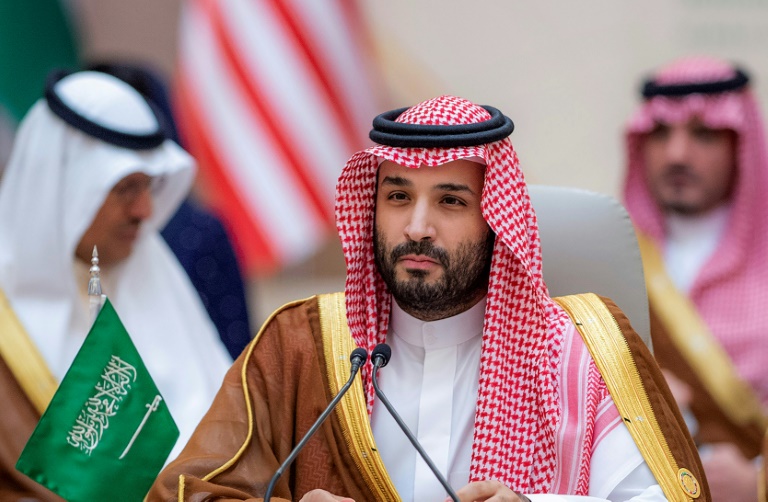
Saudi Crown Prince Mohammed bin Salman was set to embark on a visit to Greece and France on Tuesday, state media reported, his first Europe trip since the 2018 killing of Saudi journalist Jamal Khashoggi.

Khashoggi’s killing and dismemberment by Saudi agents in the kingdom’s Istanbul consulate in October 2018 brought the powerful crown prince international condemnation.

Prince Mohammed will meet with the leaders of both France and Greece “to discuss bilateral relations and ways to enhance them in various fields,” the official Saudi Press Agency reported, citing a statement from the royal court.

The trip comes less than two weeks after US President Joe Biden visited the Saudi city of Jeddah for a summit of Arab leaders and met one-on-one with Prince Mohammed, greeting him with a fist bump.

That move sealed Biden’s retreat from a presidential election campaign pledge to turn the kingdom into a “pariah” over the Khashoggi affair and wider human rights controversies.

US intelligence agencies determined that Prince Mohammed, Saudi Arabia’s de facto ruler, had “approved” the operation that led to Khashoggi’s death, though Riyadh denies this, blaming rogue operatives.

Prince Mohammed’s stay in Europe represents a “highly symbolic move past his post-Khashoggi isolation”, said Kristian Ulrichsen, a research fellow at the Baker Institute at Rice University.

“While there has not been any formal coordination of policy in the ‘West’ against Mohammed bin Salman since 2018, the fact is that he has not visited any European or North American country since Khashoggi’s killing,” Ulrichsen said.

Prince Mohammed has also received a recent boost from Turkish President Erdogan, who visited Saudi Arabia in April, then welcomed Prince Mohammed in Ankara in June.

Erdogan had enraged the Saudis by vigorously pursuing the Khashoggi case, opening an investigation and briefing international media about the lurid details of the killing.

But with ties on the mend, an Istanbul court halted the trial in absentia of 26 Saudi suspects linked to Khashoggi’s death, transferring the case to Riyadh in April.

– Oil focus –

After Russia’s invasion of Ukraine triggered a spike in energy prices earlier this year, Saudi Arabia came under pressure from the United States and European powers to pump more oil.

Elevated oil prices have been a key factor in inflation in the US soaring to 40-year highs, putting pressure on the Biden administration ahead of mid-term elections later this year.

But the world’s biggest crude exporter has resisted pressure to open the supply taps, citing its commitment to production schedules determined by the OPEC+ exporting bloc it co-leads with Russia.

In May, Saudi Foreign Minister Prince Faisal bin Farhan stated that the kingdom had done what it could for the oil market.

Last week French President Emmanuel Macron received the new president of the energy-rich United Arab Emirates, Sheikh Mohamed bin Zayed Al-Nahyan, in Paris.

During that trip officials announced a deal between French energy giant Total Energies and UAE state oil company ADNOC “for cooperation in the area of energy supplies”.
VW's new CEO faces twin challenges of Porsche, software problems

When Oliver Blume ascends to the top job at German automaker Volkswagen in September, he will be faced with taming the challenges that led to the fall of his predecessor, Herbert Diess, last week.

Serial technical troubles at Europe’s largest carmaker, as well as fractious relationships with workers’ representatives spelled the end of the road for Diess as chief executive, who was ousted in a supervisory board coup.

Blume is moving up from Porsche, VW’s premium sports car brand, which is set to go public later this year during a turbulent time for markets. 

In his four years at the helm of Volkswagen, 63-year-old Diess steered the legacy carmaker out of its 2015 “dieselgate” emissions-cheating scandal onto an ambitious programme to become the world’s biggest electric car manufacturer by 2025.

But difficulties at VW’s software arm, Cariad, a pet project of Diess’s, have delayed key plans and made it harder to catch up with competitors like US manufacturer Tesla.  

Software is the “number-one challenge”, said Matthias Schmidt, an auto analyst based in Berlin.

Bringing software development in-house, shedding outside suppliers and keeping control of computing architecture of the car, is difficult to achieve, but has potentially huge financial benefits.

Blume “needs to decide whether he will continue to follow Diess’s plan” or make a strategic decision to “buy it in” and “live with the consequence of seeing that potential profit centre vanish”, Schmidt told AFP.

“The idea of doing everything in a centralised way will probably be rethought,” said German automotive expert Ferdinand Dudenhoeffer.

– Unanimous vote –

In addition to the troubles at Cariad, Diess’s position as CEO was weakened by running battles with workers’ representatives.

The tendency of Austrian-born Diess to rub people up the wrong way and the proliferation of internal spats were the main reason for his exit, according to a source at the carmaker.

There were no dissenters on the vote to finally eject him, just before the start of the summer holidays.

Diess “had enemies” and was “not liked by the politicians or the works council” represented on the supervisory board, Dudenhoeffer said.

The outgoing CEO’s propensity for conflict was “very important” to get the group to face up to its past and find a new direction, he said.

But the task at hand was to carry out the changes Diess had identified as necessary, not to keep bashing heads together, Dudenhoeffer added.

– ‘Cooperative’ –

Blume is likely to steer clear of the provocative comparisons with US competitors and strongly worded tweets that won Diess few friends. 

The new chief, who has spent his entire career at Volkswagen, is more “cooperative” than Diess, who was hired from rival German carmaker BMW, Dudenhoeffer said.

Chief financial officer Arno Antlitz will bring continuity to the top team at Volkswagen, adding chief operating officer to his portfolio of roles.

Blume will “continue Diess’s big strategic projects”, said Dudenhoeffer, including making VW’s own batteries, building a modern factory close to its headquarters in Wolfsburg and developing mobility services with the reacquisition of rental company Europcar.

Blume will take the steering wheel of the group on September 1, while also retaining his CEO role at Porsche, which is set for a stock market entry in the last three months of 2022.

Blume would likely stay at Porsche through the flotation before having to “concentrate on managing the VW group machine”, said Schmidt.

The future CEO “will be judged on VW’s success in China” and the US, two key markets where Volkswagen has struggled in recent times, said Dudenhoeffer.

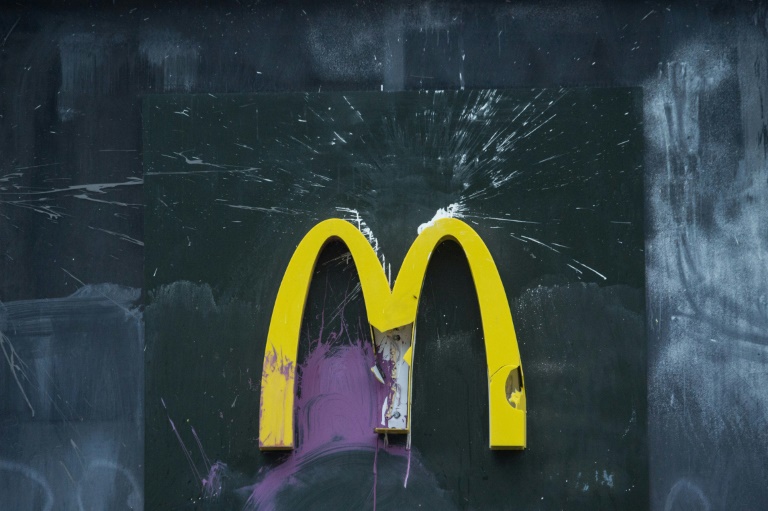
McDonald's tracking inflation impact as Russia exit hits profits

McDonald’s reported lower profits Tuesday following the hit from its Russia withdrawal, as it keeps a close eye on restaurant traffic amid rising consumer inflation.

The US restaurant chain scored higher comparable sales in most major markets except China, where Covid-19 restrictions hit sales.

This included a strong performance in Europe, where the chain highlighted France and Germany as especially robust markets. 

However, Chief Executive Chris Kempczinski cited surveys showing weakening consumer sentiment as a source of unease.

“The headline is Europe is doing very well for us,” Kempczinski told analysts on a conference call. 

“What is weighing on our mind is consumer sentiment,” he said, adding that the company is pondering how heavily to “lean in” to value offerings in Europe.

“Because of this uncertainty around consumer sentiment, we’re having to plan for more scenarios,” he said.

McDonald’s reported profits of $1.2 billion, down 46 percent from the year-ago period on a three percent drop in revenues to $5.7 billion.

Results were dented by $1.2 billion in costs connected to McDonald’s sudden sale of its Russia business in the wake of the country’s invasion of Ukraine.

As a more affordable restaurant chain, McDonald’s is potentially positioned to pick up sales from lower-income consumers.

But the company is also seeing cost pressures.

In the United States, McDonald’s expects about 12-14 percent inflation on food and paper in 2022 and a little over 10 percent on labor, said Chief Financial Officer Kevin Ozan.

McDonald’s expects a moderation in US inflation in the fourth quarter. Such an ebbing in pressure is not expected in overseas markets.

“In general, on the inflation side it will hit a little bit harder than in the US and little bit longer than in the US,” Ozan said.

McDonald’s shares edged down 0.2 percent to $249.77 in early trading.

Eurozone stocks slide, gas prices soar

Eurozone equities sank Tuesday, as natural gas prices surged after Russia tightened the screw on supplies in fresh Ukraine fallout.

Investors also digested major earnings updates on the eve of another likely large US interest rate hike aimed at tackling soaring inflation.

General Motors reported a big drop in second-quarter profits owing to a semiconductor shortage.

Google parent Alphabet, Coca-Cola, Microsoft and McDonald’s are also publishing results Tuesday.

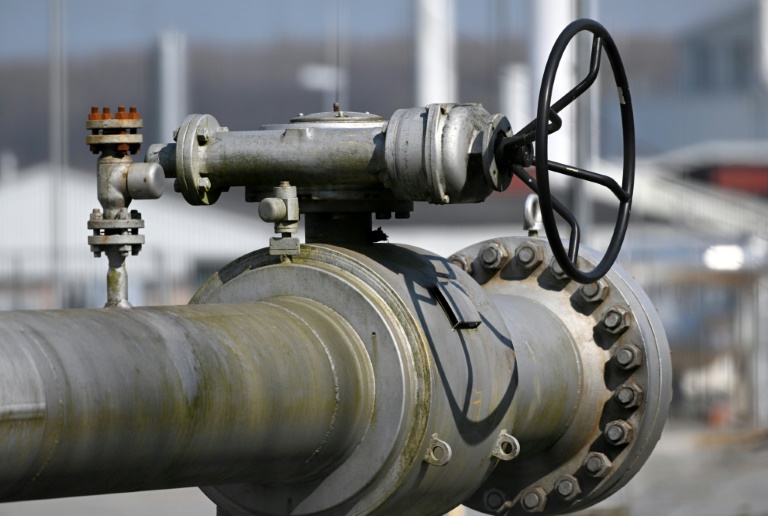
Europe gas reference price Dutch TTF surged more than 10 percent to 198.00 euros per megawatt hour, one day after Russia’s Gazprom said it would cut daily gas deliveries to Europe via the Nord Stream pipeline.

“With no clear timeline for when capacity is likely to increase, the prospect of further uncertainty over gas supplies is weighing on European markets today,” CMC Markets analyst Michael Hewson told AFP.

Frankfurt’s DAX slumped 0.9 percent while the CAC in Paris shed 0.5 percent. 

“The euro is also under pressure as it becomes increasingly apparent that a slowing economy will make it increasingly difficult for the ECB to hike aggressively as we head into the winter months. Good luck raising rates against that sort of backdrop,” he added.

It fell by more than one percent to under $1.0150.

Eurozone bond yields also fell as investors fled to the relative safety of government debt.

Oil prices also leapt on concerns of a broader squeeze on global energy supplies, while the euro remained on the back foot against the dollar.

Gazprom will cut the gas deliveries to 33 million cubic metres a day — about 20 percent of the pipeline’s capacity — from Wednesday.

That has heightened market worries over supplies during the northern hemisphere winter later this year.

At the same time, European Union member states have reached agreement on how to cut their consumption of gas by 15 percent and reduce their dependence on Russian energy.

Gas prices remain way below the record March peak of 345 euros struck after Russia launched its assault on Ukraine.

Markets.com analyst Neil Wilson predicted a “big push to fill (gas) stockpiles in what is left of the summer, at any price, to avert a winter crisis”.

EU states have accused Russia of squeezing supplies in retaliation for Western sanctions.

Elsewhere Tuesday, Asian stock markets closed mixed.

Investors welcomed news that e-commerce giant Alibaba would seek a primary listing in Hong Kong, which could pave the way for it to be traded by mainland Chinese investors.

Wall Street opened lower, with a profit warning by Walmart rattling investors.

The retailer said it expects its earnings per share in its non-standard second quarter, which wraps up at the end of this month, to be down by 8-9 percent with an even bigger reduction next year.

Walmart shares tumbled more than eight percent at the start of trading.

“The basis for Walmart’s warning, though, is the real issue for the broader market,” said Patrick J. O’Hare at Briefing.com.

The retailer said food and fuel inflation was pushing consumers to defray discretionary spending on general merchandise.

“That is causing concerns about a trickle-down effect to other retailers, as well as suppliers to Walmart, that is weighing on sentiment and earnings expectations,” said O’Hare.

He said this was also fanning fears the US Federal Reserve, which meets Wednesday and Thursday, will pursue aggressive rate hikes to tame inflation.

– Key figures at around 1330 GMT –

Frankfurt – DAX: DOWN 0.9 percent at 13,092.50 points

Paris – CAC 40: DOWN 0.5 percent at 6,205.54

London – FTSE 100: UP 0.2 percent at 7,323.32

EURO STOXX 50: DOWN 0.8 percent at 3,576.87

New York – Dow: DOWN 0.2 percent at 31,917.53

Tokyo – Nikkei 225: DOWN 0.2 percent at 27,655.21 (close)

Hong Kong – Hang Seng Index: UP 1.7 percent at 20,905.88 (close)

Shanghai – Composite: UP 0.8 percent at 3,277.44 (close)

Euro/dollar: DOWN at $1.0140 from $1.0223 Monday

Pound/dollar: DOWN at $1.2016 from $1.2046 

Euro/pound: DOWN at 84.46 pence from 84.83 pence

Dollar/yen: DOWN at 136.45 yen from 136.65 yen

Brent North Sea crude: UP 1.6 percent at $106.87 per barrel

West Texas Intermediate: UP 1.5 percent at $98.17 per barrel

burs-rl/raz

Tunisia president hails vote set to bolster rule

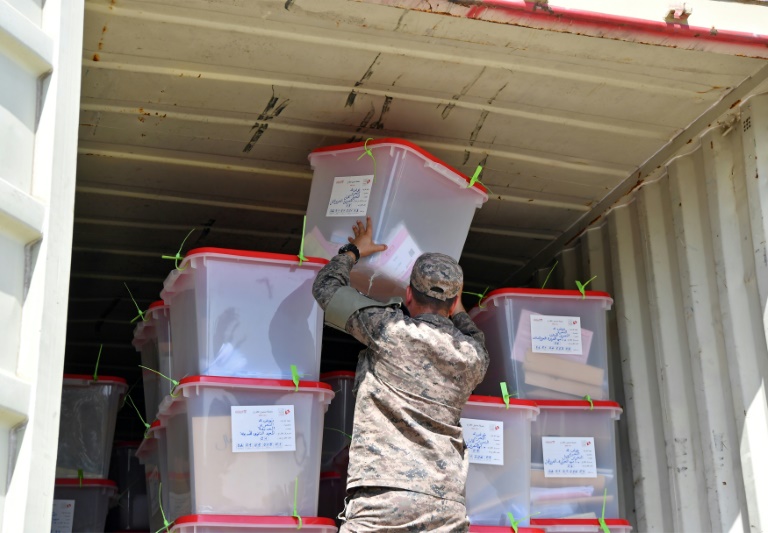
President Kais Saied said Tuesday that Tunisia was moving “from despair to hope” after a referendum almost certain to approve a new constitution that concentrates nearly all powers in his office.

But his rivals accused the Saied-controlled ISIE electoral board of “fraud” and said his referendum — which was marked by a turnout of little more than a quarter of the 9.3 million electorate — had “failed”.

Monday’s vote came a year to the day after Saied sacked the government and suspended parliament in a dramatic blow to the only democracy to have emerged from the 2011 Arab Spring uprisings.

For some Tunisians, his moves sparked fears of a return to autocracy, but they were welcomed by others, fed up with high inflation and unemployment, political corruption and a system they felt had brought few improvements.

There had been little doubt the “Yes” campaign would win, and an exit poll suggested that votes cast were overwhelmingly in favour.

Most of Saied’s rivals called for a boycott, and while turnout was low, it was higher than the single figures many had expected — at least 27.5 percent, according to the electoral board.

“Tunisia has entered a new phase,” Saied told celebrating supporters after polling closed.

“What the Tunisian people did… is a lesson to the world, and a lesson to history on a scale that the lessons of history are measured on,” he said.

The National Salvation Front opposition alliance accused the electoral board of falsifying turnout figures.

Its head, Ahmed Nejib Chebbi, said the figures were “inflated and don’t fit with what observers saw on the ground”.

ISIE “isn’t honest and impartial, and its figures are fraudulent,” he said.

– ‘Opaque and illegal’ –

Saied, a 64-year-old law professor, dissolved parliament and seized control of the judiciary and the electoral commission on July 25 last year.

His opponents say the moves aimed to install an autocracy over a decade after the fall of dictator Zine El Abidine Ben Ali, while his supporters say they were necessary after years of corruption and political turmoil.

“After 10 years of disappointment and total failure in the management of state and the economy, the Tunisian people wanted to get rid of the old and take a new step, whatever the results are,” said Noureddine al-Rezgui, a bailiff.

A poll of “Yes” voters by state television suggested “reforming the country and improving the situation” along with “support for Kais Saied/his project” were their main motivations.

Thirteen percent cited being “convinced by the new constitution”.

Rights groups have warned the draft gives vast, unchecked powers to the presidency, allows him to appoint a government without parliamentary approval and makes him virtually impossible to remove from office.

Said Benarbia, regional director of the International Commission of Jurists, told AFP the new constitution would “give the president almost all powers and dismantle any check on his rule”.

Moreover, low turnout means “any resulting constitution would not reflect the views of the majority of Tunisians and would lack democratic legitimacy and national ownership,” he added.

“The process was opaque and illegal, the outcome is illegitimate.”

Saied has repeatedly threatened his enemies in recent months, issuing video diatribes against unnamed foes he describes as “germs”, “snakes” and “traitors”.

On Monday, he promised to hold to account “all those who have committed crimes against the country”.

– ‘Back on the rails’ –

Analyst Abdellatif Hannachi said the results meant Saied “can now do whatever he wants without taking anyone else into account.”

“The question now is: what is the future of opposition parties and organisations?”

As well as remaking the political system, Monday’s vote was seen as a gauge of Saied’s personal popularity, almost three years since the political outsider won a landslide in Tunisia’s first democratic direct presidential election.

Hassen Zargouni, head of pollster Sigma Conseil, said that off 7,500 participants questioned, 92-93 percent voted “Yes”.

He said turnout was “quite good” given some two million people have been automatically added to electoral rolls since the 2019 legislative election.

Participation in elections has gradually declined since the 2011 revolution, from just over half in a parliamentary poll months after Ben Ali’s overthrow to 32 percent in 2019.

Those who voted “Yes” on Monday did so primarily to “put the country back on the rails and improve the situation,” Zargouni said.

Tunis resident Aziz Benrizq, 22, agreed.

“God willing, things will get easier and the situation in the country will improve,” he said.

par/dv

Misery for millions as monsoon pounds Pakistan port city

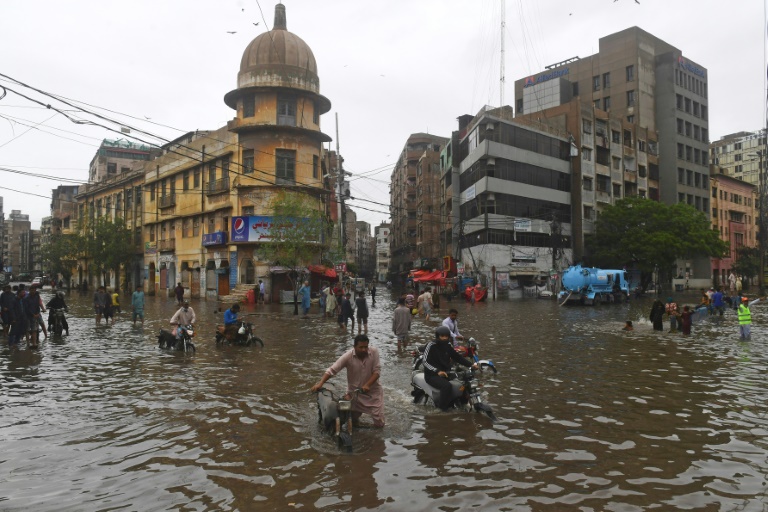
Shazad Akbar carried his four-year-old daughter on his shoulders Tuesday as he and his wife waded through knee-high water flooding a street in Surjani, a poor part of Pakistan’s port city of Karachi.

His wife fell sick overnight, but Akbar couldn’t take her to a doctor as heavy monsoon rains fell until morning, causing misery for the city of 15 million.

“I can only manage to come out now,” Shazad told AFP as his burqa-clad wife hid behind him.

The monsoon, which usually lasts from June to September, is essential for irrigating crops and replenishing lakes and dams across the Indian subcontinent, but also brings a wave of destruction each year.

This year’s monsoon is being felt hardest in cities, where poor infrastructure and services lead to clogged drains and culverts — and the collapse of the sewage system.

The result is widespread flooding, particularly in low-lying areas, and usually in poor neighbourhoods.

In Rahim Goth, a slum in the west of the city, locals were attempting to bail water from their shacks and dwellings using buckets, pots and jugs.

But their efforts appeared futile as they tipped the contents into streets already several feet deep.

– Climate change –

Sardar Sarfaraz, director of the Pakistan Meteorological Department, told AFP an “unprecedented” 568 millimetres (22.3 inches) of rain had fallen in the city this month — nearly triple Karachi’s recent averages and more than four times that of two decades ago.

Environmentalist Arif Zubair conceded monsoons can regularly cause natural havoc, but is clear what is to blame for the worsening situation — climate change.

“(It) has engulfed all of South and Southeast Asia,” he told AFP Tuesday.

“The recent (heavy) rains have certainly been an indicator of global climate change.”

Pakistan ranks eighth on a list of countries most vulnerable to extreme weather caused by climate change, according to the environment NGO Germwatch.

But the effects of climate change are also exacerbated by the mismanagement and negligence of authorities and policymakers, who critics accuse of being oblivious to the problems ahead.

Coastal Karachi is particularly prone to flooding because the city has expanded with scant planning on a landscape ill-suited to urban development.

“We are sitting on a climate bomb,” Arif said.

Over 300 people have died as a result of the heavy monsoon rains this year, which have also washed away more than 600 kilometres (375 miles) of roads and 50 bridges, according to the National Disaster Management Authority (NDMA).

It said more than 10,000 homes had been damaged — with Baluchistan province the worst hit.

In Rahim Goth, many residents have moved to rooftops to escape the flooding, stretching tarpaulin between poles to give them shelter from the incessant rain.

“People (officials) come every year to inquire about us, but every year we are doomed,” Afsari Bano told AFP as she tried to cook a family meal.

She said most of the family’s belongings — furniture, bedding and other possessions — were destroyed by flooding two years ago, and they were only just recovering.

Now she was surrounded by water in which floated soiled nappies and other garbage.

“Swarms of flies and mosquitos will follow now,” the 50-year housewife said.

“If someone dies — Allah forbid as life and death is in his hand — it is next to impossible to hold a funeral.”

Misery for millions as monsoon pounds Pakistan port city

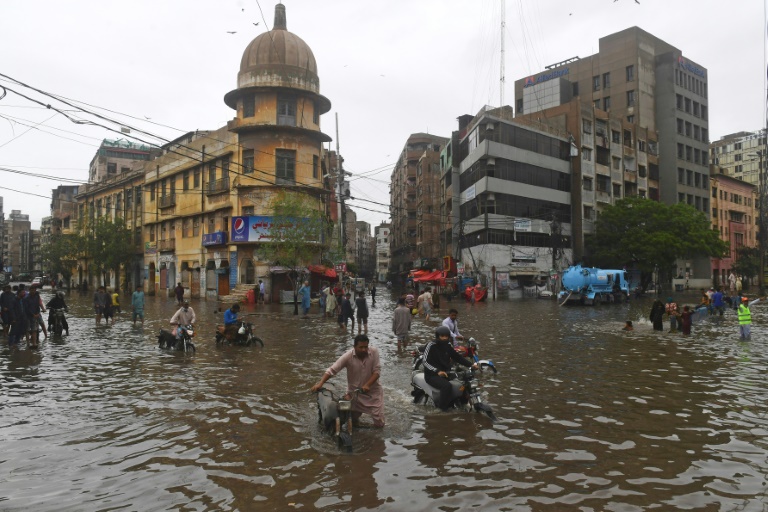
Shazad Akbar carried his four-year-old daughter on his shoulders Tuesday as he and his wife waded through knee-high water flooding a street in Surjani, a poor part of Pakistan’s port city of Karachi.

His wife fell sick overnight, but Akbar couldn’t take her to a doctor as heavy monsoon rains fell until morning, causing misery for the city of 15 million.

“I can only manage to come out now,” Shazad told AFP as his burqa-clad wife hid behind him.

The monsoon, which usually lasts from June to September, is essential for irrigating crops and replenishing lakes and dams across the Indian subcontinent, but also brings a wave of destruction each year.

This year’s monsoon is being felt hardest in cities, where poor infrastructure and services lead to clogged drains and culverts — and the collapse of the sewage system.

The result is widespread flooding, particularly in low-lying areas, and usually in poor neighbourhoods.

In Rahim Goth, a slum in the west of the city, locals were attempting to bail water from their shacks and dwellings using buckets, pots and jugs.

But their efforts appeared futile as they tipped the contents into streets already several feet deep.

– Climate change –

Sardar Sarfaraz, director of the Pakistan Meteorological Department, told AFP an “unprecedented” 568 millimetres (22.3 inches) of rain had fallen in the city this month — nearly triple Karachi’s recent averages and more than four times that of two decades ago.

Environmentalist Arif Zubair conceded monsoons can regularly cause natural havoc, but is clear what is to blame for the worsening situation — climate change.

“(It) has engulfed all of South and Southeast Asia,” he told AFP Tuesday.

“The recent (heavy) rains have certainly been an indicator of global climate change.”

Pakistan ranks eighth on a list of countries most vulnerable to extreme weather caused by climate change, according to the environment NGO Germwatch.

But the effects of climate change are also exacerbated by the mismanagement and negligence of authorities and policymakers, who critics accuse of being oblivious to the problems ahead.

Coastal Karachi is particularly prone to flooding because the city has expanded with scant planning on a landscape ill-suited to urban development.

“We are sitting on a climate bomb,” Arif said.

Over 300 people have died as a result of the heavy monsoon rains this year, which have also washed away more than 600 kilometres (375 miles) of roads and 50 bridges, according to the National Disaster Management Authority (NDMA).

It said more than 10,000 homes had been damaged — with Baluchistan province the worst hit.

In Rahim Goth, many residents have moved to rooftops to escape the flooding, stretching tarpaulin between poles to give them shelter from the incessant rain.

“People (officials) come every year to inquire about us, but every year we are doomed,” Afsari Bano told AFP as she tried to cook a family meal.

She said most of the family’s belongings — furniture, bedding and other possessions — were destroyed by flooding two years ago, and they were only just recovering.

Now she was surrounded by water in which floated soiled nappies and other garbage.

“Swarms of flies and mosquitos will follow now,” the 50-year housewife said.

“If someone dies — Allah forbid as life and death is in his hand — it is next to impossible to hold a funeral.”

Pope to hold mass in Canada after apology for Indigenous abuse

Tens of thousands of people are expected to attend a mass by Pope Francis in western Canada Tuesday, a day after his historic apology for the abuse of Indigenous children at Catholic-run schools. 

The 85-year-old pontiff is expected to deliver a homily in Spanish at Commonwealth Stadium in Edmonton, Alberta, in what will be one of the largest open-air events of his visit to Canada.

Knee pain has seen the Pope use a cane or a wheelchair in recent months, including in Canada, and he will greet crowds from his popemobile. 

In his first address Monday, to a gathering of Indigenous people in the community of Maskwacis, south of Edmonton, he offered a long-awaited apology to Canada’s First Nations, Metis and Inuit people for the “evil” done over decades of abuse in schools.

“I am sorry,” he said, adding: “I humbly beg forgiveness for the evil committed by so many Christians against the Indigenous peoples.”

He cited the “cultural destruction” and the “physical, verbal, psychological and spiritual abuse” of children over nearly a century at the schools. 

From the late 1800s to the 1990s, Canada’s government sent about 150,000 children into 139 residential schools run by the Church, where they were cut off from their families, language and culture.

Many were physically and sexually abused, and thousands are believed to have died of disease, malnutrition or neglect. 

Organizers say more than 60,000 people are expected to attend the mass in Edmonton, which is being held under heavy security.

The spiritual leader of the world’s 1.3 billion Catholics is then expected to continue what he has described as a “penitential” journey, travelling in the afternoon to Lac Ste Anne, some 80 kilometers (50 miles) west of Edmonton, for a liturgical celebration at one of North America’s most important pilgrimage sites.

Every year since the end of the 19th century, thousands of pilgrims mainly from Canada and the United States have come to bathe and pray in the healing waters, according to Indigenous rites. 

Tuesday also marks the feast of St. Anne, mother of the Virgin Mary and grandmother of Jesus in the Catholic tradition, a major figure for many Canadian Aboriginal communities. 

– ‘Path together’ –

Monday’s apology had a powerful impact on many, leaving survivors feeling overwhelmed and leaders praising it as historic, even as some warned it was only a first step.

“I believe there’s a path together. There’s a lot of work to be done,” said George Arcand, grand chief of the Confederacy of Treaty Six First Nations.

Since May 2021, more than 1,300 unmarked graves have been discovered at the sites of the former schools, sending shockwaves throughout Canada — which has slowly begun to acknowledge this long, dark chapter in its history.

More than 4,000 children have been identified as dying in the schools, but the true toll is estimated to be at least 6,000.

The abuse created trauma for generations.

Following a July 27-29 visit to Quebec City, Pope Francis will end his trip in Iqaluit, capital of the northern territory of Nunavut and home to the largest Inuit population in Canada, where he will meet again with former residential school students, before returning to Italy. 

China's 'Silicon Valley' tightens rules over Covid flare-up

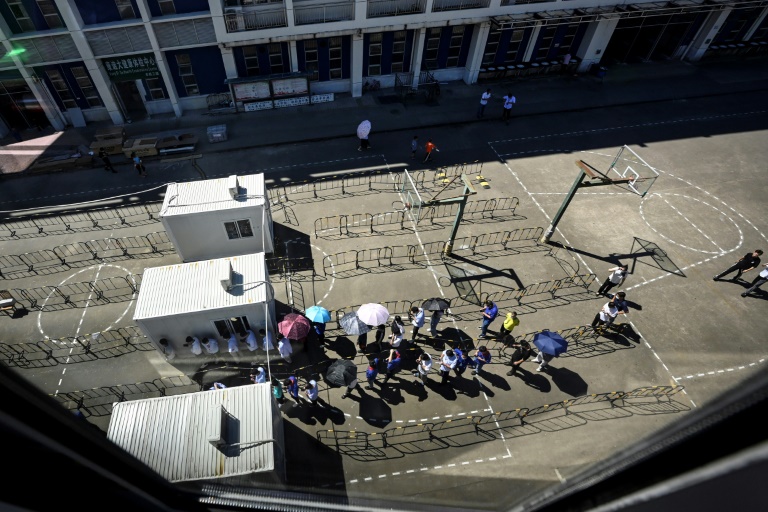
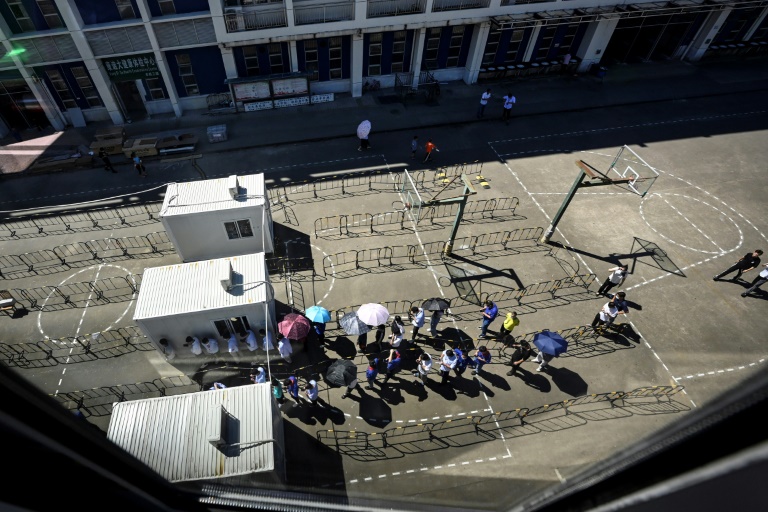
China’s biggest tech hub is rushing to stamp out a fresh Covid outbreak, ordering some of the country’s biggest manufacturers to operate in a ‘closed loop’ to reduce infections, state media reported.

The city of Shenzhen, which borders Hong Kong, reported just 19 Covid cases Tuesday as the city’s health authority said the risk of “large-scale spread is low”.

But Beijing’s reluctance to budge from its strict zero-Covid policy had led to daily mass testing for the 13 million residents of Shenzhen for over a week and the closure of at least three subway stations by Tuesday.

Top manufacturers including iPhone maker Foxconn, electric carmaker BYD, drone maker DJI and telecom equipment maker ZTE are among the companies told to operate under a “closed-loop” production system. 

It would restrict movement of employees for seven days, state-run business news site Yicai reported Monday.

The closed-loop operation mode involves control measures such as locking workers within a compound and conducting daily nucleic acid testing. 

Bloomberg News reported Tuesday that a government notice told companies to reduce unnecessary interaction between non-manufacturing staff and factory floors to curb infection.

Health officials had earlier said all cases found in Shenzhen from July 15 were infected with the highly contagious Omicron subvariant BA.2.

While it is expensive and reduces the scale of production, manufacturers — including Tesla’s site south of Shanghai in the past — have opted to operate in a closed-loop instead of resorting to full shutdown during local Covid flareups.

Strict virus controls have threatened global supply chains and cooled China’s economy with Q2 growth coming in at a dismal 0.4 percent — the weakest growth since the pandemic started.

China reported 976 covid cases Tuesday, with the biggest outbreaks reported in the southern Guanxi region and Gansu province in the northwest. 

China's 'Silicon Valley' tightens rules over Covid flare-up

China’s biggest tech hub is rushing to stamp out a fresh Covid outbreak, ordering some of the country’s biggest manufacturers to operate in a ‘closed loop’ to reduce infections, state media reported.

The city of Shenzhen, which borders Hong Kong, reported just 19 Covid cases Tuesday as the city’s health authority said the risk of “large-scale spread is low”.

But Beijing’s reluctance to budge from its strict zero-Covid policy had led to daily mass testing for the 13 million residents of Shenzhen for over a week and the closure of at least three subway stations by Tuesday.

Top manufacturers including iPhone maker Foxconn, electric carmaker BYD, drone maker DJI and telecom equipment maker ZTE are among the companies told to operate under a “closed-loop” production system. 

It would restrict movement of employees for seven days, state-run business news site Yicai reported Monday.

The closed-loop operation mode involves control measures such as locking workers within a compound and conducting daily nucleic acid testing. 

Bloomberg News reported Tuesday that a government notice told companies to reduce unnecessary interaction between non-manufacturing staff and factory floors to curb infection.

Health officials had earlier said all cases found in Shenzhen from July 15 were infected with the highly contagious Omicron subvariant BA.2.

While it is expensive and reduces the scale of production, manufacturers — including Tesla’s site south of Shanghai in the past — have opted to operate in a closed-loop instead of resorting to full shutdown during local Covid flareups.

Strict virus controls have threatened global supply chains and cooled China’s economy with Q2 growth coming in at a dismal 0.4 percent — the weakest growth since the pandemic started.

China reported 976 covid cases Tuesday, with the biggest outbreaks reported in the southern Guanxi region and Gansu province in the northwest. 

Close Bitnami banner
Bitnami