World

From war to peace: Vietnam's rubber sandals march on

Made from recycled military truck or aircraft tyres, Vietnam’s hand-made rubber sandals, the famously rugged footwear of the Viet Cong, have travelled vast distances over the decades.

In the bustling capital Hanoi, all kinds of shoes are on sale: from $1,000 Gucci heels to $2 plastic slippers.

But for those seeking a nod to yesteryear, the hard-soled rubber sandals — evocative of the communist state’s resourcefulness under fire — are available at markets and small stores alike.

– Uncle Ho’s sandals –

Dao Van Quang paid $8 for a standard pair at a shop outside a Hanoi museum devoted to the country’s revolutionary leader — and dedicated rubber sandal wearer — Ho Chi Minh.

“I wore rubber sandals when I was at school, in the 1980s,” the 47-year-old from central Quang Nam province told AFP.

“They are of historical value, easy to wear and look nice.”

At the museum, the well-worn pair belonging to the former North Vietnam president known affectionately as “Uncle Ho” are displayed in a glass box with his Chinese-style uniform.

Ho’s sandals have even been lauded in national songs praising his simple lifestyle.

“These sandals helped Uncle travel a long way, and with them, he overcame difficulties to build the country,” the lyrics of one song say.

The Vietnamese first began making rubber sandals in the late 1940s, during the First Indochina War against the French, using tyres from an ambushed army truck.

They found the sandals were cheap to make and survived well in wet, muddy and hilly conditions, as soldiers marched through thick jungle.

Later, during the Vietnam War, the simple but sturdy footwear became a symbol of the communist Viet Cong forces’ ingenuity in their fight against the United States’ military might.

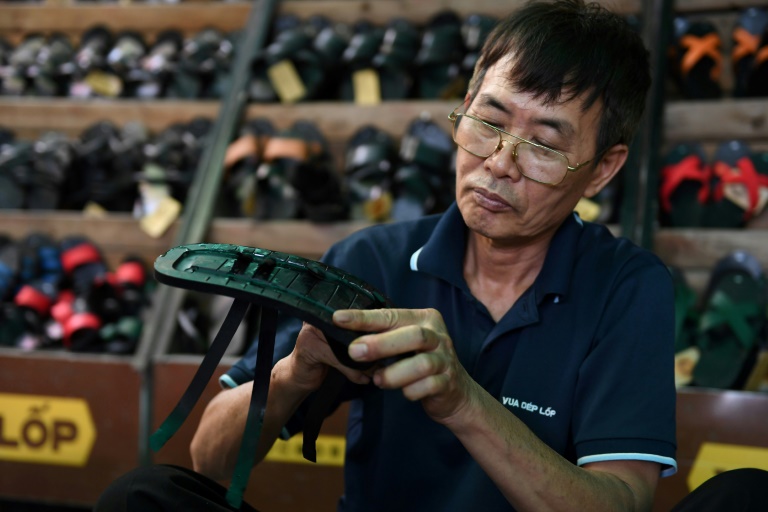
Even in peacetime, the design remains popular for sustainability reasons, said Nguyen Duc Truong, who has spent his life crafting the shoes.

“I think there is still much potential for rubber sandals,” the 58-year-old said.

– Rising popularity –

Vietnam is one of the world’s top four countries for shoe manufacturing and its factories produce pairs for major brands such as Nike and Adidas.

The footwear export industry generated nearly $12 billion in the first half of this year, according to government figures.

While the humble rubber sandal does not quite generate the same revenue, it is high on heritage value and its popularity as a casual shoe is rising.

Vua Dep Lop, which started as a small business and became Vietnam’s rubber sandal leader, sells the footwear for around $10 a pair.

At its workshop in Hanoi, shoemakers use sharp knives and chisels to craft the sandals from huge tyres that are almost the same height as the workers.

While the traditional black models are bestsellers, a colourful modern twist is helping the sandal appeal to a younger demographic.

Nguyen Tien Cuong took over the business from his father-in-law in 2011, and has sold more than half a million pairs of rubber sandals since then.

“We tried to make them softer and more fashionable. After changing the style and format, we started having more customers,” he said. 
Thousands evacuated as California wildfire grows

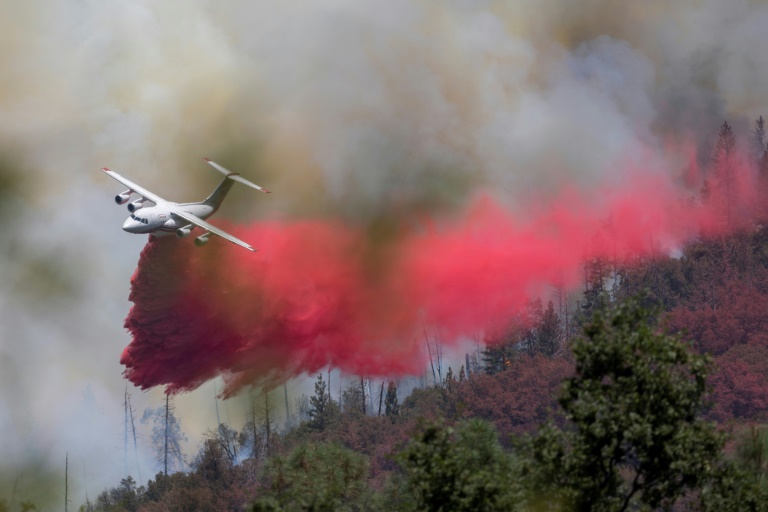
A fierce California wildfire expanded Sunday, burning several thousand acres and forcing evacuations as tens of millions of Americans sweltered through scorching heat.

More than 2,000 firefighters backed by 17 helicopters have been deployed against the Oak Fire, which broke out Friday near Yosemite National Park, the California Department of Forestry and Fire Protection (CAL FIRE) said in a report.

But two days after it began, the blaze has already consumed more than 15,600 acres (6,313 hectares) and remains zero percent contained, the report said, adding that heat combined with low humidity would “hamper” efforts Sunday.

“Extreme drought conditions have led to critical fuel moisture levels,” according to CAL FIRE’s report.

Described as “explosive” by officials, the blaze has left ashes, gutted vehicles and twisted remains of properties in its wake, as emergency personnel worked to evacuate residents and protect structures in its path.

It has already destroyed 10 properties and damaged five others, with thousands more threatened.

More than 6,000 people had been evacuated, said Hector Vasquez, a CAL FIRE official.

“It was scary when we left because we were getting ashes on us, but we had such a visual of this billowing. It just seemed like it was above our house and coming our way really quickly,” one woman who had to be evacuated, Lynda Reynolds-Brown, told local news station KCRA.

“We started getting our stuff together, and that’s when I went back up the hill and looked and I’m like, ‘Oh my God.’ It was coming fast,” her husband Aubrey Brown told the station.

California Governor Gavin Newsom on Saturday declared a state of emergency in Mariposa County, citing “conditions of extreme peril to the safety of persons and property.”

In recent years, California and other parts of the western United States have been ravaged by huge and fast-moving wildfires, driven by years of drought and a warming climate.

– Gore blasts ‘inaction’ –

Evidence of global warming could be seen elsewhere in the country, as 85 million Americans in more than a dozen states were under a weekend heat advisory.

The crisis prompted former vice president Al Gore, a tireless climate advocate, to issue stark warnings Sunday about “inaction” by US lawmakers.

Asked whether he believes US President Joe Biden should declare a climate emergency, which would grant him additional policy powers, Gore was blunt.

“Mother Nature has already declared it a global emergency,” he told ABC News talk show “This Week.”

And “it’s due to get much, much worse, and quickly,” he said separately on NBC.

But he also suggested that recent crises, including deadly heat waves in Europe, could serve as a wake-up call for members of US Congress who have so far refused to embrace efforts to combat climate change.

“I think these extreme events that are getting steadily worse and more severe are really beginning to change minds,” he said.

The central and northeast US regions have faced the brunt of the extreme heat, which is forecast to lessen somewhat on Monday.

“Searing heat will continue across the Mid-Atlantic and Northeast tonight before the upper trough over Canada dips down into the region to moderate temperatures a bit tomorrow,” the National Weather Service said Sunday afternoon.

But not all regions are expected to cool down: temperatures of 100 or more degrees Fahrenheit (37 degrees Celsius) are forecast in the coming days across parts of eastern Kansas and Oklahoma into southern Missouri and northern Arkansas.

Not even the usually cool Pacific Northwest will escape the far-reaching heat, with high temperatures “forecast to steadily rise over the next few days, leading to the possibility for records to be broken,” the weather service added.

Cities have been forced to open cooling stations and increase outreach to at-risk communities such as the homeless and those without access to air conditioning.

Various regions of the globe have been hit by extreme heat waves in recent months, such as Western Europe in July and India in March to April, incidents that scientists say are an unmistakable sign of a warming climate.

Why shark encounters are increasing along the US East Coast

Sun lotion, insect repellant, and the Sharktivity app are this summer’s must-have beach accessories along the US East Coast as human-shark encounters increase. 

Ironically, conservation wins for vulnerable species might be behind the unfortunate uptick, say experts, while there might also be a link to climate as the apex predators’ prey move to new waters.

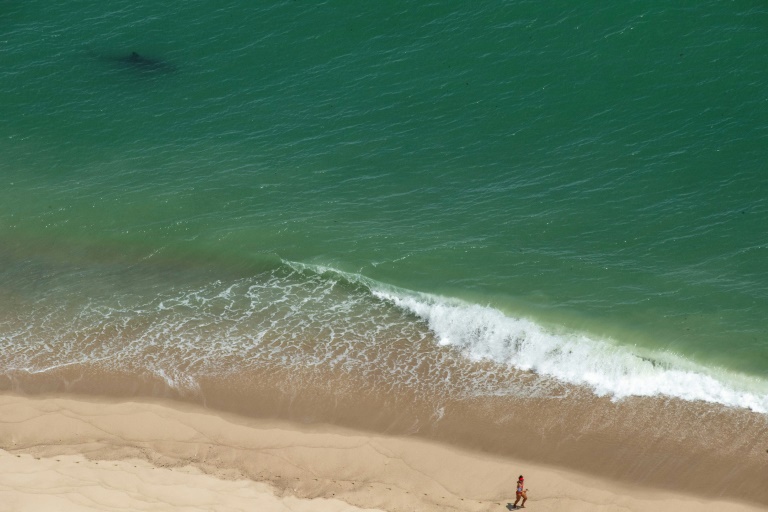
Every summer, great whites move up the Atlantic coast of the United States, toward New England, their number peaking between August and October.

“There’s a general increase in the population that we think is the population rebounding after being protected,” Gregory Skomal, a senior fisheries scientist for the state of Massachusetts, told AFP.

Around 300 of the animals, the world’s largest known fish, have been tagged over the years, with roughly a hundred or so passing through the waters around Cape Cod every year.

The iconic movie “Jaws” was shot in this region, and the creatures are a major tourism draw, adorning baseball caps and t-shirts. On the flipside, however, there have already been temporary beach closures this year after confirmed sightings close to shore.

A major part of the reason is their main prey, seals, are also rebounding thanks to increased protections.

“If you have more sharks feeding close to land and you have more people swimming, the chances for those kinds of negative interactions increases,” said Skomal.

Enter the Atlantic White Shark Conservancy Sharktivity app, which was developed with input from Massachusetts wildlife officials to provide information on shark sightings from researchers, safety officials, and user reports.

– Surveillance patrols –

In New York state, the governor has just announced additional surveillance patrols, including via drones and helicopters.

On the tourist beaches of Long Island, half a dozen shark bites have already come to light, after three years of none at all.

Here, great whites are less likely to be the culprits than other species of shark that operate in the region, in particular tiger sharks, sand tiger sharks and bull sharks.

Nick Whitney, a senior scientist at the New England Aquarium, believes the increasing encounters here might be linked to the sharks’ bait fish — menhaden, also known as porgies or bunkers, recovering.

This might be because of cleaner waters off New York and New Jersey, “but it’s tricky to figure out how much of it is increasing populations or just populations moving around as a result of changing ocean conditions from climate change.”

But if things can thus vary greatly from one year to another on a local level, the global level remains steady at around 75 shark attacks recorded each year, said Gavin Naylor, director of a research program on sharks at the University of Florida.

This follows a brief drop to around 60 during the two first years of the Covid-19 pandemic.

Annual global deaths are around five. In the past twenty years, only two deaths have been reported north of Delaware in the United States, in Cape Cod in 2018, and in Maine in 2020.

But in the future, it is reasonable to think that the number of victims will increase.

“We are going to get more fatalities. There’s more white sharks, the probability is going to increase,” predicts Naylor, even though the trend isn’t yet statistically significant.

Surfers, who venture farther into the water, accounted for half of unprovoked attacks in 2021. Farther south, Florida, with its many tourist beaches and tropical climate, is still where 60 percent of US and 40 percent of world attacks occur.

– Take precautions –

Sharks are far from the bloodthirsty beasts sometimes portrayed in movies. 

Studies have shown that they can mistake surfers or swimmers for their usual prey — notably white sharks, which have rather poor eyesight.

“With so many people on a global scale in the water, if sharks preferred to feed on prey upon humans, we would have tens of thousands of attacks each year,” said Skomal.

With climate change, the expert expects that the increase in ocean temperatures will gradually lengthen the season during which sharks are present in the northern United States.

So what can be done to limit the risks? People should download the Sharktivity app to track sightings. 

“Another thing we tell people is just to be aware of your surroundings,” said Whitney. Look around for birds flying around schools of baitfish, for example.

Don’t swim alone, stick to areas with cell phone coverage, and if bitten, the real danger is bleeding out, so it’s important to get to shore and control the bleeding until help arrives.

Vanilla spice: arid Israel produces potent tropical pods

In his busy Tel Aviv restaurant, chef Yair Yosefi adds a magic ingredient to his signature cake: Israel’s first commercially produced vanilla providing what devotees claim is perhaps the strongest ever flavour.

It is made by Vanilla Vida, a new food-industry player that says its computer-guided curing process, along with other high-tech cultivation methods, can scientifically craft each batch of vanilla to a specific taste.

The company, founded in 2020, could prove to a be lucrative venture, producing what has become the world’s most precious spice after saffron.

Many mass-produced foods, from ice cream to milk shakes to soy milk, are usually flavoured with artificial vanilla — but the real organic stuff is still very expensive and sought-after.

Vanilla Vida has also developed greenhouses to recreate conditions the vanilla needs to flourish, but until the plants there achieve full size, the company imports fresh vanilla to its processing plant in Or Yehuda, a Tel Aviv suburb. 

Co-founder and CEO Oren Zilberman told AFP his company subjects the raw product to a highly-monitored ageing process.

This, he said, allows it to draw out desired flavours, accelerating the drying process and eliminating the various risks that come with open air drying in tropical environments like Indonesia or Madagascar, two major vanilla producers. 

“We know how, through drying processes with varying temperatures, humidity and other elements to get the raw material to go a certain way, to create slightly different aromas — the same way you roast coffee differently to create different aromas,” Zilberman said.

“If you understand the metabolism, you can create chocolatey vanilla, carameley vanilla, smokey woody vanilla like the French prefer, or very sweet vanilla for Americans,” he added.

Asked about the quality of the Israeli-aged vanilla, chef Yosefi said the proof was in the pudding, given the flurry of orders for his dacquoise cake and his bistro, Brut. 

“People ask for ‘the dish with the fruit and vanilla’,” he told AFP.

The difference between other commercially available vanilla and the highly-concentrated Vanilla Vida product is “day and night,” he said. 

Florida hurries to catch fast-spreading snail invasion

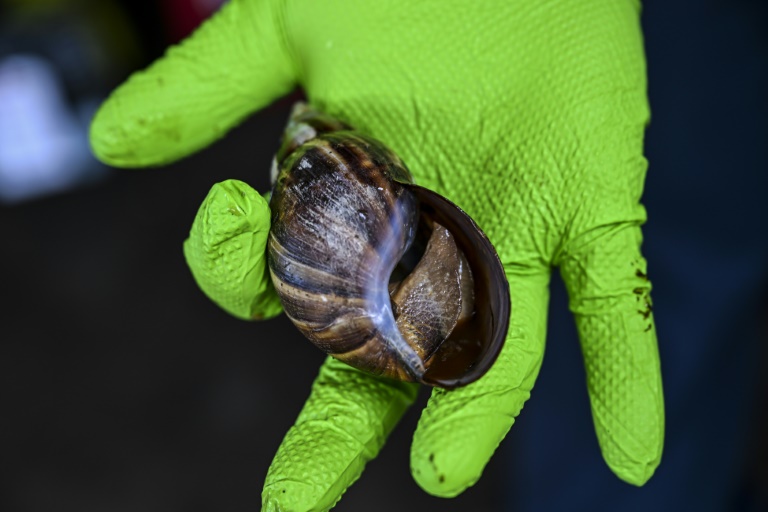
It might not be speedy, but it’s big, hungry and fast at reproducing: the giant African snail, a potential health risk to humans, has once again invaded the southern US state of Florida.

Jason Stanley, a biologist with Florida’s Department of Agriculture, says that the gastropod greedily “feeds on over 500 different kinds of plants.”

“We’re concerned with that being in our environment,” he told AFP.

Since June 23, employees from his agency have been combing through the gardens of New Port Richey, a small town on Florida’s west coast, where the invasive species has taken root.

A single giant African snail can lay up to 2,000 eggs each year, Stanley explains, which — coupled with its appetite — could spell disaster for the state’s robust agriculture industry.

In a grassy plot of land in New Port Richey, Mellon, a yellow Labrador trained to sniff out the snails, walks with his handler.

He darts under a tree and sniffs around in the grass. When Mellon eventually locates a snail, he sits directly on top of it, as he’s been trained to do.

Florida authorities believe that the snail, native to eastern Africa, was reintroduced to the state when someone brought it home as a pet.

Unlike other brown-tinted giant snails, this particular breed has white flesh.

“These white phenotypes are very popular in the pet trade,” Stanley noted.

Through the talents of Mellon and another snail-sniffing canine, more than 1,000 giant African snails have already been caught in Pasco County, where New Port Richey is located.

Authorities are also trying to stamp out the giant snails by applying metaldehyde, a pesticide that is harmless to humans and animals, according to the state.

The Florida Department of Agriculture has established a quarantine zone within New Port Richey: no plants or other vegetation can be removed from the area to try to prevent the snails from spreading further.

– Carries harmful disease –

“Another issue with this snail is that it carries the rat lungworm, which can cause meningitis in humans,” Stanley added.

That type of parasite, which has been detected among the snails caught in Pasco County, enters rats’ lungs when they eat the snails and then spreads when the rodents cough. 

If a human ingests one of the worms, Stanley says, it usually makes its way to the brain stem, where it can cause meningitis.

Local resident Jay Pasqua still can’t believe the stir caused by the giant African snail.

In late June, a Department of Agriculture official came to his lawn mower sales and repair store in New Port Richey to flag the presence of the invasive species.

“In the beginning, it was kind of funny to see all the attention that a snail was getting,” the 64-year-old told AFP.

“But (after) starting to understand the process of their growth, how they got here, and what diseases and what problems they cause, it did become a concern at that time.”

He has since found dozens of the pests in his garden, although he says he hasn’t seen any for three days.

The giant African snail has been eradicated from other parts of Florida twice before, first in 1975 and then again in 2021.

The latter extermination campaign took place in Miami-Dade County and was the result of 10 years of effort at a cost of $23 million.

Stanley says he’s optimistic that this time will be much easier.

“So far, it’s isolated in one area, and we’re already surveying and treating this area. So we’re very hopeful that it’s not going to take that amount of time here.”

Call for max working temperature cap after EU heatwave deaths

Trade unions called Monday for the European Commission to impose maximum temperature limits for outdoor workers, after three people died while on shift in Madrid during last week’s withering heatwave. 

While a handful of member states have legislation limiting working hours in excessive heat, the thresholds vary and many nations have no nationwide heat limits. 

According to research by the polling agency Eurofound, 23 percent of all workers across the EU were being exposed to high temperatures a quarter of the time. That figure rises to 36 percent in agriculture and industry and to 38 percent for construction workers. 

Previous research has linked high temperatures to a number of chronic conditions and an elevated risk of workplace injury. 

“Workers are on the frontline of the climate crisis every day and they need protections to match the ever-increasing danger from extreme temperatures,” said Claes-Mikael Stahl, deputy secretary general of the European Trade Union Confederation.

The ETUC said that most EU nations have no maximum temperature legislation for workplaces, although Belgium, Hungary and Latvia all have some curbs on activity. 

In France, where there are currently no working temperature limits, 12 workers died due to heat exposure in 2020 alone, the union said.

– ‘Can’t ignore the danger’ –

Spain, where three workers died in extreme heat last week, does have temperature limits in place, but only for certain professions. 

A 60-year-old street cleaner on a one-month contract died in Madrid on Saturday, after he collapsed in the street from heatstroke while working the previous day.

At the time temperatures in Madrid neared 40C.

A 56-year-old warehouse worker in a Madrid suburb also died on Saturday after suffering heatstroke while on the job.

Security forces on Thursday announced the death of a worker due to heat in Paracuellos de Jarama, on the outskirts of the capital.

Last week, the city reached a deal with unions to restrict manual street cleaning work to below 39C.

With global average temperatures more than 1.1C warmer than the pre-Industrial era, Europe is being hit with more and more record-breaking hot spells. 

Global heating will continue to make deadly heatwaves more frequent and intense with ever higher levels of atmospheric carbon pollution, scientists say. 

The UN’s climate science panel this year warned that tens of millions more people would be subjected to extreme heat days under 2C of warming; countries’ climate plans have Earth on course to warm by 2.7C.

“Heatwaves can be fatal for people working unprotected from the sun, as we’ve already witnessed in Spain this summer,” said Stahl.

“Workers are on the frontline of the climate crisis every day and they need protections to match the ever-increasing danger from extreme temperatures.”

He said the EU needed continent-wide legislation on maximum working temperatures, since “the weather doesn’t respect national borders”.

“Politicians can’t continue to ignore the danger to our most vulnerable workers from the comfort of their airconditioned offices,” he said.

Call for max working temperature cap after EU heatwave deaths

Trade unions called Monday for the European Commission to impose maximum temperature limits for outdoor workers, after three people died while on shift in Madrid during last week’s withering heatwave. 

While a handful of member states have legislation limiting working hours in excessive heat, the thresholds vary and many nations have no nationwide heat limits. 

According to research by the polling agency Eurofound, 23 percent of all workers across the EU were being exposed to high temperatures a quarter of the time. That figure rises to 36 percent in agriculture and industry and to 38 percent for construction workers. 

Previous research has linked high temperatures to a number of chronic conditions and an elevated risk of workplace injury. 

“Workers are on the frontline of the climate crisis every day and they need protections to match the ever-increasing danger from extreme temperatures,” said Claes-Mikael Stahl, deputy secretary general of the European Trade Union Confederation.

The ETUC said that most EU nations have no maximum temperature legislation for workplaces, although Belgium, Hungary and Latvia all have some curbs on activity. 

In France, where there are currently no working temperature limits, 12 workers died due to heat exposure in 2020 alone, the union said.

– ‘Can’t ignore the danger’ –

Spain, where three workers died in extreme heat last week, does have temperature limits in place, but only for certain professions. 

A 60-year-old street cleaner on a one-month contract died in Madrid on Saturday, after he collapsed in the street from heatstroke while working the previous day.

At the time temperatures in Madrid neared 40C.

A 56-year-old warehouse worker in a Madrid suburb also died on Saturday after suffering heatstroke while on the job.

Security forces on Thursday announced the death of a worker due to heat in Paracuellos de Jarama, on the outskirts of the capital.

Last week, the city reached a deal with unions to restrict manual street cleaning work to below 39C.

With global average temperatures more than 1.1C warmer than the pre-Industrial era, Europe is being hit with more and more record-breaking hot spells. 

Global heating will continue to make deadly heatwaves more frequent and intense with ever higher levels of atmospheric carbon pollution, scientists say. 

The UN’s climate science panel this year warned that tens of millions more people would be subjected to extreme heat days under 2C of warming; countries’ climate plans have Earth on course to warm by 2.7C.

“Heatwaves can be fatal for people working unprotected from the sun, as we’ve already witnessed in Spain this summer,” said Stahl.

“Workers are on the frontline of the climate crisis every day and they need protections to match the ever-increasing danger from extreme temperatures.”

He said the EU needed continent-wide legislation on maximum working temperatures, since “the weather doesn’t respect national borders”.

“Politicians can’t continue to ignore the danger to our most vulnerable workers from the comfort of their airconditioned offices,” he said.

Call for max working temperature cap after EU heatwave deaths

Trade unions called Monday for the European Commission to impose maximum temperature limits for outdoor workers, after three people died while on shift in Madrid during last week’s withering heatwave. 

While a handful of member states have legislation limiting working hours in excessive heat, the thresholds vary and many nations have no nationwide heat limits. 

According to research by the polling agency Eurofound, 23 percent of all workers across the EU were being exposed to high temperatures a quarter of the time. That figure rises to 36 percent in agriculture and industry and to 38 percent for construction workers. 

Previous research has linked high temperatures to a number of chronic conditions and an elevated risk of workplace injury. 

“Workers are on the frontline of the climate crisis every day and they need protections to match the ever-increasing danger from extreme temperatures,” said Claes-Mikael Stahl, deputy secretary general of the European Trade Union Confederation.

The ETUC said that most EU nations have no maximum temperature legislation for workplaces, although Belgium, Hungary and Latvia all have some curbs on activity. 

In France, where there are currently no working temperature limits, 12 workers died due to heat exposure in 2020 alone, the union said.

– ‘Can’t ignore the danger’ –

Spain, where three workers died in extreme heat last week, does have temperature limits in place, but only for certain professions. 

A 60-year-old street cleaner on a one-month contract died in Madrid on Saturday, after he collapsed in the street from heatstroke while working the previous day.

At the time temperatures in Madrid neared 40C.

A 56-year-old warehouse worker in a Madrid suburb also died on Saturday after suffering heatstroke while on the job.

Security forces on Thursday announced the death of a worker due to heat in Paracuellos de Jarama, on the outskirts of the capital.

Last week, the city reached a deal with unions to restrict manual street cleaning work to below 39C.

With global average temperatures more than 1.1C warmer than the pre-Industrial era, Europe is being hit with more and more record-breaking hot spells. 

Global heating will continue to make deadly heatwaves more frequent and intense with ever higher levels of atmospheric carbon pollution, scientists say. 

The UN’s climate science panel this year warned that tens of millions more people would be subjected to extreme heat days under 2C of warming; countries’ climate plans have Earth on course to warm by 2.7C.

“Heatwaves can be fatal for people working unprotected from the sun, as we’ve already witnessed in Spain this summer,” said Stahl.

“Workers are on the frontline of the climate crisis every day and they need protections to match the ever-increasing danger from extreme temperatures.”

He said the EU needed continent-wide legislation on maximum working temperatures, since “the weather doesn’t respect national borders”.

“Politicians can’t continue to ignore the danger to our most vulnerable workers from the comfort of their airconditioned offices,” he said.

Evacuations after volcano erupts in southern Japan

Dozens of people were ordered to evacuate their homes after a fiery volcanic eruption in southern Japan on Sunday as the national weather agency issued its top-level alert for the mountain.

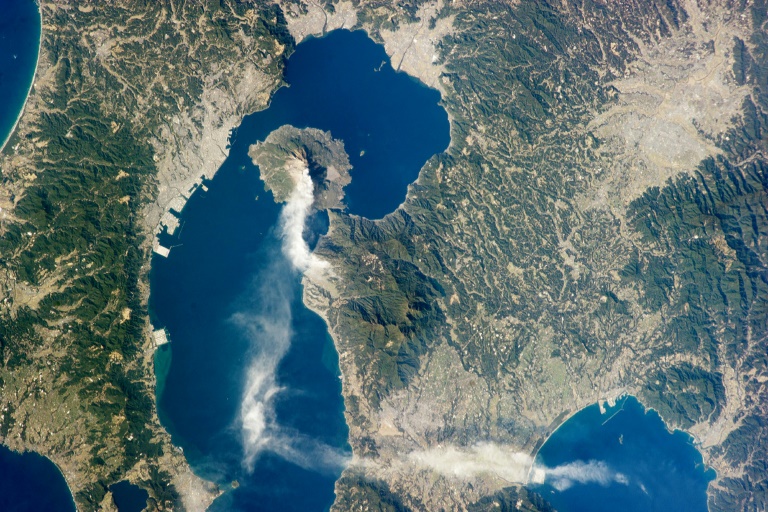
Television footage showed red-hot rocks and dark plumes exploding from Sakurajima volcano in Kagoshima, which erupted just after 8:00 pm (1100 GMT).

There were no immediate reports of damage, said deputy chief cabinet secretary Yoshihiko Isozaki.

Prime Minister Fumio Kishida has instructed the government “to work closely with the local municipality to ensure damage prevention, such as through evacuations,” Isozaki told reporters.

The seaside city ordered residents to evacuate its Arimura district and part of the Furusato district, which are home to 51 people, according to local media.

Sakurajima volcano frequently spits out smoke and ash, and is a major tourist attraction.

Sunday’s blast propelled large cinders about 2.5 kilometres (1.5 miles) from the crater, the Japan Meteorological Agency (JMA) said, while the smoke reached around 300 metres and merged with the clouds.

The agency raised its alert for Sakurajima to level five, the top level, which urges evacuations.

Previously it was at level three, which bans entry to the mountain. 

The volcano saw four earlier eruptions between Saturday and Sunday afternoon, with the plume reaching as high as 1,200 metres.

“Residential areas of Arimura town and Furusato town within three kilometres of the summit crater… of Sakurajima should be on high alert,” Tsuyoshi Nakatsuji of JMA’s Volcanic Observation Division told reporters.

Nakatsuji said the JMA last week had observed the swelling of the volcano, which signals the accumulation of magma.

“But the swelling hasn’t been resolved after the latest eruption,” he said. 

“We’ll carefully monitor this.”

Japan has scores of active volcanoes and sits on the so-called Pacific “Ring of Fire” where a large proportion of the world’s earthquakes and volcanic eruptions are recorded.

Sakurajima was formerly an island, but due to previous eruptions is now attached to a peninsula.

Japan last issued the top evacuation alert for a volcano when Kuchinoerabu island, also in Kagoshima, erupted in 2015.

France to order air-conditioned shops to keep doors shut

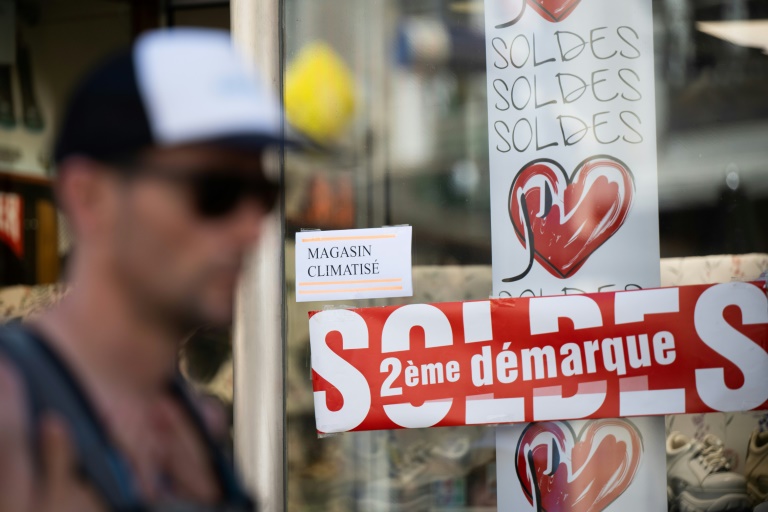
Air-conditioned shops in France will be ordered to keep their doors closed or risk being fined, a minister said Sunday announcing an upcoming rule to combat energy wastage.

Leaving the doors open when the air conditioning is on leads to “20 percent more consumption and… it’s absurd,” French Minister of Ecological Transition Agnes Pannier-Runacher told RMC radio.

The minister said there were also plans to restrict the use of illuminated signs.

“In the coming days, I will issue two decrees: the first will widen the ban on illuminated advertising, whatever the size of the city, between 1 am and 6 am”, with the exception of airports and stations, Pannier-Runacher told the Journal du Dimanche newspaper.

“The second will ban shops from having their doors open while the air conditioning and heating are working”.

Some cities in France — which like other parts of Europe has been gripped by a heatwave recently — passed municipal by-laws in July, imposing fines for offending air-conditioned shops.

The government now plans to extend this to the whole country, with a fine of up to 750 euros ($766) — but will emphasise the education of shopkeepers in the first instance.

Close Bitnami banner
Bitnami