World

Global stocks mixed as Snap shares dive after earnings

European stocks edged back into positive territory while Wall Street retreated Friday as Snap shares fell off a cliff after reporting bleak quarterly results.

Meanwhile, the euro came under pressure after a key survey suggested the single-currency area could be on the verge of recession due to slumping demand and rising costs.

A bigger-than-expected hike in interest rates by the European Central Bank failed to provide a lasting boost to the euro, as political turmoil in Italy also clouds the outlook.

Economic activity in the eurozone plummeted in July, the closely watched purchasing managers’ index, or PMI, showed, with a big drop in manufacturing and consumers’ post-lockdown spending sprees braked by high prices.

“The eurozone is teetering on the brink of recession,” said Andrew Kenningham, economist at Capital Economics. “The ECB will have to follow up on yesterday’s historic rate hike with several more in the coming months even though this will worsen the downturn.”

Nevertheless, Paris, Frankfurt and London all edged higher.

Back on Wall Street, a three-day streak of gains ended, cutting into the week’s gains.

The broad-based S&P 500 ended at 3,961.63, down 0.9 percent for the day, but up 2.5 percent for the week.

“Even though results are not great, they have been good enough,” said Angelo Kourkafas, investment strategist at Edward Jones. 

“What has helped the markets rebound aside from good enough earnings is the declining inflation expectations.”

But results by Snap, the owner of the Snapchat messaging app, landed like a bombshell, with quarterly losses nearly tripling to $422 million despite revenue increasing 13 percent under conditions “more challenging” than expected.

Its shares plummeted nearly 40 percent.

The results also weighed on Facebook parent Meta Platforms, which dropped 7.6 percent, and Google parent Alphabet, which shed 5.8 percent amid worries over internet advertising.

This week’s rally in New York has fueled hopes that the market may be poised for a recovery after a bruising first half of 2022.

But Chris Beauchamp, chief market analyst at online trading platform IG, said that while this week’s rebound in equities had lasted longer than previous ones, it was on borrowed time. 

Investors “will be wary of pushing their luck too hard into next week, given the avalanche of earnings heading their way, plus a (US Federal Reserve interest rate) decision and the first reading on US second quarter GDP.”

– Key figures at around 2120 GMT –

New York – Dow: DOWN 0.4 percent at 31,899.29 (close)

New York – S&P 500: DOWN 0.9 percent at 3,961.63 (close)

New York – Nasdaq: DOWN 1.9 percent at 11,834.11 (close)

London – FTSE 100: UP 0.1 percent at 7,276.37 (close)

Frankfurt – DAX: UP 0.1 percent at 13,253.68 (close)

Paris CAC 40: UP 0.3 percent at 6,216.82 (close)

EUROSTOXX 50: FLAT at 3,596.49 (close)

Tokyo – Nikkei 225: UP 0.4 percent at 27,914.66 (close)

Hong Kong – Hang Seng Index: UP 0.2 percent at 20,609.14 (close)

Shanghai – Composite: DOWN 0.1 percent at 3,269.97 (close)

Euro/dollar: DOWN at $1.0220 from $1.0230 on Thursday

Pound/dollar: UP at $1.1998 from $1.1995 

Euro/pound: DOWN at 85.07 pence from 85.28 pence

Dollar/yen: DOWN at 136.05 yen from 137.36 yen

West Texas Intermediate: DOWN 1.7 percent at $94.70 per barrel

Brent North Sea crude: DOWN 0.6 percent at $103.20 per barrel

burs-jmb/ec
Twitter says Musk 'uncertainty' hurting revenue

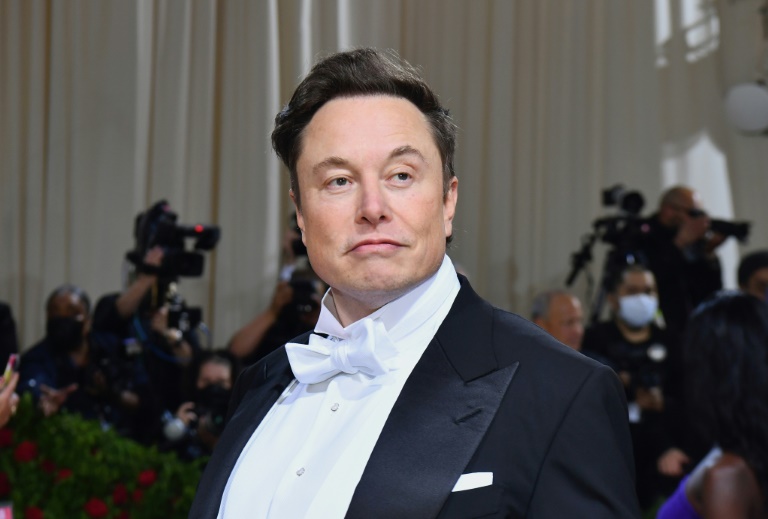
Twitter blamed disappointing results Friday on “headwinds,” including the uncertainty imposed on the company by Elon Musk’s chaotic buyout bid. 

The firm is locked in a legal battle with the mercurial Tesla boss over his effort to walk away from a $44 billion deal to purchase the platform, leaving the company in limbo.

Twitter missed expectations with revenue of $1.18 billion, due to “advertising industry headwinds… as well as uncertainty related to the pending acquisition of Twitter by an affiliate of Elon Musk,” the company reported.

Also, in the current context of tightening credit conditions and economic turbulence, many companies like Twitter that rely heavily on ads are suffering from a decrease in advertisers’ budgets.

“Twitter is on a rowboat in the middle of a storm,” said analyst Jasmine Enberg. “The Musk saga rocked the boat even harder.” 

“Twitter is now in the unenviable position of convincing advertisers that its ad business is solid,” she added.

Twitter also reported that the number of “monetizable” daily active users — those who can be shown advertising — increased by 8.8 million, less than expected by analysts, to 237.8 million. 

“Overall we would characterize the daily active user metrics as better than feared and holding up relatively firm in this environment,” said analyst Dan Ives.

Despite the less than stellar results, Twitter’s stock closed up nearly one percent at $39.84, as investors seemed relieved the news wasn’t worse.

By comparison, Snap’s stock finised down 39 percent a day after the parent company of messaging app Snapchat reported disappointing earnings. 

Twitter’s results cover the period ending in June so don’t include Musk’s move in July to try to “terminate” the deal on the argument that the platform was not forthcoming about its tally of fake accounts.

The social media network, which is a key exchange of ideas, news and entertainment, has countered by saying the Tesla chief already agreed to the deal and can’t back out now.

“Twitter believes that Mr. Musk’s purported termination is invalid and wrongful, and the merger agreement remains in effect,” it said in the earnings report.

– Twitter left in limbo –

Twitter notched a victory earlier this week in its fight with Musk, when a judge agreed to a fast-track trial on whether to force the billionaire to complete the buyout.

Musk’s lawyers had pushed for a February 2023 date, but the court in the eastern US state of Delaware hewed closely to the uncertainty-wracked platform’s desire for speed and set an October start.

Billions of dollars are at stake, but so is the future of Twitter, which Musk has said should allow any legal speech — an absolutist position that has sparked fears the network could be used to incite violence.

While the deal remains in limbo, Twitter is left with anxious employees, wary advertisers and hamstrung management.

In early May, at an annual marketing event where companies negotiate large advertising deals, Twitter was “not able to give advertisers any clarity or confidence” that it would continue to be safe showcase for them, Angelo Carusone, president of watchdog group Media Matters, told AFP previously.

“They didn’t go anywhere close to what they normally sell at that event. And it’s obviously been sluggish since then,” he said.

The San Francisco-based social network cannot afford to lose customers. 

Unlike big fish such as Google and Facebook parent Meta, which dominate online advertising and make billions in profits, Twitter lost hundreds of millions of dollars in 2020 and 2021.

The group will capture less than one percent of global ad revenue in 2022, according to eMarketer, compared to 12.5 percent for Facebook, nine percent for Instagram and nearly two percent for booming upstart TikTok. 

Fans return as Comic-Con awaits new 'Thrones' and 'Rings' shows

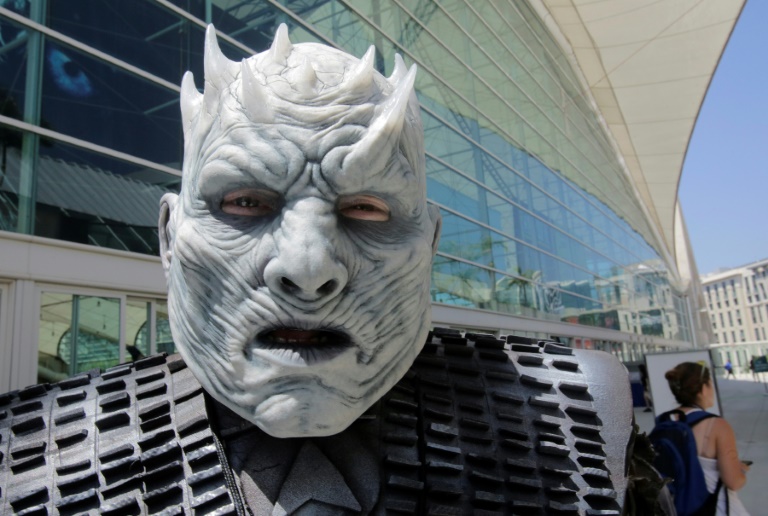
Tens of thousands of cosplaying fans will converge on San Diego Thursday for the first full-scale Comic-Con in three years, with new “Lord of the Rings” and “Game of Thrones” TV series set to be unveiled at the world’s most famous pop culture gathering.

Hollywood studios including Disney and Warner Bros. are also in town to show off their upcoming films, and have done nothing to quell frenzied rumors of a first look at Marvel superhero sequel “Black Panther: Wakanda Forever” and a new Superman movie announcement.

The past two editions of Comic-Con had to be held online due to the spread of Covid-19, while limited numbers attended a scaled-down “special edition” in San Diego last November.

But attendance this week is expected to match pre-pandemic levels, with more than 130,000 fans — whether dressed as hobbits, dragons or princesses — required to wear face masks as they pack into the sweaty convention center.

“I think it’ll look like Comic-Con from 2019,” said the event’s communications and strategy chief David Glanzer.

“We weathered it. And now coming back, maybe we’re going to have tears of joy… it’s very emotional,” he told AFP.

The comic book, science fiction and fantasy extravaganza begins this year with Paramount’s “Dungeons and Dragons: Honor Among Thieves.”

Marking the first time the world’s most popular role-playing game has received a mega-budget silver-screen adaptation, the movie out next March stars Chris Pine, Hugh Grant and former “Bridgerton” heartthrob Rege-Jean Page.

But the week’s headlines are set to be dominated by two huge fantasy series coming to television screens soon: Amazon Prime’s “Lord of the Rings: The Rings of Power” and HBO’s “House of the Dragon.” 

“The Rings of Power” is Amazon’s enormously ambitious saga taking place in the world of J.R.R. Tolkien’s books, and set long before the events of Peter Jackson’s Oscar-winning trilogy of films.

The series — playing out across five seasons, the first of which launches September 2 — is reported to have cost Amazon well over $1 billion, and is said to be a personal obsession of founder Jeff Bezos.

Much of that cost went into buying the rights to the Tolkien universe and investing in lavish production values, with a healthy sum set aside for “activations,” or immersive fan experiences, at Comic-Con.

Amazon on Friday will bring its cast of hobbits, elves and dwarves to the venue’s cavernous Hall H, where fans — who line up for hours, or even days — anticipate seeing the first detailed look at the series.

– Rings v Thrones – 

The following day, “House of the Dragon” — the first spin-off to “Game of Thrones” set in George R.R. Martin’s fictional world of Westeros, out August 21 — will be unveiled by HBO.

Martin has played down talk of a rivalry between the two mega-franchises, insisting, “I want both shows to find an appreciative audience, and give them great television. Great fantasy.”

“The more fantasy hits we have, the more great fantasy we are likely to get,” he wrote in a blog post.

But HBO hopes its prequel can match the wild popularity of the original “Thrones,” which over eight seasons became must-see television, spawned countless imitations and delivered 59 Emmys — a record for a drama at television’s equivalent of the Oscars.

Starring Matt Smith, Rhys Ifans and Emma D’Arcy, “House of the Dragon” tells the story of the murderous, dragon-breeding Targaryen family, some 300 years before the events of “Thrones.”

Its stars will appear in Hall H immediately after a movie presentation from HBO’s sister company Warner Bros., which is set to feature Dwayne “The Rock” Johnson, who is promoting his upcoming superhero flick “Black Adam.”

The week will also feature a send-off for AMC’s “The Walking Dead,” as the juggernaut zombie TV series bows out with its final season — and launches a new spin-off, the anthology-style “Tales of the Walking Dead.”

Chinese ride-hailing giant Didi hit with $1.2 bn fine

China has fined ride-hailing giant Didi 8 billion yuan ($1.2 billion), regulators announced Thursday, concluding a year-long investigation into alleged data security violations.

The probe found “conclusive evidence” that Didi had committed violations of an “egregious nature”, the Cyberspace Administration of China (CAC) said in a statement.

It accused Didi of illegally storing the ID information of more than 57 million drivers in plain text instead of a more secure format.

The regulator said the firm also analysed passenger details without their knowledge — including photos on their mobile phones and facial recognition data.

“Didi’s illegal operations have brought serious security risks to the security of the country’s key information infrastructure and data security,” CAC said.

“Even when regulatory authorities ordered corrections, comprehensive and in-depth corrections were not carried out,” it added.

Didi’s violations took place over seven years starting June 2015, according to the regulator.

CAC also accused Didi of unspecified national security violations in its data processing activities.

The firm was also found to have violated the Cybersecurity Law, Data Protection Law and Personal Information Protection Law –- a landmark code introduced last year that is modelled on the European Union’s GDPR legislation.

– Tech crackdown –

Didi has been one of the highest-profile targets of a widespread clampdown on China’s tech sector, which saw years of runaway growth and the emergence of supersized monopolies before regulators stepped in. 

The fine amounts to more than four percent of its $27.3 billion total revenue last year.

“We sincerely accept this decision (and will) resolutely obey it,” Didi said in a statement on social media.

“We sincerely thank the competent authorities for their inspection and guidance… We will take this as a warning… (and) further strengthen the construction of network security and data security.”

Didi’s fine is the largest imposed by Chinese authorities since e-commerce behemoth Alibaba was ordered to pay around $2.75 billion in April 2021 for anti-competitive practices.

The ride-hailing firm got into hot water in June last year after it pressed ahead with an initial public offering in the United States, reportedly against Beijing’s wishes.  

Days after it raised $4.4 billion in New York, Chinese authorities launched a cybersecurity probe into the company, sending its shares plunging.  

Since then, Didi’s app has been removed from Chinese stores and it has been unable to register new users.

China’s regulatory crackdown has eased this year as it grapples with the economic fallout from its zero-Covid strategy, with the country struggling to reach its 5.5 percent growth target.

However, there is still a strict regulatory environment for tech firms: President Xi Jinping last month called for stronger oversight and better security in the financial tech arena.

Russia resumes critical gas supplies to Europe via Nord Stream

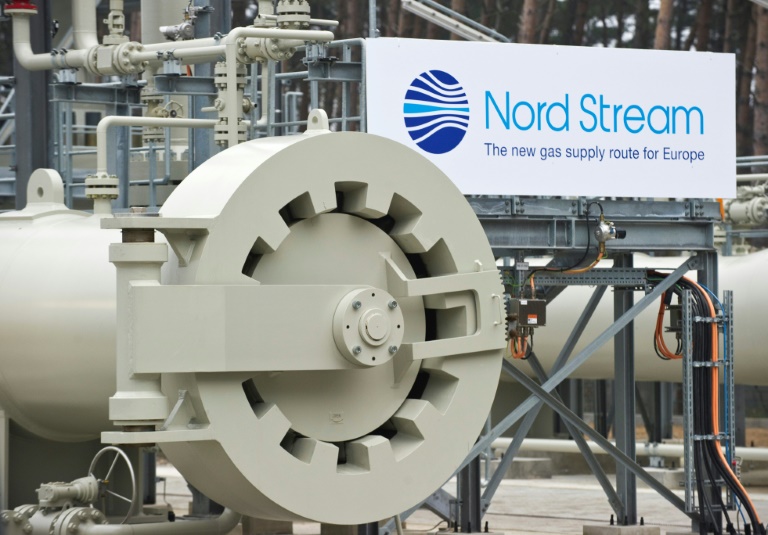
Russia on Thursday resumed critical gas supplies to Europe through Germany, reopening the Nord Stream gas pipeline after 10 days, but uncertainty lingered whether the continent could avert an energy crisis this winter.

“It’s working,” a Nord Stream spokesman said, without specifying the amount of gas being delivered. 

The German government had feared that Moscow would not reopen the pipeline after the scheduled work. 

It believes Russia is squeezing supplies in retaliation for Western sanctions over Moscow’s invasion of Ukraine.

According to data provided by Russia’s state-owned energy giant Gazprom to Gascade, the German operator of the line, 530 gigawatt hours (GWh) would be delivered during the day.

This was only 30 percent of its capacity, Klaus Mueller, president of Germany’s energy regulator, the Federal Network Agency, said on Twitter.

Gazprom has cut flows to Germany via the vital Nord Stream 1 pipeline by some 40 percent in recent weeks, blaming the absence of a Siemens gas turbine that was undergoing repairs in Canada.

The German government has rejected Gazprom’s explanation.

The Nord Stream 1 pipeline under the Baltic Sea has been shut down since July 11 to undergo annual maintenance.

But the resumption of 40 percent of supplies would be insufficient to ward off an energy crisis in Europe this winter, according to experts.

The European Commission on Wednesday urged EU countries to reduce demand for natural gas by 15 percent over the coming months to secure winter stocks and defeat Russia’s “blackmail”.

Announcing an emergency plan, EU commissioners also asked member states to give Brussels special powers to impose compulsory energy rationing if Russia cuts off Europe’s gas lifeline.

A total shutdown of imports or a sharp reduction in the flow from east to west could have a catastrophic effect on the European economy, shutting factories and forcing households to turn down the heat.

Last year, Russia accounted for 40 percent of the EU’s total gas imports and any further disruption to supply would also push consumer prices higher and raise the risk of a deep recession.

“Russia is blackmailing us,” European Commission President Ursula von der Leyen told reporters. 

“Russia is using energy as a weapon and therefore, in any event, whether it’s a partial major cut-off of Russian gas or total cut-off… Europe needs to be ready.” 

Russian President Vladimir Putin has played hot and cold in recent days in his threats to cut off gas deliveries to the bloc of 27 members, but Brussels is asking EU countries to prepare for the worst.

France plans fashion revolution with climate-impact labels

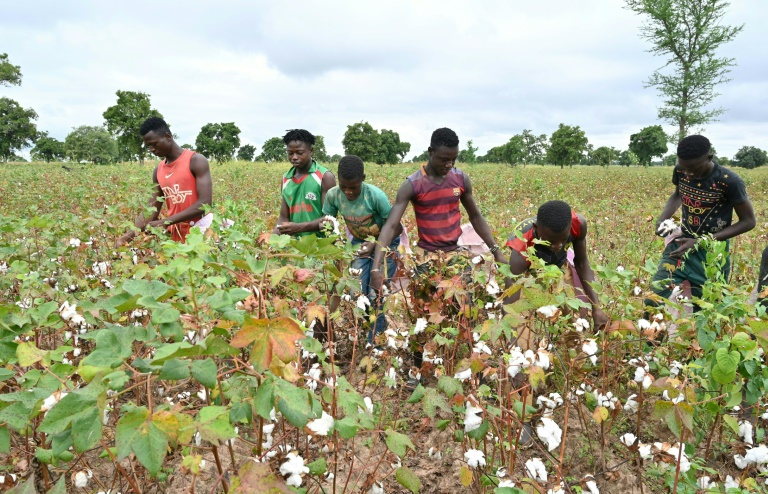
Is it better for the environment if you buy a brand-new cotton T-shirt or a recycled one? 

Well, it depends. 

Recycling has obvious benefits, but the process shortens cotton fibres and so usually has to be mixed with some oil-based material to keep it from falling apart. 

Such trade-offs make it tricky to figure out the real sustainability rating of clothes — but brands in Europe will soon have no choice. 

By next year, every item of clothing sold in France will require a label detailing its precise climate impact — with a similar rule expected for the rest of the European Union by 2026. 

That means juggling many different and conflicting data points: Where and how were its raw materials grown? What was used to colour it? How far did it travel? Was the factory powered with solar energy or coal?

The French Agency for Ecological Transition (Ademe) is currently testing 11 proposals for how to collect and compare data — and what the resulting label might look like to consumers — using 500 real-life items of clothing. 

“The message of the law is clear — it will become obligatory, so brands need to prepare, to make their products traceable, to organise the automatic collection of data,” Erwan Autret, one of the coordinators at Ademe, told AFP. 

“Some say the models are too simple, some say they’re too complicated, but it’s a sign of the maturity of the debate that no one questions the need for these calculations anymore.”

– ‘Transparent and informed’ –

The need for change in fashion is urgent. 

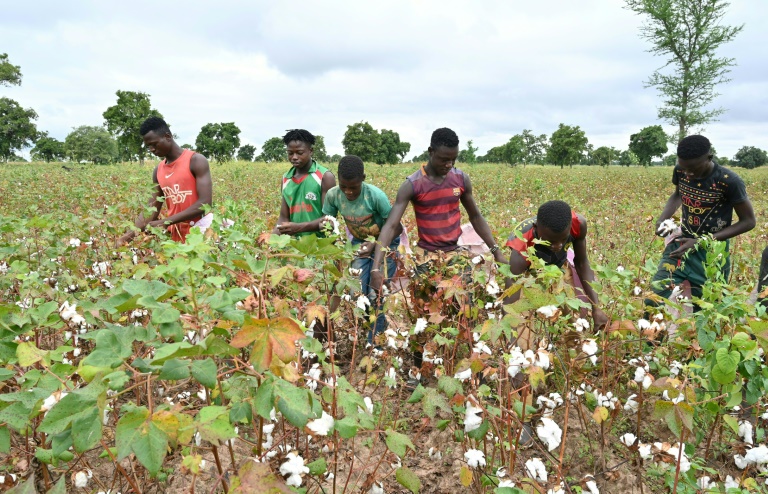
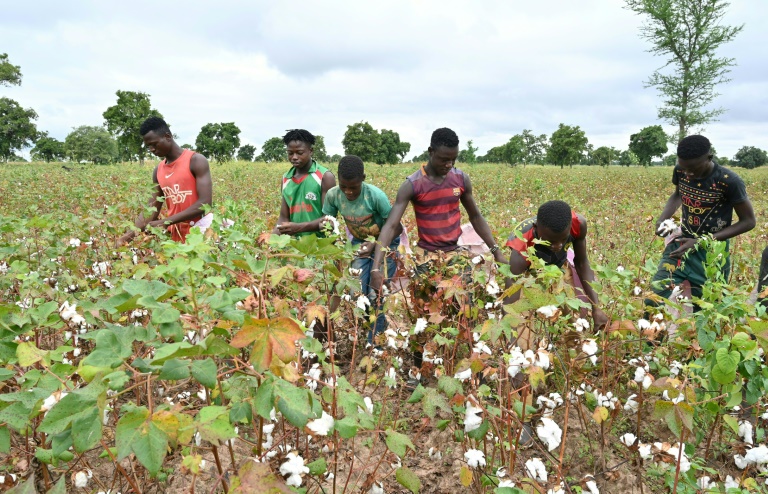
Statistics are notoriously hard to verify, but the UN says the industry is responsible for 10 percent of global carbon emissions, as well as a significant portion of water consumption and waste.

Labels can be a key part of the solution, say campaigners. 

“It will force brands to be more transparent and informed… to collect data and create long-term relationships with their suppliers — all things they’re not used to doing,” said Victoire Sotto, of The Good Goods, a fashion and sustainability consultancy.

“Right now it seems infinitely complex,” she added. “But we’ve seen it applied in other industries such as medical supplies.”

Seeing how the winds are blowing, the textile industry has been racing to come up with technical solutions. 

A recent presentation by Premiere Vision, a Paris-based textiles conference, highlighted many new processes including non-toxic leather tanning, dyes drawn from fruits and waste — and even biodegradable underwear that can be thrown on the compost. 

But the key to sustainability is using the right fabric for the right garment, said Ariane Bigot, Premiere Vision’s deputy head of fashion. 

That means synthetic and oil-based fabrics will still have a place, she said: “A strong synthetic with a very long lifespan might be right for some uses, such as an over-garment that needs little washing.” 

Capturing all these trade-offs in one simple label on an item of clothing is therefore tricky.

“It’s very complicated,” said Bigot. “But we need to get the machine started.”

– Sustainable options –

The French agency is due to collate the results of its testing phase by next spring before handing the results to lawmakers.

While many welcome the labels, activists say this should only be part of a wider crackdown on the fashion industry. 

“It’s really good to put an emphasis on life-cycle analysis but we need to do something about it beyond just labels,” said Valeria Botta, of the Environmental Coalition on Standards.

“The focus should be on setting clear rules on product design to ban the worst products from the market, ban the destruction of returned and unsold goods, and set production limits,” she told AFP. 

“Consumers should not have to fight to find a sustainable option — that should be the default.”

France plans fashion revolution with climate-impact labels

Is it better for the environment if you buy a brand-new cotton T-shirt or a recycled one? 

Well, it depends. 

Recycling has obvious benefits, but the process shortens cotton fibres and so usually has to be mixed with some oil-based material to keep it from falling apart. 

Such trade-offs make it tricky to figure out the real sustainability rating of clothes — but brands in Europe will soon have no choice. 

By next year, every item of clothing sold in France will require a label detailing its precise climate impact — with a similar rule expected for the rest of the European Union by 2026. 

That means juggling many different and conflicting data points: Where and how were its raw materials grown? What was used to colour it? How far did it travel? Was the factory powered with solar energy or coal?

The French Agency for Ecological Transition (Ademe) is currently testing 11 proposals for how to collect and compare data — and what the resulting label might look like to consumers — using 500 real-life items of clothing. 

“The message of the law is clear — it will become obligatory, so brands need to prepare, to make their products traceable, to organise the automatic collection of data,” Erwan Autret, one of the coordinators at Ademe, told AFP. 

“Some say the models are too simple, some say they’re too complicated, but it’s a sign of the maturity of the debate that no one questions the need for these calculations anymore.”

– ‘Transparent and informed’ –

The need for change in fashion is urgent. 

Statistics are notoriously hard to verify, but the UN says the industry is responsible for 10 percent of global carbon emissions, as well as a significant portion of water consumption and waste.

Labels can be a key part of the solution, say campaigners. 

“It will force brands to be more transparent and informed… to collect data and create long-term relationships with their suppliers — all things they’re not used to doing,” said Victoire Sotto, of The Good Goods, a fashion and sustainability consultancy.

“Right now it seems infinitely complex,” she added. “But we’ve seen it applied in other industries such as medical supplies.”

Seeing how the winds are blowing, the textile industry has been racing to come up with technical solutions. 

A recent presentation by Premiere Vision, a Paris-based textiles conference, highlighted many new processes including non-toxic leather tanning, dyes drawn from fruits and waste — and even biodegradable underwear that can be thrown on the compost. 

But the key to sustainability is using the right fabric for the right garment, said Ariane Bigot, Premiere Vision’s deputy head of fashion. 

That means synthetic and oil-based fabrics will still have a place, she said: “A strong synthetic with a very long lifespan might be right for some uses, such as an over-garment that needs little washing.” 

Capturing all these trade-offs in one simple label on an item of clothing is therefore tricky.

“It’s very complicated,” said Bigot. “But we need to get the machine started.”

– Sustainable options –

The French agency is due to collate the results of its testing phase by next spring before handing the results to lawmakers.

While many welcome the labels, activists say this should only be part of a wider crackdown on the fashion industry. 

“It’s really good to put an emphasis on life-cycle analysis but we need to do something about it beyond just labels,” said Valeria Botta, of the Environmental Coalition on Standards.

“The focus should be on setting clear rules on product design to ban the worst products from the market, ban the destruction of returned and unsold goods, and set production limits,” she told AFP. 

“Consumers should not have to fight to find a sustainable option — that should be the default.”

France plans fashion revolution with climate-impact labels

Is it better for the environment if you buy a brand-new cotton T-shirt or a recycled one? 

Well, it depends. 

Recycling has obvious benefits, but the process shortens cotton fibres and so usually has to be mixed with some oil-based material to keep it from falling apart. 

Such trade-offs make it tricky to figure out the real sustainability rating of clothes — but brands in Europe will soon have no choice. 

By next year, every item of clothing sold in France will require a label detailing its precise climate impact — with a similar rule expected for the rest of the European Union by 2026. 

That means juggling many different and conflicting data points: Where and how were its raw materials grown? What was used to colour it? How far did it travel? Was the factory powered with solar energy or coal?

The French Agency for Ecological Transition (Ademe) is currently testing 11 proposals for how to collect and compare data — and what the resulting label might look like to consumers — using 500 real-life items of clothing. 

“The message of the law is clear — it will become obligatory, so brands need to prepare, to make their products traceable, to organise the automatic collection of data,” Erwan Autret, one of the coordinators at Ademe, told AFP. 

“Some say the models are too simple, some say they’re too complicated, but it’s a sign of the maturity of the debate that no one questions the need for these calculations anymore.”

– ‘Transparent and informed’ –

The need for change in fashion is urgent. 

Statistics are notoriously hard to verify, but the UN says the industry is responsible for 10 percent of global carbon emissions, as well as a significant portion of water consumption and waste.

Labels can be a key part of the solution, say campaigners. 

“It will force brands to be more transparent and informed… to collect data and create long-term relationships with their suppliers — all things they’re not used to doing,” said Victoire Sotto, of The Good Goods, a fashion and sustainability consultancy.

“Right now it seems infinitely complex,” she added. “But we’ve seen it applied in other industries such as medical supplies.”

Seeing how the winds are blowing, the textile industry has been racing to come up with technical solutions. 

A recent presentation by Premiere Vision, a Paris-based textiles conference, highlighted many new processes including non-toxic leather tanning, dyes drawn from fruits and waste — and even biodegradable underwear that can be thrown on the compost. 

But the key to sustainability is using the right fabric for the right garment, said Ariane Bigot, Premiere Vision’s deputy head of fashion. 

That means synthetic and oil-based fabrics will still have a place, she said: “A strong synthetic with a very long lifespan might be right for some uses, such as an over-garment that needs little washing.” 

Capturing all these trade-offs in one simple label on an item of clothing is therefore tricky.

“It’s very complicated,” said Bigot. “But we need to get the machine started.”

– Sustainable options –

The French agency is due to collate the results of its testing phase by next spring before handing the results to lawmakers.

While many welcome the labels, activists say this should only be part of a wider crackdown on the fashion industry. 

“It’s really good to put an emphasis on life-cycle analysis but we need to do something about it beyond just labels,” said Valeria Botta, of the Environmental Coalition on Standards.

“The focus should be on setting clear rules on product design to ban the worst products from the market, ban the destruction of returned and unsold goods, and set production limits,” she told AFP. 

“Consumers should not have to fight to find a sustainable option — that should be the default.”

Sri Lanka's president-elect set to be sworn in

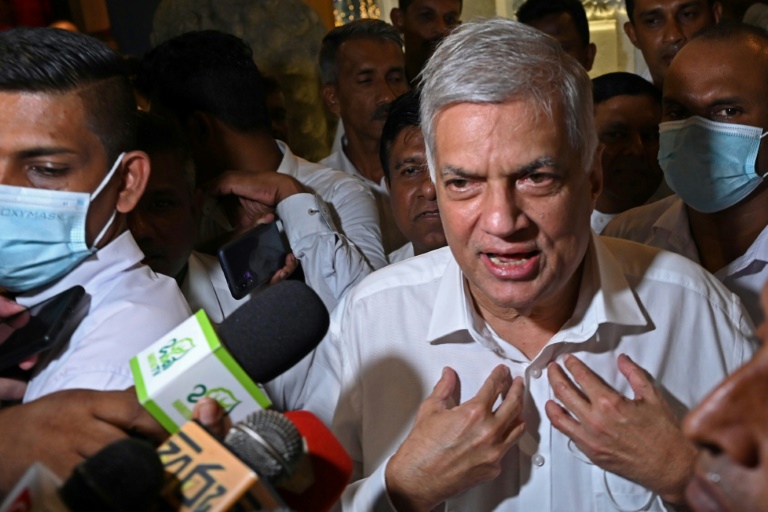
Sri Lanka’s six-time prime minister Ranil Wickremesinghe was set to be sworn in as president Thursday, with officials saying he would set up an all-party unity cabinet to confront the country’s economic crisis.

The 73-year-old leader was elected by an overwhelming majority of parliament Wednesday to lead the country for the balance of Gotabaya Rajapaksa’s term after the deposed president fled to Singapore and resigned last week.

Political sources said Wickremesinghe will invite all political parties to join a cabinet of 30 ministers to steer the country out of its worst economic crisis since independence from Britain in 1948.

Former public administration minister Dinesh Gunawardena, a schoolmate of Wickremesinghe, is tipped to become prime minister.

Gunawardena and Wickremesinghe have known each other since the age of three and studied together at the prestigious Royal College of Colombo.

Gunawardena is a trade union leader and represents a small nationalist party allied with the ousted Rajapaksa’s SLPP party.

“There will be a few MPs from the main opposition joining the cabinet,” a source close to Wickremesinghe said, adding that he was keen to ensure a rainbow coalition.

Worshipping at a Buddhist temple on Wednesday evening after his election by the 225-member parliament, Wickremesinghe vowed tough action against troublemakers.

“If you try to topple the government, occupy the president’s office and the prime minister’s office, that is not democracy, it is against the law,” Wickremesinghe said.

“We will deal with them firmly according to the law. We will not allow a minority of protesters to suppress the aspirations of the silent majority clamouring for a change in the political system.”

Protesters who stormed Rajapaksa’s palace and toppled him earlier this month have accused Wickremesinghe of being a proxy of the once-powerful family.

“I am not a friend of the Rajapaksas,” he told reporters at the Gangaramaya temple. “I am a friend of the people.”

Last hours for Italy's Draghi after coalition implodes

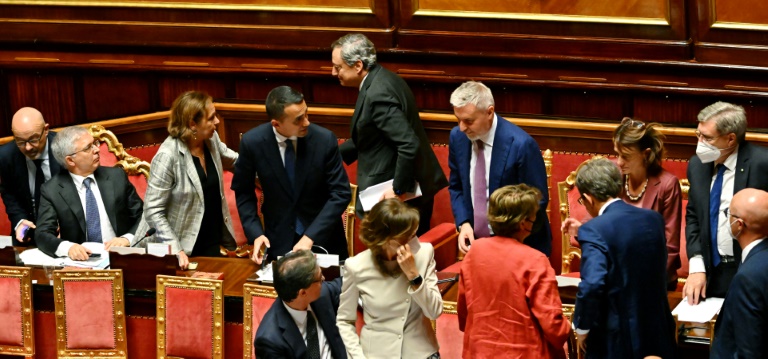
Italian Prime Minister Mario Draghi was expected to resign Thursday after efforts to bring the country’s fractious parties to heel failed, kicking off a snap election campaign before the government had even fallen.

The 74-year old will offer his resignation to President Sergio Mattarella, who will likely dissolve parliament and call early elections for September or October, according to political analysts. Draghi may stay on at head of the government until then.

The former European Central Bank chief, who was parachuted into the PM’s seat in 2021 as Italy wrestled with a pandemic and ailing economy, reprimanded his squabbling national unity coalition on Wednesday and urged them back into line before it was too late.

“Are you ready?” he asked the Senate four times in a speech followed by feverish debates among the parties. Now was not the time for uncertainty, amid a myriad of challenges, from a struggling economy and soaring inflation to the Ukraine war, he said.

Three parties — Silvio Berlusconi’s Forza Italia, Matteo Salvini’s anti-immigrant League and populist Five Star Movement — opted to sit out the vote, saying it was impossible to recover the trust lost last week.

The crisis was sparked when the Five Star snubbed a key vote last week, despite warnings from Draghi that it would fatally undermine the coalition.

His likely downfall comes despite polls in the lead up to Wednesday’s drama suggesting most Italians wanted Draghi to stay at the helm until the scheduled general election in May next year.

– ‘Victims of madness’ –

Salvini, who dined at Berlusconi’s Rome villa after the vote, said election campaigning would begin Thursday, party sources told AGI news agency.

He said Draghi and Italy were “victims of Five Star madness”. Five Star head Giuseppe Conte retorted that the Movement, which began life as a protest party, had been “the target of a political attack. We were forced to the door”.

Enrico Letta, head of the centre-left Democratic Party, which voted in support of the prime minister, said toppling the Draghi government meant “going against Italy and Italians’ interests”.

Anxious investors were watching closely as the coalition imploded.

The European Central Bank was due Thursday to unveil a tool to correct stress in bond markets for indebted eurozone members, such as Italy.

The spread — the difference between 10-year Italian and German treasury bonds — widened to 215 points by market close on Wednesday.

Supporters of Draghi had warned a government collapse could worsen social ills in a period of rampant inflation, delay the budget, threaten EU post-pandemic recovery funds and send jittery markets into a tailspin.

Based on current polls, a rightist alliance led by Giorgia Meloni’s post-fascist Brothers of Italy party and including Forza Italia and the League would comfortably win a snap election — if the three parties can get along.

Such a coalition “would offer a much more disruptive scenario for Italy and the EU” than Draghi’s national unity government, wrote Luigi Scazzieri, senior research fellow at the Centre for European Reform.

Close Bitnami banner
Bitnami