World

ECB faces dilemma as it prepares historic hike

The European Central Bank is set to raise its interest rates for the first time in over a decade on Thursday as fears of a gas supply cut cloud the outlook for the eurozone economy.

In the face of soaring inflation, the central bank’s policymakers are committed to raising interest rates by at least a quarter point from their current historic lows.

Consumer prices rose at an 8.6-percent annual pace in June, a record for the eurozone and well above the ECB’s two-percent target. 

The broken supply chains and the rising cost of energy following Russia’s invasion of Ukraine that have driven the price surge are also weighing on economic activity in Europe. 

The continent’s dependence on Russian energy imports has eurozone members bracing for a difficult winter and planning to ration supplies if Moscow halts gas deliveries.

The European Commission on Wednesday put forward a plan to cut gas use by 15 percent to mitigate the worst potential impacts on the economy.

But with inflation showing no signs of slowing, the ECB lagging behind its peers in Britain and the United States, and the euro looking weak against the dollar, the pressure is on the ECB to think about bigger hikes.

– Giant steps –

Central banks would normally hesitate before raising rates with the economy in such a delicate position “but inflationary pressures have increased to a point where the ECB has to act whatever it breaks”, said Frederik Ducrozet, head of macroeconomic research at Pictet Wealth Management. 

Finding a way to balance growth and inflation risks looked like “an impossible equation to solve” for the ECB, he said.

The central bank’s deposit rate has been negative for the past eight years, with the key rate currently at minus 0.5 percent. 

The punitive interest rate, which effectively charges banks to park their money with the ECB overnight, was designed to encourage more lending, more economic activity and higher inflation rates.

ECB President Christine Lagarde has said the aim is to lift interest rates out of negative territory by the end of September as part of a “gradual but sustained” series of hikes.

Meanwhile, the US Federal Reserve and the Bank of England have already raced ahead of the ECB, beginning their hiking cycles sooner and cranking rates up more aggressively.

It would be difficult to explain why the ECB would “spend the summer with negative interest rates while inflation in the eurozone is climbing further”, said Franck Dixmier, head of fixed income at Allianz Global Investors.

– Lost transmission –

The last time the ECB raised rates in 2011, the emergence of a European debt crisis quickly forced the central bank to reverse course.

The ECB president that finally quelled the tensions on the bond market was Mario Draghi, who is now prime minister of Italy and at the centre of new concerns over government debt as his coalition teeters on the brink. 

The ECB’s announcement in early June that it would finally raise interest rates led borrowing costs for more highly indebted eurozone members like Italy to rise faster than others.

Limiting the divergence between the 19 different members is “critical” to make sure monetary policy moves were felt evenly across the eurozone, ECB vice-president Luis de Guindos said in early July.

To this end, the ECB has said it will “flexibly” reinvest maturing bonds from its portfolio to hoover up debt from more at-risk countries and ease the pressure.

The bank has also set about designing a new crisis tool to preserve the “transmission” of its monetary policy moves with targeted bond buys.

ECB policymakers could unveil more details about the “anti-fragmentation” tool Thursday but the idea has been met with scepticism by some governing council members, who would see it used only under strict conditions.

At the same time, a political crisis in Italy is a “textbook case of a situation where the ECB should not intervene”, said Ducrozet from Pictet.
ECB faces dilemma as it prepares historic hike

The European Central Bank is set to raise its interest rates for the first time in over a decade on Thursday as fears of a gas supply cut cloud the outlook for the eurozone economy.

In the face of soaring inflation, the central bank’s policymakers are committed to raising interest rates by at least a quarter point from their current historic lows.

Consumer prices rose at an 8.6-percent annual pace in June, a record for the eurozone and well above the ECB’s two-percent target. 

The broken supply chains and the rising cost of energy following Russia’s invasion of Ukraine that have driven the price surge are also weighing on economic activity in Europe. 

The continent’s dependence on Russian energy imports has eurozone members bracing for a difficult winter and planning to ration supplies if Moscow halts gas deliveries.

The European Commission on Wednesday put forward a plan to cut gas use by 15 percent to mitigate the worst potential impacts on the economy.

But with inflation showing no signs of slowing, the ECB lagging behind its peers in Britain and the United States, and the euro looking weak against the dollar, the pressure is on the ECB to think about bigger hikes.

– Giant steps –

Central banks would normally hesitate before raising rates with the economy in such a delicate position “but inflationary pressures have increased to a point where the ECB has to act whatever it breaks”, said Frederik Ducrozet, head of macroeconomic research at Pictet Wealth Management. 

Finding a way to balance growth and inflation risks looked like “an impossible equation to solve” for the ECB, he said.

The central bank’s deposit rate has been negative for the past eight years, with the key rate currently at minus 0.5 percent. 

The punitive interest rate, which effectively charges banks to park their money with the ECB overnight, was designed to encourage more lending, more economic activity and higher inflation rates.

ECB President Christine Lagarde has said the aim is to lift interest rates out of negative territory by the end of September as part of a “gradual but sustained” series of hikes.

Meanwhile, the US Federal Reserve and the Bank of England have already raced ahead of the ECB, beginning their hiking cycles sooner and cranking rates up more aggressively.

It would be difficult to explain why the ECB would “spend the summer with negative interest rates while inflation in the eurozone is climbing further”, said Franck Dixmier, head of fixed income at Allianz Global Investors.

– Lost transmission –

The last time the ECB raised rates in 2011, the emergence of a European debt crisis quickly forced the central bank to reverse course.

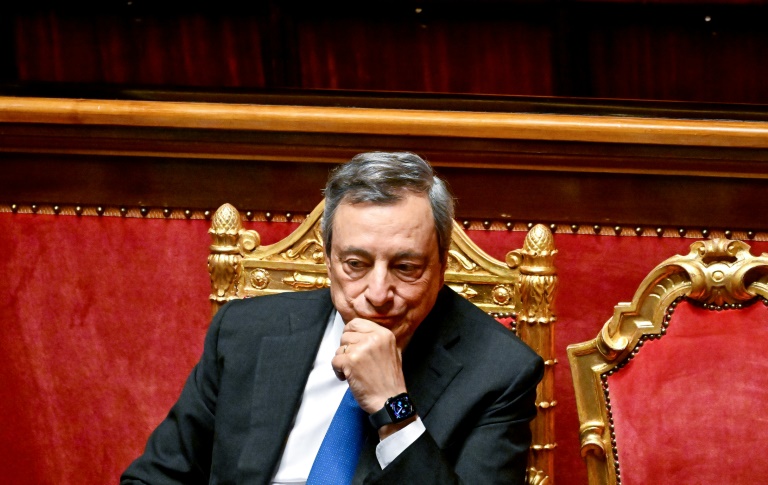
The ECB president that finally quelled the tensions on the bond market was Mario Draghi, who is now prime minister of Italy and at the centre of new concerns over government debt as his coalition teeters on the brink. 

The ECB’s announcement in early June that it would finally raise interest rates led borrowing costs for more highly indebted eurozone members like Italy to rise faster than others.

Limiting the divergence between the 19 different members is “critical” to make sure monetary policy moves were felt evenly across the eurozone, ECB vice-president Luis de Guindos said in early July.

To this end, the ECB has said it will “flexibly” reinvest maturing bonds from its portfolio to hoover up debt from more at-risk countries and ease the pressure.

The bank has also set about designing a new crisis tool to preserve the “transmission” of its monetary policy moves with targeted bond buys.

ECB policymakers could unveil more details about the “anti-fragmentation” tool Thursday but the idea has been met with scepticism by some governing council members, who would see it used only under strict conditions.

At the same time, a political crisis in Italy is a “textbook case of a situation where the ECB should not intervene”, said Ducrozet from Pictet.
Bank of Japan sticks to easing, raises inflation forecast

The Bank of Japan dug its heels in on its easy-money policies Thursday while raising its inflation forecast, even as other countries hike interest rates to tackle soaring prices.

Policymakers have refused to move away measures put in place a decade ago as the BoJ battles to achieve sustained price rises in the world’s third-largest economy.

But the decision leaves it increasingly alone as its peers raise rates, sending the yen tumbling to a 24-year low against the dollar.

Highlighting the different approaches, the European Central Bank is later Thursday expected to announce its first rate increase since 2011.

Prices are rising in Japan, and the BoJ raised its inflation forecast for fiscal 2022-23 to 2.3 percent, up from 1.9 percent in April, “due to rises in prices of such items as energy, food, and durable goods”.

“Thereafter, the rate of increase is expected to decelerate” as energy prices stabilise, it said.

The BoJ added that it would hold rates at minus 0.1 percent and continue buying unlimited government bonds to maintain a low cap on long-term yields.

These monetary easing policies are intended to achieve sustained two-percent inflation, a target the bank considers key for stable growth.

The central bank views current price increases, driven by pandemic supply snarls and higher commodity prices linked to the war in Ukraine, as temporary.

So while its counterparts elsewhere are moving to tame inflation, it sees no need to change tack.

“There is no sign of meaningful accelerations in the rate of increase in wages, which is necessary for a sustainable rise of prices,” said Ryutaro Kono, chief economist at BNP Paribas.

And some feel rate hikes would not address current inflationary pressure in Japan.

“Higher rates would do little to meaningfully change the situation”, Stefan Angrick, senior economist at Moody’s Analytics, told AFP.

“Inflation in Japan is driven predominantly by higher prices for imported food and energy, which are beyond the BoJ’s reach.”

Rate hikes are also not guaranteed to boost the yen, he added, noting that “many other currencies have depreciated against the dollar despite their respective central banks hiking rates.”

Following Friday’s announcement, the dollar jumped as high as 138.55 yen before easing slightly, though that still compares with 115 yen at the start of the year.

The BoJ cut its economic growth forecast for the current fiscal year to 2.4 percent, down from 2.9 percent in its previous forecast, warning that “extremely high uncertainties” remain, from Covid-19 to the situation in Ukraine.

Asian markets fail to extend rally, focus turns to Europe

Asian investors on Thursday struggled to maintain momentum from the previous day’s equity rally and keep up with another Wall Street advance as growth fears continue to haunt trading floors and sap risk sentiment.

While data last week suggested US consumer resilience appeared to be holding up despite surging inflation and rising interest rates, a closely watched oil stockpile report indicated elevated prices were keeping drivers off the road.

The figures highlighted the fluctuating landscape dealers are having to navigate as the global economy is rattled by a range of issues including the Ukraine war, an energy crisis and China’s slowdown and supply chain snarls.

And while corporate earnings have provided some much-needed relief so far, analysts remain cautious about the near-term outlook.

Focus is now on events in Europe, where the European Central Bank is set to hike rates for the first time in more than a decade, with most observers expecting a quarter-point lift and some speculating about a half-point move.

However, officials are walking a tightrope, as they must try to tame red-hot inflation while not tipping the economy over a cliff, all against the backdrop of an energy crisis sparked by Russia’s invasion of Ukraine.

Added to the mix is a fresh political crisis in Italy that could see Prime Minister Mario Draghi ousted, leading to months of uncertainty.

Europe is also awaiting the return of Russian gas supplies after 10 days of maintenance, with many fearing Moscow will keep the taps fully or partially shut — hammering the economy — as retaliation for sanctions imposed over its Ukraine invasion.

Vladimir Putin has said the Nord Stream 1 pipeline will be turned back on, but added that they would be limited unless a row over some elements of the sanctions is resolved.

– Energy as a weapon –

Western leaders remain cynical over his plans ahead of the northern hemisphere winter.

“Moscow is not shying away from using grain and energy deliveries as a weapon,” German Chancellor Olaf Scholz said this week, referring to allegations Moscow was also deliberately blocking food exports from Ukraine. 

The IMF warned Wednesday that a halt in supplies could slash 2022 GDP by 1.5 percent.

The European Commission has urged EU members to reduce demand for natural gas by 15 percent over the winter to counter Russia’s “blackmail”.

After Wednesday’s bounce across Asian markets, uncertainty returned to trading floors.

Hong Kong, Shanghai, Tokyo, Sydney, Singapore and Jakarta all fell, though Seoul, Taipei and Manila eked out gains.

There was little reaction to Joe Biden’s comments that he would hold talks with Xi Jinping “within the next 10 days” as he decides whether or not to remove some Trump-era tariffs on Chinese goods.

And Cameron Dawson, of NewEdge Wealth, said the recent gains could not yet be taken as a sign of a recovery.

He warned that many equities were “still in very distinct downtrends so you can see a rally off maybe an oversold level, but really if you are not starting to recover and break into a better uptrend it really remains to be seen if this can continue”.

“So it’s more a relief at this point and not necessarily a trend change.”

Oil markets extended Wednesday’s drop — with WTI below $100 — after data showed US stockpiles rose more than expected last week as Americans opted not to pay for expensive petrol.

The figures come despite being at the height of the high-demand summer driving season.

– Key figures at around 0230 GMT –

Tokyo – Nikkei 225: DOWN 0.1 percent at 27,657.53 (break)

Hong Kong – Hang Seng Index: DOWN 1.2 percent at 20,644.13

Shanghai – Composite: DOWN 0.5 percent at 3,288.51

Euro/dollar: DOWN at $1.0208 from $1.0175 Wednesday

Pound/dollar: DOWN at $1.1986 from $1.1975 

Euro/pound: DOWN at 85.16 pence from 84.96 pence

Dollar/yen: DOWN at 138.30 yen from 138.26 yen

West Texas Intermediate: DOWN 0.9 percent at $99.00 per barrel

Brent North Sea crude: DOWN 0.8 percent at $106.10 per barrel

New York – Dow: UP 0.2 percent at 31,874.84 (close)

London – FTSE 100: DOWN 0.4 percent at 7,267.97 (close) 

New AI tool that turns words into art enters testing phase

A million people eager to dabble with a new artificial intelligence tool that lets them create images simply by describing them with words will soon get their wish, its creators said Wednesday.

Artificial intelligence research firm OpenAI is conducting a wide-scale beta test of DALL-E, a cutting-edge software that creates images from textual descriptions.

Although the arrival of AI has led to fears of humans being replaced by machines in fields from customer care to journalism, enthusiasts see the technology more as an opportunity than a threat.

A video showcasing the tool on the company’s web site showed DALL-E generating an image of a polar bear playing a guitar, a photo of a koala dunking a basketball, and the famed Mona Lisa painting but with the subject sporting a mohawk hair style.

“We’ve already seen people use DALL·E to make music videos for young cancer patients, create magazine covers, and bring novel concepts to life,” the company said in a post.

OpenAI said invitations will be sent in coming weeks to a million people on a waiting list to try the tool’s latest version.

Amid concerns that this and similar tools could be misused in disinformation campaigns, OpenAI said it worked with researchers and developers to build in safeguards to curb abuses such as DALL-E being used for deception.

“We reject image uploads containing realistic faces and attempts to create the likeness of public figures, including celebrities and prominent political figures,” Open AI said.

Filters built into DALL-E block violent, political, sexual or other content barred by its policies, and the system is designed to avoid assumptions about race or gender, Open AI said.

'Private rebellion': Hong Kong's anglophone poets gain recognition abroad

As a teenager stuck in Hong Kong’s pressure-cooker school system, Eric Yip found his escape in writing poetry — never dreaming that one day his work would go on to win a top prize halfway across the world.

In March, at the age of 19, he became the youngest ever winner of the United Kingdom’s National Poetry Competition.

He beat more than 7,000 contenders from 100 countries and placed himself squarely among a cohort of Hong Kong poets writing in English that has found increasing recognition over the past decade.

Now an economics undergraduate at Cambridge, Yip recalled the “liberating” feeling of reading material that had nothing to do with high-school English classes taught according to a strict syllabus.

“Writing poems was a private rebellion against this regimented approach,” Yip told AFP.

His award-winning “Fricatives” begins with the narrator taking English lessons as a “spectacled boy with a Hong Kong accent” and opens up to explore issues of language, race, sex and migration.

A former British colony, Hong Kong has developed its own literary tradition in both Chinese and English, although anglophone poets remain a minority and receive little establishment support.

“There’s always a certain estrangement one feels when writing in a second language”, Yip said, but English has now become his “private language” in which words flow more naturally.

“What matters to me is the emotional truth of writing. If English is what will get me closer to that, then I’ll keep using it.”

– Queer poetry in spotlight –

Anglophone poets who spoke to AFP agreed their output was hardly mainstream, but said writing from the margins allowed them to challenge Hong Kong’s norms.

Yip’s win caused a stir in Hong Kong media, though most newspapers were silent on the poem’s description of a gay encounter — mirroring the mixed reactions of some local readers.

“The sexual element and the poem’s queerness are absolutely essential,” Yip said. 

“I was thinking about the parallels with oracy and colonialism, how it all ties back to submission.”

Other Hong Kong poets who have found success in tackling LGBTQ themes include Nicholas Wong, whose collection “Crevasse” won one of the best-known prizes for queer literature worldwide in 2016. 

His latest collection was a finalist for the same Lambda Literary Awards’ gay poetry prize this year.

Wong said his writing tapped into themes about “everyday desire” in a way he found immediate and spontaneous.

In a recent poem, the speaker imagines inviting his father to his wedding held in Taiwan — the only jurisdiction in Asia where gay marriage is legal.

Wong, 43, who teaches at a local university, said he had witnessed Hong Kong’s community of poets grow into something “more substantial, less fragile”.

Having been a published poet for over a decade, Wong said he felt emboldened to experiment with language in a way that might feel obscure to Western readers.

“Maybe because it’s my second language, I don’t assume it will love me back. So I can do whatever I want with it and to it,” he told AFP.

– Poetic dissent –

Academics have shown “growing interest” in Hong Kong poetry to understand how residents feel about the city’s social and political transformation, according to scholar and poet Jennifer Wong.

The massive citywide democracy protests three years ago — and Beijing’s subsequent crackdown — proved a watershed.

The movement included violence that some experts say left many quietly traumatised, while solidarity between protesters gave rise to outbursts of creativity.

Last year anonymous poets behind the US-based Bauhinia Project published “Hong Kong Without Us”, which they described as a crowdsourced “found poetry” book.

During the protests, they translated snippets of Hong Kongers’ voices — from social media, graffiti, news articles and public submissions — and distributed them on postcards in the United States.

“We were especially interested in… how the urgency of the politics holds out the potential for a vulnerable, emotional voice,” one of the poets told AFP.

“We were just trying to articulate the voice that we imagined to be the best of Hong Kong.”

The project blossomed into a book and has become an access point for US readers to “engage emotionally” with Hong Kongers beyond news headlines, the poet said.

“Hong Kong Without Us” concludes with a postscript saying the book is contraband.

In 2020, Beijing imposed a sweeping national security law in Hong Kong that has criminalised most dissent, and many protest-themed literary works have been taken off bookstore shelves.

The poet said he was worried that the repressive political climate would seal shut the “narrow crack” for Hong Kongers to express emotional vulnerability.

“I don’t know… what’s going to happen in the future when that already slim crack might be gone.”

Europe on tenterhooks over return of Russian gas to Germany

Europe anxiously awaits the return of Russian gas supplies on Thursday at the end of scheduled work on a crucial pipeline, as heavily dependent Germany accuses the Kremlin of using energy as a “weapon”.

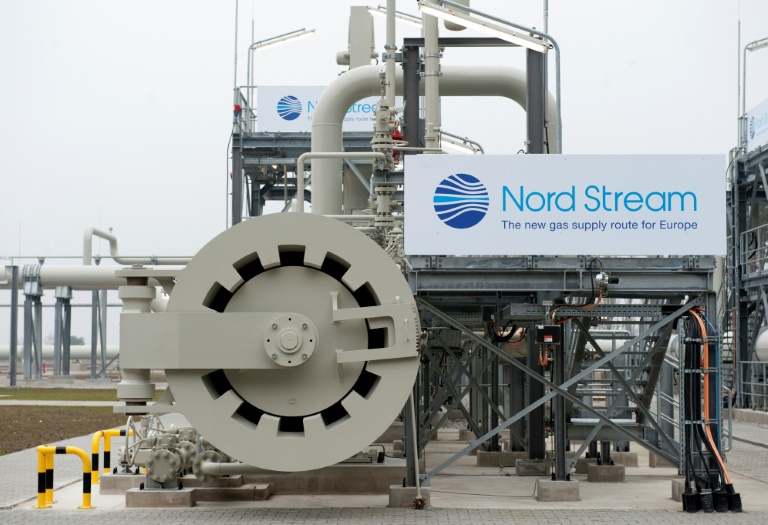
The Nord Stream 1 pipeline is due to reopen at 0400 GMT after 10 days of annual repairs, but Germany fears Russia will seize the opportunity to simply keep the taps entirely or nearly shut, plunging the continent into an energy crisis.

The showdown comes amid the worst tensions between Russia and the West in several years over the invasion of Ukraine.

“Moscow is not shying away from using grain and energy deliveries as a weapon,” German Chancellor Olaf Scholz told reporters this week, referring to allegations Moscow was also deliberately blocking food exports from Ukraine. 

“We have to be resolute in protecting ourselves.”

However, enduring German reliance on Russian gas coupled with distinctly negative signals from Moscow looked set to ratchet up the pressure on Europe’s top economy.

The IMF warned on Wednesday that a halt in supplies could slash 2022 GDP by 1.5 percent.

– ‘Will fulfil’ –

Russia’s state-owned energy giant Gazprom cut flows to Germany via the Nord Stream 1 pipeline under the Baltic Sea to some 40 percent of capacity in recent weeks, blaming the absence of a Siemens gas turbine that was undergoing repairs in Canada.

The repaired turbine is reportedly en route to Russia and expected to arrive on Sunday at the earliest.

Russian President Vladimir Putin insisted this week that Gazprom would meet all its delivery obligations.

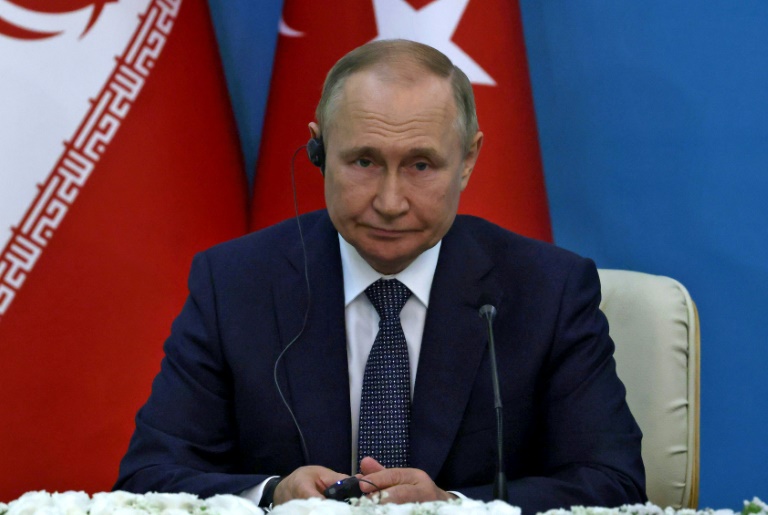
“Gazprom has fulfilled, is fulfilling and will fulfil its obligations in full,” Putin told reporters in Tehran after holding talks with the leaders of Iran and Turkey.

However, he warned that as another gas turbine was due to be sent for maintenance at the end of this month, energy flows could fall to 20 percent of capacity from next week.

Since Putin sent troops to Ukraine on February 24 and the West responded with sanctions against Moscow, Russia has begun reducing its gas deliveries to prevent EU countries from replenishing reserves.

Gazprom has already blamed cuts in gas deliveries to Europe on “force majeure”, two major German customers said this week, adding to fears about further disruptions.

Force majeure is a legal measure allowing companies to free themselves from contractual obligations in light of circumstances beyond their control.

– ‘Blackmail’ –

The German government has rejected Gazprom’s turbine explanation as an “excuse”. However, Berlin acknowledges it would be largely powerless to dispute the force majeure claim and expect to be awarded damages from Russia.

As of Wednesday, German gas reserves were about 65 percent according to official estimates. Experts say that would leave Germany critically exposed if supplies via Nord Stream 1 didn’t resume before cold weather returns.

The European Commission on Wednesday urged EU countries to reduce their demand for natural gas by 15 percent over the coming winter months, and to give it special powers to force through needed demand cuts if Russia severs the gas lifeline.

“Russia is blackmailing us,” Commission president Ursula von der Leyen, a former German defence minister, told reporters. 

“Russia is using energy as a weapon and therefore, in any event, whether it’s a partial major cut off of Russian gas or total cut off… Europe needs to be ready.”

German Economy Minister Robert Habeck, who has said he’s started taking shorter showers to save energy, stressed that industry – but also consumers — would have to do their part to reduce Russia’s power in the current standoff.

“A decisive bit of leverage is reducing gas use,” he said in a statement. “We have to do everything in our power to work on that.” 

Europe on tenterhooks over return of Russian gas to Germany

Europe anxiously awaits the return of Russian gas supplies on Thursday at the end of scheduled work on a crucial pipeline, as heavily dependent Germany accuses the Kremlin of using energy as a “weapon”.

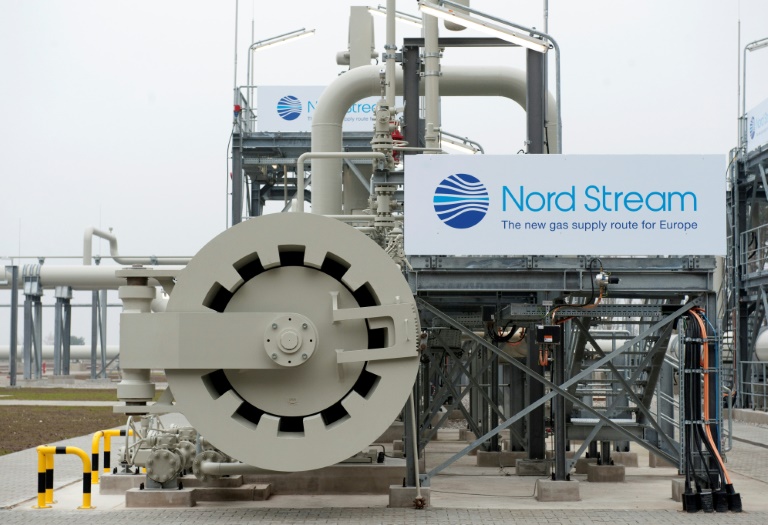
The Nord Stream 1 pipeline is due to reopen at 0400 GMT after 10 days of annual repairs, but Germany fears Russia will seize the opportunity to simply keep the taps entirely or nearly shut, plunging the continent into an energy crisis.

The showdown comes amid the worst tensions between Russia and the West in several years over the invasion of Ukraine.

“Moscow is not shying away from using grain and energy deliveries as a weapon,” German Chancellor Olaf Scholz told reporters this week, referring to allegations Moscow was also deliberately blocking food exports from Ukraine. 

“We have to be resolute in protecting ourselves.”

However, enduring German reliance on Russian gas coupled with distinctly negative signals from Moscow looked set to ratchet up the pressure on Europe’s top economy.

The IMF warned on Wednesday that a halt in supplies could slash 2022 GDP by 1.5 percent.

– ‘Will fulfil’ –

Russia’s state-owned energy giant Gazprom cut flows to Germany via the Nord Stream 1 pipeline under the Baltic Sea to some 40 percent of capacity in recent weeks, blaming the absence of a Siemens gas turbine that was undergoing repairs in Canada.

The repaired turbine is reportedly en route to Russia and expected to arrive on Sunday at the earliest.

Russian President Vladimir Putin insisted this week that Gazprom would meet all its delivery obligations.

“Gazprom has fulfilled, is fulfilling and will fulfil its obligations in full,” Putin told reporters in Tehran after holding talks with the leaders of Iran and Turkey.

However, he warned that as another gas turbine was due to be sent for maintenance at the end of this month, energy flows could fall to 20 percent of capacity from next week.

Since Putin sent troops to Ukraine on February 24 and the West responded with sanctions against Moscow, Russia has begun reducing its gas deliveries to prevent EU countries from replenishing reserves.

Gazprom has already blamed cuts in gas deliveries to Europe on “force majeure”, two major German customers said this week, adding to fears about further disruptions.

Force majeure is a legal measure allowing companies to free themselves from contractual obligations in light of circumstances beyond their control.

– ‘Blackmail’ –

The German government has rejected Gazprom’s turbine explanation as an “excuse”. However, Berlin acknowledges it would be largely powerless to dispute the force majeure claim and expect to be awarded damages from Russia.

As of Wednesday, German gas reserves were about 65 percent according to official estimates. Experts say that would leave Germany critically exposed if supplies via Nord Stream 1 didn’t resume before cold weather returns.

The European Commission on Wednesday urged EU countries to reduce their demand for natural gas by 15 percent over the coming winter months, and to give it special powers to force through needed demand cuts if Russia severs the gas lifeline.

“Russia is blackmailing us,” Commission president Ursula von der Leyen, a former German defence minister, told reporters. 

“Russia is using energy as a weapon and therefore, in any event, whether it’s a partial major cut off of Russian gas or total cut off… Europe needs to be ready.”

German Economy Minister Robert Habeck, who has said he’s started taking shorter showers to save energy, stressed that industry – but also consumers — would have to do their part to reduce Russia’s power in the current standoff.

“A decisive bit of leverage is reducing gas use,” he said in a statement. “We have to do everything in our power to work on that.” 

End of the line: Fed-up Sri Lankans rush for passports

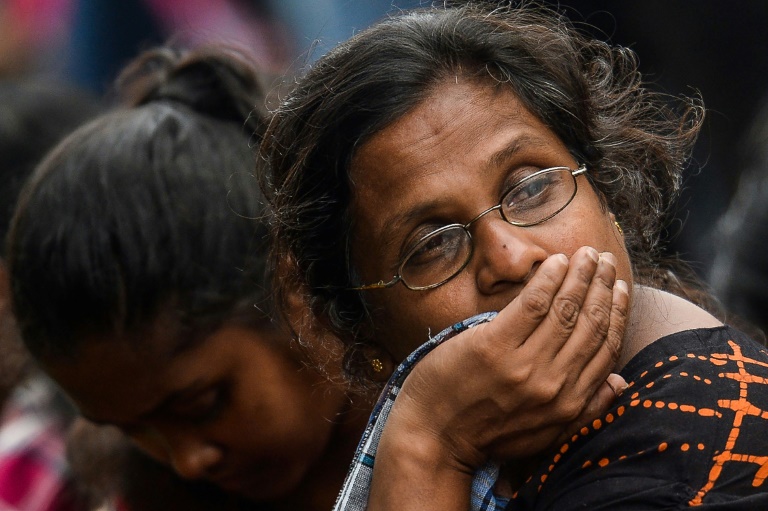
One of the longest queues in the Sri Lankan capital Colombo is for the exit, as thousands of people line up outside the immigration office seeking passports to escape the country’s economic crisis.

Every day, about 3,000 people submit their papers and 15,000 rupees (USD 42) to obtain travel documents. The office is running 24 hours a day, six days a week to try to cope with demand.

Many applicants still have to wait overnight, like Madushini, 35, whose guesthouse business in the western province of Udawalawa fell victim first to coronavirus and then to the financial turmoil.

Now, she wants to find work in the US, where her cousin lives.

“Bookings from foreign tourists have dried up, so I need to find a way to earn and secure my son’s life,” she told AFP, giving only one name.

“The whole country is closed, and we don’t have money.”

– Overseas numbers swell –

Some of those waiting in the queue go without food and water for fear of losing their place, sweating in the humid tropical weather.

Unemployed chef Samantha, 34, has secured an offer from a hotel in Cyprus and had been in line for 18 hours when he spoke to AFP.

“I want to leave Sri Lanka as soon as possible,” he said. “I have no work here now and no money. I will wait in this queue until I get a passport.”

The pandemic caused a foreign exchange crisis that critics say was exacerbated by government mismanagement. The situation left tourism-dependent Sri Lanka unable to import enough fuel, medicines and other essentials.

Inflation in June stood at 54.6 percent, according to official figures, and the Indian Ocean island country has defaulted on its $51 billion debt. 

Overseas remittances — also hit by the coronavirus — have long been another economic mainstay, with over 10 percent of the 22 million population working abroad, mostly in Gulf countries. 

That number is now swelling.

The immigration department has already issued more passports this year than for the whole of 2021, their figures show. 

Numbers have generally been around 50,000 a month but jumped to an estimated 122,000 in June.

– ‘Help our country’ –

Many passport applicants travel long distances from rural areas on crowded buses.

“I know some people in Saudi Arabia. They have promised to help me find work as a housemaid there,” said housewife Shantakala, 46, from Chilaw.

“My husband will look after our farmland where we don’t make enough for both of us and I will go away.”

Others are students abandoning their education.

“We need to get out of here, find work and support our family in this difficult economic situation,” said Imesh Tarusha, 18, one of a family of six. 

On Wednesday, Ranil Wickremesinghe was elected Sri Lanka’s next president, taking over from Gotabaya Rajapaksa, who fled the country and resigned after protesters forced him from his palace.

Colombo is also in talks with the International Monetary Fund for a bailout, but the would-be emigrants have little hope of improvement soon.

“My country is beautiful but without fuel. It’s very difficult,” said Shantakala. “I hope it will get better but I don’t know how long it will take.”

Immigration officers are working around the clock to hand out documents. 

“It’s exhausting work,” one staff member told AFP on condition of anonymity. “No one goes home.” 

“It’s important to issue as many passports as possible so that people can travel and send remittances home,” the staffer added.

“That will help our country.”

US says Iran risks dependency on Russia

The United States on Wednesday warned Iran that it risked dependency on an isolated Russia after it welcomed President Vladimir Putin, although the CIA chief acknowledged the two nations have uneasy ties.

Putin on Tuesday visited Tehran for a three-way summit with his counterparts from Iran and Turkey that was nominally about conflict-ridden Syria

On the sidelines of the summit, Iran’s Supreme Leader Ayatollah Ali Khamenei called for “long-term cooperation” with Russia, even though Tehran earlier tried to show its neutrality by abstaining from a key UN vote on condemning Moscow’s invasion of Ukraine.

“Iran has now cast its lot with a small number of countries who wore that veil of neutrality only to end up supporting President Putin in his war against Ukraine and the Ukrainian people,” State Department spokesman Ned Price told reporters.

The United States recently released intelligence purporting to show Russian delegations visiting Iran to assess combat drones as it looks to bolster its arsenal against Western arms in Ukraine.

But Price signaled that Iran’s return to compliance with the 2015 nuclear deal — backed by President Joe Biden after his predecessor Donald Trump trashed it — would start a new “economic relationship with other countries around the world.”

Negotiations have been deadlocked in part over Iranian demands that Biden lift Trump’s designation of the powerful Revolutionary Guards as a terrorist group.

Despite the US criticism of Iran’s summit, CIA chief Bill Burns — who as a diplomat helped broker the Iran deal and served as ambassador to Moscow — said Iran and Russia were reaching out to each other primarily because they are both “looking to break out of political isolation” and are under sanctions.

“But if they need each other, they don’t really trust each other in the sense that they are energy rivals and historical competitors,” Burns said at the Aspen Security Forum.

Moscow has a long history of intervention in Iran, occupying the key northern city of Tabriz in the early 20th century and joining Britain in an invasion of the country in 1941.

– No sign that Putin ill –

Burns, a Russian speaker who served as ambassador early in Putin’s tenure, was quietly sent to Moscow last year in an unsuccessful attempt to dissuade him from invading Ukraine. 

Burns, noting that he has dealt with Putin over two decades, described the Russian leader as having “a very combustible mix of grievance and ambition and insecurity.” 

“He is not a big believer in the better angels of the human spirit,” Burns said. 

“He is convinced that his destiny as Russia’s leader is to restore Russia as a great power,” he said. 

Asked about periodic media reports suggesting Putin is ill, Burns retorted: “There are lots of rumors about President Putin’s health and, as far as we can tell, he is apparently too healthy.”

Close Bitnami banner
Bitnami