World

Sunak or Truss to be Britain's next PM

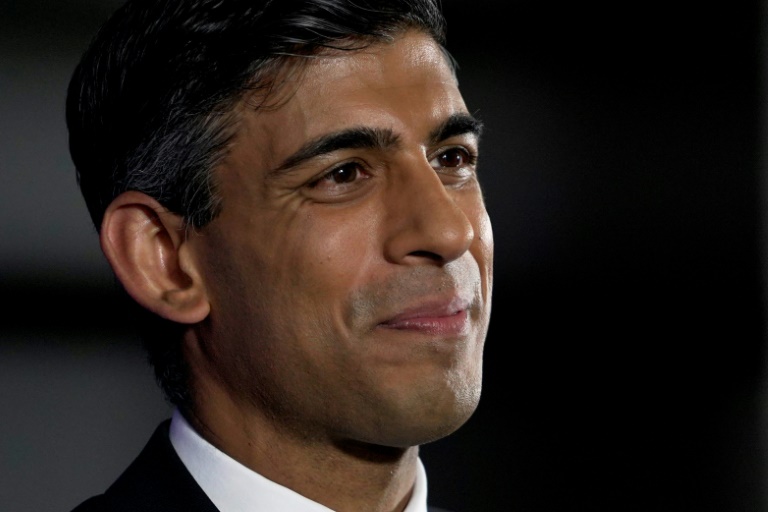
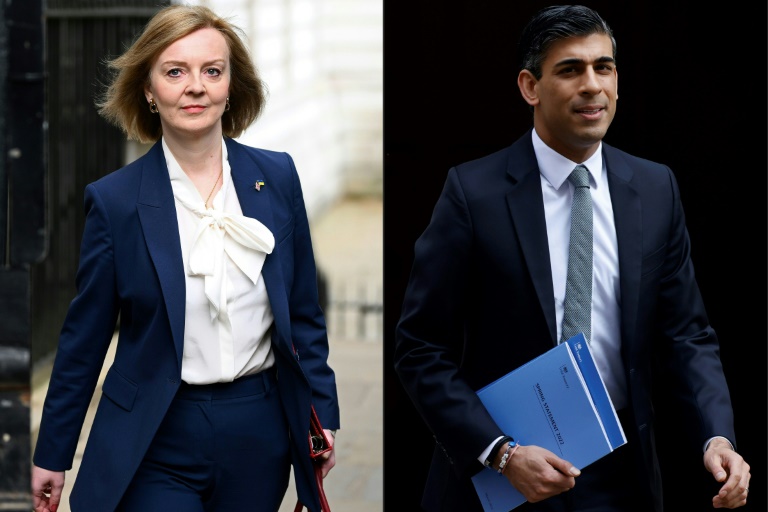
Conservative rivals Rishi Sunak and Liz Truss, offering competing answers to Britain’s multiple crises, will duel in the coming weeks to become the next prime minister after the party’s lawmakers held a concluding vote Wednesday.

Former finance minister Sunak, running on a centrist platform of fiscal rectitude allied with “green levies” to fight climate change, again headed the field with 137 votes in the MPs’ fifth and final elimination ballot.

The crucial race for second place was narrowly won by Foreign Secretary Truss on 113 votes, against 105 for former defence secretary Penny Mordaunt.

Sunak and Truss now take their case to Conservative party members, who will decide the new leader and prime minister after a series of nationwide hustings in August. 

The result will be announced on September 5. But Britain is already guaranteed to get either its first prime minister of colour or its third woman leader.

“We need to restore trust, rebuild the economy, and reunite our country,” Sunak said after his win, as Britain contends with its worst slump in living standards in decades on top of the economic fallout of Brexit.

“We’ve got a really positive message to take out to all our members now: crucially, who is the best person to beat Keir Starmer and the Labour party in the next election?” he said, referring to the UK’s main opposition party and its leader.

“I believe I’m the only candidate who can do that.” 

Truss tweeted that she was “ready to hit the ground running from day one”, after writing in the Daily Telegraph that her economic revival plan was “based around tax cuts, deregulation and tough reform”.

– ‘Hasta la vista’ –

Sunak’s resignation as finance minister this month helped to topple outgoing leader Boris Johnson after months of scandal including “Partygate”, and Downing Street is reportedly running an “anyone but Rishi” campaign.

At his last session of Prime Minister’s Questions in the House of Commons earlier, Johnson bowed out by saying “Hasta la vista, baby!”.

In a hint of support for Truss’s Thatcherite platform, the premier urged his successor to “cut taxes and deregulate where you can to make this the greatest place to live and invest”.

He urged the contenders to continue his strident backing for Ukraine, and “stay close to the Americans”.

But whoever wins the Tory race, “like some household detergent, would wipe the floor” with Starmer’s Labour, Johnson predicted.

Mordaunt — the one-time bookmakers’ favourite — lapsed to outsider status after Truss’s fellow right-winger Kemi Badenoch was eliminated on Tuesday.

Former minister David Davis, a backer of Mordaunt, accused Sunak of lending votes to Truss so he could face her in the run-off.

“He wants to fight Liz, because she’s the person who will lose the debate with him,” he told LBC radio.

A YouGov poll published before the vote indicated that, despite his popularity with colleagues, Sunak was the least appealing candidate to the members. 

The BBC plans to host a live televised debate with the final two candidates on Monday. Sunak won the two previous debates, according to snap polls, and the second one featured a no-holds-barred clash with Truss.

– ‘Fantasy economics’ –

Sunak’s popularity with the Tory grassroots has faded since questions were raised over his family’s tax arrangements, and as he presided over sky-rocketing inflation, which hit a new 40-year high of 9.4 percent in June.

In a new policy announcement, Sunak vowed an “ambitious new plan to make the UK energy independent” by 2045 to prevent future energy-driven inflation spikes, after Russia’s war in Ukraine sent gas prices rocketing.

Mordaunt had headed the same YouGov poll of Tory members previously.

But she slipped after a damaging few days in which her former boss, one-time UK Brexit pointman David Frost, slammed her work ethic and questions were raised over her stance on transgender rights.

Johnson announced on July 7 he was quitting as Conservative leader after a government rebellion in protest at his scandal-hit administration.

Under Britain’s parliamentary system, the leader of the biggest party is prime minister and can be changed mid-term without having to call a general election.

Labour’s Starmer accused the Tory candidates of “fantasy economics” before turning his fire on the outgoing Johnson.

“He is a complete bullshitter and I think he’s been found out,” he told Labour prime minister Tony Blair’s former spin chief Alastair Campbell in a podcast, referring notably to “Partygate”.
Americans in Paris get more bang for their buck as euro slides

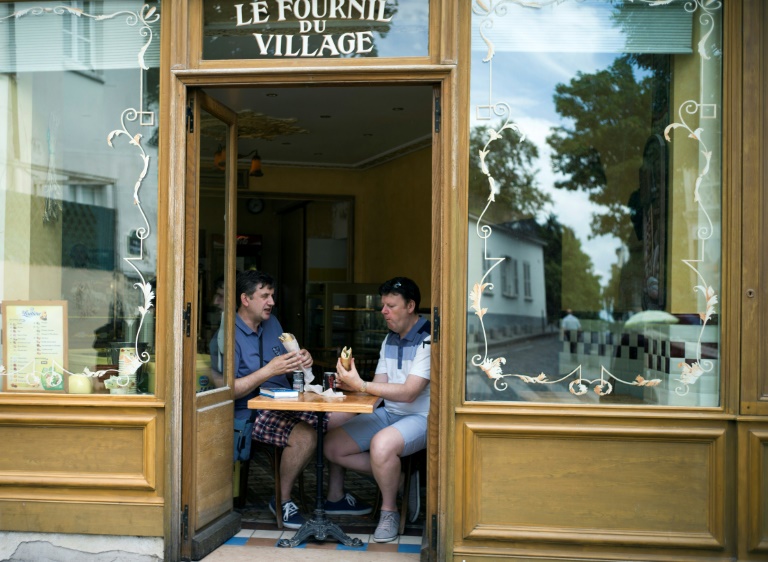
As the dollar enjoys near-parity with the euro, Americans returning to Paris in droves after two years of Covid restrictions find that their greenbacks go a much longer way than they used to.

The euro slipped to parity with the dollar for the first time in nearly 20 years this month, as a cut in Russian gas supplies to Europe heightened fears of a recession in the eurozone.

It has since recovered a touch, to around $1.02 per euro, but remains a huge bargain for visitors, giving tourists from dollar countries a spending power boost of well over 10 percent from six months ago.

“It seems like visiting a local vacation spot in the US,” said John Perides, a retired engineer from Philadelphia as he made his way among the souvenir shops and cafes in the capital’s Latin Quarter with his wife and a group of friends.

“Our dollar has gone much further,” the 75-year-old told AFP, adding he was happy that the bill for 12 days of holidays had come to no more than $5,000 per person.

Traci Pawlowski, a 55-year-old molecular geneticist from San Diego, said the favourable exchange rate made prices “very affordable” and “comparable to the US”.

Restaurant prices, in particular, were now “comparable to California”, she said.

– ‘Kind of depends’ –

Annabel Granger, an 18-year-old student from Virginia, said she found Paris “to be a little bit less expensive” but, she added, “it kind of depends on where you go”.

Pittsburgh student Jahzara Green, also 18, said the Paris experience compared very favourably to a previous trip.

“I’ve been to Europe before and I could definitely tell the difference. It was way more expensive then, but now it’s like the same,” she said.

Vanguelis Panayotis, a French tourism expert running MKG Consulting, said he had detected “a clear impact” from the weaker dollar, especially on demand for high-end hotels.

Americans are big spenders when travelling to Paris, he observed. “They come here to consume.”

Didier Arino, CEO of Protourisme, a consultancy, said “they are filling the luxury hotels in the absence of the Chinese and the Russians”.

But some say US tourists, with their above-average spending power, don’t feel the benefit of their stronger currency as much as less wealthy visitors might.

“It has no impact,” said Jean-Francois Rial, boss of the Voyageurs du Monde group and head of the Paris tourist office.

Americans travelling to Paris tend to be “very rich” and mostly immune to currency fluctuations, he said.

Instead they were catching up on travel after two years without. “Plus they booked their trips several months ago when the dollar was not that strong,” Rial said.

US airline bookings to Paris were up by 11 percent between April and July, compared to the same period in 2019, according to Paris tourist office figures, pointing to a bumper season for the French capital.

burs-jh/rl

NASA's new Moon rocket to launch as soon as August 29

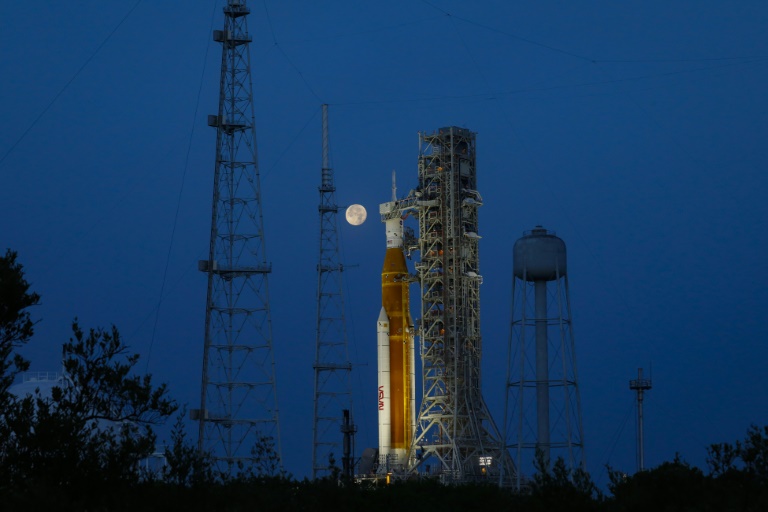
Mark your calendars: NASA’s Artemis program to return to the Moon could launch its first uncrewed test flight as soon as August 29, the agency said Wednesday.

Artemis-1 is the first in a series of missions as the United States seeks to return humans to the Moon, build a sustained presence there, and use the lessons gained to plan a trip to Mars sometime in the 2030s.

NASA associate administrator Jim Free told reporters the first window of possible launch dates for the giant Space Launch System (SLS) and Orion crew capsule were August 29, September 2, and September 5. 

The decision follows final checks on the ground at the Kennedy Space Center in Florida known as “wet dress rehearsals.” 

The last of these tests, carried out in June, met 90 percent of the team’s goals, and on Wednesday Cliff Lanham, senior vehicle operations manager, said engineers have now replaced faulty seals that had caused a hydrogen leak on SLS during the final trial.

Artemis-1 is set to journey around the far side of the Moon in a mission lasting four to six weeks — longer than any ship for astronauts has done without docking, before returning home faster and hotter than every vessel before.

It will also deploy a number of small satellites called CubeSats to perform experiments in space.

Artemis mission manager Mike Sarafin told reporters: “Our first and our primary objective is to demonstrate Orion’s heat shield in lunar reentry conditions.”

When the capsule returns from the Moon, it will be traveling about 24,500 miles an hour (39,400 kilometers per hour) and experience temperatures half as hot as the Sun outside its heat shield.

The second objective is to demonstrate the flight worthiness of the rocket and crew capsule as they perform all their maneuvers over the course of the mission.

Finally, NASA will look to successfully retrieve Orion after splashdown, and thoroughly inspect it.

Artemis-2 will be the first crewed test, flying around the Moon but not landing, while Artemis-3 will see the first woman and first person of color touch down on the lunar south pole.

Ukrainian first lady to US Congress: 'Stop this terror'

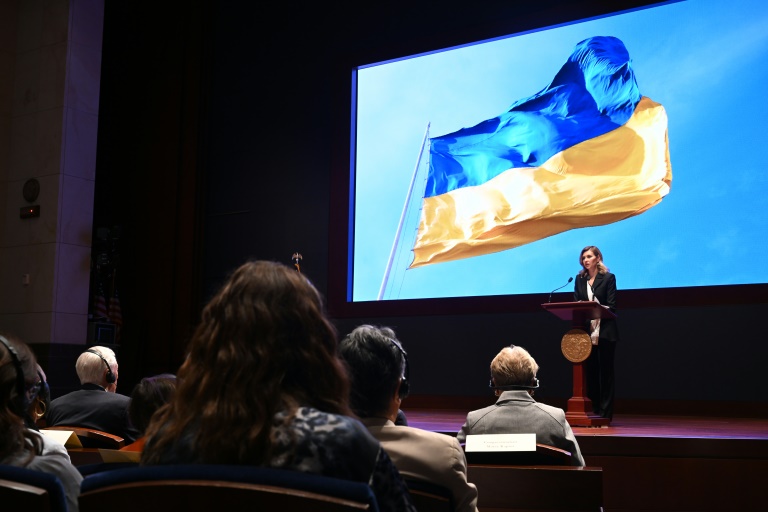
Ukraine’s first lady made an emotional pitch Wednesday to US lawmakers for more weapons to fight Russian invaders, saying she spoke for millions of parents fearing for their children.

Taking a cue from her husband President Volodymyr Zelensky, who showed graphic images during his virtual appearance before the US Congress, Olena Zelenska — who appeared in person — displayed images of joyful children who were killed or maimed by Russia.

Among them was Liza Dmitrieva, a four-year-old with Down’s syndrome pictured in her mother’s video happy on her stroller an hour before she was killed by a Russian strike last week in Vinnytsia.

“We want every father and every mother to be able to tell their child, ‘Go to sleep peacefully, there will be no more air strikes, no more missile strikes.’ Is this too much to wish for?” Zelenska said.

Zelenska, stepping into a more public role after staying sheltered immediately following Russia’s February 24 invasion, acknowledged it was unusual for a first lady to seek weapons but said it was vital.

Ukraine needs air-defense systems “in order for rockets not to kill children in their strollers,” she said.

“Help us to stop this terror against Ukrainians,” she said.

She invoked both the memory of the September 11 terrorist attacks and the US Declaration of Independence’s call for all people to enjoy “life, liberty and the pursuit of happiness.”

US lawmakers will go on recess next week and “this is normal,” she said.

“It is precisely this normalcy that we are deprived of now. Will my son be able to return to school in the fall? I don’t know, like millions of mothers in Ukraine.”

Both President Joe Biden, whom she met Tuesday, and the US Congress have been enthusiastic about supplying weapons to Ukraine, approving a $40 billion package in May.

But with Russian forces advancing in the east, Ukraine has been seeking to secure a more steady flow of weapons including longer-range precision rockets.

US lawmakers applauded Zelenska as she thanked them for assistance and said, “While Russia kills, America saves.”

Squeaky-clean Sunak bids to become UK's first Hindu PM

Before his spectacular falling-out with Boris Johnson, former finance minister Rishi Sunak was on a rapid rise that could still end with him installed as Britain’s first prime minister of colour.

It would be a historic landmark, if the Hindu descendant of immigrants from Britain’s old empire in India and East Africa were to take command of the world’s fifth largest economy.

But after making the final run-off following a series of votes by Conservative MPs, Sunak must first convince the party’s grassroots members — and hope Johnson loyalists overlook his role in toppling the scandal-tainted leader.

A details-oriented policy wonk, Sunak, 42, was an early backer of Brexit, and took over as chancellor of the exchequer in February 2020. 

It was a baptism of fire for the Tory rising star, as the Covid pandemic erupted.

He was forced to craft an enormous economic support package at breakneck speed, which he now says needs to be paid off.

In India, Sunak has been better known through his wife Akshata Murty. She is the daughter of Indian tycoon Narayana Murthy, the billionaire co-founder of information-technology group Infosys. 

The Sunaks met while studying in California and they have two young daughters — along with a photogenic dog. 

The ex-minister’s Instagram-friendly profile earned him the media nickname of “Dishy Rishi”.

But Sunak, already wealthy through his pre-politics career in hedge funds, must battle against criticism that he is out of touch with ordinary Britons struggling with a cost-of-living crisis.

This week, video footage emerged of a 21-year-old Sunak describing his mix of friends following his education at Winchester College, one of Britain’s most exclusive private schools, and Oxford University.

“I have friends who are aristocrats, I have friends who are upper class, I have friends who are, you know, working class,” he said, before adding: “Well, not working class.”

– Partygate fine –

Until last year, Sunak held a US Green Card — which critics said suggested a lack of long-term loyalty to Britain. 

And he is bound to face fresh questions over Murty’s failure until recently to pay UK taxes on her Infosys returns, which opinion polls suggest was viewed with deep disfavour by voters.

Sunak has already been marked by the scandals of Johnson’s tumultuous premiership. 

In 2020, he marked the Hindu festival of Diwali by lighting oil lamps on the front step of the chancellor’s official residence at 11 Downing Street — while urging other Hindus to stick to England’s Covid lockdown.

That same evening of November 13, 2020, Johnson and his partner Carrie were allegedly violating the lockdown by partying with friends to celebrate the downfall of his then-chief advisor, Dominic Cummings.

The apparent rule-breaking and history of mendacity attached to the “Partygate” premier are in contrast to the teetotal Sunak, who admits only to a fondness for Coca-Cola and sugary confectioneries. 

But he still ended up with a police fine for Partygate, after joining a birthday gathering for Johnson when he arrived early for a Downing Street meeting.

– Waiter to wealth –

Sunak was barely known to the British public when Johnson made him chancellor, after only five years in Conservative politics. 

He was the first person born in the 1980s to hold one of the so-called four great offices of state: prime minister, chancellor, foreign secretary and home secretary.

He represents the constituency of Richmond in Yorkshire, northern England — a safe Conservative seat he took over in 2015 from former party leader and foreign secretary William Hague, who described Sunak as “exceptional”.

Sunak swears his oath of allegiance as an MP on the Bhagavad Gita. Theresa May gave him his first job in government in January 2018, making him a junior minister for local government, parks and troubled families.

Sunak’s grandparents were from Punjab in northern India and emigrated to Britain from eastern Africa in the 1960s.

They arrived with “very little”, Sunak told MPs in his maiden speech in 2015.

His father was a family doctor in Southampton on the southern English coast, and his mother ran a local pharmacy.

Sunak waited tables in a local Indian restaurant, before progressing to Oxford and then Stanford University in California.

Both his own family’s experience, and that of his wife’s, are a “very Conservative” story of hard work and aspiration, Sunak said at a bad-tempered candidates’ debate last week.

The coming weeks will decide if that resonates enough with most of the Tory rank and file.

European stocks retreat, euro dips

European stocks retreated Wednesday as the EU took precautionary measures in the face of reduced Russian gas supplies.

The euro bobbed about before settling lower ahead of a key ECB meeting on Thursday.

Oil prices slid on renewed recession worries, while US stocks added to a rally the previous day, which helped Asian stocks move higher.

US stocks had rebounded strongly Tuesday as companies’ earnings soothed concerns about the impact on their bottom lines from soaring inflation and rising interest rates.

While several firms — such as Apple and Johnson & Johnson — have indicated they have concerns about the outlook, there is a feeling that the sell-off across markets could be reaching a bottom.

And some commentators have suggested the second half could see a healthy rally, despite official data continuing to show inflation rising strongly worldwide.

UK annual inflation hit a new 40-year high at 9.4 percent in June on surging motor fuel and food prices.

The same month, inflation in South Africa soared to its highest level in 13 years at 7.4 percent.

Against a backdrop of decades-high inflation also in the eurozone, all eyes were on the European Central Bank, which is widely expected to announce on Thursday its first rate hike in more than a decade.

Officials have their work cut out for them as they must also try not to drive a stake through the eurozone economy, which has also been hammered by an energy crisis.

Talk of a half-point hike — instead of the quarter-point lift most expect — has boosted the euro against the dollar since last week falling below parity for the first time in 20 years.

Markets have been increasingly pricing in a half-point hike, although officials had previously indicated a quarter-point rise was most likely.

“The central bank has left the door open to super-charging the lift-off previously but given its past tendency to proceed with extreme caution, it would send quite the message about how concerned they’ve become,” said market analyst Craig Erlam at trading platform OANDA.

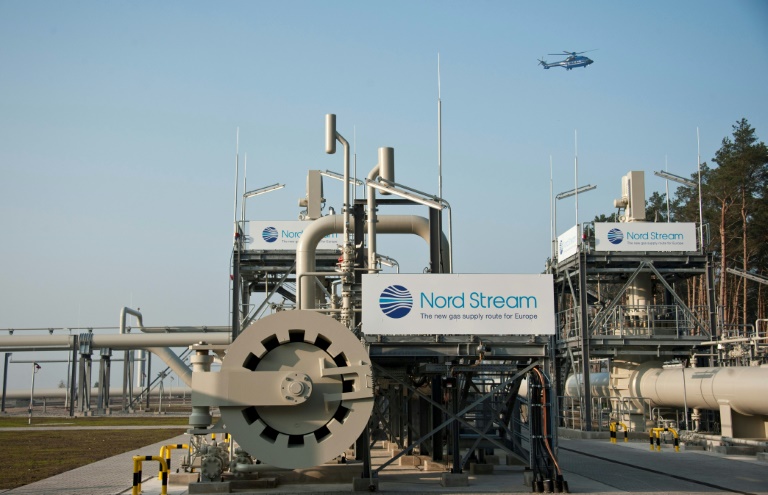
The European single currency caught an early updraft from a Bloomberg News article saying Russia’s Gazprom would resume deliveries through the Nord Stream 1 pipeline Thursday, albeit at reduced capacity.

Moscow shut down deliveries to Germany for technical reasons last week, but there had been fears it would keep the taps off in retaliation for European sanctions over its invasion of Ukraine.

On Wednesday the German pipeline manager said Russian gas deliveries are expected to resume at the previous level.

Taking no chances, the European Commission on Wednesday urged EU countries to reduce their demand for natural gas by 15 percent over the coming winter months to overcome Russia’s energy supply “blackmail”.

In a statement, the EU’s executive arm also asked member states to give it special powers to force through needed demand cuts if Russia cuts the Europe’s gas lifeline.

“Russia is blackmailing us. Russia is using energy as a weapon and therefore, in any event, whether it’s a partial major cut off of Russian gas or total cut off… Europe needs to be ready,” Commission president Ursula von der Leyen told reporters.

The commission’s moves saw both European stocks and euro slide lower. 

– Key figures at around 1530 GMT –

New York – Dow: UP 0.2 percent at 31,875.93 points

EURO STOXX 50: DOWN less than 0.1 percent at 3,585.24

London – FTSE 100: DOWN 0.4 percent at 7,267.97 (close) 

Frankfurt – DAX: DOWN 0.2 percent at 13,281.98 (close)

Paris – CAC 40: DOWN 0.3 percent at 6,184.66 (close)

Tokyo – Nikkei 225: UP 2.7 percent at 27,680.26 (close)

Hong Kong – Hang Seng Index: UP 1.1 percent at 20,890.22 (close)

Shanghai – Composite: UP 0.8 percent at 3,304.72 (close)

Euro/dollar: DOWN at $1.0202 from $1.0226 Tuesday

Pound/dollar: DOWN at $1.1980 from $1.2002 

Euro/pound: DOWN at 85.15 pence from 85.19 pence

Dollar/yen: DOWN at 138.04 yen from 138.21 yen

West Texas Intermediate: DOWN 0.9 percent at $103.25 per barrel

Brent North Sea crude: DOWN 0.8 percent at $106.55 per barrel

burs-rl/pvh

Russia says military aims expanding in Ukraine, pummels Kharkiv

Russia said Wednesday that its military aims in Ukraine have expanded beyond the industrial Donbas region as its forces launched deadly barrages over the east and the south of the country.

The warning came as the European Commission called on EU countries to slash demand for natural gas to relieve dependence on Russian energy and the bloc agreed an embargo on Russian gold imports.

Russia’s Foreign Minister Sergei Lavrov said in an interview that Moscow’s military was no longer “only” focused on wresting control of the east Ukraine regions of Lugansk and Donetsk, which have been partially controlled by pro-Moscow rebels for years.

“The geography is different now. It is not only about the DNR and LNR, but also the Kherson region, the Zaporizhzhia region and a number of other territories” he explained to state media.

Russian forces, since invading on February 24, have steadily advanced into each of those regions, wreaking destruction as they captured key cities and met fierce Ukrainian resistance.

Ukrainian Foreign Minister Dmytro Kuleba, responded to Lavrov’s remarks by calling on allies of his country to ramp up sanctions on Moscow and speed arms deliveries to Kyiv.

“By confessing dreams to grab more Ukrainian land, Russian Foreign Minister (Sergei Lavrov) proves that Russia rejects diplomacy and focuses on war and terror,” he said.

– Western arms a ‘direct threat’ to Russia –

The steady progress of Russian troops in the east came after Moscow’s forces failed early in the invasion to capture the capital Kyiv and were pushed back from Ukraine’s second city Kharkiv.

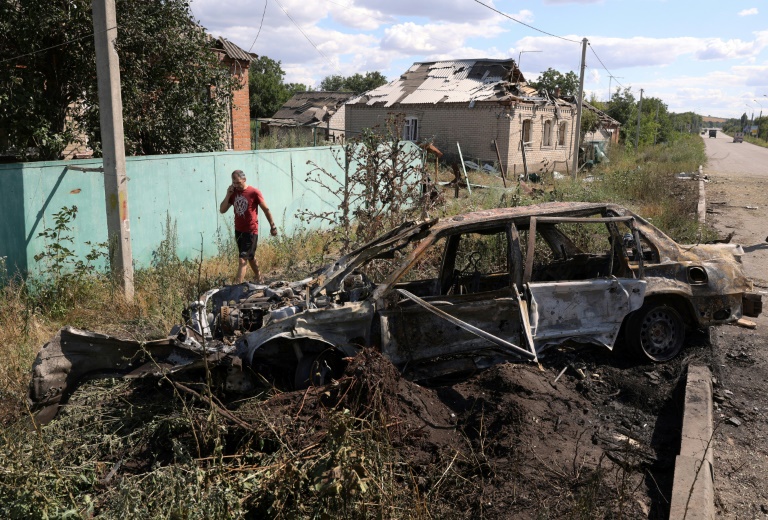
But Russian artillery has pursued an almost constant shelling campaign on the eastern hub and strikes on Kharkiv Wednesday killed three people, local officials said.

“There was a 13-year-old boy among them,” the regional governor Oleg Synegubov said in a statement on social media.

AFP journalists saw a man in shock kneeling over the body, which was covered by a blue sweatshirt and surrounded by shards of broken glass.

In the southern city of Nikopol, Russian shelling on a residential neighbourhood killed two people, authorities announced.

While the brunt of fighting in Ukraine in recent months has focused on Donbas, a Ukrainian counter-offensive in the south has slowly clawed back some Russian-held territory.

Ukraine and military analysts credit Western-supplied long-range artillery with shifting battle field dynamics there and Russian officials have taken note.

Lavrov said Wednesday that Western arms deliveries to Ukraine had been a factor in Moscow’s decision to focus beyond the east and said its ambitions could expand even more if the shipments continued. 

“We cannot allow the part of Ukraine that (President Volodymyr) Zelensky will control or whoever replaces him to have weapons that will pose a direct threat to our territory and the territory of those republics that have declared their independence,” Lavrov said, referring to Donetsk and Lugansk.

The head of the Ukrainian presidency’s office, Andriy Yermak said Wednesday on social media that Kyiv was expecting more Himars — US precision rocket systems — to arrive “soon”.

– Emergency energy plans –

Lavrov also dismissed the idea of further peace talks with Ukraine, claiming that earlier rounds showed Kyiv was unwilling to negotiate in “earnest”. 

“It doesn’t make any sense in the current situation,” he told state media.

Russian and Ukrainian delegations are nevertheless expected in Istanbul in the coming days for more talks on unblocking Ukraine’s Black Sea grain exports.

Turkish leader Recep Tayyip Erdogan said Wednesday he hoped an agreement could be formulated “this week”.

Mykolaiv, the largest city under Ukrainian control near Russian-occupied Kherson and the southern front, has been shelled persistently since the beginning of the invasion.

The regional governor on Wednesday announced the city would be closed “for a day or two” in several weeks to process information on people believed to have been collaborating with Russian troops.

The announcement comes after Zelensky in Kyiv fired several senior law enforcement officials — including the head of the security services — accusing their departments of having failed to crack down on spies and Kremlin sympathisers.

The West has responded to Russia’s invasion with several packages of damaging sanctions, which in turn has seen Russia cut natural gas supplies to the bloc, spurring a supply and cost crisis.

In its latest package of penalties Wednesday, the EU targeted gold exports and froze assets at Russia’s largest bank Sberbank.

Announcing an emergency plan Wednesday, the European Commission asked EU countries to reduce demand for natural gas by 15 percent to secure sufficient storage ahead of winter.

EU commissioners have also asked member states to give Brussels special powers to impose compulsory energy rationing if Russia cuts off Europe’s gas lifeline.

burs-acl-jbr/jj

Europe counts cost of heatwave as Spain PM says more than 500 died

Spain’s prime minister said “more than 500 people died” during a 10-day heatwave as Europe counts the cost of a record period of extreme temperatures.

Climate change protesters warned the scorching weather should be a wake-up call for the continent.

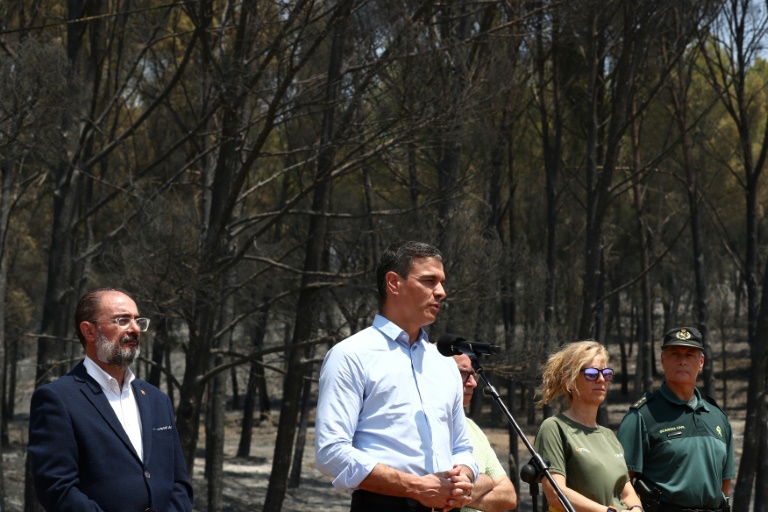
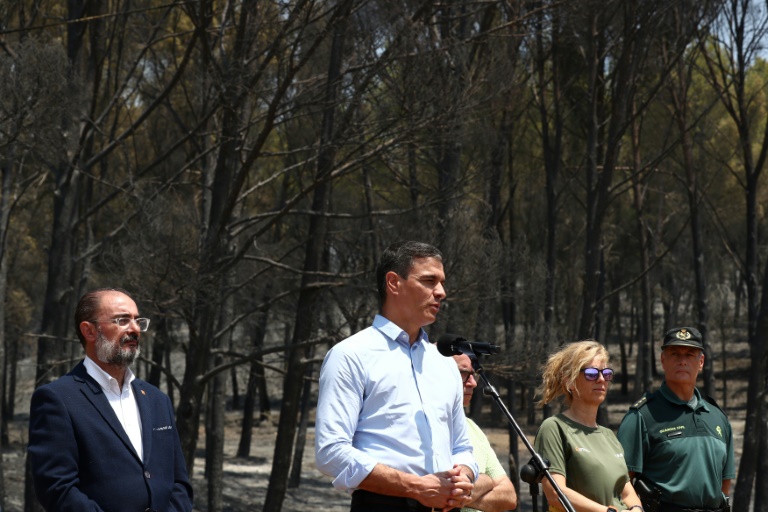
Spanish Prime Minister Pedro Sanchez said the “climate emergency is a reality”.

Speaking against a backdrop of charred trees and burnt ground in the hard-hit northeastern Zaragoza region, he urged people to take “extreme caution”.

Sanchez cited figures released by the Carlos III Health Institute, which estimates the number of heat-related fatalities based on the number of excess deaths compared to the average in previous years.

The institute has stressed these figures are a statistical estimate and not a record of official deaths.

Meanwhile Greek firefighters gained the upper hand in a battle against a wildfire raging for a second day in mountainside suburbs north of Athens that had forced hundreds of people to flee, an official said.

“For the most part the fire is in decline,” fire department spokesman Yiannis Artopios told reporters.

Greece had been spared the blistering heatwave experienced in western Europe, but flames fanned by high winds were threatening the suburbs of Penteli, Pallini, Anthousa and Gerakas, home to tens of thousands of people.

“The fire was scorching our backs, we left in the nick of time. Had we stayed another 30 seconds it would have burned us,” a Pallini resident who lost his car and shed to the flames told ERT television. 

“The civil protection authority was late in alerting us,” he said.

In France, firefighters brought twin blazes near the southwestern city of Bordeaux under control. 

Temperatures of more than 40 degrees Celsius (104 degrees Fahrenheit) over previous days have spelled misery for millions and shattered heat records.

Cooler air swept in Wednesday, bringing relief to people from Portugal to Britain, but thousands of firefighters continued to tackle blazes that have broken out in multiple countries after months of drought-like conditions.

“Our assessment is generally positive. The situation improved overnight,” French fire service spokesman Arnaud Mendousse told AFP from the southwestern Gironde region where two huge blazes have engulfed 20,600 hectares (50,900 acres) of tinder-dry forest since last week.

– Heat records –

The heatwave saw a new all-time record for Britain where the national weather service clocked 40.3C in eastern England, surpassing the previous high set in 2019.

Grassland fires erupted on Tuesday on the edge of London, with one forcing the evacuation of 14 people as farm buildings, houses and garages were consumed by the flames.

Sixteen firefighters were injured around the capital with two taken to hospital, the London Fire Brigade said.

“Yesterday was the busiest day for the fire service in London since the Second World War,” the city’s mayor Sadiq Khan told Sky News on Wednesday, urging the public to remain vigilant despite temperatures now falling.

Khan also accused Conservative leadership candidates vying to succeed Prime Minister Boris Johnson of ignoring “the elephant in the room” of climate change.

Climate demonstrators triggered a lengthy tailback on Britain’s busiest motorway encircling London on Wednesday as they sought to highlight the need for greater action to reduce greenhouse gases responsible for global heating.

Members of the group Just Stop Oil climbed gantries over the M25 motorway, causing police to intervene.

“This is the moment when climate inaction is truly revealed in all its murderous glory for everyone to see: as an elite-driven death project that will extinguish all life if we let it,” the activist group said in a statement.

burs-adp/jh/bp/ds/lcm/imm

Europe counts cost of heatwave as Spain PM says more than 500 died

Spain’s prime minister said “more than 500 people died” during a 10-day heatwave as Europe counts the cost of a record period of extreme temperatures.

Climate change protesters warned the scorching weather should be a wake-up call for the continent.

Spanish Prime Minister Pedro Sanchez said the “climate emergency is a reality”.

Speaking against a backdrop of charred trees and burnt ground in the hard-hit northeastern Zaragoza region, he urged people to take “extreme caution”.

Sanchez cited figures released by the Carlos III Health Institute, which estimates the number of heat-related fatalities based on the number of excess deaths compared to the average in previous years.

The institute has stressed these figures are a statistical estimate and not a record of official deaths.

Meanwhile Greek firefighters gained the upper hand in a battle against a wildfire raging for a second day in mountainside suburbs north of Athens that had forced hundreds of people to flee, an official said.

“For the most part the fire is in decline,” fire department spokesman Yiannis Artopios told reporters.

Greece had been spared the blistering heatwave experienced in western Europe, but flames fanned by high winds were threatening the suburbs of Penteli, Pallini, Anthousa and Gerakas, home to tens of thousands of people.

“The fire was scorching our backs, we left in the nick of time. Had we stayed another 30 seconds it would have burned us,” a Pallini resident who lost his car and shed to the flames told ERT television. 

“The civil protection authority was late in alerting us,” he said.

In France, firefighters brought twin blazes near the southwestern city of Bordeaux under control. 

Temperatures of more than 40 degrees Celsius (104 degrees Fahrenheit) over previous days have spelled misery for millions and shattered heat records.

Cooler air swept in Wednesday, bringing relief to people from Portugal to Britain, but thousands of firefighters continued to tackle blazes that have broken out in multiple countries after months of drought-like conditions.

“Our assessment is generally positive. The situation improved overnight,” French fire service spokesman Arnaud Mendousse told AFP from the southwestern Gironde region where two huge blazes have engulfed 20,600 hectares (50,900 acres) of tinder-dry forest since last week.

– Heat records –

The heatwave saw a new all-time record for Britain where the national weather service clocked 40.3C in eastern England, surpassing the previous high set in 2019.

Grassland fires erupted on Tuesday on the edge of London, with one forcing the evacuation of 14 people as farm buildings, houses and garages were consumed by the flames.

Sixteen firefighters were injured around the capital with two taken to hospital, the London Fire Brigade said.

“Yesterday was the busiest day for the fire service in London since the Second World War,” the city’s mayor Sadiq Khan told Sky News on Wednesday, urging the public to remain vigilant despite temperatures now falling.

Khan also accused Conservative leadership candidates vying to succeed Prime Minister Boris Johnson of ignoring “the elephant in the room” of climate change.

Climate demonstrators triggered a lengthy tailback on Britain’s busiest motorway encircling London on Wednesday as they sought to highlight the need for greater action to reduce greenhouse gases responsible for global heating.

Members of the group Just Stop Oil climbed gantries over the M25 motorway, causing police to intervene.

“This is the moment when climate inaction is truly revealed in all its murderous glory for everyone to see: as an elite-driven death project that will extinguish all life if we let it,” the activist group said in a statement.

burs-adp/jh/bp/ds/lcm/imm

Mammals became warm-blooded later than thought: study

The ancestors of mammals started to become warm-blooded around 20 million years later than previously thought, researchers suggested Wednesday, after analysing inner-ear fossils hoping to solve “one of the great unsolved mysteries of palaeontology”.

Warm-bloodedness is one of the quintessential characteristics of mammals, along with fur, but exactly when they first evolved the feature has long been a subject of debate.

Previous research has indicated that the ancestors of mammals began evolving warm-bloodedness, or endothermy, around 252 million years ago — around the time of the Permian extinction, known as the “Great Dying”.

However figuring out the timeline has proved difficult.

“The problem is that you cannot stick thermometers in your fossils, so you cannot measure their body temperature,” said Ricardo Araujo of the University of Lisbon, one of the authors of a new study in the journal Nature.

He was part of an international team of researchers that found a new way to determine how body heat changed throughout time, by examining the semicircular canals in the inner ears of 56 extinct species of mammal ancestors.

Fluid runs through the tiny ear canals, which help animals keep their balance.

The researchers realised that as body temperatures warmed up, so did the ear fluid. 

Araujo gave the example of oil used to fry hot chips.

Before you warm the oil up, it is “very viscous, very dense,” he told AFP.

“But then when you heat it up, you’ll see that the oil is much runnier, it flows much more easily.”

The runnier ear fluid led to animals evolving narrower canals — which can be measured in fossils, allowing the researchers to track body temperature over time.

Unlike previous research on this subject, the team developed a model that not only works on extinct mammal ancestors, but also living mammals, including humans.

“It can look at your inner ear and tell you how warm-blooded you are — that’s how accurate the model is,” lead study author Romain David of London’s Natural History Museum told AFP.

Using the model, they traced the beginnings of warm-bloodedness to around 233 million ago, in the Late Triassic period. 

– ‘Not a gradual, slow process’ –

Michael Benton, a palaeontologist at Britain’s University of Bristol who was not involved in the study, said the new metric “seems to work well for a wide array of modern vertebrates”.

“It doesn’t just provide a yes-no answer, but actually scales the ‘degree’ of endothermy in terms of actual typical body setpoint temperature,” he told AFP.

Benton, whose previous research had given the 252 million years date, said the transition to warm-bloodedness likely took place in stages, and “there were several significant prior steps before this semicircular canal switch”.

Araujo said the new research suggested that warm-bloodedness came about simply and “very quickly in geological terms, in less than a million years”.

“It was not a gradual, slow process over tens of millions of years as previously thought”.

David said it seemed unlikely that warm-bloodedness would begin around the extinction event 252 million years ago, because global temperatures were extremely hot then. 

That would have been a disadvantage for warm-blooded animals — but they could have thrived as temperatures cooled in the following millions of years.

“Being an endotherm allows you to be more independent of the whims of the climate, to run faster, run longer, explore different habitats, explore the night, explore polar regions, make long migrations,” Araujo said.

“There were a lot of innovations at the time that started to define what a mammal is — but also ultimately what a human being would be.”

Close Bitnami banner
Bitnami