World

Biden vows climate action as heat waves slam US, Europe

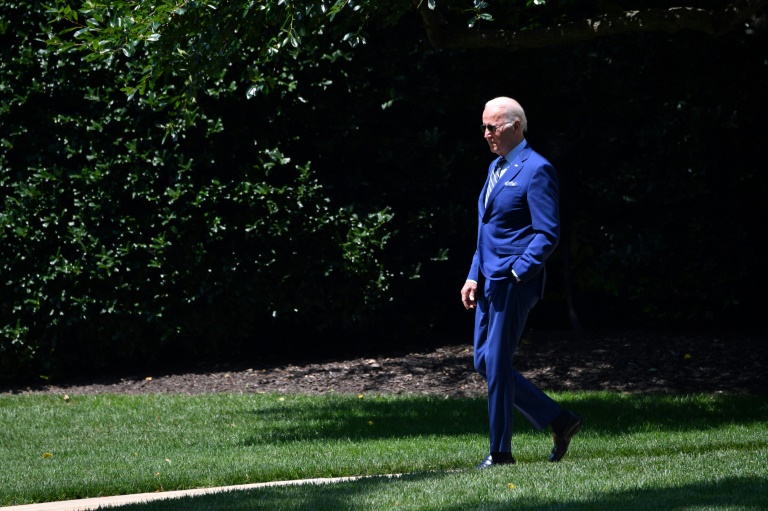
US President Joe Biden unveiled a series of executive measures Wednesday to combat climate change and pledged more to follow, seeking to advance his environmental agenda stalled by unsupportive lawmakers and a conservative Supreme Court.

Summer heat waves have highlighted the threat, with 100 million people in the United States under excessive heat alerts, and devastating record temperatures causing misery across Europe.

“Climate change… is literally, not figuratively, a clear and present danger,” Biden said, announcing a $2.3 billion investment to help build US infrastructure to withstand climate disasters. 

“The health of our citizens and our communities is literally at stake… Our national security is at stake as well. (…) And our economy is at risk. So we have to act.”

Biden, delivering his address at a former coal power plant in Massachusetts, said his administration would not hesitate to do whatever is necessary, with or without lawmakers on board.

“Congress is not acting as it should… This is an emergency and I will look at it that way. As president, I’ll use my executive powers to combat the climate crisis,” he said.

But he stopped short of declaring a formal emergency, which would grant him additional policy powers.

– Repeated setbacks –

Biden began his term last year promising to fulfill campaign pledges to tackle the global climate crisis, but his agenda has faced blow after blow.

His first day in office, Biden signed an executive order to bring the United States back into the Paris climate agreement, followed later by an ambitious announcement that he was targeting a 50-52 percent reduction from 2005 levels in US net greenhouse gas pollution by 2030.

But his signature Build Back Better legislation, which would have included $550 billion for clean energy and other climate initiatives, is all but dead after failing to receive the necessary backing in Congress as Democrat Joe Manchin said he would not support the bill in a evenly divided Senate.

And last month, the Supreme Court ruled that the Environmental Protection Agency (EPA) cannot issue broad greenhouse gas regulations without congressional approval.

The Biden administration has framed climate policies as a national security issue, made all the more urgent by soaring fuel prices in the wake of Russia’s invasion of Ukraine. 

“Not only does it affect our infrastructure… It has an impact on our readiness,” White House spokesman John Kirby said Tuesday. 

State Department spokesman Ned Price pointed to the extreme heat wave tormenting Europe this week — with Britain recording a temperature of 104 degrees Fahrenheit (40 degrees Celsius) — as more proof that climate action cannot wait. 

“We are committed to taking advantage of this moment and doing everything we can, including on the world stage,” Price told reporters, “to ensure that this decisive decade does not go by without us taking appropriate action.”
War in Ukraine: Latest developments

Here are the latest developments in the war in Ukraine:

– EU prepares for Russian gas cut-off –

The European Commission urges EU members to reduce demand for natural gas by 15 percent over the coming months and to give it the powers to impose gas rationing in preparation for a winter without Russian gas, or with a much-reduced supply.

“Russia is using energy as a weapon and therefore, in any event, whether it’s a partial major cut off of Russian gas or total cut off… Europe needs to be ready,” European Commission president Ursula von der Leyen says.

In a draft plan seen by AFP the Commission asks member states to turn down the heating and air-conditioning in public and commercial buildings.

Since Russia invaded Ukraine on February 24 and the West responded with sanctions, Russia has begun reducing its gas deliveries to EU members, including Germany, and in the case of Bulgaria, Denmark, Finland, The Netherlands and Poland, halting them altogether.

Europe is eagerly watching whether Russia will resume gas supplies via the Nord Stream 1 pipeline on Thursday when scheduled maintenance is due to be completed. German pipeline manager Gascade said it expected Russian gas deliveries to resume at 40 percent of capacity.

On Wednesday evening, the president of Germany’s Federal Network Agency Klaus Mueller estimated on Twitter that the delivery on Thursday might only be “around 30 percent” of the capacity, after updating the data.

– Russia’s aims go beyond Donbas: Lavrov –

Russian Foreign Minister Sergei Lavrov says President Vladimir Putin’s designs on Ukraine go beyond the eastern Donbas region, which Moscow made its focus after failing to take the capital Kyiv and second city of Kharkiv.

In an interview with Russian state media he says “it is not only about the DNR and LNR”, referring to the two territories that make up the Donbas, but also about the Russian-occupied southern Kherson region, the partly-occupied southeastern Zaporizhzhia region “and a number of other territories”.

He says Western arms shipments to Kyiv, including the supply of medium-range US multiple rocket launchers, had made Moscow review its aims.

“By confessing dreams to grab more Ukrainian land, (the) Russian Foreign Minister proves that Russia rejects diplomacy and focuses on war and terror,” Ukraine’s Foreign Minister Dmytro Kuleba says on social media, calling “on all partners to step up sanctions pressure on Russia and speed up arms deliveries to Ukraine.”

– Three killed in Kharkiv – 

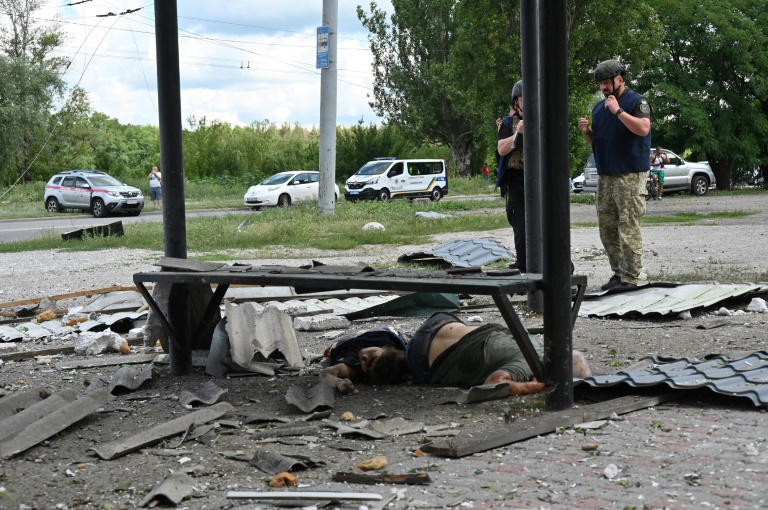
While Russian forces advance in Donbas they have also continued bombarding Kharkiv, where three people were killed by shelling on Wednesday.

Regional governor Oleg Synegubov says the dead included a 13-year-old boy. AFP journalists see a man in shock kneeling over the body of a boy in a blue sweatshirt.

Elsewhere, two people were killed in artillery strikes on the southern city of Nikopol, near Zaporizhzhia.

– ‘No sense’ in peace talks: Lavrov –

In the same interview Lavrov also declares that peace talks with Ukraine make no sense “in the current situation”.

He accuses Kyiv of having “no desire to discuss anything in earnest.”  

The two sides made some headway during talks in the first month of the conflict but they stalled after the discovery of the bodies of hundreds of civilians massacred in areas that had been occupied by Russian forces.

– EU adopts Russian gold embargo –

EU countries target Russian gold exports and freeze assets at Russia’s largest bank Sberbank in a new round of sanctions imposed to punish Moscow for its invasion of Ukraine.

The embargo on gold imports fulfils a decision agreed by the world’s most industrialised nations at a G7 meeting in late June in which EU members Germany, France and Italy took part.

The EU also unblocks assets at Russian banks linked to trade in food and fertiliser in an effort to respond to Moscow’s allegations that the sanctions are causing a food crisis.

burs-cb-jmy/lcm

Sunak, Truss ready for battle to be Britain's next PM

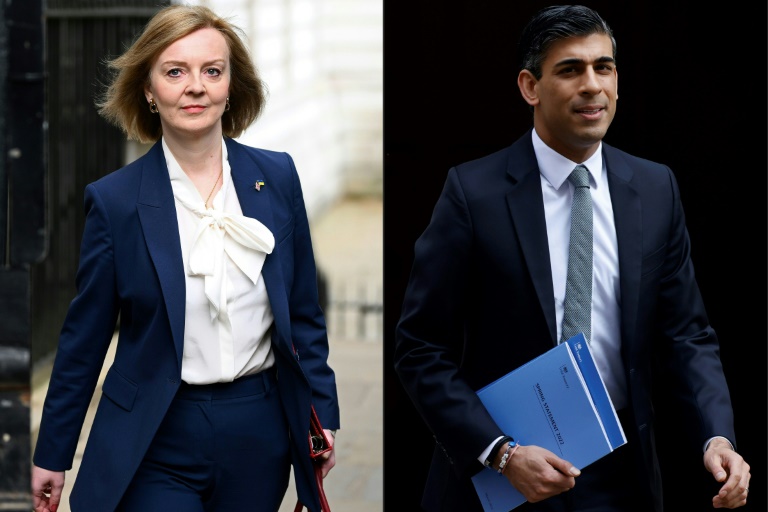
Conservative rivals Rishi Sunak and Liz Truss, offering competing answers to Britain’s multiple crises, will duel in the coming weeks to become the next prime minister after the party’s lawmakers held a concluding vote Wednesday.

Former finance minister Sunak, a centrist offering fiscal rectitude alongside promises of renewed integrity following outgoing leader Boris Johnson’s scandal-tarred tenure, again led the field with 137 votes in Tory MPs’ fifth and final ballot.

The crucial race for second place was narrowly won by Foreign Secretary Truss, on 113 votes, against 105 for trade minister Penny Mordaunt.

Sunak and Truss now take their case to Conservative party members, who will decide the new leader and prime minister after a dozen nationwide hustings and several televised debates over the next six weeks. 

The result will be announced on September 5. But Britain is already guaranteed to get either its first prime minister of colour or its third woman leader.

“We need to restore trust, rebuild the economy, and reunite our country,” Sunak said after his win, as Britain contends with the worst cost-of-living crisis in decades, wrought by the pandemic, the war in Ukraine and Brexit.

Truss, the bookies’ favourite to beat Sunak based on recent polls of party members, said she was “not complacent at all”.  

“What I believe is that lowering taxes, opening up opportunities, is going to help us deliver the economic growth that Britain needs,” she said. 

“And it’s also going to help deliver us the next election.”

– ‘Hasta la vista’ –

Sunak’s resignation as finance minister this month helped to topple Johnson after months of scandal including “Partygate”, and Downing Street is reportedly running an “anyone but Rishi” campaign.

At his last Prime Minister’s Questions session in parliament earlier, Johnson bowed out by saying “Hasta la vista, baby!”.

In a hint of support for Truss’s Thatcherite platform, he urged his successor to “cut taxes and deregulate where you can to make this the greatest place to live and invest”.

Johnson urged the contenders to continue his outspoken backing for Ukraine, and “stay close to the Americans”.

Mordaunt — the one-time bookmakers’ favourite — lapsed to outsider status after Truss’s fellow right-winger Kemi Badenoch was eliminated Tuesday.

Former minister David Davis, a Mordaunt backer, accused Sunak of lending Truss votes so he could face her in the run-off.

“He wants to fight Liz, because she’s the person who will lose the debate with him,” he told LBC radio.

A YouGov poll published before the vote indicated that, despite his popularity with colleagues, Sunak was the least appealing candidate to the members. 

The BBC and Sky News both plan to host live TV debates between the pair, the first on Monday, with other potential duels possible before party members’ postal voting ends September 2. 

Sunak won the two previous debates, according to snap polls, and the second one featured a no-holds-barred clash with Truss.

– ‘Fantasy economics’ –

The dozen hustings in front of the membership — the first in Leeds, northern England, next Thursday — will take the candidates to all corners of Britain, including Scotland, Wales and Northern Ireland.

The Conservatives have declined to say how many eligible members they have, but have noted it will be more than the 160,000 who voted at the last leadership contest in 2019.

Sunak’s popularity with the grassroots has faded since questions were raised over his family’s tax arrangements, and as he presided over sky-rocketing inflation, which hit a new 40-year high of 9.4 percent in June.

In a new policy announcement, Sunak vowed an “ambitious new plan to make the UK energy independent” by 2045 to prevent future energy-driven inflation spikes, after Russia’s war in Ukraine sent gas prices rocketing.

Meanwhile, Truss has pledged a host of tax cuts “from day one”.

Johnson announced on July 7 he was quitting as Conservative leader after a government rebellion in protest at his scandal-hit administration.

Under Britain’s parliamentary system, the leader of the biggest party is prime minister and can be changed mid-term without having to call a general election.

Labour’s Starmer accused the Tory candidates of “fantasy economics” before turning his fire on the outgoing Johnson.

“He is a complete bullshitter and I think he’s been found out,” he told former Labour prime minister Tony Blair’s onetime spin chief Alastair Campbell in a podcast, referring notably to “Partygate”.

The complex negotiations to get grain out of Ukraine

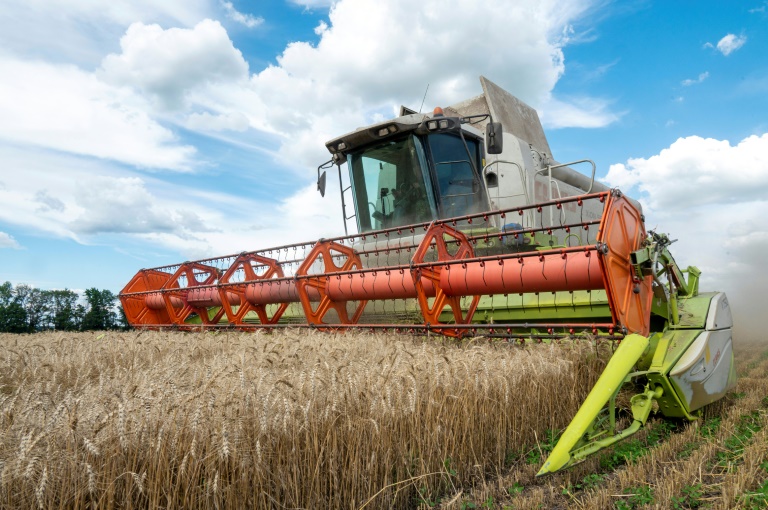
Talks are progressing on the opening of sea corridors to allow 20 million tonnes of grain still blocked in Ukraine and the upcoming harvests to be shipped around the world.

But even if an agreement is reached, it will not provide any immediate relief for importing countries.

– Crucial negotiations –

Negotiations have intensified since the beginning of June, with Turkey acting as mediator between Russia and Ukraine, which together account for around 30 percent of global trade in crops.

The talks are crucial insofar as no other country has come forward so far able to make up for the shortfall on the market of initially 25 million tonnes of Ukraine grain. And prices for agricultural commodities were already high before Russia invaded Ukraine on February 24, notably as a result of the post-Covid economic recovery.

The war has sparked a surge in the price of grains such as wheat and corn to levels unsustainable for countries dependent on their import, such as Egypt, Lebanon and Tunisia.

In recent weeks, prices have progressively receded again on the prospect of the upcoming harvest, fears of recession and the progress made in the negotiations regarding the sea corridors. 

Negotiations have accelerated in recent days: Turkey said an agreement in principle had been reached on creating a protected sea corridor. 

Russian President Vladimir Putin said “progress” had been made in discussions before telling reporters that any deal hinged on the West’s willingness to yield some ground.

“We will facilitate the export of Ukrainian grain, but we are proceeding from the fact that all restrictions related to possible deliveries for the export of Russian grain will be lifted,” he said.

However, market experts say that no sanctions directly target Russian agricultural goods, but are nonetheless penalised by sanctions on the country’s banking sector.

– What is Turkey’s role? – 

“There’s only a handful of countries — Turkey is one, Qatar is another — that’s able to kind of speak to almost everybody and avoid major blowback,” said Colin Clarke, director of research at the US-based Soufan Group.

Turkish President Recep Tayyip Erdogan has “proven that he can do it and that’s why he’s been a trusted broker not only by the Russians, but I think begrudgingly NATO countries — that’s the best that they have,” the expert said.

Turkey had “a strong hand to play here”, Clarke continued.

“Erdogan gets to play the hero, he gets to tell everybody that he’s working to solve the global food crisis, but we know that Turkey is doing a lot to obstruct negotiations in other areas. 

“They’ve got their concerns, and their priorities don’t always align with the priorities of the international community, the priorities of NATO, or even the priorities of their allies.” 

– What sort of deal? –

As much as 90 percent of Ukrainian exports of wheat, corn and sunflower were transported by sea, mostly from the port of Odessa, which accounts for 60 percent of all port activity in the country.

Any agreement to resume large-scale shipping will have several stages: the de-mining of the ports that Ukrainians mined; the loading of the ships, which could be put under the supervision of the UN; the inspection of the shipments; and the escorting of the boats, as demanded by Russia to ensure that the cargoes do not include weapons, said Edward de Saint-Denis, trader at Plantureux and Associates.

Diplomatic sources say however that complete de-mining is not necessary as safe transit routes remain in the measures meant to protect coastal areas from invasion.

A number of other points remain very controversial: if Moscow manages to control — and even seize — boats, will the checks be carried out in Ukrainian or international waters? Which vessels will be authorised to transport the shipments and what will the nationality of their crews be? 

“Russians don’t want Ukrainians and vice versa,” de Saint-Denis said. 

At one point, Turkey suggested using its fleet, but a compromise could be reached to use “flags of convenience”, according to one market observer.

– What are the consequences? –

“In the very short term, agreement would bring down prices, but in terms of the flow of grain shipments, nothing would change immediately,” said Edward de Saint-Denis.

“One or two months would be needed to de-mine the ports,” the expert said. 

And the loading areas would have to be renovated, notably in Odessa where part of the port administration was damaged in the fighting, he said.

Despite the various possible obstacles, agricultural market analyst, Gautier Le Molgat said that it was now “in everyone’s interests that maritime traffic resumes on the Black Sea: first and foremost for the Ukrainians, but also for the Russians, who have an exceptional harvest to export”.

The complex negotiations to get grain out of Ukraine

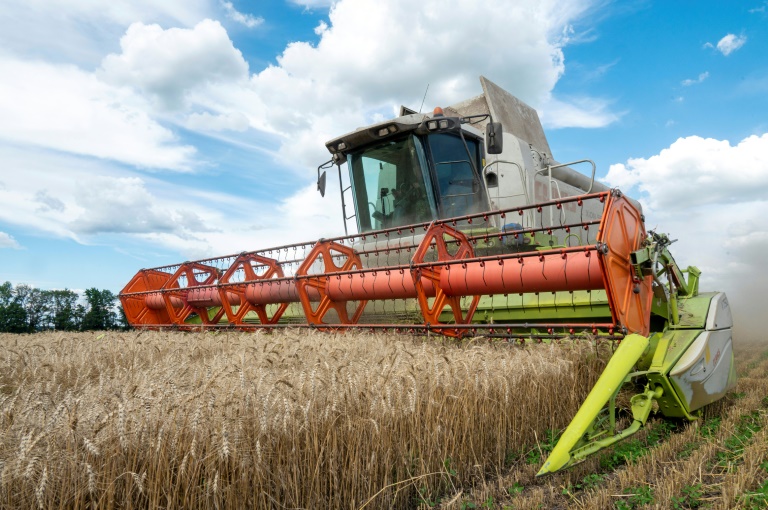
Talks are progressing on the opening of sea corridors to allow 20 million tonnes of grain still blocked in Ukraine and the upcoming harvests to be shipped around the world.

But even if an agreement is reached, it will not provide any immediate relief for importing countries.

– Crucial negotiations –

Negotiations have intensified since the beginning of June, with Turkey acting as mediator between Russia and Ukraine, which together account for around 30 percent of global trade in crops.

The talks are crucial insofar as no other country has come forward so far able to make up for the shortfall on the market of initially 25 million tonnes of Ukraine grain. And prices for agricultural commodities were already high before Russia invaded Ukraine on February 24, notably as a result of the post-Covid economic recovery.

The war has sparked a surge in the price of grains such as wheat and corn to levels unsustainable for countries dependent on their import, such as Egypt, Lebanon and Tunisia.

In recent weeks, prices have progressively receded again on the prospect of the upcoming harvest, fears of recession and the progress made in the negotiations regarding the sea corridors. 

Negotiations have accelerated in recent days: Turkey said an agreement in principle had been reached on creating a protected sea corridor. 

Russian President Vladimir Putin said “progress” had been made in discussions before telling reporters that any deal hinged on the West’s willingness to yield some ground.

“We will facilitate the export of Ukrainian grain, but we are proceeding from the fact that all restrictions related to possible deliveries for the export of Russian grain will be lifted,” he said.

However, market experts say that no sanctions directly target Russian agricultural goods, but are nonetheless penalised by sanctions on the country’s banking sector.

– What is Turkey’s role? – 

“There’s only a handful of countries — Turkey is one, Qatar is another — that’s able to kind of speak to almost everybody and avoid major blowback,” said Colin Clarke, director of research at the US-based Soufan Group.

Turkish President Recep Tayyip Erdogan has “proven that he can do it and that’s why he’s been a trusted broker not only by the Russians, but I think begrudgingly NATO countries — that’s the best that they have,” the expert said.

Turkey had “a strong hand to play here”, Clarke continued.

“Erdogan gets to play the hero, he gets to tell everybody that he’s working to solve the global food crisis, but we know that Turkey is doing a lot to obstruct negotiations in other areas. 

“They’ve got their concerns, and their priorities don’t always align with the priorities of the international community, the priorities of NATO, or even the priorities of their allies.” 

– What sort of deal? –

As much as 90 percent of Ukrainian exports of wheat, corn and sunflower were transported by sea, mostly from the port of Odessa, which accounts for 60 percent of all port activity in the country.

Any agreement to resume large-scale shipping will have several stages: the de-mining of the ports that Ukrainians mined; the loading of the ships, which could be put under the supervision of the UN; the inspection of the shipments; and the escorting of the boats, as demanded by Russia to ensure that the cargoes do not include weapons, said Edward de Saint-Denis, trader at Plantureux and Associates.

Diplomatic sources say however that complete de-mining is not necessary as safe transit routes remain in the measures meant to protect coastal areas from invasion.

A number of other points remain very controversial: if Moscow manages to control — and even seize — boats, will the checks be carried out in Ukrainian or international waters? Which vessels will be authorised to transport the shipments and what will the nationality of their crews be? 

“Russians don’t want Ukrainians and vice versa,” de Saint-Denis said. 

At one point, Turkey suggested using its fleet, but a compromise could be reached to use “flags of convenience”, according to one market observer.

– What are the consequences? –

“In the very short term, agreement would bring down prices, but in terms of the flow of grain shipments, nothing would change immediately,” said Edward de Saint-Denis.

“One or two months would be needed to de-mine the ports,” the expert said. 

And the loading areas would have to be renovated, notably in Odessa where part of the port administration was damaged in the fighting, he said.

Despite the various possible obstacles, agricultural market analyst, Gautier Le Molgat said that it was now “in everyone’s interests that maritime traffic resumes on the Black Sea: first and foremost for the Ukrainians, but also for the Russians, who have an exceptional harvest to export”.

The complex negotiations to get grain out of Ukraine

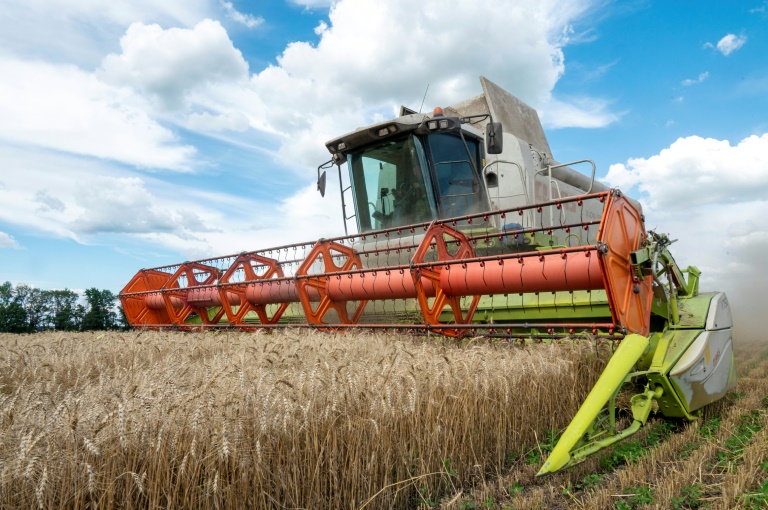
Talks are progressing on the opening of sea corridors to allow 20 million tonnes of grain still blocked in Ukraine and the upcoming harvests to be shipped around the world.

But even if an agreement is reached, it will not provide any immediate relief for importing countries.

– Crucial negotiations –

Negotiations have intensified since the beginning of June, with Turkey acting as mediator between Russia and Ukraine, which together account for around 30 percent of global trade in crops.

The talks are crucial insofar as no other country has come forward so far able to make up for the shortfall on the market of initially 25 million tonnes of Ukraine grain. And prices for agricultural commodities were already high before Russia invaded Ukraine on February 24, notably as a result of the post-Covid economic recovery.

The war has sparked a surge in the price of grains such as wheat and corn to levels unsustainable for countries dependent on their import, such as Egypt, Lebanon and Tunisia.

In recent weeks, prices have progressively receded again on the prospect of the upcoming harvest, fears of recession and the progress made in the negotiations regarding the sea corridors. 

Negotiations have accelerated in recent days: Turkey said an agreement in principle had been reached on creating a protected sea corridor. 

Russian President Vladimir Putin said “progress” had been made in discussions before telling reporters that any deal hinged on the West’s willingness to yield some ground.

“We will facilitate the export of Ukrainian grain, but we are proceeding from the fact that all restrictions related to possible deliveries for the export of Russian grain will be lifted,” he said.

However, market experts say that no sanctions directly target Russian agricultural goods, but are nonetheless penalised by sanctions on the country’s banking sector.

– What is Turkey’s role? – 

“There’s only a handful of countries — Turkey is one, Qatar is another — that’s able to kind of speak to almost everybody and avoid major blowback,” said Colin Clarke, director of research at the US-based Soufan Group.

Turkish President Recep Tayyip Erdogan has “proven that he can do it and that’s why he’s been a trusted broker not only by the Russians, but I think begrudgingly NATO countries — that’s the best that they have,” the expert said.

Turkey had “a strong hand to play here”, Clarke continued.

“Erdogan gets to play the hero, he gets to tell everybody that he’s working to solve the global food crisis, but we know that Turkey is doing a lot to obstruct negotiations in other areas. 

“They’ve got their concerns, and their priorities don’t always align with the priorities of the international community, the priorities of NATO, or even the priorities of their allies.” 

– What sort of deal? –

As much as 90 percent of Ukrainian exports of wheat, corn and sunflower were transported by sea, mostly from the port of Odessa, which accounts for 60 percent of all port activity in the country.

Any agreement to resume large-scale shipping will have several stages: the de-mining of the ports that Ukrainians mined; the loading of the ships, which could be put under the supervision of the UN; the inspection of the shipments; and the escorting of the boats, as demanded by Russia to ensure that the cargoes do not include weapons, said Edward de Saint-Denis, trader at Plantureux and Associates.

Diplomatic sources say however that complete de-mining is not necessary as safe transit routes remain in the measures meant to protect coastal areas from invasion.

A number of other points remain very controversial: if Moscow manages to control — and even seize — boats, will the checks be carried out in Ukrainian or international waters? Which vessels will be authorised to transport the shipments and what will the nationality of their crews be? 

“Russians don’t want Ukrainians and vice versa,” de Saint-Denis said. 

At one point, Turkey suggested using its fleet, but a compromise could be reached to use “flags of convenience”, according to one market observer.

– What are the consequences? –

“In the very short term, agreement would bring down prices, but in terms of the flow of grain shipments, nothing would change immediately,” said Edward de Saint-Denis.

“One or two months would be needed to de-mine the ports,” the expert said. 

And the loading areas would have to be renovated, notably in Odessa where part of the port administration was damaged in the fighting, he said.

Despite the various possible obstacles, agricultural market analyst, Gautier Le Molgat said that it was now “in everyone’s interests that maritime traffic resumes on the Black Sea: first and foremost for the Ukrainians, but also for the Russians, who have an exceptional harvest to export”.

Europe counts cost of heatwave as Spain PM says more than 500 died

Spain’s prime minister said “more than 500 people died” during a 10-day heatwave as Europe counts the cost of a record period of extreme temperatures.

Climate change protesters said the scorching weather should be a wake-up call for the continent.

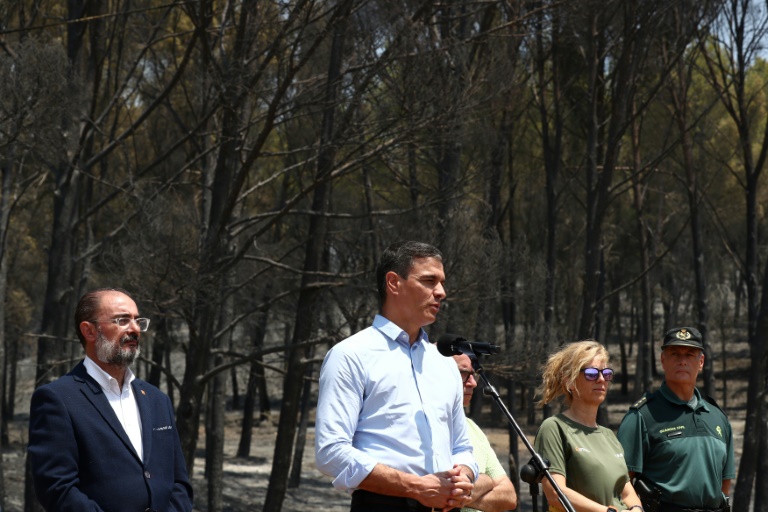
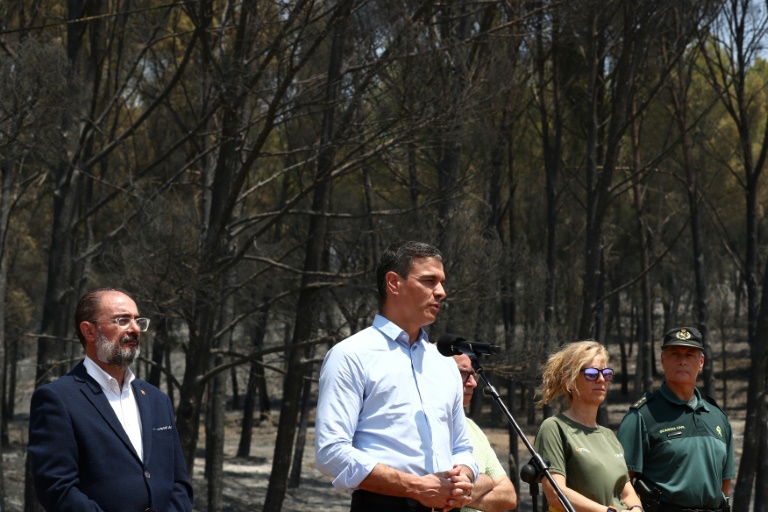
“This has nothing to do with ideologies, but with a reality, with a climatic emergency that the planet is living through,” said Spanish Prime Minister Pedro Sanchez.

Speaking against a backdrop of charred trees and burnt ground in the hard-hit northeastern Zaragoza region, he urged people to exercise “extreme caution”.

Sanchez cited figures released by the Carlos III Health Institute, which estimates the number of heat-related fatalities based on the number of excess deaths compared to the average in previous years.

The institute has stressed these figures are a statistical estimate and not a record of official deaths.

Meanwhile Greek firefighters gained the upper hand in a battle against a wildfire raging for a second day in mountainside suburbs north of Athens that had forced hundreds of people to flee, an official said.

“For the most part the fire is in decline,” fire department spokesman Yiannis Artopios told reporters.

Greece had been spared the blistering heatwave experienced in western Europe, but flames fanned by high winds were threatening the suburbs of Penteli, Pallini, Anthousa and Gerakas, home to tens of thousands of people.

“The fire was scorching our backs, we left in the nick of time. Had we stayed another 30 seconds it would have burned us,” a Pallini resident who lost his car and shed to the flames told ERT television. 

“The civil protection authority was late in alerting us,” he said.

In France, firefighters brought twin blazes near the southwestern city of Bordeaux under control. 

Temperatures of more than 40 degrees Celsius (104 degrees Fahrenheit) over previous days have spelled misery for millions and shattered heat records.

Cooler air swept in Wednesday, bringing relief to people from Portugal to Britain, but thousands of firefighters continued to tackle blazes that have broken out in multiple countries after months of drought-like conditions.

“Our assessment is generally positive. The situation improved overnight,” French fire service spokesman Arnaud Mendousse told AFP from the southwestern Gironde region where two huge blazes have engulfed 20,600 hectares (50,900 acres) of tinder-dry forest since last week.

– Heat records –

The heatwave saw a new all-time record for Britain where the national weather service clocked 40.3C in eastern England, surpassing the previous high set in 2019.

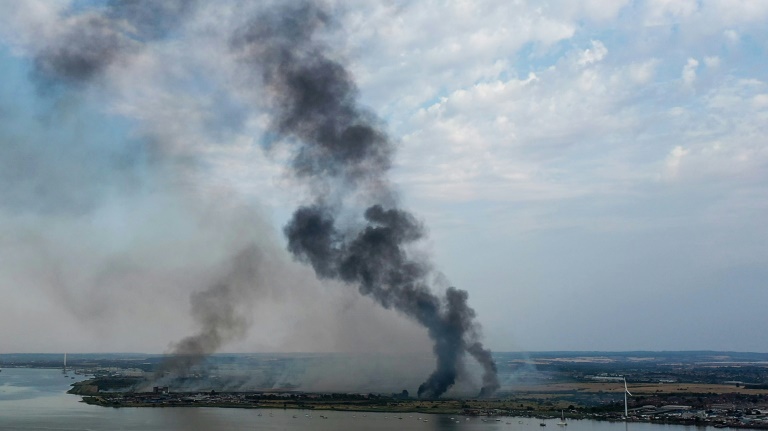
Grassland fires erupted on Tuesday on the edge of London, with one forcing the evacuation of 14 people as farm buildings, houses and garages were consumed by the flames.

Sixteen firefighters were injured around the capital with two taken to hospital, the London Fire Brigade said.

“Yesterday was the busiest day for the fire service in London since the Second World War,” the city’s mayor Sadiq Khan told Sky News on Wednesday, urging the public to remain vigilant despite temperatures now falling.

Khan also accused Conservative leadership candidates vying to succeed Prime Minister Boris Johnson of ignoring “the elephant in the room” of climate change.

Hundreds of firefighters were also deployed in western Slovenia Wednesday to battle a blaze that forced the evacuation of several villages, emergency services said. 

The blaze broke out Tuesday in the spectacular wooded Karst region, where vegetation was dried up by the strong heat, and intensified Wednesday afternoon because of the wind.  

Residents were forced to flee their homes in several areas and emergency sirens were sounded. 

Climate demonstrators triggered a lengthy tailback on Britain’s busiest motorway encircling London on Wednesday as they sought to highlight the need for greater action to reduce greenhouse gases responsible for global heating.

Members of the group Just Stop Oil climbed gantries over the M25 motorway, causing police to intervene.

“This is the moment when climate inaction is truly revealed in all its murderous glory for everyone to see: as an elite-driven death project that will extinguish all life if we let it,” the activist group said in a statement.

burs-adp/gw/jj

Europe counts cost of heatwave as Spain PM says more than 500 died

Spain’s prime minister said “more than 500 people died” during a 10-day heatwave as Europe counts the cost of a record period of extreme temperatures.

Climate change protesters said the scorching weather should be a wake-up call for the continent.

“This has nothing to do with ideologies, but with a reality, with a climatic emergency that the planet is living through,” said Spanish Prime Minister Pedro Sanchez.

Speaking against a backdrop of charred trees and burnt ground in the hard-hit northeastern Zaragoza region, he urged people to exercise “extreme caution”.

Sanchez cited figures released by the Carlos III Health Institute, which estimates the number of heat-related fatalities based on the number of excess deaths compared to the average in previous years.

The institute has stressed these figures are a statistical estimate and not a record of official deaths.

Meanwhile Greek firefighters gained the upper hand in a battle against a wildfire raging for a second day in mountainside suburbs north of Athens that had forced hundreds of people to flee, an official said.

“For the most part the fire is in decline,” fire department spokesman Yiannis Artopios told reporters.

Greece had been spared the blistering heatwave experienced in western Europe, but flames fanned by high winds were threatening the suburbs of Penteli, Pallini, Anthousa and Gerakas, home to tens of thousands of people.

“The fire was scorching our backs, we left in the nick of time. Had we stayed another 30 seconds it would have burned us,” a Pallini resident who lost his car and shed to the flames told ERT television. 

“The civil protection authority was late in alerting us,” he said.

In France, firefighters brought twin blazes near the southwestern city of Bordeaux under control. 

Temperatures of more than 40 degrees Celsius (104 degrees Fahrenheit) over previous days have spelled misery for millions and shattered heat records.

Cooler air swept in Wednesday, bringing relief to people from Portugal to Britain, but thousands of firefighters continued to tackle blazes that have broken out in multiple countries after months of drought-like conditions.

“Our assessment is generally positive. The situation improved overnight,” French fire service spokesman Arnaud Mendousse told AFP from the southwestern Gironde region where two huge blazes have engulfed 20,600 hectares (50,900 acres) of tinder-dry forest since last week.

– Heat records –

The heatwave saw a new all-time record for Britain where the national weather service clocked 40.3C in eastern England, surpassing the previous high set in 2019.

Grassland fires erupted on Tuesday on the edge of London, with one forcing the evacuation of 14 people as farm buildings, houses and garages were consumed by the flames.

Sixteen firefighters were injured around the capital with two taken to hospital, the London Fire Brigade said.

“Yesterday was the busiest day for the fire service in London since the Second World War,” the city’s mayor Sadiq Khan told Sky News on Wednesday, urging the public to remain vigilant despite temperatures now falling.

Khan also accused Conservative leadership candidates vying to succeed Prime Minister Boris Johnson of ignoring “the elephant in the room” of climate change.

Hundreds of firefighters were also deployed in western Slovenia Wednesday to battle a blaze that forced the evacuation of several villages, emergency services said. 

The blaze broke out Tuesday in the spectacular wooded Karst region, where vegetation was dried up by the strong heat, and intensified Wednesday afternoon because of the wind.  

Residents were forced to flee their homes in several areas and emergency sirens were sounded. 

Climate demonstrators triggered a lengthy tailback on Britain’s busiest motorway encircling London on Wednesday as they sought to highlight the need for greater action to reduce greenhouse gases responsible for global heating.

Members of the group Just Stop Oil climbed gantries over the M25 motorway, causing police to intervene.

“This is the moment when climate inaction is truly revealed in all its murderous glory for everyone to see: as an elite-driven death project that will extinguish all life if we let it,” the activist group said in a statement.

burs-adp/gw/jj

Climate activists block UK's busiest motorway after deadly heatwave

Climate demonstrators on Wednesday triggered a lengthy tailback on Britain’s busiest motorway, warning that a record-breaking heatwave was a dire reminder for urgent action.

Members of the group Just Stop Oil climbed gantries over the M25 encircling London, causing police to intervene and vehicles to back up for several miles (kilometres) in one direction.

Surrey Police later said a 22-year-old woman who had climbed a gantry was arrested on suspicion of causing a danger to road users, causing a public nuisance and for being a pedestrian on the motorway.

Three lanes that were shut as she was brought down were later reopened, the force added.

Temperatures topped 40 degrees Celsius (104 degrees Fahrenheit) in southern and eastern England for the first time on Tuesday, with a new record set at 40.3C.

The extreme heat caused huge transport disruption and sparked the same kind of wildfires seen in Europe in recent years.

Government minister Kit Malthouse told parliament that 34 places saw temperatures in excess of the previous record of 38.7C in 2019.

Firefighters saw “their busiest day since World War II”, dealing with dozens of wildfires as 15 fire and rescue services declared major incidents, he said.

– ‘Extremes’ –

Malthouse revealed at least 41 properties were destroyed in London, 14 in Norfolk, eastern England, five in Lincolnshire, and smaller numbers elsewhere.

The minister, who chaired recent meetings of the government’s emergency contingencies committee, urged the public to heed safety advice, as the risk of more wildfires was still high despite temperatures easing.

“Tragically… 13 people are believed to have lost their lives after getting into difficulty in rivers, reservoirs and lakes while swimming in recent days — seven of them teenage boys,” he added.

London Fire Brigade said 16 firefighters were injured around the capital with two taken to hospital.

Assistant Commissioner Jonathan Smith said the service was currently updating risk management plans for the capital, with climate change “front and centre” in the process.

“We’re dealing with extremes at both ends, whether it’s extreme heat or whether it’s extremes as far as floodwater is concerned,” he said during a visit to Wennington, one of the London areas devastated by fires.

The city’s mayor Sadiq Khan said the service received more than 2,600 calls on Tuesday — up from a normal day of about 350.

Khan also accused Conservative leadership candidates vying to succeed Prime Minister Boris Johnson of ignoring “the elephant in the room” of climate change.

Just Stop Oil said it regretted disruption to the public from its latest action on the M25, after activists had previously staged sit-in protests on that road and others.

But declaring the M25 “a site of civil resistance”, it warned of further protests to come this week.

“This is the moment when climate inaction is truly revealed in all its murderous glory for everyone to see: as an elite-driven death project that will extinguish all life if we let it,” the activist group said.

Mali expels spokesman of UN peacekeeping mission

Mali is expelling the spokesman of the UN’s peacekeeping force in the country over posts he made on Twitter, the foreign ministry said on Wednesday.

MINUSMA spokesman Olivier Salgado has been given 72 hours to leave over “tendentious and unacceptable” posts he made concerning a controversy involving Ivorian troops, it said in a statement received by AFP.

The expulsion comes amid mounting friction between Mali’s ruling military and international partners supporting the country’s fight against jihadists.

The issue over Salgado, a French national, relates to 49 troops from Ivory Coast who were detained after landing at Bamako airport on July 10.

The authorities have accused the troops of being “mercenaries”.

But Ivory Coast says they were sent to provide a support role for MINUSMA, under a routine rotation.

Countries that provide contingents to MINUSMA commonly bring in “national support elements”, or NSEs, who help with supplies and other backup functions.

According to Mali’s version of events, the troops had no mission orders or any authorisation to enter the country.

The foreign ministry accused Salgado of Twitter posts “declaring without any proof that the Malian authorities had been previously informed” of their arrival.

MINUSMA, it said, was asked to provide evidence to support Salgado’s assertions but had given no reply.

The UN secretary general’s deputy spokesman, Farhan Haq, said the UN “deeply” regretted the Malian decision.

“The doctrine of ‘persona non grata’ does not apply to United Nations personnel and is contrary to obligations under the Charter of the UN,” he said.

“MINUSMA and UN Headquarters are taking appropriate measures to follow up with the relevant authorities on this matter.”

– Security crisis –

The incident takes place against a backdrop of problems in Mali, one of Africa’s poorest and most unstable countries.

Thousands of people have died and hundreds of thousands have been displaced in a jihadist campaign that began in northern Mali in 2012 and spread to Niger and Burkina Faso three years later.

Colonels angry at the government’s handling of the insurgency seized power in August 2020 and carried out another coup in May 2021.

Their takeover triggered a long standoff with the regional bloc ECOWAS over a timetable for restoring civilian rule.

The coup also led to a spat with France, Mali’s former colonial ruler, which says the junta has hired Russian “mercenaries” to support it.

France’s anti-jihadist mission in the Sahel is now pulling out of Mali. The operation is expected to be completed in the coming weeks.

– UN force –

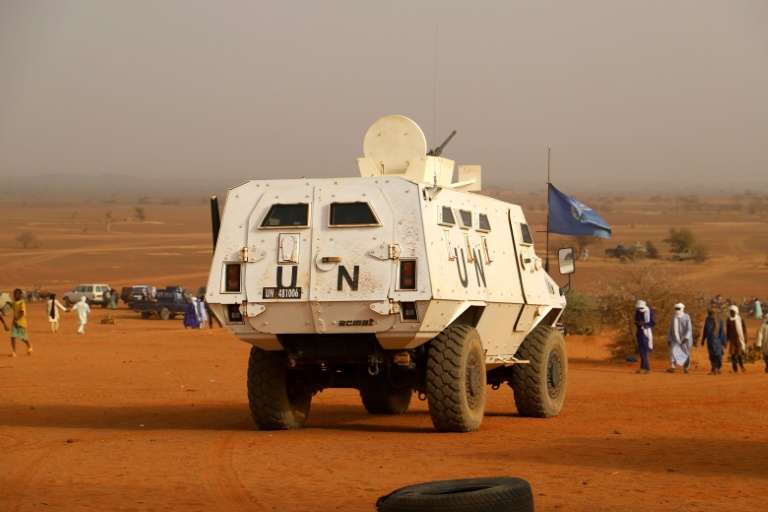
MINUSMA — the United Nations Multidimensional Integrated Stabilisation Mission in Mali — was launched in 2013.

It is one of the UN’s biggest peacekeeping operations, with 17,609 troops, police, civilians and volunteers deployed as of April, according to its website. 

It is also one of the most dangerous UN missions, with 275 fatalities from attacks, accidents or other causes, according to the website.

The UN Security Council renewed MINUSMA’s mandate for one year on June 29, although the junta opposed requests to allow freedom of movement for rights investigators with the mission.

Four days after the row flared over the Ivorian troops, Mali announced it was suspending rotations of MINUSMA personnel for “national security” reasons.

The suspension will last until a meeting is held to “facilitate the coordination and regulation” of the rotation of contingents, it said. So far, no date has been set for any talks.

The following day, MINUSMA said that Egypt, its biggest troop contributor, had decided to “temporarily suspend” participation in operations after seven of its personnel were killed this year.

On Wednesday, a group called Yerewolo that is reputedly close to the junta handed over a letter at MINUSMA headquarters in Bamako demanding that the mission leave the country.

It described MINUSMA as having become “an occupation force which incites and maintains fear.”

An analyst in Bamako, speaking on condition of anonymity, said the friction between MINUSMA and the Malian authorities was following “the same path” as that with France.

The pattern, he said, was “blocking foreign contingents, challenging the legal framework (for the mission) and then expelling a high-profile symbolic figure.”

France’s ambassador was expelled in January, at around the same time that Denmark was told to withdraw a newly-arrived unit that was part of a fledgling European force. 

Close Bitnami banner
Bitnami