World

Rolls-Royce champions energy transition at Farnborough

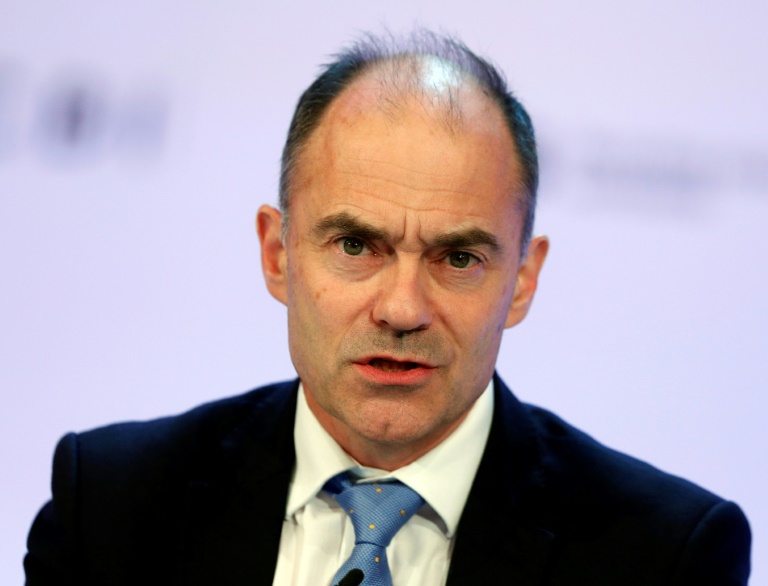
British aircraft engine maker Rolls-Royce is “championing” the energy transition and the decarbonisation of aviation, its outgoing chief executive Warren East told AFP on Tuesday at the Farnborough airshow.

This year’s Farnborough spectacle, returning from a four-year absence, is set against the backdrop of air travel’s nascent post-pandemic recovery but as economic turmoil hampers manufacturing.

Yet the airshow’s focus is on decarbonisation and sustainability in a sector often criticised for its impact on the climate, amid Europe’s blistering heatwave with record temperatures in England.

– Energy transition –

“The big theme is energy transition,” East told AFP in an interview at the company’s airshow chalet.

“This is the number one issue for the sector. We’ve been championing that for some time — and saying it’s absolutely necessary and we embrace that as an opportunity.”

East, 60, is retiring after more than seven years at the helm of the aerospace behemoth, with his tenure marked by historic corruption fines for the group, Trent engine troubles and Brexit.

Rolls, whose products power Airbus and Boeing aircraft, then axed 9,000 jobs and offloaded assets in a drastic restructuring after the Covid pandemic grounded jets and sparked a collapse air traffic.

East then guided it back to profit in 2021 from Covid-driven losses after slashing costs.

The titan, based in the city of Derby in central England, is now reaping the benefits of aviation’s post-Covid recovery, defence growth, a record power systems order book — and a long-standing focus on sustainability.

“I’m quite pleased with my time at Rolls-Royce,” added East, who took the reins in July 2015.

“We’ve really sort of modernised Rolls Royce in terms of culture.

“We’ve put in place a lot of efficiency and productivity improvements, which then crystallised during the Covid pandemic.

“And that’s created a very firm platform for the future (with) great operational and financial gearing now.”

– Cleaner fuel –

Aviation accounts for between 2-3 percent of the world’s total damaging carbon dioxide emissions, according to industry estimates.

Airlines and manufacturers alike have meanwhile committed to achieving net zero emissions — or carbon neutrality — by 2050.

Yet global air traffic is forecast to more than double by that point.

Rolls-Royce, which specialises in engines for long-haul aircraft, military jets and helicopters, is as a result ramping up its research into a wide range of technologies including electric and hydrogen power.

At the first Farnborough airshow since Covid, Rolls-Royce has announced a partnership, named H2ZERO, with British low-cost carrier Easyjet to test cleaner hydrogen engine combustion technology. 

Rolls also signed a deal with South Korea’s Hyundai to explore all-electric propulsion and hydrogen fuel cell technology for flying taxis of the future.

The company in addition unveiled a new research programme on hydrogen propulsion technology that emits no carbon dioxide.

Rolls is meanwhile working to develop a fuel-efficient future engine named UltraFan, which emits less damaging pollutants.

UltraFan aims for 25 percent fuel savings  compared with traditional long-haul engine.

“We are a group that is very focused on power and we do power across multiple sectors and one of the sectors in which we obviously have decades of experience in is aviation and aerospace,” said East.

– Cost –

The CEO cautioned however that it would take “decades” before hydrogen was deployed in aircraft engines.

The global aerospace industry would meanwhile need to harness technology such as sustainable aviation fuels derived from biomass, in order to curb its reliance on high-polluting kerosene.

SAF is however between three and four times more expensive than normal jet fuel. 

“I think as we go forward — maybe we’ll get to hydrogen in a gas turbine — but we’re not going to get there for at least a couple of decades,” East told AFP.

“There is a huge amount of work to do to make that practical, safe and economic and we need to have some transition technologies in the meantime and that’s why we talk about sustainable aviation fuel.”

He added: “Essentially, we’re just saying instead of kerosene we’ve got batteries, hydrogen, and synthetic kerosene.”

Rolls-Royce champions energy transition at Farnborough

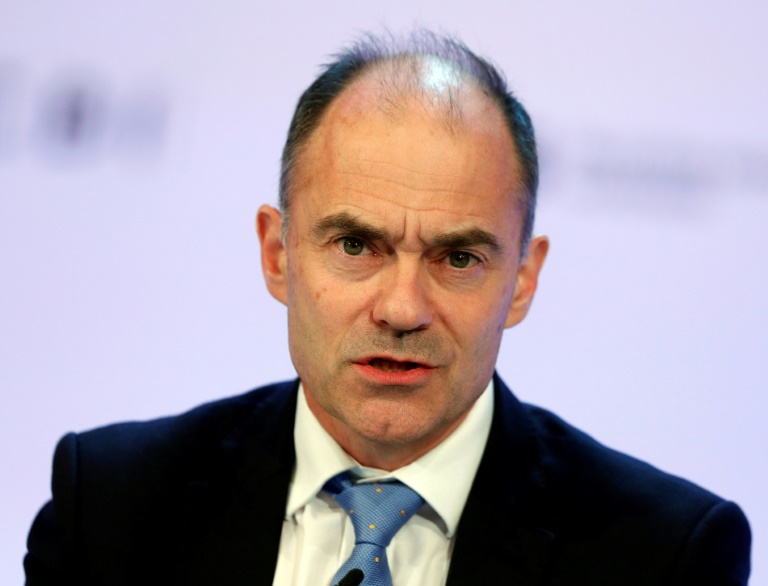
British aircraft engine maker Rolls-Royce is “championing” the energy transition and the decarbonisation of aviation, its outgoing chief executive Warren East told AFP on Tuesday at the Farnborough airshow.

This year’s Farnborough spectacle, returning from a four-year absence, is set against the backdrop of air travel’s nascent post-pandemic recovery but as economic turmoil hampers manufacturing.

Yet the airshow’s focus is on decarbonisation and sustainability in a sector often criticised for its impact on the climate, amid Europe’s blistering heatwave with record temperatures in England.

– Energy transition –

“The big theme is energy transition,” East told AFP in an interview at the company’s airshow chalet.

“This is the number one issue for the sector. We’ve been championing that for some time — and saying it’s absolutely necessary and we embrace that as an opportunity.”

East, 60, is retiring after more than seven years at the helm of the aerospace behemoth, with his tenure marked by historic corruption fines for the group, Trent engine troubles and Brexit.

Rolls, whose products power Airbus and Boeing aircraft, then axed 9,000 jobs and offloaded assets in a drastic restructuring after the Covid pandemic grounded jets and sparked a collapse air traffic.

East then guided it back to profit in 2021 from Covid-driven losses after slashing costs.

The titan, based in the city of Derby in central England, is now reaping the benefits of aviation’s post-Covid recovery, defence growth, a record power systems order book — and a long-standing focus on sustainability.

“I’m quite pleased with my time at Rolls-Royce,” added East, who took the reins in July 2015.

“We’ve really sort of modernised Rolls Royce in terms of culture.

“We’ve put in place a lot of efficiency and productivity improvements, which then crystallised during the Covid pandemic.

“And that’s created a very firm platform for the future (with) great operational and financial gearing now.”

– Cleaner fuel –

Aviation accounts for between 2-3 percent of the world’s total damaging carbon dioxide emissions, according to industry estimates.

Airlines and manufacturers alike have meanwhile committed to achieving net zero emissions — or carbon neutrality — by 2050.

Yet global air traffic is forecast to more than double by that point.

Rolls-Royce, which specialises in engines for long-haul aircraft, military jets and helicopters, is as a result ramping up its research into a wide range of technologies including electric and hydrogen power.

At the first Farnborough airshow since Covid, Rolls-Royce has announced a partnership, named H2ZERO, with British low-cost carrier Easyjet to test cleaner hydrogen engine combustion technology. 

Rolls also signed a deal with South Korea’s Hyundai to explore all-electric propulsion and hydrogen fuel cell technology for flying taxis of the future.

The company in addition unveiled a new research programme on hydrogen propulsion technology that emits no carbon dioxide.

Rolls is meanwhile working to develop a fuel-efficient future engine named UltraFan, which emits less damaging pollutants.

UltraFan aims for 25 percent fuel savings  compared with traditional long-haul engine.

“We are a group that is very focused on power and we do power across multiple sectors and one of the sectors in which we obviously have decades of experience in is aviation and aerospace,” said East.

– Cost –

The CEO cautioned however that it would take “decades” before hydrogen was deployed in aircraft engines.

The global aerospace industry would meanwhile need to harness technology such as sustainable aviation fuels derived from biomass, in order to curb its reliance on high-polluting kerosene.

SAF is however between three and four times more expensive than normal jet fuel. 

“I think as we go forward — maybe we’ll get to hydrogen in a gas turbine — but we’re not going to get there for at least a couple of decades,” East told AFP.

“There is a huge amount of work to do to make that practical, safe and economic and we need to have some transition technologies in the meantime and that’s why we talk about sustainable aviation fuel.”

He added: “Essentially, we’re just saying instead of kerosene we’ve got batteries, hydrogen, and synthetic kerosene.”
China to fine ride-hailing giant Didi more than $1 bn: reports

China is preparing to hit ride-hailing giant Didi with a fine of more than $1 billion to wrap up a long-running probe, media reports said, boosting investor hopes that the country’s tech crackdown is winding down.

Didi, once known as China’s answer to Uber, has been one of the highest-profile targets of the widespread clampdown on the sector, which saw years of runaway growth and supersized monopolies before regulators stepped in.

The fine — imposed over Didi’s cybersecurity practices — would amount to more than four percent of its $27.3 billion total revenue last year and pave the way for its new share listing in Hong Kong, The Wall Street Journal reported Tuesday.

Citing unnamed sources familiar with the matter, the Journal said that once the fine is announced, the government will ease its restrictions on Didi’s operations.

The firm was prevented from adding new users and its apps were removed from online stores in China by regulators.

The WSJ report triggered a rally in Chinese tech shares in Hong Kong on Wednesday, with investors hopeful that the two-year regulatory storm that swept the sector was nearing its end.

E-commerce giant Alibaba soared four percent, while gaming titan Tencent gained 2.5 percent in early trade.

Didi got into hot water in June last year after it pressed ahead with an IPO in the United States, reportedly against Beijing’s wishes.

Days after it raised $4.4 billion in New York, Chinese authorities launched a cybersecurity probe into the company, sending its shares plunging.

If confirmed, Didi’s fine would be the biggest imposed on a Chinese tech company since Alibaba was told to pay $2.75 billion in April 2021 as punishment for anti-competitive practices.

Didi did not respond immediately to an emailed request for comment.

Its shareholders voted to delist the firm from New York in May.

That move is expected to pave the way for a Hong Kong listing that was reportedly put on hold after China’s top internet watchdog told executives their proposals to prevent security and data leaks were insufficient.

China’s regulatory crackdown has eased this year as it grapples with the economic fallout from its zero-Covid strategy, with the country struggling to reach its 5.5 percent growth target.

However, there is still a strict regulatory environment for tech firms: President Xi Jinping last month called for stronger oversight and better security in the financial tech arena.

India's mango man, father of 300 varieties

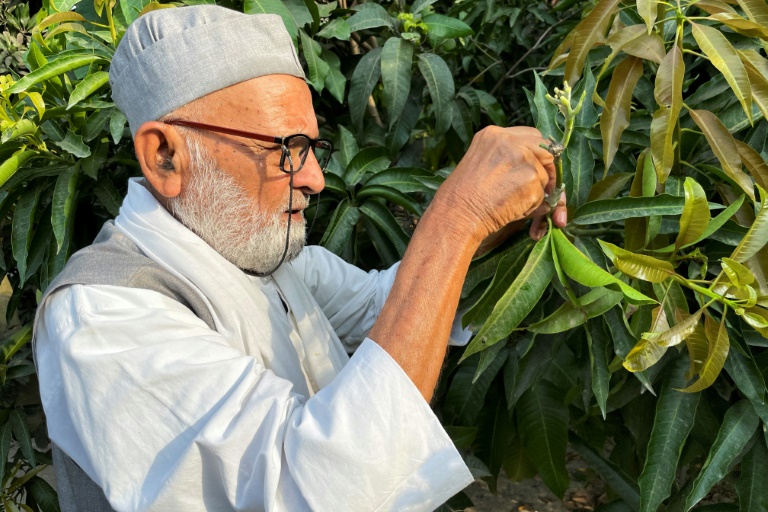
Every day, Indian octogenarian Kaleem Ullah Khan wakes at dawn, prays, then ambles about a mile to his 120-year-old mango tree, which he has coaxed into producing more than 300 varieties of the beloved fruit over the years.

His footsteps quicken as he draws nearer and his eyes light up as he peers closely at the branches through his spectacles, caressing the leaves and sniffing the fruits to see if they are ripe.

“This is my prize of toiling hard in the scorching sun for decades,” the 82-year-old said in his orchard in the small town of Malihabad.

“For the naked eye, it’s just a tree. But if you see through your mind, it’s a tree, an orchard, and the biggest mango college in the world.”

The school dropout was just a teenager when he conducted his first experiment in grafting, or joining plant parts to create new mango varieties.

He nurtured a tree to produce seven new kinds of fruit, but it blew down in a storm. 

But since 1987, his pride and joy has been the 120-year-old specimen, source of more than 300 different types of mango, each with their own taste, texture, colour and size, he says.

One of the earliest varieties he named “Aishwarya” after Bollywood star and 1994 Miss World beauty pageant winner Aishwarya Rai Bachchan. To this day, it remains one of his “best creations”.

“The mango is as beautiful as the actress. One mango weighs more than a kilogram (two pounds), has a tinge of crimson to its outer skin and it tastes very sweet,” Khan said.

Others he named in honour of Prime Minister Narendra Modi and cricket hero Sachin Tendulkar. Another is “Anarkali”, or pomegranate blossom, and has two layers of different skin and two different pulps, each with a distinctive aroma. 

“People will come and go, but the mangoes will remain forever, and years after, whenever this Sachin mango will be eaten, people will remember the cricketing hero,” said the father of eight.

– Famed fruit –

Standing nine metres (30 feet) tall, his treasured tree has a stout trunk with wide-spreading, thick branches that yield a pleasant shade against the Indian summer sun. 

The leaves are a patchwork of different textures and smells. In some places, they are yellow and glossy, and in others, a dark, dull green. 

“No two fingerprints are the same, and no two mango varieties are similar. Nature has gifted mangoes with traits like humans,” Khan said.

His method for grafting is intricate, and involves diligently slicing a branch from one variety, leaving an open wound into which a branch from another variety is spliced and sealed with tape. 

“I will remove the tape once the joint becomes sturdy, and hopefully, this new branch will be ready by next season, and bear a new variety after two years,” he explained.

Khan’s skills have won him numerous accolades, among them one of India’s highest civilian honours in 2008, as well as invitations to Iran and United Arab Emirates.

“I can grow mangoes even in a desert,” he says.

– Climate threat –

India is the largest producer of mangoes, accounting for half the global output. Malihabad, in the northern state of Uttar Pradesh, has more than 30,000 hectares of orchards and accounts for nearly 25 percent of the national crop.

Mostly owned by families for generations, the orchards are a mango lover’s paradise, with the best-known variety possibly the melt-in-the-mouth Dasheri, named for the nearby village where it originated in the 18th century.

But farmers are worried by climate change, with a heatwave this year destroying 90 percent of the local crop, according to the All-India Mango Growers Association. 

The number of varieties has also fallen, which Khan blames on intensive farming techniques and the widespread use of cheap fertilisers and insecticides.

Growers also plant too many trees packed too tightly together, leaving no space for moisture and dew to settle on the leaves, he says.

But he still has a good life, he says.

“I recently moved into a new house inside the farm to be closer to my beloved tree, which I’ll keep working on till my last breath.”

Raising temperatures: Pakistan climate catastrophist Sherry Rehman

When Sherry Rehman speaks it seems as though the world is ending. 

Perhaps that’s because Pakistan — where she serves as climate change minister — has a front-row seat for the cascading catastrophe of global warming.

To the north, rapid glacier melt is unleashing flash floods; in the south, savage heat is surpassing 50 degrees Celsius (122 degrees Fahrenheit); the west is speckled with wildfires, and the eastern city of Lahore is draped in suffocating perma-smog.

“It is apocalyptic,” the 61-year-old former diplomat told AFP. 

She was appointed minister after a tumultuous government change in April, which coincided with the onslaught of a nationwide heatwave.

“When you have an apocalypse in front of you… have you not watched Hollywood movies? You have to face it head on.”

– ‘Perfect storm’ – 

Pakistan is responsible for less than one percent of global greenhouse gas emissions, but ranks eighth on an index compiled by NGO Germanwatch of nations most exposed to extreme weather events.

That leaves the country of 220 million people bailing out its own climate disasters whilst lobbying bigger polluters to turn the tide.

Rehman has launched a rhetorical offensive, hectoring the great and the good at global forums with unabashed descriptions of a doomsday-in-motion.

She framed the argument in the long arc of history: Pakistan, once part of the British empire, freed itself only to be gripped by “climate colonialism”.

“There has been so much climate denialism internationally, with the big polluters not wanting to give up their bad habits or to pay the price for going green,” she said.

“We’re being told ‘it’s a perfect storm in your neck of the woods, and you just have to do this by yourself’, which is absolutely not possible.”

“I don’t even sense empathy very often,” added Rehman, who served as Pakistan’s ambassador to the United States from 2011 to 2013.

Making matters worse, Pakistan is in an economic tailspin with runaway inflation, a debt crisis and dwindling foreign currency reserves.

Even Rehman’s home in the cloistered capital of Islamabad hums with the sound of a petrol generator. Heatwaves have exacerbated an energy deficit, and blackouts are on the rise.

Pakistanis could be forgiven for having more quotidian concerns than the end of all days.

“Communicating a science-based crisis in our lives, created probably very far away from our neck of the woods, is very hard to explain,” she said.

“We still have to speak in easily digestible terms.

“I’m going have to say, ‘This is why you’re able to breathe better. This is why you’re able to have an environment that is not overheating. This is why your water is drinkable’.”

– Fighting climate change and sexism –

Rehman’s role as a soothsayer of inconvenient truths is complicated in deeply patriarchal Pakistan.

The number of female parliamentarians has plateaued at around 20 percent for the past two decades, according to World Bank data.

Benazir Bhutto, the nation’s only female prime minister — and from Rehman’s Pakistan Peoples Party (PPP) — was slain in 2007, an assassination that deeply scarred the national psyche and which remains unsolved.

A pastel portrait of Bhutto has pride of place in Rehman’s library, more prominent, even, than a pop-art print of Pakistan’s founder Muhammad Ali Jinnah. 

Outside the door, a nude female bust is prominently placed — in a country where the bodies of women are rigorously policed by harsh modesty codes.

“There’s always a reaction to women taking their power and also speaking out,” said Rehman.

“It’s been two steps forward, one step backward.”

In public appearances, Rehman exudes unapologetic energy. Male co-panellists hogging the microphone are notified of their transgressions; those who cut short her answers are similarly chastised.

“I tell myself, ‘When men are competing with you, you’re in a good place’,” she said. “I don’t mince my words, and I don’t see any reason to.” 

“We pay the price daily in dealing with constant backlash, and with constant fiddling and quibbling over the gender issue.”

That is not her “daily challenge”, she said, but there is a stark intersection in the interests of countering sexism and global warming.

“As climate change unleashes its furies, women are at the forefront,” she said, picking up the fire and brimstone theme again.

“It’s women who are the nurturers of the soil, of the crops, of the water.”

Raising temperatures: Pakistan climate catastrophist Sherry Rehman

When Sherry Rehman speaks it seems as though the world is ending. 

Perhaps that’s because Pakistan — where she serves as climate change minister — has a front-row seat for the cascading catastrophe of global warming.

To the north, rapid glacier melt is unleashing flash floods; in the south, savage heat is surpassing 50 degrees Celsius (122 degrees Fahrenheit); the west is speckled with wildfires, and the eastern city of Lahore is draped in suffocating perma-smog.

“It is apocalyptic,” the 61-year-old former diplomat told AFP. 

She was appointed minister after a tumultuous government change in April, which coincided with the onslaught of a nationwide heatwave.

“When you have an apocalypse in front of you… have you not watched Hollywood movies? You have to face it head on.”

– ‘Perfect storm’ – 

Pakistan is responsible for less than one percent of global greenhouse gas emissions, but ranks eighth on an index compiled by NGO Germanwatch of nations most exposed to extreme weather events.

That leaves the country of 220 million people bailing out its own climate disasters whilst lobbying bigger polluters to turn the tide.

Rehman has launched a rhetorical offensive, hectoring the great and the good at global forums with unabashed descriptions of a doomsday-in-motion.

She framed the argument in the long arc of history: Pakistan, once part of the British empire, freed itself only to be gripped by “climate colonialism”.

“There has been so much climate denialism internationally, with the big polluters not wanting to give up their bad habits or to pay the price for going green,” she said.

“We’re being told ‘it’s a perfect storm in your neck of the woods, and you just have to do this by yourself’, which is absolutely not possible.”

“I don’t even sense empathy very often,” added Rehman, who served as Pakistan’s ambassador to the United States from 2011 to 2013.

Making matters worse, Pakistan is in an economic tailspin with runaway inflation, a debt crisis and dwindling foreign currency reserves.

Even Rehman’s home in the cloistered capital of Islamabad hums with the sound of a petrol generator. Heatwaves have exacerbated an energy deficit, and blackouts are on the rise.

Pakistanis could be forgiven for having more quotidian concerns than the end of all days.

“Communicating a science-based crisis in our lives, created probably very far away from our neck of the woods, is very hard to explain,” she said.

“We still have to speak in easily digestible terms.

“I’m going have to say, ‘This is why you’re able to breathe better. This is why you’re able to have an environment that is not overheating. This is why your water is drinkable’.”

– Fighting climate change and sexism –

Rehman’s role as a soothsayer of inconvenient truths is complicated in deeply patriarchal Pakistan.

The number of female parliamentarians has plateaued at around 20 percent for the past two decades, according to World Bank data.

Benazir Bhutto, the nation’s only female prime minister — and from Rehman’s Pakistan Peoples Party (PPP) — was slain in 2007, an assassination that deeply scarred the national psyche and which remains unsolved.

A pastel portrait of Bhutto has pride of place in Rehman’s library, more prominent, even, than a pop-art print of Pakistan’s founder Muhammad Ali Jinnah. 

Outside the door, a nude female bust is prominently placed — in a country where the bodies of women are rigorously policed by harsh modesty codes.

“There’s always a reaction to women taking their power and also speaking out,” said Rehman.

“It’s been two steps forward, one step backward.”

In public appearances, Rehman exudes unapologetic energy. Male co-panellists hogging the microphone are notified of their transgressions; those who cut short her answers are similarly chastised.

“I tell myself, ‘When men are competing with you, you’re in a good place’,” she said. “I don’t mince my words, and I don’t see any reason to.” 

“We pay the price daily in dealing with constant backlash, and with constant fiddling and quibbling over the gender issue.”

That is not her “daily challenge”, she said, but there is a stark intersection in the interests of countering sexism and global warming.

“As climate change unleashes its furies, women are at the forefront,” she said, picking up the fire and brimstone theme again.

“It’s women who are the nurturers of the soil, of the crops, of the water.”

Crunch time as Italy's Draghi faces parliament

Italy’s political crisis comes to a head Wednesday as Prime Minister Mario Draghi discovers whether his fractured grand coalition can be saved or if snap elections are unavoidable.

There is much at stake: a government collapse could worsen social ills in a period of rampant inflation, delay the budget, threaten EU post-pandemic recovery funds and send jittery markets into a tailspin.

Polls suggest most Italians want Draghi, 74, to stay at the helm of the eurozone’s third-largest economy until the scheduled general election in May next year.

But the former European Central Bank chief has vowed to do so only if the wildly disparate parties in his coalition pledge to behave responsibly.

Draghi will address the Senate Wednesday morning. He may say he simply no longer trusts the parties.

At that point, Italy’s president could dissolve parliament and call elections for September or October.

But experts said Draghi would likely instead demand broad consensus to tackle Italy’s most pressing issues: from a cost of living crisis and recession worries, to the rollout of key reforms and the Ukraine war.

His speech will be followed by a debate allowing each party to say where it stands.

Draghi will then face a confidence vote, considered a key step in undoing the damage done by the populist Five Star Movement’s refusal last week to back him in a key vote.

If he survives all that, the process will be repeated in the lower house on Thursday.

– ‘Last-ditch compromise?’ –

Parties on the centre-left have said they will support Draghi, but a question mark remains over right-leaning Forza Italia and the League, which have ruled out staying in government with Five Star.

“We are in the middle of an Italian-style political crisis, so predictions change utterly from one second to the next,” Giovanni Orsina, head of the Luiss School of Government in Rome, told AFP.

Five Star head Giuseppe Conte has demanded Draghi adopt the Movement’s priorities, from a minimum wage to tax credits on energy-efficient home upgrades — something he is unlikely to do.

The populist party may split before the vote, with Forza Italia and the League potentially agreeing to work with the breakaway element.

Once the largest party in parliament, the Five Star Movement has already seen scores of defections as it hews to its radical, anti-establishment side in a bid to reverse plummeting support in the polls.

At least 15 more of its MPs were set to quit should Five Star vote against Draghi, news agency AGI said.

“A last-ditch compromise cannot be entirely ruled out,” Lorenzo Codogno, a former head economist at the Italian treasury, said in a note.

– ‘Greater political uncertainty’ –

But Fitch ratings agency warned the political crisis “heralds greater political uncertainty even if early elections are avoided”, with “structural reform and fiscal consolidation likely to become more challenging”.

Two-thirds of Italians believe Draghi should stay, according to a Euromedia poll published Tuesday. Nearly 2,000 mayors have signed a petition calling for him to remain PM.

Hundreds of people took part in pro-Draghi sit-ins on Monday, while on Tuesday Spanish President Pedro Sanchez penned an opinion piece in Politico titled “Europe needs leaders like Mario Draghi”.

Anxious investors are also watching closely. Wednesday’s vote comes a day before the European Central Bank unveils a tool to correct stress in bond markets for indebted eurozone members.

The tool is meant for countries like Italy — but as Enrico Letta, head of the centre-left Democratic Party (PD) said Tuesday, “if we don’t pull ourselves together, it will be harder to ask others to save us”.

Indigenous Canadians hopeful ahead of Pope's apology for school abuse

For decades, trauma has lingered in the tiny Indigenous Canadian community of Maskwacis. But some hope to finally find a degree of closure during a visit by Pope Francis to apologize for the Church’s role in a century of abuse. 

The pontiff will stop in the community of 19,000 people some 62 miles (100 kilometers) north of Edmonton, Alberta, on July 25, to visit the site of one of the state boarding schools run by churches where Indigenous children were once forcibly sequestered.

Many of the children — those who survived — still live in towns such as Maskwacis.

“Maybe they will hear something that will help them to move forward in their life,” Ermineskin Cree Nation chief Randy Ermineskin tells AFP.

Indigenous rights champion Wilton “Willie” Littlechild was part of a delegation that travelled to the Vatican in April to press the 85-year-old pontiff to come to Canada on the once unimaginable tour. 

“The apology from his Holiness will have a great impact,” he said.

“Once you have the apology and the forgiveness, then people will start to feel a sense of healing, and then they will find a conclusion,” said the 78-year-old lawyer and former chief, who spent 14 years of his childhood at residential schools.

In Maskwacis, on the western edge of Canada’s vast Prairies region, a simple plaque partially obscured by overgrown grass and dandelions identifies the location of the former Ermineskin Indian Residential School, where the Pope will appear.

Before closing in 1976, it was one of the largest of the 139 state schools run by churches across Canada which some 150,000 Indigenous, Inuit and Metis children were forced to attend as part of a failed policy of assimilation.

Students were cut off from their families, language and culture. Many were physically and sexually abused by teachers and headmasters, and thousands are believed to have died of disease, neglect and malnutrition.

Canada has been grappling with this brutal past for years. But the discovery in recent months of the remains of hundreds of Indigenous children buried in unmarked graves on the school sites has branded the reality of how the state and churches made them suffer into the national consciousness.

– ‘Unable to move forward’ –

In the town, a stray dog wanders the streets past abandoned tricycles and discarded mattresses outside houses charred by fire or tagged with graffiti.

Resident Connie Roan, 67, checking on her garden, says she hopes a “great blessing” by the pontiff will bring change to her community, plagued by gangs and illicit drugs. 

“It’s rough here,” she said. “People are unable to move forward” from the traumas inflicted on them at the schools.

A truth and reconciliation commission concluded in a 2015 report that the Indigenous schools system amounted to “cultural genocide.”

It has been blamed for a high incidence of poverty, alcoholism and domestic violence, as well as high suicide rates in Indigenous communities.

– ‘Everybody needs healing’ –

Several of Gilda Soosay’s brothers and sisters attended the Ermineskin school. 

The chair of the Our Lady of Seven Sorrows parish council in Maskwacis and a member of the Samson Cree Nation, she says she prays for the papal visit to bring healing, not just for her people “but all of Canada.”

“Everybody needs healing,” she said, adding that Francis’s visit “is in itself a miracle.”

But miracles aren’t always enough.

As a school child Brian Lee, 68, was “taught to hate my own people” and told repeatedly that his mother tongue — Cree — was “the language of the devil.”

He calls for more funding for Indigenous initiatives. 

And at a nearby skatepark, 22-year-old Seanna Fryingpan, a young mother with a cigarette tucked behind her ear and a rose tattoo on the back of her hand, describes the papal visit as “pretty cool.”

“I’m going to take a lot of pictures,” she tells AFP.

But she says an apology, while important, can only do so much. 

“It’s not going to erase the past.”

Diverted Ryanair flight investigation concludes Belarus 'unlawful'

The United Nations agency in charge of investigating the diversion of a Ryanair flight by Belarus last year announced Tuesday it has completed its review, once again pointing the finger at the “unlawful” actions carried out by Minsk. 

On May 23, 2021, a Ryanair flight from Greece to Lithuania was forced to land in Minsk, with Belarusian authorities arresting dissident journalist, Roman Protasevich, and his partner, Sofia Sapega, who were on board.

“The ICAO Council concluded its discussions yesterday on the May 2021 incident in Belarus airspace involving Ryanair Flight FR4978, condemning the actions of the Government of Belarus in committing an act of unlawful interference,” the International Civil Aviation Organization said in a statement.

The investigation was extended in early January to establish certain “missing facts” and examine new information. 

The Montreal-based ICAO studied audio recordings of the Minsk air traffic controller who was monitoring the affected flight. 

The agency said that the bomb threat used as excuse to divert the aircraft was “deliberately false and endangered its safety.”

“The threat was communicated to the flight crew upon the instructions of senior government officials of Belarus,” it concluded.

The statement added that the council representative of Russia — a close ally of Minsk — had “expressed his State’s strong objection to identifying Belarus as the source of the unlawful interference which took place.”

It said that the council, made up of 36 countries, had asked its president to pass the findings of the investigation on to UN Secretary-General Antonio Guterres. 

The ICAO’s mission is to enact the rules governing global civil air transport, but it has no power to impose sanctions. 

In the event of a proven violation of international rules, its role is to provide support for any countries wishing to pronounce condemnations or apply sanctions, in accordance with the Chicago Convention on International Civil Aviation, the institution said. 

Last month, Sapega asked for a pardon from Belarus President Alexander Lukashenko after being sentenced to six years in prison for “inciting social hatred” and “illegal collection of personal data.” 

Protasevich is currently under house arrest pending trial.

Police arrest 17 US lawmakers at abortion rights protest outside Supreme Court

At least 17 Democratic lawmakers, including prominent progressives Alexandria Ocasio-Cortez and Ilhan Omar, were arrested at an abortion rights protest outside the Supreme Court in Washington on Tuesday, police said.

The US Capitol police said on Twitter that the demonstrators had blocked traffic on a nearby road and were been given three warnings before officers made the arrests.

“We made a total of 35 arrests for Crowding, Obstructing or Incommoding,” the police said. “That arrest number includes 17 Members of Congress.”

The small demonstration came three weeks after a controversial ruling by the Supreme Court that overturned the 1973 landmark decision of Roe v. Wade, which had guaranteed women’s access to abortion.

“Today I was arrested while participating in a civil disobedience action with my fellow Members of Congress outside the Supreme Court,” Omar, representative from Minnesota, said on Twitter. 

“I will continue to do everything in my power to raise the alarm about the assault on our reproductive rights!” she tweeted.

Representative Carolyn Maloney of New York was also arrested, and issued a statement saying, “There is no democracy if women do not have control over their own bodies and decisions about their own health, including reproductive care.” 

“The Republican Party and the right-wing extremists behind this decision are not pro-life, but pro-controlling the bodies of women, girls, and any person who can become pregnant.”

Footage from the protest showed Ocasio-Cortez, Omar and others being led away, not in handcuffs, and waving to supporters.

Close Bitnami banner
Bitnami