World

Britain, France face hottest day as Europe fires rage

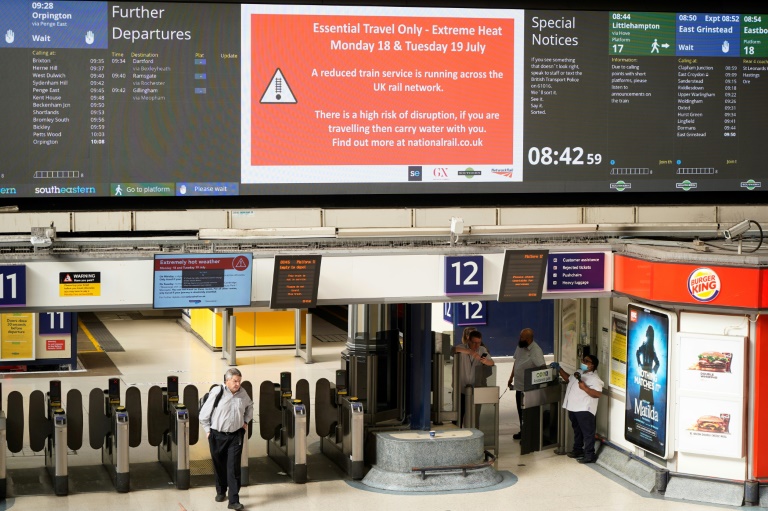
Britain and France went on heatwave alert on Monday facing record temperatures as southwest Europe wilted under a scorching sun and ferocious wildfires devoured more forests.

Forecasters in Britain warned of havoc in a country unprepared for the onslaught of extreme heat that authorities said was putting lives at risk.

The mercury was set to rise to 38 Celsius (104 Fahrenheit) in London Monday — not far below Britain’s all-time record of 38.7C — and could breach the 40C mark for the first time by Tuesday, meteorologists said.

Scientists blame climate change and predict more frequent and intense episodes of extreme weather.

Across the Channel firefighters failed to contain two massive fires in France’s southwest that have created apocalyptic scenes of destruction.

For six days, armies of firefighters and a fleet of waterbombing aircraft have struggled against blazes that have mobilised much of France’s entire firefighting capacity.

Forecasters have put 15 French departments on the highest state of alert for extreme temperatures, including in the western Brittany region where the Atlantic coastal city of Brest was expected to hit 40 Celsius Monday, nearly twice its usual July temperature average.

By early afternoon, Brest had already beaten its all-time record of 35.2 C set in 1949.

The European heatwave, spreading north, is the second to engulf parts of the southwest of the continent within only weeks.

– ‘Heat apocalypse’ –

Blazes burning in France, Greece, Portugal and Spain have destroyed thousands of hectares of land and forced thousands of residents and holidaymakers to flee.

In France’s Landes forest, in the southwest Aquitaine region, temperatures “will be above 42 degrees Celsius” on Monday, forecaster Olivier Proust said.

In the Gironde region, further north, firefighters on Monday continued their battle against forest blazes that have devoured nearly 14,000 hectares (35,000 acres) since Tuesday.

An area of nine kilometres (5.5 miles) long and eight kilometres wide was still ablaze near the Dune de Pilat, Europe’s highest sand dune, turning picturesque landscapes, popular campsites and pristine beaches into a scorching mess.

Another 8,000 people were being evacuated near the dune Monday as changing winds blew thick smoke into residential areas, officials said.

“The smoke is toxic,” firefighter spokesman Arnaud Mendousse told AFP. “Protecting the population is a matter of public health.”

The evacuations added to the 16,000 tourists or residents already forced to decamp in France, many to emergency shelters.

“In some southwestern areas, it will be a heat apocalypse,” meteorologist Francois Gourand told AFP.

In Spain, fire burning in the northwestern province of Zamora claimed the life of a 69-year-old shepherd, regional authorities said, the second death after that of a fireman a day before in the same area.

Authorities have reported around 20 wildfires still raging from the south to Galicia in the far northwest, where blazes have destroyed around 4,500 hectares of land. 

In Portugal, almost the entire country remained on high alert for wildfires despite a slight drop in temperatures which had hit 47C — a record for the month of July — last Thursday.

– ‘Get on with it’ –

Fires have killed two, injured around 60 and destroyed between 12,000 and 15,000 hectares of land in Portugal.

In Britain, the government, already on the ropes after a series of scandals and Prime Minister Boris Johnson’s resignation, drew fresh criticism for failing to take the situation seriously enough.

“This is serious heat that could actually, ultimately, end in people’s deaths because it is so ferocious,” College of Paramedics chief executive Tracy Nicholls told Sky News.

The Sun tabloid headlined its coverage of the heat “British Bake Off”, observing that the “scorcher” was making the UK hotter than Ibiza where, indeed, temperatures were a comparatively paltry 30C on Monday.

“It is a bit frightening,” Karina Lawford, 56, told AFP as she took a stroll by the sea in Tankerton on the north Kent coast, saying the heat reminded her of Australia where she lives.

Britain’s chief meteorologist Paul Davies said the heatwave was “entirely consistent with climate change”, telling Sky News the “brutality” of the heatwave was “astounding” but could become a regular occurrence “by the end of the century”.

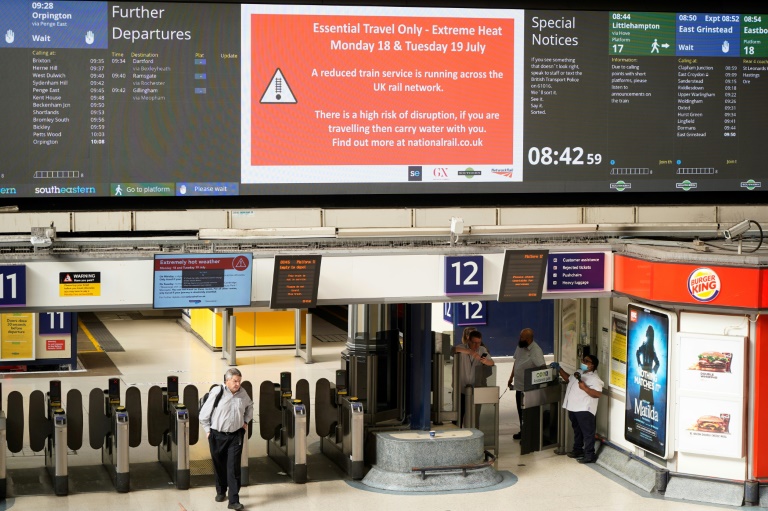
Network Rail, which is responsible for rail infrastructure, said the main east coast route out of London King’s Cross to York and Leeds would be shut between 1100 GMT and 1900 GMT on Tuesday.

But some in Britain, like 64-year-old plumber Dave Williams, were dismissive of the wall-to-wall coverage of the heatwave.

“Just get on with it,” he told AFPTV. “The way they talk about it is as if we’ve never had a summer.”

Among people heading to the beaches for respite was Abu Bakr, a bank worker, who also put the British heatwave into perspective.

“I come from Sudan,” he said as he relaxed on Brighton beach. “Forty, forty-five degrees is just the norm. This is as good as it can be.”

burs-jh/pvh
Britain, France face hottest day as Europe fires rage

Britain and France went on heatwave alert on Monday facing record temperatures as southwest Europe wilted under a scorching sun and ferocious wildfires devoured more forests.

Forecasters in Britain warned of havoc in a country unprepared for the onslaught of extreme heat that authorities said was putting lives at risk.

The mercury was set to rise to 38 Celsius (104 Fahrenheit) in London Monday — not far below Britain’s all-time record of 38.7C — and could breach the 40C mark for the first time by Tuesday, meteorologists said.

Scientists blame climate change and predict more frequent and intense episodes of extreme weather.

Across the Channel firefighters failed to contain two massive fires in France’s southwest that have created apocalyptic scenes of destruction.

For six days, armies of firefighters and a fleet of waterbombing aircraft have struggled against blazes that have mobilised much of France’s entire firefighting capacity.

Forecasters have put 15 French departments on the highest state of alert for extreme temperatures, including in the western Brittany region where the Atlantic coastal city of Brest was expected to hit 40 Celsius Monday, nearly twice its usual July temperature average.

By early afternoon, Brest had already beaten its all-time record of 35.2 C set in 1949.

The European heatwave, spreading north, is the second to engulf parts of the southwest of the continent within only weeks.

– ‘Heat apocalypse’ –

Blazes burning in France, Greece, Portugal and Spain have destroyed thousands of hectares of land and forced thousands of residents and holidaymakers to flee.

In France’s Landes forest, in the southwest Aquitaine region, temperatures “will be above 42 degrees Celsius” on Monday, forecaster Olivier Proust said.

In the Gironde region, further north, firefighters on Monday continued their battle against forest blazes that have devoured nearly 14,000 hectares (35,000 acres) since Tuesday.

An area of nine kilometres (5.5 miles) long and eight kilometres wide was still ablaze near the Dune de Pilat, Europe’s highest sand dune, turning picturesque landscapes, popular campsites and pristine beaches into a scorching mess.

Another 8,000 people were being evacuated near the dune Monday as changing winds blew thick smoke into residential areas, officials said.

“The smoke is toxic,” firefighter spokesman Arnaud Mendousse told AFP. “Protecting the population is a matter of public health.”

The evacuations added to the 16,000 tourists or residents already forced to decamp in France, many to emergency shelters.

“In some southwestern areas, it will be a heat apocalypse,” meteorologist Francois Gourand told AFP.

In Spain, fire burning in the northwestern province of Zamora claimed the life of a 69-year-old shepherd, regional authorities said, the second death after that of a fireman a day before in the same area.

Authorities have reported around 20 wildfires still raging from the south to Galicia in the far northwest, where blazes have destroyed around 4,500 hectares of land. 

In Portugal, almost the entire country remained on high alert for wildfires despite a slight drop in temperatures which had hit 47C — a record for the month of July — last Thursday.

– ‘Get on with it’ –

Fires have killed two, injured around 60 and destroyed between 12,000 and 15,000 hectares of land in Portugal.

In Britain, the government, already on the ropes after a series of scandals and Prime Minister Boris Johnson’s resignation, drew fresh criticism for failing to take the situation seriously enough.

“This is serious heat that could actually, ultimately, end in people’s deaths because it is so ferocious,” College of Paramedics chief executive Tracy Nicholls told Sky News.

The Sun tabloid headlined its coverage of the heat “British Bake Off”, observing that the “scorcher” was making the UK hotter than Ibiza where, indeed, temperatures were a comparatively paltry 30C on Monday.

“It is a bit frightening,” Karina Lawford, 56, told AFP as she took a stroll by the sea in Tankerton on the north Kent coast, saying the heat reminded her of Australia where she lives.

Britain’s chief meteorologist Paul Davies said the heatwave was “entirely consistent with climate change”, telling Sky News the “brutality” of the heatwave was “astounding” but could become a regular occurrence “by the end of the century”.

Network Rail, which is responsible for rail infrastructure, said the main east coast route out of London King’s Cross to York and Leeds would be shut between 1100 GMT and 1900 GMT on Tuesday.

But some in Britain, like 64-year-old plumber Dave Williams, were dismissive of the wall-to-wall coverage of the heatwave.

“Just get on with it,” he told AFPTV. “The way they talk about it is as if we’ve never had a summer.”

Among people heading to the beaches for respite was Abu Bakr, a bank worker, who also put the British heatwave into perspective.

“I come from Sudan,” he said as he relaxed on Brighton beach. “Forty, forty-five degrees is just the norm. This is as good as it can be.”

burs-jh/pvh

Stellantis ending Jeep production in China

US-European carmaker Stellantis said on Monday it was ending production in China of its Jeep SUV after failing to acquire a majority stake in its joint venture with local firm GAC.

GAC-Stellantis is one of two joint ventures in China embarked on by Stellantis, which was formed in January 2021 last year by the merger of Fiat-Chrysler and PSA.

“Stellantis intends to cooperate with GAC Group in an orderly termination of the joint venture formed in March 2010, which has been loss-making in recent years,” the group said.

It said the move was “due to a lack of progress in the previously announced plan for Stellantis to take a majority share” in the business.

The decision to wave goodbye to GAC would show up as “a non-cash impairment charge of approximately 297 million euros ($302 million) in its first-half 2022 results”, due out on July 28.

Stellantis said it would henceforth “focus on distributing imported vehicles for the Jeep brand in China”.

The group — which also includes the Peugeot, Alfa Romeo and Citroen brands — had hoped to increase its stake in China Guangzhou Automobile Group (GAC) to 50-75 percent.

The move was made possible by a change in Chinese regulations allowing deeper involvement by foreign investors, on condition they obtain Beijing’s approval.

Stellantis told AFP its decision to pull out was “not linked” to a decision by the Chinese government.

The group had announced in January that the acquisition of the hoped-for majority stake in the joint venture with GAC was the first step towards streamlining its activities in the world’s biggest vehicle market.

GAC protested at the time because the deal had not been signed.

Jeep, which is rolling out electric vehicles, was to be one of Stellantis’s main conduits for expanding in China. 

The group reported sales of 152 billion euros ($154 billion) in 2021 and aims to reach 200 billion in 2030. 

Stellantis’s main activity in China is the manufacture and sale of Peugeots and Citroens, via a joint venture with local automaker Dongfeng. 

China is also a key market for its luxury Maserati brand and a target for its premium brand DS.

Jeep sold just 20,000 vehicles in China in 2021 and at the end of last year, GAC-Stellantis terminated production at one of its two assembly lines. 

Jeep is now concentrating on offering a wider array of imported electric vehicles.

Boeing wins $13.5-bn MAX jets deal as Farnborough opens

US aerospace giant Boeing on Monday fired the first shot in an orders battle with European rival Airbus at Farnborough airshow, clinching a $13.5-billion deal for 100 MAX planes from Delta Airlines in a huge vote of confidence for the crisis-hit jet.

The deal marks a huge turnaround for the MAX jet which had suffered two deadly crashes in 2018 and 2019.

Outgoing British Prime Minister Boris Johnson meanwhile opened the prestigious five-day event as the avation sector plots its recovery from heavy Covid fallout.

US carrier Delta lodged its first ever order for medium-haul MAX aircraft, with options for 30 more of the fuel-efficient planes as it seeks to replace its ageing fleet and cut damaging emissions.

Boeing revealed also that Japanese airline ANA had agreed to purchase 20 of its smaller MAX 8 jets — worth $2.4 billion — plus two 777-8 freight planes.

– ‘More sustainable future’ –

“The Boeing 737-10 will be an important addition to Delta’s fleet as we shape a more sustainable future for air travel, with an elevated customer experience, improved fuel efficiency and best-in-class performance,” said Delta chief executive Ed Bastian.

The news comes as airlines worldwide seek to replace ageing fleets with fuel-efficient planes that emit less carbon dioxide.

The first visitors to Farnborough, southwest of London, were meanwhile hit by scorching temperatures amid Europe’s ongoing heatwave.

Defence aerospace companies are also expected to emerge as big winners, with Russia’s invasion of Ukraine boosting spending on nations’ armed forces.

Russian companies have been banned from Farnborough due to the war.

The event coincides with fast-moving political turmoil in Britain after Johnson’s recent announcement that he is stepping down as Conservative party leader, sparking a fractious contest to replace him also as prime minister.

– ‘Handing over controls’ –

“This government believes in aviation and its power to bring jobs and growth to the entire country,” Johnson said Monday as the event opened. 

“After three years in the cockpit… I am now handing over the controls seamlessly to someone else. I don’t know who,” he added, sparking laughter from delegates.

Johnson also said that the government was “investing massively in defence”.

This year’s event — one of the world’s largest civilian and defence shows — is the first global aviation get-together since the Paris airshow in 2019, before Covid hit.

Farnborough was cancelled in 2020 as the Covid health crisis grounded aircraft and ravaged the sector.

Global air traffic is gradually recovering and in May reached more than two-thirds of its pre-pandemic level, according to the International Air Transport Association.

That recovery has however faced headwinds from rocketing inflation fuelled by historically high energy prices and higher wages, while staff shortages constrain airports and spark flight cancellations.

– Air displays –

Ahead of the event, Britain issued a historic red warning for extreme heat, with southern England temperatures potentially exceeding 40C on Monday or Tuesday for the first time.

It comes as visitors to Farnborough will witness air displays by Britain’s Red Arrows and South Korea’s Black Eagles, as well as from the US-made F-35 stealth fighter.

Airbus and Boeing are showcasing their latest twin-aisle passenger aircraft, the A350-900 and the 777X.

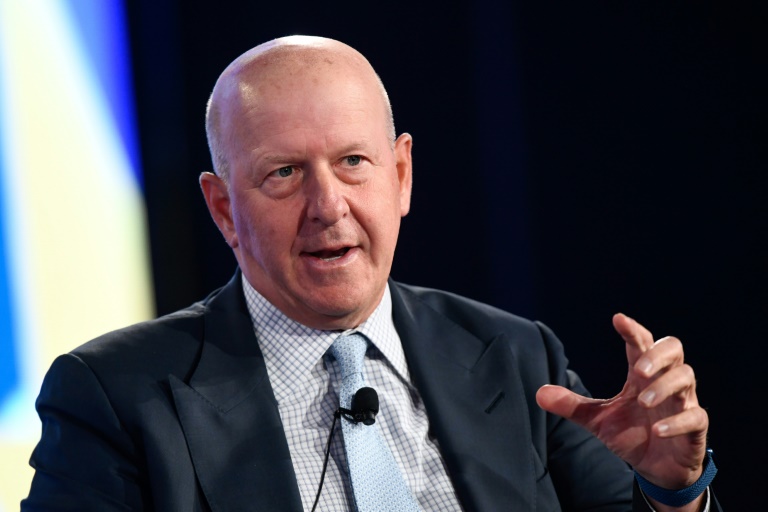
Goldman Sachs profits tumble despite strong trading results

Goldman Sachs reported a 48 percent drop in quarterly earnings Monday after setting aside more funds in case of bad loans, but shares rose as it topped analyst estimates.

The US investment bank became the latest financial heavyweight to suffer a decline in second-quarter results as the weakening macroeconomic environment prompts them to hold funds in case of defaults.

Operations were mixed, but Goldman scored a big jump in revenues tied to trading amid volatile markets.

Profits were $2.8 billion for the second quarter following an eight percent slide in revenues to $11.9 billion.

Goldman established $667 million in provisions, a shift from the year-ago period when earnings were boosted by $92 million in reserve releases.

Goldman Chief Executive David Solomon referred in a press release to “increased volatility and uncertainty” in the environment, praising the bank’s performance “in these challenging markets.” 

Other bank executives last week alluded to similar worries amid rising inflation, the war in Ukraine and other factors, but said the US economy still appeared to be on solid footing for now.

In terms of operations, Goldman suffered a drop in revenues connected to mergers and acquisition advising and loan underwriting. 

The bank’s own investments in equities reported a $221 million loss in the period. But Goldman scored an increase in its consumer banking.

Shares rose 3.8 percent to $305.05 in pre-market trading.

Malaysia seizes animal parts worth $18 mn

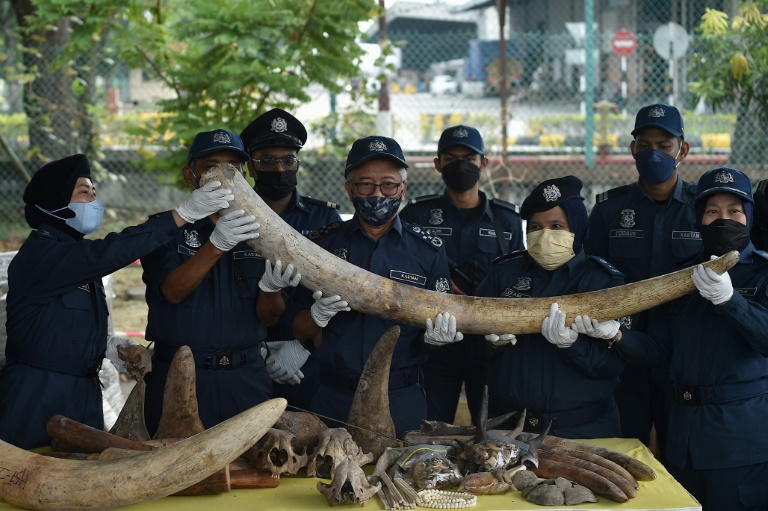
Malaysian customs officials said Monday they seized a stash of rare animal parts worth $18 million thought to have come from Africa, including elephant tusks, rhino horns and pangolin scales. 

The Southeast Asian nation is a hub for wildlife trafficking, with animal parts shipped through the country to lucrative regional markets.  

Authorities foiled a smuggling attempt on July 10 when they uncovered the illicit cargo in Port Klang, on Malaysia’s west coast, hidden in a container along with timber. 

The shipment included an estimated 6,000 kilograms (13,200 pounds) of elephant tusks — Malaysia’s biggest single seizure of elephant ivory, said customs department chief Zazuli Johan.

There were also 29 kilograms of rhino horns, 100 kilos of pangolin scales, and 300 kilos of animal skulls and other bones, he told a press conference. 

The seizure had an estimated value of 80 million ringgit ($18 million), he said, adding it was believed to have come from Africa, without giving more details.

Zazuli said Malaysia was not the shipment’s final destination, but did not say where it was heading.

Animal parts such as elephant tusks and pangolin scales are popular in countries where they are used in traditional medicine, including China and Vietnam.   

There have been no arrests over the seizure. 

Kanitha Krishnasamy — Southeast Asia director at wildlife trade monitoring group Traffic — hailed the “significant seizure”.

“This medley of threatened species in a single seizure is concerning, and it certainly verifies the suspicion that criminals continue to use Malaysian ports to move contraband wildlife,” she said.

Malaysia seizes animal parts worth $18 mn

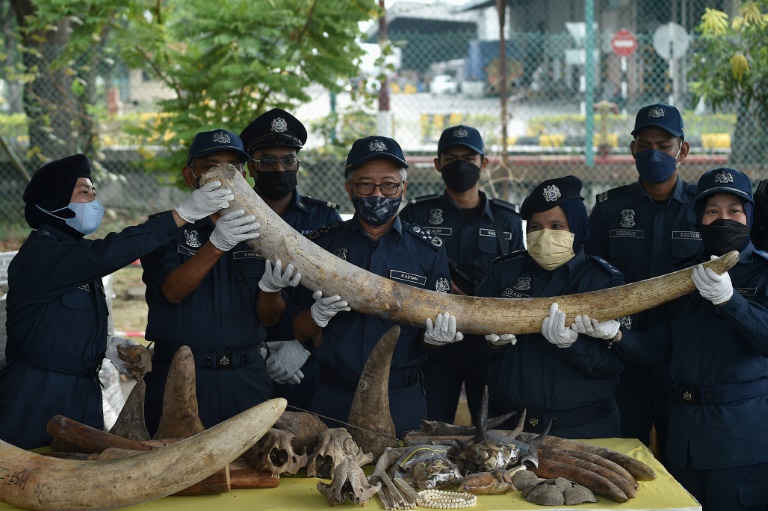
Malaysian customs officials said Monday they seized a stash of rare animal parts worth $18 million thought to have come from Africa, including elephant tusks, rhino horns and pangolin scales. 

The Southeast Asian nation is a hub for wildlife trafficking, with animal parts shipped through the country to lucrative regional markets.  

Authorities foiled a smuggling attempt on July 10 when they uncovered the illicit cargo in Port Klang, on Malaysia’s west coast, hidden in a container along with timber. 

The shipment included an estimated 6,000 kilograms (13,200 pounds) of elephant tusks — Malaysia’s biggest single seizure of elephant ivory, said customs department chief Zazuli Johan.

There were also 29 kilograms of rhino horns, 100 kilos of pangolin scales, and 300 kilos of animal skulls and other bones, he told a press conference. 

The seizure had an estimated value of 80 million ringgit ($18 million), he said, adding it was believed to have come from Africa, without giving more details.

Zazuli said Malaysia was not the shipment’s final destination, but did not say where it was heading.

Animal parts such as elephant tusks and pangolin scales are popular in countries where they are used in traditional medicine, including China and Vietnam.   

There have been no arrests over the seizure. 

Kanitha Krishnasamy — Southeast Asia director at wildlife trade monitoring group Traffic — hailed the “significant seizure”.

“This medley of threatened species in a single seizure is concerning, and it certainly verifies the suspicion that criminals continue to use Malaysian ports to move contraband wildlife,” she said.

Sri Lanka renews state of emergency ahead of key vote

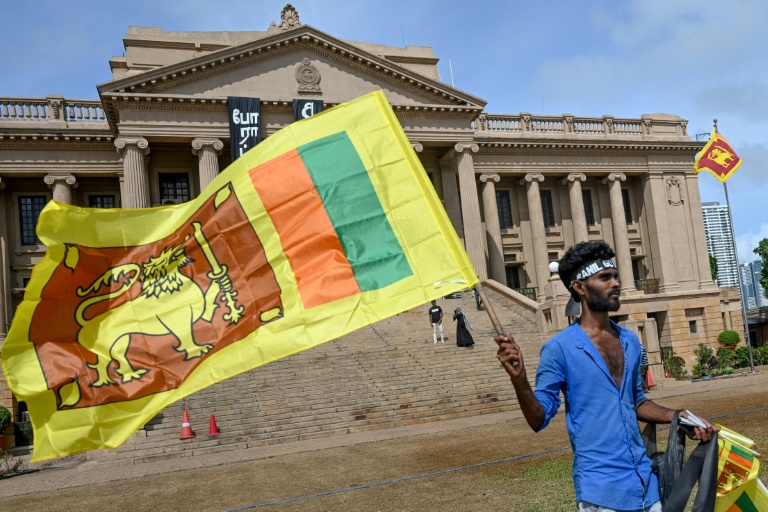
Sri Lanka’s acting president renewed the country’s state of emergency Monday ahead of a parliamentary vote to pick a new head of state — a poll in which he is a leading candidate.

Ranil Wickremesinghe automatically became acting president when Gotabaya Rajapaksa resigned last week after fleeing to Singapore.

A state of emergency allows troops to arrest and detain suspects, and the president to make regulations overriding existing laws to deal with any unrest.

One was already in place but parliament had not met to ratify the declaration as required, and Wickremesinghe extended it from Monday “in the interests of public security”, he said.

Police and the military, armed with emergency powers, stepped up security in the capital ahead of Wednesday’s election of a new president.

Wickremesinghe, a six-time former prime minister, is being backed for the position by Rajapaksa’s party, which remains the largest in the legislature.

In what was seen as a possible appeal to 14 Catholic legislators for their support, Wickremesinghe said he had asked Britain’s help to complete investigations into the 2019 Easter Sunday bombings that killed 279 people.

Sri Lanka’s small but influential Catholic minority believes the coordinated suicide attack against three churches and three hotels was a “political plot” to bring Rajapaksa to power, and has long sought an independent investigation.

Wickremesinghe was “requesting the assistance of the UK government and their intelligence services”, his office said. 

There was no immediate comment from the British High Commission.

The bombings were blamed on local jihadists and 25 men were indicted in October over alleged involvement.

But the Church and opposition parties claim state intelligence officers loyal to Rajapaksa directly or indirectly supported the bombers.

Rajapaksa was forced to flee last week when tens of thousands of protesters stormed his official residence after months of demonstrations across the country demanding his resignation over Sri Lanka’s economic crisis.

The nation’s 22 million people have been enduring severe shortages of essentials since late last year after the country ran out of foreign exchange to finance even the most vital imports.

The country defaulted on its $51 billion foreign debt in mid-April and is in talks with the IMF for a possible bailout.

UK TV debate axed over Tory image fears

Television bosses were on Monday forced to scrap a planned debate between contenders for the leadership of Britain’s Conservative party, as MPs voted again to narrow down the field.

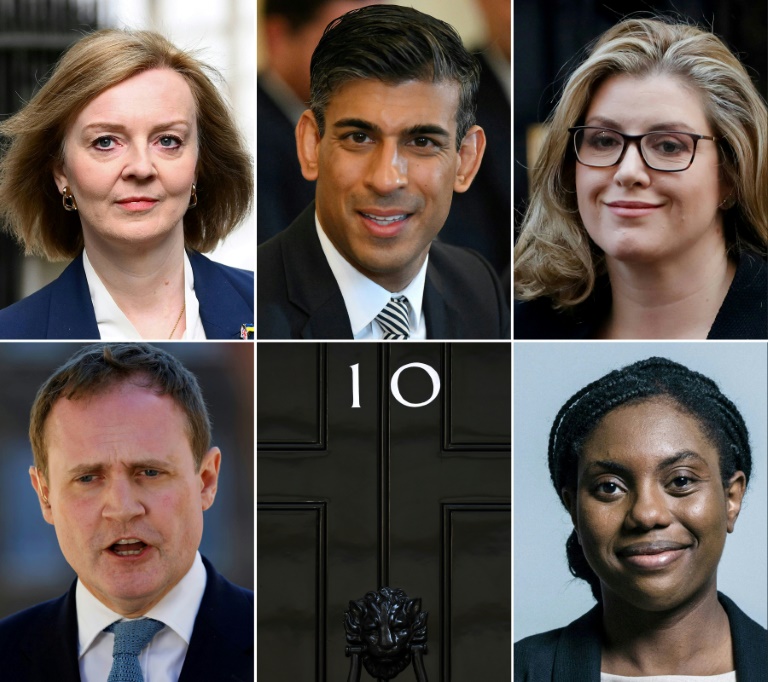
The five remaining candidates — Rishi Sunak, Liz Truss, Kemi Badenoch, Penny Mordaunt and Tom Tugendhat — had been due to appear in the third televised debate on Tuesday night.

But former finance minister Sunak and Foreign Secretary Truss pulled out, Sky News, which was due to host the programme, said.

“Conservative MPs are said to be concerned about the damage the debates are doing to the image of the Conservative party, exposing disagreements and splits within the party,” it added in a statement.

Conservative MPs are holding a series of votes to whittle down the candidates to just two, before a wider ballot of the Tory grassroots.

The latest starts at 1600 GMT, with Tugendhat expected to win the least number of votes and be eliminated when the result is announced from 1900 GMT.

Prime Minister Boris Johnson announced on July 7 he was quitting as Conservative leader after a government rebellion in protest at his scandal-hit administration.

He is staying on as prime minister until his successor is announced on September 5.

In the two previous televised debates — on Channel 4 on Friday and the ITV network on Sunday — the contenders clashed notably on whether to cut taxes to help ease a soaring cost of living crisis.

But Sunday’s clash turned more acrimonious — and personal — with candidates encouraged to directly criticise one another and their proposals.

Sunak called out Truss for voting against Brexit, her previous membership of the Liberal Democrats, and her position on tax.

In turn, Truss questioned Sunak’s stewardship of the economy.

Badenoch attacked Mordaunt for her stance on transgender rights — a rallying call in the “culture wars” that is exercising the Tory right.

Paul Goodman, from the ConservativeHome website, likened the debates to a “political version of ‘The Hunger Games'” and questioned why they agreed to it.

“Tory MPs and activists will have watched in horror as several of the candidates flung buckets of manure over each other,” he wrote.

He questioned why they would publicly accept to criticise the record of the government that all but one of them served in or the policies they supported as ministers.

The main opposition Labour party has called for Johnson to leave immediately.

Its leader, Keir Starmer, called the candidates’ withdrawal was a sign of a party that was “out of ideas (and) out of purpose”.

“Pulling out of a TV debate when you want to be prime minister doesn’t show very much confidence,” he added.

Russian shelling kills 6 in Donbas as Zelensky replaces security chief

Russian shelling in battle-scarred east Ukraine on Monday left six dead, Kyiv said, as the country was reeling from President Volodymyr Zelensky’s decision to sack two senior law enforcement officials.

EU foreign ministers were convening meanwhile to discuss toughening sanctions against Moscow and the bloc’s foreign policy chief warned of the “life and death” consequences of Russia’s blockade of Ukrainian Black Sea grain exports.

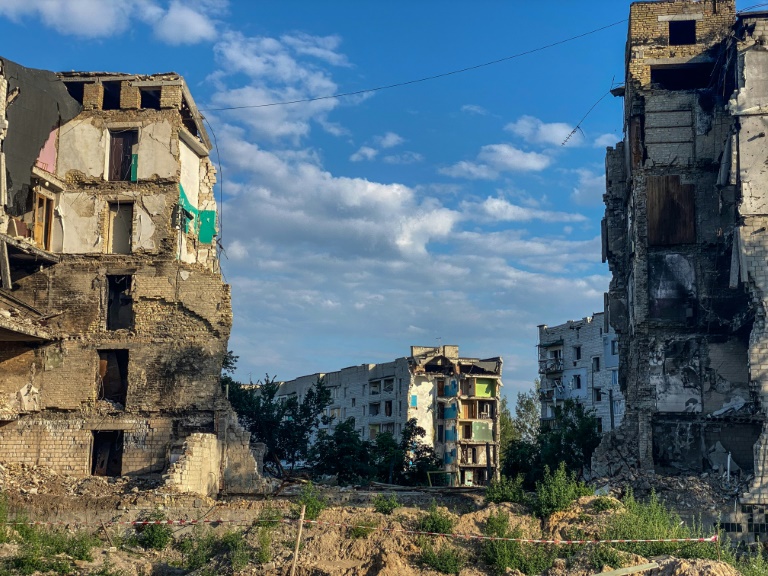
Rescue workers in blue helmets could be seen digging through debris and clearing rubble from the collapsed remains of a two-storey building in Toretsk in the industrial east that was struck by Russian artillery early Monday.

“Rescuers found and recovered the bodies of five dead people in total. Three people were rescued from the rubble and one of them died in hospital,” the emergency services said, adding their rescue operations had concluded.

Toretsk, a town with of around 30,000 residents lies some 50 kilometres (30 miles) south of Kramatorsk, a key target for Russian forces that were ordered into Ukraine in February.

They initially failed to capture the capital Kyiv early in the invasion but have made gains in the eastern region of Donbas recently, capturing the sister cities of Lysychansk and Severodonetsk.

Zelensky said late Sunday that he was firing Prosecutor General Iryna Venediktova and security chief Ivan Bakanov amid widespread cases of suspected treason by law enforcement officials.

He cited “a great number of crimes against the foundations of national security and the connections established between Ukrainian law enforcement officials and Russian special services,” making the announcement.

– ‘Life and death’ –

Deputy Head of the Presidency Andriy Smirnov told local media the two were suspended to prevent them “potentially influencing criminal proceedings against employees of the Security Service of Ukraine”.

Zelensky on Monday appointed 39-year-old Vasyl Malyuk — first deputy head of the SBU security services since March — as acting security chief, according to a presidential decree.

In Brussels, the EU’s foreign policy chief warned that Russia’s blockade of Ukrainian ports was threatening grain supplies to tens of thousands of people vulnerable to starvation and said it must end.

“It’s an issue of life and death for many human beings. And the question is that Russia has to de-block and allow Ukrainian grain to be exported,” Borrell told reporters. 

His comments came as Russian and Ukrainian negotiators are due to meet UN and Turkish diplomats in Istanbul on Wednesday to discuss a possible agreement to end the months-long blockade of Ukraine’s ports.

Ukraine Foreign Minister Dmytro Kuleba said in an address to the officials that “weapons to Ukraine, sanctions on Russia, and accountability for Russia are the three ways to restore peace, enhance security, and protect stability in Europe.”

A Ukrainian counter-offensive in the direction of those Black Sea ports has been gaining momentum and Kyiv said Monday that Russia was digging in along frontlines in the Kherson region where Kyiv’s army are attacking.

– ‘Massive missile fire’ –

Ukraine meanwhile accused Russia of again carrying out bombardments on civilian infrastructure in nearby Mykolaiv, a battered city near the Black Sea coast, that has been targeted repeatedly in recent days.

“Mykolaiv again was under massive missile fire,” the regional governor Vitaliy Kim announced on social media, specifying that premises showcasing agricultural machinery had been hit.

Battlefield dynamics in the south — and in the east — have shifted, Kyiv and observers of the conflict say, with delivery of long-range precision artillery to Ukraine by its Western allies.

Those weapons are a key concern for Russia, and Defence Minister Sergei Shoigu during a recent troop inspection said Moscow’s forces must set about neutralising systems like the US-supplied Himars.

“Shoigu gave orders to prioritise the destruction — with high-precision weapons –enemy artillery and long-range missiles,” the Russian defence ministry said.

In a BBC television interview broadcast Sunday, the head of Britain’s armed forces, Admiral Tony Radakin, estimated that 50,000 Russian soldiers had been killed or wounded in the invasion with nearly 1,700 Russian tanks and some 4,000 armoured fighting vehicles destroyed.

Radakin suggested that Russia’s land forces may pose less of a threat now, but more than 20 weeks since the invasion began, Moscow said Saturday it would step up its military operations.

burs-jbr/pvh

Close Bitnami banner
Bitnami