World

Europe's hottest summers

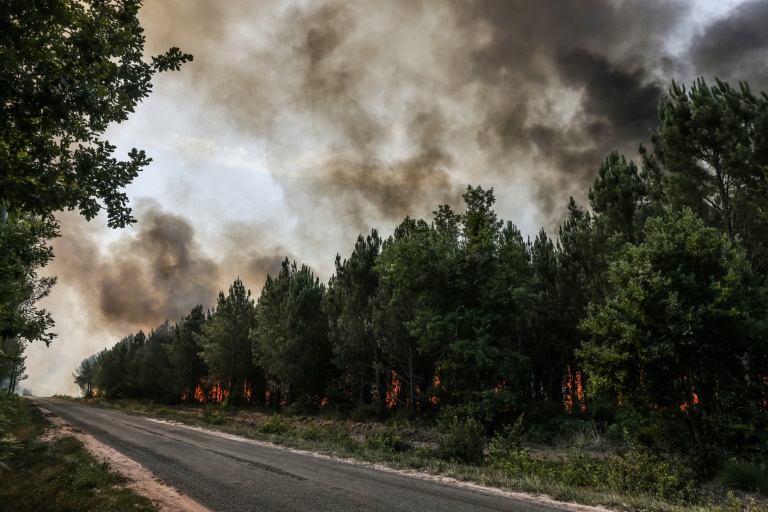
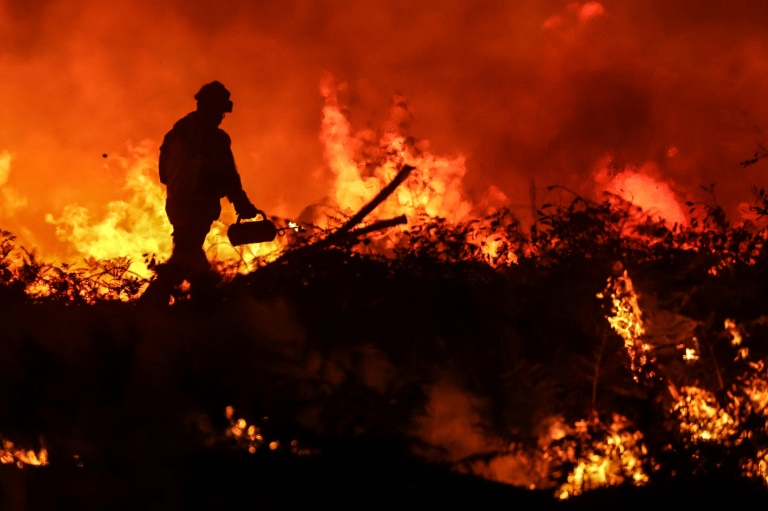
Europe’s increasingly frequent heatwaves are back under the spotlight over devastating wildfires and with sweltering temperatures forecast to hit record highs in Britain and France this week.

In just over two decades, the continent has experienced its five hottest summers since 1500.

– 2022: Double trouble –

A heatwave engulfing western Europe, the second in a month, sparks huge wildfires and threatens to smash records in Britain and France.

Fires in France, Greece, Portugal and Spain force thousands of residents and tourists to flee and kill several people, including a Spanish shepherd and a firefighter.

Britain braces for an all-time high of 40 degrees Celsius (104 degrees Fahrenheit) or more. Brittany in France could also register similar temperatures in what would be a regional record.

The weather warnings come hot on the heels of a scorching spell in June, where parts of Europe, from Spain to Germany, sizzled at unseasonal highs of between 40C to 43C.

– 2021: Hottest ever –

Last year is Europe’s hottest summer on record, according to the European climate change monitoring service Copernicus.

Between late July and early August 2021, Greece endures what Prime Minister Kyriakos Mitsotakis calls the country’s worst heatwave in over 30 years, with temperatures hitting 45C in some regions.

In Spain, temperatures reach 47C in parts of the south, according to national weather agency AEMET.

The heat and drought spark large wildfires along the Mediterranean, from Turkey and Greece to Italy and Spain.

– 2019: Northern Europe swelters –

The summer of 2019 brings two heatwaves, which leave around 2,500 people dead, according to the Centre for Research on the Epidemiology of Disasters of Belgium’s Louvain University.

In France, temperatures hit a record 46C on June 28 in the southern town of Verargues. Thousands of schools are closed.

On July 24 and 25, northern Europe fries in record heat. Temperatures of 42.6C are recorded at Lingen in northwestern Germany, 41.8C in Begijnendijk in northern Belgium and 38.7C in the eastern English city of Cambridge.

– 2018: Drought drains the Danube –

The second half of July and beginning of August 2018 sees very high temperatures across much of Europe and rivers running dry due to drought.

The Danube falls to its lowest level in 100 years in some areas, notably exposing World War II tanks in Serbia that were submerged since the conflict.

Portugal and Spain suffer hugely destructive forest fires.

– 2017: Months of mugginess –

Much of Europe, but especially the south, sweats from late June to well into August. 

Spain set a record of 47.3C on July 13 in the southern town of Montoro.

Persistent drought sparks forest fires in Portugal.

– 2015: Back-to-back heatwaves –

It’s heatwave after heatwave throughout the summer of 2015 which leaves an estimated 1,700 people dead in France.

In Britain, roads melt and trains are delayed in the hottest July on record, with temperatures reaching 36.7C at Heathrow airport.

– 2007: Greek forests ablaze –

Central and southern Europe are parched by drought throughout June and July, provoking a spate of forest fires in Italy, North Macedonia and Serbia. 

In Hungary, 500 people die as a result of the heat. 

– 2003: 70,000 dead –

Britain, France, Italy, Spain and Portugal all experience exceptional heat in the first half of August, with Portugal suffering a record 47.3C at Amareleja in the south.

An EU study of 16 nations puts the number of excess deaths across the bloc during the heatwave as high as 70,000, with France and Italy each seeing between 15,000 and 20,000 fatalities, according to various reports since.

In France, most of the victims are elderly people in an episode that traumatises the country and leads to the implementation of new systems of protection during heatwaves.
Stocks climb, dollar slides as risk appetite returns

Stock markets rallied and the dollar slid against the euro and pound on Monday on returning risk appetite as recession fears eased slightly.

Oil prices jumped almost two percent, even though investors continued to fret over Russia’s war in Ukraine, a Covid spike in China and central banks quickly raising interest rates.

“After a volatile week which ended on a high note, the positive momentum has spilled over across the major global markets,” noted Richard Hunter, head of markets at Interactive Investor.

“Investors will nonetheless remain on high alert this week, as further economic data provides further colour, while the need for caution against a further possible supply shock for oil and the likelihood of an interest rate hike from the ECB (European Central Bank) increases.”

Wall Street raced higher on Friday after June retail sales came in above forecasts and banking giant Citigroup’s April-June results beat expectations.

The positivity extended into Monday, with strong gains for Asian and European stock markets.

While a strong set of economic data has of late boosted bets on the US Federal Reserve lifting borrowing costs more, the latest figures were not seen as being large enough to warrant a sharper rate hike next week — easing recession fears.

Market analysts widely expect the US central bank to announce a 75 basis-point lift, though some have suggested a one percentage-point increase could be on the cards to try and cool decades-high inflation.

– ECB to act –

The ECB is set on Thursday to raise its interest rates for the first time in more than a decade.

To try and counteract a steep rise in prices, the central bank has said it intends to raise borrowing costs by a quarter point, the first such move since 2011. 

The ECB’s delay in acting compared with other central banks that have announced a series of increases — coupled with fears of a eurozone recession — saw the euro fall to parity with the dollar last week.

But on Monday, the European single currency was up 0.7 percent against the dollar, which slumped one percent versus the British pound.

– Key figures at around 1045 GMT –

London – FTSE 100: UP 1.3 percent at 7,250.29 points

Frankfurt – DAX: UP 1.3 percent at 13,034.22

Paris – CAC 40: UP 1.4 percent at 6,119.30

EURO STOXX 50: UP 1.4 percent at 3,525.71

Hong Kong – Hang Seng Index: UP 2.7 percent at 20,846.18 (close)

Shanghai – Composite: UP 1.6 percent at 3,278.10 (close)

Tokyo – Nikkei 225: Closed for a holiday

New York – Dow: UP 2.2 percent at 31,288.26 (close)

Euro/dollar: UP at $1.0159 from $1.0088 on Friday

Pound/dollar: UP at $1.1977 from $1.1865 

Euro/pound: DOWN at 84.81 pence from 85.00 pence

Dollar/yen: DOWN at 138.19 yen from 138.54 yen

Brent North Sea crude: UP 2.3 percent at $103.49 per barrel

West Texas Intermediate: UP 2.0 percent at $99.58 per barrel

Britain, France brace for hottest day as Europe fires rage

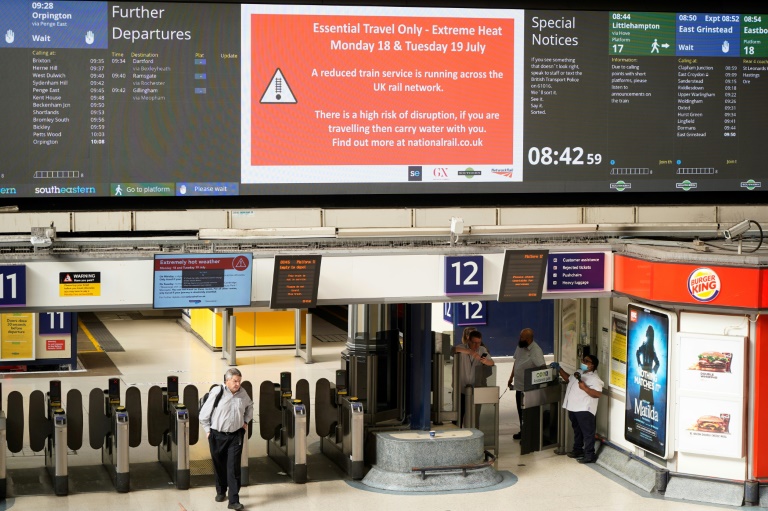
Britain and France went on heatwave alert on Monday bracing for record temperatures as southwest Europe wilted under a scorching sun and ferocious wildfires devoured more forests.

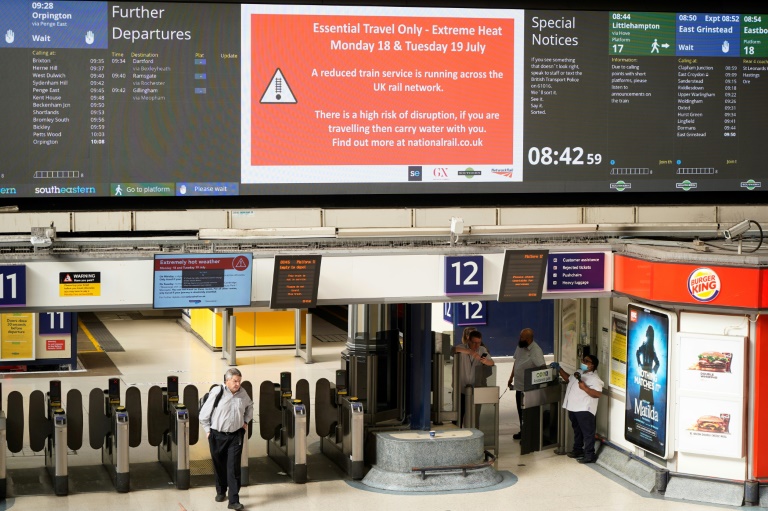
Britain could hit 40 Celsius (104 Fahrenheit) for the first time, forecasters said, causing havoc in a country unprepared for the onslaught of extreme heat that authorities said was putting lives at risk.

Britain’s current record temperature stands at 38.7 Celsius. Scientists blame climate change and predict more frequent and intense episodes of extreme weather.

Across the Channel firefighters failed to contain two massive fires in France’s southwest that have created apocalyptic scenes of destruction.

For six days, armies of firefighters and a fleet of waterbombing aircraft have struggled against blazes that have mobilised much of France’s entire firefighting capacity.

Forecasters have put 15 French departments on the highest state of alert for extreme temperatures, including in the western Brittany region where the Atlantic coastal city of Brest was expected to hit 40 Celsius Monday, nearly twice its usual July temperature average.

The European heatwave, spreading north, is the second to engulf parts of the southwest of the continent within only weeks.

– ‘Heat apocalypse’ –

Blazes burning in France, Greece, Portugal and Spain have destroyed thousands of hectares of land and forced thousands of residents and holidaymakers to flee.

In France’s Landes forest, in the southwest Aquitaine region, temperatures “will be above 42 degrees Celsius” on Monday, forecaster Olivier Proust said.

In the Gironde region, further north, firefighters on Monday continued their battle against forest blazes that have devoured nearly 14,000 hectares (35,000 acres) since Tuesday.

An area of nine kilometres (5.5 miles) long and eight kilometres wide was still ablaze near the Dune de Pilat, Europe’s highest sand dune, turning picturesque landscapes, popular campsites and pristine beaches into a scorching mess.

Firefighters said Monday was shaping up to be one of the most challenging days since the fires started because of the relentless heat, as another 3,500 people were being told to leave their homes as a precaution.

The wildfires in France have forced more than 16,000 people, residents or tourists, to decamp. Seven emergency shelters have been set up for evacuees.

France’s interior ministry announced it would send an extra three firefighting planes, 200 firefighters and more trucks.

“In some southwestern areas, it will be a heat apocalypse,” meteorologist Francois Gourand told AFP.

– Temperatures hit 47C –

The chapel of a historic hospital in the southeast city of Lyon, Grand Hotel Dieu, offered refuge to tourists on Sunday including Jean-Marc, 51, who was visiting from Alsace.

“We came back to admire the place, but we can’t leave, it’s too hot outside. We say a prayer before the fire!” he quipped.

French cyclist Mikael Cherel, taking part in the Tour de France’s 15th stage between Rodez and Carcassonne in southern France on Sunday, said he had “never known such a hot day on a bike”.

In Spain, fire burning in the northwestern province of Zamora claimed the life of a 69-year-old shepherd, regional authorities said, the second death after that of a fireman a day before in the same area.

Authorities have reported around 20 wildfires still raging from the south to Galicia in the far northwest, where blazes have destroyed around 4,500 hectares of land. 

In Portugal, almost the entire country remained on high alert for wildfires despite a slight drop in temperatures which had hit 47C — a record for the month of July — last Thursday.

– ‘So ferocious’ –

Fires have killed two, injured around 60 and destroyed between 12,000 and 15,000 hectares of land in Portugal.

In London, the mercury was set to rise to highs of 38C on Monday as chief meteorologist Paul Davies warned there was a “good chance now of hitting 40C or 41C” on Tuesday.

“This is entirely consistent with climate change,” he told Sky News, describing the “brutality” of the expected heat as “astounding”. 

The government, already on the ropes after a series of scandals and Prime Minister Boris Johnson’s resignation, drew fresh criticism for failing to take the situation seriously enough.

“This is serious heat that could actually, ultimately, end in people’s deaths because it is so ferocious,” College of Paramedics chief executive Tracy Nicholls told Sky News.

Many people fled to the beaches, including Abu Bakr, a bank worker, who put the British heatwave into perspective.

“I come from Sudan,” he told AFPTV on Brighton beach on Sunday. “Forty, forty-five degrees is just the norm. This is as good as it can be.”

burs-jh/jm

Britain, France brace for hottest day as Europe fires rage

Britain and France went on heatwave alert on Monday bracing for record temperatures as southwest Europe wilted under a scorching sun and ferocious wildfires devoured more forests.

Britain could hit 40 Celsius (104 Fahrenheit) for the first time, forecasters said, causing havoc in a country unprepared for the onslaught of extreme heat that authorities said was putting lives at risk.

Britain’s current record temperature stands at 38.7 Celsius. Scientists blame climate change and predict more frequent and intense episodes of extreme weather.

Across the Channel firefighters failed to contain two massive fires in France’s southwest that have created apocalyptic scenes of destruction.

For six days, armies of firefighters and a fleet of waterbombing aircraft have struggled against blazes that have mobilised much of France’s entire firefighting capacity.

Forecasters have put 15 French departments on the highest state of alert for extreme temperatures, including in the western Brittany region where the Atlantic coastal city of Brest was expected to hit 40 Celsius Monday, nearly twice its usual July temperature average.

The European heatwave, spreading north, is the second to engulf parts of the southwest of the continent within only weeks.

– ‘Heat apocalypse’ –

Blazes burning in France, Greece, Portugal and Spain have destroyed thousands of hectares of land and forced thousands of residents and holidaymakers to flee.

In France’s Landes forest, in the southwest Aquitaine region, temperatures “will be above 42 degrees Celsius” on Monday, forecaster Olivier Proust said.

In the Gironde region, further north, firefighters on Monday continued their battle against forest blazes that have devoured nearly 14,000 hectares (35,000 acres) since Tuesday.

An area of nine kilometres (5.5 miles) long and eight kilometres wide was still ablaze near the Dune de Pilat, Europe’s highest sand dune, turning picturesque landscapes, popular campsites and pristine beaches into a scorching mess.

Firefighters said Monday was shaping up to be one of the most challenging days since the fires started because of the relentless heat, as another 3,500 people were being told to leave their homes as a precaution.

The wildfires in France have forced more than 16,000 people, residents or tourists, to decamp. Seven emergency shelters have been set up for evacuees.

France’s interior ministry announced it would send an extra three firefighting planes, 200 firefighters and more trucks.

“In some southwestern areas, it will be a heat apocalypse,” meteorologist Francois Gourand told AFP.

– Temperatures hit 47C –

The chapel of a historic hospital in the southeast city of Lyon, Grand Hotel Dieu, offered refuge to tourists on Sunday including Jean-Marc, 51, who was visiting from Alsace.

“We came back to admire the place, but we can’t leave, it’s too hot outside. We say a prayer before the fire!” he quipped.

French cyclist Mikael Cherel, taking part in the Tour de France’s 15th stage between Rodez and Carcassonne in southern France on Sunday, said he had “never known such a hot day on a bike”.

In Spain, fire burning in the northwestern province of Zamora claimed the life of a 69-year-old shepherd, regional authorities said, the second death after that of a fireman a day before in the same area.

Authorities have reported around 20 wildfires still raging from the south to Galicia in the far northwest, where blazes have destroyed around 4,500 hectares of land. 

In Portugal, almost the entire country remained on high alert for wildfires despite a slight drop in temperatures which had hit 47C — a record for the month of July — last Thursday.

– ‘So ferocious’ –

Fires have killed two, injured around 60 and destroyed between 12,000 and 15,000 hectares of land in Portugal.

In London, the mercury was set to rise to highs of 38C on Monday as chief meteorologist Paul Davies warned there was a “good chance now of hitting 40C or 41C” on Tuesday.

“This is entirely consistent with climate change,” he told Sky News, describing the “brutality” of the expected heat as “astounding”. 

The government, already on the ropes after a series of scandals and Prime Minister Boris Johnson’s resignation, drew fresh criticism for failing to take the situation seriously enough.

“This is serious heat that could actually, ultimately, end in people’s deaths because it is so ferocious,” College of Paramedics chief executive Tracy Nicholls told Sky News.

Many people fled to the beaches, including Abu Bakr, a bank worker, who put the British heatwave into perspective.

“I come from Sudan,” he told AFPTV on Brighton beach on Sunday. “Forty, forty-five degrees is just the norm. This is as good as it can be.”

burs-jh/jm

MPs question deterrent effect of UK's Rwanda migrant policy

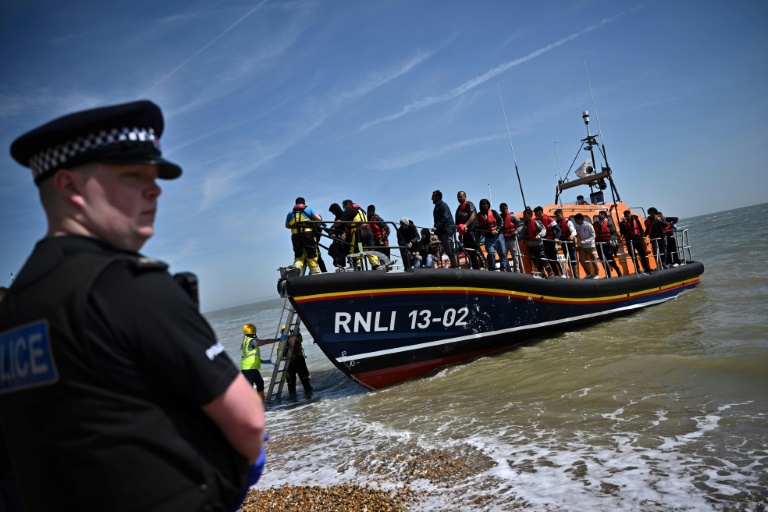
British MPs on Monday told the government there was “no clear evidence” that its controversial policy to deport some asylum seekers to Rwanda would stop Channel crossings in small boats.

The House of Commons Home Affairs Committee said “much more clarity” was needed on the plan, including how much it will cost.

Instead, the MPs urged ministers to look at less eye-catching solutions to the issue, including closer cooperation with European neighbours.

“There is no clear evidence that the policy will deter migrant crossings,” the cross-party committee said in a report on the “small boats” phenomenon.

In fact, it pointed out, numbers attempting the journey from northern France in inflatable dinghies and other unsuitable craft had increased since the policy was first announced in April.

It attributed this to “scaremongering” by people-smuggling gangs warning migrants about the change in the law.

The Channel crossings have put Prime Minister Boris Johnson and his government under political pressure, given that they promised to tighten Britain’s borders after leaving the European Union.

More than 28,500 people — most of them young men — arrived in 2021. Some 13,000 have arrived already this year out of 60,000 expected this year.

Most claim asylum but the government says the costs involved in the application process — more than £1.5 billion ($1.8 billion) — are unsustainably high.

The first flight carrying asylum seekers was due to take off for Rwanda in mid-June but was grounded due to legal challenges.

The Home Affairs Committee said there was “no magical solution” to deal with irregular migration.

But it said “close cooperation with international partners, particularly those in France” stood more chance of success in deterring Channel crossings.

That included intelligence-sharing to smash criminal gangs behind the practice, and rebuilding connections destroyed by Brexit to enable Britain to send illegal arrivals back across the Channel.

The committee pointed out that there were a total of 48,450 asylum applications in Britain in 2021 — a similar number to every year since 2014 and “far less” than in the early 2000s.

But it said the current asylum caseload of more than 125,000 was a result of “antiquated IT systems, high staff turnover and too few staff”.

China urges banks to support property sector after mortgage boycott

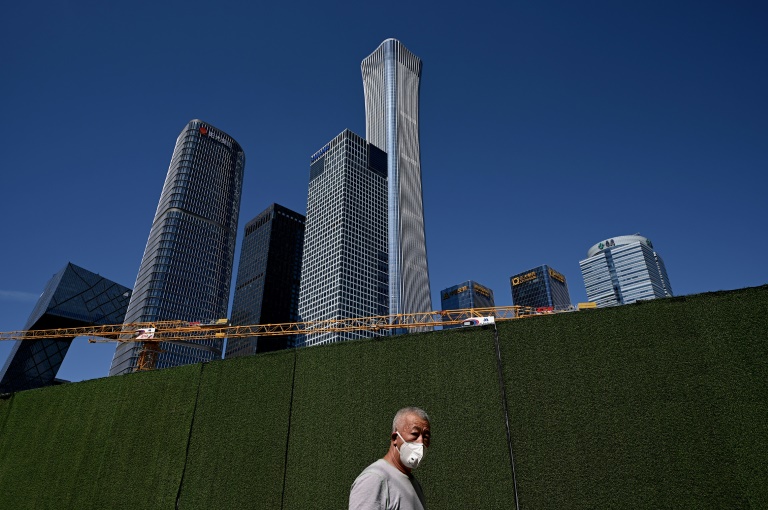
China’s banking regulator has urged lenders to extend more credit to real estate developers, as a growing number of homebuyers withhold mortgage payments on unfinished housing projects across 50 cities.

Furious at postponed deliveries of pre-sold homes, unclear delivery times and halted construction, homebuyers were last week reported to have halted payments for already sold units in at least 100 residential projects, according to data from industry groups and analysts.

The boycott has worsened fears of financial contagion in the country’s troubled real estate sector, which is estimated to account for 18-30 percent of GDP and is a key driver of growth in the world’s second-largest economy.

Analysts have called it a “vicious cycle” that would further dampen consumer confidence, following last week’s dismal Q2 growth figures that were the worst since the pandemic. 

China’s Banking and Regulatory Insurance Commission urged banks to “effectively meet the reasonable financing needs of real estate companies, vigorously support rental housing construction” and support project mergers and acquisitions, a representative said in a state media interview published Sunday.

They were also asked to “do a good job in customer service… abide by contracts, fulfill commitments, and protect the legitimate rights and interests of financial consumers”.

These measures were required to “maintain the stable and orderly operation of the real estate market”, the unnamed official said.

Authorities launched a crackdown on excessive debt in the property sector in 2020, leaving giants like Evergrande and Sunac struggling to make payments and forcing them to renegotiate with creditors as they teetered on the edge of bankruptcy.

– ‘Vicious cycle’ –

“The recent mortgage boycott revealed the spillover in the property sector rout from the bond defaults to unfinished real estate projects,” said Ken Cheung, chief Asian FX strategist at Japanese bank Mizuho. 

“This forms a vicious cycle in the property sector. With falling confidence on the property sector outlook, home buyers delay their purchases and property prices drop.” 

Regulators met banks last week to discuss the growing consumer mortgage boycott, Bloomberg News reported, as more major Chinese developers teeter on the brink of default. 

The developments come at a time of slowing growth for China and weak property sales, adding to the risk to stability ahead of the Communist Party’s 20th Congress in the autumn, when President Xi Jinping is expected to be given a third term.

“Deposits and advance payments for real estate development enterprises fell by 37.9 percent year-on-year in the first half of 2022,” Rajiv Biswas, Asia-Pacific chief economist at S&P Global Market Intelligence, told AFP.

He warned that the weaker property sector outlook would “add to the downside risks facing China’s economy”.

Johannesburg transport project digs into wounds of the past

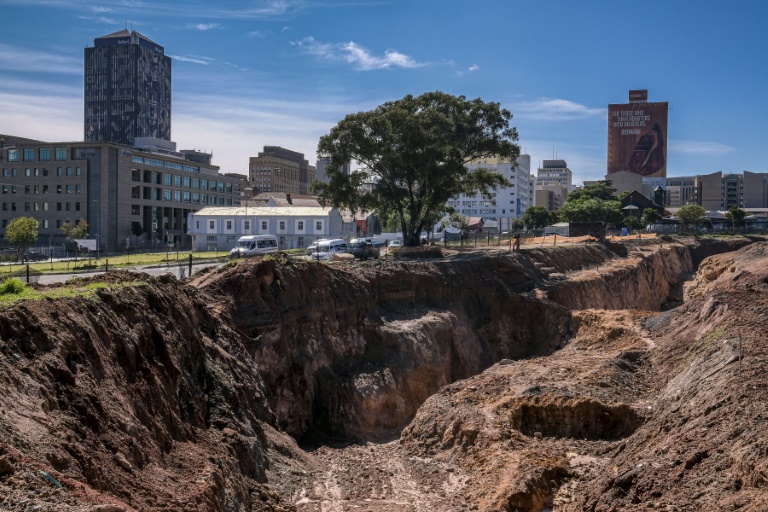
Off Johannesburg’s main highway, surrounded by skyscrapers, heavy machinery has unearthed one of the city’s original wounds — a deep gash left by the 1880s gold rush. 

The entire city centre is built over tunnels dug by generations of miners who extracted gold from the richest deposits the world has ever discovered. 

The city of around six million grew around cavernous pits and mountainous dumps, which eventually became the physical barriers of racial segregation. 

Now the rather poetic challenge of healing wounds both social and geological has fallen to property developers, who are turning this symbol of division into a bus terminal, connecting the city and the region. 

“This is a gateway site,” said Richard Bennett, marketing director for iProp, the company tasked with rehabilitating the site. 

“It will allow the South African populace in Johannesburg and surrounds to gain easy access to public or effective transport.”

– Connections –  

In the 1880s, the mine was one of the first places where prospectors dug with pickaxes, and eventually dynamite, hauling the gold 40 metres (130 feet) back up to the ground. 

After the easiest finds were depleted, this crevice — which looks like a canyon in the middle of the city — was simply filled with sand and used as a parking lot. 

The sand has now been hauled off, readying the pit to be refilled with a cement-like material that is to support the construction of a new, large bus terminal. 

The gold once mined there fuelled both fabulous wealth and deep social divides that persist to this day. 

But the future of the city depends on connecting people with better transport and more walkable streets, said David van Niekerk, CEO of the Johannesburg Inner City Partnership, a group working to revive the city centre after decades of official neglect. 

“Mixing is an important concept for the future of this city, and mixing in the widest possible sense,” van Niekerk said.

“The vision that I certainly have for this city is to turn it into a walkable city,” he added. 

“A city that’s walkable is a city that works for everyone, and I’m talking about from the homeless person to the major international corporate investor, and everyone in between.”

It’s a big challenge in a starkly divided country. 

A World Bank study last year found that the top one percent of South Africans own 55 percent of the nation’s wealth. 

The wealth of the poorest half of the country is actually negative — their debts outweigh their assets. 

The top 0.01 percent, or about 3,500 people, own more than the bottom 90 percent, representing 32 million people.

– Miners’ suffering –

Much of that inequality stems from the early days of mining, which took a tremendous and largely uncounted toll on the mostly black miners, while a few owners — wealthy whites — pocketed most of the profits.   

“Those early mines were done very chaotically and very hastily. There were no proper plans, and a lot of people died… in rockfalls and such,” said author Fred Khumalo. 

His novel “The Longest March” centred on black mine workers in early Johannesburg who lived in compounds where “the conditions were really appalling,” he said. 

“People slept on cement blocks. There were no cushions, no mattress whatsoever. The blankets they provided were flimsy, and Johannesburg winters can be cold. People fell sick, and some of them died from exposure.” 

As the city braced for war between British and white Afrikaners settlers in 1899, the mines shut down and food supplies were cut off, leading to riots. 

– Segregation –

In later decades, black mine workers who built homes nearby were forcibly removed as the gold digging expanded. 

When apartheid fully took hold, blacks were pushed to designated areas to the outskirts of the city with poor access to transport — and needed a “pass book” to access the city at all. 

Almost three decades after the end of white rule, transport links remain patchy and residents of black townships who can afford it drive cars into the city, clogging its roads.

A new transit hub could help ease some of that traffic, as thousands of commuters would replace the migrant workers who once toiled there. 

“In a way, it’s a philosophical level, paying tribute to how those spaces were created in the first place,” Khumalo said. 

“The prosperity of this country owes a lot to what happened back then.”

War in Ukraine: Latest developments

Here are the latest developments in the war in Ukraine:

– Zelensky fires top prosecutor, security chief –

Ukrainian President Volodymyr Zelensky fires prosecutor general Iryna Venediktova and security chief Ivan Bakanov over what he calls the treasonous acts of scores of security officials.

In a national address, he says 60 officials who remained in territories now occupied by Russia are “working against our state”, for Moscow. 

He says the authorities are investigating over 650 cases of suspected treason and aiding and abetting the enemy in total.

The scale of the alleged collusion raised “very serious questions” about the leadership of the security agencies, he says, vowing: “Each such question will be answered.”

– EU meets on new Russia sanctions –

EU foreign ministers meet to discuss imposing more sanctions on Russia, including the possibility of banning gold purchases from the country.

The EU has so far approved six packages of sanctions on Russia. The last one passed in June imposed a ban on most Russian oil imports. Apart from targeting gold, the bloc is also considering sanctioning more Russian officials.

“Moscow must continue to pay a high price for its aggression,” EU commission president Ursula von der Leyen said.

– H&M quits Russia –

Swedish fashion retailer H&M says it has decided to wind down operations in Russia, after suspending all sales there in March.

“After careful consideration, we see it as impossible given the current situation to continue our business in Russia,” H&M Group CEO Helena Helmersson said in a statement.

H&M has about 6,000 employees in Russia and has operated in the country since 2009.

– Russian TV protester detained –

Russian journalist Marina Ovsyannikova, who shot to global prominence in March after interrupting a live Russian TV broadcast to denounce the country’s invasion of Ukraine, is briefly detained for a second time.

Ovsyannikova famously barged onto the set of Channel One’s evening news programme in the early days of the war, holding a sign reading “No War” in English.

She was briefly detained and spent a few months abroad before returning to Russia in July.

On Friday she posted photos of herself staging a new anti-war protest and two days later was detained again but was released hours later.

Her lawyer, Dmitri Zakhvatov, said she was accused of having “discredited” the army.

– UK defence chief slams ‘wishful thinking’ on Putin’s health –

The head of Britain’s armed forces dismisses as “wishful thinking” speculation that Russian President Vladimir Putin is suffering from ill-health or risks being assassinated. 

“President Putin has been able to quash any opposition, we see a hierarchy that is invested in President Putin and so nobody at the top has got the motivation to challenge President Putin,” Admiral Tony Radakin tells the BBC, lamenting a “bleak” outlook.

burs-cb/jm

Panama government and protesters strike deals to clear key highway

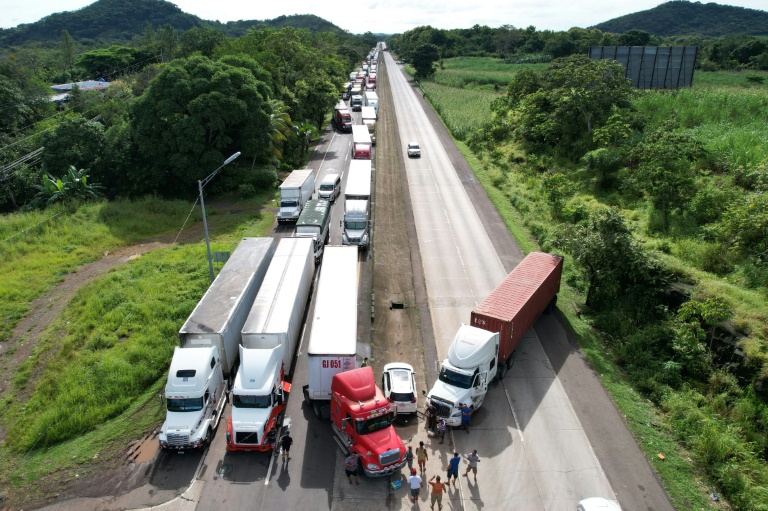
Panama’s government and indigenous leaders reached a second deal Sunday to clear all remaining demonstrators from the Panamerican Highway in exchange for lower fuel prices, ending a two-week blockade that had stymied food deliveries.

The government released footage from the signing of an initial agreement in far-west Chiriqui province, where most of the Central American country’s food is produced, and of a blocked section of the highway being cleared.

Angered by high prices and corruption, protesters had clogged the highway linking Panama to the rest of Central America over the past two weeks. Large trucks and banner-waving demonstrators paralyzed the strategic route, making it hard for the country of 4.4 million to feed itself. 

To avert the crisis, a second deal was signed later Sunday in Santiago de Veragua, a city 250 kilometers (155 miles) northwest of Panama City, the epicenter of the negotiations and a protester stronghold.

“Many Panamanians have suffered from these stoppages,” said Vice-President Jose Gabriel Carrizo after signing the agreement. “This is a huge government effort.”

The deal establishes the fixed price of fuel for 91 and 95 octane gasoline and diesel, and is effective from July 18.

“The traffic of cars and heavy equipment in Veraguas is free,” Eduardo Cortés, who participated in the demonstrations on the highway, told AFP by phone.

The proposal of 3.25 dollars per gallon (3.78 liters), was better than the 3.30 offered in the deal made earlier in the day with the indigenous community of the Ngabe-Bugle Comarca in Chiriqui.

“This has not been easy, we have made progress with (reducing the cost of) the basic food basket,” said Luis Sanchez, a spokesman for the organizations promoting the protests.

In Panama City, a hundred people gathered on the waterfront to demonstrate. They all wore black, in contrast with the white suits worn by lawmakers during official ceremonies.

Food costs are “higher than what is earned. We have a big social problem,” lawyer Jaqueline Hurtado told AFP. “People are fed up and have taken to the streets to demonstrate for things to change.”

Retiree Iliana Arango said: “In my 68 years of life, I am tired of seeing governments that promise, go up, steal, go down, the next one follows and here we are lacking everything, medicine, education, food.”

Year-on-year inflation in Panama of 4.2 percent was recorded in May, along with an unemployment rate of about 10 percent and fuel price hikes of nearly 50 percent since January. 

Despite its dollarized economy and high growth figures, the country has a high rate of social inequality. 

Economic woes have led to a shortage of fuel in some parts of the country, and stalls at food markets in the capital have run out of products to sell. 

Britain, France brace for temperature records as Europe fires rage

Britain and France went on high alert on Monday, bracing for record temperatures from a punishing heatwave as deadly wildfires raging in parts of southwest Europe showed no sign of abating.

Forecasters have put 15 French departments on the highest state of alert for extreme temperatures while in Britain the government was accused of failing to take seriously the impending heat emergency as forecasters warned that lives were at risk.

The heatwave, spreading north, began as the second to engulf parts of southwest Europe in weeks, and blazes burning in France, Greece, Portugal and Spain have destroyed thousands of hectares of land and forced thousands of residents and holidaymakers to flee.

Scientists blame climate change and predict more frequent and intense episodes of extreme weather such as heatwaves and drought.

In France’s Landes forest, in the southwest Aquitaine region, temperatures “will be above 42 degrees Celsius” (107 Fahrenheit) on Monday forecaster Olivier Proust said.

And Brittany, which until recently has escaped the worst of the heat, could register temperatures as high as 40C, say experts, which would be a record for the region.

In the southwestern Gironde region, firefighters over the weekend continued to battle to control forest blazes that have devoured nearly 11,000 hectares (27,000 acres) since Tuesday.

In Spain, authorities announced that a member of the fire service died on Sunday while working to extinguish forest fires at Losacio in the northwestern Zamora region. The fires have already killed several civilians and emergency personnel since last week.

– ‘A heat apocalypse’ –

Spanish authorities have reported around 20 wildfires still raging out of control in different parts of the country from the south to Galicia in the far northwest, where blazes have destroyed around 4,500 hectares of land. 

The wildfires in France forced more than 16,000 people — residents and tourists combined — to decamp. Seven emergency shelters have been set up for evacuees.

France’s interior ministry announced it would send an extra three firefighting planes, 200 firefighters and more trucks.

“In some southwestern areas, it will be a heat apocalypse,” meteorologist Francois Gourand told AFP.

The chapel of a historic hospital in the southeastern city of Lyon, Grand Hotel Dieu, offered refuge to tourists on Sunday including Jean-Marc, 51, who was visiting from Alsace.

“We came back to admire the place, but we can’t leave, it’s too hot outside. We say a prayer before the fire!” he quipped.

French cyclist Mikael Cherel, taking part in the Tour de France’s 15th stage between Rodez and Carcassonne in southern France on Sunday, described “very, very difficult conditions”.

“I’ve never known such a hot day on a bike. It really was no picnic.”

In Portugal, almost the entire country remained on high alert for wildfires despite a slight drop in temperatures, after hitting 47C — a record for the month of July — on Thursday.

– ‘Risk to life’ in UK –

Only one major fire was burning on Sunday in the north.

The fires have killed two, injured around 60 and destroyed between 12,000 and 15,000 hectares of land in Portugal.

In Britain, the weather office issued a first-ever “red” warning for extreme heat, cautioning there was a “risk to life”.

The Met Office said temperatures in southern England could exceed 40C on Monday or Tuesday for the first time, leading some schools to say they would stay closed next week.

Eyebrows were raised, however, by comments from Deputy Prime Minister Dominic Raab appearing to welcome the likelihood of temperatures topping 40C and Prime Minister Boris Johnson missing a meeting about the government’s response to the heatwave.

“This isn’t like a lovely hot day where we can put a bit of sunscreen on, go out and enjoy a swim and a meal outside,” College of Paramedics chief executive Tracy Nicholls told Sky News.

“This is serious heat that could actually, ultimately, end in people’s deaths because it is so ferocious,” she said. 

The UK capital is expected to see the highest temperatures and mayor Sadiq Khan advised Londoners only to use public transport if “absolutely necessary”.

Ambulance services are on crisis footing, and some schools in southern England have already said they will stay shut.

In the Netherlands, the mercury is set to reach 38C in parts of the country on Tuesday.

burs-jm/lcm

Close Bitnami banner
Bitnami