World

Turkish businessman Korkmaz extradited to US from Austria

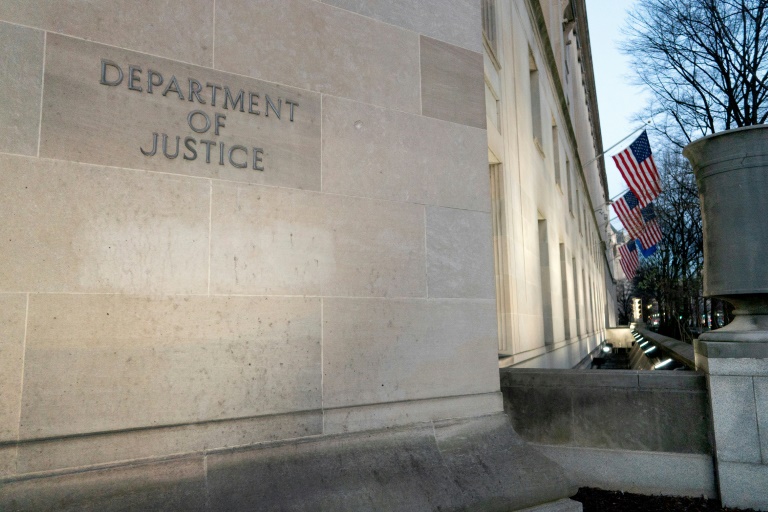
A Turkish businessman wanted on money laundering, wire fraud and obstruction charges was extradited from Austria to the United States on Friday, the Justice Department said.

Sezgin Baran Korkmaz was escorted by US Marshals to Utah, where he has been indicted for allegedly laundering more than $133 million through bank accounts he controlled in Turkey and Luxembourg.

Korkmaz was arrested in Austria in June of last year and had been fighting extradition to the United States, telling a Turkish reporter from jail that he would rather face justice at home, where he is also wanted for money laundering and fraud.

According to a US indictment, Korkmaz and co-conspirators were involved in a scheme to defraud the US Treasury by filing false claims for more than $1 billion in tax credits allegedly for the production and sale of biodiesel by their company, Washakie Renewable Energy LLC.

Jacob and Isaiah Kingston pleaded guilty in July 2019 to federal charges and testified in 2020 at the trial in Utah of another co-conspirator, Levon Termendzhyan, who was convicted of all charges.

Korkmaz and his co-conspirators allegedly used proceeds from the fraud to acquire luxury homes, businesses such as Biofarma, the Turkish airline Borajet, a yacht named the Queen Anne, a hotel in Turkey and a villa and apartment on the Bosporus in Istanbul, according to the US authorities.

Working with officials in Lebanon, US Marshals seized the Queen Anne in July 2021 and sold it for $10.11 million.

The Justice Department said Korkmaz faces a maximum penalty of 20 years in prison for each count of money laundering conspiracy, wire fraud and obstruction of an official proceeding.

The United States had been insisting on his extradition from Austria because the likelihood of Ankara extraditing him should he have been sent back to Turkey was low.

A large part of the reason lies in Washington’s refusal to hand over a US-based Turkish cleric President Recep Tayyip Erdogan believes plotted a failed coup against him in 2016.

According to the Organised Crime and Corruption Reporting Project, Korkmaz played a role in Ankara’s efforts to curry favor with president Donald Trump in his first years in the White House.

The investigative group also alleged that Korkmaz facilitated a 2018 trip for Americans linked to Trump who sought to secure detained US pastor Andrew Brunson’s release from Turkey.

The pastor’s fate became a major issue for Trump, who thrust him to the fore of US-Turkish relations until Brunson’s eventual release in late 2018.
Biden lands in Saudi Arabia, country he vowed to make 'pariah'

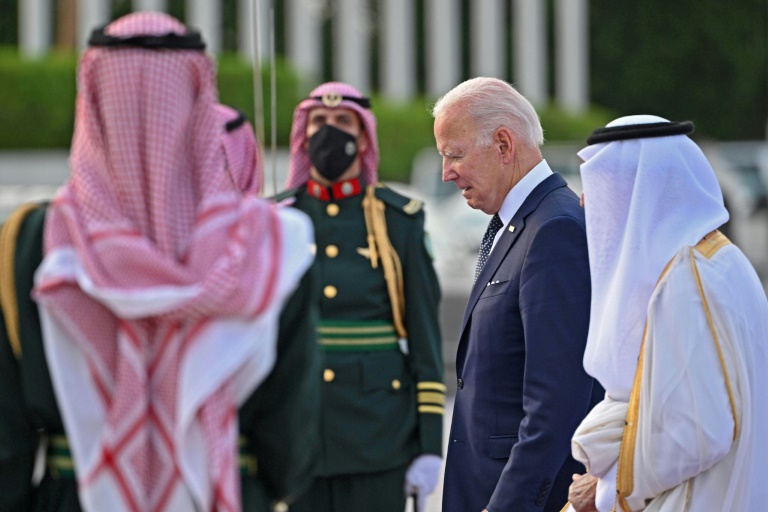
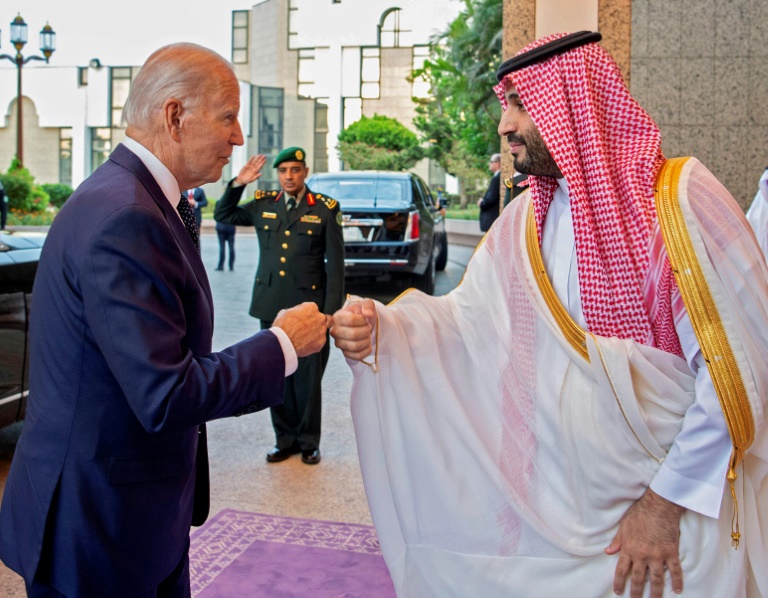
US President Joe Biden landed Friday in Saudi Arabia and met Crown Prince Mohammed bin Salman, sealing a retreat from his campaign pledge to turn the kingdom into a “pariah” over human rights abuses.

Saudi state media showed images of Air Force One at the airport in the coastal city of Jeddah after a flight from Israel, making Biden the first US leader to fly directly from the Jewish state to an Arab nation that does not recognise it.

The US president walked down a purple carpet and was greeted by Mecca province governor Prince Khaled al-Faisal and the ambassador to Washington, Princess Reema bint Bandar Al-Saud.

State television Al-Ekhbariya later showed Prince Mohammed, the kingdom’s de facto ruler, greeting Biden with a fist bump before escorting him into Al-Salam palace.

Biden met Saudi King Salman, 86, then had a “working session” with Prince Mohammed, flanked by top officials.

After taking office last year, Biden’s administration released US intelligence findings that Prince Mohammed “approved” an operation targeting journalist Jamal Khashoggi, whose gruesome killing in Saudi Arabia’s Istanbul consulate sparked global outrage. 

Saudi officials deny Prince Mohammed’s involvement and say Khashoggi’s death resulted from a “rogue” operation.

Khashoggi’s widow, Hatice Cengiz, tweeted an imagined response from Khashoggi to Friday’s meeting.

“Is this the accountability you promised for my murder? The blood of MBS’s next victim is on your hands,” she wrote using Prince Mohammed’s initials.

But Biden now appears ready to re-engage with Saudi Arabia — a key strategic US ally, a major supplier of oil and an avid buyer of weapons. 

Washington wants the world’s largest crude exporter to open the floodgates to bring down soaring oil prices, which threaten Democratic chances in November mid-term elections.

After meeting with Prince Mohammed, the White House said Biden would deliver remarks at 10:30 pm local time (1930 GMT) that were not initially on his schedule.

– Israeli ties –

US officials are also touting efforts to promote integration between Israel and Arab nations. 

Saudi Arabia has refused to join the US-brokered Abraham Accords under which Israel normalised ties with the kingdom’s neighbours, the United Arab Emirates and Bahrain, in 2020. 

Riyadh has repeatedly said it would stick to the decades-old Arab League position of not establishing official ties with Israel until the conflict with the Palestinians is resolved. 

But it is showing signs of greater openness towards Israel, and announced Friday it was lifting overflight restrictions on aircraft travelling to and from Israel, a move Biden hailed as “historic”. 

Israeli caretaker Prime Minister Yair Lapid also praised the decision.

“This is the first official step in normalisation with Saudi Arabia,” he said.

On Saturday Biden is due to meet Arab leaders from the six-member Gulf Cooperation Council as well as Egypt, Jordan and Iraq to discuss volatile oil prices and Washington’s role in the region.

– ‘Political horizon’ in Bethlehem –

Jeddah marks the final stop on Biden’s Middle East tour, following talks on Friday with Palestinian president Mahmud Abbas and meetings with Israeli officials a day earlier. 

With Palestinians banned by Israel from political activity in Jerusalem, the US president travelled to Bethlehem in the occupied West Bank to meet Abbas.

Standing alongside him, Biden reiterated his commitment to a two-state solution to end the decades-old Israeli-Palestinian conflict.

There “must be a political horizon that the Palestinian people can actually see”, Biden said. 

“I know that the goal of the two states seems so far away,” Biden added.

Abbas said he was “taking steps” to improve relations with Washington and aimed to see the US consulate to Palestinians in Jerusalem — which Trump closed — reopen.

With Israeli-Palestinian peace negotiations moribund since 2014, the US delegation has been focusing on economic measures. 

Biden made clear on Thursday he had no plans to reverse the controversial move by Trump to recognise Jerusalem as Israel’s capital, which infuriated Palestinians who see its eastern sector as the seat of their future state.

– ‘Justice for Shireen’ –

Biden was greeted in Bethlehem with a billboard reading “Justice for Shireen”, referring to Shireen Abu Akleh, the veteran Palestinian-American journalist shot dead in May while covering an Israeli army raid in the West Bank.

The family requested to meet Biden during his visit, but his administration has instead invited them to Washington.

“I think if President Biden (can) find an hour and a half to go and attend a sport activity, he should have respected the family and given them 10 minutes to listen to them,” said Samer Sinijlawi, chairman of a Palestinian nonprofit, the Jerusalem Development Fund, after Biden on Thursday attended a ceremony for Jewish athletes.

Speaking alongside Abbas, Biden said the US “will continue to insist on a full and transparent accounting” of Abu Akleh’s death.

Washington earlier this month concluded she was likely shot from an Israeli military position, but that there was no evidence of intent to kill.

Wildfires blaze across sweltering southwest Europe

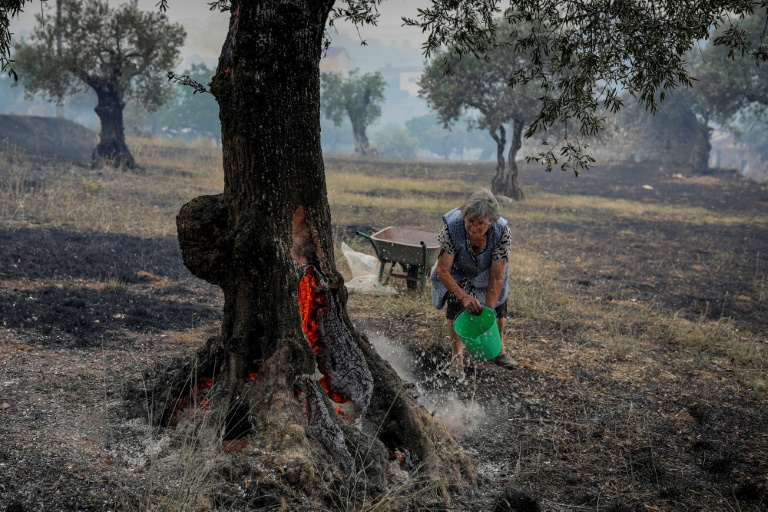
Southwest Europe baked under sweltering temperatures on Friday for a fifth day, with the heat sparking devastating wildfires, forcing the evacuations of thousands and ruining holidays.

Armies of firefighters battled blazes in France, Portugal and Spain as Britain braced for “extreme heat” in coming days and even Irish forecasters predicted a taste of blistering Mediterranean-style summer temperatures.

As French President Emmanuel Macros vowed authorities would do everything to mobilise resources to fight the fallout, the Bordeaux public prosecutor indicated a “criminal” origin was its main line of inquiry for at least one fire near the southwestern city.

The furnace engulfing swathes of southwest Europe is the second in weeks, with scientists blaming climate change and predicting more frequent and intense episodes of extreme weather.

In Portugal, five regions in the centre and north — where temperatures hit a July record 47 Celsius on Thursday before dropping back  — were on red  alert again Friday as more than 2,000 firefighters tackled four major blazes.

As of late Thursday, the fires had killed one person and injured around 60. Nearly 900 people had been evacuated and several dozen homes damaged or destroyed, authorities said.

Wildfires have destroyed 30,000 hectares (75,000 acres) of land this year, the largest area since Portugal’s horrific summer of 2017 when around 100 people died.

In neighbouring Spain, where temperatures were as high as 37C by seven am, a fire that broke out Thursday near the Monfrague National Park, a protected area renowned for wildlife in the Extremadura region, continued to blaze.

Spanish authorities reported close on 20 fires still raging out of control with one near Mijas in the deep south, inland from regional capital Malaga, forcing some 2,300 people to evacuate  their homes.

Across the Mediterranean, authorities said one person was found dead in northern Morocco as forest fires raged.

Spanish Prime Minister Pedro Sanchez tweeted he was “closely following the evolution of active fires” posing an “extreme risk”.

The mercury reached 45.4C in Spain on Thursday, shy of the all-time high of 47.4C registered in August last year.

In southwestern France, flames have destroyed some 7,700 hectares since Tuesday and forced the evacuation of 11,000 people — including many holidaymakers who decided to abandon their vacation rather than remain in makeshift shelters set up by local authorities.

Southern France, battling temperatures around 40C on Friday, is bracing for more heat next week with 16 departments already on orange, a severe alert.

– ‘Post-apocalyptic’ –

One fire was raging in pine forests near France’s Dune du Pilat, Europe’s tallest sand dune and a magnet for tourists.

“I’ve never seen this before and you get the feeling that it’s post-apocalyptic really,” said resident Karyn on Thursday shortly before the preventative evacuation order at Cazaux village near the dune.

Fire commander Laurent Dellac spoke of “tunnels of fire” around Teste-de-Buch, in the middle of the Landes forest to Bordeaux’s southwest — although nobody was reported hurt.

“The blazes are still not under control, and unfortunately conditions are windy again,” firefighter spokesman Matthieu Jomain told AFP.

Britain’s meteorological agency meanwhile issued its first ever “red” warning for exceptional heat with nights exceptionally warm.

The Met Office said there was a 50-percent chance on Monday or Tuesday of temperatures topping 40C for the first time, and an 80-percent chance that the country’s previous record of 38.7C set in 2019 will be exceeded.

– ‘Risk to life’ –

UK hospitals have warned of a surge in heat-related admissions and train operators have told passengers to expect cancellations.

The Irish meteorological office issued a weather warning for Sunday, Monday and Tuesday with “exceptionally warm weather”.

A high of 32C was possible on Monday, Met Eireann said, just short of Ireland’s record high 33.3C set in 1887.

Belgian authorities said they expected much higher temperatures next week, with a high of 38C in parts of the country forecast for Tuesday.

Scientists blamethe increasing regularity of heatwaves on global warming.

“Climate change is driving this heatwave, just as it is driving every heatwave now,” said Friederike Otto, senior lecturer in climate science at the Grantham Institute at Imperial College London.

“Greenhouse gas emissions, from burning fossil fuels like coal, gas and oil, are making heatwaves hotter, longer-lasting and more frequent,” she said.

burs/jh/cdw/bp

Colombian forces kill FARC dissident leader

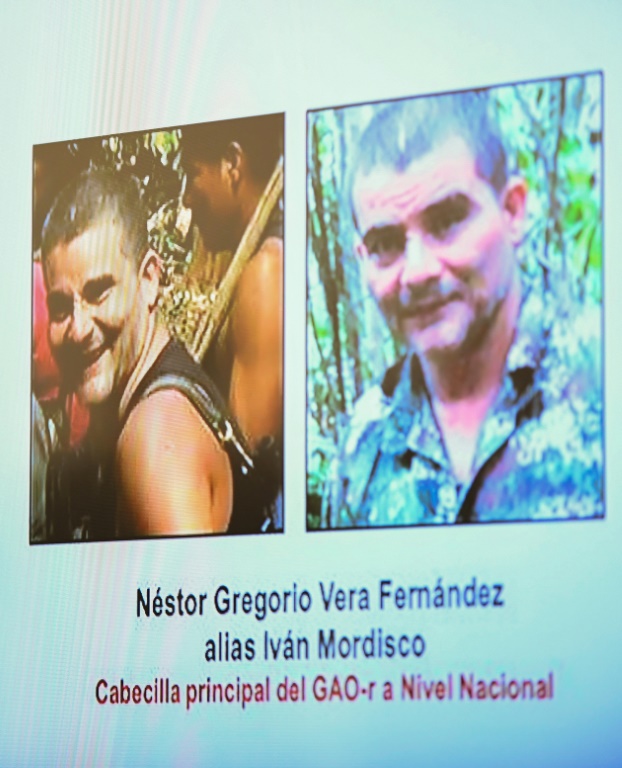
Colombian forces have killed FARC dissident leader Nestor Vera and nine other rebels in a raid in the country’s southwest, the defense minister said on Friday.

The operation “allowed us to neutralize nine individuals on the FARC dissident frontline as well as… Ivan Mordisco,” minister Diego Molano told reporters, using Vera’s nom de guerre.

“The last major leader of the FARC has fallen,” Molano added, and described this as the “final blow” to the renegade movement.

Hundreds of dissidents of the Revolutionary Armed Forces of Colombia, or FARC, have continued fighting after their comrades lay down arms under a 2016 peace accord that ended more than half a century of armed conflict.

Vera, one of Colombia’s most wanted men, recently took command of a group of some 2,000 dissidents, the so-called Armando Rios front, after the presumed death of leader “Gentil Duarte” in fighting with a drug gang in neighboring Venezuela in May, according to Colombian intelligence.

A reward of $700,000 had been on offer for information on Vera’s whereabouts.

Some 500 soldiers were deployed in the Colombian jungle several weeks ago on a mission to find Vera, according to General Luis Fernando Navarro.

Vera and his comrades were ultimately killed in an air force-led operation on July 8.

– ‘Fundamental blow’ –

Just months before the 2016 agreement was signed, Vera became the first FARC leader to renounce the peace process with several of his subordinates.

Despite the agreement, Colombia has seen a flare-up of violence due to fighting over territory and resources among the dissidents, the hold-out ELN rebel group, paramilitary forces and drug cartels.

The government says Vera and his men were engaged in a fierce dispute over drug trafficking routes with another dissident faction called Segunda Marquetalia, led by former FARC chief Ivan Marquez.

Marquez had signed the 2016 peace pact only to take up arms again, in 2019.

Bogota says Marquez was injured in a recent attack in Venezuela, and is hospitalized there, though Caracas said this was mere speculation.

“Today in Colombia there are none of the leaders, the big capos of the former FARC… it is a fundamental blow to the plans they had for regeneration,” said the defense minister, Molano.

With no unified command, FARC dissident fighters are thought to number some 5,200 scattered around the country, according to the Indepaz monitoring group.

They are financed mainly by drug trafficking and illegal mining.

The majority are new recruits who were never FARC members, according to Indepaz.

War in Ukraine: Latest developments

Here are the latest developments in the war in Ukraine:

– Search for survivors after strike kills 23 – 

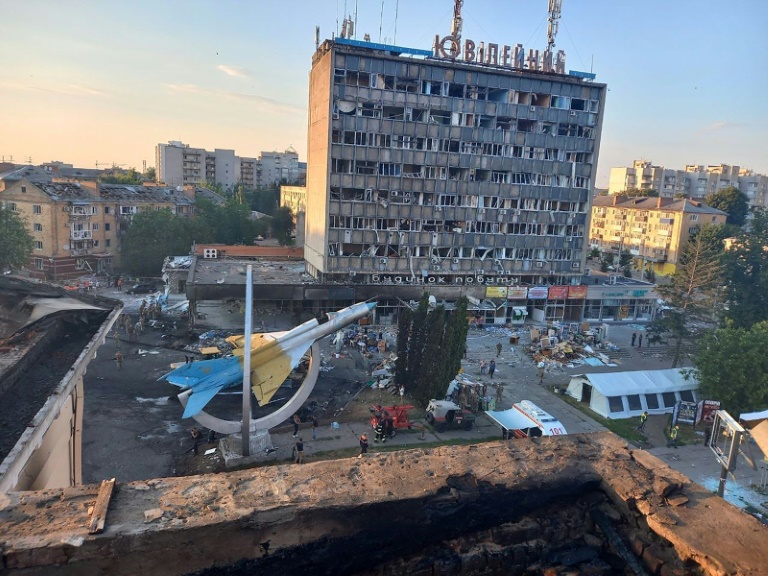
Rescue workers dig through debris, a day after Russian missiles tore through Vinnytsia in central Ukraine, killing at least 23 people.

Russia claims the strikes — hundreds of kilometres from the front lines — had targeted a meeting of Ukrainian military officials and foreign arms suppliers.

“No other state in the world poses such a terrorist threat as Russia,” Ukrainian President Volodymyr Zelensky responds late Thursday, warning the death toll is likely to rise.

– Briton reported dead in detention –

Paul Urey, a British man captured by pro-Russian forces in Ukraine, died in detention on July 10, Moscow-backed separatists say, saying he died of diabetes. 

Non-governmental organisations describe Urey as a humanitarian who worked as an aid volunteer in Ukraine, while the separatists say he was a “professional” soldier fighting for Ukraine.

British Foreign Secretary Liz Truss says Russia bears “full responsibility” over the reported death.

– Russia under fire at G20 –

Western finance ministers on the island of Bali for two-day G20 talks condemn Moscow’s invasion of Ukraine, accusing Russian officials of complicity in atrocities committed during the war.

“Russia is solely responsible for negative spillovers to the global economy,” US Treasury Secretary Janet Yellen tells the Russian delegation in the opening session.

She is joined by Canadian Finance Minister Chrystia Freeland, who tells Russia’s delegation they are responsible for “war crimes” in Ukraine because of their support for the invasion.

– Next target: Siversk –

Moscow-backed troops in the Donbas region in eastern Ukraine say they are closing in on their next target, after wresting control of sister cities Lysychansk and Severodonetsk two weeks ago.

“Siversk is under our operational control, which means that the enemy can be hit by our aimed fire all over the area,” a pro-Moscow rebel official is cited as saying by Russian state-run news agency TASS.

– Russia sees grain deal ‘soon’ –

Russia’s defence ministry says that a “final document” designed to unblock grain exports from Ukrainian ports will be ready “soon”, following negotiations with Kyiv in Istanbul this week.    

Russia’s invasion of Ukraine in February has disrupted the export of grain form ports in Ukraine, which is one of the world’s largest wheat exporters, worsening a food crisis around the world. 

– US to resume flights to ISS –  

The United States says it will resume flights to the International Space Station with Russia, despite its attempts to isolate Moscow over the invasion of Ukraine.

“To ensure continued safe operations of the International Space Station, protect the lives of astronauts and ensure continuous US presence in space, NASA will resume integrated crews on US crew spacecraft and the Russian Soyuz,” US space agency NASA says in a statement.

– EU targets Russian gold –

The European Union executive proposes to target Russian gold exports in an update to its sanctions’ packages that will also tighten the screws on previous measures against Moscow. 

The EU has so far approved six packages of sanctions on Russia. The last one passed in June imposed a ban on most Russian oil imports.

The move on gold, fulfilling a decision by the Group of Seven most industrialised nations in late June, will be discussed at a meeting of EU foreign ministers on Monday.

burs-eab-jmy/cdw

UK's Truss under pressure as Tories gird for TV battle

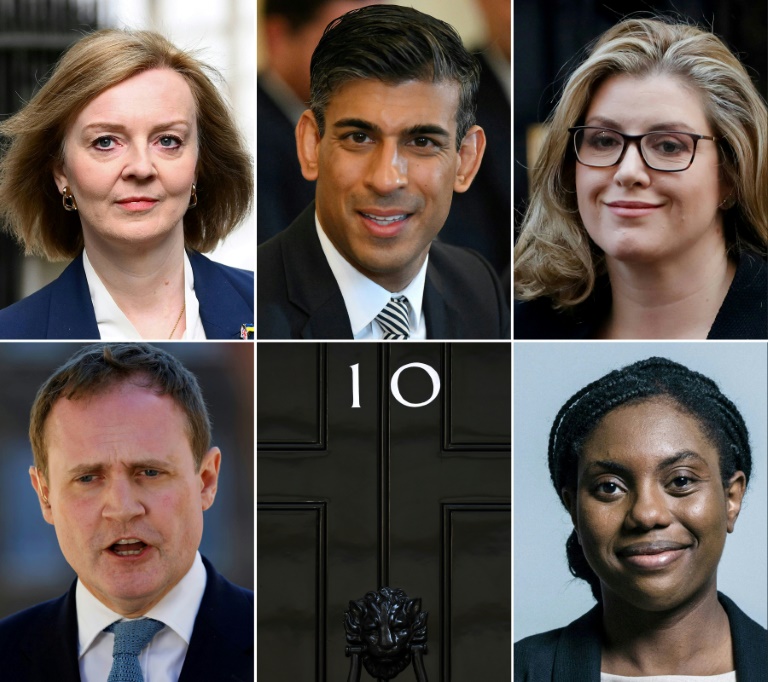
British Foreign Secretary Liz Truss’s camp Friday urged Conservative right-wingers to unite behind her lagging leadership campaign, as the five remaining contenders prepared to battle each other in their first televised debate.

Truss came third in the latest ballot of Tory MPs on Thursday, in an initial process designed to whittle the race down to two finalists by the middle of next week.

They will then present their case to the party’s rank-and-file members until a winner is announced September 5.

Former finance minister Rishi Sunak again came first, followed by Penny Mordaunt, who has emerged as the surprise bookmakers’ favourite.

The Royal Navy reservist, who was briefly Britain’s first woman defence secretary, polls well with the members but is now under scathing attack from colleagues for her inexperience, stance on transgender rights and alleged incompetence in government jobs.

“People obviously are trying to stop me getting into the final because they don’t want to run against me,” she told Sky News, while condemning “black ops” from rival camps.

Long-shot candidate Tom Tugendhat decried the worsening acrimony as “a knife fight in a phone box”, urging the party to focus instead on governing and taking the fight to the opposition Labour party.

The candidates took part in an online hustings, laying out their policy priorities along with warm words aimed at the Tory base.

“Not only do we need to restore trust, rebuild our economy and reunite our country,” frontrunner Sunak said, drawing a pointed contrast to scandal-plagued Prime Minister Boris Johnson.

“We also need to do something that’s never been done before in British political history, and that’s win a historic fifth term.”

– ‘Walk the walk’ –

Truss has backing from prominent loyalists of Johnson, who was forced last week to announce his resignation as Tory leader after a cabinet insurrection led partly by Sunak, following months of controversies.

While Johnson says he will stay above the fray, his supporters have spoken acidly against Sunak and point to Truss as the most experienced contender left from the party’s right wing. 

But she now faces a challenge from Mordaunt just to reach the final two, and has talked up her experience across various government departments.

“You’ve got to walk the walk, as well as talk the talk, and that I think is what I’ve shown I’ve done in the jobs I’ve held,” she said.

Attorney General Suella Braverman was eliminated Thursday and threw her support behind Truss, accusing Mordaunt of failing to “stand up for women”.

Former Brexit minister David Frost wrote in the Daily Telegraph that Mordaunt had been “absent on parade” when they worked together on negotiations with Brussels last year.

“It is now time for pragmatism,” he said, urging fourth-placed candidate Kemi Badenoch “to stand down in return for a serious job in a Truss administration”.

Like Tugendhat, Badenoch is another insurgent with no cabinet experience but is drawing favourable coverage from some right-wing commentators for her “anti-woke” credentials and innovative policy platform.

Rejecting Frost’s appeal, her campaign said she was “in it to win”.

– ‘Robotic’ –

The evening debate will be hosted by Britain’s Channel 4 — a state-owned network known for its edgy programming, which Johnson’s government is seeking controversially to privatise.

After days of talking only to their supporters and select reporters, it offers a chance for the lesser-known contenders to pitch their arguments to a national television audience.

The wealthy Sunak is a polished media performer but faces questions over his family’s tax affairs and long-term commitment to Britain. Until last year, he held a Green Card conferring residency in the United States.

Both Badenoch and Tugendhat have won plaudits this week for their straight-talking style. Truss was described as “robotic” by more than one commentator after formally launching her campaign on Thursday.

Mordaunt remains largely an unknown quantity. She is remembered for making misleading claims in one television interview during Britain’s Brexit referendum campaign in 2016.

The final two will appear before the grassroots membership at a series of hustings in the coming weeks, before the September 5 announcement of the victor.

Johnson’s successor will be tasked with helming Britain through a cost-of-living crisis, the war in Ukraine and drawing a line under his chaotic premiership.

Biden lands in Saudi Arabia, country he vowed to make 'pariah'

US President Joe Biden landed Friday in Saudi Arabia and met Crown Prince Mohammed bin Salman, sealing a retreat from his campaign pledge to turn the kingdom into a “pariah” over human rights abuses.

Saudi state media showed images of Air Force One at the airport in the coastal city of Jeddah after a flight from Israel, making Biden the first US leader to fly directly from the Jewish state to an Arab nation that does not recognise it.

In 2017, his predecessor, Donald Trump, made the journey in reverse. 

Biden, wearing sunglasses, emerged from Air Force One to walk down a purple carpet and be greeted by Mecca province governor Prince Khaled al-Faisal and Princess Reema bint Bandar Al-Saud, Saudi Arabia’s ambassador to Washington.

Later, the state-run Al-Ekhbariya channel showed Prince Mohammed, the kingdom’s de facto leader, greeting Biden with a fist bump and escorting him into a palace.

After he took office in early 2021, Biden’s administration released US intelligence findings that Prince Mohammed “approved” an operation targeting journalist Jamal Khashoggi, whose gruesome killing in Saudi Arabia’s Istanbul consulate spurred global outrage. 

Saudi officials deny Prince Mohammed’s involvement and say Khashoggi’s death resulted from a “rogue” operation, but it severely marred his reputation as a potential reformer. 

Biden now appears ready to re-engage with a country that has been a key strategic ally of the United States for decades, a major supplier of oil and an avid buyer of weapons. 

Washington wants the world’s largest exporter of crude to open the floodgates to bring down soaring gasoline prices, which threaten Democratic chances in November mid-term elections.

Biden was expected to meet with 86-year-old Saudi King Salman before participating in a “working session” headed by Prince Mohammed, according to a programme distributed by Saudi officials.

– Israeli ties –

US officials are also touting efforts to promote integration between Israel and Arab nations. 

Saudi Arabia has refused to join the US-brokered Abraham Accords which in 2020 created ties between Israel and two of the kingdom’s neighbours, the United Arab Emirates and Bahrain. 

The kingdom has repeatedly said it would stick to the decades-old Arab League position of not establishing official ties with Israel until the conflict with the Palestinians is resolved. 

But it is showing signs of greater openness towards Israel, and on Friday morning announced it was lifting overflight restrictions on aircraft travelling to and from Israel, a move Biden hailed as “historic”. 

Israeli caretaker Prime Minister Yair Lapid said the decision to scrap airspace restrictions was “only the first step” as the country seeks to strengthen regional ties. 

On Saturday Biden is expected to meet Arab leaders from the six-member Gulf Cooperation Council as well as Egypt, Jordan and Iraq to discuss volatile oil prices and Washington’s role in the region.

– ‘Political horizon’ in Bethlehem –

Jeddah marks the final stop on Biden’s Middle East tour, following Friday’s talks with Palestinian president Mahmud Abbas and meetings with Israeli officials a day earlier. 

With Palestinians banned by Israel from political activity in Jerusalem, the US president travelled to Bethlehem in the occupied West Bank to meet Abbas.

Standing alongside Abbas, Biden reiterated his commitment to a two-state solution to end the Israeli-Palestinian conflict and said there “must be a political horizon that the Palestinian people can actually see”. 

“I know that the goal of the two states seems so far away,” he said in Bethlehem. 

The Palestinian president said he was “taking steps” to improve relations with Washington and aimed to see the US consulate to Palestinians in Jerusalem reopen. The consulate was shuttered by Trump. 

With Israeli-Palestinian peace negotiations moribund since 2014, the US delegation has been focusing on economic measures. 

Biden made clear on Thursday he had no plans to reverse the controversial move by Trump to recognise Jerusalem as Israel’s capital, which infuriated Palestinians who see its eastern sector as the seat of their future state.

– ‘Justice for Shireen’ –

Biden was greeted in Bethlehem with a billboard reading “Justice for Shireen,” referring to Shireen Abu Akleh, the veteran Palestinian-American journalist shot dead in May while covering an Israeli army raid in the West Bank.

The family requested to meet Biden during his visit, but his administration has instead invited the family to Washington.

“I think if President Biden (can) find an hour and a half to go and attend a sport activity, he should have respected the family and given them 10 minutes to listen to them,” said Samer Sinijlawi, chairman of a Palestinian nonprofit, the Jerusalem Development Fund, after Biden on Thursday attended a ceremony for Jewish athletes.

Speaking alongside Abbas, Biden said the US “will continue to insist on a full and transparent accounting” of Abu Akleh’s death.

Washington earlier this month concluded she was likely shot from an Israeli military position, but that there was no evidence of intent to kill.

US retail sales zoom higher in June despite high prices

US retail sales shot up in June amid the ongoing surge in prices, according to new data Friday that spelled more bad news for the Federal Reserve as it struggles to rein in rampant inflation.

The data showed that after pausing in May, American consumers last month were still eating out and buying furniture and cars, even amid the fastest inflation in more than four decades. 

That poses a challenge for the US central bank, which has been hoping to see more decisive signs that its aggressive interest rate hikes were starting to take the economy off the boil and tamp down high prices.

Increased costs for gas, food and housing have squeezed American families and heaped pressure on President Joe Biden, whose approval ratings have taken a battering from the relentless rise in prices and fears of recession.

While inflation was already picking up speed last year as the world’s largest economy emerged from the pandemic and demand outstripped supply, the price surge worsened in the wake of the Russian invasion of Ukraine that has led to increased costs for energy and food.

Meanwhile, the US manufacturing sector, which has struggled with global pandemic supply constraints, saw output drop again in June, according to new Fed data Friday.

But consumers appear to be feeling a bit better about the current state of the economy, according to a new survey, defying expectations of a continued slump.

– Back with a vengeance –

After total retail sales dipped 0.1 percent in May, they recovered with a vengeance last month, climbing one percent to $680.6 billion, the Commerce Department said.

Record gas prices at the pump in June were a major factor, boosting sales at gasoline stations 3.6 percent in the month, and an eye-watering 49.1 percent over the past year, the report said.

But the data showed increases were widespread, and sales were still up 0.7 percent even when gasoline is removed from the calculation.

As inflation picked up speed, the Fed started raising the benchmark borrowing rate in March, and last month increased it by 0.75 percentage point, the biggest hike in nearly 30 years. 

But talk has now shifted to the possibility of a massive, full-point increase later this month, and higher borrowing costs have raised fears that the Fed’s efforts could push the economy into recession.

Fed Governor Christopher Waller on Thursday said he could favor the mega step — which would be the biggest such move in four decades — if there were no signs of cooling in the retail sales data and the new home sales report due out in two weeks.

In other data, manufacturing output fell 0.5 percent in June, the second consecutive drop, which led to decline overall industrial production, according to the Fed.

But the University of Michigan’s consumer sentiment index rose unexpectedly rose by 2.2 percent in July to a still-low 51.1, amid a big jump in feelings about the current situation, but another dip in the expectations index.

The preliminary reading showed current assessments of personal finances continued to deteriorate, reaching its lowest point since 2011, survey director Joanne Hsu said, noting a worrying trend of shoppers buying now to get ahead of price increases.

– Mega rate hike in play –

The Fed’s policy-setting Federal Open Market Committee is due to meet July 26-27 to debate the next move in its war on inflation.

Kathy Bostjancic of Oxford Economics said the strong sales data “keeps the Fed in an aggressive policy tightening mode — the debate at the July FOMC meeting will be between a 75bps or 100bps rate hike.”

High prices mean Americans have to shift spending more to necessities.

Neil Saunders, Managing Director of GlobalData, noted that “consumers did not buy more stuff in June — they bought less product but paid more for it. This is not a comfortable position.”

Waller downplayed recession fears saying the very US strong job market means the Fed can slow the economy without causing a downturn or a huge increase in joblessness.

Economist Nancy Vanden Houten agreed the United States “still has a fighting chance to avoid a recession, but the pathway to a soft landing is admittedly narrowing.”

US renews space flights with Russia in rare cooperation

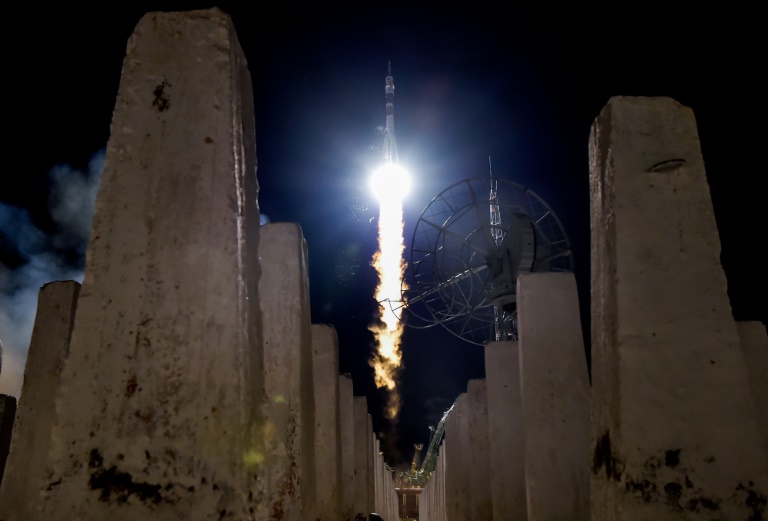
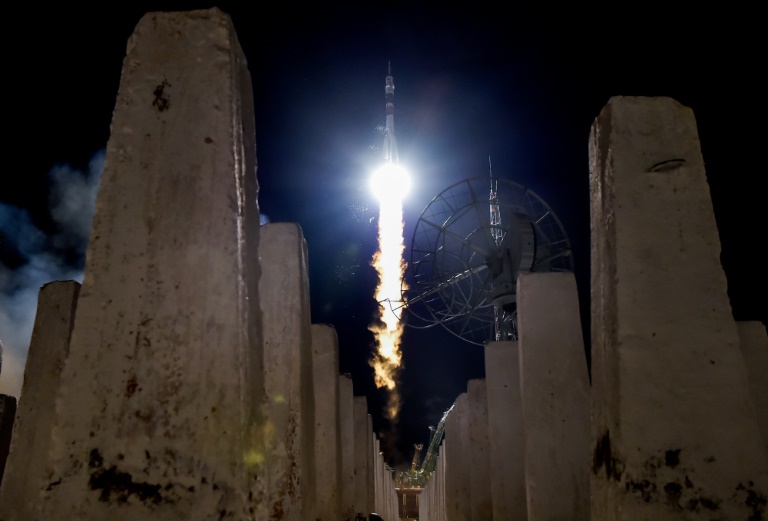
The United States and Russia said Friday they would renew flights together to the International Space Station, preserving one of the last areas of cooperation amid Western attempts to isolate Moscow over the invasion of Ukraine.

“To ensure continued safe operations of the International Space Station, protect the lives of astronauts and ensure continuous US presence in space, NASA will resume integrated crews on US crew spacecraft and the Russian Soyuz,” the US space agency said in a statement.

NASA said that astronaut Frank Rubio would fly with two Russian cosmonauts on a Soyuz rocket scheduled to launch on September 21 from Kazakhstan, with another astronaut, Loral O’Hara, taking another mission in early 2023.

In a first, Russian cosmonauts will join NASA astronauts on SpaceX’s new Crew-5 which will launch in September from Florida with a Japanese astronaut also on the mission.

Another joint mission on the SpaceX Crew-6 will fly out in early 2023, NASA said.

The move comes despite the European Space Agency earlier this week terminating its relationship with Russia on a mission to put a rover on Mars, infuriating Russian space chief Dmitry Rogozin who banned cosmonauts on the ISS from using a European-made robotic arm.

But hours before NASA’s announcement, President Vladimir Putin dismissed Rogozin, a firebrand nationalist and ardent backer of the Ukraine invasion who once quipped that US astronauts should get to the space station on trampolines rather than Russian rockets.

Roscosmos, the Russian space agency, said the agreement with NASA was in the interests of both countries and “will promote cooperation” on space.

“The agreement seeks to guarantee that in the event of an emergency caused by the cancellation or major delay in a Russian or American space launch, at least one Roscomos cosmonaut and one NASA astronaut will be present to service the Russian and American sections respectively,” it said.

NASA said that the ISS was set up for joint participation by the United States and Russia along with Europe, Japan and Canada.

“The station was designed to be interdependent and relies on contributions from each space agency to function. No one agency has the capability to function independent of the others,” NASA said.

– ‘Dear friends’ in space –

Soyuz rockets were the only way to reach the space station until SpaceX, run by the billionaire Elon Musk, debuted a capsule in 2020.

The last NASA astronaut to take a Soyuz to the station was NASA astronaut Mark Vande Hei in 2021. 

He returned to Earth in March this year alongside Russian cosmonauts, also on a Soyuz. 

Speaking to reporters afterward, Vande Hei said that the cosmonauts remained his “very dear friends” despite their nations’ tense relationship.

“We supported each other throughout everything,” he said. “And I never had any concerns about my ability to continue working with them.”

The United States has imposed sweeping sanctions on Russia after Putin on February 24 invaded Ukraine, defying Western warnings.

The sanctions, which include tough restrictions on financial interactions, have led to an exodus of leading US brands from Russia including Starbucks and McDonald’s.

But the International Space Station is unique. It was launched in 1998 at a time of hope for US-Russia cooperation following their Space Race competition during the Cold War.

The ISS is expected to wind down in the next decade.

Rogozin had warned that Western sanctions could affect cooperation.

“If you block cooperation with us, who will save the ISS from uncontrolled deorbiting and falling on US or European territory?” Rogozin wrote in a tweet earlier this year.

Kremlin spokesman Dmitry Peskov did not indicate that his removal meant Putin was unhappy with Rogozin.

One independent media outlet said he would be promoted and could be put in charge of occupied territories in Ukraine.

US renews space flights with Russia in rare cooperation

The United States and Russia said Friday they would renew flights together to the International Space Station, preserving one of the last areas of cooperation amid Western attempts to isolate Moscow over the invasion of Ukraine.

“To ensure continued safe operations of the International Space Station, protect the lives of astronauts and ensure continuous US presence in space, NASA will resume integrated crews on US crew spacecraft and the Russian Soyuz,” the US space agency said in a statement.

NASA said that astronaut Frank Rubio would fly with two Russian cosmonauts on a Soyuz rocket scheduled to launch on September 21 from Kazakhstan, with another astronaut, Loral O’Hara, taking another mission in early 2023.

In a first, Russian cosmonauts will join NASA astronauts on SpaceX’s new Crew-5 which will launch in September from Florida with a Japanese astronaut also on the mission.

Another joint mission on the SpaceX Crew-6 will fly out in early 2023, NASA said.

The move comes despite the European Space Agency earlier this week terminating its relationship with Russia on a mission to put a rover on Mars, infuriating Russian space chief Dmitry Rogozin who banned cosmonauts on the ISS from using a European-made robotic arm.

But hours before NASA’s announcement, President Vladimir Putin dismissed Rogozin, a firebrand nationalist and ardent backer of the Ukraine invasion who once quipped that US astronauts should get to the space station on trampolines rather than Russian rockets.

Roscosmos, the Russian space agency, said the agreement with NASA was in the interests of both countries and “will promote cooperation” on space.

“The agreement seeks to guarantee that in the event of an emergency caused by the cancellation or major delay in a Russian or American space launch, at least one Roscomos cosmonaut and one NASA astronaut will be present to service the Russian and American sections respectively,” it said.

NASA said that the ISS was set up for joint participation by the United States and Russia along with Europe, Japan and Canada.

“The station was designed to be interdependent and relies on contributions from each space agency to function. No one agency has the capability to function independent of the others,” NASA said.

– ‘Dear friends’ in space –

Soyuz rockets were the only way to reach the space station until SpaceX, run by the billionaire Elon Musk, debuted a capsule in 2020.

The last NASA astronaut to take a Soyuz to the station was NASA astronaut Mark Vande Hei in 2021. 

He returned to Earth in March this year alongside Russian cosmonauts, also on a Soyuz. 

Speaking to reporters afterward, Vande Hei said that the cosmonauts remained his “very dear friends” despite their nations’ tense relationship.

“We supported each other throughout everything,” he said. “And I never had any concerns about my ability to continue working with them.”

The United States has imposed sweeping sanctions on Russia after Putin on February 24 invaded Ukraine, defying Western warnings.

The sanctions, which include tough restrictions on financial interactions, have led to an exodus of leading US brands from Russia including Starbucks and McDonald’s.

But the International Space Station is unique. It was launched in 1998 at a time of hope for US-Russia cooperation following their Space Race competition during the Cold War.

The ISS is expected to wind down in the next decade.

Rogozin had warned that Western sanctions could affect cooperation.

“If you block cooperation with us, who will save the ISS from uncontrolled deorbiting and falling on US or European territory?” Rogozin wrote in a tweet earlier this year.

Kremlin spokesman Dmitry Peskov did not indicate that his removal meant Putin was unhappy with Rogozin.

One independent media outlet said he would be promoted and could be put in charge of occupied territories in Ukraine.

Close Bitnami banner
Bitnami