World

US renews space flights with Russia in rare cooperation

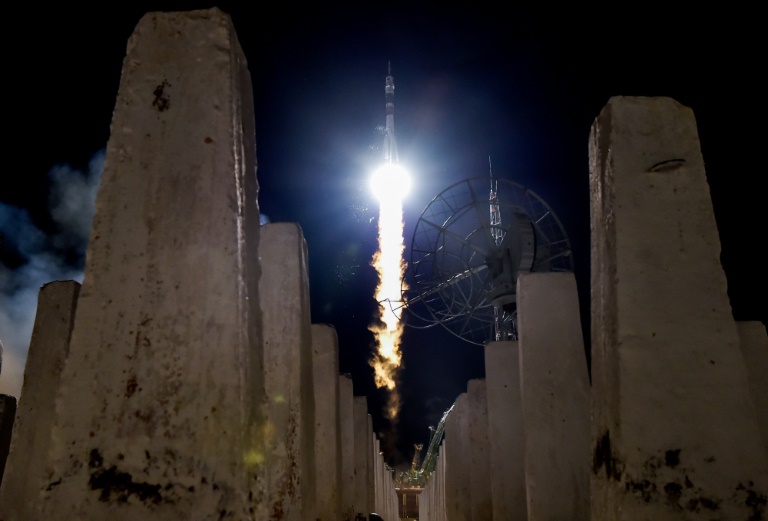
The United States and Russia said Friday they would renew flights together to the International Space Station, preserving one of the last areas of cooperation amid Western attempts to isolate Moscow over the invasion of Ukraine.

“To ensure continued safe operations of the International Space Station, protect the lives of astronauts and ensure continuous US presence in space, NASA will resume integrated crews on US crew spacecraft and the Russian Soyuz,” the US space agency said in a statement.

NASA said that astronaut Frank Rubio would fly with two Russian cosmonauts on a Soyuz rocket scheduled to launch on September 21 from Kazakhstan, with another astronaut, Loral O’Hara, taking another mission in early 2023.

In a first, Russian cosmonauts will join NASA astronauts on SpaceX’s new Crew-5 which will launch in September from Florida with a Japanese astronaut also on the mission.

Another joint mission on the SpaceX Crew-6 will fly out in early 2023, NASA said.

The move comes despite the European Space Agency earlier this week terminating its relationship with Russia on a mission to put a rover on Mars, infuriating Russian space chief Dmitry Rogozin who banned cosmonauts on the ISS from using a European-made robotic arm.

But hours before NASA’s announcement, President Vladimir Putin dismissed Rogozin, a firebrand nationalist and ardent backer of the Ukraine invasion who once quipped that US astronauts should get to the space station on trampolines rather than Russian rockets.

Roscosmos, the Russian space agency, said the agreement with NASA was in the interests of both countries and “will promote cooperation” on space.

“The agreement seeks to guarantee that in the event of an emergency caused by the cancellation or major delay in a Russian or American space launch, at least one Roscomos cosmonaut and one NASA astronaut will be present to service the Russian and American sections respectively,” it said.

NASA said that the ISS was set up for joint participation by the United States and Russia along with Europe, Japan and Canada.

“The station was designed to be interdependent and relies on contributions from each space agency to function. No one agency has the capability to function independent of the others,” NASA said.

– ‘Dear friends’ in space –

Soyuz rockets were the only way to reach the space station until SpaceX, run by the billionaire Elon Musk, debuted a capsule in 2020.

The last NASA astronaut to take a Soyuz to the station was NASA astronaut Mark Vande Hei in 2021. 

He returned to Earth in March this year alongside Russian cosmonauts, also on a Soyuz. 

Speaking to reporters afterward, Vande Hei said that the cosmonauts remained his “very dear friends” despite their nations’ tense relationship.

“We supported each other throughout everything,” he said. “And I never had any concerns about my ability to continue working with them.”

The United States has imposed sweeping sanctions on Russia after Putin on February 24 invaded Ukraine, defying Western warnings.

The sanctions, which include tough restrictions on financial interactions, have led to an exodus of leading US brands from Russia including Starbucks and McDonald’s.

But the International Space Station is unique. It was launched in 1998 at a time of hope for US-Russia cooperation following their Space Race competition during the Cold War.

The ISS is expected to wind down in the next decade.

Rogozin had warned that Western sanctions could affect cooperation.

“If you block cooperation with us, who will save the ISS from uncontrolled deorbiting and falling on US or European territory?” Rogozin wrote in a tweet earlier this year.

Kremlin spokesman Dmitry Peskov did not indicate that his removal meant Putin was unhappy with Rogozin.

One independent media outlet said he would be promoted and could be put in charge of occupied territories in Ukraine.
Stocks jump as US consumers keep spending

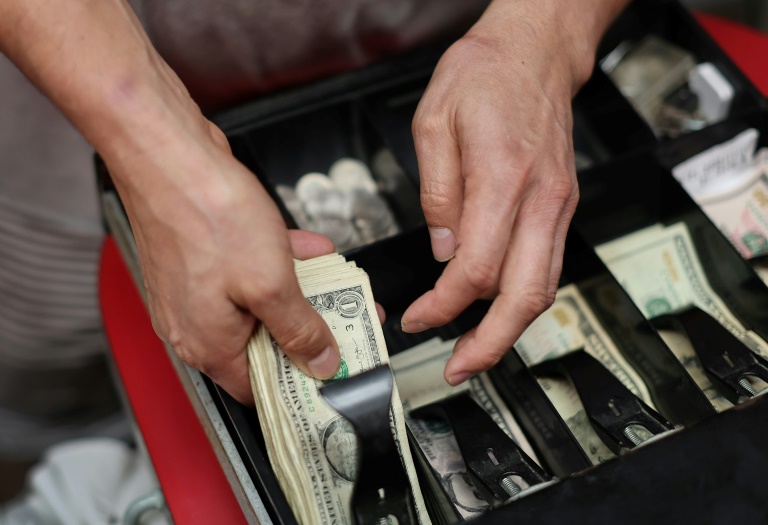
Stocks soared Friday after the latest data showed that US consumers continue to spend more in the latest signal of the strength of the economy despite high inflation and rising interest rates.

Better-than-expected results from Citigroup also helped allay somewhat concerns about what waits in store for investors as companies begin to report their next quarterly results.

The euro held above $1.00, having sunk below parity this week on fears Russia would cut off Europe’s gas supplies in retaliation for Ukraine war sanctions, pushing the region into recession.

Oil prices rebounded having slumped Thursday on renewed fears of a global recession that would dent demand for energy.

Wall Street pushed higher on a better-than-expected 1.0 percent rise in retail sales in June.

While not adjusted for inflation, sales were still up 0.7 percent even when gasoline was removed from the calculation, according to the Commerce Department data.

“This could be good news for US GDP which suggests that the economy may well avoid a contraction in (the second quarter), and ergo a technical recession,” said analyst Michael Hewson at CMC Markets.

The figure was also looked at through the prism of how it might affect the US Federal Reserve’s decision later this month on raising interest rates, with the solid growth giving policymakers licence to hike rates more aggressively.

“The key takeaway from the report is that it was strong enough to keep concerns about weakening consumer spending at bay for the time being,” said analysts at Briefing.com.

Markets had taken a major knock this week from news that US inflation zoomed to a 40-year high of 9.1 percent in June on energy costs.

After rate hikes by several countries, investors now expect the Federal Reserve to lift rates later this month by 75 basis points as officials battle decades-high inflation, though some observers suggest a one-percentage-point move could even be on the cards.

While experts warn that raising US rates risks hammering the economy, the Fed has made it clear the number-one priority is bringing down prices.

The retail sales figures join other data showing that the US economy is holding up relatively well so far despite high inflation and rising interest rates.

Meanwhile, Citigroup’s net profits fell by 25 percent to $4.5 billion, yet earnings per share easily beat expectations. The banking group took in more revenue and benefited from rising interest rates.

Citigroup shares jumped more than 10 percent.

Wall Street stumbled Thursday with sentiment weighed down by disappointing reports from JPMorgan Chase & Co. and Morgan Stanley.

Those compounded worries that company profits would be hit by the fallout from a number of issues including rocketing consumer prices, monetary policy tightening and the war in Ukraine.

European stocks finished the day sharply higher.

In Asia, Hong Kong and mainland Chinese equity markets led losses after data showed China’s economy grew just 0.4 percent in the second quarter, battered by Covid lockdowns in major cities including Shanghai and Beijing.

The reading was well off the 1.6-percent growth predicted by analysts in an AFP survey.

Elsewhere, traders are keeping tabs on US President Joe Biden’s visit to the Middle East as he tries to persuade Saudi Arabia to bring down high oil prices by pumping more crude.

– Key figures at around 1530 GMT –

New York – Dow: UP 1.9 percent at 31,225.63 points

EURO STOXX 50: UP 2.4 percent at 3,477.20

London – FTSE 100: UP 1.7 percent at 7,159.01 (close)

Frankfurt – DAX: UP 2.8 percent at 12,864.72 (close)

Paris – CAC 40: UP 2.0 percent at 6,036.00 (close)

Tokyo – Nikkei 225: UP 0.5 percent at 26,788.47 (close)

Hong Kong – Hang Seng Index: DOWN 2.2 percent at 20,297.72 (close)

Shanghai – Composite: DOWN 1.6 percent at 3,228.06 (close)

Euro/dollar: UP at $1.0098 from $1.0022 Thursday

Pound/dollar: UP at $1.1863 from $1.1826 

Euro/pound: UP at 85.07 pence from 84.72 pence

Dollar/yen: DOWN at 138.53 yen from 138.93 yen

West Texas Intermediate: UP 2.9 percent at $98.53 per barrel

Brent North Sea crude: UP 2.8 percent at $101.90 per barrel

burs-rl/bp

Smiling and carefree: little Ukrainian girl's last moments

A happy, spirited four-year-old beams proudly as she pushes her own pram in a video recorded by her mother to chronicle their day out together in central Ukraine.

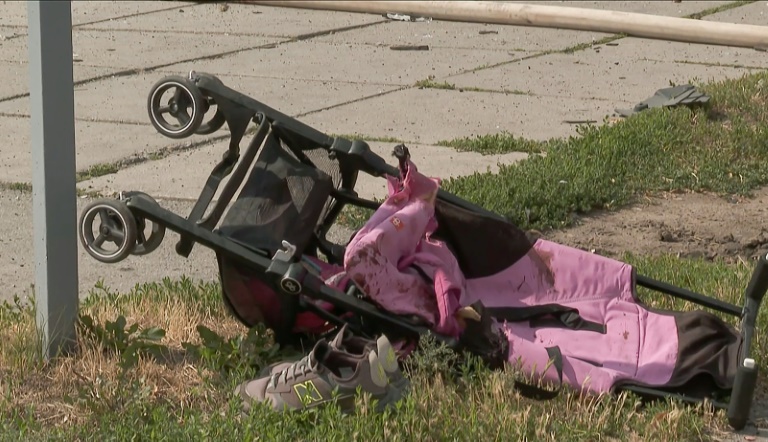
An hour or so later she was dead, her short life brought to a brutal end by a Russian missile, the pink buggy overturned in the street and mottled with the little girl’s blood, next to her lifeless body.

Liza Dmitrieva, who had Down’s syndrome, was being taken by her mother Iryna on Thursday to a therapy centre in Vinnytsia, a city of around 370,000 people, 250 kilometres (155 miles) southwest of the capital Kyiv.

In the footage, which Iryna posted on social media at 9:38 am, Liza can be seen bouncing along the pavement in white leggings and a sky-blue top with what appears to be a daisy stitched onto the shoulder.

Beyond the tribulations of living in a country at war, neither had any special cause to be afraid. They were hundreds of kilometres from the nearest frontline.

“Where are we going, sweetheart?” the woman asks her daughter on camera.

“Alla!” the four-year-old replies, shaking loose strands of wispy blonde hair that had been tied back with a white clip in the shape of a butterfly.

Alla is a common female first name in Ukraine.  

“To see Alla?” the mother queries. 

“Alla!” the youngster chirps again, an impish grin playing across her face.  

– Social media starlet –

Around 80 minutes later a barrage of rockets launched from a Russian submarine in the Black Sea hit Vinnytsia, devastating the city centre and killing 23 people, including two other children. 

Liza’s mother Iryna lost a leg in the attack and was initially reported to have later died in hospital, but the head of state police said on Friday she was still fighting for her life.

Iryna regularly posted pictures and news of her daughter’s exploits and many challenges online, where the little girl had become something of a social media starlet.

An Instagram account set up by Iryna and dedicated to Liza amassed nearly 20,000 followers, although that had grown to 80,000 by Friday morning as the horror of the attack sent shockwaves around the world.  

“Look how she spins. She loves dresses!” Iryna says in one post, alongside a video of the little girl in a field of lavender, playfully twirling round in her lilac dress. 

“I am so glad to be the main example for my child. She copies absolutely everything — dances, movements, posing in front of a mirror, everyday life stuff,” Iryna reveals in another post.

“If I do sports, she does too. I paint, she copies.”

– ‘Open act of terrorism’ –

First Lady Olena Zelenska said in the early hours of Friday she was “horrified” by images of the overturned pushchair released by local authorities — only to learn that it belonged to Liza, whom she had met.

“Reading the news, I realised that I know this girl. Knew… I will not write down all the words I would like to say to those who killed her,” she wrote on Instagram.

Zelenska explained that she had met Liza while recording a video celebrating the Christmas holidays.

“The little girl managed to paint dye not only on herself and her dress but also all the other children, me, the cameramen and the director in just half an hour.” 

The first lady posted the video with her message, imploring her Instagram followers: “Look at her alive please. I’m crying with her loved ones.” 

Russia invaded on February 24. The conflict has killed thousands of people, destroyed cities and forced millions to flee their homes.

Officials said Vinnytsia had sustained widespread damage in what Ukrainian President Volodymyr Zelensky later described as “an open act of terrorism”.

Images distributed by officials showed the burnt skeletons of several upturned cars next to a gutted building held up by charred metal frames, with brown smoke billowing from the impact site.

Sergiy Borzov, the head of regional government said on Friday that 13 victims, including the two other children, had yet to be identified.

Western nations condemn Russia over Ukraine at G20 Indonesia talks

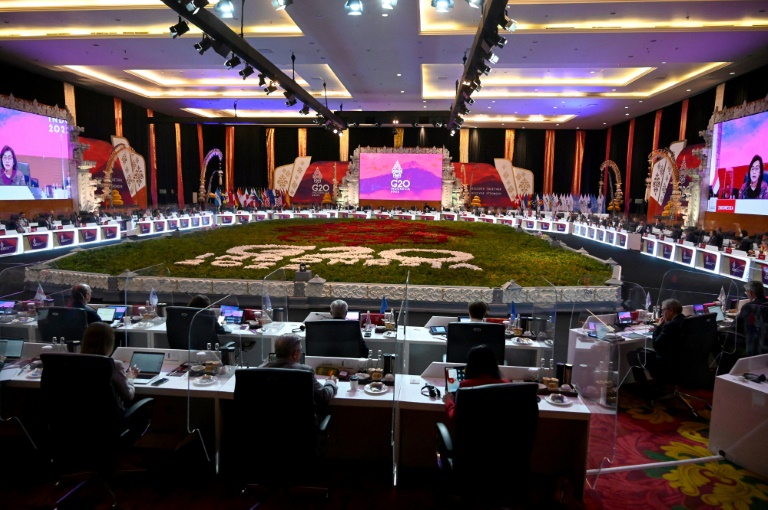
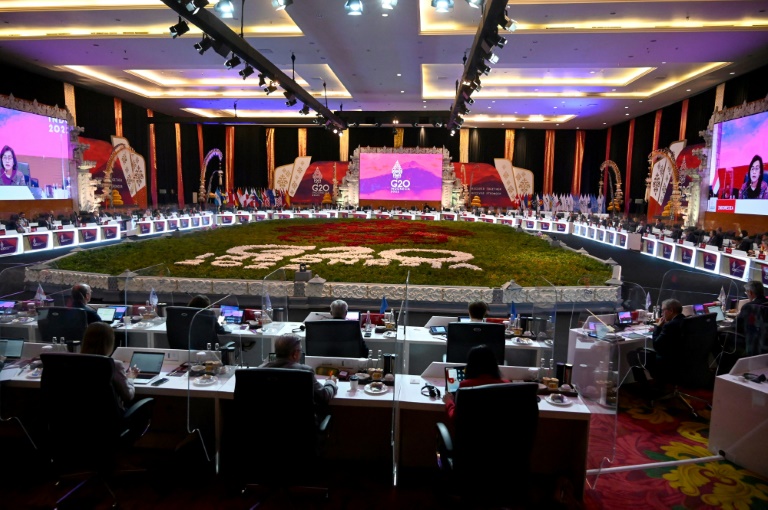
Western finance chiefs condemned Moscow’s invasion of Ukraine at G20 talks in Indonesia Friday, accusing Russia of sending a “shockwave” through the world economy and its technocrats of complicity in the war’s alleged atrocities.

The two-day meeting on the island of Bali began under the shadow of a Russian military assault that has roiled markets, spiked food prices and stoked breakneck inflation, a week after Moscow’s top diplomat walked out of talks with the forum’s foreign ministers.

“Russia is solely responsible for negative spillovers to the global economy,” US Treasury Secretary Janet Yellen told the Russian delegation in the opening session, according to a US official, who spoke on condition of anonymity.  

“Russia’s officials should recognise that they are adding to the horrific consequences of this war through their continued support of the Putin regime. You share responsibility for the innocent lives lost,” Yellen added, according to the official.

The official did not comment on whether the Russian delegation responded. Russian officials did not immediately respond to an AFP request for comment. 

Russia calls its invasion of Ukraine a “special military operation” and blames subsequent Western sanctions for blocked food shipments and rising energy prices.

“Russia tried to say that the world economic situation had nothing to do with the war,” a French delegation source told AFP.

Australian Treasurer Jim Chalmers condemned Russia’s “immoral transgression” against Ukraine, saying that Moscow must take the blame for the impacts on the global economy caused by the war.

“Russia’s unjust actions have had terrible human cost but they’ve also increased global uncertainty,” Chalmers said, according to a transcript. “Russia must take full responsibility.”

Canadian Finance Minister Chrystia Freeland told Russia’s delegation they were responsible for “war crimes” in Ukraine because of their support for the invasion, a Canadian official said. 

“It is not only generals who commit war crimes, it is the economic technocrats who allow the war to happen and to continue,” said Freeland, according to the official.

Both Russian Finance Minister Anton Siluanov and Ukrainian Finance Minister Serhiy Marchenko participated virtually in the meeting. 

Moscow sent Russian Deputy Finance Minister Timur Maksimov to attend the talks in person. He was in the room as Western officials expressed their condemnation, according to a source present at the talks.

Ukraine’s Marchenko said Russia’s invasion of Ukraine “clearly marks the end of the existing world order”, and blamed Moscow for the world facing hunger, inflation and energy insecurity.

“We need to stop the cause of these problems. The true practical solution… is imposing more severe targeted sanctions,” he told ministers, according to the Ukrainian finance ministry.

– ‘Weaponising’ food –

Indonesian Finance Minister Sri Mulyani Indrawati warned her counterparts that failure to tackle energy and food crises would be “catastrophic”.

The meeting has largely focused on those impacts of the war that are weighing on an already brittle global recovery from the Covid-19 pandemic.

“(Russian President Vladimir) Putin’s actions… amounts to using food as a weapon of war,” Yellen said in an afternoon seminar.

In another session, she said Russia’s “unjustified war” has sent a “shockwave” through the global economy. 

Indrawati said members had “identified the urgent need for the G20 to take concrete steps” to address food insecurity and to help countries in need.

Yellen has pressed G20 allies for a price cap on Russian oil to choke off Putin’s war chest and pressure Moscow to end its invasion while bringing down energy costs.

In April, the US treasury secretary led a multinational walkout of finance officials as Russian delegates spoke at a G20 meeting in Washington, but there was no such action on Friday.

There is unlikely to be a final communique issued when talks end on Saturday because of the disagreements with Russia.

– ‘Act together’ – 

G20 chair Indonesia -– which pursues a neutral foreign policy –- refrained from disinviting Russia despite Western pressure.

Chinese Finance Minister Liu Kun, Britain’s new Finance Minister Nadhim Zahawi and European Central Bank President Christine Lagarde attended the meeting virtually. 

World Bank chief executive David Malpass did not attend, while International Monetary Fund chief Kristalina Georgieva appeared in person after saying Wednesday that the global economic outlook had “darkened significantly” because of Moscow’s invasion.

The meeting is a prelude to the leaders’ summit on the Indonesian island in November that was meant to focus on the global recovery from the Covid-19 pandemic.

Other issues being tackled by the ministers included digital financial inclusion –- with more than a billion of the world’s population still without access to a bank account -– and the deadline for an international tax rules overhaul.

Western nations condemn Russia over Ukraine at G20 Indonesia talks

Western finance chiefs condemned Moscow’s invasion of Ukraine at G20 talks in Indonesia Friday, accusing Russia of sending a “shockwave” through the world economy and its technocrats of complicity in the war’s alleged atrocities.

The two-day meeting on the island of Bali began under the shadow of a Russian military assault that has roiled markets, spiked food prices and stoked breakneck inflation, a week after Moscow’s top diplomat walked out of talks with the forum’s foreign ministers.

“Russia is solely responsible for negative spillovers to the global economy,” US Treasury Secretary Janet Yellen told the Russian delegation in the opening session, according to a US official, who spoke on condition of anonymity.  

“Russia’s officials should recognise that they are adding to the horrific consequences of this war through their continued support of the Putin regime. You share responsibility for the innocent lives lost,” Yellen added, according to the official.

The official did not comment on whether the Russian delegation responded. Russian officials did not immediately respond to an AFP request for comment. 

Russia calls its invasion of Ukraine a “special military operation” and blames subsequent Western sanctions for blocked food shipments and rising energy prices.

“Russia tried to say that the world economic situation had nothing to do with the war,” a French delegation source told AFP.

Australian Treasurer Jim Chalmers condemned Russia’s “immoral transgression” against Ukraine, saying that Moscow must take the blame for the impacts on the global economy caused by the war.

“Russia’s unjust actions have had terrible human cost but they’ve also increased global uncertainty,” Chalmers said, according to a transcript. “Russia must take full responsibility.”

Canadian Finance Minister Chrystia Freeland told Russia’s delegation they were responsible for “war crimes” in Ukraine because of their support for the invasion, a Canadian official said. 

“It is not only generals who commit war crimes, it is the economic technocrats who allow the war to happen and to continue,” said Freeland, according to the official.

Both Russian Finance Minister Anton Siluanov and Ukrainian Finance Minister Serhiy Marchenko participated virtually in the meeting. 

Moscow sent Russian Deputy Finance Minister Timur Maksimov to attend the talks in person. He was in the room as Western officials expressed their condemnation, according to a source present at the talks.

Ukraine’s Marchenko said Russia’s invasion of Ukraine “clearly marks the end of the existing world order”, and blamed Moscow for the world facing hunger, inflation and energy insecurity.

“We need to stop the cause of these problems. The true practical solution… is imposing more severe targeted sanctions,” he told ministers, according to the Ukrainian finance ministry.

– ‘Weaponising’ food –

Indonesian Finance Minister Sri Mulyani Indrawati warned her counterparts that failure to tackle energy and food crises would be “catastrophic”.

The meeting has largely focused on those impacts of the war that are weighing on an already brittle global recovery from the Covid-19 pandemic.

“(Russian President Vladimir) Putin’s actions… amounts to using food as a weapon of war,” Yellen said in an afternoon seminar.

In another session, she said Russia’s “unjustified war” has sent a “shockwave” through the global economy. 

Indrawati said members had “identified the urgent need for the G20 to take concrete steps” to address food insecurity and to help countries in need.

Yellen has pressed G20 allies for a price cap on Russian oil to choke off Putin’s war chest and pressure Moscow to end its invasion while bringing down energy costs.

In April, the US treasury secretary led a multinational walkout of finance officials as Russian delegates spoke at a G20 meeting in Washington, but there was no such action on Friday.

There is unlikely to be a final communique issued when talks end on Saturday because of the disagreements with Russia.

– ‘Act together’ – 

G20 chair Indonesia -– which pursues a neutral foreign policy –- refrained from disinviting Russia despite Western pressure.

Chinese Finance Minister Liu Kun, Britain’s new Finance Minister Nadhim Zahawi and European Central Bank President Christine Lagarde attended the meeting virtually. 

World Bank chief executive David Malpass did not attend, while International Monetary Fund chief Kristalina Georgieva appeared in person after saying Wednesday that the global economic outlook had “darkened significantly” because of Moscow’s invasion.

The meeting is a prelude to the leaders’ summit on the Indonesian island in November that was meant to focus on the global recovery from the Covid-19 pandemic.

Other issues being tackled by the ministers included digital financial inclusion –- with more than a billion of the world’s population still without access to a bank account -– and the deadline for an international tax rules overhaul.

Southwest Europe swelters as wildfires burn

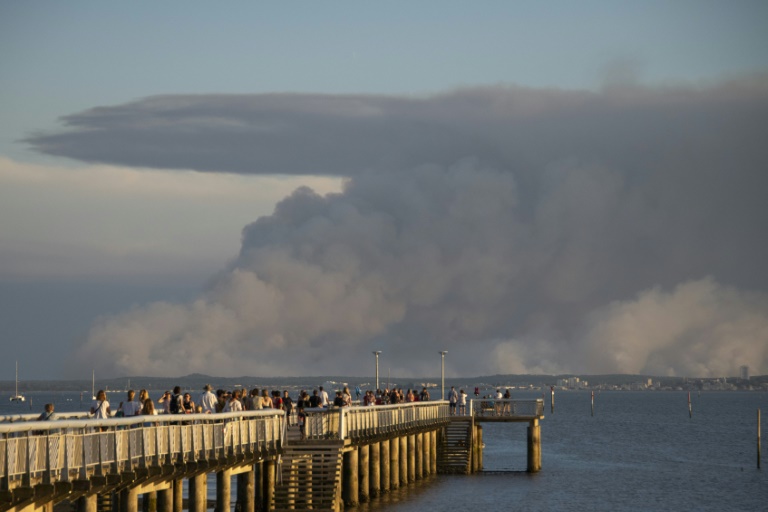
Southwest Europe was baking under sweltering temperatures on Friday for a fifth day, with the heat sparking devastating wildfires, forcing the evacuations of thousands and ruining holidays.

Armies of firefighters battled blazes in France, Portugal and Spain as Britain, normally much cooler, braced for “extreme heat” in coming days, and even Irish forecasters predicted a taste of blistering Mediterranean-style summer temperatures.

The heatwave engulfing swathes of southwest Europe is the second in weeks, with scientists blaming climate change and predicting more frequent and intense episodes of extreme weather.

In Portugal, five regions in the centre and north were on red heatwave alert on Friday and nearly the entire country remained on wildfire alert as more than 2,000 firefighters tackled four blazes.

As of late Thursday, the fires had killed one person and injured around 60. Nearly 900 people had been evacuated and several dozen homes damaged or destroyed, Portuguese authorities said.

Wildfires have destroyed 30,000 hectares (75,000 acres) of land this year, the largest area since the fires of 2017, in which around 100 people died.

Just over the border in Spain, a fire broke out on Thursday near the Monfrague National Park, a protected area renowned for its wildlife.

Extremadura, where the park is located, has seen thousands of hectares burned this week.

In southwestern France, flames have destroyed some 7,300 hectares since Tuesday and forced the evacuation of 10,000 people — many of them holidaymakers who decided to cut their vacation short rather than remain in makeshift shelters set up by local authorities. 

– ‘Post-apocalyptic’ –

One fire was raging in pine forests near the Dune du Pilat, Europe’s tallest sand dune and a magnet for tourists.

“I’ve never seen this before and you get the feeling that it’s post-apocalyptic really,” said resident Karyn on Thursday shortly before the preventative evacuation order of the village of Cazaux near Dune du Pilat.

Nobody has been hurt in the fires which had not been extinguished by Friday.

“The blazes are still not under control, and unfortunately conditions are windy again,” firefighter spokesman Matthieu Jomain told AFP.

On Thursday, Portugal recorded its highest ever temperature for July, at 47 degrees Celsius (117 degrees Fahrenheit). 

In central Spain, the mercury reached 45.4C on Thursday, just shy of the all-time high of 47.4C registered in August last year.

On Friday, temperatures were forecast to top 41C in parts of Portugal and 44C in parts of Spain on Friday.

Southern France, which hit 38C on Thursday, was expected to reach 40C on Friday and is bracing for more heat early next week.

Britain’s meteorological agency on Friday issued its first ever “red” warning for exceptional heat.

The Met Office said there was a 50-percent chance on Monday or Tuesday of temperatures topping 40C for the first time, and an 80-percent chance that the country’s previous record of 38.7C set in 2019 will be exceeded.

– ‘Risk to life’ –

“Nights are also likely to be exceptionally warm, especially in urban areas,” said Met Office chief meteorologist Paul Gundersen.

A red warning is issued when it is “very likely that there will be a risk to life, with substantial disruption to travel, energy supplies and possibly widespread damage to property and infrastructure”.

UK hospitals have warned of a surge in heat-related admissions and train operators have told passengers to expect cancellations.

The Irish meteorological issued a nationwide weather warning for Sunday, Monday and Tuesday with “exceptionally warm weather” and daytime temperatures of 25C to 30C expected.

A high of 32C was possible on Monday, Met Eireann said, just short of Ireland’s record high 33.3C set in 1887.

Belgian authorities said they, too, expected much higher temperatures next week, with a possible high of 38C in some parts of the country forecast for Tuesday.

Scientists said there was little doubt that heatwaves were caused by global warming and would become regular occurrences.

“Climate change is driving this heatwave, just as it is driving every heatwave now,” said Friederike Otto, Senior Lecturer in Climate Science at the Grantham Institute at Imperial College London.

“Greenhouse gas emissions, from burning fossil fuels like coal, gas and oil, are making heatwaves hotter, longer-lasting and more frequent,” she said.

burs/jh

Citigroup results boosted by trading, higher interest rates

Citigroup reported better-than-expected results Friday following a strong performance in trading, as executives described US consumption as healthy despite rising inflation.

The big US bank, like its peers, also suffered a drop in second-quarter profits compared with the year-ago period, which was boosted by the return of funds set aside early in the pandemic in case of loan defaults.

But unlike JPMorgan Chase and others, Citigroup still topped analyst expectations, in part due to higher profits in lending after Federal Reserve interest rate hikes. 

Chief Financial Officer Mark Mason told reporters that Citi’s credit card business also had a “very, very strong performance,” indicating consumers remain on solid footing for now.

“There’s a lot of liquidity that still remains with consumers,” he said on a media conference call. “Obviously that is allowing for a bit more flexibility than they otherwise would have.”

But the continued spending is “hard to square” with data showing eroding consumer sentiment due to inflation, Mason acknowledged.

Citi reported profits of $4.5 billion, down 27 percent from the year-ago period on revenues of $19.6 billion, up 11 percent.

Citi had a net build of credit reserves of $375 million in case of bad loans.

Mason said the company “feels appropriately reserved” in case of a downturn, but saw no “signs of immediate credit loss concerns.”

Elevated volatility in financial markets lifted revenues tied to trading in equities, commodities and other financial markets, offsetting a drop in merger and acquisition activity.

As with JPMorgan, Citigroup is suspending its share buybacks in light of new US stress test requirements to hold more capital in case of a downturn.

Mason said the decision also reflected uncertainty about the macroeconomy.

“We’re worried about the prospect of a recession,” he said. “We’re worried about rate increases to kind of stabilize things as we manage through this environment and the uncertainty that comes with that.”

Wells Fargo also reported a drop in second-quarter profits.

Earnings at the California-based bank were $3.1 billion, down 48 percent from the year-ago level on a 16 percent drop in revenues to $17.0 billion.

But investors were cheered by Wells’ forecast of a 20 percent jump in 2022 net interest income from last year’s level in light of Fed interest rate hikes.

Citigroup shares soared 9.7 percent to $48.40 in morning trading, while Wells Fargo jumped 6.6 percent to $41.28.

China asks UN Security Council for ban on small arms to Haiti

China has asked the UN Security Council to vote on banning small arms deliveries to Haiti, setting up a potential stand-off Friday with the United States whose draft resolution does not reflect Beijing’s proposal.

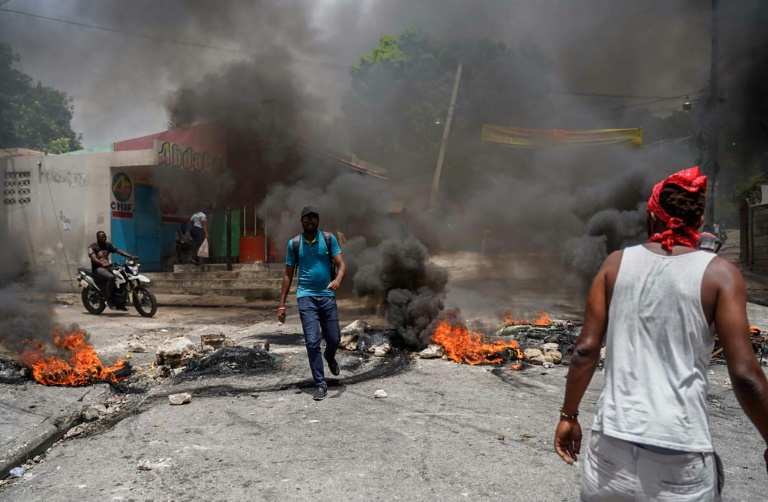
Gang violence in the Caribbean nation has been soaring — alongside fuel shortages and rising food prices — with at least 89 people killed in the Port-au-Prince capital region alone this week. Aid agencies have said many areas are dangerous to access.

Council members are considering renewing a United Nations political mission to Haiti which expires on Friday night, but whether Chinese diplomats will go as far as to veto the latest resolution remains to be seen.

This diplomatic activity comes as Haiti announced Thursday night a rare seizure of weapons in cargo containers: 18 military grade weapons, four 9mm handguns, 14,646 rounds of ammunition and $50,000 in counterfeit money.

Haitian prosecutors said arrest warrants have been issued against several people suspected of being linked to the cache.

Beijing has taken an increasingly prominent role in issues relating to Haiti at the UN in recent years — primarily over Haiti’s recognition of self-ruled Taiwan, which China views as its own territory. 

“The situation in Haiti can’t be worse. As we conduct the negotiations here, the gang violence is escalating in Port-au-Prince,” a spokeswoman for the Chinese mission to the UN said. 

“An embargo of weapons against criminal gangs (is) the minimum the Council should do in response to the appalling situation,” she added, echoing the Chinese proposal for Security Council member states to ban small arms deliveries.

But the revised text from the United States and Mexico finalized late Thursday and seen by AFP falls short of a full embargo.

– Poverty and widespread violence –

Diplomatic sources said Thursday that China has also asked the Council to vote on sanctions against Haiti’s gang leaders, and even sending a regional police force to the violence-plagued island.

The individual sanctions would include travel bans and asset freezes, according to a draft text also seen by AFP.

Countries that have diplomatic relations with China usually refrain from having official exchanges with Taiwan. Beijing denies any link between its stance at the United Nations and the Taiwan issue, however. 

A Chinese diplomatic source told AFP that it was necessary to push political authorities in Haiti to act, and to put those responsible for the violence on notice.

The United States is not necessarily against such sanctions, but they must be the right fit, an American diplomat said on condition of anonymity. 

It make little sense to implement an arms embargo without a sanctions committee or a group of UN experts to oversee it, the diplomat said, adding that further information about the proposed sanctions against individuals was necessary to discuss the idea.

It would all “need more work,” the source said. 

Crushing poverty and widespread violence is causing many Haitians to flee to the Dominican Republic, with which Haiti shares a border, or to the United States.

The Security Council is debating whether to extend the special UN political mission to Haiti, known by its acronym BINUH, to 2023. 

A vote had initially been scheduled for Wednesday, but with Council members debating China’s proposal, it was pushed back to Friday.

US to resume International Space Station flights with Russia

The United States said Friday it would resume flights to the International Space Station with Russia, despite its attempts to isolate Moscow over the invasion of Ukraine.

“To ensure continued safe operations of the International Space Station, protect the lives of astronauts and ensure continuous US presence in space, NASA will resume integrated crews on US crew spacecraft and the Russian Soyuz,” US space agency NASA said in a statement.

NASA said that astronaut Frank Rubio would fly with two Russian cosmonauts on a Soyuz rocket scheduled to launch on September 21 from Kazakhstan, with another astronaut, Loral O’Hara, taking another mission in early 2023.

In a first, Russian cosmonauts will join NASA astronauts on SpaceX’s new Crew-5 which will launch in September from Florida with a Japanese astronaut also on the mission.

Another joint mission on the SpaceX Crew-6 will fly out in early 2023, NASA said.

The move comes despite the European Space Agency earlier this week terminating its relationship with Russia on a mission to put a rover on Mars, infuriating Russian space chief Dmitry Rogozin who banned cosmonauts on the ISS from using a European-made robotic arm.

But hours before NASA’s announcement, President Vladimir Putin dismissed Rogozin, a firebrand nationalist and ardent backer of the Ukraine invasion who once quipped that US astronauts should get to the space station on trampolines rather than Russian rockets.

NASA said that the International Space Station was always designed to be operated jointly with participation from the space agencies of the United States, Russia, Europe, Japan and Canada.

“The station was designed to be interdependent and relies on contributions from each space agency to function. No one agency has the capability to function independent of the others,” it said.

– New ways to blast off –

Soyuz rockets were the only way to reach the space station until SpaceX, run by the billionaire Elon Musk, debuted a capsule in 2020.

The last NASA astronaut to take a Soyuz to the station was NASA astronaut Mark Vande Hei in 2021. 

He returned to Earth in March this year alongside Russian cosmonauts, also on a Soyuz. 

Speaking to reporters afterward, Vande Hei said that the cosmonauts remained his “very dear friends” despite their nations’ tense relationship.

“We supported each other throughout everything,” he said. “And I never had any concerns about my ability to continue working with them.”

The United States has imposed sweeping sanctions on Russia after Putin on February 24 invaded Ukraine, defying Western warnings.

The sanctions, which include tough restrictions on financial interactions, have led to an exodus of leading US brands from Russia including Starbucks and McDonald’s.

But the International Space Station is unique. It was launched in 1998 at a time of hope for US-Russia cooperation following their Space Race competition during the Cold War.

The ISS is expected to wind down in the next decade.

Rogozin, the outgoing head of Russian space agency Roscosmos, had warned that Western sanctions could affect cooperation.

“If you block cooperation with us, who will save the ISS from uncontrolled deorbiting and falling on US or European territory?” Rogozin wrote in a tweet earlier this year — noting that the station does not fly over much of Russia.

Kremlin spokesman Dmitry Peskov did not indicate that his removal meant Putin was unhappy with Rogozin.

One independent media outlet said he would be promoted and could be put in charge of occupied territories in Ukraine.
How authoritarian regimes hunt their opponents abroad

The world’s authoritarian regimes are persecuting their opponents living abroad more vigorously than ever before and some get away with murder, literally.

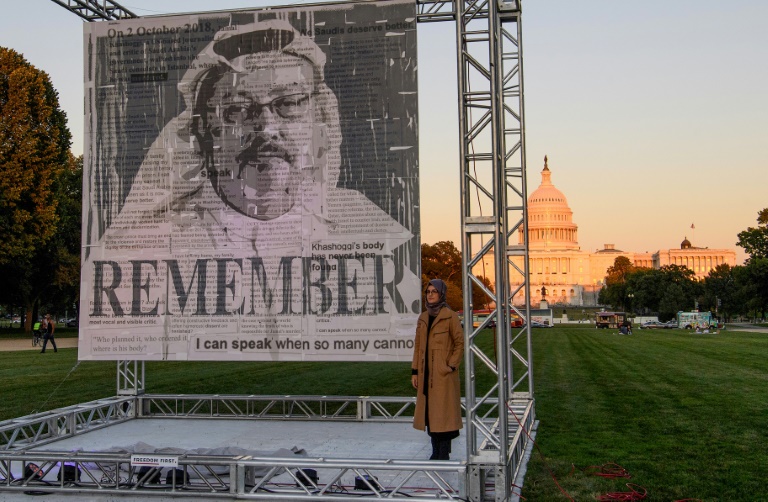
A blatant example of the impunity some governments enjoy is Saudi Arabia’s de-facto ruler, Crown Prince Mohammed bin Salman, whose country US President Joe Biden labelled a “pariah” over the 2018 murder and dismemberment of Saudi journalist Jamal Khashoggi.  

Yet in June, Saudi made up with Turkey — where the murder happened — and Biden decided to include the kingdom on a tour of the Middle East.

Experts say transnational repression of opposition figures is nothing new, but since digital technologies have allowed dissidents to needle authoritarian regimes from across borders more easily, they have stoked the wrath of strongmen like rarely before.

“The threat perception of dictators or these repressive regimes has increased,” said Marcus Michaelson, a researcher on authoritarianism at the Vrije Universiteit in Brussels.

According to US watchdog Freedom House, there were at least 735 direct, physical incidents of transnational repression between 2014 and 2021, carried out by 36 governments, notably those of China, Turkey, Russia, Saudi Arabia, Iran and Rwanda. 

Four regimes joined the list in 2021, including Belarus, which diverted an aircraft to arrest an opposition figure.

– ‘Harassment to murder’ –

Spectacular acts like the poisoning of former Russian intelligence agent Sergei Skripal in Britain in 2018, or the killing in 2019 in Berlin of Georgian Chechen Zelimkhan Khangoshvili — attributed to Russia — get the world’s attention, but much of the repression happens under the radar.

“The range of tactics goes from harassment to murder,” said Katia Roux at Amnesty International France.

Turkish journalist Can Dundar, who runs a website and a radio station aimed at Turkey and the Turkish diaspora from exile in Germany, has become a target for the secret apparatus of President Recep Tayyip Erdogan. 

“In the first year we found a Turkish camera crew (…) recording our office and giving all the details of our office, including our address and our daily work schedule, at what time we are there, at what time we are getting out etc, and showing it as the ‘headquarters of the traitors’ making plans against Turkey,” he told AFP.

Turkish intelligence “is very active, especially in Germany and France,” he said, recalling the attack by three men on a Turkish journalist in Berlin in July 2021 who warned him to stop writing about certain topics.

Pakistani journalist Taha Siddiqui, who fled to France after a kidnapping attempt he blamed on his home country’s security services, said he still didn’t actually feel safe in exile, only “safer”.

In 2020 a Pakistani intelligence officer told Siddiqui’s parents that “if Taha thinks he’s safe in Paris, he is mistaken. We can reach anyone anywhere”.

The threat came the same year as the suspicious deaths of a Pakistani journalist in Sweden, and of a Pakistani human rights activist in Canada, and a year before a British court convicted a man for conspiring to murder a Pakistani blogger in Dutch exile.

“They have made me paranoid, suspicious, scared, even in exile,” said Siddiqui, who has opened “The Dissident Club” in Paris, a bar dedicated to discussion, exhibitions and screenings.

Digital technologies give repressive regimes a whole new toolkit to sidestep the political cost or diplomatic risk that can come with physical action against dissidents, with “almost no consequences”, said Michaelson.

They have a “commercial market for surveillance technologies” at their disposal, such as the Israeli-made spy software Pegasus, which are cost-effective, he said.

“So they don’t need to invest a lot of manpower or send agents to spy on dissidents abroad,” he said.

A telling example is Egyptian opposition figure Ayman Nour, a friend of Khashoggi, and exiled in Turkey.

Citizen Lab, a body for research into technology, human rights and security, said it found two sets of spyware on Nour’s mobile phone — Pegasus and Predator — operated by two different governments. 

– ‘You have to stop’ –

Calling spying “a form or organised crime”, Nour said he always thought of his phone as “a radio that anybody can listen to”.

Amnesty International has identified 11 government clients for Pegasus which allows “the surveillance of anybody in a completely invisible and untraceable way”, said Roux.

Activists in China defending the rights of the Uyghur minority, against which western countries say China is committing “genocide”, often find that digital threats precede physical violence, said Michaelson.

Meiirbek Sailanbek, a member of China’s Kazakh community, said he uninstalled all Chinese apps from his phone when he moved to neighbouring Kazakhstan, and deleted the numbers of his brother and sister who still live in Xinjiang, the Uyghur autonomous region in northwest China.

When the Kazakhstan authorities arrested the head of the Atajurt NGO — which Sailanbek had joined writing social posts under a pseudonym — he fled the country, settling in Paris.

But Kazakhstan’s authorities identified him, and since then the Chinese government is threatening his brother and sister with prison if he continues his activism.

“Meiirbek, your sister and brother are in danger, you have to stop,” said a message forwarded to him by his mother.

Sailanbek faces arrest if he returns to China or Kazakhstan, but he considers Turkey, Pakistan, Arab nations and Russia to be off-limits too because he believes they would give in to Chinese pressure to hand him over.

Close Bitnami banner
Bitnami