World

Asian markets swing as US inflation spike leaves mixed feelings

Asian markets fluctuated Thursday as another forecast-busting US inflation print ramped up bets on a quick series of sharp interest rate hikes that traders hope can be quickly walked back once prices are brought under control.

The keenly awaited consumer price index came in at a blistering 9.1 percent in June, the highest since November 1981, as energy costs continued to rocket on the back of rising demand and weak supplies partly caused by the Ukraine war.

Months of soaring inflation have rocked global markets as central banks, fearing prices will run too high, are forced to quickly withdraw the ultra-cheap cash policies put in place at the start of the pandemic.

But that has fanned fears that policymakers could go too far and tip leading economies into recession.

Wednesday’s CPI reading was followed by speculation the Fed could hike borrowing costs a full percentage point at its next meeting this month, with some top officials refusing to rule it out just yet.

The bank last month unveiled its first 75 basis point rise for three decades and is one of dozens to hike rates. Canada, New Zealand and South Korea announced hikes Wednesday.

The inflation reading followed Friday’s surprise spike in US jobs creation, which suggested the world’s top economy was withstanding the rate hikes, giving the Fed more room for further increases.

“Stubbornly high inflation increases the risk that the (Fed) continues to hike aggressively and triggers a recession,” said Kristina Clifton at Commonwealth Bank of Australia, adding that that belief was picking up momentum on trading floors.

And Federated Hermes senior economist Silvia Dall’Angelo said the reading suggested “inflation will likely remain sticky at elevated levels for the balance of the year, as external and domestic price pressures continue to pass through to consumer prices”.

She added that while commodity prices were off their recent peaks, they were still elevated and were at risk of further supply shocks.

With the jobs market still strong and inflation resiliently high, “the Fed will likely resort to hawkish rhetoric and further front-loading of tightening at least until late autumn, as it fights to maintain its credibility”, she said.

Wall Street’s three main indexes ended in the red, though they were off their intra-day lows on hopes the Fed will see results by the end of the year begin to cut rates in the new year.

– ‘Glimmers of hope’ –

Asia was mixed, with Tokyo, Sydney, Wellington, Taipei and Jakarta all up but Hong Kong, Shanghai, Singapore, Seoul and Manila down.

While there is a general sense of gloom, eToro global markets strategist Ben Laidler said there were some “glimmers of hope” in the CPI data.

“Recent falls in super-charged oil and agricultural prices, along with a decline in airfares, provide hope we are near the peak of headline inflation,” he said in a note, adding that inflation was “the most important number in global markets right now”.

“But early signs of easing inflation pressure give some hope of an end to dramatic interest rate hikes and stronger financial markets by Christmas.”

The Fed’s drive to tighten monetary policy continues to send the dollar higher, and on Wednesday it finally broke parity with the euro before easing slightly.

Still, an energy crisis in the eurozone and the European Central Bank’s decision to move slower in lifting rates, has led commentators to forecast the single currency could fall to as low as $0.95.

– Key figures at around 0230 GMT –

Tokyo – Nikkei 225: UP 0.7 percent at 26,664.20 (break)

Hong Kong – Hang Seng Index: DOWN 0.2 percent at 20,758.19

Shanghai – Composite: DOWN 0.1 percent at 3,281.83

Euro/dollar: DOWN at $1.0025 from $1.0061 Wednesday

Pound/dollar: DOWN at $1.1870 from $1.1893 

Euro/pound: DOWN at 84.47 pence from 84.59 pence

Dollar/yen: UP at 138.00 yen from 137.36 yen

West Texas Intermediate: FLAT at $96.30 per barrel

Brent North Sea crude: FLAT at $99.57 per barrel

New York – Dow: DOWN 0.7 percent at 30,772.79 (close)

London – FTSE 100: DOWN 0.7 percent at 7,156.37 (close)

IMF agrees to resume Pakistan loan after fuel, tax hikes

The International Monetary Fund (IMF) said Thursday it had agreed with Pakistan to resume a suspended loan programme that will inject $1.17 billion into the struggling economy.

A statement from the IMF said a “staff level agreement” — which is still subject to board approval — will bring to $4.2 billion the amount dispersed under an extended fund facility (EFF) that could increase to $7 billion and stretch until June next year. 

An original $6 billion bailout package was signed by former prime minister Imran Khan in 2019, but repeatedly stalled when his government reneged on subsidy agreements and failed to significantly improve tax collection.

The new agreement follows months of deeply unpopular belt-tightening by the government of Shehbaz Sharif, which took power in April and has effectively eliminated fuel subsidies and introduced new measures to broaden the tax base.

“Pakistan is at a challenging economic juncture,” Nathan Porter, who headed the IMF team, said in a statement, adding external factors and domestic policies were to blame.

Pakistan is desperate for international support for its economy, which suffers from poor revenue collection and dwindling foreign reserves to pay its crippling debt.

The new government has slashed a raft of subsidies to meet the demands of global financial institutions but risks the wrath of an electorate already struggling under the weight of double-digit inflation.

A new coalition government — which came to power after Khan was ousted by a parliamentary no-confidence vote — has said it will make the tough decisions needed to turn the economy around.

Successive administrations blame their predecessors for the country’s economic woes, but analysts say the malaise stems from decades of poor management and a failure to tackle endemic corruption and widespread tax avoidance.

In a bid to secure the IMF loan, Prime Minister Sharif has imposed three fuel price hikes -– cumulatively totalling 50 percent -– and raised the cost of electricity to effectively end the subsidies introduced by Khan.

Islamabad has so far received $3 billion from the programme, but with the facility due to end later this year, officials sought an extension until June 2023. 

“It became essential to resume the IMF programme to save the country from default,” finance minister Miftah Ismail told the national assembly last month.

“We knew it would damage our political reputation, but still we did it.” 

The latest budget has earmarked 3.95 trillion rupees ($18.8 billion) just to service the country’s whopping debt of $128 billion.

Agreed policy priorities included steadfast implementation of the budget, the IMF’s Porter said in the statement.

Pakistan also agreed to continue power sector reforms, introduce a proactive monetary policy to tackle inflation, strengthen governance, combat corruption, and improve the social security net.

“The authorities should nonetheless stand ready to take any additional measures necessary to meet program objectives, given the elevated uncertainty in the global economy and financial markets,” the statement added.

IMF agrees to resume Pakistan loan after fuel, tax hikes

The International Monetary Fund (IMF) said Thursday it had agreed with Pakistan to resume a suspended loan programme that will inject $1.17 billion into the struggling economy.

A statement from the IMF said a “staff level agreement” — which is still subject to board approval — will bring to $4.2 billion the amount dispersed under an extended fund facility (EFF) that could increase to $7 billion and stretch until June next year. 

An original $6 billion bailout package was signed by former prime minister Imran Khan in 2019, but repeatedly stalled when his government reneged on subsidy agreements and failed to significantly improve tax collection.

The new agreement follows months of deeply unpopular belt-tightening by the government of Shehbaz Sharif, which took power in April and has effectively eliminated fuel subsidies and introduced new measures to broaden the tax base.

“Pakistan is at a challenging economic juncture,” Nathan Porter, who headed the IMF team, said in a statement, adding external factors and domestic policies were to blame.

Pakistan is desperate for international support for its economy, which suffers from poor revenue collection and dwindling foreign reserves to pay its crippling debt.

The new government has slashed a raft of subsidies to meet the demands of global financial institutions but risks the wrath of an electorate already struggling under the weight of double-digit inflation.

A new coalition government — which came to power after Khan was ousted by a parliamentary no-confidence vote — has said it will make the tough decisions needed to turn the economy around.

Successive administrations blame their predecessors for the country’s economic woes, but analysts say the malaise stems from decades of poor management and a failure to tackle endemic corruption and widespread tax avoidance.

In a bid to secure the IMF loan, Prime Minister Sharif has imposed three fuel price hikes -– cumulatively totalling 50 percent -– and raised the cost of electricity to effectively end the subsidies introduced by Khan.

Islamabad has so far received $3 billion from the programme, but with the facility due to end later this year, officials sought an extension until June 2023. 

“It became essential to resume the IMF programme to save the country from default,” finance minister Miftah Ismail told the national assembly last month.

“We knew it would damage our political reputation, but still we did it.” 

The latest budget has earmarked 3.95 trillion rupees ($18.8 billion) just to service the country’s whopping debt of $128 billion.

Agreed policy priorities included steadfast implementation of the budget, the IMF’s Porter said in the statement.

Pakistan also agreed to continue power sector reforms, introduce a proactive monetary policy to tackle inflation, strengthen governance, combat corruption, and improve the social security net.

“The authorities should nonetheless stand ready to take any additional measures necessary to meet program objectives, given the elevated uncertainty in the global economy and financial markets,” the statement added.

Biden to meet with Israeli leaders in Jerusalem on second day of Mideast tour

US President Joe Biden will hold bilateral talks on Thursday with Israeli officials in Jerusalem, where the two allies are expected to declare a “united stand” on common foe Iran.

Biden touched down in Tel Aviv on Wednesday for the first Middle East tour of his presidency, which will see him meet Israeli and Palestinian leaders before flying onwards to Saudi Arabia.

Tehran will top the agenda of talks slated for Thursday, according to Israeli Prime Minister Yair Lapid, while a senior official said the two leaders were due to sign a joint declaration.

The document “is going to be a living testimony to the unique quality, health, scope, depth and intimacy of the US-Israel relationship”, the Israeli official said, speaking on condition of anonymity.

“It takes a very clear and united stand against Iran, its nuclear programme and its aggression across the region,” the official added.

Israel is staunchly opposed to a nuclear deal Tehran signed with world powers in 2015 and which Biden is trying to get back on track after his predecessor Donald Trump withdrew US support.

Biden said pulling out of the landmark accord was a “gigantic mistake”.

Iran is “closer to a nuclear weapon now than they were before,” the president said in an interview aired Wednesday by Israel’s Channel 12.

Asked whether the US would use force to prevent Iran from acquiring nuclear weapons, Biden said: “If that was the last resort, yes.”

The president’s meeting with Lapid will be followed by multilateral talks on investment with India and the United Arab Emirates, which will join remotely.

– Saudi oil talks –

In addition to meeting with Israeli President Isaac Herzog, Biden will hold brief talks with Israeli opposition leader Benjamin Netanyahu.

The former premier is readying for another election campaign, with Israelis set to go to the polls for the fifth time in less than four years on November 1.

Biden is marking his tenth visit to Israel and is well-acquainted with Netanyahu.

Russia’s invasion of Ukraine will remain a top priority for the Biden administration during his regional tour, with volatile oil prices due to be the focus of talks with Saudi officials.

The president will seek to persuade Riyadh to pump more oil in order to drive down prices, which have fuelled US inflation to the highest levels in decades.

Israel has broadly stayed on the sidelines of the Ukraine war, cautious of Russia’s military presence in neighbouring Syria.

Israeli officials have condemned the conflict in broad terms but the government has refused to send weapons to the Ukrainian army.

With Israel in political limbo ahead of elections, Biden is not expected to push Lapid for significant policy changes regarding the Palestinians.

The president on Wednesday renewed Washington’s long-standing call for a two-state solution, but has not reversed Trump’s controversial decision to recognise Jerusalem as Israel’s capital.

Biden is due to meet Palestinian president Mahmud Abbas on Friday in Bethlehem, in the occupied West Bank, and pledge US financial support.

France nods to Ukraine in Bastille Day military parade

Paris’s traditional Bastille Day military parade on Thursday is a salute to Ukraine, and to France’s eastern European allies who are among guests of honour, officials said.

French troops deployed close to Ukraine since the Russian assault in February have a special place at the event, attended by President Emmanuel Macron, his government and foreign leaders.

“The parade is marked by, and takes account of, the strategic context,” an official in Macron’s office said. 

“The idea is to highlight the strategic solidarity with our allies.”

Almost five months after Russia invaded Ukraine, the parade on the Champs-Elysees will open with the presentation of the national flags of nine allied guest countries, most of them neighbours of Ukraine or Russia: Estonia, Latvia, Lithuania, Poland, the Czech Republic, Slovakia, Hungary, Romania and Bulgaria.

Troops representing France’s contingent on NATO’s eastern flank will be next. Paris expedited the deployment of 500 troops to Romania days after the Russian attack on Ukraine, and has signalled its readiness to boost numbers if needed.

France also participates in ground and air operations in Estonia, and has sent Rafale fighter jets to bolster Poland’s air defences.

Macron’s increased military commitment to eastern Europe is happening at the same time as a France reduces troops in Africa’s Sahel region. Paris will keep no more than 2,300 troops there by the end of the summer, down from more than 5,000 a year ago.

— Match means to threats —

In the light of the Ukraine conflict and inflationary pressures, Macron has announced an increased defence budget for the coming years “to match the means to the threats”.

The high-intensity conflict in Ukraine has revealed gaps in the military capabilities of France which, like several other western countries, has been sending aid and hardware to Ukraine which, however, says it needs far more.

The current shift to artillery warfare in Ukraine especially has highlighted France’s lacking capacity to produce large amounts of ammunition quickly.

Macron may comment on this during a rare live interview broadcast in the early afternoon Thursday.

The July 14 parade marks the anniversary of the 1789 assault by rebels on the Bastille, then a prison, an event that is credited with kicking off the French Revolution.

It is an annual opportunity to showcase France’s latest military hardware, in a spectacular setting attended by many thousands of spectators lining the Champs-Elysees, and viewed by millions more on TV.

On Thursday, 6,300 people are scheduled to take part in the parade, 5,000 of whom will be on foot.

The show will also involve 64 planes, 25 helicopters, 200 horses and 181 motorised vehicles.

The air force demonstration, the parade’s culminating point, will include aircraft from European allies and the Patrouille de France fighter jet squadron — already seen flying over the Cannes Film Festival this year for the world premiere of “Top Gun: Maverick” starring Tom Cruise — which will draw the French flag’s blue-white-red colours in the sky.

The Reaper drone, used in the Sahel in the hunt for jihadists, will make its first Bastille Day appearance.

Like in countless other cities across France, there will be gigantic fireworks after nightfall, although some, like Nimes in southwestern France, have cancelled the event because of a high fire risk brought on by a massive heatwave.

burs-jh/cdw/dhc

Verdict due for Iranian ex-official in Sweden war crimes trial

A Swedish court will on Thursday render its verdict in the trial of Hamid Noury, a former Iranian prison official accused of war crimes during a 1988 purge of dissidents.

The proceedings marked the first time an Iranian official has gone on trial for the mass executions.

The proceedings, which have been running since August 2021, have strained relations between Sweden and Iran, raising concerns about reprisals against Western prisoners held by the Islamic regime. Two Swedish-Iranian citizens are on death row.

Noury, 61, faced charges including crimes against humanity and war crimes for his role in the killing of at least 5,000 prisoners across Iran, allegedly ordered by supreme leader Ayatollah Khomeini.

The killings were revenge for attacks carried out by exiled opposition group the People’s Mujahedin of Iran (MEK) at the end of the Iran-Iraq war of 1980-88.

The prosecution has called for a life sentence for the accused, claiming he was assistant to the deputy prosecutor of Gohardasht prison near Tehran at the time.

They say he handed down death sentences, brought prisoners to the execution chamber and helped prosecutors gather prisoners’ names.

The court is expected to announce its verdict at 01:30 pm (1130 GMT).

– ‘Death committees’ –

Throughout the nine months of hearings, Noury, often theatrical and smiling, rejected the testimony of former detainees.

He has argued that he was on leave during the period in question, and said he worked in another prison. Noury denounced the accusations as a plot by the MEK to discredit the regime in Tehran.

“I hope these hands will be cleared… with the help of God,” Noury told the court on the last day of hearings on May 4, his palms raised to the sky and holding a Koran.

Among the dozens called to the stand, several witnesses said they had recognised him instantly.

“When I was in the death corridor… I had the chance to see him and I witnessed that whenever they read some people’s names he followed them towards the death chamber,” one of the plaintiffs, Reza Falahi, told AFP.

“He would come back 45 minutes later, and the scene would repeat itself several times a day,” he added.

Noury was arrested at a Stockholm airport in November 2019 after Iranian dissidents in Sweden filed police complaints against him.

Former Gohardasht prisoner Iraj Mesdaghi has said Noury had been lured to Sweden — where he has family members — with the promise of a luxury cruise, although Noury himself denied this account.

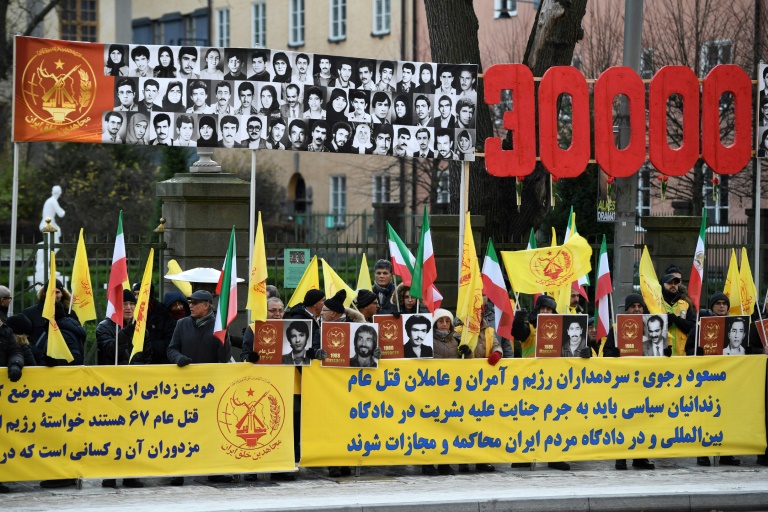
During the trial, which briefly relocated to Albania to hear some testimony at the end of 2021, MEK supporters protested loudly outside the Stockholm courthouse. Another gathering is planned for Thursday.

Given the sensitive nature of the case, the trial has rendered Stockholm’s already chilly relations with Tehran even frostier.

This is partly because rights activists accuse senior Iranian officials now in power — including current President Ebrahim Raisi — of having been members of the committees that handed down the death sentences.

The so-called “death committees” are thought to have sent at least 5,000 to be executed. The MEK puts the figure as high as 30,000 victims.

Raisi himself has denied ever having been part of these committees.

Tehran has repeatedly called on the Swedish government for Hamid Noury’s release. 

Swedish Foreign Minister Ann Linde reaffirmed to her Iranian counterpart in early July that the government was unable to do anything as Nordic country’s courts were “completely independent”.

– ‘Hostage’ –

Concerned about a recent spate of arrests of Europeans in the country “for no apparent reason”, Sweden has been advising its citizens against travel to Iran since late June. 

The main concern is the Iranian-Swedish academic Ahmadreza Djalali. Sentenced to death in Iran in 2017 on espionage charges, and currently awaiting the sentence to be carried out.

Amnesty International has accused the Iranian authorities of holding him “hostage” in an attempt to force an exchange with Hamid Noury and a former Iranian diplomat sentenced to 20 years in prison in Belgium, Assadollah Assadi. 

A controversial treaty is being considered by the Belgian parliament that would allow the exchange of prisoners with Iran. 

Asked about the possibility of such an exchange for the Swedish side, the foreign ministry did not want to comment.

UK 'jobs miracle' turns into employers' nightmare

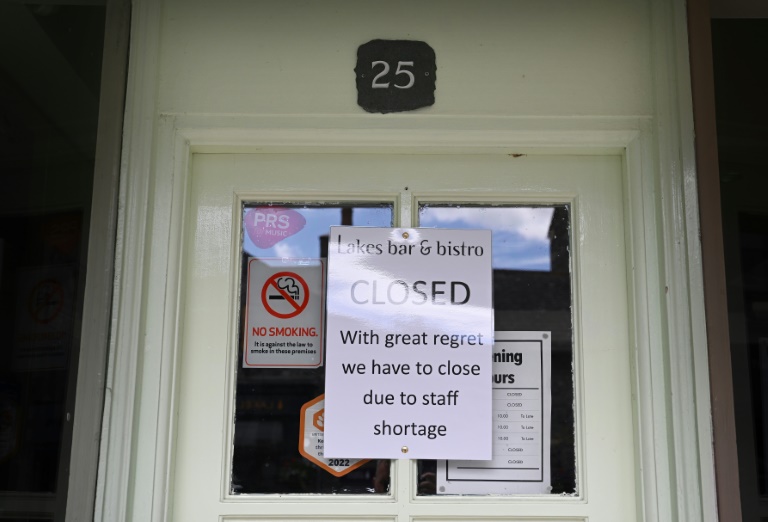
Job vacancies seem to come ten-a-penny in Keswick, a tourist town in England’s picturesque Lake District, as the hospitality sector cries out for staff — shortages which are a direct result, critics say, of the coronavirus pandemic and of Brexit.

“Two live-in chef positions available. Excellent rates of pay,” reads one advert in a restaurant window.

“Hiring. No experience needed,” says another in a fish-and-chip shop.

Britain’s ruling Conservative party claims to have engineered a “jobs miracle” since coming to power in 2010, with the national unemployment rate currently standing at 3.8 percent, the lowest level in almost 50 years. 

That is, in fact, better than the International Labour Organization’s definition of “full employment” — a jobless rate of five percent.

But for Tony Wilson, director of the Institute for Employment Studies, while the current situation in Britain may be “the best context in 20 years for workers”, it is not good for the economy as a whole.

The shortage of workers may be “leading to pay growth and some improvements in employment terms, but it doesn’t help the economy at all,” he said.

If companies are unable to fulfil their potential then profits and overall growth take a hit, he argued. 

– Low growth –

Indeed, Britain is set to have the lowest economic growth of any Group of Seven country, projections show.

Back in Keswick, Alison Lamont, the 60-year-old co-owner of the Relish cafe, does not have a minute to spare as she juggles serving with taking payments.

Since Covid lockdowns were lifted, the small eatery has switched to takeaway services only. 

There is simply no “time for clearing the tables”, says Lamont.

Despite attempts to recruit via social media or simply by word-of-mouth, she cannot find the extra staff needed to run the cafe properly.

Young people “all want to be influencers or work from home”, Lamont complains. 

“The main impact on family life is that we don’t get weekends together and no time away, we have to work and work and work,” she tells AFP, as her husband, who prepares the food upstairs, runs down to bring a sandwich.

Lamont, welcoming each customer like an old friend, says she bought the cafe with her husband around a year before Covid struck.

She struggles to sleep some nights and sees no end to the current situation.

“You can only do this for so long,” Lamont says. 

– No luck –

Further up the street, the restaurant at George Hotel was forced to shut for three-and-a-half months this year because it had no chef, costing the business £30,000 ($35,000) a week, a situation that is seen again and again across the UK. 

The owner of a London beauty salon told AFP she had even resorted to using a headhunter, typically used for recruiting senior management positions, to find a beautician — with no luck so far.

In other sectors, airlines such as British Airways and EasyJet are struggling to re-hire the staff they laid off in their thousands at the start of the pandemic. 

The result: mass flight cancellations and a situation that is only set to become worse during the upcoming summer holiday season.

The reasons for Britain’s current labour market woes are widely blamed on the country’s decision to quit the European Union and on the economic fallout from the coronavirus pandemic. 

“Since the economy reopened… the demand for workers is much higher than the job seekers, especially in low-paid, low-skill sectors” such as cleaning, construction, distribution and warehousing, said Jack Kennedy, UK economist at recruitment group Indeed.

The fallout from Covid has caused almost half-a-million UK workers to leave the labour market, the expert said.

While employment rates in both France and Germany are currently “higher than before the pandemic,” in the UK and US “it is still below pre-pandemic levels,” said Wilson at IES.

– No Brits –

Seasonal farm jobs — which outgoing Prime Minister Boris Johnson claimed would be filled by Britons following Brexit — remain vacant.

“I don’t think it has ever been so difficult,” says Derek Wilkinson, managing director of vegetable grower Sandfields Farms in central England.

Prior to Brexit, Britain’s agricultural and construction sectors had relied heavily on workers from central and eastern Europe, many of whom have since returned home.

Wilkinson, 55, points out that seasonal labourers must now apply for a special visa, which can take seven weeks to come through. 

According to Indeed economist Kennedy, there is a total shortfall of around 200,000-300,000 European workers, including many Ukrainians who have stayed home to fight in the war against Russia.

With other eastern Europeans going back to home countries that have recently become more prosperous — and Britons themselves showing little inclination to take on such back-breaking work — many employers are having to look further afield for seasonal staff, from the Philippines, South Africa and Uzbekistan.

Wilkinson said that with a shortfall of 120 staff in May, Sandfields Farms would have to let 40,000 kilos of asparagus and 750,000 bunches of spring onions go to waste.

And coupled with Britain’s cost-of-living crisis, that means his annual profits this year will be halved.

In order to woo workers, companies are having to offer better pay and conditions.

Wilkinson has renovated 400 mobile homes for seasonal workers, and a restaurant owner in Keswick has purchased a building to house their staff.

Gary Marx, owner of Keswick’s George Hotel, has awarded pay rises far above the rate of inflation.

– New perks –

Other firms are offering different kinds of perks. 

Accountancy giant PricewaterhouseCoopers, for example, allows employees to finish work early on Fridays. But some smaller companies are offering massage and aromatherapy treatments to staff, while dozens of other firms are trialling four-day weeks.

All this comes at a time when many Britons are re-thinking their careers completely.

With many workers on precarious contracts, one million people switched jobs in the last quarter, seeking better pay and a better life.

Before becoming pregnant, Lorna Roberts, 26, worked in hospitality. But with the arrival of her baby and the stresses of restaurant work, she moved to retail.

“It started to become more difficult after lockdown,” says Roberts, who now sells outdoor gear for Alpkit in Keswick. 

“A lot of people were rude, we were short-staffed constantly,” she says, describing how former colleagues suffered panic attacks and breakdowns.

Her new, less stressful job also fits in better with her interest in nature. And Roberts says her hourly wage has also increased. 

“I saw an ad outside and I just thought to pop in and ask,” she says, highlighting the ease with which people are able to switch jobs in the current climate.

UK 'jobs miracle' turns into employers' nightmare

Job vacancies seem to come ten-a-penny in Keswick, a tourist town in England’s picturesque Lake District, as the hospitality sector cries out for staff — shortages which are a direct result, critics say, of the coronavirus pandemic and of Brexit.

“Two live-in chef positions available. Excellent rates of pay,” reads one advert in a restaurant window.

“Hiring. No experience needed,” says another in a fish-and-chip shop.

Britain’s ruling Conservative party claims to have engineered a “jobs miracle” since coming to power in 2010, with the national unemployment rate currently standing at 3.8 percent, the lowest level in almost 50 years. 

That is, in fact, better than the International Labour Organization’s definition of “full employment” — a jobless rate of five percent.

But for Tony Wilson, director of the Institute for Employment Studies, while the current situation in Britain may be “the best context in 20 years for workers”, it is not good for the economy as a whole.

The shortage of workers may be “leading to pay growth and some improvements in employment terms, but it doesn’t help the economy at all,” he said.

If companies are unable to fulfil their potential then profits and overall growth take a hit, he argued. 

– Low growth –

Indeed, Britain is set to have the lowest economic growth of any Group of Seven country, projections show.

Back in Keswick, Alison Lamont, the 60-year-old co-owner of the Relish cafe, does not have a minute to spare as she juggles serving with taking payments.

Since Covid lockdowns were lifted, the small eatery has switched to takeaway services only. 

There is simply no “time for clearing the tables”, says Lamont.

Despite attempts to recruit via social media or simply by word-of-mouth, she cannot find the extra staff needed to run the cafe properly.

Young people “all want to be influencers or work from home”, Lamont complains. 

“The main impact on family life is that we don’t get weekends together and no time away, we have to work and work and work,” she tells AFP, as her husband, who prepares the food upstairs, runs down to bring a sandwich.

Lamont, welcoming each customer like an old friend, says she bought the cafe with her husband around a year before Covid struck.

She struggles to sleep some nights and sees no end to the current situation.

“You can only do this for so long,” Lamont says. 

– No luck –

Further up the street, the restaurant at George Hotel was forced to shut for three-and-a-half months this year because it had no chef, costing the business £30,000 ($35,000) a week, a situation that is seen again and again across the UK. 

The owner of a London beauty salon told AFP she had even resorted to using a headhunter, typically used for recruiting senior management positions, to find a beautician — with no luck so far.

In other sectors, airlines such as British Airways and EasyJet are struggling to re-hire the staff they laid off in their thousands at the start of the pandemic. 

The result: mass flight cancellations and a situation that is only set to become worse during the upcoming summer holiday season.

The reasons for Britain’s current labour market woes are widely blamed on the country’s decision to quit the European Union and on the economic fallout from the coronavirus pandemic. 

“Since the economy reopened… the demand for workers is much higher than the job seekers, especially in low-paid, low-skill sectors” such as cleaning, construction, distribution and warehousing, said Jack Kennedy, UK economist at recruitment group Indeed.

The fallout from Covid has caused almost half-a-million UK workers to leave the labour market, the expert said.

While employment rates in both France and Germany are currently “higher than before the pandemic,” in the UK and US “it is still below pre-pandemic levels,” said Wilson at IES.

– No Brits –

Seasonal farm jobs — which outgoing Prime Minister Boris Johnson claimed would be filled by Britons following Brexit — remain vacant.

“I don’t think it has ever been so difficult,” says Derek Wilkinson, managing director of vegetable grower Sandfields Farms in central England.

Prior to Brexit, Britain’s agricultural and construction sectors had relied heavily on workers from central and eastern Europe, many of whom have since returned home.

Wilkinson, 55, points out that seasonal labourers must now apply for a special visa, which can take seven weeks to come through. 

According to Indeed economist Kennedy, there is a total shortfall of around 200,000-300,000 European workers, including many Ukrainians who have stayed home to fight in the war against Russia.

With other eastern Europeans going back to home countries that have recently become more prosperous — and Britons themselves showing little inclination to take on such back-breaking work — many employers are having to look further afield for seasonal staff, from the Philippines, South Africa and Uzbekistan.

Wilkinson said that with a shortfall of 120 staff in May, Sandfields Farms would have to let 40,000 kilos of asparagus and 750,000 bunches of spring onions go to waste.

And coupled with Britain’s cost-of-living crisis, that means his annual profits this year will be halved.

In order to woo workers, companies are having to offer better pay and conditions.

Wilkinson has renovated 400 mobile homes for seasonal workers, and a restaurant owner in Keswick has purchased a building to house their staff.

Gary Marx, owner of Keswick’s George Hotel, has awarded pay rises far above the rate of inflation.

– New perks –

Other firms are offering different kinds of perks. 

Accountancy giant PricewaterhouseCoopers, for example, allows employees to finish work early on Fridays. But some smaller companies are offering massage and aromatherapy treatments to staff, while dozens of other firms are trialling four-day weeks.

All this comes at a time when many Britons are re-thinking their careers completely.

With many workers on precarious contracts, one million people switched jobs in the last quarter, seeking better pay and a better life.

Before becoming pregnant, Lorna Roberts, 26, worked in hospitality. But with the arrival of her baby and the stresses of restaurant work, she moved to retail.

“It started to become more difficult after lockdown,” says Roberts, who now sells outdoor gear for Alpkit in Keswick. 

“A lot of people were rude, we were short-staffed constantly,” she says, describing how former colleagues suffered panic attacks and breakdowns.

Her new, less stressful job also fits in better with her interest in nature. And Roberts says her hourly wage has also increased. 

“I saw an ad outside and I just thought to pop in and ask,” she says, highlighting the ease with which people are able to switch jobs in the current climate.

Race to find Brazil Amazon species before they disappear

In a remote part of the Brazilian Amazon, a scientific expedition is cataloguing species. Time is of the essence.

“The rate of destruction is faster than the rate of discovery,” says botanist Francisco Farronay, of the National Institute of Amazonian Research (INPA), as he cuts into the bark of an enormous tree and smells its insides.

“It is a race against time.”

The largest rainforest on Earth, still largely unexplored by science, is assailed by deforestation for farming, mining and illegal timber extraction.

According to a MapBiomas study last year, the Amazon lost some 74.6 million hectares of native vegetation — an area equivalent to the entire territory of Chile — between 1985 and 2020.

The destruction accelerated under the government of far-right President Jair Bolsonaro, accused by environmentalists of actively encouraging deforestation for economic gain.

The rainforest is considered vital to curbing climate change for its absorption of Earth-warming CO2.

Since 2019, when Bolsonaro took power, average annual deforestation in the Brazilian Amazon increased by 75 percent compared to the previous decade, according to official figures.

– ‘Science denialism’ –

“Most plant species in the Amazon are to be found in encroached areas,” said Alberto Vicentini, another member of the expedition launched by Greenpeace. 

It is estimated that “we do not know 60 percent of the tree species, and every time an area is deforested, it destroys a part of the biodiversity that we will never know,” said the INPA scientist.

For their research in this remote part of the northern Brazilian state of Amazonas, the team of took a plane from Manaus, flying over hundreds of kilometers of green forest cut by meandering rivers, to Manicore.

From there, a five-hour boat trip by river for a weeks-long expedition to collect plant samples and observe animal behavior, for which they installed cameras and microphones.

The group includes experts in mammals, birds, amphibians, reptiles and fish, trees and flowers. But it is a tough time to be a scientist in Brazil, they say.

“We are living in a moment of science denialism, as we saw with the pandemic in Brazil,” with Bolsonaro railing against masks and vaccines, said Vicentini.

“Research institutions in Brazil are under attack by the policies of this government, universities are suffering many cuts,” he added.

A sheet of newspaper used by one of the botanists in the group to press a flower has the headline: “Increase in wood extraction in Amazonas” with a photo of two trucks leaving the rainforest loaded with logs.

“There are places where no one has ever been, we have no idea what is there,” said INPA biologist Lucia Rapp Py-Daniel.

“Without the resources to investigate, we do not have the necessary information to even explain why we have to conserve” the area, she said.

Resources have been dwindling for a decade — another phenomenon that has sped up under Bolsonaro, according to critics.

In May, Brazil’s two main scientific societies, the Brazilian Academy of Sciences (ABC) and the Brazilian Society for the Advancement of Science (SBPC) warned that funding for scientific research in the country would be cut by almost 3.0 billion reais (about $560 million) this year.

“We should accelerate the pace of research in the face of the destruction, but instead we are slowing down,” says Py-Daniel.

Twitter shares up after hedge fund bets against Musk

Twitter shares jumped Wednesday after a hedge fund revealed it had taken a stake in the firm based on its “strong case” against Elon Musk for moving to back out of his $44 billion buyout bid.

Stocks in the social media platform, which sued Tuesday to force the mercurial billionaire to stick to the deal, were up around eight percent in trading.

The hedge fund, Hindenburg Research, took a “significant” stake in Twitter, but one which is below the five percent line that requires reporting to US market watchdog Securities and Exchange Commission, the fund’s founder Nathan Anderson confirmed to AFP.

Anderson said it was the first time that Hindenburg had publicly revealed the purchase of shares.

“Twitter is suing to enforce the entire $44 billion merger price and they have a strong case,” Anderson said.

The suit filed in the US state of Delaware urges the court to order the Tesla boss to complete his deal to buy Twitter, arguing that no financial penalty could repair the damage he has caused.

After weeks of threats, Musk last week pulled the plug on the deal, accusing Twitter of “misleading” statements about the number of fake accounts, according to a letter from his lawyers included in a US securities filing.

“Twitter’s bot issue is perhaps the worst pretext Musk could have chosen for terminating the deal given that it was clearly and publicly a reason he entered the agreement in the first place,” Anderson added.

A few days after he made an offer in April to buy the company, Musk said that if the acquisition was finalized, he would “defeat the spam bots or die trying!”

For Anderson, Twitter has “more leverage” given the potential threat to Musk’s empire in the event of an outright win in court.

Wedbush Securities analyst Dan Ives said in a note that Wall Street is “interpreting the Twitter suit against Musk filed last night as ‘extremely compelling.'” 

“The stock is now factoring in some significant chance that Musk will ultimately have to pay Twitter a settlement well north of $1 billion,” said Ives, referring to the breakup fee in the original agreement between the entrepreneur and Twitter.

Close Bitnami banner
Bitnami