World

Vulnerable Pacific islands call for 'urgent, immediate' action on climate

Vulnerable Pacific islands demanded “urgent, immediate” global action on climate change Thursday, while stressing a commitment to democracy and the “rules-based” international order in the face of growing Chinese regional influence.

At a key summit in the Fijian capital Suva, island leaders warned time was running out to avoid “worst-case scenarios” that would see their countries — many teetering just above sea level — subsumed or rendered uninhabitable by ever-fiercer storms. 

“We are at the forefront of the adverse impacts of climate change,” the leaders said in a joint 2050 strategy document agreed upon after three days of talks. 

“Urgent robust and transformative action” is needed “globally, regionally and nationally,” they said.

This Pacific Islands Forum summit is the first to be held in person since the pandemic began, but instead of a warm reunion, the event has been overshadowed by internal divisions and a battle for influence between the United States and China. 

On the eve of the summit, Beijing-allied leaders in Kiribati announced they would not attend and resigned from the forum. 

The vast Pacific region is smattered with verdant sparsely populated islands but sits along major international shipping routes that make it a crucible for geopolitical rivalry. 

– China, US competition –

Vice President Kamala Harris used a video address to the forum to announce the United States would be establishing two new embassies in Tonga and Kiribati, appointing a regional envoy and pumping an extra $600 million into the region. 

China has made no secret of its ambition to challenge long-standing US primacy in the Pacific, deploying state-backed firms and chequebook diplomacy to build a foothold. 

There was widespread alarm earlier this year when China inked a secretive security agreement with Solomon Islands, which critics fear could pave the way to establishing a military base.

Leaders noted the region’s security environment was “becoming increasingly crowded” and “positioning by major powers” was taking a toll. 

But echoing language often used by Washington, leaders also warned that the “rules-based order for peace and security” was coming under “increasing pressure” and that the “Pacific region is not immune.” 

They also committed to “democratic principles” and “human rights” that fly in the face of China’s authoritarian system of government. 

On the sidelines of the event, China also suffered another seeming setback, with Solomon Islands Prime Minister Manasseh Sogavare stressing his country would not host a foreign military base. 

Establishing such a base would make the Solomons “an enemy” of the Pacific and would “put our country and our people as targets for potential military strikes”, Sogavare told broadcaster RNZ Pacific.

The “Solomon Islands government will never allow our country and people to become military targets,” he said. 

Sogavare made similar assurances when he met with Australia’s new Prime Minister Anthony Albanese for the first time Wednesday.

Sogavare embraced Albanese on the sidelines of the Pacific Islands Forum, telling the Australian leader: “I need a hug”. 

Vulnerable Pacific islands call for 'urgent, immediate' action on climate

Vulnerable Pacific islands demanded “urgent, immediate” global action on climate change Thursday, while stressing a commitment to democracy and the “rules-based” international order in the face of growing Chinese regional influence.

At a key summit in the Fijian capital Suva, island leaders warned time was running out to avoid “worst-case scenarios” that would see their countries — many teetering just above sea level — subsumed or rendered uninhabitable by ever-fiercer storms. 

“We are at the forefront of the adverse impacts of climate change,” the leaders said in a joint 2050 strategy document agreed upon after three days of talks. 

“Urgent robust and transformative action” is needed “globally, regionally and nationally,” they said.

This Pacific Islands Forum summit is the first to be held in person since the pandemic began, but instead of a warm reunion, the event has been overshadowed by internal divisions and a battle for influence between the United States and China. 

On the eve of the summit, Beijing-allied leaders in Kiribati announced they would not attend and resigned from the forum. 

The vast Pacific region is smattered with verdant sparsely populated islands but sits along major international shipping routes that make it a crucible for geopolitical rivalry. 

– China, US competition –

Vice President Kamala Harris used a video address to the forum to announce the United States would be establishing two new embassies in Tonga and Kiribati, appointing a regional envoy and pumping an extra $600 million into the region. 

China has made no secret of its ambition to challenge long-standing US primacy in the Pacific, deploying state-backed firms and chequebook diplomacy to build a foothold. 

There was widespread alarm earlier this year when China inked a secretive security agreement with Solomon Islands, which critics fear could pave the way to establishing a military base.

Leaders noted the region’s security environment was “becoming increasingly crowded” and “positioning by major powers” was taking a toll. 

But echoing language often used by Washington, leaders also warned that the “rules-based order for peace and security” was coming under “increasing pressure” and that the “Pacific region is not immune.” 

They also committed to “democratic principles” and “human rights” that fly in the face of China’s authoritarian system of government. 

On the sidelines of the event, China also suffered another seeming setback, with Solomon Islands Prime Minister Manasseh Sogavare stressing his country would not host a foreign military base. 

Establishing such a base would make the Solomons “an enemy” of the Pacific and would “put our country and our people as targets for potential military strikes”, Sogavare told broadcaster RNZ Pacific.

The “Solomon Islands government will never allow our country and people to become military targets,” he said. 

Sogavare made similar assurances when he met with Australia’s new Prime Minister Anthony Albanese for the first time Wednesday.

Sogavare embraced Albanese on the sidelines of the Pacific Islands Forum, telling the Australian leader: “I need a hug”. 

Chinese homebuyers halt mortgage payments on unfinished projects

Chinese homebuyers in dozens of cities have stopped making mortgage payments for unfinished projects, according to data from industry groups, worsening fears of financial contagion in the country’s troubled real estate sector.

Authorities launched a crackdown on excessive debt in the property sector in 2020, and giants such as Evergrande and Sunac have since struggled to make payments and renegotiate with creditors.

In the latest blow, a growing number of homebuyers have refused to make mortgage payments if developers do not resume construction on units already sold.

As of Wednesday, homebuyers had halted payments for units in at least 100 residential property projects in 50 cities, according to data from research firm China Real Estate Information Corporation (CRIC).

This was up from 28 projects on Monday and 58 on Tuesday, according to a report by analysts at financial firm Jefferies.

“The names on the list doubled every day in the past three days,” they said.

These include projects that have experienced significant delays and others that have yet to reach their delivery date, the report said, adding that the incident will dampen buyer sentiment and weigh on a recovery in sales.

If every homebuyer defaulted, non-performing loans will increase by 388 billion yuan ($58 billion), Jefferies said.

The buyers’ actions came after postponed deliveries of pre-sold homes, unclear delivery times and halted construction, Nomura analysts said in a report on Thursday.

“Pre-sales are the most common way of selling homes in China, so the stakes there are high,” it said.

“We are especially concerned about the financial impact of the homebuyers’ ‘stopping mortgage repayments’ movement, as China’s property downturn may finally adversely affect onshore financial institutions.”

The developments come at a time of slowing growth for China and weak property sales, adding to the risk to stability ahead of the Communist Party’s 20th Congress this fall, when President Xi Jinping is expected to be given another term.

Libyans at boiling point amid summer power cuts

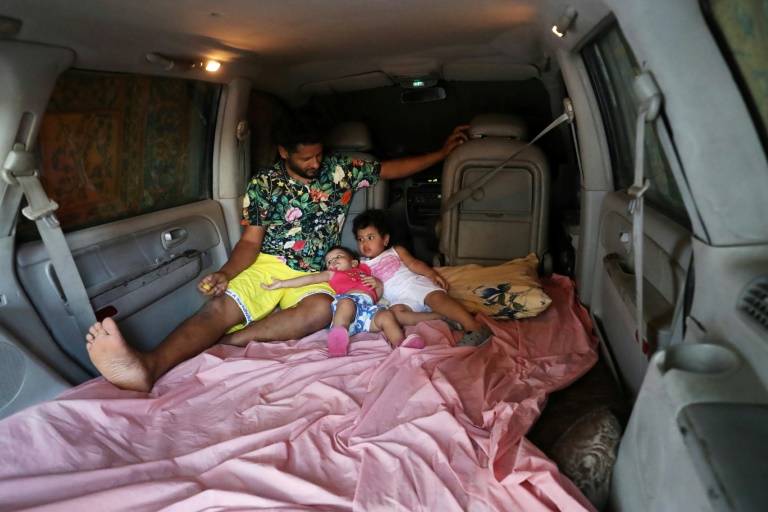
Mahmud Aguil has a comfortable house in Libya’s capital Tripoli, but chronic power outages in the war-battered country and roasting summer heat now force him to sleep in his air-conditioned van.

“This is my bedroom,” the 48-year-old said pointing to the cramped vehicle, its back seats removed to make space for him and his two young children. “In the morning I wake up with a terrible backache. 

“That’s our life these days.”

The people of Libya are enduring electricity cuts of up to 18 hours a day, despite their country sitting atop Africa’s largest proven oil reserves.

After a decade of violence, rising poverty and fragmenting government, many have reached the limits of their tolerance.

Public anger spilled into the streets earlier this month, when protests drew thousands chanting “we want the lights to work” in the capital and in Benghazi, the country’s second largest city.

Demonstrators torched and ransacked the House of Representatives, based in the eastern city of Tobruk, along with other official buildings, while masked protesters burned tyres and blocked roads in Tripoli.

“Even when we have electricity, it’s very weak — just enough to keep the lights on,” said Aguil, who works for a group clearing unexploded ordnance.

The electricity crisis is just the latest trial for Libyans after a decade of insecurity, fuel shortages, crumbling infrastructure and economic woes since a 2011 NATO-backed uprising toppled and killed dictator Moamer Kadhafi.

– ‘Trouble with everything’ –

One of the walls of Aguil’s house is riddled with bullet holes, bearing witness to the violence that has repeatedly ravaged the North African country.

“We have trouble with everything: the health sector, education, the roads are terrible,” he said. “We have nothing.”

Under Kadhafi, Libya boasted a generous welfare state financed by oil revenues.

But that too has fallen victim to the country’s conflict and division, with fuel squandered, infrastructure damaged or dilapidated, and crippling oil-facility blockades.

Many of Libya’s seven million people have turned to unreliable, gas-guzzling and polluting generators for electricity. 

More dependable models cost those who can afford them around $5,000.

“Thanks to our government,” Aguil said bitterly.

The Tripoli-based authorities have sought to quell public anger over the power outages, admitting they had underestimated the problem.

Interim prime minister Abdulhamid Dbeibah said three power stations were to open this month, two in the west and one in the east.

– ‘State is absent’ –

Dbeibah leads a western-based administration, while former interior minister Fathi Bashagha draws support from the eastern Tobruk-based parliament and military strongman Khalifa Haftar.

Supporters of the eastern camp have restricted production at key oil facilities in recent months to pressure Dbeibah to transfer power to Bashagha.

The blockade has also reduced the amount of fuel available for power stations, exacerbating electricity shortages.

Sitting with his severely disabled son in Benghazi, the cradle of Libya’s 2011 uprising against Kadhafi’s 42-year rule, Ahmed Hejjaji said he feels helpless.

His four-year-old’s medical equipment needs electricity, and the power cuts are wreaking havoc with his treatment.

The authorities “must guarantee us access to electricity” the 42-year-old father said.

Hejjaji said the daily challenges are never-ending.

Before the Muslim Eid al-Ahda celebration, he said, “I went to the bank early to take out money, but I waited in the queue until 3 pm.

“Why? Because the state is absent.”

Western Europe heatwave to peak in Spain

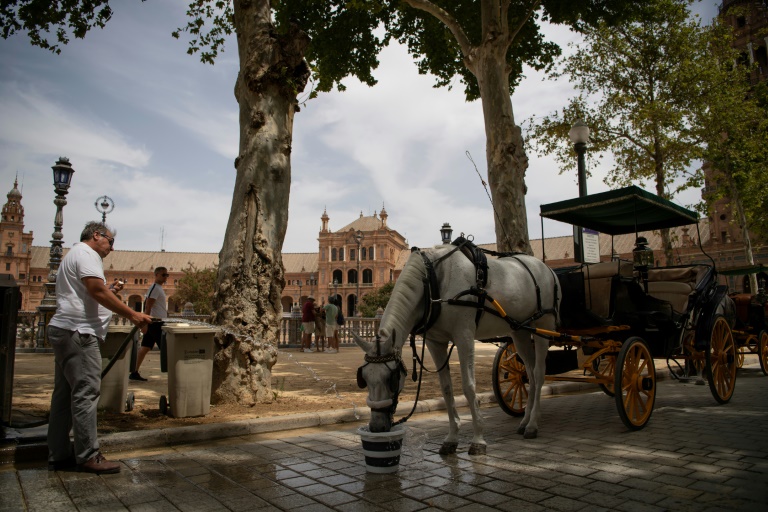
The heatwave sweeping across southwestern Europe is expected to peak Thursday in Spain, with blistering temperatures already fueling wildfires across the Iberian Peninsula and France. 

The warming phenomenon — the region’s second this summer — is forecasted to last until the middle of the week, with southern Spain expected to experience some of the harshest temperatures. 

“For Thursday, we expect it to be the hottest day of this heatwave,” said Spain’s state meteorological agency AEMET.

The valleys around three major rivers — the Guadiana, Guadalquivir and Tagus — will experience stifling temperatures hovering around 40 degrees Celsius (104 Fahrenheit), it said.

Most of Spain was placed on high alert Wednesday, and AEMET said some regions were “suffocating” — especially in the worst-affected Andalusia in the south, Extremadura in the southwest and Galicia in the northwest.

The country’s health ministry told people to drink plenty of fluids, wear light clothes and stay in the shade or air-conditioned rooms to avoid their “vital functions” being affected.

The highest temperature Wednesday was recorded in the Andalusian city of Almonte, where the mercury hit 45.6 degrees Celsius at 5:30 pm (1530 GMT).

Several other southern cities such as Seville and Cordoba experienced temperatures above 44 degrees.

In western Spain near the border with Portugal, forest fires have already razed at least 3,500 hectares (8,600 acres).

Between January 1 and July 3, more than 70,300 hectares of forest went up in smoke in Spain, the government said — almost double the average of the past 10 years.

– French wildfires –

Temperatures in Spain are expected to ease at the end of the week, but the stifling climate could continue in Europe’s northwest as it moves towards France and Britain.

Britain has issued an “amber” alert — the second highest of three levels — while one UK climate official said there was a chance Britain’s highest temperature, the 38.7C recorded on July 25, 2019 at Cambridge Botanic Garden, could be surpassed.

Meteorological services in France also warned the situation would “become intense between Sunday and Tuesday” — possibly exceeding 40C before dipping by Wednesday. 

A wildfire in southwestern France has raged since Tuesday, ripping through 1,000 hectares (2,500 acres) of pine trees just south of Bordeaux and forcing the evacuation of 150 people from their homes. 

Near the Dune of Pilat — Europe’s tallest sand dune — another fire consumed about 700 hectares of old pine trees, officials there said, resulting in the evacuation of about 6,000 campers near the dune.

Further inland, 500 people were evacuated around the French village of Guillos as their homes came under threat from advancing fire.

“There were flames at the top of the trees 30 metres high,” mayor Mylene Doreau told AFP. 

“We could see them moving towards the village, it was scary.”

Some 600 firefighters have been battling the blazes in the region, aided by waterbomber aircraft.

To limit the risk of accidental fire, some cities — including Toulouse and Lourdes — made changes to their Bastille Day celebrations on Thursday. Nimes simply cancelled the traditional fireworks altogether.

– ‘The end of the world’ –

Spectators at the annual Tour de France, which is currently crossing the French Alps, watched the riders tackle some of the bike race’s toughest climbs in the blazing sunshine on Wednesday.

“They really feel the heat. I’m just standing here watching,” French student Jean Gosselin, 18, said sympathetically.  

Heatwaves have become more frequent due to climate change, scientists say, the previous ones in France, Portugal and Spain having taken place only last month.

Last week, an avalanche triggered by the collapse of the largest glacier in the Italian Alps — due to unusually warm temperatures — killed 11 people.

In Greece, a helicopter helping to fight a forest blaze on the island of Samos on Wednesday crashed into the Aegean Sea, said the coastguard Wednesday. Two crew members were seriously injured.

And in Portugal — on alert for wildfires for days — one person had died in a forest blaze, authorities said, after a body was found in a burned area in the northern region of Aveiro.

At Leiria, central Portugal, locals fought to save their village as fires closed in on them.

“Everything burned yesterday except the houses, because the people are very brave and defended them themselves,” said 77-year-old farmer Adelino Rodrigues.

“The firefighters arrived much later.”

It brought back memories of the devastating wildfires in 2017, which claimed the lives of more than 100 people in Portugal.

“It looked like the end of the world,” he recalled.

burs-dhc/cwl

Saudi mindset shows signs of shift towards Israel

Israeli journalist Yoav Limor did not know what to expect when he travelled with a colleague this month to Saudi Arabia, a country long notorious for promoting anti-Israel sentiment in textbooks and in sermons by some imams.   

They were in for “a pleasant surprise”, he wrote in a subsequent column for the Israel Hayom newspaper, as Saudi market vendors and taxi drivers mostly greeted them with curiosity rather than disdain.

“Some smiled and shook their head in disbelief or worry. Others were curious and struck up a conversation,” wrote Limor, adding that “no one made us feel unwelcome”.

US President Joe Biden’s trip to the Middle East, which began on Wednesday, has fuelled speculation of a possible breakthrough in normalising ties between Israel and Saudi Arabia, which does not recognise the Jewish state. 

The kingdom has repeatedly said it would stick to the decades-old Arab League position of not establishing official ties with Israel until the conflict with the Palestinians is resolved. 

Analysts stress that, despite growing behind-the-scenes business and security contacts, any immediate gains are likely to be more incremental than the US-brokered Abraham Accords which created ties between Israel and two of the kingdom’s neighbours, the United Arab Emirates and Bahrain.

Yet the experience of Limor, who qualified for a tourist visa because he holds a non-Israeli passport, hints at changes in Saudi public opinion that officials hope could one day lay the groundwork for a formal bilateral relationship.

US officials say it shows meaningful progress towards the kind of deal that would, for Israel, represent the ultimate diplomatic prize. 

“For too many decades, the Kingdom of Saudi Arabia was a great exporter of Jew-hatred,” said Deborah Lipstadt, Washington’s special envoy to combat anti-Semitism, in a speech this month after visiting the kingdom in June. 

“But what I found is something quite different, something that has changed there dramatically in the last few years.”

– ‘Potential ally’ –

Signs of that transformation appeared well before the Abraham Accords pushed by the Trump administration, which Riyadh has so far refused to join. 

Saudi textbooks once denigrated Jews and other non-Muslims by depicting them as animals and asserted that “disobedience is the characteristic of the Jews”. 

But they have been undergoing revisions for years, as documented by the Israeli nonprofit group IMPACT-SE which monitors textbook content. 

At this point, anti-Jewish material has been “largely removed, which is greatly to be admired”, the group said in a June report. 

The Saudi education ministry did not respond to a request for comment on the textbooks. 

Anti-Israeli speech by imams is also “generally rare”, and the Islamic affairs ministry has encouraged a “rejection of bigotry”, the US State Department said in its latest human rights report on Saudi Arabia.

Mohammed al-Issa, a Saudi cleric who heads the Muslim World League, won praise from Israel in January 2020 after he travelled to Poland for events marking 75 years since liberation of the Nazi death camp Auschwitz. 

King Salman hosted Jerusalem-based rabbi David Rosen the following month, and during Ramadan that year the Saudi-controlled MBC network aired a television show in which a character brushed aside the taboo of doing business with Israel. 

Further examples have cropped up since the Abraham Accords were unveiled in August 2020. 

Israeli drivers participated in the January 2021 Dakar Rally in Saudi Arabia, and the Arab News, the kingdom’s main English-language daily, has published Israeli opinion writers. 

In a sign that the Saudi leadership may no longer fear a fierce backlash to eventual normalisation, state media in March quoted Crown Prince Mohammed bin Salman, the de facto ruler, describing Israel as a “potential ally”.

– ‘I do not like them’ –

What impact these moves have had on public opinion can be difficult to gauge in an absolute monarchy which places strict limits on political expression. 

There is little chance of Riyadh shifting its focus to ties with Israel “while ignoring the Palestinian issue”, nor is that something ordinary Saudis would want, said Mohammed Alyahya, a fellow at the Belfer Center at Harvard University. 

“The public sentiment has changed, but I don’t think it’s changed in such a way that people don’t care about Palestine anymore, or people don’t hold Israel to account for crimes it commits,” Alyahya said. 

The kingdom’s internal dynamics are different from those of its neighbours, said Brian Katulis of the Middle East Institute in Washington. 

“I don’t see a broad wellspring of more openness that you see in places like the Emirates that are much smaller, where you can do sort of interfaith things and have a synagogue. I think that’s slower to happen in a place like Saudi Arabia right now,” Katulis said.

Saudi officials have been tight-lipped on potential outcomes from Biden’s visit and did not respond to a request for comment on possible agreements concerning Israel. 

Whatever emerges –- like allowing direct flights from Israel to Saudi Arabia for Muslim pilgrims –- is likely to stop well short of full normalisation. 

That may be all many Saudis can stomach for now.

“It is impossible for me to go to Israel one day. I do not like them,” said Abo Rashed, an auto parts salesman in the capital who referred to Israelis as “occupiers”.

“But the government knows better. They will choose whatever is best for the people and the country.”

Mohammed bin Salman, hard-charging heir reshaping Saudi Arabia

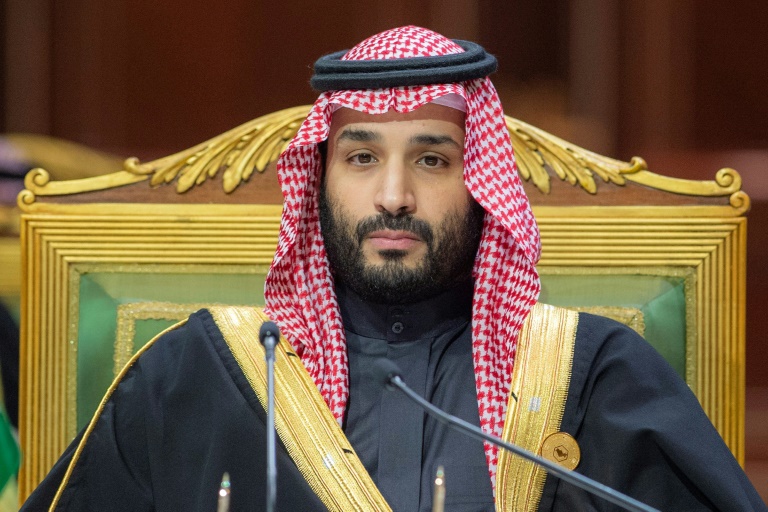
Saudi Crown Prince Mohammed bin Salman has shaken up the conservative kingdom with head-spinning reforms while quashing any threats to his status since becoming de facto ruler of the world’s biggest oil producer five years ago.

The hard-charging heir drew international revulsion after Saudi agents killed and dismembered journalist Jamal Khashoggi in 2018, but US President Joe Biden’s visit to the kingdom this week looks set to restore his position on the international stage, forcing world leaders to deal with him whether they want to or not. 

A towering figure with a full-face beard, deep growling voice and seemingly boundless energy, Prince Mohammed is known for his super-sized ambitions, from building the futuristic megacity known as NEOM to waging the seven-year-old war in neighbouring Yemen.

The brash 36-year-old, known widely as “MBS” and said to have a fondness for fast food and the “Call of Duty” video games, is also fabulously rich, owning a $500 million yacht, a French chateau and, according to officially denied reports, a $450 million Leonardo da Vinci painting.

Unlike other Saudi princes with their British accents, sharp suits and Oxford degrees, MBS embraces the country’s Bedouin roots, usually donning a traditional robe and sandals, treating friends and relatives to lavish roast lamb meals in luxury desert camps.

Having plotted his path to power from relative obscurity, Prince Mohammed has overseen the biggest transformation in Saudi Arabia’s modern history, the world’s top crude oil exporter and host of Islam’s two holiest sites, Mecca and Medina.

Under his rule, the kingdom’s religious police have been de-fanged, cinemas have reopened, foreign tourists have been welcomed, and Saudi Arabia has staged a film festival, operas, Formula One Grand Prix, heavyweight boxing, professional wrestling and a huge rave festival.

Yet he has also jailed critics and, in a sweeping purge of the nation’s elite, detained and threatened some 200 princes and businessmen in Riyadh’s Ritz-Carlton hotel in a 2017 anti-corruption crackdown that tightened his grip on power.

His image was most severely tarnished by the brutal murder of Khashoggi inside the kingdom’s Istanbul consulate in October 2018, which prompted condemnation of the crown prince, despite Riyadh’s insistence that rogue agents carried out the killing.

“MBS is a hugely divisive character, praised by supporters as a long-awaited game-changer in a region aching for it and dismissed by foes as a brutal dictator in the making,” wrote Ben Hubbard in “MBS: The Rise to Power of Mohammed bin Salman”.

“He is determined to give Saudis a shining, prosperous future and exercises an unflinching willingness to crush his foes. Combined in different doses, those attributes will likely guide his actions far into the future.”

– ‘Mr Everything’ –

Prince Mohammed, son of King Salman bin Abdulaziz Al Saud, was born on August 31, 1985. He is one of the hundreds of grandchildren of the country’s founder, King Abdulaziz Ibn Saud, and grew up in a Riyadh palace with his mother, Fahda, one of his father’s four wives, and his five brothers.

“As the sixth son of the 25th son of the founding king, there was little reason to expect that he would rise to prominence,” wrote Hubbard. “And for most of his life, few people did.”

He earned a law degree from Riyadh’s King Saud University but never studied abroad, and soon worked as a special adviser to his father, the then-Riyadh governor.

When King Salman assumed the throne in early 2015, he named Prince Mohammed as defence minister. Soon the young man also coordinated economic policy, oversaw the state oil company Saudi Aramco and supervised the kingdom’s military intervention in Yemen. 

Within a year, he held so many portfolios that diplomats called him “Mr Everything”.

The prince — now a father of three boys and two girls, who unlike other Saudi royals has only one wife — reportedly worked 16-hour days and drew inspiration from Winston Churchill and Sun Tzu’s “The Art of War”.

His rise was rapid, replacing his elder cousin Prince Mohammed bin Nayef to become heir to the throne in 2017. Three years later Prince Nayef, along with a brother of King Salman, was reportedly detained.

Prince Mohammed has pledged to forge a “moderate” Saudi Arabia and courts international investors for his wide-ranging Vision 2030 plan to diversify the oil-reliant economy.

“We want to live a normal life,” he once told business leaders in Riyadh. “All we are doing is going back to what we were — a moderate Islam that is open to all religions and open to the world.

“Seventy percent of the Saudi population is under 30 and, honestly, we will not spend the next 30 years of our lives dealing with extremist ideas. We will destroy them today.”

– ‘Fire hose of ideas’ –

As he rose to prominence, he toured the United States and charmed leaders in the White House and on Wall Street, in Silicon Valley and Hollywood. 

New York Times writer Thomas Friedman recounted how in an interview that lasted late into the night, the prince “wore me out with a fire hose of new ideas for transforming his country”.

Perhaps his most hyper-ambitious initiative is the $500 billion NEOM project on the Red Sea coast, to be powered by solar energy and staffed by robots, which the prince describes as a “civilisational leap for humanity”.

Reflecting the hopes of the country’s youthful population, Prince Mohammed has eased restrictions on women’s rights, allowing them to drive, attend sports events and concerts alongside men, and obtain passports without the approval of a male guardian.

Along with the reforms, though, came a crackdown on dissidents, including intellectuals and women’s rights activists, part of an apparent strategy to stamp out any trace of opposition before a formal transfer of power from King Salman.

Internationally, he has pursued a more assertive foreign policy, plunging the kingdom into a quagmire of regional rivalries: the Yemen war, hostility toward Shiite power Iran, a three-year blockade of Qatar until 2021, and the reported detention of Lebanon’s prime minister for several tense days. 

Prince Mohammed, who once publicly berated US president Barack Obama for criticising Saudi Arabia’s rights record, forged a strong bond with Donald Trump and especially his son-in-law, Jared Kushner, which served him well during the fallout over Khashoggi’s death.

The prince initially faced renewed scrutiny of his human rights record from Biden, who released an intelligence report stating MBS had “approved an operation” to capture or kill Khashoggi. 

Biden did not, however, take action against the crown prince and this week the pair will meet on Saudi soil, despite an earlier pledge to make the country a “pariah”.

This shift is perhaps an acknowledgement that Prince Mohammed, still in his 30s, could rule Saudi Arabia for half a century or more.


Flood anniversary prompts sadness and soul-searching in Germany

Germany will on Thursday remember more than 180 people killed in severe floods a year ago, as concerns mount over climate change and the country looks to overhaul its planning for future disasters.

President Frank-Walter Steinmeier will embark on a tour of the Ahr valley, while Chancellor Olaf Scholz will attend a memorial event in the hard-hit town of Bad Neuenahr-Ahrweiler. 

A series of events are also planned in neighbouring Belgium, where 39 people were killed in the deluge.

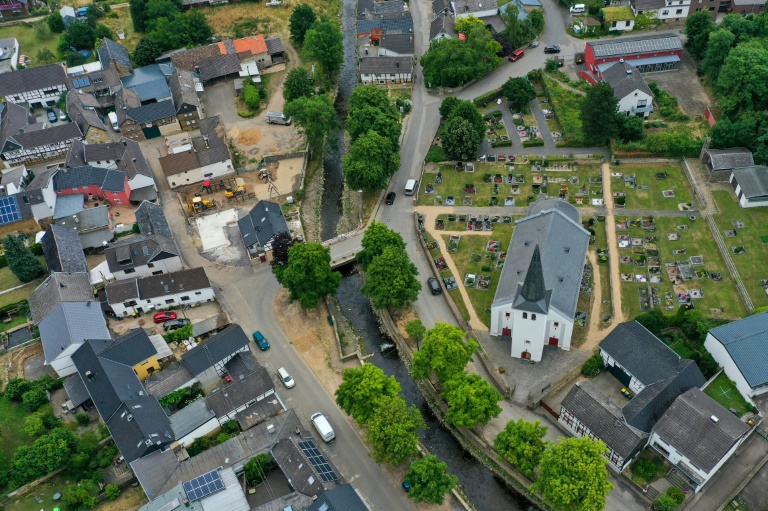
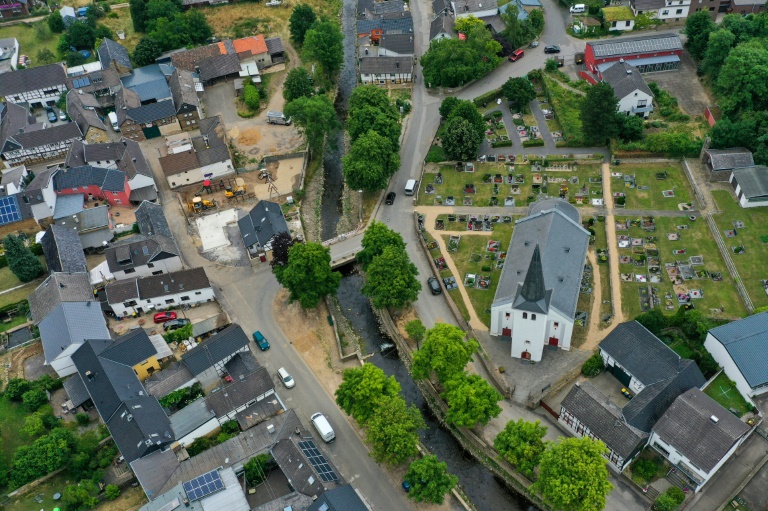
Severe floods pummelled parts of the German Rhineland over two days in July last year, ripping through entire towns and villages and destroying bridges, roads, railways and swathes of housing.

Between 100 and 150 millimetres (four and six inches) of rain fell between July 14 and 15, according to the German weather service — an amount that would normally be seen over two months. 

Forecasters had issued warnings, yet many residents were simply unaware of the risks of such violent flooding, with dozens found dead in their cellars.

The disaster prompted criticism of Germany’s flood warning system and a criminal inquiry was opened into local officials for “negligent homicide”.

The government has since pledged to introduce phone alerts in the form of “cell broadcasting” and to reinstall sirens, many of which have been taken down in recent years.

– ‘Major failures’ –

Introducing a new disaster management plan on Wednesday, Interior Minister Nancy Faeser admitted there had been “major failures over the past years and decades”.

The government is planning a new annual civil protection day from 2023 to raise awareness of how to respond in a disaster and “make our country more crisis-proof”, Faeser said.

The disaster also raised concerns about climate change, with one international study showing that man-made global warming had made the floods up to nine times more likely.

A year on, Germany is set for more extreme weather with temperatures of up to 40 degrees Celsius (104 degrees Fahrenheit) expected this week as a heatwave sweeps across Europe. 

Ralph Tiesler, president of the BBK federal disaster management agency, told the Funke media group on Wednesday he believed some areas in Germany may become uninhabitable due to extreme weather events. 

“I say that some areas should not be resettled due to climate change and the acute threat of severe weather disasters and floods,” he said.

Bad Neuenahr-Ahrweiler, a town of 30,000 people famed for its thermal baths and wellness tourism, was among the areas hardest hit by the floods.

Over 2,000 people have since left the town, but the majority have chosen to stay and rebuild their homes — even as promised help is slow to arrive.

– Relief package –

A return to the way things were “will still take time”, town mayor Guido Orthen told AFP, with the rebuild very much a work in progress. 

“We still have temporary infrastructure, temporary playgrounds, temporary schools, temporary roads that make life possible,” he said.

With former chancellor Angela Merkel still in charge at the time of the floods, the government pledged a total of 30 billion euros ($30 billion) in federal and state aid to help with the reconstruction effort. 

But in the state of Rhineland-Palatinate, only 500 million euros in aid has been handed out of the total 15 billion euros set aside.  

In neighbouring North Rhine-Westphalia, 1.6 billion euros of government support has been approved for use, out of a total of 12.3 billion euros.

Frustration is building among those trying to rebuild their lives.

“We want to exist in the eyes of Germany,” Iris Muenn-Buschow told AFP from the dilapidated ground floor of her home in the town of Sinzig.

“We have the impression that everything else that goes on in the world is more important than what happens here in Germany,” she said.  

Flood anniversary prompts sadness and soul-searching in Germany

Germany will on Thursday remember more than 180 people killed in severe floods a year ago, as concerns mount over climate change and the country looks to overhaul its planning for future disasters.

President Frank-Walter Steinmeier will embark on a tour of the Ahr valley, while Chancellor Olaf Scholz will attend a memorial event in the hard-hit town of Bad Neuenahr-Ahrweiler. 

A series of events are also planned in neighbouring Belgium, where 39 people were killed in the deluge.

Severe floods pummelled parts of the German Rhineland over two days in July last year, ripping through entire towns and villages and destroying bridges, roads, railways and swathes of housing.

Between 100 and 150 millimetres (four and six inches) of rain fell between July 14 and 15, according to the German weather service — an amount that would normally be seen over two months. 

Forecasters had issued warnings, yet many residents were simply unaware of the risks of such violent flooding, with dozens found dead in their cellars.

The disaster prompted criticism of Germany’s flood warning system and a criminal inquiry was opened into local officials for “negligent homicide”.

The government has since pledged to introduce phone alerts in the form of “cell broadcasting” and to reinstall sirens, many of which have been taken down in recent years.

– ‘Major failures’ –

Introducing a new disaster management plan on Wednesday, Interior Minister Nancy Faeser admitted there had been “major failures over the past years and decades”.

The government is planning a new annual civil protection day from 2023 to raise awareness of how to respond in a disaster and “make our country more crisis-proof”, Faeser said.

The disaster also raised concerns about climate change, with one international study showing that man-made global warming had made the floods up to nine times more likely.

A year on, Germany is set for more extreme weather with temperatures of up to 40 degrees Celsius (104 degrees Fahrenheit) expected this week as a heatwave sweeps across Europe. 

Ralph Tiesler, president of the BBK federal disaster management agency, told the Funke media group on Wednesday he believed some areas in Germany may become uninhabitable due to extreme weather events. 

“I say that some areas should not be resettled due to climate change and the acute threat of severe weather disasters and floods,” he said.

Bad Neuenahr-Ahrweiler, a town of 30,000 people famed for its thermal baths and wellness tourism, was among the areas hardest hit by the floods.

Over 2,000 people have since left the town, but the majority have chosen to stay and rebuild their homes — even as promised help is slow to arrive.

– Relief package –

A return to the way things were “will still take time”, town mayor Guido Orthen told AFP, with the rebuild very much a work in progress. 

“We still have temporary infrastructure, temporary playgrounds, temporary schools, temporary roads that make life possible,” he said.

With former chancellor Angela Merkel still in charge at the time of the floods, the government pledged a total of 30 billion euros ($30 billion) in federal and state aid to help with the reconstruction effort. 

But in the state of Rhineland-Palatinate, only 500 million euros in aid has been handed out of the total 15 billion euros set aside.  

In neighbouring North Rhine-Westphalia, 1.6 billion euros of government support has been approved for use, out of a total of 12.3 billion euros.

Frustration is building among those trying to rebuild their lives.

“We want to exist in the eyes of Germany,” Iris Muenn-Buschow told AFP from the dilapidated ground floor of her home in the town of Sinzig.

“We have the impression that everything else that goes on in the world is more important than what happens here in Germany,” she said.  

Nearly 90 dead in Haiti gang violence, as country slides into chaos

A week of gang violence in Haiti’s capital has left at least 89 people dead, a rights group said Wednesday, as soaring prices, fuel shortages and gang warfare accelerate a brutal downward spiral in the security situation in Port-au-Prince.

The unrest erupted on July 7 between two rival factions in Cite Soleil, an impoverished and densely populated neighborhood of Port-au-Prince.

As gunfire crackled in the slums for nearly a week, police, short-staffed and ill-equipped, did not intervene, while international humanitarian organizations struggled to deliver crucial food supplies and provide medical care to the victims.

Thousands of families living in the slums that have sprung up here over the past four decades had no choice but to hide inside their homes, unable to fetch food or water — and, with many houses made of sheet metal, dozens of residents fell victim to stray bullets.

“At least 89 people were killed and 16 others are missing” in the past week’s violence, the National Human Rights Defense Network said in a statement, adding that another 74 people sustained gunshot or knife wounds.

Mumuza Muhindo, head of the local mission of Doctors Without Borders, on Wednesday urged all combatants to allow medics to safely access Brooklyn, an area of Cite Soleil most affected by the violence.

Despite the danger, Muhindo said his group has operated on an average of 15 patients a day since last Friday. 

He said his colleagues have seen burned and rotting corpses along a road leading to the Brooklyn neighborhood, possibly either gang members killed in the clashes or people trying to flee.

“It’s a real battlefield,” Muhindo said. “It’s impossible to estimate how many people have been killed.”

– Fuel crisis –

Cite Soleil is home to an oil terminal that supplies the capital and all of northern Haiti, so the clashes have had a devastating effect on the region’s economy and people’s daily lives.

Gas stations in Port-au-Prince don’t have any gas to sell, causing prices on the black market to skyrocket.

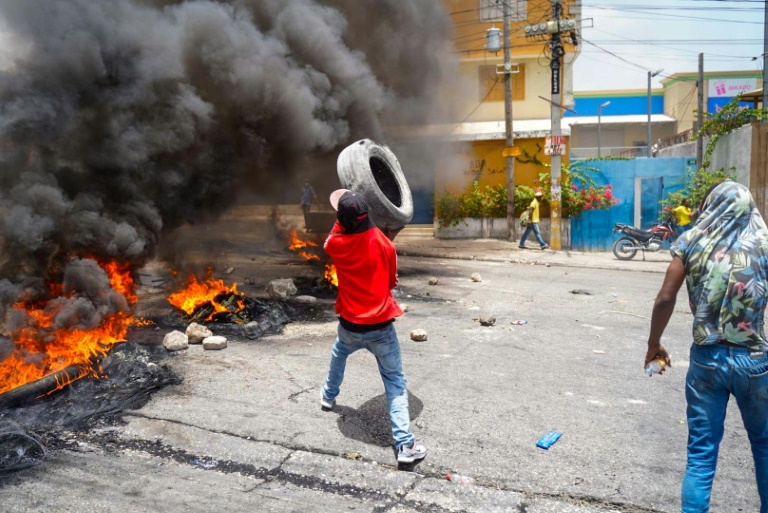
Outraged, motorcycle cab drivers built barricades on some of the city’s main roads on Wednesday, and residents were only able to make short trips by motorcycle within their neighborhoods, according to AFP journalists on the scene.

That further complicates their already dangerous situation: for the past several years, Haiti has seen a wave of mass kidnappings, as gangs snatch people of all walks of life, including foreigners, off the streets.

Emboldened by police inaction, gangs have become increasingly brazen in recent weeks. At least 155 kidnappings took place in the month of June, compared to 118 in May, according to a report released by the Center for Analysis and Research in Human Rights released Wednesday.

– ‘A significant increase in hunger’ –

The crushing poverty and widespread violence is causing many Haitians to flee to the Dominican Republic, with which Haiti shares a border, or to the United States.

With no money and no visas, many of them risk their lives by boarding makeshift boats in the hopes of reaching Florida.

Many end up in Cuba or the Bahamas, or are stopped at sea by American authorities and returned home.

More than 1,200 undocumented migrants were sent back to Haiti in the month of June alone, according to government figures.

When they return, they have to face the poverty they tried to escape and annual inflation of 20 percent, with economists warning that that it could spike further to 30 percent because of the global reverberations of Russia’s war in Ukraine.

“We are seeing a significant increase in hunger in the capital and in the south of the country, with Port-au-Prince hit the hardest,” Jean-Martin Bauer, director of the World Food Program, said on Tuesday.

Nearly half Haiti’s 11 million residents already face food shortages, including 1.3 million who are facing a humanitarian emergency, which precedes famine, according to UN calculations.

But the violence interferes with efforts to help them also: already the WFP, trying to bypass areas of Port-au-Prince, seeks to deliver aid to the south and north of the country by air and sea.

Close Bitnami banner
Bitnami