World

Sri Lanka president seeks seaborne escape after airport standoff

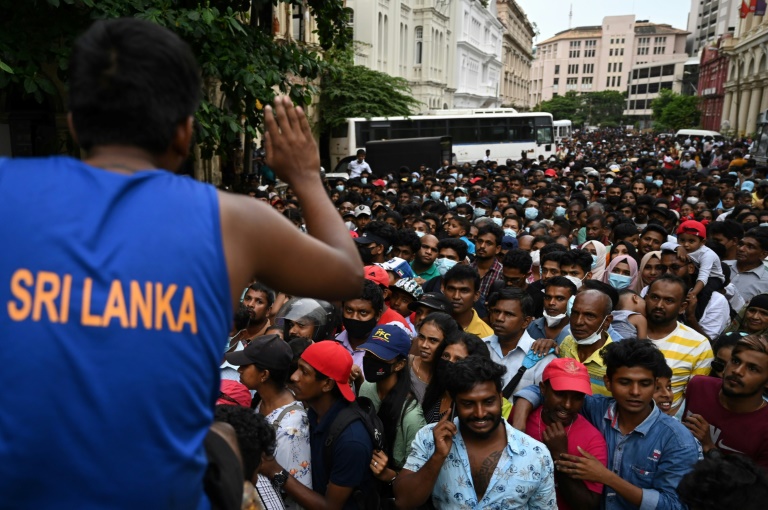
Sri Lanka’s president headed to a naval base Tuesday with a view to fleeing his island by ship following a humiliating standoff at the airport, official sources said.

Gotabaya Rajapaksa has promised to resign on Wednesday and clear the way for a “peaceful transition of power” following widespread protests against him over the country’s worst economic crisis.

The 73-year-old leader fled his official residence in Colombo just before tens of thousands of protesters overran it on Saturday. He then wanted to fly to Dubai, officials said.

As president, Rajapaksa enjoys immunity from arrest, and he is believed to want to go abroad before stepping down to avoid the possibility of being detained.

But immigration staff at Bandaranaike International withdrew from VIP services on Monday and insisted that all passengers must go through public counters.

The presidential party were reluctant to go through regular channels fearing public reactions, a security official said, and as a result, missed four flights that could have taken them to the United Arab Emirates.

Attempts to arrange a military flight to a neighbouring country also failed as clearance to land was not immediately available, the official added.

The president and his wife spent the night at a military airbase next to the airport.

A top defence source said the president’s closest military aides were discussing the possibility of taking him and his entourage overseas aboard a naval patrol craft.

“The best option now is to take the sea exit,” the defence official said. “He could go to the Maldives or India and get a flight to Dubai.”

The group left the airbase on Tuesday afternoon in two Bell 412 helicopters, an airport source said, bound for the northeastern port of Trincomalee, site of the naval base where Rajapaksa initially took refuge after fleeing his palace on Saturday.

Another option was to fly from Hingurakgoda air base where the choppers stopped to refuel, an air force source said, adding it had a runway that could accommodate executive jets.

Rajapaksa’s youngest brother Basil, who resigned in April as finance minister, missed his own Emirates flight to Dubai early Tuesday after a tense standoff with airport staff.

Basil — who holds US citizenship in addition to Sri Lankan nationality — tried to use a paid concierge service for business travellers, but airport and immigration staff said they had withdrawn from the fast track service.

“There were some other passengers who protested against Basil boarding their flight,” an airport official told AFP. “It was a tense situation, so he hurriedly left the airport.”

– Hasty retreat –

Basil had to obtain a new US passport after leaving his behind at the presidential palace when the Rajapaksas beat a hasty retreat to avoid mobs on Saturday, a diplomatic source said.

Official sources said a suitcase full of documents had also been left behind at the stately mansion along with 17.85 million rupees (about $50,000) in cash, now in the custody of a Colombo court.

There was no official word from the president’s office about his whereabouts, but he remained commander-in-chief of the armed forces with military resources at his disposal.

Rajapaksa is accused of mismanaging the economy to a point where the country has run out of foreign exchange to finance even the most essential imports, leading to severe hardships for the 22 million population.

If he steps down as promised, Prime Minister Ranil Wickremesinghe will automatically become acting president until parliament elects an MP to serve out the presidential term, which ends in November 2024.

Sri Lanka defaulted on its $51-billion foreign debt in April and is in talks with the IMF for a possible bailout.
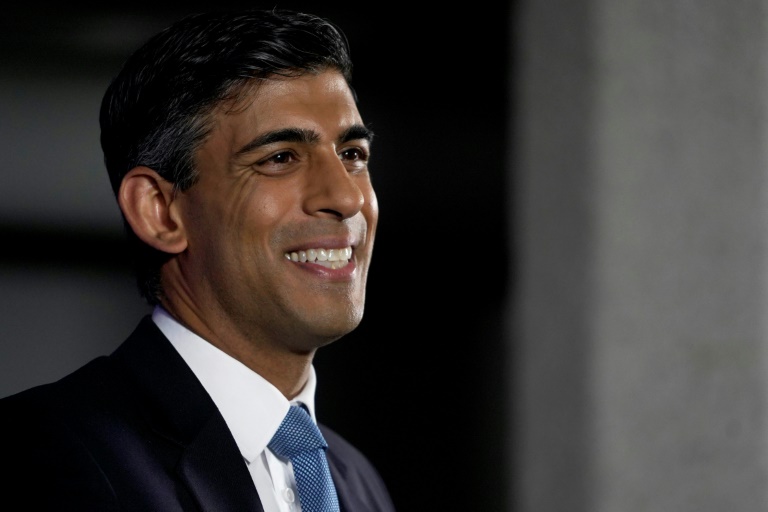

UK's Sunak refuses to attack Johnson in leadership bid

Former finance minister Rishi Sunak said Tuesday his campaign to be Britain’s next prime minister would avoid any attempt to “demonise” Boris Johnson, despite having helped trigger his dramatic downfall.

Sunak, 42, and another minister quit last week in protest at Johnson’s scandal-hit administration, setting off a wave of government resignations that forced him to step down as Conservative leader. 

Johnson is staying on in Downing Street as prime minister until an internal party contest finds his successor. The result is due on September 5.

But the main opposition Labour party said it would try to force a vote of no confidence in the government to try to get him out of office sooner.

Labour leader Keir Starmer said that by their actions last week, the Tories had “concluded that the prime minister is unfit for office”

“They can’t now let him cling on for weeks and weeks and weeks until September 5,” he argued. “It would be intolerable for the country.”

The no-confidence motion is expected to be voted on by the House of Commons on Wednesday.

Sunak, who was appointed chancellor of the exchequer in early 2020 just as the Covid pandemic hit, is seen as one of the frontrunners for the Tory leadership.

But he refused to distance himself from Johnson’s administration, in which he played a key role supporting businesses and workers during the pandemic.

– ‘Remarkable’ –

He called Johnson “one of the most remarkable people I’ve met”.

“Whatever some commentators may say, he has a good heart,” he told cheering supporters, after one Johnson ally accused Sunak of being a treacherous “snake”.

“But did I disagree with him? Frequently. Is he flawed? Yes, and so are the rest of us. Was it no longer working? Yes, and that’s why I resigned.

“But let me be clear, I will have no part in a rewriting of history that seeks to demonise Boris, exaggerate his faults or deny his efforts.”

Johnson’s departure was a spectacular fall from grace for a politician who secured a landslide election win in December 2019 and took the country out of the European Union just a month later.

Sunak said he would not shy away from praising that or recognising Johnson’s stewardship of the fightback against Covid or his hawkish support for Ukraine.

“Some people might advise that I should avoid saying all of this in case of alienating people but that wouldn’t be honest,” he added. 

“If telling you what I think — positive and negative — costs me the leadership, so be it.”

So far, 10 candidates, including Sunak, his replacement at the Treasury Nadhim Zahawi and Foreign Secretary Liz Truss are vying to replace Johnson.

Transport Secretary Grant Shapps withdrew and threw his weight behind Sunak’s campaign. Justice Secretary Dominic Raab is also backing Sunak.

– Patel out –

Home Secretary Priti Patel — who like Truss is a favourite of the Tory right — was rumoured to be about to join the fray but ruled out a bid.

After days of sniping among leading contenders, Patel expressed hope “the contest will be conducted in a good spirit that brings our party together”.

Candidates each need 20 nominations from Tory MPs by 1700 GMT on Tuesday, which will whittle down their number before a first vote Wednesday.

Those failing to get 30 votes will then be eliminated. A series of votes will be held into next week until there are just two left in the race.

Grassroots party members will then be balloted.

Sunak, who if successful would become Britain’s first Hindu prime minister, said he had a plan to steer the country through troubled economic times, not least the soaring cost of living.

But unlike several other candidates, he said it was “not credible to promise lots more spending and lower taxes”.

And he rejected claims that as part of Johnson’s tarnished administration, he was not the fresh start he was claiming.

He said he had already responded to revelations about his wealthy wife — after it emerged that she was not paying UK tax on overseas income — and that he had a green card for US residency even while serving as chancellor.

Sunak and Johnson were also both fined by police for attending a lockdown-breaking party in Downing Street.

The Dutch art detective who says he recovered the 'Blood of Christ' relic

It was 10:30 pm on a Friday when Arthur Brand got the delivery he was nervously expecting. 

His doorbell rang, and when he opened the door no one was there. Instead, a cardboard box was waiting for him at the door in the dark.

In that box he said was one of the most sacred artefacts ever stolen from the Catholic Church: the “Precious Blood of Christ” relic.

“(My) heart was beating in (my) chest,” the Dutch art detective told AFP in an interview about the recovery of the stolen treasure. 

Brand is dubbed the “Indiana Jones of the Art World” for his remarkable recoveries of stolen art, including the “Hitler’s Horses” bronze statues, a Picasso painting and a ring that once belonged to Oscar Wilde. 

At 52, he is one of the most famous art sleuths in the world, trusted by both thieves and police for his unprecedented access to the criminal trade in stolen art.

But getting his hands on the “Precious Blood of Christ” relic was a particularly special experience for him.

“As a Catholic myself, this is about as close to Jesus and the legend of the Holy Grail you can get.”

“It was a religious experience,” he said. 

– ‘Massive shock’ – 

When he opened the box, he discovered what he hoped he would: the relic perfectly intact. 

The ornate container, about 30 centimetres (11 inches) high, has two metal bulbs inside and is said to hold drops of Jesus’ blood collected in the Holy Grail during the crucifixion.

It is held in a heavily gilded copper box with encrusted precious stones and depictions of Christ on the cross and other saints. 

The holy relic is believed to date back to the death of Christ and has been a source of worship for Catholic pilgrims for more than 1,000 years. 

It was held by the Fecamp Abbey in France’s Normandy region until the night of June 1-2, when it was stolen, just two weeks before the annual “Mass of the Precious Blood” celebration.

“The thief most likely got inside by being locked in after hours and made off with the artefact,” Brand said.

“It was a massive shock that this famous piece, this legendary piece was stolen,” he told AFP in his home, the relic on display nearby. 

– ‘The real thing’ –

The relic and its copper box were not the only objects waiting in the cardboard package on Brand’s doorstep on that fateful July evening.

There were several copper liturgical plates, depictions of saints and an ornate goblet, which were also stolen from the abbey in June. 

Brand carefully showed AFP the ornate and heavy copper box with a miniature roof and four angels on its corners, called a reliquary. 

AFP could not independently verify the authenticity of the objects, and they have not yet been examined by police or experts. The abbey could not immediately be reached for comment.

But Brand is certain about their authenticity.

“I have no doubt in my mind that it is the real thing. Religious objects are almost impossible to forge.”

The sacred relic will be handed to Dutch law enforcement once they receive a request for mutual assistance from France, Dutch police said Tuesday. 

Once Dutch police receive the object, they will investigate the authenticity of the object and try to identify the thief.

“After the investigation, our conclusions and the relic will be returned to the French police,” Dutch national police spokesman Dennis Janus told AFP. 

– ‘A curse’ –

Brand said his involvement in the case started a few days after the theft, when he received a protected email from an anonymous writer, claiming to have the stolen loot in their possession.

“This person was approaching me on behalf of another, at whose home the stolen relics were being stored,” said Brand.

But “to have the ultimate relic, the blood of Jesus in your home, stolen, that’s a curse,” he said. 

“When they realised what it was, that you in fact cannot sell it, they knew they had to get rid of it.” 

Brand showed AFP an email written in Dutch in which the person asked him to take back the stolen property, as it was too risky to return it to the abbey itself.

Brand was told that the stolen artefact would be delivered to his home, but no date or time was given.

“I was virtually a prisoner in my own home for a week. I could not leave,” he said, laughing.

Finally the objects turned up, delivered by an anonymous sender. 

Asked why the thieves would return the stolen art to Brand, he said “it would be too dangerous to involve the police”.

“These people know my reputation and that the most important thing is to return this to the church. Hopefully it will stand for another thousand years,” Brand said.

Western Europe wilts under fresh heatwave

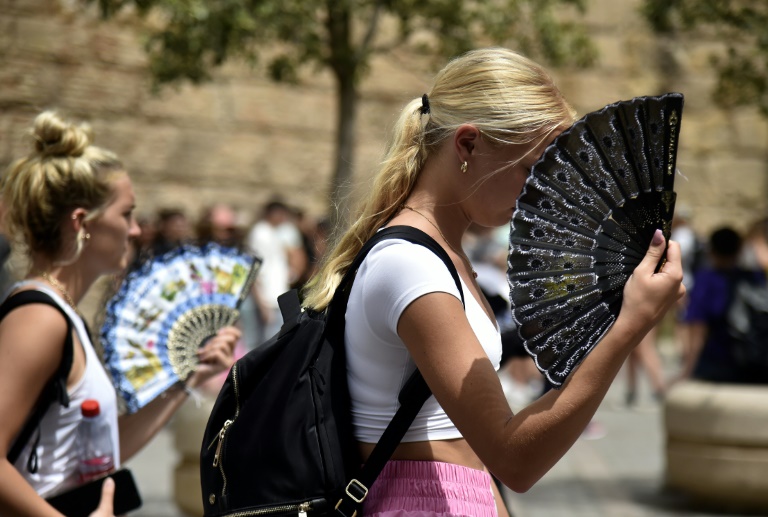
Firefighters battled wildfires in Spain and Portugal Tuesday as Western Europe faced its second heatwave in less than a month which threatened glaciers in the Alps and worsened drought conditions.

The mass of hot air which pushed temperatures above 40 degrees Celsius (104 Fahrenheit) in large parts of the Iberian Peninsula since Sunday was set to spread to the north and east in the coming days.

“We do expect it to worsen,” World Meteorological Organization spokeswoman Clare Nullis told a briefing in Geneva on Tuesday.

“Accompanying this heat is drought. We’ve got very, very dry soils at the moment,” she said.

“The glaciers in the Alps, are really being punished at the moment. It’s been a very bad season for the glaciers. And we’re still relatively early in the summer.”

Last week an avalanche set off by the collapse of the largest glacier in the Italian Alps amid unusually warm temperatures killed 11 people.

Heatwaves have become more frequent due to climate change, scientists say. As global temperatures rise over time, heatwaves are expected to become more intense.

In Spain, some 300 firefighters backed by 17 planes and helicopters were battling a wildfire in the eastern region of Extremadura which has ravaged 2,500 hectares of land, local officials said.

Speaking in parliament, Spanish Prime Minister Pedro Sanchez promised “more resources” for the fight against forest fires that are being fanned by “the climate emergency the planet is going through”.

– ‘It’s hell’ –

Temperatures are forecast to keep rising in Spain until Thursday, with highs of up to 44 Celsius expected in Guadalquivir valley in Seville in the south.

Spain’s health ministry warned the “intense heat” could affect people’s “vital functions” and provoke problems like heat stroke.

It advised people to drink water frequently, wear light clothes and “remain as long as possible” in the shade or in air-conditioned places.

“It’s hell,” said Dania Arteaga, a 43-year-old cleaner in a shop in central Madrid, her forehead covered in sweat.

In neighbouring Portugal, firefighters were battling a blaze which has ravaged some 2,000 hectares (4,900 acres) of land in the central municipality of Ourem since Thursday. 

The blaze has been brought under control on Monday but it flared up again on Tuesday morning.

With temperatures set to surpass 40 Celsius on Tuesday in much of the country, Portuguese Prime Minster Antonio Costa urged “a maximum of caution”.

The government has issued a “situation of alert” for wildfires for the whole country until at least Friday, raising the readiness levels of firefighters, police and emergency medical services.

– ‘Vulnerable people’ –

The current situation is stirring memories of devastating wildfires in 2017 which claimed the lives of over 100 people in Portugal.

Local officials in the town of Sintra near Lisbon closed a series of tourist attractions such as palaces and monuments in a verdant mountain range popular with visitors as a precaution.

In France, temperatures — which reached 30 Celsius in much of the country Monday — could spike to 39 Celsius in some areas Tuesday, the national weather service Meteo France predicted.

Prime Minister Elisabeth Borne urged all government ministers to be ready to deal with the consequences of the heatwave which is forecast to last for up to 10 days.

“The heat affects people’s health very quickly, especially that of the most vulnerable,” her office said in a statement.

Britain issued an extreme heat warning, with temperatures forecast to hit 35 Celsius in the southeast of the country in the coming days.

The extreme heat warning was classified as “amber”, the second-highest alert level, indicating a “high impact” on daily life and people.

Western Europe wilts under fresh heatwave

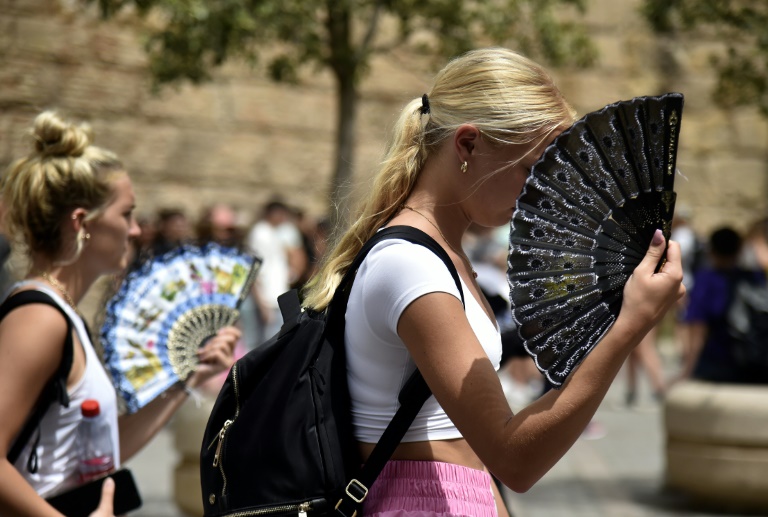
Firefighters battled wildfires in Spain and Portugal Tuesday as Western Europe faced its second heatwave in less than a month which threatened glaciers in the Alps and worsened drought conditions.

The mass of hot air which pushed temperatures above 40 degrees Celsius (104 Fahrenheit) in large parts of the Iberian Peninsula since Sunday was set to spread to the north and east in the coming days.

“We do expect it to worsen,” World Meteorological Organization spokeswoman Clare Nullis told a briefing in Geneva on Tuesday.

“Accompanying this heat is drought. We’ve got very, very dry soils at the moment,” she said.

“The glaciers in the Alps, are really being punished at the moment. It’s been a very bad season for the glaciers. And we’re still relatively early in the summer.”

Last week an avalanche set off by the collapse of the largest glacier in the Italian Alps amid unusually warm temperatures killed 11 people.

Heatwaves have become more frequent due to climate change, scientists say. As global temperatures rise over time, heatwaves are expected to become more intense.

In Spain, some 300 firefighters backed by 17 planes and helicopters were battling a wildfire in the eastern region of Extremadura which has ravaged 2,500 hectares of land, local officials said.

Speaking in parliament, Spanish Prime Minister Pedro Sanchez promised “more resources” for the fight against forest fires that are being fanned by “the climate emergency the planet is going through”.

– ‘It’s hell’ –

Temperatures are forecast to keep rising in Spain until Thursday, with highs of up to 44 Celsius expected in Guadalquivir valley in Seville in the south.

Spain’s health ministry warned the “intense heat” could affect people’s “vital functions” and provoke problems like heat stroke.

It advised people to drink water frequently, wear light clothes and “remain as long as possible” in the shade or in air-conditioned places.

“It’s hell,” said Dania Arteaga, a 43-year-old cleaner in a shop in central Madrid, her forehead covered in sweat.

In neighbouring Portugal, firefighters were battling a blaze which has ravaged some 2,000 hectares (4,900 acres) of land in the central municipality of Ourem since Thursday. 

The blaze has been brought under control on Monday but it flared up again on Tuesday morning.

With temperatures set to surpass 40 Celsius on Tuesday in much of the country, Portuguese Prime Minster Antonio Costa urged “a maximum of caution”.

The government has issued a “situation of alert” for wildfires for the whole country until at least Friday, raising the readiness levels of firefighters, police and emergency medical services.

– ‘Vulnerable people’ –

The current situation is stirring memories of devastating wildfires in 2017 which claimed the lives of over 100 people in Portugal.

Local officials in the town of Sintra near Lisbon closed a series of tourist attractions such as palaces and monuments in a verdant mountain range popular with visitors as a precaution.

In France, temperatures — which reached 30 Celsius in much of the country Monday — could spike to 39 Celsius in some areas Tuesday, the national weather service Meteo France predicted.

Prime Minister Elisabeth Borne urged all government ministers to be ready to deal with the consequences of the heatwave which is forecast to last for up to 10 days.

“The heat affects people’s health very quickly, especially that of the most vulnerable,” her office said in a statement.

Britain issued an extreme heat warning, with temperatures forecast to hit 35 Celsius in the southeast of the country in the coming days.

The extreme heat warning was classified as “amber”, the second-highest alert level, indicating a “high impact” on daily life and people.

Heavy rains flood villages in Russia's climate-hit Far East

Heavy rainfall has flooded several villages in Yakutia, in Russia’s Far East region, authorities said on Tuesday.

Yakutia has been badly affected in recent summers by extreme weather — including wildfires and floods — that scientists say is linked to climate change.

Such extreme weather events are expected to become even more frequent, more prolonged and more intense in the future.

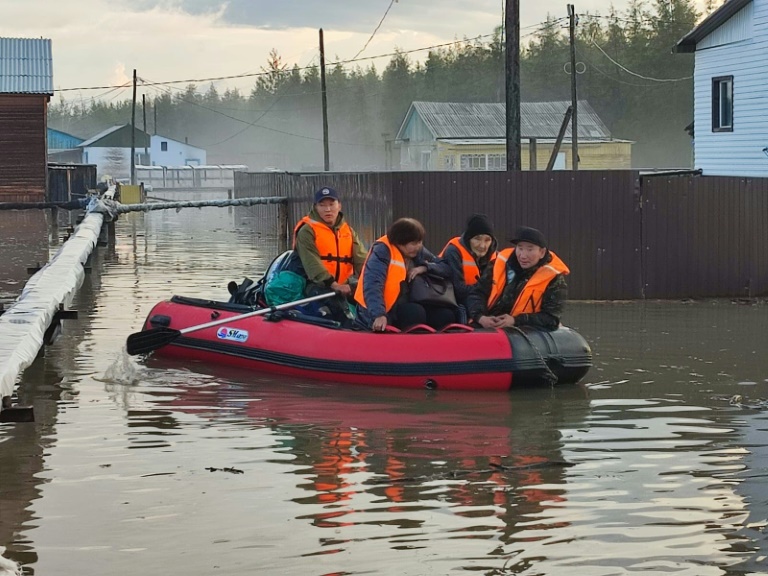
The government of Yakutia said the rains had broken structures around a dam and left a remote village in Siberia “almost entirely” flooded.

Dozens of people have had to leave their homes, it said. 

“Due to heavy rains on July 11, despite the installation of protective structures, a dam broke and flooded the village of Betenkes almost entirely,” the Yakutia government wrote on the Telegram messaging app.   

The small village lies on the banks of the Adycha River in northeastern Siberia. 

“At 7:00 am this morning, the water level reached a critical 1,000 centimetres (33 feet),” the local government said. 

It said 36 homes had been flooded and more than 100 plots of lands. 

A dozen people were in temporary accommodation, while 72 others were staying with relatives, it added. 

The local government published photos of rescuers on a small boat leading horses through the flooded village, surrounded by wooden houses deep in water.

It also said authorities were working to bring supplies to other flooded villages.  

On Telegram it published a video of a propeller plane being loaded with more than two tonnes of food for flood victims in the remote village of Suordakh, in the western part of Yakutia. 

The plane will then ferry elderly people and children from the village to the regional capital, Yakutsk.

Flooding in recent days has damaged 85 houses in Suordakh, where 317 people live, the authorities said. 

Russian President Vladimir Putin made comments earlier in his rule suggesting scepticism about climate change but has in recent years ordered his government to protect Russia from the effects of changing weather.

Kyiv says hits Russian arms depot, Istanbul announces grain talks

Kyiv said Tuesday it had launched artillery barrages that a destroyed a Russian arms depot and carried out a “special operation” to free military captives in the Moscow-controlled Kherson region.

The bombardments in the south came as the EU green-lit one billion euros in aid for Ukraine and Turkey announced that delegations from Moscow and Kyiv would meet in Istanbul on Wednesday to discuss the resumption of stalled grain deliveries across the Black Sea.

The bombardment overnight in the Kherson region, which Russian forces captured soon after they invaded in late February, were reported as Kyiv tries to claw back territory in the south.

Ukrainian military officials said the strikes had destroyed artillery, armoured vehicles “and a warehouse with ammunition” in Nova Kakhovka.

Russian-backed authorities, however, accused the Ukrainians of damaging civilian infrastructure and killing at least seven people, a toll that could not be independently verified.

“There are no military targets here,” the head of the city’s Moscow-backed administration, Vladimir Leontiev, said on social media.

“Warehouses were hit, as were shops, a pharmacy, petrol stations and even a church,” he added.

Ukrainian military intelligence said separately that its troops had rescued five people in a “special operation” in Kherson, including a military serviceman and former police officer, without specifying when.

– EU financial aid –

The Ukrainian army has for several weeks been waging a counter-offensive designed to recapture Kherson, while Russian troops have focused on trying to capture the entire eastern Donbas region.

The deputy head of the pro-Russian authorities in Kherson, Ekaterina Gubareva, accused Ukraine of having used long-range, precision artillery systems supplied by the United States in the strikes in Nova Kakhovka.

Military analysts are crediting newly arrived systems from the West — including HIMARS from the United States — with attacks deeper in Russian-controlled territory in Ukraine, including on ammunition depots.

EU member states, which have been supplying Ukraine with military support, on Tuesday also approved one billion euros in financial support for Kyiv.

“This will give Ukraine the necessary funds to cover urgent needs and ensure the operation of critical infrastructure,” said Zbynek Stanjura, the finance minister of the Czech Republic, which holds the EU’s rotating presidency.

The United States, however, cautioned Monday that Iran was planning to supply drones with combat weapon capabilities to Russia for use in Ukraine.

Russian forces early Tuesday launched “massive” strikes on the southern Ukrainian city of Mykolaiv, with missiles hitting two medical facilities and residential buildings, the city’s mayor Oleksandr Sienkevych said.

The regional head, Vitaliy Kim, said 12 people were wounded.

– ‘Front getting closer’ –

The heaviest fighting in recent weeks has centred on the industrial east in the Donbas where Moscow’s forces have slowly advanced despite fierce resistance since failing to capture Kyiv after its February 24 invasion.

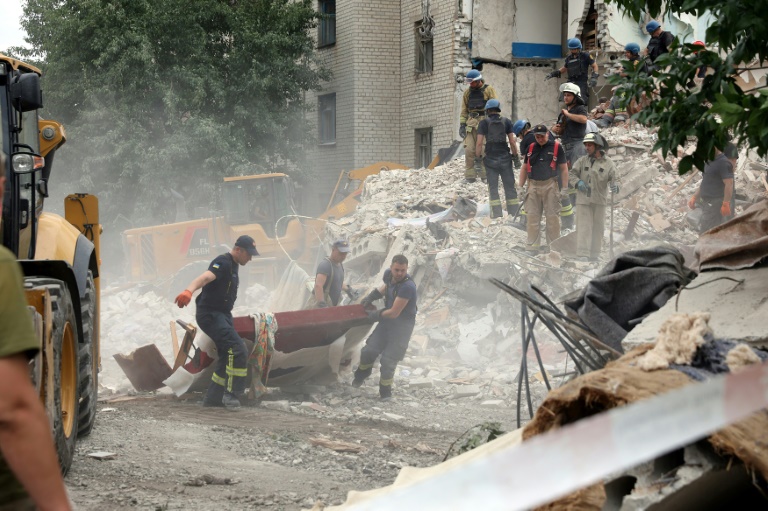
Ukrainian emergency services said the death toll had risen to 35, two days after Russian bombardment flattened a residential building in the eastern town of Chasiv Yar, in the Donetsk region of the Donbas.

In Bakhmut — one of the few remaining cities under Ukrainian control in the eastern region — AFP journalists could hear nearby artillery fire.

“I’d like to evacuate too but my parents don’t want to. Everyone has gone. I only have one friend left here,” said eight-year-old Sofia, watching around two dozen people gather near the town hall to evacuate further west.

“The front is getting closer,” said municipal offical, Dmytro Podkuyidko, estimating the more than one-third of the town’s esimtated population of 73,000 have fled.

“If it gets worse, I’ll end up leaving too,” Podkuyidko said.

The Kremlin has been working to consolidate its hold over territories it controls like Kherson, both militarily and bureaucratically since the beginning of the conflict.

After Russian President Vladimir Putin on Monday passed a decree fast-tracking Russian passports for all Ukrainians, Foreign Minister Sergei Lavrov was expected Tuesday to open a representative office for separatist authorities in Moscow.

burs-jbr/jm

Iran to supply Russians with UAVs for Ukraine: White House

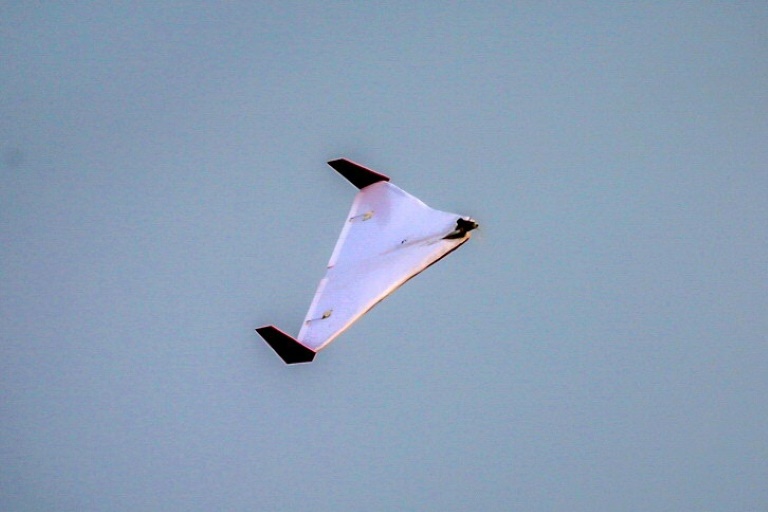
Iran is planning to supply hundreds of drones with combat weapon capabilities to Russia for use in Ukraine, a top US official said Monday.

Jake Sullivan, the White House national security advisor, said the information received by the United States supported views that the Russian military is facing challenges sustaining its weaponry after significant losses in Ukraine.

“The Iranian government is preparing to provide Russia with up to several hundred UAVs (unmanned aerial vehicles), including weapons-capable UAVs, on an expedited timeline,” Sullivan told reporters.

“Our information further indicates that Iran is preparing to train Russian forces to use these UAVs, with initial training sessions slated to begin as soon as early July,” he said.

Iran responded on Tuesday by saying that “no special development” had taken place in technological cooperation with Russia following its invasion of Ukraine in February.

Without specifically mentioning drones, Iran’s foreign ministry spokesman Nasser Kanani said cooperation with Russia “in the field of some modern technologies predates the war in Ukraine, and there has been no special development in that regard recently.”

Tehran’s position regarding the war “is quite clear and has been officially announced many times,” he added.

Iran has maintained that it is against the war in Ukraine and called for a political solution, while blaming the roots of the crisis on the United States and NATO’s expansion.

“The claim of the American official (Sullivan) comes as the US and the Europeans have for years turned the occupying and aggressor countries, including in the West Asia region, into a storehouse of their various deadly weapons,” Kanani added.

Sullivan said it was not clear whether Iran had delivered any of the drones to Russia yet.

He noted that Iran’s drones have been used by the Huthi rebels in Yemen to attack Saudi Arabia.

Drones have played a crucial role on both sides of the war in Ukraine, for everything from firing missiles from a distance, to dropping small bombs on targets, to conducting reconnaissance for artillery forces and ground troops.

Ukraine’s forces have had particular success in using Turkish-made Bayraktar armed combat UAVs, and the United States and other allies have supplied Kyiv with many types of smaller drones.

“From our perspective, we will continue to do our part to help sustain the effective defense of Ukraine and to help the Ukrainians show that the Russian effort to try to wipe Ukraine off the map cannot succeed,” Sullivan said.

James Webb Telescope to release more breathtaking cosmic views

After unveiling the clearest view yet of the distant cosmos, the James Webb Space Telescope has more to come. 

The next wave of images on Tuesday will reveal details about the atmosphere of a faraway gas planet, a “stellar nursery” where stars form, a “quintet” of galaxies locked in a dance of close encounters, and the cloud of gas around a dying star.

They will be published starting from 10:30 am Eastern Time (1430 GMT), in an event live streamed from the NASA Goddard Space Flight Center, just outside Washington.

Targets include Carina Nebula, a stellar nursery, famous for its towering pillars that include “Mystic Mountain,” a three-light-year-tall cosmic pinnacle captured in an iconic image by Hubble.

Webb has also carried out a spectroscopy — an analysis of light that reveals detailed information — on a gas giant planet called WASP-96 b, which was discovered in 2014.

Nearly 1,150 light-years from Earth, WASP-96 b is about half the mass of Jupiter and zips around its star in just 3.4 days.

On Monday, Webb revealed the clearest image to date of the early universe, going back 13 billion years, NASA said Monday.

The stunning shot, released in a White House briefing by President Joe Biden, is overflowing with thousands of galaxies and features some of the faintest objects observed.

Known as Webb’s First Deep Field, it shows the galaxy cluster SMACS 0723, which acts as a gravitational lens, bending light from more distant galaxies behind it towards the observatory, in a cosmic magnification effect.

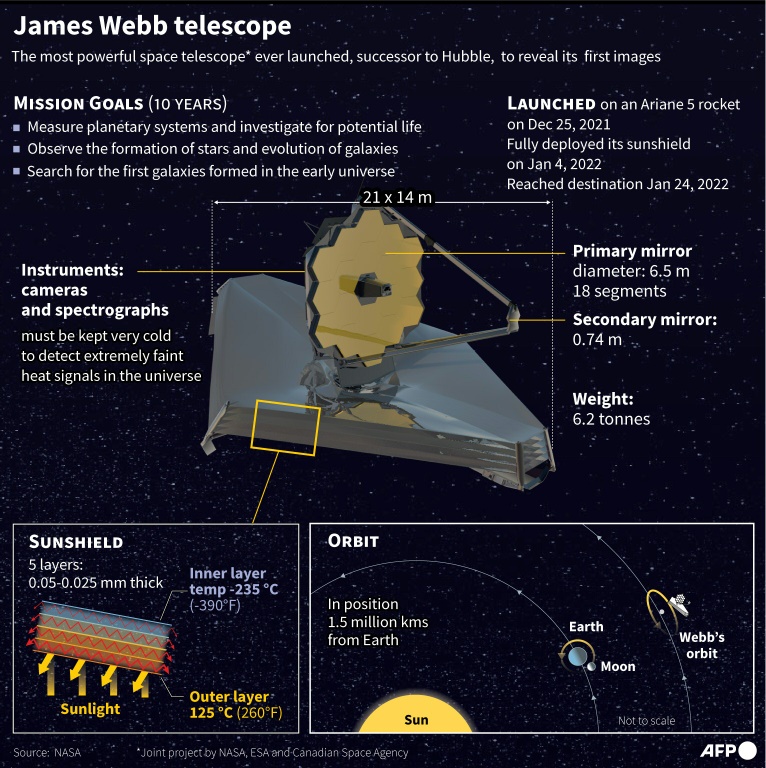
Launched in December 2021 from French Guiana on an Ariane 5 rocket, Webb is orbiting the Sun at a distance of a million miles (1.6 million kilometers) from Earth, in a region of space called the second Lagrange point.

Here, it remains in a fixed position relative to the Earth and Sun, with minimal fuel required for course corrections. 

A wonder of engineering, the total project cost is estimated at $10 billion, making it one of the most expensive scientific platforms ever built, comparable to the Large Hadron Collider at CERN.

Webb’s primary mirror is over 21 feet (6.5 meters) wide and is made up of 18 gold-coated mirror segments. Like a camera held in one’s hand, the structure must remain as stable as possible to achieve the best shots.

After the first images, astronomers around the globe will get shares of time on the telescope, with projects selected competitively through a process in which applicants and selectors don’t know each other’s identities, to minimize bias.

Thanks to an efficient launch, NASA estimates Webb has enough propellant for a 20-year life, as it works in concert with the Hubble and Spitzer space telescopes to answer fundamental questions about the cosmos.

James Webb Telescope to release more breathtaking cosmic views

After unveiling the clearest view yet of the distant cosmos, the James Webb Space Telescope has more to come. 

The next wave of images on Tuesday will reveal details about the atmosphere of a faraway gas planet, a “stellar nursery” where stars form, a “quintet” of galaxies locked in a dance of close encounters, and the cloud of gas around a dying star.

They will be published starting from 10:30 am Eastern Time (1430 GMT), in an event live streamed from the NASA Goddard Space Flight Center, just outside Washington.

Targets include Carina Nebula, a stellar nursery, famous for its towering pillars that include “Mystic Mountain,” a three-light-year-tall cosmic pinnacle captured in an iconic image by Hubble.

Webb has also carried out a spectroscopy — an analysis of light that reveals detailed information — on a gas giant planet called WASP-96 b, which was discovered in 2014.

Nearly 1,150 light-years from Earth, WASP-96 b is about half the mass of Jupiter and zips around its star in just 3.4 days.

On Monday, Webb revealed the clearest image to date of the early universe, going back 13 billion years, NASA said Monday.

The stunning shot, released in a White House briefing by President Joe Biden, is overflowing with thousands of galaxies and features some of the faintest objects observed.

Known as Webb’s First Deep Field, it shows the galaxy cluster SMACS 0723, which acts as a gravitational lens, bending light from more distant galaxies behind it towards the observatory, in a cosmic magnification effect.

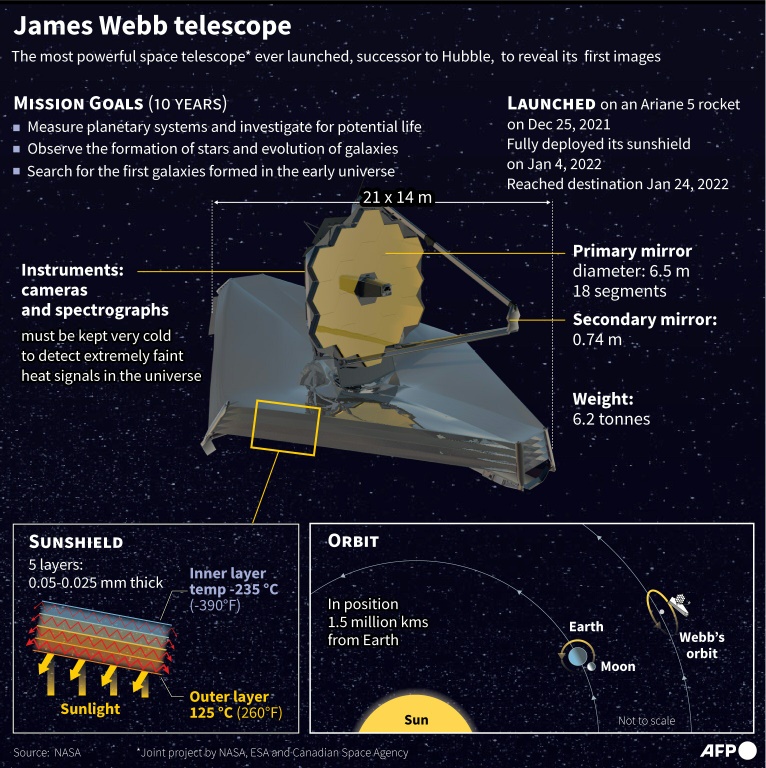
Launched in December 2021 from French Guiana on an Ariane 5 rocket, Webb is orbiting the Sun at a distance of a million miles (1.6 million kilometers) from Earth, in a region of space called the second Lagrange point.

Here, it remains in a fixed position relative to the Earth and Sun, with minimal fuel required for course corrections. 

A wonder of engineering, the total project cost is estimated at $10 billion, making it one of the most expensive scientific platforms ever built, comparable to the Large Hadron Collider at CERN.

Webb’s primary mirror is over 21 feet (6.5 meters) wide and is made up of 18 gold-coated mirror segments. Like a camera held in one’s hand, the structure must remain as stable as possible to achieve the best shots.

After the first images, astronomers around the globe will get shares of time on the telescope, with projects selected competitively through a process in which applicants and selectors don’t know each other’s identities, to minimize bias.

Thanks to an efficient launch, NASA estimates Webb has enough propellant for a 20-year life, as it works in concert with the Hubble and Spitzer space telescopes to answer fundamental questions about the cosmos.

Close Bitnami banner
Bitnami