World

War in Ukraine: Latest developments

Here are the latest developments in the war in Ukraine:

– Ukraine claims arms depot hit –

Kyiv says it has destroyed an arms depot as part of a barrage of rockets and missiles on Russian military targets in southern Ukraine.

Ukrainian military officials say the strikes in the Kherson region destroyed artillery, armoured vehicles “and a warehouse with ammunition in Nova Kakhovka”.

Russian authorities in the city say Ukrainian strikes damaged civilian infrastructure and left at least seven people dead, a toll that could not be independently verified.

– EU approves one billion euros in aid –

European Union finance ministers approve one billion euros ($1 billion) in financial aid to Ukraine, a first instalment of a promised nine-billion-euro package for Kyiv agreed in May.

“This will give Ukraine the necessary funds to cover urgent needs and ensure the operation of critical infrastructure,” says Czech Finance Minister Zbynek Stanjura, whose country holds the EU’s rotating presidency.

– ‘Massive’ strikes on southern city –

Russian forces launch “massive” strikes on the southern Ukrainian city of Mykolaiv, with missiles hitting two medical facilities and residential buildings, the city’s mayor Oleksandr Sienkevych says.

The regional head, Vitaliy Kim, says 12 people have been wounded in the attacks.

– Netherlands pledges weapons –

During a visit to Kyiv, Dutch Prime Minister Mark Rutte says the Netherlands will join other Western allies and send more advanced artillery to the front lines.

But a top US official cautions that Moscow is also receiving a weapons boost, with Iran planning to supply hundreds of drones with combat weapon capabilities to Russia for use in Ukraine.

– Fast-tracking passports –

After Russian President Vladimir Putin passed a decree fast-tracking Russian passports for all Ukrainians, Foreign Minister Sergei Lavrov is expected to open a representative office for separatist authorities in Moscow.

burs-eab/sta/ah

Euro strikes dollar parity as eurozone recession fears mount

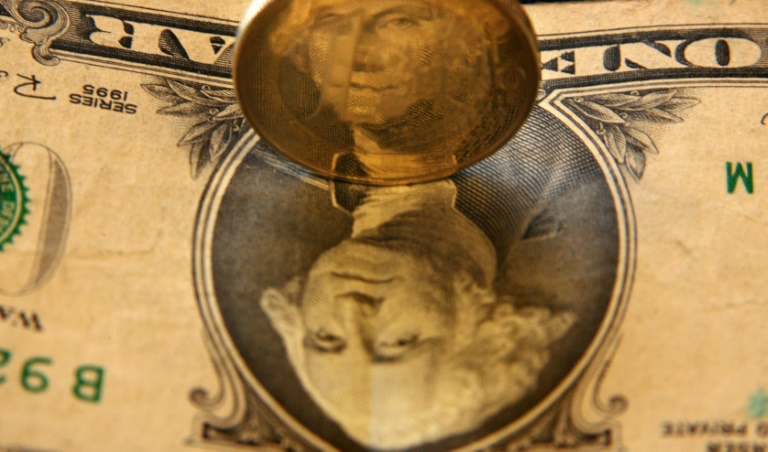
The euro struck parity with the dollar Tuesday for the first time in nearly 20 years as a cut in Russian gas supplies to Europe heightened fears of a recession in the eurozone. 

The European single currency hit exactly one dollar — its lowest level since December 2002 — before rising to $1.0023.

Oil prices meanwhile fell heavily on concerns of a wider recession as central banks hike interest rates to fight decades-high inflation.

European stock markets fell approaching the half-way mark and in the wake of overnight losses in Asia and on Wall Street.

“The gas crisis has really spooked markets over the eurozone economy,” Markets.com analyst Neil Wilson told AFP.

Russian energy giant Gazprom on Monday began 10 days of maintenance on its Nord Stream 1 pipeline — with Germany and other European countries watching anxiously to see if the gas comes back on.

With relations between Russia and the West at their lowest in years because of the invasion of Ukraine, Gazprom may not reopen the valves, according to analysts.

“The next few weeks could be challenging for Europe, with possibly maximum uncertainty stretching into August,” said SPI Asset Management’s Stephen Innes.

“Investors increasingly believe that gas may not start to flow through Nord Stream 1 again following the scheduled maintenance on July 11-21, with further ‘temporary’ interruptions seen as likely.”

Worries about a Covid flare-up in China — fuelling fears of more lockdowns — added to the downbeat mood, just as investors prepared for a week of economic data and corporate earnings that could have huge implications for markets.

A forecast-beating US jobs report last week suggested the world’s top economy was coping with higher Federal Reserve rates, but it also gave the central bank more room to continue tightening — leading to concerns it could go too far and cause a contraction.

The European single currency is also under pressure from the Federal Reserve hiking US interest rates more aggressively than the European Central Bank.

The dollar has jumped 14 percent against the euro since the start of the year.

Central banks are increasing borrowing costs in a bid to tame inflation, which has been fuelled by soaring energy prices.

Oil and gas prices have rocketed this year after economies reopened from Covid lockdowns and following the invasion of Ukraine by major energy producer Russia.

– Key figures at around 1015 GMT –

Euro/dollar: DOWN at $1.0023 from $1.0041 Monday

Pound/dollar: DOWN at $1.1847 from $1.1892 

Euro/pound: UP at 84.60 pence from 84.38 pence

Dollar/yen: DOWN at 136.91 yen from 137.41 yen

West Texas Intermediate: DOWN 2.4 percent at $101.55 per barrel

Brent North Sea crude: DOWN 2.5 percent at $104.47 per barrel

London – FTSE 100: DOWN 0.4 percent at 7,170.27 points

Frankfurt – DAX: DOWN 0.8 percent at 12,724.46

Paris – CAC 40: DOWN 0.4 percent at 5,972.14

EURO STOXX 50: DOWN 0.7 percent at 3,447.68

Tokyo – Nikkei 225: DOWN 1.8 percent at 26,336.66 (close)

Hong Kong – Hang Seng Index: DOWN 1.3 percent at 20,844.74 (close)

Shanghai – Composite: DOWN 1.0 percent at 3,281.47 (close)

New York – Dow: DOWN 0.5 percent at 31,173.84 (close)

Kyiv says hits Russian arms depot in south Ukraine

Kyiv said Tuesday it had launched a barrage of rockets and missiles on Russian military targets in southern Ukraine and destroyed an arms depot, in attacks that Moscow-backed authorities said had damaged homes.

The bombardment overnight in the Kherson region — which Russian forces captured soon after they invaded in late February — come as Kyiv’s army tries to claw back territory in the south of the country.

Ukrainian military officials said the strikes had destroyed artillery, armoured vehicles “and a warehouse with ammunition in Nova Kakhovka”.

Russian-backed authorities in the city however said Ukrainian strikes had damaged civilian infrastructure and left at least seven people dead, a toll that could not be independently verified.

“There are no military targets here… warehouses were hit, as were shops, a pharmacy, petrol stations and even a church,” the head of the city’s Moscow-backed administration, Vladimir Leontiev, said on social media.

Images published by the Moscow-backed authorities showed several buildings reduced to ash.

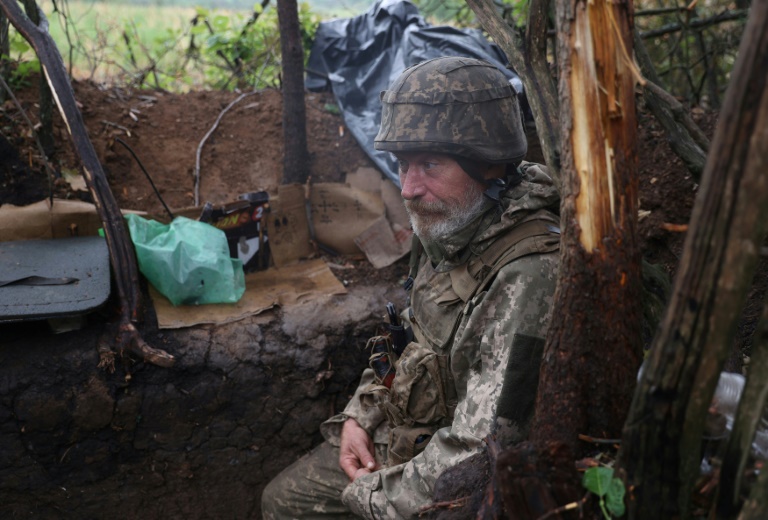
The Ukrainian army has for several weeks been waging a counter-offensive on the southern Kherson front, while Russian troops have been focusing on the country’s east.

The deputy head of the pro-Russian authorities in Kherson, Ekaterina Gubareva, accused Ukraine of having used long-range, precision artillery systems supplied by the United States in the strikes in Nova Kakhovka.

– Strikes on medical facilities –

Ukraine has pleaded for sophisticated artillery systems from Western allies to fend of Russian forces, arguing only these weapons could turn the tide of the fighting.

Now military analysts are crediting the newly arrived systems — including Caesars from France and HIMARS from the United States — with attacks deeper in Russian-controlled territory in Ukraine, including on ammunition depots.

During a visit to Kyiv on Monday, Dutch prime minister Mark Rutte said that the Netherlands too would sent more advanced artillery to the front lines.

The United States however cautioned that Moscow was also receiving a weapons boost, with Iran planning to supply hundreds of drones with combat weapon capabilities to Russia for use in Ukraine, a top US official said Monday.

Russian forces early Tuesday launched “massive” strikes on the southern Ukrainian city of Mykolaiv, with missiles hitting two medical facilities and residential buildings, the city’s mayor Oleksandr Sienkevych said.

The regional head, Vitaliy Kim, said 12 people were wounded in those attacks.

– Russian passports –

The epicentre of fighting in Ukraine in recent weeks has however been the industrial east of the country, known as the Donbas, where Moscow’s forces have slowly advanced despite fierce resistance and recent Russian strikes have left dozens dead.

Moscow has concentrated its efforts on the region since failing to capture Kyiv after its February 24 invasion.

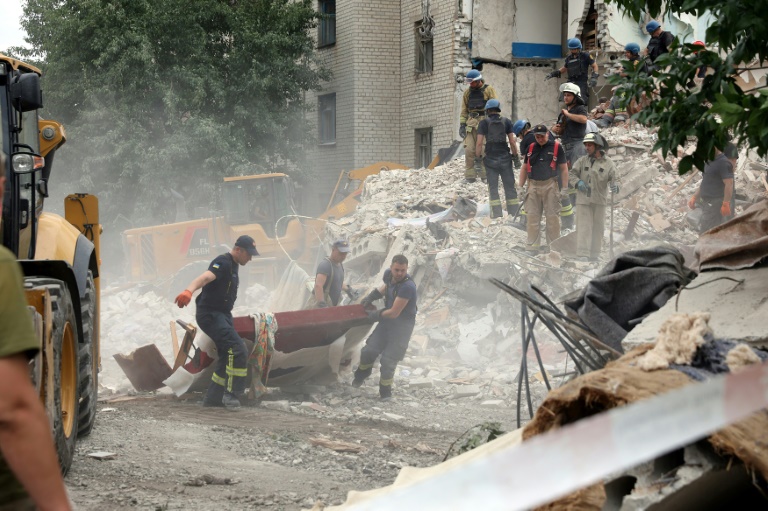
Two days after Russian bombardment reduced a residential building in the eastern town of Chasiv Yar to rubble, rescue workers were still clearing the debris and retrieving bodies from the wreckage Tuesday.

The head of the Donetsk region, which has been partially controlled by Moscow-backed separatists since 2014, said that 34 people had so far been confirmed killed by the attack on Sunday.

Nine people were recovered alive, Pavlo Kyrylenko said.

The Kremlin has been working to consolidate its hold over territories it controls like Kherson, both militarily and bureaucratically since the beginning of the conflict.

After Russian President Vladimir Putin on Monday passed a decree fast-tracking Russian passports for all Ukrainians, Foreign Minister Sergei Lavrov was expected Tuesday to open a representative office for separatist authorities in Moscow.

burs-jbr/ah

Japan mourns as funeral for former PM Abe held in Tokyo

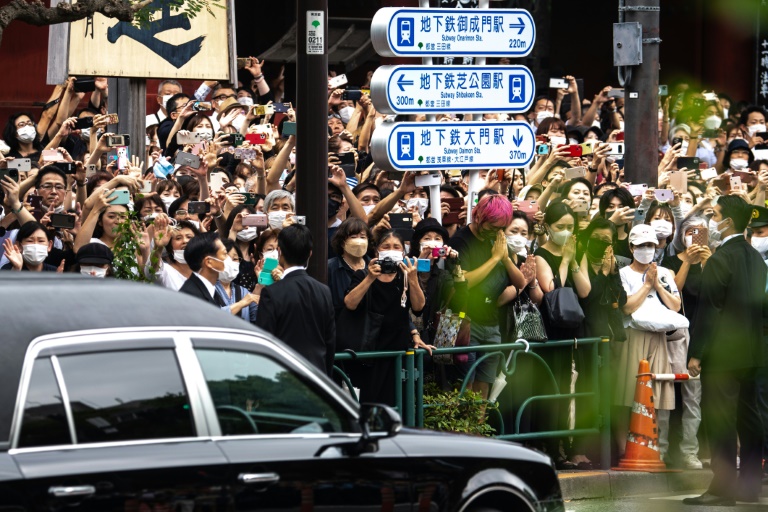
Mourners lined the streets of central Tokyo on Tuesday to bid farewell to assassinated former Japanese prime minister Shinzo Abe, as his hearse was driven past political landmarks after a private funeral.

The country’s longest-serving prime minister was gunned down on Friday while campaigning, in a crime that rattled Japan and prompted an outpouring of international condemnation and grief.

His funeral was held at Tokyo’s Zojoji temple on Tuesday, with relatives and close acquaintances in attendance.

But elsewhere in the temple compound, thousands of well-wishers lined up in the humid heat to pay their respects before a photo of the late leader, who held office until 2020.

“I can’t get over my sadness, so I came here to lay flowers,” consultant Tsukasa Yokawa, 41, told AFP, describing Abe as “a great prime minister who did a lot to elevate Japan’s presence” globally.

After the service, a hearse carrying Abe’s body departed for a final tour of some of the political landmarks he served in: the parliament, the prime minister’s office and the headquarters of his ruling Liberal Democratic Party.

Residents gathered along the route, while staff and officials, including ministers and senior LDP figures, stood sombrely outside each venue. They pressed their hands together and bowed their heads in respect as the car arrived.

Abe’s widow Akie sat in the front of the hearse — carrying her husband’s mortuary tablet inscribed with his posthumous Buddhist name — and bowed back.

Defence Minister Nobuo Kishi, Abe’s brother, called the murder “an act of terrorism” on Tuesday.

“I’ve lost my brother. At the same time, Japan has lost an irreplaceable leader,” he tweeted. “My brother loved Japan and risked his life to be a politician and protect this nation.”

In a speech at the funeral, 81-year-old Deputy Prime Minister Taro Aso recalled drinking and playing golf with his close ally.

“You were supposed to read an eulogy for me. This is very painful,” he said, according to Japanese media.

– Security flaws –

Abe was campaigning in the western city of Nara when he was shot.

The murder suspect, 41-year-old Tetsuya Yamagami, is in custody and has told police he targeted Abe because he believed the politician was linked to an organisation he resented.

Yamagami approached him from behind in broad daylight, in circumstances that have raised questions about security.

Satoshi Ninoyu, the chairman of the National Public Safety Commission, a cabinet position overseeing national police, pledged Tuesday to hold a full review of any security failings.

Local police have already admitted flaws in their guarding programme for the high-profile politician.

Police searches of the suspect’s home have found pellets and other possible components for building a gun like the crude weapon used in the attack, Japanese media reported Tuesday, citing unnamed investigative sources.

Yamagami spent three years in Japan’s navy and reportedly told investigators that his mother’s large donations to a religious organisation had caused the family financial troubles.

The Unification Church, a global religious movement founded in Korea in the 1950s, said on Monday that Yamagami’s mother was a member, but did not comment on any donations she may have made.

– Condolences pour in –

Foreign Minister Yoshimasa Hayashi said Tuesday that more than 1,700 condolence messages had been received from 259 countries, territories and international bodies.

On Monday, US Secretary of State Antony Blinken made a previously unscheduled stop in Tokyo to pay tribute to Abe, describing him as a “man of vision”.

And Taiwanese Vice President William Lai was also in Tokyo for a surprise trip, Taiwanese media said.

China’s foreign ministry hit out at the visit, accusing Taiwan authorities of using Abe’s death as “an opportunity for political manipulation”.

Hayashi, though, said Lai was travelling in a private capacity and there was no change to Japan’s policy on non-governmental working relations with Taiwan.

Public memorials for Abe, 67, are expected to be held at a later date.

Abe, the scion of a political family, took power for the first time in 2006, and resigned for health reasons in 2020 at the end of his second stint at the helm.

His hawkish, nationalist views were divisive, and he weathered a series of scandals including allegations of cronyism, but he was lauded by others for his economic strategy and efforts to put Japan firmly on the world stage.

Paris 2015 attacker's sentence stands after no appeal filed

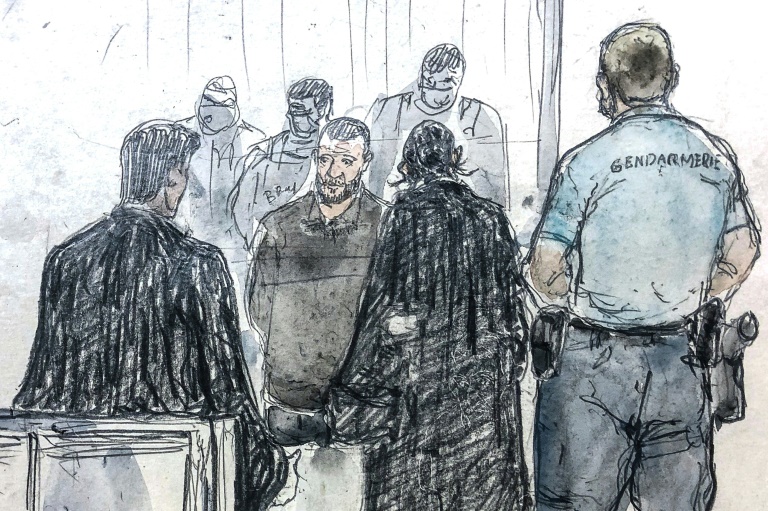
The sole surviving member of an Islamic State group cell that killed 130 people in Paris in 2015 has not appealed his whole-life sentence, the Paris chief prosecutor said Tuesday, allowing France to close the legal chapter of its worst atrocity in modern history.

Salah Abdeslam, a 32-year-old Frenchman of Moroccan origin, was captured alive by police four months after the bloodbath at the Bataclan concert hall and other locations.

On June 30, he was sentenced to life in prison with only a tiny chance of parole after 30 years, the toughest possible punishment under French law, which had only been pronounced four times previously since entering into law in 1994.

The 19 others sentenced for their role leading up to and following the attacks also declined to appeal, prosecutor Remy Heitz told AFP.

They had 10 days to lodge any appeal after their sentencing, a deadline that expired at midnight Monday.

– ‘Permanent status’ –

The decision of the special court handling the cases “has now acquired permanent status and there will not be an appeal trial”, he said.

Abdeslam’s decision “does not mean that he agrees with the verdict and the resulting life sentence without parole”, his lawyers Olivia Ronen and Martin Vettes said Tuesday.

“He has simply resigned himself to it,” they said on Twitter.

“Although such a punishment is unacceptable, we respect the decision of the one we have been assisting,” they said, adding: “There is no honour in condemning somebody who is defeated by despair.”

The trial, with its 148 days in court, was the biggest in modern French history, the culmination of a six-year international investigation whose findings run to more than a million pages.

All of the attackers except for Abdeslam blew themselves up or were killed by police during or after the assault.

Abdeslam had begun his court appearances last September by defiantly declaring himself as an “Islamic State fighter” but finished tearfully apologising to victims and asking for leniency.

In his final statement, he urged the judges not to give him a full-life term on the basis that he had not actually killed anyone.

“I made mistakes, it’s true. But I’m not a murderer, I’m not a killer,” he said.

Abdeslam, a one-time pot-smoking lover of parties, discarded his suicide belt on the night of the attack and fled back to his hometown, Brussels, where many of the extremists lived.

– ‘Not out of fear’ –

He told the court that he had had a change of heart and decided not to kill people. 

“I changed my mind out of humanity, not out of fear,” he insisted.

But after hearing that his suicide belt had turned out to be defective, the judges concluded that this “cast serious doubt” on his apparent “renunciation”.

They ruled he was a “co-perpetrator” of the attacks which “constituted a single crime scene”.

A team of 10 jihadists laid siege to the French capital, attacking the national sports stadium, bars, and the Bataclan in an assault immediately claimed from Syria by the IS group.

The attacks shocked France, with the choice of targets and the manner of the violence seemingly designed to inflict maximum fear, just 10 months after a separate assault on the Charlie Hebdo magazine.

In one instance, the court heard a recording of gunmen taunting people trapped in the Bataclan as they fired on them with Kalashnikov machine guns from a balcony above. 

France, under then president Francois Hollande, declared the country “at war” with the extremists and their self-proclaimed caliphate in Syria and Iraq.

Hollande, who testified in November, called the trial “exceptional” and “exemplary”, adding in a statement that the accused had been “judged with respect for the law”.

The 10-month process had “enabled us to look for the truth in order to better understand the course of Islamist terrorism”, he said.

China locks down city of 300,000 over single Covid case

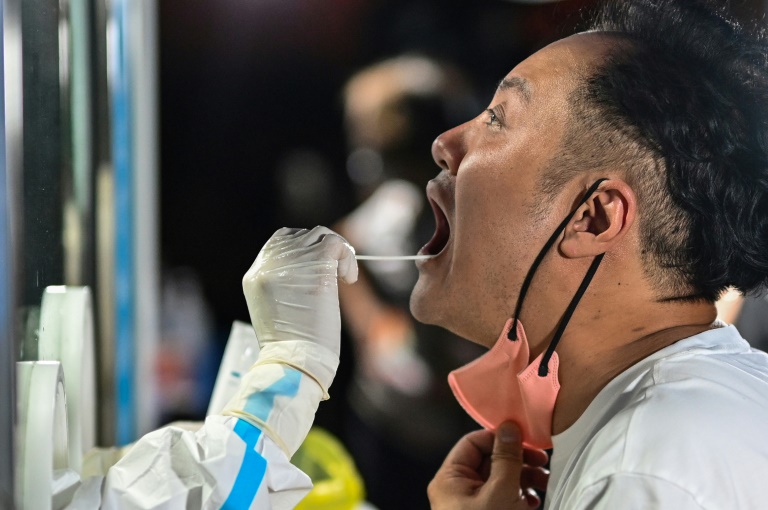
Hundreds of thousands of people were under lockdown in a small Chinese city Tuesday after just one case of Covid-19 was detected, as Beijing’s strict no-tolerance virus strategy showed no sign of abating.

China is the last major economy glued to a zero-Covid policy, crushing new outbreaks with snap lockdowns, forced quarantines and onerous travel curbs despite mounting public fatigue and damage to the economy.

Authorities in several regions have imposed a range of restrictions as they struggle to tamp down fresh flare-ups driven by the fast-spreading Omicron variant.

After reporting a new domestic infection, the steelmaking hub of Wugang in Henan province announced Monday that it would implement three days of “closed control” in response to “the needs of disease prevention”, according to an official notice.

None of the city’s 320,000 people are allowed to set foot outside their homes until midday Thursday, the notice said, adding that basic necessities would be delivered by local authorities.

Residents are not allowed to use their cars without permission and must obtain official authorisation to travel under “closed-loop” conditions in case of emergencies, the notice said.

The city is home to one of China’s biggest steel firms, Wuyang Iron & Steel Co., which exports to the United States, Japan and other major Western economies, according to Bloomberg.

– ‘250 million under restrictions’ –

The nearby city of Zhumadian — home to some seven million people — also announced Tuesday that it would impose a similar three-day closure of its city centre after two people tested positive.

But the curbs appeared lighter than Wugang, with residents in the area ordered not to leave their homes “unless essential” and one person per household allowed out every two days to buy essentials, the city government said in a notice.

Entertainment venues such as bars, cinemas, gyms and karaoke parlours have been suspended and restaurants are only allowed to offer food on a takeaway basis, the notice added.

Nearly 250 million people in China are now under some kind of virus control measures — more than double last week’s number — Japanese bank Nomura said Monday.

Persistent outbreaks and hardline official responses have dampened hopes that Beijing is ready to pivot away from the type of draconian curbs seen earlier this year, when tens of millions were confined to their homes, sometimes for weeks on end.

The country recorded 347 new domestic cases on Tuesday, more than 80 percent of which showed no symptoms, according to the National Health Commission.

Fears have grown about tighter Covid measures in Shanghai, which endured a gruelling two-month lockdown earlier this year punctuated by supply shortages and isolated protests.

Most of the megacity’s 25 million residents have been ordered to get two Covid tests between Tuesday and Thursday, as daily case figures continue to hover in the double digits.

In eastern Anhui province, where authorities last week plunged 1.7 million people into lockdown, residents of one county were due to undergo a 15th round of mass testing on Tuesday, according to an official notice.

Olympic great Mo Farah was trafficked to UK, forced to be child servant

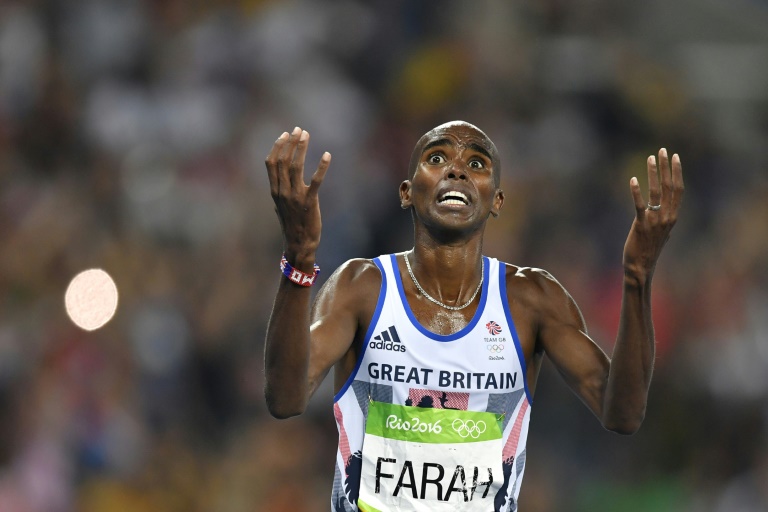
Olympic great Mo Farah was illegally trafficked as a child to Britain from Djibouti and forced to work as a servant, he has revealed, saying his real name is Hussein Abdi Kahin.

The distance runner was flown to the UK from the East African country aged eight or nine by a woman he had never met, given the name Mohammed Farah, and then made to look after another family’s children, he tells a BBC TV documentary “The Real Mo Farah” to be aired Wednesday.

Farah, who completed the 5,000m-10,000m double at both the London 2012 and Rio 2016 Olympics, has previously said he came to the UK as a refugee from Somalia with his parents.

But in stunning revelations, the 39-year-old now says his parents have never been to the UK. 

His father was killed in civil unrest in Somalia when Farah was four years old and his mother, Aisha, and two brothers live in the breakaway state of Somaliland, which is not internationally recognised.

“The truth is I’m not who you think I am,” says Farah. 

“Most people know me as Mo Farah, but it’s not my name or it’s not the reality.”

The woman who flew with him to the UK told him he was being taken to live with relatives and to say his name was Mohamed as she had fake travel documents that showed his photo next to the name “Mohamed Farah”.

Farah said his children motivated him to tell the truth about his past.

“That’s the main reason in telling my story because I want to feel normal and don’t feel like you’re holding on to something.”

– ‘Get out and run’ –

Farah’s wife Tania said in the year leading up to their 2010 wedding she realised “there were lots of missing pieces to his story” but she eventually “wore him down with the questioning” and he told the truth.

When he arrived in the UK, Farah says the woman who accompanied him took a piece of paper from him that had his relatives’ contact details and “ripped it up and put it in the bin. 

“At that moment, I knew I was in trouble,” he says.

Farah says he was forced to do housework and childcare “if I wanted food in my mouth”, and was told: “If you ever want to see your family again, don’t say anything.”

“Often, I would just lock myself in the bathroom and cry,” he says.

His life was transformed for the better once he went to live with Kinsi Farah, the sister of the man who is alleged to have aided in his journey to England.

She tells him in the documentary that she wanted to protect him and adds she does not know why her sister-in-law brought him to England.

“Do you think that was her reason when she bought me to the UK, in helping her with cooking, cleaning?” asks Farah in a video call.

“I don’t know,” she replies.

The athlete is also reunited with his mother in Somaliland in the documentary.

“I sent you away because of the war,” his mother tells him.

“You were given a name that was not yours, sent away to England, a country you knew nothing about.

“It’s important that you tell your story. Lying is a sin.”

Farah’s physical education teacher, Alan Watkinson, noticed how the youngster’s mood changed when he was on the running track.

“The only language he seemed to understand was the language of PE and sport,” says Watkinson.

Farah says it was athletics that enabled him to escape.

“The only thing I could do to get away from this (situation) was to get out and run,” he says.

Farah eventually told Watkinson the truth and he informed local authorities. 

It was Watkinson who applied for Farah’s British citizenship which he described as a “long process” and on July 25, 2000 Farah was recognised as a British citizen.

“I often think about the other Mohamed Farah, the boy whose place I took on that plane and I really hope he’s OK,” said Farah.

Farah was told by lawyers during the making of the documentary due to “false representations” he risked being stripped of his British citizenship.

However, a Home Office spokesman told The Times “No action whatsoever will be taken” against Farah — often called ‘Sir Mo’ after he was ennobled by Queen Elizabeth II in 2017. 

Pacific leaders struggle to keep focus on climate at key summit

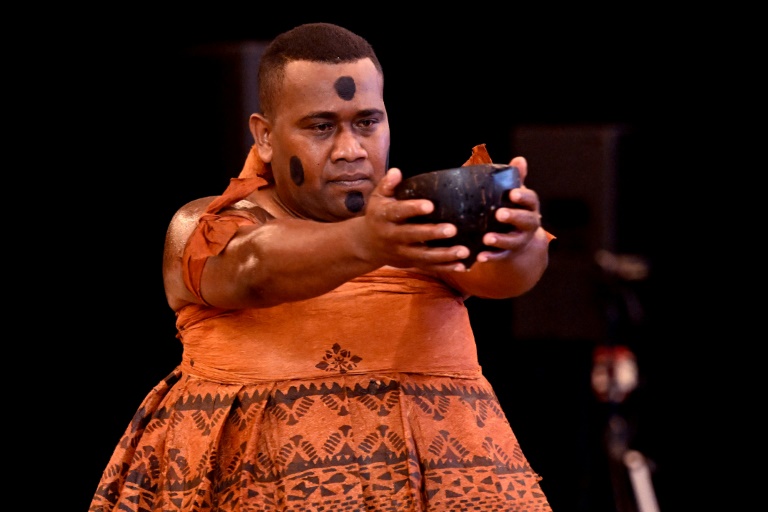
US-China rivalry and an inter-island rift overshadowed the start of a landmark Pacific summit Tuesday, hampering efforts to focus world attention on the islands’ dire climate crisis.

This year’s Pacific Islands Forum is the region’s most important meeting in years, coming after a Covid-enforced hiatus and as low-lying tropical isles run out of time for climate action.

Fiji president and forum chair Voreqe Bainimarama opened Tuesday’s first meeting with a warning that the “runaway climate change crisis” threatened the security and sovereignty of many Pacific nations.

But instead of a singular focus on the threat of rising sea levels and ever-more-powerful storms, a shock decision by Beijing-allied leaders in Kiribati to quit the forum altogether, revealed on the eve of the summit, loomed over proceedings.

Geopolitical jostling between the United States and China has been building since Solomon Islands controversial signed a security pact with Beijing in April. 

United States Vice President Kamala Harris announced Tuesday that she would make an unprecedented video appearance at the summit — usually restricted to Pacific nations, Australia and New Zealand.

– ‘Fight this emergency’ –

Leaders gathered at Suva’s luxurious Grand Pacific Hotel will discuss a strategy to guide the Pacific through to 2050, keenly focused on the existential threat posed by climate change.

They will also debate announcing a climate emergency in the Pacific and whether to endorse a push, spearheaded by Vanuatu, to ask the International Court of Justice to weigh in on nations’ climate obligations.

Vanuatuan prime minister Bob Loughman said Tuesday that the people of the region “are calling on us, Pacific leaders, to take action to fight this emergency”.

But Kiribati’s exit from the forum has sparked concerns about a fracturing of the Pacific’s closely held unity, which gives the region of small island states heft in global climate negotiations.

Tuvaluan foreign minister Simon Kofe told AFP he was “surprised and saddened” by Kiribati’s departure, but was optimistic the nation could be enticed to rejoin.

Last year, Kofe made headlines when he addressed the COP summit standing knee-deep in water to draw attention to the threat climate change poses to his low-lying nation, which may disappear below rising seas in the next 50 years.

Faced with such a threat, his priority at the summit is climate change — Tuvalu will be pushing for a focus on statehood and climate financing. 

Concerns about regional security — brought to the fore by the Solomons-China pact — “draw a bit of attention away from climate change”, Kofe said.

– Security versus climate –

The summit will be a test of Australia’s newly elected Prime Minister Anthony Albanese, who has pledged to do more on climate and to heal his country’s fractured relationship with the Pacific.

At the last Pacific Islands Forum leaders’ meeting, held in 2019, negotiations descended into shouting and tears as Australia’s former government attempted to muzzle leaders who wanted to issue a global call for climate action.

But Albanese also wants to use the summit to raise his concerns about security developments in the region in the wake of the Solomons-China deal.

Speaking to media Tuesday, the leader sought to knit the issues of climate and security together.

“Our neighbours in the Pacific understand that climate change is a national security issue,” he told a press conference in Sydney.

Pacific leaders struggle to keep focus on climate at key summit

US-China rivalry and an inter-island rift overshadowed the start of a landmark Pacific summit Tuesday, hampering efforts to focus world attention on the islands’ dire climate crisis.

This year’s Pacific Islands Forum is the region’s most important meeting in years, coming after a Covid-enforced hiatus and as low-lying tropical isles run out of time for climate action.

Fiji president and forum chair Voreqe Bainimarama opened Tuesday’s first meeting with a warning that the “runaway climate change crisis” threatened the security and sovereignty of many Pacific nations.

But instead of a singular focus on the threat of rising sea levels and ever-more-powerful storms, a shock decision by Beijing-allied leaders in Kiribati to quit the forum altogether, revealed on the eve of the summit, loomed over proceedings.

Geopolitical jostling between the United States and China has been building since Solomon Islands controversial signed a security pact with Beijing in April. 

United States Vice President Kamala Harris announced Tuesday that she would make an unprecedented video appearance at the summit — usually restricted to Pacific nations, Australia and New Zealand.

– ‘Fight this emergency’ –

Leaders gathered at Suva’s luxurious Grand Pacific Hotel will discuss a strategy to guide the Pacific through to 2050, keenly focused on the existential threat posed by climate change.

They will also debate announcing a climate emergency in the Pacific and whether to endorse a push, spearheaded by Vanuatu, to ask the International Court of Justice to weigh in on nations’ climate obligations.

Vanuatuan prime minister Bob Loughman said Tuesday that the people of the region “are calling on us, Pacific leaders, to take action to fight this emergency”.

But Kiribati’s exit from the forum has sparked concerns about a fracturing of the Pacific’s closely held unity, which gives the region of small island states heft in global climate negotiations.

Tuvaluan foreign minister Simon Kofe told AFP he was “surprised and saddened” by Kiribati’s departure, but was optimistic the nation could be enticed to rejoin.

Last year, Kofe made headlines when he addressed the COP summit standing knee-deep in water to draw attention to the threat climate change poses to his low-lying nation, which may disappear below rising seas in the next 50 years.

Faced with such a threat, his priority at the summit is climate change — Tuvalu will be pushing for a focus on statehood and climate financing. 

Concerns about regional security — brought to the fore by the Solomons-China pact — “draw a bit of attention away from climate change”, Kofe said.

– Security versus climate –

The summit will be a test of Australia’s newly elected Prime Minister Anthony Albanese, who has pledged to do more on climate and to heal his country’s fractured relationship with the Pacific.

At the last Pacific Islands Forum leaders’ meeting, held in 2019, negotiations descended into shouting and tears as Australia’s former government attempted to muzzle leaders who wanted to issue a global call for climate action.

But Albanese also wants to use the summit to raise his concerns about security developments in the region in the wake of the Solomons-China deal.

Speaking to media Tuesday, the leader sought to knit the issues of climate and security together.

“Our neighbours in the Pacific understand that climate change is a national security issue,” he told a press conference in Sydney.

Stocks fall, euro nears dollar parity as recession fears build

Equities fell Tuesday, along with oil, on fears that central bank moves to fight inflation will spark a recession, while the euro fell towards parity with the dollar as cost-of-living crises loom over the eurozone economy.

Worries about a Covid flare-up in China — fuelling fears of more lockdowns — added to the downbeat mood, just as investors prepare for a week of data and earnings that could have huge implications for markets.

Wall Street ended with more losses, with tech firms taking the brunt of the selling on expectations for an extended period of hefty interest rate hikes — the sector is particularly susceptible to higher borrowing costs.

A forecast-beating US jobs report last week suggested the world’s top economy was coping with higher Federal Reserve rates, but it also gave the bank more room to continue lifting — leading to concerns it could go too far and cause a contraction.

“While the jobs report on Friday highlighted that the US is faring better than the rest in the race to avoid a recession, the rest of the world is sinking under the weight of a cost-of-living crisis and higher interest rates,” said OANDA’s Craig Erlam.

He added that a recent bounce in stocks had faded “and we now head into earnings season and another week of major economic reports fearful of what may lie ahead”.

Tokyo, Shanghai, Hong Kong, Seoul, Singapore, Wellington, Mumbai and Taipei all fell, though Sydney and Jakarta edged up.

London, Paris and Frankfurt were also down at the open.

Bets on a drop in demand caused by a possible recession also hit the crude market, with both main contracts extending Monday’s losses.

– Euro nears dollar parity –

The Fed’s sharp rate hikes have sent the dollar soaring, with the euro particularly under pressure as the European Central Bank moves more slowly in tightening monetary policy and the region faces an energy crisis caused by the Ukraine war.

Sanctions on oil imports from Russia and Moscow’s warnings that it will shut off gas to Europe have led analysts to predict the eurozone will fall into recession, and pushed the euro to a 20-year low and close to parity with the greenback.

But commentators said that even if the ECB lifted rates more quickly, that would add to the economic pain.

While the single currency picked up slightly after hitting a low of $1.0003, there is a broad expectation that it is a matter of time before the $1.0000 level is breached. 

There is a fear that a planned 10-day shutdown of Russia’s key Nord Stream 1 gas pipeline for maintenance could be extended by Moscow in retaliation for European sanctions linked to its invasion of Ukraine.

French Economy and Finance Minister Bruno Le Maire warned over the weekend that there is a strong chance Moscow will turn off the taps in the winter.

“The next few weeks could be challenging for Europe, with possibly maximum uncertainty stretching into August,” said SPI Asset Management’s Stephen Innes.

“Investors increasingly believe that gas may not start to flow through Nord Stream 1 again following the scheduled maintenance on July 11-21, with further ‘temporary’ interruptions seen as likely.”

Investors are also awaiting the upcoming corporate reporting season with the dollar in mind.

The currency’s strength will not only “affect this quarter’s earnings, but more likely it’s going to affect the revenue generation outlook for the next couple of quarters and that, I think, is a big problem”, Kimberly Forrest, of Bokeh Capital Partners, told Bloomberg Radio.

And markets strategist Louis Navellier added: “Earnings will be very revealing, the outlook for the second half (of the year) more so, as far as the state of consumer demand and the impact of inflationary pressures on profit margins and revenue growth.

“There is already early downward pressure with 71 S&P companies having already issued negative guidance versus outlook given in the first quarter earnings”, the highest since the final three months of 2019.

– Key figures at around 0810 GMT –

Tokyo – Nikkei 225: DOWN 1.8 percent at 26,336.66 (close)

Hong Kong – Hang Seng Index: DOWN 1.3 percent at 20,844.74 (close)

Shanghai – Composite: DOWN 1.0 percent at 3,281.47 (close)

London – FTSE 100: DOWN 0.5 percent at 7,162.27

Euro/dollar: DOWN at $1.0008 from $1.0041 on Monday

Pound/dollar: DOWN at $1.1840 from $1.1892 

Euro/pound: UP at 84.52 pence from 84.38 pence

Dollar/yen: DOWN at 137.34 yen from 137.41 yen

West Texas Intermediate: DOWN 2.3 percent at $101.66 per barrel

Brent North Sea crude: DOWN 2.1 percent at $104.90 per barrel

New York – Dow: DOWN 0.5 percent at 31,173.84 (close)

Close Bitnami banner
Bitnami