World

One year after Haiti president assassinated, still no answers

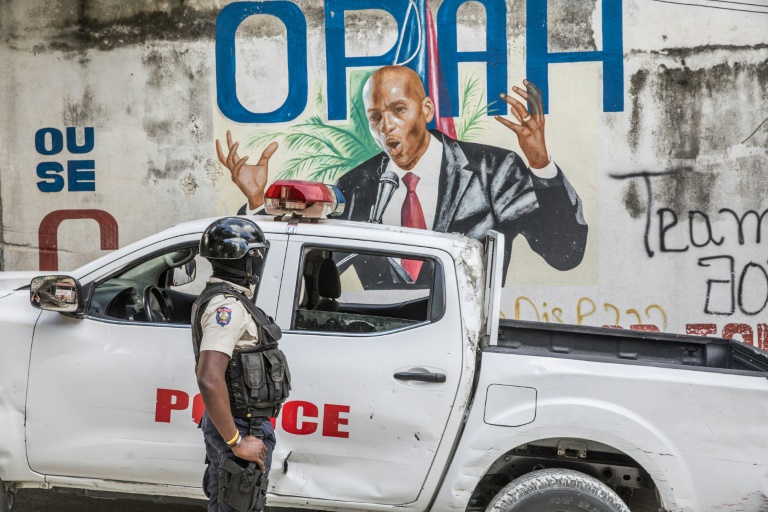
Haiti on Thursday marked one year since president Jovenel Moise was shot dead in his private residence, with no mastermind or motive for the attack identified, and the investigation stalled.

Moise was assassinated in the early hours of July 7, 2021, when a commando group entered his bedroom at the house in Port-au-Prince and shot him 12 times.

Haitian police quickly arrested about 20 people, including 18 former Colombian soldiers presumed to be hired as mercenaries.

But there has since been little progress in investigations in Haiti and also in the United States.

Prime Minister Ariel Henry, who was named to his post just two days before Moise’s death, is suspected of speaking with one of the prime suspects via telephone soon after the attack — a line of investigation which he has dismissed as a distraction.

Henry gave a speech on Thursday at a small ceremony that was boycotted by Moise’s widow Martine, who was seriously injured in the attack.

“Despite weaknesses, the justice system must continue to do its utmost to track down the culprits, bring them before judges and impose exemplary sentences,” Henry said.

“The death of the president must be the last act of a period of ignominy and intolerance.”

Complications in the investigation have deepened in recent weeks as the prosecutor’s offices in the Haitian capital have been invaded by one of the gangs plaguing the country.

The United Nations office issued a statement on the anniversary, expressing concern over “lack of tangible progress” in the search for justice.

“The investigation and prosecution of the case in Haiti appears to be at a standstill,” it said.

“Since this crime was committed, growing insecurity, linked to violence committed by armed gangs, terrorizes Haitian citizens and monopolizes public debate when challenges facing the country are increasing day by day.”

The inquiry’s delays have also been worsening by Haiti’s rolling political crisis. 

The Caribbean island nation’s presidency has been vacant since Moise’s death, with no date set for a vote to fill the office. 

Five successive judges have been in charge of the case, but none of them have issued any charges for the 40 people currently imprisoned.

Haiti’s parliament has not functioned properly in two years, as Moise had not organized elections since he himself took office in 2017. And without a head of state to appoint judges, the country’s judicial system has also flagged.

– Suspects charged in US –

With confidence in their own government all but gone, many Haitians have instead placed their hopes on the American judicial system.

Three suspects have been charged in Miami, Florida, where Haitian police also say the plot originated.

Those suspects are Colombian Mario Palacios, who is believed to be one of the five armed men in the room when Moise was killed, Colombian-Haitian citizen Rodolphe Jaar and former Haitian senator John Joel Joseph.

A fourth man was arrested at an airport in Istanbul in November, though Turkish courts rejected Haiti’s extradition request for him just this week.

Despite the case’s progress in the United States, a judge in April ruled to seal the evidence, citing two of the suspects’ previous involvement as informants for the US Drug Enforcement Administration and the FBI.

A Haitian judicial source, speaking on condition of anonymity, lamented the US move, telling AFP: “A whole section of this story will remain unknown.” 
China's Wang meets Lavrov in Bali ahead of G20 talks

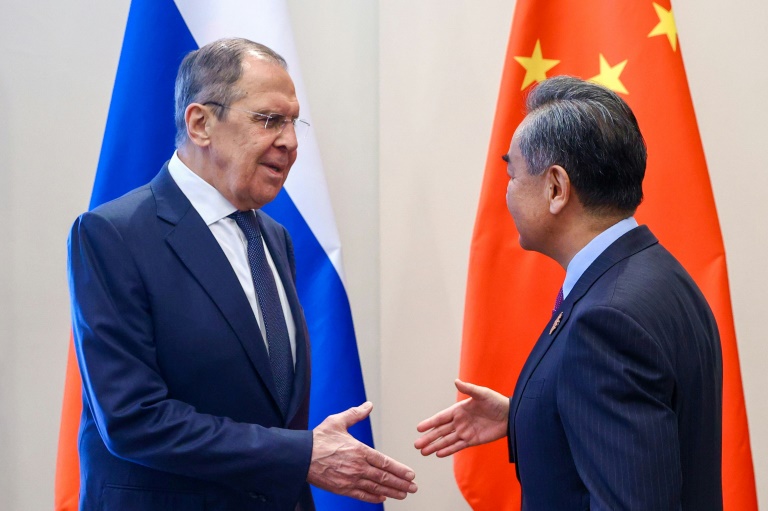
Chinese Foreign Minister Wang Yi met Russian counterpart Sergei Lavrov in Bali Thursday to discuss Moscow’s invasion of Ukraine ahead of a G20 ministerial meeting overshadowed by the war. 

The pair were pictured holding a bilateral meeting on the Indonesian resort island as the world’s top economies gather to discuss the most pressing global issues on Friday, with the Ukraine war at the top of the agenda.

Despite criticism, Beijing has upheld friendly ties with Russia as Western nations have sought to isolate President Vladimir Putin’s government from the global financial and diplomatic order over the military assault on its neighbour. 

Lavrov informed Wang “about the implementation of the main missions of the special military operation” in Ukraine and reiterated Moscow’s rhetoric that its aim is to “denazify” the country, a Russian foreign ministry statement said.

“Both parties underlined the unacceptable nature of unilateral sanctions adopted by circumventing the UN.”

US Secretary of State Antony Blinken arrived in Bali late on Thursday and will hold bilateral talks with Wang on Saturday.

But he will shun a direct meeting with his Russian counterpart even though they are set for their first showdown since the outbreak of war in February.

Blinken last saw Lavrov in January in Geneva, where the top US diplomat warned Russia of massive consequences if it went ahead and invaded Ukraine, which it did on February 24.

Washington has argued Russia should no longer be a member of the international forum, a position echoed by some Western allies.

The Russian foreign ministry said Lavrov and Wang stressed “the need for the maintenance and development of the G20” in their meeting. 

– Truss leaves early –

Blinken will use the gathering — which is a prelude to a leaders’ summit in November — to lobby allies that have been at odds with its position on Ukraine, such as India, to pull away from Moscow. 

But his hopes of a united Western front against Russian aggression were dealt a blow after British Foreign Minister Liz Truss pulled out of the meeting at the last minute, according to a diplomat.

Truss would not attend talks with her counterparts on Friday and will instead be replaced by a senior British official, the diplomat told AFP, without specifying when she would be leaving Bali.

Truss cut her trip short after Prime Minister Boris Johnson resigned as the leader of his Conservative party on Thursday, with British media reporting she would fly home early to rally support for a leadership bid.

Beijing has refused to condemn Russia’s invasion of Ukraine and has been accused of providing diplomatic cover for the Kremlin by blasting Western sanctions and arms sales to Kyiv. 

Blinken is expected to reiterate warnings to Beijing about its support for Russia at Saturday’s talks with Wang.

China pursues an independent foreign policy toward Russia and both reject interference from what they have called “third parties”.

A meeting between Putin and Chinese President Xi Jinping in February ended with the pair declaring a “new era” of international relations with “no limits” to their relationship. 

Xi assured Putin of China’s support for Russian “sovereignty and security” in a phone call last month.

The United States swiftly weighed in, condemning China for “investing in close ties to Russia” despite claiming to be neutral.

Hajj crowds move to Mina as pilgrimage pinnacle nears

Hundreds of thousands of pilgrims journeyed from Saudi Arabia’s Mecca to a white-tented city in Mina on Thursday as they neared the highlight of the biggest hajj ritual since the coronavirus pandemic began.

Worshippers took buses or walked to Mina, seven kilometres (four miles) from Mecca’s Grand Mosque, Islam’s holiest site, where they circled the imposing black Kaaba at the start of the rituals on Wednesday.

Dressed in simple white robes, the pilgrims will spend the night in the air-conditioned white tents of Mina, which sits in a narrow valley surrounded by rocky mountains and is transformed each year into a vast encampment.

“I feel great. This is all to be closer to God,” Tunisian pilgrim Khaled Bin Jomaa, 44, said as he entered the camp on foot, carrying an umbrella and a prayer mat.

The pilgrims are positioning themselves for the highlight of the hajj on Friday: ascending Mount Arafat, where the Prophet Mohammed is believed to have delivered his final sermon. 

Worshippers will pray and recite the Koran for several hours at the mountain and sleep nearby. On Saturday, they will gather pebbles and perform the symbolic “stoning of the devil”.

The hajj, one of the world’s biggest religious gatherings, has not gone smoothly for everyone. Saudi Arabia’s hajj ministry demanded the sacking of two top officials at a company that organises pilgrimages, over their failure to provide decent services, the official Saudi Press Agency said on Thursday. 

State-run Al-Ekhbariya TV said the company handled pilgrimages from overseas and was responsible for “problems with food and accommodation” including a lack of air conditioning at the Mina camp.

– ‘Breathing in my face’ –

Fridges packed with yoghurt, juice and water were waiting at the temporary accommodation in Mina, along with a food buffet and fruit baskets.

One pilgrim complained about the lack of space in his room, before the manager asked his assistants to move him to another one. 

“It is too tight. I can feel the guy next to me breathing into my face,” the pilgrim said.

The crowds, capped at one million including 850,000 from abroad chosen by lottery, are the biggest since 2019 after two Covid-hit years when only tens of thousands were allowed.

All worshippers are fully vaccinated and submitted negative PCR tests, but the rituals are taking place against the backdrop of a resurgence of Covid-19 in the region. 

Some Gulf countries have tightened restrictions to keep outbreaks in check.

The hajj ministry has said it is working on the highest levels of health precautions in light of the pandemic and the emergence of new variants. 

At Mina, the pilgrims were handed small bags containing masks and sanitiser, and ambulances were parked at the camp’s entrances.

However, a requirement to wear masks has been largely ignored.

Temperatures of 42 degrees Celsius (108 degrees Fahrenheit) are another challenge. Four hospitals and 26 health centres have been prepared at Mina to treat pilgrims who might fall ill.

“We have taken all precautions. We have doctors here ready to intervene in case needed,” said Ahmad al-Zinani, a camp manager.

– Military helicopters –

The hajj is one of the five pillars of Islam and must be undertaken by all Muslims with the means to do so at least once in their lives.

Saudi state media reported that Mauritania’s president and Indonesia’s vice president were among the pilgrims landing in Jeddah on Thursday to perform the rituals.

In 2019, about 2.5 million Muslims from around the world participated in the event, which poses a considerable security challenge and has seen several disasters over the years, including a 2015 stampede that killed up to 2,300 people.

The rites are taking place under strict security measures that include police checkpoints in parts of Mecca. In 1979, gunmen barricaded themselves inside the Grand Mosque in an assault that left 153 dead, according to the official toll.

Military helicopters will be used “around the clock… to support the public security”, the commander of the Air Force Group participating in this hajj season, Colonel Khaled bin Abdullah al-Mutairi, told state media.

Overseas pilgrims were banned from the hajj in 2020 and 2021 to prevent Covid infections but they are back in the mountainous region this year, filling hotel rooms and visiting shops as business owners hope to recover their pandemic losses.

New giant dinosaur predator discovered with tiny arms, like T. rex

Paleontologists said Thursday they had discovered a new giant carnivorous dinosaur species that had a massive head and tiny arms, just like Tyrannosaurus rex.

The researchers’ findings, published in the journal Current Biology, suggest that small forelimbs were no evolutionary accident, but rather gave apex predators of the time certain survival advantages.

Meraxes gigas — named after a fictional dragon in the Game of Thrones book series — was dug up over the course of four years during field expeditions in the northern Patagonia region of Argentina, starting with the skull which was found in 2012.

“We won the lottery and found it literally on the first morning,” senior author Peter Makovicky from the University of Minnesota told AFP.

The fossilized remains were remarkably well preserved. The skull is just over four feet long (127 centimeters), while the entire animal would have been some 36 feet long, and weighed four metric tons.

Its arms were two feet long, “so it’s literally half the length of the skull and the animal would not have been able to reach its mouth,” said Makovicky.

T. rex didn’t get its tiny arms from M. gigas. The latter went extinct 20 million years before the former arose, and the two species were far apart on the evolutionary tree. 

Instead, the authors believe the fact that tyrannosaurids, carcharodontosaurids — the group Meraxes belonged to — and a third giant predator species called abelisaurids all evolved tiny arms points to certain benefits.

Makovicky believes that as their heads grew larger, it became the dominant tool of their predatory arsenal, taking on the function that forelimbs would have had in smaller species. 

His co-author Juan Canale, the project lead  at Ernesto Bachmann Paleontological Museum in Neuquen, Argentina, went further in suggesting other advantages.

– Mating and movement support –

“I’m convinced that those proportionally tiny arms had some sort of function. The skeleton shows large muscle insertions and fully developed pectoral girdles, so the arm had strong muscles,” he said in a statement.

“They may have used the arms for reproductive behavior such as holding the female during mating or support themselves to stand back up after a break or a fall.”

Meraxes roamed the Earth between 90 to 100 million years ago during the Cretaceous, at a time when the region was wetter, more forested, and much closer to the sea, said Makovicky.

They would have preyed on a menagerie of contemporary sauropods — some of whom were discovered at the same site.

The individual lived to around 40 years — a ripe old age for dinosaurs — and its skull was replete with crests, furrows, bumps and small hornlets.

“It certainly would have looked very imposing and gargoyle like,” said Makovicky.

“Those are the kinds of features that in living animals are often under sexual selection,” speculating the species used their massive skulls as “billboards” for advertising to would-be mates.

Foreigners flock back to Spain bull-running fiesta

As soon as Peter Millington heard that Spain’s San Fermin fiesta would be held again this year after a two-year absence due to the pandemic, he started making travel arrangements.

The 38-year-old British financial advisor has been a regular at Spain’s most famous bull-running festival since he first attended the annual event in Pamplona as a university student, and was keen to return.

Millington said he booked his flight from London and made hotel reservations in February, just days after Pamplona’s mayor announced that San Fermin would likely go ahead this year.

“There is nothing else like it, it’s totally unique,” he told AFP in the northern Spanish city on Wednesday when the nine-day fiesta officially opened. 

“I had to be here,” he added, gesturing towards the sea of revellers merrily drinking around him, most dressed in the traditional all-white outfit and red scarf.

The festival, immortalised in Ernest Hemingway’s 1926 novel “The Sun Also Rises”, has long drawn large numbers of foreigners, including many like Millington who return year after year.

And with global travel on the rebound since most coronavirus pandemic restrictions have been lifted, the foreign visitors were back in force in Pamplona this year.

Among the regulars who returned this year was Hemingway’s writer grandson John Hemingway, who came from Montreal where he currently lives.

“It is good to be here,” said the 61-year-old, who was attending San Fermin for the 10th time.

“This is a breath of fresh air after all this craziness of lockdowns and social distancing.”

– ‘Hell of an experience’ –

The festival, which dates back to medieval times, features concerts, religious processions, nightly fireworks, and round-the-clock drinking.

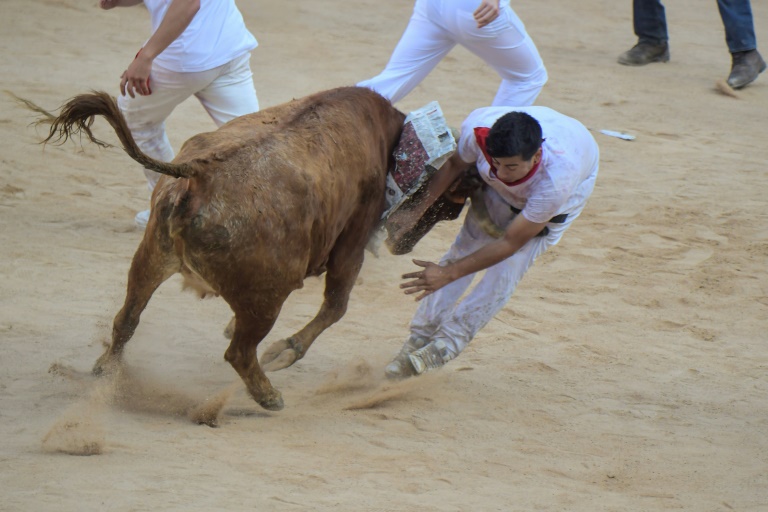
But it is best known for the bracing daily test of courage against a thundering pack of half-tonne, sharp-horned bulls.

Every day at 8:00 am, hundreds of daredevils race six fighting bulls along an 850-metre (2,800-foot) course from a holding pen to Pamplona’s bull ring.

The bulls then face matadors and almost certain death in bullfights in the afternoon.

About 40 percent of all runners come from abroad, with Australia, the United States and Britain accounting for the greatest number of foreigners, according to the Pamplona city hall.

The vast majority of participants are men, with barely a female face visible among the runners — although there were plenty in the cheering crowds.

During the last run in 2019, Pamplona town hall said just six percent of runners were women. This year’s figure will only be available at the end of the festival.

Roger Sandhu, a 30-year-old businessman from the United States, had just taken part in the first bull run on Thursday.

“As soon as we turned the corner, the bulls were right there,” he said.

“It was one hell of an experience.”

– ‘Christmas for adults’ –

But for Jack Denault, a 50-year-old Canadian who now lives in France, the festival’s biggest draw is the “camaraderie” that exists among festival goers.

“The bond you make with the people you celebrate with lasts forever,” said Denault, who rents the same apartment every time he comes for the fiesta.

“There are so many of us that come back year after year, and it is such a great reunion.”

Denault said he had participated in over 80 bull runs in San Fermin, but he said they were only a “small part” of the festival.

He has come to every San Fermin festival since 2008 and has a tattoo of a bull’s hoof on his arm for each year he has attended.

“I will keep coming as long as my body allows it,” said the retired hotel sector worker.

The festival was last held in 2019. It was called off in 2020 and 2021 because of the pandemic.

Timothy Pinks, a 60-year-old London driver who has attended San Fermin regularly since the 1980s, said he was thrilled the event was back on this year.

“It is paradise on earth. Nine days of Christmas for us adults,” he said as he had drinks with a large group of friends in a central Pamplona square.

Russia occupies 22% of Ukraine farmland: NASA

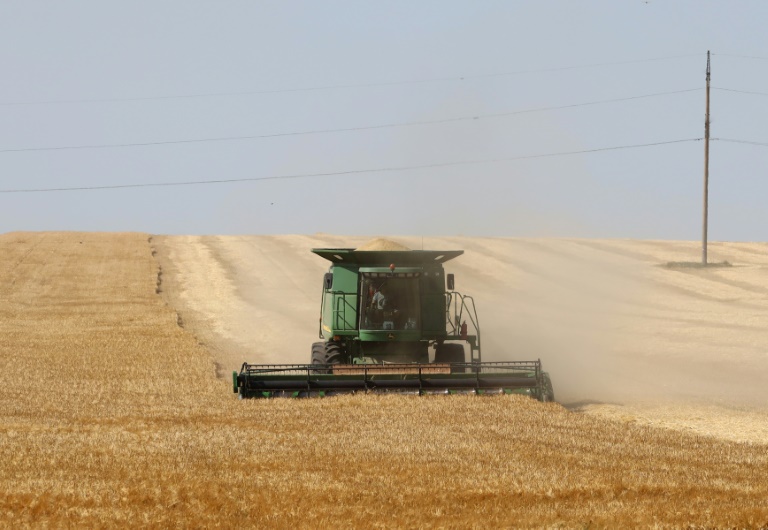
Russian forces now occupy about 22 percent of Ukraine’s farmland since the February 24 invasion, impacting one of the major suppliers to global grain and edible oils markets, NASA said Thursday.

Satellite data analyzed by scientists at the US space agency shows that Russia’s occupation of eastern and southern Ukraine gives it control of land that produces 28 percent of the country’s winter crops, mainly wheat, canola, barley, and rye, and 18 percent of summer crops, mostly maize and sunflower.

The war’s disruption of harvesting and planting — including farmers fleeing the war, the lack of labor and fields pockmarked by shelling — could have a heavy impact on global food supplies, NASA scientists said.

“The world’s breadbasket is at war,” said Inbal Becker-Reshef, director of NASA’s Harvest program, which uses US and European satellite data to study global food production.

According to US data, before the war Ukraine supplied 46 percent of the sunflower oil traded on global markets, nine percent of the wheat, 17 percent of the barley, and 12 percent of maize.

Russia’s invasion has blocked exports of food from Odessa, the main port on the Black Sea, and destroyed storage and transport infrastructure in some areas.

That means farmers in the entire country, but especially in occupied areas, have less options for getting their output into storage and to markets.

And it also threatens the planting of winter crops in the fall.

“We’re in the beginning stages of a rolling food crisis that will likely affect every country and person on Earth in some way,” said Becker-Reshef.

Russia occupies 22% of Ukraine farmland: NASA

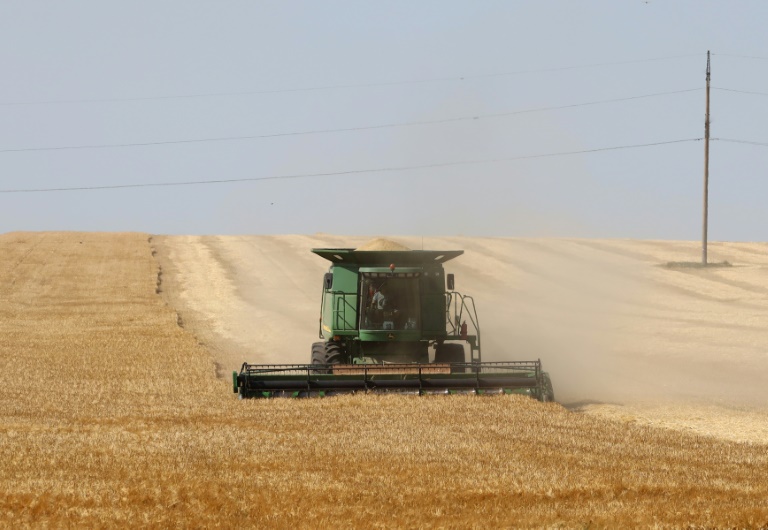
Russian forces now occupy about 22 percent of Ukraine’s farmland since the February 24 invasion, impacting one of the major suppliers to global grain and edible oils markets, NASA said Thursday.

Satellite data analyzed by scientists at the US space agency shows that Russia’s occupation of eastern and southern Ukraine gives it control of land that produces 28 percent of the country’s winter crops, mainly wheat, canola, barley, and rye, and 18 percent of summer crops, mostly maize and sunflower.

The war’s disruption of harvesting and planting — including farmers fleeing the war, the lack of labor and fields pockmarked by shelling — could have a heavy impact on global food supplies, NASA scientists said.

“The world’s breadbasket is at war,” said Inbal Becker-Reshef, director of NASA’s Harvest program, which uses US and European satellite data to study global food production.

According to US data, before the war Ukraine supplied 46 percent of the sunflower oil traded on global markets, nine percent of the wheat, 17 percent of the barley, and 12 percent of maize.

Russia’s invasion has blocked exports of food from Odessa, the main port on the Black Sea, and destroyed storage and transport infrastructure in some areas.

That means farmers in the entire country, but especially in occupied areas, have less options for getting their output into storage and to markets.

And it also threatens the planting of winter crops in the fall.

“We’re in the beginning stages of a rolling food crisis that will likely affect every country and person on Earth in some way,” said Becker-Reshef.

Ukraine ammo stocks become crucial as artillery rages

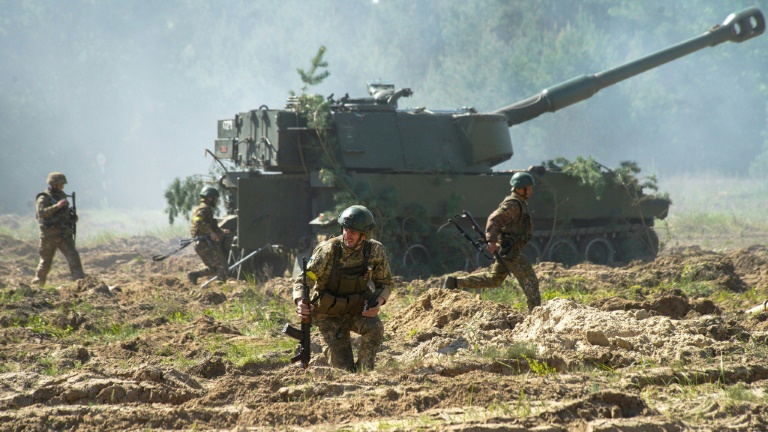
Ammunitionstocks are fast becoming key in the war in Ukraine as artillery units burn through tens of thousands of shells per day, testing both sides’ capacity to replenish dwindling reserves.

Experts say the Russian and Ukrainian armies have entered a war of attrition where access to ammunition — ranging from rifle bullets to howitzer shells and ballistic missiles — is as important as manpower and weapons systems, and where it is imperative to avoid running out of ammo before the enemy does.

“The question of supplies and stocks is the big question at this time,” said one high-ranking European officer asking to remain anonymous.

“The extremely high expenditure of ammunition of all calibres is the hallmark of a high-intensity conflict,” the officer told AFP.

According to RUSI, a British defence studies body, Russia is currently firing around 20,000 shells of the 152-mm type used in Soviet-era howitzers per day, and Ukraine 6,000.

While Russia can rely on several ammunition production sites across its territory at home, and supply lines are stable, Ukraine has only its existing stocks and supplies from western factories.

With the conflict concentrated in eastern Ukraine, “Russian supply lines are shorter than those of the Ukrainians whose stocks are in the west of the country, or even outside the country”, the European officer said.

– ‘A complication’ –

Another advantage for the invading army is that Russian ammunition is made for Russian-made weapons, while Ukraine must juggle a smorgasbord of weaponry ranging from old Soviet equipment to cutting-edge western gear, all requiring different ammunition types.

“The delivery of modern heavy weapons is more of a complication than a help for Ukraine,” said Alexander Khramchikhin, Deputy Director at the Moscow-based Institute for Political and Military Analysis.

RUSI suggested that “Ukraine’s partners should rationalise the support they provide around a small number of platforms”.

Ukraine’s objective of re-capturing lost territory “cannot be achieved through the piecemeal delivery of a large number of different fleets of equipment, each with separate training, maintenance and logistical needs”, it said.

A big unknown is the capacity of each side to produce ammunition at the required speed and volume, which AFP was unable to obtain precise data on.

Moscow seems to deploy its guided ammunition, ballistic missiles and supersonic missiles with great caution, according to some analysts, although it has not run out of these weapon types as some predicted a few weeks ago.

Russia’s defence industry capacity to produce the artillery shells needed to replenish stockpiles is “significant”, RUSI said.

On the Ukrainian allies’ side, the United States could help Kyiv’s army raise its daily artillery firing ability to 10,000 shells a day, but only if it ramps up production back home in America, and even then only for a few months, said Philippe Gros, a former French military intelligence officer and now at the FRS strategy research body.

– ‘Stockpiles running out’ –

Unlike Russia, where President Vladimir Putin has fully mobilised weapons factories, western countries are not official belligerents in Ukraine and cannot place their economies on a war footing needed for mass production of weaponry.

In the west “stockpiles are running out and factories are not producing huge quantities”, said Vassily Kashin at the HSE university in Moscow.

“It would be an error to think that NATO has unlimited reserves to help Ukraine, even when you account for the United States,” he said. “Russia’s war industry is bigger than that of Europe.”

While Ukraine’s eastern European allies are fast running out of their leftover Soviet-era weapons they have been sending Ukraine, Western economies are groaning under the impact of the war.

France’s defence ministry said this week that the delivery of 18 Caesar-type 155-mm canons had amputated its entire stock of Caesars by one quarter. Production time for each of the canons is 18 months, according to its manufacturer, Nexter.

NATO Deputy Secretary General Mircea Geoana acknowledged this week that there were “active concerns” about how long the flow of arms and ammunition can be kept up.

But “there is an effort to boost capacity and creativity from the manufacturers,” he told AFP in an interview.

At the same time, noted Khramchikhin, Russian factories “are operating night and day since the fighting began”.

Meanwhile, attacking and destroying enemy stocks can be a worthwhile use of firepower in the absence of greater production, and both Moscow and Kyiv regularly claim such hits.

Janes, a British defence intelligence outfit, said Ukraine was capable of destroying such high-value targets. 

“That will very probably make things progressively harder for the Russians as the next several weeks develop,” Janes told AFP.

Johnson exit marks 'opportunity' to reset UK-Ireland ties: Irish PM

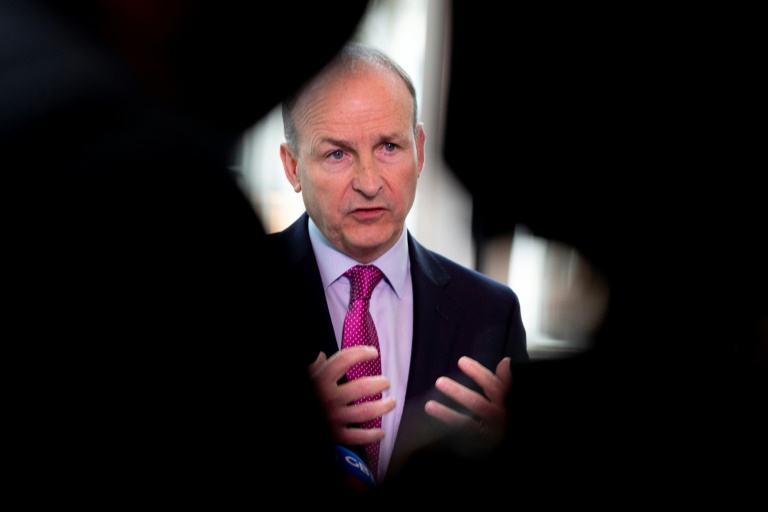
Irish premier Micheal Martin said Thursday that Boris Johnson’s resignation as Conservative leader, paving the way for a new UK prime minister, was “an opportunity” to reset fraught relations.

Martin added ties between Dublin and London had been “strained and challenged in recent times”, not least because of clashes over special post-Brexit trade arrangements in British-run Northern Ireland.

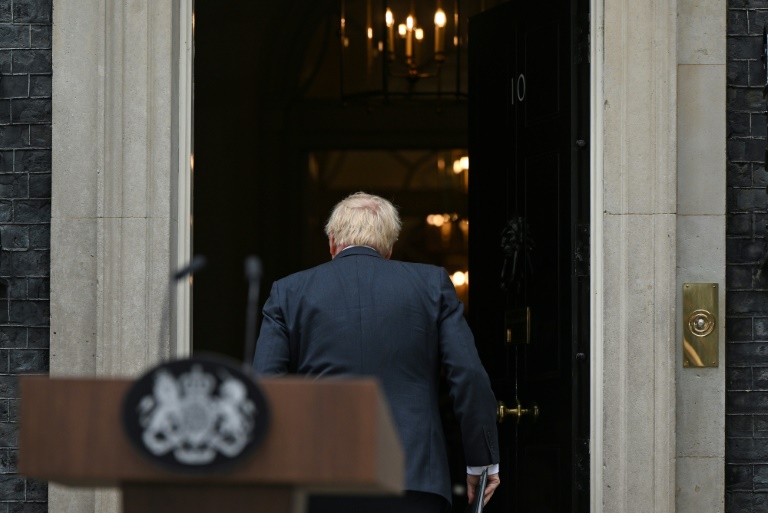
Johnson quit as Tory leader following a series of scandals and an exodus of cabinet ministers and will be replaced once his party’s MPs, and then eventually its members, elect a successor.

“We have now an opportunity to return to the true spirit of partnership and mutual respect that is needed to underpin the gains of the Good Friday Agreement,” Martin said in a statement.

The 1998 peace accords ended decades of bloodshed over British rule in Northern Ireland but has been increasingly strained by Brexit.

“Our joint responsibilities concerning stewardship of the Good Friday Agreement, as well as nurturing broader bilateral relations between us, require us to work together in a spirit of respect, trust and partnership,” Martin added.  

“That is more important than ever today and I would once again urge a pulling back from unilateral action, whether that be on dealing with the legacy of the past, human rights, or the Northern Ireland Protocol.”

– ‘Disrepute’ –

The UK agreed the protocol with the European Union, keeping Northern Ireland in its single market and customs union, alongside its wider Brexit withdrawal deal with the bloc. 

But last month the UK government unveiled legislation to unilaterally scrap parts of the Northern Irish pact.

The move comes amid political stalemate in the province after unionist parties, which argue it is threatening their place within the UK, refused to rejoin power-sharing structures following recent elections unless it is overhauled.

On Thursday, Northern Ireland’s first minister-elect, Michelle O’Neill, of Irish nationalists Sinn Fein — which won a historic first victory in the May ballot — accused Johnson of trying to “sabotage” peace there.

“It has been an utter absurdity that the people here have been subjected to Boris Johnson for any length of time,” she said on Twitter ahead of his resignation announcement. 

“He is a figure of absolute disrepute. Anyone who tries to sabotage our peace agreements, a quarter century of progress and our shared future is truly no friend of ours.”

Johnson, who plans to remain in post for several months until his successor is chosen, announced a new secretary of state for Northern Ireland on Thursday.

The newly appointed minister, Shailesh Vara, enters the role after predecessor Brandon Lewis resigned — one of more than 50 members of the UK government to quit in the ultimately successful bid to oust Johnson.

Vara previously served in the UK’s Northern Ireland Office as a junior minister in 2018.

Stocks climb on recession watch; pound gains on Johnson exit

Stock markets recovered further Thursday as investors weighed recession risks, while the pound rallied on the resignation of Britain’s scandal-hit Prime Minister Boris Johnson as leader of the Conservative party.

Elsewhere, oil prices climbed with both main contracts back over $100 per barrel, and the euro remained around 20-year lows versus the dollar.

“Stocks bounce as pressure points ease,” said independent markets analyst Stephen Innes. 

The Federal Reserve on Wednesday stressed its readiness to continue hiking US interest rates to tackle soaring inflation.

Minutes of their last meeting made clear that officials did not plan to let up in efforts this year to try to cool prices.

Inflation stands at the highest levels since the early 1980s both in the United States and Britain, where attention Thursday was firmly on political upheaval gripping the nation.

The pound rallied against the dollar and euro on Johnson’s resignation as Conservative party leader — paving the way for a successor to replace him as prime minister.

Gains by London’s blue-chip FTSE 100 stock index accelerated following Johnson’s announcement, standing up 1.3 percent in afternoon trading.

Dozens of ministers have quit his scandal-hit government since Tuesday, including former finance chief Rishi Sunak.

“The pound is pushing higher, hitting session highs inching closer back up to… $1.20, a critical support level it broke below this week amid the political and economic uncertainty,” said Victoria Scholar, head of investment at Interactive Investor. 

“The currency market is relieved that Johnson is finally resigning, removing some of the political uncertainty that was priced into the pound and paving the way for a new prime minister,” she added. 

Berenberg Bank Senior Economist Kallum Pickering said that “the UK economy and its financial markets look set to benefit from more stable leadership.”

The euro meanwhile remained under $1.02 — a level it slumped under this week on its way to hitting a 20-year low.

The European single currency is being hammered by growing fears of a recession for the eurozone and the likelihood of more aggressive US interest-rate hikes.

In afternoon trading, Paris stocks were up 1.5 percent and Frankfurt rose 1.7 percent.

Wall Street stocks rose at the opening bell, with the Dow adding 0.7 percent.

– Key figures at around 1330 GMT –

London – FTSE 100: UP 1.3 percent at 7,199.16 points

Frankfurt – DAX: UP 1.7 percent at 12,808.56

Paris – CAC 40: UP 1.5 percent at 6,001.94

EURO STOXX 50: UP 1.7 percent at 3,479.42

New York – Dow: UP 0.7 percent at 31,254.17

Tokyo – Nikkei 225: UP 1.5 percent at 26,490.53 (close)

Hong Kong – Hang Seng Index: DOWN UP 0.3 percent at 21,643.58 (close)

Shanghai – Composite: UP 0.3 percent at 3,364.40 (close)

Pound/dollar: UP at $1.1967 from $1.1921 Wednesday

Euro/pound: DOWN at 85.02 pence from 85.43 pence

Euro/dollar: DOWN at $1.0175 from $1.0186

Dollar/yen: DOWN at 135.79 yen from 135.93 yen

Brent North Sea crude: UP 2.4 percent at $103.06 per barrel

West Texas Intermediate: UP 2.8 percent at $101.32 per barrel

Close Bitnami banner
Bitnami