World

Russia grinds towards Sloviansk, Putin says bigger offensive may come

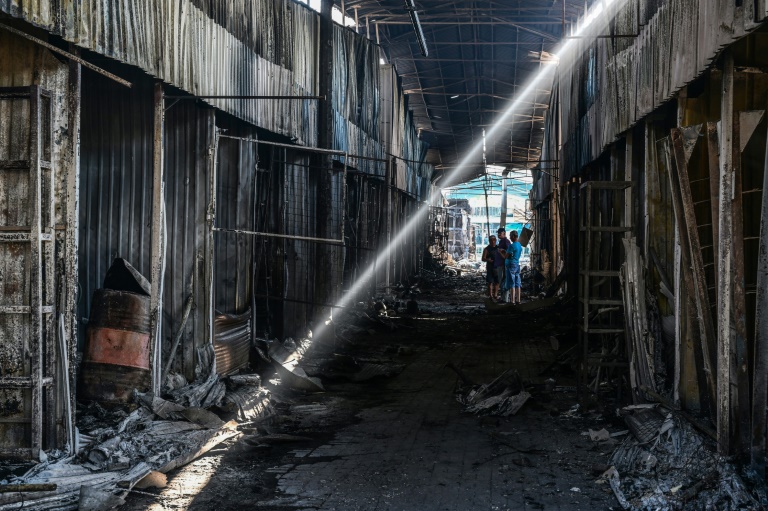
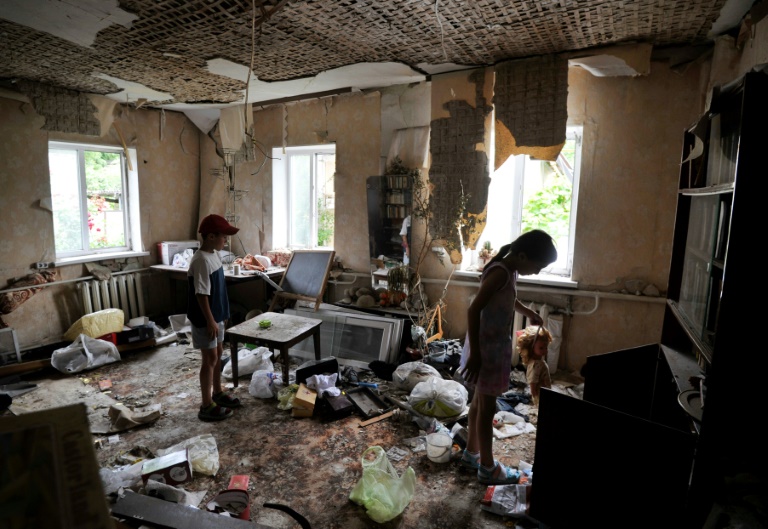
Russian forces left a trail of destruction Thursday while seeking to push deeper into the eastern Donbas region, as the Kremlin warned its campaign had not yet started in earnest.

Diplomatic tensions meanwhile mounted between Ankara and Kyiv, where Ukrainian officials have accused Turkey of ignoring calls to seize grain being transported by a Russian ship.

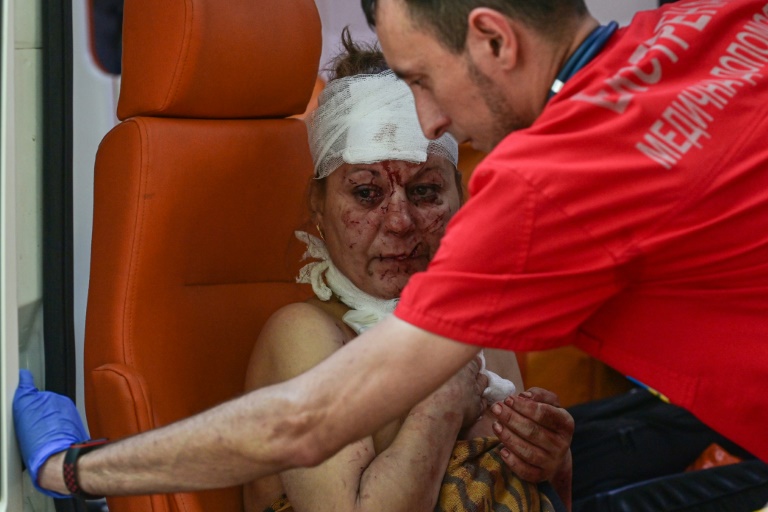
A Russian air strike in the eastern industrial city of Kramatorsk left at least one dead and several others wounded earlier in the day, as Russian seeks full control of the surrounding Donbas.

The explosion left a gaping crater next to a hotel and residential buildings and several cars were on the fire, AFP journalists said, as emergency services arrived on the scene.

It came ahead of a speech by Russian President Vladimir Putin to lawmakers in which he said that Moscow’ offensive in Ukraine had not yet begun “in earnest”.

He also sounded a note of menace towards the West, telling the alliance that has coalesced against his invasion of Ukraine that if they wanted to defeat Russia on the battlefield “let them try”.

He accused “the collective West” of unleashing a “war” in Ukraine and said Russia’s intervention in the pro-Western country marked the beginning of a shift to a “multi-polar world.”

The head of Ukraine’s battled-scarred Donetsk region Pavlo Kyrylenko announced before the strike on Kramatorsk that Russian bombardments had killed at least seven people over the past 24 hours.

The fatalities came after Ukrainian officials re-issued urgent pleas for civilians in the surrounding region to flee, as Russian forces turn their sights on the nearby eastern city of Sloviansk.

Vitaliy, a plumber, told AFP in the industrial hub that his wife and her daughter from a previous marriage, who is six months pregnant, were evacuated from the city the day before.

“Tomorrow I will join the army,” he said.

– ‘Well fortified’ –

Sloviansk mayor Vadym Lyakh said around 23,000 people remained from a pre-war population of 110,000.

“Evacuation is ongoing. We take people out every day,” he said.

“The city is well fortified,” he added, claiming Russian forces had been unable to surround the city.

Sloviansk is Russia’s next target after their capture of the nearby sister cities of Severodonetsk and Lysychansk.

Russian forces captured the cities in the Lugansk region after long battles, consolidating their hold in the east after failing at the start of the February invasion to take the capital Kyiv and Ukraine’s second-largest city Kharkiv.

Despite the raging conflict, Kyiv took the time to hail outgoing UK Prime Minister Boris Johnson, one of the embattled country’s keenest allies throughout the war.

Johnson said that even though he was heading towards the exit, Britain would continue supporting Ukraine for “as long as it takes”. 

“We all welcome this news with sadness. Not only me, but also all of Ukrainian society,” President Volodymyr Zelensky said, after Johnson resigned as leader of Britain’s Conservative party, paving the way for the selection of a new prime minister.

“We don’t doubt that Great Britain’s support will continue, but your personal leadership and your charisma made it special,” he said.

A diplomatic crisis too was flaring between Ukraine and Turkey over the apparent transport by Russia of grain allegedly stolen from Ukraine.

Kyiv says that a 7,000-tonne vessel, the Zhibek Zholy, set off from Ukraine’s Kremlin-occupied port of Berdyansk after picking up confiscated wheat and called last week for Turkey to seize it.

The marinetraffic.com website on Thursday showed the vessel moving away from Turkey’s Black Sea port of Karasu before apparently switching off its transponder and disappearing from view.

Ukraine said it was “deeply disappointed” that Turkey had not acted on its request to seize the ship.

– ‘Control over Snake Island’ –

Despite Ukraine’s recent territorial losses, Zelensky in an evening address on Wednesday had praised new heavy Western artillery for boosting Ukraine’s firepower.

“Their accuracy is exactly as it should be,” he said.

“Our defenders inflict notable blows on warehouses and other points which are important for the logistics of the occupiers,” he said.

Ukraine also said it had regained control of Snake Island in the Black Sea, after raising its flag there this week following the withdrawal of Russian forces.

Senior military official Oleksiy Gromov said Ukrainian forces had “effectively re-established… control over Snake Island,” but did not specify whether there was a lasting military presence on the rocky outcrop.

Russia said it pulled back from the symbolic island last week in a gesture of “good will”, but has since continued targeting positions on the island.

The Russian defence ministry said it had carried out “precision” missile strikes on the island early Thursday, killing Ukrainian soldiers and forcing survivors to flee.

Finland meanwhile passed legislation to build stronger fences on its border with Russia, as the country seeks to join NATO following the invasion. 

burs-jbr/gw/cdw
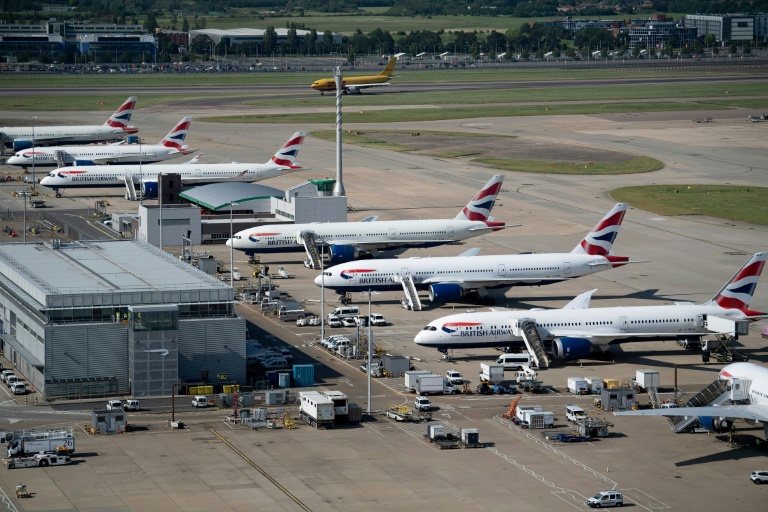
British Airways says Heathrow strike off

A strike by British Airways staff at London Heathrow Airport this summer has been called off after an improved pay offer, trade unions said Thursday.

Members of the GMB and Unite unions had recently backed action as surging inflation erodes the purchase power of wages, sparking walkouts across multiple sectors.

“The industrial dispute affecting BA check-in staff at Heathrow airport has been suspended after the company made a vastly improved pay offer,” Unite said in a statement.

Unions had previously threatened a “summer of strikes” after last month’s vote, but had not given precise dates. 

BA’s Heathrow ground staff had voted by more than 90 percent in favour.

Staff had been unhappy over a one-off 10-percent pay award.

They wanted BA instead to re-instate their 10-percent pay cut from during the pandemic, when BA suffered vast losses and axed thousands of jobs.

“All our members were asking for was what they were owed. British Airways finally moving on pay is long overdue,” added GMB national officer Nadine Houghton.

“It is very clear that workers organising and threatening industrial action is what has delivered.”

Union members will now vote upon BA’s latest offer, which has not been made public.

“We are very pleased that, following collaboration with the unions, they have decided not to issue dates for industrial action,” BA said.

“This is great news for our customers and our people.”

Thursday’s news comes one day after British Airways axed another 10,300 short-haul flights until the end of October, with the aviation sector battling staff shortages and booming demand as the pandemic recedes.

The carrier, which is owned by conglomerate International Airlines Group (IAG), has now cancelled 13 percent of its total summer schedule.

BA has been among the worst affected by sector-wide turmoil, as carriers race to meet soaring demand after the lifting of Covid travel restrictions.

At the same time, many workers in Britain are angry that pay has failed to keep pace with the rocketing cost of living.

UK inflation struck a 40-year pinnacle at 9.1 percent in May and is forecast to hit double figures soon.

The BA pay dispute comes after strike action last month by tens of thousands of rail workers in addition to stoppages held by senior criminal lawyers.

Elsewhere, the aviation and postal sectors face walkouts, while teachers and workers in the state-run National Health Service mull action.

Volkswagen takes on US, China rivals with battery factory

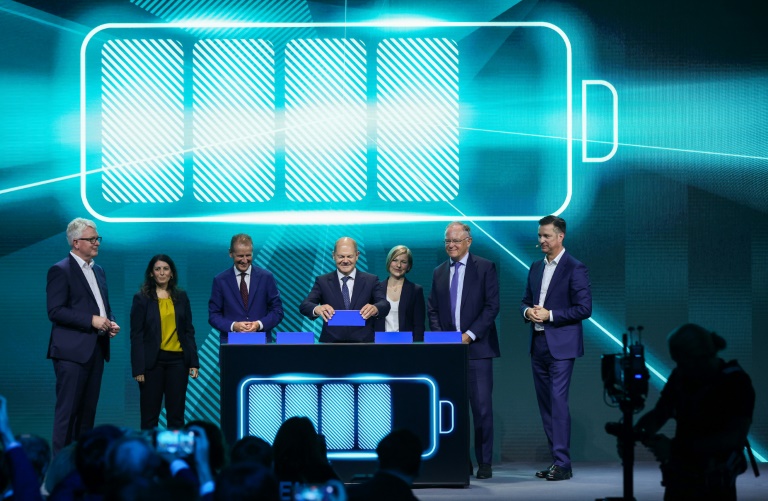
Volkswagen celebrated Thursday the beginning of work on its first in-house battery factory, as the German auto giant looks to head off competition from US and Chinese electric vehicle upstarts.

The firm plans to “steer the worldwide battery offensive” from the new plant in Salzgitter in central Germany, CEO Herbert Diess told a ceremony attended by German Chancellor Olaf Scholz.

Volkswagen has set itself the ambitious aim of becoming the world’s biggest electric car manufacturer by 2025, pouring a total of 46 billion euros ($46.8 billion) over the next five years into the drive.

“If Germany and Europe don’t want to be left behind by the US and China, we need to focus more on the technologies of the future,” Diess said.

The Salzgitter complex, where currently thousands of combustion engines roll off the factory line every day, is set to be the centre of Volkswagen’s electric ecosystem.

Two billion euros are being invested in the battery plant through 2026, with the potential for the site to turn out batteries for 500,000 vehicles a year.

The plan will also serve as a blueprint for a fleet of battery plants in Europe.

– ‘Sustainable, climate-compatible’ –

Up until now both legacy carmakers like Volkswagen have largely relied on Asian, notably Chinese, battery makers to fit their vehicles.

Western auto giants are keen to bring production in house, to minimise supply disruptions and pocket the added value from battery production.

“Reliance” on distant suppliers had shown itself to be a “big risk” for manufacturers, said Scholz, who placed the last unit of a ceremonial foundation battery.

“Today is a good day for the automotive industry in Germany and Europe,” he said, adding that VW was paving the way in “sustainable, climate-compatible mobility”.

Scholz said Europe’s top economy aimed to have 15 million electric vehicles on its streets by 2030.  

Volkswagen’s new PowerCo unit plans to invest more than 20 billion euros together with partners, with the aim of generating annual sales in excess of 20 billion euros and employing up to 20,000 people in Europe alone. Around 5,000 will be employed in Salzgitter.

In total, Volkswagen plans to open six plants together with partners in Europe, with another to come in the United States, according to Diess.

The first, a collaboration with battery maker Northvolt, will open in 2023 in Sweden, followed by the Salzgitter site in 2025.

Volkswagen has tapped Valencia, in Spain, to house a battery plant, with discussions under way for other locations in other existing production locations in Europe.

Key competitor Tesla opened its first European factory outside Berlin earlier this year. The site in Gruenheide is set to be complemented by its own battery plant.

Huge groups of fin whales sign of hope for ocean giants

For the first time since whaling was banned, dozens of southern fin whales have been filmed feasting together in a “thrilling” Antarctic spectacle, hailed by scientists Thursday as a sign of hope for the world’s second largest animal.  

The ocean giants are second only to blue whales in length, with slender bodies that help them glide through the water at high speed. 

They could not evade industrial whaling, however, and were slaughtered to near-extinction during the 20th Century as hunters systematically shattered populations of whales across the planet. 

“They were reduced to one or two percent of their original population size,” said Helena Herr, of the University of Hamburg, lead author of the research published in the journal Scientific Reports. 

“We’re talking about a couple of thousand animals left for the whole southern hemisphere area.”

While scientists say numbers of southern fin whales have been slowly rebounding since a 1976 whaling ban, there have been few sightings of these mysterious animals in large groups at their historic feeding grounds. 

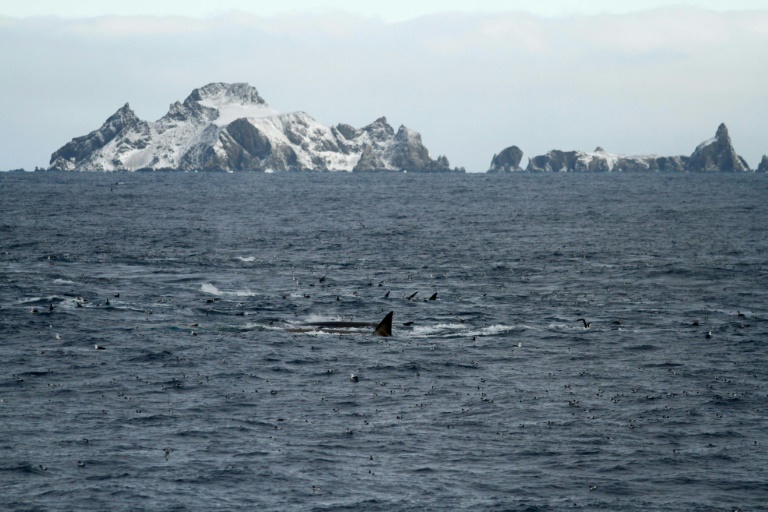
But in scenes that Herr described as “one of nature’s greatest events”, researchers and filmmakers were able to capture footage of up to 150 southern fin whales in Antarctica.     

Drone footage, shot by wildlife filmmakers from the BBC, shows the fin whales swooping and lunging through the water, blasting great bursts of air as they surface, as birds wheel in the sky above them.   

“The water around us was boiling, because the animals were coming up all the time and causing splashes,” Herr told AFP. 

“It was thrilling, just standing there and watching it.”

Unofficially, the team nicknamed it the “fin whale party” as the enormous creatures feasted on swirling masses of krill.   

In two expeditions in 2018 and 2019, researchers recorded a hundred groups of fin whales, ranging from small gatherings of a few individuals, to eight huge congregations of up to 150 animals. 

Previously, recorded feeding groups had a maximum of around a dozen whales. 

Using data from their surveys, the authors estimate that there could be almost 8,000 fin whales in the Antarctic area.

– ‘Ecosystem engineers’ – 

Fin whales can live to around 70 or 80 years old when left alone and have just one calf at a time, so Herr said the recovery of populations is a slow process. 

She said increasing numbers of southern fin whales is an encouraging sign that conservation measures can work, although she noted that other threats include being struck by boats.

The International Union for Conservation of Nature now lists fin whales as “vulnerable” and estimates the global population as 100,000, with most of these in the northern hemisphere. 

More whales could also be a good sign for the health of the ocean more generally — and even efforts to tackle climate change. 

Whales feed on iron-rich krill but they also defecate in the surface waters — returning nutrients to the ocean that help spark the growth of tiny phytoplankton, the foundation of the marine food web.

Like plants on land, phytoplankton photosynthesise using the sun’s rays to turn carbon dioxide into energy and oxygen.  

They are “ecosystem engineers”, said Herr, who first spotted a large group of the whales by chance in 2013 during a research mission into Antarctic Minke whales. 

She now plans more missions to investigate the enduring mystery of these ocean giants — where they breed. 

“We don’t know where they go,” said Herr, adding that much more is known about the fin whales of the northern hemisphere.  

Herr’s team was able to put satellite tags on four animals last year, but a mission to go back to the Antarctic with more tracking equipment has been delayed until next year by the pandemic. 

– Exploitation –

This elusiveness is even more astonishing given the size of fin whales.

The animals can grow up to around 27 metres (88 feet), although Herr said that they now tend to average 22 metres, particularly after whaling that targeted the biggest creatures.    

In all some 700,000 individual fin whales were killed during the 20th century for the oil in their body fat.    

All populations of whales in the region were ravaged, from the biggest blue whales down to the smallest minke whales until commercial hunting was stopped in a series of agreements in the 1970s and 1980s. 

“It’s an example of how humanity treats resources,” said Herr. 

“They just exploit them as long as they can and only stop when it’s not commercially valuable anymore. As long as you can make profit, it will be exploited.”

WNBA star Griner pleads guilty to drug charges in Russia

US basketball star Brittney Griner pleaded guilty Thursday to drug smuggling charges in a Russian court but denied intending to break the law in a case that has further inflamed tensions between Moscow and Washington. 

The two-time Olympic gold medallist and WNBA champion, detained days before Russia sent troops to Ukraine, faces up to a decade behind bars for bringing vape cartridges with cannabis oil into the country.

The 31-year-old basketball star told a court in the town of Khimki outside Moscow that she “would like to plead guilty” to all the charges, but stressed she had “no intention” of breaking any Russian law.

“I was in a rush packing. And the cartridges accidentally ended up in my bag.”

The athlete, who is six-foot-nine (2.06 metres) tall, wore a red T-shirt and matching trousers. She walked into the courtroom with her tattooed arms handcuffed to a Russian guard. 

Her lawyer Alexander Boykov called for “as soft a sentence as possible”. 

US Secretary of State Antony Blinken said that US embassy officials attended Griner’s trial and delivered to her a letter from US President Joe Biden.

“We will not relent until Brittney, Paul Whelan, and all other wrongfully detained Americans are reunited with their loved ones,” Blinken tweeted.

Griner’s lawyer Boykov said she had “appreciated” receiving the letter from Biden, who said on Wednesday that he would make bringing her home a “priority.”

– ‘Negligence’ –

Moscow hit back, saying that US “hype” over Griner would not help her case.

“The hype and working on the public, with all the love for this genre among modern politicians, currently only disturbs” the court procress, Deputy Foreign Minister Sergei Ryabkov said.

“It does not just distract from the case but creates interference in the core sense of the word. Silence is needed here.” 

In a call with Griner’s wife, Biden said the star was “wrongfully detained under intolerable circumstances”. 

The US leader said he had written to the WBNA star, after she had sent him a hand-written letter presented to the White House on July 4, US Independence Day. 

“I realise you are dealing with so much, but please don’t forget about me and the other American detainees,” Griner wrote.

“Please do all you can to bring us home.”

But Ryabkov said letters between the two would not help the star’s fate.

“It is not correspondence of this kind that can help, but a serious perception by the American side of the signals they received from Moscow, through specialised channels,” he said. 

Another member of Griner’s defence team, Maria Blagovolina, said it was her client’s decision to plead guilty.

“Brittney stressed that she committed the crime by negligence,” Blagovolina said.

“We hope that this circumstance, together with the evidence of the defense, will be taken into account by the court.”

– New hearing –

The professional basketball player was detained in February in the days before Russia sent troops to Ukraine, with the United States and its allies imposing unprecedented sanctions on Moscow in response.

Her case has become a new sticking point in ties between the United States and Russia, with Washington putting its special envoy in charge of hostages on the case. 

Griner came to Russia in February to play club basketball during the US off-season — a common path for American stars seeking additional income.

She was detained at a Moscow airport after she was found carrying vape cartridges with cannabis oil in her luggage. 

US authorities initially kept a low profile on the case, which was not made known to the general public until March 5, but have since upped the ante.

Russian law is strict in such cases and other foreigners have recently been handed heavy sentences on drug-related charges.

Last month, a Moscow court sentenced a former US diplomat, Marc Fogel, to 14 years in prison for “large-scale” cannabis smuggling.

Russia and the United States regularly clash over the detention of each other’s citizens and sometimes exchange them in scenes reminiscent of the Cold War.

The next hearing in the case will be held on July 14.

UK PM Johnson quits after cabinet bloodbath

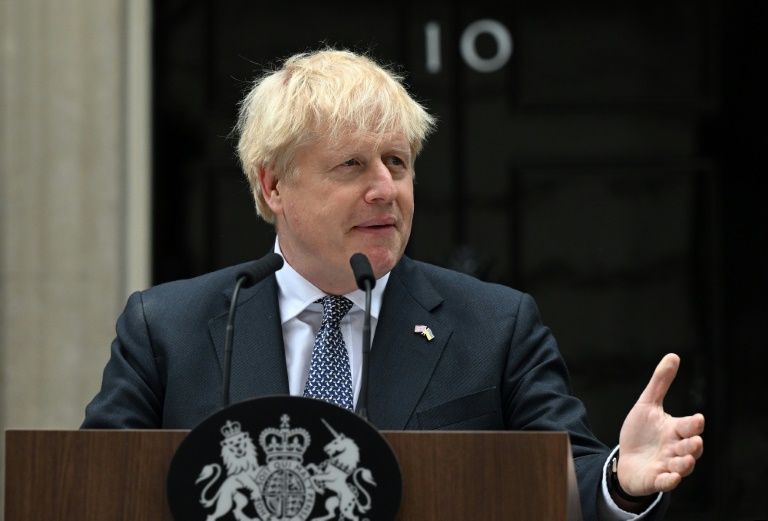
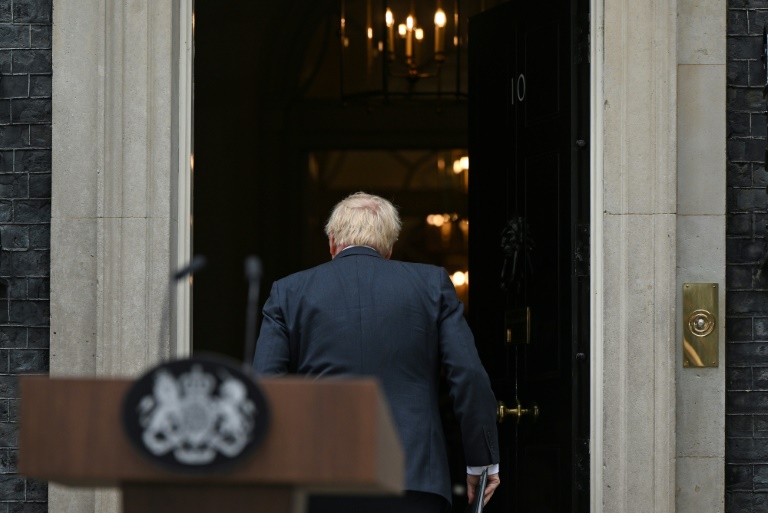
Boris Johnson resigned on Thursday as leader of Britain’s Conservative party, triggering a race to succeed him as prime minister after a frenzied 48 hours which saw dozens desert his scandal-hit government.

Johnson acknowledged it was “clearly the will of the parliamentary Conservative party that there should be a new leader of that party, and therefore a new prime minister”.

In a speech outside 10 Downing Street, he said he would stay on until his successor is found but faced calls to leave immediately and for an acting leader to be appointed.

Conservative John Major, who was prime minister from 1990 to 1997, said Johnson’s extended tenure — and the powers that still go with it — was “unwise and may be unsustainable”.

The leadership election will take place in the coming months. The victor will replace Johnson by the party’s annual conference in early October. 

But polling suggested most Britons favour his immediate exit, amid claims that Johnson is only hanging on to enjoy a wedding party at his government-funded country retreat.

Johnson’s tumultuous three years in office were defined by Brexit, the Covid pandemic and non-stop controversy about his reputation for mendacity.

– ‘Best job’ –

He said he was “sad… to be giving up the best job in the world”, justifying his fight to stay on to deliver the mandate he won in a Brexit-dominated general election in December 2019.

In the six-minute address, watched by his few remaining Tory allies and his wife Carrie, he promised support for Ukraine “for as long as it takes”.

Johnson reiterated his backing in a call afterwards to President Volodymyr Zelensky, Downing Street said.

Zelensky said he and Ukraine would be sad to see him go, praising his “personal leadership” and “charisma”.

Defence minister Ben Wallace and Rishi Sunak, whose departure as finance minister Tuesday sparked the cabinet exodus, were among the early frontrunners, a YouGov survey of Tory members suggested.

Foreign Secretary Liz Truss, another potential contender, said Johnson had “made the right decision” as she cut short a trip to Indonesia for a G20 meeting.

“We need calmness and unity now and to keep governing while a new leader is found,” she tweeted.

– Contenders –

Even while eyeing the exit, Johnson sought to steady the ship, making several appointments to replace departed cabinet members. 

They included Greg Clark, an arch “remainer” opposed to Britain’s divorce from the European Union, which Johnson had championed. 

The inexperienced Shailesh Vara was put in charge of Northern Ireland, with the government locked in battle with Brussels over post-Brexit trading rules for the tense territory.

Convening the new-look cabinet after his resignation speech, Johnson confirmed his lame-duck status by saying “major fiscal decisions should be left for the next prime minister”, according to Downing Street.

As late as Wednesday night, Johnson had been defiantly clinging on to power despite a wave of more than 50 government resignations.

He sacked minister Michael Gove, with a Downing Street source describing Johnson’s former Brexit right-hand-man as a “snake” in the media.

But the departure early Thursday of education minister Michelle Donelan and a plea to quit from finance minister Nadhim Zahawi, who have only in their jobs for two days, tipped the balance.

– ‘Arrogant and delusional’ –

Tory MPs also warned him of a new no-confidence vote.

Johnson triumphed in 2019 with a vow to “get Brexit done” following Britain’s shock referendum decision three years prior. But for many, the populist, convention-defying leader had outstayed his welcome.

The Conservative infighting erupted at a time when millions of Britons are battling the worst slump in living standards since the 1950s, fuelling by rocketing energy prices on back of the war in Ukraine.

Johnson’s popularity had already slumped over a series of lockdown-breaking parties in Downing Street, which saw him become the first prime minister to receive a police fine.

“About time, isn’t it? Seriously, I mean have you ever known anyone be so arrogant, ignorant, delusional?” Helen Dewdney, 53, who works in consumer rights, told AFP.

While Johnson oversaw a successful coronavirus vaccine campaign, the former journalist also oversaw one of Europe’s worst death tolls, and nearly died himself from Covid in April 2020.

“Boris Johnson’s legacy is the deaths of nearly 200,000 British people on his watch,” said Lobby Akinnola, from the campaign group Covid-19 Bereaved Families for Justice.

– After-dinner speeches –

“Whilst Johnson will move on to a life of writing newspaper columns and being paid eye-watering amounts to give after-dinner speeches, there will be no moving on for the families like mine that have been ripped apart by his actions,” he said.

Sunak and health secretary Sajid Javid quit late Tuesday after Johnson apologised for his February appointment of a senior Conservative MP to a prominent role in parliament. 

Chris Pincher resigned as deputy chief whip last week following accusations that he drunkenly groped two men.

Downing Street officials eventually conceded that Johnson had known about other allegations against Pincher back in 2019, and many ministers recoiled at having to defend the appointment.

Tony Travers, director of the think tank LSE London, said the party had once again shown its propensity to turn on unpopular leaders after previously ditching premiers Margaret Thatcher and Theresa May.

“The truth is that the reason the Conservative party is so durable is that it will get rid of its leaders when it thinks they are harming the party,” he told AFP.

“And this allows the party to start again with a new leader and say, ‘look, we’re a completely different enterprise’.”

UK backing for Ukraine set to outlive Johnson

Although Boris Johnson has been one of the West’s most vocal supporters of Ukraine following Russia’s invasion, experts say the British prime minister’s Thursday resignation will not diminish London’s backing for Kyiv.

“Boris Johnson has been the frontman for this policy, but it’s whole-of-British-government policy,” said Peter Ricketts, a former UK national security advisor and ambassador to France.

“Whoever was prime minister would have done much the same thing,” although “Johnson brought his own particular style to it,” Ricketts added.

Former French ambassador to Britain Sylvie Bermann agreed that though “the line will remain, the style will be different”.

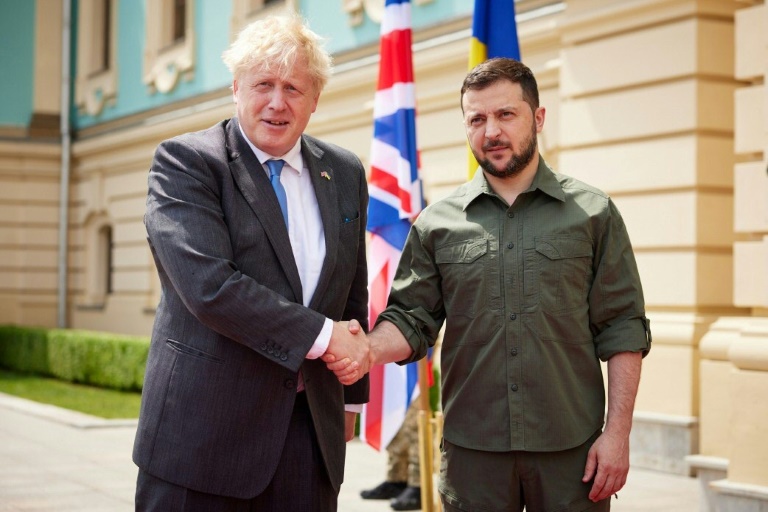
With impassioned speeches and editorials and two visits to Kyiv since Russia’s February 24 attack, on top of arms deliveries, Johnson won admiration from Ukrainians.

“Johnson, despite the domestic scandals, has been solid in his support for Ukraine,” tweeted Alina Polyakova, head of the Washington-based Center for European Policy Analysis, adding that “as a friend told me, ‘he is like a god in Ukraine'”.

Conversely, Moscow was among the first foreign capitals to react Thursday to news of Johnson’s impending departure.

“We would like to hope that some day in Great Britain more professional people who can make decisions through dialogue will come to power,” Kremlin spokesman Dmitry Peskov told reporters.

“He really does not like us. And we (do not like) him either,” Peskov said of Johnson.

Where other nations have been content to let the British melodrama play out, Russia had been stung by London’s early decisions to send lethal aid, including more than 5,000 anti-tank missiles, to Ukraine.

In late June, Britain decided on a new military aid package worth £1 billion ($1.2 billion) including air defence systems and drones — bringing its total to £2.3 billion.

Announcing he would step down from the leadership of the Conservatives Thursday, Johnson spared a line for Ukraine, saying “we in the UK will continue to back your fight for freedom as long as it takes”.

– ‘Seeking the spotlight’ –

Ukrainian President Volodymyr Zelensky called Johnson to express his “sadness” over his resignation.

“We all welcome this news with sadness. Not only me, but also all of Ukrainian society,” the presidency quoted Zelensky as saying.

“We don’t doubt that Great Britain’s support will continue, but your personal leadership and your charisma made it special,” he said.

Zelensky adviser Mykhaylo Podolyak thanked the UK leader in a tweet for “always being at the forefront of supporting Ukraine”.

Former French diplomat Bermann said: “Johnson wanted to look like he was out in front, or ‘leading the world’, as he would say.”

But “it’s not at all the true picture,” she said.

Johnson “is constantly seeking the spotlight, it’s true that it’s very nice for Zelensky to have unconditional support, but beyond that, the UK didn’t play a role that stood out particularly from others”.

Ricketts said: “There’s been a bit of one-upmanship in the British approach, in being determined to show the other Europeans that we can do more.” 

“The UK has been one of the leaders, but all of that’s dwarfed by… the Americans,” he added, calling Washington’s response “off the scale in terms of anything the Europeans have done, including Britain”.

Russia’s invasion came as Johnson was plagued by domestic woes, including long-running action over Downing Street parties during Covid lockdown and the allegations about sexual harassment within his governing Conservative party that finally brought him down.

He was accused at home of using his relationship with Zelensky to score points, with many journalists and other observers joking on social media that each new scandal would prompt a visit or phone call to Kyiv.

“He has capitalised on the war to distract attention from his other problems,” Ricketts said.

Nevertheless, although “Johnson established a good personal link with Zelensky… there’s no reason to doubt that that would be handed on to another prime minister,” he added.

“I think Zelensky would be friends with anyone who’s useful to him.”

Stocks climb on stimulus hopes; pound gets 'Boris bounce'

Stocks and commodities markets recovered further Thursday as talk of Chinese stimulus measures boosted sentiment, while the pound rallied on the resignation of Britain’s scandal-hit Prime Minister Boris Johnson as leader of the Conservative party.

Oil prices jumped around five percent as supply concerns added to stimulus hopes. 

Meanwhile the euro struck a fresh 20-year low versus the dollar as the minutes from the latest ECB meeting showed it is happy to go slow with hiking interest rates.

Analysts pointed to reports suggesting China is considering bringing forward about $220bn of infrastructure spending as boosting both commodities prices as well as sentiment on equities markets.

“News of a huge stimulus drive in China has helped lift commodities across the board,” said Fiona Cincotta at City Index.

Wall Street was in positive territory in late morning trading, with the Dow adding 0.8 percent.

In Europe, Paris stocks climbed 1.7 percent and Frankfurt jumped 2.0 percent higher.

London’s blue-chip FTSE 100 stock index rose 1.1 percent, with gains accelerating after Johnson announced his resignation.

– Pound gets ‘Boris bounce’ –

Johnson’s resignation also sent the pound climbing, rising above the $1.20 level.

“Sterling is revelling in what is probably its last ‘Boris bounce’, moving up against the dollar and the euro as the political crisis of the past few days subsides,” said Chris Beauchamp, chief market analyst at online trading platform IG.

“The currency market is relieved that Johnson is finally resigning, removing some of the political uncertainty that was priced into the pound and paving the way for a new prime minister,” said Victoria Scholar, head of investment at Interactive Investor. 

The euro meanwhile remained struck a fresh 20-year low $1.0156.

The European single currency is being hammered by growing fears of a recession for the eurozone and the likelihood of more aggressive US interest-rate hikes.

That concern was validated by release yesterday of minutes from the latest US Federal Reserve meeting that indicated it plans to push forward with further considerable hikes.

Meanwhile, minutes of the latest ECB meeting indicated it was looking at taking a more gradual approach, even if it warned it could move faster if it deemed necessary. 

Oil prices jumped more than five percent after having briefly fallen under $100 per barrel this week.

In addition to Chinese stimulus hopes, supply concerns played a part as a majority of Kazakhstan’s oil imports could be blocked by a Russian court order due to environmental concerns at the port of Novorossisyk.

– Key figures at around 1530 GMT –

New York – Dow: UP 0.8 percent at 31,272.31 points

EURO STOXX 50: UP 2.0 percent at 3,488.50

London – FTSE 100: UP 1.1 percent at 7,189.08 (close)

Frankfurt – DAX: UP 2.0 percent at 12,843.22 (close)

Paris – CAC 40: UP 1.6 percent at 6,006.70 (close)

Tokyo – Nikkei 225: UP 1.5 percent at 26,490.53 (close)

Hong Kong – Hang Seng Index: DOWN UP 0.3 percent at 21,643.58 (close)

Shanghai – Composite: UP 0.3 percent at 3,364.40 (close)

Pound/dollar: UP at $1.2003 from $1.1921 Wednesday

Euro/pound: DOWN at 84.65 pence from 85.43 pence

Euro/dollar: DOWN at $1.0159 from $1.0186

Dollar/yen: DOWN at 135.92 yen from 135.93 yen

Brent North Sea crude: UP 5.2 percent at $105.89 per barrel

West Texas Intermediate: UP 5.7 percent at $104.14 per barrel

Deadly strikes rock east Ukraine as Russia grinds towards Sloviansk

Russian forces left a trail of destruction Thursday as they sought to push deeper into the eastern Donbas region, as Kyiv thanked outgoing British leader Boris Johnson for his support.

Diplomatic tensions mounted between Ankara and Kyiv, where Ukrainian officials have accused Turkey of ignoring calls to seize grain being transported by a Russian ship.

A Russian air strike in the eastern industrial city of Kramatorsk left at least one dead and several others wounded earlier in the day, as Russian seeks full control of the surrounding Donbas.

The explosion left a gaping crater next to a hotel and residential buildings and several cars were on the fire, AFP journalists said, as emergency services arrived on the scene.

Kyiv hailed Johnson, one of the embattled country’s keenest allies throughout the war, as the British leader made the first step towards leaving office but said the UK would continue supporting Ukraine for “as long as it takes”. 

The head of Ukraine’s battled-scarred Donetsk region Pavlo Kyrylenko announced before the strike on Kramatorsk that Russian bombardments had killed at least seven people over the past 24 hours.

The fatalities came after Ukrainian officials re-issued urgent pleas for civilians in the surrounding region to flee, as Russian forces turn their sights on the nearby eastern city of Sloviansk.

Vitaliy, a plumber, told AFP in the industrial hub that his wife and her daughter from a previous marriage, who is six months pregnant, were evacuated from the city the day before.

“Tomorrow I will join the army,” he said.

– ‘Well fortified’ –

Sloviansk mayor Vadym Lyakh said around 23,000 people remained from a pre-war population of 110,000.

“Evacuation is ongoing. We take people out every day,” he said.

“The city is well fortified,” he added, claiming Russian forces had been unable to surround the city.

Sloviansk is Russia’s next target after their capture of the nearby sister cities of Severodonetsk and Lysychansk.

Russian forces captured the cities in the Lugansk region after long battles, consolidating their hold in the east after failing at the start of the February invasion to take the capital kyiv and Ukraine’s second-largest city Kharkiv.

A diplomatic crisis too was flaring between Ukraine and Turkey over the apparent transport by Russia of grain allegedly stolen from Ukraine.

Kyiv says that a 7,000-tonne vessel, the Zhibek Zholy, set off from Ukraine’s Kremlin-occupied port of Berdyansk after picking up confiscated wheat and called last week for Turkey to seize it.

The marinetraffic.com website on Thursday showed the vessel moving away from Turkey’s Black Sea port of Karasu before apparently switching off its transponder and disappearing from view.

Ukraine said it was “deeply disappointed” that Turkey had not acted on its request to seize the ship.

Kyiv was also reeling from the shock of losing one of its most vocal allies in the conflict with Russia, UK Prime Minister Johnson.

“We all welcome this news with sadness. Not only me, but also all of Ukrainian society,” President Volodymyr Zelensky said, after Johnson resigned as leader of Britain’s Conservative party, paving the way for the selection of a new prime minister.

“We don’t doubt that Great Britain’s support will continue, but your personal leadership and your charisma made it special,” he said.

– ‘Control over Snake Island’ –

Despite Ukraine’s recent territorial losses, Zelensky in an evening address on Wednesday had praised new heavy Western artillery for boosting Ukraine’s firepower.

“Their accuracy is exactly as it should be,” he said.

“Our defenders inflict notable blows on warehouses and other points which are important for the logistics of the occupiers,” he said.

Ukraine also said it had regained control of Snake Island in the Black Sea, after raising its flag there this week following the withdrawal of Russian forces.

Senior military official Oleksiy Gromov said Ukrainian forces had “effectively re-established… control over Snake Island,” but did not specify whether there was a lasting military presence on the rocky outcrop.

Russia said it pulled back from the symbolic island last week in a gesture of “good will”, but has since continued targeting positions on the island.

The Russian defence ministry said it had carried out “precision” missile strikes on the island early Thursday, killing Ukrainian soldiers and forcing survivors to flee.

Finland meanwhile passed legislation to build stronger fences on its border with Russia, as the country seeks to join NATO following the invasion. 

burs-jbr/ah

War in Ukraine: Latest developments

Here are the latest developments in the war in Ukraine:

– Zelensky ‘sad’ over Johnson ouster –

Ukrainian President Volodymyr Zelensky telephones Boris Johnson to express his “sadness” over the British leader’s resignation as Conservative leader and impending departure as prime minister.

“We all welcome this news with sadness. Not only me, but also all of Ukrainian society which sympathises with you a lot,” the presidency quotes Zelensky as saying.

Johnson has been seen as one of Ukraine’s most vocal and fervent supporters in the West.

– Eastern cities under fire –

Russian forces grind deeper into the Donbas region with their sights set on the flashpoint eastern city and industrial hub of Sloviansk.

The governor of the battle-scarred Donetsk area of Donbas, Pavlo Kyrylenko, says Russian forces have killed at least seven civilians and injured others in the last 24 hours throughout the Donbas.

Mayor of Sloviansk Vadym Lyakh claims Russia has been unable to surround the city and says around 23,000 people remain there out of a pre-war population of 110,000.

Ukrainian officials re-issue urgent pleas for civilians to flee.

Along with Sloviansk, Russia has also set its sights on Kramatorsk, the administrative capital of the Donetsk region, where at least one person was killed and several wounded in bombardments Thursday, AFP journalists say. 

– Kyiv-Ankara tensions –

A diplomatic crisis flares between Ukraine and Turkey with Kyiv accusing Ankara of ignoring its calls to impound a Russian-flagged ship carrying grain allegedly stolen from Ukraine.

Kyiv alleges that the Zhibek Zholy, which arrived at Turkey’s Black Sea port of Karasu six days ago, slipped out of the Russian-occupied Ukrainian port of Berdyansk with wheat stolen from Ukrainian territory.

Russia denies stealing grain.

After being submitted to Turkish checks, the vessel returned to Russian territorial waters on Thursday, Turkish sources said.

Ukraine said it was “deeply disappointed” Turkey has not impounded the ship and handed back the grain.

The Ukrainian foreign ministry has summoned Turkey’s ambassador to demand an explanation.

– Finland to bolster border fence –

The Finnish parliament passes legislation to build stronger fences on its 1,300-kilometre (800-mile) border with Russia.

Finland and Sweden have begun the process of joining NATO.

Helsinki fears that Moscow could retaliate by flooding Finland’s border with migrants in a repeat of a sudden rush of migrants that arrived at an Arctic border post between Finland and Russia in 2016.

– Russia to create patriotic youth movement – 

Russian lawmakers approve legislation to create a patriotic youth movement reminiscent of Soviet-era youth organisations that will be headed by President Vladimir Putin. 

The movement will aim to enhance Russian values among children from the age of six. 

“The state must create conditions that contribute to the comprehensive spiritual, moral, intellectual and physical development of children, to the learning of patriotism, civil responsibility and respect for adults,” the authors of the legislation said. 

In Soviet times, children were drilled in Communist values by three youth organisations — the Little Octobrists, Young Pioneers and the Komsomol.

burs-eab/cb/har

Close Bitnami banner
Bitnami