World

US court rules distributors not responsible for opioid crisis

The three largest drug distributors in the United States have won a major court victory, with a judge ruling that they were not responsible for record opioid addiction in one part of West Virginia state.

About 10 percent of Cabell County’s population is or has been addicted to opioids — at a huge economic and social cost, acknowledged Judge David Faber.

But “while there is a natural tendency to assign blame in such cases, they must be decided not based on sympathy, but on the facts and the law,” he wrote in a decision released Monday night.

The “plaintiffs failed to show that the volume of prescription opioids distributed in Cabell/Huntington was because of unreasonable conduct” by defendants AmerisourceBergen, Cardinal Health and McKesson, Faber wrote.

Tasked with supplying pharmacies, the three firms delivered more than 51 million doses of pain medication in the county between 2006 and 2014, and local authorities accused them of turning a blind eye to suspicious order volumes.

But “there is nothing unreasonable about distributing controlled substances to fulfill legally written prescriptions,” Faber said.

He put the blame on manufacturers who “aggressively market prescription opioids,” rather than the companies that distributed them.

After becoming addicted to pain pills, many people increased their consumption and eventually turned to illicit drugs such as heroin and fentanyl, an extremely powerful synthetic opioid.

The opioid crisis, which has caused more than 500,000 deaths over 20 years in the United States, has triggered a flurry of lawsuits from victims as well as cities, counties and states impacted by the fallout.

The suit filed by Cabell County and the city of Huntington had become a symbol of authorities’ efforts to make companies pay for the social and economic cost of the crisis.

Between May 3 and July 28, 2021, 70 witnesses testified as part of the lawsuit in federal court in Charleston, West Virginia.

While the hearings were still ongoing, the three distributors and pharmaceutical company Johnson & Johnson agreed to pay $26 billion to end a series of legal actions in a settlement that is still being finalized.

Markets slump as recession fears grip investors

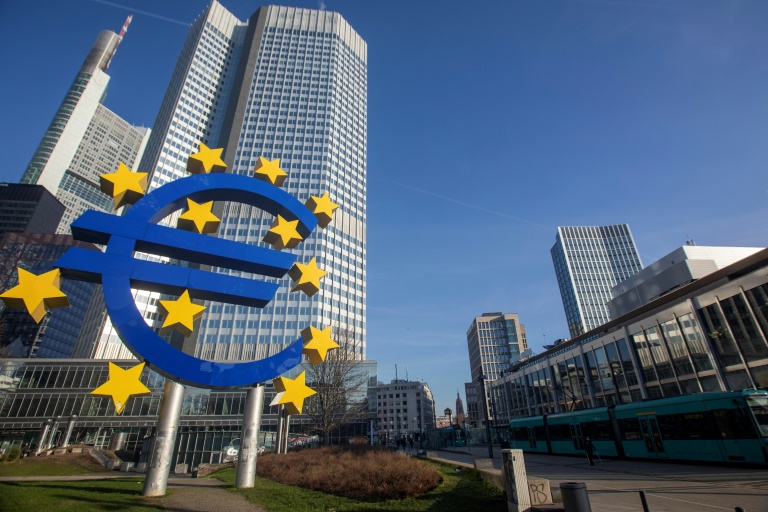
Stock markets sank and oil prices plummeted Tuesday as fears mounted that major economies will slide into recession as inflation soars, with the euro slumping towards parity with the dollar.

“Fears about the health of the world economy are circulating and that is why we are seeing major declines in stocks, energies, and industrial metals,” said market analyst David Madden at Equiti Capital.

“Worries about rising inflation, higher interest rates and slower economic growth are hanging over the markets,” he said.

European stock markets fell nearly three percent, while on Wall Street the Dow was down around two percent in late morning trading.

The euro sank to a 20-year dollar low of $1.0238 on recession fears and as investors eyed aggressive interest rate hikes by the US Federal Reserve in its fight against inflation, in contrast with the European Central Bank, seen as planning more modest increases.

The pound also slumped to a two-year low near $1.19.

The main international crude oil contract, Brent North Sea, fell nearly 10 percent, while the main US contract WTI, fell nearly nine percent to under $100 per barrel.

“There are increasing worries the elevated energy prices will chip away at demand, hence the fall in the oil contracts, said Madden.

Sentiment in Europe was shaken from the latest survey data showing economic growth in the eurozone floundered in June.

S&P Global’s closely-watched monthly purchasing managers’ index (PMI), which measures corporate confidence, fell to 52.0 in June from 54.8 in May.

Nevertheless, the reading, which was a 16-month low, remains above the 50-point level signalling expansion.

“Growing fears of a recession are hammering the euro lower, whilst the dollar is soaring on bets that the Fed will keep hiking rates aggressively to tame inflation,” City Index analyst Fiona Cincotta told AFP.

“Today’s PMI data from Europe have highlighted the risk of slowing growth at the end of the second quarter and raise the prospect of a contraction in activity in the coming months.”

Walid Koudmani, chief market analyst at XTB, said “the ECB is caught between a rock and a hard place as it needs to raise interest rates to tackle inflation and boost its currency while simultaneously supporting struggling economies which are just recovering after two years of pandemic related issues.”

The mood on trading floors has become increasingly gloomy in recent months as observers warn that sharp interest rate hikes aimed at curbing price rises could cause a contraction, compounding uncertainty caused by Russia’s war in Ukraine.

By contrast, most Asian stock markets closed higher on growing speculation that US President Joe Biden is about to roll back some of the Trump-era tariffs on Chinese goods.

Investors were keeping tabs also on fresh Covid outbreaks in China that have triggered city-scale lockdowns.

– Key figures at around 1530 GMT –

Euro/dollar: DOWN at $1.0243 from $1.0431 Monday

Pound/dollar: DOWN at $1.1908 from $1.2116

Euro/pound: DOWN at 86.03 pence from 86.09 pence

Dollar/yen: UP at 135.73 yen from 135.69 yen

Brent North Sea crude: DOWN 9.6 percent at $102.57 per barrel

West Texas Intermediate: DOWN 8.8 percent at $98.94 per barrel

New York – Dow: DOWN 2.1 percent 30,447.97 points

EURO STOXX 50: DOWN 2.3 percent at 3,389.69

London – FTSE 100: DOWN 2.9 percent at 7,025.47 (close)

Frankfurt – DAX: DOWN 2.9 percent at 12,401.20 (close)

Paris – CAC 40: DOWN 2.7 percent at 5,794.96 (close)

Tokyo – Nikkei 225: UP 1.0 percent at 26,423.47 (close)

Hong Kong – Hang Seng Index: UP 0.1 percent at 21,853.07 (close)

Shanghai – Composite: FLAT at 3,404.03 (close)

burs-rl/cdw

What next for Putin in Ukraine fight?

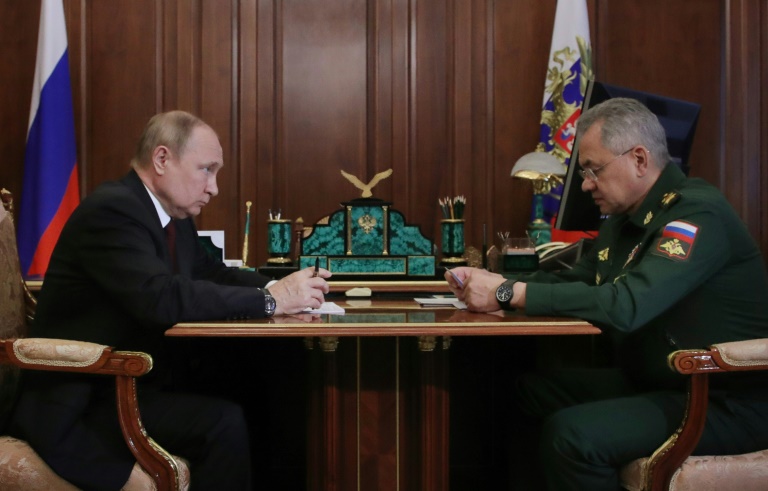
Russian President Vladimir Putin must now decide his next steps in the five-month invasion he started in February.

After Russian troops captured the strategic Ukrainian city of Lysychansk on Sunday, here are five different options raised by security experts who spoke with AFP:

– Grinding advance –

Russian forces appear on course to take full control of the Donbas region that was already partly held by pro-Kremlin separatists before the February 24 invasion.

With Lysychansk and its twin city Severodonetsk captured in the past weeks, Putin’s troops “can hope to take Sloviansk and Kramatorsk and the surrounding regions,” said Pierre Grasser, a researcher at Paris’ Sorbonne university.

Sloviansk in particular is home to “a relatively welcoming population — at least those who have remained there” rather than fleeing the fighting, he added.

But there may be limits to how far the Russians can press into their neighbour’s territory.

“Their steamroller works well near their own borders, their own logistical centres and their airbases. The further away they get, the harder it is,” said Pierre Razoux, academic director of the Mediterranean Foundation for Strategic Studies (FMES).

– Control the Black Sea –

Southern Ukrainian city Kherson was one of the first to fall to Russian forces in the opening days of the war.

But Russia’s grip on the country’s Black Sea coast is not secure.

“Counter-attacks by Ukraine in the south… place Russian forces in a dilemma. Do they sustain their eastern offensive, or do they significantly reinforce the south?” said Mick Ryan, a former general in the Australian army.

The question is all the more pressing as “the war in the south is a front of greater strategic importance” than the Donbas, he added.

Claiming territory along the coast could allow Moscow to create a land bridge to the Crimean peninsula, which it annexed in 2014, while both sides want to control Ukraine’s Black Sea ports.

– Crack Kharkiv –

Ukraine’s second-largest city Kharkiv is close to the northeastern border with Russia — and located in a pocket still controlled by Kyiv that could yet be cut off by Russian forces.

“If the Ukrainians collapse and Kharkiv is completely isolated, the Russians could force them to choose between committing to defend the city or taking the pressure off in the south towards Kherson,” said Pierre Razoux.

It will be up to President Volodymyr Zelensky and Ukrainian commanders “to deploy their units so as to prevent a big summer breakthrough” that could encircle Kharkiv, he added.

Home to 1.4 million people in peacetime, a siege of Kharkiv could be a bloody affair lasting up to a year, Razoux said.

– Divide the West –

While the West has so far kept up a mostly united front of sanctions and support for Ukraine, continued Russian advances could drive the allies’ judgements of their interests apart.

“The goal for Russia is to continue to grind down Ukrainian forces on the battlefield, while waiting for the political will to support Ukraine to fade among Western countries,” said Colin Clarke, research director at the Soufan Center think-tank in New York.

Deliveries of Western military aid have been too slow and too small to turn the battle decisively in Kiev’s favour.

Meanwhile, the war’s inflationary impact on basics like food and energy may gradually turn public opinion away from the strong initial support for Ukraine.

“The Americans could tell the Ukrainians ‘you can’t go on’,” said Alexander Grinberg, an analyst at the Jerusalem Institute for Security and Strategy.

– Open talks –

Russia itself is suffering heavy costs from Western sanctions, battlefield casualties and losses of military materiel.

“Putin will be forced to negotiate at some point, he’s bitten off more than he can chew,” said Colin Clarke.

In late June, Kremlin spokesman Dmitry Peskov already raised the option of talks — on condition of “applying all the conditions set by Russia”, which remain unacceptable to Kiev.

But his control over domestic information means the Russian leader has a free hand to tell the public that his objectives have been achieved and justify a pause in the fighting.

A bigger challenge might be divisions on the Ukrainian side.

Hardliners and military leaders would “refuse any compromise with Russia” even if Zelensky were willing to strike a deal, said Pierre Razoux.

“They could tolerate a frozen conflict, but not a defeat.”

Ford's US car sales rise despite semiconductor crunch

Ford reported higher US auto sales Tuesday, bucking an industry-wide trend of declines in the latest quarter amid crimped supply of semiconductor and other key parts.

The Michigan giant delivered 483,688 vehicles, up two percent from the year-ago level.

While citing a continuation of supply constraints that have dogged the industry over the last year, Ford described vehicle demand as “strong.” 

Ford’s sales were dominated by larger vehicles, including pickup trucks and sport utility vehicles. The burden of limited inventories has been cushioned by strong pricing.

“Amid industry-wide supply constraints, Ford outperformed the industry driven by strong F-Series, Explorer and new Expedition and Navigator SUV sales,” said Andrew Frick, a vice president in sales and distribution at Ford Blue’s, the company’s division focused on internal combustion vehicles.

The results included the first deliveries of the new F-150 Lightning electric pickup truck, which added 2,296 units to the total.

Ford’s sales figures came as rivals General Motors, Toyota and FCA (Stellantis) all reported quarterly sales drops of at least 15 percent amid supply chain problems.

NATO launches membership process for Sweden, Finland

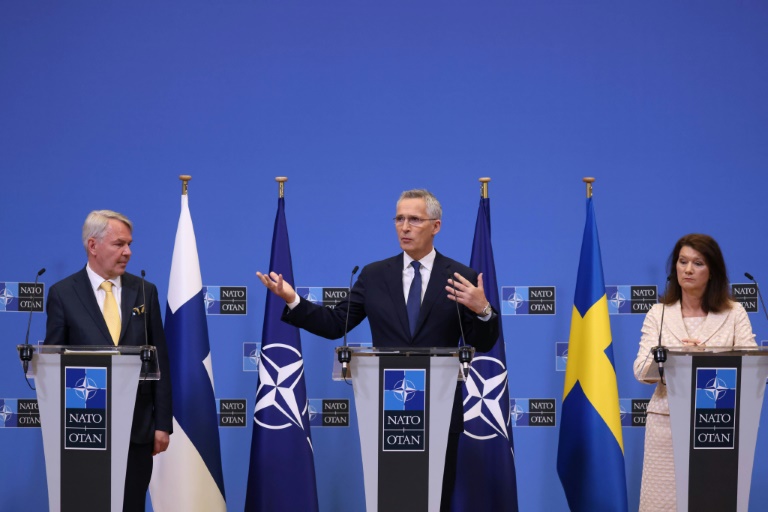
NATO on Tuesday kicked off momentous accession procedures for Sweden and Finland, aiming to expand the military alliance to 32 countries in reaction to Russia’s war in Ukraine.

“This is an historic day, for Finland, for Sweden, for NATO, and for Euro-Atlantic security,” NATO chief Jens Stoltenberg said after protocols were signed launching the required ratification process in all alliance countries.

The foreign ministers of Sweden and Finland, alongside Stoltenberg, also qualified the occasion as “historic”.

“The membership of both Finland and Sweden will not only contribute to our own security, but to the collective security of the alliance,” said Finland’s Pekka Haavisto.

The two Nordic countries had long maintained non-alignment status, even though they have held exercises with NATO and have inter-operable weapons systems.

They announced intentions to join NATO in May, triggered by Russia’s February invasion of Ukraine and ongoing war there.

In a sudden change of course, Sweden and Finland — the latter of which fought a Soviet invasion in 1939-1940 and shares a 1,340-kilometre (830-mile) border with Russia — asked to come under NATO’s mutual-defence umbrella.

Their bids hit a road-bump when Turkey, a NATO member, threatened to block their entry. 

Turkish President Recep Tayyip Erdogan had accused Sweden and Finland of being havens for Kurdish militants he has sought to crush, and for promoting “terrorism”. 

He also demanded they lift arms embargoes imposed for Turkey’s 2019 military incursion into Syria.

But Erdogan dropped his objections last week, in time for a NATO summit in Spain, after negotiations resulted in concessions — and a US promise of new warplanes for Turkey.

The summit ended up extending invitations to Sweden and Finland to formally apply, leading to lightning-fast negotiations on Monday then Tuesday’s signing.

– Security commitments –

Erdogan says he could still slam the door shut if Sweden and Finland don’t follow through on their promises, which include possible extradition agreements.

The months-long period during which all NATO countries have to ratify the Nordic countries’ membership is a risky moment, not only because of Turkey’s threat but also because the NATO mutual-defence clause is not yet applicable.

Sweden’s Prime Minister Magdalena Andersson told reporters in her country that Stockholm figured legislative approval from NATO nations “could take a year, and that estimation rests”.

Stoltenberg said: “I count on allies to deliver a quick and swift and smooth ratification process.” 

He emphasised that “many allies have already made clear commitments to Finland and Sweden’s security” during the interim period, and pointed out a boosted NATO presence in their region.

Swedish Foreign Minister Ann Linde said security assurances had been made by the United States, Britain, France, Germany, Spain, Italy, Poland and NATO members in the Nordic and Baltic regions.

Several NATO members flagged expedited ratification for Sweden and Finland.

“Moments after Finland and Sweden’s accession protocols were signed in Brussels, I summoned my government and proposed to Estonian parliament to convene tomorrow for accelerated ratification,” Estonian Prime Minister Kaja Kallas tweeted.

Germany’s parliament was poised to ratify as early as the end of this week. Sources in the ruling coalition said a first reading of the text was likely on Wednesday, with the final two readings on Friday.

“This is the fastest accession process in NATO’s history so far,” Stoltenberg said.

Chicago suburb in shock after mass shooting during July 4 parade

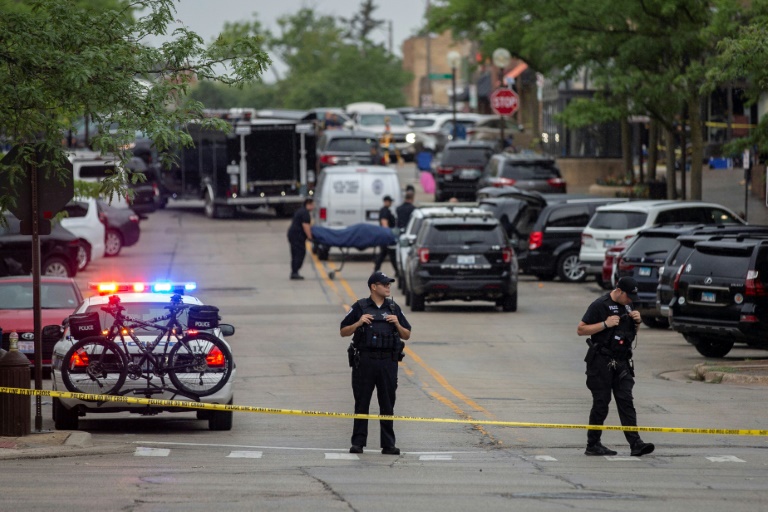
A wealthy Chicago suburb was reeling Tuesday from a devastating shooting that saw gunfire tear through a July 4 holiday crowd, as online posts and videos pointed to the troubled mind of the 21-year-old suspected gunman.

Robert “Bobby” Crimo III, who grew up in Highland Park, where the shooting occurred, was arrested on Monday after six people were killed and two dozen injured during an Independence Day parade.

Crimo was taken into custody after law enforcement launched a  massive manhunt for the gunman who sprayed paradegoers with dozens of semi-automatic rounds from a rooftop, turning the celebration into a scene of death and trauma.

“We’re all still reeling,” Highland Park Mayor Nancy Rotering told NBC’s Today show on Tuesday.

“Unbelievable shock,” Rotering said. “Everybody knows somebody who was affected by this directly.”

Rotering said she personally knew the suspected gunman when he was a young boy in the Cub Scouts and she was a Cub Scout leader.

“How did somebody become this angry, this hateful to then take it out on innocent people who literally were just having a family day out?” Rotering asked.

David Baum, a doctor whose two-year-old was in the parade, witnessed the shooting and helped treat some of the injured.

“The people who were gone were blown up by that gunfire,” Baum told CNN. “The horrific scene of some of the bodies is unspeakable for the average person.”

On Tuesday, police and FBI agents looking for evidence were sifting through belongings left behind by members of the crowd as they fled.

Strollers, bicycles, folding chairs and other items littered the parade route through the main street of Highland Park as American flags flapped in the breeze from brick buildings.

– Disturbing online content –

Crimo, whose father unsuccessfully ran for mayor and owns a store in Highland Park called Bob’s Pantry and Deli, was an amateur musician billing himself as “Awake the Rapper.”

The younger Crimo’s online postings include violent content that alluded to guns and shootings.

One YouTube video posted eight months ago featured cartoons of a gunman and people being shot.

A voice-over says “I need to just do it.”

It adds: “It is my destiny. Everything has led up to this. Nothing can stop me, not even myself.”

Crimo, who has the word “Awake” tattooed over an eyebrow, is seen sporting an “FBI” baseball cap in numerous photos and is wearing a Trump flag as a cape in one picture.

Rotering, the mayor, said the firearm used in the shooting was “legally obtained.”

“This nation needs to have a conversation about these weekly events involving the murder of dozens of people with legally obtained guns,” she said. “We need to re-examine the laws.”

The shooting is the latest in a wave of gun violence plaguing the United States, where approximately 40,000 deaths a year are caused by firearms, according to the Gun Violence Archive.

The deeply divisive debate over gun control was reignited by two massacres in May that saw 10 Black people gunned down at an upstate New York supermarket and 21 people, mostly young children, slain at an elementary school in Texas.

The Highland Park shooting cast a pall over Independence Day, when towns and cities across the country hold similar parades and people attend barbecues, sporting events and fireworks displays.

In another July 4 shooting, two police officers were wounded when they came under fire during a fireworks show in Philadelphia, local officials said.

– ‘Pop, pop, pop’ –

In Highland Park, Emily Prazak, who marched in the parade, described the mayhem.

“We were getting ready to march down the street and then all the sudden waves of these people started… like running towards us. And right before that happened, we heard the pop, pop, pop, pop, pop, and I thought it was fireworks,” Prazak told AFP.

Don Johnson said he initially thought it was a car backfiring.

“And finally, I heard the screams from a block down and people running and carrying their kids and everything, and we ran into the gas station, and we were in there for three hours,” Johnson told AFP.

“I’ve seen scenes like this over and over again on the TV and in different communities, and didn’t think it was going to happen here ever,” he said.

Five of the six people killed, all adults, died at the scene. The sixth was taken to the hospital but succumbed to wounds there.

Highland Park Hospital, where most of the victims were taken, said it had received 25 people with gunshot wounds aged eight to 85.

President Joe Biden voiced his shock and vowed to keep fighting “the epidemic of gun violence.”

“I’m not going to give up,” he said.

Last week, Biden signed the first significant federal bill on gun safety in decades, just days after the Supreme Court ruled that Americans have a fundamental right to carry a handgun in public.


The keepers of Ukraine's keys… and secrets

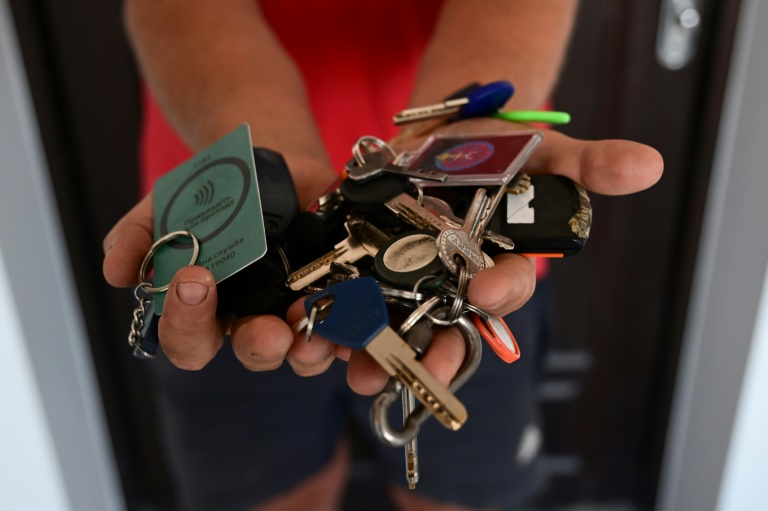
Yevgen Yelpitiforov counts out the keys of the homes he has been given to look after by friends who have fled Ukraine since Russia invaded.

“There’s 19 in all,” he said, cradling the bunch in his hands. 

Since the war began the 37-year-old biologist, who works as a gardener to make ends meet, has added another notch to his crowded CV — as a key-keeper.

For the last few months he has been criss-crossing the devastated Kyiv suburbs of Bucha and Irpin looking after homes and house plants abandoned when their owners fled for their lives.

“After the liberation, many of my acquaintances asked me to come and see if their houses were still intact, if they had windows or doors,” he told AFP.

Yevgen would go around and turn on a light to ward off looters, clear up the broken glass, send items on to their owners, or do a bit of gardening.

Soon — as word got around — the keys began accumulating. They would be “sent by mail, or I would take them from a neighbour, or from under the doormat.”

Some keys came with coffee or chocolates, as tokens of gratitude, as Yevgen had been doing it all from the goodness of his heart.

Returning friends would often find a little present from him, a bouquet of flowers or fruit to make them feel “happy”. 

“If it was me, they would have helped me too,” he insisted. “These are my friends, all the keys I have are from the people I know.”

– Gas mask for the fridge –

But sometimes the job stank, literally. “The hardest part” was clearing out rotten food from fridges and freezers left for weeks without electricity. 

“The smell is so bad you could pass out,” he said.

Which is why he is so grateful that someone gave him a Soviet-era gas mask. 

Even after a thorough cleanup, apartments still need to be aired out a few more times because “the smell remains for a week or two”. 

In Bucha, which has become a symbol of crimes carried out by Russian troops, Yevgen parked his car in front of a brand new apartment complex, most of whose windows were blown out. 

Nothing but a pile of metal remained of one car parked outside while another was riddled with shrapnel.  

Yevgen stayed just long enough in a small apartment to water some plants. The only sign of the war was a note on the wall left by Russian soldiers, “Excuse us for breaking in.”

The front door, like most others on this floor, had to be replaced. 

– Sex toys – 

A television voice actor before the war, Oleksandr Furman spent April as a key-keeper, looking after six Kyiv apartments abandoned by his friends.   

His most unusual mission was tidying away the sex toys his ex-girlfriend and her new partner left behind after fleeing the city just after the invasion began in the early hours of February 24. 

“She told me, ‘I can’t ask my mother to do it,'” Oleksandr said, bursting out laughing. “I hid them well…

“I was lucky. I wasn’t shot at, missiles didn’t fall near me,” he said. And by helping the actor felt he was “doing my duty by those who suffered”.   

Back in Irpin, Yevgen filmed some potted plants with his smartphone in a duplex overlooking a school whose roof was blown off. He would send the video to the owners who are abroad.  

At his next stop, workers were putting a new roof on a house with burned walls. He paused to tend to a young evergreen shrub severely scorched by the flames.

“It reminds me of the Ukrainian people,” Yevgen said.

“On one side it is burned, on the other it has the strength to keep growing.”

War in Ukraine: Latest developments

Here are the latest developments in the war in Ukraine:

– ‘Massive shelling’ of Donbas city –

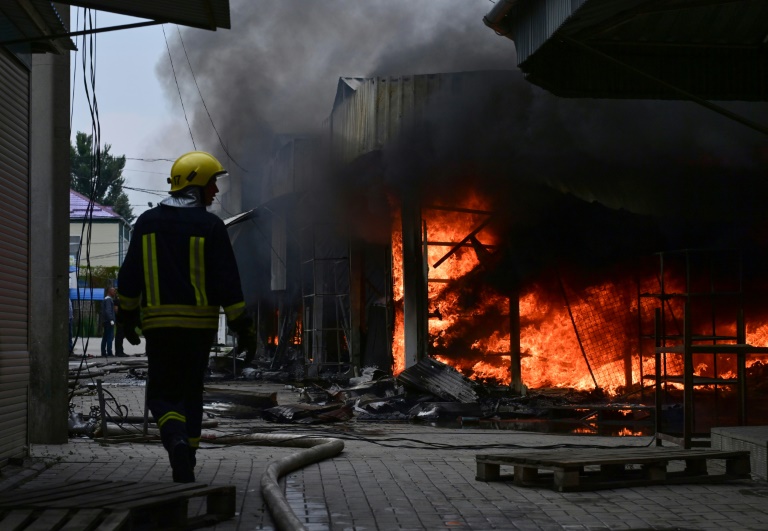
Russian forces are “massively shelling” the eastern city of Sloviansk, its mayor says, as Moscow pushes deeper into the Donetsk region after taking neighbouring Lugansk at the weekend.

Sloviansk mayor Vadim Lyakh says  the centre and north of the city are being bombarded and urges residents to take shelter.

At least six people and 19 have been injured since Sunday in Sloviansk, one of two major Donetsk cities in Moscow’s sights, along with Kramatorsk.

Russian forces also continue to target the northeastern city of Kharkiv, a month after being driven back from its northern outskirts.

Moscow claims up to 150 Ukrainian troops have been killed in Russian strikes on the city in the past 24 hours.

– Ukraine, allies agree ground rules for reconstruction –

Ukraine and its allies meeting in the Swiss city of Lugano agree a set of principles for rebuilding the war-torn country, including the need to stamp out corruption and uphold the rule of law.

The former Soviet state has long been ranked among the world’s most corrupt countries by Transparency International.

Ukrainian prime minister Denys Shmyhal estimates the cost of rebuilding at $750 billion.

– Ukraine torturing prisoners: Moscow –

Russia says it is investigating the torture of Russian soldiers held prisoner in Ukraine that were recently released as part of a prisoner swap. 

The Russian Investigative Committee, which probes major crimes, says one of the 144 Russian soldiers exchanged last week related being treated by doctors without an anaesthetic and being “beaten” and “tortured with electricity” in captivity.

The soldier allegedly said he was left without food and water for days. Another soldier who had his leg amputated was cited as saying he was badly beaten and that a Ukrainian medic poked at his wound.

– NATO starts to ratify Sweden, Finland bids –

NATO launches the process to ratify Sweden and Finland as the newest members of the 30-member defence alliance.

“This is a good day for Finland and Sweden and a good day for NATO,” the alliance’s chief Jens Stoltenberg tells reporters in a joint statement with the Swedish and Finnish foreign ministers.

“With 32 nations around the table, we will be even stronger and our people will be even safer as we face the biggest security crisis in decades,” he says.

– Ukrainian woman wins ‘maths Nobel’ –

Ukraine’s Maryna Viazovska becomes only the second woman to be awarded the prestigious Fields medal, dubbed the Nobel prize for mathematics,

Viazovska, a 37-year-old Kyiv-born math professor who works in the Swiss city of Lausanne, shared the prize with three others.

At the ceremony in Helsinki, she pays tribute to Yulia Zdanovska, a 21-year-old mathematician killed by a Russian missile attack on the Ukrainian city of Kharkiv in March.

“When young people die you think, ‘What is the point of my work as a teacher if young, talented people are just wasted in this terrible war?,” she said.

– Cosmonauts hail Russian gains –

Russian cosmonauts on board the International Space Station congratulate Russian forces on capturing the eastern Ukrainian region of Lugansk by being photographed with the flag of the area’s pro-Russian rebels.

Russian space agency Roscosmos posted the photograph on the messaging network Telegram of Oleg Artemyev, Denis Matveyev and Sergei Korsakov holding the flag of the self-proclaimed separatist Lugansk People’s Republic. 

burs-cb/jy/bp

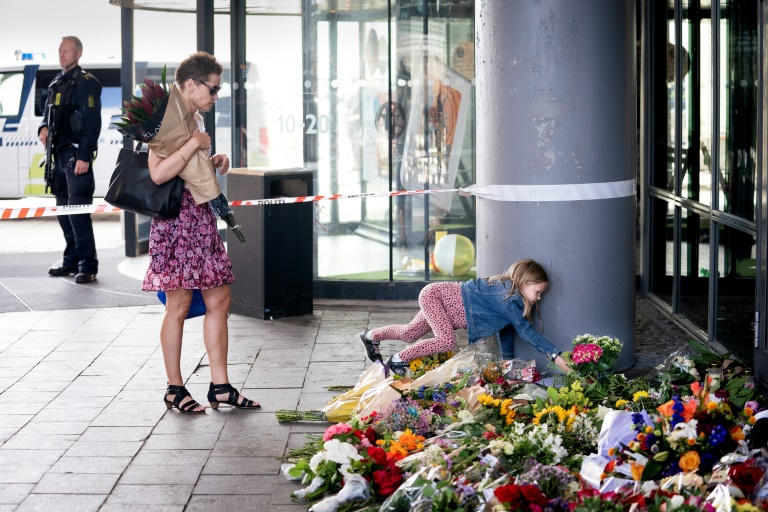
Copenhagen holds memorial for mall shooting victims

With the city still reeling from a weekend mall shooting that left three dead, Copenhagen on Tuesday prepared to pay tribute to the victims with a memorial service.

Following a call from the city’s mayor, a large memorial is planned for Tuesday evening at 8 pm (1800 GMT) in front of Fields, a shopping complex located between the city centre and the capital’s airport, where the attack occurred.

The shooting shook the city which had just played hosted the opening stages of the Tour de France cycling competition and seen the return of the Roskilde music festival after cancellations for Covid-19.

“It doesn’t happen in Denmark, it happens in the United States,” Susanne Bulow, a 65-year-old local resident, told AFP.

Danish Prime Minister Mette Frederiksen and Mayor Sophie Andersen are due to speak at the service, which will also be attended by Crown Prince Frederik, with police expecting “a large number of people.”

A choir performance will also accompany the tributes to the victims.

The Tour de France, back in France, paid tribute to the victims with a minute’s applause before the start of the fourth stage on Tuesday.

The alleged perpetrator of the attack, a 22-year-old Danish man who authorities say was known to mental health services, was remanded in custody in a “closed psychiatric ward” on Monday on murder charges.

– Mental health history –

Police said Tuesday they had no new information to release about the investigation.

According to public broadcaster DR, citing several unnamed sources, the suspected gunman had tried to reach a psychological help line shortly before the attack, but authorities would not confirm this.

According to a former neighbour interviewed by newspaper Berlingske, the suspect was a troubled person from childhood.

The neighbour, who had asked to remain anonymous, told the paper that in school the suspect had troubles coping with the stress of too many people around him.

The 22-year-old is suspected of three murders, with those killed being a 46-year-old Russian man residing in Denmark, a 17-year-old girl and a young man of the same age, both Danish. 

One of them worked in the cinema in the shopping centre, their employer said. 

The suspect is also facing seven counts of attempted murder.

Four of those shot were seriously injured but in stable condition and according to authorities, they are two Danish women aged 19 and 40, a 50-year-old Swedish man and a 19-year-old Swedish woman. 

Three others sustained light injuries from the gunfire: two Danish women aged 15 and 17 and a 45-year-old Afghan man living in the Scandinavian country.

About 20 more people sustained light injuries in the panicked evacuation after the shooting.

The Fields shopping centre has been closed since the attack and is expected to reopen on July 11.

Disputed Russian cargo ship still stranded off Turkish coast

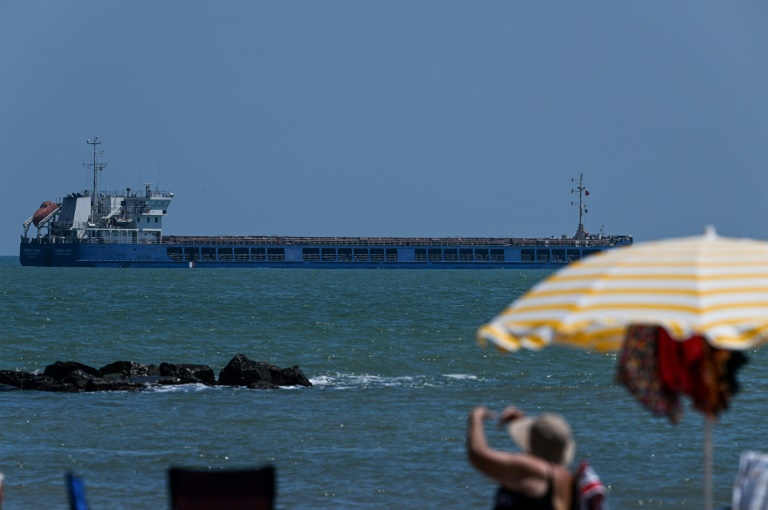
A Russian-flagged cargo ship at the centre of a fight over grain between Kyiv and Moscow remained anchored Tuesday off Turkey’s Black Sea coast — a full four days after its unexpected arrival.

Ukraine alleges that the Zhibek Zholy had set off from its Kremlin-occupied port of Berdyansk after picking up confiscated wheat.

Moscow concedes that the 7,000-tonne vessel was sailing under the Russian flag but denies any wrongdoing.

And NATO-member Turkey has said nothing official in public as it tries to maintain open relations with both Moscow and Kyiv while facing Ukrainian pressure to seize the ship.

The saga started when a Kremlin-installed leader in southeastern Ukraine last Thursday announced the launch of the first official grain shipments across the Black Sea since Russia invaded its neighbour in February.

Russia claims to have “nationalised” Ukrainian state assets and to be buying crops from local farmers. Ukraine says its grain is being stolen and used to fund Russia’s war effort.

Marine traffic websites then showed the Zhibek Zholy reaching Turkey’s Black Sea port of Karasu and stopping about a kilometre (half a mile) off shore.

The ship’s arrival was announced by Ukraine’s ambassador to Turkey — one of the most vocal officials in the entire dispute.

He asked Turkey on Twitter to take “corresponding measures” and then told Ukrainian state television the vessel had been impounded by local coastguards.

Turkish officials still offered no comment even though the 140-metre (460-foot) ship was now clearly visible by holidaymakers lounging on Karasu’s sandy beach.

– ‘It never moved’ –

Russian Foreign Minister Sergei Lavrov conceded to reporters on Monday that the Zhibek Zholy had not reached its intended destination.

But he also played down Moscow’s role or the ship’s importance to Russia’s efforts to resume marine traffic from parts of Ukraine now under its control.

“We have to look into this situation,” said Lavrov.

“The ship really does appear to be Russian, sailing under the Russian flag. I think it belongs to Kazakhstan, while the cargo was being shipped under contract between Estonia and Turkey.”

Kazakhstan said the ship was controlled by its national rail company but insisted it should bear no blame.

“There should be no consequences for Kazakhstan,” Kazakh industry minister Kairbek Uskenbayev told reporters.

“There were no restrictions on the Russian company that is currently leasing this ship.”

A Turkish diplomatic source told AFP on condition of anonymity that an “inspection” of the ship’s cargo was still underway.

But beachgoers watching the diplomatic drama unfold before them in Karasu — a town of 30,000 that swells during the summer tourism season — say little has happened on the ship since it showed up.

“It never moved,” said local pensioner Salise Aktan.

“On Sunday, a boat approached the ship and then left,” added fellow beachgoer Gulay Erol.

“I don’t know why,” the 33-year-old said.

– ‘Balanced policy’ –

Turkey’s four-day silence underscores the difficulty of its position in the war.

Turkish President Recep Tayyip Erdogan has had a tumultuous but close working relationship with Russian counterpart Vladimir Putin.

He has tried to use that access to thrust Turkey into the middle of diplomatic negotiations and talks on resuming grain shipments from Ukrainian ports.

But his Russian relationship is complicated by Turkey’s international commitments as a member of the NATO defence bloc.

Turkey’s Foreign Minister Mevlut Cavusoglu said last month that Ankara was investigating reports of Russian-seized Ukrainian grain reaching its Black Sea shores.

But he added that Turkey had been unable to find any stolen Ukrainian grain shipments.

Ankara also supplies combat drones to Ukraine that have proved effective in helping slow Russia’s advance across the Donbas war zone.

Erdogan told a NATO summit in Madrid last week that his country was trying to pursue “a balanced policy” because of its heavy reliance on Russian energy.

Turkish defence officials met with a Ukrainian delegation on Monday.

No details from those talks were announced.

Close Bitnami banner
Bitnami