World

Norway government intervenes, ending oil and gas strike

Norway’s government said Tuesday it was referring a dispute between oil and gas workers and employers to an independent board, after an industry group warned strikes could cut Norway’s gas exports by more than half.

The move, which effectively ends the stoppage, comes after workers walked out of their jobs on Tuesday, leading to the closure of three fields and the union announced more workers would strike later in the week.

“The announced escalation is critical in today’s situation, both with regards to the energy crisis and the geopolitical situation we are in with a war in Europe,” Labour Minister Marte Mjos Persen said in a statement.

Under Norwegian legislation, the government can force parties in a labour dispute to a wage board which will decide on the matter.

Earlier on Tuesday, industry group the Norwegian Oil and Gas Association, warned that with the announced escalation of the strike announced for Saturday would slash output.

It said 56 percent of total gas exports from the Norwegian continental shelf (NCS) would be cut, together with a production loss of 341,000 barrels of oil a day.

– ‘A very tight market’ –

“It is unjustifiable to allow gas production to stop to such an extent that this strike in the next few days is estimated to lead to,” Persen said.

Earlier Tuesday Norwegian energy giant Equinor said it had shut down production at three oil and gas fields after oil workers walked out following failed wage negotiations, and warned that more closures were expected.

The strike came at a time when energy prices have fluctuated as a result of the impact of Russia’s invasion of Ukraine and associated sanctions. 

“Norwegian deliveries account for a quarter of European energy supplies, and Europe is entirely dependent on Norway delivering as a nation at a time when Russian supply cuts have created a very tight market for natural gas,” the Norwegian Oil and Gas Association.

“A strike on this scale poses huge problems for countries which are wholly dependent on filling up their gas stores ahead of the autumn and winter,” it added.

Workers walked out after members of the Lederne union voted no to a proposal brought by mediators during wage negotiations.

According to the government, the parties had said “that they will end the strike so that everyone can return to work as soon as possible”.
Gorgosaurus tipped to fetch $8 mn at New York auction

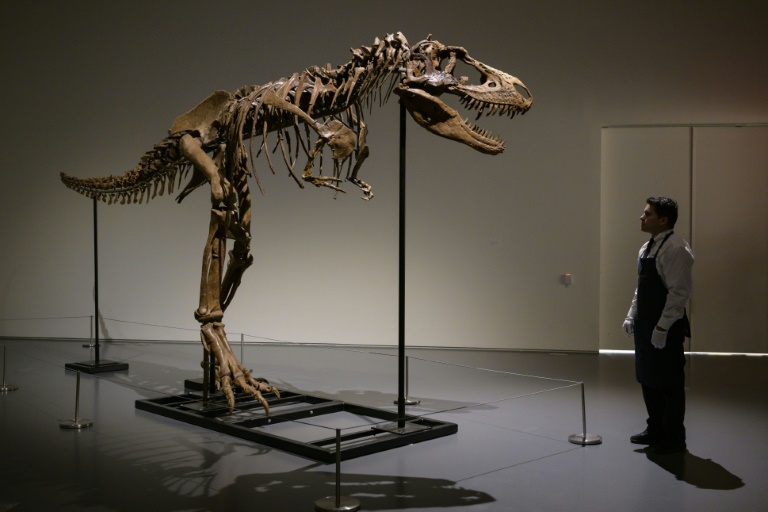
A skeleton of a Gorgosaurus dinosaur is going up for auction for the first time and is expected to fetch between $5 million and $8 million, Sotheby’s said Tuesday.

The auction house will put the specimen, which is 10 feet tall (three meters) and 22 feet long, under the hammer in New York on July 28.

Sotheby’s described the skeleton as “one of the most valuable dinosaurs to ever appear on the market.”

The Gorgosaurus roamed the earth approximately 77 million years ago. 

A typical adult weighed about two tonnes, slightly smaller than its more famous relative, the Tyrannosaurus rex.

Paleontologists say it was fiercer and faster than the T-Rex, with a stronger bite of around 42,000 newtons compared to 35,000.

The skeleton was discovered in the Judith River Formation near Havre, in the US state of Montana in 2018.

The sale will mark the first time that Sotheby’s has auctioned a full dinosaur skeleton since it sold Sue the T-Rex in 1997 for $8.36 million.

“All of the other specimens of Gorgosaurus that have been found are in museums,” Cassandra Hatton, Sotheby’s head of Science and popular culture, told AFP.

“This is the only one that you can actually buy so it’s an exciting moment, both for private collectors and institutions,” she added.

Unlike other countries, the United States does not restrict the sale or export of fossils, meaning the skeleton could end up overseas.

Copenhagen holds memorial for mall shooting victims

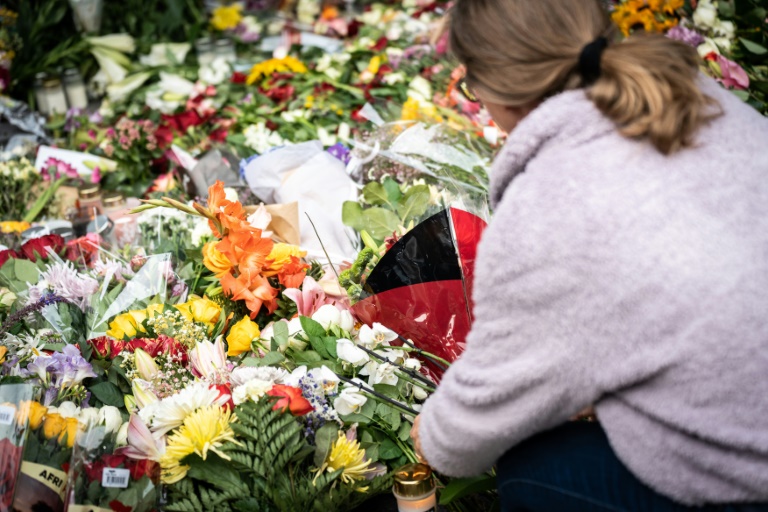
Thousands gathered in Copenhagen on Tuesday to pay tribute to the victims of a weekend mall shooting that left three people dead, including two teenagers. 

“Three lives were taken from us. A man and two young people. Several were injured, the attack has many victims,” Prime Minister Mette Frederiksen told the massive crowd outside the Fields shopping complex.

 located between the city centre and the capital’s airport, where the attack occurred.

“Cruel, unjust and senseless. Tonight, we all mourn,” Frederiksen added, as she called for unity in face of the tragedy.

The late afternoon shooting on Sunday shook the city which had just hosted the opening stages of the Tour de France cycling competition and seen the return of the Roskilde music festival after cancellations for Covid-19.

“It’s not hard to imagine ‘what if it was my child?’, I’m the mother of two teenagers,” Sophie Andersen, mayor of Copenhagen said during an address which was followed by a moment of silence.

“Children and young people should not die. They should be immortal,” Andersen added.

Denmark’s Crown Prince Frederik was also in attendance at the service where speeches were interspersed with musical performances.

– ‘I’m quite ambivalent’ –

The mood was sombre, with some crying among the many families and young people that had gathered. 

“I’m quite ambivalent. Of course it’s nice to see all these people who are here to support the people who have been hurt by this action, but I’m also a little scared,” Oliver Stoltz, who works in a sporting goods store at the mall, told AFP.

The 24-year-old was at the mall — located between the city centre and the capital’s airport — when the shooting started and heard the first shots ring out.

“This used to be a place where I can go work, be happy and have a good time. Now I dread even coming out here to this part of town. 

The alleged perpetrator of the attack, a 22-year-old Danish man who authorities say was known to mental health services, was remanded in custody in a “closed psychiatric ward” on Monday on murder charges.

Police said Tuesday they had no new information to release about the investigation.

– Troubled childhood –

¨

According to public broadcaster DR, citing several unnamed sources, the suspected gunman had tried to reach a psychological help line shortly before the attack, but authorities would not confirm this.

According to a former neighbour interviewed by newspaper Berlingske, the suspect had been troubled since he was a child.

The neighbour, who had asked to remain anonymous, told the paper that in school the suspect had difficulties coping with the stress of too many people around him.

The 22-year-old is suspected of three murders, with those killed being a 46-year-old Russian man residing in Denmark, a 17-year-old girl and a young man of the same age, both Danish. 

One of them worked in the cinema in the shopping centre, their employer said. 

The suspect also faces seven counts of attempted murder.

Four of those shot were seriously injured but in a stable condition. According to authorities, they are two Danish women aged 19 and 40, a 50-year-old Swedish man and a 19-year-old Swedish woman. 

Three others sustained light injuries from the gunfire: two Danish girls aged 15 and 17 and a 45-year-old Afghan man living in the Scandinavian country.

The Fields shopping centre has been closed since the attack and is expected to reopen on July 11.

New US study helps de-mystify Covid brain fog

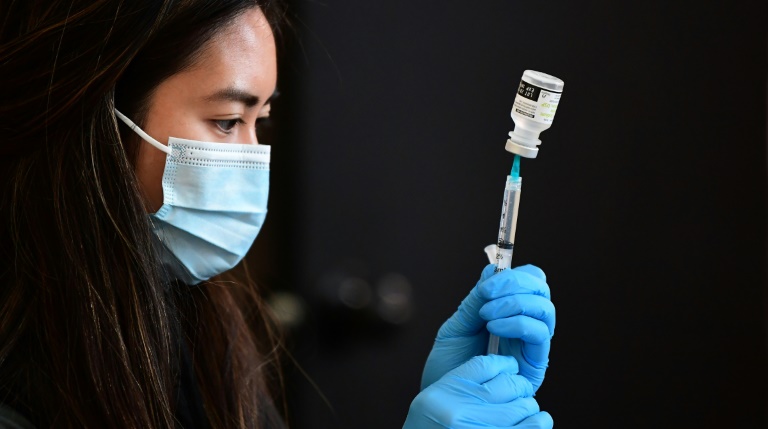
A small new study published Tuesday by scientists at the US National Institutes of Health suggests that the immune response triggered by coronavirus infections damages the brain’s blood vessels and could be responsible for long Covid symptoms.

The paper, published in the journal Brain, was based on brain autopsies from nine people who died suddenly after contracting the virus.

Rather than detecting evidence of Covid in the brain, the team found it was the people’s own antibodies that attacked the cells lining the brain’s blood vessels, causing inflammation and damage. 

This discovery could explain why some people have lingering effects from infection including headache, fatigue, loss of taste and smell, and inability to sleep as well as “brain fog” — and may also help devise new treatments for long Covid.  

NIH scientist Avindra Nath, the paper’s senior author, said in a statement: “Patients often develop neurological complications with COVID-19, but the underlying pathophysiological process is not well understood.”

“We had previously shown blood vessel damage and inflammation in patients’ brains at autopsy, but we didn’t understand the cause of the damage. I think in this paper we’ve gained important insight into the cascade of events.”

The nine individuals, aged 24 to 73, were selected from the team’s prior study because they showed evidence of blood vessel damage in their brains based on scans. 

Their brains were compared to those from 10 controls, with the team examining neuroinflammation and immune responses using a technique called immunohistochemistry.

The scientists discovered that antibodies produced against Covid-19 mistakenly targeted cells that form the “blood-brain barrier” — a structure designed to keep harmful invaders out of the brain while allowing necessary substances to pass. 

Damage to these cells can cause leakage of proteins, bleeding and clots, which elevates the risk of stroke.

The leaks also trigger immune cells called macrophages to rush to the site to repair damage, causing inflammation.

The team found that normal cellular processes in the areas targeted by the attack were severely disrupted, which had implications for things such as their ability to de-toxify and to regulate metabolism.

The findings offer clues about the biology at play in patients with long-term neurological symptoms, and can inform new treatments — for example, a drug that targets the build-up of antibodies on the blood-brain barrier.

“It is quite possible that this same immune response persists in Long COVID patients resulting in neuronal injury,” said Nath.

This would mean that a drug that dials down that immune response could help those patients, he added. “So these findings have very important therapeutic implications.”

Colombian president-elect proposes 'ceasefire', talks with ELN

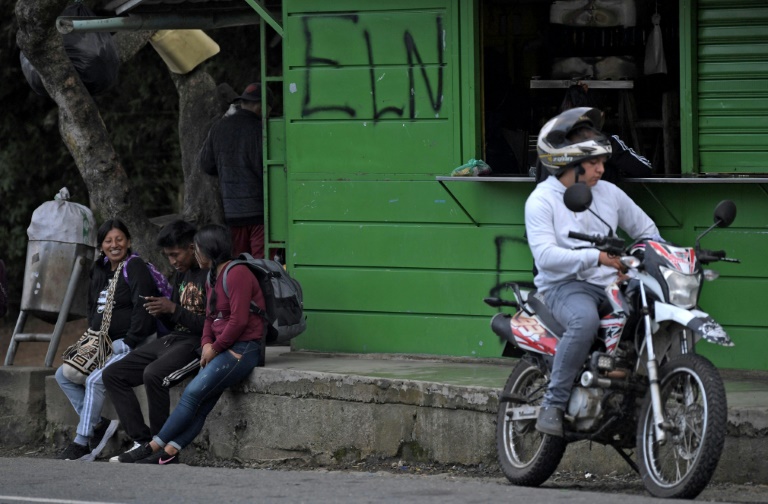
Colombia’s leftist president-elect Gustavo Petro on Tuesday proposed a “bilateral ceasefire” with the violence-stricken country’s last active guerrilla group, the ELN, in order to restart peace negotiations.

Talks with the ELN, which unlike the FARC did not lay down arms under Colombia’s 2016 peace agreement, broke down under outgoing President Ivan Duque.

“The message I have sent, not only to the ELN but to all existing armed groups, is that the time for peace has come,” said Petro. 

“What I request is a ceasefire that will be bilateral,” to allow for talks “to bring an end to the war in Colombia.”

Petro will be sworn in on August 7. 

Duque’s predecessor Juan Manuel Santos initiated peace negotiations with the ELN (National Liberation Army), but these were called off after an attack on a police academy in Bogota in 2019 that killed 22.

Duque has insisted that the group, formed in 1964 after the Cuban communist revolution, cease all activities for talks to resume.

On the campaign trail, Petro had vowed to talk to the ELN.

– ‘Availability’ for talks –

The day after the leftist ex-Bogota mayor won the presidential election last month, the ELN said it was ready to reopen negotiations with the South American nation’s government.

The group’s central command said it was “keeping its system of political and military struggle and resistance active, but also maintaining its clear availability to advance the peace process.”

The ELN has grown in number and today counts about 2,500 fighters and an extensive support network in urban centers, mostly on the border with Venezuela and along the Pacific coast.

It is largely funded through drug trafficking, and continues fighting over territory and resources with FARC dissidents who refused to lay down arms, as well as rightwing paramilitary forces and narco cartels.

Petro also reiterated his desire to reestablish diplomatic ties with Venezuela, and to dislodge armed groups active on either side of the border. 

Duque has repeatedly claimed Colombian armed groups are taking refuge in Venezuela with the complicity of authorities there, a claim Caracas denies.

Bogota says at least four FARC dissident commanders have died in Venezuela in recent months, but no confirmation has been forthcoming from across the border.

The political party that emerged from the now-disbanded FARC, meanwhile, said an ex-guerrilla leader and peace deal signatory was killed by a sniper in Colombia’s south.

The killing of Ronald Rojas, 41, brought to 333 “the terrifying figure of peace agreement signatories killed, mainly under the Duque government,” Rodrigo Londono, leader of the Comunes party, said on Twitter.

Hundreds of former guerrillas have been killed since 2016 by dissident ex-colleagues, drug traffickers and members of the security forces, according to official figures.

Carlos Ruiz Massieu, the head of the UN mission in Colombia, condemned the killing on Twitter and reiterated “the need to strengthen the security of ex-combatants” in the country. 

Sunak and Javid: big hitters who quit UK government

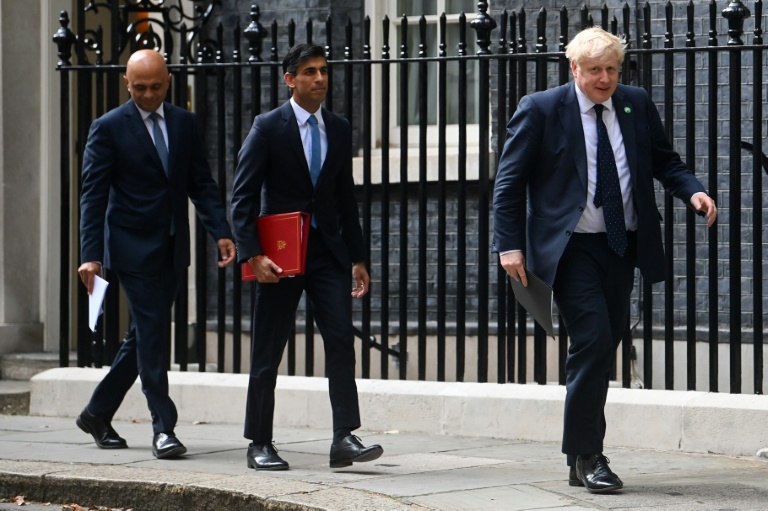
Rishi Sunak and Sajid Javid were two of the biggest hitters in UK Prime Minister Boris Johnson’s government until they quit on Tuesday in protest at his scandal-hit leadership.

Sunak, 42, had been on a meteoric trajectory to power that could have made him Britain’s first Hindu prime minister.

Javid, 10 years Sunak’s senior and also with a past career in high finance, was his immediate predecessor, and a polished political performer.

But they resigned within minutes of each other, just as Johnson apologised for his handling of a sleaze scandal engulfing one of his senior colleagues.

The resignations — after a succession of crises that led to a vote of confidence in Johnson’s leadership — did nothing to dampen speculation that both men still have an eye on the top job.

– Rishi Sunak – 

Sunak was barely known to the British public when Johnson made him chancellor of the exchequer in February 2020, after only five years in Conservative politics following a lucrative career in hedge funds.

A month later, Johnson ordered the first nationwide lockdown, forcing Sunak to craft a massive financial rescue package to safeguard millions of jobs.

But since restrictions were lifted, he has come under increasing pressure, as a cost-of-living crisis worsens, sending inflation to 40-year highs and leaving many Britons struggling to make ends meet.

In the midst of spiralling prices, Sunak found himself on the back foot over his wife’s financial affairs, and criticism from fellow Tories about his moves to increase taxes for millions.

Revelations that his wife Akshata Murty — whose billionaire father founded the Indian tech behemoth Infosys — did not pay UK tax caused a storm of protest.

The teetotal Sunak also found himself fined by police for briefly attending an impromptu birthday party for Johnson during Covid restrictions in 2020.

Oxford-educated Sunak — the first person born in the 1980s to hold one of the so-called four great offices of state — appeared suitably chastened.

He has cut a contrasting figure from Johnson both in public and in private.

While Johnson’s governing style has been described as chaotic, seemingly making policy on the hoof, Sunak is a details-oriented wonk. 

Unlike Johnson’s tousled hair and dishevelled appearance, Sunak has crafted a carefully curated image on social media, with designer clothes, top-of-the-range gadgets and a photogenic dog.

Sunak, whose grandparents came from the Indian Punjab, has two daughters with Murty. They met while students in California.

Johnson, thrice-married, has at least seven children and a catalogue of past lovers.

– Sajid Javid – 

Javid, the Muslim son of a Pakistani immigrant bus driver who fought racism growing up in a tough neighbourhood of Bristol, western England, has quit Johnson’s cabinet before.

His seven-month stint as chancellor was rocked by rumours of deep divisions with Johnson’s former chief political adviser Dominic Cummings.

He quit after Brexit architect Cummings tried to force him to fire all his top advisers and replace them with ones from Downing Street.

Javid’s refusal and resignation paused what had also been a skyrocketing political career, after he served as interior minister under former prime minister Theresa May.

As finance minister, he was effectively second in command just as Britain was facing a crash exit from the European Union.

He replaced Philip Hammond as chancellor when the prospects of a messy divorce after 46 years was unnerving markets and sending the pound to multi-year lows.

The father of four, a free market champion who admires Margaret Thatcher, already had first-hand experience navigating financial turmoil.

Javid made big bets and huge profits as a derivatives trader for Deutsche Bank during the 2008-2009 global financial crisis. His tax affairs at the time have come in for recent scrutiny.

Javid’s pro-market instincts saw him vote in 2016 to remain in the European Union because of its economic benefits to trade.

But he later rallied to the Brexit cause and ended his own Tory leadership challenge to support Johnson. 

He was appointed to health in June 2021, when his predecessor Matt Hancock quit after being caught having an affair with an adviser, in breach of social distancing guidelines. 

July 4 gunman planned attack for weeks, wore women's clothing: police

The suspected gunman who opened fire on a July 4 parade in a wealthy Chicago suburb planned the attack for weeks and wore women’s clothing to aid his escape, police said Tuesday.

Robert Crimo, 21, who lived in Highwood, just north of Highland Park, where the shooting occurred, was arrested Monday after six people were killed and more than 30 wounded during an Independence Day parade.

Police spokesman Christopher Covelli said no motive had been established for the attack, in which the gunman fired dozens of semi-automatic rounds from a rooftop into the crowd of paradegoers.

“We do believe Crimo pre-planned this attack for several weeks,” and that he acted alone, Covelli said.

“We have no information to suggest at this point it was racially motivated, motivated by religion or any other protected status.”

Covelli said the gunman accessed the roof of a business overlooking the parade route using a fire escape and fired more than 70 rounds from a rifle “similar to an AR-15” that he had purchased legally.

“Crimo was dressed in women’s clothing and investigators believe he did this to conceal his facial tattoos and his identity and help him during the escape with the other people who were fleeing the chaos,” he said.

Covelli said Crimo went to his mother’s nearby home after the shooting and borrowed her car. He was captured about eight hours later after a brief chase.

He said the authorities were investigating disturbing online posts and videos made by Crimo, who had previous encounters with law enforcement, but “nothing of a violent nature.”

– ‘Still reeling’ –

The shooting has left the upscale suburb in shock.

“We’re all still reeling,” Mayor Nancy Rotering told NBC’s Today show. “Everybody knows somebody who was affected by this directly.”

The mayor said she personally knew the suspected gunman when he was a young boy in the Cub Scouts and she was a Cub Scout leader.

“How did somebody become this angry, this hateful to then take it out on innocent people who literally were just having a family day out?” Rotering asked.

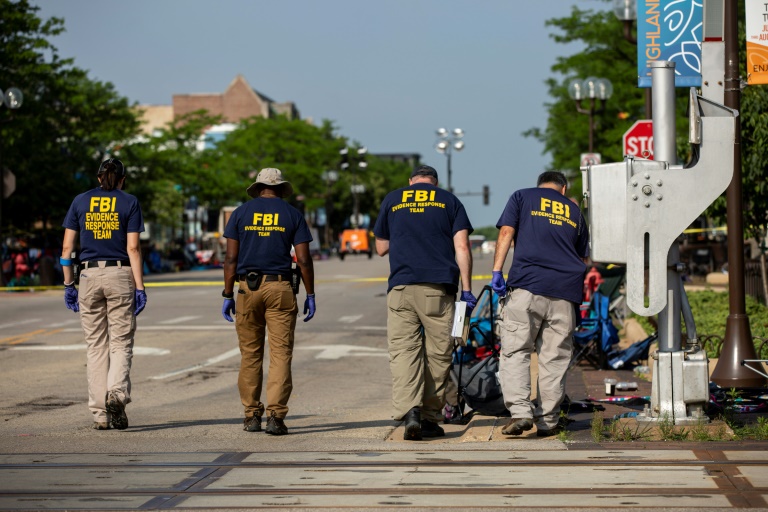
On Tuesday, police and FBI agents were sifting through belongings left behind by members of the crowd as they fled.

Strollers, bicycles, folding chairs and other items littered the parade route through the main street of Highland Park.

Crimo, whose father unsuccessfully ran for mayor and owns a store in Highland Park called Bob’s Pantry and Deli, was an amateur musician billing himself as “Awake the Rapper.”

The younger Crimo’s online postings include violent content that alluded to guns and shootings.

One YouTube video posted eight months ago featured cartoons of a gunman and people being shot.

A voice-over says, “I need to just do it.”

It adds: “It is my destiny. Everything has led up to this. Nothing can stop me, not even myself.”

Crimo, who has the word “Awake” tattooed over an eyebrow, is seen sporting an “FBI” baseball cap in numerous photos and is wearing a Trump flag as a cape in one picture.

The shooting is the latest in a wave of gun violence plaguing the United States, where approximately 40,000 deaths a year are caused by firearms, according to the Gun Violence Archive.

– ‘Epidemic of gun violence’ –

The deeply divisive debate over gun control was reignited by two massacres in May that saw 10 Black people gunned down at an upstate New York supermarket and 19 children and two teachers slain at an elementary school in Texas.

The Highland Park shooting cast a pall over Independence Day, when towns and cities across the United States hold parades and people attend barbecues, sporting events and fireworks displays.

In another July 4 shooting, two police officers were wounded when they came under fire during a fireworks show in Philadelphia.

In Highland Park, Emily Prazak, who marched in the parade, described the mayhem.

“We heard the pop, pop, pop, pop, pop, and I thought it was fireworks,” Prazak said.

Five of the six people killed, all adults, died at the scene. The sixth was taken to hospital but succumbed to wounds there.

Highland Park Hospital, where most of the victims were taken, said it had received more than two dozen people with gunshot wounds aged eight to 85.

President Joe Biden voiced shock and vowed to keep fighting “the epidemic of gun violence.”

“I’m not going to give up,” he said.

Last week, Biden signed the first significant federal bill on gun safety in decades, just days after the Supreme Court ruled that Americans have a fundamental right to carry a handgun in public.

Disputed Russian cargo ship still stranded off Turkish coast

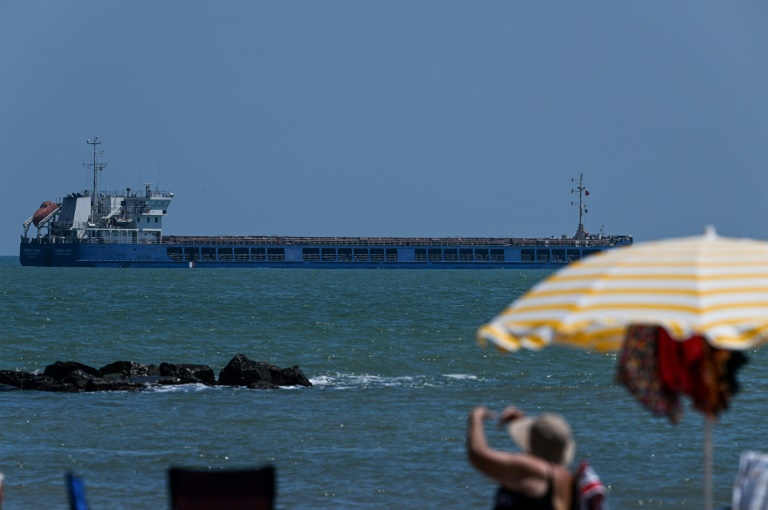
A Russian-flagged cargo ship at the centre of a fight over grain between Kyiv and Moscow remained anchored Tuesday off Turkey’s Black Sea coast — a full four days after its unexpected arrival.

Ukraine alleges that the Zhibek Zholy had set off from its Kremlin-occupied port of Berdyansk after picking up confiscated wheat.

Moscow concedes that the 7,000-tonne vessel was sailing under the Russian flag but denies any wrongdoing.

And NATO-member Turkey has said nothing official in public as it tries to maintain open relations with both Moscow and Kyiv while facing Ukrainian pressure to seize the ship.

The saga started when a Kremlin-installed leader in southeastern Ukraine last Thursday announced the launch of the first official grain shipments across the Black Sea since Russia invaded its neighbour in February.

Russia claims to have “nationalised” Ukrainian state assets and to be buying crops from local farmers. Ukraine says its grain is being stolen and used to fund Russia’s war effort.

Marine traffic websites then showed the Zhibek Zholy reaching Turkey’s Black Sea port of Karasu and stopping about a kilometre (half a mile) off shore.

The ship’s arrival was announced by Ukraine’s ambassador to Turkey — one of the most vocal officials in the entire dispute.

He asked Turkey on Twitter to take “corresponding measures” and then told Ukrainian state television the vessel had been impounded by local coastguards.

Turkish officials still offered no comment even though the 140-metre (460-foot) ship was now clearly visible by holidaymakers lounging on Karasu’s sandy beach.

– ‘Vacuum of authority’ –

Russian Foreign Minister Sergei Lavrov conceded to reporters on Monday that the Zhibek Zholy had not reached its intended destination.

But he also played down Moscow’s role or the ship’s importance to Russia’s efforts to resume marine traffic from parts of Ukraine now under its control.

“We have to look into this situation,” said Lavrov.

“The ship really does appear to be Russian, sailing under the Russian flag. I think it belongs to Kazakhstan, while the cargo was being shipped under contract between Estonia and Turkey.”

Kazakhstan said the ship was controlled by its national rail company but insisted it should bear no blame.

“There should be no consequences for Kazakhstan,” Kazakh industry minister Kairbek Uskenbayev told reporters.

“There were no restrictions on the Russian company that is currently leasing this ship.”

A senior Turkish official source told AFP on condition of anonymity that the “problem arose due to a vacuum of authority at the post of departure”.

“We are continuing to examine the ship’s documents,” the Turkish official said.

But beachgoers watching the diplomatic drama unfold before them in Karasu — a town of 30,000 that swells during the summer tourism season — say little has happened on the ship since it showed up.

“It never moved,” said local pensioner Salise Aktan.

“On Sunday, a boat approached the ship and then left,” added fellow beachgoer Gulay Erol.

“I don’t know why,” the 33-year-old said.

– ‘Balanced policy’ –

Turkey’s reticence underscores the difficulty of its position in the war.

President Recep Tayyip Erdogan has had a tumultuous but close working relationship with Russian counterpart Vladimir Putin.

He has tried to use that access to thrust Turkey into the middle of diplomatic negotiations and talks on resuming grain shipments from Ukrainian ports.

But his Russian relationship is complicated by Turkey’s international commitments as a member of the NATO defence bloc.

Turkey’s Foreign Minister Mevlut Cavusoglu said last month that Ankara was investigating reports of Russian-seized Ukrainian grain reaching its Black Sea shores.

But he added that Turkey had been unable to find any stolen Ukrainian grain shipments.

Ankara also supplies combat drones to Ukraine that have proved effective in helping slow Russia’s advance across the Donbas war zone.

Erdogan told a NATO summit in Madrid last week that his country was trying to pursue “a balanced policy” because of its heavy reliance on Russian energy.

Turkish defence officials met with a Ukrainian delegation on Monday.

No details from those talks were announced.

West urges Russia removal from sport governing boards

Western powers on Tuesday called for international sport federations to remove state-affiliated Russians and Belarusians over the Ukraine invasion, after leading events already banned their athletes.

In a joint statement, 35 nations from the West plus Japan and South Korea reiterated a March 8 call for no international sporting events to take place in Russia or Belarus and for their citizens to be banned from international competitions.

In fresh recommendations, the 35 nations called for Russian and Belarusian governing bodies to be suspended from international sport federations. 

“Individuals closely aligned to the Russian and Belarusian states, including but not limited to government officials, should be removed from positions of influence on international sport federations, such as boards and organizing committees,” said the statement by sport ministers and culture officials released by the US State Department.

They also called on event organizers to consider suspending broadcasts into Russia and Belarus.

The United States and European Union have led a campaign to ostracize Russia in hopes of pressuring President Vladimir Putin, who took visible pride in Russia’s hosting of the 2014 Winter Olympics and 2018 World Cup.

World football governing authority FIFA and leading tennis tournament Wimbledon among others have banned Russians from competition since the February 24 invasion.

The International Olympic Committee, which had already barred Russian athletes from competing under their flag due to doping, has recommended a ban on Russian and Belarusian athletes.

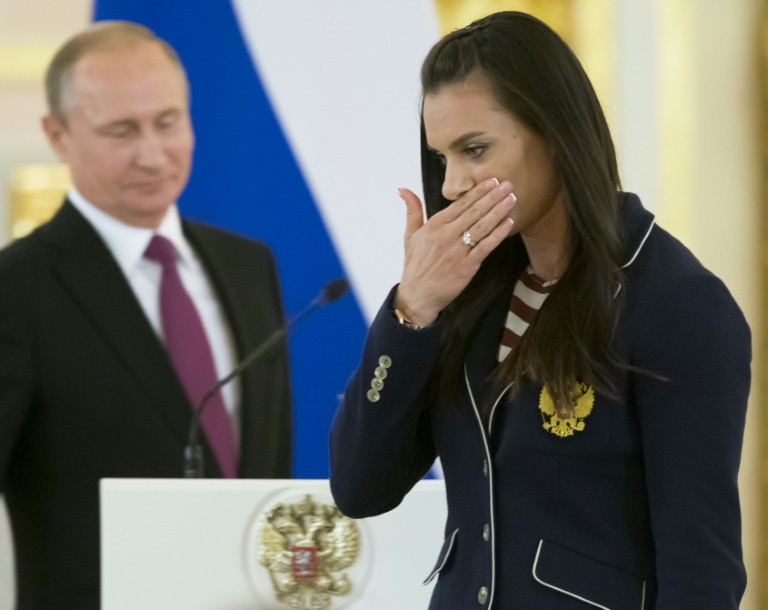
But two Russians remain on the committee — Yelena Isinbayeva, an Olympic pole vault medalist close to Putin, and Russia’s tennis chief Shamil Tarpishchev.

The new joint statement called for events that allow Russian and Belarusian participation to make explicit that they do not represent their states and to ban use of their flags.

Belarus has been targeted over its support for the invasion, with Ukraine recently reporting being struck by missiles from its northern neighbor.

Veteran Belarusian strongman Alexander Lukashenko is a close ally of Putin and sought to crush protests that broke out after wide allegations of fraud in his 2020 re-election.

Fierce shelling in eastern Ukraine as NATO heralds its 'historic' expansion

Fighting raged on Tuesday in and around Ukraine’s eastern Donbas region as Russian troops tried to maintain a series of battlefield gains, while NATO pressed ahead with Finland and Sweden’s momentous membership bids.

Moscow’s forces — buoyed by seizing several cities in the Donbas in recent weeks — continued to press west, pounding their next key target, the city of Sloviansk, with “massive” shelling, the city’s mayor said. 

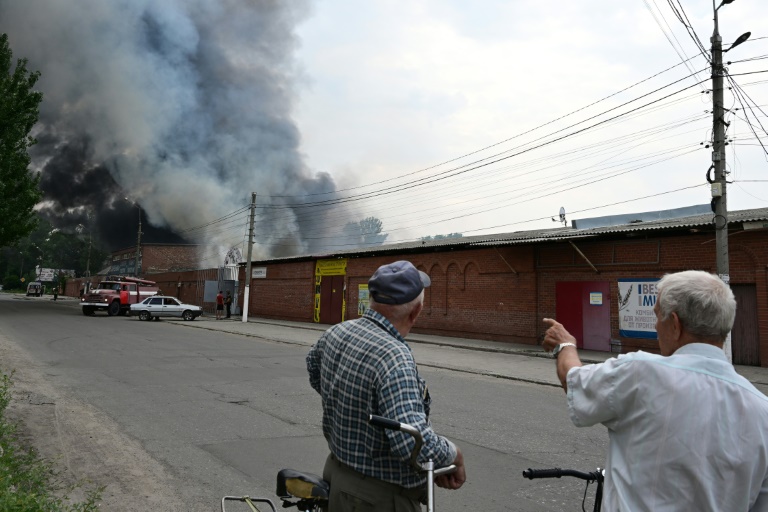
At least two people were killed and seven others wounded in Russian strikes targeting its central market, following several days of similarly deadly bombing there.

AFP journalists on the ground saw rockets hit the marketplace and several adjacent streets, as firefighters scrambled to put out resulting fires in the city, which had a pre-war population of around 100,000.

Pavlo Kyrylenko, governor of the Donetsk region, which includes Sloviansk, accused Russia of “intentionally targeting places where civilians assemble”.

“This is terrorism pure and simple,” he said on Telegram.

In Moscow, the defence ministry reported that Russian forces had also targeted the northeastern city of Kharkiv with “high-precision” weapons over the past 24 hours, claiming to have killed up to 150 Ukrainian servicemen.

Several other regions were also hit with missiles and artillery, Kyiv reported.

Meanwhile, Russia said it was investigating the torture of Russian soldiers held prisoner in Ukraine that were recently released as part of a prisoner swap. 

– ‘Timely’ –

In Brussels, NATO Secretary General Jens Stoltenberg and the foreign ministers of Sweden and Finland hailed Tuesday as “historic”, after they kicked off accession procedures for the two countries that will expand the military alliance to 32 members.

“The membership of both Finland and Sweden will not only contribute to our own security but to the collective security of the alliance,” said Finland’s Pekka Haavisto, after protocols were signed launching the required ratification process.

Sweden and Finland both announced their intention to drop decades of military non-alignment and become part of NATO in the wake of Russia invading Ukraine in February.

Ukrainian Defence Minister Oleksii Reznikov welcomed Tuesday’s “timely (and) correct” step, adding on Twitter: “Who will be next…?”

NATO offered Ukraine a path towards membership in 2008 but that stalled amid strong Russian opposition and has been further complicated by its invasion.

With the war well into its fifth month, Kyiv’s allies meeting in the Swiss city of Lugano committed Tuesday to supporting Ukraine through what is likely to be a lengthy and expensive eventual recovery. 

Two days of talks involving representatives from some 40 countries agreed on the need for reforms to boost transparency and tackle corruption, as they heard rebuilding the war-ravaged country could cost at least $750 billion.

“Our work prepares for the time after the war even as the war is still raging,” said Swiss President and co-host Ignazio Cassis.

– ‘Full alert’ –

After abandoning its initial war aim of capturing Kyiv following tough Ukrainian resistance, Russia has since focused its efforts on securing control of the Donbas.

The region is mainly comprised of Lugansk, which Russian forces have almost entirely captured, and Donetsk to its southwest, which they are now concentrating on seizing in full.

In a sign Moscow was trying to consolidate supply lines for its ongoing push, Ukraine’s armed forces said Russian troops in Lugansk were “taking measures” to restore transport infrastructure behind the fighting lines.

The fall of Lysychansk on Sunday, a week after the Ukrainian army also retreated from the neighbouring city of Severodonetsk, has freed them up to advance on Kramatorsk and Sloviansk in Donetsk.

On Tuesday, they were first closing in on the smaller city of Siversk — which lies between Lysychansk and Sloviansk — after days of shelling there.

Two Ukrainian Red Cross minibuses were heading there to evacuate willing civilians, according to AFP reporters.

To the southwest, in the Moscow-occupied Kherson region, Russia’s troops were deploying helicopters and various artillery to try to stem Ukrainian counter-attacks.

The intensifying battles there come as Kremlin-installed authorities in Kherson announced that an official from Russia’s powerful FSB security services had taken over control of the regional government there. 

Kherson city, which lies close to Moscow-annexed Crimea, was the first major city to fall to Russian forces in February, and has seen a campaign of so-called Russification since. 

A spokesman for Ukraine’s defence ministry said Tuesday Russian forces outside the Donbas were “trying to bind our troops in order to prevent them from moving to the battle areas”. 

“It keeps us… on full alert all along the front line,” he told the Ukrinform news agency.

Meanwhile, appearing by video Tuesday at an annual forum hosted by The Economist magazine, Ukrainian President Volodymyr Zelensky predicted Russian ally Belarus would not be drawn into the war.

But he warned “provocations” by its northern neighbour were likely to continue.

Belarusian leader Alexander Lukashenko on Saturday accused Ukrainian forces of firing missiles at his country.

Close Bitnami banner
Bitnami