World

Star wars: Russians turn to astrologers amid Ukraine conflict

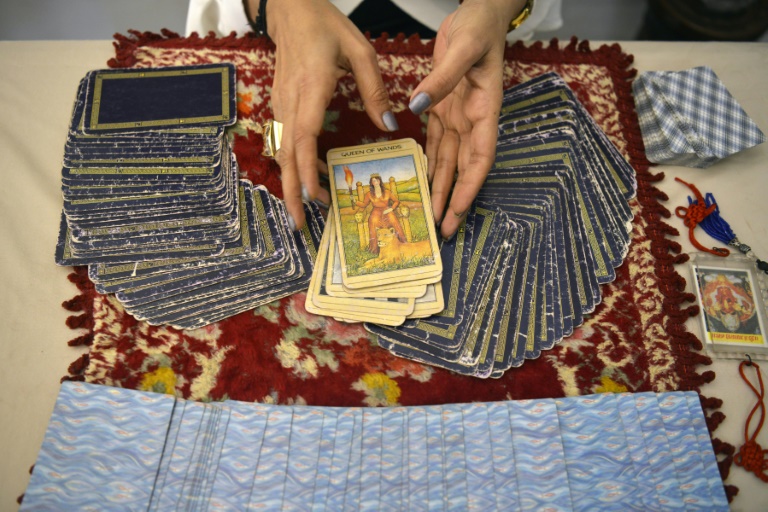
Will there be nuclear war? Will Russia win the Ukraine offensive? Will my son survive?

As the Kremlin presses ahead with its military intervention in the pro-Western country, more and more Russians are turning to astrologers.

In Russia’s second city of Saint Petersburg, bespectacled Elena Korolyova receives clients in her apartment, where two cats prowl between piles of books.

“People want to know what will become of Russia, cut off from the rest of world,” the 63-year-old told AFP.

Astrologers, psychics and mediums have for years been popular in Russia, and particularly turbulent years have seen demand for their services increase.

As the country reels from a barrage of unprecedented sanctions over Ukraine, more and more Russians are turning to astrology as they peer into the future.

Korolyova, a grey-haired philologist by training who rose to fame in the former imperial capital through word of mouth, seeks to reassure her clients.

She predicts that Moscow will not only survive the economic storm, but also emerge victorious.

“The global cataclysm will intensify in September, but Russia will come out of it stable and prosperous,” she said.

Korolyova charges 5,000 rubles ($90) per consultation and says — without wanting to reveal any numbers — that since President Vladimir Putin sent troops into Ukraine on February 24 requests from clients have increased. 

In the first week of the conflict, the number of searches for “astrologer” more than doubled on Russia’s main search engine Yandex — from 42,900 on February 19 to 95,000 on March 5, according to the company’s keyword statistics. 

– Political astrology – 

In Moscow, another prominent astrologer, Konstantin Daragan, who made a name for himself by claiming to have predicted the coronavirus pandemic, also says Russia will win on the ground in Ukraine and in its clash with the West.

“Russia will become the centre of the world after the conflict,” he said on social media recently. 

Originally from Ukraine’s eastern region of Donbas that the Russian army has been seeking to conquer, the aeronautical engineer turned astrologer claims to have advised ministers, bankers and even members of Ukraine’s secret services in the past. 

Having left for Moscow after pro-Western authorities came to power in Kyiv in 2014, he supports the Russian military intervention, even if his hometown of Lysychansk has been ravaged by fighting.

For him, too, business is booming. 

His “School of Classical Astrology” doubled its student numbers since Putin launched the Ukraine intervention, now counting around 200 in Moscow.

– Star wars –  

Sociologist Alexei Levinson of the independent Levada research centre said that an attempt to read the stars is a way of making sense of reality for many “confused” Russians. 

“Faced with a universe that has collapsed, some prefer to take stars as guides rather than their leaders,” he said. 

“Astrology today is a kind of psychotherapy or new religion.”

Anna Markus, one of Daragan’s students in her 50s, said she looks to the stars for “logic in events on Earth”.

“Russia is designated as the only culprit of the conflict, but it is obvious that a third country is the real culprit,” she told AFP.

She has a star chart that she claims proves the United States is guilty.

Over the border in battered Ukraine, the stars, predictably, show the opposite. 

Astrologer Vlad Ross, who is popular in Ukrainian media, says that Putin is “gravely ill” and “will not survive past March 2023”.

“Saturn is the sign of Russia against Uranus, the sign of Ukraine. Our victory is imminent,” assured another star Ukrainian astrologer, Angela Pearl, in a video viewed more than a million times since mid-May.

Desperate Ukrainians are turning to astrologers for a sign that their loved ones on the front will survive or if they will have to flee advancing Russian troops.

Ukrainians want to know “if nuclear war will happen, if they should leave their country, if their loved ones are in danger”, astrologer Olena Umanets told AFP.

“Russia will explode in March 2023,” predicted the 38-year-old former musician, who fled Ukraine for Switzerland. 

Her $100 online consultation reassured one client, a 46-year-old television producer in Kyiv named Kristina, worried about her husband who is fighting on the frontline. 

“My husband just called me. He thanks God for having survived the night,” she wrote to her astrologer in June. 

“Thank you for having encouraged me to pray for him, it relieved me to share this responsibility with the stars.”
Inside Indonesia's Islamic boarding school for deaf children

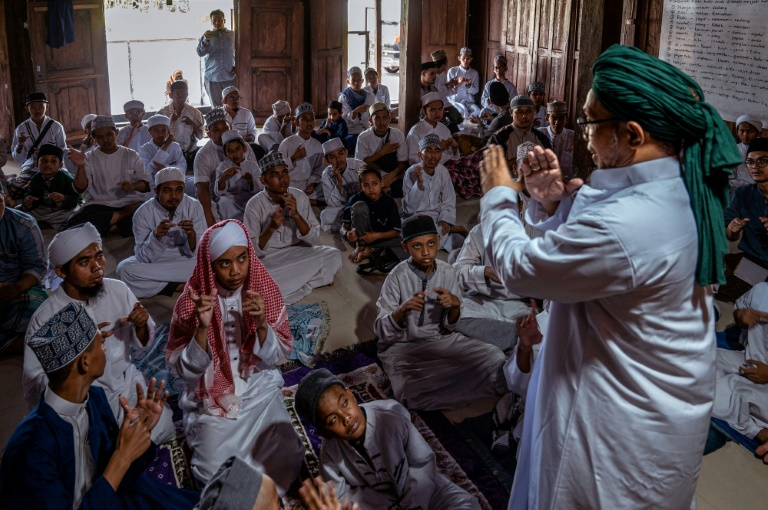
At an Islamic boarding school in a sleepy neighbourhood on the outskirts of the Indonesian city Yogyakarta, the sound of Koranic recitation is nowhere to be heard.

This is a religious school for deaf children, and here the students gesture rapidly with their hands, learning to recite the Koran in Arabic sign language.

Islamic boarding schools are an integral part of life in Indonesia, with about four million students residing in 27,000 institutions across the country, according to the religious affairs ministry.

But this Islamic boarding school is one of a handful that offer religious education for deaf students in the world’s largest Muslim-majority country.

“It all came from my restlessness when I found out deaf children in Indonesia did not know their religion,” school founder Abu Kahfi told AFP. 

The 48-year-old set up the school in late 2019 after befriending several deaf people and realising they had no access to Islamic education.

It now hosts 115 deaf boys and girls from across the archipelago who share the dream of becoming a hafiz, a person who can memorise the Koran by heart.

The children sit cross-legged on the floor, moving their hands expressively while looking down at their textbooks.

The air is only punctured by yelps and high-fives after they recite a passage correctly to Kahfi when he calls them to the front of the class.

It is a daunting religious education for children who have never learned about religion or the Koran, and whose mother tongue is Indonesian.

“The difficulty is enormous,” Kahfi said. 

– ‘No longer ashamed’ –

In a room 100 metres (330 feet) from the boys, a group of girls in conservative Islamic dress sit separated from their male counterparts, carrying out the same practice in rows.

For 20-year-old student Laela Dhiya Ulhaq, studying at the school has brought joy and pride to her parents. 

“I want to go to heaven with my mother and father… I also don’t want to leave this place. I want to become a teacher here,” the school’s oldest student told AFP. 

While others can memorise syllables to recite the text out loud, the hearing-impaired must painstakingly memorise every single character of the holy book’s 30 sections of verses.

Muhammad Rafa, a 13-year-old student who has been enrolled at the school for two years, rolls his thumbs and fingers into different signs, laser-focused on learning the verse in front of him.

“I’m very happy here. It’s very quiet at home, there is nobody to talk to because nobody is deaf, everyone is normal,” Rafa, who has memorised nine Koranic sections, told AFP through an interpreter. 

Both Kahfi and donors provide funding for the school, and children from poor families who cannot afford the 1 million rupiah ($68) enrollment fee that pays for books, uniforms and toiletries are allowed to study for free.

The children also study Islamic law, mathematics, science and foreign languages so they can continue their education at a higher level.

But another impact of the school is boosting the children’s confidence as hearing-impaired members of society.

“My son used to have very low self-esteem, he knew he was different,” Zainal Arifin, whose 11-year-old son Arfi studies at the school, told AFP. 

“Since he came (here) he’s no longer ashamed of signing in public. He told me God made him this way, and he has fully embraced who he is.”

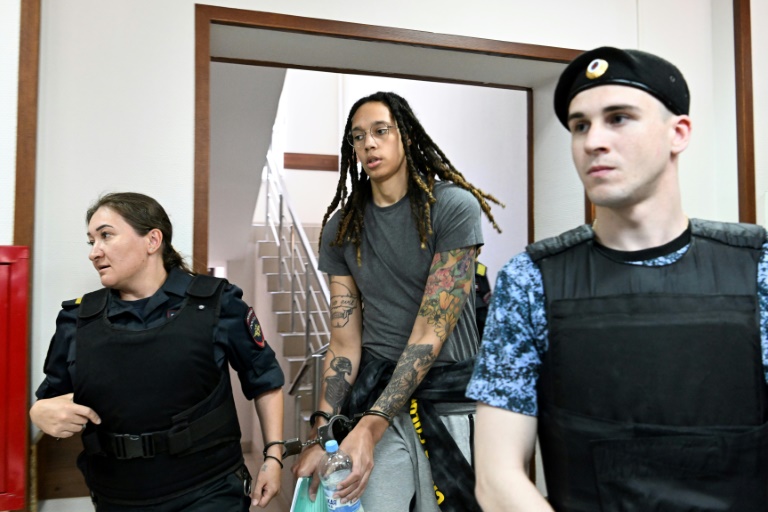
'Terrified' Griner asks for freedom in letter to Biden

American basketball star Brittney Griner asked US President Joe Biden to free her from a Russian prison in a handwritten letter Monday, portions of which were made public by her family.

Two-time Olympic champion Griner, detained in Russia since February on drug smuggling charges, told Biden she fears she might never be freed.

“As I sit here in a Russian prison, alone with my thoughts and without the protection of my wife, family, friends, Olympic jersey, or any accomplishments, I’m terrified I might be here forever,” Griner wrote.

Griner’s trial began Friday on charges she tried to smuggle vape cartridges with hashish oil into Russia. She faces up to 10 years in prison. The next hearing in her case is set for Thursday.

US officials have said Griner is being wrongfully detained by Russia, where she has played in the Women’s NBA off-season in previous years.

Griner, arrested only days before Russian troops invaded Ukraine, won a 2014 WNBA crown with the Phoenix Mercury. She’s a two-time league scoring champion and eight-time All-Star center.

The 31-year-old told Biden in her letter she understands there are many matters he is handling but implored him not to forget her and other Americans being held in Russia.

“I realize you are dealing with so much, but please don’t forget about me and the other American Detainees,” Griner wrote. “Please do all you can to bring us home.

“I voted for the first time in 2020 and I voted for you. I believe in you. I still have so much good to do with my freedom that you can help restore. I miss my wife! I miss my family! I miss my teammates! It kills me to know they are suffering so much right now. I am grateful for whatever you can do at this moment to get me home.”

Griner’s letter was presented to the White House on the US Independence Day holiday, which Griner says has an all-new meaning for her this year.

“On the 4th of July, our family normally honors the service of those who fought for our freedom, including my father who is a Vietnam War Veteran,” Griner said.

“It hurts thinking about how I usually celebrate this day because freedom means something completely different to me this year.”

Putin orders Russians to fight on after key Ukraine city falls

President Vladimir Putin on Monday ordered Russian troops to press their offensive deeper into the Donbas region of eastern Ukraine after Moscow’s forces seized the strategic city of Lysychansk.

Russian Defence Minister Sergei Shoigu told Putin at a meeting that Moscow’s forces were now in full control of the Lugansk region. 

In a sign there would be no let-up in the fighting and that Russia now had its eyes on the entire Donetsk region, Putin told Shoigu that troops stationed there must continue their operations.

“Military units, including the East group and the West group, must carry out their tasks according to previously approved plans,” Putin said.

“I hope that everything will continue in their direction as has happened in Lugansk so far.” 

The Ukrainian army said on Sunday it was retreating from Lysychansk to preserve the lives of its troops who were outnumbered and outgunned by Russian forces.

“The enemy continues to terrorise the border areas of the Sumy region, the city of Kharkiv and the (Donbas) region,” Ukrainian President Volodymyr Zelensky said in his nightly address, describing Russia’s intensifying offensive.

“We need to break them. This is a difficult task, it requires time and superhuman efforts. But we have no alternative.”

With the war now well into its fifth month, Ukraine told a reconstruction conference in Switzerland on Monday that it would already cost $750 billion to rebuild the country.

“The key source of recovery should be the confiscated assets of Russia and Russian oligarchs,” Prime Minister Denys Shmyhal told leaders of dozens of countries in Lugano.

In a video address, Zelensky described rebuilding Ukraine as the “common task of the whole democratic world” and the “biggest contribution to the support of global peace.”

– ‘Most modern weapons’ –

The loss of Lysychansk over the weekend prompted Zelensky to step up calls for an increased supply of weapons from the West so Kyiv can keep up the resistance and regain lost territories.

After giving up on its initial war aim of capturing Kyiv following tough Ukrainian resistance, Russia has focused its efforts on securing control of the Donetsk and Lugansk areas which make up the Donbas region.

Moscow’s capture of Lysychansk — one week after the Ukrainian army also retreated from the neighbouring city of Severodonetsk — frees up Russian forces to advance on Kramatorsk and Sloviansk in Donetsk.

Lugansk region governor Sergiy Gayday said on Telegram that there was still fighting in the town of Bilogorivka outside Lysychansk.

“We keep defending a small part of the Lugansk region so that our army could build protective redoubts,” he added.

In his address late Sunday, Zelensky vowed Kyiv would fight on and ensure the military had “the most modern weapons”.

“Ukraine will reach the level when the fire superiority of the occupiers will be levelled.”

In a symbolic boost, the Ukrainian flag was raised on Snake Island, an rocky outcrop in the Black Sea, after Russia withdrew from the strategically important Ukrainian territory last week.

In Sloviansk, about 75 kilometres (45 miles) west of Lysychansk, there were few people on the streets on Monday, the day after Russian strikes that left at least six dead, among them a nine-year-old girl, and 19 injured. 

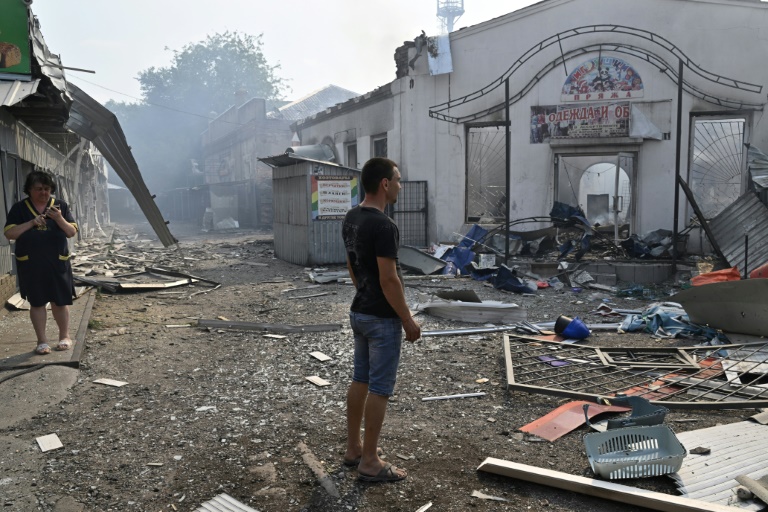
In the large downtown market largely ravaged by a fire caused by a Russian strike, a few vendors offered basic goods while others cleared charred debris. 

Vendors and residents who spoke to AFP, some still in shock, expressed concern for the days and weeks to come, as sounds of shelling were heard again.

The city of Siversk, 30 kilometres west of Lysychansk, also saw overnight shelling, residents and an official told AFP.

– Reconstruction –

But Zelensky’s address Sunday evening was defiant, predicting Ukrainian troops would “win back” territory in the Donbas just has they had in other regions earlier in the war.

On Monday, leaders from dozens of countries and international organisations met in the Swiss city of Lugano with the aim of hashing out a roadmap for Ukraine’s reconstruction.

Lugano is not a pledging conference but will instead attempt to lay out the principles and priorities for a rebuilding process aimed to begin even as the war rages.

“Ukraine can emerge from this on a path towards a stronger and more modern country,” European Commission President Ursula von der Leyen said.

But for residents in Bucha — a Ukrainian town synonymous with war crimes blamed on Moscow’s forces after their retreat in April — fear remains even as talk begins of reconstruction. 

“We’re going to bed without knowing if we’ll wake up tomorrow,” said Vera Semeniouk, 65. 

“Everyone has come back, is starting to repair houses, many are putting in new windows. It would be terrible if it started again, and we had to leave everything again.”

Swedish Prime Minister Magdalena Andersson, making her first visit to Ukraine, visited Bucha on Monday.

In the east of Ukraine, 'the best thing is to leave'

Andriy Gerasimenko was on Monday clearing the debris at the central market of Sloviansk, a city in the Donetsk region of eastern Ukraine ravaged by Russian strikes the day before.

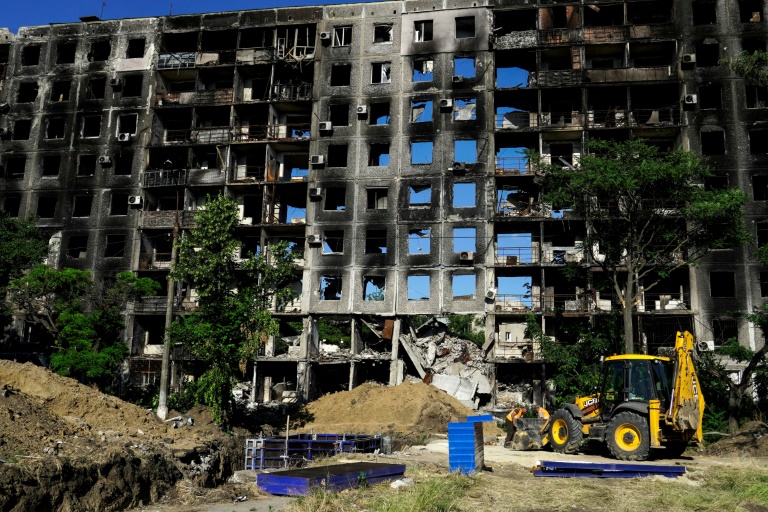
The city has been shelled for more than a week now that the frontline is getting closer after Russian forces gained full control of Lysychansk on Sunday and its twin city of Severodonetsk at the end of June.

The two cities were the last in the neighbouring Lugansk region to fall into Russia’s hands after weeks of fierce fighting and shelling that left them largely destroyed. 

When a rocket fell and set the Sloviansk market ablaze, “I was already home, thank God,” says the 38-year-old man, a cigarette in his mouth.

“I think that what is waiting for us will be even worse, I have already thought of leaving,” Gerasimenko said.

Natalia Butok had just come out of the market when the explosion occurred.

“I heard boom-boom and saw a fire,” said the saleswoman, one of the few who returned to the market on Monday.

“I hope the future will be better,” she said.

Viktoria Koloty, 33, doesn’t share her optimism. She had already evacuated her children from Sloviansk, and has now come back “to take everything we can from home”.

“Nothing good will happen, the best thing is to leave,” she said.

On Sunday alone, a rain of rockets and other explosives in the city left at least six people dead and 19 injured.

– ‘Show this to Putin’ –

The house of Valentina Stelmakh was charred in a fire, its roof and part of its brick walls collapsed.

Standing in her courtyard littered with debris, she says her life was saved because she, her brother and sister-in-law were all in the basement of the building when they heard the violent blast.

“How are we responsible? But why do they want to kill us? Stop it!” the 64-year-old woman said, bursting into tears. 

“The chickens, the dog and the cats were killed, but what did they do?”, she said, not far from a lifeless rooster in the middle of the rubble. 

Her neighbour, whose house was spared by the blast, opened the gate and pulled out a large piece of metal with a heat-deformed tip. 

“It’s a Hurricane,” he said, referring to a category of Russian rockets. He said he had found this part of a device that exploded on Sunday in his street.

Residents of another city in the Donetsk region, Kramatorsk, were also collecting debris on Monday. The city, equally coveted by Russian forces, was hit by several rockets in recent days. 

On Sunday evening, one of them gouged a three-metre (10-foot) crater in a small street where many houses were damaged and where workers were repairing damaged electrical wires on Monday. 

“We have to show this to Putin,” one man said as he passed in front of the gaping hole. 

Saudi welcomes 1 million for biggest hajj pilgrimage since pandemic

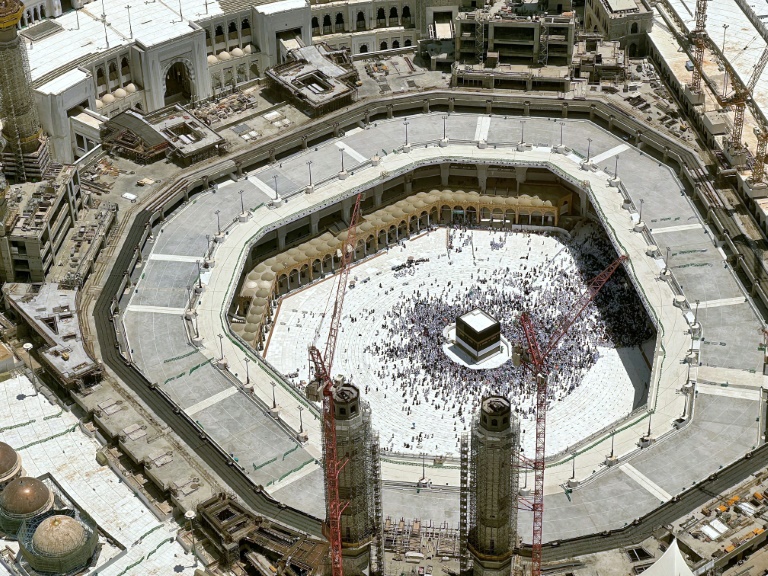
White-robed worshippers from around the world have packed the streets of Islam’s holiest city ahead of the biggest hajj pilgrimage since the coronavirus pandemic began.

Banners welcoming the faithful, including the first international visitors since 2019, adorned squares and alleys, while armed security forces patrolled the ancient city, birthplace of the Prophet Mohammed.

“This is pure joy,” Sudanese pilgrim Abdel Qader Kheder told AFP in Mecca, before the event which officially starts Wednesday. “I almost can’t believe I am here. I am enjoying every moment.”

One million people, including 850,000 from abroad, are allowed at this year’s hajj after two years of drastically curtailed numbers due to the pandemic. The pilgrimage is one of five pillars of Islam, which all able-bodied Muslims with the means are required to perform at least once.

At least 650,000 overseas pilgrims have arrived so far in Saudi Arabia, the authorities said on Sunday.

But authorities on Monday barred nearly 100,000 people from entering Mecca, imposing a security cordon around the holy city. A security official said 288 people were arrested and fined for attempting to perform the hajj without permits.

In 2019, about 2.5 million people took part in the rituals, which also include gathering at Mount Arafat and “stoning the devil” in Mina.

The following year, when the pandemic took hold, foreigners were barred and worshippers were restricted to just 10,000 to stop the hajj from turning into a global super-spreader.

That figure rose to 60,000 fully vaccinated Saudi citizens and residents in 2021.

Pilgrims this year — only those younger than 65 are allowed — will participate under strict sanitary conditions.

The hajj has seen numerous disasters over the years, including a 2015 stampede that killed up to 2,300 people and a 1979 attack by hundreds of gunmen that, according to the official toll, left 153 dead.

– Unaccompanied women –

On Monday afternoon, pilgrims carrying umbrellas to shield themselves from the scorching sun flocked to souvenir and barber shops in Mecca, while others shared meals under palm trees on streets close to the Grand Mosque.

Many new arrivals had already begun performing the first ritual, which requires walking seven times around the Kaaba, the large black cubic structure at the centre of the Grand Mosque.

Made from granite and draped in a cloth featuring verses from the Koran, the Kaaba stands nearly 15 metres (50 feet) tall. It is the structure all Muslims turn towards to pray, no matter where they are in the world.

“When I first saw the Kaaba I felt something weird and started crying,” Egyptian pilgrim Mohammed Lotfi told AFP.

The pilgrimage is a powerful source of prestige for the conservative desert kingdom and its de facto ruler, Crown Prince Mohammed bin Salman, who is returning from the diplomatic wilderness.

Days after the hajj, Prince Mohammed will welcome US President Joe Biden who, with oil prices soaring following Russia’s invasion of Ukraine, has reneged on a vow to turn Saudi Arabia into a “pariah” over the 2018 murder of journalist Jamal Khashoggi by Saudi agents.

The hajj, which costs at least $5,000 per person, is a money-spinner for the world’s biggest oil exporter trying to diversify its economy. In normal years the pilgrimage brings in billions of dollars.

It is also a chance to showcase the kingdom’s rapid social transformation, despite persistent complaints about human rights abuses and limits on personal freedoms.

Saudi Arabia now allows women to attend the hajj unaccompanied by male relatives, a requirement that was dropped last year.

– ‘Serenity’ –

Masks are no longer compulsory in most enclosed spaces in Saudi Arabia but they will be mandatory at the Grand Mosque, the holiest site in Islam. Pilgrims from abroad will have to submit a negative PCR test result. 

The Grand Mosque will be “washed 10 times a day… by more than 4,000 male and female workers”, with more than 130,000 litres (34,000 gallons) of disinfectant used each time, authorities said.

Since the start of the pandemic, Saudi Arabia has registered more than 795,000 coronavirus cases, 9,000 of them fatal, in a population of about 34 million.

Aside from Covid, another challenge is the scorching sun in one of the world’s hottest and driest regions, where temperatures have already topped 50 degrees Celsius (122 Fahrenheit) in parts of Saudi Arabia.

But Iraqi pilgrim Ahmed Abdul-Hassan al-Fatlawi said the heat is the last thing he thinks of when in Mecca.

“I am 60 years old, so it’s normal if I get physically tired because of the hot weather, but I am in a state of serenity, and that’s all that matters to me,” he told AFP.   

Macron reshuffles French cabinet for tricky second term

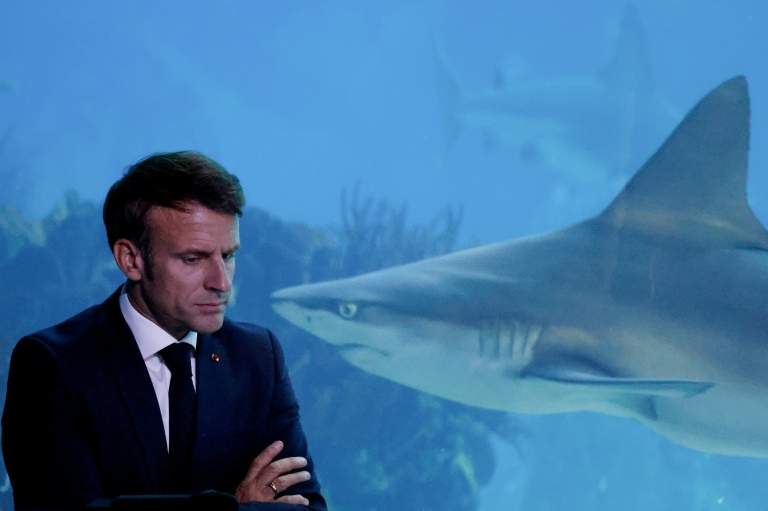
French President Emmanuel Macron on Monday reshuffled his government looking to reset a second term off to a rocky start after his failure to win a parliamentary majority.

While he finally ceded to public pressure by sacking Damien Abad, the solidarity and social cohesion minister accused of rape, there was little sign of a major renewal that could turn Macron’s fortunes around.

Other posts in the 41-strong cabinet — exactly divided between men and women — mostly went to politicians from the different factions in Macron’s camp. 

The foreign, finance and defence ministers all remained in place.

Opponents from all sides of the French political spectrum criticised the reshuffle as superficial, saying it failed to represent a meaningful change.

Abad later told reporters he faced “despicable slanders organised around a calendar” designed to drive him out of government after just 45 days.

Chrysoula Zacharopoulou, who has been accused by former patients of rape during gynaecological examinations, is staying on as state secretary for development, Francophony and international partnerships.

Monday’s reshuffle brought in some new faces, including Abad’s replacement, French Red Cross chief Jean-Christophe Combe, and emergency doctor Francois Braun as health minister.

“Our whole health system is exhausted” after two years of Covid-19, Braun said as he took the reins at the ministry.

He promised a “renovation” of healthcare that for now “lacks flexibility, lacks visibility (and) is no longer understood either by our fellow citizens or by health workers”.

OECD chief economist Laurence Boone was named Europe minister, replacing Macron loyalist Clement Beaune who became notorious for verbal jousting with Brexit supporters. Beaune was moved to the transport ministry.

– Short of majority –

Christophe Bechu, mayor of the Loire city of Angers and a close ally of former prime minister Edouard Philippe, was named environment minister.

The reshuffle was “a message to the troops: loyalty will be rewarded. Looking ahead to the coming months, when passing new laws is likely to come down to just a few votes,” tweeted Frederic Says, a political commentator for broadcaster France Culture.

Opposition figures jostled to condemn the reshuffle, with hard-left France Unbowed MP Clementine Autain calling it “a little game of musical chairs” and saying “feminist pressure alone” had succeeded in dislodging Abad.

Greens MP Sandrine Rousseau said she had “never encountered (new minister Bechu) in the smallest ecological battle” — although Macron has long trailed environmental protection as a priority.

And far-right leader Marine Le Pen charged that “those who failed are all reappointed” to the government.

Macron retorted to claims he had failed to take account of the parliamentary results at Monday’s first cabinet meeting.

The traditional parties of government — the Socialists, now part of the broad NUPES left alliance, and the conservative Republicans, reduced to 60 seats — had shown an “absence of will to join a government agreement or any form of coalition”, he said.

A first test for the new government will come on July 6, when Prime Minister Elisabeth Borne lays out her policies before parliament.

There will no traditional high-stakes confidence vote afterwards, government spokesman Olivier Veran said Monday, ending weeks of speculation.

Instead, he said, the ruling alliance would try to build coalitions for every draft law it submits.

Macron beat Le Pen a second time in April’s presidential run-off to win a new five-year term.

But a lacklustre campaign for last month’s parliamentary vote saw his supporters win just 250 seats, 39 short of the absolute majority needed to push through new laws.

– ‘Ideological vagueness’ –

Macron was largely absent from the domestic political stage between the presidential election and the vote for the National Assembly.

His focus on the international scene and Russia’s invasion of Ukraine ended up reinforcing his arrogant and distant image, rather than showing the public he was fighting France’s corner as he hoped.

Stuck between large blocs from the far right and NUPES — both broadly hostile to his leadership — the government must glean support where it can as bills come up for the vote.

“Whereas yesterday he opposed ‘imperfect compromises’, from now on the president will have to resign himself to them,” newspaper Le Monde commented at the weekend, bemoaning “presidential hesitations” and “ideological vagueness” at the Elysee.

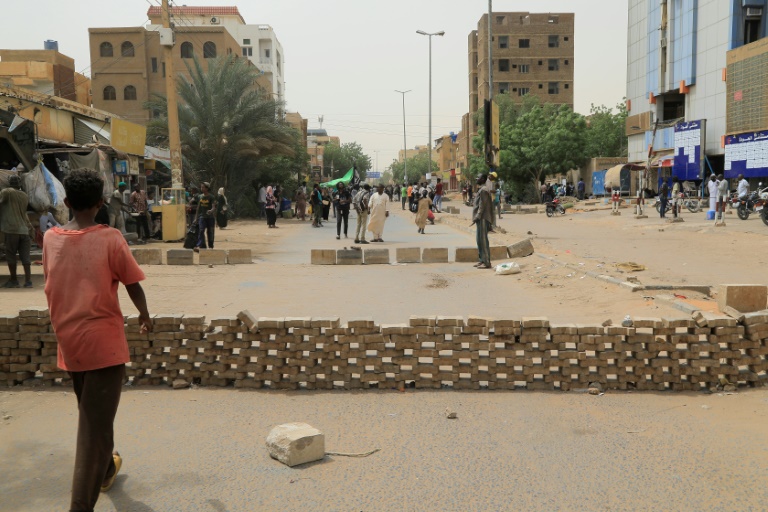
Sudan's Burhan says army stepping back for civilian govt

Sudan’s coup leader Abdel Fattah al-Burhan said Monday the army would make way for a civilian government and would “not participate” in national talks facilitated by the UN and regional blocs.

The decision was taken “to make room for political and revolutionary forces and other national factions” to form a civilian government, he said, months after the October coup ousted civilians from a transitional administration.

Widespread international condemnation and aid cuts followed the putsch, the latest in the impoverished northeast African country.

Burhan’s televised announcement surprised anti-coup demonstrators, hundreds of whom were on the fifth day of sit-in protests after last Thursday saw the deadliest violence so far this year.

Pro-democracy medics said nine demonstrators lost their lives, bringing to 114 the number killed in the crackdown against anti-coup protesters since October.

Tens of thousands had taken to the streets on Thursday, almost matching numbers at the peak of demonstrations after the coup. Although near-weekly rallies have continued, they appeared to decline in intensity before reigniting last week with the same demand: an end to military rule.

“The armed forces will not stand in the way” of democratic transition, Burhan said in his address, affirming the military’s commitment to working towards “elections in which the Sudanese people choose who will govern them.”

In the weeks following the coup, the military and civilian leaders had promised general elections in July 2023.

Sudan’s main civilian players had boycotted the talks with military leaders launched under international auspices last month in an effort to restore the transition.

The United Nations, the African Union and regional bloc IGAD facilitated the dialogue.

– Ruling body dissolving –

But Sudan’s main civilian bloc, the Forces for Freedom and Change (FFC), which was ousted from power in the coup, and the influential Umma party refused to join. 

Late Monday, the FFC were holding an “emergency meeting” to discuss their response to Burhan’s announcements, a source within the FFC told AFP.

Also absent were members of the resistance committees — informal groups which emerged during the 2018-2019 protests that ousted longtime strongman Omar al-Bashir and have led calls for recent anti-coup rallies.

Burhan said that “the formation of the executive government” will be followed by “the dissolution of the Sovereign Council” –- the ruling authority formed under a fragile power-sharing agreement between the army and civilians in 2019.

Though the coup derailed the transition and severed the fragile alliance, the Sovereign Council continued to govern Sudan under Burhan’s rule.

“A supreme council of armed forces” will take its place, he said, combining the Sudanese army and the Rapid Support Forces, a paramilitary unit commanded by Burhan’s deputy, Mohamed Hamdan Daglo.

The RSF incorporated members of the Janjaweed militia, which was accused by rights groups of atrocities during the conflict that erupted in 2003 in the western region of Darfur.

More recently, the RSF has been accused of taking part in crackdowns on anti-coup protesters.

The new supreme council will only be in charge of “defence and security” issues, Burhan said.

Putin orders Russians to fight on after key Ukraine city falls

President Vladimir Putin on Monday ordered Russian troops to press their offensive deeper into the Donbas region of eastern Ukraine after Moscow’s forces seized the strategic city of Lysychansk.

Russian Defence Minister Sergei Shoigu told Putin at a meeting that Moscow’s forces were now in full control of the Lugansk region. 

In a sign there would be no let-up in the fighting and that Russia now had its eyes on the entire Donetsk region, Putin told Shoigu that troops stationed there must continue their operations.

“Military units, including the East group and the West group, must carry out their tasks according to previously approved plans,” Putin said.

“I hope that everything will continue in their direction as has happened in Lugansk so far.” 

The Ukrainian army said on Sunday it was retreating from Lysychansk to preserve the lives of its troops who were outnumbered and outgunned by Russian forces.

With the war now well into its fifth month, Ukraine told a reconstruction conference in Switzerland on Monday that it would already cost $750 billion to rebuild the country.

“The key source of recovery should be the confiscated assets of Russia and Russian oligarchs,” Prime Minister Denys Shmyhal told leaders of dozens of countries in Lugano.

In a video address, Ukrainian President Volodymyr Zelensky described rebuilding Ukraine as the “common task of the whole democratic world” and the “biggest contribution to the support of global peace.”

– ‘Most modern weapons’ –

The loss of Lysychansk over the weekend prompted Zelensky to step up calls for an increased supply of weapons from the West so Kyiv can keep up the resistance and regain lost territories.

After giving up on its initial war aim of capturing Kyiv following tough Ukrainian resistance, Russia has focused its efforts on securing control of the Donetsk and Lugansk areas which make up the Donbas region.

Moscow’s capture of Lysychansk — one week after the Ukrainian army also retreated from the neighbouring city of Severodonetsk — frees up Russian forces to advance on Kramatorsk and Sloviansk in Donetsk.

Lugansk region governor Sergiy Gayday said on Telegram that there was still fighting in the town of Bilogorivka outside Lysychansk.

“We keep defending a small part of the Lugansk region so that our army could build protective redoubts,” he added.

In his address late Sunday, Zelensky vowed Kyiv would fight on and ensure the military had “the most modern weapons”.

“Ukraine will reach the level when the fire superiority of the occupiers will be levelled.”

In a symbolic boost, the Ukrainian flag was raised on Snake Island, an rocky outcrop in the Black Sea, after Russia withdrew from the strategically important Ukrainian territory last week.

In Sloviansk, about 75 kilometres (45 miles) west of Lysychansk, there were few people on the streets on Monday, the day after Russian strikes that left at least six dead, among them a nine-year-old girl, and 19 injured. 

In the large downtown market largely ravaged by a fire caused by a Russian strike, a few vendors offered basic goods while others cleared charred debris. 

Vendors and residents who spoke to AFP, some still in shock, expressed concern for the days and weeks to come, as sounds of shelling were heard again.

The city of Siversk, 30 kilometres west of Lysychansk, also saw overnight shelling, residents and an official told AFP.

– Reconstruction –

But Zelensky’s address Sunday evening was defiant, predicting Ukrainian troops would “win back” territory in the Donbas just has they had in other regions earlier in the war.

On Monday, leaders from dozens of countries and international organisations met in the Swiss city of Lugano with the aim of hashing out a roadmap for Ukraine’s reconstruction.

Lugano is not a pledging conference but will instead attempt to lay out the principles and priorities for a rebuilding process aimed to begin even as the war rages.

“Ukraine can emerge from this on a path towards a stronger and more modern country,” European Commission President Ursula von der Leyen said.

But for residents in Bucha — a Ukrainian town synonymous with war crimes blamed on Moscow’s forces after their retreat in April — fear remains even as talk begins of reconstruction. 

“We’re going to bed without knowing if we’ll wake up tomorrow,” said Vera Semeniouk, 65. 

“Everyone has come back, is starting to repair houses, many are putting in new windows. It would be terrible if it started again, and we had to leave everything again.”

Swedish Prime Minister Magdalena Andersson, making her first visit to Ukraine, visited Bucha on Monday.

Macron reshuffles French cabinet for tricky second term

French President Emmanuel Macron on Monday reshuffled his government looking to reset a second term off to a rocky start after his failure to win a parliamentary majority.

While he finally ceded to public pressure by sacking Damien Abad, the solidarity and social cohesion minister accused of rape, there was little sign of a major renewal that could turn Macron’s fortunes around.

Other posts in the 41-strong cabinet — exactly divided between men and women — mostly went to politicians from the different factions in Macron’s camp. 

The foreign, finance and defence ministers all remained in place.

Opponents from all sides of the French political spectrum criticised the reshuffle as superficial, saying it failed to represent a meaningful change.

Abad later told reporters he faced “despicable slanders organised around a calendar” designed to drive him out of government after just 45 days.

Chrysoula Zacharopoulou, who has been accused by former patients of rape during gynaecological examinations, is staying on as state secretary for development, Francophony and international partnerships.

Monday’s reshuffle brought in some new faces, including Abad’s replacement, French Red Cross chief Jean-Christophe Combe, and emergency doctor Francois Braun as health minister.

“Our whole health system is exhausted” after two years of Covid-19, Braun said as he took the reins at the ministry.

He promised a “renovation” of healthcare that for now “lacks flexibility, lacks visibility (and) is no longer understood either by our fellow citizens or by health workers”.

OECD chief economist Laurence Boone was named Europe minister, replacing Macron loyalist Clement Beaune who became notorious for verbal jousting with Brexit supporters. Beaune was moved to the transport ministry.

– Short of majority –

Christophe Bechu, mayor of the Loire city of Angers and a close ally of former prime minister Edouard Philippe, was named environment minister.

The reshuffle was “a message to the troops: loyalty will be rewarded. Looking ahead to the coming months, when passing new laws is likely to come down to just a few votes,” tweeted Frederic Says, a political commentator for broadcaster France Culture.

Opposition figures jostled to condemn the reshuffle, with hard-left France Unbowed MP Clementine Autain calling it “a little game of musical chairs” and saying “feminist pressure alone” had succeeded in dislodging Abad.

Greens MP Sandrine Rousseau said she had “never encountered (new minister Bechu) in the smallest ecological battle” — although Macron has long trailed environmental protection as a priority.

And far-right leader Marine Le Pen charged that “those who failed are all reappointed” to the government.

Macron retorted to claims he had failed to take account of the parliamentary results at Monday’s first cabinet meeting.

The traditional parties of government — the Socialists, now part of the broad NUPES left alliance, and the conservative Republicans, reduced to 60 seats — had shown an “absence of will to join a government agreement or any form of coalition”, he said.

A first test for the new government will come on July 6, when Prime Minister Elisabeth Borne lays out her policies before parliament.

There will no traditional high-stakes confidence vote afterwards, government spokesman Olivier Veran said Monday, ending weeks of speculation.

Instead, he said, the ruling alliance would try to build coalitions for every draft law it submits.

Macron beat Le Pen a second time in April’s presidential run-off to win a new five-year term.

But a lacklustre campaign for last month’s parliamentary vote saw his supporters win just 250 seats, 39 short of the absolute majority needed to push through new laws.

– ‘Ideological vagueness’ –

Macron was largely absent from the domestic political stage between the presidential election and the vote for the National Assembly.

His focus on the international scene and Russia’s invasion of Ukraine ended up reinforcing his arrogant and distant image, rather than showing the public he was fighting France’s corner as he hoped.

Stuck between large blocs from the far right and NUPES — both broadly hostile to his leadership — the government must glean support where it can as bills come up for the vote.

“Whereas yesterday he opposed ‘imperfect compromises’, from now on the president will have to resign himself to them,” newspaper Le Monde commented at the weekend, bemoaning “presidential hesitations” and “ideological vagueness” at the Elysee.

Close Bitnami banner
Bitnami