World

China mulls dipping into pork reserves to rein in costs

Chinese authorities could dip into strategic pork reserves in a bid to rein in prices of the staple meat, Beijing’s top economic planner said Tuesday.

Pork prices in the world’s second-biggest economy spiked late last month, with the meat selling for 32 percent more than in June 2021 as market supplies dropped, state media Xinhua News Agency reported.

The spike came on the back of “irrational behaviours such as blindly holding supplies and reluctance to sell in the live pig market,” the National Development and Reform Commission (NDRC) said in a notice on social media.

The NDRC said that reluctance was aimed at boosting profits and ordered major suppliers to slaughter pigs at a “regular pace”, warning them against hoarding, Xinhua said.

On Tuesday, the commission added that it was “looking into a release of central pork reserves”.

It has also instructed local governments to release supplies “in a timely manner” to guard against sharp price hikes.

China has largely been spared the impact of a global surge in food prices caused by Russia’s war in Ukraine.

But pork prices were hit hard after the country’s herds were devastated by African swine fever in recent years, causing consumer inflation to spike.

In 2019, authorities said they would free up land to restore pork production to pre-swine fever levels, and officials have since released supplies from reserves to rein in rising costs.

“As the prices of hogs continue to rise, pig farmers are turning losses into profits… farmers are now profiting about 60 yuan (about $9) per head,” Ministry of Agriculture and Rural Affairs hog expert Wang Zuli told state broadcaster CCTV in an interview in June.

“We can say the darkest days for pig farmers are over,” Wang said, adding that pork supplies were expected to grow.

UK museum hunts 'Windrush' migrants in forgotten pictures

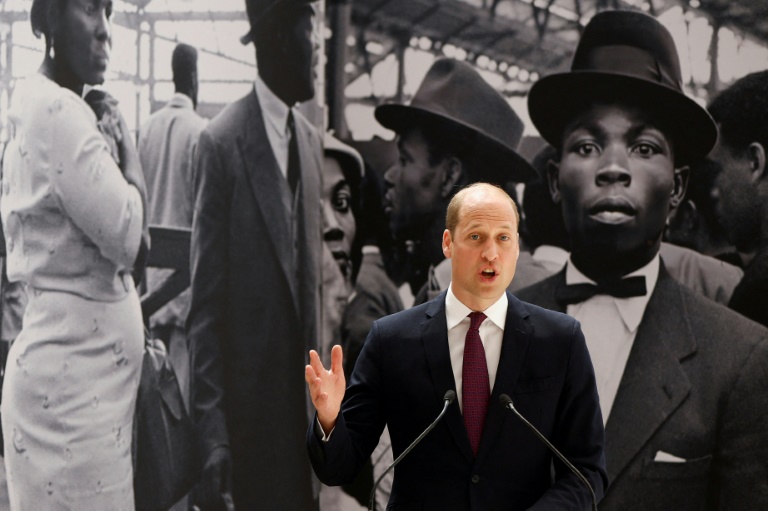
The anonymous face of a new arrival towered over Prince William at the unveiling of a national memorial to the “Windrush” generation of Caribbean migrants in London last month.

One fresh-faced young man is smartly dressed in a bow tie and Trilby hat. A woman, perhaps his wife or sister, stands to his right looking sideways at the camera.

Nervous anticipation is written over both their faces.

But the identity of the well-dressed people on the platform at London’s Waterloo station, waiting for their new lives to begin, has been a mystery.

Now, a search has been launched to identify the young couple and others who arrived that day in 1962.

Britain’s National Railway Museum in York, northern England, has acquired some of the photographs and is seeking to put names to the faces and tell their stories.

The “Windrush” migrants are named after the MV Empire Windrush ship, one of the vessels that brought workers from Jamaica, Trinidad and Tobago and other islands to help fill UK labour shortages after World War II.

– Underexposed –

The photographs show the new arrivals being greeted by friends and family already in Britain. There are smiles and embraces as families are reunited.

Others look uncertain, pensive. In one, a family of four including two young children, all dressed in their Sunday best, wait by a newspaper stand.

In another, a man in a striped tie listens intently as something is explained to him. Piles of bags and old-fashioned suitcases lie on the platform.

But the faces of the new arrivals were nearly lost to history and only came to light recently because of new technology — and the determination of the man who took the pictures.

On the day the migrants arrived, a young London photographer named Howard Grey had an idea.

Taking a break from his job photographing ladies’ corsets, he decided to chance his hand at a bit of reportage. 

Hopefully, he thought, he might capture a historic moment — the last large-scale arrival of Caribbean migrants in Britain before new legislation imposed far tighter entry restrictions.

But arriving at the station on an overcast day in March or April, he says, he quickly realised the light conditions were so poor the photographs would be unusable.

“The glass roof of Waterloo station at that time was coated on the outside with grime,” Grey, now 80, told AFP.

“It made the light yellow and so I knew when I was taking these pictures I really was up against it.”

After around only 20 minutes Grey said he realised he hadn’t got anything and went back to work.

“I did develop them the following day and I was right — there was nothing there. They were all underexposed.”

Despite his disappointment, something stopped him from throwing the negatives away as he usually did with failed projects.

– New scanner –

In fact, his own family background as refugees from what is now Ukraine gave the subject a subconscious hold on him.

“Because my family were immigrants in the 1900s from the Jewish pogroms I was always brought up with their stories and the stories of family friends who had relatives in the Holocaust.

“It was that kind of horror, it gave me a subconscious fear about immigration, the trepidation of the asylum-seeker or refugee,” he added. 

Instead Grey put the negatives in an envelope and tucked them away in a drawer where they stayed for about 50 years.

Decades later after a successful career as an advertising photographer, the London-based Grey had almost completely forgotten about the negatives in the envelope.

“One day I had a new scanner and I just thought I’d try it,” he said.

“I did three scans of the same negative and made it into one and it (the image) just popped up, like invisible ink. I was astounded. it was a Eureka moment.”

It’s hoped that those in the photographs or their relatives may recognise their faces and come forward so their stories can be told as part of a major exhibition by the National Railway Museum planned for 2024.

“The pictures are incredibly special and very beautiful in their own right, but we don’t actually know who the people in them are,” a spokesman for the museum said.

“We want to have their stories properly told so we can do them the sort of justice and respect they deserve,” he added.

Canadian diplomats denied access to tycoon's trial in China: embassy

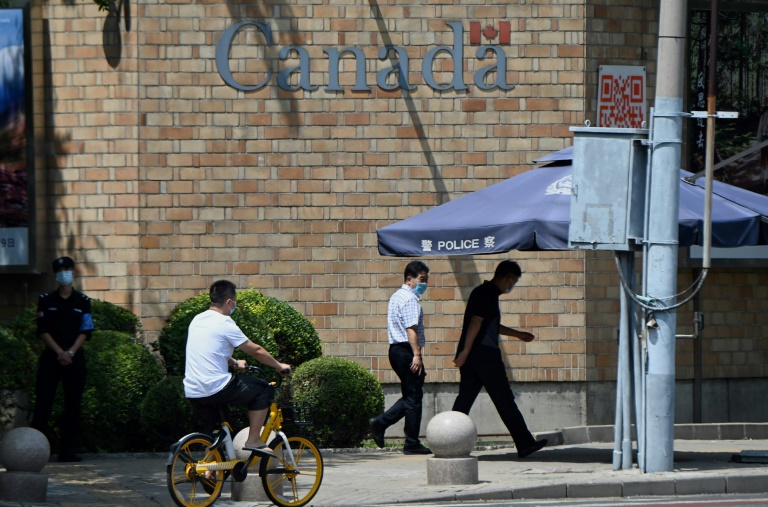
Canadian diplomats were denied access to the trial of Canadian-Chinese tycoon Xiao Jianhua in China, Ottawa’s embassy in Beijing said in a statement on Tuesday, a day after the businessman stood trial.

Xiao, one of China’s richest people at the time of his alleged abduction from a Hong Kong hotel in 2017, reportedly had close connections to the upper echelons of the ruling Communist Party.

Nothing more had been known about the tycoon, who is a Canadian citizen, since his disappearance, until the embassy confirmed Monday that he was facing trial.

“Canada made several requests to attend the trial proceedings. Our attendance was denied by Chinese authorities,” the embassy said in a statement on Tuesday.

Chinese authorities have so far been silent about the case, reportedly linked to an anti-corruption drive championed by President Xi Jinping since he came to power.

Asked about the trial Monday, a foreign ministry official said they were “not aware of the situation.”

Xiao’s alleged abduction came at a time when mainland Chinese agents were not permitted to operate in Hong Kong, and it sparked fear in the city about residents being forcibly disappeared.

These fears were at the heart of massive pro-democracy protests that shook Hong Kong in 2019, prompted by a government bill that would have allowed extraditions to mainland China’s opaque, Communist Party-controlled judicial system.

Xiao’s disappearance also followed the alleged kidnapping into mainland custody of five people working for a bookstore that published salacious titles about China’s leaders.

The booksellers later appeared on mainland Chinese TV admitting to a variety of crimes.

In response to the 2019 protests, China imposed a national security law on Hong Kong in 2020.

That law allowed its security agencies to operate in the city and toppled the legal firewall between the mainland and Hong Kong courts.

US, China discuss 'severe' economic challenges, supply chains

Top officials from the United States and China held a “candid” video call on Tuesday to discuss global economic challenges, especially regarding supply chains.

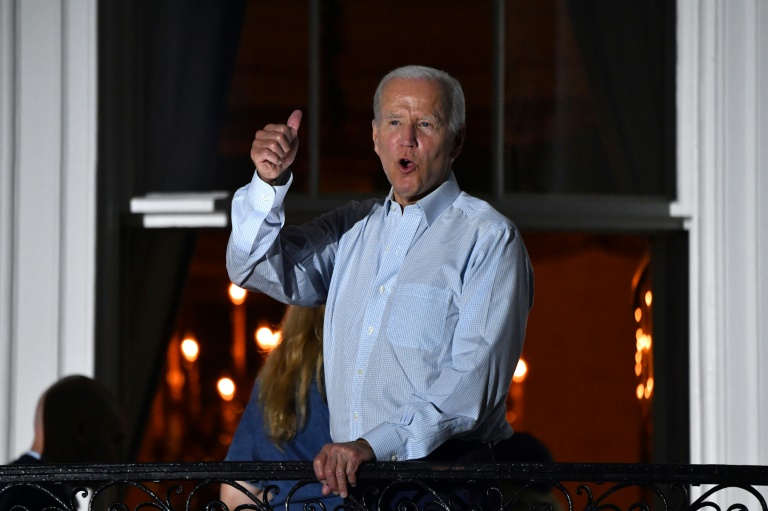
The exchange between Chinese Vice Premier Liu He and US Treasury Secretary Janet Yellen came as President Joe Biden considers lifting some tariffs on imports from China to try and ease soaring inflation.

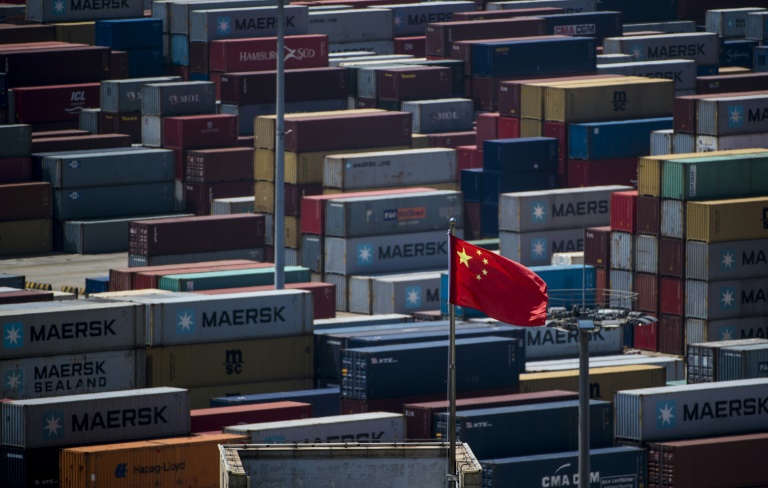
The world’s two biggest economies are also grappling with Covid-snarled supply chains and rising global energy prices.

“The two sides agree that as the world economy is facing severe challenges, it is of great significance to strengthen macro-policy communication and coordination between China and the United States,” China’s official Xinhua news agency reported.

“And jointly maintaining the stability of the global industrial and supply chains is in the interests of both countries and the whole world.”

The Xinhua report said the video call took place at the request of the United States, and described the conversation as “constructive”.

Yellen and Liu “discussed macroeconomic and financial developments in the United States and China, the global economic outlook amid rising commodity prices and food security challenges”, the US Treasury Department said in a readout.

“Secretary Yellen frankly raised issues of concern including the impact of the Russia’s war against Ukraine on the global economy and unfair, non-market (Chinese) economic practices.”

China has repeatedly refused to condemn the Russian invasion, and has been accused of providing diplomatic cover for Moscow by blasting Western sanctions and arms sales to Ukraine.

With inflation in the United States at 40-year highs, authorities there are rushing to try and find ways to ease price pressures.

Among the options is lifting some of the trade tariffs imposed on China by Biden’s predecessor Donald Trump.

Any decision is likely to come soon as some of the Trump duties are set to expire from July 6 unless renewed.

The penalties were aimed at punishing what the United States says are China’s unfair trade practices.

In the call with Yellen Tuesday, China “expressed its concern about issues including the lifting of additional tariffs on China and sanctions by the US side”, according to Xinhua.

Contact is expected in the coming weeks between Biden and Chinese President Xi Jinping.

Asian markets rise on talk Biden to roll back some China tariffs

Asian markets rose Tuesday on growing speculation US President Joe Biden is about to roll back some of the Trump-era tariffs on Chinese goods as he looks for ways to rein in inflation, though sentiment remains at a premium owing to fears of a recession.

The mood on trading floors has become increasingly gloomy in recent months as observers warn that sharp interest rate hikes aimed at curbing price rises could cause a contraction, compounding uncertainty caused by Russia’s war in Ukraine.

Still, equities were on the up Tuesday on talk that the White House is about to remove duties on some of the hundreds of billions of dollars worth of imports from China, with reports saying an announcement could come this week.

With some of the tariffs due to expire soon, officials in Washington have been discussing the measures with an eye on inflation, which is sitting at four-decade highs.

And in a sign that something could be on the cards, China’s state-run Xinhua news agency said Treasury Secretary Janet Yellen and Vice Premier Lui He had held discussions.

“The two sides agree that as the world economy is facing severe challenges, it is of great significance to strengthen macro-policy communication and coordination between China and the United States,” it said. 

“And jointly maintaining the stability of the global industrial and supply chains is in the interests of both countries and the whole world.”

Reports also said that Biden was considering launching new probes into industrial subsidies — allowing for more targeted measures in strategic areas — to appease China hawks.

Hong Kong, Shanghai, Tokyo, Sydney, Seoul, Taipei, Wellington, Manila and Jakarta were all in positive territory.

“Given that inflation remains the White House public enemy number one, (investors are) leaning toward a gradual rollback of some China tariffs as it would reduce end costs to US consumers,” said SPI Asset Management’s Stephen Innes.

However, some commentators said that while the removal of some tariffs would be widely welcomed by traders, they were unlikely to have a long-lasting effect on inflation.

“Markets are likely to react positively on a knee-jerk because at this point we are hungry for any signs of positive news,” Charu Chanana, of Saxo Capital Markets, said.

“But we don’t see the move impacting the global growth and inflation dynamics in a significant way.”

Oil prices rose on expectations that demand will continue to outstrip supplies as the Ukraine war rages with no sign of an end, while investors are keeping tabs on China as it sees fresh Covid outbreaks that have led to some cities being put into lockdown.

Months-long flare-ups in Shanghai and Beijing earlier in the year saw millions of people ordered to stay home, sending shockwaves through the domestic economy and battering supply chains.

“China is the real wildcard here: it’s going to be two steps forward, one step back,” said Australia & New Zealand Banking Group’s Daniel Hynes.

“A demand recovery in China could potentially offset weakness in developed economies as central banks tighten monetary policy.”

– Key figures at around 0230 GMT –

Tokyo – Nikkei 225: UP 0.8 percent at 26,369.24 (break)

Hong Kong – Hang Seng Index: UP 1.0 percent at 22,037.88

Shanghai – Composite: UP 0.2 percent at 3,412.73

Dollar/yen: UP at 136.20 yen from 135.69 yen Monday

Euro/dollar: DOWN at $1.0430 from $1.0431 

Pound/dollar: DOWN at $1.2106 from $1.2116

Euro/pound: UP at 86.16 pence from 86.09 pence

West Texas Intermediate: UP 2.3 percent at $110.87 per barrel

Brent North Sea crude: UP 0.6 percent at $114.16 per barrel

London – FTSE 100: UP 0.9 percent at 7,232.65 points (close)

New York – Dow: Closed for public holiday

Sydney floods force thousands more to flee

Rain-swollen rivers spilled mud-brown waters across swathes of Sydney on Tuesday, swamping homes and roads while forcing thousands to flee.

Emergency services have now instructed about 50,000 people to evacuate or to prepare to escape the rising waters in New South Wales, officials said.

Emergency workers carried out 22 flood rescues in Sydney overnight, they said, with the support of 100 army troops deployed to the state.

The floods, heavy rain and powerful winds led to power cuts for 19,000 homes, officials said.

Australia has been at the sharp end of climate change, with droughts, deadly bushfires, bleaching events on the Great Barrier Reef and floods becoming more common and intense as global weather patterns change.

Higher temperatures mean the atmosphere holds more moisture, unleashing more rain.

“Sydney is not out of danger, this is not a time to be complacent,” State Emergency Services commissioner Carlene York told a news conference.

“It’s risky out there.”

Meteorologists predicted the weather front would move northwards along the east coast after dumping rain on Sydney for four days.

The federal government has declared a natural disaster in 23 flooded parts of New South Wales, unlocking relief payments to stricken residents.

– ‘It is so fast’ –

With much of the ground already sodden, the water rose fast in worst-hit areas and was soon lapping around the walls of some homes in the western Sydney suburbs.

Many people affected have lived through successive east coast floods that struck in 2021 and then again in March this year when more than 20 people were killed.

“It is so fast, you can’t even get out that quick, you can’t even move anything,” resident Jenny Lee said after parts of her western Sydney suburb of Shanes Park were engulfed overnight.

“You only can get help, take pet dog out. That’s it,” she told AFP.

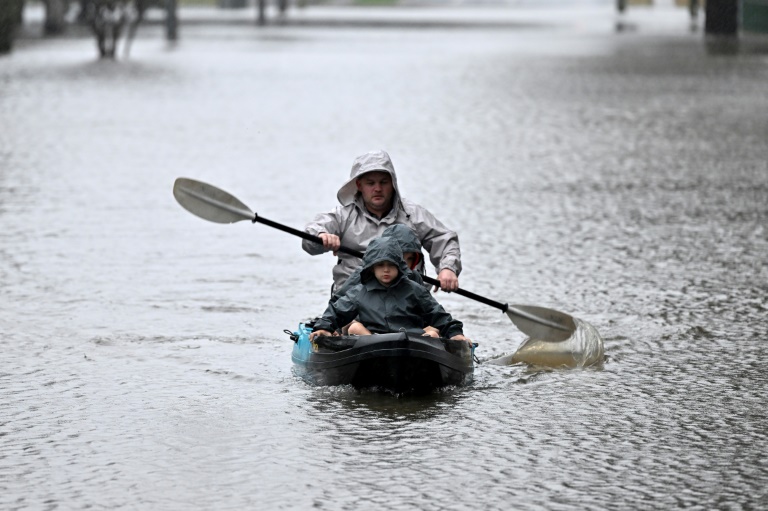
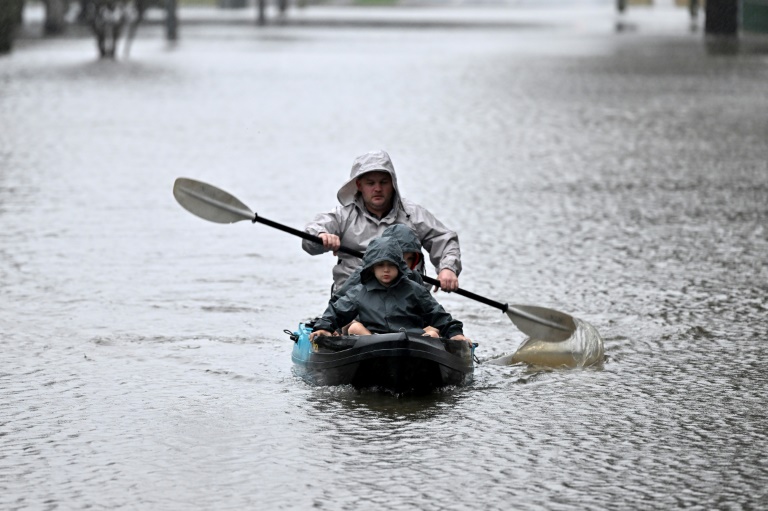
In the western suburb of Windsor, resident Tyler Cassel fled his rental home with his partner by paddling through the water in a yellow canoe.

The flood left his home sitting in a lake of water.

“It rose real quick, quicker than usual,” he told national broadcaster ABC.

“It’s actually one of the scariest floods I have been a part of.”

Much of the flooding has occurred in a major river system downstream of western Sydney’s Warragamba Dam, which has been forced to spill large volumes of excess water since Sunday.

The huge concrete dam provides most of the city’s drinking water.

New South Wales Premier Dominic Perrottet urged people to heed orders to evacuate.

“We have had fires and… numerous floods over this period of time,” he told a news conference.

“Those orders ensure that we get people out safely,” Perrottet said.

“This event is far from over.”

The rain has eased in some Sydney areas but flood warnings will likely persist for days, warned Jane Golding of the state’s bureau of meteorology.

Sydney floods force thousands more to flee

Rain-swollen rivers spilled mud-brown waters across swathes of Sydney on Tuesday, swamping homes and roads while forcing thousands to flee.

Emergency services have now instructed about 50,000 people to evacuate or to prepare to escape the rising waters in New South Wales, officials said.

Emergency workers carried out 22 flood rescues in Sydney overnight, they said, with the support of 100 army troops deployed to the state.

The floods, heavy rain and powerful winds led to power cuts for 19,000 homes, officials said.

Australia has been at the sharp end of climate change, with droughts, deadly bushfires, bleaching events on the Great Barrier Reef and floods becoming more common and intense as global weather patterns change.

Higher temperatures mean the atmosphere holds more moisture, unleashing more rain.

“Sydney is not out of danger, this is not a time to be complacent,” State Emergency Services commissioner Carlene York told a news conference.

“It’s risky out there.”

Meteorologists predicted the weather front would move northwards along the east coast after dumping rain on Sydney for four days.

The federal government has declared a natural disaster in 23 flooded parts of New South Wales, unlocking relief payments to stricken residents.

– ‘It is so fast’ –

With much of the ground already sodden, the water rose fast in worst-hit areas and was soon lapping around the walls of some homes in the western Sydney suburbs.

Many people affected have lived through successive east coast floods that struck in 2021 and then again in March this year when more than 20 people were killed.

“It is so fast, you can’t even get out that quick, you can’t even move anything,” resident Jenny Lee said after parts of her western Sydney suburb of Shanes Park were engulfed overnight.

“You only can get help, take pet dog out. That’s it,” she told AFP.

In the western suburb of Windsor, resident Tyler Cassel fled his rental home with his partner by paddling through the water in a yellow canoe.

The flood left his home sitting in a lake of water.

“It rose real quick, quicker than usual,” he told national broadcaster ABC.

“It’s actually one of the scariest floods I have been a part of.”

Much of the flooding has occurred in a major river system downstream of western Sydney’s Warragamba Dam, which has been forced to spill large volumes of excess water since Sunday.

The huge concrete dam provides most of the city’s drinking water.

New South Wales Premier Dominic Perrottet urged people to heed orders to evacuate.

“We have had fires and… numerous floods over this period of time,” he told a news conference.

“Those orders ensure that we get people out safely,” Perrottet said.

“This event is far from over.”

The rain has eased in some Sydney areas but flood warnings will likely persist for days, warned Jane Golding of the state’s bureau of meteorology.

Egypt family keeps alive tradition behind hajj centrepiece

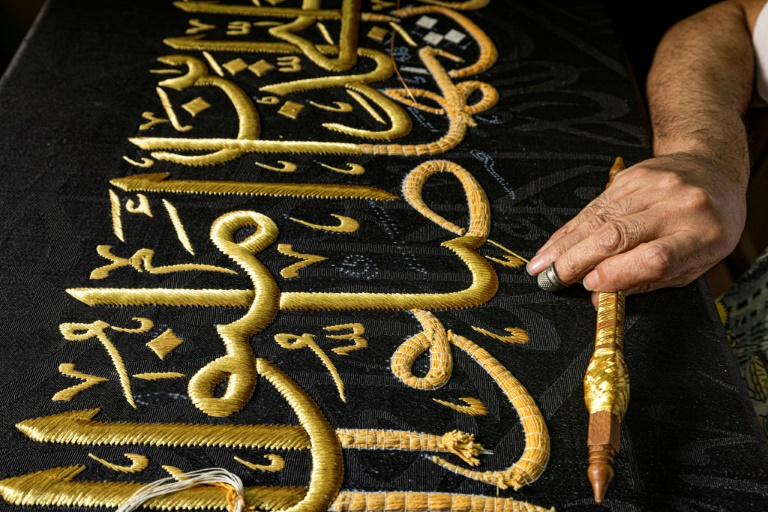
Under the steady hum of a ceiling fan, Ahmed Othman weaves golden threads through black fabric, creating Koranic verses, a century after his grandfather’s work adorned the Kaaba in Mecca’s Grand Mosque.

A ceremonial hanging of the kiswa, huge pieces of black silk embroidered with gold patterns, over the cubic structure that is the centrepiece of the Grand Mosque symbolises the launch of the hajj annual pilgrimage, which starts this week.

Othman’s family used to be honoured with the task of producing the kiswa. 

His family’s creations would be despatched in a camel caravan to Islam’s holiest site in western Saudi Arabia towards which Muslims across the world turn to pray.

Now, Othman keeps the tradition alive in a small workshop, tucked above the labyrinthine Khan al-Khalili bazaar in central Cairo, where mass-produced souvenirs line the alleys.

The area is historically home to Egypt’s traditional handicrafts, but artisans face growing challenges.

Materials, mostly imported, have become expensive, particularly as Egypt faces economic woes and a devalued currency.

Plummeting purchasing power makes high quality hand-crafted goods inaccessible to the average Egyptian, while master craftspeople find it hard to hand down their skills as young people turn to more lucrative jobs.

This wouldn’t be the case “if there was good money in the craft”, Othman sighed, hunched over one of the many tapestries that fill his workshop.

Sheets of black and brown felt are covered in verses and prayers, delicately embroidered in silver and gold.

Every stitch echoes the “sacred ritual” Othman’s grandfather was entrusted with in 1924.

“For a whole year, 10 craftsmen” would work on the kiswa that covers the Kaaba which pilgrims circumambulate, using silver thread in a lengthy labour of love.

– Sprinkled rosewater –

From the 13th century, Egyptian artisans made the giant cloth in sections, which authorities transported to Mecca with great ceremony.

Celebrations would mark the processions through cities, flanked by guards and clergymen as Egyptians sprinkled rosewater from balconies above.

Othman’s grandfather, Othman Abdelhamid, was the last to supervise a fully Egyptian-made kiswa in 1926.

From 1927, manufacturing began to move to Mecca in the nascent Kingdom of Saudi Arabia, which would fully take over production of the kiswa in 1962.

The family went on to embroider military regalia for Egyptian and foreign dignitaries, including former presidents Gamal Abdel Nasser and Anwar Sadat.

“In addition to our work with military rank embroideries, my father started embroidering Koranic verses on tapestries,” and then reproducing whole sections of the kiswa.

Clients began flooding in for “exact replicas of the kiswa, down to the last detail”.

Though today they offer small tableaus for as little as 100 Egyptian pounds (about $5), massive customised orders go for several thousand dollars, such as replicas of the Kaaba door, which Othman proudly claims are indistinguishable from the originals in Mecca.

– Back-breaking –

But the family has not been immune to the economic turbulence that began with the coronavirus pandemic, which decimated small businesses and craftsmanship in Egypt.

Since early 2020, they have sold around “two pieces per month”, whereas before they would sell at least one tapestry a day.

Othman worries that a sense of “worldwide austerity” makes business unlikely to bounce back.

Today, there might only be a dozen or so craftsmen whose work he considers authentic, with many artisans leaving the craft for quicker cash flows.

“They can make 200 to 300 pounds a day,” ($10-$16) driving a tuktuk motorised rickshaw, or a minibus, Othman said. “They’re not going to sit on a loom breaking their backs all day.”

But still, a century and a half after his great grandfather left his native Turkey and brought the craft with him to Egypt, Othman says he has stayed loyal to techniques learnt as a child when he would duck out of school to watch his father work.

“It’s on us to uphold the craft the same way we learned it, so it’s authentic to the legacy we inherited,” he said.

'Guerrilla' sales, crowdsourcing: Japan's game console crunch

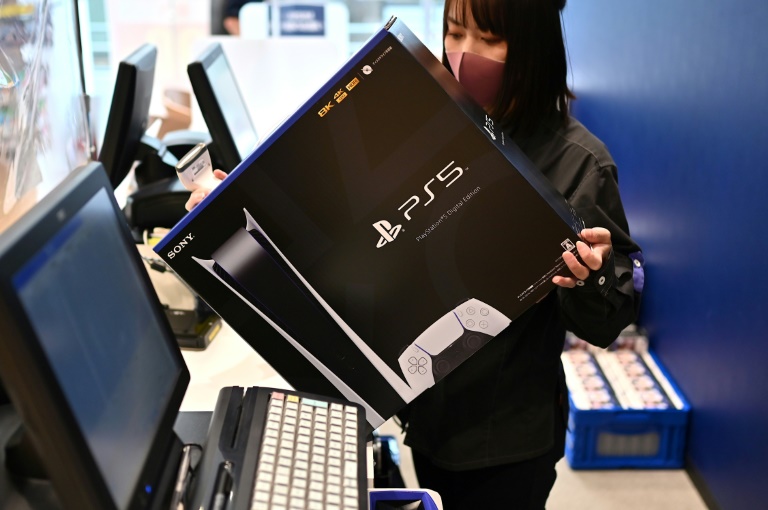
It’s still dark when the line starts forming outside an electronics store in Tokyo, as desperate gamers try to snag the latest PlayStation or Xbox despite chronic shortages in Japan.

The consoles made by Sony and Microsoft have been hard to buy since their November 2020 release, as has Nintendo’s Switch, with supply chain issues exacerbated by lockdowns in China.

Shortages have struck worldwide but are particularly acute in Japan because Sony and Microsoft have prioritised other markets.

That has left consumers and stores in a game of cat-and-mouse as customers hunt coveted consoles and sellers battle chaos that has sometimes required police intervention.

Tetsuya, 50, has been trying to get a console since February and lined up before 6:30 am with dozens of other people outside a store in the electronics district of Akihabara.

But around 8 am, an employee emerged to announce the store had not received either PS5s or Xboxes and the crowd quickly dispersed.

“It’s a shame, but I’ll keep trying my chances if I can,” said Tetsuya, who declined to give his second name.

Hoping to discourage crowding, many stores have moved sales online, using lottery systems, while others have shifted to low-profile sales that take place without prior warning, with consoles arriving on a random schedule.

The phenomenon is known as “guerrilla sales” in Japan, a term that first emerged with the Nintendo DS console, which was a victim of its own success during the 2000s

Some gamers are fighting back with their own tactics, including one who has set up a website gathering crowdsourced information.

“Last summer, I spent three months trying to buy a PlayStation 5, but every time I went to a store, they were sold out,” said the 40-year-old Japanese man, a researcher in artificial intelligence who asked to remain anonymous.

“The only option was to phone each store or find information on Twitter,” he told AFP.

“I thought to myself that everyone must have the same problem, and that creating a site to share information would help the community.”

– ‘There’s no line’ –

The site’s creator says he spends hours on weekends sorting and verifying up to 500 daily messages posted on its forum.

“For PS5s in Yokohama, they are now selling both the disc edition and the digital edition. It’s unclear how many units they have. There’s no line,” reads one post.

The information gives gamers real-time leads but is also fed into a calendar to highlight trends and analysed by an algorithm designed to predict when stores will have supplies.

Japan’s console drought is the result of various factors, says analyst Hideki Yasuda of Toyo Securities.

Microsoft’s Xbox has never been as popular in Japan as elsewhere, so in times of short supply, the country isn’t a priority market.

And Sony has targeted PS5 sales in Europe and North America, according to Yasuda, who estimates just five to eight percent of the 20 million PS5s sold worldwide were in Japan.

When the PS4 launched in 2013, “the smartphone game market in Japan was exploding while the console market was stalling”, he told AFP.

“Sony must have thought it was going to disappear in the 2020s, especially with the shrinking Japanese population.”

As a result, a PS5 bought for 55,000 yen ($400) can now easily fetch 80,000-100,000 yen when resold, and there have even been fistfights involving alleged resellers at stores.

Despite promises from PlayStation boss Jim Ryan in May of a “significant ramp up” in production, Yasuda doesn’t expect a major boost to deliveries before the second half of 2023.

The crowdsourcing site founder says he will keep going, determined to help those “who really love video games” against “scalpers”.

“I have no life on the weekend, but if I stop, people who want to buy a console will be stuck.”

Mecca businesses see hajj boom ending pandemic slump

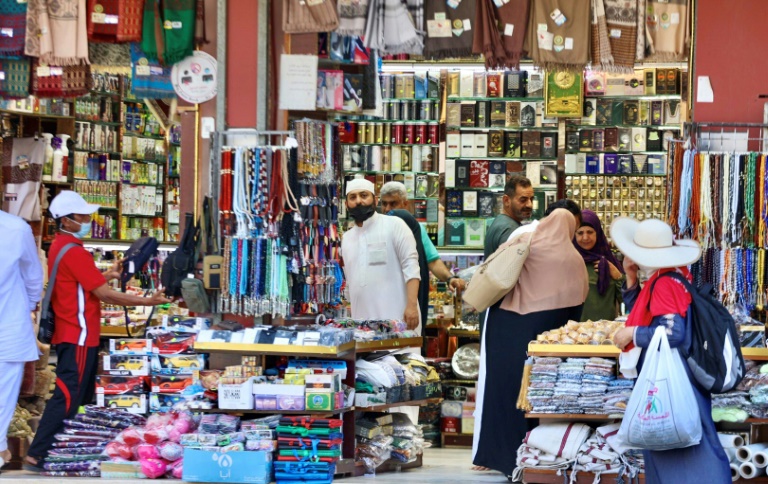
“Business is back”, exclaims Abdullah Mekhlafi at the shop where he sells prayer mats in Islam’s holiest city, which is preparing for the biggest influx of hajj pilgrims since the coronavirus pandemic began.

Two years of drastic restrictions on the number of pilgrims who could perform the hajj emptied shops and hotels across the Saudi Arabian city of Mecca. But business owners are hoping for a quick recovery as hundreds of thousands of worshippers flock to the region this week.

“We had few customers (during the last two hajj seasons), but today business is back, thanks to God. It’s the same as before, and even better,” 30-year-old Mekhlafi told AFP.

One million people, including 850,000 from abroad, will be allowed at this year’s hajj, one of five pillars of Islam which all able-bodied Muslims with the means are required to perform at least once in their lives.

In 2019, about 2.5 million people took part in the rituals, which include circling the Kaaba at the Grand Mosque in Mecca, gathering at Mount Arafat and “stoning the devil” in Mina.

The following year, after the pandemic took hold, foreigners were barred and the total number of worshippers was capped at 10,000 to stop the hajj from turning into a global super-spreader.

That figure rose to 60,000 fully vaccinated Saudi citizens and residents in 2021.

– Restoring old glory –

The hajj, which costs at least $5,000 per person, and umrah pilgrimages that occur at other times of year are usually a significant revenue earner for Saudi Arabia, especially its tourism sector.

In normal times, they generate about $12 billion (11.5 billion euros) annually, keeping the economy humming in Mecca.

The city has seen a construction boom in recent years that has brought new shopping malls, apartment buildings and luxury hotels — some offering spectacular views of the sacred Kaaba, the large black cubic structure at the centre of the Grand Mosque towards which all Muslims pray.

But these projects were starved for clients during the pandemic, meaning their owners were cheered by scenes already unfolding in Mecca on Monday, two days before the hajj officially begins. 

White-robed worshippers were flocking to souvenir and barber shops across the city of two million.

And the main shopping centre near the Grand Mosque, where many hotels are located, was buzzing with pilgrims again, a far cry from a year ago when the area looked nearly abandoned. 

Amin, a perfume shop owner, was bullish about his prospects, telling AFP his losses could be recovered this year.

“There is a huge difference between this year and past ones. This year we can see a lot of pilgrims who are bringing back the glory to the Grand Mosque,” he said. 

“The losses were big, but now things are better.”

– Boom times –

The changes in Mecca track the recent economic fortunes of Saudi Arabia.

During the pandemic, the kingdom faced a sharp downturn in oil prices due to a collapse in global demand, which triggered austerity measures including the tripling of a value added tax and cuts to civil servants’ allowances.

Particularly after Russia’s invasion of Ukraine in February, things seem to have changed.

In early May, Saudi Arabia reported its fastest economic growth rate in a decade, as a surging oil sector fuelled a 9.6 percent rise in the first quarter over the same period of 2021.

“The impact of the losses during the last two years was significant, but we are starting to see a recovery on the business level, and this year’s (hajj) is good news,” said Salem Ali Shahran, operations manager at the biggest hotel chain in Mecca.

“The current numbers have reached 40 percent of their 2019 levels. We hope for bigger numbers in the coming years.”

Saudi Arabia’s GDP is expected to grow by 7.6 percent in 2022, the International Monetary Fund said in April.

The world’s biggest oil exporter is trying to diversify its economy, a main pillar of the Vision 2030 reform agenda pushed by Crown Prince Mohammed bin Salman, the de facto ruler. 

Tourism is a crucial component of that plan, making a booming hajj all the more important.

The current goal is for Saudi Arabia to triple foreign tourism this year as pandemic restrictions ease, Ahmed Al Khateeb, the tourism minister, told AFP in an interview last month.

Of the 100 million foreign and domestic tourists targeted for 2030, 30 million are expected to be making religious trips, largely to Mecca and Medina, Islam’s two holiest sites.

Close Bitnami banner
Bitnami