World

Trial of Chinese-Canadian tycoon who disappeared in 2017 begins in China

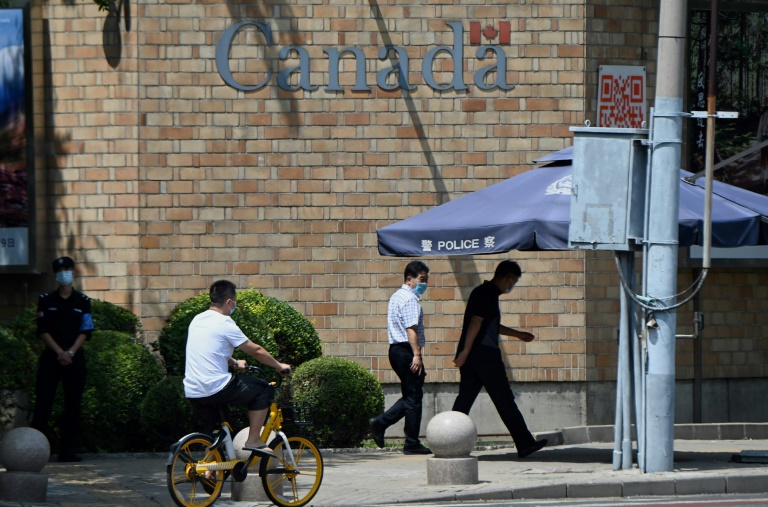
Canadian-Chinese tycoon Xiao Jianhua is standing trial on Monday, Ottawa’s embassy in Beijing said in a statement, after the businessman disappeared from a Hong Kong hotel five years ago.

Xiao vanished from Hong Kong’s Four Seasons hotel in January 2017, with local media reporting that he was snatched by mainland Chinese agents — fuelling fear at the time over Beijing’s tightening influence in the financial hub.

The tycoon, one of China’s richest people at the time of his disappearance, reportedly had close connections to the upper echelons of the ruling Communist Party.

Nothing more had been known about Xiao, who is a Canadian citizen, since his disappearance, until the embassy confirmed Monday that he was facing trial.

“Global Affairs Canada is aware that a trial in the case of Canadian citizen, Mr. Xiao Jianhua, will take place on July 4, 2022,”  the Canadian embassy told AFP, without specifying the location of the trial or charges against him.

“Canadian consular officials are monitoring this case closely, providing consular services to his family and continue to press for consular access.”

Hong Kong police said at the time that he had crossed the border into mainland China. 

His company Tomorrow Group also later said that he was in the mainland.

But Chinese authorities have been silent about the case, reportedly linked to an anti-corruption drive championed by President Xi Jinping since he came to power.

Xiao’s alleged abduction came at a time when mainland Chinese agents were not permitted to operate in Hong Kong, and it sparked fear in the city about residents being forcibly disappeared.

These fears were at the heart of massive pro-democracy protests that shook Hong Kong in 2019, prompted by a government bill that would have allowed extraditions to mainland China’s opaque, Communist Party-controlled judicial system.

Xiao’s disappearance also followed the alleged kidnapping into mainland custody of five people working for a bookstore which published salacious titles about China’s leaders.

The booksellers later appeared on mainland Chinese TV admitting to a variety of crimes.

In response to the protests, China imposed a national security law on Hong Kong in 2020.

That law allowed its security agencies to operate in the city and toppled the legal firewall between mainland and Hong Kong courts.

– Rags to riches –

Xiao rose from a poor family to become one of China’s richest men, founding the Beijing-based Tomorrow Group.

He was head of the official student union at the prestigious Peking University in 1989 when the Chinese government used troops and tanks to crush peaceful demonstrations.

Xiao had tried and failed to defuse the protests, with his company later denying a report in The New York Times that he had been rewarded by the government for his role.

After university, Xiao began selling computers and in the years that followed built an empire with diverse interests, including in banking and insurance.

According to the Hurun Report, which ranks China’s wealthiest people, Xiao was worth almost $6 billion in 2017.

He had reportedly denied allegations that he fled to Hong Kong in 2014 to escape the corruption crackdown in China.

Xiao is said to have acted as a broker for the Chinese leadership, including for President Xi’s family. 

“After five years of quietly waiting, our family is still, based on my brother’s strict instructions, putting faith in the Chinese government and Chinese law,” Xiao’s elder brother Xinhua told The Wall Street Journal last month.

“It’s very complicated and full of drama,” he said of the case, according to the WSJ.

The years after his disappearance have also been marked by plummeting relations between China and Canada, sparked by the arrest in Vancouver of Meng Wanzhou — the chief financial officer of telecoms giant Huawei — at the request of the United States.

Following Meng’s arrest, Beijing detained two Canadians in China and targeted Canadian agricultural exports.

All three were released in September 2021 after Meng reached a deal with US prosecutors on the fraud charges, ending her extradition fight.

Since then there have been hopes of a thaw in diplomatic relations, with Beijing lifting a ban on Canadian canola imports earlier this year.
Trial of Chinese-Canadian tycoon who disappeared in 2017 begins in China

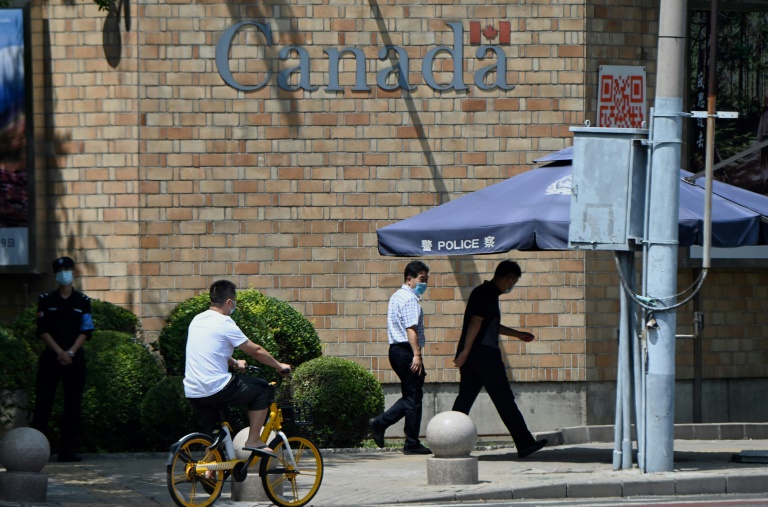
Canadian-Chinese tycoon Xiao Jianhua is standing trial on Monday, Ottawa’s embassy in Beijing said in a statement, after the businessman disappeared from a Hong Kong hotel five years ago.

Xiao vanished from Hong Kong’s Four Seasons hotel in January 2017, with local media reporting that he was snatched by mainland Chinese agents — fuelling fear at the time over Beijing’s tightening influence in the financial hub.

The tycoon, one of China’s richest people at the time of his disappearance, reportedly had close connections to the upper echelons of the ruling Communist Party.

Nothing more had been known about Xiao, who is a Canadian citizen, since his disappearance, until the embassy confirmed Monday that he was facing trial.

“Global Affairs Canada is aware that a trial in the case of Canadian citizen, Mr. Xiao Jianhua, will take place on July 4, 2022,”  the Canadian embassy told AFP, without specifying the location of the trial or charges against him.

“Canadian consular officials are monitoring this case closely, providing consular services to his family and continue to press for consular access.”

Hong Kong police said at the time that he had crossed the border into mainland China. 

His company Tomorrow Group also later said that he was in the mainland.

But Chinese authorities have been silent about the case, reportedly linked to an anti-corruption drive championed by President Xi Jinping since he came to power.

Xiao’s alleged abduction came at a time when mainland Chinese agents were not permitted to operate in Hong Kong, and it sparked fear in the city about residents being forcibly disappeared.

These fears were at the heart of massive pro-democracy protests that shook Hong Kong in 2019, prompted by a government bill that would have allowed extraditions to mainland China’s opaque, Communist Party-controlled judicial system.

Xiao’s disappearance also followed the alleged kidnapping into mainland custody of five people working for a bookstore which published salacious titles about China’s leaders.

The booksellers later appeared on mainland Chinese TV admitting to a variety of crimes.

In response to the protests, China imposed a national security law on Hong Kong in 2020.

That law allowed its security agencies to operate in the city and toppled the legal firewall between mainland and Hong Kong courts.

– Rags to riches –

Xiao rose from a poor family to become one of China’s richest men, founding the Beijing-based Tomorrow Group.

He was head of the official student union at the prestigious Peking University in 1989 when the Chinese government used troops and tanks to crush peaceful demonstrations.

Xiao had tried and failed to defuse the protests, with his company later denying a report in The New York Times that he had been rewarded by the government for his role.

After university, Xiao began selling computers and in the years that followed built an empire with diverse interests, including in banking and insurance.

According to the Hurun Report, which ranks China’s wealthiest people, Xiao was worth almost $6 billion in 2017.

He had reportedly denied allegations that he fled to Hong Kong in 2014 to escape the corruption crackdown in China.

Xiao is said to have acted as a broker for the Chinese leadership, including for President Xi’s family. 

“After five years of quietly waiting, our family is still, based on my brother’s strict instructions, putting faith in the Chinese government and Chinese law,” Xiao’s elder brother Xinhua told The Wall Street Journal last month.

“It’s very complicated and full of drama,” he said of the case, according to the WSJ.

The years after his disappearance have also been marked by plummeting relations between China and Canada, sparked by the arrest in Vancouver of Meng Wanzhou — the chief financial officer of telecoms giant Huawei — at the request of the United States.

Following Meng’s arrest, Beijing detained two Canadians in China and targeted Canadian agricultural exports.

All three were released in September 2021 after Meng reached a deal with US prosecutors on the fraud charges, ending her extradition fight.

Since then there have been hopes of a thaw in diplomatic relations, with Beijing lifting a ban on Canadian canola imports earlier this year.
'Slim' chance of finding survivors after Italy glacier collapse

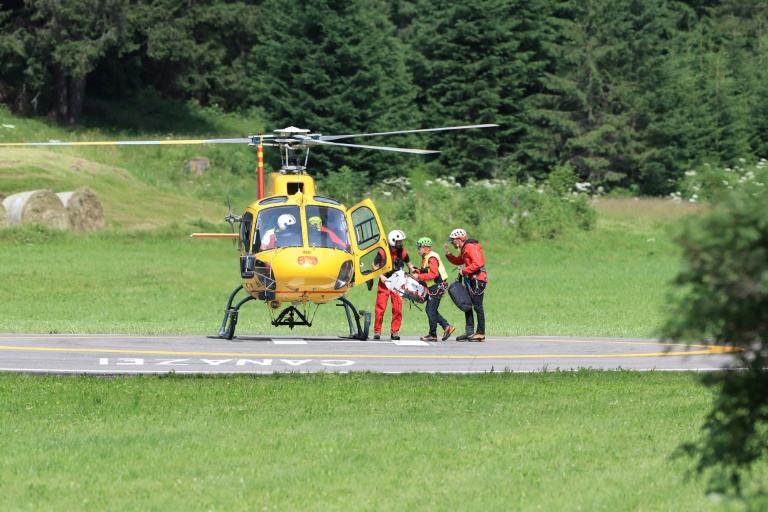
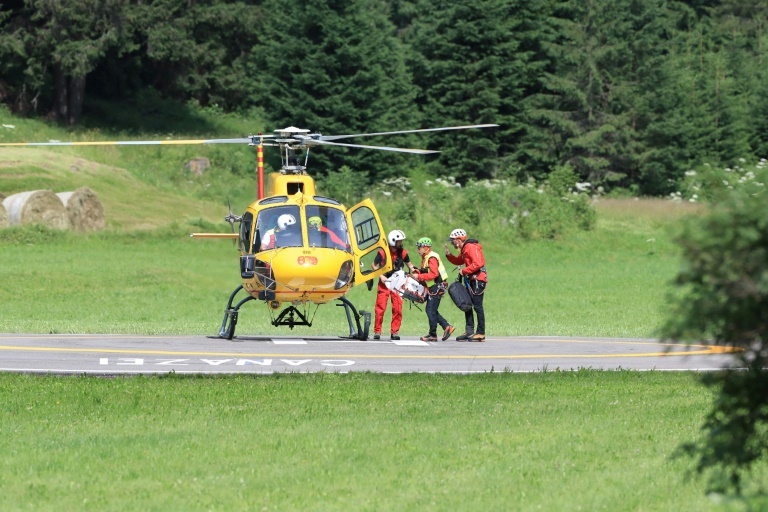
Rescuers warned Monday that hope of finding survivors was diminishing after an avalanche set off by the collapse of an Italian glacier during a heat wave killed at least six people.

Authorities said they did not know how many climbers were hit when the glacier gave way Sunday on Marmolada, the highest mountain in the Italian Dolomites.

Ice and rock thundered down the slope at 300 kilometres an hour (185 miles per hour), according to Trento province chief Maurizio Fugatti.

On Monday, rescuers armed with thermal drones searched for body heat from potential survivors trapped in ice, though hope was rapidly dwindling. 

Chances of finding survivors “are slim to nothing”, the region’s Alpine Rescue Service head Giorgio Gajer told AGI news agency.

The six bodies recovered so far were found “torn apart,” rescuer Gino Comelli said.

The disaster struck one day after a record-high temperature of 10 degrees Celsius (50 degrees Fahrenheit) was recorded at the summit of the glacier, the largest in the Italian Alps.

The glacier had been weakened by decades of global warming, experts said.

Alpine Rescue spokeswoman Michela Canova told AFP an “avalanche of snow, ice and rock” hit an access path at a time when there were several roped parties, “some of whom were swept away”.

A spokesman for the Trento province said people were still being reported missing.

Trento’s chief prosecutor Sandro Raimondi was cited by Corriere della Sera as saying he feared the number of dead “could double if not triple”, based on the number of cars in the carpark.

But Canova urged caution, saying the total number of climbers involved was “not yet known”. Eight people were recovered with injuries.

– ‘Sea of ice’ –

Bodies dug out of the ice and rock were taken to the village of Canazei, where Italian Prime Minister Mario Draghi was expected later Monday.

Helicopters and sniffer dogs were called off as night fell and amid fears the glacier may still be unstable.

“It is difficult for the rescuers in a dangerous situation,” Canazei mayor Giovanni Bernard told AFP.

Images of the avalanche filmed from a refuge close by show snow and rock hurtling down the mountain’s slopes.

“It’s a miracle we’re alive,” Stefano Dal Moro, an engineer who was hiking with his Israeli partner told Corriere della Sera.

“There was a dull noise, then that sea of ice came down. It’s useless to run, you can only pray that it doesn’t come your way.

“We crouched down and hugged each other tightly as the ice passed”.

– Heat ‘beyond normal’ –

Massimo Frezzotti, a science professor at Roma Tre University, told AFP the collapse was caused by unusually warm weather linked to global warming, with precipitation down 40 to 50 percent during a dry winter.

“The current conditions of the glacier correspond to mid-August, not early July,” he said.

Glacier specialist Renato Colucci told AGI that the phenomenon was “bound to repeat itself”, because “for weeks the temperatures at altitude in the Alps have been well beyond normal values”.

The recent warm temperatures had produced a large quantity of water from the melting glacier that accumulated at the bottom of the block of ice and caused it to collapse, he added.

The Trento public prosecutor’s office has opened an investigation to determine the causes of the tragedy.

According to a March report by the UN Intergovernmental Panel on Climate Change (IPCC), melting ice and snow is one of 10 major threats caused by global warming, disrupting ecosystems and infrastructure.

The IPCC has said glaciers in Scandinavia, central Europe and the Caucasus could lose between 60 and 80 percent of their mass by the end of the century.

'Slim' chance of finding survivors after Italy glacier collapse

Rescuers warned Monday that hope of finding survivors was diminishing after an avalanche set off by the collapse of an Italian glacier during a heat wave killed at least six people.

Authorities said they did not know how many climbers were hit when the glacier gave way Sunday on Marmolada, the highest mountain in the Italian Dolomites.

Ice and rock thundered down the slope at 300 kilometres an hour (185 miles per hour), according to Trento province chief Maurizio Fugatti.

On Monday, rescuers armed with thermal drones searched for body heat from potential survivors trapped in ice, though hope was rapidly dwindling. 

Chances of finding survivors “are slim to nothing”, the region’s Alpine Rescue Service head Giorgio Gajer told AGI news agency.

The six bodies recovered so far were found “torn apart,” rescuer Gino Comelli said.

The disaster struck one day after a record-high temperature of 10 degrees Celsius (50 degrees Fahrenheit) was recorded at the summit of the glacier, the largest in the Italian Alps.

The glacier had been weakened by decades of global warming, experts said.

Alpine Rescue spokeswoman Michela Canova told AFP an “avalanche of snow, ice and rock” hit an access path at a time when there were several roped parties, “some of whom were swept away”.

A spokesman for the Trento province said people were still being reported missing.

Trento’s chief prosecutor Sandro Raimondi was cited by Corriere della Sera as saying he feared the number of dead “could double if not triple”, based on the number of cars in the carpark.

But Canova urged caution, saying the total number of climbers involved was “not yet known”. Eight people were recovered with injuries.

– ‘Sea of ice’ –

Bodies dug out of the ice and rock were taken to the village of Canazei, where Italian Prime Minister Mario Draghi was expected later Monday.

Helicopters and sniffer dogs were called off as night fell and amid fears the glacier may still be unstable.

“It is difficult for the rescuers in a dangerous situation,” Canazei mayor Giovanni Bernard told AFP.

Images of the avalanche filmed from a refuge close by show snow and rock hurtling down the mountain’s slopes.

“It’s a miracle we’re alive,” Stefano Dal Moro, an engineer who was hiking with his Israeli partner told Corriere della Sera.

“There was a dull noise, then that sea of ice came down. It’s useless to run, you can only pray that it doesn’t come your way.

“We crouched down and hugged each other tightly as the ice passed”.

– Heat ‘beyond normal’ –

Massimo Frezzotti, a science professor at Roma Tre University, told AFP the collapse was caused by unusually warm weather linked to global warming, with precipitation down 40 to 50 percent during a dry winter.

“The current conditions of the glacier correspond to mid-August, not early July,” he said.

Glacier specialist Renato Colucci told AGI that the phenomenon was “bound to repeat itself”, because “for weeks the temperatures at altitude in the Alps have been well beyond normal values”.

The recent warm temperatures had produced a large quantity of water from the melting glacier that accumulated at the bottom of the block of ice and caused it to collapse, he added.

The Trento public prosecutor’s office has opened an investigation to determine the causes of the tragedy.

According to a March report by the UN Intergovernmental Panel on Climate Change (IPCC), melting ice and snow is one of 10 major threats caused by global warming, disrupting ecosystems and infrastructure.

The IPCC has said glaciers in Scandinavia, central Europe and the Caucasus could lose between 60 and 80 percent of their mass by the end of the century.

12 bodies found after South China Sea typhoon shipwreck

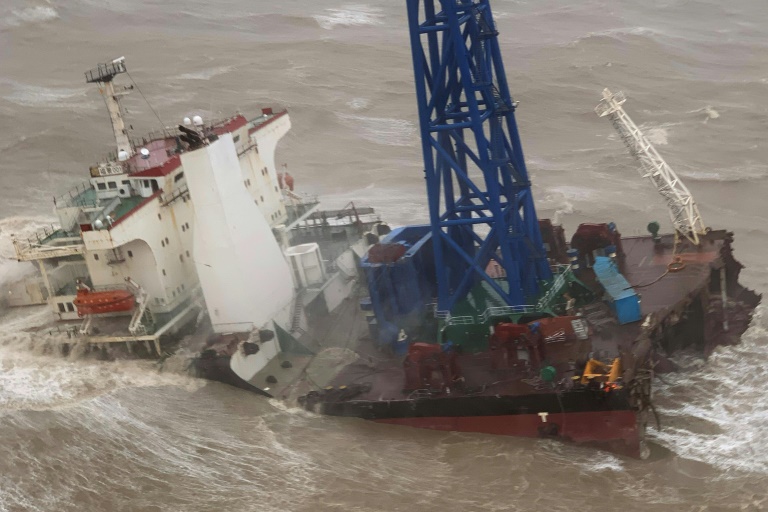
Twelve bodies have been found following a shipwreck in the South China Sea over the weekend that left more than two dozen crew members missing, Chinese authorities said Monday.

The announcement came days after an engineering vessel 160 nautical miles (296 kilometres) southwest of Hong Kong suffered substantial damage and broke into two pieces during a typhoon.

“As of 3:30 pm on July 4, rescue forces found and recovered 12 bodies, suspected to be of victims who drowned, in an area around 50 nautical miles southwest of the site where the vessel sank,” said the Guangdong Maritime Search and Rescue Centre.

“The relevant departments are stepping up identity confirmation work.”

A total of 30 crew members abandoned the vessel, Fujing 001, used for offshore wind power construction, after its anchor chain broke in the typhoon, according to Chinese state media outlet CGTN.

The floating crane of the offshore wind farm project was found to be in danger by a monitoring system on Saturday, and it later sank, state broadcaster CCTV said.

Three people were rescued on Saturday and one more in the early hours of Monday, according to Chinese state media, leaving 26 still unaccounted for.

Rescuers have expanded the scope of their search around the point of wreckage, with medical workers dispatched on each rescue ship to provide assistance to any crew member found as soon as possible, CCTV said.

Earlier footage provided by Hong Kong authorities showed a person being airlifted onto a helicopter while waves crashed over the deck of the semi-submerged ship below.

The three survivors said that other crew members may have been swept away by waves before the first helicopter arrived, according to a Hong Kong government statement.

– ‘Difficult and dangerous’ –

Typhoon Chaba formed in the central part of the South China Sea and made landfall in southern China’s Guangdong province on Saturday.

Rescuers in Hong Kong were notified of the incident at 7:25 am (2325 GMT Friday) and found the ship near Chaba’s centre, where harsh weather conditions and nearby wind farms made the operation “more difficult and dangerous”.

The ship’s location recorded wind speeds of 144 kilometres (89 miles) per hour and waves that were 10 metres (33 feet) high, authorities said.

Seven planes, 246 boats and 498 fishing vessels have been dispatched to search for the remaining missing persons, the Monday statement by mainland Chinese authorities said.

Turkish inflation hits two-decade high of 78.6%

Inflation in Turkey in June soared to an annual rate of 78.6 percent — the highest in 24 years, according to official data released Monday — as President Recep Tayyip Erdogan’s unconventional economic policies continued to take their toll.

But independent estimates published by Turkish economists showed prices rising at more than double that figure.

The inflation rate reported by Turkey’s state statistics agency was the highest since the emerging market suffered a currency meltdown during a global financial crisis in 1998.

Inflation had stood at 73.5 percent in May and at 15.0 percent at the start of last year.

Economy Minister Nureddin Nebati on Friday vowed that consumer prices will start dropping in December.

“I promise to you and to the president, we will see a drop in inflation starting in December,” he was quoted as saying by Turkish media.

According to the official data, the surge in inflation in June was driven by a jump of 123.4 percent in the cost of transportation and a 94-percent increase in non-alcoholic drinks.

Turkey’s latest problems began when Erdogan forced the central bank to go through with a series of interest rate cuts last year that he said were part of his “new economic model”.

The policy rate went down despite rising consumer prices.

But the Turkish leader rejects conventional economics and affirms that high interest rates cause prices to rise.

Economists believe his approach has exacerbated the pain felt world-wide from the jump in food and energy prices caused by Russia’s invasion of Ukraine. 

– Questions over data –

However, more and more economists are starting to question Turkey’s official data.

A monthly report release Monday by Turkey’s ENAG group of independent economists showed consumer prices rising by 175 percent in June.

ENAG said prices had risen by 71.4 percent since the start of the year alone.

The Istanbul chamber of commerce said inflation in Turkey’s largest city has reached an annual rate of 94 percent.

“No one actually believes official Turkish data anymore,” said BlueBay Asset Management economist Timothy Ash.

“There is no expectation of anything like a credible policy response.”

Turkey’s official data are turning into a hot political issue ahead of next year’s general election — widely viewed as the toughest of Erdogan’s two-decade rule.

Opposition leader Kemal Kilicdaroglu accused the state statistics agency of “lying”.

“Stop committing crimes for the benefit of President Erdogan,” Kilicdaroglu told the agency on Twitter.

A survey published by the Metropol polling agency on Friday showed 69 percent of respondents believed the unofficial ENAG figure and just 24 percent the one reported by the government.

– ‘Cost-of-living problem’ –

Erodgan has doubled down on his economic approach and hinted that he may want the benchmark interest rate to move even lower in the months to come.

He has also tried to reverse the accompanying drop in his public approval by announcing a rapid series of wage hikes to large parts of the population.

He has bumped up the minimum wage earned by roughly 40 percent of the working Turks from 2,826 liras in late December to 5,500 liras ($325) this month.

The wage is used as the benchmark for a wide range of social benefits across the economy.

Economists warn that substantially raising the pay of so many people is an inflationary measure that should be accompanied by interest hikes or other means of limiting spending.

But Erdogan rejects the very idea that Turkey is suffering from inflation.

“We do not have an inflation problem. We have a cost-of-living problem,” Erdogan said last month.

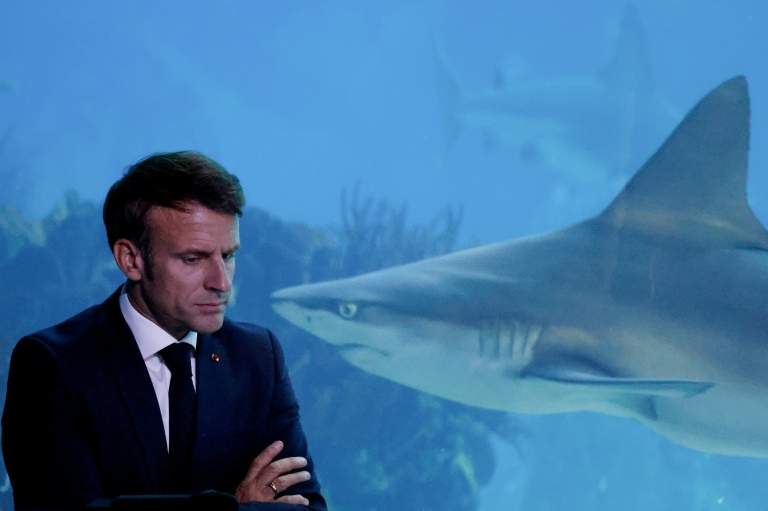
Macron reshapes French cabinet for tricky second term

French President Emmanuel Macron on Monday reshuffled his government in search of a fresh start for his second term, dogged by his failure to win a parliamentary majority last month.

While he finally ceded to public pressure by removing Damien Abad, the solidarity and social cohesion minister facing a rape probe, there was little sign of a major renewal that could turn Macron’s fortunes around.

Monday’s reshuffle brought in some new faces, including Abad’s replacement, French Red Cross chief Jean-Christophe Combe, and emergency doctor Francois Braun as health minister.

OECD chief economist Laurence Boone was named Europe minister, replacing Macron loyalist Clement Beaune who became notorious for verbal jousting with Brexit supporters. Beaune was moved to the transport ministry.

Other posts in the 41-strong cabinet mostly went to politicians from the different factions in Macron’s camp. The foreign, finance and defence ministers all remained in place.

Christophe Bechu, mayor of the Loire city of Angers and a close ally of former prime minister Edouard Philippe, was named environment minister — long trailed by the president as a top priority for the five years ahead.

“It’s a message to the troops: loyalty will be rewarded. Looking ahead to the coming months, when votes on new laws are likely to come down to just a few votes,” tweeted Frederic Says, a political commentator for broadcaster France Culture.

“There’s no surprises here,” Communist Party chief Fabien Roussel told broadcaster LCI, saying he “feels like they’re just starting over again with the same people”.

A first test for the new government will come on July 6, when Prime Minister Elisabeth Borne will lay out her policies before parliament.

The government is still mum on whether it will hold a traditional high-stakes confidence vote afterwards.

– Short of majority –

Macron beat far-right leader Marine Le Pen a second time in April’s presidential run-off to win a new five-year term.

But a lacklustre campaign for last month’s parliamentary vote saw his supporters win just 250 seats, 39 short of the absolute majority needed to push through new laws.

“In a mere press release, Emmanuel Macron announces the new government. Those who failed are all reappointed,” tweeted Le Pen, saying the president had “ignored” the demands of the French for a “different politics”.

Macron was largely absent from the domestic political stage between the presidential election and the vote for the National Assembly — absorbing himself instead on the international scene with Russia’s invasion of Ukraine.

But where the image of the head of state fighting France’s corner abroad might once have assured presidents backing in the parliamentary poll, this time around it reinforced Macron’s image as distant and arrogant.

His opponents on far right and hard left enjoyed free rein to attack what few concrete policies the majority offered, such as an unpopular plan to push back the legal retirement age to 65.

And after a first term buffeted by crises including the anti-government “yellow vests” protests and the Covid-19 pandemic, Macron could point to few successes in the reform programme he was elected on in 2017.

The once all-powerful president will now need to find allies in a parliament with large blocs from the far right and left-wing alliance NUPES — both broadly hostile to his leadership.

Opposition forces have ruled out any formal coalition, leaving the government to glean support where it can as bills come up for the vote.

“Whereas yesterday he opposed ‘imperfect compromises’, from now on the president will have to resign himself to them,” newspaper Le Monde commented this weekend, complaining of “presidential hesitations” and “ideological vagueness” at the Elysee.

Police say Copenhagen mall shooting suspect had mental health history

Danish police said Monday the suspect in a weekend shooting at a Copenhagen mall that left three dead, including two teenagers, was known to mental health services.

“Our suspect is also known among psychiatric services, beyond that I do not wish to comment,” Copenhagen police chief Soren Thomassen told a press conference.

Thomassen added that the victims appeared to have been randomly targeted and there was nothing to indicate it was an act of terror.

“Our assessment is that the victims were random, that it isn’t motivated by gender or something else,” Thomassen said.

The police chief could not yet comment on a motive, but said there seemed to have been preparation ahead of the attack and that he was not aided by anyone else.

“As things stand, it seems he was acting alone,” he said of the 22-year-old suspect.

The three killed have been identified as a Danish teenage girl and boy, both aged 17, and a 47-year-old Russian citizen residing in Denmark.

Another four were injured in the shooting: two Danish women, aged 19 and 40, and two Swedish citizens, a 50-year-old man and a 16-year-old woman.

About 20 more were lightly injured in the panicked evacuation after the shooting. 

The area around the busy mall was quiet on Monday morning. 

Mostly journalists were present in front of the main entrance, behind a security cordon guarded by numerous police officers, according to an AFP correspondent at the scene.

Police confirmed that the suspected shooter was known to the police, “but only peripherally”.

They added that they believe videos of the suspect circulating since Sunday evening on social media to be authentic.

In some of the images, the young man can be seen posing with weapons, mimicking suicide gestures and talking about psychiatric medication “that does not work”. 

Three videos believed to have been posted to YouTube by the suspect were all titled “I don’t care”.

YouTube and Instagram accounts believed to belong to him were closed overnight, AFP noted.

– ‘Are you OK?’ –

The shooting occurred Sunday afternoon at the busy Fields shopping mall, located between the city centre and Copenhagen airport. 

According to police, the shooter was armed with a rifle, a pistol and a knife, and while the guns were not believed to be illegal, the suspect did not have a license for them.

Witnesses quoted by the Danish media described how the suspect had tried to trick people by saying his weapon was fake to get them to approach.

“He was sufficiently psychopathic to go and hunt people, but he wasn’t running,” one witness told public broadcaster DR.

Other eyewitnesses told Danish media they had seen more than 100 people rush towards the mall’s exit as the first shots were fired.

Prime Minister Mette Frederiksen denounced the “cruel attack” in a statement late Sunday.

“Our beautiful and usually so safe capital was changed in a split second,” she said.

The mall was busy because of a planned concert with British artist Harry Styles at the nearby Royal Arena that had sold 13,500 tickets but was cancelled at the last minute.

“We got dressed for the concert we were on our way,” Maria Enevoldsen, who had returned to the mall Monday to pick up her car, told AFP.

“Our friend (in the mall) called, asking ‘are you OK?’ and then we heard gunshots over the phone,” she said.

The shooting came just over a week after a gunman opened fire near a gay bar in Oslo in neighbouring Norway, killing two people and wounding 21 others.

In February of 2015, two people were killed and five injured in Copenhagen in a series of Islamist-motivated shootings.

PNG votes in heavily guarded elections

Voters headed to the polls Monday for heavily guarded elections in Papua New Guinea, where millions live in poverty despite vast mineral and energy riches.

About 10,000 police, army and corrections services personnel have been mobilised for the vote in the Pacific island nation, which has a history of corruption and election-related killings.

Australia deployed 130 troops with transport aircraft to help secure the lengthy voting process across the rugged, densely forested country of nine million.

“We want transparency, we want accountability and above all we want a safe, fair and secured polling period,” Prime Minister James Marape said after casting his ballot on the first day of voting.

Marape later had to deny any connection to illegal financing after confirming his eldest son had been detained for being “in the vicinity” when police found a suitcase containing a large sum of cash.

“I just want to inform the country: Nothing to do with me,” he told reporters.

“My son had no input in the transportation of the money,” the prime minister said, adding that the funds — 1.56 million PNG kina ($440,000) in cash, according to police — belonged to a local construction firm. 

– ‘Rampant corruption’ –

Election rivalries can quickly spill over into bloodshed in Papua New Guinea, especially in the remote and mountainous highlands provinces.

During the last vote in 2017, Australian National University monitors documented more than 200 election-related killings and widespread “serious irregularities”. 

This year, 15 election-related deaths have already been recorded, according to Papua New Guinea police.

Marape conceded in an end-of-campaign message that there was still “rampant corruption in all strata of public service”.

The prime minister, who has promised to make Papua New Guinea the “richest black Christian nation”, said there had been a lack of development despite the country’s “God-given” resources.

“I admit there is much more to be done for our country,” said Marape, who leads the Pangu party.

He faces a stiff challenge from his predecessor Peter O’Neill, who resigned as leader three years ago under pressure over endemic corruption and a perceived failure to spread mining wealth to the people.

O’Neill, of the People’s National Congress party, has vowed to attract private investment and revive the resources industry.

The country boasts large deposits of gas, oil, gold and copper, and is an exporter of forestry and agricultural products.

– ‘Very violent’ –

“There are worrying signs around our nation that the election has been very poorly prepared for and interference seems rife,” O’Neill charged.

“I hope the good officers of our security forces at all levels can ensure we have free, fair and safe elections.”

Voting is scheduled to take up to 18 days and an outcome is not expected to be clear until August.

Analysts say the new leader will have to cobble together a coalition government in the male-dominated 118-seat parliament, which has had no women members since the last election in 2017.

“Elections are always messy and chaotic and they can get very violent,” said Jessica Collins, Pacific researcher at the independent Sydney-based Lowy Institute think tank.

In an ethnically diverse country with more than 800 languages, analysts say voters are less interested in national issues than the material benefits candidates can bring home to local communities.

Further complicating the process, the electoral roll is not up to date, said Pacific analyst Henry Ivarature at the Australian National University.

“So the whole integrity of this election is already under question,” he said.

The government that emerges from the elections will face significant challenges.

Nearly 40 percent of the population lives below the international poverty line, according to a 2020 report by the World Bank.

The resources- and agriculture-dependent economy posted a “weak recovery” last year, the Asian Development Bank said, after being battered by the Covid-19 pandemic, with only about three percent of the total population fully vaccinated.

Turkish inflation hits two-decade high of 78.6%

Inflation in Turkey in June soared to an annual rate of 78.6 percent — the highest in 24 years, according to official data released Monday — as President Recep Tayyip Erdogan’s unconventional economic policies continued to take their toll.

But unofficial estimates published by Turkish economists showed prices rising at more than double that figure.

The inflation rate reported by Turkey’s state statistics agency was the highest since January 1998.

Inflation had stood at 73.5 percent in May and at 15.0 percent at the start of last year.

Economy Minister Nureddin Nebati on Friday vowed that consumer prices will start dropping in December.

“I promise to you and to the president, we will see a drop in inflation starting in December,” he was quoted as saying by Turkish media.

According to the official data, the surge in inflation in June was driven by a jump of 123.4 percent in the cost of transportation and a 94-percent increase in non-alcoholic drinks.

Turkey’s crisis started when Erdogan forced the central bank to go through with a series of interest rate cuts last year that he said were part of his “new economic model”.

The policy rate went down despite rising consumer prices.

But the Turkish leader rejects conventional economics and affirms that high interest rates cause prices to rise.

Economists believe his approach has exacerbated the pain felt world-wide from the jump in food and energy prices caused by Russia’s invasion of Ukraine. 

– Questions over data –

However, more and more economists are starting to question Turkey’s official data.

A monthly report release Monday by Turkey’s ENAG group of independent economists showed consumer prices rising by 175 percent in June.

ENAG said prices had risen by 71.4 percent since the start of the year alone.

The Istanbul chamber of commerce said inflation in Turkey’s largest city has reached an annual rate of 94 percent.

“No one actually believes official Turkish data anymore,” said BlueBay Asset Management economist Timothy Ash.

“There is no expectation of anything like a credible policy response.”

Turkey on Friday substantially raised the minimum wage for the second time in a year to cushion the blow on households ahead of next year’s general election.

The hike of the net monthly take-home pay to 5,500 liras ($330) means the nominal minimum wage has nearly doubled since the end of last year.

It stood at 2,826 liras in late December and 4,253 liras in January.

Economists warn that substantially raising the pay of a large swathe of the population is an inflationary measure that should be accompanied by interest hikes or other means of limiting spending.

Official data show that more than 40 percent of Turks earned the minimum wage at the start of the year.

Close Bitnami banner
Bitnami