World

History made as first same-sex couples marry in Switzerland

With smiles, pride and emotion, the first same-sex couples tied the knot in Switzerland on Friday following a referendum that changed the landscape for LGBTQ rights in the country.

Among the first to get married were Aline, 46, and Laure, 45, who have been together for 21 years and converted their civil union into marriage at the plush Palais Eynard in Geneva.

Beneath a sparkling chandelier in a mirrored salon, and with a dozen or so close friends and family in attendance, the couple exchanged touching words recalling their years together and love for each other.

“You are a wonderful person,” said Aline, looking into Laure’s eyes.

“I still want to spend the rest of my life with you.”

Holding hands throughout the ceremony, they signed the official documents, followed by their witnesses.

“I am now very pleased to announce that you are officially married,” said Geneva mayor Marie Barbey-Chappuis, who conducted the ceremony.

The room burst into applause as the couple shared a kiss.

There was no exchange of rings, with the pair instead opting to leave on the gold bands from their civil partnership struck exactly 19 years ago on July 1, 2003.

– ‘Moment’ in history –

“It’s really important for us to have this visibility, to show that marriage is open to everyone, now and for future generations too,” Laure told reporters afterwards.

Her wife Aline added: “It took rather a long time in Switzerland. But now it’s done, it’s great, and with a big ‘Yes’ majority, so we are very, very happy.”

The Swiss government’s plans to finally introduce “marriage for all” were challenged by opponents, who successfully triggered a referendum held last September.

But 64.1 percent of voters backed the introduction of same-sex marriage in the wealthy Alpine nation.

Switzerland was one of the last remaining western European nations where same-sex marriages had yet to be adopted. The Netherlands was the first to make the change in 2001.

“It was very moving. It’s a big moment and sends a very strong message to society — being free to love and be loved,” mayor Barbey-Chappuis told AFP after the first ceremony.

“The symbolism was particularly strong and the emotion too,” she said.

“It was high time that marriage became perfectly equal in Switzerland.”

– ‘At last’ –

Later Friday, the Palais Eynard held its first wedding between two men: Daniel, a 54-year-old interior designer and 51-year-old stylist Xavier, who have been a couple for 15 years.

Seventy people filled a room in the 19th-century parkside venue to witness the ceremony.

The pair exchanged their vows with classical music playing to ensure that only they could hear each other.

Daniel put on his glasses to read his, the card trembling slightly in his hand as Xavier comforted him by holding his other arm.

Married to huge applause, they walked out arm in arm to the waiting wedding cake and champagne flutes, where Xavier’s father told the guests: “Thank you Switzerland. At last.”

Both couples were given a wrapped gift from the city, a bouquet, and the pen with which they became married.

“We’re intensely happy and it’s something fabulous for us,” Xavier told reporters.

“We hope to live our lives simply and like everyone else.”

Switzerland decriminalised homosexuality in 1942. Before Friday, same-sex couples could only register a civil partnership — a status which does not provide the same rights as marriage.

But same-sex couples can now marry in civil ceremonies and enjoy the same rights as other married couples.

Notably, same-sex foreign spouses are now eligible to apply for citizenship through a simplified procedure and same-sex couples are now permitted to adopt jointly.
Rebel Moscow theatre shuts doors after final show

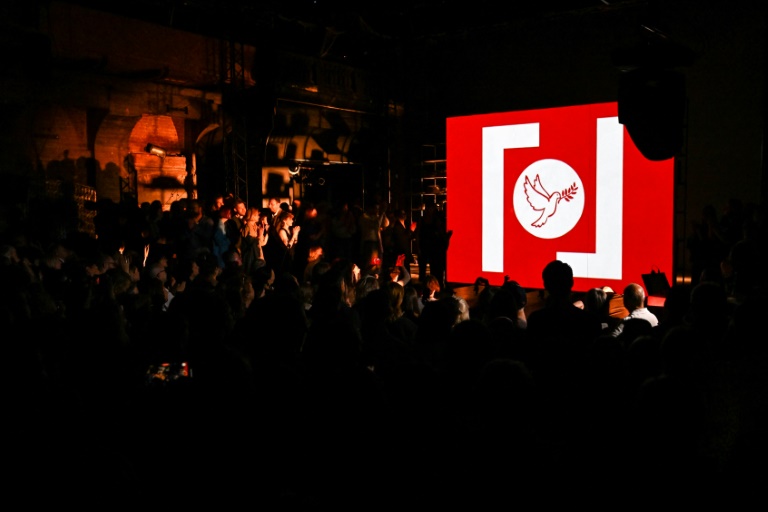
The Gogol Centre theatre, one of the last bastions of artistic freedom in Vladimir Putin’s Russia, shut its doors Thursday night with a defiant final show called “I Don’t Take Part In War”.

The emotional play protesting against the Kremlin’s military intervention in Ukraine marked a dramatic end of an era for the Russian capital’s ever-shrinking opposition and intelligentsia circles.

Previously run by rebel director Kirill Serebrennikov, who left Russia after criticising Moscow’s offensive in Ukraine, the Gogol Centre staged daring plays for a decade, often testing increasingly strict laws and Moscow’s sharp conservative turn. 

Thursday’s performance had some of the audience in tears when actors recited poems by Soviet poet and soldier Yuri Levitansky, a Soviet poet and soldier who was born in what is now Ukraine.

The play’s name was taken from one of Levitansky’s emblematic verses: “I don’t take part in war, it takes part in me.”  

As the show ended, the theatre’s outgoing artistic director, Alexei Agranovich announced: “The Gogol Centre is closed. Forever.” 

This week the Moscow authorities announced a change of leadership at a number of the capital’s top theatres. 

They include the Gogol Centre, which will now function under new management and its old name — the Nikolai Gogol Drama Theatre.  

Serebrennikov, who transformed the theatre company into a national cultural beacon, accused the authorities of “murdering” the Gogol Centre.

On Thursday, he addressed the audience via video link from Avignon in southeastern France. 

“The Gogol Centre is an idea, the idea of freedom. Freedom is not dead. Freedom lives on as long as we live,” he said.

Another prominent Moscow theatre, the Sovremennik, will also have a change of management, authorities said. 

These changes are seen as part of an increasing crackdown on any dissent since President Putin sent troops into Ukraine.

Before the play, some spectators lay roses against the theatre’s white walls. 

“They are closing everything, blocking everything,” Daria Kozhevnikova, a 36-year-old teacher who came to see the play, told AFP.

She paused, before smiling uneasily: “Soon we will all be shackled together by one chain.”

Her voice trembled and she appeared on the verge of tears. “It was a place where I felt good.” 

– ‘Symbol of freedom’ –

“The Gogol Centre is a place of freedom,” said 39-year-old marketing specialist Aliya Talibova, who also came to see the play. 

“Now they are taking it away from us.”

Actor Ilya Vinogorsky, 22, said the closure of the theatre in its current iteration was “very painful”. 

“This should not be happening. Especially in the 21st century, when we claim to be a civilised society and state.”

Serebrennikov was artistic director of the Gogol Centre between 2012 and 2021. 

The 52-year-old was caught up in a high-profile fraud case that his supporters say was punishment for challenging the Russian authorities. He was forced to leave his post in February 2021.

In his address, Serebrennikov vowed that despite the closure in Moscow, the theatre’s mission would live on. 

“There was this building. There will be another,” he said. 

“I hope some day the war will end and the beautiful Russia of the future will emerge.” 

White rhinos return to Mozambique park after 40 years

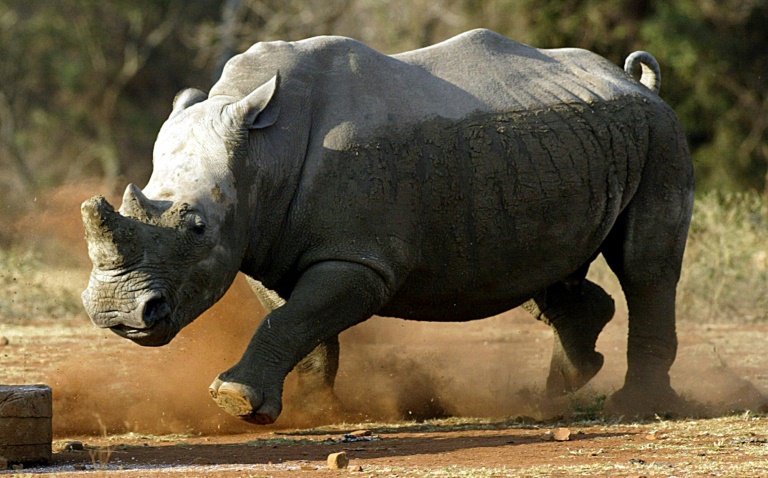
A Mozambican park welcomed its first white rhinos in 40 years on Friday after 19 of the threatened animals completed a 1,600-kilometre (thousand-mile) truck ride from South Africa, conservationists said.

The rhinos were reintroduced to Zinave National Park in southern Mozambique under an initiative to restore wildlife and boost the local economy.

Wildlife in the 4,000-square-kilometre (1,500-square-mile) haven was decimated by Mozambique’s decades-long civil war, which ended in 1992, and by poaching.

“The return of the rhino allows for Zinave to be introduced as a new and exciting tourism destination in Mozambique,” said Werner Myburgh, head of Peace Parks Foundation (PPF), the conservation group that led the project.

Zinave is now the only national park in Mozambique to house all “Big Five” African game animals — elephant, rhino, lion, leopard and buffalo — Myburgh said in a statement.

Since 2015, 2,400 animals from 14 species have been released into the reserve.

The rhinoceroses were hauled to Zinave from neighbouring South Africa over several days in June, in what the PPF said was the longest-ever transfer of rhinos by road.

On Friday, some of the animals were released from their enclosures into a sanctuary featuring extra security to protect them from poachers.

The ceremony was attended by President Filipe Nyusi and Environment Minister Ivete Maibaze.

“The protection of biodiversity is a universal imperative and together we will continue to fight for the preservation of our natural heritage,” said Nyusi.

“Only then will future generations be able to enjoy the benefits of nature and join our mission of preserving our natural resources.”

The white rhinoceros is classified as near-threatened by the International Union for Conservation of Nature (IUCN) while its cousin, the African black rhino, is listed as critically endangered.

The PPF said it planned to more than double the park’s rhino population over the next three years, adding more from both species.

Ukraine says Russian missiles kill 21 near Odessa

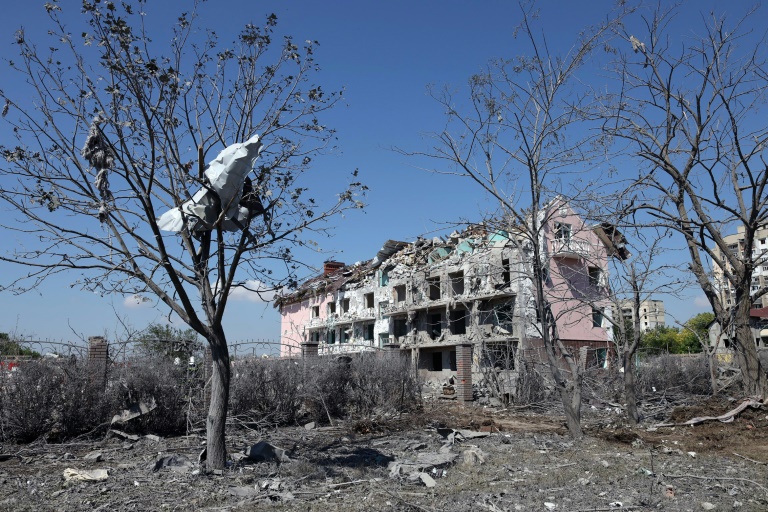
Missiles slammed into a Ukrainian apartment building and a recreation centre early Friday, killing 21 people and wounding dozens in the Odessa region, in attacks swiftly condemned by Germany.

At least one child was killed, Ukrainian officials said, blaming the strikes on Russia a day after Moscow abandoned positions on a strategic island in a major setback to the Kremlin’s invasion.

The missiles struck the two buildings in the town of Sergiyvka about 80 kilometres (50 miles) south of the Black Sea port of Odessa, which has become a strategic flashpoint in the now more than four-month-old war.

“The death toll in Odessa blast rose to 21,” Sergiy Bratchuk, Odessa deputy chief of district, told Ukrainian television. A 12-year-old boy was among the dead, he added.

Ukraine’s emergency services ministry said 16 people were killed at the block of flats and five others, including a child, at the recreation centre.

Thirty-nine people were taken to hospital. The injured included six children, the ministry added.

The strikes were launched by aircraft that flew in from the Black Sea, Bratchuk said.

“The worst-case scenario played out and two strategic aircraft came to the Odessa region,” he said in a television interview, adding they had fired “very heavy and very powerful” missiles.

Russia made no immediate comment on the strikes. 

– ‘Inhuman’ –

Ukrainian Foreign Minister Dmytro Kuleba urged allies to send Kyiv “modern missile defence systems as soon as possible. Help us save lives and put an end to this war.”

“The cruel manner in which the Russian aggressor takes the deaths of civilians in its stride and is again speaking of collateral damages is inhuman and cynical,” said German government spokesman Steffen Hebestreit.

The strikes follow global outrage earlier this week when a Russian strike destroyed a shopping centre in Kremenchuk, central Ukraine, killing at least 18 civilians. President Vladimir Putin has denied Moscow’s forces were responsible.

On Friday, Ukrainian President Volodymyr Zelensky hailed a “new” chapter of “history” with the European Union, after Brussels recently granted Ukraine candidate status in Kyiv’s push to join the 27-member bloc, even if membership is likely years away.

“Our journey to membership shouldn’t take decades. We should make it down this road quickly,” Zelensky told Ukraine’s parliament.

The president of the European Commission Ursula von der Leyen told Ukrainian lawmakers that membership was “within reach” but urged them to make anti-corruption reforms.

Norway, which is not an EU member, on Friday announced $1 billion worth of aid for Kyiv including for reconstruction and weapons.

In a decision that immediately inflamed tensions further between Kyiv and Moscow, the UN’s cultural agency inscribed Ukraine’s tradition of cooking borshch soup on its list of endangered cultural heritage.

– ‘Borshch war’ –

Ukraine considers the nourishing soup, usually made with beetroot, as a national dish although it is also widely consumed in Russia, other ex-Soviet countries and Poland.

UNESCO said the decision was approved after a fast-track process prompted by Russia’s invasion of Ukraine.

“Victory in the borshch war is ours… (we) will win both in the war of borshch and in this war,” said Ukraine’s Culture Minister Oleksandr Tkachenko on Telegram.

“Hummus and pilaf are recognised as national dishes of several nations,” Russian foreign ministry spokeswoman Maria Zakharova said on Telegram. “Everything is subject to Ukrainisation.”

On the ground, four people died and three were wounded in shelling in two districts of northeastern Ukraine in the last 24 hours, Kharkiv chief of district Oleg Synegubov said on Telegram.

Ukrainian officials also accused Russian forces of relentlessly shelling the city of Lysychansk in the eastern Donbas region.

Capturing the city would allow the Russians to push deeper in the Donbas, which has become the focus of their offensive since failing to capture Kyiv after their February invasion.

Sergiy Gaiday — governor of the Lugansk region, which includes Lysychansk — said the city continued to face heavy shelling.

– Donbas under fire –

“Evacuation from Lysychansk is not possible for now,” he said. “The town is being ruined constantly,” he added.

In Kyiv, authorities said schools in the Ukrainian capital would re-open at the start of the school year on September 1 for the first in-person classes since lessons went online after the invasion began.

Olena Fidanyan, head of Kyiv’s education and science department, said territories adjacent to the schools will be checked for explosives and school bomb shelters will be restocked with essential supplies.

The conflict in Ukraine dominated the NATO summit in Madrid this week, where US President Joe Biden announced $800 million in new weapons for Kyiv and vowed to “stick with Ukraine, as long as it takes to make sure they are not defeated by Russia”.

On Thursday, Russian troops abandoned their positions on Snake Island, which had become a symbol of Ukrainian resistance in the first days of the war, and sat aside shipping lanes near Odessa’s port.

Zelensky said it did not “guarantee that the enemy will not return. But it already considerably limits the actions of the occupiers”. 

The Russian defence ministry described the retreat as “a gesture of goodwill” meant to demonstrate that Moscow will not interfere with UN efforts to organise protected grain exports from Ukraine.

French police bust gang selling fake Bordeaux wine

French police have broken up a gang that had allegedly produced hundreds of thousands of bottles of fake Bordeaux wine in an elaborate counterfeiting operation, prosecutors said on Friday.

Officers investigating drug dealing in the southwestern French region discovered printing machinery being used to create the labels for the bottles last September, sparking a wider criminal probe.

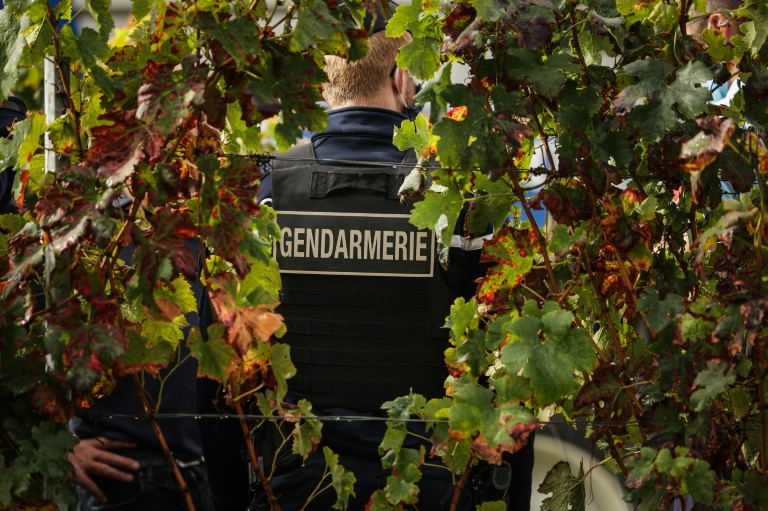
It led to the arrest of around 20 people on Monday during an operation in seven different areas of France, with three of them charged with organised fraud, counterfeiting and money laundering.

The main suspect is a winemaker and broker in the Medoc region near Bordeaux who was buying low-grade wine from other areas including Spain, then bottling it up as more expensive local produce, a statement from Bordeaux prosecutors’ office said.

“Major orders” had been placed for the wine “destined for supermarkets and foreign countries”, the statement added.

Bottling operations were being run at night to avoid detection, it said.

“If the allegations are proven, we hope that the culprits will be heavily punished because these practices undermine the image of Bordeaux wines and those who work properly and respect the rules,” the local wine industry body told AFP.

French wine makers, customs and police are constantly on the lookout for cheats who pass off budget plonk as top vintages.

In 2016, police busted a Bordeaux vintner who was blending poor-quality wine with high-end Saint-Emilions, Lalande-de-Pomerols and Listrac-Medocs to sell to major supermarkets under prestigious labels.

The owner of several domains, Francois-Marie Marret, was handed a prison sentence and a fine of eight million euros after being found bringing in cheap wine at night.

In 2010, 12 French winemakers and dealers were convicted of selling millions of bottles of fake Pinot Noir to the US firm E&J Gallo.

Before that, in 2006 legendary Beaujolais winemaker Georges Duboeuf was fined more than 30,000 euros for blending grapes from different vineyards to disguise the poor quality of certain prized vintages.

UK PM back in crisis mode after foreign tour

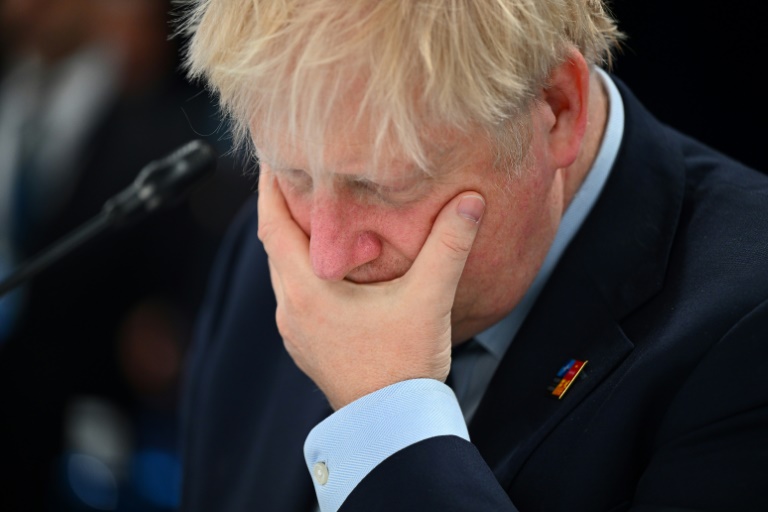
UK Prime Minister Boris Johnson returned Friday from an overseas tour straight into a new crisis after another senior Conservative was forced to quit his scandal-hit government.

The embattled leader found his ruling Tories mired in more controversy about sexual impropriety shortly after he landed back in Britain Thursday from a NATO summit in Spain.

In a letter to Johnson, Conservative MP Chris Pincher announced he was quitting as deputy chief whip after admitting he drank “far too much” and “embarrassed myself and other people” late Wednesday.

Reports said he had been accused of groping two men in front of others at the exclusive Carlton Club in London, prompting complaints to the Conservatives.

His departure from its whips’ office — charged with enforcing party discipline and standards — marks the latest allegation of sexual misconduct by Tories in recent months.

Conservative MP Neil Parish resigned in April after watching pornography on his mobile phone in the House of Commons.

That prompted a by-election in his previously safe seat, which the party went on to lose in a historic victory for the opposition Liberal Democrats.

Johnson himself has been embroiled in various scandals, including the so-called “Partygate” affair. Tory lawmakers held a no-confidence vote in early June that he narrowly survived.

The 58-year-old premier still faces a parliamentary probe into whether he lied to MPs over the lockdown-breaching parties in Downing Street.

– ‘Survival mode’ –

The controversies come with Britain battling a worsening cost-of-living crisis and a summer of strikes by various unions over wages and working conditions.

Meanwhile, the country continues to struggle to adapt to Brexit and is risking a possible trade war with the European Union by unilaterally overhauling the special deal it agreed with the bloc for Northern Ireland.

The Financial Times reported Friday that Britain’s trade performance this year has fallen to its worst level since records began, adding to the pound’s recent slide.

“We’ve got a problem on trade, (a) problem on Northern Ireland, a problem with labour shortages, the pound’s significantly devalued, business investment is down,” former Labour prime minister Tony Blair told the BBC late Thursday. 

“I think it is incoherent and it’s also not thought-through and the reason for that is the government’s in survival mode — they’re not thinking about what’s the right long-term plan for Britain’s future.”

Johnson returned home after nine days of globetrotting that saw him attend three international summits, including a Commonwealth gathering in Rwanda and G7 meeting in Germany.

– ‘Serious questions’ –

Pincher’s resignation within hours of that immediately refocused attention on persistent claims of Tory sleaze.

It also left the UK leader with another senior post to fill after the Conservatives’ chairman quit following two bruising by-election defeats last month, including the one in Parish’s seat.

“The prime minister has accepted the resignation and thinks it was right for him to resign,” Johnson’s deputy spokesman told reporters, amid a barrage of questions about Pincher.

“(He) thinks that sort of behaviour is unacceptable and he would encourage those who wish to make a complaint, to do so,” he added, while declining to specify exactly what prompted the ex-whip to quit.

Sources close to Johnson initially said Pincher’s resignation settled the matter, with no further action required by the party.

But the government’s chief whip, Chris Heaton-Harris, later announced that Pincher had been suspended from the party pending an investigation into a formal complaint about his behaviour.

The only two Conservative female chairs of parliamentary watchdog committees had written to Heaton-Harris urging Pincher be suspended. 

They also demanded a “zero tolerance policy” on sexual misconduct following an “inconsistent and unclear approach”.

Pincher only became deputy chief whip in February, when Johnson reportedly defied warnings from other Tories about his behaviour.

He previously resigned as a junior whip in 2017, following a complaint that he had made an unwanted pass at a former Olympic rower and potential Conservative election candidate.

Labour deputy leader Angela Rayner said the scandal again raised “serious questions” about Johnson’s judgment.

“It’s now for the Conservative MPs who continue to prop up this prime minister’s paralysed administration to step up, do the decent thing and show him the door,” she said.

Stocks choppy, dollar frothy

Stock markets wobbled on Friday while the dollar shot higher against the euro and pound as investors fretted about interest rate hikes and a possible recession.

Both Paris and Frankfurt stocks ended the day with small gains despite news of record-high eurozone inflation that reinforced expectations of a European Central Bank interest rate hike later this month.

The EU’s Eurostat data agency said annual consumer price inflation in the 19 countries that use the euro soared to 8.6 percent in June, up from the prior record of 8.1 percent in May.

“Today’s figures bolster the European Central Bank’s intended decision to start raising interest rates at its next Governing Council meeting in July,” noted economist Pushpin Singh at research group CEBR.

The ECB stated last month that it will deliver its first interest rate hike in more than a decade in July to combat inflation. 

Eurostat added Friday that core inflation — stripping out volatile components like energy and food — slowed to 3.7 percent from 3.8 percent, helping equities to calm heading into the weekend pause.

Wall Street’s main indices were marginally lower in late morning trading, having bounced around since the opening bell.

– ‘Another big leg lower’ – 

Chris Beauchamp, chief market analyst at online trading platform IG, said there was little buying interest at the start of the second half of the year, even though the sharp drops suffered by stocks in the first half open up the possibility for gains.

New York’s S&P 500 index suffered its worst first-half performance since 1970.

“There is a growing unease about the summer, especially with a potentially very gloomy (second-quarter) earnings season nearly upon us,” he said in a note to clients. 

“It really does look like we have another big leg lower before this bear market is done,” added Beauchamp.

With the war in Ukraine showing no sign of ending — keeping energy costs elevated — there is an expectation that borrowing costs will continue to rise and send economies into recession.

Losses across world markets this week come after a rally last week fuelled by hopes that an economic slowdown or signs of recession would lead central banks to ease off their monetary tightening drive.

But comments from top finance chiefs, including Federal Reserve boss Jerome Powell, suggest they are willing to endure the pain of a contraction as long as they can rein in prices — which are rising at their fastest pace in 40 years on both sides of the Atlantic.

“Investors know that inflation is high and is likely to push higher,” City Index analyst Fiona Cincotta told AFP.

“Instead, the market’s obsession is turning from inflation to recession fears. Given the steep declines in stock prices this week, much of the bad news is priced in for now, until it starts again next week,” she added.

The dollar, a safe-haven currency, jumped one percent against the pound and the euro on rising expectations of a recession.

“The US dollar looks set to end the week stronger against most major currencies, nearing its strongest level since 2002 as ‘risky’ assets remained under pressure,” said economist James Reilly at Capital Economics.

The euro slid to a low of $1.0369 before rebounding back above the $1.04 level. The pound touched a low of $1.1979.

Oil rebounded on tight supplies despite persistent recession concerns.

– Key figures at around 1530 GMT –

New York – Dow: DOWN 0.3 percent at 30,693.52 points

EURO STOXX 50: DOWN 0.2 percent at 3,448.31

London – FTSE 100: FLAT at 7,168.65 (close) 

Frankfurt – DAX: UP 0.2 percent at 12,813.03 (close)

Paris – CAC 40: UP 0.1 percent at 5,931.06 (close)

Tokyo – Nikkei 225: DOWN 1.7 percent at 25,935.62 (close)

Shanghai – Composite: DOWN 0.3 percent at 3,387.64 (close)

Hong Kong – Hang Seng Index: Closed for a holiday

Brent North Sea crude: UP 1.9 percent at $111.12 per barrel

West Texas Intermediate: UP 2.2 percent at $108.08 per barrel

Euro/dollar: DOWN at $1.0405 from $1.0484 Thursday

Pound/dollar: DOWN at $1.2037 from $1.2178

Euro/pound: UP at 86.46 pence from 86.09 pence

Dollar/yen: DOWN at 135.19 yen from 135.72 yen

burs-rl/imm

Australia PM hails 'new start' in ties with France

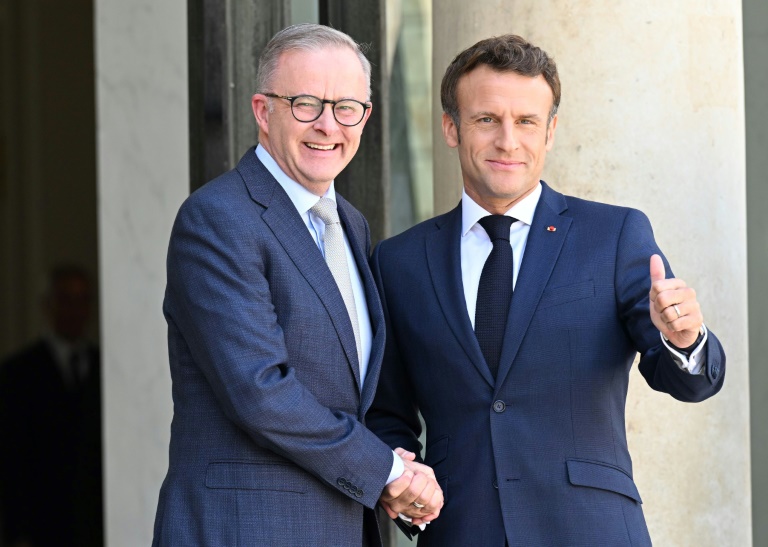
Australian Prime Minister Anthony Albanese welcomed a “new start” in relations with France as he met President Emmanuel Macron in Paris on Friday, after an acrimonious row between the countries over a submarine contract last year.

“My presence here represents a new start for our countries’ relationship,” Albanese said after arriving at the Elysee Palace. 

“Australia’s relationship with France matters. Trust, respect and honesty matter. This is how I will approach my relations,” he added.

Macron said that the first conversations between the pair since leftwinger Albanese’s election in May “mark a willingness to rebuild a relationship of trust between our two countries, a relationship based on mutual respect”. 

After acknowledging “difficult times”, Macron emphasised the two countries’ strategic partnership, their shared war history in Europe and their joint interests in stability in the Pacific region.

“We’re going to talk about the future, not the past,” Macron added to reporters, stressing that Albanese was “not responsable for what happened.”

The statements, which followed a warm greeting between the two men and their wives in the courtyard of the presidential palace, underline the sea change in ties since the departure of former Australian premier Scott Morrison.

Macron was left furious last year after Morrison secretly negotiated to buy US-designed submarines and then ditched a landmark contract with France signed in 2016 and worth Aus$50 billion (33 billion euros) at the time.

France broke off diplomatic contacts with Australia and Macron repeatedly the conservative leader of having lied to him during a dinner they shared in Paris in June 2021.

Morrison’s actions were marked by “brutality and cynicism, and I would even be tempted to say of unequivocal incompetence”, outgoing French foreign minister Jean-Yves Le Drian said as he handed over to his successor Catherine Colonna on May 21.

Albanese announced earlier this month that French submarine maker Naval Group had agreed to a “fair and an equitable settlement” of 555 million euros (US$584 million) for Australia ending the decade-old submarine contract. 

Canberra has switched to buying nuclear-powered US subs as part of a new security pact with Britain and the United States called AUKUS.

After the deal was announced, Macron recalled France’s envoys to both Australia and the United States in a serious and rare diplomatic crisis between leading Western powers.

– Warm words –

France considers itself to be a Pacific power, thanks to its overseas territories including New Caledonia and French Polynesia, and shares Australia’s concerns about China’s assertiveness in the region. 

“We recognise France is not just a great European power but also an Indo-Pacific and global power. I know that France’s active engagement in the Indo-Pacific will be critical in overcoming the challenges that confront our region,” said Albanese.

Albanese and Macron also stressed their common views on Russia’s invasion of Ukraine, with both countries supplying weapons to Kyiv.

“My government strongly condemns Russia’s illegal and totally unjustified invasion of Ukraine,” Albanese said. “I commend President Macron’s leadership in support of Ukraine’s sovereignty and the struggle of the people of Ukraine.”

Macron praised Albanese’s commitment to the fight against climate change, which reverses the stance of his conservative predecessor Morrison.

The Australian government recently asked the United Nations to raise the country’s 2030 emissions reduction target.

“The new Australian position — proactive, ambitious — offers us opportunities to advance together,” Macron said.

Morrison’s predecessor as premier, Malcolm Turnbull, said the meeting in Paris on Friday was a “big opportunity” to help Paris and Canberra get over a “very bad period” when the French government did not even “pick up the phone”.

Albanese “is not Scott Morrison, so that’s a big advantage”, he told French journalists at an event organised by the Institut Montaigne in Paris this week.

S.Leone slashes 'zeros of shame' from banknotes

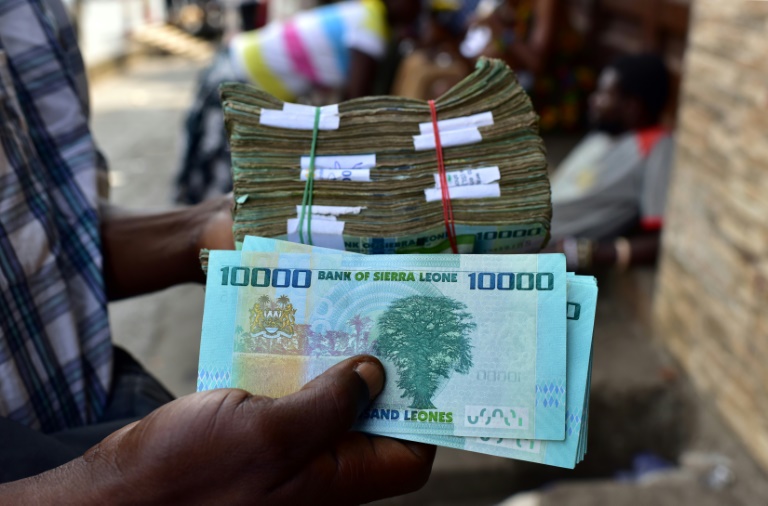
Sierra Leone on Friday introduced a new family of banknotes, stripping three zeros off the leone, in a bid to restore confidence in the inflation-hit national currency.

The Bank of Sierra Leone announced the move last August, insisting the public’s purchasing power would not be affected by the change.

“We have removed three zeros from our banknotes but the money yesterday is the same value as today,” President Julius Maada Bio said at ceremonies at the central bank where the new bills were unveiled.

A note of 10 new leones is the equivalent of a note of 10,000 old leones, which changes hands for around 75 US cents.

Year-on-year inflation in the West African state was 24.87 percent in May, according to the national statistics agency.

Rising prices had driven the printing of banknotes, resulting in a mountain of paper money that is costly to sustain and unwieldly for the public.

Shoppers need huge quantities of banknotes for the simplest transactions, and unscrupulous bank tellers sometimes pilfer notes from sealed bundles of bills.

“We are removing the ‘zeros of shame’ to get the currency properly aligned,” Morlai Bangura, a central bank director, told AFP earlier in the week.

He said the bank had begun distributing the new paper notes to commercial banks last week.

On Friday, customers braving the rain queued at commercial banks to swap their old banknotes for new ones.

“The changing of our currency is necessary — we were used to carrying bags to the bank to withdraw our money, but not anymore,” Alice Frazer, 70, said after exchanging her notes at the Sierra Leone Commercial Bank, a state-owned bank in central Freetown.

The new banknotes have a similar design to the old ones but are smaller in size.

“Our current currency is too big to fit into a wallet and we spend too much money printing oversized banknotes,” Kelfala Murana Kallon, the central bank governor, told reporters last August as he announced the move.

The central bank declined to comment on the cost of the operation.

Sierra Leone’s eight million people live in one of the poorest nations in the world, ranking 182 out of 189 countries in the UN’s Human Development Index.

Its economy, heavily dependent on minerals, was devastated by a civil war that ran from 1991-2002 and left about 120,000 dead.

Efforts at rebuilding were set back by an Ebola epidemic in 2014-2016, a fall in world commodity prices and the coronavirus epidemic — all of which have disrupted trade and investment and hit exports.

Sierra Leoneans will be able to use both the old and new notes during a transition period until September 30. 

From October 1, the old currency will cease to be legal tender.

The public will be able to swap the old currency for the new one until November 15, Kallon said in a statement.

Trial of US basketball star Griner opens in Russia

The trial of US basketball star Brittney Griner, detained in Russia since February, opened on Friday as tensions rage over Moscow’s offensive in Ukraine.

Griner, a two-time Olympic gold medallist and WNBA champion, faces up to 10 years in prison on charges of drug smuggling. 

Her case has become one of many sticking points in relations between the United States and Russia, with Washington saying the 31-year-old Griner has been “wrongfully detained” and putting its special envoy in charge of hostages on the case.

“The trial has started,” Polina Vdovtsova, the spokeswoman for the court in the town of Khimki outside Moscow, told reporters.

The proceedings were partially closed, with a limited media presence, which Vdovtsova said was “on the request of the defence, the request of Griner herself”.

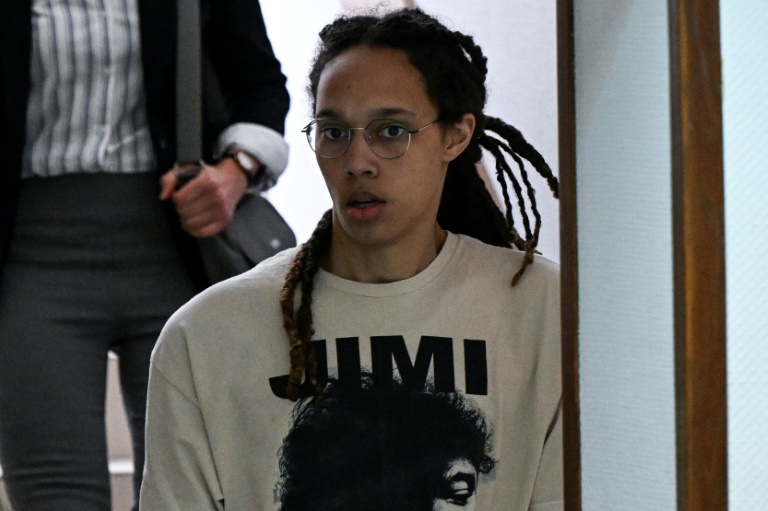
The six-foot-nine (2.06 metres) star was brought into court in handcuffs. She wore a white T-shirt with an image of US music icon Jimi Hendrix.

Griner came to Russia in February to play club basketball during the US off-season — a common path for American stars seeking additional income. 

She was detained at a Moscow airport after she was found carrying vape cartridges with cannabis oil in her luggage — just days before Russian President Vladimir Putin defied US warnings and sent troops into Ukraine.

US authorities initially kept a low profile on the case, which was not made known to the general public until March 5, but has since upped the ante.

“The US embassy and the country cares very deeply about this case,” Elisabeth Rood, deputy chief to the US embassy in Moscow, told reporters outside the court. 

“She asked me to convey that she is in good spirits and she is keeping up faith.”

Griner’s lawyer Alexander Boikov said she had “no complaints about the conditions of her detention.”

He added that she is working out “in her cell and on walks”.

The WNBA has also said it is working to bring Griner home.

But Griner’s wife Cherelle told CNN that she feels not enough is being done, despite good intentions.

“I don’t think the maximum amount of effort is being done because again, the rhetoric and the actions don’t match,” she said in an interview, citing the example of a phone call the couple was meant to have that she says was botched by the US Embassy.

“It would have been in her best interest for her phone calls to have been answered. It would be in her best interest for her to be back on US soil. So until I see things like that, no.”

Cherelle Griner said she hoped to meet with President Joe Biden to “humanise” her wife and because he has the “power” to bring her home.

The next hearing will take place on July 7.

– Tough sentences –

Russian law is strict in such cases and other foreigners have recently been handed heavy sentences on drug-related charges.

Last month, a Moscow court sentenced a former US diplomat, Marc Fogel, to 14 years in prison for “large-scale” cannabis smuggling.

Russia and the United States regularly clash over the detention of each other’s citizens and sometimes exchange them in scenes reminiscent of the Cold War.

In April, former US Marine Trevor Reed, serving a nine-year sentence in Russia for violence, was exchanged for Russian pilot Konstantin Yaroshenko, imprisoned in the United States since 2010 for drug trafficking.

Other exchanges of this type could be the subject of possible talks, observers say.

Among the names most mentioned are Paul Whelan, an American sentenced to 16 years in prison for espionage, and the Russian arms trafficker Viktor Bout, nicknamed “The Merchant of Death”, who is serving a 25-year sentence in the United States.

In January 2020, Putin pardoned a young Israeli-American woman, Naama Issachar, imprisoned in Russia for “drug trafficking” after then-Israeli leader Benjamin Netanyahu met with him in Moscow and brought her home.

She was stopped in April 2019 during a transit at Moscow’s Sheremetyevo airport while flying between India and Israel via the Russian capital.

Authorities said they found nine grams of cannabis in her luggage.

After Griner’s hearing, US Secretary of State Antony Blinken tweeted: “We — and I personally — have no higher priority than bringing her and other wrongfully detained Americans, including Paul Whelan, home.

“We won’t stop working until they are reunited with their loved ones.”

Close Bitnami banner
Bitnami