World

GM reports lower Q2 sales as supply chain woes persist

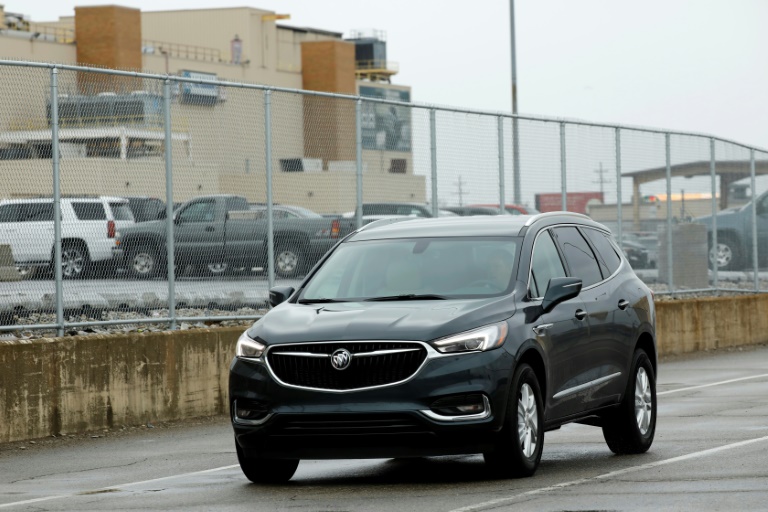
General Motors reported a 15 percent drop in US auto sales in the second quarter as supply chain woes continued to crimp inventories.

The Detroit giant said it is holding 95,000 partially built vehicles in need of components that it expects to deliver by the end of 2022.

For the quarter ending June 30, GM sold 582,401 autos, citing a strong performance for the pickup trucks, the Chevrolet Silverado and GMC Sierra, despite low inventories.

The automaker said “pent-up demand” drove sales growth in other vehicles, including the Chevrolet Camaro and Chevrolet Colorado. 

GM reaffirmed its full-year profit outlook, but its second-quarter net income range of between $1.6 billion and $1.9 billion lagged consensus estimates.

The auto industry has been plagued by supply chain woes over the last year, with a shortage of semiconductor chips especially impactful.

Cox Automotive has forecast a 19.3 percent drop in US auto sales for the second quarter.

“Even though economic conditions have worsened in the past months, the lack of supply is still the greatest headwind facing the auto industry today,” said Charlie Chesbrough, senior economist at Cox.

War in Ukraine: Latest developments

Here are the latest developments in the war in Ukraine:

 – Deadly strike on Odessa – 

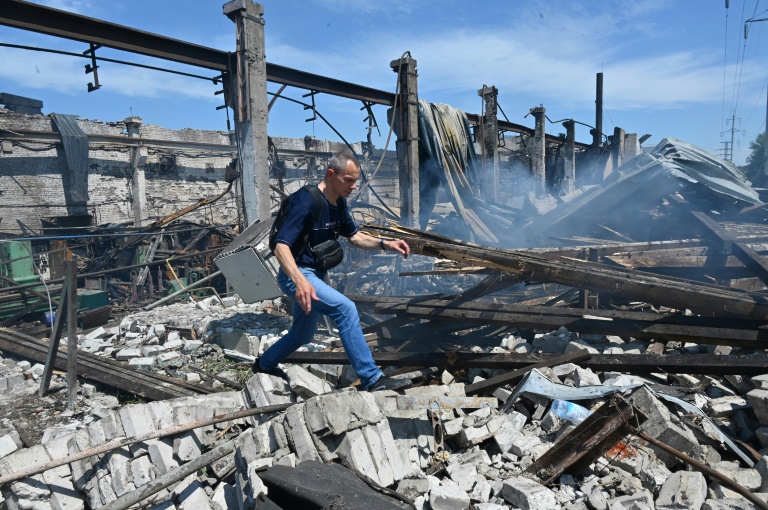
Missile strikes kill 21 people and wound dozens in Ukraine’s flashpoint Odessa region on the Black Sea, Sergiy Bratchuk, Odessa deputy chief of district, says.

The strikes come a day after Russian troops abandoned positions on the strategic Snake Island off the coast of Odessa.

Early Friday the missiles hit a nine-storey apartment building and a recreation centre in Serhiivka about 80 kilometres (50 miles) south of Odessa.

Two children were among the dead and six others among the injured, officials say.

Germany condemns the attack as “inhuman and cynical.”

– Snake Island decision ‘changes situation’: Zelensky –

Russia’s decision to abandon Snake Island “changes the situation in the Black Sea considerably”, Ukrainian President Volodymyr Zelensky says.

“It does not yet guarantee security. It does not yet guarantee that the enemy will not return. But it already considerably limits the actions of the occupiers,” he says Thursday in his daily address.

A strategic target, Snake Island sits aside shipping lanes near Odessa port. Russia had attempted to install missile and air defence batteries while under fire from drones.

Britain’s Ministry of Defence says in an intelligence update Russia has highly likely withdrawn “owing to the isolation of the garrison and its increasing vulnerability to Ukrainian strikes, rather than as a ‘gesture of good will’, as it has claimed.”

The Russian defence ministry on Thursday described the retreat as “a gesture of goodwill” meant to demonstrate that Moscow will not interfere with UN efforts to organise protected grain exports from Ukraine.

– Lysychansk pounded –

The city of Lysychansk in Ukraine’s eastern Donbas region continues to come under sustained bombardment, Ukrainian officials say. 

Capturing the city would allow the Russians to push deeper in the industrial Donbas, which has become the focus of their offensive since failing to capture Kyiv after their February 24 invasion.

Four people also died and three were wounded in shelling in Izium and Chuguiv, two districts of the northeastern Kharkiv region in the last 24 hours, Oleg Synegubov, Kharkiv chief of district, says on Telegram.

– Zelensky hails new EU chapter –

Zelensky hails a “new” chapter of “history” with the European Union, after the bloc recently granted Ukraine “candidate status”.

“We’re not close. Now we are together,” he tells Ukraine’s parliament. 

He was speaking after European Commission President Ursula von der Leyen told lawmakers in a video address that EU membership is “within reach” but urged them to press forward with anti-corruption reforms.

Ukraine applied for EU membership just five days after Russia’s February 24 invasion and the bloc accepted its candidacy on June 23, in a strong signal of support. But membership is expected to take years.

“We made a journey of 115 days to candidate status and our journey to membership shouldn’t take decades. We should make it down this road quickly,” Zelensky however says. 

– Battle of the borshch –

The UN’s cultural agency inscribes the culture of cooking borshch soup in Ukraine on its list of endangered cultural heritage.

UNESCO says Russia’s war against Ukraine has had a “negative impact on this tradition”, of Ukrainian borshch cooking. Ukraine considers it as a national dish although it is also widely consumed in Russia and elsewhere.

“Victory in the borshch war is ours,” Ukraine’s Culture Minister Oleksandr Tkachenko says on Telegram, adding that Ukraine “will win both in the war of borshch and in this war,” referring to Russia’s invasion.

Russia denounces the UNESCO decision as an example of “modern Kyiv nationalism”, saying everything is “subject to Ukrainisation.”

burs-jmy/pvh

Dialogue with Suu Kyi 'not impossible' says Myanmar junta

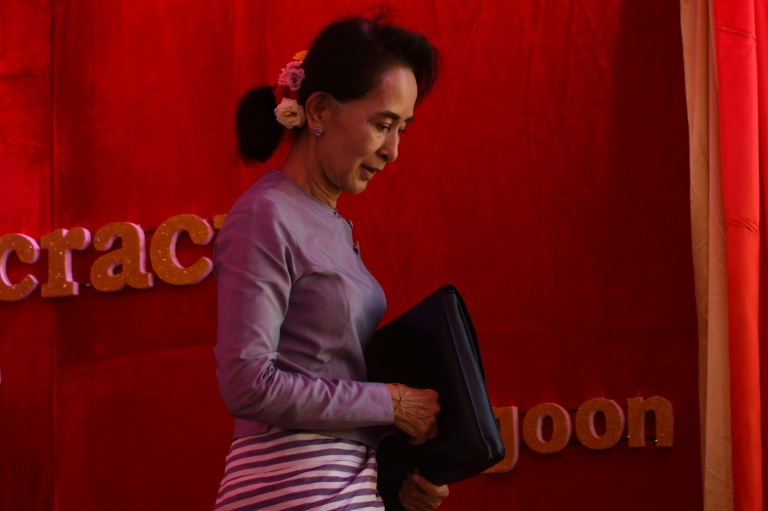
Dialogue between Myanmar’s junta and ousted leader Aung San Suu Kyi to end the bloody crisis unleashed by the toppling of her government last year is “not impossible”, a junta spokesman told AFP on Friday. 

The Southeast Asian nation has been in chaos since the putsch, with renewed fighting with ethnic rebel groups, dozens of “People’s Defence Forces” springing up to fight the junta and the economy in tatters.

Suu Kyi, 77, has been kept virtually incommunicado by the military and was recently transferred from house arrest to solitary confinement while she faces multiple trials that could see her sentenced to more than 150 years in jail. 

“There is nothing impossible in politics,” junta spokesman Zaw Min Tun told AFP when asked if the junta could enter into dialogue with Suu Kyi to resolve the turmoil.

“We cannot say that (negotiations with Suu Kyi) are impossible.” 

“Several countries” had urged opening dialogue with the Nobel laureate, he said, without giving details.

Diplomatic efforts led by the Association of Southeast Asian Nations (ASEAN) — of which Myanmar is a member — have so far failed to halt the bloodshed.

Last year, the bloc agreed on a “five-point consensus”, which calls for a cessation of violence and constructive dialogue, but the junta has largely ignored it. 

ASEAN envoy and Cambodian Foreign Minister Prak Sokhonn arrived in Myanmar on Wednesday for his second visit aimed at kickstarting dialogue between the junta and opponents to its rule. 

He met with junta chief Min Aung Hlaing on Thursday and on Friday met with members of several political parties in the military-built capital Naypyidaw, a junta spokesman said.

The junta has said he will not be allowed to visit Suu Kyi.

“We have performed whatever she asked for related to her health and living situation,” Zaw Min Tun said regarding Suu Kyi’s new living conditions in prison. 

– ‘Dangling dialogue’ –

Dangling the prospect of dialogue would be “consistent with their (the junta’s)… political calculus”, independent Myanmar analyst David Mathieson told AFP.

“Punish to the extreme then show a sliver of conciliation to ensure they stay in power. Suu Kyi is potentially their way out, if they can overcome their hatred of her,” he said.

Fighting continues across swathes of the country, with local media reporting killing and burning sprees by junta troops as they struggle to crush opposition to the coup. 

Almost 700,000 people have been forced to flee their homes since the putsch, the United Nations said in May.

On Thursday, Thailand scrambled F-16 fighter aircraft after a Myanmar jet involved in operations against anti-coup fighters near its border violated Thai airspace, officials said.

China’s foreign minister was due to land in Myanmar on Friday for a regional meeting, in what will be Beijing’s highest-profile visit to Myanmar since the coup.

It was unclear whether a meeting between Wang Yi and junta chief Min Aung Hlaing would take place, a junta spokesman said.

China is a major arms supplier and ally of the junta and has refused to label the military’s power grab a “coup”.

Assange lodges UK appeal against US extradition

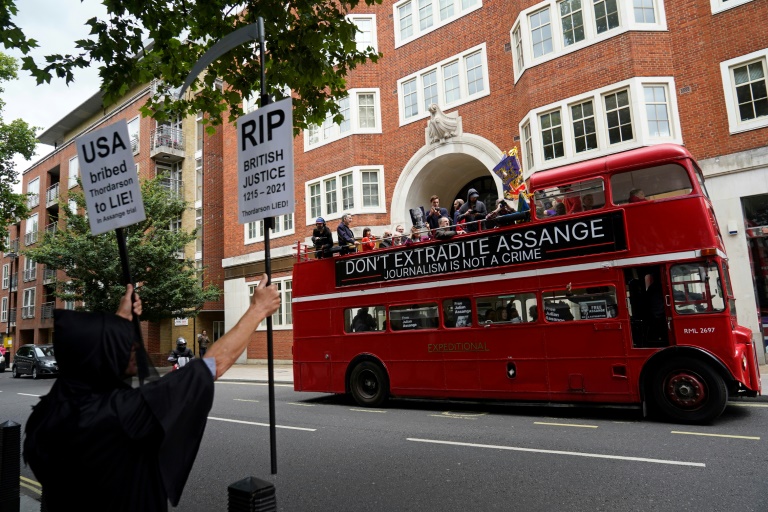
WikiLeaks founder Julian Assange on Friday filed an appeal against his extradition to the United States, as supporters denounced the British government.

Assange, who turns 51 on Sunday, has been held in a high-security prison since 2019.

On Friday his wife Stella was among dozens of people who demonstrated outside Britain’s interior ministry to demand his release.

Home Secretary Priti Patel approved the extradition last month, but court officials confirmed to AFP an application to appeal had been received on Friday.

“We’re not at the end of the road here,” Stella Assange, who married the Australian publisher earlier this year, told reporters when Patel announced her decision.

“We’re going to fight this. We’re going to use every appeal avenue.” 

Assange is wanted to face trial for allegedly violating the US Espionage Act by publishing military and diplomatic files in 2010, related to the Afghanistan and Iraq wars.

He could face decades in jail if found guilty, but supporters portray him as a martyr to press freedom after he was taken into UK custody following a years-long stay in Ecuador’s embassy.

“He’s been in prison for telling the truth,” supporter Gloria Wildman, 79, told AFP at Friday’s protest.

“If Julian Assange is not free, neither are we, none of us is free,” she said.

Google to pay $90 mn in settlement with app developers

Google will fund a $90-million settlement to small app developers who had alleged the technology giant abused its market position, according to statements seen by AFP Friday.

The funds are expected to result in payments of $200,000 or more to some developers among the 48,000 in a class action lawsuit, according to the plaintiffs’ attorney, Hagens Berman.

The case centered on charges that Google violated antitrust laws with its Google Play app store, alleging the technology giant maintained a monopoly in the US market on its Android smartphone system that penalized developers.

The settlement will cover developers with annual Google Play earnings of $2 million or less between 2016 and 2021.

In addition, Google agreed to allow developers to pay a 15 percent service fee on the first $1 million in annual revenues, down from the prior 30 percent.

Other measures will highlight apps from independent developers and make it easier to use these alternatives within the Android ecosystem.

Wilson White, a Google vice president for government affairs, said he was pleased with the agreement.

“As the agreement notes, we remain confident in our arguments and case, but this settlement will avoid protracted and unnecessary litigation with developers, whom we see as vital partners in the Android ecosystem,” White said.

Hagens Berman, which had secured a $100-million settlement from Apple in 2020 in a similar case, hailed the agreement as an example of holding Big Tech to account.

“Today, nearly 48,000 hardworking app developers are receiving the just payment they deserve for their work product — something Google sought to profit from, hand over fist,” said Steve Berman, co-founder of the firm.

Beet this: Ukraine wins fight to protect borshch soup

The UN’s cultural agency on Friday inscribed the culture surrounding  beetroot soup known as borshch in Ukraine on its list of endangered cultural heritage, a recognition sought urgently by Kviv after its invasion by neighbouring Russia.

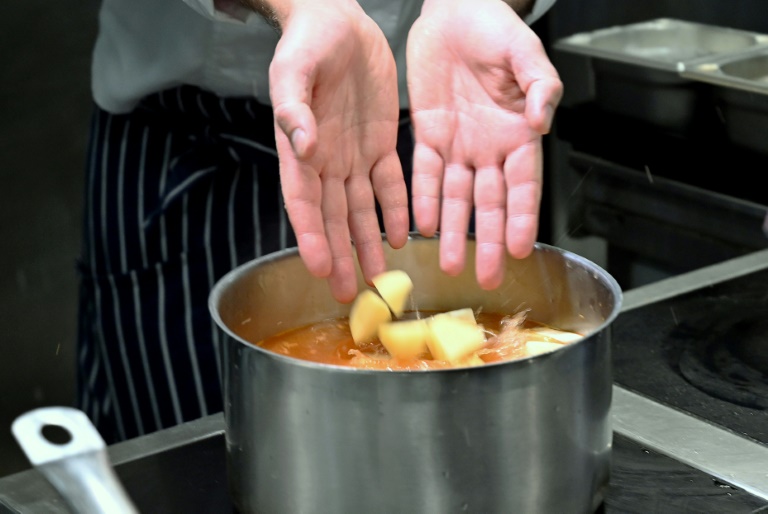
Ukraine prizes borshch, a nourishing soup with beetroot as its base, as a national dish even though it is also widely enjoyed in Russia, other ex-Soviet countries and Poland.

The Ukrainian culture of borshch cooking “was today inscribed on UNESCO’s list of intangible cultural heritage in need of urgent safeguarding,” by a UNESCO committee, it said.

The decision was approved after a fast-track process prompted by Russia’s invasion of Ukraine and the “negative impact on this tradition” caused by the war, the agency said.

“People are unable not only to cook or grow local vegetables for borsht, but also to come together” to eat it, “which undermines the social and cultural well-being of communities,” it said, using one of several alternative spellings for the soup.

Kyiv hailed the move as a much-needed victory on the cultural front after four months of Russian bombardments.

For the first time in history, the nomination jumped the queue and was considered in an expedited fashion given “the military aggression against Ukraine in real time and the real threat to the cultural object,” Deputy Foreign Minister Emine Dzeppar said on Twitter, adding: “Ukrainian Borsht derussified!”

Ievgen Klopotenko, a well-known Ukrainian cook, said the UNESCO decision underscored a wider recognition of Ukraine’s gastronomical heritage.

“We had hundreds of pages of proof that borshch cooking culture is actually Ukrainian, and the whole engine of Russian propaganda was against us,” he said on Facebook. 

“Victory in the borshch war is ours,” Ukraine’s Culture Minister Oleksandr Tkachenko said on Telegram, adding that Ukraine “will win both in the war of borshch and in this war.”

– ‘Fabric of society’ –

Adding a landmark site or traditional activity to the UNESCO list aims to mobilise attention to ensure it is preserved against risks that would jeopardise its existence.

The committee said the war had “threatened the viability” of Ukraine’s borshch culture in Ukraine.

“Whether as part of a wedding meal, the focus of food-related competitions or as a driver of tourism, borscht is considered part of the fabric of Ukrainian society, cultural heritage, identity and tradition,” it noted.

But Moscow slammed the decision, with foreign ministry spokeswoman Maria Zakharova accusing Kyiv of trying to appropriate the soup for “one people… one nationality… This is xenophobia,” she said. 

She later said on Telegram: “To give the world a culinary example of ‘modern Kyiv nationalism,’ I will cite a fact: hummus and pilaf are recognised as national dishes of several nations.”

“Borshch has no nationality! Just like bread, potatoes, cabbage — Is it national? What nationality can it have!” a 60-year-pensioner in Moscow who gave her name as Tatyana told AFP.

But Alexey Gorbunov, a 49-year-old decorator in Moscow, was more sympathetic. 

“Certainly, it is part of both Russian and Ukrainian legacies, but I think it’s an explicit symbol of Ukraine which I directly associate with Ukraine, especially the one with pampushka (savory buns) and garlic,” he said.

UNESCO insisted that Ukrainian borshch was a version of a dish popular elsewhere.

Nonetheless, “Ukrainian borshch — the national version of borscht consumed in several countries of the region — is an integral part of Ukrainian family and community life.”

French court jails serial rapist for 20 years

A French court on Friday jailed a man for 20 years over dozens of rapes and sexual assaults he committed over a 30-year period along the border with Belgium.

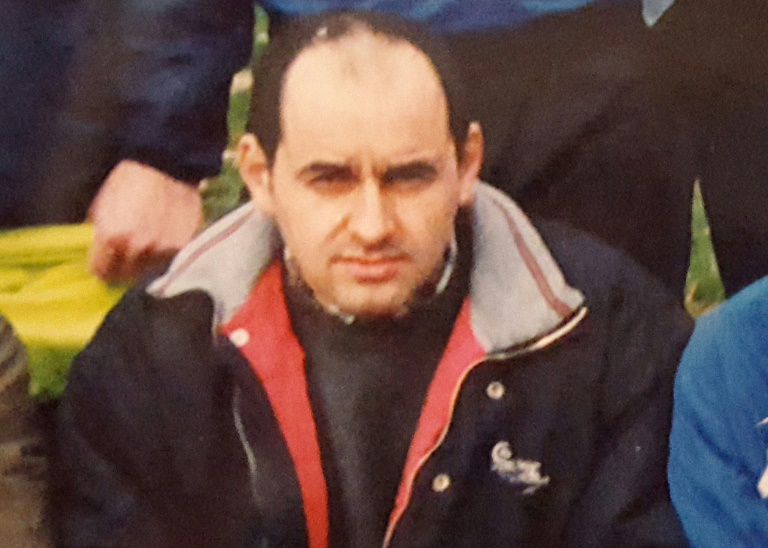
Dubbed the “Rapist of the Sambre” for the river running through the region where he operated, 61-year-old Dino Scala will serve at least two-thirds of the sentence behind bars.

A former janitor and family man seen as a pillar of the community, his 2018 arrest and subsequent trial for 17 rapes, 12 attempted rapes and 27 assaults shocked France.

“I want to apologise to my victims,” Scala said Friday before the judges retired to consider their verdict, his voice betraying little emotion.

Prosecutors had called the defendant “extremely dangerous”, saying he embodied “the unthinkable banality of evil”.

And an expert psychologist consulted by the court spoke of a “gulf between the social face and the hidden face” of the accused.

“The law is not up to” the seriousness of Scala’s crimes, said Fanny Bruyerre, who represented nine of the victims.

The maximum penalty of “20 years is so little” for 56 “lives destroyed”, she added ahead of the verdict.

– ‘Compulsions’ –

Scala confessed to around 40 of the 56 rapes and assaults he was charged with, attributing them to uncontrollable “compulsions”.

Investigators suspect that beyond the crimes tried in court, there were other victims who did not come forward to police.

Around half the victims stayed away from the trial, with some complaining they were mistreated when trying to file criminal reports or even told they were lying.

“I’ve been reliving this rape for 22 years, it’s torture,” one woman told the court.

Expert testimony suggested Scala’s frustration at what he felt was a lack of recognition in his personal, professional and sporting lives — he also coached a local football team — may have contributed to a desire to dominate and inflict terror on others.

But the defendant himself said it would be “impossible” for him to reoffend if released from prison.

“I’ve caused too much unhappiness around me. When I attacked those people, I didn’t realise how serious the things I was doing were,” he told the court.

– ‘Hunter’ –

Between 1988 and 2018, Scala’s youngest victim was 13, the oldest 48, and most were attacked the same way — surprised on deserted streets on early winter mornings, strangled and dragged into nearby bushes or trees.

Police began their search in November 1996, when a 28-year-old woman said she was raped alongside a motorway near Maubeuge. Investigators found the attacker’s DNA at the scene but found no matches in police databases.

Other attacks followed, with more than 15 alleged victims over two years, but then reports of similar cases suddenly stopped.

Despite increased patrols, the assailant was never found and the case was closed in 2003.

Three years later a new series of assaults in Belgium relaunched the inquiry, and police began to suspect that other earlier cases in the area might be linked to the same man.

It was only in February 2018, when a teenager was assaulted in Erquelinnes, Belgium, that video surveillance cameras revealed a Peugeot car at the scene, and Scala was arrested a few weeks later.

A knife, gloves and cords that could serve as garrottes were found during searches, and DNA matches were made at several of the crime scenes.

After his arrest he told investigators how he carried out his attacks. 

“I hung around… I watched where women would pass by,” he said. “I have the nature of a hunter.”

Trial of US basketball star Griner opens in Russia

The trial of US basketball star Brittney Griner, detained in Russia since February, opened on Friday as tensions rage over Moscow’s offensive in Ukraine.

“The trial has started,” Polina Vdovtsova, the spokeswoman for the court in the town of Khimki outside Moscow, told reporters.

Griner, a two-time Olympic gold medallist and WNBA champion, faces up to 10 years in prison on charges of drug smuggling. 

The trial was partially closed, with a limited media presence, which Vdovtsova said was “on the request of the defence, the request of Griner herself”.

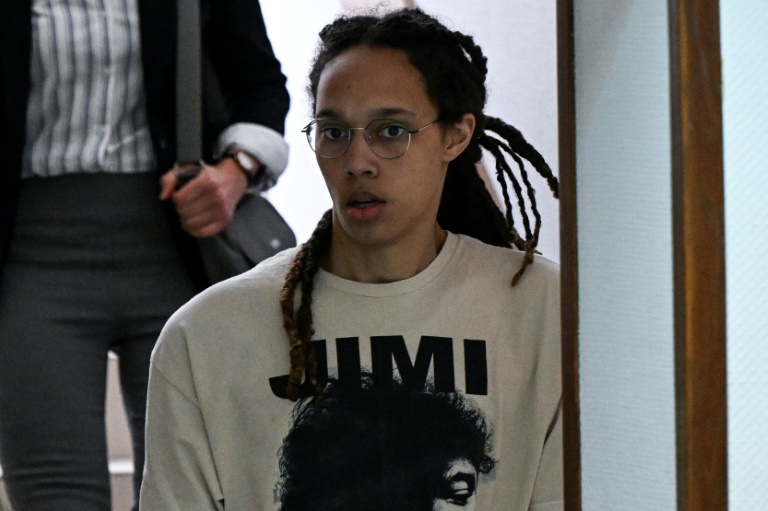
The six-foot-nine inch (2.06 metres) star was brought into court in handcuffs. She wore a white T-shirt with US music icon Jimi Hendrix on it.

The 31-year-old came to Russia in February to play there during the US off-season, and was detained at a Moscow airport after she was found carrying vape cartridges with cannabis oil in her luggage.

Griner was detained days before Russian President Vladimir Putin defied US warnings and sent troops into Ukraine, prompting Western powers to impose sweeping sanctions on Moscow.

US authorities initially kept a low profile on the case, which was not made known to the general public until March 5.

But against the backdrop of sinking relations, Washington now says that Russia “wrongfully detained” the basketball star and put its special envoy in charge of hostages on the case.

“The US embassy and the country cares very deeply about this case,” Elisabeth Rood, deputy chief to the US embassy in Moscow, told reporters outside the court. 

“She asked me to convey that she is in good spirits and she is keeping up faith.”

Griner’s lawyer Alexander Boikov said she had “no complaints about the conditions of her detention.”

He added that she is practising sport “in her cell and on walks”.

The WNBA has also said it is working to bring Griner home.

She was due to play club basketball in Russia before the resumption of the US season, a common practise for American stars seeking additional income.

The next hearing will take place on July 7.

– Tough sentences –

Russian law is strict in such cases and other foreigners have recently been handed heavy sentences on drug-related charges.

Last month a Moscow court sentenced a former US diplomat, Marc Fogel, to 14 years in prison for “large-scale” cannabis smuggling.

Russia and the United States regularly clash over the detention of each other’s citizens and sometimes exchange them in scenes reminiscent of the Cold War.

In April, former US Marine Trevor Reed, serving a nine-year sentence in Russia for violence, was exchanged for Russian pilot Konstantin Yaroshenko, imprisoned in the US since 2010 for drug trafficking.

Other exchanges of this type could be the subject of possible talks, observers say.

Among the names most mentioned is that of Paul Whelan, an American sentenced to 16 years in prison for espionage, and the Russian arms trafficker Viktor Bout, nicknamed “The Merchant of Death”, who is serving a 25-year sentence in the US.

In January 2020, Putin pardoned a young Israeli-American woman, Naama Issachar, imprisoned in Russia for “drug trafficking” after then-Israeli leader Benjamin Netanyahu met with him in Moscow, and brought her home.

She was stopped in April 2019 during a transit at Moscow’s Sheremetyevo airport while flying between India and Israel via the Russian capital.

Authorities said they found nine grams of cannabis in her luggage.

West African states review post-coup sanctions at key summit

West African leaders on Sunday will weigh the future of sanctions imposed against three countries where the military have seized power, sparking concern for stability in one of the world’s most coup-prone regions.

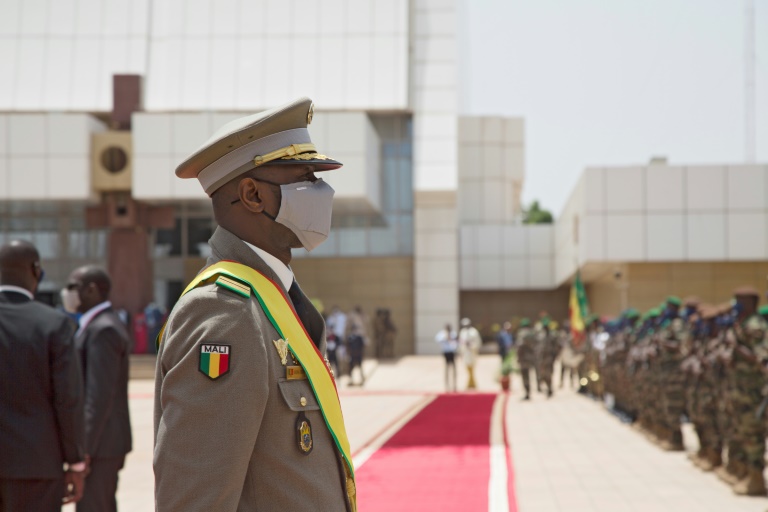
The Economic Community of West African States (ECOWAS) has slapped tough economic and financial sanctions on Mali and less severe penalties on Burkina Faso and Guinea.

In a one-day summit in the Ghanaian capital Accra, ECOWAS will decide whether these measures should be maintained, strengthened or lifted.

At the core of their talks will be the bloc’s demand that the juntas set an early timetable for returning to their barracks.

Mali, a poor, landlocked country in the grip of a decade-long jihadist conflict, has been under a trade and financial embargo since January, a move that has badly strained its economy.

Burkina Faso — another Sahel country caught up in jihadist turmoil — and Guinea have so far only been suspended from the bodies of the 15-nation bloc. 

The three states underwent four coups in 18 months: two in Mali in August 2020 and May 2021, one in Guinea in September 2021 and one in Burkina Faso in January this year.

Alarmed by the risk of contagion, ECOWAS has stepped up top-level meetings and piled pressure on military rulers to accelerate the return of civilian leadership.

On June 4, the bloc avoided ruling on sanctions and instead gave itself another month to negotiate.

– Mali ‘progress’ –

Bitter talks between ECOWAS and Mali’s junta have been underway for months.

An ECOWAS mediator, former Nigerian president Goodluck Jonathan, on Friday visited Mali’s capital Bamako, part of a string of recent trips to try to secure a deal.

A source close to Jonathan told AFP that “Mali has made enormous progress.”

Though there are still “some adjustments to be made,” the Malian junta “is doing a good job” on the issue, the source added.

The junta in January had triggered the sanctions by unveiling a scheme to rule for five years.

But on Wednesday, the authorities in Bamako approved a plan to hold presidential elections in February 2024, preceded by a referendum on a revised constitution in March 2023 and legislative elections in late 2023.

On June 17, the authorities approved a new electoral law, something that is also likely be viewed positively by ECOWAS.

However, a potential sticking point is that the legislation allows military candidates to contest the presidential ballot.

– Burkina and Guinea –

In Burkina Faso, ECOWAS is concerned about the 36-month transition period the military rulers announced.

But it has appointed a high-powered mediator, former Niger president Mahamadou Issoufou, and a diplomat from the region told AFP, “we are on the path to compromise.”

Issoufou was expected in the capital Ouagadougou ahead of the summit.

In an apparent show of compromise with ECOWAS, Burkina’s junta has drawn up a document that it gave to the country’s political parties on Wednesday.

It proposes a constitutional referendum on December 24, 2024 and legislative and presidential elections on February 25, 2025.

“(It) focuses on two aspects — restoring security and organising elections for the return of normal constitutional order,” Prime Minister Albert Ouedraogo said.

The situation seems more complex in Guinea, another fragile state but — unlike Mali and Burkina Faso — not mired in a jihadist crisis.

The Guinean junta has refused an ECOWAS mediator and announced a 36-month transition period, a timeline that current African Union chairman and Senegalese President Macky Sall has described as “unthinkable.”

“ECOWAS will have to take measures,” Sall said.

The bloc had at the last summit urged Guinean leaders to establish a framework for dialogue with political actors and civil society. 

On Monday, the post-coup prime minister, Mohamed Beavogui, met with some political parties and civil society groups for initial discussions.

Europe stocks steady as eurozone inflation hits record high

European stock markets steadied Friday with traders digesting news of record-high eurozone inflation that reinforced expectations of a European Central Bank interest rate hike this month.

The dollar, the safe-haven currency, jumped one percent against the pound on rising expectations of a recession, while oil rebounded on tight supplies.

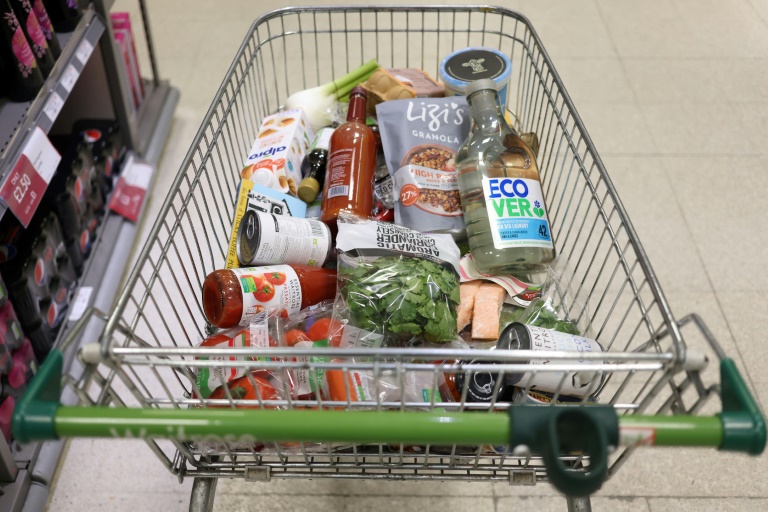
Eurozone inflation accelerated to another record high in June, official data showed Friday, fuelled by rising energy and food prices amid Russia’s war in Ukraine.

The EU’s Eurostat data agency said annual consumer price inflation in the 19 countries that use the euro soared to 8.6 percent in June, up from the prior record of 8.1 percent in May.

“Today’s figures bolster the European Central Bank’s intended decision to start raising interest rates at its next Governing Council meeting in July,” noted economist Pushpin Singh at research group CEBR.

The ECB stated last month that it will deliver its first interest rate hike in more than a decade in July to combat inflation. 

Eurostat added Friday that core inflation — stripping out volatile components like energy and food — slowed to 3.7 percent from 3.8 percent, helping equities to calm heading into the weekend pause.

Earlier Friday, Asian stock markets closed lower after another Wall Street selloff.

New York stocks opened little changed.

Data showing US consumers — the backbone of the world’s top economy — were growing increasingly reticent about spending dealt a fresh blow, with New York’s S&P 500 index suffering its worst first-half performance since 1970.

With the war in Ukraine showing no sign of ending — keeping energy costs elevated — there is an expectation that borrowing costs will continue to rise and send economies into recession.

Losses across world markets this week come after a rally last week fuelled by hopes that an economic slowdown or signs of recession would lead central banks to ease off their monetary tightening drive.

But comments from top finance chiefs, including Federal Reserve boss Jerome Powell, suggest they are willing to endure the pain of a contraction as long as they can rein in prices — which are rising at their fastest pace in 40 years on both sides of the Atlantic.

“Investors know that inflation is high and is likely to push higher,” City Index analyst Fiona Cincotta told AFP.

“Instead, the market’s obsession is turning from inflation to recession fears. Given the steep declines in stock prices this week, much of the bad news is priced in for now, until it starts again next week,” she added.

The grim global economic outlook has also weighed on bitcoin, which has dropped back under $20,000.

– Key figures at around 1330 GMT –

London – FTSE 100: UP less than 0.1 percent at 7,174.12 points

Frankfurt – DAX: FLAT at 12,780.98

Paris – CAC 40: UP 0.1 percent at 5,928.80

EURO STOXX 50: DOWN 0.4 percent at 3,441.87

New York – Dow: FLAT at 30,747.54

Brent North Sea crude: UP 2.4 percent at $111.68 per barrel

West Texas Intermediate: UP 2.6 percent at $108.53 per barrel

Tokyo – Nikkei 225: DOWN 1.7 percent at 25,935.62 (close)

Shanghai – Composite: DOWN 0.3 percent at 3,387.64 (close)

Hong Kong – Hang Seng Index: Closed for a holiday

Euro/dollar: DOWN at $1.0404 from $1.0484 Thursday

Pound/dollar: DOWN at $1.2010 from $1.2178

Euro/pound: UP at 86.66 pence from 86.09 pence

Dollar/yen: DOWN at 135.48 yen from 135.72 yen

burs-rl/lth

Close Bitnami banner
Bitnami