World

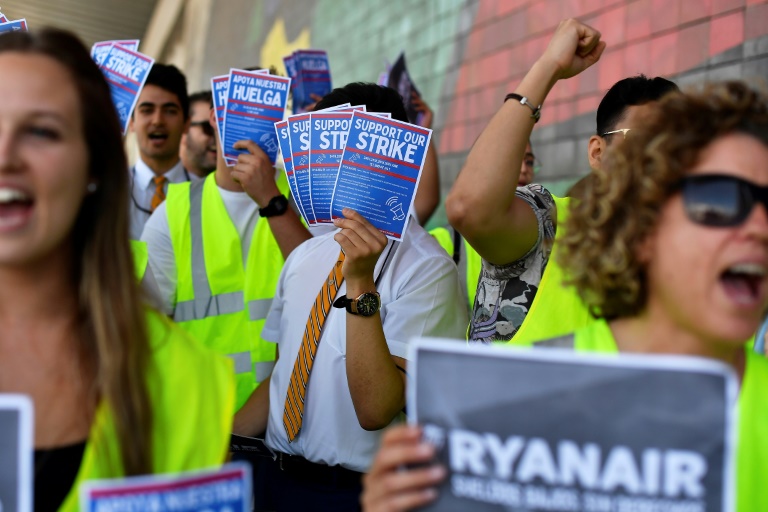
Flights cancelled in Spain due to Ryanair, EasyJet strikes

Nine flights to and from Spain were cancelled on Friday and dozens of others delayed due to the latest strike by cabin crew at low-cost airlines Ryanair and EasyJet.

The work stoppage over pay and working conditions comes as European schools are breaking up for the summer.

The strikes add more headaches to passengers and the aviation sector, which has struggled with staff shortages as it struggles to recruit people after massive layoffs during the Covid pandemic.

By 1:00 pm (1100 GMT) eight EasyJet flights had been cancelled and 21 delayed, the USO union which called the strike said.

One Ryanair flight was cancelled and 113 were delayed, it added.

EasyJet crew are set to strike during the first three weekends of July to demand parity in working conditions in line with other European airlines.

The strike by Ryanair cabin crew in Spain, where there are some 1,900 employees, began on June 24 and is due to run until Saturday. It is affecting 10 of the airline’s bases in Spain.

On Thursday over 50 Ryanair flights to and from the country were cancelled because of the job action. 

A strike by the airline’s crew between June 24 and 26 cancelled 129 flights.

Flights from Paris’ two largest airports, Charles de Gaulle and Orly, were disrupted on Friday for the second day in a row due to a strike by airport workers.  

'Stop interfering in Afghanistan', says Taliban leader in rare appearance

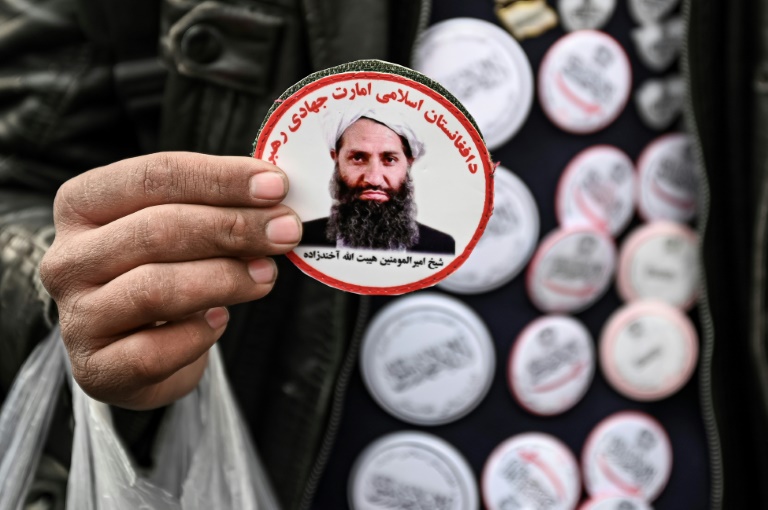
The Taliban’s reclusive supreme leader Hibatullah Akhundzada called Friday for the world to stop telling them how to run Afghanistan, insisting sharia law was the only model for a successful Islamic state.

Akhundzada, who has not been filmed or photographed in public since the Taliban returned to power in August, was addressing a major gathering of religious scholars in the Afghan capital called to rubber-stamp the hardline Islamist group’s rule.

More than 3,000 clerics have gathered in Kabul since Thursday for the three-day men-only meeting, and Akhundzada’s appearance had been rumoured for days — although media are barred from covering the event.

“Why is the world interfering in our affairs?” he asked in an hour-long speech broadcast by state radio.

“They say ‘why don’t you do this, why don’t you do that?’ Why does the world interfere in our work?”

Akhundzada rarely leaves Kandahar, the Taliban’s birthplace and spiritual heartland, and apart from one undated photograph and several audio recordings of speeches, has almost no digital footprint.

But analysts say the former sharia court judge has an iron grip on the movement and he bears the title “Commander of the Faithful”. 

His arrival at the meeting hall was greeted with cheers and chants, including “Long live the Islamic Emirate of Afghanistan”, the Taliban’s name for the country.

Akhundzada’s appearance comes a week after a powerful earthquake struck the east of the country, killing more than 1,000 people and leaving tens of thousands homeless.

No women are attending the clerics’ meeting, but a Taliban source told AFP this week that thorny issues such as girls’ education — which has divided opinion in the movement — would be discussed.

– No mention of girls’ schooling –

Akhundzada did not mention the subject in his speech, which was confined largely to telling the faithful to strictly observe Islamic principles in life and governance.

Since the Taliban’s return, secondary school girls have been barred from education and women dismissed from government jobs, forbidden from travelling alone, and ordered to dress in clothing that covers everything but their faces.

The Taliban have also outlawed playing non-religious music, banned the portrayal of human figures in advertising, ordered TV channels to stop showing movies and soap operas featuring uncovered women, and told men they should dress in traditional garb and grow their beards.

In Geneva on Friday, the United Nations human rights chief urged the Taliban to look to other Muslim countries for inspiration on improving the rights of women in a religious context.

Addressing an urgent council debate on the situation of women and girls in Afghanistan, Michelle Bachelet said they were “experiencing the most significant and rapid roll-back in enjoyment of their rights across the board in decades”.

“I strongly encourage the de facto authorities to engage with predominantly Muslim countries with experience in promoting women and girls’ rights, as guaranteed in international law, in that religious context,” she said.

Akhundzada said the Taliban had won victory for Afghanistan, but it was up to the “ulema” — the religious scholars — to advise the new rulers on how to properly implement sharia law.

“The sharia system comes under two parts — scholars and rulers,” he said.

“If scholars do not advise authorities to do good, or the rulers close the doors against the scholars, then we will not have an Islamic system.”

Believed to be in his 70s, Akhundzada spoke in strong measured tones, occasionally coughing or clearing his throat.

He warned that non-Muslim nations would always be opposed to a pure Islamic state, so the faithful had to endure hardships to get what they wanted.

“You have to compete, you have to endure hardships… the present world will not easily accept you implementing the Islamic system,” he said.

Women’s rights activists have slammed their lack of participation.

“Women should be part of the decisions about their fate,” Razia Barakzai told AFP Thursday.

“Life has been taken away from Afghan women.”

Berlin mosque flies rainbow flag for pride month

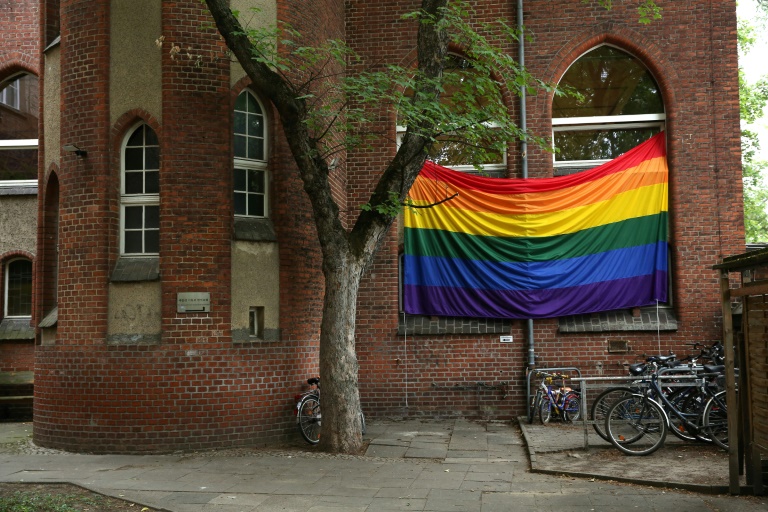
A mosque in Berlin on Friday became the first in Germany to fly a rainbow flag in support of the LGBT community, ahead of two major gay pride events in the city this month.

The Ibn Rushd-Goethe Mosque in the central Moabit neighbourhood unfurled the flag ahead of Friday prayers in front of a small crowd, including Berlin’s culture senator Klaus Lederer.

Many of those attending wore rainbow stickers that read “Love is Halal”.

The mosque, founded five years ago, is Germany’s only self-described liberal mosque and allows men and women to pray together, as well as being open to LGBT worshippers.

Mo El-Ketab, one of six Imams at the mosque, said he wanted it to provide a “safe place for people who are different, so they too can experience the spiritual side of their lives”.

“I hope that many other mosques will also show the flag in this way or set other positive signs for the LGBT community,” he said.

Two major events in support of the LGBT community will take place in Berlin this month — the Lesbian and Gay Festival on July 16 and 17, and Christopher Street Day (CSD) on July 23.

Marc-Eric Lehmann, a CSD board member, said flying the flag sent “an incredibly strong sign” and it was “really important” to find a place for religion in LGBT communities. 

“Queer people can also be religious and believe in God,” he said.

“We should not just be talking about safe spaces in bars and clubs in Berlin, we also have to talk about safe spaces in the places of worship.”

UK PM back in crisis mode after foreign tour

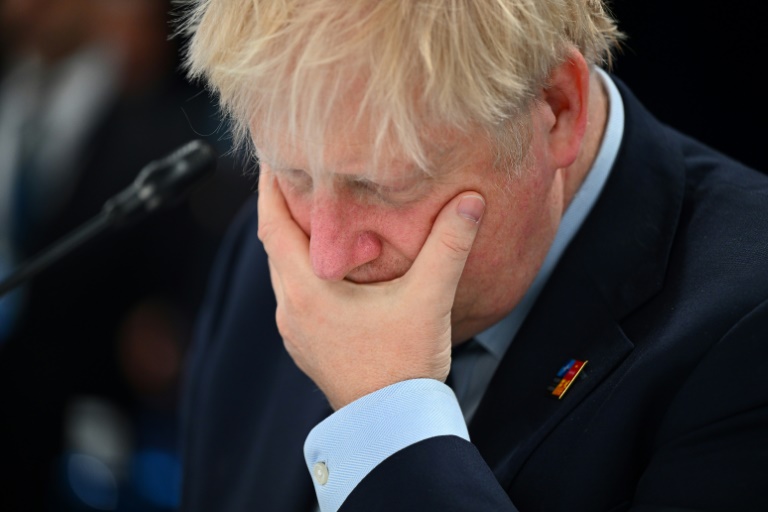
UK Prime Minister Boris Johnson returned Friday from an overseas tour to face multiple crises, including the latest resignation of a senior Conservative from his scandal-hit government.

The embattled leader found his ruling Tories mired in another controversy about sexual impropriety shortly after he landed back in Britain Thursday from a NATO summit in Spain.

In a letter to Johnson, Conservative MP Chris Pincher announced he was quitting as deputy chief whip after admitting he drank “far too much” and “embarrassed myself and other people” late Wednesday.

Reports said he had been accused of groping two men in front of others at the exclusive Carlton Club in London, prompting complaints to the Conservatives.

His departure from its whips’ office — charged with enforcing party discipline and standards — marks the latest allegation of sexual misconduct by Tories in recent months.

Conservative MP Neil Parish resigned in April after watching pornography on his mobile phone in the House of Commons.

That prompted a by-election in his previously safe seat which the party went on to lose in a historic victory for the opposition Liberal Democrats.

Johnson himself has been embroiled in various scandals, including the so-called “Partygate” affair that led his own lawmakers to trigger a no-confidence vote in him in early June that he narrowly survived.

The 58-year-old premier still faces a parliamentary probe into whether he lied to MPs over the lockdown-breaching parties in Downing Street.

– ‘Survival mode’ –

The controversies come with Britain battling a worsening cost-of-living crisis and a summer of strikes by various unions over wages and working conditions.

Meanwhile, the country continues to struggle to adapt to Brexit and is risking a possible trade war with the European Union by unilaterally overhauling the special deal it agreed with the bloc for Northern Ireland.

The Financial Times reported Friday that Britain’s trade performance this year has fallen to its worst level since records began, adding to the pound’s recent slide.

A growing chorus of critics argue Johnson’s government is too distracted by its own woes to focus on these mounting challenges.

“We’ve got a problem on trade, (a) problem on Northern Ireland, a problem with labour shortages, the pound’s significantly devalued, business investment is down,” former Labour prime minister Tony Blair told the BBC late Thursday. 

“I think it is incoherent and it’s also not thought-through and the reason for that is the government’s in survival mode — they’re not thinking about what’s the right long-term plan for Britain’s future.”

Johnson returned home after nine days of globetrotting that saw him attend three international summits, including a Commonwealth gathering in Rwanda and G7 meeting in Germany.

– ‘Serious questions’ –

Pincher’s resignation within hours of that immediately refocused attention on persistent claims of Tory sleaze.

It also left the UK leader with another senior post to fill after the Conservatives’ chairman quit following two bruising by-election defeats last month, including the one in Parish’s seat.

“The prime minister has accepted the resignation and thinks it was right for him to resign,” Johnson’s deputy spokesman told reporters, amid a flurry of questions about Pincher.

“(He) thinks that sort of behaviour is unacceptable and he would encourage those who wish to make a complaint, to do so,” he added, while declining to specify exactly what behaviour had prompted the ex-whip to quit.

The spokesman said he was unaware of any government investigation into the matter, amid anonymous Downing Street briefings that Pincher would remain as an MP that have prompted a backlash.

The only two Conservative female chairs of parliamentary watchdog committees wrote to the party’s chief whip urging Pincher be suspended from the party while his conduct is probed. 

They also demanded a “zero tolerance policy” on sexual misconduct following an “inconsistent and unclear approach”.

Pincher only became deputy chief whip in February, when Johnson reportedly defied warnings from other Tories about his behaviour.

He previously resigned as a junior whip in 2017, following a complaint that he had made an unwanted pass at a former Olympic rower and potential Conservative election candidate.

Johnson’s deputy spokesman denied the prime minister was aware of other “specific” allegations against Pincher before his latest appointment.

That has failed to satisfy opposition politicians.

“Boris Johnson has serious questions to answer about why Chris Pincher was given this role in the first place and how he can remain a Conservative MP,” Labour’s deputy leader Angela Rayner said.

Australia PM hails 'new start' in ties with France

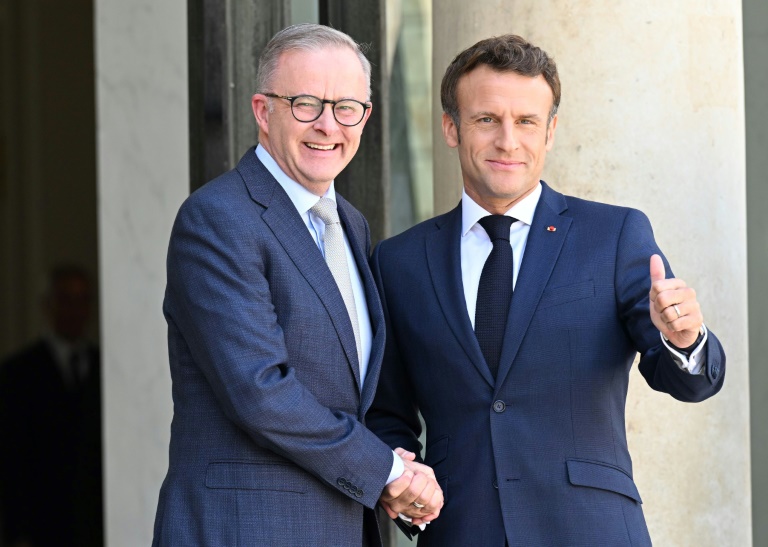
Australian Prime Minister Anthony Albanese welcomed a “new start” in relations with France as he met President Emmanuel Macron in Paris on Friday, after an acrimonious row between the countries over a submarine contract last year.

“My presence here represents a new start for our countries’ relationship,” Albanese said after arriving at the Elysee Palace. 

“Australia’s relationship with France matters. Trust, respect and honesty matter. This is how I will approach my relations,” he added.

Macron said that the first conversations between the pair since Albanese’s election in May “mark a willingness to rebuild a relationship of trust between our two countries, a relationship based on mutual respect”. 

After acknowledging “difficult times”, Macron emphasised the two countries’ strategic partnership, their shared war history in Europe and their joint interests in stability in the Pacific region.

The statements, which followed a warm greeting between the two men and their wives in the courtyard of the presidential palace, represent a sea change in ties since the departure of former Australian premier Scott Morrison.

Macron was left furious last year after Morrison secretly negotiated to buy US-designed submarines and then ditched a landmark contract with France signed in 2016 and worth Aus$50 billion (33 billion euros) at the time.

France broke off diplomatic contacts with Australia and Macron repeatedly accused Morrison of having lied to him during a dinner they had in Paris in June 2021.

Morrison’s actions were marked by “brutality and cynicism, and I would even be tempted to say of unequivocal incompetence”, Outgoing French foreign minister Jean-Yves Le Drian said as he handed over to his successor Catherine Colonna on May 21.

Albanese announced earlier this month that French submarine maker Naval Group had agreed to a “fair and an equitable settlement” of 555 million euros (US$584 million) for Australia ending the decade-old submarine contract. 

Canberra has switched to buying nuclear-powered US subs as part of a new security pact with Britain and the United States called AUKUS.

After the deal was announced, Macron recalled France’s envoys to both Australia and the United States over the furore in a serious and rare diplomatic crisis between leading Western powers.

– Warm words –

France considers itself to be a Pacific power, thanks to its overseas territories including New Caledonia and French Polynesia, and shares Australia’s concerns about China’s assertiveness in the region. 

Albanese, a left-winger from the Labor party, and Macron also stressed their common views on Russia’s invasion of Ukraine, with both countries supplying weapons to Kyiv.

“My government strongly condemns Russia’s illegal and totally unjustified invasion of Ukraine,” Albanese said. “I commend President Macron’s leadership in support of Ukraine’s sovereignty and the struggle of the people of Ukraine.”

Macron praised Albanese’s commitment to the fight against climate change, which reverses the stance of his conservative predecessor Morrison.

The Australian government recently asked the United Nations to raise the country’s 2030 emissions reduction target.

“The new Australian position — proactive, ambitious — offers us opportunities to advance together,” Macron said.

Morrison’s predecessor as premier, Malcolm Turnbull, said the meeting in Paris on Friday was a “big opportunity” to help Paris and Canberra get over a “very bad period” when the French government did not even “pick up the phone”.

Albanese “is not Scott Morrison, so that’s a big advantage”, he told French journalists at an event organised by the Institut Montaigne in Paris.

“It is important that that reset occur,” Albanese told national broadcaster ABC in an interview on June 24. 

ICC marks 20th birthday with Ukraine in sights

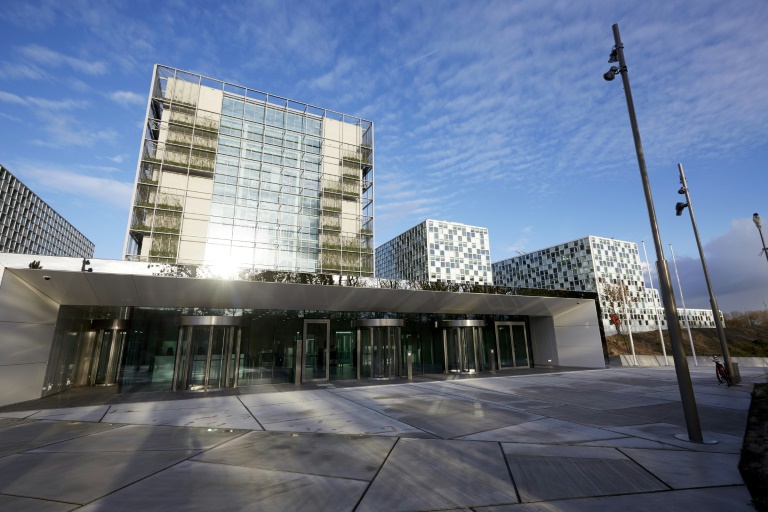
The International Criminal Court marked its 20th anniversary on Friday, with the Ukraine war giving the tribunal new impetus after two decades of criticism and controversy.

Since its founding Rome Statute entered into force on July 1, 2002, the world’s only permanent war crimes court has had a poor record of just five convictions.

But The Hague-based ICC remains the court of last resort for grave charges such as genocide, crimes against humanity, war crimes and aggression, when member states are unable or unwilling to prosecute.

The ICC “is a pillar of the international legal system”, the court’s president, judge Piotr Hofmanski, said as he opened a gathering to celebrate two decades of the court’s existence.   

Russia’s invasion of Ukraine and the subsequent ICC investigation into alleged war crimes have made the international community realise the importance of the rule of law, said ICC prosecutor Karim Khan.

“If we don’t hold on to the law today, I think there is very little hope for anybody’s tomorrow,” Khan told AFP in an interview in May.

“That growing realisation has been rendered more acute because of the events of the 24th of February and the events in Ukraine — and I think it’s long overdue.”

Speaking at Friday’s ceremony, Khan said the ICC’s establishment 20 years ago “was a tremendous achievement”.

“The prayer must also be that, in twenty years to come, many may see a world better, safer and most just than it is for so many of our fellow brothers and sisters today.”

– ‘Lofty goals’ –

The court said the event was “an occasion for reflections on how well the ICC has met expectations”. 

But those expectations have always been high.

The ICC is the successor to the Nuremberg trials of Nazi war criminals, when the post-war international order sought an ideal of global justice.

Tribunals into the wars in the former Yugoslavia in the 1990s and the 1994 Rwandan genocide also laid the ground for a permanent court.

The Rome Statute was signed in 1998 and came into effect four years later, allowing the court to finally open its doors.

Yet since then, it has failed to snare any senior government leaders, and its five convictions so far have all been African rebels, including one former child soldier.

“Contemplating the ICC’s legacy in light of its lofty goals, the results are negligible,” Thijs Bouwknegt of the NIOD Institute for War, Holocaust and Genocide Studies told AFP.

It had high-profile failures, with ex-Ivory Coast president Laurent Gbagbo being cleared, former DR Congo vice president Jean-Pierre Bemba acquitted on appeal and Kenyan President Uhuru Kenyatta having charges dropped.

Just as damaging is the absence of key players.

The United States, which signed the Rome Statute in 2000 but never ratified it, has sometimes been actively hostile, at one point sanctioning the court over its Afghan probe.

China, Israel, Myanmar and Syria have also steered clear, along with Russia — which even allegedly sent a spy posing as an intern to target the ICC’s Ukraine probe. 

– ‘Recipe for Armageddon’ –

But while there was “deservedly” criticism of the ICC, the court had made a “significant contribution”, said Victoria Kerr of the Hague-based Asser Institute for International and European Law.

“The ICC is not a panacea, nor should its effectiveness be measured solely on its convictions,” Kerr told AFP.

In recent years the court has sought to improve, with new probes into the Israeli-Palestinian conflict, Afghanistan, Myanmar, Venezuela and the Philippines.

Ukraine is now where the court has a chance to prove its credentials.

Khan said the recent backing of 43 states for the ICC’s Ukraine probe was “not simply because of what’s happening in Ukraine”.

“When we view international law as an a la carte menu which states can pick and choose from… that is a recipe for Armageddon,” he told AFP.

Europe stocks steady as eurozone inflation hits record high

European stock markets steadied Friday with traders having expected news of record-high eurozone inflation that reinforced expectations of an ECB interest rate hike this month.

On the upside, the haven dollar jumped one percent against the pound on rising expectations of a recession, while oil rebounded on tight supplies.

Eurozone inflation accelerated to another record high in June, official data showed Friday, fuelled by fallout from the Ukraine war.

The EU’s Eurostat data agency said annual consumer price inflation in the 19 countries that use the euro soared to 8.6 percent in June, up from the prior record of 8.1 percent in May.

“Today’s figures bolster the European Central Bank’s (ECB) intended decision to start raising interest rates at its next Governing Council meeting in July,” noted economist Pushpin Singh at research group CEBR.

The ECB stated last month that it will deliver its first interest rate hike in more than a decade in July to combat inflation. 

Eurostat added Friday that core inflation — stripping out volatile components like energy and food — slowed to 3.7 percent from 3.8 percent, helping equities to calm heading into the weekend pause.

Earlier Friday, Asian stock markets closed lower after another Wall Street selloff.

Data showing US consumers — the backbone of the world’s top economy — were growing increasingly reticent about spending dealt a fresh blow, with New York’s S&P 500 index suffering its worst first-half performance since 1970.

With the war in Ukraine showing no sign of ending — keeping energy costs elevated — there is an expectation that borrowing costs will continue to rise and send economies into recession.

Losses across world markets this week come after a rally last week fuelled by hopes that an economic slowdown or signs of recession would lead central banks to ease off their monetary tightening drive.

But comments from top finance chiefs, including Federal Reserve boss Jerome Powell, suggest they are willing to endure the pain of a contraction as long as they can rein in prices — which are rising at their fastest pace in 40 years on both sides of the Atlantic.

The grim global economic outlook has also weighed on bitcoin, which has dropped back under $20,000.

– Key figures at around 1100 GMT –

London – FTSE 100: DOWN 0.1 percent at 7,159.16 points

Frankfurt – DAX: FLAT at 12,785.72

Paris – CAC 40: UP 0.1 percent at 5,953.69

EURO STOXX 50: DOWN 0.2 percent at 3,448.68

Brent North Sea crude: UP 2.4 percent at $111.61 per barrel

West Texas Intermediate: UP 2.2 percent at $108.13 per barrel

Tokyo – Nikkei 225: DOWN 1.7 percent at 25,935.62 (close)

Shanghai – Composite: DOWN 0.3 percent at 3,387.64 (close)

Hong Kong – Hang Seng Index: Closed for a holiday

New York – Dow: DOWN 0.8 percent at 30,775.43 (close)

Euro/dollar: DOWN at $1.0456 from $1.0484 Thursday

Pound/dollar: DOWN at $1.2062 from $1.2178

Euro/pound: UP at 86.69 pence from 86.09 pence

Dollar/yen: DOWN at 135.32 yen from 135.72 yen

Eurozone inflation hits record, as gas crunch looms

Eurozone inflation accelerated to another record high in June, official data showed on Friday, as Russia’s war in Ukraine drives up energy prices and hammers the European economy.

The EU’s Eurostat data agency said the increase in consumer prices in the 19 countries that use the euro reached 8.6 percent in June, leaping from the previous record of 8.1 percent a month earlier.

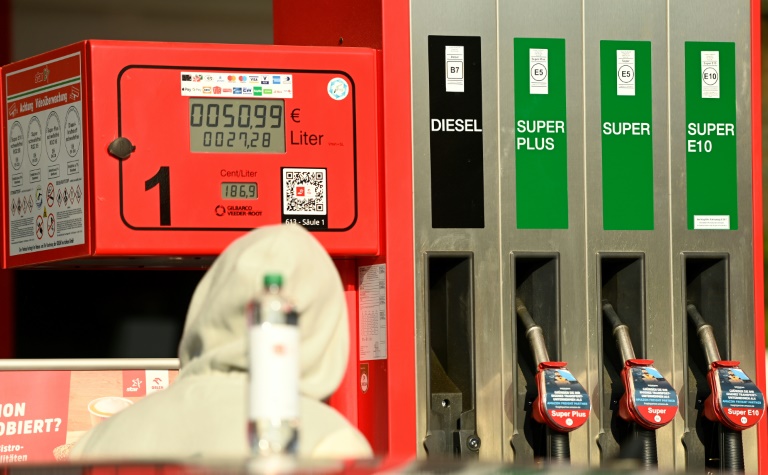
Consumer prices in the eurozone have hit records since November, buffeted by sky-high energy prices, which jumped by 41.9 percent over one year, caused by the fallout of Russia’s invasion of its neighbour Ukraine.

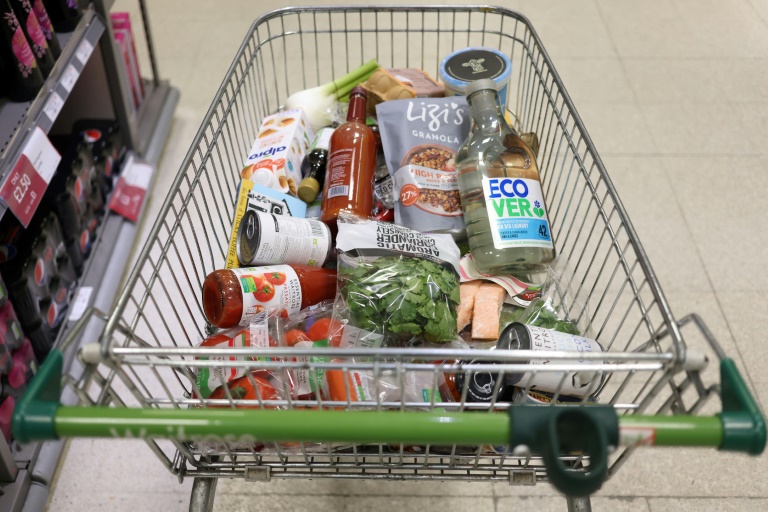
But analysts also pointed to the rise in food prices, which accelerated by 8.9 percent, showing that the inflation problem was spreading through the economy.

“Historically, we have never had such a high figure for the contribution of food. It will have a big impact,” said Philippe Waechter of Ostrum Asset Management.

The European Central Bank has said it will do whatever it takes to bring inflation back to its target level, with political pressure high to bring energy and food prices into check.

“With eurozone inflation now becoming more broad-based in nature, the outlook for the Eurozone for the rest of 2022 continues to look bleak,” warned Pushpin Singh, Economist at the Centre for Economics and Business Research.

“This comes amid a mounting possibility of a severe gas crisis in Europe, with Russia using gas exports as a means to counter sanctions,” he added.

– Rate hike –

As the conflict rages on, Russia has shown an increased willingness to cut off gas supplies to Europe, a danger that has raised the prospect of energy rationing in the eurozone to get through next winter.

Some analysts took solace in the core inflation data, which excludes energy and food prices and came in at 3.7 percent, a tiny drop from the previous month.

But this would not be enough to change the course decided at the ECB’s last meeting, when policymakers agreed to the bank’s first interest rate hike in more than a decade.

The quarter-point raise, set to take place at its next meeting on July 21, will raise rates from their historic lows.

“We will go as far as necessary to ensure that inflation stabilises at our two percent target over the medium term,” ECB head Christine Lagarde said on Tuesday.

The ECB is being pressured by some to go faster in halting inflation and choose a path more akin to the United States where the Federal Reserve has warned it may trigger a recession to cool prices.

US warns of jihadists and Russian forces as Africa war games end

The United States’ top general for Africa has warned of “violent extremism” and the threat of Russian mercenaries in the Sahel region, speaking as war games wrapped up in Morocco.

“We are seeing the rise of violent extremism in Western Africa, predominantly in the Sahel region,” said General Stephen J. Townsend, commander of the US Africa Command (AFRICOM).

The Sahel region is a vast territory stretching across the south of Africa’s Sahara Desert, incorporating countries such as Burkina Faso, Chad, Mali, Mauritania and Niger.

“We are seeing the arrival of malign actors, and specifically I am thinking of Russian mercenaries from Wagner,” Townsend told AFP in the North African nation on Thursday, at the conclusion of a four-week long “African Lion” international military exercise.

“This training is not specifically oriented on those problems, but it will help all of our armed forces if we are called to combat this kind of problem in the future,” Townsend said.

Islamic State-linked jihadists, whose power was once thought to be waning in the Sahel, have recently expanded their reach and marking their presence with an unprecedented series of civilian massacres.

Mali has been especially hard hit, a former French colony where the strategic landscape has changed dramatically following two coups in August 2020 and May 2021.

Bamako developed closer ties with Moscow, bringing in military personnel that France says are mercenaries from Russia’s Wagner group.

– Air, sea and land assault practice –

AFRICOM, which is based in the German city of Stuttgart, is responsible for US military operations across Africa.

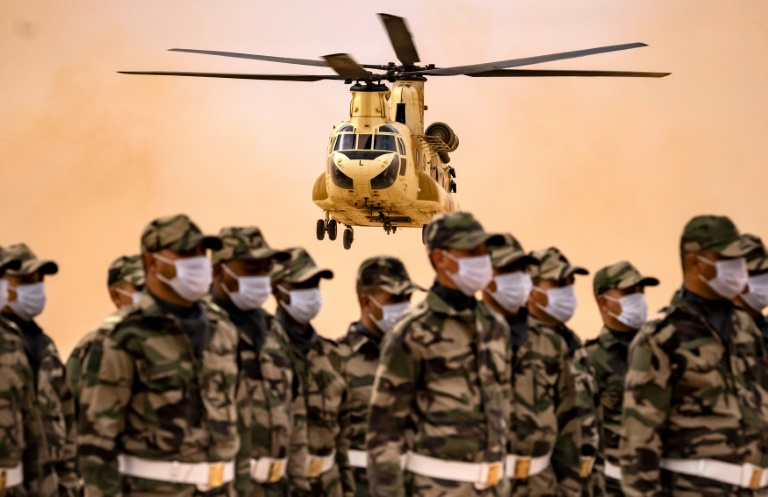
More than 7,500 personnel from a dozen countries took part in the “African Lion” exercises, running from June 6 to 30, with operations in Morocco, Ghana, Senegal and Tunisia.

As well as US troops and officers from the host nations, soldiers from Brazil, Britain, Chad, France, Italy and the Netherlands took part.

The Moroccan leg of the games were attended by military observers from NATO, the African Union and nearly 30 “partner countries”, including for the first time Israel.

Exercises included land, airborne and maritime manoeuvres, preparation for nuclear biological and chemical decontamination, as well as providing medical and humanitarian aid.

On Thursday, at Cap Draa in the dusty deserts of southern Morocco some 700 kilometres (435 miles) south of Rabat, troops simulated a joint land and air attack against enemy columns in a live fire exercise.

Overhead, F-16 warplanes and Apache attack helicopters roared across the skies.

Through the sand, M1 Abrams tanks and AMX-10 RC wheeled armoured reconnaissance vehicles ploughed across the dunes, accompanied by HIMARS multiple rocket launchers firing salvoes.

Plumes of smoke rose up high after live fire artillery barrages, with the dust whipped up by fierce winds from the Atlantic Ocean.

– ‘To defend our common interest’ –

But Townsend was keen to stress the operations were “hypothetical” war games, an “exercise scenario that is completely made up”, and not targeting any nation.

The exercise comes amid heightened tensions between Rabat and Algiers over the disputed Western Sahara.

Former US president Donald Trump recognised Moroccan sovereignty over the territory in 2020 in return for Rabat re-establishing ties with Israel, and Algeria responded months later by breaking ties with Morocco.

Exercises took place close to the border with Western Sahara and Sahrawi refugee camps where the Algerian-backed Polisario Front independence movement is based.

Townsend said the exercise was “not focused on Algeria at all”, but was about “increasing our skill as armies” to work together.

“What we are seeing played out in NATO and Ukraine today shows the value of strong allies and partners working together to defend our common interest,” he added.

The conflict in Ukraine dominated the NATO summit in Madrid this week, where US President Joe Biden announced a boost of US military in Europe, including on its “southern flank” in Spain and Italy, across the Mediterranean Sea from North Africa.

Amazon secure Champions League rights in UK for first time

Amazon has secured live rights to the Champions League in the UK for the first time from 2024.

The technology giant will have the first pick of matches on a Tuesday, with BT Sport retaining the rest of the rights to the Champions League, Europa League and Europa Conference League.

The UK deal is understood to be worth around £500 million ($607 million) a year to UEFA for the three seasons between 2024 and 2027 — an increase of 20 percent on the current cycle.

Amazon already holds the UK rights to 20 Premier League matches per season.

“The addition of UEFA Champions League football is a truly momentous moment for Prime Video in the UK,” said Alex Green, the managing director of Amazon Prime Video Sport Europe.

A new format to the Champions League will begin in the 2024/25 season with the competition expanded to 36 teams and all clubs playing eight group games.

The “Swiss Model” revamp will see the number of games in the competition overall increase from 125 to 189.

UEFA is aiming for total broadcast revenue from this cycle to reach $5 billion per season, up from the current $3.6 billion a year.

Discussions are ongoing between UEFA, the European Clubs Association and the European Leagues group over how that revenue will be divided up.

Jacco Swart, managing director of the European Leagues, has called for a fairer distribution among all European clubs to protect the competitive balance of competition.

However, Manchester United’s chief financial officer, Cliff Baty, argued the top clubs deserve their greater share.

“The pie is getting bigger,” said Baty. “The reason the broadcasters are paying that much money is for the product, frankly at the Champions League level.”

Close Bitnami banner
Bitnami