World

Nine protesters killed in Sudan anti-coup mass rallies

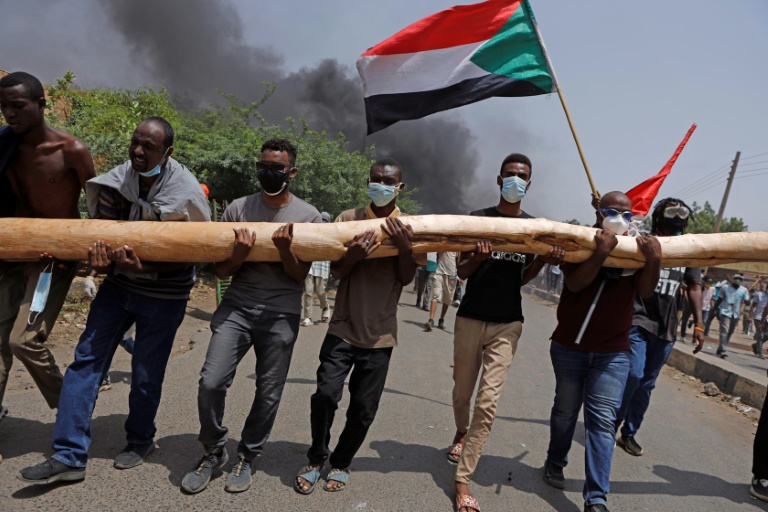
At least nine Sudanese demonstrators were killed Thursday as security forces sought to quash mass rallies of protesters demanding an end to military rule, pro-democracy medics said.

In one of the most violent days this year in an ongoing crackdown on the anti-coup movement, AFP correspondents reported security forces firing tear gas and stun grenades to disperse tens of thousands of protesters.

“Even if we die, the military will not rule us,” protesters chanted, urging the reversal of an October military coup by army chief Abdel Fattah al-Burhan that prompted foreign governments to slash aid, deepening a chronic economic crisis.

At least seven of the nine killed were shot in the chest or the head, the Central Committee of Sudan Doctors said, raising the overall death toll to 112 from protest-related violence since October.

One of them was a minor, the doctors said, killed by “a bullet in the chest”.

“Down with Burhan’s rule,” crowds chanted, with protests and violence flaring in both the capital Khartoum and its suburbs, including the twin city of Omdurman, on the other side of the Nile river.

Security forces fired powerful water cannons, as protesters set fire to tyres.

Medics also reported “several attempts to storm hospitals in Khartoum,” with security forces firing tear gas into one hospital, where some of those injured during the protests had been taken.

Protests in Khartoum were larger than normal and, beyond the capital, demonstrations also took place in Wad Madani in the south, the western Darfur region, the eastern states of Kassala and Gedaref as well as the city of Port Sudan, witnesses said.

Internet and phone lines had been disrupted since the early hours of Thursday, a measure the Sudanese authorities often impose to prevent mass gatherings.

By Thursday evening, communications were partially restored.

Security was tight in Khartoum despite the recent lifting of a state of emergency imposed after the coup.

Troops and police blocked roads leading to both army headquarters and the presidential palace, witnesses said. Shops around the capital were largely shuttered.

– ‘Violence needs to end’ –

Demonstrations continued in Omdurman as night fell with crowds trying to remove security barricades in a bid to cross bridges to reach Khartoum, witnesses said.

Thursday’s rallies showed a “change in the balance of power in favour of the mass movement and its goals of seizing complete civil authority and defeating the coup,” said the Forces for Freedom and Change, an alliance of civilian groups whose leaders were ousted in the coup.

UN special representative Volker Perthes said Thursday that the “violence needs to end”, while the US embassy in Khartoum urged restraint and “the protection of civilians so that no more lives are lost”.

The latest protests come on the anniversary of a previous coup in 1989 that toppled the country’s last elected civilian government and ushered in three decades of iron-fisted rule by Islamist-backed General Omar al-Bashir.

It is also the anniversary of 2019 protests demanding that the generals, who had ousted Bashir in a palace coup earlier that year, cede power to civilians.

Those protests led to the formation of the mixed civilian-military transitional government which was toppled in last year’s coup.

Sudan has been roiled by near-weekly protests as the country’s economic woes have deepened since Burhan seized power last year.

Alongside the African Union and regional bloc IGAD, the United Nations has been attempting to facilitate talks between the generals and civilians, but they have been boycotted by the main civilian factions.

The UN has warned that the deepening economic and political crisis has pushed one-third of the country’s population of more than 40 million towards life-threatening food shortages.
Russian propaganda finds fertile ground in Serbia

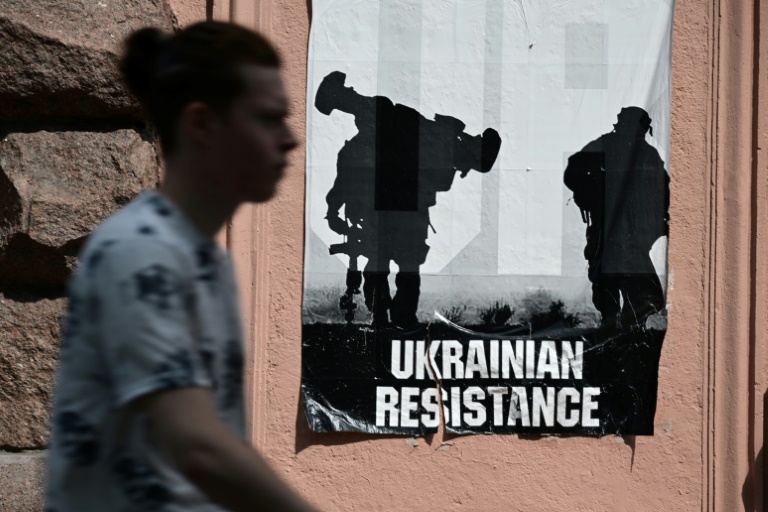
After 12 years together, it was Russian propaganda that finally ended Liubov Maric’s marriage to her Serbian husband. 

The Ukrainian admits they had been having difficulties, but after the invasion of Ukraine in February things began to spiral as her husband lapped up vast amounts of Russian propaganda. 

The man she had once fallen in love with was no longer recognisable, she said, even forbidding their son from listening to Ukrainian folk music, calling it the work of “Nazis”.

“I had hoped for support and understanding, but he started blaming everyone but the Russians,” Maric, 44, told AFP.

Shortly thereafter she packed her bags and despite the war returned to Ukraine. 

Kremlin propaganda has found a willing audience in Serbia, where simmering hatred towards NATO and the US has led many to side with Moscow. 

While most of Europe has sought to clamp down on Russian news outlets, they flourish in Serbia where even state-backed media often parrot the Kremlin line. 

“I think the truth is somewhere in between, but nobody is reporting it. So I follow both Russian and Western media and try to read between the lines,” said Dario Acimovic, a 27-year-old graphic designer.

“They (the West) have cut off Russian media so they don’t get to hear the other side. All you get as a result is hysteria.”

– Putin’s ‘divine status’ –

Under the rule of President Aleksandar Vucic, Serbia’s media has increasingly been forced to toe the government line, while the few remaining independent outlets have faced sustained pressure from authorities. 

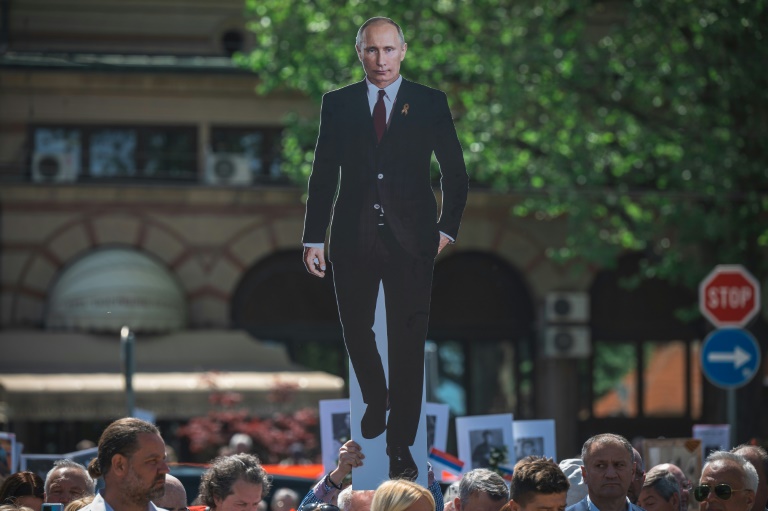
During the run-up to the war, Serbia’s leading tabloid, Informer, printed numerous gushing articles praising Vladimir Putin along with a cover story two days before the invasion with the headline, “Ukraine has attacked Russia.” 

“Serbia’s pro-government propaganda outlets created Putin’s personality cult that even surpasses the one they built for Vucic,” said Dinko Gruhonjic, associate professor of journalism at University of Novi Sad.

“He enjoys a practically divine status,” he added.

According to the latest opinion poll by Belgrade-based democracy watchdog Crta, two-thirds of the population feels “closer” to Russia.

Three-quarters of Serbians also believe the Kremlin was forced into war “due to NATO’s intentions to expand”.

The same survey suggested that 40 percent of the population were in favour of dropping the country’s long pursuit of joining the European Union and allying with Moscow instead. 

“Pro-government media have a clear positive stance on Russia, are neutral towards the EU and negative towards Ukraine,” said Vujo Ilic, a researcher and one of the survey’s authors. 

“Russia is the alternative shown to voters to prove that Serbia can make it without the European Union,” he added. 

Cultural and historic ties between the two predominantly Slavic and Orthodox Christian countries stretch back centuries, leading many Serbs to be warm toward Russia.

In the capital Belgrade, T-shirts featuring Putin’s face are sold from souvenir kiosks, while the letter Z — which has become the Russian symbol for the invasion — has been painted on walls across the city. 

– ‘It’s not true what they say’ –

The scars from the NATO-bombing campaign against Serbia in 1999 during the war in Kosovo remain a bitter wound for many. 

“I don’t trust Western media,” 73-year-old pensioner Tihomir Vranjes told AFP.

“I remember what they wrote about Serbs during the wars. We were portrayed as animals. As it wasn’t true then, it’s not true now what they say about the Russians.”

The coverage of the war and consumption of news from Russian sources has not gone unnoticed, with the Ukrainian ambassador in Belgrade raising his voice in protest, saying that “citizens of Serbia are not properly informed”.

But staying up to date with accurate news on the war is not always easy in Serbia. 

Even for an Ukrainian like Maric — with access to first-hand accounts from home — navigating her way through the deluge of misinformation and outright propaganda in Serbia is difficult.  

“Their propaganda is so efficient that after five minutes of reading, I start to question myself,” she said.

John Lee: the former Hong Kong cop Beijing trusts is sworn in

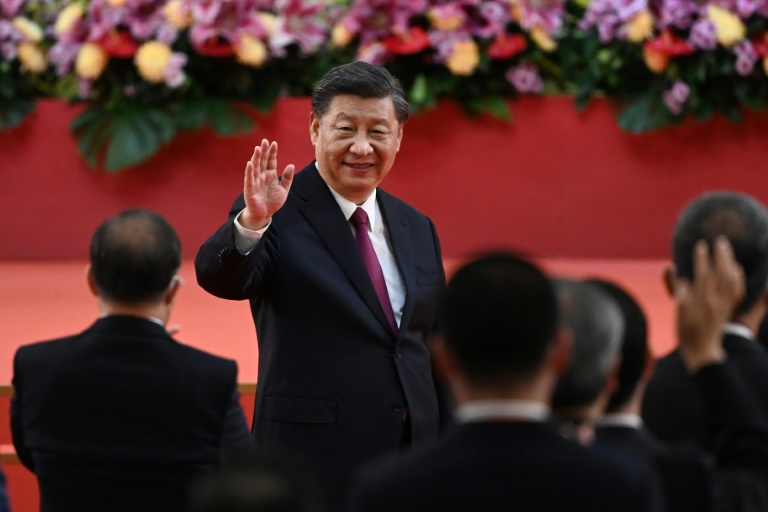
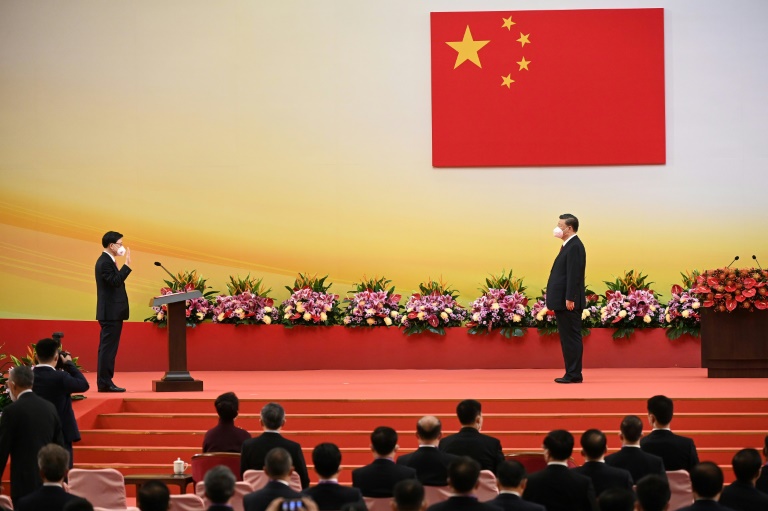
John Lee, a former beat cop who became Hong Kong’s security chief and played a key role in suppressing democracy protests, became the business hub’s new leader on Friday in a ceremony overseen by Chinese President Xi Jinping.

“It is the greatest honour for me today to shoulder this historic mission given to me by the central authorities and the people of Hong Kong,” Lee said in his inauguration speech, thanking Beijing for its support. 

Lee, 64, was anointed as Hong Kong’s next chief executive by a small committee in May, winning 99 percent of the votes in a choreographed, Beijing-blessed race in which no other candidates stood. 

Xi later said Lee’s government would deliver a “new chapter” for Hong Kong.

Lee’s elevation caps a remarkable rise for a man whose police career lifted him from a working-class family to the upper echelons of Hong Kong’s political establishment.

It also places a security official in the city’s top job for the first time, a man who was pivotal in the quashing of huge democracy protests in 2019 and Beijing’s subsequent political crackdown.

Insiders say Lee’s unwavering commitment to that role won China’s confidence at a time when other Hong Kong elite were seen as insufficiently loyal or competent.

“John Lee is the one that the central government knows the best, because he was in constant contact and interaction with the mainland,” pro-establishment lawmaker and prominent business figure Michael Tien told AFP earlier this year.

Lee, who is under US sanctions, spent 35 years in the police before jumping to the government in 2012, followed by a swift rise to the top.

Law and order remained his portfolio, with him serving in the Security Bureau and then leading it before becoming the city’s number two official last year.

– Flares and long hair –

Lee, a Catholic, grew up poor in Sham Shui Po — one of wealthy Hong Kong’s working-class districts — but made his way to an elite boys’ school run by Jesuits.

Peter Lai, a former banker and classmate, described him as a clever and fashionable teenager who grew long hair and wore flared trousers.

Most of his contemporaries went to university, but Lee turned down an offer to study engineering to join the police.

He later told a pro-Beijing newspaper he was motivated by being bullied by neighbourhood hooligans.

Two former classmates gave a more practical reason — the police force offered a stable career for Lee and his pregnant wife Janet.

Lee has not spoken much about his family and has dodged questions about whether his wife and two sons still hold British nationality, something he renounced when he joined the government.

As events began on Friday morning, Lee’s new social media accounts posted a picture of his wife fixing his tie, thanking her for “silently supporting me and taking care of the family over the years”.

– Business acumen? –

Given his security background, it seems unlikely Lee will reverse Beijing’s campaign against dissent.

Where he will enter less familiar territory is the world of business.

Hong Kong, once a vibrant, multicultural business hub, has been cut off internationally during the pandemic as it shadows Beijing’s strict zero-Covid strategy.

Its economy is struggling and there has been an exodus of talent. 

Danny Lau, a small business association leader, said Lee was not an ideal candidate but that he would reserve judgement.

“I hope he can consider Hong Kong’s international competitiveness and does not waste time on making laws unhelpful for the city’s economy,” Lau told AFP.

But others say Lee’s appointment confirms that China now puts Hong Kong’s political security ahead of business and livelihood issues. 

“In the past, China might compromise for some economic benefits,” Charles Mok, a former pro-democracy lawmaker now living overseas, told AFP.

“But now it seems Beijing wants its people to feel that the world is full of threats and it’s only safe to stick closely to the (Communist) Party.”

Women battle for seats in PNG parliament

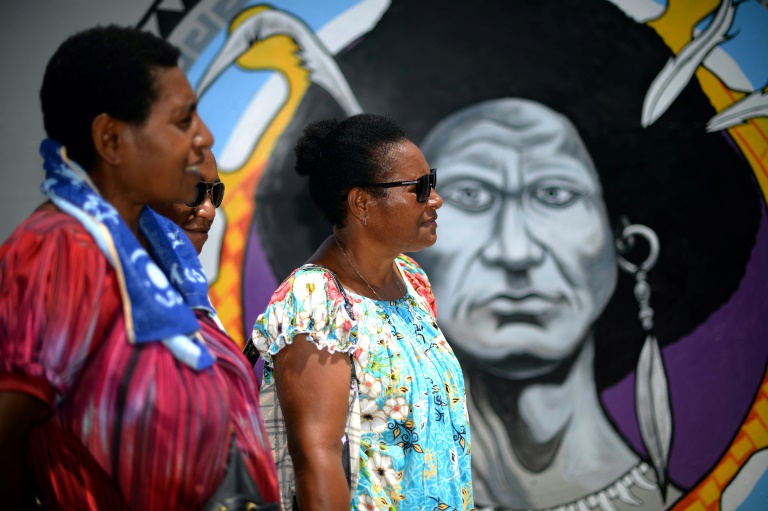
Women are fighting to get at least one seat in Papua New Guinea’s male-dominated parliament when voting opens Monday in a mountainous, forest-clad land scarred by gender-based violence.

Prime Minister James Marape is fending off a challenge from his predecessor Peter O’Neill to lead this resource-rich but poverty-struck Pacific Island for the next five years.

Whoever wins, the new leader will need to cobble together a coalition government, say analysts.

Women, though, are hoping just to have a voice in the 118-seat parliament.

In the nearly 50 years since Papua New Guinea gained independence from Australia, only seven women have ever secured a seat, and not one in the last election in 2017.

“A lot of us really feel like we stand a great chance,” said Sylvia Pascoe, one of 142 women among the almost 3,500 candidates in this election. 

“Not just because the timing is right, but because we’ve spent our lives building up to this moment.”

Statistics on women’s experiences in the country are alarming: 63 percent have been subject to physical, sexual or emotional violence at the hands of their spouses, according to a national survey completed four years ago.

At least 70 percent of both men and women agreed that a man would be justified in beating his wife in at least one of these circumstances: if she burnt food, argued, went out without telling her husband, refused sex, or neglected her children. 

– ‘Brazen’ –

But Pascoe said women were increasingly taking leadership roles in churches, sports and youth groups, and the “drought” in female representation in politics was sparking a change in sentiment ahead of the election.

“At the last elections, nobody was really out there rooting for women,” she told AFP, but women were now expressing a desire to vote for fellow women, and youth groups were singing songs in support of their runs for office.

“People only saw men being leaders. Then suddenly, there was a drought, and they said: ‘Something’s not right, there is no balance.'”

Women in Papua New Guinea have found it hard to overcome perceptions that only men make leaders, said Jessica Collins, Pacific researcher at the independent Sydney-based Lowy Institute think tank.

But there is now more public debate about women’s place in politics, Collins added, with some young, determined female candidates running smart campaigns this year.

“The chance for getting women elected to parliament this time around is probably increasing,” she said.

Elections in Papua New Guinea can be dangerous, however.

At the last general election in 2017, more than 200 voting-related killings were documented by monitors from the Australian National University.

Election malfeasance was “more brazen than ever before”, the monitors said in a report, citing “serious irregularities” such as voter intimidation and multiple voting.

– ‘People are desperate’ –

For women candidates hard-pressed to get financing, the risks can be even greater, said Pascoe, who sometimes ventures into volatile areas without the large security teams her male rivals enjoy.

So far, she had not encountered significant security issues but Pascoe said she had heard stories of crowds throwing stones and bottles at candidates.

“I was in a place the other night where the guy said they haven’t had water for a month,” she said. 

“People are desperate” and when they do not hear what they want from candidates, they can get upset, Pascoe said.

Australia has sent more than 130 troops with transport aircraft to provide security for the vote.

They will assist the thousands of Papua New Guinea police and troops around the country, with the heaviest deployments in the remote and frequently violent highlands provinces.

Further complicating the process, the electoral roll is not up to date, said Pacific analyst Harry Ivarature at the Australian National University. “So the whole integrity of this election is already under question.”

Voting is scheduled to take place over 18 days, with the outcome not expected to be clear until August.

Analysts say the battle to be prime minister could be tight as O’Neill calls for a revival of the resources sector, three years after resigning under pressure over corruption and a failure to spread mining wealth.

In an ethnically diverse country with more than 800 languages, there are few national issues to galvanise voters, and the overriding focus remains on what material benefits candidates can bring to local communities.

Women are hopeful however that their voices can break through.

“We might just see a whole new empowered generation rising out of this,” Pascoe said.

17 dead in southern Ukraine strikes, after Russia quits Snake Island

At least 17 people were killed and dozens wounded Friday in missile strikes on Ukraine’s Odessa region, a day after Russian troops abandoned positions on a strategic island in a major setback to the Kremlin’s invasion. 

The news came after NATO leaders wrapped up a summit in Madrid, with US President Joe Biden announcing $800 million in new weapons for Ukraine.

“We are going to stick with Ukraine, and all of the alliance are going to stick with Ukraine, as long as it takes to make sure they are not defeated by Russia,” he said.

But Russian Foreign Minister Sergei Lavrov compared surging diplomatic tensions to the Cold War, telling reporters: “As far as an Iron Curtain is concerned, essentially it is already descending… The process has begun.”

There was a glimmer of hope however, when Indonesian President Joko Widodo, who visited Moscow on Thursday after a trip to Kyiv, said he had given Russian President Vladimir Putin a message from their Ukrainian counterpart, Volodymyr Zelensky.

Neither side has revealed what was in the note.

Hours after the summit ended, missiles were fired at an apartment building and recreation centre in the southern region of Odessa, a strategic flashpoint that is home to Ukraine’s historic port city of the same name. 

The nine-storey apartment building was partially destroyed, leaving 14 people dead and 30 wounded, including several children, the emergency services said. 

Three people, including a child, were killed and one wounded in the attack on the recreation centre, they said. 

The strikes, in the Bilgorod-Dnistrovsky district, were launched by aircraft that flew in from the Black Sea, said Odessa military administration spokesman Sergiy Bratchuk.

“The worst case scenario played out and two strategic aircraft came to the Odessa region,” he said in a TV interview, adding they had fired “very heavy and very powerful” missiles. 

Bratchuk urged people not to post online information about the rescue operation. 

– ‘Goodwill gesture’ –

The early Friday strikes came a day after Russian troops abandoned their positions on Snake Island, off the coast of Odessa.

The island had become a symbol of Ukrainian resistance in the first days of the war, when the rocky outcrop’s defenders told a Russian warship to “go f*ck yourself” after it called on them to surrender — an incident that spurred a defiant meme.

It was also a strategic target, sitting aside shipping lanes near the port of Odessa. Russia had attempted to install missile and air defence batteries while under fire from drones.

The decision to abandon Snake Island “changes the situation in the Black Sea considerably,” Zelensky said in his daily address Thursday.

“It does not yet guarantee security. It does not yet guarantee that the enemy will not return. But it already considerably limits the actions of the occupiers.”

British Prime Minister Boris Johnson cited Snake Island as he warned the Russian president that any eventual peace deal would be on Ukraine’s terms.

“We’ve seen what Ukraine can do to drive the Russians back. We’ve seen what they did around Kyiv and Kharkiv, now on Snake Island,” Johnson said.

The Russian defence ministry statement described the retreat as “a gesture of goodwill” meant to demonstrate that Moscow will not interfere with UN efforts to organise protected grain exports from Ukraine.

But Ukraine officials claimed it as a win.

“They always downplay their defeats this way,” Ukraine’s Foreign Minister Dmytro Kuleba said on Twitter.

In peacetime, Ukraine is a major agricultural exporter, but Russia’s invasion has damaged farmland and seen Ukraine’s ports seized, razed or blockaded — threatening grain importers in Africa with famine.

Western powers have accused Putin of using the trapped harvest as a weapon to increase pressure on the international community, and Russia has been accused of stealing grain. 

– ‘Direct threat’ –

On Thursday, a ship carrying 7,000 tonnes of grain sailed from Ukraine’s occupied port of Berdyansk, said the regional leader appointed by the Russian occupation forces.

Evgeny Balitsky, the head of the pro-Moscow administration, said Russia’s Black Sea ships “are ensuring the security” of the journey, adding that the port had been de-mined.

Separately, the Russian defence ministry said its forces are holding more than 6,000 Ukrainian prisoners of war who have been captured since the February 24 invasion.

The conflict in Ukraine dominated the NATO summit in Madrid this week, as the alliance officially invited Sweden and Finland to join, and Biden announced new deployments of US troops, ships and planes to Europe.

Russian missiles continued to rain down elsewhere in Ukraine and a United Nations official said Thursday that 16 million people in Ukraine were in need of humanitarian aid. 

In the southern city of Mykolaiv, rescuers found the bodies of seven civilians in the rubble of a destroyed building, emergency services said. 

The city of Lysychansk in the eastern Donbas region — the current focus of Russia’s offensive — is also facing sustained bombardment.

The situation in Lysychansk — the last major city the Russians need to take over in the Lugansk region — was “extremely difficult” with relentless shelling making it impossible to evacuate civilians, regional governor Sergiy Gaiday said. 

“There is a lot of shelling… The Russian army is approaching from different directions,” he said in a video posted on Telegram. 

Xi hails China's rule over Hong Kong at handover anniversary

President Xi Jinping hailed China’s rule over Hong Kong on Friday as he led 25th anniversary celebrations of the city’s handover from Britain, insisting that democracy was flourishing despite a years-long political crackdown that has silenced dissent.

Xi’s speech was the finale of a two-day victory lap aimed at celebrating the Chinese Communist Party’s control over the once outspoken business hub after authorities stamped out huge democracy protests.

Since Beijing imposed a national security law on Hong Kong in 2020, opposition has been quashed and most leading pro-democracy figures have fled the country, been disqualified from office or jailed. 

But Xi said Beijing had always acted “for the good of Hong Kong”.

“After reuniting with the motherland, Hong Kong’s people became the masters of their own city,” he said. “Hong Kong’s true democracy started from here.” 

The tightly choreographed trip is the Chinese leader’s first outside of the mainland since the beginning of the Covid-19 pandemic and his first to Hong Kong since the massive protests overwhelmed the city in 2019.

Friday’s ceremony included the inauguration of the city’s new government, led by John Lee — a former security chief who oversaw the police response to those demonstrations.

“After all the storms, everyone has painfully learned that Hong Kong can’t fall into chaos and Hong Kong can’t afford chaos,” Xi said. 

“It must get rid of all disturbances and focus on development.”

– ‘Erosion of autonomy’ –

Friday marks the halfway point of the 50-year governance model agreed by Britain and China under which Hong Kong would keep autonomy and key freedoms, known as One Country, Two Systems. 

The anniversary used to be a prime example of those freedoms in action. 

For years after the handover hundreds of thousands of residents would take part in a march every July 1 to voice political and social grievances.  

But that rally, like all other mass gatherings and protests in Hong Kong, has been banned for more than two years.

Critics, including many western powers, say Beijing has effectively torn up the promise that Hong Kong would retain its way of life after the handover. 

“We made a promise to the territory and its people and we intend to keep it, doing all we can to hold China to its commitments,” British Prime Minister Boris Johnson said Thursday.

The United States and Australia also issued statements timed for the anniversary criticising the erosion of freedoms while Taiwan’s Premier said freedom and democracy had “vanished” in Hong Kong. 

But Xi insisted that One Country, Two Systems was “a good system”.

It “has no reason at all to change and it must be upheld in the long run,” he said in his speech, arguing it safeguarded “the country’s sovereignty, security and development interests”.

– Closed loop –

China still maintains strict zero-Covid controls and Xi’s visit took place under a tightly monitored “closed-loop” system to protect him.

Those coming into the president’s orbit — from the schoolchildren who welcomed him at the train station to the highest-ranking government officials — were made to take daily PCR tests and spend days in a quarantine hotel. 

Parts of the city were closed off, and media coverage was tightly restricted. 

Police moved to eliminate any potential source of embarrassment during Xi’s time in the city, with national security police making at least nine arrests over the past week, and many of the few remaining opposition groups saying they had been warned off protesting. 

Authorities have sought to portray an image of public support for the celebrations.

The city’s main newspapers ran all-red full front pages celebrating the anniversary, and pro-Beijing publications ran bumper editions full of advertisements, with the longest running to 188 pages.  

Friday’s celebrations began with a flag-raising ceremony at the city’s Victoria Harbour, complete with a military flypast and a flotilla spraying plumes of water.

Xi was not present — local media reported he had spent the night in the neighbouring mainland city of Shenzhen and travelled back into the city on Friday morning. 

All events have been closed to the public, but some scattered groups gathered near the flag-raising ceremony to watch the flypast. 

Liu, a 43-year-old restaurant worker, was among those who snapped pictures on her phone as the helicopters, trailing massive Chinese and Hong Kong flags, roared past. 

“Our motherland has taken good care of us and we are thankful,” she said. “I’m hopeful for the next 25 years.”

In a nearby eatery, a 35-year-old tech worker surnamed Cheng said he had no special plans to mark the day. 

“For me and I think some Hong Kongers, the biggest impact we feel is (Xi’s) visit causing huge traffic jams everywhere.”

Bankrupt Sri Lanka's inflation jumps beyond 50%

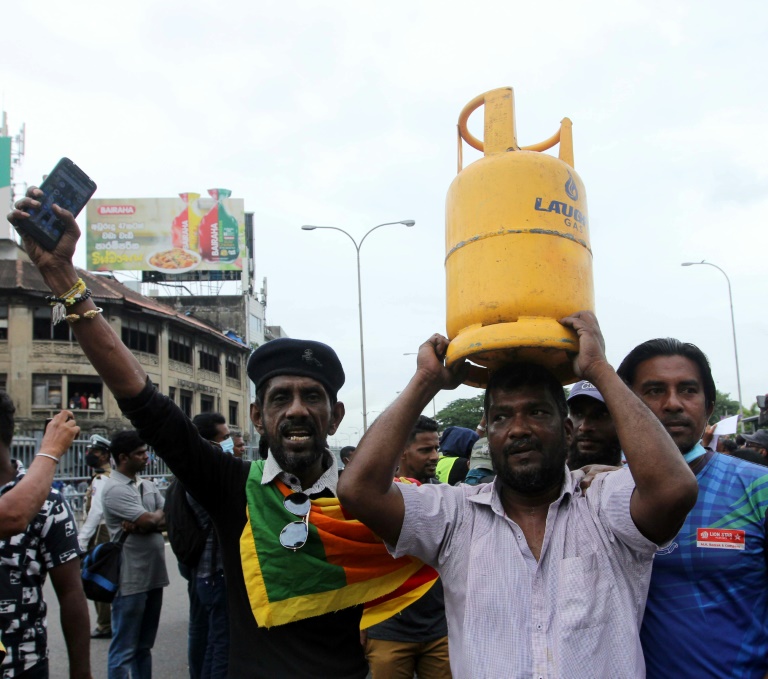
Sri Lanka’s inflation hit a ninth consecutive record in June, official data showed Friday, rising to 54.6 percent a day after the IMF asked the bankrupt nation to rein in galloping prices and corruption.

It was the first time the increase in the Colombo Consumer Price Index (CCPI) crossed the psychologically important 50 percent mark, according to the department of census and statistics.

The figures came hours after the International Monetary Fund urged Sri Lanka to contain spiralling inflation and address corruption as part of efforts to salvage the troubled economy, which has been ravaged by a foreign exchange crisis.

The IMF ended 10 days of in-person discussions with Sri Lankan authorities in Colombo on Thursday following the country’s request for a possible bailout.

The CCPI has been setting new monthly highs since October, when year-on-year inflation stood at just 7.6 percent. In May it reached 39.1 percent.

The rupee has lost more than half its value against the US dollar this year.

Private economists say consumer prices are rising even faster than shown in official statistics.

According to an economist at Johns Hopkins university, Steve Hanke, who tracks price increases in the world’s troublespots, Sri Lanka’s current inflation is 128 percent, second only to Zimbabwe’s 365 percent.

Faced with an acute energy shortage, Sri Lanka is observing a shutdown of non-essential state institutions for two weeks, along with the closure of schools to reduce commuting.

The country’s 22 million people have been enduring acute shortages of essentials — including food, fuel and medicines — for months.

Protests are continuing outside President Gotabaya Rajapaksa’s office demanding his resignation over the unprecedented economic turmoil and his mismanagement.

Sri Lanka went to the IMF in April after the country defaulted on its $51 billion external debt.

China accuses New Zealand of 'misguided' accusations

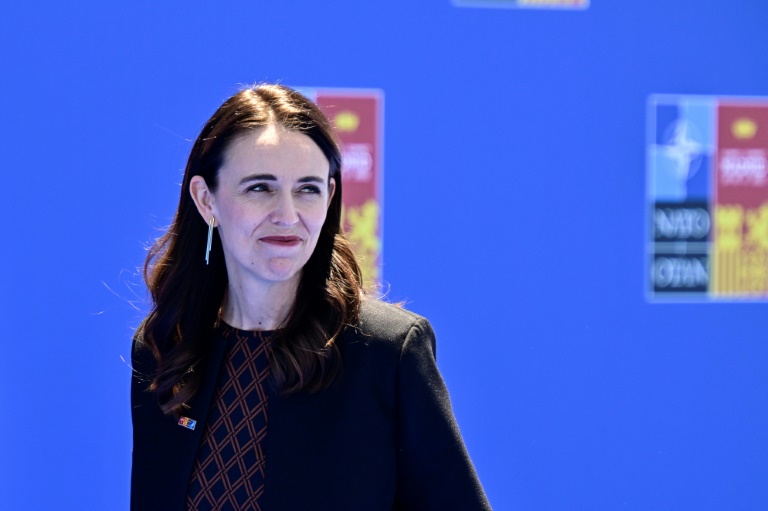
China accused New Zealand Prime Minister Jacinda Ardern on Friday of making “wrong and thus regrettable” statements that were unhelpful for keeping the two countries’ relationship “on the right track”. 

Ardern attended the NATO leaders’ summit in Spain this week, saying in a speech Wednesday that China had become “more assertive and more willing to challenge international rules and norms”. 

The Chinese embassy in Wellington hit back Friday that it had taken note of Ardern’s “misguided” accusations.

“That allegation is wrong and thus regrettable,” the embassy said in a statement posted on its website. 

“It is obvious that such comment is not helpful for deepening mutual trust between the two countries, or for the efforts made by the two countries to keep our bilateral relations on the right track.” 

It is the second time in a month that China has taken issue with comments by Ardern.

In early June, the New Zealand leader and US President Joe Biden issued a joint statement expressing concern over the possibility of China establishing “a persistent military presence in the Pacific”. 

Chinese foreign ministry spokesman Zhao Lijian accused the two leaders at the time of trying to “deliberately hype up” China’s internal issues and said their statement “distorts and smears China’s normal co-operation with Pacific Island countries”. 

China is New Zealand’s biggest trading partner and Wellington has previously sought not to antagonise Beijing. 

Last year, it distanced itself from statements by its “Five-Eyes” intelligence partners — the United States, Britain, Australia and Canada — condemning Beijing’s crackdown on the democracy movement in Hong Kong and its treatment of its Uyghur Muslim population. 

But in her address at the NATO summit, Ardern said that while Europe faced tensions caused by Russia’s invasion of Ukraine, the Pacific was also experiencing “mounting pressure on the international rules-based order.” 

Concerns were heightened in April when China signed a security pact with Solomon Islands, raising fears it could open the door to a Chinese military presence in the South Pacific. 

The Chinese embassy maintained its goal in the South Pacific was to help island states develop and said Beijing “opposes attempts by a small number of countries to impose their own will and so-called values on others under the guise of multilateralism”.

India bans many single-use plastics to tackle waste

India imposed a ban on many single-use plastics on Friday in a bid to tackle waste choking rivers and poisoning wildlife, but experts say it faces severe headwinds from unprepared manufacturers and consumers unwilling to pay more.

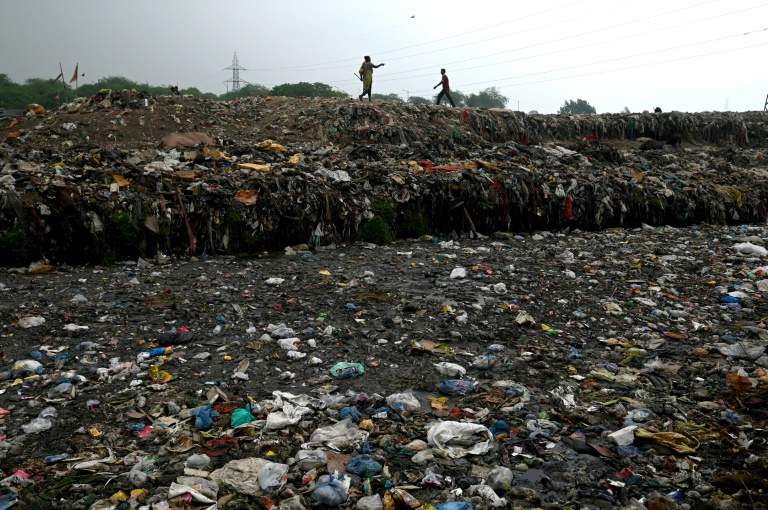
The country generates around four million tonnes of plastic waste per year, about a third of which is not recycled and ends up in waterways and landfills that regularly catch fire and exacerbate air pollution.

Stray cows munching on plastic are a common sight in Indian cities and a recent study found traces in the dung of elephants in the northern forests of Uttarakhand state.

Estimates vary but around half comes from items used once, and the new ban covers the production, import and sale of ubiquitous objects like straws and cups made of plastic as well as wrapping on cigarette packets.

Exempt for now are products such as plastic bags below a certain thickness and so-called multi-layered packaging.

Authorities have promised to crack down hard after the ban — first announced in 2018 by Prime Minister Narendra Modi — came into effect.

Inspectors are set to fan out from Friday checking that no suppliers or distributors are flouting the rules at risk of a maximum fine of 100,000 rupees ($1,265) or five-year jail sentence.

– Industry lobbying –

Around half of India’s regions have already sought to impose their own regulations but as the state of rivers and landfill sites testifies, success has been mixed.

Firms in the plastics industry, which employs millions of people, say that alternatives are expensive and they have been lobbying the government for a delay to the ban.

Pintu, who earns his living hacking the top of coconuts with a machete and serving them to customers with a plastic straw, doesn’t know what he will do.

Switching to “expensive paper straws will be tough. I will likely pass the cost to the customers,” he told AFP in New Delhi.

“I’ve heard it’ll help the environment but I don’t see how it’ll change anything for us,” he added.

GlobalData analysts said small packs with plastic straws make up 35 percent of soft drinks volumes, meaning manufacturers will be “badly hit”.

“(The) price-sensitive masses are unable to foot the bill for eco-friendly alternatives,” Bobby Verghese from GlobalData added.

– ‘Resistance’ –

Jigish N. Doshi, president of industry group Plastindia Foundation, expects “temporary” job losses but said the bigger issue was firms “which had invested huge capital for machines that may not be useful” after the ban. 

“It’s not easy to make different products from machines and the government could help by offering some subsidies and helping develop and purchase alternative products,” Doshi told AFP.

Satish Sinha from environmental group Toxics Link told AFP that “there will be initial resistance” as finding replacements may be hard but it was a “very welcome step”.

“There will be difficulties and we may pay the price but if you’re serious about the environment, this is an important issue that needs a concerted push,” he said.

One young company trying to be part of the change is Ecoware, which makes disposable bio-degradable products at its factory outside Delhi.

Chief executive Rhea Mazumdar Singhal told AFP that the appalling state of landfills and widespread plastic consumption inspired her venture.

“We’ve seen plenty of bans before, but as citizens the power lies with us,” Singhal said.

India bans many single-use plastics to tackle waste

India imposed a ban on many single-use plastics on Friday in a bid to tackle waste choking rivers and poisoning wildlife, but experts say it faces severe headwinds from unprepared manufacturers and consumers unwilling to pay more.

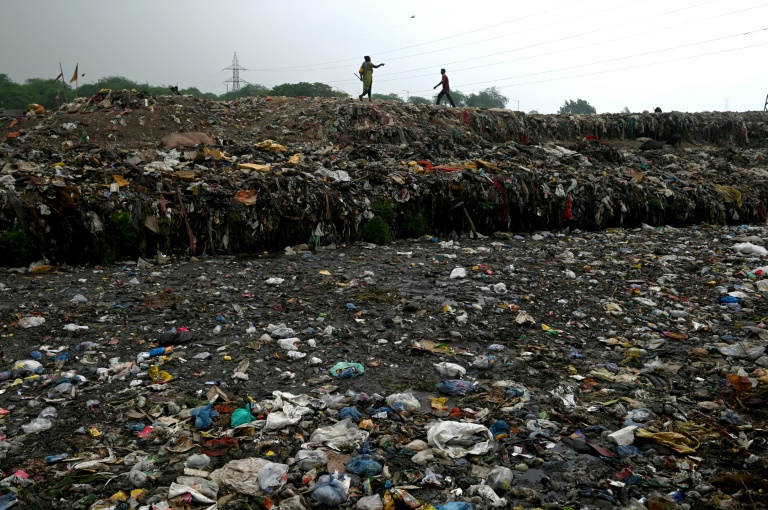
The country generates around four million tonnes of plastic waste per year, about a third of which is not recycled and ends up in waterways and landfills that regularly catch fire and exacerbate air pollution.

Stray cows munching on plastic are a common sight in Indian cities and a recent study found traces in the dung of elephants in the northern forests of Uttarakhand state.

Estimates vary but around half comes from items used once, and the new ban covers the production, import and sale of ubiquitous objects like straws and cups made of plastic as well as wrapping on cigarette packets.

Exempt for now are products such as plastic bags below a certain thickness and so-called multi-layered packaging.

Authorities have promised to crack down hard after the ban — first announced in 2018 by Prime Minister Narendra Modi — came into effect.

Inspectors are set to fan out from Friday checking that no suppliers or distributors are flouting the rules at risk of a maximum fine of 100,000 rupees ($1,265) or five-year jail sentence.

– Industry lobbying –

Around half of India’s regions have already sought to impose their own regulations but as the state of rivers and landfill sites testifies, success has been mixed.

Firms in the plastics industry, which employs millions of people, say that alternatives are expensive and they have been lobbying the government for a delay to the ban.

Pintu, who earns his living hacking the top of coconuts with a machete and serving them to customers with a plastic straw, doesn’t know what he will do.

Switching to “expensive paper straws will be tough. I will likely pass the cost to the customers,” he told AFP in New Delhi.

“I’ve heard it’ll help the environment but I don’t see how it’ll change anything for us,” he added.

GlobalData analysts said small packs with plastic straws make up 35 percent of soft drinks volumes, meaning manufacturers will be “badly hit”.

“(The) price-sensitive masses are unable to foot the bill for eco-friendly alternatives,” Bobby Verghese from GlobalData added.

– ‘Resistance’ –

Jigish N. Doshi, president of industry group Plastindia Foundation, expects “temporary” job losses but said the bigger issue was firms “which had invested huge capital for machines that may not be useful” after the ban. 

“It’s not easy to make different products from machines and the government could help by offering some subsidies and helping develop and purchase alternative products,” Doshi told AFP.

Satish Sinha from environmental group Toxics Link told AFP that “there will be initial resistance” as finding replacements may be hard but it was a “very welcome step”.

“There will be difficulties and we may pay the price but if you’re serious about the environment, this is an important issue that needs a concerted push,” he said.

One young company trying to be part of the change is Ecoware, which makes disposable bio-degradable products at its factory outside Delhi.

Chief executive Rhea Mazumdar Singhal told AFP that the appalling state of landfills and widespread plastic consumption inspired her venture.

“We’ve seen plenty of bans before, but as citizens the power lies with us,” Singhal said.

Close Bitnami banner
Bitnami