World

Recession fears weigh on European, Asian stocks

Asian and European stock markets nursed losses Wednesday on resurgent fears that sharp interest rate hikes aimed at tackling runaway inflation could spark recession.

Bourses in Paris, Frankfurt, Tokyo and Hong Kong all lost around one percent or more, taking their cues from Tuesday’s rout on Wall Street following a gloomy US consumer confidence report.

US stocks stabilized on Wednesday, with the Dow adding 0.3 percent while the S&P 500 and the tech-heavy Nasdaq dipped slightly..

European sentiment also was rocked by data showing Spanish inflation rocketed to a 37-year peak of 10.2 percent in June on rising energy and food prices. 

The news sent the Madrid stock market down 1.6 percent, with Frankfurt falling 1.7 percent. Paris gave up 0.9 percent and London shed 0.2 percent.

“So much for the big stock market comeback. Another day, another sea of red on the market,” said AJ Bell investment director Russ Mould.

The selloff followed more than a week of global gains caused by hopes that any signs of contraction could give central banks room to ease up on the aggressive pace of monetary tightening.

“It does look like we are still in the first phase of this bear market, where indices are prepared to drop on the slightest bit of bad news, and any rally is short-lived,” said Chris Beauchamp at online trading platform IG.

New York stocks tanked Tuesday on data showing confidence among US consumers — a key driver of the world’s top economy — had fallen to its lowest level in more than a year, re-igniting worries over the strength of the world economy.

The data eclipsed news of a surprise move by China to slash the quarantine period for incoming travelers that had raised hopes for further relaxations that can allow the giant economy to recover more quickly.

Updated first quarter US GDP data released Wednesday chopped the personal consumption growth figure to 1.8 percent, from 3.1 percent, an indication that even at the beginning of the year consumers were feeling crimped by rising prices.

– ‘Down the drain’ –

“With signs that consumer confidence is seeping away, worries that global growth will go down the drain have returned to rattle financial markets,” said Susannah Streeter, senior investment and markets analyst at Hargreaves Lansdown.

“Covid restrictions may have eased for international travelers to China as infections rates slow, but one global problem is being replaced by another — fear that recessions are looming around the world.”

City Index analyst Fawad Razaqzada said there is a threat of high inflation and recession, a phenomenon economists call stagflation.

“That is where the global economy is headed, and central banks won’t be able to do much about it,” he said in a note to clients. 

“If they fasten their belts too tightly, this will hit GDP, while if they loosen their belts again, this will only fuel inflationary pressures further.”

– Key figures at around 2020 GMT –

New York – Dow: UP 0.3 percent at 31,029.31 (close)

New York – S&P 500: DOWN 0.1 percent at 3,818.83 (close)

New York – Nasdaq: DOWN less than 0.1 percent at 11,177.89 (close)

London – FTSE 100: DOWN 0.2 percent at 7,312.32 (close)

Frankfurt – DAX: DOWN 1.7 percent at 13,003.35 (close)

Paris – CAC 40: DOWN 0.9 percent at 6,031.48 (close)

EURO STOXX 50: DOWN 1.0 percent at 3,514.32 (close)

Tokyo – Nikkei 225: DOWN 0.9 percent at 26,804.60 (close)

Hong Kong – Hang Seng Index: DOWN 1.9 percent at 21,996.89 (close)

Shanghai – Composite: DOWN 1.4 percent at 3,361.52 (close)

Brent North Sea crude: DOWN 1.5 percent at $116.26 per barrel

West Texas Intermediate: DOWN 1.8 percent at $109.78 per barrel

Euro/dollar: DOWN at $1.0444 from $1.0519 Tuesday

Pound/dollar: DOWN at $1.2119 from $1.2184

Euro/pound: DOWN at 86.15 pence from 86.33 pence

Dollar/yen: UP at 136.66 yen from 136.14 yen

burs-jmb/hs
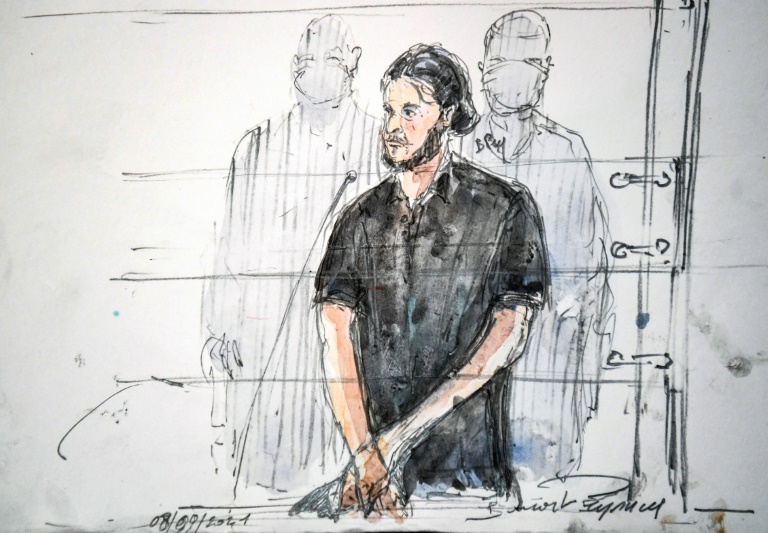
Salah Abdeslam: Paris attacker facing rest of life in jail

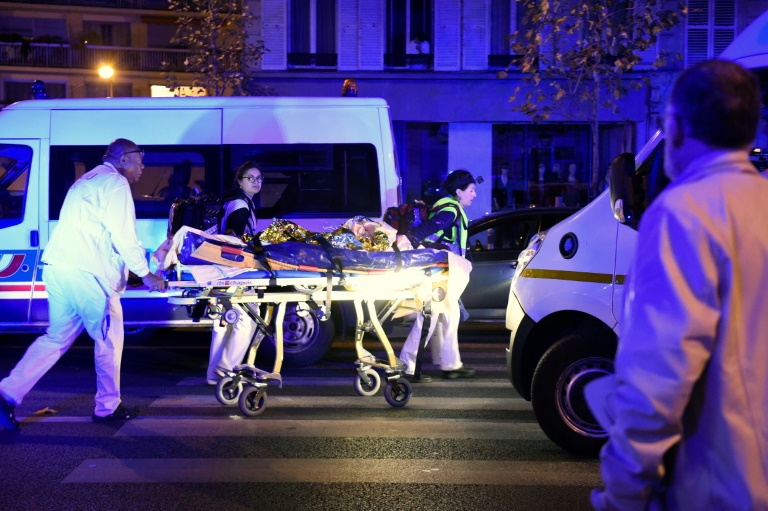
Salah Abdeslam, handed a life sentence on Wednesday for his role in the November 2015 attacks on Paris, is the sole surviving member of the terror cell that massacred 130 people in the French capital.

Abdeslam was sentenced to a whole-life term, which offers only a small chance of parole after 30 years, only the fifth time in French legal history such a punishment has been handed out.

A Brussels native with a long criminal record, he was also a pot-smoking lover of parties and casinos before falling under the thrall of radical Islam.

The court heard how he and elder brother Brahim moved from a life of drugs and delinquency in the crime-ridden Molenbeek area of the Belgian capital to dreaming of an Islamic caliphate.

The pair ran a dingy local bar, Les Beguines, which was a dealers’ hangout before becoming a secret location for watching extreme IS videos after the group seized territory in Iraq and Syria from 2014.

“I tell you: we fought against France, we attacked France. We targeted the population, civilians, but in reality, it was nothing personal against these people,” an unrepentant Abdeslam said in September as the trial opened, parroting IS propaganda.

His descent into the Islamist death cult came under the influence of his childhood friend Abdelhamid Abaaoud, who became a key IS recruiter and ringleader for the Paris attacks.

In February 2015, Brussels police summoned Abdeslam to discuss Abaaoud who had appeared in a gruesome video from Syria, showing him driving a pick-up that was dragging mutilated bodies to a mass grave.

“Apart from the jihad, he’s a good guy,” Abdeslam said during an interview, hiding his own plans to follow other Molenbeek locals to Syria. 

– ‘Not going to do it’ –

Over the course of the nine-month Paris trial, the one-time tram technician outwardly changed, dropping his early bravado and defiance to become more outwardly remorseful.

He blamed his early behaviour on his detention conditions — solitary confinement with round-the-clock video surveillance since his arrest in March 2016.

“When I arrived in this setting, after six years of isolation where they prevented me from talking to anyone, it was a social shock,” he said, adding that he had “been a bit hard with words and I regret it”.

In April, after months of refusing to testify, he declared that he would account for himself to prove that he was not “the monster without humanity” that he had been made out to be.

According to his version of events, he was approached by Abaaoud to take part in the Paris attacks as a suicide bomber two days before the mission.

“It was a shock for me,” he told the court, but “I ended up accepting.”

After dropping off three bombers outside the national stadium on the night, his job was to detonate himself in a bar in the trendy 18th district of the capital.

“I go into the cafe, I order a drink, I look at the people around me and I say to myself ‘no, I’m not going to do it’,” he told the court.

He discarded his suicide vest in a bin and fled back to Brussels where he went on the run for four months.

His brother Brahim embraced his mission, gunning down young people in cafes before blowing himself up.

– ‘A terrorist’ –

The prosecution highlighted inconsistencies in his account and also pointed to handwritten letters, full of grammatical mistakes, which he wrote while in hiding.

“My dear younger sister, I imagine it must be difficult for you to be separated from your two brothers, and everyone is calling us terrorists as well. Understand that we only terrorised infidels,” he wrote.

In April, Abdeslam sobbed in court and pleaded for forgiveness after weeks of testimony from survivors about their loss and injuries. 

In his final statement, he begged the judges not to punish him for the crimes of others, seeking to emphasise that he had not killed anyone himself.

“I made mistakes, it’s true. But I’m not a murderer, I’m not a killer,” he said. 

Observers were left wondering whether the man at the start of the trial had seen the light after coming face-to-face with the people his actions harmed.

“They’re still people, who did unspeakable things, but they’re still people, so I imagine that they were affected,” survivor Bruno Poncet told AFP of Abdeslam and the 13 other accused in court.

“I think that Salah Abdeslam behaved like a terrorist, that his brother was a terrorist and that he, even after the event, was still a terrorist,” lawyer Gerard Chemla, who was acting on behalf of victims, told AFP.

“After that, the rest leaves me rather indifferent.”

Journalist murdered in Mexico, 12th this year

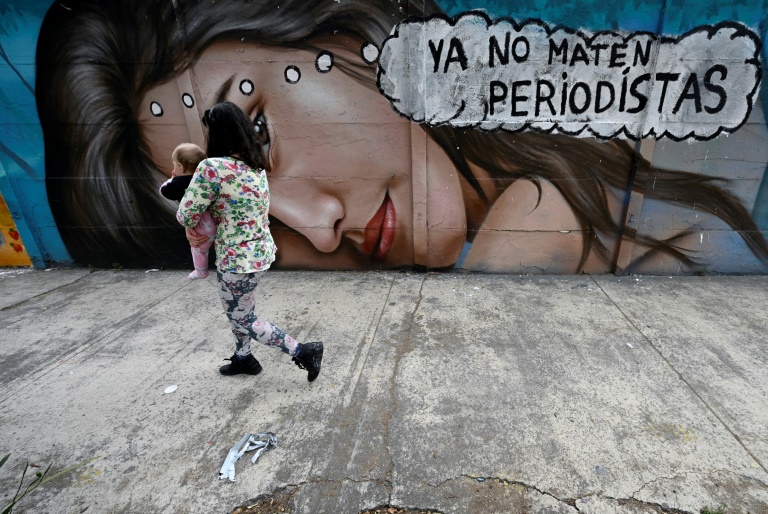
A Mexican reporter was shot dead on Wednesday in the violence-plagued northeastern state of Tamaulipas — the 12th journalist killed so far in a particularly bloody year for the country’s press.

Antonio de la Cruz, who worked for the newspaper Expreso, had frequently denounced alleged acts of corruption by politicians in his posts on social media.

His wife and daughter were injured in the attack, which took place as the reporter was leaving his home in Ciudad Victoria.

“We must not allow more attacks on journalists and activists. These crimes will not go unpunished,” President Andres Manuel Lopez Obrador’s spokesman, Jesus Ramirez, tweeted.

Expreso demanded “justice from authorities at all levels.”

In 2018, another one of the newspaper’s journalists, Hector Gonzalez, was beaten to death.

This year is already one of the deadliest yet for the Mexican press, prompting calls for an end to a culture of impunity.

Doctors were fighting to save the life of De la Cruz’s daughter, State Governor Francisco Cabeza de Vaca said, urging prosecutors to ensure “that this cowardly crime does not go unpunished.”

– ‘Family man’ –

De la Cruz, who had been a journalist for 15 years, was also a spokesman for a political party, Movimiento Ciudadano.

Gustavo Cardenas, a state legislator for the party, described De la Cruz as “a family man, a good man” who had sought to expose alleged corruption by local authorities.

“The main suspects are in the state government… I have not the slightest doubt that a significant responsibility falls on these men,” he said.

Media rights group Reporters Without Borders urged authorities to carry out “a prompt investigation” into the murder and whether it was linked to De la Cruz’s journalistic work.

The Tamaulipas prosecutor’s office confirmed the murder and said that it was investigating the case under protocols for dealing with crimes against freedom of expression.

More than 150 journalists have been murdered since 2000 in Mexico, one of the world’s most dangerous countries for the media, with only a fraction of the crimes resulting in convictions.

The United States and the European Parliament have urged Mexico to ensure adequate protection for journalists following the recent string of killings.

Lopez Obrador has vowed “zero impunity” for the crimes.

Before de la Cruz’s murder, the government had considered that nine of this year’s victims were killed because of their media work.

It has reported the detention of 26 suspects in the murders, nine of whom have been formally charged.

Tamaulipas is one of the Mexican states most affected by violence involving drug cartels, which have repeatedly tried to silence the press with attacks, according to rights groups.

In 2012 a car bomb exploded in front of Expreso’s offices, although nobody was injured.

In 2018, a human head was left outside its offices.

Paris attacker sentenced to whole life in prison

The sole surviving member of an Islamic State terror cell that killed 130 people in Paris in November 2015 was handed a whole-life sentence by a French court on Wednesday, the toughest punishment possible.

Salah Abdeslam, a 32-year-old Frenchman of Moroccan origin, was captured alive by police four months after the bloodbath.

The sentence was read out by the head of a five-judge panel overseeing the marathon trial of 20 men accused of involvement in the worst peace-time atrocity in modern French history.

The other 19 suspects, accused of either plotting or offering logistical support, were found guilty, with their sentences ranging from two years to life in prison.

Hundreds of survivors and witnesses have attended proceedings since their start in September and they packed out the benches of the specially constructed courtroom as the verdicts were read out.

A team of 10 Islamic State jihadists laid siege to the French capital, attacking the national sports stadium, bars and the Bataclan concert hall in an assault that traumatised the country.

The trial has been the biggest in modern French history, the culmination of a six-year, multi-country investigation whose findings run to more than a million pages.

– Change of heart? –

Abdeslam had begun his appearances by defiantly declaring himself as an “Islamic State fighter”, but finished apologising to victims and asking for leniency.

His lawyers had argued against the whole-life sentence, which prosecutors had called for.

It offers only a small chance of parole after 30 years and has been pronounced only four times since being created in 1994. 

The former pot-smoking party lover discarded his suicide belt on the night of the attack and fled back to his hometown, Brussels, where many of the extremists lived.

He told the court that he had a change of heart and decided not to kill people. 

But prosecutors have argued that he shared the murderous intent of the rest of the attack team and that his equipment simply malfunctioned.

“Those who committed these heinous crimes are nothing more than lowlife terrorists and criminals,” prosecutor Nicolas Le Bris said in his closing statement earlier this month.

The November 2015 attacks deeply traumatised France, with the choice of targets — music and sports venues, the capital’s famed bars and cafes — and the manner of the violence seemingly designed to inflict maximum shock.

The huge loss of life marked the start of a gruesome and violent period in Europe, as IS claimed responsibility for numerous attacks across the continent.

France, under then president Francois Hollande, who testified at the trial, ramped up its military campaign to defeat the extremists in Syria and Iraq.

– Other suspects –

In the absence of the rest of the attackers, the men on trial besides Abdeslam are suspected of offering logistical support or plotting other attacks.

Only 14 out of the 20 appeared in person, with the rest missing, presumed dead.

One of them, Mohamed Abrini, has admitted to driving some of the Paris attackers to the capital and explained how he was meant to take part but backed out.

The 37-year-old also started out justifying IS violence as part of a fight against Western countries, but ended by apologising to victims in the trial’s final stages. 

The court handed him a life sentence with 22 years as a minimum term.

Also on trial is Swedish citizen Osama Krayem, who has been identified in a notorious IS video showing a Jordanian pilot being burned alive in a cage.

The overall commander of the Paris attacks, senior Syria-based IS figure Oussama Atar, was also tried in absentia but is presumed dead.

Toll in migrant trailer tragedy rises to 53

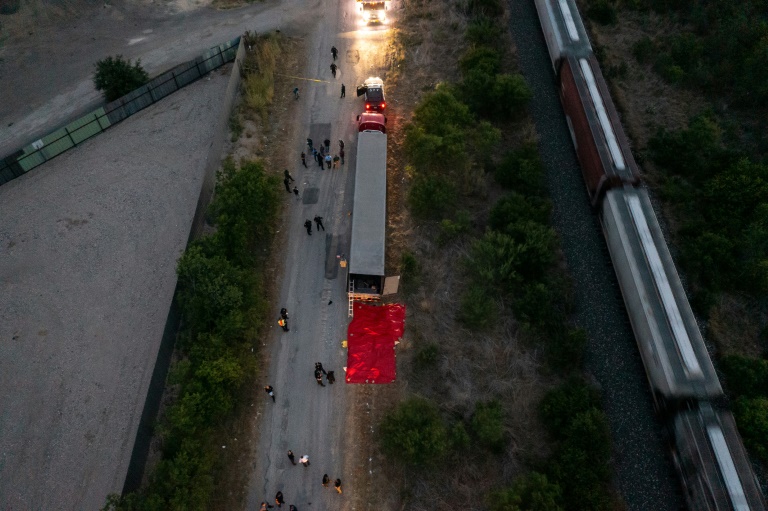
The number of migrants who died in San Antonio, Texas after they were abandoned in a red-hot trailer rose to 53 Wednesday,  US immigration authorities said.

Eleven others remained under treatment in local hospitals, Immigration and Customs Enforcement said, without specifying their conditions.

That was up from Tuesday, when local officials put the number of dead at 51, including 39 men and 12 women.

According to Francisco Garduno, head of Mexico’s National Migration Institute, the dead included 27 Mexicans, 14 Hondurans, seven Guatemalans, and two Salvadorans.

The nationalities of the other three were not yet revealed.

San Antonio police were first alerted to the trailer by an emergency call at about 5:50 pm local time (2250 GMT) on Monday.

A worker near an isolated road in San Antonio heard a cry for help, went to investigate the trailer and found a number or corpses inside.

Federal law enforcement agents on Tuesday arrested two men at the address linked to the tractor-trailer’s registration, court documents showed.

Juan Francisco D’Luna-Bilbao and Juan Claudio D’Luna-Mendez, both Mexican nationals whose US tourist visas had expired, were illegally in possession of multiple firearms, the documents alleged.

A third person, suspected of being the driver of the tractor-trailer, was arrested nearby while “very high on meth,” reported the local daily San Antonio Express-News, citing a law enforcement officer.

Subscription version of Snapchat makes its debut

US tech firm Snap on Wednesday launched a subscription version of Snapchat as it looks to generate more money from the image-centric, ephemeral messaging app.

Snapchat+ is priced at $4 a month and will provide access to exclusive features, the California-based company said in a blog post. It said that these would include priority tech support and early access to experimental features.

The subscription version of the service is making its debut in Australia, Britain, Canada, France, Germany, New Zealand, Saudi Arabia, the United Arab Emirates, and the United States, Snap said.

Snap in February reported its first quarterly profit, but two months later warned that it saw the economic outlook as having darkened considerably.

The company said that more than 332 million people around the world use Snapchat daily.

“This subscription will allow us to deliver new Snapchat features to some of the most passionate members of our community,” Snap said in the blog post.

Alarm mounts over escalating Ethiopia-Sudan border tensions

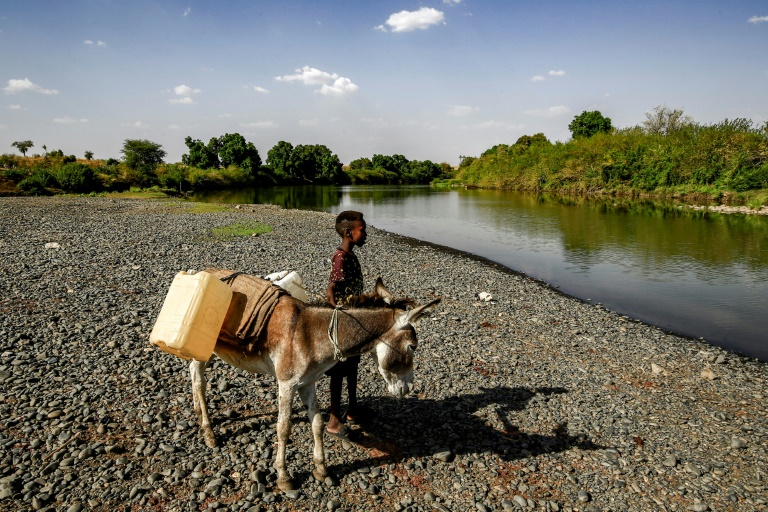
Regional leaders voiced alarm Wednesday over escalating tensions between Ethiopia and Sudan in a disputed border area and appealed for dialogue to stem the crisis.

The calls by the African Union and another regional grouping followed claims by Khartoum that the Ethiopian army had executed seven Sudanese soldiers and a civilian during a clash in the volatile Al-Fashaqa area last week – allegations denied by Addis Ababa.

Sudan announced Monday it would recall its ambassador to Addis Ababa over the incident in Al-Fashaqa, a fertile strip of land that has long been a source of friction between the two states.

AU Commission chief Moussa Faki Mahamat “is following with deep concern the escalating military tension between the Federal Democratic Republic of Ethiopia and the Republic of Sudan and deeply regrets the loss of life at their common border,” the pan-African body said in a statement.

“The chairperson appeals for complete refrain from any military action whatever its origin and calls for dialogue between the two brotherly countries to solve any dispute.”

The AU’s concern was echoed by another regional bloc, the Intergovernmental Authority on Development (IGAD), which also called on the two countries “to actively seek diplomatic means to find a lasting and sustainable solution on the matter”.

– ‘Perfidious act’ –

Later Wednesday, Ethiopian Prime Minister Abiy Ahmed also called for restraint.

“We need to keep calm and show restraint… for the sake of our shared interests and good-neighbourliness,” he said in an Arabic-language statement addressed to the Sudanese and Ethiopian peoples.

Sudan on Monday accused Ethiopia of capturing the soldiers in Al-Fashaqa on June 22, announcing it was recalling its envoy and would lodge a complaint with the UN Security Council and regional organisations.

The army, which has been in power since a coup in October 2021, vowed that the “perfidious act will not pass”.

And on Wednesday, the military published photographs of the slain soldiers, along with their names and ranks.

But Addis Ababa has in turn claimed that Sudanese forces crossed into Ethiopian territory and that the casualties resulted from a skirmish with a local militia, denying its soldiers were in the area at the time.

The Ethiopian government said it rejected the “misrepresentation of facts” and that the incident was “deliberately concocted” to undermine relations.

The Sudan Tribune newspaper reported that the Sudanese army had launched an attack Tuesday on Ethiopian troops in the Al-Fashaqa area but this was denied by army spokesman Nabil Abdalla.

“We have not attacked anyone and we will not and we are not planning that. But we will not allow any armed force from another country that wants to cross our international border. It’s our right legally to deal with it,” he told AFP in Khartoum.

The report was also denied by the Ethiopian side, with an official saying on condition of anonymity: “This is not true, just unconfirmed and misinformation.”

– Land and water tensions –

On Monday, Sudan’s military leader Abdel Fattah al-Burhan visited Al-Fashaqa, where he instructed soldiers “to not allow any new movements or encroachments on Sudanese lands and against its citizens”.

Khartoum and Addis Ababa have been at odds for years over Al-Fashaqa.

The region, which lies close to Ethiopia’s war-torn northern region of Tigray, has long been cultivated by Ethiopian farmers but is claimed by Sudan.

The dispute has sparked sporadic clashes between the two sides, some fatal.

The rift feeds into wider tensions over land and water between the neighbours, particularly stoked by Ethiopia’s mega-dam on the Blue Nile.

Sudan and Egypt, both downstream countries, have been opposed to the Great Ethiopian Renaissance Dam and pushed for an agreement on the filling of its reservoir and the dam’s operations.

Tensions were heightened further after fighting erupted in Tigray in November 2020, sending tens of thousands of refugees fleeing into Sudan. 

Sudan has been roiled by economic and political turmoil since Burhan led the military coup that upended a transition to civilian rule following the 2019 ouster of president Omar al-Bashir. 

War in Ukraine: Latest developments

Here are the latest developments in the war in Ukraine:

– NATO acts against Russian ‘direct threat’ –

NATO leaders meeting in Madrid say Russia now poses a “direct threat” to the Western alliance and agree to bolster its forces, as its chief Jens Stoltenberg says Ukraine can count on support “as long as it takes”. 

Russia “is the most significant and direct threat to allies’ security and to peace and stability in the Euro-Atlantic area”, the 30 allies say in a statement.

The leaders, meeting to agree strategy amid Moscow’s war in Ukraine, agree to bolster their forces, promising to deploy extra combat-ready troops on the eastern flank. 

US President Joe Biden also announces new deployments of US troops, ships and planes.

NATO also invites longstanding non-aligned Nordic countries Sweden and Finland to join the alliance.

Ukrainian Foreign Minister Dmytro Kuleba welcomes NATO’s “clear-eyed stance on Russia, as well as the accession for Finland and Sweden,” on Twitter.

– NATO ‘destabilising’ the world: Russia –

Moscow says NATO is seeking to contain Russia and that Finland and Sweden’s NATO bids will have a “destabilising” effect on the world.

“The summit in Madrid confirms and consolidates this bloc’s policy of aggressive containment of Russia,” Deputy Foreign Minister Sergei Ryabkov is quoted by Russian news agencies as saying.

“We consider the expansion of the North Atlantic alliance to be a purely destabilising factor in international affairs,” he adds.

– 144 Ukrainian soldiers freed: Kyiv –

Ukraine says that 144 of its soldiers, 95 of whom are former defenders of the Azovstal steelworks in the southern port city of Mariupol, have been freed in a prisoner swap with Moscow.

“This is the largest exchange since the start of the full-scale Russian invasion,” the main intelligence directorate of Ukraine’s defence ministry says on Telegram.

Pro-Russian separatist leader Denis Pushilin also says 144 soldiers from Russia and the Donetsk People’s Republic — the name of the breakaway region recognised by Moscow — have “returned home”.

– Zelensky wary on G20 summit –

Ukraine’s President Volodymyr Zelensky tells Indonesia’s President Joko Widodo that he will attend the upcoming G20 summit in Bali depending on who else is attending.

“Certainly I accept the invitation. Ukraine’s participation will depend on the security situation in the country and on the composition of the summit’s participants,” Zelensky says following their talks in Kyiv, in an apparent reference to Russian President Vladimir Putin’s attendance.

Widodo visited Kyiv before heading to Moscow to meet Putin.

Indonesia holds the rotating presidency of the G20 this year and has come under Western pressure to exclude Putin from the gathering after announcing in April he had been invited.

– Turkey puts NATO enlargement deal to test – 

Turkey says it will seek the extradition of 33 alleged Kurdish militants and coup plot suspects from Sweden and Finland under a deal to secure its support for the Nordic countries’ NATO membership bids.

President Recep Tayyip Erdogan dropped weeks of resistance to the membership bids at crunch talks on the eve of the Madrid summit.

At the talks he secured a 10-point agreement under which the two countries vowed to join Turkey’s fight against banned Kurdish militants and to swiftly extradite suspects.

Turkey subsequently  announced that it would seek the extradition of 12 suspects from Finland and 21 from Sweden.

– Buses, trains to connect Crimea, south Ukraine –

Authorities in Crimea announce the launch of bus and train services between the Moscow-annexed peninsula and Russian-occupied parts of southern Ukraine.

“Starting from July 1, regular bus and train services between Crimea and the regions of Kherson and Zaporizhzhia will be launched for the first time in eight years,” Sergei Aksyonov, the pro-Moscow head of Crimea, says.

Russia’s invasion aimed in part at ending Crimea’s isolation by seizing control of large parts of southeast Ukraine to create a land bridge between Russia and the peninsula, which was seized by Moscow in 2014.

burs-cb-jmy/spm

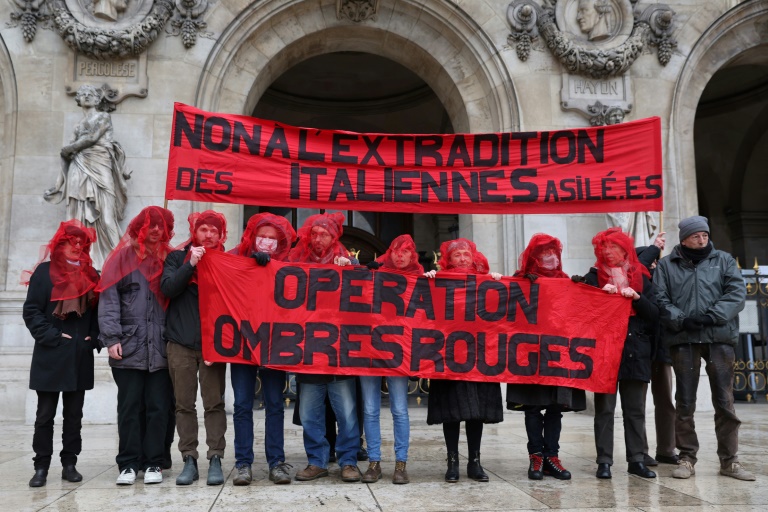
French court blocks extradition of ex-Red Brigades members to Italy

A French appeals court on Wednesday turned down Italy’s request to extradite 10 former members of left-wing Italian extremist groups exiled in France for their involvement in violence decades ago.

The ultra-leftist Red Brigades and other armed groups sowed chaos during the period in Italy known as the “Years of Lead” — referring to the numbers of bullets fired — from the late 1960s to mid-1980s.

The violence left 360 dead and thousands injured.

The French court based its decision on respect for private and family life and the right to a fair trial, said the court’s chief judge. 

Most of the former group members, aged 61 to 78, have been living in France for decades and during the hearings insisted on their links to France and slammed Italy’s “persecution”.

The ruling was greeted with relief by the 10 exiles, who fell into the arms of relatives and loved ones in the courtroom.

“It’s the triumph of rights, humanity and justice,” said lIrene Terrel, lawyer for seven of the people involved.

– ‘Painful page in history’ –

“I’m really pleased for my client,” said lawyer Jean-Louis Chalanset, who represents former Red Brigades member Enzo Calvitti. “I was scared he would end his days in prison.”

The reaction from Rome was swift, with Italian Justice Minister Marta Cartabia saying she awaited the “reasons for a ruling that indiscriminately denies all extraditions”. 

“This is a judgement long awaited by the victims and the entire country, concerning a dramatic and still painful page of our history,” Cartabia said in a statement.

France has long served as a haven for Red Brigades figures under a policy set by former Socialist president Francois Mitterrand, who offered them protection from extradition on the condition that they renounced violence and had not been accused of bloodshed.

But last year current French President Emmanuel Macron gave his green light for the detention and potential extradition of 10 sentenced former members of the Red Brigades or other armed groups, in a bid to remove a long-standing irritant in Franco-Italian ties.

– ‘Death penalty in disguise’ –

“Sending me at 70 to die in prison would be a punishment from the dark ages,” said former Red Brigades member Marina Petrella, 67, before the ruling.

She said the procedures were “traumatic” for her two daughters and grandson after 30 years in France where she worked as a social worker. 

“My life is in your hands, because if I go back to Italy, I will die in an Italian prison,” said Narciso Manenti, 64, who has spent the last 40 years in France, also before the ruling. 

The cases of the eight men and two women all differ. Some have been sentenced in Italy in their absence, while others have spent some time in Italian prisons and another group avoided time behind bars.

“In light of the age of these people, accepting extradition is a death penalty in disguise,” said Terrel in the run-up to the ruling.

In a statement after the ruling, the public prosecutor of the appeals court Remy Heitz said the decision was likely to be subjected to an appeal with France’s Court of Cassation.

And a lawyer for the Italian state, William Julie, said he would wait to see if prosecutors ask for the case to be sent to the Court of Cassation and to know the detailed grounds for the decision. 

Many in Italy believe the 10 should face justice in Italy.

“These murderers have never paid their bill with Italian justice and in light of today’s decision they probably never will,” said Giorgio Meloni, leader of the far-right Brothers of Italy, calling the French decision  “unacceptable and shameful”.

The 1970s in Italy was marked by violent social uprisings. Far-right groups carried out random terror attacks in public areas to maintain a “strategy of tension” in a bid to force the emergence of an authoritarian regime. 

Meanwhile ultra-leftist revolutionary groups carried out targeted assassinations against union members, magistrates, journalists, police officers and politicians. 

The Red Brigades were the most notorious on the left and were blamed for hundreds of murders, including the kidnapping and killing of Christian Democrat leader and former premier Aldo Moro in 1978.

Biden thanks Erdogan, US signals support for Turkish F-16s

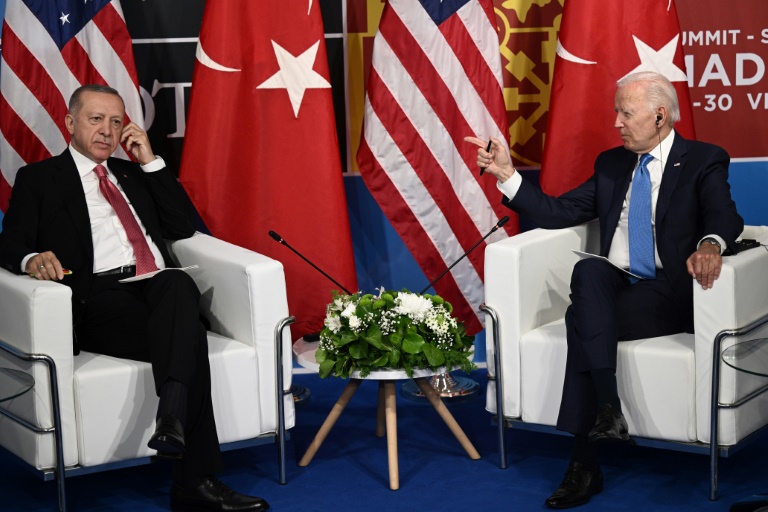
President Joe Biden thanked his Turkish counterpart Recep Tayyip Erdogan on Wednesday for dropping opposition to the entry of Finland and Sweden into NATO, with the US also signalling support for Turkey’s plan to buy F-16 warplanes.

“I want to particularly thank you for what you did putting together the situation with regard to Finland and Sweden,” Biden told Erdogan at a meeting on the sidelines of the NATO summit in Madrid.

A senior US official expressed strong backing for Turkey’s wish to upgrade its air force with new F-16 fighter planes and improvements to its existing older fleet.

“The US Department of Defense fully supports Turkey’s modernization plans,” Celeste Wallander, assistant secretary of defense for international security affairs, told reporters.

“Turkey is a highly capable, highly valued, strategic NATO ally and Turkish defence capabilities, strong Turkish defence capabilities, contribute to strong NATO defence capabilities,” she said.

The warm words from Biden and apparent boost for the delayed F-16 purchases came a day after Turkey surprised fellow NATO members by suddenly dropping weeks of opposition to the Finland and Sweden applications to join the alliance, where unanimous consent is required for enlargement.

On Tuesday, a senior US official stressed that Turkey had not asked for any “particular concession” to give its green light.

Turkey is an important NATO member in a strategically sensitive location, but it has had often tense relations with its European partners and Washington, which is the alliance’s main military force.

A plan to equip Turkey with state-of-the-art US F-35 stealth fighters fell through after Turkey bought Russia’s S-400 anti-aircraft missile system, something Washington saw as potentially threatening the security of the F-35 programme.

Turkey next set out to buy new F-16 fighter jets, as well as upgrades for its existing, but outdated fleet of the same planes. However, that deal is also on hold and there has been speculation that Turkey was holding up the NATO accession bids of the two northern European countries to try and leverage concessions.

“There’s nothing the United States offered in direct connection with this,” the US official said after Turkey ended that obstruction.

“Nothing about Turkish requests to the United States was part of this agreement. This is an agreement strictly among the three countries — Turkey, Finland, Sweden. The United States is not a part of it.”

In brief comments at the start of Wednesday’s meeting with Erdogan, before reporters had to leave the room, Biden also praised the Turkish leader for doing a “great job” on trying to find ways to get Ukrainian wheat out of the country to markets.

Russia’s invasion, including the conquest of swathes of rich agricultural land and coastline, has severely disrupted the flow of grain to international clients, helping trigger an increasingly severe food supply crisis.

The United States and allies say Russia is using food insecurity as a weapon of war, something Moscow denies.

“I’d like to talk to you about those things,” Biden said.

In comments through a translator, Erdogan said he was pleased with the outcome of the Madrid summit.

“Thanks to our efforts, we believe that we will be able to go back to our countries with our hands full and with full satisfaction,” he said.

Regarding the food crisis, Erdogan said “there are countries deprived of the grains and we will open corridors and we will allow them to have access to the grains.”

Close Bitnami banner
Bitnami