World

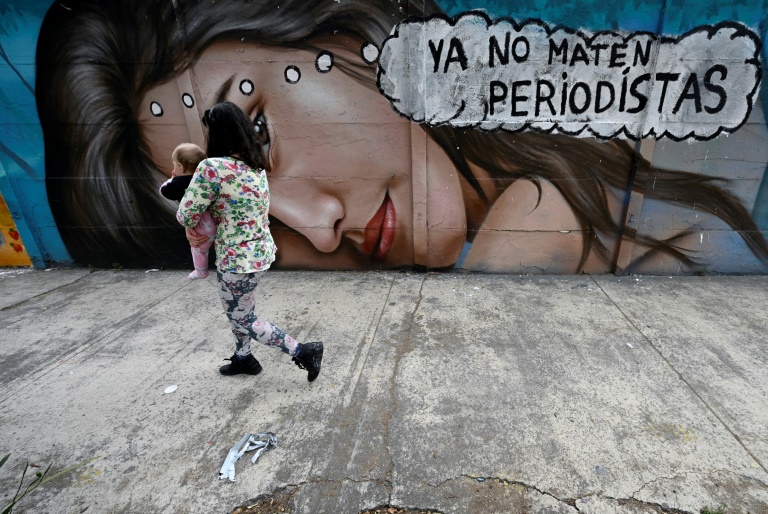
Journalist murdered in Mexico, 12th this year

A Mexican reporter was shot dead on Wednesday in the violence-plagued northeastern state of Tamaulipas, according to the newspaper Expreso where he worked.

Antonio de la Cruz was the 12th journalist killed so far this year in Mexico, which is on course for one of its deadliest years yet for the press.

He had frequently denounced alleged acts of corruption by politicians in his posts on social media.

“Faced with this new act of violence, the publishing group Expreso-La Razon demands justice from authorities at all levels,” the newspaper said.

De la Cruz’s daughter was injured in the attack in Ciudad Victoria, it added.

Tamaulipas state legislator Gustavo Cardenas, who was close to the journalist, told the Milenio television station that De la Cruz’s wife was shot in the head.

More than 150 journalists have been murdered since 2000 in Mexico, one of the world’s most dangerous countries for the media, with only a fraction of the crimes resulting in convictions.

The victims are often reporters working for local media in states riven by drug cartel-related violence.

The United States and the European Parliament have urged Mexico to ensure adequate protection for journalists following the recent string of killings.

Expanding NATO squares up to Russia threat

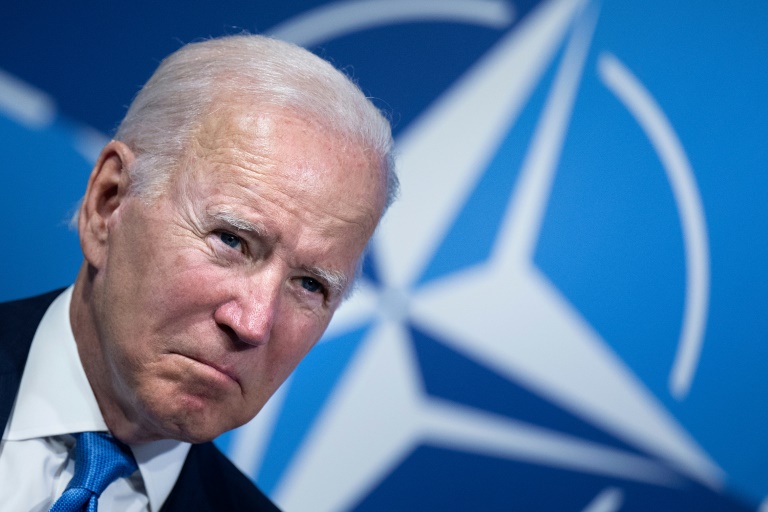
The United States vowed on Wednesday to shore up Europe’s defences in the wake of Russia’s invasion of Ukraine, as NATO declared Moscow the West’s greatest threat.

Meeting in Madrid, alliance leaders said Russia “is the most significant and direct threat to allies’ security and to peace and stability in the Euro-Atlantic area”.

This came as NATO welcomed Sweden and Finland as invitees to join the alliance and US President Joe Biden announced new deployments of US troops, ships and planes.

Biden boasted the US announcement was exactly what President Vladimir Putin “didn’t want” and Moscow, facing fierce resistance from Ukrainian forces equipped with Western arms, reacted with predictable fury.

Deputy Foreign Minister Sergei Ryabkov denounced the US military build-up, and warned NATO members that the shifting balance of power “would lead to compensatory measures on our part”.

“I think that those who propose such solutions are under the illusion that they will be able to intimidate Russia, somehow restrain it — they will not succeed,” he said.

NATO leaders have funnelled billions of dollars of arms to Ukraine and faced a renewed appeal from President Volodymyr Zelensky for more long-range artillery.

“Ukraine can count on us for as long as it takes,” NATO chief Jens Stoltenberg said, announcing a new NATO strategic overview that focuses on the Moscow threat.

“We cannot discount the possibility of an attack against allies’ sovereignty and territorial integrity,” the document, updated for the first time since 2010, said. 

In a summit statement, they said: “Russia’s appalling cruelty has caused immense human suffering and massive displacements, disproportionately affecting women and children.”

Zelensky had earlier addressed the NATO chiefs by videoconference, calling for stricter economic sanctions, but afterwards his foreign minister Dmytro Kuleba thanked Ukraine’s western friends.

– ‘What needs to be done’ –

“Today in Madrid, NATO proved it can take difficult but essential decisions. We welcome a clear-eyed stance on Russia, as well as the accession for Finland and Sweden,” he said. 

“An equally strong and active position on Ukraine will help protect Euro-Atlantic security and stability.”

While US and European chiefs expressed backing for Ukraine in Madrid, Indonesian President Joko Widodo became the first Asian leader to visit Kyiv since the war began.

Zelensky said he had accepted an invitation to attend the upcoming G20 summit in Bali, depending “on the security situation in the country and on the composition of the summit’s participants”.

It is not clear whether Putin will also be on the guest list in November, with some capitals pushing for his exclusion. 

As Western leaders met in Madrid, in Ukraine officials complained that Russian missiles had hit civilian housing and businesses in and around the cities of Dnipro, Mykolaiv and Kharkiv, leaving at least seven dead and 14 wounded.

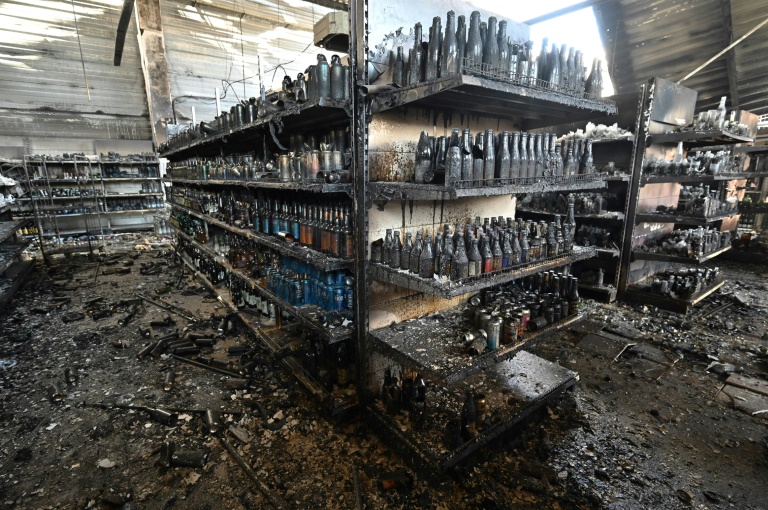
In Kremenchuk, the town where a Russian missile on Monday destroyed a shopping centre and — according to local officials — killed at least 18 civilians, clearing operations continued.

A giant crane was working near the site of the impact and in the rubble-strewn parking area shopping trolleys piled with clothes and household goods lay abandoned.

Western leaders have dubbed the Kremenchuk strike a war crime, and Zelensky has demanded that UN investigators visit. Russia says it hit a depot storing Western arms. 

– Foreign ‘mercenaries’ –

Ukrainian officials said that 144 of their soldiers, most of them former defenders of the Azovstal steelworks in the southern port city of Mariupol, had been freed in a prisoner swap with Moscow.

The Russian defence ministry said it had inflicted severe casualties on Ukrainian troops defending the town of Lysychansk, in the eastern Donbas region, and said the Kharkiv attack had hit Ukrainian command centres and a training base for foreign “mercenaries”.

Moscow’s February 24 invasion of pro-Western Ukraine triggered massive economic sanctions and a wave of support for Zelensky’s government, including deliveries of advanced weapons. 

At NATO, two formerly military non-aligned European countries — Sweden and Russia’s north-western neighbour Finland — will be accepted as candidates and Washington has announced that it will shift the headquarters of its 5th Army Corps to Poland.

An army brigade will rotate in and out of Romania, two squadrons of F-35 fighters will deploy to Britain, US air defence systems will be sent to Germany and Italy and the fleet of US Navy destroyers in Spain will grow from four to six.

“That’s exactly what he didn’t want but exactly what needs to be done to guarantee security for Europe,” Biden said, of Putin’s efforts to roll back Western influence and re-establish influence or control over territories of the former Russian empire.

– Missile artillery –

Sweden and Finland’s path to NATO membership was opened after Turkey’s President Recep Tayyip Erdogan agreed to lift his threat of a veto — the ally accuses Stockholm and Helsinki of harbouring wanted Kurdish militants.

Turkey announced Wednesday that it would request the extradition of 33 alleged “terrorists” under the terms of the agreement signed Tuesday with Sweden and Finland to allow them to make membership bids.

A sanctions task force of leading Ukraine allies has frozen more than $330 billion in financial resources owned by Russia’s elite and its central bank since Moscow’s invasion, it announced Wednesday. 

The Russian Elites, Proxies, and Oligarchs Task Force (REPO) said the allies had blocked $30 billion in assets belonging to Russian oligarchs and officials, and immobilised $300 billion owned by the Russian central bank.

Norway said it would donate three multiple-launch rocket systems to Ukraine, following similar decisions made by Britain, Germany and the United States.

burs-dc/kjm

Canada opens new embassies in eastern Europe amid Ukraine war

Canada said Wednesday it would boost its diplomatic presence in central and eastern Europe as well as the Caucasus, opening four new embassies to “help counter Russia’s destabilizing activities” in the region, as the war in Ukraine drags on.

The announcement came as Group of Seven and NATO leaders including Canadian Prime Minister Justin Trudeau meet this week, with how best to support Kyiv in its battle with Moscow atop the agenda of both summits.

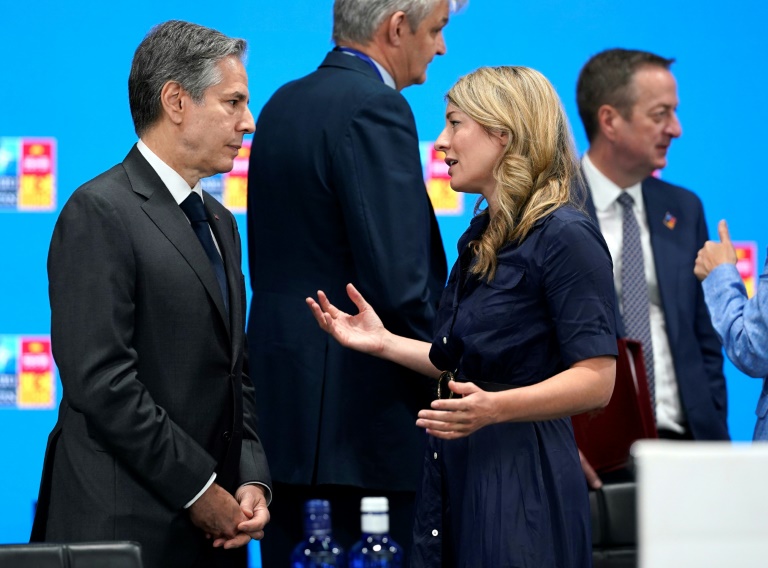
“Canada is announcing that we are increasing our diplomatic footprint. Canada will be opening four new embassies in Estonia, Lithuania, Slovakia and Armenia,” Foreign Minister Melanie Joly said on the sidelines of a NATO summit in Madrid.

“This diplomatic expansion will help guide Canada’s response to evolving security threats, enhance political and economic cooperation to support European allies, and further counter the impacts of the Russian invasion of Ukraine and support Armenia in its democratic development,” the ministry said in a statement.

The ministry said the changes would also “further enhance Canada’s engagement in the region, help counter Russia’s destabilizing activities and increase support for Operation REASSURANCE.”

That international military operation, under which 1,400 Canadian soldiers are deployed in Latvia, is currently Ottawa’s biggest. Its goal is to reinforce NATO’s collective defense.

“We believe that diplomacy remains one of the most effective ways to support security and stability,” Joly said in Madrid.

US Speaker Pelosi takes Communion at St Peter's: media

US Speaker of the House Nancy Pelosi received Communion at St. Peter’s Basilica Wednesday, according to a local news report, after being barred from the sacrament in her home city of San Francisco.

Last month, the archbishop of San Francisco, Salvatore Cordileone, informed the top Democrat in Congress and lifelong Catholic that she would no longer be allowed to take Communion due to her support of abortion rights.

Catholic online newspaper Crux Now reported Wednesday that Pelosi, who was seen by an AFP photographer attending the mass with family members, received Communion from one of the priests present.

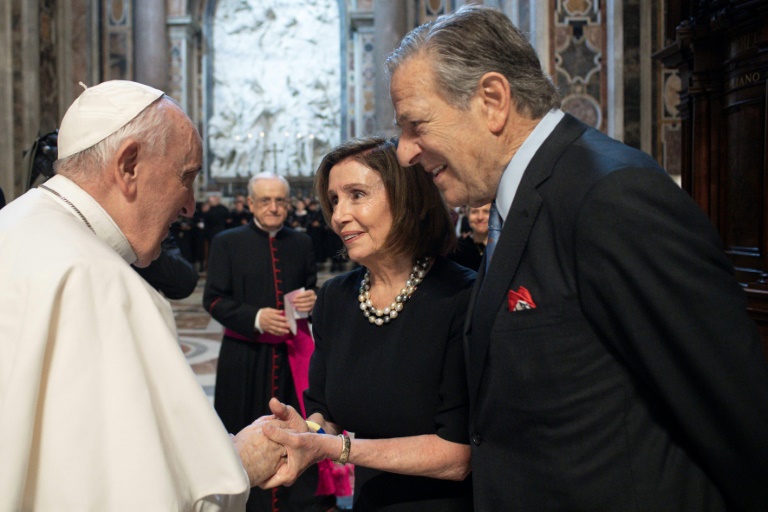
Photos distributed by the Vatican showed Pelosi, with husband Paul at her side, clasping hands with Pope Francis inside the basilica.

The Vatican and US embassy did not immediately respond to an AFP request to comment on Pelosi’s visit on Wednesday.

Pelosi is a vocal advocate of abortion rights and last week condemned the US Supreme Court’s reversal of the federally guaranteed right to abortion.

She urged Americans to vote out Republicans “charging ahead with their crusade to criminalise health freedom” in November’s midterm elections. 

In a letter released in May, Cordileone — a Church hard-liner in the highly progressive Western city — said he had warned Pelosi that unless she publicly repudiated her position on abortion or stopped referring to her Catholic faith and taking communion, she would be barred from the rite. 

“I am hereby notifying you that you are not to present yourself for Holy Communion and, should you do so, you are not to be admitted to Holy Communion, until such time as you publicly repudiate your advocacy for the legitimacy of abortion and confess and receive absolution of this grave sin in the sacrament of Penance,” wrote Cordileone, who is also a staunch opponent of gay marriage.

Pelosi, like US President Joseph Biden, is open about her Catholic faith and both support the right to choose in the divisive debate over abortion. 

Pope Francis, 85, has labelled abortion “murder” yet has distanced himself from a push by conservative US bishops to deny Communion to politicians supportive of abortion rights. 

Ahead of G20 talks in Rome last October, Biden met for more than an hour with the pontiff, telling reporters later that Francis had told him he was “happy I was a good Catholic and I should keep receiving Communion.”

Following mass, Pelosi visited Rome’s lay Catholic community of Sant’Egidio, where she met with families of refugees from Ukraine and Afghanistan, the group said in a statement. 

The charity, which enjoys close ties with the pope, has helped resettle refugees from war zones. 

Recession fears haunt markets

Asian and European stock markets nursed losses Wednesday on resurgent fears that sharp interest rate hikes, aimed at tackling runaway inflation, could spark recession, dealers said.

The losses came after a gloomy US consumer confidence report had sent Wall Street tumbling on Tuesday.

US stocks stabilised on Wednesday, with the Dow adding 0.2 percent while the S&P 500 and the tech-heavy Nasdaq dipped slightly, as fresh data showed consumers pulling back on spending.

European sentiment was rocked also by data showing Spanish inflation rocketed to a 37-year peak of 10.2 percent in June on rising energy and food prices. 

The news sent the Madrid stock market down 1.6 percent, with Frankfurt falling 1.7 percent. Paris gave up 0.9 percent and London shed 0.2 percent.

“So much for the big stock market comeback. Another day, another sea of red on the market,” said AJ Bell investment director Russ Mould.

“It does look like we are still in the first phase of this bear market, where indices are prepared to drop on the slightest bit of bad news, and any rally is short-lived,” said Chris Beauchamp at online trading platform IG.

The selloff followed more than a week of global gains caused by hopes that any signs of contraction could give central banks room to ease up on their pace of monetary tightening.

But New York stocks tanked Tuesday on data showing confidence among US consumers — a key driver of the world’s top economy — had fallen to its lowest level in more than a year.

The data re-ignited stubborn worries over the strength of the world economy, and eclipsed news of a surprise move by China to slash the quarantine period for incoming travellers.

That had raised hopes for further relaxations that can allow the country’s giant economy to recover more quickly.

Updated first quarter US GDP data released Wednesday chopped the personal consumption growth figure to 1.8 percent, from 3.1 percent, in an indication that even at the beginning of the year consumers were feeling crimped by rising prices.

– ‘Down the drain’ –

“With signs that consumer confidence is seeping away, worries that global growth will go down the drain have returned to rattle financial markets,” said Susannah Streeter, senior investment and markets analyst at Hargreaves Lansdown.

“Covid restrictions may have eased for international travellers to China as infections rates slow, but one global problem is being replaced by another — fear that recessions are looming around the world.”

Fed officials on Tuesday tried to play down the chances of a recession, expressing hope of a soft landing.

City Index analyst Fawad Razaqzada said there is a threat of high inflation and recession, a phenomenon economists call stagflation.

“That is where the global economy is headed, and central banks won’t be able to do much about it,” he said in a note to clients. 

“If they fasten their belts too tightly, this will hit GDP, while if they loosen their belts again, this will only fuel inflationary pressures further.”

Oil prices advanced on expectations of demand growth as China lifts Covid restrictions and owing to tight supplies following bans on Russian imports.

Observers warned that G7 plans for a price cap on Russian crude was unlikely to have a massive impact on benchmark values.

– Key figures at around 1530 GMT –

New York – Dow: UP 0.2 percent at 31,008.81 points

EURO STOXX 50: DOWN 1.0 percent at 3,512.29

London – FTSE 100: DOWN 0.2 percent at 7,312.32 (close)

Frankfurt – DAX: DOWN 1.7 percent at 13,003.35 (close)

Paris – CAC 40: DOWN 0.9 percent at 6,031.48 (close)

Tokyo – Nikkei 225: DOWN 0.9 percent at 26,804.60 (close)

Hong Kong – Hang Seng Index: DOWN 1.9 percent at 21,996.89 (close)

Shanghai – Composite: DOWN 1.4 percent at 3,361.52 (close)

Brent North Sea crude: UP 0.3 percent at $118.29 per barrel

West Texas Intermediate: UP 0.3 percent at $112.12 per barrel

Euro/dollar: DOWN at $1.0468 from $1.0519 Tuesday

Pound/dollar: DOWN at $1.2125 from $1.2184

Euro/pound: UP at 86.35 pence from 86.33 pence

Dollar/yen: UP at 136.73 yen from 136.14 yen

burs-rl//pvh

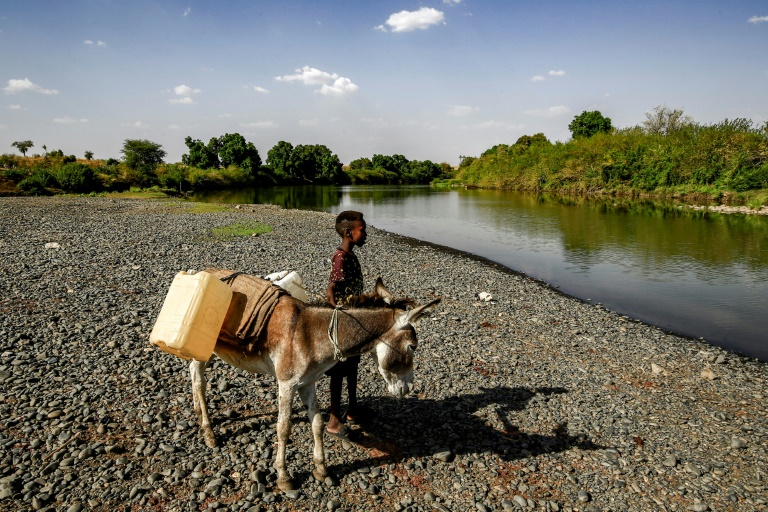
Alarm mounts over escalating Ethiopia-Sudan border tensions

Regional leaders voiced alarm Wednesday over escalating tensions between Ethiopia and Sudan in a disputed border area and appealed for dialogue to stem the crisis.

The calls by the African Union and another regional grouping followed claims by Khartoum that the Ethiopian army had executed seven Sudanese soldiers and a civilian during a clash in the volatile Al-Fashaqa area last week — allegations denied by Addis Ababa.

Sudan announced Monday it would recall its ambassador to Addis Ababa over the incident in Al-Fashaqa, a fertile strip of land that has long been a source of friction between the two states.

AU Commission chief Moussa Faki Mahamat “is following with deep concern the escalating military tension between the Federal Democratic Republic of Ethiopia and the Republic of Sudan and deeply regrets the loss of life at their common border,” the pan-African body said in a statement.

“The chairperson appeals for complete refrain from any military action whatever its origin and calls for dialogue between the two brotherly countries to solve any dispute.”

The AU’s concern was echoed by another regional bloc, the Intergovernmental Authority on Development (IGAD), which also called on the two countries “to actively seek diplomatic means to find a lasting and sustainable solution on the matter”. 

– ‘Perfidious act’ –

Sudan on Monday accused Ethiopia of capturing the soldiers in Al-Fashaqa on June 22, announcing it was recalling its envoy and would lodge a complaint with the UN Security Council and regional organisations.

The army, which has been in power since a coup in October 2021, vowed that the “perfidious act will not pass”.

And on Wednesday, the military published photographs of the slain soldiers, along with their names and ranks.

But Addis Ababa has in turn claimed that Sudanese forces had crossed into Ethiopian territory and that the casualties resulted from a skirmish with a local militia, denying its soldiers were in the area at the time.

The Ethiopian government said it rejected the “misrepresentation of facts” and that the incident was “deliberately concocted” to undermine relations.

The Sudan Tribune newspaper reported that the Sudanese army had launched an attack Tuesday on Ethiopian troops in the Al-Fashaqa area but this was denied by army spokesman Nabil Abdalla.

“We have not attacked anyone and we will not and we are not planning that. But we will not allow any armed force from another country that wants to cross our international border. It’s our right legally to deal with it,” he told AFP in Khartoum.

The report was also denied by the Ethiopian side, with an official saying on condition of anonymity: “This is not true, just unconfirmed and misinformation.”

On Monday, Sudan’s military leader Abdel Fattah al-Burhan visited Al-Fashaqa, where he instructed soldiers “to not allow any new movements or encroachments on Sudanese lands and against its citizens.”

Khartoum and Addis Ababa have been at odds for years over Al-Fashaqa.

The region, which lies close to Ethiopia’s war-torn northern region of Tigray, has long been cultivated by Ethiopian farmers but is claimed by Sudan.

The dispute has sparked sporadic clashes between the two sides, some fatal.

The rift feeds into wider tensions over land and water between the neighbours, particularly stoked by Ethiopia’s mega-dam on the Blue Nile.

Sudan and Egypt, both downstream countries, have been opposed to the Great Ethiopian Renaissance Dam and pushed for an agreement on the filling of its reservoir and the dam’s operations.

Tensions were heightened further after fighting erupted in Tigray in November 2020, sending tens of thousands of refugees fleeing into Sudan. 

Sudan has been roiled by economic and political turmoil since Burhan led the military coup that upended a transition to civilian rule following the 2019 ouster of president Omar al-Bashir. 

UK extends steel tariffs, breaching WTO obligations

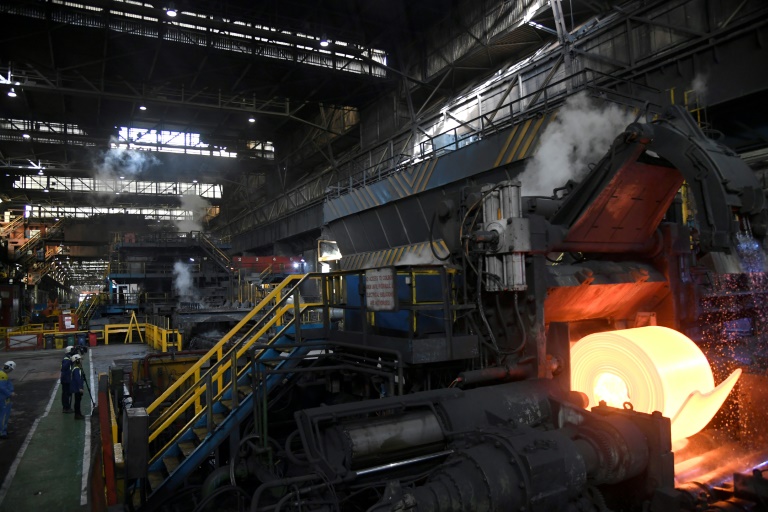
Britain has extended steel tariffs for another two years to protect its ailing industry, the government said Wednesday, breaching World Trade Organization obligations.

Trade minister Anne-Marie Trevelyan cited “global disruptions to the energy markets and supply chains” for the decision.

“A strategic steel industry is of the utmost importance to the UK, especially given the uncertainty of political and economic waters that we are currently all charting,” Trevelyan told parliament.

“Trade remedies are one of the ways that government can protect their businesses.

“They tackle issues of dumping, of unfair government subsidies, or … give businesses time to adjust to unforeseen increases in imports,” the minister added.

The energy-intensive steel sector in Britain, already suffering at the hands of cheap Chinese imports, now faces sky-rocketing production costs as fuel prices surge.

Tariffs for certain steel product categories imposed on developed countries and China have now been extended to June 2024.

“It is in the economic interest of the UK to maintain these safeguards, to reduce the risk of material harm if they were not maintained,” Trevelyan told lawmakers.

After Britain’s departure from the European Union, the country rolled over quotas and tariffs on 10 steel products until mid-2024.

The UK has now decided to extend temporary safeguards on five other categories for “a further two years”, Trevelyan said.

“I have… concluded there would be serious injury, or the threat of serious injury to UK steel producers, if the safeguards on the five additional categories were to be removed at this time,” the minister added.

– WTO breach –

Wednesday’s decision sets the government on a collision course with the WTO.

“The decision to extend the safeguards on the five product categories departs from our international legal obligations under the relevant WTO agreement,” Trevelyan conceded.

Prime Minister Boris Johnson on Sunday said the government had to make “tough choices” to support the production of steel, used heavily in construction.

Johnson’s political standing is in peril after two crushing by-election defeats last week.

One was in the former industrial city of Wakefield, a seat in northern England that had switched to the Conservatives at the previous general election.

The government hopes action on steel will bolster support in such areas, observers say.

Britain’s steel industry has been severely depleted in recent decades, with former state-owned British Steel struggling to survive in the face of international competition.

Among the nation’s remaining producers is Indian-owned Tata Steel.

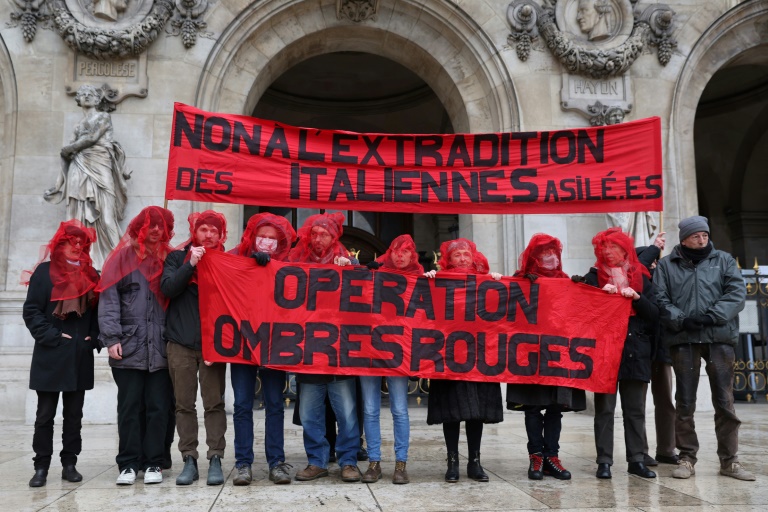
French court blocks extradition of ex-Red Brigades members to Italy

A French appeals court on Wednesday turned down Italy’s request to extradite 10 former members of left-wing Italian extremist groups exiled in France for their involvement in violence decades ago.

The ultra-leftist Red Brigades and other armed groups sowed chaos during the period in Italy known as the “Years of Lead” — referring to the amount of bullets fired — from the late 1960s to mid-1980s.

The violence left 360 dead and thousands injured.

The court based its decision at least partly on respect of private and family life, said the court’s chief judge. 

Most of the 10, aged 61 to 78, have been living in France for decades and during the hearings insisted on their links to France and slammed Italy’s “persecution”.

The ruling was greeted with relief by the former members, who fell into the arms of relatives and loved ones in the courtroom.

“I’m really pleased for my client,” said lawyer Jean-Louis Chalanset, who represents former Red Brigades member Enzo Calvitti. “I was scared he would finish his days in prison.”

France has long served as a haven for Red Brigades figures under a policy set by former Socialist president Francois Mitterrand, who offered them protection from extradition on the condition that they renounced violence and had not been accused of bloodshed.

But last year President Emmanuel Macron gave his green light for the detention and potential extradition of 10 sentenced former members of the Red Brigades or other armed groups, in a bid to remove a long-standing irritant in Franco-Italian ties.

– ‘Death penalty in disguise’ –

“Sending me at 70 to die in prison would be a punishment from the dark ages,” said former Red Brigades member Marina Petrella, 67, before the ruling.

She said the procedures were “traumatic” for her two daughters and grandson after 30 years in France where she worked as a social worker. 

“My life is in your hands, because if I go back to Italy, I will die in an Italian prison,” said Narciso Manenti, 64, who has spent the last 40 years in France, also before the ruling. 

The cases of the eight men and two women all differ. Some have been sentenced in Italy in their absence, while others have spent some time in Italian prisons while others have avoided time behind bars.

“In light of the age of these people, accepting extradition is a death penalty in disguise,” said Irene Terrel, lawyer for seven former members, in the run-up to the ruling.

But many in Italy believe the 10 should face the Italian judiciary.

The 1970s in Italy was marked by violent social uprisings. Far-right groups carried out random terror attacks in public areas to maintain a “strategy of tension” in a bid to force the emergence of an authoritarian regime. 

Meanwhile ultra-leftist revolutionary groups carried targeted assassinations against union members, magistrates, journalists, police officers and politicians. 

The Red Brigades were the most notorious on the left and were blamed for hundreds of murders, including the kidnapping and killing of Christian Democrat leader and former premier Aldo Moro in 1978.

Biden dials up US power in NATO expansion

It could be the world’s most powerful telephone.

By the White House’s telling, the now near certain addition of militarily non-aligned Finland and Sweden to NATO, transforming the European security landscape and defying Russia’s power play in Ukraine, all came down to a series of quiet calls from President Joe Biden.

As Moscow massed troops for its February invasion, Biden “realised that we were on the cusp” of a new world, a senior US official said. So he dialled up Finland’s president to discuss expanding NATO right to Russia’s border.

More calls followed.

Then there was an Oval Office meeting with Finnish President Sauli Niinisto in March — by which time Russian troops were pouring into Ukraine. And one more fateful call.

“The two leaders actually picked up the phone there on the side table in the Oval and called out through the White House Situation Room to the Swedish prime minister,” the official said, briefing reporters on the behind-the-scenes details. They “got her on the phone at about 10 o’clock at night.”

The rest, as the official said, “is history”.

Actually, there was still more work to be done: Turkey was threatening to veto the expansion for its own complicated internal reasons. So Biden once more worked the phones.

Before arriving in Madrid for the NATO summit Tuesday, he called Turkish President Recep Tayyip Erdogan and they “talked through” the concerns. Later, he exchanged with the leaders of both northern European countries.

The deal was done.

Not just Finland, but Sweden will abandon military non-alignment and join a newly invigorated NATO, effectively telling Russia’s President Vladimir Putin that his attempt to weaken the West has been a bust.

“That’s exactly what he didn’t want,” Biden said in Madrid on Wednesday.

He was beaming.

“None of this would have happened, at least to the same degree, without massive US pressure, including from Biden personally,” said James Jeffrey, a former US ambassador to Iraq and Turkey who now works at the Wilson Center.

“He and America are having a very good week in Europe.”

– Flexing US muscle –

Allies may be aghast at the turmoil inside the United States.

Mass deaths of migrants in the Texas heat, societal war over abortion and guns, and lurid allegations in the January 6th hearings of Donald Trump throwing food at the wall in frustration as he stoked insurrection — a lot’s happening back home.

And Biden, whose Democratic party is likely to lose control of Congress in November, appears increasingly powerless to impose his will.

Across the Atlantic, though, the veteran US leader is flexing the kind of muscle that no other Western leader can match.

In addition to the expansion of NATO, Biden announced Wednesday a major beefing up of US hardware in Europe: two more squadrons of F-35s in Britain, two more naval destroyers in Spain, an additional brigade in Romania, a permanent army headquarters in Poland.

“Air, land, maritime, cyberspace — the whole swath of US military capabilities,” White House spokesman John Kirby said.

That bristling array of firepower folds into NATO’s startling overall pledge to augment the current multinational rapid reaction force from 40,000 to more than 300,000 troops, as well as movement towards assuaging longtime US demands for Europeans to foot their share of the military bill.

Also, while most of the focus is on countering Putin’s Ukraine invasion, NATO has for the first time named China as a strategic challenge — another key US priority.

Jeffrey says Biden is demonstrating the unique US role, where “nothing” can happen without Washington.

But Brett Bruen, a former diplomat and advisor to president Barack Obama, says Biden is distracted by “Trump, guns and abortions”.

Biden “appears content to get a few photos showing his strong leadership on the world stage and return home to focus on the fight for Congress in the fall.”

James Carafano, a foreign policy expert at the conservative Heritage Foundation, is even more dismissive.

While the United States remains a leader, Biden’s domestic record is “demonstrating that the possibility of American decline is real,” he said.

“Our allies and partners, not to mention our adversaries, are acting accordingly. Many of them are already starting to prepare for the post-Biden era.”

Anger, pain at vigil for migrants who died in tractor trailer in Texas

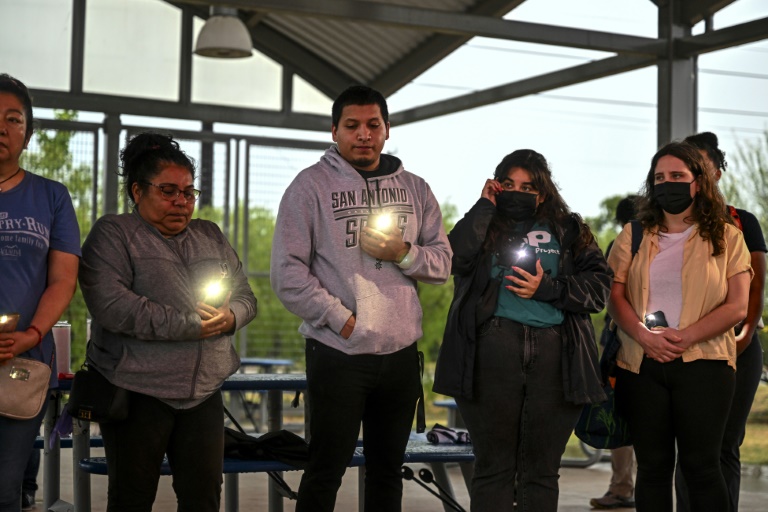
Dozens of people held a vigil for 51 migrants who died when they were abandoned in a suffocatingly hot tractor-trailer in Texas near the border with Mexico.

A heavy downpour of rain forced organizers to hold the Tuesday night ceremony under cover in a park rather than out in the open air. Cell phone flashlights took the place of the candles that mourners had hoped to light.

People expressed anger and sadness over the death of these travelers who, like many thousands every year, make a very dangerous trek seeking a better life in the United States.

President Joe Biden blamed professional people-smugglers for the tragedy near San Antonio. 

US officials did not give any breakdown of the dead by age, gender or nationality. Mexican President Andres Manuel Lopez Obrador said that of the dead whose identities are known, 22 were from Mexico, seven from Guatemala, and two from Honduras.

At the vigil people formed a circle and took turns speaking, asking US authorities to change their immigration policy or calling on others to pray for the dead migrants.

“This hurts a lot,” said Andrea Osorio, a 48-year-old Mexican.

“I have lived here for 33 years without papers, in fear every day,” she said. “And I know why we come. We do not come to commit crimes, we only come for a better future.”

People of all ages — elderly, young and small children with their parents — attended the ceremony.

So did San Antonio Mayor Ron Nirenberg, who listened to other people’s remarks but did not himself say anything publicly.

– ‘Breaks my heart’ –

Carlos Eduardo Espina, 23 and originally from Uruguay but here since he was five years old, criticized US immigration policy as cruel.

“This is terrible, and breaks my heart,” said Espina, whose father is Uruguayan and mother Mexican. “But every day people are drowning in the river, every day people are dying in the desert. Death is the norm in immigration in the United States.”

He said US immigration policy should be more humanitarian and allow for more entry visas each year.

“We have to keep fighting because this is going to continue,” said Espina, who is an activist on immigration issues. He accused the governments of emigration source countries in Latin America of not caring about their people.

Not far from the circle of people at the vigil, Guillermina Barron, a 38-year-old Mexican, listened in silence.

“Unfortunately I identify a lot with what is happening because I am Mexican, although I emigrated here 20 years ago,” she told AFP, with tears in her eyes.

“I feel pain and very powerless. A lot of things have to change because many lives have been lost.”

Close Bitnami banner
Bitnami