World

Philippines' Ressa says 'business as usual' despite news outlet's shutdown order

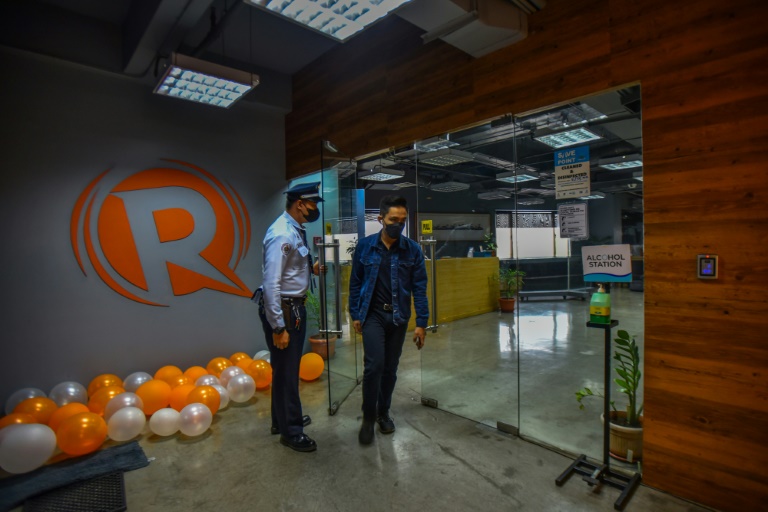
Philippine Nobel Peace Prize winner Maria Ressa’s news company Rappler was ordered Wednesday to shut down, a day before President Rodrigo Duterte is due to leave office, but she vowed to keep the site running.

Ressa has been a vocal critic of Duterte and the deadly drug war he launched in 2016, triggering what media advocates say is a grinding series of criminal charges, probes and online attacks against her and Rappler.

The latest blow was delivered by the Philippine Securities and Exchange Commission. 

In a statement Wednesday, it confirmed the “revocation of the certificates of incorporation” of Rappler for violating “constitutional and statutory restrictions on foreign ownership in mass media”.

Rappler said the decision “effectively confirmed the shutdown” of the company and vowed to appeal, describing the proceedings as “highly irregular”.

But Ressa was characteristically defiant, vowing the news site would continue to operate as they followed the legal process.

“We continue to work, it is business as usual,” Ressa told reporters, adding “we can only hope for the best” under Duterte’s successor Ferdinand Marcos Jr.

Rappler has had to fight for survival as Duterte’s government accused it of violating a constitutional ban on foreign ownership in securing funding, as well as tax evasion. 

It has also been accused of cyber libel — a new criminal law introduced in 2012, the same year Rappler was founded.

Duterte has attacked the website by name, calling it a “fake news outlet”, over a story about one of his closest aides.

The news portal is accused of allowing foreigners to take control of its website through its parent Rappler Holdings’ issuance of “depositary receipts”.

Under the constitution, investment in media is reserved for Filipinos or Filipino-controlled entities.

The case springs from the 2015 investment from the US-based Omidyar Network, which was established by eBay founder Pierre Omidyar.  

Omidyar later transferred its investment in Rappler to the site’s local managers to stave off efforts by Duterte to shut it down.

Ressa, who is also a US citizen, and Russian journalist Dmitry Muratov were awarded the Nobel Peace Prize in October for their efforts to “safeguard freedom of expression”.

Ressa is fighting at least seven court cases, including an appeal against a conviction in a cyber libel case, for which she is on bail and faces up to six years in prison. 

Rappler faces about eight cases, Ressa said.

The International Center for Journalists has urged the Philippine government to reverse its order to shut down Rappler. 

“This legal harassment not only costs Rappler time, money and energy. It enables relentless and prolific online violence designed to chill independent reporting,” ICFJ said in a statement posted on Twitter. 

Marcos Jr, the son of the Philippines’ former dictator who presided over widespread human rights abuses and corruption, takes over from Duterte on Thursday.

Activists fear Marcos Jr’s presidency could worsen human rights and freedom of speech in the country.

EU approves end of combustion engine sales by 2035

The European Union approved a plan to end the sale of vehicles with combustion engines by 2035 in Europe, the 27-member bloc announced early Wednesday, in a bid to reduce CO2 emissions to zero. 

The measure, first proposed in July 2021, will mean a de facto halt to sales of petrol and diesel cars as well as light commercial vehicles and a complete shift to electric engines in the European Union from 2035. 

The plan is intended to help achieve the continent’s climate objectives, in particular, carbon neutrality by 2050.

At the request of countries including Germany and Italy, the EU-27 also agreed to consider a future green light for the use of alternative technologies such as synthetic fuels or plug-in hybrids.

While approval would be tied to achieving the complete elimination of greenhouse gas emissions, the technologies have been contested by environmental NGOs.

Environment ministers meeting in Luxembourg also approved a five-year extension of the exemption from CO2 obligations granted to so-called “niche” manufacturers, or those producing fewer than 10,000 vehicles per year, until the end of 2035. 

The clause, sometimes referred to as the “Ferrari amendment”, will benefit luxury brands in particular.

These measures must now be negotiated with members of the European Parliament. 

“This is a big challenge for our automotive industry,” acknowledged French Minister of Ecological Transition Agnes Pannier-Runacher, who chaired Tuesday night’s meeting. 

But she said it was a “necessity” in the face of competition from China and the United States, which have bet heavily on electric vehicles seen as the future of the industry. 

These decisions will “allow a planned and accompanied transition”, the minister said. 

– Openness to synthetic fuels –

Europe’s automotive industry, which is already investing heavily in the move to electric vehicles, fears the social impact of a too-rapid transition. 

“The overwhelming majority of car manufacturers have chosen electric cars,” said Frans Timmermans, the EU Commission Vice President in charge of the European Green Deal, at a press conference. 

He affirmed the EU body’s willingness to be open-minded to other technologies — like synthetic fuels, which are also referred to as e-fuels. 

“We are technology neutral. What we want are zero-emission cars,” he explained. 

“At the moment, e-fuels do not seem a realistic solution, but if manufacturers can prove otherwise in the future, we will be open.” 

The technology of synthetic fuels, currently under study, consists of producing fuel from CO2 from industrial activities using low-carbon electricity, in a circular economy approach. 

Like the oil industry, the automotive sector has high hopes for these new fuels, which would extend the use of internal combustion engines now threatened by the emergence of completely electric vehicles. 

But environmental organisations object to the use of this technology in cars, as it is considered both expensive and energy-consuming.

The synthetic-fuelled engines also emit as much nitrogen oxide (NOx) as their fossil fuel equivalents, they say.

Cars are the main mode of transport for Europeans and account for just under 15 percent of total CO2 emissions in the EU. It is also one of the main gases responsible for global warming. 

In response to manufacturers’ concerns about insufficient consumer demand for 100 percent electric cars, the Commission has recommended a major expansion of charging stations. 

“Along the main roads in Europe, there must be charging points every 60 kilometres (37 miles),” said European Commission President Ursula von der Leyen last year. 

Manufacturers regularly complain about the lack of such infrastructure, especially in southern and eastern European countries.

EU approves end of combustion engine sales by 2035

The European Union approved a plan to end the sale of vehicles with combustion engines by 2035 in Europe, the 27-member bloc announced early Wednesday, in a bid to reduce CO2 emissions to zero. 

The measure, first proposed in July 2021, will mean a de facto halt to sales of petrol and diesel cars as well as light commercial vehicles and a complete shift to electric engines in the European Union from 2035. 

The plan is intended to help achieve the continent’s climate objectives, in particular, carbon neutrality by 2050.

At the request of countries including Germany and Italy, the EU-27 also agreed to consider a future green light for the use of alternative technologies such as synthetic fuels or plug-in hybrids.

While approval would be tied to achieving the complete elimination of greenhouse gas emissions, the technologies have been contested by environmental NGOs.

Environment ministers meeting in Luxembourg also approved a five-year extension of the exemption from CO2 obligations granted to so-called “niche” manufacturers, or those producing fewer than 10,000 vehicles per year, until the end of 2035. 

The clause, sometimes referred to as the “Ferrari amendment”, will benefit luxury brands in particular.

These measures must now be negotiated with members of the European Parliament. 

“This is a big challenge for our automotive industry,” acknowledged French Minister of Ecological Transition Agnes Pannier-Runacher, who chaired Tuesday night’s meeting. 

But she said it was a “necessity” in the face of competition from China and the United States, which have bet heavily on electric vehicles seen as the future of the industry. 

These decisions will “allow a planned and accompanied transition”, the minister said. 

– Openness to synthetic fuels –

Europe’s automotive industry, which is already investing heavily in the move to electric vehicles, fears the social impact of a too-rapid transition. 

“The overwhelming majority of car manufacturers have chosen electric cars,” said Frans Timmermans, the EU Commission Vice President in charge of the European Green Deal, at a press conference. 

He affirmed the EU body’s willingness to be open-minded to other technologies — like synthetic fuels, which are also referred to as e-fuels. 

“We are technology neutral. What we want are zero-emission cars,” he explained. 

“At the moment, e-fuels do not seem a realistic solution, but if manufacturers can prove otherwise in the future, we will be open.” 

The technology of synthetic fuels, currently under study, consists of producing fuel from CO2 from industrial activities using low-carbon electricity, in a circular economy approach. 

Like the oil industry, the automotive sector has high hopes for these new fuels, which would extend the use of internal combustion engines now threatened by the emergence of completely electric vehicles. 

But environmental organisations object to the use of this technology in cars, as it is considered both expensive and energy-consuming.

The synthetic-fuelled engines also emit as much nitrogen oxide (NOx) as their fossil fuel equivalents, they say.

Cars are the main mode of transport for Europeans and account for just under 15 percent of total CO2 emissions in the EU. It is also one of the main gases responsible for global warming. 

In response to manufacturers’ concerns about insufficient consumer demand for 100 percent electric cars, the Commission has recommended a major expansion of charging stations. 

“Along the main roads in Europe, there must be charging points every 60 kilometres (37 miles),” said European Commission President Ursula von der Leyen last year. 

Manufacturers regularly complain about the lack of such infrastructure, especially in southern and eastern European countries.

Range extenders: solar panels provide more juice to EVs

Startups and major carmakers are starting to incorporate solar panels on their electric vehicles, an addition that extends the range of the cars even if perpetual motion remains a dream.

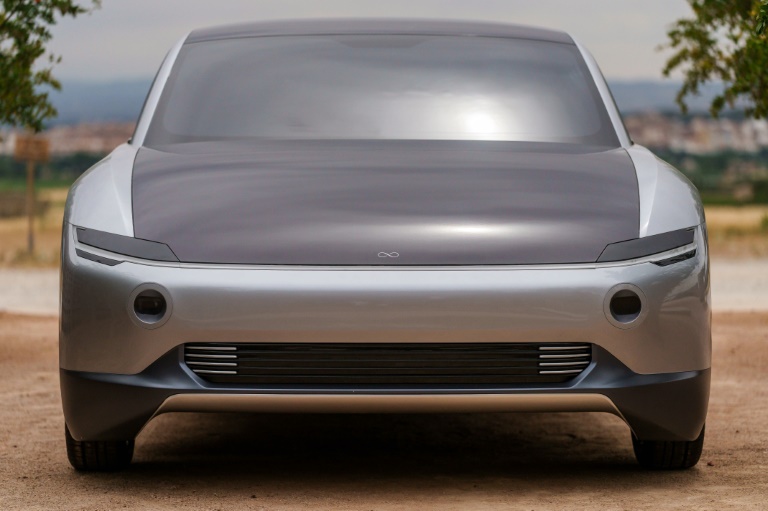
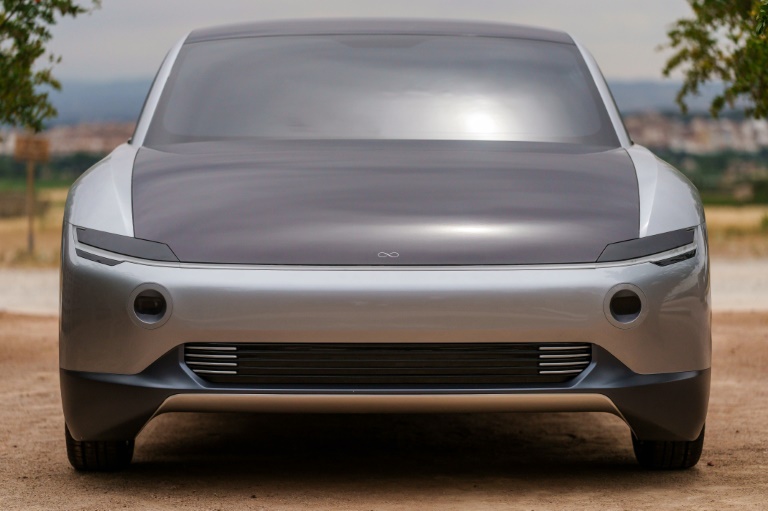
As it rolls under the blistering sun of northern Spain, the Lightyear 0 generates enough electricity every day to drive 70 kilometers (43 miles) thanks to the five square metres of solar panels integrated into hood and roof.

The company was founded by young Dutch engineers who earned their spurs in running solar cars in races across the Australian desert.

Thanks to the drop in the price of solar panels, Lightyear is trying to incorporate them into road cars.

With its sleek, aerodynamic line and motors integrated into the wheels, the Lightyear 0 consumes less energy than electric SUVs. 

Coupled with a battery that offers 625 kilometres per charge, the company says some customers who drive only short distances each day may only need to charge during the winter.

“The clock is ticking, we need to have sustainable cars as soon as possible,” one of the founders, Lex Hoefsloot, told AFP. 

“Charging points are still a big hurdle. If we don’t need them, we can scale electric cars much quicker,” he added. 

Lightyear targeted the top-end of the market with the 0, with the 1,000 or so cars produced setting back buyers 250,000 euros, the equivalent of a Bentley.

The company hopes to launch a mass-market model with a price tag of 30,000 euros ($31,500) in 2024-2025. 

– Going mainstream –

As sales of electric vehicles are soaring, a number of models with solar panels are expected to arrive in dealerships in the coming months.

Toyota is now proposing solar panels as an option on Prius hybrids, as well as its first 100 percent electric vehicle, the BZ4X.

Tesla also plans to offer solar panels as an option on its pickup that is due to hit the road next year.

Mercedes equipped its luxurious EQXX with solar panels in the roof. The sedan, sleek like the Lightyear, has a range of 1,000 kilometres.

The cost of adding solar panels to cars has now fallen to several hundred dollars, a small amount compared to the overall cost of most models.

“Solar is now so inexpensive that even imperfectly sunny locations are worth putting solar on,” said Gregory Nemet, a solar power expert at the University of Wisconsin-Madison.

“The value of putting solar on cars is that it can extend the range of the car,” he said.

While it may not be able to fully charge the battery in a day, “it can provide enough energy to get home”.

Or solar panels can help provide enough electricity to run the air conditioning in the vehicles, noted Gautham Ram Chandra Mouli, a specialist on electric mobility at Delft University in the Netherlands. 

– Parking problems –

Drivers will likely want to run the air conditioning as they will have to park in the sun in order to get a good charge.

That could pose problems for some city drivers with parking spaces in garages.

The season is also an important factor. Drivers in northern Europe will get much less of a charge from integrated solar panels in the winter than during the summer. 

The California startup Aptera, which has 25,000 orders, designed its futuristic three-wheeler to be highly efficient in order to get the most from solar power.

The two-seater vehicles, which should begin to be delivered to buyers this year, could get over 60 kilometres of travel from its solar panels.

Depending on the model, which cost from $26,000 to $46,000, the cars can travel from 400 to 1,600 kilometres on a full battery charge.

German firm Sono Motors has taken a more classic approach with its compact-minivan Sion.

A boxy, black five-seater that screams family car, the Sion is completely covered in solar panels.

“We developed a technique that allows covering all the car” with solar panels, said Jona Christians, a co-founder of Sono Motors.

The first Sions should be delivered next year and the current pre-order price is 28,500 euros.

The firm already has 18,000 such pre-orders and hopes to be able to manufacture over a quarter-million vehicles this decade.

The Sion is also being designed to offer different functionalities from its battery, including powering other devices and charging other vehicles. It can even give power back to the grid.

The Dutch firm Squad Mobility is targeting a different market — what it calls sub(urban) mobility.

The Squad Solar City Car may resemble an enclosed golf cart, but the two- or four-seat vehicles can zip around fast enough and have enough room to make completing many urban errands convenient. 

With the solar panels in the roof, the car can generate enough power to travel 20 kilometres per day in Europe. 

The company says such microcars travel around 12 kilometres per day on average, meaning most users won’t need to charge it daily.

“Solar panels will get more affordable, drivetrains will get better,” said Squad Mobility’s chief, Robert Hoevers.

“Sooner or later you’ll drive everyday on solar.” 

Range extenders: solar panels provide more juice to EVs

Startups and major carmakers are starting to incorporate solar panels on their electric vehicles, an addition that extends the range of the cars even if perpetual motion remains a dream.

As it rolls under the blistering sun of northern Spain, the Lightyear 0 generates enough electricity every day to drive 70 kilometers (43 miles) thanks to the five square metres of solar panels integrated into hood and roof.

The company was founded by young Dutch engineers who earned their spurs in running solar cars in races across the Australian desert.

Thanks to the drop in the price of solar panels, Lightyear is trying to incorporate them into road cars.

With its sleek, aerodynamic line and motors integrated into the wheels, the Lightyear 0 consumes less energy than electric SUVs. 

Coupled with a battery that offers 625 kilometres per charge, the company says some customers who drive only short distances each day may only need to charge during the winter.

“The clock is ticking, we need to have sustainable cars as soon as possible,” one of the founders, Lex Hoefsloot, told AFP. 

“Charging points are still a big hurdle. If we don’t need them, we can scale electric cars much quicker,” he added. 

Lightyear targeted the top-end of the market with the 0, with the 1,000 or so cars produced setting back buyers 250,000 euros, the equivalent of a Bentley.

The company hopes to launch a mass-market model with a price tag of 30,000 euros ($31,500) in 2024-2025. 

– Going mainstream –

As sales of electric vehicles are soaring, a number of models with solar panels are expected to arrive in dealerships in the coming months.

Toyota is now proposing solar panels as an option on Prius hybrids, as well as its first 100 percent electric vehicle, the BZ4X.

Tesla also plans to offer solar panels as an option on its pickup that is due to hit the road next year.

Mercedes equipped its luxurious EQXX with solar panels in the roof. The sedan, sleek like the Lightyear, has a range of 1,000 kilometres.

The cost of adding solar panels to cars has now fallen to several hundred dollars, a small amount compared to the overall cost of most models.

“Solar is now so inexpensive that even imperfectly sunny locations are worth putting solar on,” said Gregory Nemet, a solar power expert at the University of Wisconsin-Madison.

“The value of putting solar on cars is that it can extend the range of the car,” he said.

While it may not be able to fully charge the battery in a day, “it can provide enough energy to get home”.

Or solar panels can help provide enough electricity to run the air conditioning in the vehicles, noted Gautham Ram Chandra Mouli, a specialist on electric mobility at Delft University in the Netherlands. 

– Parking problems –

Drivers will likely want to run the air conditioning as they will have to park in the sun in order to get a good charge.

That could pose problems for some city drivers with parking spaces in garages.

The season is also an important factor. Drivers in northern Europe will get much less of a charge from integrated solar panels in the winter than during the summer. 

The California startup Aptera, which has 25,000 orders, designed its futuristic three-wheeler to be highly efficient in order to get the most from solar power.

The two-seater vehicles, which should begin to be delivered to buyers this year, could get over 60 kilometres of travel from its solar panels.

Depending on the model, which cost from $26,000 to $46,000, the cars can travel from 400 to 1,600 kilometres on a full battery charge.

German firm Sono Motors has taken a more classic approach with its compact-minivan Sion.

A boxy, black five-seater that screams family car, the Sion is completely covered in solar panels.

“We developed a technique that allows covering all the car” with solar panels, said Jona Christians, a co-founder of Sono Motors.

The first Sions should be delivered next year and the current pre-order price is 28,500 euros.

The firm already has 18,000 such pre-orders and hopes to be able to manufacture over a quarter-million vehicles this decade.

The Sion is also being designed to offer different functionalities from its battery, including powering other devices and charging other vehicles. It can even give power back to the grid.

The Dutch firm Squad Mobility is targeting a different market — what it calls sub(urban) mobility.

The Squad Solar City Car may resemble an enclosed golf cart, but the two- or four-seat vehicles can zip around fast enough and have enough room to make completing many urban errands convenient. 

With the solar panels in the roof, the car can generate enough power to travel 20 kilometres per day in Europe. 

The company says such microcars travel around 12 kilometres per day on average, meaning most users won’t need to charge it daily.

“Solar panels will get more affordable, drivetrains will get better,” said Squad Mobility’s chief, Robert Hoevers.

“Sooner or later you’ll drive everyday on solar.” 

Saudi artists marvel at surprise patron: their own rulers

In one of Saudi artist Ahmed Mater’s best-known works, a silhouette of a gas pump morphs into a man holding a gun to his head –- a clear critique of oil’s damaging influence. 

Yet for several years, most Saudis couldn’t see the piece, titled “Evolution of Man”, as local curators deemed it too sensitive to show in the oil-reliant kingdom.

Its inclusion in a recent exhibition in the capital Riyadh is just one sign of changing times.

With Crown Prince Mohammed bin Salman, the de facto ruler, eager to rebrand conservative Saudi Arabia as a global arts destination, officials are heaping previously unheard-of opportunities on Mater and his peers.

They unveiled the latest on Monday: a plan to feature Mater and another politically minded Saudi artist, Manal AlDowayan, in a series of permanent installations in the deserts outside Al-Ula, a budding tourist magnet in the northwestern Medina region.

To critics of the Saudi royal family, such projects smack of “artwashing”, an attempt to launder the image of a country notorious for silencing dissidents, most notably slain journalist Jamal Khashoggi.

But for artists like Mater, the state backing is a welcome relief after years of straining to reach Saudi audiences and cultivate a vibrant domestic arts scene.

“I usually believe in creating a grassroots movement that will be organic, but what if there is top-down support for this? Even better,” he told AFP.

“That’s the change. That’s the new thing.”

– ‘Valley of the arts’ –

The project in Al-Ula –- known as Wadi AlFann, or “Valley of the Arts” -– is ultimately meant to cover 65 square kilometres (16,000 acres) of Saudi desert with new examples of “land art”, the movement that sought to bring art out of galleries and into nature.

Besides Mater and AlDowayan, contributors include land art giants like Hungarian-American Agnes Denes, who in the 1980s famously planted and harvested two acres of wheat just blocks from Wall Street.

It is part of a broader goal to transform Al-Ula, famed for its ancient Nabataean tombs dotted amid sandstone mountains and wadis, into a top-tier arts hub, complete with luxury eco-resorts and a posh theatre covered in mirrored panels.

The Wadi AlFann works “are on a scale and ambition, and they have such vision behind them, that I think people will want to come for many, many generations to visit them”, said curator Iwona Blazwick, former director of London’s Whitechapel Gallery.

AlDowayan, one of the Saudi contributors, told AFP that until recently her work had been seen more frequently outside the kingdom than within it, though she dismissed the notion that this had anything to do with censorship.

“I was talking about very tough subjects when it was really restrictive here, and I was fine. They published me in every single newspaper. I’ve never been censored,” she said.

The nature of visual artists’ work gives them more space to speak out than Saudi activists might enjoy, said Eman Alhussein, non-resident fellow with the Arab Gulf States Institute in Washington.

“Artists are able to express themselves more freely because their artwork can be interpreted in different ways,” she said.

That seems especially true these days, as Saudi authorities lean on the arts to help soften their austere reputation.

After two decades of showing largely for foreigners, AlDowayan is now basking in a surge of domestic attention.

“I’m being exhibited constantly here,” she said. “I’m being rediscovered by my people, my community. They used to follow me on Instagram. Now they can actually go and see the artworks.” 

– Legacy of restrictions –

Mater, too, has had mostly positive experiences with Saudi authorities.

Yet he has also seen the limits on free expression in Saudi Arabia through the case of his childhood friend Ashraf Fayadh, a fellow artist who has been behind bars for nearly a decade.

Fayadh, a Palestinian poet living in the kingdom, was charged with apostasy in 2014 after a Saudi citizen accused him of promoting atheism.

A court sentenced him to death in 2015, though his sentence was reduced to eight years on appeal.

Mater sees Fayadh’s case as a throwback to a less open period and does not think it would play out the same way today.

Nevertheless, “the case is still very important because Ashraf has to come out”, Mater said, adding that he hopes his friend will be released soon.

In the meantime, Mater is pressing on with his politically charged work.

His project for Wadi AlFann involves building tunnels that visitors can enter. Once inside, their hologram-like images will be projected above the dunes — an effect akin to a mirage.

The idea is to use a monument to centre ordinary people, a concept that doesn’t necessarily jibe with monarchical rule.

“Usually sculpture is about landmarks of power,” Mater said.

“And what I’m talking about here is, the power is the people themselves.”

Asian market losses driven by recession, inflation fears

Fears of a recession caused by sharp interest rate hikes aimed at fighting soaring inflation sent Asian markets tumbling Wednesday, tracking a sharp drop on Wall Street.

The hefty selling came after more than a week of gains across the world caused by hopes that any signs of contraction could give central banks room to ease up on their pace of monetary tightening.

The fluctuations on trading floors show how tough it has become for investors to find their feet, just as financial policymakers struggle to find a balance between containing prices and maintaining economic growth.

Wednesday’s selling came after New York’s three main indexes tanked in reaction to data showing confidence among US consumers — who are a crucial driver of the world’s top economy — had fallen to its lowest level in more than a year.

The mood-sapping reading was partly driven by a feeling inflation would persist, suggesting consumers are not sure the Federal Reserve’s aggressive efforts to tame inflation will work.

The news overshadowed a surprise move by China to slash the quarantine period for incoming travellers, raising hopes for further relaxations that can allow the country’s giant economy to recover more quickly.

In early Asian trade, Hong Kong, Tokyo, Shanghai, Sydney, Seoul, Taipei, Jakarta and Wellington were all well down.

Top Fed officials on Tuesday tried to play down the chances of a recession, with the heads of the Fed in San Francisco and New York saying they were upbeat a soft landing could be achieved.

“I see us tapping on the brakes to slow to a more sustainable pace, rather than slamming on the brakes, going over the handlebars and having the proverbial recession,” San Francisco’s Mary Daly told an online event hosted by LinkedIn.

“I wouldn’t be surprised, and it’s actually in my forecast, that growth will slip below two percent, but it won’t actually pivot down into negative territory for a long period of time.”

– Threading a fine line –

But analysts were more sceptical, with Sim Moh Siong at Bank of Singapore saying “low US consumer expectations suggest weaker growth in (the second half of 2022) as well as growing risk of recession by year end”.

The Conference Board’s chief economist Dana Peterson warned the United States will likely see a recession in late 2022.

And Emily Weis, at State Street Corp, said: “The Fed still believes it can thread that very fine line between tightening financial conditions while not hurting the economy too much.

“We’re still not sure they’re going to be able to pull that off. That’s what we’ve seen reflected in the markets over the last month or so.”

Oil prices dipped though remain elevated following a run-up in recent days on expectations that demand will continue to rise — despite recessionary talk — and supplies remain tight owing to the ban on imports from Russia.

And while G7 leaders agreed to work on a price cap for Russian oil as part of efforts to cut the Kremlin’s revenues, observers warned that will not likely have a massive impact on prices.

“The easing of China’s zero-Covid policy helped oil to the third day of gains following a decent correction in recent weeks,” said Craig Erlam at OANDA. 

“As did reports that the UAE and Saudi Arabia are producing near capacity, in stark contrast to claims that both are holding back and could do more.”

He added that OPEC and other major producers were 2.7 million barrels per day below target in May, “taking the total shortfall under the agreement to more than half a billion”.

“Even sanctions being lifted on Iran and Venezuela can’t do much against that backdrop. It may well take a recession to return oil prices to sustainable levels any time soon,” he warned.

– Key figures at around 0230 GMT –

Tokyo – Nikkei 225: DOWN 1.1 percent at 26,759.99 (break)

Hong Kong – Hang Seng Index: DOWN 0.9 percent at 22,205.99

Shanghai – Composite: DOWN 0.1 percent at 3,404.32

Dollar/yen: DOWN at 136.10 yen from 136.20 yen Friday

Pound/dollar: UP at $1.2207 from $1.2187

Euro/dollar: UP at $1.0531 from $1.0525

Euro/pound: DOWN at 86.26 pence from 86.32 pence

West Texas Intermediate: DOWN 0.5 percent at $111.24 per barrel

Brent North Sea crude: DOWN 0.6 percent at $117.25 per barrel

New York – Dow: DOWN 1.6 percent at 30,946.99 (close)

London – FTSE 100: UP 0.9 percent at 7,323.41 (close) 

Paris attacks trial: the 20 suspects

A total of 20 people have been tried over the November 2015 attacks by the Islamic State group on the Bataclan concert hall and other targets around Paris, with the verdicts expected on Wednesday.

Only 14 of them have appeared in person, with the rest missing or presumed to be dead. 

– Salah Abdeslam, aged 32 –

Once a pot-smoking party-lover who grew up in the impoverished Molenbeek district of Brussels, Abdeslam turned to radical Islam along with his brother Brahim, who blew himself up in a bar during the Paris attacks.

The only surviving attacker gave his profession as an “Islamic State fighter” and recounted religious verses in his first appearance in court in September, but his provocative early behaviour has faded from view.

He broke down in tears in April and apologised to victims, asking them to “hate me with moderation.”

He has defended himself by saying he never killed anyone after alleging he backed out of his mission to blow himself up in a bar. 

Prosecutors say his suicide belt was simply defective.

He went on the run for four months after the attacks and was involved in a shootout with police in Brussels, for which he has already been sentenced to 20 years in prison.

French prosecutors have requested a full life sentence.

His former lawyer in Belgium once described him as having “the intelligence of an empty ashtray”.

– Mohamed Abrini, aged 37 –

A childhood friend of Abdeslam and other jihadists from Molenbeek, Abrini is a school dropout and multi-convicted thief who turned to Islamic State’s ideology after his radicalised younger brother joined the group and was killed in Syria.

“It’s a duty for all Muslims to go to do jihad,” he told the court in January, justifying the attacks in Paris as a response to Western bombing against Islamic State and its now-defunct caliphate in Iraq and Syria.

At the end of the trial on Monday, the one-time bakery worker known as “brioche” to friends said it had enabled him “to put faces to the victims”. 

“I’m aware that what happened is disgusting.” 

The Belgian claimed that he backed out of the Paris attacks at the last moment, but has admitted meeting the ringleader beforehand and booking cars and safe-houses for the other jihadists.

He took part in separate suicide bombings that struck Brussels in 2016, though he decided not to detonate himself.

Prosecutors asked for a life sentence with 22 years as a minimum term.

– Osama Krayem, 29, and Sofian Ayari, 28 –

A Swede of Syrian and Palestinian origin, Krayem allegedly fled Paris with Abdeslam after the attacks.

The long-haired jihadist was identified in a notorious IS video showing a Jordanian pilot being burned alive in a cage, thanks to a scar on his eyebrow.

He remained silent for the trial, giving a written statement in January which read: “At the start I thought I would express myself. Then, I saw how the hearings were going and I lost all hope.” 

He is suspected of planning another attack at Amsterdam’s airport along with Ayari, a Tunisian who travelled to Syria to join Islamic State.  

Ayari, who was arrested along with Abdeslam, began to explain his past with IS after being “touched” by the testimony of a victim’s mother in February, but then refused to answer any more questions.

Prosecutors sought life terms for them.

– Mohamed Bakkali, 35 –

Arrested two weeks after the Paris bloodbath, the Belgian-Moroccan national is suspected of providing logistical help such as hiring safe houses and cars, providing fake identity papers and helping repatriate IS fighters from Syria.

He was already sentenced to 25 years in prison in Belgium over his role in an attack on a high-speed Paris-bound train that left two passengers injured.

He was handed over to French authorities on the condition that he returned to serve his sentence in Belgium.

He offered apologies to victims on Monday, the last day of hearings.

– Muhammed Usman, 29, and Adel Haddidi, 34 –  

Usman from Pakistan and Haddidi from Algeria were arrested in Greece as they travelled with two jihadists who went on to blow themselves up outside the national sports stadium in Paris.

The pair were attempting to disguise themselves as refugees in the mass of people heading from Syria to Europe via Turkey and intended to take part in the attacks on Paris, prosecutors said.

“I’m working on myself. In the future I would like to do something good with my life,” Haddidi said in his final statement. 

– Yassine Atar, 35 –

He is the younger brother of the man presumed to have overseen the whole operation in Syria: Oussama Atar, a veteran jihadist.

Prosecutors detailed his meetings with key suspects and his family links to the Islamic State cell in Brussels, as well as how a key to a hideout was found at his home. 

“I hope you’ve understood that I have absolutely nothing to do with Oussama Atar and nothing to do with these attacks which I condemn firmly,” he said in his final statement.

The court heard earlier how Belgian authorities had granted a passport to his older brother in 2013 despite his known links to radical Islamism — a possible attempt to recruit him as an informer. 

The older Atar is also on trial but is presumed dead in Syria or Iraq.

– The ‘friends’ –

Five friends and acquaintances of Abdeslam and Abrini are on trial, charged over assistance they gave to the main suspects.

Mohammed Amri, 33, Hamza Attou, 28, and Ali Oulkadi, 37, went to fetch Abdeslam from Paris in the aftermath of the attacks, but denied knowing about his involvement.

Haddad Asufi, 36, and Abdellah Chouaa, 41, were tried for alleged help they gave to Bakkali and Abrini.

– Others –

Ali El Haddad Asufi, 36: a Belgian-Moroccan suspected of supplying weapons.

Farid Kharkhach, 39: a Belgian-Moroccan suspected of supplying fake identity papers. 

Ahmad Alkhald, age unknown: also known as Omar Darif, a Syrian, presumed dead, accused of making the suicide belts.

Jean-Michel and Fabien Clain, 38 and 41: notorious jihadist brothers from southwest France who featured in an IS video claiming responsibility for the attacks. Presumed dead in Syria. 

Ahmed Dahmani, 33: a friend of Abdeslam wanted for providing logistical help. In jail in Turkey.

Obeida Aref Dibo, age unknown: a Syrian IS member, presumed dead, thought to have been a planner.

burs-adp/sjw/cdw/dva

Trump lunged at driver to try to join Capitol riot: aide

Former US president Donald Trump angrily lunged at his Secret Service driver and grabbed at the steering wheel of his limousine in a bid to join the crowd as it marched on the Capitol on the day of the deadly insurrection, an aide testified Tuesday.

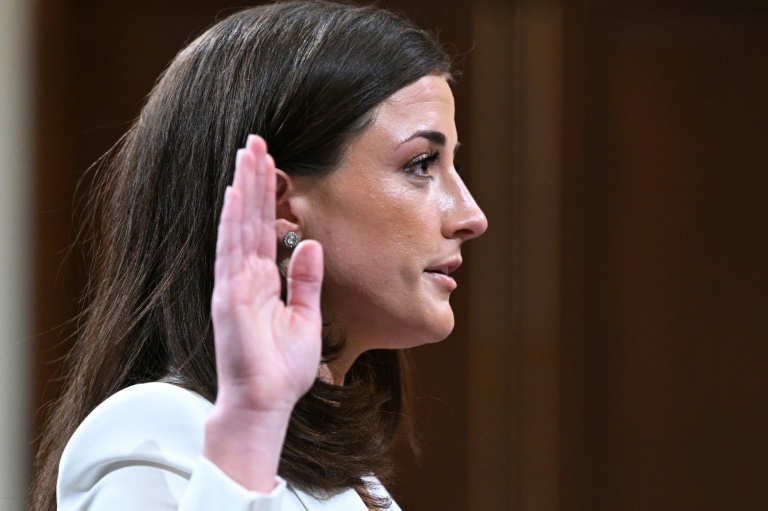
In some of the most explosive testimony so far to the House committee probing the violence, Cassidy Hutchinson, an assistant to Trump’s chief of staff Mark Meadows, said the president had demanded to be taken to the Capitol after his speech near the White House.

Trump became irate when he was told that it was impossible for security reasons, and he tried to wrestle the Secret Service for control of his official car, Hutchinson testified.

“I’m the effing president, take me up to the Capitol now,” Trump said, according to Hutchinson, who testified that the story was relayed to her by another administration official.

Trump, apparently watching the televised hearing, attempted to discredit Hutchinson in real time in a multiple-post rant on his social media network, dismissing the episode as a “fake story” and calling the hearing a “kangaroo court.”

US media later reported that the Secret Service agents involved may be willing to testify and deny Hutchinson account.

The US Secret Service did not respond to AFP’s request for comment.

The congressional panel has spent a year investigating the January 6, 2021 riot that temporarily halted the certifying by Congress of the presidential election result.

It has now held six public hearings to outline its initial finding — that Trump led a criminal conspiracy to overturn his defeat to Joe Biden that led to the violence.

Hutchinson was a central figure in the administration and able to offer the committee its first blow-by-blow account of activity inside the White House.

She testified that Trump and some of his top lieutenants were aware of the possibility of violence — contradicting claims that the assault was spontaneous and had nothing to do with the administration.

– ‘Things might get real, real bad’ –

Hutchinson said she recalled Meadows saying four days before the insurrection: “Things might get real, real bad on January 6.”

Hutchinson had sought out her boss, she said, after a White House meeting involving Trump’s lawyer Rudy Giuliani. As they were leaving, Giuliani asked her if she was “excited” for January 6. 

When she asked what Giuliani meant, Hutchinson recalled that he “responded something to the effect of, ‘We’re going to the Capitol.'” 

“‘It’s going to be great. The president’s going to be there. He’s going to look powerful… Talk to the chief about it. He knows about it.'”

She told Meadows what Giuliani had said, she testified.

“He didn’t look up from his phone and said something to the effect of, ‘There’s a lot going on, Cass, but I don’t know. Things might get real, real bad on January 6,'” Hutchinson told the hearing.

Meadows and Trump were aware of the possibility of violence, including that members of the pro-Trump mob were armed when they gathered near the White House on the day of the riot, Hutchinson said.  

– Armed protesters –

When she told Meadows violence had erupted, Meadows “almost had a lack of reaction,” Hutchinson said.

Vice chair Liz Cheney said the committee had obtained police reports that people at the Trump rally on the Ellipse had knives, Tasers, pepper spray and blunt objects that could be used as weapons.

Police transmissions played at the hearing showed that others outside the rally had firearms including AR-15 semi-automatic rifles.

Hutchinson described an exchange between Meadows and White House Counsel Pat Cipollone soon after the rioters broke into the US Capitol, during which the lawyer said Trump needed to call off the mob chanting for his vice president Mike Pence to be hanged.

“He doesn’t want to do anything, Pat,” Hutchinson recalls Meadows telling Cipollone. Trump “thinks Mike deserves it,” Hutchinson recalled Meadows adding.

Meadows, who asked for a pardon related to January 6, refused to testify before the panel since handing over thousands of text messages and other documents in the early stages of the investigation.

The latest hearing was announced at last minute amid concerns for Hutchinson’s security. Cheney suggested that that former Trump officials were trying to intimidate witnesses.

Life in the abyss, a spectacular and fragile struggle for survival

Cloaked in darkness and mystery, the creatures of the deep oceans exist in a world of unlikely profusion, surviving on scant food and under pressure that would crush human lungs.

This extremely hostile environment, which will come under the spotlight at a major United Nations oceans summit in Lisbon this week, has caused its inhabitants to develop a prodigious array of alien characteristics and idiosyncratic survival techniques.

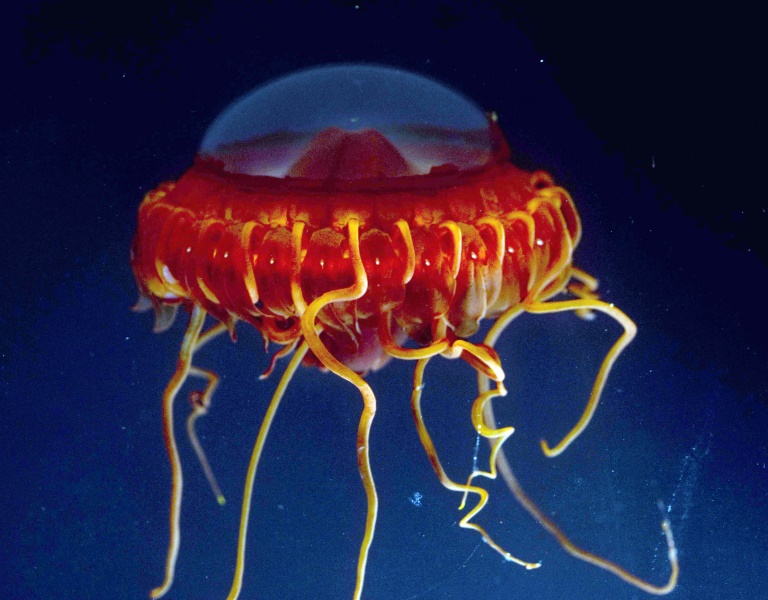
A vast assortment of animals populate the sunless depths, from the colossal squid, which wrapped its tentacles around the imaginations of sailors and storytellers, to beings with huge cloudy eyes, or whose bodies are as transparent as glass. 

And the angler fish, with its devilish looks illuminated by a built-in headlamp, showing that the deep dark is alive with lights.

– ‘Incredible’ creatures – 

Until the middle of the 19th century, scientists believed that life was impossible beyond a few hundred metres.

“They imagined that there was nothing, because of the absence of light, the pressure, the cold, and the lack of food,” Nadine Le Bris, a professor at Sorbonne University, told AFP. 

Between 200 and 1,000 metres (650 to 3,300 feet), the light fades until it vanishes completely, and with it plants; at 2,000 metres the pressure is 200 times that of the atmosphere.  

From the abyssal plains to the cavernous trenches plunging deeper than Everest is high, aquatic existence continues in spectacular diversity. 

“When people think of the deep sea they often think of the seafloor,” said Karen Osborn of the Smithsonian’s Natural History Museum. 

“But all that water in between is full of incredible animals. There is a ton of life.”

These open water inhabitants face a formidable challenge: they have nowhere to hide. 

“There’s no seaweed to hide in, no caves or mud to dig into,” said Osborn. 

“There are predators coming at them from below, from above, from all around.” 

– Masters of disguise – 

One tactic is to become invisible. 

Some creatures are red, making them difficult to distinguish in an environment where red light no longer filters through. 

Others render themselves transparent. 

Take the transparent gossamer worm, which ranges in size from a few millimetres to around a metre long and shimmies through the water by fluttering its frilly limbs. 

“They look like a fern frond,” said Osborn.

“They’re beautiful animals and they shoot yellow bioluminescent light out of the tips of their arms. What could be better than that.”

Bioluminescence is particularly common among fish, squid, and types of jellyfish, according to the US National Oceanic and Atmospheric Administration, which says around 80 percent of animals living between 200 and 1,000 metres produce their own light.    

This chemical process might be helpful for defence, reproduction or to find food — but no one knows for sure why so many creatures have evolved it, says NOAA. 

– “Sea snow” –

With no plants around and animals scattered in the vastness doing their utmost to disappear, creatures in the ocean depths often have a hard time finding a live meal.  

“If you happen to get lucky and hit a patch of your food, bingo! But you may not see another one for three weeks,” said Osborn.  

Another option is to feast on the dead.  

Organic particles from the surface waters — disintegrated bodies of animals and plants, mingling with fecal matter — drift down in what is known as “marine snow”. 

This cadaverous confetti forms part of a process that sequesters carbon dioxide in the ocean depths.

It is also a lifeline for many deep sea animals, including the blood red vampire squid which, contrary to its reputation, peacefully hoovers up marine snow.

When giants like dead whales sink to the seabed, they are swiftly reduced to bone by scavengers. 

– Final frontier –

With most of the oceans still unexplored, it is often said that we know more about the surface of Mars than we do about the seafloor on our own planet. 

But unlike outer space, scientists keep finding life even under the most hostile of conditions. 

Like the searing hydrothermal vents at the cracks between oceanic plates that spew chemical compounds such as hydrogen sulphide. 

Microorganisms use this to create organic matter via “chemosynthesis”, like plants use the sun for photosynthesis, which in turn feeds “exuberant” ecosystems, said Pierre-Marie Sarradin, head of the Deep Ecosystems department at the French research agency Ifremer. 

These hydrothermal springs were totally unknown until the 1970s. 

Scientists have so far identified some 250,000 marine species, though there could still be at least a million to be discovered.

Could there be an elusive sea monster lurking in the depths? Despite measuring more than 10 metres in length the colossal squid has only very rarely been seen.

“I don’t think we’re going to find a megalodon,” said Osborn, referring to the giant ancestor of the shark.

Humans may not have explored much of the deep seas, but they have left their mark, via global heating, overfishing and pollution. 

Oceans are acidifying as they absorb more and more CO2, there is a growing prevalence of “dead zones” without oxygen, while microplastics have been found in crustaceans at a depth of nearly 11 kilometres in the Mariana Trench. 

Food reaches the bottom in smaller quantities. 

Nadine Le Bris said species that “already live at the limits in terms of oxygen or temperature”, are already “disturbed”.

Close Bitnami banner
Bitnami