World

Mucky business: Thai prisoners clean Bangkok sewers after pandemic delay

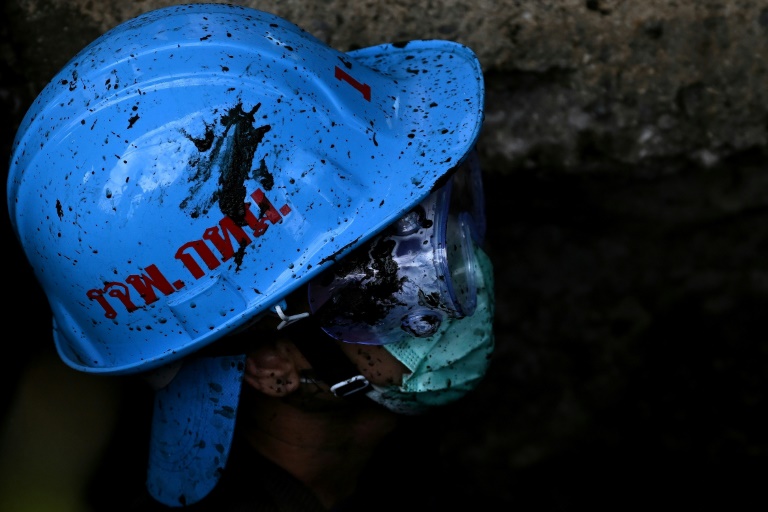
Flecked with sewage, a Thai prisoner grapples with an overflowing bucket as he and his fellow inmates clean Bangkok’s congested drains for the first time in two years.

Pre-pandemic, convicts could volunteer to clear the sewers of Thailand’s capital — which sits only 1.5 metres (five feet) above sea level and is perennially beset by flooding — earning time off their sentences.

But fears of spreading the virus meant the gutter-diving work has been done by city authorities and workers, until now.

“It is a pretty tough and exhausting job,” said one 33-year-old prisoner, who was not permitted to give his name, adding — not unsurprisingly — that the work was “smelly”.

He is one of roughly 80 inmates shipped in from three prisons to an eastern Bangkok suburb and set to labour, earning money and a day off their sentences for each day worked.

“I still want to do this job, so I can return home to my family earlier,” explained the man, wearing a bright blue baseball cap and a dark blue prison uniform.

After hauling up the concrete slabs covering the drains, the inmates — wearing protective waders and heavy-duty gloves — drop down and scrabble out the grime, filling large iron tubs with stinking slop. 

They work through the day, fuelled by donations from grateful shopkeepers pleased to see the drains outside their stores finally cleared.

“This is the first time since the pandemic” that the drains have been cleared by prisoners, said a Bangkok Remand Prison guard, who declined to be identified as he was not authorised to speak to the press.

Once dubbed the “Venice of the East”, the capital endures flooding during the rainy season — from roughly July to October — with backed-up drains contributing.

“The increased cleaning when the rainy season starts will help the drains (remove water) quicker,” said a Bangkok Metropolitan Administration official.

And for at least one of the prisoners, who had less than a year remaining to serve, cleaning the sewers helped him feel better about his past.

“We have made mistakes in life so we end up in jail,” he said. “Having a chance to come out and help the public makes me feel very good.”

Mozambique still haunted by civil war as new conflict rages

As Mozambique battles a brutal Islamist insurgency, the legacy of a decades-long civil war still haunts the African nation where many former rebels refuse to disarm.

“It’s hard to live alone, with nothing, living without family nearby,” said Aurelio Capece Mudiua, who demobilised in 2020 after nearly four decades hiding around the Gorongosa mountains.

“Some of us had children, and they (the fighters) died here without getting to see them,” he said. “I want to tell the others, who are still in the mountains, come join us.”

This area of central Mozambique was a bastion of RENAMO, the rebel movement that battled the government for decades.

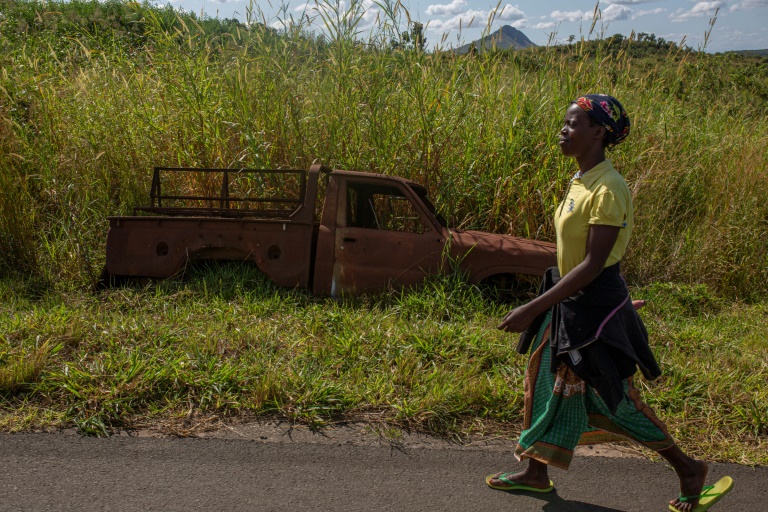
Burned-out carcasses of pickups, already overgrown with tall grass, still dot the landscape, vestiges of another time. 

Most of the current violence is about 1,000 kilometres (621 miles) to the north. When the Islamists took up arms in 2017, RENAMO was still at war with the government, led by the rival FRELIMO party.

Most of the RENAMO rebels are now too old to take up arms, with an average age of 55. But they face an uncertain future in one of the poorest countries in the world.

When Mozambique won independence in 1975, after a decade of fighting colonial master Portugal, the country was plunged into a civil war that served as a Cold War proxy battle.

The United States, apartheid South Africa, and white-ruled Rhodesia supported RENAMO, while the Soviets backed FRELIMO.

The war claimed a million lives, decimated the economy and left the nation littered with landmines.

– We ‘want peace’ –

After a 1992 peace deal, RENAMO turned into a political party but never won a national election. In 2013, they took up arms again, until a new deal was signed in 2019.

“There’s no one in RENAMO who doesn’t want peace,” said Antonio Muchanga, one of the party’s lawmakers.

Nearly two-thirds of RENAMO fighters have surrendered their weapons since 2020, and 11 of the movement’s 16 bases have been closed, according to official statistics.

But on the ground, observers say Mozambique suffers from problems experienced in many other post-war countries.

“The fighters have mostly turned in old hunting weapons,” said one humanitarian worker, who spoke on condition of anonymity.

Everyone who demobilised received about $2,000 to help them start a new life. Like most of the ex-fighters, Aurelio spent his payout quickly and yearns to receive a pension.

Under the peace deal, RENAMO fighters should receive the same pensions as their FRELIMO counterparts. But many are still waiting for them, which they see as a sign of the government’s bad faith.

“If the government gave me money, I would do my best to help my family, build a house, many things,” Aurelio said. 

“But the government still hasn’t given us money. The payout is finished and we are now waiting at home, with nothing.”

Disarmament “can’t work if people are only given money”, said Zenaida Machado, a researcher for Human Rights Watch. “They also need to be given the tools to reintegrate into their communities and to become self-sufficient.”

The real problem is simply financial, said Mirko Manzoni, the UN representative in Mozambique credited with crafting the latest peace deal.

“Mozambique’s government has a limited budget, with enormous needs. On top of that is a constant burden, the financing of the combatants’ pensions,” he said.

A new law is in the works to finance and harmonise the pensions.

“The discussions have taken two and a half years. The first ones who demobilised have already used up their packages a year ago already,” Manzoni said. 

He hopes the law will be approved before the end of the year.

“The combatants have to understand that not only do they have rights, but they also have a duty to share in the suffering of the rest of the population. Most Mozambicans have no pension,” Manzoni said.

Civilians are the forgotten victims of the war. Both sides committed horrific violence, but the peace deals offered a general amnesty, and the victims have practically no hope for justice.

“Both sides fought for a cause they believed to be just,” Manzoni said. “The best justice is development, within a system where people feel included.” 

Hong Kong's blurring border with China a sign of things to come

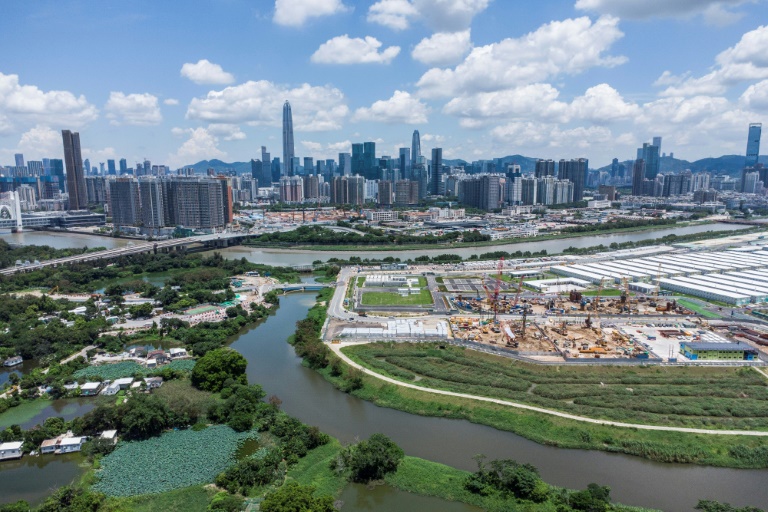
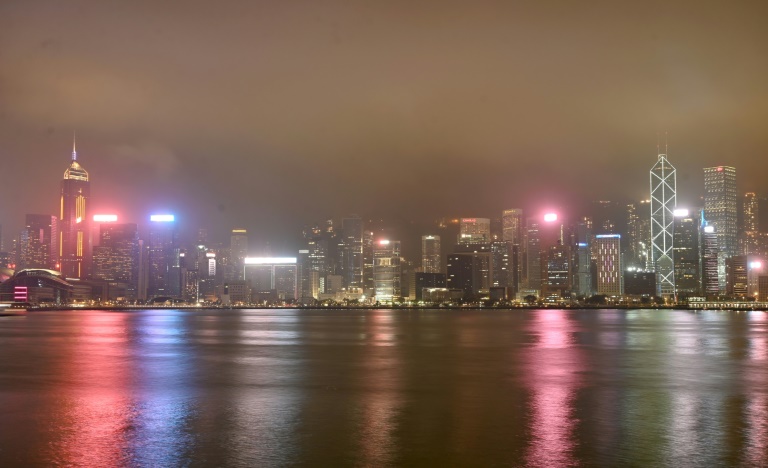
From the hill in northernmost Hong Kong where Jasper Law stood, the border with China was obvious — a narrow river dividing farmlands and fishponds from the gleaming skyscrapers of megacity Shenzhen.

Friday is the 25th anniversary of Hong Kong’s transition from British to Chinese rule.

While the view from the hilltops of Lok Ma Chau suggests Hong Kong remains clearly distinct from mainland China, the territory is fast being subsumed into Beijing’s blueprint for southern China.

And as the border is chipped away, the lack of public consultation has done little to ease the lingering discomfort some Hong Kongers feel about living on the mainland’s doorstep.

“In the 25 years since the handover, the border has become more and more blurry,” said Law, a pro-democracy politician from the border area.

The softening boundary has preoccupied many Hong Kongers.

And it was one of the catalysts for the huge democracy protests in the finance hub three years ago, a movement initially triggered by an attempt to allow extraditions to China’s mainland.

Beijing’s subsequent crackdown has only sped up Hong Kong’s absorption.

– Security agents roam free –

The integration of Hong Kong’s population and economy with mainland China has been under way for decades.

Between 1997 and 2021, more than 1.1 million people migrated from China via a limited-quota “one-way permit” scheme, almost a seventh of Hong Kong’s current population.

Mandarin was increasingly pushed in schools, sparking resentment among those who felt the city’s distinct Cantonese culture was being eroded. 

Hong Kong’s borders were also tweaked, most notably in the 2010s with an expansion of China’s high-speed rail into the city.

Part of the terminus in Hong Kong came under Chinese jurisdiction, meaning the mainland’s Communist Party-controlled legal system applied there.

Beijing’s imposition of a sweeping national security law to curb dissent following the 2019 protests has further eroded the legal firewall between Hong Kong and the mainland.

Under the law, which was imposed by Beijing directly rather than passed through the legislature, the mainland’s security agents can now operate freely in Hong Kong, immune from the city’s laws.

Beijing says it can now also try the most serious national security offences in mainland China.

And the Covid-19 pandemic has further whittled away at the boundaries.

While the border has been mostly closed under China’s strict zero-Covid rules, mainland medics were granted exemptions to work in Hong Kong’s hospitals.

Construction teams were also sent across the border to build emergency health facilities, even constructing a new bridge with Shenzhen to ease their travel.

– ‘Power imbalance’ –

Hong Kong’s government now plans to transform the border area with a two-decade plan that will place integration with Shenzhen at the heart of economic development in the city’s northernmost areas, shifting focus away from Hong Kong’s glitzy Victoria Harbour.

Dubbed the “Northern Metropolis”, the HK$100 billion ($12.7 billion) project envisages building a new megacity next to Shenzhen — a new node in Beijing’s “Greater Bay Area” ambitions to create a Chinese Silicon Valley connecting Hong Kong and multiple cities in neighbouring Guangdong province.

The government says the new metropolis will create 650,000 new jobs as well as much-needed new homes in one of the world’s least affordable cities.

Veteran urban planner Kenneth To said he thought the government’s vision was far from coherent, and bemoaned the small circle of vested interests that dominated discussion on development in Hong Kong. 

“The power imbalance is worrying,” he told AFP.

But Jack Lam, a mobile phone accessories seller who lives in a district near the border, was more upbeat. 

“When the population increases, you can expect more development to come, there will be more people starting businesses for sure,” the 35-year-old said.

Uber inks deal for Australian gig worker rights

Uber has reached a deal with a powerful Australian union after years of legal battles, campaigns and negotiations that will offer 100,000 drivers and food delivery workers more protections.

The Transport Workers Union — one of Uber’s most vocal critics — reached the agreement with the rideshare giant late Tuesday, with both sides backing minimum standards for all gig economy workers and the right to unionise.

In a joint statement, Uber and the union said they also supported the setting up of an independent body by the Australian government to create standards across the sector.

The “gig economy” — which uses temporary independent contractors for short-term tasks — has grown rapidly since Uber’s launch in 2009 and is promoted as a flexible way for people to earn money without the constraints of a full-time job.

But there has been growing backlash in Australia about the conditions and dangers gig workers face, particularly after a spate of delivery driver deaths during the Covid-19 pandemic when demand spiked.

A 2020 survey by the Transport Workers Union found 73 percent of food delivery drivers were worried about “being seriously injured or killed at work” — although safety concerns are not limited to Australia, or Uber.

In the United States, according to the advocacy group Gig Workers Rising, more than 50 drivers working for companies including Uber and Lyft have been killed on the job since 2017.

An Australian court last week ruled slain gig worker Xiaojun Chen, who was killed on the job in 2020 while working for food delivery service Hungry Panda, was an employee, not a contractor.

His family was awarded an A$830,000 (US$573,000) compensation payment, believed to be the first of its kind for a gig worker in Australia.

Uber’s general manager in Australia, Dom Taylor, conceded that the company and the union “may not seem like obvious allies”, but the deal struck between the two would “improve workers’ protections”.

“We want to see a level playing field for the industry and preserve the flexibility that gig workers value most,” he said.

The deal comes in the wake of Australia’s May election of a centre-left Labor government that has previously supported reforms to protect gig workers.

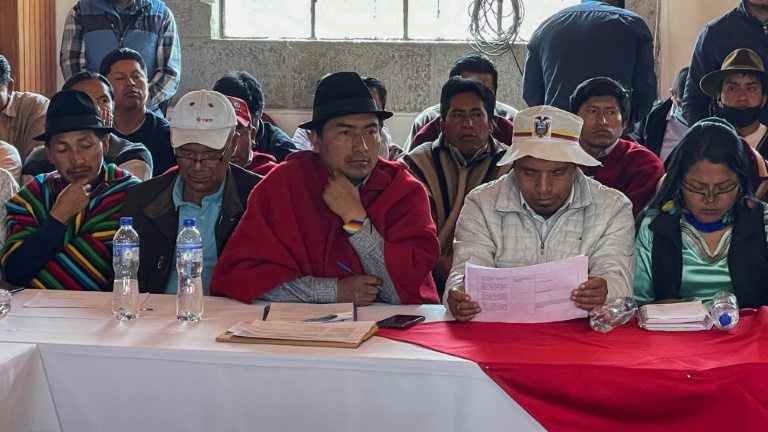
Ecuador talks falter after soldier killed by 'violent demonstrators'

Negotiations to end more than two weeks of disruptive living cost protests by Indigenous Ecuadorans were dealt a blow Tuesday when the killing of a soldier prompted the government to suspend participation.

President Guillermo Lasso — who survived an impeachment vote on Tuesday — accused Indigenous leader Leonidas Iza of self-serving politics during a brief address to the nation, saying: “We will not negotiate with those who hold Ecuador hostage.”

Iza’s powerful Confederation of Indigenous Nationalities of Ecuador (Conaie), in turn, accused the government of “authoritarianism”, and said Lasso would bear the consequences for “his hawkish policy.”

The opposition-led congress on Tuesday failed to gather enough votes to impeach the right-wing president over his role in “the serious political crisis and internal commotion” caused by the protests.

The motion garnered 80 of the 92 votes needed to remove Lasso from office, according to results read aloud by the parliament’s secretary, Alvaro Salazar, in a virtual session broadcast on social media.

Earlier in the day, the military said a soldier died and five police and seven soldiers were injured in an early-morning attack on a tanker truck escort in the country’s east.

It said a group armed with “spears and guns” attacked uniformed personnel protecting a convoy of tankers headed for the so-called ITT block of oil fields in Orellana province, where more than a billion barrels are stored.

Interior Minister Patricio Carillo expressed condolences to the family of fallen soldier Jose Chimarro in a tweet, and described the attackers as “violent demonstrators.”

A second day of talks with Indigenous representatives scheduled for Tuesday morning failed to get underway as negotiators from the government did not show up.

Mediator Virgilio Saquicela, president of the National Assembly, announced that the government was “not present” as it was “conducting an analysis” of the early-morning events.

– ‘Brutal attack’ –

Iza referred to a “brutal attack” but said there was no proof protesters were responsible.

“The country has witnessed all the efforts we have made to establish a fruitful and sincere dialogue,” insisted Lasso, a former banker who took office just over a year ago.

“But we will not sit down again to dialogue with Leonidas Iza, who only defends his political interests and not those of his base.”

“Only when there are legitimate representatives of all the peoples and nationalities of Ecuador, who seek real solutions and are open to real and frank dialogue, will we return to the table of dialogue”, Lasso said.

Tuesday’s fatality came on top of five demonstrators dead and hundreds of civilians and security personnel wounded in clashes between the security forces and protesters blockading key roads and disrupting supply lines.

Some 150 people have been arrested, according to observers.

Crude is the South American country’s main export, but production has been halved from about 520,000 barrels per day prior to the protests, the government said.

Operations at more than 1,100 wells have been affected.

An estimated 14,000 protesters are taking part in a nationwide show of discontent against rising hardship in an economy dealt a serious blow by the coronavirus pandemic.

Conaie, which called the protest, is credited with unseating three presidents between 1997 and 2005.

Indigenous people make up more than a million of the South American nation’s 17.7 million people. 

Most of the demonstrators’ ire is concentrated in the capital Quito, where some 10,000 people are gathered, most of them from other parts of the country.

Other than fuel price cuts, the protesters want jobs, food price controls, and more public spending on healthcare and education.

– ‘Serious political crisis’ –

The action has been costly, with losses of some $50 million per day to the economy, according to the government, which has warned oil production could come to a complete halt soon.

Ecuador’s economy is highly dependent on oil revenues, with 65 percent of output exported in the first four months of 2022.

Protesters have set up roadblocks in most of the country’s 24 provinces, hampering the delivery of food and flowers — another key export — and dealing a blow to tourism.

On Sunday, Lasso announced a 10-cents-per-gallon reduction in diesel and gasoline prices, but this was deemed insufficient by Conaie.

The president has also lifted a state of emergency that had been in place in six provinces and a night-time curfew in Quito.

After the concessions, the two sides met for the first time Monday for talks on ending the protest.

Hong Kong economy faces uncertain future 25 years after handover

When Hong Kong transitioned from British to Chinese rule, Edmond Hui was a floor trader at the bustling stock exchange, witnessing the roaring growth of a city at the crossroads of the West and Asia.

Under a deal signed with Britain ahead of the 1997 handover, China promised Hong Kong could keep its capitalist system for 50 years, an arrangement that helped the city thrive as one of the world’s top financial hubs.

Friday marks the halfway point of that experiment, with uncertainty clouding the economic future of Hong Kong — a city reliant on an increasingly isolated China, struggling to shake off the reputational damage from political unrest and pandemic-induced border closures.

Hui, now the chief executive of a mid-tier stockbroker with nearly 300 employees, said post-handover markets have undergone a drastic shift, becoming more China-focused than ever.

“Before 1997, foreign capital propped up half of the market,” he said. “After 1997, things changed gradually until the whole market was held up by Chinese capital.”

China’s meteoric rise in the past two decades yielded vast benefits for Hong Kong, which became the gateway for mainland firms to raise funds and for foreign businesses to access what is today the world’s second-largest economy.

“Hong Kong was sort of a poster child of free trade and open markets,” veteran pro-Beijing Hong Kong politician Regina Ip told AFP.

But the interlocking of its fate with China has also led to warnings about overreliance and complacency.

Chinese companies made up around 80 percent of the market capitalisation in Hong Kong’s stock market this year, up from 16 percent in 1997.

And Chinese firms now account for seven of the top 10 holdings of the benchmark Hang Seng Index, which used to be anchored by homegrown brands such as Cathay Pacific and Television Broadcasts Limited.

Hong Kong’s GDP, meanwhile, has gone from being equivalent to 18 percent of mainland China’s in 1997 to less than three percent in 2020.

Hui greeted this comprehensive shift with a mild shrug.

“It’s just a matter of changing who’s boss,” he said.

“We can only hope that our country’s momentum will surpass that of Europe and the United States.”

– ‘The gateway to China’ –

As China’s economic and political power has grown over the last few decades, so have tensions with Western nations — which has also affected Hong Kong.

Beijing cracked down on dissent in the city after massive democracy protests in 2019, prompting the United States to revoke Hong Kong’s preferential trade status on the grounds that it was no longer autonomous enough.

Washington also sanctioned some Hong Kong officials.  

“Back in 1997, we were able to play the role of a very important middleman. But now… everyone has more doubts about our background,” Yan Wai-hin, an economics lecturer at the Chinese University of Hong Kong, told AFP.

“If a trading partner feels that (Hong Kong) isn’t a neutral middleman… then the mutual trust might be lost.”

Yan said regional rivals such as Singapore were looking to capitalise on what they saw as an opening to supplant Hong Kong.  

Adding to that pressure, the tightening of political control has also meant Hong Kong has stuck to mainland China’s zero-Covid policy.

Stringent travel restrictions have kept the business hub cut off both from China and the world for the last two years, with authorities acknowledging it has prompted a talent exodus. 

But Ip said once restrictions were lifted, Hong Kong would recover.

“Our extremely advantageous geographical location is still there,” she said.

“We’re still the gateway to China.”

– ‘Complacent and insular’ –

Some industries other than finance, though, have struggled after the handover. 

“In the past 10 years or so, our GDP growth has lost steam and I think this had to do with Hong Kongers being complacent and insular,” said Simon Ho, president of the Hang Seng University of Hong Kong.

The city’s port, for instance, was among the world’s busiest for decades but has slipped in the rankings after peaking in 2004.

“The government took a neoliberal, non-interventionist approach, and there was no blueprint for developing industries and the economy,” Ho added.

He said authorities had devoted resources to sectors such as research and development, but that the results were “half-baked” and not competitive enough when compared with neighbouring tech hub Shenzhen.

“Hong Kong needs to figure out its role,” Ho said.

“In the past, we didn’t know how to complement the mainland, and in some cases even competed with it. In the long run, that will only get harder.” 

Israel heads towards snap election, Lapid poised to be PM

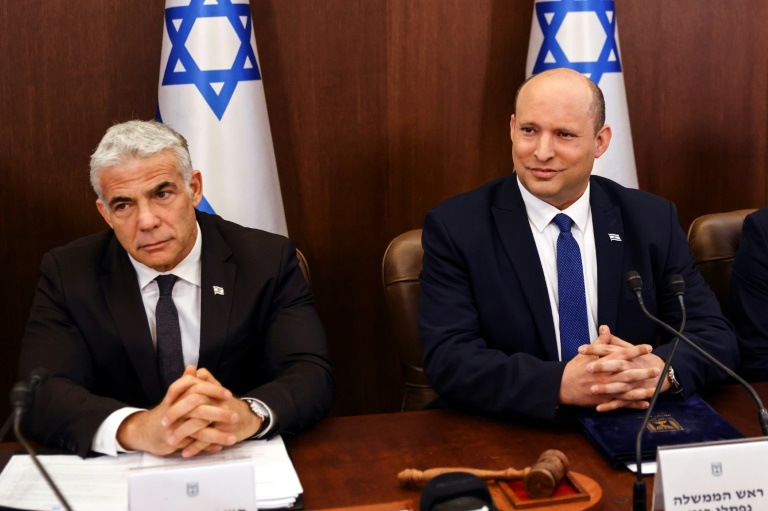
Israel’s parliament is expected to dissolve Wednesday, ending Prime Minister Naftali Bennett’s year-long tenure and triggering a fifth election in less than four years that could see ex-premier Benjamin Netanyahu reclaim power. 

Barring an 11th hour shock agreement to save the coalition or form a new government within the existing parliament, Bennett’s eight-party alliance is due to end by midnight, installing Foreign Minister Yair Lapid as prime minister.

The former television anchor is set to head a caretaker government, ahead of polls due in late October or early November. 

Bennett’s motley alliance formed in 2021 offered a reprieve from an unprecedented era of political gridlock, ending Netanyahu’s record 12 consecutive years in power and passing Israel’s first state budget since 2018. 

Netanyahu — a divisive hawk aligned with far-right nationalists and Israel’s ultra-Orthodox Jewish parties — has promised victory in new elections but may again struggle to rally a parliamentary majority, multiple polls have shown.

He is currently on trial over corruption charges, which he denies. 

The anti-Netanyahu camp will likely be led by Lapid, a centrist former TV celebrity. Dismissed as a lightweight when he entered politics a decade ago, he has surprised many with his political skills.

As he and Bennett announced last week that their coalition was no longer tenable, Lapid sought to cast Netanyahu’s potential return to office as a national threat. 

“What we need to do today is go back to the concept of Israeli unity. Not to let dark forces tear us apart from within,” Lapid said.

While parliament’s collapse appeared a near certainty, last-minute surprises remained possible given Israel’s volatile political climate. 

Factions across the political spectrum fear fresh polls will see them lose seats or end up out of parliament entirely by falling below the minimum support threshold, which is 3.25 percent of all votes cast.

But options to avoid another election were growing increasingly remote, according to Israeli reports.

That means Lapid is expected to take office at midnight after parliament gives final approval to a dissolution bill, in accordance with the power-sharing deal he agreed with Bennett last June.  

– ‘Fought like lions’ –

Bennett, a religious nationalist, has led a coalition of right-wingers, centrists, doves and Islamists from the Raam faction, which made history by becoming the first Arab party to support an Israeli government in the Jewish state’s 74-year history. 

The alliance, united by its desire to oust Netanyahu and break a damaging cycle of inconclusive elections, was imperilled from the outset by its ideological divides. 

But Bennett said the final straw was a failure to renew a measure that ensures the roughly 475,000 Jewish settlers in the occupied West Bank live under Israeli law. 

Some Arab lawmakers in the coalition refused to back a bill they said marked a de facto endorsement of a 55-year occupation that has forced West Bank Palestinians to live under Israeli rule. 

For Bennett, a staunch supporter of settlements, allowing the so-called West Bank law to expire was intolerable. Dissolving parliament before its June 30 expiration temporarily renews the measure. 

“We fought like lions, down to the very last moment, until it simply became impossible,” Bennett told Israel’s Channel 12 days after announcing his coalition’s demise. 

Bennett is expected to stay on as alternate prime minister and be responsible for Iran policy, as world powers take steps to revive stalled talks on Tehran’s nuclear programme.

Israel opposes a restoration of the 2015 agreement that gave Iran sanctions relief in exchange for checks on its nuclear programme. 

Lapid will retain his foreign minister title while serving as Israel’s 14th premier. He will find himself under an early microscope, with US President Joe Biden due in Jerusalem in two weeks. 

Sony launches PC gaming gear, expanding beyond PlayStation

Japan’s Sony is launching a new brand that will offer PC gaming gear, the company announced Wednesday, as it tries to compete for a share of the lucrative gaming peripherals market.

Sony is looking to expand beyond its flagship PlayStation console and boost revenue from other sectors, including PC and mobile gaming.

The gaming peripherals market of items used by players was valued at $3.88 billion globally in 2019 according to Grand View Research.

Sony’s first offerings from its new Inzone brand will be three wireless headsets and two monitors, the priciest of which will retail for a suggested $899.99 in the United States.

“The market has been expanding with a higher interest in gaming with the spread of esports tournaments and the advancement of gaming entertainment,” said Yukihiro Kitajima, head of Sony’s game business and marketing office, in a statement.

Sony is “very late” to the “hopelessly crowded” sector, said Serkan Toto, CEO of game industry consultancy Kantan Games.

Rival Microsoft is already well-positioned, along with competitors like Razer, though Sony will bring unique hardware features, he told AFP.

The firm’s decision to enter the market now is linked to its “aggressive plan to boost sales from PC and mobile for its PlayStation unit to around 50 percent by fiscal 2025,” Toto said.

It “apparently believes that the goal is easier to achieve by leveraging its position in hardware to raise awareness among PC gamers.”

EU insurance ban targets Russian oil exports

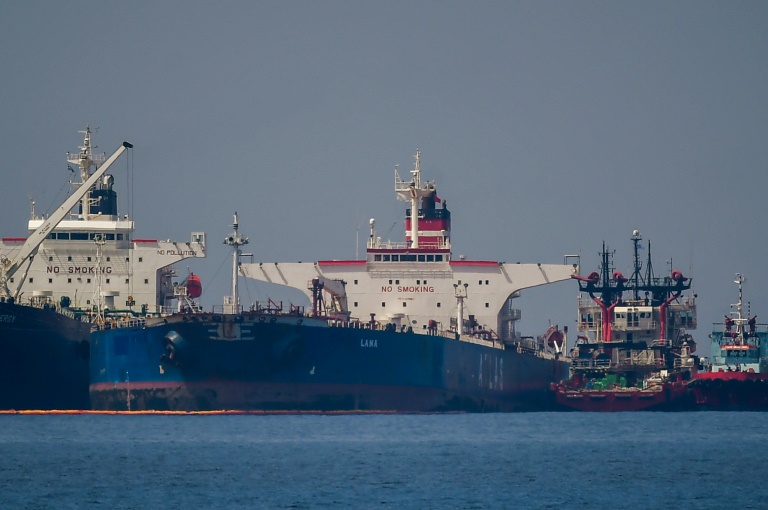
An EU ban on insuring ships transporting Russian oil could potentially hurt Moscow more than its embargo on the nation’s crude, analysts say.

The European Union recently unveiled the insurance ban in a sixth set of economic sanctions aimed at punishing Russia over its invasion of Ukraine.

In a further knock, G7 leaders are seeking a price cap for Russian oil to further hurt Kremlin revenues.

The EU insurance and reinsurance ban, covering all maritime transportation of Russian oil, comes as Moscow seeks to ramp up sales to China and India to help offset the embargo.

– ‘Further reaching than embargo’ –

The insurance ban “would have further-reaching consequences for the oil market than the EU oil embargo”, noted Commerzbank analyst Carsten Fritsch.

Companies will no longer be permitted to transport oil from Russia by sea, or to insure such shipments. 

EU insurers have until the end of this year to implement the ban, while those in Britain are expected to follow suit.

“There is going to be an impact and there is going to be a pricing impact,” said Marcus Baker, international head of marine at US broker Marsh.

A similar ban was used in 2012 when the EU prohibited European insurers and reinsurers from covering vessels carrying Iranian oil.

The bloc had also slapped an embargo on the purchase of Iranian crude as part of sanctions against Tehran’s controversial nuclear programme.

Commercial ship operators require insurance for the vessel, its cargo and for protection and indemnity (P&I) covering events such as war and environmental damage.

Mathieu Berrurier, managing director of marine insurance broker Eyssautier-Verlingue, told AFP that vast amounts of cash were required for potential payouts caused by such disasters.

This results in insurers forming P&I clubs that “are able to offer guarantees equal to the risks involved in” events including “a major oil spill or “collision with an oceanliner”, said Berrurier.

“Colossal amounts are needed,” he stressed, adding that such disasters can potentially cost “billions of dollars”.

Russia’s former president Dmitry Medvedev, who is deputy head of the country’s security council, has hinted that Moscow could get around the ban by providing state guarantees to cover oil exports.

That could allow Russia to self-insure and circumvent EU sanctions, he insisted.

“That is true to an extent,” said analyst Livia Gallarati at consultancy Energy Aspects.

But with as much as 95 percent of the P&I insurance market handled by EU and UK-based insurers, according to experts, it will be difficult for Russia to completely get around the ban.

“The market is so heavily entwined in Europe (that it) is going to be almost impossible” to escape the impact of the ban, an oil shipping executive told AFP on condition of anonymity.

“There is not a very mature and deep alternative insurance market out there,” the executive noted.

– India ‘helping Russia’ –

It emerged late last week that India has reportedly stepped in to offer certification services for some tankers carrying Russian crude.

That threw the spotlight on this week’s G7 summit, which focused on more co-ordinated financial action against Russia.

“India is helping Russia to continue selling its oil despite the West’s sanctions,” said Commerzbank analyst Fritsch.

He added that India has provided safety certification for more than 80 ships belonging to a Dubai-based subsidiary of the state Russian shipping company Sovcomflot.

G7 leaders, meeting in Germany on Monday and Tuesday, condemned Russia’s Ukraine invasion as “illegal and unjustifiable”.

“We reemphasise our condemnation of Russia’s illegal and unjustifiable war of aggression against Ukraine,” they said in their draft final statement.

The communique was issued after the G7 held talks with Indian Prime Minister Narendra Modi, as well as the leaders of Argentina, Indonesia, Senegal, South Africa and Ukraine.

EU insurance ban targets Russian oil exports

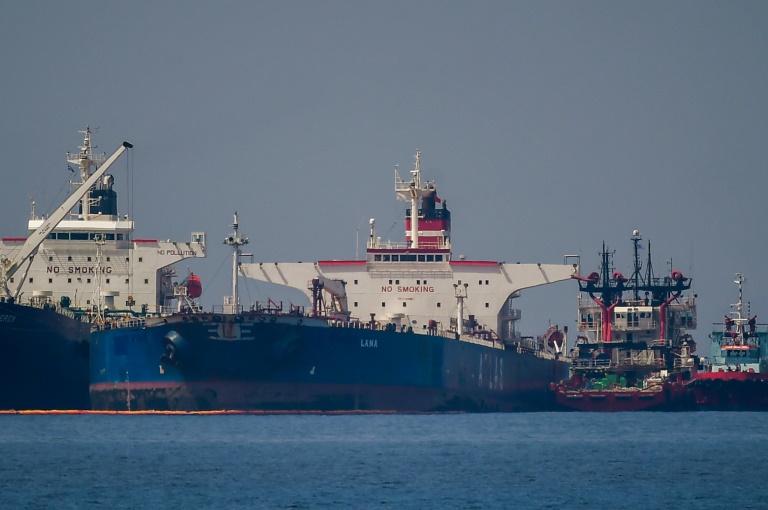
An EU ban on insuring ships transporting Russian oil could potentially hurt Moscow more than its embargo on the nation’s crude, analysts say.

The European Union recently unveiled the insurance ban in a sixth set of economic sanctions aimed at punishing Russia over its invasion of Ukraine.

In a further knock, G7 leaders are seeking a price cap for Russian oil to further hurt Kremlin revenues.

The EU insurance and reinsurance ban, covering all maritime transportation of Russian oil, comes as Moscow seeks to ramp up sales to China and India to help offset the embargo.

– ‘Further reaching than embargo’ –

The insurance ban “would have further-reaching consequences for the oil market than the EU oil embargo”, noted Commerzbank analyst Carsten Fritsch.

Companies will no longer be permitted to transport oil from Russia by sea, or to insure such shipments. 

EU insurers have until the end of this year to implement the ban, while those in Britain are expected to follow suit.

“There is going to be an impact and there is going to be a pricing impact,” said Marcus Baker, international head of marine at US broker Marsh.

A similar ban was used in 2012 when the EU prohibited European insurers and reinsurers from covering vessels carrying Iranian oil.

The bloc had also slapped an embargo on the purchase of Iranian crude as part of sanctions against Tehran’s controversial nuclear programme.

Commercial ship operators require insurance for the vessel, its cargo and for protection and indemnity (P&I) covering events such as war and environmental damage.

Mathieu Berrurier, managing director of marine insurance broker Eyssautier-Verlingue, told AFP that vast amounts of cash were required for potential payouts caused by such disasters.

This results in insurers forming P&I clubs that “are able to offer guarantees equal to the risks involved in” events including “a major oil spill or “collision with an oceanliner”, said Berrurier.

“Colossal amounts are needed,” he stressed, adding that such disasters can potentially cost “billions of dollars”.

Russia’s former president Dmitry Medvedev, who is deputy head of the country’s security council, has hinted that Moscow could get around the ban by providing state guarantees to cover oil exports.

That could allow Russia to self-insure and circumvent EU sanctions, he insisted.

“That is true to an extent,” said analyst Livia Gallarati at consultancy Energy Aspects.

But with as much as 95 percent of the P&I insurance market handled by EU and UK-based insurers, according to experts, it will be difficult for Russia to completely get around the ban.

“The market is so heavily entwined in Europe (that it) is going to be almost impossible” to escape the impact of the ban, an oil shipping executive told AFP on condition of anonymity.

“There is not a very mature and deep alternative insurance market out there,” the executive noted.

– India ‘helping Russia’ –

It emerged late last week that India has reportedly stepped in to offer certification services for some tankers carrying Russian crude.

That threw the spotlight on this week’s G7 summit, which focused on more co-ordinated financial action against Russia.

“India is helping Russia to continue selling its oil despite the West’s sanctions,” said Commerzbank analyst Fritsch.

He added that India has provided safety certification for more than 80 ships belonging to a Dubai-based subsidiary of the state Russian shipping company Sovcomflot.

G7 leaders, meeting in Germany on Monday and Tuesday, condemned Russia’s Ukraine invasion as “illegal and unjustifiable”.

“We reemphasise our condemnation of Russia’s illegal and unjustifiable war of aggression against Ukraine,” they said in their draft final statement.

The communique was issued after the G7 held talks with Indian Prime Minister Narendra Modi, as well as the leaders of Argentina, Indonesia, Senegal, South Africa and Ukraine.

Close Bitnami banner
Bitnami