World

Blood and fears as Russian missile hits flats in east Ukraine city

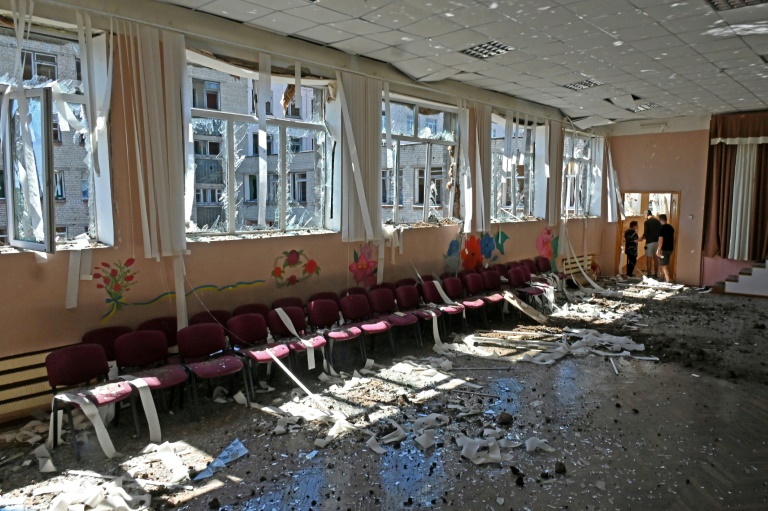
A man’s body still wearing one slipper lay in a courtyard in the centre of Sloviansk in east Ukraine Monday after a morning strike hit apartment blocks in the strategic city.

Police lifted the body of the man, named as Igor by neighbours, and loaded him into a van to go to the morgue, leaving streaks of blood on the ground.

The city’s mayor, Vadim Lyakh, was at the scene along with police and rescuers shortly after the strike at around 8:30 (0530 GMT).

“We are establishing (the toll), but there is one definitely dead and three wounded,” Lyakh told AFP as locals, mostly elderly, swept up shards of glass. 

A policeman said that the injured had shrapnel wounds, while a local 84-year-old woman who gave her name as Babushka (Grandma) Tamara, said a female neighbour had been hospitalised with a shrapnel wound to the chest.

“Not at night, but in the daytime, how much more can we take?” a policeman asked a colleague.

Sloviansk, a sleepy green city, is now experiencing heavy strikes as Russians shell it from just a few kilometres away, advancing from the north. The city has already lost water and gas supplies.

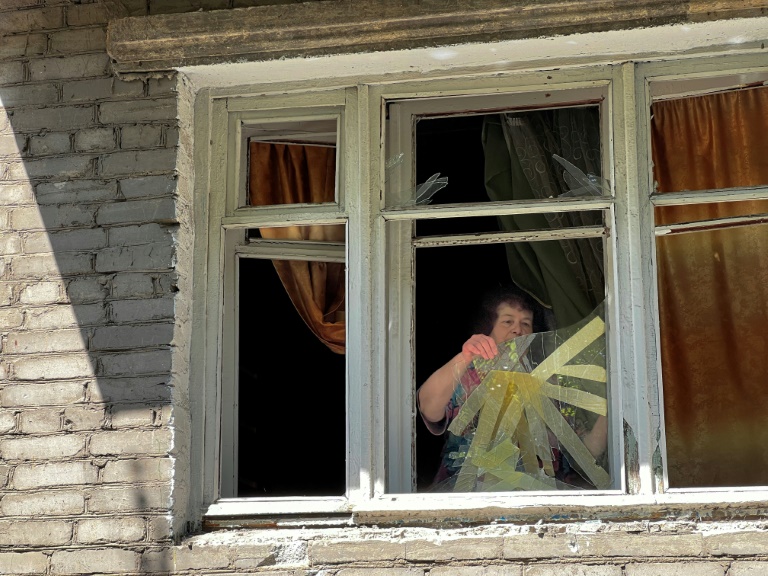
Surveying her row of cracked and blown-out windows on the ground floor and shrapnel-scored wallpaper, Tatiana Levchenko lamented: “How can I live? All the rooms are damaged, see?”

“It’s such grief for us,” the 67-year-old said, pointing to her cat hidden under the sofa from fear and her hamster in his cage in the dark hallway. Her daughter and grandchildren have already left for Lviv in western Ukraine.

“Where will I go, all of Ukraine is under fire! You see, there’s nowhere to hide,” she exclaimed.

“Things are bad for us, very bad. Everyone has cried themselves out. I have no strength left.” 

– ‘War with civilians’ –

Outside the next block, Natalya Petrova had come out in her house coat to survey her broken windows and shrapnel-pitted facade.

She said she was napping after seeing off her husband to work when the explosion rang out. 

Her family’s house in a village had already been damaged in the war and now her city flat too.

“We have no housing there — or here,” she said, tears in her eyes.

A series of strikes overnight and on Monday morning appeared to use cluster rockets, which scatter bomblets over a large area, exploding on the ground and hitting people walking outside or in buildings. 

There were no obvious military facilities nearby, although soldiers were towing away a camouflage van parked on the street.

The central area has “no military facilities” and Russia is at war with civilians, Lyakh wrote on Facebook, urging people to evacuate.

What appeared to be an Uragan missile stuck out of the ground in a courtyard some 100 metres from where Igor’s body lay.

“We were saved by a miracle,” said one woman, wearing jeans and a red T- shirt, sweeping up broken glass. 

Workers came with big rolls of film to cover up broken windows.

A policewoman was telling locals to take photographs of the damage to their flats in order to claim compensation.

Overnight, an apparent cluster rocket had previously hit a street on the outskirts of the city, breaking windows and scattering shrapnel. 

Locals said they had frequently seen drones overhead but added a nearby military facility was no longer being used.

Oleksandr, a 39-year-old market trader, showed how shrapnel had made holes in his car, shattered house windows and wounded one of his Alsatian dogs.

The war damage is deja-vu for locals like him, who previously saw Russia-backed separatists take control of the city in 2014 for a period of months.

Oleksandr pointed to the holes in his metal gate, some fresh and others dating back to 2014. 

“I didn’t replace my gate. It’s like something told me not to,” he said wryly.
Jordan toxic gas blast kills 10, injures over 200

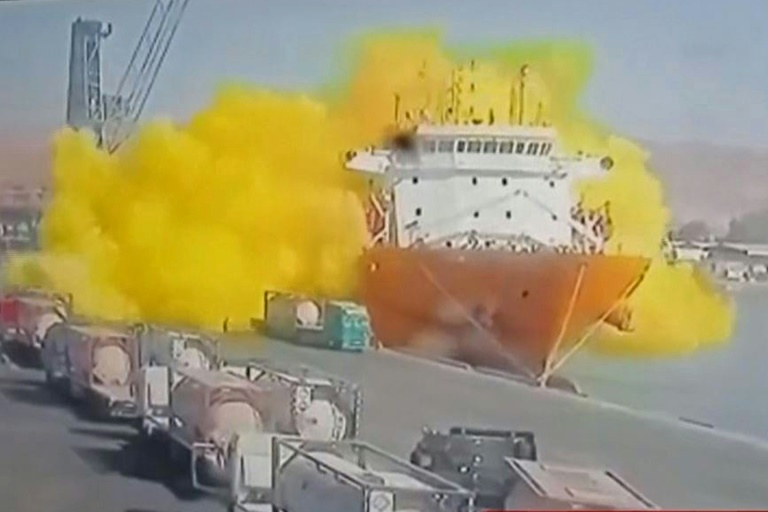
A gas explosion killed at least 10 people and injured more than 250 on Monday, authorities said, when a tank that fell from a crane released a poisonous yellow cloud at Jordan’s Aqaba port.

Footage on state-owned Al-Mamlaka TV showed the large cylinder, said to have been carrying about 30 tonnes of gas, plunging from a crane on a moored vessel, causing a violent release of the gas cloud.

The force of the blast sent a truck rolling down the harbourside, while port workers could be seen running for their lives.

The death toll rose to 10, government spokesman Faisal al-Shaboul told AFP, revising an initial toll of five killed.

Civil defence spokesman Amer al-Sartawy reported that 251 people were injured.

“Specialists and the hazardous substances team in the civil defence are dealing” with the incident, Sartawy added.

Trucks were seen lined in a row carrying similar containers at the time the accident occurred.

Nearby areas were evacuated and residents told to stay indoors.

Prime Minister Bishr Khasawneh and Interior Minister Mazen al-Faraya headed to the site of the incident, state media reported.

The deputy chief of the Aqaba Region Ports Authority, Haj Hassan, told Al-Mamlaka that an “iron rope carrying a container containing a toxic substance broke, resulting in the fall and escape of the poisonous substance”.

The channel also cited the former head of the company that operates the port, Mohammed al-Mubaidin, as saying that a vessel had been waiting to load almost 20 containers of liquified gas “containing a very high percentage of chlorine”.

He nonetheless added that the gas is heavy and “it is not easy for its gas clouds to move… as it concentrates in one area and is affected by wind movement”.

According to Jordanian official sources the southern beach of Aqaba, a Red Sea resort area, was evacuated following the incident.

The leak was unlikely to reach neighbouring Israel, a spokeswoman for that country’s environmental protection ministry said, noting that there was a “northerly wind blowing now indicating that the gas would not affect the residents of Eilat and the area, (but) rather Saudi Arabia”.

– Hospitals full –

The injured were transported to two state hospitals, one private facility and a field hospital.

Local media showed members of civil defence forces, some dressed in hazmat suits, as well as medics rushing to the scene clad in masks. 

Aqaba health director Jamal Obeidat said that hospitals were full in the area and “cannot receive more cases”.

“The injured people are in medium to critical condition,” he added.

He called on residents of Aqaba to “stay in their homes and shut all windows as a precaution”, stating that the chemical substance is very dangerous, without specifying what it was.

“The government formed a team headed by the interior minister to investigate the accident and take the necessary measures,” al-Shaboul said.

The government spokesman urged citizens not to approach the site of the incident, adding that medical reinforcements were being sent to Aqaba.

Israel expressed its condolences and offered to help. 

“As we’ve told our friends in Jordan, the Israeli defence establishment is ready to assist with any effort, by any means necessary,” Defence Minister Benny Gantz said.

Jordan’s Aqaba port is the country’s only marine terminal and a transit point for a vast portion of its imports and exports.

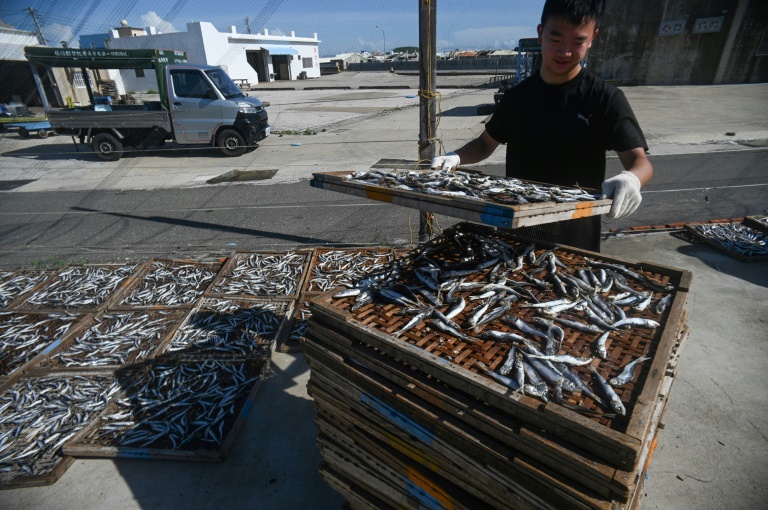
US to work with Taiwan, Vietnam against illegal fishing

The United States said Monday it would step up cooperation with Vietnam and Taiwan among others to combat illegal fishing, a problem that environmentalists and Western nations increasingly attribute to China.

As a major UN conference opened in Portugal on restoring the planet’s ailing oceans, US President Joe Biden signed a memorandum that aimed to step up coordination and enforcement within the US government against illegal fishing and the use of forced labor.

The White House said the United States also plans new engagement with Ecuador, Panama, Senegal, Taiwan and Vietnam on fighting illegal, unreported and unregulated fishing, dubbed “IUU” in environmental jargon.

An administration official said, without further detail, that the cooperation would include “capacity building” as part of a strategic plan.

The United States identified the five “not because they are the primary offenders of IUU fishing but because they have expressed a willingness to work with the United States to combat IUU fishing in their countries,” she told reporters on customary condition of anonymity.

US officials generally avoid describing Taiwan as a country as the United States only recognizes Beijing, which considers the pro-Western self-governing democracy to be part of its territory.

Vietnam also has intense maritime disputes with Beijing, which claims large stretches of the South China Sea and has sought to enforce its own fishing rules.

Another official said that, while the new US effort does not target any country, China “is a leading contributor to IUU fishing worldwide and has impeded progress on the development of measures to combat IUU fishing and overfishing in international organizations.”

A recent report by the Environmental Justice Foundation said that China by far has the world’s largest fleet capable of fishing in distant waters and that there have been frequent complaints of abuse.

The British advocacy group said that crew members from Indonesia and Ghana in interviews recounted Chinese captains imposing excessive hours without pay, meting out threats or actual violence and providing low-quality food that led to diarrhea and other maladies.

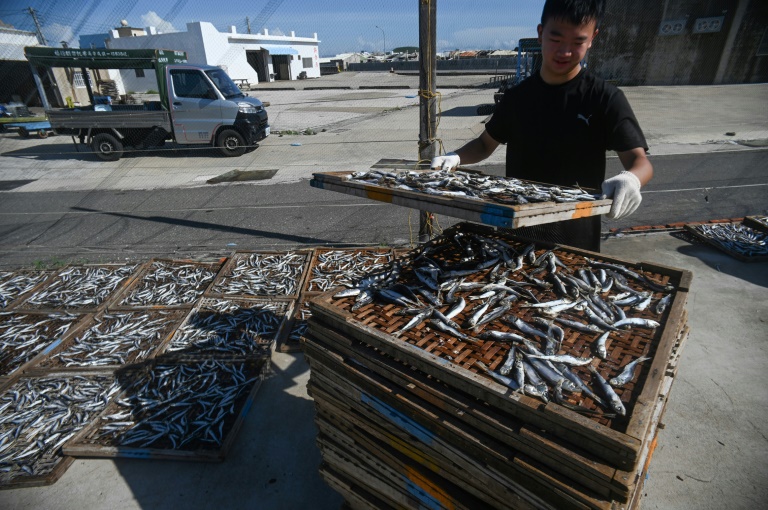
US to work with Taiwan, Vietnam against illegal fishing

The United States said Monday it would step up cooperation with Vietnam and Taiwan among others to combat illegal fishing, a problem that environmentalists and Western nations increasingly attribute to China.

As a major UN conference opened in Portugal on restoring the planet’s ailing oceans, US President Joe Biden signed a memorandum that aimed to step up coordination and enforcement within the US government against illegal fishing and the use of forced labor.

The White House said the United States also plans new engagement with Ecuador, Panama, Senegal, Taiwan and Vietnam on fighting illegal, unreported and unregulated fishing, dubbed “IUU” in environmental jargon.

An administration official said, without further detail, that the cooperation would include “capacity building” as part of a strategic plan.

The United States identified the five “not because they are the primary offenders of IUU fishing but because they have expressed a willingness to work with the United States to combat IUU fishing in their countries,” she told reporters on customary condition of anonymity.

US officials generally avoid describing Taiwan as a country as the United States only recognizes Beijing, which considers the pro-Western self-governing democracy to be part of its territory.

Vietnam also has intense maritime disputes with Beijing, which claims large stretches of the South China Sea and has sought to enforce its own fishing rules.

Another official said that, while the new US effort does not target any country, China “is a leading contributor to IUU fishing worldwide and has impeded progress on the development of measures to combat IUU fishing and overfishing in international organizations.”

A recent report by the Environmental Justice Foundation said that China by far has the world’s largest fleet capable of fishing in distant waters and that there have been frequent complaints of abuse.

The British advocacy group said that crew members from Indonesia and Ghana in interviews recounted Chinese captains imposing excessive hours without pay, meting out threats or actual violence and providing low-quality food that led to diarrhea and other maladies.

As Ukraine fallout worsens, G7 seeks to woo fence-sitters

Five emerging powers have become the object of the G7 industrialised powers’ charm offensive, as the club of rich nations seeks broader support in their backing for Kyiv.

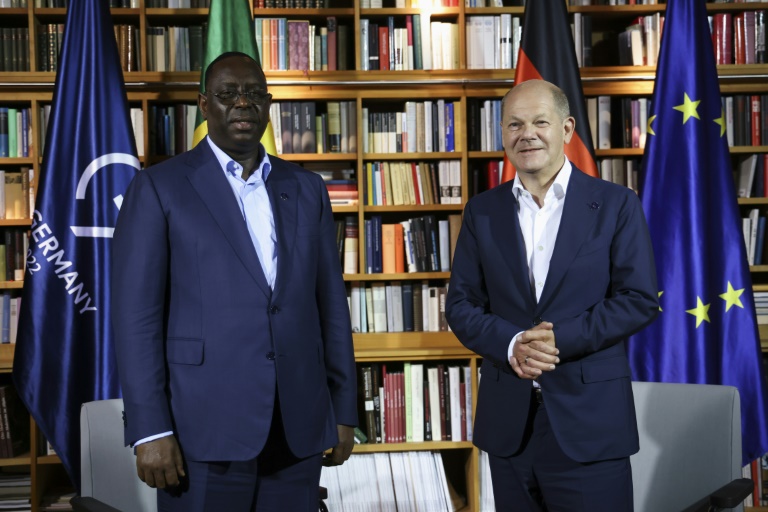
German Chancellor Olaf Scholz, who is hosting the G7 summit of advanced economies in the Bavarian Alps, said the invitation to Argentina, India, Indonesia, Senegal and South Africa signalled that the community of democracies is not limited to the West or to countries in the northern hemisphere.

“The democracies of the future are to be found in Asia and Africa,” said the German leader.

On the eve of the guest nations joining the summit, the G7 rolled out a $600-billion global infrastructure programme for the developing world.

But belying the invitation and the altruistic programme are fears that a blowback over the West’s support for Ukraine is building around the globe.

Western allies are battling to counter the rhetoric fanned by Moscow that it is the sanctions against Russia rather than Vladimir Putin’s invasion of Ukraine that are causing the multitude of crises rocking the world.

“Russia is responsible for this dramatic crisis, not international sanctions,” German Foreign Minister Annalena Baerbock insisted at a recent international food security conference.

“We know about indirect negative sanctions effects and we acknowledge them. However, they are much smaller than the brutal actions of Russia, which uses hunger as a weapon,” she said.

– Sceptical –

Three of the five guest countries — India, Senegal and South Africa — failed to condemn Russia over its assault of Ukraine, although Argentina and Indonesia did.

All five have been hit hard by the economic fallout from the war.

Thorsten Brenner, director of the Global Public Policy Institute, noted that “a crucial task” facing the G7 “is convincing many non-Western countries who are sceptical of sanctions that the West is mindful of their concern about rising energy prices when designing sanctions”.

The emerging powers have underlined the hunger crisis threatening their countries as Russia’s blockade of Ukrainian grain exports sends wheat prices soaring.

But other essentials such as sunflower oil and fertilisers essential for planting were also becoming scarcer, as both Ukraine and Russia are large producers.

And a scramble for energy by Western powers seeking to wean themselves off Russian energy has further pushed up power prices — once again hitting the poorest hardest.

Statements by Senegal President Macky Sall following his recent visit to Moscow for talks with Putin over the food crisis alarmed Western officials.

Sall had said he was “reassured” by Putin and had instead called on Ukraine to demine waters around its Odessa port to allow grain exports out.

At the same time, Western allies are seeking to ensure that the developing giants refrain from taking action that could worsen the crisis.

India’s decision to halt wheat exports and Indonesia’s move to stop palm oil exports have sparked shockwaves in the commodities markets. 

Argentina has also lowered its quota of wheat exports. 

South Africa meanwhile is suffering from the soaring oil prices.

A G7 official said Monday’s talks had shown that there was work to be done to convince the emerging giants about their action.

– ‘Don’t torpedo’ –

Putin too is jostling to broaden his backing, trying to hammer home his message that Western sanctions were to blame.

During a summit of Brazil, China, India and South Africa, calling on them to cooperate in the face of “selfish actions” from the West.

Amid fears of a growing gulf between the West and the rest, European leaders were tempering their tone. 

While calls had been made earlier for G20 host nation Indonesia to exclude Putin from this November’s summit, European leaders now appear to have distanced themselves from that stance.

A Kremlin advisor said Monday that Putin planned to attend the summit, having received the official invitation. Jakarta has also invited Ukraine’s President Volodymyr Zelensky.

Scholz said the group of major developed and developing economies would continue to play a “big role” and cooperation was key.

Germany would therefore “not torpedo” the G20’s work, Scholz told ZDF public television.

EU chief Ursula von der Leyen said on Sunday that she did not rule out sitting at the same table with Putin at the G20. 

“It is also important to tell him to his face what we think of him,” she said. 

“And we must carefully consider whether we want to paralyse the whole G20,” she said, warning that the bloc, which makes up 80 percent of total world economic output, is “too important a platform” to undermine.

As Ukraine fallout worsens, G7 seeks to woo fence-sitters

Five emerging powers have become the object of the G7 industrialised powers’ charm offensive, as the club of rich nations seeks broader support in their backing for Kyiv.

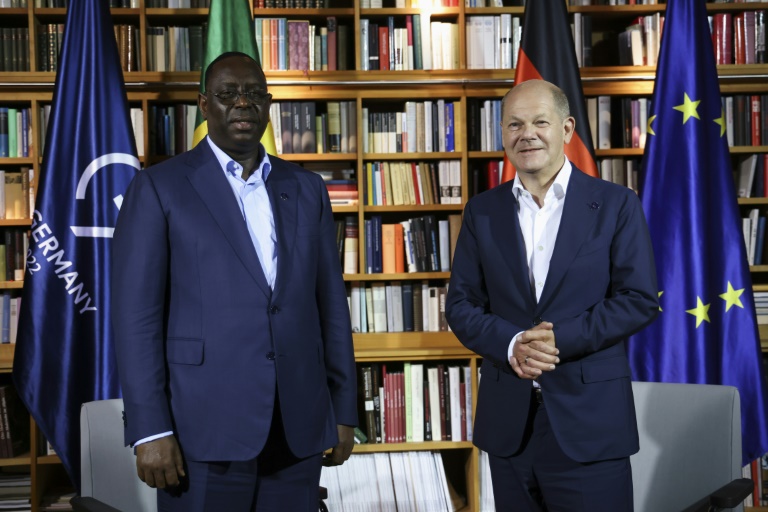
German Chancellor Olaf Scholz, who is hosting the G7 summit of advanced economies in the Bavarian Alps, said the invitation to Argentina, India, Indonesia, Senegal and South Africa signalled that the community of democracies is not limited to the West or to countries in the northern hemisphere.

“The democracies of the future are to be found in Asia and Africa,” said the German leader.

On the eve of the guest nations joining the summit, the G7 rolled out a $600-billion global infrastructure programme for the developing world.

But belying the invitation and the altruistic programme are fears that a blowback over the West’s support for Ukraine is building around the globe.

Western allies are battling to counter the rhetoric fanned by Moscow that it is the sanctions against Russia rather than Vladimir Putin’s invasion of Ukraine that are causing the multitude of crises rocking the world.

“Russia is responsible for this dramatic crisis, not international sanctions,” German Foreign Minister Annalena Baerbock insisted at a recent international food security conference.

“We know about indirect negative sanctions effects and we acknowledge them. However, they are much smaller than the brutal actions of Russia, which uses hunger as a weapon,” she said.

– Sceptical –

Three of the five guest countries — India, Senegal and South Africa — failed to condemn Russia over its assault of Ukraine, although Argentina and Indonesia did.

All five have been hit hard by the economic fallout from the war.

Thorsten Brenner, director of the Global Public Policy Institute, noted that “a crucial task” facing the G7 “is convincing many non-Western countries who are sceptical of sanctions that the West is mindful of their concern about rising energy prices when designing sanctions”.

The emerging powers have underlined the hunger crisis threatening their countries as Russia’s blockade of Ukrainian grain exports sends wheat prices soaring.

But other essentials such as sunflower oil and fertilisers essential for planting were also becoming scarcer, as both Ukraine and Russia are large producers.

And a scramble for energy by Western powers seeking to wean themselves off Russian energy has further pushed up power prices — once again hitting the poorest hardest.

Statements by Senegal President Macky Sall following his recent visit to Moscow for talks with Putin over the food crisis alarmed Western officials.

Sall had said he was “reassured” by Putin and had instead called on Ukraine to demine waters around its Odessa port to allow grain exports out.

At the same time, Western allies are seeking to ensure that the developing giants refrain from taking action that could worsen the crisis.

India’s decision to halt wheat exports and Indonesia’s move to stop palm oil exports have sparked shockwaves in the commodities markets. 

Argentina has also lowered its quota of wheat exports. 

South Africa meanwhile is suffering from the soaring oil prices.

A G7 official said Monday’s talks had shown that there was work to be done to convince the emerging giants about their action.

– ‘Don’t torpedo’ –

Putin too is jostling to broaden his backing, trying to hammer home his message that Western sanctions were to blame.

During a summit of Brazil, China, India and South Africa, calling on them to cooperate in the face of “selfish actions” from the West.

Amid fears of a growing gulf between the West and the rest, European leaders were tempering their tone. 

While calls had been made earlier for G20 host nation Indonesia to exclude Putin from this November’s summit, European leaders now appear to have distanced themselves from that stance.

A Kremlin advisor said Monday that Putin planned to attend the summit, having received the official invitation. Jakarta has also invited Ukraine’s President Volodymyr Zelensky.

Scholz said the group of major developed and developing economies would continue to play a “big role” and cooperation was key.

Germany would therefore “not torpedo” the G20’s work, Scholz told ZDF public television.

EU chief Ursula von der Leyen said on Sunday that she did not rule out sitting at the same table with Putin at the G20. 

“It is also important to tell him to his face what we think of him,” she said. 

“And we must carefully consider whether we want to paralyse the whole G20,” she said, warning that the bloc, which makes up 80 percent of total world economic output, is “too important a platform” to undermine.

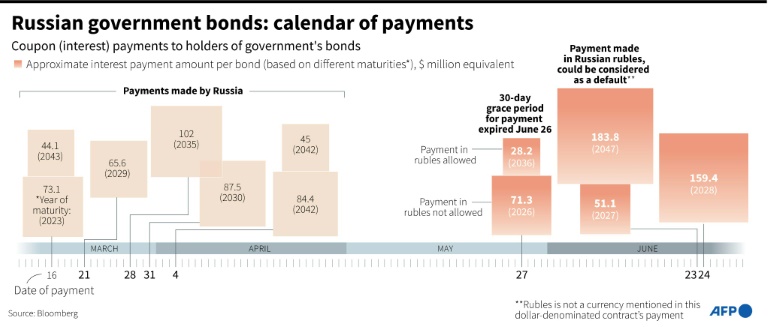
Blocked Russian payments: what impact for Moscow and creditors?

Russia acknowledged Monday that two interest payments on its debt didn’t make it to creditors, an event which could be considered a default, even if Moscow disputes such an interpretation. 

What happens next?

Why the default risk?

Russia was due to pay $100 million in interest on its debt on May 27 and the one-month grace period on the payment expired on Sunday.

The Russian finance ministry has said it paid the money on May 20. But it acknowledged on Monday that the money didn’t reach creditors as the banking intermediaries blocked the transfers due to Western sanctions imposed on Moscow over the war in Ukraine.

The United States has since the end of May blocked Moscow from paying its dollar debts.

How to know if Russia is really in default?

Traditionally, it is the big credit ratings agencies (Fitch, Moody’s, S&P Global Ratings) which make such a determination.

However, with the Western sanctions in place, “they are now prohibited from rating Russian government bonds,” said Eric Dor, director of economic studies at the IESEG business school.

“We could well have a default without an official declaration by an authorised institution,” he added.

It will now likely fall to the Credit Derivatives Determinations Committee (CDDC), a committee of creditors, to make the official determination whether Russia missed the payments and whether this constitutes a default.

The Committee has already acknowledged earlier this month that Russia did not make $1.9 million in penalty interest payments concerning a different payment due.

It plans to meet on Wednesday afternoon to discuss the missed May 27 payment.

It is also the Committee which decides whether or not to trigger payment of credit default swaps (CDS), financial products designed to serve as insurance for creditors against default.

Moscow argues that the fact that creditors didn’t receive their money was not of the result of its failure to make the payment, but the actions of third parties, thus there is no default on its part.

What consequences of a default?

Russia’s last default on its foreign debt was in 1918, when Bolshevik leader Vladimir Lenin repudiated Tsarist-era debts.

In case a default is declared “Russia won’t be able to borrow in foreign currencies,” said Slim Souissi, a researcher at the Institute of Business Administration at the University of Caen.

“In the short term, it will have trouble raising funds on international markets” and this could last for years, said Souissi, who previously worked as a financial analyst at Fitch. 

Liam Peach, Emerging Europe Economist at Capital Economics, downplayed the impact of a default determination, as Western sanctions are already blocking Russia’s access to international capital markets.

Normally, a default can have serious consequences.

Argentina’s decision to freeze payment on $100 billion in debt in 2001 triggered a deep economic, political and social crisis.

But with sanctions again blocking Russian access to many markets, Peach said default would be a “largely symbolic event” unlikely to have an additional macroeconomic impact.

Russia’s situation is also different in terms of the sums involved.

“There are around $2 billion in payments due from now until the end of the year, and that isn’t going to destabilise” the international financial system, said Dor.

Mexico’s 1982 default sparked debt crises in several developing countries as creditors demanded higher interest rates.

Peach said only about half of Russian foreign currency bonds are held by foreigners, which reduces the possibility of a wider impact.

Recovering the debt could prove to be thorny to litigate, according to legal experts questioned by AFP. The terms of Russian bonds are notoriously vague, including even on such basic elements as the legal jurisdiction to resolve disputes.

How did Russia try to avoid default?

To get around the ban on dollar payments, Moscow made the equivalent ruble sums available to creditors at the National Settlement Depository (NSD), a Russian financial institution.

According to Souissi, if the bond’s terms didn’t forsee payment in rubles this would constitute a default.

Moscow said the arrangement allowed Western creditors to recover their money, and they are free to request conversion into the foreign currency of their choice. 

But getting the money out of Russia isn’t straightforward and “investors weren’t keen on opening accounts at the NSD”, said Dor.

bur-boc-jvi-dga/rl/cdw

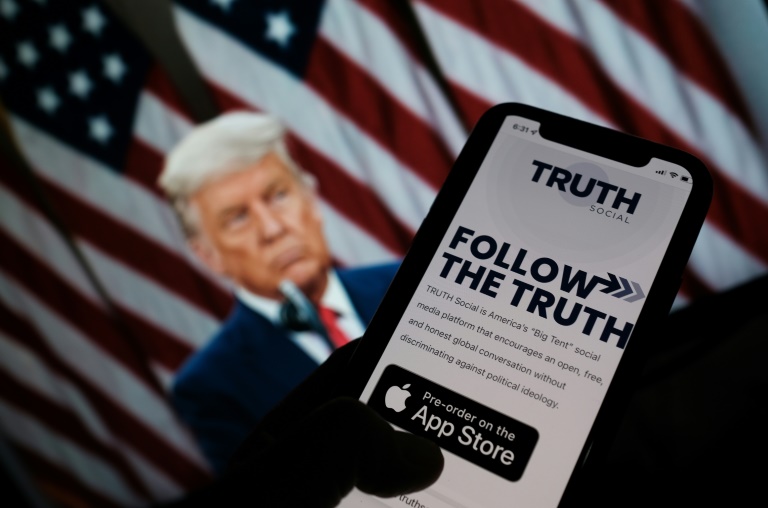
Investment vehicle probed over merger with Trump media company

The investment vehicle seeking to merge with Donald Trump’s social media venture disclosed Monday that it received federal subpoenas, delaying and potentially derailing the transaction. 

Digital World Acquisition said that it and its board members received grand jury subpoenas on issues that include due diligence on the Trump venture and communications with potential merger partners other than the Trump venture, according to a Securities and Exchange filing.

The subpoenas from the Southern District of New York are connected to a Justice Department probe that “could materially delay, materially impede, or prevent the consummation of the Business Combination,” the filing said.

First launched in September on Wall Street, DWAC was established as a special purpose acquisition company (SPAC), sometimes called a “blank check” company set up with the sole purpose of merging with another entity that is announced after the entity goes public.

In late October, DWAC announced the plan to combine with Trump’s venture to establish “a rival to the liberal media consortium.”

The deal, which would provide Trump’s venture $1.3 billion in capital and a stock market listing, has been under SEC investigation for months on similar questions raised by the DOJ subpoenas.

The SEC probe has focused on whether talks were held between Trump’s team and DWAC figures prior to the public offering, according to a New York Times report. SPACs are not supposed to have a target lined up before selling shares.

Shares of DWAC slumped 9.4 percent to $25..22 in afternoon trading. 

Russian strike kills Ukrainian shoppers as G7 agrees more sanctions

A Russian missile strike on a crowded mall in central Ukraine killed at least 10 people Monday, as G7 leaders in Germany discussed fresh sanctions against Moscow and pledged continuing support for Kyiv.

The attack came hours after Ukraine’s President Volodymyr Zelensky had urged G7 leaders, in a speech via video-link, to help end the war before harsh winter conditions set in.

Later Monday, Zelensky shared a video showing a shopping centre in the central city of Kremenchuk engulfed in flames with dozens of rescuers and a fire truck outside. 

Regional governor Dmytro Lunin warned that the death toll could rise.

In the east, Oleg Synegubov, the head of Kharkiv’s regional administration, said a Russian strike on Ukraine’s second city had killed four people and wounded 19 others, including four children.

British Prime Minister Boris Johnson, speaking from the G7 gathering in the Bavarian Alps, said the Kremenchuk attacked demonstrated the “depths of cruelty and barbarism” of Russian leader Vladimir Putin.

US Secretary of State Antony Blinken said the world was “horrified” by the strike, while UN chief Antonio Guterres’s office condemned it as “totally deplorable”.

– ‘Intensify sanctions’ –

US President Joe Biden and his peers from the Group of Seven rich nations, meeting in the Bavarian Alps, had already pledged to tighten the economic screws on Moscow over its February 24 invasion of Ukraine.

Their show of unity came even as the fallout from the war intensifies, with soaring energy and food prices driving up global inflation.

“We will continue to provide financial, humanitarian, military and diplomatic support and stand with Ukraine for as long as it takes,” the G7 said in a statement on the summit’s second day.

Zelensky had urged leaders to “intensify sanctions” on Moscow to help end the war before winter worsened the conditions for his troops. 

“We will continue to increase pressure on (Vladimir) Putin,” summit host German Chancellor Olaf Scholz said in response. “This war has to come to an end.”

G7 leaders are discussing a price cap on Russian oil imports and sanctions targeting Russia’s defence sector.

– NATO boost –

Washington plans to send Ukraine sophisticated anti-aircraft missiles, US National Security Advisor Jake Sullivan told reporters, meeting a long-standing request from Zelensky.

Once the summit of the G7 — which comprises Britain, Canada, France, Germany, Italy, Japan and the United States — ends on Tuesday, it will be immediately followed by a NATO meeting in Spain.

Ukraine is again expected to dominate the agenda.

NATO said on Monday it would boost its high readiness force from 40,000 to 300,000 troops and send more heavy weaponry to its eastern flank.

NATO Secretary General Jens Stoltenberg called it “the biggest overhaul of our collective defence and deterrence since the Cold War”.

Lithuania meanwhile announced it had been targeted Monday by a massive cyberattack.

Jonas Skardinskas, the head of Lithuania’s National Cyber Security Centre, said secure servers had been among those targeted in the attack, which he said had “probably” come from Russia.

The Russian hackers’ group Killnet claimed responsibility for the cyberattack, which it said was in retaliation for restrictions imposed by Lithuania earlier in June.

Russia last week threatened reprisals against the Baltic state for having banned the rail transit of certain goods to the Russian exclave of Kaliningrad. Vilnius said it was simply applying European Union sanctions.

– ‘Toughest days’ –

Since failing to capture Kyiv early in the war, Russian troops have focused on the eastern Donbas region, where they have been gaining ground.

Russian shelling has continued in and around the eastern city of Lysychansk, after Russian forces at the weekend took its twin city, the industrial hub Severodonetsk, after weeks of fierce fighting.

“Lysychansk and nearby villages are living their toughest days,” said Lugansk regional governor Sergiy Gaiday. 

Taking Lysychansk would give Russia control of the entire Lugansk region of the Donbas.

The eastern city of Sloviansk was also experiencing intense Russian bombing.

As police carried away the victim of the latest strike on Monday morning, one officer asked a colleague: “Not at night, but in the daytime — how much more can we take?”

– Gold, oil, debt –

Sweeping Western sanctions designed to choke off Moscow’s access to the international financial system have pushed Russia closer to its first foreign debt default in a century.

Russia said Monday two of its debt payments had been prevented from reaching creditors after a key deadline expired.

But “there are no grounds to call this situation a default”, Kremlin spokesman Dmitry Peskov said.

G7 members, after kicking off their gathering on Sunday with a plan to ban imports of Russian gold, had also made progress in talks on a price cap on Russian oil, a senior US official said Monday. 

The aim is to starve the Kremlin of a key revenue stream and force down the price of Russian oil in the hope of reining in inflation, the official said.

But European officials fear it will be difficult to implement and say more discussions are needed.

To help bring down surging crude prices, France urged oil-producing nations raise output in an “exceptional manner”.

G7 leaders want money collected from higher trade tariffs imposed on Russian exports to be funnelled as aid to Ukraine “to ensure that Russia pays for the cost of its war”, said a senior US official.

Russia’s foreign ministry on Monday announced the expulsion of eight Greek diplomats, over the decision by Athens to supply military equipment including weapons to Ukraine.

Moscow also banned another 43 Canadian citizens from its territory, in response to sanctions imposed by Ottawa over the invasion of Ukraine.

One dead as rare tornado tears through Dutch city

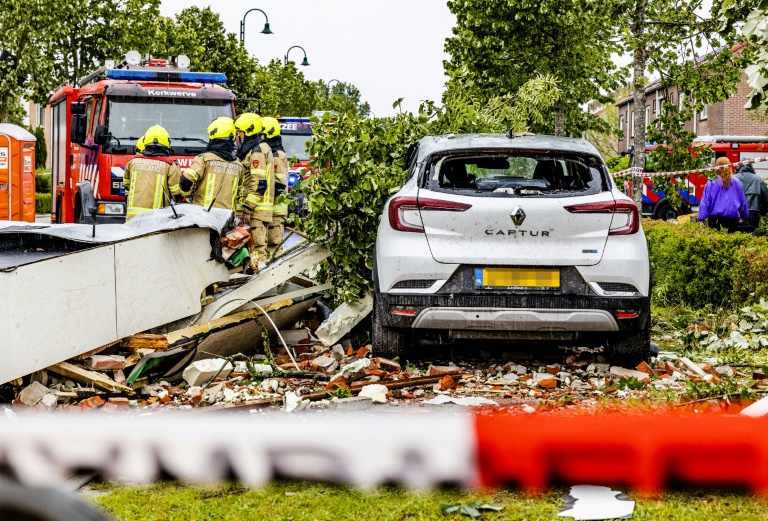
A tornado ripped through a southwestern Dutch city on Monday, killing one person and injuring nine others in the first fatal twister to hit the country for three decades.

The whirlwind left a trail of destruction through the seaside city of Zierikzee, ripping the roofs off homes and toppling trees onto cars, an AFP journalist at the scene said.

Images on social media showed debris rotating in the air in the fierce winds and a huge funnel descending from stormy clouds as the tornado hit the city in the scenic province of Zeeland.

“The damage is considerable in several streets in Zierikzee. In addition to flying roof tiles and fallen trees, roofs have been blown off four houses,” the Zeeland safety authority said.

“Unfortunately, there was one fatality in the tornado,” it said, adding that one injured person was taken to hospital and eight others were treated on site by paramedics.

It said there had been a “huge deployment” of emergency services.

A local newspaper, the Provinciale Zeeuwse Courant, described the scene as a “war zone” and said the victim of the tornado was a tourist who was hit on the head by a roof tile in the city’s harbour area.

“It got completely dark. Outside you could see everything flying, everything in the air,” Zierikzee resident Freek Kouwenberg, 72, told AFP. 

“I’ve never experienced anything like it.”

“The whirlwind kept getting bigger. It reminded me of American films, with those storm chasers,” resident Maurice van den Nouweland was quoted as saying by the Dutch national news agency ANP.

– ‘Rare in our country’ –

The tornado hit at the start of the tourism season in Zierikzee, which sits on one of the bridge-connected islands that comprise Zeeland province, whose attractions include a historic fishing harbour and the 15th century “Fat Tower”.

Its path could be traced through one neighbourhood, where the twister tore a huge piece of black roofing off the top of a block of four terraced houses and dumped it in a residential street, an AFP journalist said.

A mechanical digger was lifting debris from the road near to where a car lay partly crushed by a tree. Firefighters had sealed off the road with tape while they carried out searches.

Footage on social media showed debris swirling through the air while powerful winds whipped through the town. Other images showed the tornado itself spiralling towards the ground as people stopped their cars or left their restaurant tables to watch.

Local authorities were arranging shelter for the inhabitants of dozens of rental homes left temporarily uninhabitable by the whirlwind, and residents were also being offered counselling.

The Netherlands’ flat landscape sitting just above sea level makes it vulnerable to extreme weather, although the Dutch meteorological agency KNMI said it only experiences a few tornadoes a year.

The last fatal one to hit the country was in 1992, the KNMI said, while the deadliest recorded hit the southern villages of Chaam and Tricht on June 25, 1967, killing seven people. There were also deadly twisters in 1972 and 1981.

“Heavy whirlwinds, also called a tornado, are rare in our country,” the KNMI said on its website after Monday’s twister.

“The area in which they occur is usually no larger than a narrow track of two to several tens of kilometres (miles) in length and a few hundred metres (feet) in width.”

Close Bitnami banner
Bitnami