World

Sri Lanka suspends fuel sales as economic crisis worsens

Cash-strapped Sri Lanka announced a two-week halt to all fuel sales except for essential services starting Monday and called for a partial shutdown as its unprecedented economic crisis deepened.

The South Asian nation is facing its worst economic meltdown since gaining independence from Britain in 1948, and has been unable to finance even the imports of essentials since late last year.

As fuel reserves hit rock bottom with supplies barely enough for just one more day, government spokesman Bandula Gunawardana said the sales ban was to save petrol and diesel for emergencies.

He urged the private sector to let employees work from home as public transport ground to a halt.

“From midnight today, no fuel will be sold except for essential services like the health sector, because we want to conserve the little reserves we have,” Gunawardana said in a pre-recorded statement.

He apologised to consumers for the shortages: “We regret the inconvenience caused to the people.”

-Electricity shock-

The sudden fuel ban came as the loss-making state-run electricity monopoly asked for a massive price increase for its poorest customers.

The Ceylon Electricity Board (CEB) lost 65 billion rupees ($185 million) in the first quarter and sought a nearly tenfold price hike for the heavily-subsided smallest power consumers, the Public Utilities Commission of Sri Lanka (PUCSL) said.

Currently, anyone using less than 30 kilowatts a month pays a flat 54.27 rupees ($0.15), which the CEB sought to raise to 507.65 rupees ($1.44).

“A majority of the domestic consumers will not be able to afford this type of steep increase,” PUCSL chairman Janaka Ratnayake told reporters in Colombo. 

“Hence we proposed a direct subsidy from the Treasury to keep the increase to less than half of what they have asked.”

As part of measures to ease the forex crisis that led to the energy crunch, the CEB will be allowed to charge users who earn foreign currency, such as exporters, in dollars.

The move is aimed at helping the electricity utility collect dollars to finance imports of oil and spare parts it desperately needs, but is unable to secure because of the country’s forex crisis.

The country is also facing record high inflation and lengthy power blackouts, all of which have contributed to months of protests — sometimes violent — calling on President Gotabaya Rajapaksa to step down. 

Last week, all government schools were shut down and state institutions operated with skeleton staff to reduce commuting and preserve oil.

The state sector shutdown was meant to end this week, but it is now being extended till July 10, when Gunawardana promised to restore fuel supplies.

– Broken promise –

On Sunday, the government promised it will implement a token system to ration distribution of limited fuel stocks, but it failed to take off.

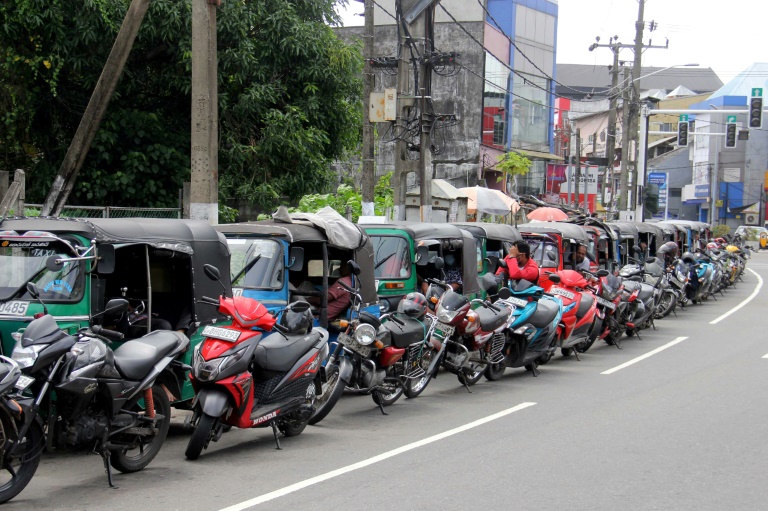
There have been long queues outside the few pumping stations which still had supplies. 

Sri Lanka is seeking cheap oil from Russia and Qatar.

Earlier this month, the United Nations launched an emergency response to the island’s unprecedented economic crisis, feeding thousands of pregnant women who were facing food shortages.

Four out of five people in Sri Lanka have started skipping meals as they cannot afford to eat, the UN has said, warning of a looming “dire humanitarian crisis” with millions in need of aid.

Sri Lanka defaulted on its $51 billion foreign debt in April, and is in talks with the International Monetary Fund for a bailout.
Sri Lanka suspends fuel sales as economic crisis worsens

Cash-strapped Sri Lanka announced a two-week halt to all fuel sales except for essential services starting Monday and called for a partial shutdown as its unprecedented economic crisis deepened.

The South Asian nation is facing its worst economic meltdown since gaining independence from Britain in 1948, and has been unable to finance even the imports of essentials since late last year.

As fuel reserves hit rock bottom with supplies barely enough for just one more day, government spokesman Bandula Gunawardana said the sales ban was to save petrol and diesel for emergencies.

He urged the private sector to let employees work from home as public transport ground to a halt.

“From midnight today, no fuel will be sold except for essential services like the health sector, because we want to conserve the little reserves we have,” Gunawardana said in a pre-recorded statement.

He apologised to consumers for the shortages: “We regret the inconvenience caused to the people.”

-Electricity shock-

The sudden fuel ban came as the loss-making state-run electricity monopoly asked for a massive price increase for its poorest customers.

The Ceylon Electricity Board (CEB) lost 65 billion rupees ($185 million) in the first quarter and sought a nearly tenfold price hike for the heavily-subsided smallest power consumers, the Public Utilities Commission of Sri Lanka (PUCSL) said.

Currently, anyone using less than 30 kilowatts a month pays a flat 54.27 rupees ($0.15), which the CEB sought to raise to 507.65 rupees ($1.44).

“A majority of the domestic consumers will not be able to afford this type of steep increase,” PUCSL chairman Janaka Ratnayake told reporters in Colombo. 

“Hence we proposed a direct subsidy from the Treasury to keep the increase to less than half of what they have asked.”

As part of measures to ease the forex crisis that led to the energy crunch, the CEB will be allowed to charge users who earn foreign currency, such as exporters, in dollars.

The move is aimed at helping the electricity utility collect dollars to finance imports of oil and spare parts it desperately needs, but is unable to secure because of the country’s forex crisis.

The country is also facing record high inflation and lengthy power blackouts, all of which have contributed to months of protests — sometimes violent — calling on President Gotabaya Rajapaksa to step down. 

Last week, all government schools were shut down and state institutions operated with skeleton staff to reduce commuting and preserve oil.

The state sector shutdown was meant to end this week, but it is now being extended till July 10, when Gunawardana promised to restore fuel supplies.

– Broken promise –

On Sunday, the government promised it will implement a token system to ration distribution of limited fuel stocks, but it failed to take off.

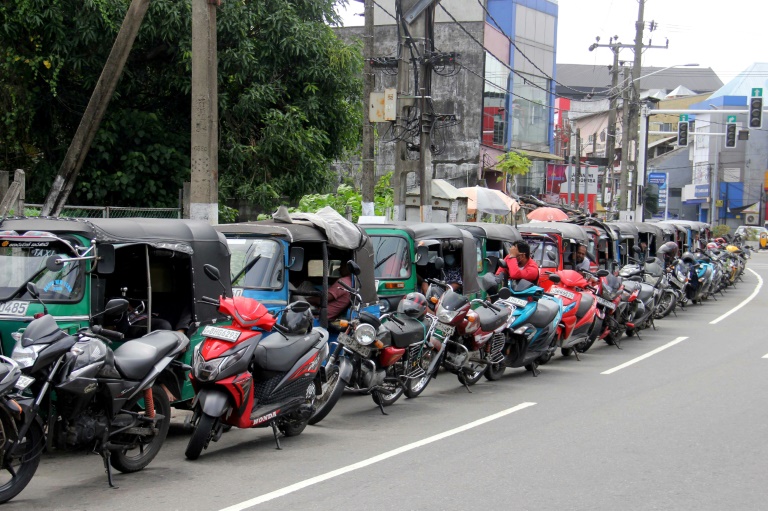
There have been long queues outside the few pumping stations which still had supplies. 

Sri Lanka is seeking cheap oil from Russia and Qatar.

Earlier this month, the United Nations launched an emergency response to the island’s unprecedented economic crisis, feeding thousands of pregnant women who were facing food shortages.

Four out of five people in Sri Lanka have started skipping meals as they cannot afford to eat, the UN has said, warning of a looming “dire humanitarian crisis” with millions in need of aid.

Sri Lanka defaulted on its $51 billion foreign debt in April, and is in talks with the International Monetary Fund for a bailout.
French minister targeted in sexual assault complaint

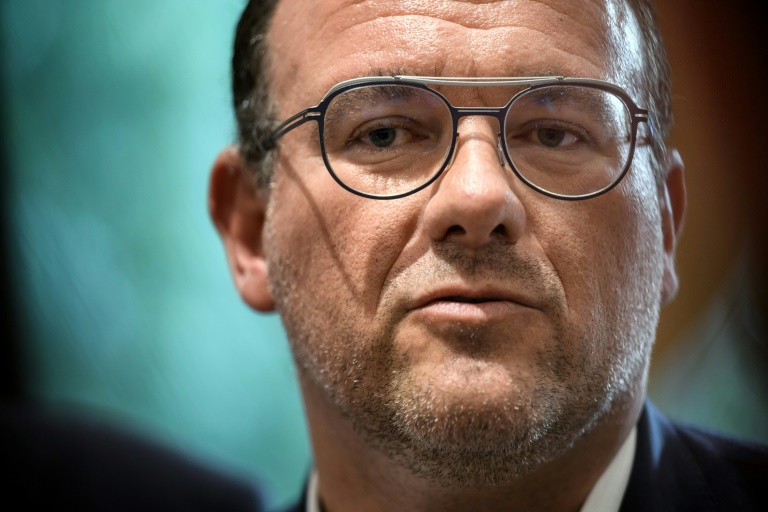
A French cabinet minister on Monday became the target of a complaint for attempted rape, prosecutors said, the latest sexual misconduct allegation against a member of President Emmanuel Macron’s government.

The complaint against Solidarity and Social Cohesion Minister Damien Abad is “currently being examined”, they told AFP.

News website Mediapart reported earlier Monday that a “centrist politician” had accused Abad of trying to rape her during a party at his home in 2010.

Abad denied the accusations in a written statement to media, saying he would sue the woman for libel.

“I will not leave these mendacious and scandalous accusations without a response,” he said.

The woman’s lawyer did not respond to AFP’s request for comment.

Earlier this month, Mediapart published an article based on an interview with the woman.

At the time of the party she was head of a youth section of the Nouveau Centre (New Centrist) party, of which Abad was the national president. He was also a deputy in the European Parliament.

The woman — whom Mediapart called “Laetitia”, not her real name — told the website that Abad offered her a drink that evening, but she noticed “something” floating at the bottom of the glass and spat out a mouthful of liquid in the bathroom.

When she came out, she said, Abad was waiting for her, pushed her into an adjacent room and tried to force her to perform oral sex on him.

“I was afraid, I was paralysed. I fought him, hit him in the stomach,” Mediapart quoted her as saying.

“Laetitia” said she then managed to break free, thanks to the arrival of a party guest, and fled from the room.

Mediapart said she cited eight people whom she either confided in later, or who witnessed part of the evening’s events.

The complaint is the third sexual assault allegation against the minister. Prosecutors have not launched any formal investigation to date.

The accusation against Abad follows other allegations of sexual assault against French ministers.

Last week, Macron’s junior minister for development, Francophony and international partnerships Chrysoula Zacharopoulou denied allegations she had raped patients during gynaecological examinations, after three women filed criminal complaints. 

Earlier, prosecutors investigated Interior Minister Gerald Darmanin over an allegation for rape filed in 2017.

He denied any wrongdoing and prosecutors in January asked for the case to be dropped.

Credit Suisse fined over drugs gang money laundering

Credit Suisse, Switzerland’s second-biggest bank, which has been rocked by a series of scandals, was slapped with a $2-million-fine Monday in a money laundering case linked to a Bulgarian cocaine network.

Switzerland’s Federal Criminal Court found that the bank failed to take steps to prevent money laundering by the criminal organisation, deeming it guilty of breaching its corporate responsibility.

Credit Suisse was fined two million Swiss francs ($2.1 million). The Zurich-based bank intends to appeal.

It was faulted for the failure up through its hierarchy and by its legal and compliance departments to monitor “banking relations” linked to the criminal gang, and to ensure their “compliance with anti-money laundering rules”.

A former employee was found guilty of aggravated money laundering over a number of transactions she had conducted or ordered to be conducted between July 2007 and December 2008, despite firm indications that the funds had criminal origins.

Her actions allowed the criminal gang to stash more than 19 million Swiss francs out of reach of the authorities.

She was given a 20-month prison sentence and a fine, both of which were suspended.

In a brief statement, Credit Suisse said it noted the court’s decision and that it intended to appeal.

Two Bulgarians were also found guilty of participating in a criminal organisation and aggravated money laundering.

The court also ordered the confiscation of a sum equivalent to more than 12 million francs concerning funds deposited with Credit Suisse by the criminal organisation.

Furthermore the bank will have to compensate the more than 19 million francs in assets belonging to the criminal organisation, “which could not be confiscated due to the bank’s internal failures”, the court statement said.

Oslo shooting suspect remanded in custody

The suspect behind a weekend shooting in Oslo that left two dead and 21 wounded was remanded in custody for four weeks on Monday.

Zaniar Matapour will have no contact with the outside world until July 25, Oslo District Court ruled.

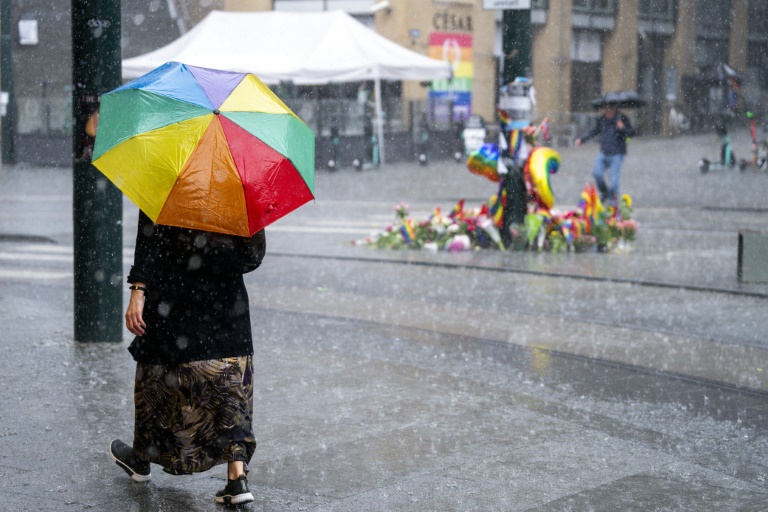
The 43-year-old is accused of killing two men and wounding 21 other people when he opened fire near a gay bar in central Oslo in the early hours of Saturday morning, amid celebrations linked to the city’s Pride festival.

Norway’s domestic intelligence service has described the attack as “an act of Islamist terrorism” and said Matapour had “difficulties with his mental health.”

Norwegian police said they were still investigating Matapour’s motive.

He has been charged with “terrorist acts”, murder and attempted murder, but has so far refused to be interrogated by police.

According to his lawyer, he fears investigators will manipulate video recordings of his questioning.

Matapour, a Norwegian of Iranian origin, will undergo a preliminary psychiatric evaluation to help determine the state of his mental health and whether he can be held legally responsible for his actions.

He had been known to Norway’s PST intelligence service since 2015, with concerns about his radicalisation and membership of “an extremist Islamist network”.

Police said they were examining several possible theories, including an attack motivated by ideology, unstable mental health, a hate crime against the LGBTQ community, or a combination of factors.

The PST said it did not pick up on any “violent intent” when its services interviewed him last month.

Justice Minister Emilie Enger Mehl said there would be a review into the police and PST’s handling of the case.

Nordic ministers visited the site of the attack on Monday, saying in a joint statement that they “stand together with the LGBTI community and against all forms of violence”.

Oslo’s Pride parade, which had been scheduled to take place for the first time in three years due to the Covid pandemic, has been postponed indefinitely.

War in Ukraine: Latest developments

Here are the latest developments in the war in Ukraine:

– End war by year end: Zelensky –

Ukraine’s President Volodymyr Zelensky urges leaders of the Group of Seven industrialised countries to do their utmost to end Russia’s invasion of his country by the end of the year.

He also calls on the G7 “not to lower the pressure and to keep sanctioning Russia massively and heavily”, a G7 source says. He says on Telegram he asked for an oil price cap to limit Russia’s energy revenues. 

He says it is too early to open negotiations with Russia, as Kyiv is still seeking to consolidate its positions, the French presidency says.

– G7 vows solidarity –

The G7 vows solidarity with Ukraine “for as long as it takes”, in a statement issued after Zelensky’s video address.

Summit host, German Chancellor Olaf Scholz, says the G7 will “increase pressure” on Russian President Vladimir Putin over the Ukraine invasion.

The G7 also tells Russia it must allow grain shipments to leave Ukraine to avoid worsening a global food crisis.

It tells Moscow it must allow Ukrainians taken to Russia against their will to return home at once. 

And it expresses “serious concern” over Russia’s plans to deliver missiles capable of carrying nuclear warheads to Belarus in the coming months.

– New G7 sanctions take shape –

US National Security Advisor Jake Sullivan speaks on the sidelines of the summit of a “consensus emerging” in the G7 on a plan to cap prices for Russian oil.

The White House also unveils new measures to hamper Russia’s ability to resupply the weaponry used in its onslaught against Ukraine.

The G7 also plans to turn funds raised in recently imposed trade tariffs on Russian exports into assistance for Ukraine.

– Strike on eastern shopping mall –

A Russian missile strike hits a crowded mall in the eastern Ukrainian city of Kremenchuk, Zelensky says, killing at least two and injuring dozens more.

“The occupiers fired missiles at a shopping centre where there were over a thousand civilians. The mall is on fire, rescuers are fighting the fire. The number of victims is impossible to imagine,” he writes on Telegram. 

– NATO to boost forces –


NATO will boost its high readiness forces to “well over 300,000” troops at its Madrid summit starting Tuesday, as they strengthen their defences in response to Russia’s war on Ukraine, alliance chief Jens Stoltenberg says. 

More heavy weaponry, including air defence systems, will also be shifted forwards and forces pre-assigned to defend specific NATO members on the alliance’s exposed eastern edge.

“This constitutes the biggest overhaul of our collective defence and deterrence since the Cold War,” Stoltenberg says.

– US anti-aircraft missiles for Ukraine –

US President Joe Biden told Zelensky that Washington is preparing shipment of “advanced medium- and long-range air defence capabilities” to defend against Russian attacks.

Zelensky has pleaded for more powerful defences against Russian air attacks since the invasion started in February.

– Russia approaches default –

Two of Russia’s debt payments have been prevented from reaching creditors due to sanctions over the Ukraine offensive, the Moscow finance ministry says, as the country approaches its first foreign default in a century.

Western economic sanctions have largely severed Russia from the international financial system, making it difficult for Moscow to service its debt.

– Putin accepts G20 invitation –

Putin plans to attend the G20 summit in Indonesia this November, Kremlin advisor Yuri Ushakov says.

Indonesia — which holds the group’s rotating presidency this year — caused controversy by inviting Russia to the gathering of the world’s major economies.

European Commission chief Ursula von der Leyen said on Sunday  she does not rule out sitting at the same table with Putin at the G20. 

“It is also important to tell him to his face what we think of him,” she said. 

burs-jmy/mw/cdw

Four dead, hundreds hurt as stands collapse in Colombia bullring

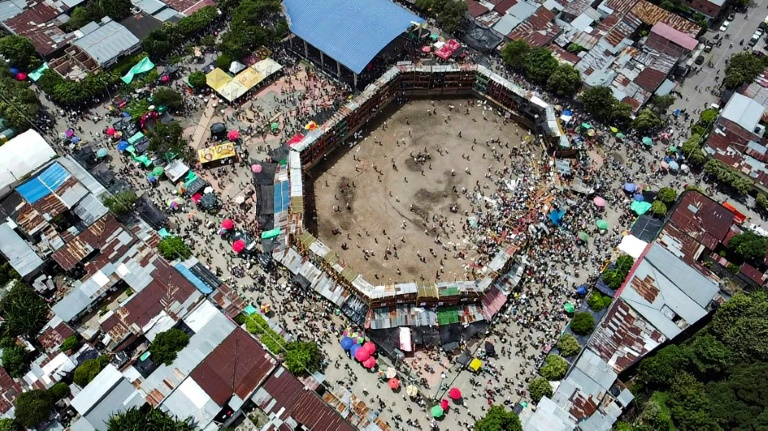
A toddler was among four people killed when the grandstand at a bullring in Colombia collapsed, injuring hundreds of others, officials said Monday.

One person died at the scene and three died in hospital, according to Juan Carlos Tamayo, the mayor of El Espinal, the central city where the collapse happened on Sunday.

The fatalities included a toddler of 14 months, Tamayo said.

Martha Palacios, health secretary in the department of Tolima, said 322 people were treated at various hospitals, of whom four were in intensive care.

People were taking part in a so-called “corraleja” — where members of the public face off with small bulls — when a three-story section of wooden stands holding spectators collapsed.

Attendees were hurled from their seats into the arena, where at least one bull was running around, according to drone images.

The event, on a holiday weekend, was part of celebrations for the festival of San Pedro, the most popular in the region.

“Our bullring is made up of 44 stands of which eight fell, each with 100 people,” said Tamayo. 

– ‘Very difficult’ –

“I saw people amid the rubble, others trying to get out, very difficult,” Samuel Galindo, a neighbor who recorded the tragedy with a drone, told the AFP.

President Ivan Duque said on Twitter he would order an investigation, and expressed his solidarity with the victims and their next of kin.

The governor of Tolima department, Jose Ricardo Orozco, said the regional government would move to ban the corralejas, saying they were dangerous and promoted animal abuse.

On Saturday, several people were injured in at the corralejas in El Espinal, a city of some 78,000 people about 150 kilometers (93 miles) from the capital Bogota.

Another person died earlier this month after being gored by a bull during a corraleja in the town of Repelon.

President-Elect Gustavo Petro, who will take office on August 7, joined Orozco in calling for the amateur bullfights to be banned.

When he served as mayor of Bogota, leftist Petro put a stop to bullfights in the city’s signature bullring, La Santamaria.

“I ask the mayors not to authorize any more events with the death of people or animals,” he said on Twitter Sunday, wishing the injured a speedy recovery.

While animal abuse is a crime in Colombia, bullfights and cock fights are protected as a cultural inheritance.

Russia fails to pay debt but denies default

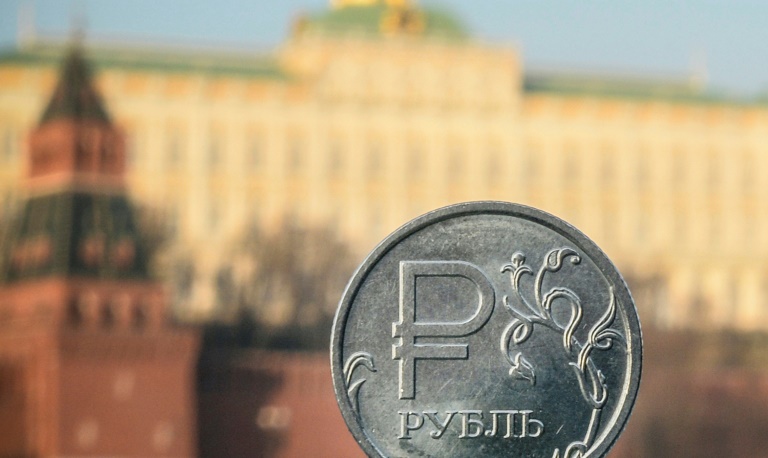
Russia said Monday that two of its debt payments were blocked from reaching creditors, pushing the country closer to its first foreign default in a century due to sanctions over the Ukraine offensive.

The announcement came on the 124th day of Russia’s military intervention in Ukraine, with Western sanctions so far failing to force the Kremlin to change its course.

The Western economic penalties have largely severed the country from the international financial system, making it difficult for Moscow to service its debt.

The Russian authorities insist they have the funds to honour the country’s debt, calling the predicament a “farce” and accusing the West of seeking to drive Moscow into a default artificially.

“There are no grounds to call this situation a default,” Kremlin spokesman Dmitry Peskov told reporters after a key payment deadline expired Sunday.

“These claims about default, they are absolutely wrong,” he said, adding that Russia settled the debt in May.

Russia lost the last avenue to service its foreign-currency loans after the United States removed an exemption last month that allowed US investors to receive Moscow’s payments.

– ‘Vicious circle of decline’ – 

A 30-day grace period for the payment of $100 million in interest payments expired on Sunday night, most of which had to be paid in foreign currency.

Russia had attempted to make the payments, but the finance ministry said Monday that the money had not been transferred to creditors.

International settlement and clearing systems “received funds in full in advance” but the payments were not transferred to the final recipients due to “the actions of third parties,” the ministry said in a statement.

“The actions of foreign financial intermediaries are beyond the Russian finance ministry’s control,” the statement said.

While some experts dismiss the event as a technical default, others say it will have far-reaching consequences.

“This default is important as it will impact on Russia’s ratings, market access and financing costs for years to come,” said Timothy Ash, an emerging markets strategist at BlueBay Asset Management.

“And that means lower investment, lower growth, lower living standards, capital and human flight (brain drain), and a vicious circle of decline for the Russian economy.” 

– ‘Locked Russia out’ –

But Liam Peach, emerging Europe economist at Capital Economics, a research group, said a default was a “a largely symbolic event that is unlikely to have an additional macroeconomic impact”.

“Sanctions have already done the damage and locked Russia out of global capital markets,” Peach said in a note.

The sanctions included freezing the Russian government’s stockpile of $300 billion in foreign currency reserves held abroad, making it more complicated for Moscow to settle its foreign debts.

After the United States closed the payment loophole last month, Russia said it would pay in rubles that could be converted into foreign currency, using a Russian financial institution as a paying agent, even though the bonds do not allow payments in the local currency.

The country last defaulted on its foreign debt in 1918, when Bolshevik revolution leader Vladimir Lenin refused to recognise the massive debts of the deposed tsar’s regime.

Russia defaulted on domestic debt in 1998 when, due to a drop in commodity prices, it faced a financial squeeze that prevented it from propping up the ruble and paying off debts that accumulated during the first war in Chechnya.

The International Monetary Fund’s number two official, Gita Gopinath, said in March that a Russian default would have “limited” impact on the global financial system.

Blood and fears as Russian missile hits flats in east Ukraine city

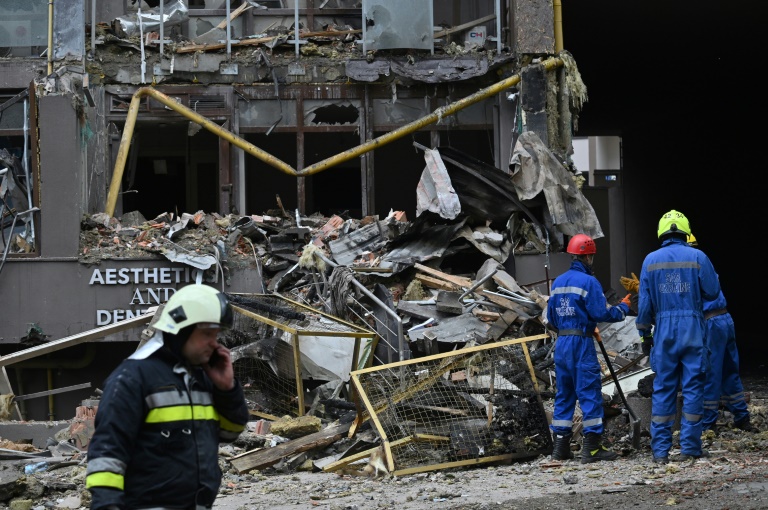
A man’s body still wearing one slipper lay in a courtyard in the centre of Sloviansk in east Ukraine Monday after a morning strike hit apartment blocks in the strategic city.

Police lifted the body of the man, named as Igor by neighbours, and loaded him into a van to go to the morgue, leaving streaks of blood on the ground.

The city’s mayor, Vadim Lyakh, was at the scene along with police and rescuers shortly after the strike at around 8:30 (0530 GMT).

“We are establishing (the toll), but there is one definitely dead and three wounded,” Lyakh told AFP as locals, mostly elderly, swept up shards of glass. 

A policeman said that the injured had shrapnel wounds, while a local 84-year-old woman who gave her name as Babushka (Grandma) Tamara, said a female neighbour had been hospitalised with a shrapnel wound to the chest.

“Not at night, but in the daytime, how much more can we take?” a policeman asked a colleague.

Sloviansk, a sleepy green city, is now experiencing heavy strikes as Russians shell it from just a few kilometres away, advancing from the north. The city has already lost water and gas supplies.

Surveying her row of cracked and blown-out windows on the ground floor and shrapnel-scored wallpaper, Tatiana Levchenko lamented: “How can I live? All the rooms are damaged, see?”

“It’s such grief for us,” the 67-year-old said, pointing to her cat hidden under the sofa from fear and her hamster in his cage in the dark hallway. Her daughter and grandchildren have already left for Lviv in western Ukraine.

“Where will I go, all of Ukraine is under fire! You see, there’s nowhere to hide,” she exclaimed.

“Things are bad for us, very bad. Everyone has cried themselves out. I have no strength left.” 

– ‘War with civilians’ –

Outside the next block, Natalya Petrova had come out in her house coat to survey her broken windows and shrapnel-pitted facade.

She said she was napping after seeing off her husband to work when the explosion rang out. 

Her family’s house in a village had already been damaged in the war and now her city flat too.

“We have no housing there — or here,” she said, tears in her eyes.

A series of strikes overnight and on Monday morning appeared to use cluster rockets, which scatter bomblets over a large area, exploding on the ground and hitting people walking outside or in buildings. 

There were no obvious military facilities nearby, although soldiers were towing away a camouflage van parked on the street.

The central area has “no military facilities” and Russia is at war with civilians, Lyakh wrote on Facebook, urging people to evacuate.

What appeared to be an Uragan missile stuck out of the ground in a courtyard some 100 metres from where Igor’s body lay.

“We were saved by a miracle,” said one woman, wearing jeans and a red T- shirt, sweeping up broken glass. 

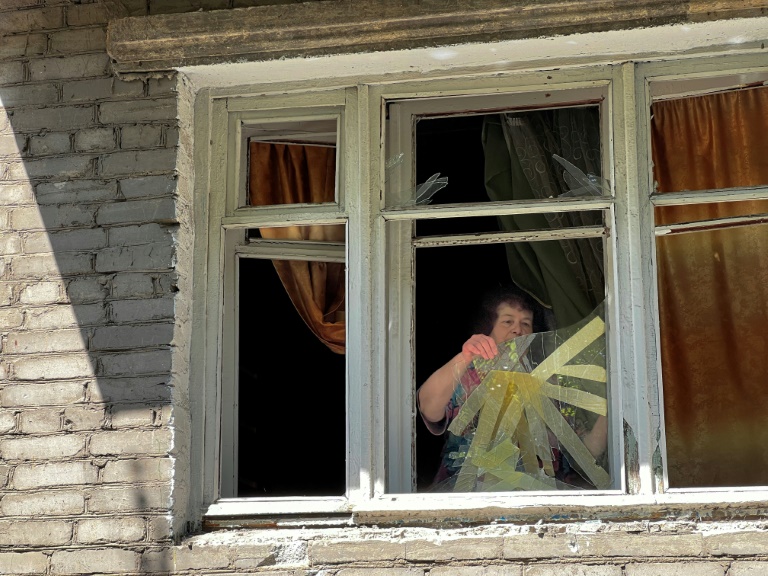
Workers came with big rolls of film to cover up broken windows.

A policewoman was telling locals to take photographs of the damage to their flats in order to claim compensation.

Overnight, an apparent cluster rocket had previously hit a street on the outskirts of the city, breaking windows and scattering shrapnel. 

Locals said they had frequently seen drones overhead but added a nearby military facility was no longer being used.

Oleksandr, a 39-year-old market trader, showed how shrapnel had made holes in his car, shattered house windows and wounded one of his Alsatian dogs.

The war damage is deja-vu for locals like him, who previously saw Russia-backed separatists take control of the city in 2014 for a period of months.

Oleksandr pointed to the holes in his metal gate, some fresh and others dating back to 2014. 

“I didn’t replace my gate. It’s like something told me not to,” he said wryly.

Spain advances transgender rights bill

Spain’s government advanced a transgender rights bill Monday to present to parliament this summer allowing anyone over 16 to easily change gender on their ID documents. 

The move comes on the eve of International Pride Day and if adopted, the legislation will make Spain one of the few countries in Europe to permit gender self-determination.

“We have approved the second reading of the trans and LGBTI rights law which will now be brought to parliament before the summer,” said Equality Minister Irene Montero after the cabinet approved the bill. 

“We are once again at the forefront and an international reference in defence of LGBTI rights and, in particular, in defence of the rights of transgender people,” she said of the move to stop categorising trans-related conditions as mental and behavioural disorders.

First approved a year ago, the proposed law means any Spaniard over 16 “will be able to apply to change the sex of their entry in the civil registry office”. 

They will also be able to change their given name. 

The bill effectively simplifies the procedure for changing gender on official identity documents, allowing the applicant to request the change on the basis of a simple statement. 

It drops the requirement for a medical report attesting to gender dysphoria or proof of hormonal treatment. 

Under the new law, the re-registration procedure must be completed “within a maximum of four months,” she said. 

– ‘LGBTI lives matter’ –

A court in the northwestern region of Galicia earlier this month approved a gender change request from a nine-year-old who wanted to be identified as a male instead of female on identity documents.

The child already has “a boy’s name” and has “for years… thought, behaved and felt like a boy,” the court said in a ruling dated June 10 which was made public on Monday.

The draft bill approved by cabinet on Monday allows those as young as 12 to make the change but only under certain conditions.

“Between the ages of 14 and 16, the procedure will require parental authorisation; between the ages of 12 and 14, the procedure can be carried out through voluntary legal proceedings,” Montero said. 

And it will also mean trans children under 12 will “be able to change their name on their ID card,” she said, without saying how such a procedure would work. 

“We want to send a very clear and forceful message: that LGBTI lives matter,” she said. 

The bill also includes a new section on transgender migrants, who will have the right to change their gender “on documents issued in Spain if they are not guaranteed their rights as transgender people in their country of origin”. 

– Conversion therapy ban –

The legislation bans conversion therapies, promotes non-discrimination against LGBTI people in the workplace and seeks “to advance the inclusion” particularly of transgender women who tend to be disproportionately affected. 

It also outlines penalties for discriminatory offences, ranging from minor offences such as insults or offensive graffiti that carry a fine of 200 to 2,000 euros to serious offences such as refusing someone employment that can be penalised by a fine of 2,001 to 10,000 euros. 

The worst offences, such as denying someone access to a bar or swimming poo, or subjecting them to conversion therapy, carry a penalty of between 10,001 euros to 150,000 euros, she said. 

According to the LGBTQ rights group ILGA, at least 25 UN member states “allow for legal gender recognition without prohibitive requirements”, although only around 15 let people change their status on the basis of a simple declaration.

In some countries, the process can take years and may include requirements such as a psychiatric diagnosis, hormone treatment, gender reassignment surgery or even sterilisation.

Close Bitnami banner
Bitnami