World

Turkey's troubled lira rallies on 'backdoor capital controls'

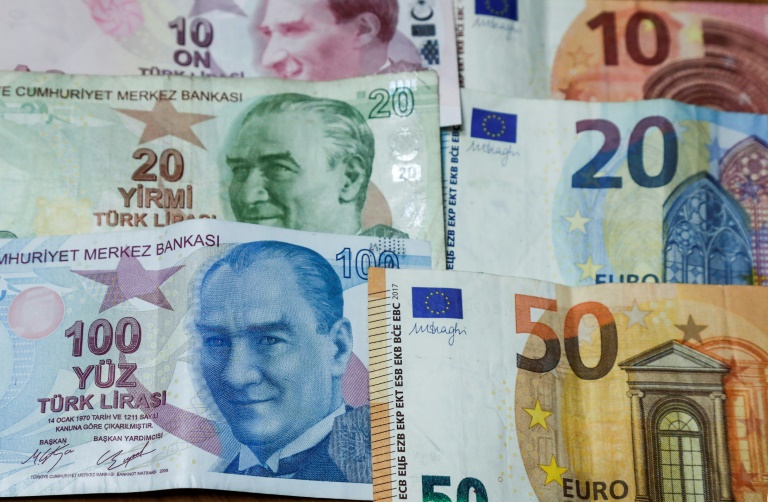
Turkey’s beleaguered lira extended its biggest rally of the year on Monday in response to a new rule that analysts fear moves the once promising emerging market a step closer towards prohibitive capital controls.

The financial regulation — announced after the market had closed on Friday night — represents Turkey’s latest attempt to prop up the lira without raising the main interest rate.

President Recep Tayyip Erdogan’s pressure on the central bank to keep borrowing costs well bellow the rate of inflation has sparked an economic crisis that has seen the lira slump and prices explode.

Erdogan rejects conventional economics and affirms that high interest rates cause inflation instead of slowing it down.

The annual rate of consumer price increases now officially stands at 73.5 percent. Independent economists believe it could be nearly double that figure.

The dollar dropped to 16.1 liras early Monday before recovering slightly and trading around the 16.6 mark.

The US currency was worth around 17.4 liras before the measure was announced. It stood at 7.4 liras at the start of last year and 5.9 liras in January 2020.

Turkey’s real interest rate of minus 59.5 percent provides a major incentive for consumers to spend money before it loses value and for banks to convert their holdings into dollars and euros.

The new rule attempts to put a stop to that by limiting bank loans to companies holding significant foreign-denominated assets.

It requires firms with more than 15 million liras ($900,000) in foreign currency — should that figure represents more than 10 percent of their assets or annual sales — to sell their dollars and euros before receiving any more loans.

The measure meant that some big firms whose lira loans matured Monday had to sell their foreign currencies in order to make the payments.

BlueBay Asset Management economist Timothy Ash called the regulation “backdoor capital controls”.

The banking regulator clarified Sunday that the measure did not apply to individuals or independent entrepreneurs.

– ‘Liraisation’ –

Erdogan’s economic team has ruled out imposing strict currency control and is espousing its allegiance to the markets.

But it is gradually rolling out rules aimed at draining foreign currencies out of the Turkish financial system and forcing everyone to conduct their business in liras.

Turkey already forces exporters to convert 40 percent of their hard currency into liras.

The measure is helping the government refill state reserves that have dwindled down to the lowest level of Erdogan’s rule to support indirect lira exchange rate interventions.

The finance ministry said the new lending rule was in line with an independent “Turkish Economy Model” promoted by Erdogan.

The head of Turkey’s MUSIAD big business association also welcomed the measure — seen by economists as another step in Erdogan’s push for the “liraisation”.

The new rule will “prevent dollarisation, which is the main factor behind the rise in the exchange rate,” MUSIAD chief Mahmut Asmali told reporters.

But OMG Capital Advisors consultancy head Murat Gulkan said the measure could have a damaging long-term effect on Turkey’s business climate.

The new rules will “complicate the operating conditions of banks and companies,” Gulkan said.

“The cornerstone of the system is the policy rate of the central bank. When that cornerstone is misplaced, it is necessary to take extraordinary steps like this latest decision.”

Ash agreed that the lending rule “over-complicates things for business and banks when what everyone knows Turkey needs is plain and simple interest rate increases”.
Zelensky urges G7 to help end Ukraine war by winter

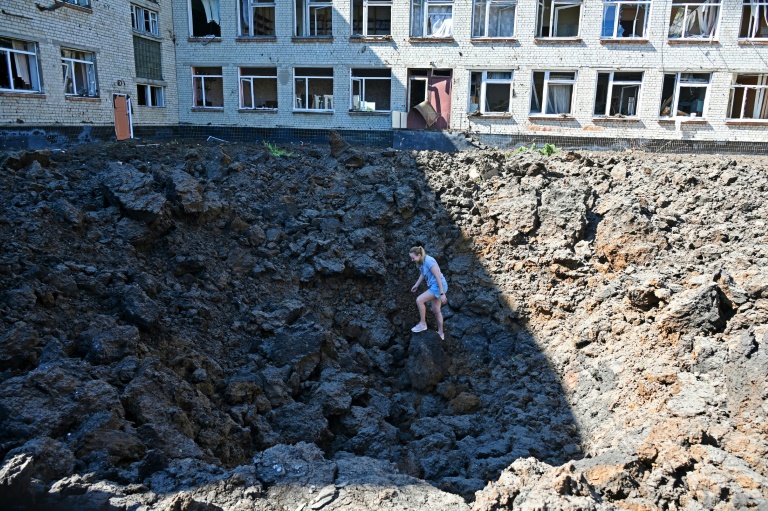
Ukrainian President Volodymyr Zelensky on Monday urged world powers to do their utmost to help end Russia’s invasion by the end of the year, as G7 leaders planned new sanctions and vowed to support Kyiv “as long as it takes”.

US President Joe Biden and his peers from the Group of Seven rich nations, meeting in the Bavarian Alps, pledged to tighten the economic screws on Moscow over its February 24 invasion of its neighbour.

The leaders put on a show of unity over Ukraine, even as the fallout from the war intensifies with soaring energy and food prices driving up global inflation.

“We will continue to provide financial, humanitarian, military and diplomatic support and stand with Ukraine for as long as it takes,” the G7 said in a statement on the summit’s second day.

Addressing the gathering via video-link, Zelensky urged leaders to help end the war before winter sets in and conditions for his troops become tougher. 

He also pressed allies to “intensify sanctions” on Moscow. 

The summit host, German Chancellor Olaf Scholz, signalled the G7’s readiness to do more, saying: “We will continue to increase pressure on (Vladimir) Putin. This war has to come to an end.”

Among the additional steps being discussed by G7 leaders is a price cap on Russian oil imports and sanctions targeting Russia’s defence sector.

– NATO boost –

Washington meanwhile is planning to send Ukraine sophisticated anti-aircraft missiles, US National Security Advisor Jake Sullivan told reporters, responding to a long-standing request from Zelensky for more advanced weapons.

The summit of the G7 — which comprises Britain, Canada, France, Germany, Italy, Japan and the United States — ends on Tuesday. 

It will immediately be followed by a meeting of NATO countries in Spain, where Ukraine is again expected to dominate the agenda.

NATO said on Monday the military alliance would boost its high readiness force from 40,000 to 300,000 troops and send more heavy weaponry to its eastern flank following Russia’s invasion of Ukraine.

NATO Secretary General Jens Stoltenberg called it “the biggest overhaul of our collective defence and deterrence since the Cold War”.

– ‘Toughest days’ –

Since failing to capture Kyiv early in the war, Russian troops have focused on the eastern Donbas region, where they have been gaining ground.

Two women had been killed by Russian bombardments in the northeastern Kharkiv region over the past 24 hours, a local official said on Monday.

Russian shelling also continued in and around the eastern city of Lysychansk, after Russian forces at the weekend took full control of its twin city, the industrial hub Severodonetsk, following weeks of fierce fighting.

“Lysychansk and nearby villages are living their toughest days. Russians destroy everything on their way,” said Lugansk regional governor Sergiy Gaiday.

Taking Lysychansk would give Russia control of the entire Lugansk region of the Donbas.

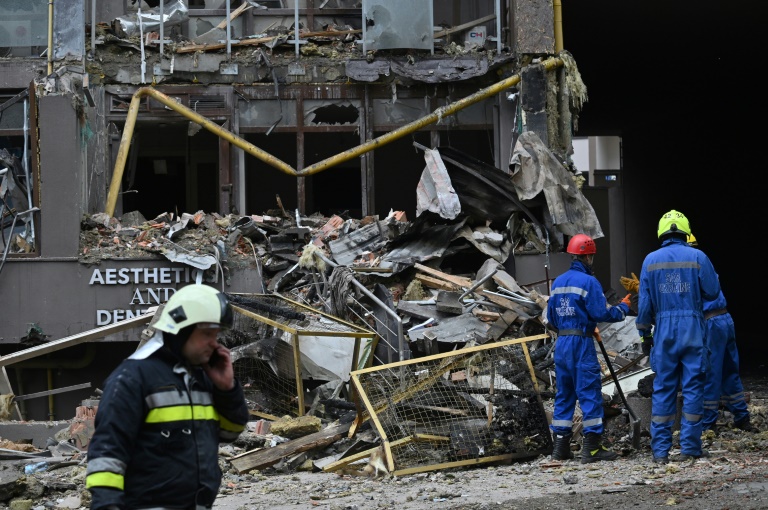
Kyiv meanwhile was reeling from the first Russian strikes on the capital in three weeks. A missile struck a residential building early on Sunday, Ukraine said, leaving one person dead.

Russia denied it had hit a civilian target, however, saying its forces had struck a weapons factory in the neighbourhood.

Zelensky stressed on Monday that “now is not the time for negotiations” with Russia because Kyiv is still seeking to consolidate its positions, a French official said.

– Gold, oil, debt –

Sweeping Western sanctions designed to choke off Moscow’s access to the international financial system have pushed Russia closer to its first foreign debt default in a century.

Russia said on Monday two of its debt payments were prevented from reaching creditors after a key deadline expired.

But “there are no grounds to call this situation a default”, Kremlin spokesman Dmitry Peskov said.

G7 members said they were paving the way for further sanctions aimed at depleting Putin’s war chest, while minimising the blowback on their own economies.

After kicking off their gathering on Sunday with a plan to ban imports of Russian gold, the G7 had also made progress in talks on a price cap on Russian oil, a senior US official said on Monday. 

The cap has the twin goals of starving the Kremlin of a key revenue stream and forcing down the price of Russian oil in the hope of reining in inflation, the official said.

Zelensky has urged the G7 to push through the measure but European officials fear it will be difficult to implement and say more discussions are needed.

To help bring down surging crude prices, France urged oil-producing nations to raise output in an “exceptional manner”.

In another effort to punish Russia and help Ukraine, the G7 plans new measures designed to hamper Russia’s ability to resupply its weaponry, a senior US official said.

The leaders likewise share the view that money collected from higher trade tariffs imposed on Russian exports should be funnelled as aid to Ukraine “to ensure that Russia pays for the cost of its war”, the official added.

– Food crisis –

One of the most worrying spillover effects of the war has been the threat of food shortages in vulnerable countries, especially in Africa, as Russia’s blockade of key ports holds up vital Ukrainian cereal exports.

“We urgently call on Russia to … enable free passage of agricultural shipping from Ukrainian ports in the Black Sea,” G7 leaders said.

Russia denies being responsible for the delivery disruptions and says Western sanctions are to blame.

Non-G7 countries Argentina, India, Indonesia, Senegal and South Africa have also joined the summit in Elmau Castle, Bavaria.

Indonesian President Joko Widodo is slated to host the G20 summit in November and has shrugged off Western pressure to exclude Putin from the gathering.

Scholz on Monday said he was open to still attending the G20.

Putin meanwhile is scheduled to travel to Tajikistan and Turkmenistan this week, his first forays abroad since the invasion. 

Judges retire to consider verdicts in Paris attack trials

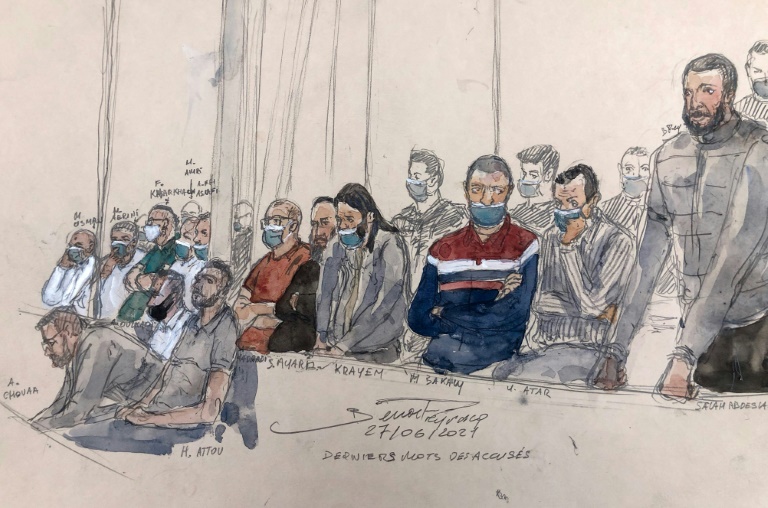
Five judges overseeing the trial into the November 2015 attacks on the Bataclan concert hall and other targets around Paris headed to a secret location Monday to consider their verdicts.

The specially built court in central Paris held its final hearings on Monday after nine months of testimony and questioning that has seen the only surviving Islamic State attacker, Salah Abdeslam, beg for clemency.

“I’ve offered you my apologies. Some people will say that they’re insincere… as if apologies could be insincere in the face of so much suffering,” Abdeslam, 32, told the court on Monday in his final statement.

“I went to prison at the age of 26. I’m not perfect, I made mistakes, it’s true. But I’m not a murderer, I’m not a killer,” he added, wearing a grey sweatshirt and with his hair cut short. 

“If you convict me for murder, you will be committing an injustice.”

During the trial, which began last September, Abdeslam has not denied dropping off other suicide bombers or being part of the conspiracy to attack Paris on November 13, 2015, which left 130 people dead.

But he said he backed out of his mission to blow himself up in a bar in northern Paris — something prosecutors have argued is untrue.

Citing his own letters and earlier statements, prosecutors say Abdeslam’s suicide belt was defective, meaning he was unable to detonate himself. 

Verdicts for him and 19 other suspects on trial are due on Wednesday afternoon from five judges who were taken to a secret location in the Paris region to mull their verdicts.

Only 14 people have appeared in the historic court, with the other six missing or presumed to be dead. 

Prosecutors have called for a life sentence without parole for Abdeslam, who is French but grew up in Brussels and has family roots in Morocco.

– ‘Disgusting’ –

The November 2015 attacks were the biggest peace-time atrocity in modern French history, sending shockwaves through the country and making clear the threat posed by the Islamic State group from its base in Iraq and Syria.

A majority of those on trial offered apologies and appeared to show a measure of remorse on Monday, including one of Abdeslam’s co-defendants and close friends, Mohamed Abrini.

“I’ve put faces to the victims. I’m aware that what happened is disgusting,” he told the court.

“In a way, I could have stopped all that,” added the 37-year-old Belgian, who admitted in court that he had originally been chosen for the 10-person team which attacked Paris.

Abrini, accused of having provided weapons and logistical support, took part in separate suicide bombings that struck Brussels in 2016, though he decided not to detonate his vest at the last minute.

Prosecutors have called for him to serve a life sentence with a minimum 22-year prison term.

S.Africa seeks clues after 21 teens die in packed bar

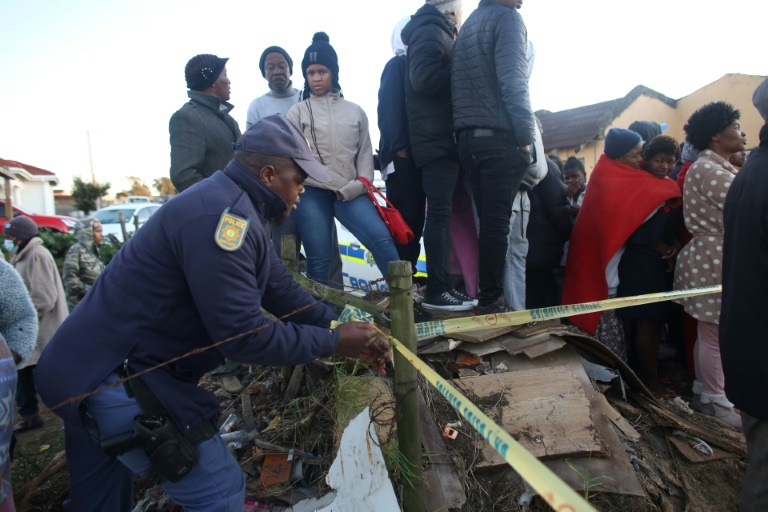
South African police were on Monday combing a township tavern where 21 teenagers mysteriously died as survivors described a battle to escape the jam-packed premises and one reported a suffocating smell.

Officials have ruled out a stampede as the cause of the deaths.

Most of the victims, some as young as 13, were found dead inside a popular bar in the southern city of East London. 

Seventeen died inside the bar, while four died in hospital. 

Thirty-one others were hospitalised with symptoms including backache, tight chests, vomiting and headache, officials said.

Most were discharged on Sunday, leaving two in hospital, they said.

The fatalities bore no visible signs of injury, sparking initial speculation among local officials and politicians that this was a case of under-age drinking that went tragically wrong.

“But the suspicion is that it is something either they ingested through drinks, food, or something they inhaled,” Unathi Binqose, a government official on safety, told AFP.

New details also emerged Monday as survivors spoke of a strong and suffocating smell in the jam-packed double-storey building.

Sinovuyo Monyane, 19, who was hired by the bar to promote an alcohol brand, said she was still “confused” but felt lucky to be alive.

She said she struggled to escape through a door gridlocked with people.

“We tried moving through the crowd, shouting ‘please let us through,’ and others were shouting ‘we are dying, guys,’ and ‘we are suffocating’ and ‘there are people who can’t breathe’,” she told AFP.

“I passed out at that moment. I was running out of breath and there was a strong smell of some type of spray on in the air. We thought it was pepper spray,” she said.

She later regained consciousness after someone sprayed water on her.

“I got up and realised that there were bodies lying around. I saw people being poured water, but those people did not even move,” she said in a phone interview.

“I could have died.”

Special investigators from Pretoria have been rushed to the scene.

“The investigators continue to search for possible clues and answers at Enyobeni Tavern,” regional police spokesman Thembinkosi Kinana said.

– ‘Traumatised’ –

Many of the victims are thought to have been students celebrating the end of their high-school exams, officials said.

Autopsies are being conducted to see if the deaths could be linked to poisoning.

“Post-mortems (were) completed by last night and the bodies will be released to their families today,” said Yonela Dekeda, provincial spokeswoman for the health department.

Forensic analysis will be conducted this week.

“Samples were taken and were on (the) first flight today to Cape Town, where the tests will be conducted,” said Binqose.

Drinking in South Africa is permitted for over-18s.

But in township taverns which are often located cheek-by-jowl with family homes, safety regulations and drinking-age laws are not always enforced.

President Cyril Ramaphosa is among those who have voiced concern.

The teenagers reportedly “gathered at a venue which, on the face of it, should be off-limits to persons under the age of 18”, he said.

A resident DJ, Luhlemela Ulana, who was also celebrating his birthday on the night, spoke of a rush of revellers who forced their way into an already packed venue.

“We tried to close the door but people kept pushing. The bouncers could not handle the crowd that was pushing from outside the entrance door. There were so many people,” the DJ said.

He turned off the music to try to discourage the revellers, but to no avail.

The crowd was just “unruly and could not be managed”, he said, adding he was “traumatised”.

About 100 mourners attended an emotional prayer service at the Assemblies of God church in the Scenery Park township where a local municipal councillor Monica Goci broke down on the pulpit with a microphone in her hand.

Stock markets extend recovery as rate hike fears subside

Asian and European markets rallied Monday, building on last week’s advances as speculation that inflation may have peaked tempered expectations about central bank interest rate hikes.

With prices surging at a pace not seen in a generation, central banks have been forced to lift borrowing costs and wind back their ultra-loose monetary policies in recent months, sending a chill across trading floors.

But a string of weak data has led many investors to believe that inflation may have plateaued or is about to, giving room for banks to be less hawkish.

The prospect that rates will not go as high as initially expected helped send Wall Street stocks higher Friday, with the S&P 500 and Nasdaq ending up more than three percent.

Asia and Europe continued the rally on Monday while Wall Street opened higher, with the Dow adding 0.2 percent

Hong Kong led gainers, climbing more than two percent thanks to a strong performance in Chinese tech firms. 

Indications that China’s crackdown on the sector could be coming to an end added to the upbeat mood in the city.

“Market conviction that perhaps the Fed won’t now hike rates as aggressively as previously feared and/or that rate cuts before the end of 2023 are now an even more realistic prospect… have had a big hand” in boosting sentiment, said National Australia Bank’s Ray Attrill.

While Fed chiefs continue to flag further big interest rate hikes in the pipeline, expectations for a prolonged period of increases have waned, which has in turn taken some heat out of the dollar.

Market analyst Patrick O’Hare at Briefing.com said the question going forward is: “can the market look past a weakening fundamental situation that includes higher interest rates, persistently high inflation, and slower growth?”

The strong rebounds seen last week were possible as the market was so oversold, he said, but may soon hit resistance. 

“That should become increasingly apparent in coming weeks as more companies temper their full-year outlooks” as they release their second quarter earnings.

Bitcoin has also won some support, trading above $21,000 after a recent slump.

– G7 action over Russia –

Elsewhere, traders were keeping a close eye on the G7 summit in Germany, focused on further co-ordinated financial action against Russia following its invasion of Ukraine.

Among the new action being weighed by the G7 was a price cap on Russian oil imports and fresh sanctions on Russia’s defence sector, the White House said.

G7 member France urged oil producers to ramp up crude output by ‘exceptional’ volumes owing to Russian supply constraints.

The group — comprising also Britain, Canada, Germany, Italy, Japan and the United States — kicked off their gathering Sunday by announcing plans to ban imports of Russian gold.

It was the latest in a series of sanctions aimed at punishing President Vladimir Putin for his February 24 invasion.

– Key figures at around 1330 GMT –

London – FTSE 100: UP 0.4 percent at 7,239.40 points

Frankfurt – DAX: UP 0.5 percent at 13,176.68

Paris – CAC 40: DOWN 0.4 percent at 6,049.55

EURO STOXX 50: UP 0.2 percent at 3,541.76

New York – Dow: UP 0.2 percent at 31,555.45

Tokyo – Nikkei 225: UP 1.4 percent at 26,871.27 (close)

Hong Kong – Hang Seng Index: UP 2.4 percent at 22,229.52 (close)

Shanghai – Composite: UP 0.9 percent at 3,379.19 (close)

Euro/dollar: UP at $1.0580 from $1.0559 Friday

Pound/dollar: DOWN at $1.2268 from $1.2280

Euro/pound: UP at 86.24 pence from 85.95 pence

Dollar/yen: UP at 135.35 yen from 135.17 yen

Brent North Sea crude: UP less than 0.1 percent at $113.16 per barrel

West Texas Intermediate: DOWN less than 0.1 percent at $107.54 per barrel

burs-rl/

Sri Lanka electricity firm seeks 835% price rise

Sri Lanka’s heavily loss-making state-run electricity monopoly asked for a shocking price rise of over 800 percent for its poorest customers with the bankrupt nation out of fuel, regulators said Monday.

The South Asian nation has been hammered by a foreign exchange crisis, leaving it woefully short of dollars for imports, including fuel to generate electricity and for transport.

The Ceylon Electricity Board (CEB) lost 65 billion rupees ($185 million) in the first quarter and sought an 835 percent price hike for the heavily-subsided smallest power consumers, the Public Utilities Commission of Sri Lanka (PUCSL) said.

Currently, anyone using less than 30 kilowatts a month pays a flat 54.27 rupees ($0.15), which the CEB sought to raise to 507.65 rupees ($1.44).

“A majority of the domestic consumers will not be able to afford this type of steep increase,” PUCSL chairman Janaka Ratnayake told reporters in Colombo. 

“Hence we proposed a direct subsidy from the Treasury to keep the increase to less than half of what they have asked.”

Domestic rates have yet to be decided, but prices will go up by 43 to 61 percent for commercial and industrial users, he added.

The CEB will also be allowed to charge users who earn foreign exchange, such as exporters, in dollars, he added, to help the generator finance imports of oil and spare parts.

The government imposed 13-hour power cuts a few months ago, but blackouts have been reduced to about four hours a day as rains filled hydropower reservoirs.

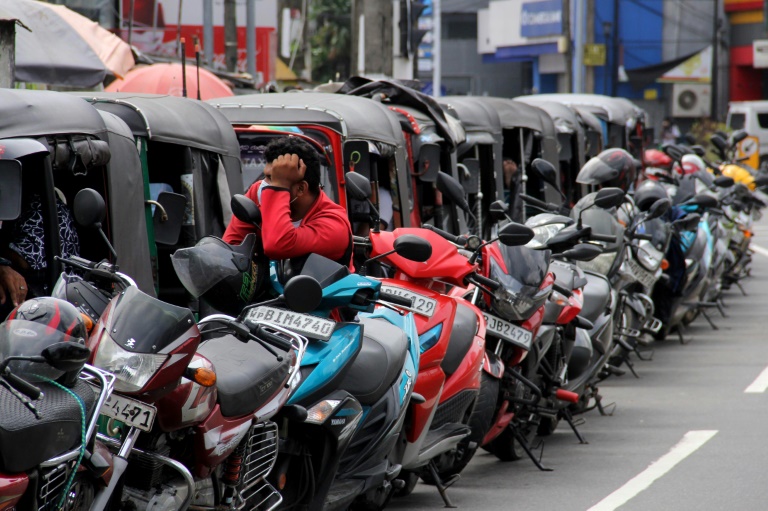
Over the past six months the government has already increased diesel prices nearly fourfold and petrol  by more than two and a half times.

Sri Lanka remains virtually without both diesel and petrol. The energy minister has said he is unable to say when fresh stocks will arrive in the country, which does not have its own oil.

Kanchana Wijesekera apologised to motorists on Sunday and announced two ministers were travelling to Moscow to secure cheaper Russian oil.

Wijesekera himself travelled to Qatar to negotiate concessionary terms for hydrocarbon imports.

Meanwhile, a delegation from the US Treasury and the State Department opened talks with Prime Minister Ranil Wickremesinghe, his office said.

“The United States has agreed to provide technical assistance for fiscal management in Sri Lanka,” the premier’s office said in a brief statement.

Unable to repay its $51 billion foreign debt, the government declared it was defaulting in April and is negotiating with the International Monetary Fund for a possible bailout.

Sri Lanka electricity firm seeks 835% price rise

Sri Lanka’s heavily loss-making state-run electricity monopoly asked for a shocking price rise of over 800 percent for its poorest customers with the bankrupt nation out of fuel, regulators said Monday.

The South Asian nation has been hammered by a foreign exchange crisis, leaving it woefully short of dollars for imports, including fuel to generate electricity and for transport.

The Ceylon Electricity Board (CEB) lost 65 billion rupees ($185 million) in the first quarter and sought an 835 percent price hike for the heavily-subsided smallest power consumers, the Public Utilities Commission of Sri Lanka (PUCSL) said.

Currently, anyone using less than 30 kilowatts a month pays a flat 54.27 rupees ($0.15), which the CEB sought to raise to 507.65 rupees ($1.44).

“A majority of the domestic consumers will not be able to afford this type of steep increase,” PUCSL chairman Janaka Ratnayake told reporters in Colombo. 

“Hence we proposed a direct subsidy from the Treasury to keep the increase to less than half of what they have asked.”

Domestic rates have yet to be decided, but prices will go up by 43 to 61 percent for commercial and industrial users, he added.

The CEB will also be allowed to charge users who earn foreign exchange, such as exporters, in dollars, he added, to help the generator finance imports of oil and spare parts.

The government imposed 13-hour power cuts a few months ago, but blackouts have been reduced to about four hours a day as rains filled hydropower reservoirs.

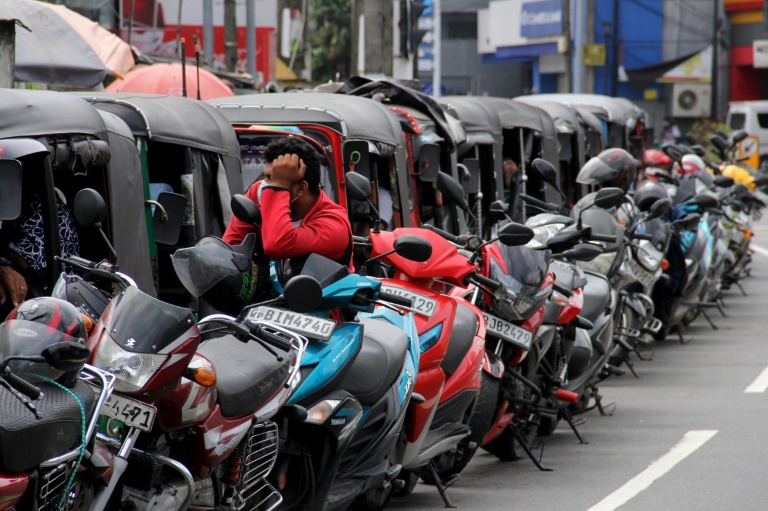
Over the past six months the government has already increased diesel prices nearly fourfold and petrol  by more than two and a half times.

Sri Lanka remains virtually without both diesel and petrol. The energy minister has said he is unable to say when fresh stocks will arrive in the country, which does not have its own oil.

Kanchana Wijesekera apologised to motorists on Sunday and announced two ministers were travelling to Moscow to secure cheaper Russian oil.

Wijesekera himself travelled to Qatar to negotiate concessionary terms for hydrocarbon imports.

Meanwhile, a delegation from the US Treasury and the State Department opened talks with Prime Minister Ranil Wickremesinghe, his office said.

“The United States has agreed to provide technical assistance for fiscal management in Sri Lanka,” the premier’s office said in a brief statement.

Unable to repay its $51 billion foreign debt, the government declared it was defaulting in April and is negotiating with the International Monetary Fund for a possible bailout.

Zelensky urges G7 to help end Ukraine war by winter

President Volodymyr Zelensky on Monday urged world powers to do their utmost to help end Russia’s invasion by the end of the year, as G7 leaders planned new sanctions and vowed to support Ukraine “as long as it takes”.

US President Joe Biden and his counterparts from the Group of Seven rich nations, meeting for three days in the Bavarian Alps, promised to tighten the economic screws on Moscow over its February 24 invasion.

They also put on a show of unity over Ukraine, even as the fallout from the war intensifies with soaring energy and food prices driving up global inflation.

“We will continue to provide financial, humanitarian, military and diplomatic support and stand with Ukraine for as long as it takes,” the G7 said in a statement on the summit’s second day.

Addressing the gathering via video-link, Zelensky urged leaders to help end the war before winter sets in and conditions for his troops become tougher. 

He urged allies to keep up the pressure and “intensify sanctions” on Moscow, including by imposing an oil price cap to limit Russia’s energy revenues. 

German Chancellor and summit host Olaf Scholz signalled the G7’s readiness to do more, saying “we will continue to increase pressure on (Vladimir) Putin. This war has to come to an end”.

Among the new steps being discussed by G7 leaders is the price cap on Russian oil imports sought by Zelensky and sanctions targeting Russia’s defence industry.

Washington meanwhile is planning to send Ukraine sophisticated anti-aircraft missiles, a source familiar with the process told AFP.

Zelensky has long asked allies for more powerful defences against Russian attacks.

An announcement is “likely this week” on the purchase of an “advanced medium to long-range surface-to-air missile defence system”, the source said.

The summit of the G7 — which comprises the US, Germany, Britain, France, Italy, Japan and Canada — ends on Tuesday. 

It will immediately be followed by a meeting of NATO countries in Spain, where Ukraine is again expected to dominate the agenda.

– ‘Toughest days’ –

Since failing to capture Kyiv early in the war, Russian troops have focused on the eastern Donbas region where they have been gaining ground.

Two women were killed by Russian bombardments on the north-eastern Kharkiv region over the past 24 hours, a local official said on Monday.

Russian shelling also continued in and around the eastern city of Lysychansk, after Russian forces at the weekend took full control of its twin city and industrial hub Severodonetsk following weeks of fierce fighting.

“Lysychansk and nearby villages are living their toughest days. Russians destroy everything on their way,” said Lugansk regional governor Sergiy Gaiday.

Taking Lysychansk would give Russia control of the entire Lugansk region in the Donbas.

– ‘Safe return’ –

With concerns growing over the fate of Ukrainians in occupied areas, G7 leaders told Moscow it must “immediately allow the safe return” of citizens taken to Russia against their will.

The grouping also voiced “serious concern” over Putin’s weekend announcement that Russia will deliver missiles capable of carrying nuclear warheads to Belarus in the coming months.

“We urge Russia to behave responsibly and exercise restraint,” it said.

Kyiv meanwhile was reeling from the first Russian strikes on the capital in three weeks. A missile attack struck a residential building early on Sunday, Ukraine said, leaving one person dead.

Russia denied it had hit a civilian target, however, saying its forces had struck the Artyom weapons factory in the neighbourhood.

Moldova’s President Maia Sandu visited neighbouring Ukraine on Monday. 

Her country, one of Europe’s poorest, has taken in tens of thousands of Ukrainian refugees.

Both nations received candidate status from the European Union last week, although the path to bloc membership is set to take years.

– Gold, oil, tariffs –

G7 members kicked off their gathering on Sunday by announcing a plan to ban imports of Russian gold, the latest in a series of sanctions aimed at punishing Putin.

A senior US official on Monday said the G7 had also made progress on talks for a price cap on Russian oil. 

The move would have the twin goals of starving the Kremlin of a key revenue stream for its war machine, while forcing down the price of Russian oil in the hope of reining in inflation, the official said.

European Council President Charles Michel however said on Sunday that all 27 member states would have to agree to such a price cap, which would require tweaking existing sanctions.

Biden and his G7 counterparts will also unveil new sanctions designed to hamper Russia’s ability to resupply its weaponry, a senior US official said.

The leaders likewise share the view that money collected from higher trade tariffs imposed on Russian exports should be funnelled as aid to Ukraine “to ensure that Russia pays for the cost of its war”, the official added.

– Food crisis –

One of the most worrying spillover effects of the war has been the threat of food shortages in vulnerable countries, as Russia’s blockade of key ports holds up vital Ukrainian cereal exports.

With millions of tonnes of grain trapped in silos, concerns are growing that African nations highly reliant on Ukrainian deliveries could face famine.

“We urgently call on Russia to cease… enable free passage of agricultural shipping from Ukrainian ports in the Black Sea,” G7 leaders said.

Russia denies being responsible for the delivery disruptions and says Western sanctions are to blame.

Non-G7 countries Argentina, India, Indonesia, Senegal and South Africa have also joined the summit.

Indonesian President Joko Widodo, who will host a G20 summit in November, said he would also visit Ukraine and Russia in the coming days to ask Putin and Zelensky to open a dialogue for peace.

Indonesia, like most major emerging economies, has tried to maintain a neutral position, and Widodo has not bowed to Western pressure to exclude Putin from the November meeting.

The difficult search for truth at France's biggest terror trial

During the nine-month trial stemming from France’s worst ever terror attacks in November 2015, the moment hundreds of victims were hoping for came late in proceedings.

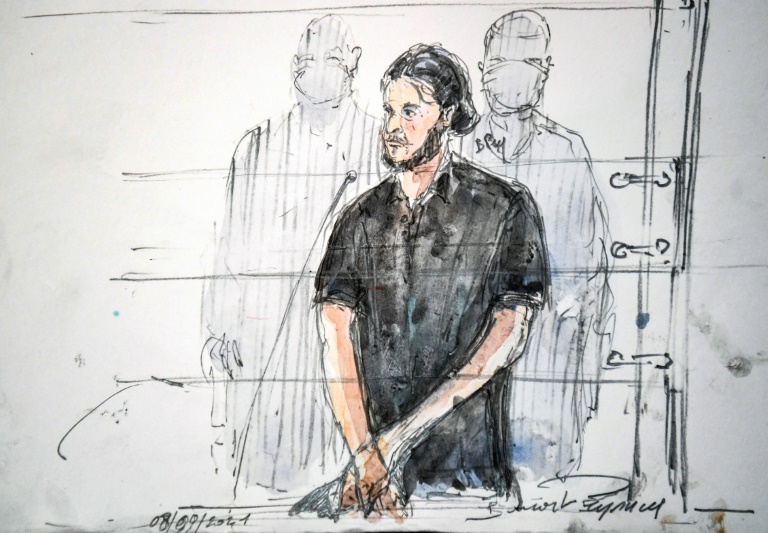
“I’m going to explain myself because it’s the last time that I’ll have the opportunity to do so,” said Salah Abdeslam, the sole surviving Islamic State jihadist from the group that attacked the Bataclan concert hall and other targets in the French capital.

Spoken in the defendants’ glass box in April, the words sent tremors through the courtroom where victims and their families had been ever-present during the hearings.

Those caught up in the carnage of November 13, 2015, had expressed different hopes for the trial, the biggest in French history which comes to climax this Wednesday when verdicts are expected.

Many survivors thought that by taking part, it would help them to heal psychologically. Others felt a deep desire for justice to be served, even though most of the attackers were dead.

And many more hoped for clarity: why had 10 young men from Muslim backgrounds, most of them born in Europe, slaughtered 130 people as they enjoyed themselves on a Friday night?

“We come here because we’re trying to understand things which are completely irrational,” a widow of a victim, who asked not to be named, told AFP as she headed into court in October. 

She also hoped to meet people “who saw my husband just before he died,” she added, her voice catching in her throat.

The attacks on the national sports stadium, bars in bustling neighbourhoods, and the Bataclan were the worst peace-time atrocity in modern French history.

The trial opened on September 8 and has been held in the specially built courtroom in central Paris — an airy wood-framed construction, with chairs and benches for 550 people.

For some, the desire for explanations seemed in vain.

Abdeslam “thinks he’s a star, he teases us, keeps quiet, enjoys the reactions he provokes,” one of the prosecution lawyers, Nicolas Le Bris, said angrily in late March. 

Two weeks later, the main suspect, wearing a striped t-shirt and blue jacket, appeared to have a change of heart. 

“All these people in here need my responses. I can’t promise anything, but I’ll do my best,” said the 32-year-old, who had refused to cooperate during his six years behind bars.

– ‘Not going to do it’ – 

The Belgium-born son of Moroccan immigrants recounted what he said was his role in the attacks that sent shockwaves through France and Europe.

During a meeting in Belgium, where the IS cell was based, he had been asked to take part in the attacks two days beforehand by the ringleader, Abdelhamid Abaaoud, a long-time friend.

During the assault, which was coordinated from Syria, Abdeslam’s role was to blow himself up in a cafe in a fashionable area of the 18th district of northern Paris. 

Before this, he would drive three suicide bombers to the Stade de France where France was playing Germany in a football game attended by then-president Francois Hollande.

But when he arrived in the bar, he had a change of heart, Abdeslam claimed. 

“I go into the cafe, I order a drink, I look at the people around me and I say to myself ‘no, I’m not going to do it’,” he told the court.

A few kilometres to the southeast, his older brother Brahim embraced his mission, gunning down young people in cafes before blowing himself up.

A third group of jihadists ran into the Bataclan during an Eagles of Death Metal concert, shooting indiscriminately. Ninety people died there.

After his alleged change of heart, Abdeslam said he travelled to the south of Paris before calling some friends in Brussels to come to pick him up.

He went on the run for four months before being found by Belgian police in his home neighbourhood of Molenbeek in the Belgian capital, living close to his family.

– Tears – 

The apparent breakthrough moment in court raised as many questions as it answered — and Abdeslam refused or evaded follow-ups.

Prosecutors had detailed how his suicide belt, later found by police, had in fact been defective.

This was a more likely explanation of why he had not detonated, they said.

He had booked cars and rooms for fellow attackers in his own name in Paris, a lack of precaution suggesting he did not intend to survive. 

And in handwritten letters found afterwards, including to his sister, he justified the attacks on “sinners” and regretted that he had not ended up among the “martyrs”.

When asked in court, he wouldn’t give the name of the bar he visited, or explain why he had acted alone while the other attackers were in threes.

“I changed my mind out of humanity, not out of fear,” he insisted.

“A fairy tale,” the head of a victims’ association said afterwards. 

Two days later, a weeping Abdesalam presented his “condolences and apologies” in court. 

“I know that there is still hate… I ask you to hate me with moderation,” he pleaded. 

Had a man who began the trial dressed in black and defiantly giving his profession as an “Islamic State fighter” been affected by the months of heart-wrenching testimony?

Or was he trying to save his skin, having told the court of his suffering in solitary confinement and fearing a lifetime behind bars? 

– Therapeutic justice – 

The trial has been unprecedented for France in scale and complexity.

The investigation took six years and its written conclusions stretch to 53 metres (174 feet) when lined up. 

Apart from Abdeslam, 19 others are on trial, including other suspected members of the Brussels-based Islamic State cell, and people accused of offering logistical support.

But the time given over to victims to testify has also set the trial apart, lending it at times the sense of a mass therapy session.

“I needed to feel the Bataclan, hear the bullets, the smell,” bereaved father Stephane said after witness statements in October.

He had been able to imagine what his son Hugo “felt that evening”, he said. 

The filming of proceedings for the national archives — recordings in French courts are usually banned — means the trial will serve as a historical resource.

“When you take part you hear about everyone else’s stories, what they suffered, what they lost,” David Fritz Goeppinger, a hostage in the Bataclan, told AFP recently.

– Verdicts Wednesday – 

In their concluding arguments, prosecutors condemned Abdesalam’s display of emotion in court as a cynical ploy to encourage leniency from the five magistrates who will decide his fate.

By taking part in the operation he had “the blood of all the victims on his hands,” they said.

Though his guilt as a participant is not in doubt, the judges will have to decide whether to agree to prosecutors’ demands for a life sentence without the possibility of parole.

Much will hinge on whether they believe the one-time drug dealer who never once condemned Islamic State’s atrocities is capable of remorse and poses a threat for the rest of his days.

Arthur Denouveaux, head of the Life for Paris survivors’ group, said that after eight gruelling months people were now fed up. 

“I’m not that interested in the verdicts in themselves. It’s really about saying ‘that’s it. It’s behind us. The justice system has done its work, we can move on’,” he told AFP. 

asl-aje-mdh-adp/sjw/jv

Russia denies defaulting on debts

Russia said Monday that two of its debt payments were prevented from reaching creditors, pushing the country closer to its first foreign default in a century due to sanctions over the Ukraine offensive.

The announcement came on the 124th day of Russia’s military intervention in Ukraine, with Western sanctions so far failing to force the Kremlin to change its course.

The Western economic penalties have largely severed the country from the international financial system, making it difficult for Moscow to service its debt.

The Russian authorities insist they have the funds to honour the country’s debt and accuse the West of seeking to drive Moscow into a default artificially.

“There are no grounds to call this situation a default,” Kremlin spokesman Dmitry Peskov told reporters after a key payment deadline expired Sunday.

“These claims about default, they are absolutely wrong,” he said, adding that Russia settled the debt in May.

A 30-day grace period for the payment of $100 million in interest payments expired on Sunday night, most of which had to be paid in foreign currency.

In a statement, the Russian finance ministry said that two of its debt payments had not been transferred to creditors, but denied that the event amounted to a default.

International settlement and clearing systems “received funds in full in advance” but the payments were not transferred to the final recipients due to “the actions of third parties”, the ministry said.

“The non-receipt of money by investors did not occur as a result of the absence of payment, but due to the actions of third parties,” the ministry added, saying such an event did not amount to a default.

“The actions of foreign financial intermediaries are beyond the Russian finance ministry’s control,” the statement said.

Finance Minister Anton Siluanov has earlier dismissed the situation as a “farce”.

– ‘Vicious circle of decline’ – 

While some experts dismiss the event as a technical default, others say it will have far-reaching consequences.

“This default is important as it will impact on Russia’s ratings, market access and financing costs for years to come,” said Timothy Ash, an emerging markets strategist at BlueBay Asset Management.

“And that means lower investment, lower growth, lower living standards, capital and human flight (brain drain), and a vicious circle of decline for the Russian economy.” 

Russia lost the last avenue to service its foreign-currency loans after the United States removed an exemption last month that allowed US investors to receive Moscow’s payments.

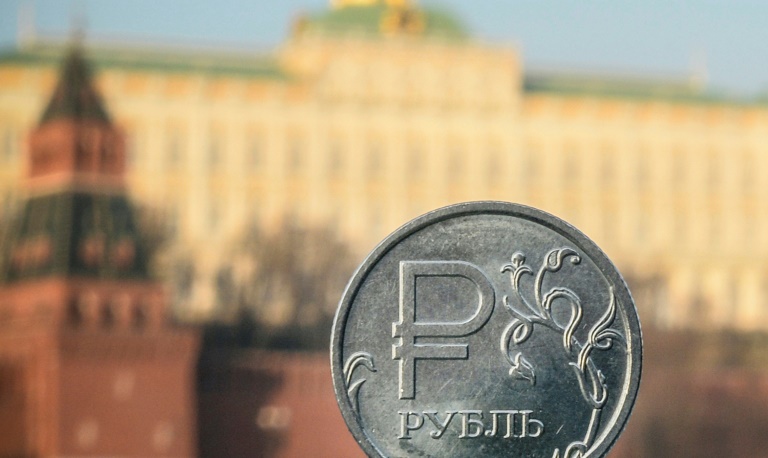
In response, Russia said it would pay in rubles that could be converted into foreign currency, using a Russian financial institution as a paying agent, even though the bonds do not allow payments in the local currency.

Russia has accused the West of seeking to push it into an “artificial default” through unprecedented sanctions imposed after President Vladimir Putin sent troops to Ukraine on February 24.

The measures included freezing the Russian government’s stockpile of $300 billion in foreign currency reserves held abroad, making it more complicated for Moscow to settle its foreign debts.

The country last defaulted on its foreign debt in 1918, when Bolshevik revolution leader Vladimir Lenin refused to recognise the massive debts of the deposed tsar’s regime.

Russia defaulted on domestic debt in 1998 when, due to a drop in commodity prices, it faced a financial squeeze that prevented it from propping up the ruble and paying off debts that accumulated during the first war in Chechnya.

The International Monetary Fund’s number two official, Gita Gopinath, said in March that a Russian default would have “limited” impact on the global financial system.

Close Bitnami banner
Bitnami