World

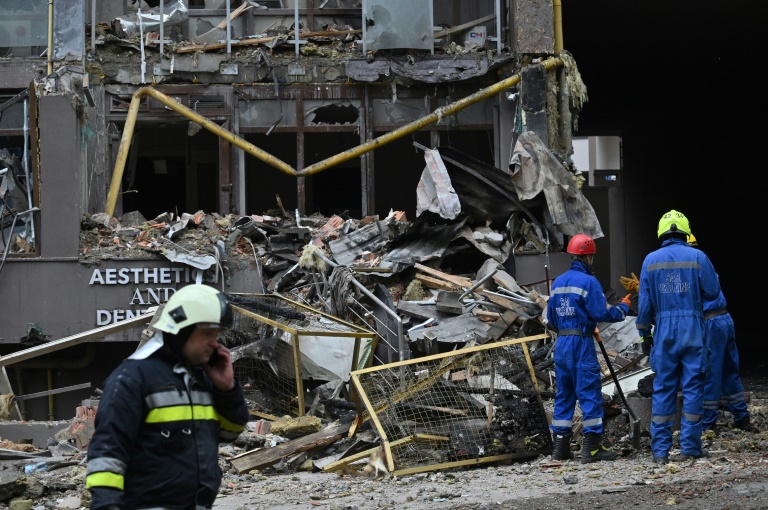
War in Ukraine: Latest developments

Here are the latest developments in the war in Ukraine:

– End war by year end: Zelensky –

Ukrainian President Volodymyr Zelensky urges world leaders gathered at the G7 summit to do their utmost to end Russia’s invasion of his country by the end of the year.

He also calls on the G7 to “intensify sanctions” against Russia, a G7 source says.

In his address via video link to the gathering in the German Alps, Zelensky says battle conditions will make it tougher for his troops as they mount their fightback.  

He urges G7 nations to “not lower the pressure and to keep sanctioning Russia massively and heavily”, in addition to the multiple rounds of sanctions that Western allies have already unleashed on Moscow.

– G7 to up pressure on Putin, vows solidarity –

The G7 vows solidarity with Ukraine “for as long as it takes”, in a statement issued after Zelensky’s video address.

The host of the group’s summit in Germany, Chancellor Olaf Scholz, says the G7 will “increase pressure” on Russian President Vladimir Putin over the invasion of Ukraine.

“This war has to come to an end,” Scholz tweets.

The G7 also tells Russia it must allow grain shipments to leave Ukraine to avoid exacerbating a global food crisis.

It tells Moscow it must allow Ukrainians taken to Russia against their will to return home at once. 

And it expresses “serious concern” over Russia’s plans to deliver missiles capable of carrying nuclear warheads to Belarus in the coming months.

– New G7 sanctions take shape –

A senior US official says the G7 is making progress in talks on capping the amount of money that Russians can get for their key oil exports.

The White House also unveils new measures to hamper Russia’s ability to resupply the weaponry used in its onslaught against Ukraine.

The G7 also plans to turn funds raised in recently imposed trade tariffs on Russian exports into assistance for Ukraine.

– Finland, Sweden to meet Erdogan on NATO bids –  

The leaders of Finland and Sweden will discuss their stalled bids to join NATO with Turkish President Recep Tayyip Erdogan on Tuesday at the start of an alliance summit in Madrid, the Finnish presidency tweets. 

Russia’s invasion of Ukraine on February 24 saw the two Nordic countries abandon decades of military non-alignment by applying for NATO membership in May.

But the joint membership bid, initially believed to be a speedy process, has been delayed by opposition from Ankara, which accuses them of providing safe haven to Kurdish militants.

– Kremlin denies default report –

The Kremlin insists there are “no grounds” to say that Russia has defaulted on its foreign currency sovereign debt, as Western sanctions over its Ukraine offensive bite.

“These claims about default, they are absolutely wrong,” Kremlin spokesman Dmitry Peskov tells reporters after a key payment deadline expired on Sunday. He says Russia settled the debt in May.

Bloomberg News reported earlier on Monday that Russia defaulted on its foreign currency sovereign debt for the first time in more than a century, after the grace period on some $100 million of interest payments due Sunday had expired.

– US anti-aircraft missiles for Ukraine –

The United States is planning to send Ukraine sophisticated anti-aircraft missiles to defend against Russian attacks, a source familiar with the process tells AFP.

An announcement is “likely this week” on the purchase of NASAMS, an “advanced medium- to long-range surface-to-air missile defence system”, as well as other weaponry to help Ukraine fight Russia’s invasion.

Zelensky has pleaded for more powerful defences against Russian air attacks since the start of the invasion in February.

– Putin to visit Tajikistan, Turkmenistan –

Putin will travel to Tajikistan on Tuesday, the Kremlin says, his first trip abroad since Moscow launched its “special military operation” in Ukraine. 

He is also expected in Turkmenistan on Wednesday for a summit of countries bordering the Caspian Sea. 

burs-jmy/mw/gil
Turkey's troubled lira rallies on 'backdoor capital controls'

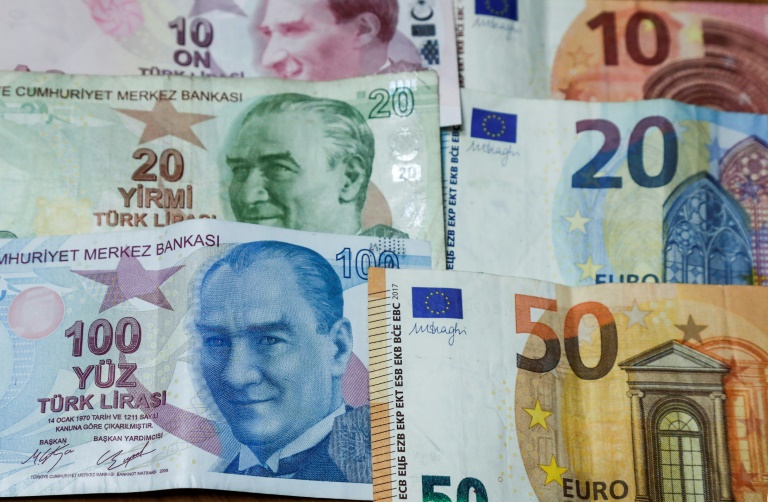
Turkey’s beleaguered lira extended its biggest rally of the year on Monday in response to a new rule that effectively forces many banks to part with some of their foreign currency.

The banking regulation — announced after the market had closed on Friday night — represents Turkey’s latest attempt to prop up the lira without raising the main interest rate.

President Recep Tayyip Erdogan’s pressure on the central bank to keep borrowing costs well bellow the rate of inflation has sparked an economic crisis that has seen the lira slump and prices explode.

Erdogan rejects conventional economics and affirms that high interest rates cause inflation instead of slowing it down.

The annual rate of consumer price increases now officially stands at 73.5 percent. Independent economists believe it could be nearly double that figure.

The dollar dropped to 16.1 liras early Monday before recovering slightly and trading around the 16.7 mark.

The US currency was worth around 17.4 liras before the measure was announced. It stood at 7.4 liras at the start of last year and 5.9 liras in January 2020.

Turkey’s real interest rate of minus 59.5 percent provides a major incentive for consumers to spend money before it loses value and for banks to convert their holdings into dollars and euros.

The new rule attempts to put a stop to that by limiting banks’ foreign-denominated assets.

It requires banks with more than 15 million liras ($900,000) in foreign currency — should that figure represents more than 10 percent of their assets or annual sales — to sell their dollars and euros before issuing any more loans.

The measure meant that some big banks whose lira loans matured Monday had to sell their foreign currencies in order to make the payments.

BlueBay Asset Management economist Timothy Ash called the regulation “backdoor capital controls”.

The banking regulator clarified Sunday that the measure did not apply to individuals or independent entrepreneurs.

– ‘Liraisation’ –

Erdogan’s economic team has ruled out imposing strict currency control and is espousing its allegiance to the markets.

The head of Turkey’s MUSIAD big business association also welcomed the measure — seen by economists as another step in Erdogan’s push for the “liraisation” of the emerging market’s economy.

The new rule will “prevent dollarisation, which is the main factor behind the rise in the exchange rate,” MUSIAD chief Mahmut Asmali told reporters.

But OMG Capital Advisors consultancy head Murat Gulkan said the measure could have a damaging long-term effect on Turkey’s business climate.

The new rules will “complicate the operating conditions of banks and companies,” Gulkan said.

“The cornerstone of the system is the policy rate of the central bank. When that cornerstone is misplaced, it is necessary to take extraordinary steps like this latest decision.”

Ash agreed that the measure “over-complicates things for business and banks when what everyone knows Turkey needs is plain and simple interest rate increases”.

Stock markets extend recovery as rate hike fears subside

Asian and European markets rallied Monday, building on last week’s advances and following a strong pre-weekend performance on Wall Street as speculation that inflation may have peaked tempered expectations about central bank interest rate hikes.

With prices surging at a pace not seen in a generation, finance chiefs have been forced to lift borrowing costs and wind back their ultra-loose monetary policies in recent months, sending a chill across trading floors.

But a string of weak data has led many investors to believe that inflation may have plateaued or is about to, giving room for banks to be less hawkish.

The prospect that rates will not go as high as initially expected helped send Wall Street stocks higher Friday, with the S&P 500 and Nasdaq ending up more than three percent.

Asia and Europe continued the rally on Monday.

Hong Kong led gainers, climbing more than two percent thanks to a strong performance in Chinese tech firms. 

Indications that China’s crackdown on the sector could be coming to an end added to the upbeat mood in the city.

“Market conviction that perhaps the Fed won’t now hike rates as aggressively as previously feared and/or that rate cuts before the end of 2023 are now an even more realistic prospect… have had a big hand” in boosting sentiment, said National Australia Bank’s Ray Attrill.

While Fed chiefs continue to flag further big interest rate hikes in the pipeline, expectations for a prolonged period of increases have waned, which has in turn taken some heat out of the dollar.

Bitcoin has also won some support, trading above $21,000 after a recent slump.

– G7 action over Russia –

Elsewhere, traders were keeping a close eye on the G7 summit in Germany, focused on further co-ordinated financial action against Russia following its invasion of Ukraine.

Among the new action being weighed by the G7 was a price cap on Russian oil imports and fresh sanctions on Russia’s defence sector, the White House said.

G7 member France meanwhile urged oil producers to ramp up crude output by ‘exceptional’ volumes owing to Russian supply constraints.

The group — comprising also Britain, Canada, Germany, Italy, Japan and the United States — kicked off their gathering Sunday by announcing plans to ban imports of Russian gold.

It was the latest in a series of sanctions aimed at punishing President Vladimir Putin for his February 24 invasion.

– Key figures at around 1100 GMT –

London – FTSE 100: UP 0.6 percent at 7,250.27 points

Frankfurt – DAX: UP 0.8 percent at 13,220.81

Paris – CAC 40: UP 0.1 percent at 6,078.53

EURO STOXX 50: UP 0.7 percent at 3,557.65

Tokyo – Nikkei 225: UP 1.4 percent at 26,871.27 (close)

Hong Kong – Hang Seng Index: UP 2.4 percent at 22,229.52 (close)

Shanghai – Composite: UP 0.9 percent at 3,379.19 (close)

New York – Dow: UP 2.7 percent at 31,500.68 (close)

Euro/dollar: UP at $1.0586 from $1.0559 Friday

Pound/dollar: UP at $1.2282 from $1.2280

Euro/pound: UP at 86.22 pence from 85.95 pence

Dollar/yen: UP at 135.22 yen from 135.17 yen

Brent North Sea crude: UP 0.4 percent at $113.56 per barrel

West Texas Intermediate: UP 0.2 percent at $107.88 per barrel

Billionaire Italian eyewear mogul Del Vecchio dead at 87

Italy’s second richest man, eyewear magnate Leonardo Del Vecchio, has died aged 87 after building an optical empire that saw him buy up major brands like Ray-Ban, Persol and Oakley.

Del Vecchio was one of Italy’s most successful businessmen, building from scratch an international company that helped turn eyeglasses into a coveted — and pricey — fashion accessory. 

His fortune was worth an estimated $27.3 billion, according to Forbes’ 2022 World’s Billionaires List. 

His company EssilorLuxottica confirmed on Monday that he had “passed away” at the age of 87. 

Del Vecchio had been in intensive care at Milan’s San Raffaele hospital in recent weeks, according to Italian news agency AGI.

Born in Milan on May 22, 1935, to a poor family, he spent part of his youth in an orphanage and began working as a teenager.  

He founded his own company, Luxottica, in 1961, supplying the optical industry with components.

A decade later, Del Vecchio made the strategic decision to control all parts of the production process. 

Luxottica began making its own eyeglasses, distributing them throughout Italy before expanding in Europe through joint ventures.

He spotted the advantage of partnering with fashion design brands, including Giorgio Armani, branched out into retail and snatched up trendy eyewear brands like Ray-Ban, Persol and Oakley.

He signed a first licence agreement with Giorgio Armani in the 1980s, as eyewear morphed into a fashion accessory, a trend that continues today. 

Luxottica also bought such retailers as LensCrafters and Sunglass Hut, allowing the company to tap the consumer market directly without intermediaries.

In 2018, Luxottica merged with France’s Essilor to become EssilorLuxottica, with Del Vecchio serving as chairman. In 2021, the publicly traded company posted 19.8 billion euros ($20.9 billion) in revenue.

“Leonardo Del Vecchio was a great Italian,” said Prime Minister Mario Draghi. 

The European Union commissioner for economic affairs, Italian Paolo Gentiloni called Del Vecchio’s success “an example for today and tomorrow”.  

Ailing oceans in state of 'emergency', says UN chief

A long-delayed conference on how to restore the faltering health of global oceans kicked off in Lisbon on Monday, with the head of the UN saying the world’s seas are in crisis.

“Today we face what I would call an ocean emergency,” UN Secretary General Antonio Guterres told thousands of policymakers, experts and advocates at the opening plenary, describing how seas have been hammered by climate change and pollution. 

Humanity depends on healthy oceans. 

They generate 50 percent of the oxygen we breathe and provide essential protein and nutrients to billions of people every day.

Covering 70 percent of Earth’s surface, oceans have also softened the impact of climate change for life on land. 

But at a terrible cost.

Absorbing around a quarter of CO2 pollution — even as emissions increased by half over the last 60 years — has turned sea water acidic, threatening aquatic food chains and the ocean’s capacity to absorb carbon. 

And soaking up more than 90 percent of the excess heat from global warming has spawned massive marine heatwaves that are killing off precious coral reefs and expanding dead zones bereft of oxygen.

“We have only begun to understand the extent to which climate change is going to wreak havoc on ocean health,” said Charlotte de Fontaubert, the World Bank’s global lead for the blue economy.

Making things worse is an unending torrent of pollution, including a garbage truck’s worth of plastic every minute, according to the United Nations Environment Programme (UNEP). 

On current trends, yearly plastic waste will nearly triple to one billion tonnes by 2060, according to a recent report by the Organisation for Economic Cooperation and Development (OECD). 

– Wild fish stocks –

Microplastics — now found inside Arctic ice and fish in the ocean’s deepest trenches — are estimated to kill more than a million seabirds and over 100,000 marine mammals each year.

Solutions on the table range from recycling to global caps on plastic production. 

Global fisheries will also be in the spotlight during the five-day UN Ocean Conference, originally slated for April 2020 and jointly hosted by Portugal and Kenya. 

“At least one-third of wild fish stocks are overfished and less than 10 percent of the ocean is protected,” Kathryn Matthews, chief scientist for US-based NGO Oceana, told AFP.

“Destructive and illegal fishing vessels operate with impunity in many coastal waters and on the high seas.”

One culprit is nearly $35 billion in subsidies. Baby steps taken last week by the World Trade Organization (WTO) to reduce handouts to industry will hardly make a dent, experts said.

The conference will also see a push for a moratorium on deep-sea mining of rare metals needed for a boom in electric vehicle battery construction.

Scientists say poorly understood seabed ecosystems are fragile and could take decades or longer to heal once disrupted.

Another major focus will be “blue food”, the new watchword for ensuring that marine harvests from all sources — wild caught and farmed — are sustainable and socially responsible.

– Protected areas –

Aquaculture yields — from salmon and tuna to shellfish and algae — have grown by three percent a year for decades and are on track to overtake wild marine harvests that peaked in the 1990s, with each producing roughly 100 million tonnes per year.

The Lisbon meeting will be attended by ministers and even a few heads of state, including French President Emmanuel Macron, but is not a formal negotiating session.

But participants will push for a strong oceans agenda at two critical summits later this year — the COP27 UN climate talks in November, hosted by Egypt, followed by the long-delayed COP15 UN biodiversity negotiations, recently moved from China to Montreal.

Oceans are already at the heart of a draft treaty tasked with halting what many scientists fear is the first “mass extinction” event in 65 million years. A cornerstone provision would designate 30 percent of the planet’s land and ocean as protected areas.

But preparatory negotiations in Nairobi ended on Sunday in deadlock. 

“The agreement is at risk of collapsing on the question of finance,” the environmental diplomacy lead for WWF France told AFP. 

For climate change, the focus will be on carbon sequestration — boosting the ocean’s capacity to soak up CO2, whether by enhancing natural sinks such as mangroves or through geoengineering schemes.

At the same time, scientists warn, a drastic reduction in greenhouse gases is needed to restore ocean health.

Ailing oceans in state of 'emergency', says UN chief

A long-delayed conference on how to restore the faltering health of global oceans kicked off in Lisbon on Monday, with the head of the UN saying the world’s seas are in crisis.

“Today we face what I would call an ocean emergency,” UN Secretary General Antonio Guterres told thousands of policymakers, experts and advocates at the opening plenary, describing how seas have been hammered by climate change and pollution. 

Humanity depends on healthy oceans. 

They generate 50 percent of the oxygen we breathe and provide essential protein and nutrients to billions of people every day.

Covering 70 percent of Earth’s surface, oceans have also softened the impact of climate change for life on land. 

But at a terrible cost.

Absorbing around a quarter of CO2 pollution — even as emissions increased by half over the last 60 years — has turned sea water acidic, threatening aquatic food chains and the ocean’s capacity to absorb carbon. 

And soaking up more than 90 percent of the excess heat from global warming has spawned massive marine heatwaves that are killing off precious coral reefs and expanding dead zones bereft of oxygen.

“We have only begun to understand the extent to which climate change is going to wreak havoc on ocean health,” said Charlotte de Fontaubert, the World Bank’s global lead for the blue economy.

Making things worse is an unending torrent of pollution, including a garbage truck’s worth of plastic every minute, according to the United Nations Environment Programme (UNEP). 

On current trends, yearly plastic waste will nearly triple to one billion tonnes by 2060, according to a recent report by the Organisation for Economic Cooperation and Development (OECD). 

– Wild fish stocks –

Microplastics — now found inside Arctic ice and fish in the ocean’s deepest trenches — are estimated to kill more than a million seabirds and over 100,000 marine mammals each year.

Solutions on the table range from recycling to global caps on plastic production. 

Global fisheries will also be in the spotlight during the five-day UN Ocean Conference, originally slated for April 2020 and jointly hosted by Portugal and Kenya. 

“At least one-third of wild fish stocks are overfished and less than 10 percent of the ocean is protected,” Kathryn Matthews, chief scientist for US-based NGO Oceana, told AFP.

“Destructive and illegal fishing vessels operate with impunity in many coastal waters and on the high seas.”

One culprit is nearly $35 billion in subsidies. Baby steps taken last week by the World Trade Organization (WTO) to reduce handouts to industry will hardly make a dent, experts said.

The conference will also see a push for a moratorium on deep-sea mining of rare metals needed for a boom in electric vehicle battery construction.

Scientists say poorly understood seabed ecosystems are fragile and could take decades or longer to heal once disrupted.

Another major focus will be “blue food”, the new watchword for ensuring that marine harvests from all sources — wild caught and farmed — are sustainable and socially responsible.

– Protected areas –

Aquaculture yields — from salmon and tuna to shellfish and algae — have grown by three percent a year for decades and are on track to overtake wild marine harvests that peaked in the 1990s, with each producing roughly 100 million tonnes per year.

The Lisbon meeting will be attended by ministers and even a few heads of state, including French President Emmanuel Macron, but is not a formal negotiating session.

But participants will push for a strong oceans agenda at two critical summits later this year — the COP27 UN climate talks in November, hosted by Egypt, followed by the long-delayed COP15 UN biodiversity negotiations, recently moved from China to Montreal.

Oceans are already at the heart of a draft treaty tasked with halting what many scientists fear is the first “mass extinction” event in 65 million years. A cornerstone provision would designate 30 percent of the planet’s land and ocean as protected areas.

But preparatory negotiations in Nairobi ended on Sunday in deadlock. 

“The agreement is at risk of collapsing on the question of finance,” the environmental diplomacy lead for WWF France told AFP. 

For climate change, the focus will be on carbon sequestration — boosting the ocean’s capacity to soak up CO2, whether by enhancing natural sinks such as mangroves or through geoengineering schemes.

At the same time, scientists warn, a drastic reduction in greenhouse gases is needed to restore ocean health.

Frustration and hope: the African migrants in limbo in Rwanda

Ismail Hmdan Banaga says he’s had a “frustrating and fruitless” time waiting in vain in Rwanda for his Canadian asylum request to be approved.

The 33-year-old Sudanese told AFP he is so fed up he is considering a trek back to war-torn Libya to try to make it to Europe across the Mediterranean, a perilous voyage that has taken the lives of many. 

He is one of hundreds of Africans once stranded in Libya who are now in limbo at the Gashora Transit Centre on a dusty road outside the capital Kigali — but none want to stay in the country that gave them shelter.

Their fate has come under the spotlight since Britain hatched a controversal deal with Rwanda in April to deport unwanted asylum seekers to the East African country.

“I have done several interviews to go to Canada but there is no feedback. The officials are not being very clear about the way forward,” said Banaga, who has been at Gashora for almost a year. 

“The fact is I’m not going back to Sudan, and not staying here for life. I would rather go back to try and cross the sea.”

– ‘I regret coming’ –

Residents live in small brick maisonettes at Gashora, which has seen almost 1,100 people come through its doors since 2019 when Rwanda agreed to offer shelter to refugees from Libya.

It has a cafeteria, basketball/volleyball court and driving practice area — some say they want to become taxi drivers when they reach Europe — and a centre where people can learn skills such as weaving and hairdressing.  

“There’s freedom here at the camp to do whatever I like, way better than the conditions in Libya and I like it here, but the processing speed for asylum to leave is very slow,” Banaga said. 

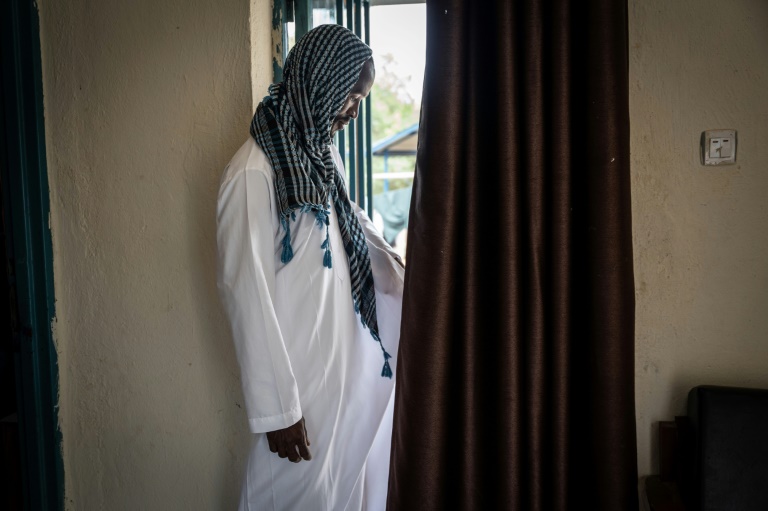
Another refugee discussed his situation with AFP on condition of anonymity, saying he cannot speak freely in the presence of Rwandan and UN refugee agency officials for fear of reprisals. 

“I regret coming to Rwanda,” he said. “First, I left Sudan, leaving my children and my father behind under conditions of war… and looting and robbery everywhere.” 

He said he stayed in Libya for three years before arriving in Rwanda where he said he was initially greeted with kindness.

“It has been a year now in Rwanda and am not sure if I will get asylum or not. If it turns out that they abandoned me, then returning to Libya is more merciful than staying here in Rwanda under this humiliation.” 

– ‘Rwanda to the rescue’ –

But for Zemen Fesaha, a 26-year-old Eritrean, dreams of a new life are about to come true.

“Next week I will be flying to Canada. I am very excited,” he said, adding that he would like to find a job as a social worker there.

He recounted a horrific ordeal trying to make it out of Libya, paying $20,000 to traffickers to cross the Mediterranean. 

“One day the boat overturned and many people drowned and died. I swam for hours with some other survivors all the way to the shore and we got arrested by Libyan officials. They took us to jail and we stayed there for months until Rwanda came to the rescue.” 

More than 600 refugees have been resettled in third countries, but UNHCR and government officials say they have not had a single request to stay in Rwanda permanently.

“Our problem is that we come to Rwanda to go, not to stay here,” said Nyalada Gatkouth Jany from South Sudan.

Jany said she left her mother and brother behind, but ended up in a Libyan prison after trying four times to cross the Mediterranean: “I saw the death of people with my own eyes.”

Now Jany’s request for asylum in Finland for herself and her one-year-old son has been accepted.

“Here we are just sitting like this. We want to work because we want to support them.”

Tesfay, a 27-year-old Eritrean who declined to give his second name, echoed her view.

“Rwanda has been kind to me but I do not wish to stay here. It is a poor country with its own problems, so I cannot leave Eritrea and then resettle in Rwanda,” he said.

About 60 kilometres (40 miles) from Gashora, in the centre of the Rwandan capital, lies Hope Hostel — which once hosted orphans from the 1994 genocide but has now been booked out by the government.

The 50-room hostel will house the migrants Britain plans to ship to Rwanda if the arrangement goes ahead, after a first flight was halted by a European court order.

“When the deal failed, of course it was a blow but it is not over, so for us we are ready to welcome our guests whenever they come from the UK,” hostel manager Elisee Kalyango told AFP.

Queen Elizabeth II in Scotland for 'Holyrood week'

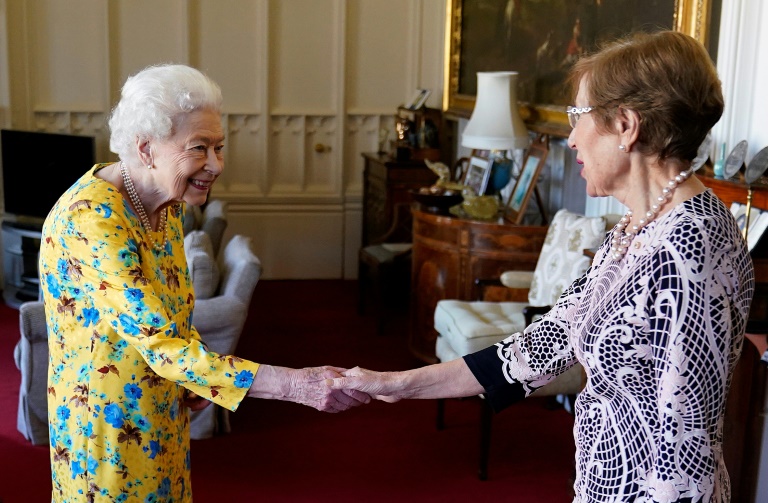
Queen Elizabeth II travelled to Scotland on Monday for a week of royal events and took part in a ceremony in Edinburgh, despite question marks over her attendance.

It was the first public appearance for the 96-year-old monarch, who has been dogged by ill health, since her Platinum Jubilee celebrations ended on June 5.

She had previously held audiences at Windsor Castle with foreign diplomats and the Archbishop of Canterbury but had not been certain to travel to Edinburgh.

She took part in the Ceremony of the Keys, which sees her handed the keys of the city and welcomed to her “ancient and hereditary kingdom” of Scotland.

Other members of the royal family attending the event at the Palace of Holyroodhouse included her youngest son, Edward, and his wife Sophie.

The Earl and Countess of Wessex are known as the Earl and Countess of Forfar in Scotland.

The queen’s heir, Prince Charles — called the Earl of Rothesay in Scotland — and her only daughter, Princess Anne, are also in Scotland this week.

The monarch’s disgraced second son, Prince Andrew — the Earl of Inverness north of the border — is not involved.

He has been frozen out of royal duties due to public outrage at his links to the convicted sex offenders Jeffrey Epstein and Ghislaine Maxwell, and after he settled a US civil claim for sexual assault.

In May, royal officials said the queen would not attend this summer’s royal garden parties at Buckingham Palace and at Holyrood.

She spent an unscheduled night in hospital last October, forcing her to cancel a series of public engagements.

She has since complained of difficulties walking and standing, and has increasingly been seen using a stick for support.

Climate activists block IMF Paris office doors

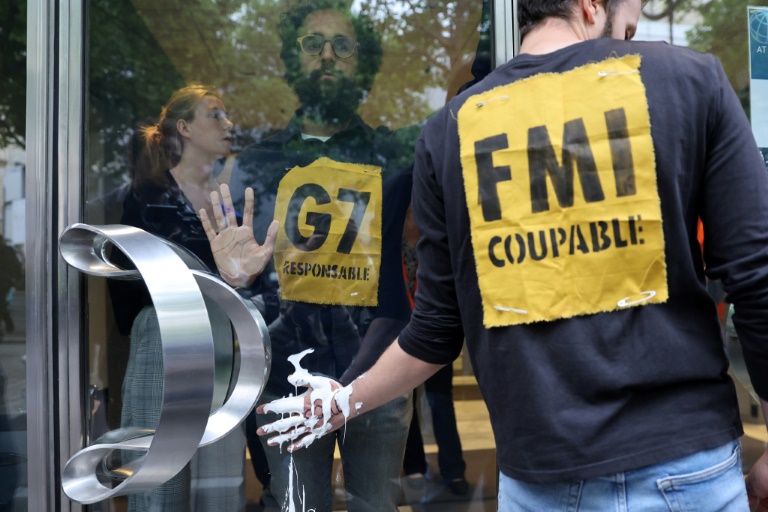
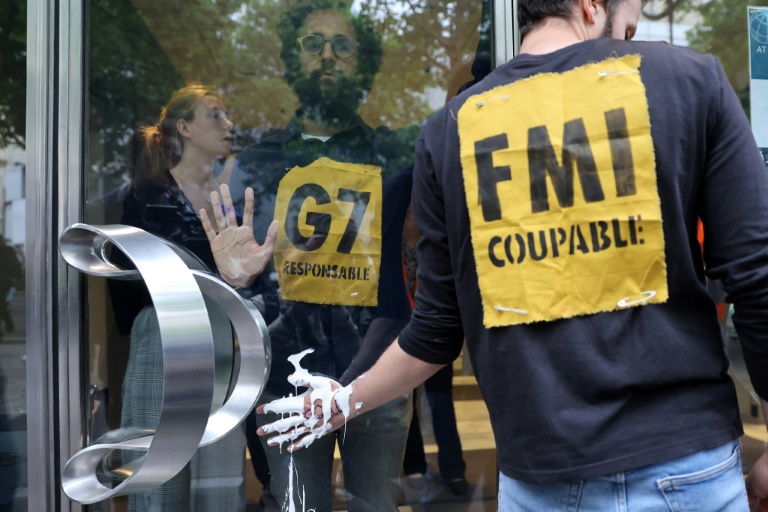
Climate activists on Monday blocked entry to the International Monetary Fund’s Paris office with some gluing their hands to its doors, demanding developing countries’ debt be scrapped to help tackle climate change.

The Paris protest is part of a “Debt for climate” global campaign calling on wealthy-nation leaders attending the G7 summit in Germany to cancel the debts of poorer and less industrialised countries, known as the global south. 

While low-emitting countries in the global south contribute the least to climate change, they tend to be the hardest-hit by the consequences, experts say. 

“We need to give these countries the resources to fight against the climate crisis. They are the first victims and the last ones responsible,” said an Extinction Rebellion activist calling herself “Chalou”, one of dozens in front of the IMF building in Paris’ wealthy 16th district.

Several activists from Extinction Rebellion, Youth for Climate and 350.org glued their hands to glass doors at the building’s entrance, while others sat in front with their arms linked together inside tubes to make it harder to move them.

The group spread a banner reading “G7 responsible, IMF guilty” in front of the building, while some activists scattered fake banknotes marked with the slogan “Stop fossil fuels”.

“The debt crisis is first and foremost the result of an unjust financial system dominated by the richest countries,” activist groups Extinction Rebellion, Attac-France and Youth for Climate France, who organised the Paris action, said in a statement. 

“The G7, the IMF and the World Bank have historical responsibilities in the development of this vicious circle of debt (and) over-exploitation of resources”, they added.

Environmental activists have organised a string of protests in recent weeks to refocus attention on climate change, as the energy crisis and war in Ukraine dominate the news agenda.

Climate activists block IMF Paris office doors

Climate activists on Monday blocked entry to the International Monetary Fund’s Paris office with some gluing their hands to its doors, demanding developing countries’ debt be scrapped to help tackle climate change.

The Paris protest is part of a “Debt for climate” global campaign calling on wealthy-nation leaders attending the G7 summit in Germany to cancel the debts of poorer and less industrialised countries, known as the global south. 

While low-emitting countries in the global south contribute the least to climate change, they tend to be the hardest-hit by the consequences, experts say. 

“We need to give these countries the resources to fight against the climate crisis. They are the first victims and the last ones responsible,” said an Extinction Rebellion activist calling herself “Chalou”, one of dozens in front of the IMF building in Paris’ wealthy 16th district.

Several activists from Extinction Rebellion, Youth for Climate and 350.org glued their hands to glass doors at the building’s entrance, while others sat in front with their arms linked together inside tubes to make it harder to move them.

The group spread a banner reading “G7 responsible, IMF guilty” in front of the building, while some activists scattered fake banknotes marked with the slogan “Stop fossil fuels”.

“The debt crisis is first and foremost the result of an unjust financial system dominated by the richest countries,” activist groups Extinction Rebellion, Attac-France and Youth for Climate France, who organised the Paris action, said in a statement. 

“The G7, the IMF and the World Bank have historical responsibilities in the development of this vicious circle of debt (and) over-exploitation of resources”, they added.

Environmental activists have organised a string of protests in recent weeks to refocus attention on climate change, as the energy crisis and war in Ukraine dominate the news agenda.

Close Bitnami banner
Bitnami