World

Norway pays tribute to victims of Oslo shooting

Norway paid tribute on Sunday to the victims of a deadly shooting near a gay bar in the capital that shocked the normally peaceful country and led to the cancellation of a Pride march.

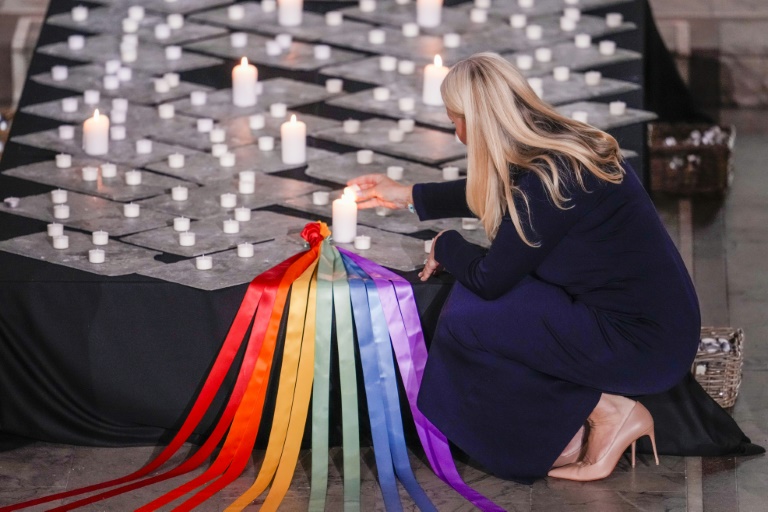
The altar of Oslo cathedral had vases with rainbow flags for a service to remember the victims of the attack, attended by Crown Princess Mette-Marit.

Investigators are probing the motives of the suspected gunman, who opened fire in the early hours of Saturday, killing two and wounding 21.

“Bullets cannot kill love,” the head of the Norwegian Protestant Church, Olav Fykse Tveit, said.

Noting that the Church had for years opposed equal rights for same-sex couples, he said: “We see that we can learn, sometimes in spite of ourselves, that diversity is a present, a richness, and that many homosexuals have a capacity for love that we are incapable of.”

“The shooting… put an end to the Pride march,” said a somber Prime Minister Jonas Gahr Store. “But it has not put an end to the fight to end discrimination, prejudice and hate.”

– Suspect known to police –

The shooting occurred at around 1:00 am on Saturday (2300 GMT on Friday) near the London Pub gay club in Oslo’s packed nightlife district, where Pride parties were in full swing.

Two men in their 50s and 60s died. Twenty-one other people were wounded. 

Police quickly arrested the suspect, whom they described as a 42-year-old Norwegian man of Iranian descent known to the nation’s security services. Norwegian media named him as Zaniar Matapour.

Domestic intelligence service PST said it was treating the attack as “an act of Islamist terrorism”.

The suspect “has a long history of violence and threats”, PST chief Roger Berg said.

He said the man had been on the PST’s radar “since 2015 in connection with concerns about his radicalisation” and membership of “an Islamist extremist network” and had “difficulties with his mental health.”

Police ordered the man to be placed under “judicial observation” to determine his mental state. He refused on Saturday to be questioned as to his motives.

When asked about the motives for the shooting, Borge Enoksen, a senior police official, told a press conference on Sunday that “It can be a combination of things. It’s too early to make a conclusion.”

On Saturday, the intelligence services raised the country’s threat level from moderate to “extraordinary”.

– ‘We won’t disappear’ –

People, many in tears, laid flowers and rainbow flags at the police security cordon around the scene of the shooting. 

“Love is love — and it’s the same thing for everyone. Everyone has the right to live as they choose,” said chef Kristin Wenstad as she paid her respects.

The organisers of the LGBT Pride march, due to take place on Saturday afternoon, called it off on the advice of the police.

Thousands nonetheless marched spontaneously through Oslo on Saturday in a display of unity also seen at Pride marches across Europe.

“We’re here. We’re queer. We won’t disappear,” they chanted.

Footballer Ada Hegerberg waved a rainbow armband after scoring the first goal in the women’s national team match against New Zealand on Saturday evening.

Several European leaders condemned the shooting and expressed sympathy.

“We all have the right to love and be loved,” tweeted NATO Secretary General Jens Stoltenberg, who is Norwegian.

Saturday’s shooting came 11 years after right-wing extremist Anders Behring Breivik killed 77 people in the country’s worst peacetime massacre that shook the nation to its core. 
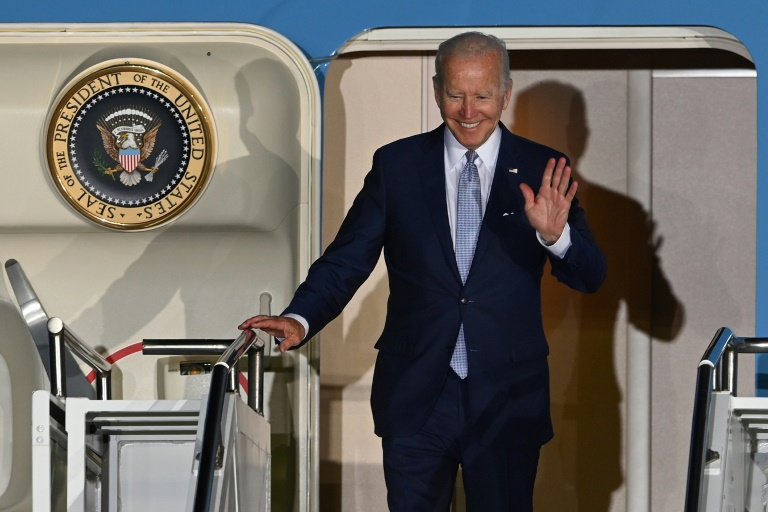
G7 opens summit with gold export ban on Russia

World powers on Sunday agreed to ban gold exports from Russia, at a G7 meeting designed to take fresh concerted action to deplete Moscow’s war chest.

US President Joe Biden and his counterparts from the world’s most industrialised nations are gathering at Elmau Castle in the Bavarian Alps, Germany, before they continue on to Madrid for talks with NATO partners.

They are seeking to close ranks for Ukraine against Russia’s invasion while grappling with the intensifying global fallout of the war.

“We have to stay together,” Biden told German Chancellor Olaf Scholz, the host of the three-day gathering.

Russian President Vladimir Putin had been hoping “that somehow NATO and the G7 would splinter”, Biden said. “But we haven’t and we’re not going to.”

Scholz also hailed Western unity which he said “Putin never expected”.

The statements of resolve came as Russia resumed strikes on central Kyiv in the first onslaught on the Ukrainian capital in three weeks — an attack Biden condemned as “more of their barbarism”. 

Looking to the summit, Ukrainian Foreign Minister Dmytro Kuleba urged the G7 to approve more sanctions on Moscow and more heavy weapons for Ukraine to defeat “Russia’s sick imperialism”.

Ukrainian President Volodymyr Zelensky will make the same plea when he joins the meeting via video-link on Monday.

From soaring inflation to a looming food crisis and energy shortages, Russia’s invasion of Ukraine, now in its fifth month, has mired the world in a series of crises.

The G7 leaders are also confronting the looming threat of recession as well as pressures over climate change.

Seeking to turn up the heat on Moscow, the G7 announced it would outlaw imports of Russian gold. The United States said gold was the second largest export for Russia and a significant source of revenue for Putin and his allies.

According to the White House, Russia accounted for about five percent of all world gold exports in 2020 and 90 percent of Russia’s output went to G7 countries — mostly to Britain.

– ‘Don’t give up’ –

While Western allies have hammered the Russian economy with unprecedented sanctions, Putin’s armies have been digging in their heels for a drawn-out war.

British Prime Minister Boris Johnson and French President Emmanuel Macron said they now saw an “opportunity to turn the tide” in Ukraine.

London announced another $525 million in guarantees for World Bank lending later this year.

Johnson cautioned Macron that “any attempt to settle the conflict now will only cause enduring instability” and risked giving “Putin licence to manipulate both sovereign countries and international markets in perpetuity”, a Downing Street spokesman said.

Seeking fresh measures to put the squeeze on Putin, Macron urged producers to cap oil prices to limit Russia profits from soaring energy revenues.

Paris backs a US proposal for a maximum oil price, Macron’s office said, but added that “it would be much more powerful if it came from the producing countries”.

John Kirby, National Security Council spokesman at the White House, said the G7 would be seeking to increase the costs and consequences of the war on Putin and the Russian economy.

At the same time, they will aim to minimise “as much as possible the effect of these rising oil prices and the way (Putin) has weaponised energy”.

The fallout on the economy will be at the centre of the G7’s opening session, with a post-pandemic recovery now threatening to lurch into recession.

– Systemic rival –

Scarred by a reliance on Russian energy that has hampered several European nations including Germany and Italy from going all out to punish Russia, the G7 was also warily looking at China — which it views as a systemic rival.

“The impact that China’s coercive economic practices, use of forced labour, intellectual theft — all those are front and centre for the G7, and I think you’re going to see China very much at the forefront as the G7 goes on,” said Kirby.

As the gulf separating Western allies from Russia and China widens, the G7 will also be looking to rally other major players to its side.

To this end, Scholz has invited the leaders of Argentina, India, Indonesia, Senegal and South Africa to the Alpine summit.

While Argentina and Indonesia voted at a crucial UN vote to condemn Russia, the other three abstained.

But all are being directly hit by a looming hunger crisis sparked by the holdup in grain and wheat exports from Ukraine, and India for instance has imposed restrictions on wheat exports.

Mud, sweat and cheers: Traditional Thai water buffalo race enthralls crowds

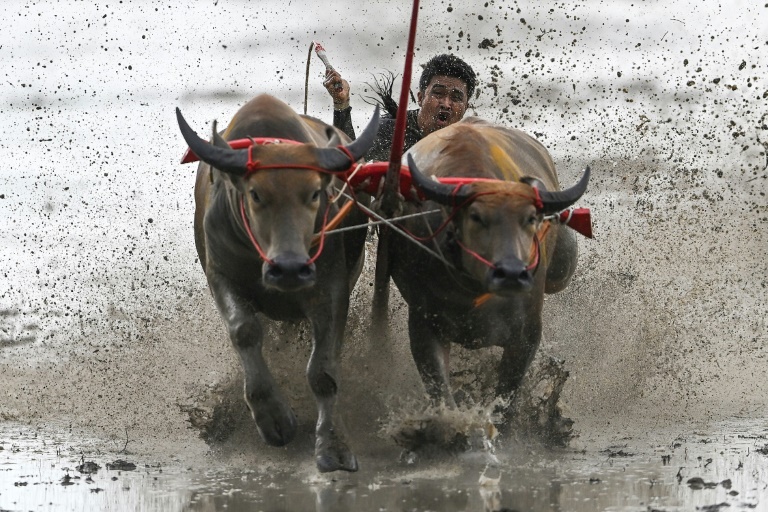
Boys scurry, duck and weave through crowds sheltering from the suffocating heat before upending buckets of cooling water on beefy bovines waiting to compete at the annual traditional Thai buffalo races in Chonburi on Sunday.

The riotously noisy, muddy and slightly chaotic annual tradition marks the beginning of the rice planting season — with the festival-like atmosphere in the eastern province taking place for the first time in two years.

The main event sees four pairs of harnessed buffalo gallop across a decorated paddy field, with intrepid racers sprinting barefoot through the shallow muddy waters and attempting to both control their beasts and remain upright.

“Before the race starts, we are a little excited and nervous,” said Sompong Ratanasatien, 33, drenched and breathing heavily after his latest bout.

The trickiest point was the start line, he said, where racers must wait for the official start whistle as they attempt to manoeuvre the heavy beasts into position and keep them calm.

“After that it depends on our buffalo and how he matches with my skills,” said Ratanasatien, who was enjoying a winning streak with his two-year-old bovine Kao.

Urged on with a small metal-tipped bamboo whip, the usually placid animals are unrecognisable as they rampage down the watery field.

Bouts are divided according to weight and size, with the heaviest creatures slightly slower to a practised eye but requiring significantly more skill to control.

And the racers, who work and train with the buffalos for weeks in preparation, don’t always have the upper hand.

Numerous races got off to false starts as the hapless human racers were -– literally -– dragged through the mud.

“I think normal people cannot do (it),” said Within Lueanguksorn, who had travelled from Bangkok to watch the races.

“There is a relation between the people and them (buffalos),” the 38-year-old added. 

The animals often looked close to careening out of control as they thundered across the finish line, scattering any spectator foolish enough to stand nearby.

Racer Noppadon Yindeesuk, 45, admitted the tradition can be hazardous.

“It could be a bit dangerous if the buffalos are running too close to each other because it could cause an accident — so the riders must be careful,” he explained.

Still, he said he would be racing two of his buffalo — worth around 150,000 baht ($4,200) each -– Parewa and Pete.

“They are over two years old, and they won the race last year,” he said, grinning ear-to-ear, adding that he trained with them every three or four days.

But there was an important point to Sunday’s spectacle, Yindeesuk said.

“I compete in the buffalo racing because I am trying to preserve our Chonburi traditions about good rice, good buffalo.”

Bankrupt Sri Lanka seeks discounted Russian oil

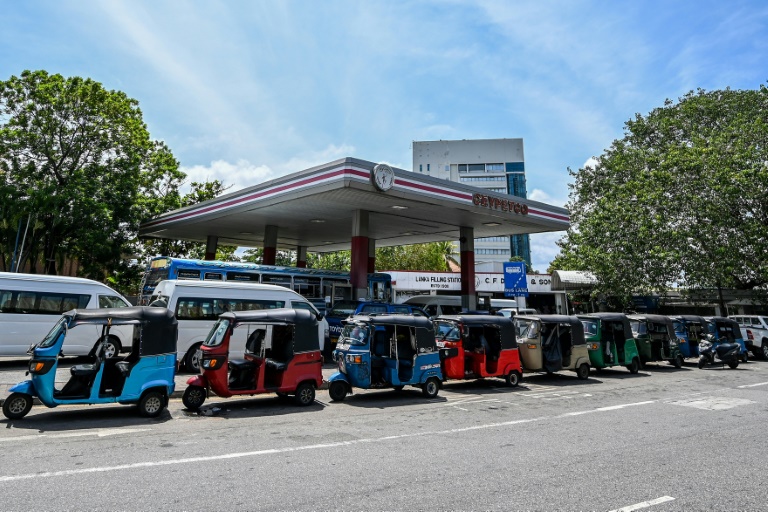
Cash-strapped Sri Lanka on Sunday announced sending ministers to Russia and Qatar to try and secure cheap oil a day after the government said it had all but run out of fuel.

The government meanwhile extended a two-week closure of non-essential state institutions until further notice in order to save fuel, maintaining only a skeleton staff to provide minimum services.

Energy Minister Kanchana Wijesekera said two ministers will travel to Russia on Monday to discuss getting more oil following last month’s purchase of 90,000 tonnes of Siberian crude.

That shipment was arranged through Coral Energy, a Dubai-based intermediary, but politicians have been urging the authorities to negotiate directly with President Vladimir Putin’s government.

“Two ministers are going to Russia and I will go to Qatar tomorrow to see if we can arrange concessionary terms,” Wijesekera told reporters in Colombo.

Wijesekera had announced on Saturday that Sri Lanka was virtually out of petrol and diesel after several scheduled shipments were delayed indefinitely due to “banking” reasons.

Fuel reserves were sufficient to meet less than two days’ demand and it was being reserved for essential services, Wijesekera said while apologising for the situation.

The state-run Ceylon Petroleum Corporation on Sunday hiked the price for diesel by 15 percent to 460 rupees ($1.27) a litre and petrol by 22 percent to 550 rupees.

Since the beginning of the year, diesel prices have gone up nearly four-fold and gasoline has almost tripled.

Wijesekera said there would be an indefinite delay in getting new shipments of oil and urged motorists not to queue up until he introduces a token system to a limited number of vehicles daily.

– US takes stock-

A delegation from the US Treasury and the State Department meanwhile arrived to “explore the most effective ways for the US to support Sri Lankans in need”, the US embassy in Colombo said.

“As Sri Lankans endure some of the greatest economic challenges in their history, our efforts to support economic growth and strengthen democratic institutions have never been more critical,” US ambassador Julie Chung said in a statement.

US Deputy Assistant Secretary of Treasury for Asia Robert Kaproth and Deputy Assistant Secretary of State for South and Central Asia Kelly Keiderling were in the delegation.

The embassy said it had committed $158.75 million in new financing in the past two weeks to help Sri Lankans.

About 1.7 million residents need “life-saving assistance”, according to the United Nations which issued a flash appeal last week.

Four out of five people in the nation of 22 million have reduced their food intake due to severe shortages and galloping prices, the UN noted.

Prime Minister Ranil Wickremesinghe warned parliament on Wednesday that more hardships were on the way.

“Our economy has faced a complete collapse,” Wickremesinghe said. “We are now facing a far more serious situation beyond the mere shortages of fuel, gas, electricity and food.”

Unable to repay its $51 billion foreign debt, the government declared it was defaulting in April and is negotiating with the International Monetary Fund for a possible bailout.

Sri Lanka’s official inflation at the end of May was 45.3 percent, according to official data, but private economists have placed it at 128 percent, the second-highest in the world after Zimbabwe.

Russia strikes Kyiv residential building ahead of G7 summit

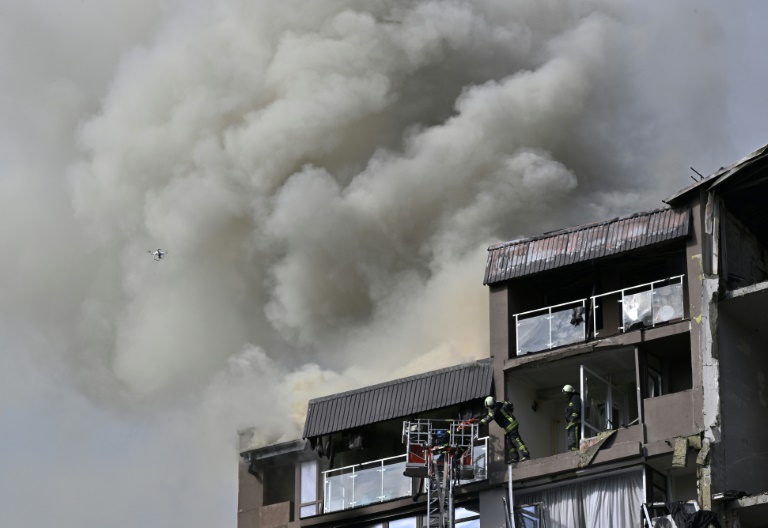
Russian strikes hit a residential building in Kyiv on Sunday, the first attacks on the capital in almost three weeks, sparking calls by Ukraine for more support from G7 leaders meeting in Germany.

Four people, including a seven-year-old girl, were taken to hospital following the early morning strikes in a neighbourhood near a weapons factory, said Kyiv mayor Vitali Klitschko.

He said it was a Russian missile strike intended to “intimidate Ukrainians” ahead of a NATO summit in Madrid later this week.

Ukrainian Foreign Minister Dmytro Kuleba posted on Twitter a photo of an injured child being carried on a stretcher, saying she had been “sleeping peacefully in Kyiv until a Russian cruise missile blasted her home”.

The “G7 summit must respond with more sanctions on Russia and more heavy arms for Ukraine,” he said.

Ukrainian President Volodymyr Zelensky will address both the G7 and NATO gatherings.

At their meeting in the Bavarian Alps, the G7 allies will take stock of the effectiveness of sanctions imposed so far against Moscow, consider possible new aid for Kyiv, and begin turning their eye to longer-term reconstruction plans. 

The summit opened with the announcement of a ban on imports of Russian gold and an appeal by US President Joe Biden for a unified approach, saying: “We have to stay together.”

The European Union this past week offered a strong show of support when it granted Ukraine candidate status, although the path to membership is long.

– ‘Fully occupied’ –

Russian forces sought to encircle Kyiv in the first few weeks after the February 24 invasion, but Sunday’s attack was the first strike on the capital since early June.

But it was the third time since the invasion that this northwest neighbourhood had been hit. A weapons factory nearby produces air-to-air and anti-tank rockets among others.

An AFP team said there was a fire on the top three floors of the building and its stairwell was completely destroyed.

Afterwards, residents gathered at the bottom of the building, many of them in tears. One woman was still wearing a bathrobe.

“I woke up at the first explosion, went to the balcony and saw missiles falling and heard a huge explosion — everything vibrated,” 38-year-old Yuri told AFP, declining to give his surname.

Edward Shkuta, who lives next door, said there had been four missiles since 6:30am.

A building “was directly hit on the top floors and I saw wounded people coming out”.

In recent months, the fighting in Ukraine has focused on the eastern Donbas region, which has been partially under the control of pro-Moscow separatists since 2014.

The Russians made a strategic breakthrough Saturday when they took the industrial hub of Severodonetsk, the scene of weeks of fierce battles that have left it largely destroyed.

Severodonetsk’s mayor said it had been “fully occupied” by Russian troops after Ukrainian forces retreated to better defend the neighbouring city of Lysychansk.

Pro-Moscow separatists on Saturday said Russian troops and their allies had entered Lysychansk, which faces Severodonetsk on high ground across the Donets river. 

Its capture would give Russia control of Donbas’ entire Lugansk region.

Far from the primary battleground, meanwhile, Russian missiles were striking targets in northern and western Ukraine.

“More than 50 missiles of various types were fired: air, sea and ground-based,” Ukraine’s air force command said, noting the difficulty of intercepting Russian models such as the Iskander.

– Pull in Belarus – 

In Saint Petersburg on Saturday, Putin said Russia would deliver Iskander-M missiles capable of carrying nuclear warheads to Belarus in the coming months, as he received Belarusian leader Alexander Lukashenko.

He also offered to upgrade Belarus’ warplanes to make them capable of carrying nuclear weapons, in comments broadcast on Russian television.

Putin has referred to nuclear weapons several times since the invasion, in what the West has seen as a warning to the West not to intervene.

Ukraine said it had come under “massive bombardment” Saturday morning from neighbouring Belarus which, although a Russian ally, is not officially involved in the conflict.

Twenty rockets “fired from the territory of Belarus and from the air” targeted the village of Desna in the northern Chernigiv region, Ukraine’s northern military command said.

“Today’s strike is directly linked to Kremlin efforts to pull Belarus as a co-belligerent into the war in Ukraine,” the Ukrainian intelligence service said.

– ‘No heating in winter’ –

As in the southern port of Mariupol before it, the battle for Severodonetsk has devastated the city.

On Saturday, Severodonetsk Mayor Oleksandr Striuk said civilians had begun to evacuate the Azot chemical plant, where several hundred people had been hiding from shelling.

“These people have spent almost three months of their lives in basements, shelters,” he said. “That’s tough emotionally and physically.”

They would now need medical and psychological support, he added.

In Russian-occupied Mariupol, meanwhile, residents face the prospect of a desperately cold winter, according to mayoral adviser Petro Andryushenko, who said local committees were being instructed to collect data on the need for firewood and coal.

“This is a direct signal and an acknowledgement of the obvious fact — there will be no heating in winter,” he said.

The city’s Moscow-backed leadership could not even provide heat if they wanted to, given the “huge damage” to the pipeline that supplied the city with natural gas, Andryushenko added.

Saudi crown prince, Iraq PM discuss 'regional stability'

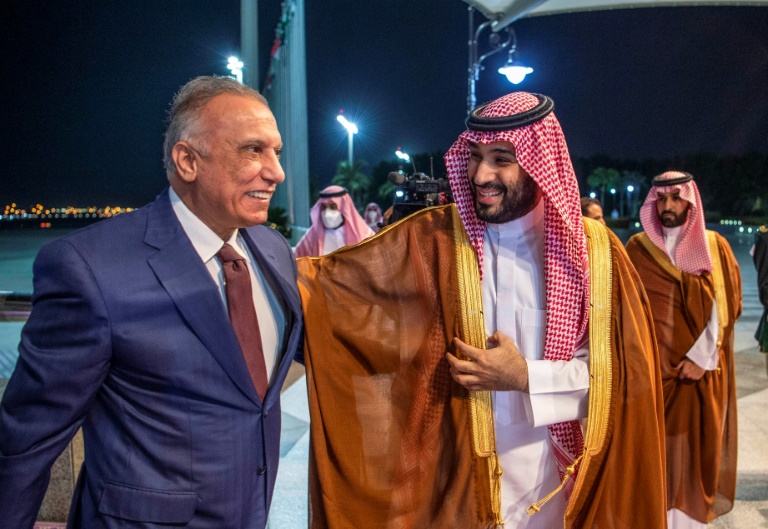
Iraq’s prime minister met with Saudi Arabia’s de facto ruler, Crown Prince Mohammed bin Salman, in the kingdom Sunday as part of Baghdad’s efforts to mediate between Riyadh and Tehran.

Mustafa al-Kadhemi, who headed to Saudi Arabia on Saturday, is expected to then visit Iran, its regional rival with which Riyadh has had no diplomatic ties since 2016. 

Prince Mohammed and Kadhemi addressed “bilateral relations and opportunities for joint cooperation”, reported the official Saudi Press Agency. 

“They exchanged points of view on a number of issues that would contribute to supporting and strengthening regional security and stability,” it added. 

Iraq has over the past year hosted five rounds of talks between the two regional rivals, with the last session held in April. 

Kadhemi said at the time he believed that “reconciliation is near” between Riyadh and Tehran, a further reflection of shifting political alignments across the region.

On Saturday an Iraqi cabinet source said that Kadhemi’s trip to Saudi Arabia and Iran “comes in the context of talks that Riyadh and Tehran recently held in Baghdad”. 

The source said those talks “represented a road map for mending relations and returning to the right course of strengthening bilateral relations” between Saudi Arabia and Iran, which support rival sides in conflict zones around the region. 

Sunni Muslim Saudi Arabia and Shiite-majority Iran have had no diplomatic ties for six years, since Iranian protesters attacked Saudi diplomatic missions in Iran after the kingdom executed Shiite cleric Nimr al-Nimr. 

Riyadh responded by cutting relations with Tehran. 

In early March, Prince Mohammed said his country and Iran were “neighbours forever”, and that it was “better for both of us to work it out and to look for ways in which we can coexist”.

After his arrival in the kingdom, Kadhemi performed the minor pilgrimage, known as umra, in the holy city of Mecca, according to pictures released by his office. 

No-confidence vote for Ecuador leader over nationwide protests suspended

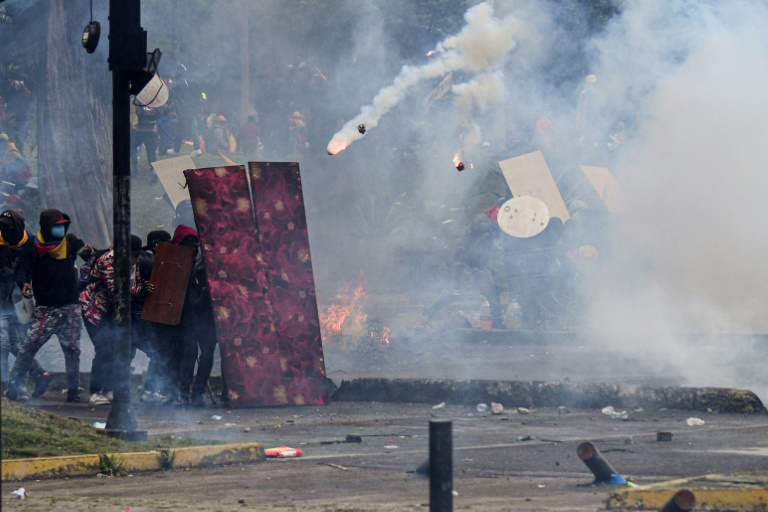
Ecuador’s National Assembly suspended early Sunday a no-confidence hearing for President Guillermo Lasso, after eight hours of acrimonious deliberations by lawmakers over his responsibility for nationwide protests against rising fuel and living costs.

Opposition lawmakers had called the parliamentary session over what they say is Lasso’s role in “the serious political crisis and internal commotion” that have left five people dead and dozens injured in 13 days of revolt.

The Assembly will vote on whether to oust the conservative ex-banker who took power a year ago, and who is self-isolating after a Covid-19 diagnosis. 

But after nearly eight hours of debate, parliament president Virgilio Saquicela called for the session to be reconvened on Sunday afternoon. 

“I proceed to suspend the present session and convene it for its continuation on Sunday at 4 pm (2100 GMT),” he said.

The debate was at the request of the 47 opposition lawmakers in the leftist Union for Hope coalition. 

“Let’s go to early elections, let Lasso go home,” said Assemblywoman Pierina Correa, sister of a former president, during the late-night session. 

But Lasso’s legal secretary Fabian Pozo — appointed to read the president’s defense — pointed the finger at his opponents. 

“The assembly members… seek to destablize democracy,” Pozo said. 

Lasso’s dismissal would require 92 votes out of 137 in the assembly, in which opposition parties are in the majority. The body’s Twitter account said 135 out of those 137 lawmakers are taking part. 

Once the debate is concluded, legislators will have 72 hours to decide on a course of action.

If they vote to unseat Lasso, Vice President Alfredo Borrero will assume interim power and call new presidential and legislative elections.  

The attempted ousting comes as an estimated 14,000 protesters are taking part in a nationwide show of discontent against rising hardship in an economy dealt a serious blow by the coronavirus pandemic.  

Most of the ire is concentrated in the capital Quito, where about 10,000 people have gathered for daily protests, marching with sticks and makeshift shields, and chanting “Out Lasso, out!”

Shortly after the debate began, Lasso lifted a state of emergency that had been in force in six provinces over the protests.

Indigenous leaders and government representatives held a first meeting on Saturday in Quito, with a view to beginning a dialogue, according to parliament president Saquicela.

– ‘Until we have results’ –

On Friday, Lasso accused demonstrators of attempting “a coup” after two straight days of violent clashes with police and soldiers.  

Protesters in Quito threw rocks and Molotov cocktails and shot off fireworks near the congress building. The security forces repelled them with tear gas.  

The protests were called by the powerful Confederation of Indigenous Nationalities of Ecuador (Conaie), credited with bringing down three presidents between 1997 and 2005. 

Conaie leader Leonidas Iza told AFP this week demonstrations would continue “until we have results.”

“We can no longer hold back the anger of the people,” he said. 

The action has been costly, with losses of about $50 million per day to the economy as protesters have blocked key roads with burning tires and tree branches.

Production of fuel — Ecuador’s biggest export — has been halved, according to the energy ministry.  

“Basic necessities are very expensive and our products from the field… are worth nothing,” potato farmer Miguel Taday, 39, told AFP of his reason for joining the demonstrations.

Protesters are demanding a cut in already subsidized fuel prices, which have risen sharply in recent months, as well as jobs, food price controls, and more public spending on healthcare and education.

The government has rejected the protesters’ demand for a fuel price cut, saying it would cost an unaffordable $1 billion per year.

The International Monetary Fund on Friday approved the release of $1 billion in funding for Ecuador following two reviews of a $6.5 billion loan deal, of which $4.8 billion has been disbursed so far. 

The payment is meant to bolster Ecuador’s economic recovery from the Covid-19 pandemic, restore fiscal sustainability and reduce public debt.

Austerity measures adopted by then-president Lenin Moreno led to a wave of demonstrations in 2019 that left 11 dead and thousands injured, but compelled the government to cancel plans to cut fuel price subsidies.

French energy giants urge consumers to cut back

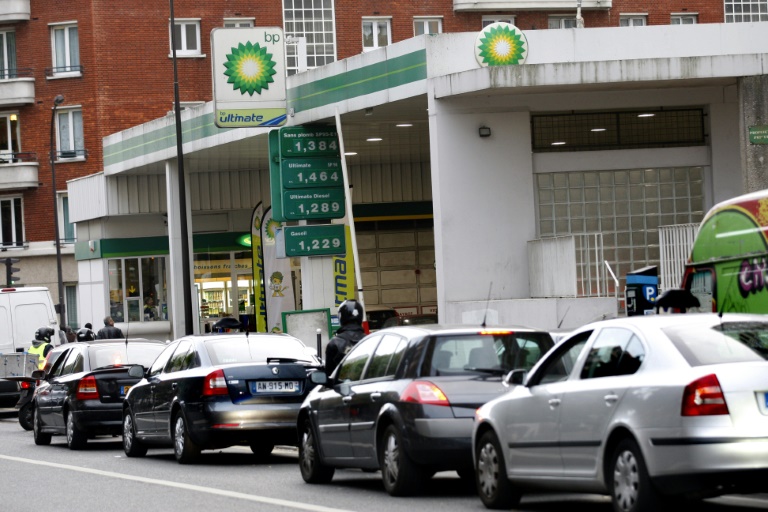
Consumers should start cutting back on their energy use immediately, the bosses of France’s three big energy companies urged Sunday, warning of social tensions next winter unless reserves are replenished.

“The effort has to be immediate, collective and massive,” Patrick Pouyanne of TotalEnergies, Jean-Bernard Levy of EDF and Catherine MacGregor of ENGIE wrote in an op-ed piece in the JDD weekly.

The call came after the French government said this week it aimed to have its natural gas reserves at full capacity by autumn as European countries brace for supply cuts from major supplier Russia with the Ukraine war dragging on, and would build a floating terminal to receive more gas supplies by ship.

The three energy bosses said in the article that European energy production was further hampered by hydro-electric production suffering from drought.

“The surge in energy prices resulting from these difficulties threatens our social and political fabric and impacts families’ purchasing power too severely,” they said, adding: “The best energy is the one we don’t use.”

They said “every consumer and every company must change their habits and immediately limit their energy consumption, be it of electricity, gas or oil products”.

Replenishing reserves of natural gas over the summer is a priority, as is “eliminating the national waste” of energy, they said.

France is less dependent than neighbour Germany on Russian gas deliveries as it covers close to 70 percent of its electricity needs from nuclear energy.

But according to the International Energy Agency (IEA), France needs to accelerate the deployment of low-carbon energy technologies and energy efficiency solutions if it wants to reach its energy and climate targets.

France notably needs “more sustained and consistent policies” to develop alternatives to fossil fuels, such as wind and solar energy, the IEA said.

G7 opens summit with gold export ban on Russia

World powers on Sunday agreed to ban gold exports from Russia, in new concerted action to cut off Moscow’s financial lifeline as G7 leaders met in southern Germany to lock down new support for Ukraine.

US President Joe Biden and his counterparts from the world’s most industrialised nations are gathering at Elmau Castle in the Bavarian Alps before they continue on to Madrid for talks with NATO partners.

They will seek to close ranks in their backing for Ukraine against Russia’s invasion while grappling with the intensifying global fallout of the war.

From soaring inflation to a looming food crisis and energy shortages, Russia’s invasion of Ukraine, now in its fifth month, has mired the world in a series of crises.

The leaders will also be confronted with the looming threat of recession as well as pressures over climate change.

In a show of their resolve to heap pressure on Moscow, the G7 announced that it will outlaw imports of Russian gold which the US said is the second largest export for Russia and a significant source of revenue for Vladimir Putin and his allies.

According to the White House, Russia accounted for about five percent of all gold exports in 2020 and 90 percent of Russia’s output went to G7 countries — mostly to Britain.

– ‘Don’t give up’ –

Western allies have been scrambling to coordinate their response since Russia sent its troops flooding into Ukraine on February 24. 

While they have hammered the Russian economy with unprecedented sanctions, Putin’s armies have been digging in their heels for a drawn-out war.

Ahead of the talks, British Prime Minister Boris Johnson urged allies not to waver in their support.

“Ukraine can win and it will win. But they need our backing to do so. Now is not the time to give up on Ukraine,” he said, as Britain announced another $525 million in guarantees for World Bank lending later this year.

Ukrainian President Volodymyr Zelensky will make the same plea when he joins in via video-link on Monday.

John Kirby, National Security Council spokesman at the White House, said the G7 will be seeking to hold Russia accountable and to increase the costs and consequences of the war on Putin and his economy.

At the same time, they will aim to minimise “as much as possible the effect of these rising oil prices and the way (Putin) has weaponised energy”.

The fallout on the economy will be at the centre of the G7’s opening session.

Just six months back, the global economy had been poised for a huge post-pandemic recovery but it is now staring down the barrel of a recession.

“Core problems that are on the top of mind for all of us” include “rising prices, supply chain disruptions, all exacerbated by this war in Ukraine”, said Kirby.

– Systemic rival –

Scarred by a reliance on Russian energy that has hampered several European nations including Germany and Italy from going all out to punish Putin’s Russia, the G7 was also warily looking at China — which it views as a systemic rival.

“The impact that China’s coercive economic practices, use of forced labour, intellectual theft — all those are front and centre for the G7, and I think you’re going to see China very much at the forefront as the G7 goes on,” said Kirby.

As the gulf separating Western allies from Russia and China widens, the G7 will also be looking to rally other major players to its side.

To this end, German Chancellor Olaf Scholz has invited the leaders of Argentina, India, Indonesia, Senegal and South Africa to the Alpine summit.

While Argentina and Indonesia voted at a crucial UN vote to condemn Russia, the other three abstained.

But all are being directly hit by a looming hunger crisis sparked by the holdup in grain and wheat exports from Ukraine, and India for instance has imposed restrictions on wheat exports.

Indonesian president to meet Zelensky and Putin to urge peace talks

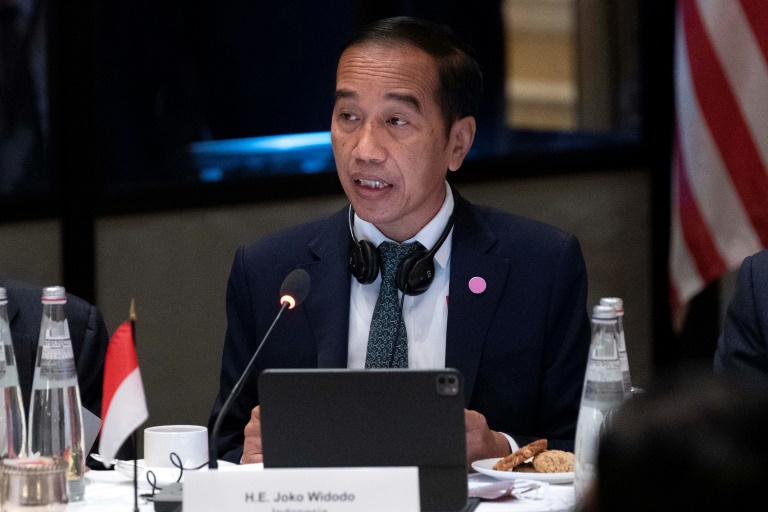
Indonesian President and G20 chairman Joko Widodo set off on Sunday to Europe where he said he plans to visit Russia and Ukraine and meet with the countries’ leaders to urge peace talks. 

Widodo departed for Germany to attend as a guest for the G7 summit from June 26 to 27, and he will then go to the Ukraine capital Kyiv to meet President Volodymyr Zelensky. 

“The mission is to ask… President Zelensky to open a dialogue forum for peace, to build peace because the war has to be stopped,” he told a press conference in Jakarta. 

The two leaders will also discuss the food supply chain “that needs to be reactivated” soon, Widodo said. From Kyiv, Widodo is scheduled to visit Moscow and meet with Russia’s Vladimir Putin. 

The visit to Moscow is planned for June 30, Indonesian authorities said earlier.

“With the same mission, I will ask President Putin to open a dialogue and to immediately have a ceasefire and to stop the war,” he said. Earlier in April Widodo announced he had called Zelensky and invited him to join world leaders at G20 Summit in Bali in November 2022 as a guest. 

Indonesia holds the rotating presidency of the G20 this year and has been pressured by Western countries, led by the United States, to exclude Russia from the meeting. 

Widodo, however, did not rescind the invitation to Russia and said that Putin has expressed his intention to attend the November summit. 

Indonesia, like most major emerging economies, has tried to maintain a neutral position and has called for a peaceful resolution to the months-long conflict. 

Widodo refused to send weapons to Ukraine in response to a request from Zelensky, instead offering humanitarian aid.

After concluding the European visit, Widodo will head to the United Arab Emirates before returning to Indonesia.

Close Bitnami banner
Bitnami