World

Wake held in Brazil for slain British journalist

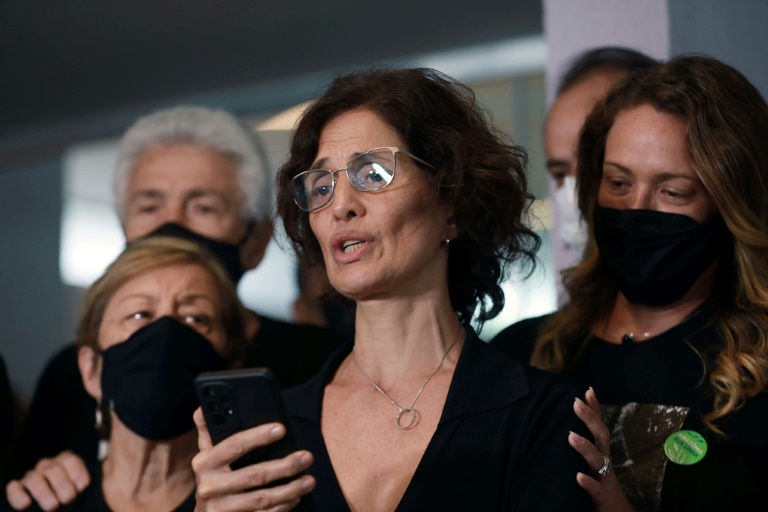
Grieving family and friends paid their last respects Sunday to British journalist Dom Phillips who was murdered in the Amazon earlier this month along with his local guide.

Phillips, 57, and Bruno Pereira, 41, an expert in Indigenous affairs, were shot while returning from an expedition in a remote region of the rainforest that is plagued by drug trafficking, illegal gold mining and fishing.

“Dom will be cremated in the country he loved, Brazil, which he had chosen as home,” his widow, Brazilian Alessandra Sampaio, told reporters through tears after a wake for Phillips was held at the Parque da Colina cemetery outside Rio de Janeiro.

“Dom was a very special person, not only for defending what he believed in as a professional, but also for having a huge heart and a great love for humanity,” Sampaio said. 

“Let’s celebrate the sweet memory of Dom and his presence in our lives.”

She said the family will pay close attention to the investigation into the murder of her husband and his colleague and demand justice.

Three suspects have been arrested in the crime, including a fisherman who confessed to burying the bodies and led investigators to the scene.

The disappearance of Phillips and Pereira on June 5 sparked an international outcry. Activists have blamed the killings on President Jair Bolsonaro for allowing commercial exploitation of the Amazon at the cost of the environment and law and order.

Pereira, an outspoken defender of Indigenous rights, had received multiple death threats before the double murder.

He was laid to rest Friday in his home state of Pernambuco, in northeastern Brazil, to solemn funeral Indigenous hymns performed by members of a tribe he spent his life and work defending.

Allies 'won't splinter' on Russia, Biden vows at G7

World powers on Sunday agreed to ban gold exports from Russia, kicking off a G7 meeting aimed at taking new steps to deplete Moscow’s war chest and bolster Ukraine’s defences.

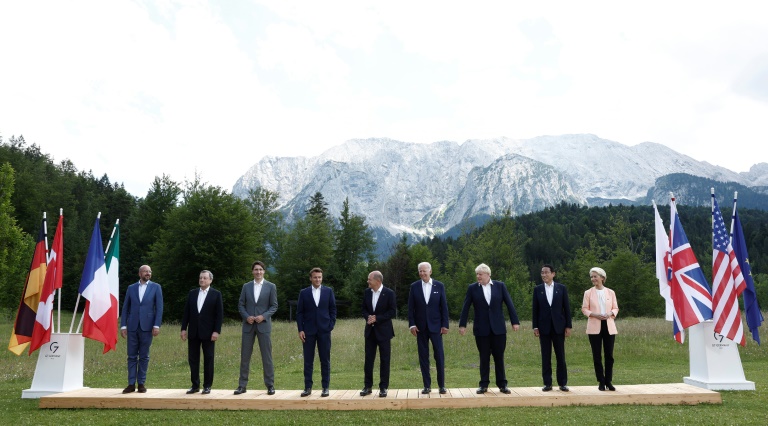
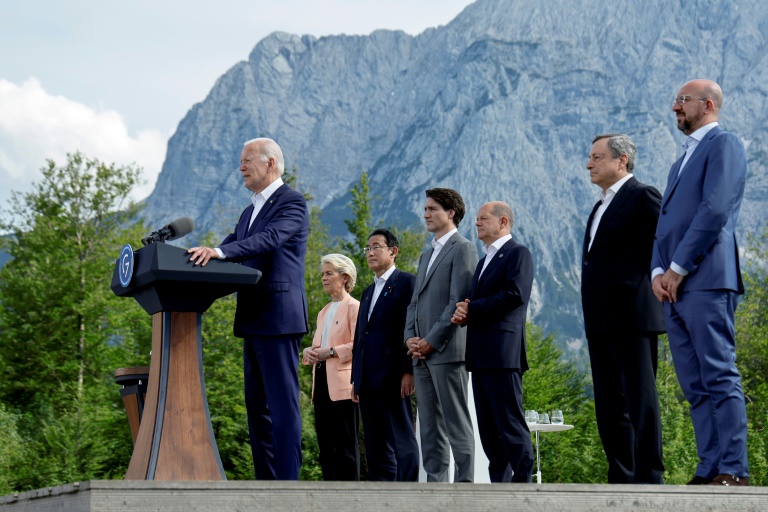
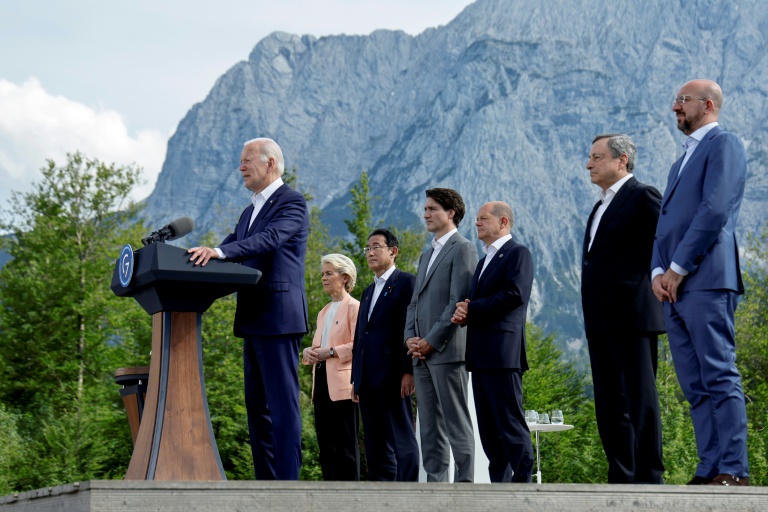
US President Joe Biden and his counterparts from the world’s most industrialised nations are gathering at Elmau Castle in the German Alps before they continue on to Madrid for talks with NATO partners.

The leaders — all men this time since the departure from the scene late last year of Angela Merkel — are seeking to close ranks for Ukraine against Russia’s invasion while grappling with the intensifying global fallout of the war.

“We have to stay together,” Biden told Merkel’s successor Olaf Scholz, the host of the three-day gathering.

Russian President Vladimir Putin had been hoping “that somehow NATO and the G7 would splinter”, Biden said. “But we haven’t and we’re not going to.”

Scholz also hailed Western unity which he said “Putin never expected”, adding that each member of the club “needs to share responsibility” for facing the mounting challenges the war presents.

The statements of resolve came as Russia resumed strikes on Kyiv in the first onslaught on the Ukrainian capital in three weeks — an attack Biden condemned as “more of their barbarism”. 

Looking to the summit, Ukrainian Foreign Minister Dmytro Kuleba urged the G7 to approve more sanctions on Moscow and more heavy weapons for Ukraine to defeat “Russia’s sick imperialism”.

Ukrainian President Volodymyr Zelensky will make the same plea when he joins the meeting via video-link on Monday.

From soaring inflation to a looming food crisis and energy shortages, Russia’s invasion of Ukraine, now in its fifth month, has mired the world in a series of crises.

The G7 leaders are also confronting the looming threat of recession as well as pressures over climate change.

Seeking to turn up the heat on Moscow, the G7 announced it would outlaw imports of Russian gold. The United States said gold was the second largest export for Russia and a significant source of revenue for Putin and his allies.

– ‘Weaponised energy’ –

While Western allies have hammered the Russian economy with unprecedented sanctions, Putin’s army has been digging in for a drawn-out war.

British Prime Minister Boris Johnson and French President Emmanuel Macron said they now saw an “opportunity to turn the tide” in Ukraine.

Johnson warned that “any attempt to settle the conflict now will only cause enduring instability” and risked giving “Putin licence to manipulate both sovereign countries and international markets in perpetuity”, a Downing Street spokesman said.

Seeking fresh measures to put the squeeze on Putin, Macron urged producers to cap oil prices to limit Russian profits from soaring energy revenues.

Paris backs a US proposal for a maximum oil price, Macron’s office said, but added that “it would be much more powerful if it came from the producing countries”.

John Kirby, National Security Council spokesman at the White House, said the G7 would be seeking to increase the costs and consequences of the war on Putin and the Russian economy.

At the same time, they will aim to minimise “as much as possible the effect of these rising oil prices and the way (Putin) has weaponised energy”.

The impact on the economy formed the focus of the G7’s opening session, with Scholz citing “sinking growth rates, rising inflation, raw material shortages and supply chain disruptions” as threats to a post-pandemic recovery.

– Systemic rival –

Scarred by a reliance on Russian energy that has hampered several European nations including Germany and Italy from going all out to punish Russia, the G7 was also warily looking at China — which it views as a systemic rival.

As the gulf separating Western allies from Russia and China widens, the G7 sought to rally other major players to its side with a major global infrastructure plan.

Biden announced the G7 project to rival China’s formidable Belt and Road Initiative by raising some $600 billion to be spent on everything from roads to harbours in poor countries.

In further outreach to the Global South, Scholz has invited the leaders of Argentina, India, Indonesia, Senegal and South Africa to the Alpine summit on Monday.

While Argentina and Indonesia voted at a crucial UN vote to condemn Russia, the other three abstained.

But all are being directly hit by a looming hunger crisis sparked by the holdup in grain and wheat exports from Ukraine, and India for instance has imposed restrictions on wheat exports.

Menswear regains its muscle at Paris Fashion Week

Menswear proved to be in reinvigorated form as Paris Fashion Week ended on Sunday, with spectacle, innovation and the return of big-name designers to the catwalk.   

The week was set to conclude with the surprise return of Hedi Slimane, the former Dior and Saint Laurent designer, now with French brand Celine. Just two years ago he announced he was done with the official fashion calendar.

Slimane — who became hugely influential as the stylist behind bands such as The Libertines and Daft Punk in the 2000s — has not presented a live show in Paris since February 2020. He had dismissed them as “obsolete”, preferring to present collections with videos shot in luxurious French locales. 

He gave no explanation for his reappearance on the catwalks, but he returns when there is a sense of a renaissance in menswear.

– ‘A boom’ –

The past few seasons have often seen men’s and women’s shows merging into one — with London Fashion Week doing away with the distinction altogether. 

But this week in Paris seemed to reaffirm the divide, with houses wanting to boost their focus on menswear at a time when demand is booming.  

US designer Matthew Williams presented his first-ever standalone menswear show for Givenchy this week.

“It’s good to give space to men and women, to each and everyone their platform to tell a story,” Williams told fashion site WWD. “There’s more room for more looks.”

His show was grounded in real-life styles from his native California, he said, with a lot of utilitarian knee-length shorts, cargo trousers and relaxed knitwear — much of it in monochrome with a few splashes of pastel colours. 

“Commercially, menswear is a market that has developed a lot with a particularly strong dynamic in Asia that has created a boom for pret-a-porter men’s designers,” said Serge Carreira, fashion expert at Sciences Po University. 

– ‘More accessible’ –

Also marking her first menswear show was France’s Marine Serre, one of the biggest names to emerge in recent years. 

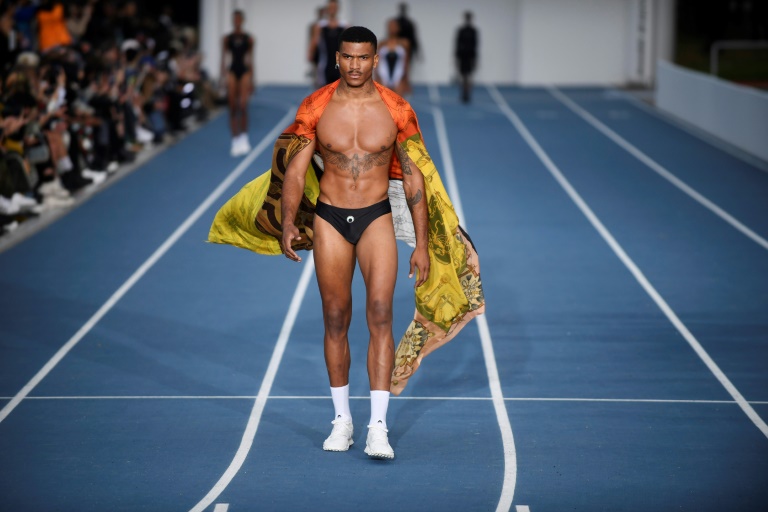
The 30-year-old has made sustainability and inclusivity central to her brand, and that was evident at her sports-themed show in a stadium outside Paris on Saturday. 

Many pieces were upcycled from old scarves and linen — that had been turned into everything from speedos to flags and leotards. 

The models came in all shapes and sizes, from children to older people, alongside celebrities such as ex-footballer Djibril Cisse and Paralympic gold medallist Alexis Hanquinquant, as well as Madonna’s daughter Lourdes Leon in one of the house’s trademark moon-patterned bodysuits. 

“Thirty percent of our sales have been for menswear in the last collections — we’re not at 50/50 but we do quite a bit of men’s and we have no intention of doing less,” Serre told AFP after the show.

“Upcycling is quite rare in men’s but the locker-room lends itself very well to it,” she added. 

“These are shapes that are less complex: it’s easier and we can have better prices that mean it is more accessible for everyone to wear upcycled pieces.” 

Meanwhile, familiar names also made a mark this week. 

Dior took inspiration from the childhood Normandy home of the label’s founder, with a flower-filled garden runway and some straw hats and chic outdoor loungewear among the outfits. 

Hermes was also in a relaxed, pastel-infused mood, which designer Veronique Nichanian told AFP was inspired by “lightness, comfort, fun and colours that pop.”

Police break up Istanbul Pride march, detain over 150

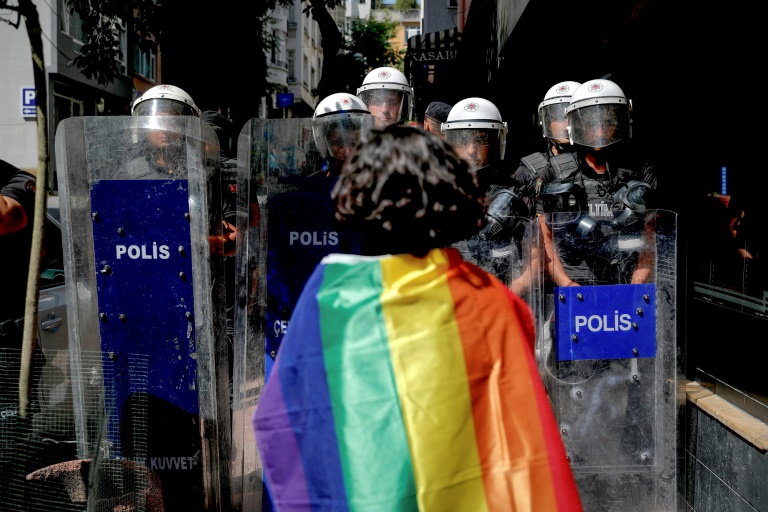
Turkish police on Sunday forcibly intervened in a Pride march in Istanbul, detaining more than 150 demonstrators and an AFP photographer, AFP journalists on the ground and an NGO reported. 

The governor’s office had banned the march around Taksim Square in the heart of Istanbul but protesters gathered nearby under heavy police presence earlier than scheduled.  

Police detained protesters, loading them into buses. AFP journalists saw four buses full of people who had been held, including AFP’s chief photographer Bulent Kilic, who had been handcuffed from the back. 

Kilic, who was also detained last year during the Pride march, was in police custody. 

Hundreds of protesters carrying rainbow flags pressed ahead with the rally in defiance of police. 

“The future is queer,” they chanted. “We are here. We are queer. We are not going anywhere.”

Kaos GL Association, which campaigns to promote the human rights of LGBTQ people against discrimination, said on Twitter police detained more than 150 Pride participants and LGBTQ activists.

The group said eight more were detained in the western city of Izmir. 

Police prevented the press from filming the arrests, according to AFP journalists. 

– ‘All must be released’ –

“All those detained solely for their participation in Pride must be released immediately and unconditionally,” Milena Buyum of Amnesty International said. 

Diren, a 22-year-old university student, condemned the hate crimes targeting LGBTQ people. 

“We are banned, prevented, discriminated and even killed at every second of our lives. Today, it’s a very special day for us to defend our rights and to say that we do exist,” Diren told AFP. 

“Police violence is aimed to stop us but it is not possible. You will be unable to stop the queers.”

Council of Europe Commissioner for Human Rights, Dunja Mijatovic, urged Turkish authorities on Friday to let the march go ahead. 

“I urge Istanbul authorities to repeal Istanbul Pride latest ban and to ensure the safety and the right to peaceful assembly of marchers,” she said in a statement. 

“The human rights of LGBTI people in Turkey need to be effectively protected.”

Although homosexuality has been legal throughout the period of the modern Turkish republic, LGBTQ individuals point to regular harassment and abuse.

Istanbul Pride had taken place every year since 2003.

The last march which went ahead without a ban — in 2014 — drew tens of thousands of participants in one of the biggest LGBTQ events in the majority Muslim region.

In 2020, streaming giant Netflix cancelled the production of a series in Turkey featuring a gay character after failing to obtain government permission for the filming. 

The same year, French sports brand Decathlon faced boycott calls in Turkey for posting messages of support for LGBTQ people.

G7 touts $600 bn global infrastructure plan to rival China

The G7 group of rich democracies on Sunday announced an attempt to compete with China’s formidable Belt and Road Initiative by raising some $600 billion for global infrastructure programmes in poor countries.

The Partnership for Global Infrastructure and Investment, unveiled with fanfare by US President Joe Biden and G7 allies from Canada, Germany, Italy, Japan and the European Union, aims to fill a huge gap left as communist China uses its economic clout to stretch diplomatic tentacles into the furthest reaches of the world.

Biden said the target was for the United States to bring $200 billion to the table, with the rest of the G7 another $400 billion by 2027.

Funding the kinds of projects that China currently dominates — everything from roads to harbours in far-flung corners of the world — is not “aid or charity,” Biden said.

Highlighting the geostrategic thinking behind the plan, Biden said such projects “deliver returns for everyone, including the American people and the people of all our nations.”

Around the world, the role of China’s democratic rivals is “a chance for us to share our positive vision for the future” and for other countries to “see for themselves the concrete benefits of partnering with democracies,” he said.

European Commission chief Ursula von der Leyen echoed this, saying “it is up to us to give a positive, powerful investment impulse to the world, to show our partners in the developing world that they have a choice.”

Although China was not referred to by name, the rivalry loomed large over the leaders’ presentation, a relaunch of a first attempt at a Western infrastructure fund that Biden laid out during last year’s G7 summit in Britain.

Unlike China’s state-run BRI initiative, the proposed G7 funding would depend largely on private companies being willing to commit to massive investments and is therefore not guaranteed.

According to US officials, however, that is a good thing.

In this capitalist vs communist scenario, US officials say, recipient countries will be able to avoid the debt traps and other strongarm tactics allegedly used by the Chinese.

– ‘Not too late’ –

Between now and 2027, the US government and allies will shoot for the $600-billion figure “through grants, federal financing, and leveraging private sector investments,” the White House said.

“This will only be the beginning: the United States and its G7 partners will also seek to mobilise hundreds of billions in additional capital from other like-minded partners, multilateral development banks, development finance institutions, sovereign wealth funds, and more.”

With the investment target largely aspirational, a senior US official acknowledged that the West is currently in second place behind China.

“There’s no doubt that the Belt and Road Initiative has been around for several years and it’s made a lot of cash disbursements and investments — and that we’re coming to this after years of their investments,” the official said.

“But I would argue that it is definitely not too late. And I’m not even sure that it is late.”

The official, briefing reporters on condition of anonymity, said that “many countries” which partnered with China were suffering buyer’s remorse, concluding that Beijing was more interested in establishing economic and geostrategic footholds than benefiting locals.

By contrast, “we’re coming to you with an offer to make investments to actually improve your country, to improve the economy and to have lasting effects on GDP and your populations,” the official said.

“I think that is the deal that is being offered.”

While the obvious targets for the US-led initiative are in Africa, South America and much of Asia are also on the radar. Fallout from Russia’s devastating invasion of Ukraine means that “even places in eastern Europe” could be brought into the fold, the official said.

G7 touts $600 bn global infrastructure plan to rival China

The G7 group of rich democracies on Sunday announced an attempt to compete with China’s formidable Belt and Road Initiative by raising some $600 billion for global infrastructure programmes in poor countries.

The Partnership for Global Infrastructure and Investment, unveiled with fanfare by US President Joe Biden and G7 allies from Canada, Germany, Italy, Japan and the European Union, aims to fill a huge gap left as communist China uses its economic clout to stretch diplomatic tentacles into the furthest reaches of the world.

Biden said the target was for the United States to bring $200 billion to the table, with the rest of the G7 another $400 billion by 2027.

Funding the kinds of projects that China currently dominates — everything from roads to harbours in far-flung corners of the world — is not “aid or charity,” Biden said.

Highlighting the geostrategic thinking behind the plan, Biden said such projects “deliver returns for everyone, including the American people and the people of all our nations.”

Around the world, the role of China’s democratic rivals is “a chance for us to share our positive vision for the future” and for other countries to “see for themselves the concrete benefits of partnering with democracies,” he said.

European Commission chief Ursula von der Leyen echoed this, saying “it is up to us to give a positive, powerful investment impulse to the world, to show our partners in the developing world that they have a choice.”

Although China was not referred to by name, the rivalry loomed large over the leaders’ presentation, a relaunch of a first attempt at a Western infrastructure fund that Biden laid out during last year’s G7 summit in Britain.

Unlike China’s state-run BRI initiative, the proposed G7 funding would depend largely on private companies being willing to commit to massive investments and is therefore not guaranteed.

According to US officials, however, that is a good thing.

In this capitalist vs communist scenario, US officials say, recipient countries will be able to avoid the debt traps and other strongarm tactics allegedly used by the Chinese.

– ‘Not too late’ –

Between now and 2027, the US government and allies will shoot for the $600-billion figure “through grants, federal financing, and leveraging private sector investments,” the White House said.

“This will only be the beginning: the United States and its G7 partners will also seek to mobilise hundreds of billions in additional capital from other like-minded partners, multilateral development banks, development finance institutions, sovereign wealth funds, and more.”

With the investment target largely aspirational, a senior US official acknowledged that the West is currently in second place behind China.

“There’s no doubt that the Belt and Road Initiative has been around for several years and it’s made a lot of cash disbursements and investments — and that we’re coming to this after years of their investments,” the official said.

“But I would argue that it is definitely not too late. And I’m not even sure that it is late.”

The official, briefing reporters on condition of anonymity, said that “many countries” which partnered with China were suffering buyer’s remorse, concluding that Beijing was more interested in establishing economic and geostrategic footholds than benefiting locals.

By contrast, “we’re coming to you with an offer to make investments to actually improve your country, to improve the economy and to have lasting effects on GDP and your populations,” the official said.

“I think that is the deal that is being offered.”

While the obvious targets for the US-led initiative are in Africa, South America and much of Asia are also on the radar. Fallout from Russia’s devastating invasion of Ukraine means that “even places in eastern Europe” could be brought into the fold, the official said.

Long road ahead to hammer out UN biodiversity blueprint

Delegates from almost 200 nations have made little progress towards hammering out a blueprint for a global pact to protect nature from human activity, after almost a week of difficult talks in Nairobi.

The meetings wrapping up Sunday were aimed at ironing out differences among the UN Convention of Biological Diversity’s 196 members, with barely six months before a crucial COP15 summit in December.

The ambitious goal is to draw up a draft text outlining a global framework to “live in harmony with nature” by 2050, with key targets to be met by 2030.

Many hope the landmark deal, when finalised, will be as ambitious in its goals to protect life on Earth as the Paris agreement was for climate change.

But progress at the talks in the Kenyan capital was slow.

“Most of the time was spent on technical bickering, with major decisions left unresolved and postponed for the COP,” said Brian O’Donnell, director of the Campaign for Nature.

“It is now critically important that environment ministers and heads of state engage, take ownership and rescue this process,” he told AFP.

Delegates in Nairobi spent hours discussing formulations or seeking to introduce new elements, instead of reconciling differing viewpoints and refining rather than overhauling the text.

– ‘Security issue for humanity’ –

One delegate on Saturday night spoke of feeling “desperate”. Another described the Nairobi round as “a step” and voiced hope for further informal meetings before December.

“We need to continue with the dialogue with the intention to simplify and reduce the brackets (on the disputed issues) and alternatives,” said Vinod Mathur, head of India’s National Biodiversity Authority.

For that to happen, warned Francis Ogwal of Uganda, one of the two co-chairs of the Kenya negotiations, “there has to be a very big shift of mind in the way we are negotiating”.

Proposals include a global commitment to set aside at least 30 percent of both land and oceans as protected zones by the end of the decade, as well as efforts to cut plastic and agricultural pollution.  

But time is running out, with one million species threatened with extinction and tropical forests disappearing, while intensive agriculture is depleting the soil and pollution is affecting even the most remote areas of the planet.

“It’s not any longer an ecological issue only… It is increasingly an issue that affects our economy, our society, our health, our wellbeing,” Marco Lambertini, director general of WWF International, told a press conference.

“It is a security issue for humanity.”

– ‘Crucial’ to fix food system –

Lambertini accused some countries of using a “delaying tactic”, pointing the finger at Brazil in particular. Behind the scenes, Argentina and South Africa were also getting the blame.

One of the main stumbling blocks concerns agriculture, particularly targets for a reduction in pesticides and fertilisers.

The European Union wants to see the pesticide issue specifically mentioned in the text, but “there is little support” for that position, according to one delegate.

Delegates from the Global South have highlighted the need to produce more, with much of the planet undergoing a major food security crisis, and reject any reference to agroecology, the use of ecological principles in farming.  

“Agriculture is currently responsible for 70 percent of biodiversity loss,” said Guido Broekhoven of WWF International, adding that it was “absolutely crucial” to fix a system where 30 percent of food goes to waste.

Countries are also divided on the issue of the funding needed to implement the biodiversity goals.

Brazil, backed by 22 countries including Argentina, South Africa, Cameroon, Egypt and Indonesia, renewed calls for rich countries to provide at least $100 billion a year until 2030 to help developing countries preserve their rich biodiversity. 

The African bloc is also asking for a fund dedicated to biodiversity, according to one country delegate.

Although leaders of 93 countries committed in September 2020 to ending the biodiversity crisis, the issue is struggling to gain as much traction on the international political agenda as climate change.

“There is also a need to see where our political leaders want us to be,” said Canada’s Basile van Havre, co-chair of the Kenyan talks.

“We’re looking to see who’s going to  step up to pick up that ball.”

Long road ahead to hammer out UN biodiversity blueprint

Delegates from almost 200 nations have made little progress towards hammering out a blueprint for a global pact to protect nature from human activity, after almost a week of difficult talks in Nairobi.

The meetings wrapping up Sunday were aimed at ironing out differences among the UN Convention of Biological Diversity’s 196 members, with barely six months before a crucial COP15 summit in December.

The ambitious goal is to draw up a draft text outlining a global framework to “live in harmony with nature” by 2050, with key targets to be met by 2030.

Many hope the landmark deal, when finalised, will be as ambitious in its goals to protect life on Earth as the Paris agreement was for climate change.

But progress at the talks in the Kenyan capital was slow.

“Most of the time was spent on technical bickering, with major decisions left unresolved and postponed for the COP,” said Brian O’Donnell, director of the Campaign for Nature.

“It is now critically important that environment ministers and heads of state engage, take ownership and rescue this process,” he told AFP.

Delegates in Nairobi spent hours discussing formulations or seeking to introduce new elements, instead of reconciling differing viewpoints and refining rather than overhauling the text.

– ‘Security issue for humanity’ –

One delegate on Saturday night spoke of feeling “desperate”. Another described the Nairobi round as “a step” and voiced hope for further informal meetings before December.

“We need to continue with the dialogue with the intention to simplify and reduce the brackets (on the disputed issues) and alternatives,” said Vinod Mathur, head of India’s National Biodiversity Authority.

For that to happen, warned Francis Ogwal of Uganda, one of the two co-chairs of the Kenya negotiations, “there has to be a very big shift of mind in the way we are negotiating”.

Proposals include a global commitment to set aside at least 30 percent of both land and oceans as protected zones by the end of the decade, as well as efforts to cut plastic and agricultural pollution.  

But time is running out, with one million species threatened with extinction and tropical forests disappearing, while intensive agriculture is depleting the soil and pollution is affecting even the most remote areas of the planet.

“It’s not any longer an ecological issue only… It is increasingly an issue that affects our economy, our society, our health, our wellbeing,” Marco Lambertini, director general of WWF International, told a press conference.

“It is a security issue for humanity.”

– ‘Crucial’ to fix food system –

Lambertini accused some countries of using a “delaying tactic”, pointing the finger at Brazil in particular. Behind the scenes, Argentina and South Africa were also getting the blame.

One of the main stumbling blocks concerns agriculture, particularly targets for a reduction in pesticides and fertilisers.

The European Union wants to see the pesticide issue specifically mentioned in the text, but “there is little support” for that position, according to one delegate.

Delegates from the Global South have highlighted the need to produce more, with much of the planet undergoing a major food security crisis, and reject any reference to agroecology, the use of ecological principles in farming.  

“Agriculture is currently responsible for 70 percent of biodiversity loss,” said Guido Broekhoven of WWF International, adding that it was “absolutely crucial” to fix a system where 30 percent of food goes to waste.

Countries are also divided on the issue of the funding needed to implement the biodiversity goals.

Brazil, backed by 22 countries including Argentina, South Africa, Cameroon, Egypt and Indonesia, renewed calls for rich countries to provide at least $100 billion a year until 2030 to help developing countries preserve their rich biodiversity. 

The African bloc is also asking for a fund dedicated to biodiversity, according to one country delegate.

Although leaders of 93 countries committed in September 2020 to ending the biodiversity crisis, the issue is struggling to gain as much traction on the international political agenda as climate change.

“There is also a need to see where our political leaders want us to be,” said Canada’s Basile van Havre, co-chair of the Kenyan talks.

“We’re looking to see who’s going to  step up to pick up that ball.”
France caps visitor numbers at Marseille Calanques coves

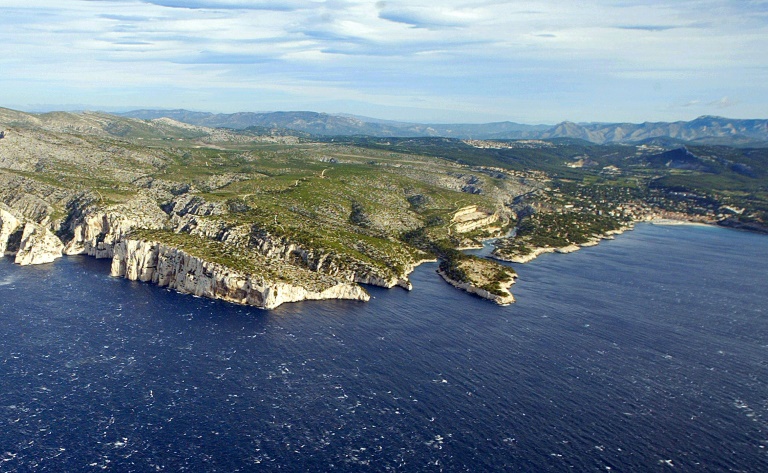
Two popular coves in the “Calanques” area  near Marseille, among southern France’s main attractions, saw visitor numbers capped on Sunday for the first time to protect their fragile ecosystem.

The coast between Marseille and Cassis features France’s best-known Calanques, age-old rock formations featuring steep cliffs, offering spectacular views, rare marine fauna and protected swimming.

Hugely popular with locals and visitors alike, they are often accessible only by boat or hiking trails.

Because the limestone formations have little or no topsoil, plants have had to take root in cracks between the rocks, making their hold tenuous and vulnerable to disturbances.

“The Sugiton and Pierres Tombees calanques have fallen victim to very serious soil erosion because of overcrowding,” said the Calanques National Park which manages the landscape of narrow vertical cliffs, inlets and beaches.

“This phenomenon is threatening the landscapes that we love so much, and bio-diversity,” it said.

Access to Sugiton and Pierres Tombees was limited to 400 people each on Sunday, compared to the usual summer daily visitor numbers of 2,500.

The new measure is to allow “the natural regeneration” of the cove, Nicolas Chardin, the national park’s interim director, told AFP at the Sugiton beach on Sunday.

Online bookings are free of charge, but anyone found at the beaches without a pass on capped days can be fined 68 euros ($72).

“Everything went well this morning, let’s hope it stays that way the entire season,” Mathieu Benquet, who heads the national park’s police team, told AFP.

However, many people — including several foreigners — had been turned away at the several checkpoints along the access path to the cove because they didn’t have the required QR code.

Some visitors, hoping for a cooling swim on a hot day, were unhappy about the new rule.

“We’ve been coming here for 10 years, it feels like our home cove,” said Younes Azabib, a 26-year old Marseille resident.

“We thought of everything, the picnic and the pizzas. But we didn’t think to book,” said his friend, Bilal.

But others appreciated the new-found calmness at the beach.

“This is great,” said Isabelle, a 50-year old Marseille resident who usually stays away during the summer because of crowds. “It’s finally possible to have a swim.”

Nicolas Ponsot, a 41-year-old father of three, also welcomed the visitor cap, saying “it helps to preserve this whole eco-system”.

The new rule is to be applied again next Sunday and then daily between July 10 and August 21, the national park said.

Allies 'won't splinter' on Russia, Biden vows at G7

World powers on Sunday agreed to ban gold exports from Russia, kicking off a G7 meeting aimed at taking new steps to deplete Moscow’s war chest and bolster Ukraine’s defences.

US President Joe Biden and his counterparts from the world’s most industrialised nations are gathering at Elmau Castle in the German Alps before they continue on to Madrid for talks with NATO partners.

They are seeking to close ranks for Ukraine against Russia’s invasion while grappling with the intensifying global fallout of the war.

“We have to stay together,” Biden told German Chancellor Olaf Scholz, the host of the three-day gathering.

Russian President Vladimir Putin had been hoping “that somehow NATO and the G7 would splinter”, Biden said. “But we haven’t and we’re not going to.”

Scholz also hailed Western unity which he said “Putin never expected”, adding that each member of the club “needs to share responsibility” for facing the mounting challenges the war presents.

The statements of resolve came as Russia resumed strikes on central Kyiv in the first onslaught on the Ukrainian capital in three weeks — an attack Biden condemned as “more of their barbarism”. 

Looking to the summit, Ukrainian Foreign Minister Dmytro Kuleba urged the G7 to approve more sanctions on Moscow and more heavy weapons for Ukraine to defeat “Russia’s sick imperialism”.

Ukrainian President Volodymyr Zelensky will make the same plea when he joins the meeting via video-link on Monday.

From soaring inflation to a looming food crisis and energy shortages, Russia’s invasion of Ukraine, now in its fifth month, has mired the world in a series of crises.

The G7 leaders are also confronting the looming threat of recession as well as pressures over climate change.

Seeking to turn up the heat on Moscow, the G7 announced it would outlaw imports of Russian gold. The United States said gold was the second largest export for Russia and a significant source of revenue for Putin and his allies.

– ‘Weaponised energy’ –

While Western allies have hammered the Russian economy with unprecedented sanctions, Putin’s army has been digging in for a drawn-out war.

British Prime Minister Boris Johnson and French President Emmanuel Macron said they now saw an “opportunity to turn the tide” in Ukraine.

Johnson warned that “any attempt to settle the conflict now will only cause enduring instability” and risked giving “Putin licence to manipulate both sovereign countries and international markets in perpetuity”, a Downing Street spokesman said.

Seeking fresh measures to put the squeeze on Putin, Macron urged producers to cap oil prices to limit Russia profits from soaring energy revenues.

Paris backs a US proposal for a maximum oil price, Macron’s office said, but added that “it would be much more powerful if it came from the producing countries”.

John Kirby, National Security Council spokesman at the White House, said the G7 would be seeking to increase the costs and consequences of the war on Putin and the Russian economy.

At the same time, they will aim to minimise “as much as possible the effect of these rising oil prices and the way (Putin) has weaponised energy”.

The impact on the economy formed the focus of the G7’s opening session, with Scholz citing “sinking growth rates, rising inflation, raw material shortages and supply chain disruptions” as threats to a post-pandemic recovery.

– Systemic rival –

Scarred by a reliance on Russian energy that has hampered several European nations including Germany and Italy from going all out to punish Russia, the G7 was also warily looking at China — which it views as a systemic rival.

“The impact that China’s coercive economic practices, use of forced labour, intellectual theft — all those are front and centre for the G7, and I think you’re going to see China very much at the forefront as the G7 goes on,” said Kirby.

As the gulf separating Western allies from Russia and China widens, the G7 will also be looking to rally other major players to its side.

To this end, Scholz has invited the leaders of Argentina, India, Indonesia, Senegal and South Africa to the Alpine summit.

While Argentina and Indonesia voted at a crucial UN vote to condemn Russia, the other three abstained.

But all are being directly hit by a looming hunger crisis sparked by the holdup in grain and wheat exports from Ukraine, and India for instance has imposed restrictions on wheat exports.

Close Bitnami banner
Bitnami