World

German activists up their game to keep climate centre stage

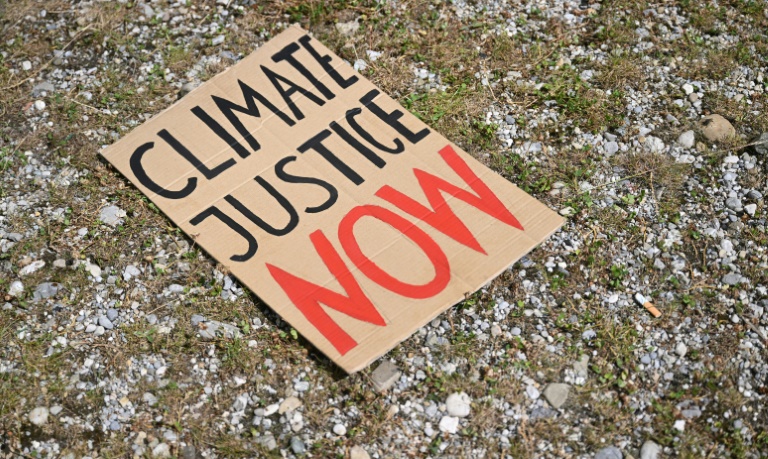
With climate change pushed down the news agenda as Germany tackles an energy crisis and the war in Ukraine, environmental activists are resorting to increasingly eye-catching stunts to get their message across.

This week, around a dozen activists sprayed a black liquid that looked like oil on the chancellery in Berlin and stood in front of the building with a banner that read: “Save oil instead of drilling.”

Dressed in orange high-visibility jackets and hard hats, the protesters were members of Letzte Generation (“Last Generation”) — a radical protest group that has become the new face of environmental activism in Germany.

“The government has ignored everything else: petitions have been written, a million people have taken to the streets,” said Lina Joansen, a 24-year-old student taking part in the protest. 

The activists want a promise from the government that it will not drill for oil in the North Sea. 

“We know that fossil fuels can only aggravate the climate catastrophe that is already happening,” said law student Myriam Herrmann, 25. 

Six months ago, a new coalition government was elected in Germany on a promise to make climate change one of its top priorities.

The Greens entered power for the first time in more than two decades, forming a coalition with the Social Democrats (SPD) under Chancellor Olaf Scholz and the liberal FDP.

– Ambitious climate plans –

Green party Economy Minister Robert Habeck announced an ambitious 60 billion euro ($68 billion) climate investment plan and promised that Germany would end coal power and generate 80 percent of electricity from renewables by 2030.

But since then, climate concerns have been overshadowed by the war in Ukraine, an acute energy crisis and record inflation.

Germany has accelerated plans to import liquefied natural gas (LNG) by sea, wants to explore new oil and gas reserves in the North Sea, and has even decided to reactivate mothballed coal-fired power plants.

The government has said it is still on target to meet its 2030 climate targets, but the protesters are not convinced.

Herrmann is “incredibly disappointed”, especially with Habeck. “We don’t have time for stopgap solutions any more,” she said.

Letzte Generation was born following a hunger strike last year by activists demanding a law to ban supermarkets from destroying unsold food products.

Earlier this year, small groups of Letzte Generation protesters blocked busy roads in Berlin by sitting down and glueing their hands to the tarmac. More than 100 were arrested.

A few days after the oil protest, the group once again employed these tactics, with about 65 protesters blocking the Frankfurter Tor intersection in Berlin’s Friedrichshain.

– ‘Legitimate means’ –

Civil disobedience is “an established mode of protest in the German environmental movement”, sociologist Michael Neuber told AFP, recalling the anti-nuclear movement of the 1970s and blockades by the Extinction Rebellion in 2019.

Such protests have been overshadowed over the past two to three years by the massive student-led demonstrations of the Fridays for Future movement, but have more recently started to make a comeback. 

“Civil disobedience attracts more attention than demonstrations,” said sociologist Dieter Rucht.

“I see civil disobedience as a legitimate means of political protest, when it is peaceful,” 27-year-old Green party politician Deborah Duering told RBB radio this week, claiming to share the “anxiety” of the activists.

In February, by contrast, many voices within the Green party had criticised Letzte Generation for blocking the roads in Berlin. 

For Herrmann, if politicians want the protests to stop, there is an easy solution.

“It is enough for Scholz and Habeck to declare that they no longer want to encourage oil drilling in the North Sea,” she said.

On Saturday in Munich meanwhile, thousands marched to urge G7 leaders gathering in Germany for a summit to do more to fight climate change.
Fresh transport strikes hit UK, mainland Europe

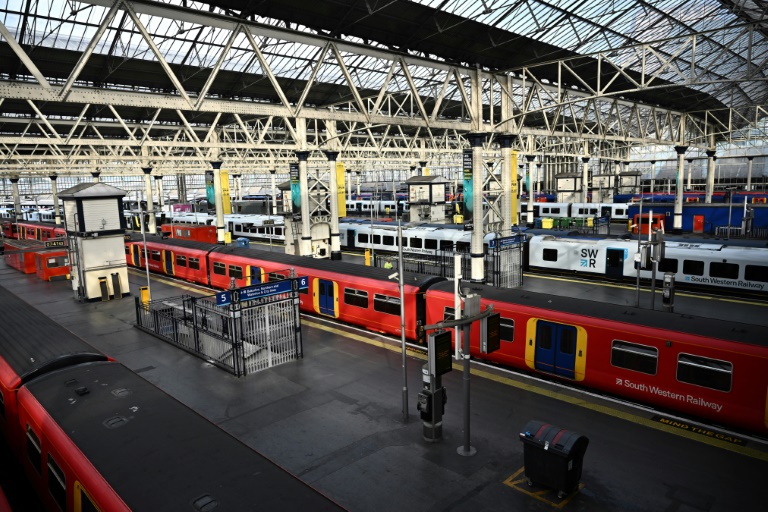
Britain’s railway system once again came to a virtual standstill on Saturday and flights in Europe were disrupted as strikes in the travel sector hit the continent.

Tens of thousands of rail workers in the UK staged the latest day-long walkout over pay and job security, hampering weekend plans for those already hit by similar strikes on Tuesday and Thursday.

Only around a fifth of services are set to operate on heavily reduced hours, with those still running starting much later in the morning than usual and set to end as early as 6:30 pm (1730 GMT).

The RMT rail union insists this week’s actions are necessary as wages have failed to keep pace with UK inflation, which has hit a 40-year high and is on course to keep rising.

It also wants a threat of compulsory redundancies withdrawn.

RMT secretary general Mick Lynch said its members were “standing up for all working people trying to get a pay rise and some job security”.

“In a modern economy, workers need to be properly rewarded for their work, enjoy good conditions and have the peace of mind that their job will not be taken away from them,” he added.

Network Rail chief executive Andrew Haines said: “Unfortunately, the RMT’s decision to carry out another day of needless and premature strike action means our passengers will suffer again on Saturday.

“A fraction of trains will run compared to a usual Saturday service, with trains starting later in the morning and finishing much earlier in the evening.”

– Airline strikes –

Britain, like much of Europe, is suffering from rocketing inflation and stagnant economic growth, raising the prospect of a summer of strikes across the continent.

Staff from budget Irish airline Ryanair staged strikes in Spain, Italy, France, Portugal and Belgium on Saturday.

That forced the cancellation of two flights between Lisbon and Brussels, while in Spain, the USO transport union said 75 flights had been cancelled from six different locations.

The union also denounced the fact that striking staff had been replaced by workers brought in from Morocco, a tactic which it described as illegal because it violated the right to strike.

In Belgium, the walkout meant that only 41 percent of Ryanair flights left Charleroi airport near Brussels on Saturday. Since Friday, the budget carrier has been forced to cancel 127 flights, an airport spokeswoman told AFP.

The situation in Belgium was further complicated by a three-day strike by Brussels Airlines staff ending Saturday. That has forced the carrier, which is owned by German giant Lufthansa, to cancel 60 percent — or some 300 — of its flights since Thursday.

– More cancellations Sunday –

Ryanair flights were also cancelled in France, Saturday. Damien Mourgues of the SNPNC union, said 36 out of 80 flights had been cancelled because of a walk-out by air stewards.

The airports at Bordeaux and Marseille said nine and 12 flights respectively would be cancelled on Sunday.

Adding to Europe’s travel problems, Austria Airlines said Saturday it had had to cancel 52 out of 360 scheduled flights because or a rise in the number of Covid infections among its staff.

“Our crew members are sick, cases of infection are rising,” a spokeswoman for the airline told AFP.

The aviation sector is struggling to recover from the pandemic, which led to mass layoffs as international travel was put on hold.

Faced with staff shortages, Amsterdam’s Schiphol Airport was forced to announce earlier this month that it would be limiting traveller numbers this summer and cancelling flights.

The shortages have already caused hundreds of flights to be cancelled, while huge queues have angered travellers. 

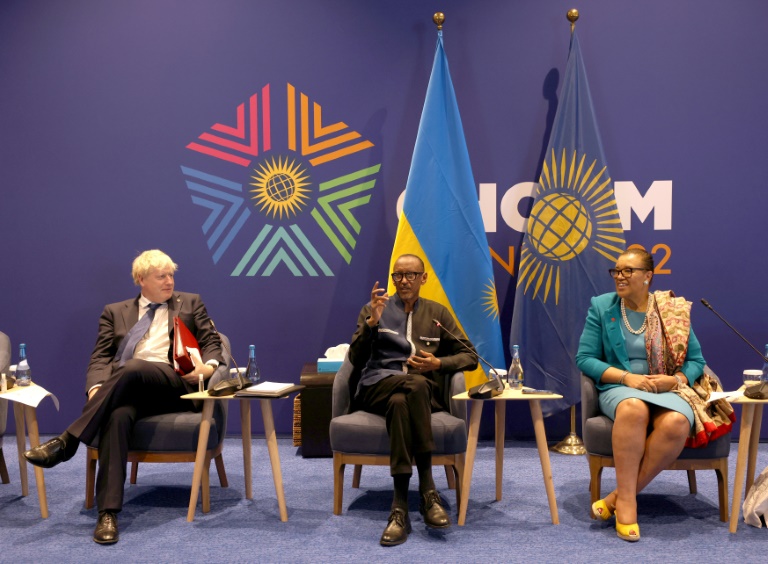
Kagame defends Rwanda on rights as Commonwealth expands

President Paul Kagame on Saturday fiercely defended Rwanda’s record on human rights and political freedoms as the curtains closed on a Commonwealth summit where his country came under intense scrutiny.

The Commonwealth also welcomed two new members into the fold at its summit in Kigali — the French-speaking West African states of Togo and Gabon that have no historic ties to Britain. 

The decision to hold the gathering in Rwanda was heavily criticised by rights watchdogs, which accused Commonwealth leaders of turning a blind eye to repression and the jailing of opponents in the host country.

Kagame, who has been de facto ruler since the end of the genocide in 1994, told reporters Rwanda was proud of its record and would not be lectured by outsiders.

“As far as values are concerned, we don’t need any lessons from BBC or from anyone,” Kagame said in an impassioned statement that lasted nearly 30 minutes.

“I want to assure you there is nobody… who (is) beholding values better than we do here in Rwanda,” he told the summit’s closing press conference. 

Ahead of the meeting attended by Prince Charles and around 30 leaders, rights groups warned that Kigali’s sparkling streets had been cleared of the homeless and street kids to maintain a glossy image for visitors. 

In an open letter, 24 civil society organisations said there was a “climate of fear” in Rwanda and urged Commonwealth leaders not to risk the body’s integrity by letting Kagame off the hook.

His government had presided over a crackdown on rights of assembly, enforced disappearances, arbitrary detention, torture and extrajudicial executions, they said.

Kagame rejected any suggestion his government detained opponents, saying some of his most vocal critics had been freed from prison by presidential pardon.

“There is nobody in Rwanda who is in prison that should not be there, because we have a justice system that is actually functional, and fair,” he said.

– ‘Historic moment’ –

Kagame also announced that Gabon and Togo had been admitted into the Commonwealth, the first new members since Rwanda in 2009.

“This is a historic moment! A new important page in the history of Gabon is opening 62 years after its independence,” Gabonese President Ali Bongo said in a statement.

Togo’s Foreign Minister Robert Dussey said membership opened the door to 2.5 billion consumers in the Commonwealth realm, offered new education opportunities, and tapped a “craze” for English among his countrymen.

Francophone states have also sought to join the Commonwealth in recent years to pivot away from former colonial ruler France, analysts said.

The admission of Gabon and Togo takes membership to 56 nations, and is a boon for the Commonwealth at a time of renewed discussion over its future relevance and modern profile.

Republican movements are taking root in a number of Commonwealth nations and some are seeking reparations for colonial-era injustices.

On Friday, Prince Charles told Commonwealth leaders the choice to become a republic or abandon Queen Elizabeth II as head of state was theirs alone and expressed “personal sorrow” at Britain’s legacy of slavery.

And British Prime Minister Boris Johnson said the interest from new members proved the organisation was alive and well.

– ‘Better together’ –

But the admission of Gabon and Togo could raise questions about the Commonwealth’s espoused commitment to good governance, respect of rights and democracy as fundamental values of its charter.

Both countries have been ruled by single families for over half a century, and elections have been marred by irregularities and violence.

“We are much better together than we ever will be apart,” said Patricia Scotland, who was re-elected in Kigali for another two years as Commonwealth secretary-general after a bruising and divisive campaign. 

Delegates at the Commonwealth Heads of Government Meeting (CHOGM) addressed issues including climate change, violence against women, mental health, vaccine equity, and urbanisation — to name a few.

A much-criticised deal to deport asylum-seekers from the UK to Rwanda dogged the meeting, however, with Johnson vigorously defending his policy.

Ahead of the summit it was reported that Charles — who takes over the Commonwealth when he becomes king — strongly opposed the migrant scheme.

The first transfer of asylum seekers scheduled this month was blocked in a European court, but Johnson insists the deal is not unlawful and he will pursue it.

Born out of the British Empire, the Commonwealth represents one-third of humanity in nations across Africa, Asia, Europe and the Americas.

The next Commonwealth meet will be in Samoa in 2024.

Fresh protests as new US abortion reality takes shape

Abortion rights defenders fanned out across America Saturday for a second day of protest against the Supreme Court’s thunderbolt ruling, as state after conservative state moved swiftly to ban the procedure.

The deeply polarized country woke up to a new level of division: between states that will now or soon deny the right to abortion, enshrined since 1973, and those that still allow it.

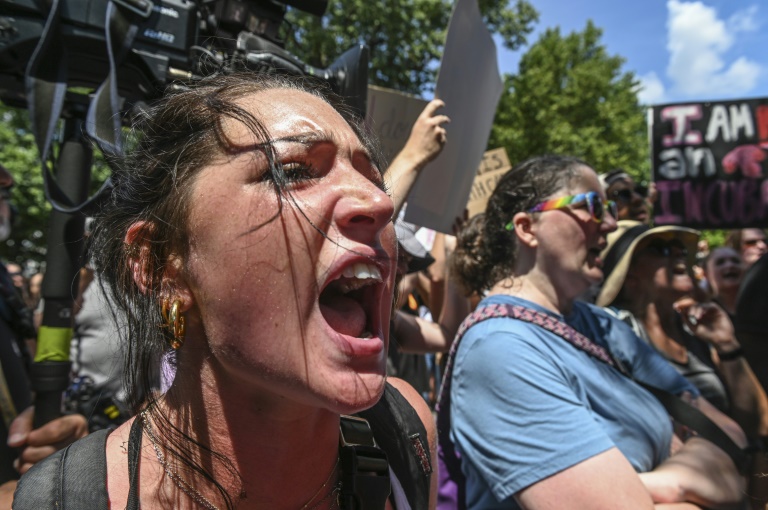
After protests went late into the night, several hundreds of people thronged the streets outside the fenced-off Supreme Court again Saturday, in hot summer weather, carrying signs that read “War on women, who’s next?” and “No uterus, No opinion.”

“What happened yesterday is indescribable and disgusting,” said Mia Stagner, 19, a political science major in college. “Being forced to be a mother is not something any woman should have to do.” 

Twin demonstrations were also getting under way in Los Angeles — one headed to city hall and the other to the federal courthouse — with dozens of smaller rallies planned from coast to coast.

At least eight right-leaning states imposed immediate bans on abortion — with a similar number to follow suit in coming weeks — after the Supreme Court eliminated 50-year-old constitutional protections for the procedure, drawing criticism from some of America’s closest allies around the world.

Fueling the mobilization, many now fear that the Supreme Court, with a clear conservative majority made possible by Donald Trump, might next set its sights on rights like same-sex marriage and contraception.

President Joe Biden — who has likewise voiced concerns the court might not stop at abortion — spoke out again Saturday against its “shocking decision.”

“I know how painful and devastating the decision is for so many Americans,” said the president, who has urged Congress to restore abortion protections as federal law, and vowed the issue would be on the ballot in November’s midterm elections.

Women in states that severely restrict abortion or outlaw it altogether will either have to continue with their pregnancy, undergo a clandestine abortion, obtain abortion pills, or travel to another state where it remains legal.

“We are going to see some nightmare scenarios, sadly,” Biden’s spokeswoman Karine Jean Pierre told reporters on Air Force One, as the president headed to Europe for Group of Seven and NATO summits.

“That is not hypothetical,” she said.

– ‘Women died getting abortions’ –

Friday’s demonstrations mostly passed off without incident — although police fired tear gas on protesters in Phoenix, Arizona and in the Iowa city of Cedar Rapids a pickup truck drove through a group of protesters, running over a woman’s foot.

In Washington on Saturday the scene was once again mostly peaceful — barring the odd shouting match between abortion rights advocates and opponents.

Carolyn Keller, 57, who traveled all the way from New Jersey, said she was enraged by the ruling, warning: “They came after women. They will come after the LGBT community and contraception.”

But counter-protesters like Savannah Craven stood firm.

“It’s not a personal choice to have an abortion, it involves two people and unfortunately that choice ends in the ending of someone’s life,” she told AFP.

As protesters like Craven made clear, while Friday’s ruling represents a victory in the religious right’s struggle against abortion, the movement’s ultimate goal is a nationwide ban.

That goal is now within sight in about two dozen states which are now expected to severely restrict or outright ban and criminalize abortions.

Missouri was first to ban the procedure on Friday, making no exception for rape or incest, joined as of Saturday morning by at least seven other states — Alabama, Arkansas, Kentucky, Louisiana, Oklahoma, South Dakota and Utah.

In its ruling, the Supreme Court tossed out the argument in Roe v. Wade that women had the right to abortion based on the constitutional right to privacy with regard to their own bodies.

Women in those states will either have to continue with their pregnancy, undergo a clandestine abortion, obtain abortion pills, or travel to another state where it remains legal.

Several Democratic-ruled states, anticipating an influx of patients, have already taken steps to facilitate abortion and three of them — California, Oregon and Washington — issued a joint pledge to defend access in the wake of the court’s decision.

bur-dw/ec

'Islamist terror' suspect arrested in deadly Oslo attack

Norwegian police have arrested a man suspected of “Islamist terrorism” after two people were killed and 21 wounded in shootings near a gay bar in Oslo on Saturday, causing the city’s Pride march to be cancelled.

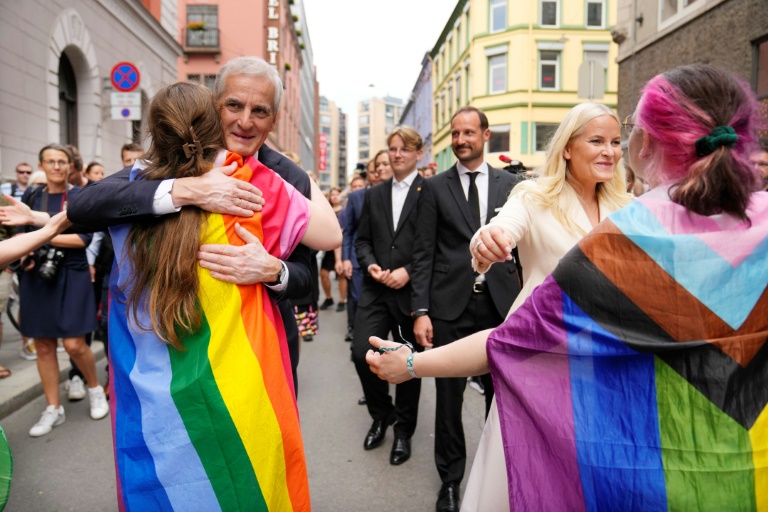
But despite the official march being called off, thousands spontaneously gathered to march through the Norwegian capital in a display of unity also seen at Pride marches across Europe.

The suspect, who was already known to security services, was arrested quickly after the shooting started around 1:00 am (2300 GMT Friday) in central Oslo.

Norway’s domestic intelligence service PST, which is responsible for counter-terrorism, said it was treating the attack as “an act of Islamist terrorism”.

The suspect “has a long history of violence and threats,” PST’s chief Roger Berg said.

The suspect had been on the PST’s radar “since 2015 in connection with concerns about his radicalisation” and membership “in an Islamist extremist network”, Berg told a news conference.

Intelligence services spoke to the suspect last month, but did not consider him to have “violent intentions”, Berg said. 

He added that the PST was also aware the suspect had “difficulties with his mental health”.

The suspect’s lawyer, John Christian Elden, told Norwegian news agency NTB he expected his client to be put under “judicial observation” to determine his mental state, as is usually done in such cases.

The suspect has so far refused to be interviewed by investigators.

Police had earlier said the suspect was a 42-year-old Norwegian man of Iranian descent.

Norwegian media named him as Zaniar Matapour, describing him as a father of Iranian Kurdish origin who arrived in Norway as a child.

The two victims were men in their 50s and 60s, the police said, adding that the injuries of the wounded were not life-threatening.

Police said they received the first reports at 1:14 am and the suspect was arrested just five minutes later, thanks to the “heroic contribution” of bystanders.

– ‘We won’t disappear’ –

Organisers of the Pride march due to take place on Saturday afternoon called it off, saying they were following “clear” recommendations from the police.

Oslo Mayor Raymond Johansen later said the Pride march — the first for three years because of the pandemic — was only postponed and would be held at a later date.

Those who did march on Saturday could be heard shouting: “We’re here, we’re queer, we won’t disappear.”

“I think it’s fantastic that this march is taking place, otherwise he would have won,” a visibly upset participant in her 50s told AFP.

Many people, some in tears, laid rainbow flags and flowers near the scene of the attack, which was cordoned off by police.

Norway’s Crown Princess Mette-Marit struggled to hold back her tears when she went to the scene, which was also visited by Prime Minister Jonas Gahr Store and other politicians.

“Today is a day that reminds us that Pride is a day we have to fight for — the goal has not yet been reached,” Trond Petter Aunas said near the scene.

The shootings happened near the London Pub gay club, the Herr Nilsen jazz club and a takeaway food outlet in a central area packed with people on a warm summer night.

– ‘Overwhelmed by grief’ –

Norway’s intelligence services raised the country’s threat level from moderate to “extraordinary”.

Police presence was stepped up throughout the capital and officers — who do not normally carry guns in Norway — were instructed to arm themselves.

The attack led to enhanced security for Pride marches taking place across France on Saturday, the French government said.

A moment’s silence for the Oslo victims was held at the start of a pride March in Warsaw, where members of Ukraine’s LGBTQ community joined Polish participants.

French President Emmanuel Macron and European Commission President Ursula von der Leyen were among the world leaders condemning the attack.

US President Joe Biden’s national security advisor, Jake Sullivan, described the shooting as “horrific”.

Norway’s premier Store said: “Today was supposed to be a day to celebrate love and brighten our streets in the colours of the rainbow.”

“Instead, we are overwhelmed by grief,” he told a press conference.

Norway’s King Harald V said in a statement that he was “horrified”.

“We have to gather together to defend our values — liberty, diversity and mutual respect,” he said.

Generally peaceful Norway was the scene of bloody attacks on July 22, 2011, when right-wing extremist Anders Behring Breivik killed 77 people.

Iran nuclear talks to resume in days: EU's Borrell

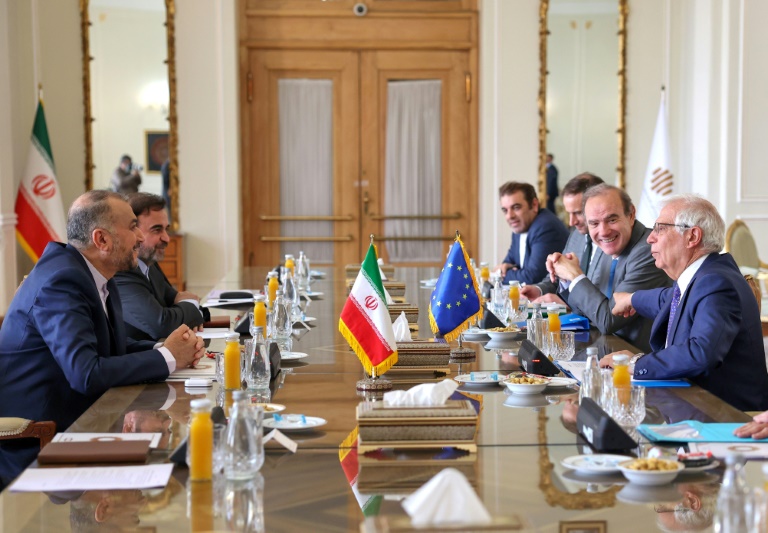
Talks to revive the Iran nuclear deal will resume within days after being stalled for months, the EU’s top diplomat Josep Borrell said Saturday during a surprise visit to Tehran.

The negotiations began in Vienna in April last year but hit a snag in March amid differences between Tehran and Washington, notably over a demand by Iran that its Islamic Revolutionary Guard Corps be removed from a US terror list.

Separate, indirect talks between Iran and the United States will be held under EU mediation in a Gulf Arab country to try to hammer out the remaining sticking points, Borrell said.

“We will resume the talks on the JCPOA in the coming days… I mean quickly, immediately,” Borrell told a news conference in the Iranian capital, referring to the accord by its formal name, the Joint Comprehensive Plan of Action.

The landmark nuclear deal has been hanging by a thread since 2018, when then US president Donald Trump unilaterally withdrew from the accord and began imposing harsh economic sanctions on America’s arch enemy.

The administration of incumbent US President Joe Biden has sought to return to the agreement, saying it would be the best path with the Islamic republic.

– Separate Iran-US talks –

“We agreed today that this visit will be followed by the resumption of negotiations also between Iran and the US facilitated by my team to try to solve the last outstanding issues,” said Borrell.

Negotiations between Iran and the United States would be held in a Gulf country to avoid confusion with the broader talks in Vienna, he said.

“Because they’re bilateral contacts between Iran and the United States, we prefer to do it in a different place,” Borrell said.

He said the contacts would begin “sooner than you can imagine” but would be indirect with his EU team on hand to establish contacts.

The JCPOA itself was agreed after initial contacts between Iran and the United States in the neutral Gulf sultanate of Oman, which has long maintained good relations with both parties.

The EU foreign policy chief was speaking after a two-hour meeting with Iran’s Foreign Minister Hossein Amir-Abdollahian, on the second day of a previously unannounced visit to Tehran.

Amir-Abdollahian confirmed the resumption of the Vienna talks.

“We will try to solve the problems and differences through the talks that will resume soon,” Amir-Abdollahian said, adding the key for Tehran was “the full economic benefit of Iran from the agreement concluded in 2015”, in other words the lifting of US economic sanctions.

– ‘Meaningful diplomacy’ –

On the eve of Borrell’s trip, the US point man on Iran, Robert Malley, had “reiterated firm US commitment to come back to the deal” over a meal with the EU diplomatic chief, according to the EU’s coordinator for the talks, Enrique Mora.

“We remain committed to the path of meaningful diplomacy, in consultation with our European partners,” Malley said in a tweet.

In April, Secretary of State Antony Blinken said the United States still believed a return to the accord was “the best way to address the nuclear challenge posed by Iran”.

Blinken warned at the time that the “breakout time” for Iran to develop a nuclear bomb if it so chooses was “down to a matter of weeks” after the deal pushed it beyond a year.

The International Atomic Energy Agency’s board of governors adopted a resolution this month censuring Iran for failing to adequately explain the previous discovery of traces of enriched uranium at three sites which Tehran had not declared as having hosted nuclear activities.

On the same day, June 8, Tehran said it had disconnected a number of IAEA cameras that had been monitoring its nuclear sites.

IAEA chief Rafael Grossi later confirmed 27 cameras had been disconnected, leaving about 40 still in place.

The move by Iran, he warned, could deal a “fatal blow” to the negotiations unless the UN nuclear watchdog’s inspectors were given access within three to four weeks.

During the talks in Vienna aimed at reviving the accord, Iran has repeatedly called for guarantees from the Biden administration that there will be no repeat of Trump’s pull-out.

Borrell came to “give a last-ditch ultimatum, declaring that if the negotiations do not lead to an agreement, the failure of the talks will be announced in the days and weeks to come”, according to Iranian analyst Ahmad Zeidabadi.

But he told AFP: “I think there are good chances that an agreement can be concluded” because it is in the interest of the various parties.

Ecuador president faces ouster vote on 13th day of fuel price protests

Ecuador’s president will face a no confidence vote Saturday, nearly two weeks into sometimes violent countrywide protests led by Indigenous groups against rising fuel prices and living costs.  

Opposition lawmakers called the parliamentary session over what they say is President Guillermo Lasso’s role in “the serious political crisis and internal commotion” that has left six civilians dead and dozens injured on both sides in 13 days of revolt.   

An estimated 14,000 protesters are taking part in a nationwide show of discontent against rising hardship in an economy dealt a serious blow by the coronavirus pandemic.  

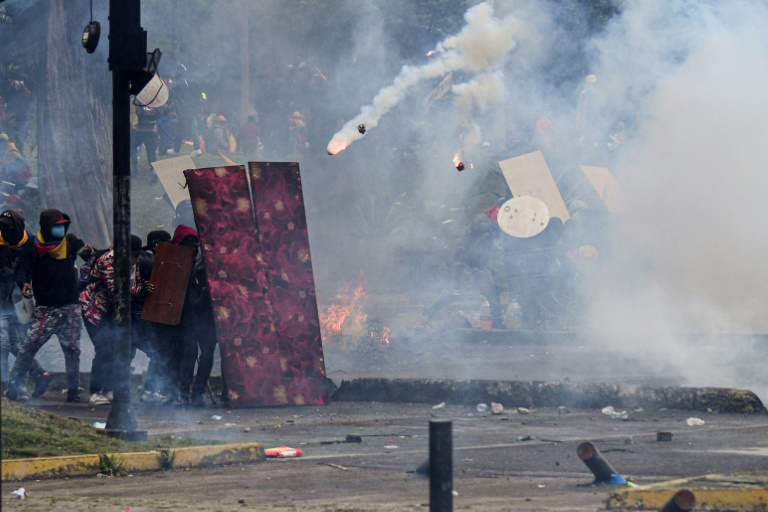
Most of the ire is concentrated in the capital Quito, where some 10,000 people, most from other parts of the country, have gathered for daily protests, marching with sticks and makeshift shields, and chanting “Out Lasso, out!”  

On Friday, Lasso accused demonstrators of attempting “a coup” after two straight days of violent clashes with police and soldiers.  

Protesters in Quito threw rocks and Molotov cocktails and shot off fireworks near the congress building. The security forces repelled them with tear gas.  

– ‘Until we have results’ –

The protests were called by the powerful Confederation of Indigenous Nationalities of Ecuador (Conaie), credited with bringing down three presidents between 1997 and 2005. 

Conaie leader Leonidas Iza told AFP this week demonstrations would continue “until we have results. We can no longer hold back the anger of the people.” 

The action has been costly, with losses of some $50 million per day to the economy. Production of fuel — Ecuador’s biggest export — has been halved, according to the energy ministry.  

Six of the country’s 24 provinces are under a state of emergency and a night-time curfew is in place in Quito, where business owners and workers in the capital are fed up with the disruption to their lives and livelihoods. 

Protesters are demanding a cut in already subsidized fuel prices, which have risen sharply in recent months, as well as jobs, food price controls, and more public spending on healthcare and education.

Ecuador’s National Assembly will meet at 6:00 pm (2300 GMT) on Saturday to vote on whether or not to oust Lasso, a conservative ex-banker who took power a year ago and who is self-isolating after a Covid-19 diagnosis.  

The vote takes place at the request of the 47 lawmakers of the leftist opposition Union for Hope coalition. 

Lasso’s dismissal would require 92 votes out of 137 in the assembly, in which opposition parties are in the majority.   

If Lasso is unseated, Vice President Alfredo Borrero will assume interim power and call new presidential and legislative elections.  

The government has rejected the protesters’ demand for a fuel price cut, saying it would cost the government an unaffordable $1 billion per year. 

Both sides have accused each other of intransigence, and no negotiations have been programmed to try and bring an end to the standoff. 

Iraq PM on imminent Riyadh, Tehran visit in mediation bid

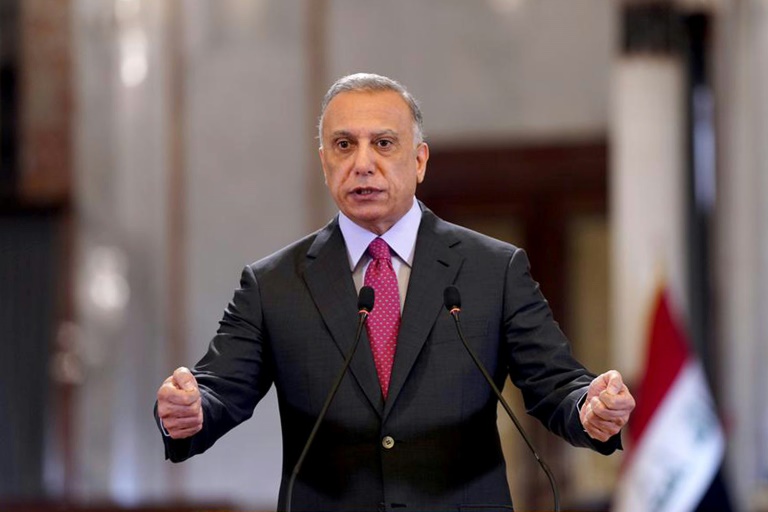
Iraqi Prime Minister Mustafa al-Kadhemi is due to visit Saudi Arabia and Iran “in the next few hours”, as part of efforts to mediate between the two countries, a cabinet source said Saturday.

Iraq has over the past year hosted five rounds of talks between the two regional rivals which have had no diplomatic ties since 2016.

After the last round of negotiations in April, Kadhemi said he believed that “reconciliation is near” between Riyadh and Tehran, a further reflection of shifting political alignments across the region.

“The official visit… comes in the context of the talks that Riyadh and Tehran recently held in Baghdad,” the source within the prime minister’s cabinet said in a statement.

He said those talks “represented a road map for mending relations and returning to the right course of strengthening bilateral relations” between Saudi Arabia and Iran, which support rival sides in conflict zones around the region.

The source added that the visits are “not related to internal Iraqi political affairs and the talks about the formation of the new government have nothing to do with the visit.” 

Months after parliamentary elections, Iraq still has not formed a new government.

Sunni Muslim Saudi Arabia and Shiite-majority Iran have had no diplomatic ties for six years, since Iranian protesters attacked Saudi diplomatic missions in Iran after the kingdom executed Shiite cleric Nimr al-Nimr. 

Riyadh responded by cutting relations with Tehran.

In early March, Saudi Crown Prince Mohammed bin Salman said his country and Iran were “neighbours forever”, and that it was “better for both of us to work it out and to look for ways in which we can coexist”.

Discontent on new battle line for Donbas

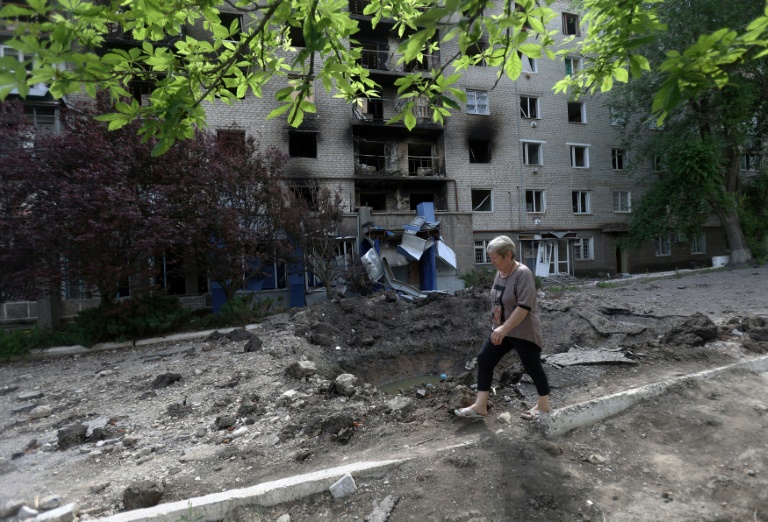
The prolonged roar of Grad rockets can be heard as locals in the east Ukrainian town of Siversk crowd around a van selling essentials such as bread, sausages and gas for camp stoves.

“Everyone is suffering. All of us here are trying to survive,” says Nina, a 64-year-old retiree, pushing a bicycle.

“There’s no (mains) water , no gas, no electricity… We have been living for three months now under shelling. It’s like we’re in the Stone Ages.”

The small town of mainly village-style single-storey houses on dusty roads has become a new frontier in the war between Russia and Ukraine.

Ukrainian troops have given up defending the ravaged city of Severodonetsk and now face a battle with Russians seeking to encircle neighbouring Lysychansk. 

Siversk is the last major town en route to Lysychansk — albeit along roads that are severely damaged and under shelling — and has Russian forces encroaching from the north and south.

Local people, many of them retirees, complain they feel abandoned by Kyiv. 

“The town has really died. And we would like to live a little bit longer,” says Marina, 63, a retired factory worker.

“They’re just basically killing us. It’s dangerous everywhere,” says Nina.

“No one needs us, there’s no help from the government.”

“Ukraine has forgotten about us.”

“We don’t live, we survive,” chimes in another woman, Polina, 60, in a bright purple tracksuit.

– ‘Batteries are trending’ –

Military vehicles including US Humvees and latest-generation US and Soviet-style howitzers, tanks, aid trucks and ambulances constantly pass back and forth through Siversk.

“All day they’ve been coming,” says a policeman at a nearby checkpoint, adding that three vehicles carrying evacuees have gone through “with mainly old people, women and children — there is movement today”.

Driving onto higher ground, dirty smoke rises from a fresh Ukrainian missile launch.

The street van in Siversk is a commercial operation, bringing goods including Polish food from the city of Dnipro, some 300 km away, locals say.

“It’s expensive, of course,” says Nina.

There are also deliveries of humanitarian aid — AFP journalists saw three Red Cross trucks drive up to municipal offices and unload boxes of food including sunflower oil, tea and buckwheat, as well as hygiene items such as razors.

Municipal official Svitlana Severin asked the Red Cross staff to bring more candles, matches and torches.

“Batteries are trending,” she says. “Torches need power and we don’t know when we’ll get electricity”.

The boxes are put in a storage room. Severin says that in order to minimise crowds, they stagger their handouts, with specific days each month for each social group.

– ‘Candles needed’ –

An older woman comes up to the vans indignantly asking why she cannot access the aid and asking for heart medicine.

There are also local initiatives.

Social worker Svetlana Meloshchenko says she and her helpers go round distributing water in milk churns and have just given out candles, rusks and washing liquids outside the local shop.

“Candles are needed — people spend nights in their cellar,” she says.

“There are a lot of small children, old people, disabled people,” she adds, as well as “a lot of people with diabetes”.

“Medicines are supplied to hospitals, but not enough for all.”

Russian troops are firing artillery on the area around Siversk, according to Ukraine’s General Staff.

Nearby, a group of Ukrainian soldiers sprawl in a disused petrol station, eating bread and sausage, their semi-automatic rifles beside them. They say they are going back and forth to the front, without giving details.

“Our cause is the right one,” insists one young soldier, while another older, bearded man says: “We don’t look at the news.” 

“When there’s really good news, we’ll definitely hear about it,” he says, smiling.

'Islamist terror' suspect arrested in deadly Oslo attack

Norwegian police have arrested a man suspected of “Islamist terrorism” after two people were killed and 21 wounded in shootings near a gay bar in Oslo on Saturday, causing the city’s Pride march to be cancelled.

But despite the official march being called off, thousands spontaneously gathered throughout the day to march through the Norwegian capital in a display of unity also seen at Pride marches across Europe.

The suspect, who was already known to security services, was arrested quickly after the shooting started around 1:00 am (2300 GMT Friday) in central Oslo.

Norway’s domestic intelligence service PST, which is responsible for counter-terrorism, said it was treating the attack as “an act of Islamist terrorism”.

The suspect “has a long history of violence and threats,” PST’s chief Roger Berg said.

The suspect had been on the PST’s radar “since 2015 in connection with concerns about his radicalisation” and membership “in an Islamist extremist network”, Berg told a news conference.

Intelligence services spoke to the suspect last month, but did not consider him to have “violent intentions”, Berg said. 

He added that the PST was also aware the suspect had “difficulties with his mental health”.

The suspect’s lawyer, John Christian Elden, told Norwegian news agency NTB he expected his client to be put under “judicial observation” to determine his mental state, as is usually done in such cases.

The suspect has so far refused to be interviewed by investigators.

Police had earlier said the suspect was a 42-year-old Norwegian man of Iranian descent.

Norwegian media named him as Zaniar Matapour, describing him as a father of Iranian Kurdish origin who arrived in Norway as a child.

The two victims were men in their 50s and 60s, the police said, adding that the injuries of the wounded were not life-threatening.

Police said they received the first reports at 1:14 am and the suspect was arrested just five minutes later, adding that he was quickly apprehended thanks to the “heroic contribution” of bystanders.

– ‘We won’t disappear’ –

Organisers of the Pride march due to take place on Saturday afternoon called it off, saying they were following “clear” recommendations from the police.

Oslo Mayor Raymond Johansen later said that the Pride march — the first for three years because of the pandemic — was only postponed and would be held at a later date.

Those who did march on Saturday could be heard shouting: “We’re here, we’re queer, we won’t disappear.”

“I think it’s fantastic that this march is taking place, otherwise he would have won,” a visibly upset participant in her 50s told AFP.

Many people, some in tears, laid rainbow flags and flowers near the scene of the attack, which was cordoned off by police.

Norway’s Crown Princess Mette-Marit struggled to hold back her tears when she went to the scene, which was also visited by Prime Minister Jonas Gahr Store and other politicians.

“Today is a day that reminds us that Pride is a day we have to fight for — the goal has not yet been reached,” Trond Petter Aunas said near the scene.

The shootings happened near the London Pub gay club, the Herr Nilsen jazz club and a takeaway food outlet in a central area packed with people on a warm summer night.

– ‘Overwhelmed by grief’ –

Norway’s intelligence services raised the country’s threat level from moderate to “extraordinary”, saying that the situation remained unclear.

They were looking into whether other attacks could be possible but said that for the moment “we have no indication of this.”

Police presence was stepped up throughout the capital and officers — who do not normally carry guns in Norway — were instructed to arm themselves.

The attack led to enhanced security for Pride marches taking place across France on Saturday, the French government said.

A moment’s silence for the Oslo victims was held at the start of a pride March in Warsaw, where Polish participants were joined by members of Ukraine’s LGBT+ community.

French President Emmanuel Macron and European Commission President Ursula von der Leyen were among the world leaders condemning the attack.

Norway’s premier Store said: “Today was supposed to be a day to celebrate love and brighten our streets in the colours of the rainbow.”

“Instead, we are overwhelmed by grief,” he told a press conference.

Norway’s King Harald V said in a statement that he was “horrified”.

“We have to gather together to defend our values — liberty, diversity and mutual respect,” he said.

Generally peaceful Norway was the scene of bloody attacks on July 22, 2011, when right-wing extremist Anders Behring Breivik killed 77 people.

Close Bitnami banner
Bitnami