World

Iran nuclear talks to resume in days: EU's Borrell

Talks to revive the Iran nuclear deal will resume within days after being stalled for months, the EU’s top diplomat Josep Borrell said Saturday during a surprise visit to Tehran.

The negotiations began in April last year but hit a snag in March amid differences between Tehran and Washington, notably over a demand by Iran that its Islamic Revolutionary Guard Corps be removed from a US terror list.

“We will resume the talks on the JCPOA in the coming days… I mean quickly, immediately,” Borrell told a news conference in the Iranian capital, referring to the Joint Comprehensive Plan of Action.

The landmark nuclear deal has been hanging by a thread since 2018, when then US president Donald Trump unilaterally withdrew from the accord and began imposing harsh economic sanctions on America’s arch enemy.

The administration of incumbent US President Joe Biden has sought to return to the agreement, saying it would be the best path with the Islamic republic.

“We agreed today that this visit will be followed by the resumption of negotiations also between Iran and the US facilitated by my team to try to solve the last outstanding issues,” said Borrell.

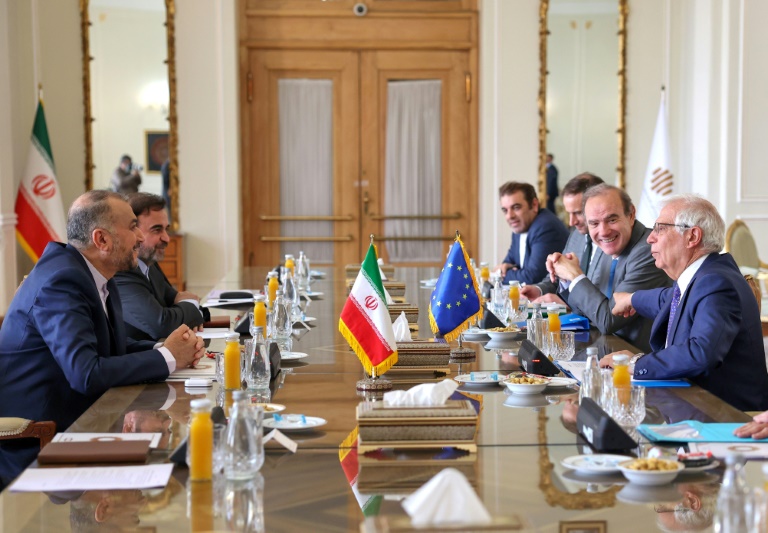
The EU foreign policy chief was speaking after a two-hour meeting with Iran’s Foreign Minister Hossein Amir-Abdollahian, on the second day of a previously unannounced visit to Tehran.

Amir-Abdollahian confirmed the resumption of the negotiations.

“We will try to solve the problems and differences through the talks that will resume soon,” Amir-Abdollahian said, adding the key for Tehran was “the full economic benefit of Iran from the agreement concluded in 2015.”

“We hope that specifically the US side, this time around, realistically and fairly makes responsible and committed efforts in the negotiations and on the path to reach the final point of the agreement,” he added.

– ‘Meaningful diplomacy’ –

On the eve of Borrell’s trip, the US pointman on Iran, Robert Malley, had “reiterated firm US commitment to come back to the deal” over a meal with the EU diplomatic chief, according to the EU’s coordinator for the talks, Enrique Mora.

“We remain committed to the path of meaningful diplomacy, in consultation with our European partners,” Malley said in a tweet.

France, one of the six world powers that agreed the 2015 deal, had on Friday appealed to Iran to “seize this diplomatic opportunity to conclude now, while this is still possible”. 

Amir-Abdollahian said on Thursday that Iran was “serious” about reaching an agreement while calling for “realism from the American side”.

The nuclear deal Iran reached with Britain, China, France, Germany, Russia and the United States gave it relief from sanctions in return for guarantees it could not develop an atomic weapon.

Iran has always denied wanting a nuclear arsenal.

– Cameras removed –

In April, Secretary of State Antony Blinken said the United States still believed a return to the accord was “the best way to address the nuclear challenge posed by Iran”.

Blinken warned at the time that the “breakout time” for Iran to develop a nuclear bomb if it so chooses was “down to a matter of weeks” after the deal pushed it beyond a year.

The International Atomic Energy Agency’s board of governors adopted a resolution this month censuring Iran for failing to adequately explain the previous discovery of traces of enriched uranium at three sites which Tehran had not declared as having hosted nuclear activities.

On the same day, June 8, Tehran said it had disconnected a number of IAEA cameras that had been monitoring its nuclear sites.

IAEA chief Rafael Grossi later confirmed 27 cameras had been disconnected, leaving about 40 still in place.

The move by Iran, he warned, could deal a “fatal blow” to the negotiations unless the UN nuclear watchdog’s inspectors were given access within three to four weeks.

The visit by Borrell, his first to Tehran since February 2020, could be a determining factor in the fate of the deal.

During the talks in Vienna aimed at reviving the accord, Iran has repeatedly called for guarantees from the Biden administration that there will be no repeat of Trump’s pullout.
Fresh transport strikes hit UK, mainland Europe

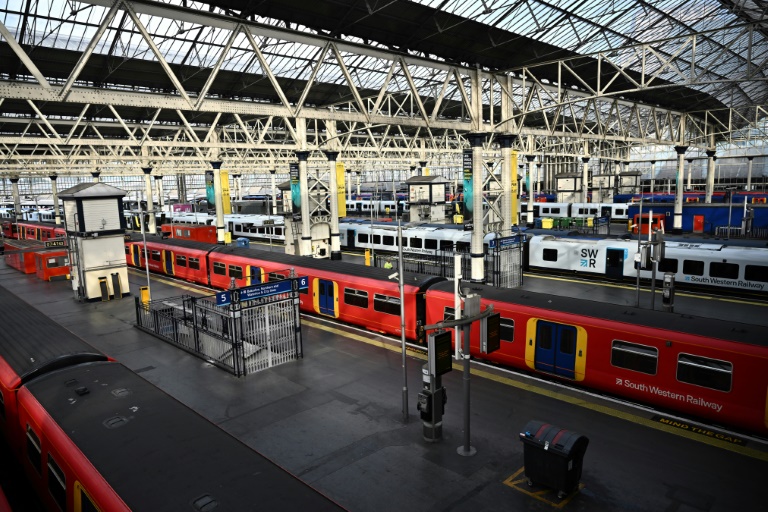
Britain’s railway system once again came to a virtual standstill on Saturday and flights in Europe were disrupted as strikes in the travel sector hit the continent.

Tens of thousands of rail workers in the UK staged the latest day-long walkout over pay and job security, hampering weekend plans for those already hit by similar strikes on Tuesday and Thursday. 

Only around a fifth of services are set to operate on heavily reduced hours, with those still running starting much later in the morning than usual and set to end as early as 6:30 pm (1730 GMT).

The RMT rail union insists this week’s actions are necessary as wages have failed to keep pace with UK inflation, which has hit a 40-year high and is on course to keep rising.

It also wants a threat of compulsory redundancies withdrawn.

RMT secretary general Mick Lynch said its members are “standing up for all working people trying to get a pay rise and some job security”.

“In a modern economy, workers need to be properly rewarded for their work, enjoy good conditions and have the peace of mind that their job will not be taken away from them,” he added.

Network Rail chief executive Andrew Haines said: “Unfortunately, the RMT’s decision to carry out another day of needless and premature strike action means our passengers will suffer again on Saturday.

“A fraction of trains will run compared to a usual Saturday service, with trains starting later in the morning and finishing much earlier in the evening.”

Britain, like much of Europe, is suffering from rocketing inflation and stagnant economic growth, raising the prospect of a summer of strikes across the continent.

Staff from budget Irish airline Ryanair staged strikes in Spain, Italy, France, Portugal and Belgium on Saturday, forcing the cancellation of two flights between Lisbon and Brussels.

Ryanair staff staged their second day of action in Spain, resulting in delays to flights but so far no cancellations. 

One of the unions calling the strike said that, as of 10:00 am (0800 GMT), “there have been 15 delayed flights, both arrivals and departures. 

“It is expected that this situation will increase throughout the day and tomorrow, as Ryanair’s maximum profit system of leaving the minimum time between flights will cause delays,” it added.

The aviation sector is struggling to recover from the pandemic, which led to mass layoffs as international travel was put on hold.

Faced with staff shortages, Amsterdam’s Schiphol Airport was forced to announce earlier this month that it would be limiting traveller numbers this summer and cancelling flights.

The shortages have already caused hundreds of flights to be cancelled, while huge queues have angered travellers. 

Taliban pledge no interference with quake aid, but many await relief

Afghanistan’s Taliban rulers pledged on Saturday they would not interfere with international efforts to distribute aid to tens of thousands of people affected by this week’s deadly earthquake.

Even before Wednesday’s quake the country was in the grip of a humanitarian crisis, with aid flows and financial assistance severely curtailed since the Taliban’s return to power.

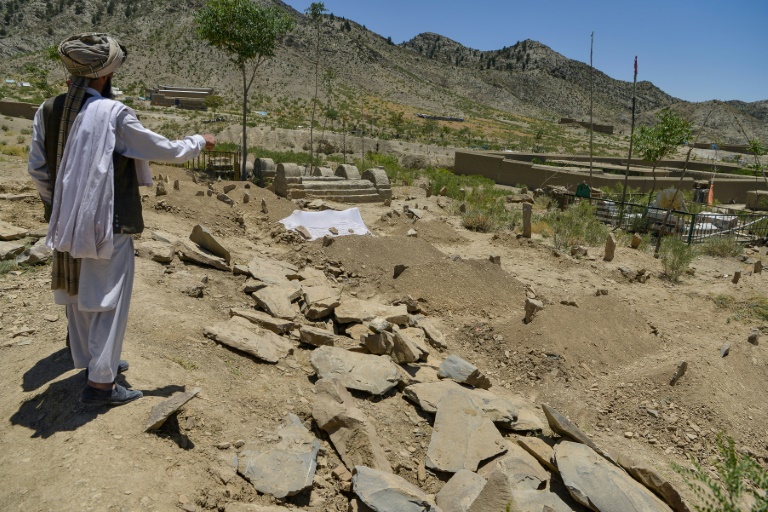
The 5.9-magnitude quake struck hardest in the rugged east along the border with Pakistan, as people slept, killing over 1,000 and leaving thousands more homeless.

Aid organisations have complained in the past that Taliban authorities have tried to divert aid to areas and people that supported their hardline insurgency — or even seized goods to distribute themselves and claim the credit.

But Khan Mohammad Ahmad, a senior official in hard-hit Paktika province, said international organisations helping relief efforts would not be interfered with.

“Whether it is WFP, UNICEF or any other organisation… the international community or the United Nations… they will do the distribution by themselves,” said Khan.

“The responsible people from the Islamic Emirate are here… our members will be always with them (to help),” he added, referring to the Taliban’s new name for Afghanistan.

– Huge challenge –

The disaster poses a huge logistical challenge for the government, which has isolated itself from much of the world by introducing hardline rule that subjugates women and girls.

But the international community has been quick to respond to the latest disaster to befall the country and aid is starting to flow — although not always where it is needed most.

“What don’t we need? We need everything,” Said Wali told AFP in Serai, a small village close to the epicentre of the quake, around 200 kilometres (125 miles) southeast of Kabul.

“We are alive, but there is no one listening to us and we have not received any aid so far.”

Many of the buildings in the village — like most in the Afghan countryside, made out of mud bricks — had been flattened in the quake.

“Our beds and all our stuff are buried under our home. Our homes are destroyed… there is nothing left,” he said.

“Currently we need money so that we can buy our necessities — clothes, mattresses, equipment. We also need flour and rice.”

– ‘Courage and resilience’ –

Ramiz Alakbarov, the UN’s top official in Afghanistan, praised Afghans for their resilience and courage after touring the area Saturday.

“What signs of resolve in face of this adversity — I would say endless adversity,” he told AFP.

“Endless difficulties, endless tragedy, and yet these people are so gracious, so strong. And they are willing to overcome, and they are coming together as a community and as a society.”

Delivering aid has been made more difficult because the quake struck areas already suffering the effects of heavy rain, causing rockfalls and mudslides that wiped out hamlets perched precariously on mountain slopes.

Communications have also been hit with mobile phone towers and power lines toppled.

Officials say nearly 10,000 houses were destroyed, an alarming number in an area where the average household size is more than 20 people.

Even before the Taliban takeover, Afghanistan’s emergency response teams were stretched to deal with the natural disasters that frequently strike the country.

But with only a handful of airworthy planes and helicopters left since they returned to power, their response to the latest catastrophe is further limited.

Afghanistan is frequently hit by earthquakes, especially in the Hindu Kush mountain range, near the junction of the Eurasian and Indian tectonic plates.

Afghanistan’s deadliest recent earthquake killed 5,000 in 1998 in the northeastern provinces of Takhar and Badakhshan.

Taliban pledge no interference with quake aid, but many await relief

Afghanistan’s Taliban rulers pledged on Saturday they would not interfere with international efforts to distribute aid to tens of thousands of people affected by this week’s deadly earthquake.

Even before Wednesday’s quake the country was in the grip of a humanitarian crisis, with aid flows and financial assistance severely curtailed since the Taliban’s return to power.

The 5.9-magnitude quake struck hardest in the rugged east along the border with Pakistan, as people slept, killing over 1,000 and leaving thousands more homeless.

Aid organisations have complained in the past that Taliban authorities have tried to divert aid to areas and people that supported their hardline insurgency — or even seized goods to distribute themselves and claim the credit.

But Khan Mohammad Ahmad, a senior official in hard-hit Paktika province, said international organisations helping relief efforts would not be interfered with.

“Whether it is WFP, UNICEF or any other organisation… the international community or the United Nations… they will do the distribution by themselves,” said Khan.

“The responsible people from the Islamic Emirate are here… our members will be always with them (to help),” he added, referring to the Taliban’s new name for Afghanistan.

– Huge challenge –

The disaster poses a huge logistical challenge for the government, which has isolated itself from much of the world by introducing hardline rule that subjugates women and girls.

But the international community has been quick to respond to the latest disaster to befall the country and aid is starting to flow — although not always where it is needed most.

“What don’t we need? We need everything,” Said Wali told AFP in Serai, a small village close to the epicentre of the quake, around 200 kilometres (125 miles) southeast of Kabul.

“We are alive, but there is no one listening to us and we have not received any aid so far.”

Many of the buildings in the village — like most in the Afghan countryside, made out of mud bricks — had been flattened in the quake.

“Our beds and all our stuff are buried under our home. Our homes are destroyed… there is nothing left,” he said.

“Currently we need money so that we can buy our necessities — clothes, mattresses, equipment. We also need flour and rice.”

– ‘Courage and resilience’ –

Ramiz Alakbarov, the UN’s top official in Afghanistan, praised Afghans for their resilience and courage after touring the area Saturday.

“What signs of resolve in face of this adversity — I would say endless adversity,” he told AFP.

“Endless difficulties, endless tragedy, and yet these people are so gracious, so strong. And they are willing to overcome, and they are coming together as a community and as a society.”

Delivering aid has been made more difficult because the quake struck areas already suffering the effects of heavy rain, causing rockfalls and mudslides that wiped out hamlets perched precariously on mountain slopes.

Communications have also been hit with mobile phone towers and power lines toppled.

Officials say nearly 10,000 houses were destroyed, an alarming number in an area where the average household size is more than 20 people.

Even before the Taliban takeover, Afghanistan’s emergency response teams were stretched to deal with the natural disasters that frequently strike the country.

But with only a handful of airworthy planes and helicopters left since they returned to power, their response to the latest catastrophe is further limited.

Afghanistan is frequently hit by earthquakes, especially in the Hindu Kush mountain range, near the junction of the Eurasian and Indian tectonic plates.

Afghanistan’s deadliest recent earthquake killed 5,000 in 1998 in the northeastern provinces of Takhar and Badakhshan.

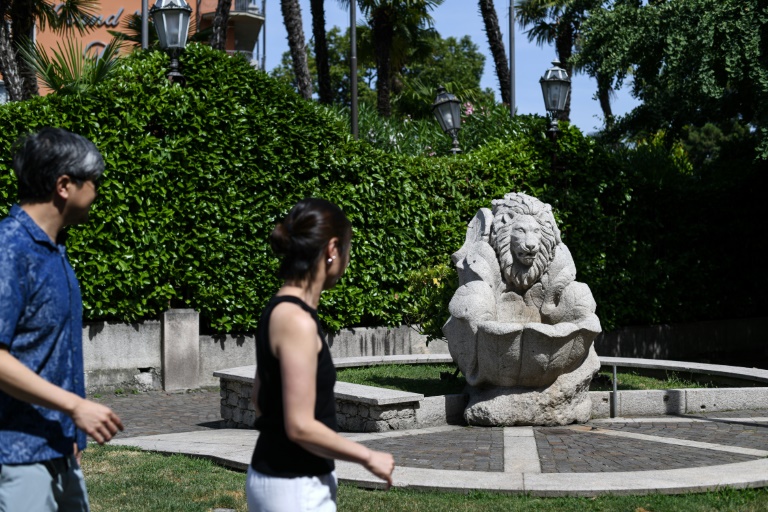
Drought-hit Milan to close fountains

The mayor of Milan on Saturday announced the northern Italian city’s fountains would be switched off as part of water restrictions imposed due to a drought.

Beppe Sala announced the measures the day after the wider Lombardy region declared a state of emergency to last until September 30, directing mayors to curtail non-essential water use.

An emergency decree would include the “closure of all the fountains except those where fauna and flora are present and the lakes and irrigation ditches of city parks”, Milan’s mayor said in a statement.

But he said drinking fountains would keep running, noting temperatures have been above 30 degrees Celsius (86 degrees Fahrenheit) for weeks and a fresh heatwave was due imminently.

Sala did not say when the measures would take effect, and city authorities did not immediately respond to requests for comment.

“The drought emergency continues and measures must be taken,” he said, adding that everyone must do their part.

He called on citizens to minimise their use of drinking water for cleaning and watering the plants, and said irrigation systems feeding public lawns and green spaces would be stopped, except for newly planted trees.

Temperatures in offices, shops and homes should be kept at 26 degrees or above, “to reduce the consumption of energy and therefore reduce the risk of blackouts”, he said.

Municipalities across Italy have begun introducing water rationing after an unusually hot and dry spring sparked widespread alarm.

The Po river, Italy’s longest river and its largest reservoir of fresh water, is suffering its worst drought for 70 years. 

War in Ukraine: Latest developments

Here are the latest developments in the war in Ukraine:

– Dozens of Polish fighters killed: Russia –

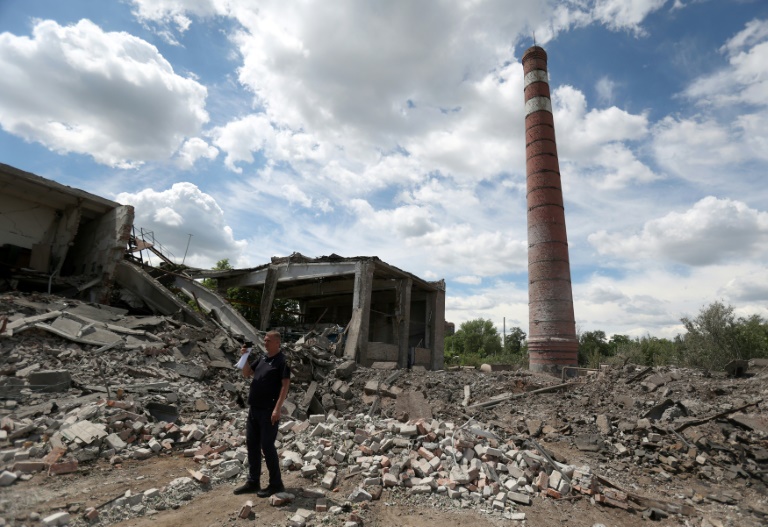
Russia’s defence ministry says its troops have killed “up to 80” Polish fighters in “precision strikes” on the Megatex zinc factory in Konstantinovka (Kostyantynivka in Ukrainian), in the eastern Donetsk region.

The region, claimed by Russia, has been the theatre of combat since Moscow began its offensive in Ukraine in late February.

– Russia trying to drag Belarus into war: Kyiv –

Ukraine’s intelligence service says Russia is aiming to drag Belarus into the war, after missiles were fired from Belarusian territory into a northern border region.

“Today’s strike is directly linked to Kremlin efforts to pull Belarus as a co-belligerent into the war in Ukraine,” Ukrainian intelligence says on Telegram.

Ukraine says it suffered a “massive bombardment” from inside neighbouring Belarus, a Russian ally not officially involved in the conflict.

– Ukrainian forces to withdraw from Severodonetsk – 

Ukrainian forces are preparing to retreat from the strategic city of Severodonetsk after weeks of fierce fighting, a setback that could pave the way for Russia to seize a larger swath of eastern Ukraine.

Sergiy Gaiday, the governor of the Lugansk region, also says Russian forces are advancing on the twin city of Lysychansk, which has been facing increasingly heavy Russian bombardment as Moscow pursues its offensive on eastern Ukraine.

“Remaining in positions that have been relentlessly shelled for months just doesn’t make sense,” says Gaiday, with 90 percent of the city damaged.

Capturing Severodonetsk and Lysychansk would give the Russians control of Lugansk, and allow them to push further into Ukraine’s industrial heartland of Donbas.

– US sees Severodonetsk as ‘small gain’ for Russia –

The United States is playing down the importance of Ukraine’s retreat from Severodonetsk, with the Pentagon saying it means a “very small, very incremental gain” for Russia.

“What (the Ukrainian troops) are doing is putting themselves in a position where they can better defend themselves,” a senior Pentagon official tells reporters.

– Russia stance on EU candidacy shows ‘weakness’-

Russia’s protests over the EU giving Ukraine and Moldova candidate status show Moscow’s weakness, Ukraine’s top diplomat says.

“After decades of lost policies based on aggression, coercion and lack of respect, all that Russia can do now is to spit threats against other states,” Foreign Minister Dmytro Kuleba tweets. “All it does is show Russia’s weakness.”

President Volodymyr Zelensky has hailed a “historic” decision by European Union leaders to grant candidate status to Ukraine, a decision the Kremlin has dismissed as “domestic European affairs”.

– Rebuilding Black Sea ports will take decade: Kyiv – 

It will take Ukraine a decade to build infrastructure to replace its Black Sea ports, whose blockade by Russia is preventing grain exports around the world, Ukraine’s deputy agriculture minister says.

Millions of tonnes of wheat and other grain have been stuck in Ukrainian ports since Russia invaded in February, sparking global concern about hunger and food prices.

“For alternative routes, it would take 10 years of investment to try to build the necessary infrastructure to replace this Black Sea port infrastructure, which we spent about 20 years building, starting in 2000,” Taras Vysotskiy tells AFP.

– BRICS calls for Ukraine-Russia talks –

The BRICS group of nations says it backs talks between Moscow and Kyiv, after a virtual summit held against the backdrop of the Ukraine conflict.

The group comprising Brazil, Russia, India, China and South Africa accounts for more than 40 percent of the global population and nearly a quarter of the world’s gross domestic product.

Three members — China, India and South Africa — have abstained from voting on a UN resolution condemning Russia’s invasion.

Russian President Vladimir Putin on Thursday urged the group to snub Western countries who have imposed drastic sanctions on Moscow.

burs/cdw/imm

Two killed in Norway 'terror' shooting

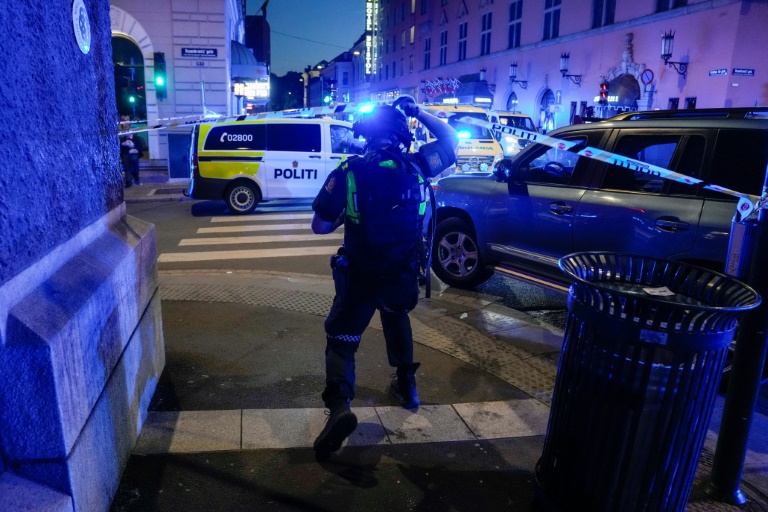
Oslo’s Pride march was called off on Saturday after “terrorist” shootings in the centre of the normally tranquil Norwegian capital killed two people and wounded 21 others.

Police arrested a suspect, a 42-year-old Norwegian man of Iranian descent, shortly after the shooting started around 1:00 am (2300 GMT Friday) in three locations in central Oslo, including a gay bar.

“The police are investigating the events as a terrorist attack,” police said in a statement.

Organisers of the Pride march that was due to take place on Saturday afternoon said they were calling it off.

“All events linked to Oslo Pride have been cancelled” following “clear” recommendations by police, the organisers wrote on Facebook.

“We do not yet know the reasons for this terrible act, but to all the homosexuals who now are afraid and are in mourning, I say we are all with you,” Prime Minister Jonas Gahr Store said on Facebook.

Police said two people had died and 21 were wounded, including 10 seriously, and said two weapons had been seized.

The man arrested “is suspected of homicide, attempted homicide and a terrorist act”, senior police official Christian Hatlo told a press conference.

The terror charge comes because “of the number of wounded and killed, the number of crime scenes… and there is good reason to believe that he had intended to sow terror”, Hatlo said.

Police received the first reports at 1:14 am and the suspect was arrested five minutes later, police said.

Police said they were able to quickly apprehend the suspect thanks to the “heroic contribution” of bystanders.

The shootings happened near the London Pub gay club, the Herr Nilsen jazz club and a takeaway food outlet.

On Saturday, rainbow flags hung near the scene. Police presence was stepped up throughout the capital.

Norway’s anti-terrorist service said on Twitter that it was looking into whether other attacks could be possible but that for the moment “we have no indication of this.”

– ‘Bleeding man on the ground’ –

“He looked very determined about where he was aiming. When I realised it was serious, I ran. There was a bleeding man lying on the ground,” a woman who saw the incident told the Verdens Gang newspaper.

“There were a lot of injured people on the ground who had head injuries,” another witness was quoted by the paper as saying.

According to an NRK radio journalist present at the time of the shooting, the shooter arrived with a bag from which he pulled out a weapon and started firing.

Police said that the suspect had several minor run-ins with the law, for knife and drug possession.

Norway’s King Harald V said in a statement that he was “horrified”.

“We have to gather together to defend our values — liberty, diversity and mutual respect.”

Generally peaceful Norway was the scene of bloody attacks on July 22, 2011 when right-wing extremist Anders Behring Breivik killed 77 people.

He first detonated a bomb near the government headquarters in Oslo, killing eight people. 

He then disguised himself as a policeman and went on a shooting spree at a summer camp for left-wing youth on the island of Utoya, killing another 69 people — most of them teenagers.

EU top diplomat visits Iran in bid to revive nuclear talks

European Union foreign policy chief Josep Borrell met Iran’s top diplomat on Saturday after arriving in Tehran for talks on efforts to revive the 2015 Iran nuclear deal.

The surprise visit by Borrell, who arrived in the Iranian capital on Friday night, is aimed at getting the talks back on track three months after they stalled amid differences between Iran and the United States.

“Diplomacy is the only way to go back to full implementation of the deal and to reverse current tensions,” Borrell tweeted.

Borrell went into a meeting with Foreign Minister Hossein Amir-Abdollahian in the morning and was expected to hold talks with other Iranian officials later in the day, said the official news agency IRNA.

The Iran nuclear deal has been hanging by a thread since 2018, when then US president Donald Trump unilaterally withdrew from the accord and began imposing crippling economic sanctions on America’s arch enemy.

The administration of incumbent US President Joe Biden has sought to return to the agreement, saying it would be the best path with the Islamic republic.

The US pointman on Iran, Robert Malley, “reiterated firm US commitment to come back to the deal” over a meal with Borrell on the eve of his trip, according to the EU’s coordinator for the talks, Enrique Mora.

– ‘Meaningful diplomacy’ –

“We remain committed to the path of meaningful diplomacy, in consultation with our European partners,” Malley said later on his official Twitter account.

The talks, which began in April last year, aim to return the United States to the deal, including through lifting sanctions, while ensuring Iran’s full compliance with its nuclear commitments.

The negotiations stalled in March amid differences between Tehran and Washington, notably over a demand by Iran to remove its Islamic Revolutionary Guard Corps from a US terror list.

“We are ready to conclude this agreement, and urge Iran to seize this diplomatic opportunity to conclude now, while this is still possible,” a French foreign ministry spokeswoman said on Friday.

Amir-Abdollahian said on Thursday that Iran was “serious” about reaching an agreement.

“I hope we can reach the final point of the agreement in the near future with realism from the American side,” he said, adding that “the nuclear negotiations train has reached difficult stops as they near the end.”

The 2015 nuclear deal reached with six major powers — Britain, China, France, Germany, Russia and the US — gave Iran relief from sanctions in return for guarantees it could not develop an atomic weapon.

Iran has always denied wanting a nuclear arsenal.

– Cameras removed –

In April, Secretary of State Antony Blinken said the United States still believed a return to the accord was “the best way to address the nuclear challenge posed by Iran”.

Blinken warned at the time that the “breakout time” for Iran to develop a nuclear bomb if it so chooses was “down to a matter of weeks” after the deal pushed it beyond a year.

The International Atomic Energy Agency’s board of governors adopted a resolution this month censuring Iran for failing to adequately explain the previous discovery of traces of enriched uranium at three sites which Tehran had not declared as having hosted nuclear activities.

On the same day, June 8, Tehran said it had disconnected a number of IAEA cameras that had been monitoring its nuclear sites.

IAEA chief Rafael Grossi later confirmed 27 cameras had been disconnected, leaving about 40 still in place.

The move by Iran, he warned, could deal a “fatal blow” to the negotiations unless the UN nuclear watchdog’s inspectors were given access within three to four weeks.

The visit by Borrell, his first to Tehran since February 2020, could be a determining factor in the fate of the deal.

During the talks in Vienna aimed at reviving the accord, Iran has repeatedly called for guarantees from the Biden administration that there will be no repeat of Trump’s pullout.

Shanghai reports zero Covid cases for first time in months

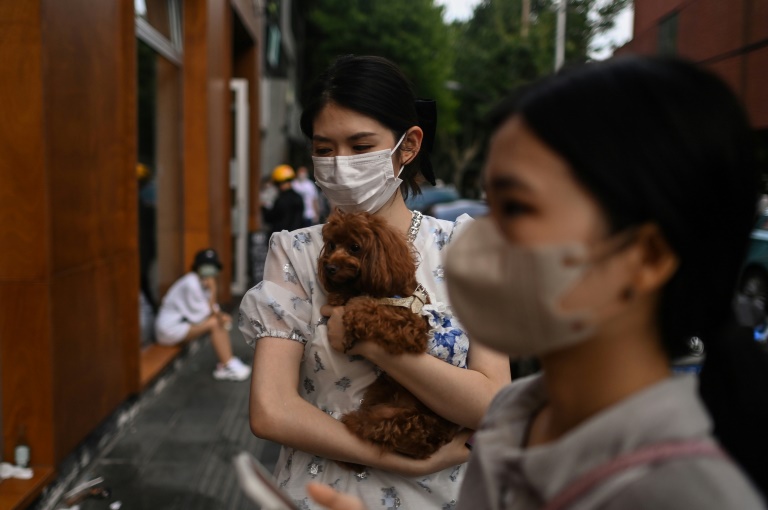
China reported zero new Covid-19 infections in Shanghai for the first time since March on Saturday, as the country’s latest outbreak subsides after months of lockdowns and other restrictions.

China is the last major economy committed to a zero-Covid strategy, stamping out all infections with a combination of targeted lockdowns, mass testing and long quarantine periods.

The economic hub of Shanghai was forced into a months-long lockdown during a Covid surge this spring driven by the fast-spreading Omicron variant, while the capital Beijing shuttered schools and offices for weeks over a separate outbreak.

But infections have slowed to a trickle in recent days, with Shanghai on Saturday reporting zero locally transmitted cases for the first time since before the outbreak in early March.

“There were no new domestic Covid-19 confirmed cases and no new domestic asymptomatic infections in Shanghai,” the city said in a statement.

The lockdown on Shanghai’s 25 million residents was mostly lifted in early June, but the metropolis has struggled to return to normal as individual neighbourhoods have reimposed restrictions over new infections.

Millions of people in the city were temporarily locked down again two weeks ago after the government ordered a fresh mass testing campaign.

In Beijing, restrictions imposed in May were later eased as cases declined, but tightened again this month after a nightlife-linked infection cluster emerged.

After days of mass testing and localised lockdowns, the “Heaven Supermarket infection chain” — named after a popular bar visited by the patients — has now been effectively blocked, Beijing authorities said last week.

The city’s education bureau said Saturday that all elementary and middle school students could return to their classrooms for in-person schooling on Monday.

Beijing reported only two new local infections on Saturday.

However, China’s southern manufacturing powerhouse of Shenzhen said Saturday it would close wholesale markets, cinemas and gyms in a central district bordering Hong Kong for three days after Covid cases were discovered there.

Chinese officials insist the zero-Covid policy is necessary to prevent a healthcare calamity, pointing to unevenly distributed medical resources and low vaccination rates among the elderly.

But the strategy has hammered the world’s second-largest economy and heavy handed enforcement has triggered rare protests in the tightly controlled country.

China’s international isolation has also prompted some foreign businesses and families with the financial means to make exit plans.

'A tragedy': Missouri's last abortion clinic draws protesters decrying ban

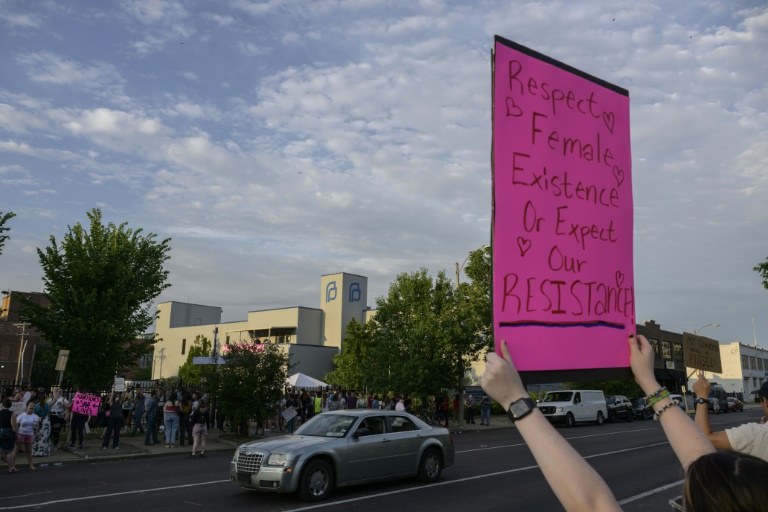
Standing outside what had been the last remaining abortion clinic in Missouri on Friday, Pamela Lukehart choked back tears as she recalled how things were before the landmark 1973 Supreme Court decision enshrining a woman’s right to the procedure.

“Women died getting abortions back then,” the 68-year-old told AFP, her voice breaking as she stood alongside scores of other protesters. 

“We were trying to protect women’s rights, women’s lives, and now they’ve taken all that away from us.”

The conservative-dominated Supreme Court on Friday overturned its monumental decision in Roe v. Wade, putting an end to the federal right to abortions it established nearly 50 years ago. 

The seismic ruling immediately triggered a wave of right-leaning states to impose new bans on the procedure — with Missouri being the first. 

Less than two hours after the court’s decision, the state’s attorney general Eric Schmitt tweeted a photo of himself signing off on the prohibition, calling the occasion “a monumental day for the sanctity of life”.

The swift ban forced the Planned Parenthood clinic on St. Louis’ Forest Park Avenue –- which had been the last facility providing abortions in the state -– to immediately stop offering the procedure.

“Today, for me, it’s tragic because we fought so hard to get this law passed in 1973,” said Lukehart, who was accompanied by her granddaughter Audrey at the protest outside the Planned Parenthood clinic. 

“Now 50 years later, they have jerked this away from us. This is wrong. It’s totally wrong,” she said.

– ‘We cannot stand by’ –

While Midwestern, conservative Missouri was the first state to ban abortions after the ruling, it was not the last.

As of Friday evening, at least six other states had imposed bans: Alabama, Arkansas, Kentucky, Louisiana, Oklahoma, and South Dakota. 

Indiana also announced it would take steps to do the same, and abortion providers in Wisconsin said the procedure was now banned there as well.

Hundreds of protesters took to the streets in St. Louis following the ban, chanting “My body, my choice,” and carrying signs bearing slogans like “Abortion is Healthcare.”

Addressing the crowd through a megaphone, one speaker said: “We cannot stand by while our rights are taken away from us.”

Back at the Planned Parenthood clinic, protester Alec Ryan, 31, said the new bans on abortion would have tangible consequences.

“So there are going to be women and pregnant people who are trapped in abusive marriages because they can’t get an abortion. There are going to be people who are put in situations that they shouldn’t be put into,” he told AFP. 

“It’s going to be a tragedy.”

Linda Locke, who sits on the Planned Parenthood’s board in St Louis, worried about the impact of Friday’s decision on younger generations.

“I have granddaughters, right?” she said. “And they all grew up thinking their body was under their control. And today, it’s just shocking to me and disappointing that the Supreme Court just told them that, ‘No, you don’t… We don’t trust you to make decisions about your own body.'”

Close Bitnami banner
Bitnami