World

Oceans saved us, now we can return the favour

Humanity must heal oceans made sick by climate change, pollution and overfishing in order to rescue marine life and save ourselves, experts warned ahead of a major UN conference opening Monday in Lisbon.

By absorbing — decade after decade — a quarter of CO2 pollution and more than 90 percent of excess heat from global warming, oceans have kept Earth’s terrestrial surface liveable. 

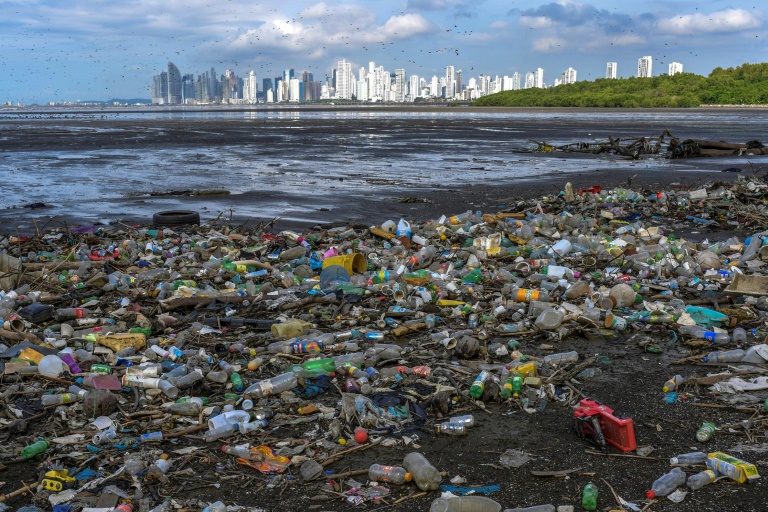
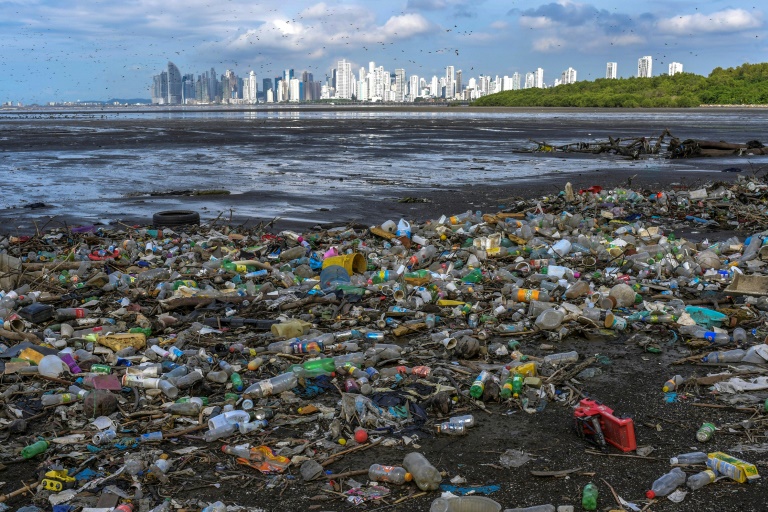
Our species has returned the favour by dumping mountains of plastic waste into the sea, emptying the deep blue of big fish, and poisoning coastlines with toxic chemicals and agricultural runoff that create dead zones bereft of oxygen.

“At least one-third of wild fish stocks are overfished and less than 10 percent of the ocean is protected,” Kathryn Matthews, chief scientist for US-based NGO Oceana, told AFP.

“Destructive and illegal fishing vessels operate with impunity in many coastal waters and on the high seas.”

Nearly $35 billion in subsidies that aggravate overfishing will fall under a harsh spotlight in Lisbon, despite first steps towards a partial ban put in place by the World Trade Organization (WTO) last week.

At the same time, ocean water made acidic by CO2 along with vast marine heatwaves lasting months or longer are killing coral reefs that support a quarter of marine life and provide livelihoods for a quarter of a billion people.

“We have only begun to understand the extent to which climate change is going to wreak havoc on ocean health,” said Charlotte de Fontaubert, the World Bank’s global lead for the blue economy.

– ‘It’s scary’ –

Jointly hosted by Portugal and Kenya, the five-day UN Ocean Conference — delayed from April 2020 by the Covid-19 pandemic — brings together thousands of government officials, businesses, scientists and NGOs in search of solutions.

While they do not all see eye-to-eye on what needs to be done, they largely agree on what is at stake. 

“If we don’t do the right thing, we might end up with a dead ocean,” Rashid Sumaila, a fisheries expert and professor at the University of British Columbia, told AFP. 

“Think about that — Oh man, it’s scary.”

Pollution that could, on current trends, see as much plastic in the seas as fish by mid-century is also on the agenda, with proposals ranging from recycling to outright banning of plastic bags.

From East Asian factory ships prowling the high seas to artisanal fishing boats hugging tropical coastlines, how to make wild fisheries sustainable will be high on the Lisbon agenda.

The new watchword is “blue food” — sustenance from the sea that is both sustainable and equitable.

“Wild ocean fish can provide a climate-friendly, micro-nutrient protein source that can feed one billion people a healthy seafood meal every day — forever,” said Matthews.

Also under the microscope is the booming aquaculture industry, where issues range from the destruction of precious mangrove forests to rampant antibiotic use.

– Year-end summits –

The conference may report trend lines for wild fisheries — which peaked in the 1990s — and seafood farming for the first time, with each producing about 100 million tons per year.

The Lisbon meet will see ministers and even a few heads of state, including French President Emmanuel Macron, but is not a formal negotiating session.

That won’t stop participants, however, from pushing for a strong oceans agenda at two critical summits later this year: the COP27 UN climate talks in November, hosted by Egypt, followed by the long-delayed COP15 biodiversity negotiations, recently moved from China to Montreal.

Oceans are already at the heart of a draft biodiversity treaty tasked with halting what many scientists fear is the first “mass extinction” since a meteor wiped out terrestrial dinosaurs more than 65 million years ago.

A coalition of nearly 100 nations supports a cornerstone provision that would designate 30 percent of the planet’s land and ocean as protected areas.

For climate change, not so much.

Despite global warming’s dire impact and the key role oceans play in soaking up atmospheric CO2, the seven seas have barely rated a mention within ongoing UN climate talks until recently.   

But science has made it clear they need each other: oceans will continue to suffer unless greenhouse gas concentrations stabilise, and the fight against global warming will be doomed if oceans lose their capacity to draw down CO2 and soak up heat.  
Oceans saved us, now we can return the favour

Humanity must heal oceans made sick by climate change, pollution and overfishing in order to rescue marine life and save ourselves, experts warned ahead of a major UN conference opening Monday in Lisbon.

By absorbing — decade after decade — a quarter of CO2 pollution and more than 90 percent of excess heat from global warming, oceans have kept Earth’s terrestrial surface liveable. 

Our species has returned the favour by dumping mountains of plastic waste into the sea, emptying the deep blue of big fish, and poisoning coastlines with toxic chemicals and agricultural runoff that create dead zones bereft of oxygen.

“At least one-third of wild fish stocks are overfished and less than 10 percent of the ocean is protected,” Kathryn Matthews, chief scientist for US-based NGO Oceana, told AFP.

“Destructive and illegal fishing vessels operate with impunity in many coastal waters and on the high seas.”

Nearly $35 billion in subsidies that aggravate overfishing will fall under a harsh spotlight in Lisbon, despite first steps towards a partial ban put in place by the World Trade Organization (WTO) last week.

At the same time, ocean water made acidic by CO2 along with vast marine heatwaves lasting months or longer are killing coral reefs that support a quarter of marine life and provide livelihoods for a quarter of a billion people.

“We have only begun to understand the extent to which climate change is going to wreak havoc on ocean health,” said Charlotte de Fontaubert, the World Bank’s global lead for the blue economy.

– ‘It’s scary’ –

Jointly hosted by Portugal and Kenya, the five-day UN Ocean Conference — delayed from April 2020 by the Covid-19 pandemic — brings together thousands of government officials, businesses, scientists and NGOs in search of solutions.

While they do not all see eye-to-eye on what needs to be done, they largely agree on what is at stake. 

“If we don’t do the right thing, we might end up with a dead ocean,” Rashid Sumaila, a fisheries expert and professor at the University of British Columbia, told AFP. 

“Think about that — Oh man, it’s scary.”

Pollution that could, on current trends, see as much plastic in the seas as fish by mid-century is also on the agenda, with proposals ranging from recycling to outright banning of plastic bags.

From East Asian factory ships prowling the high seas to artisanal fishing boats hugging tropical coastlines, how to make wild fisheries sustainable will be high on the Lisbon agenda.

The new watchword is “blue food” — sustenance from the sea that is both sustainable and equitable.

“Wild ocean fish can provide a climate-friendly, micro-nutrient protein source that can feed one billion people a healthy seafood meal every day — forever,” said Matthews.

Also under the microscope is the booming aquaculture industry, where issues range from the destruction of precious mangrove forests to rampant antibiotic use.

– Year-end summits –

The conference may report trend lines for wild fisheries — which peaked in the 1990s — and seafood farming for the first time, with each producing about 100 million tons per year.

The Lisbon meet will see ministers and even a few heads of state, including French President Emmanuel Macron, but is not a formal negotiating session.

That won’t stop participants, however, from pushing for a strong oceans agenda at two critical summits later this year: the COP27 UN climate talks in November, hosted by Egypt, followed by the long-delayed COP15 biodiversity negotiations, recently moved from China to Montreal.

Oceans are already at the heart of a draft biodiversity treaty tasked with halting what many scientists fear is the first “mass extinction” since a meteor wiped out terrestrial dinosaurs more than 65 million years ago.

A coalition of nearly 100 nations supports a cornerstone provision that would designate 30 percent of the planet’s land and ocean as protected areas.

For climate change, not so much.

Despite global warming’s dire impact and the key role oceans play in soaking up atmospheric CO2, the seven seas have barely rated a mention within ongoing UN climate talks until recently.   

But science has made it clear they need each other: oceans will continue to suffer unless greenhouse gas concentrations stabilise, and the fight against global warming will be doomed if oceans lose their capacity to draw down CO2 and soak up heat.  
EU top diplomat visits Iran in bid to revive nuclear talks

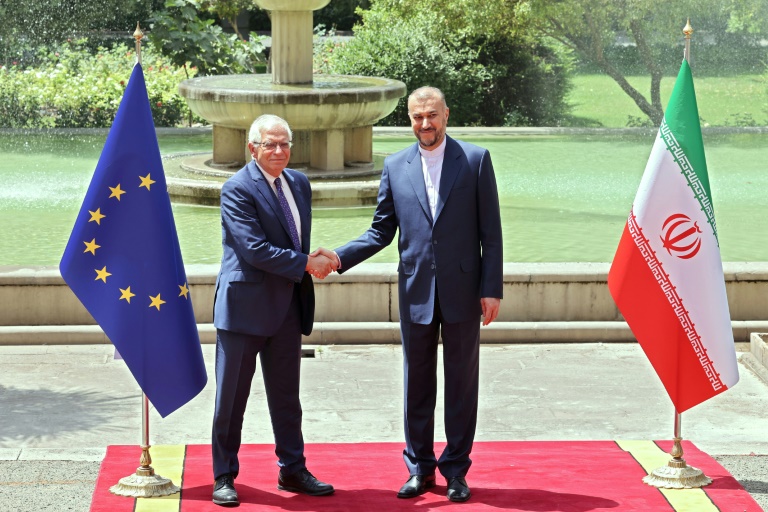
European Union foreign policy chief Josep Borrell met Iran’s top diplomat on Saturday after arriving in Tehran for talks on efforts to revive the 2015 Iran nuclear deal.

The surprise visit by Borrell, who arrived in the Iranian capital on Friday night, is aimed at getting the talks back on track three months after they stalled amid differences between Iran and the United States.

“Diplomacy is the only way to go back to full implementation of the deal and to reverse current tensions,” Borrell tweeted.

Borrell went into a meeting with Foreign Minister Hossein Amir-Abdollahian in the morning and was expected to hold talks with other Iranian officials later in the day, said the official news agency IRNA.

The Iran nuclear deal has been hanging by a thread since 2018, when then US president Donald Trump unilaterally withdrew from the accord and began imposing crippling economic sanctions on America’s arch enemy.

The administration of incumbent US President Joe Biden has sought to return to the agreement, saying it would be the best path with the Islamic republic.

The US pointman on Iran, Robert Malley, “reiterated firm US commitment to come back to the deal” over a meal with Borrell on the eve of his trip, according to the EU’s coordinator for the talks, Enrique Mora.

– ‘Meaningful diplomacy’ –

“We remain committed to the path of meaningful diplomacy, in consultation with our European partners,” Malley said later on his official Twitter account.

The talks, which began in April last year, aim to return the United States to the deal, including through lifting sanctions, while ensuring Iran’s full compliance with its nuclear commitments.

The negotiations stalled in March amid differences between Tehran and Washington, notably over a demand by Iran to remove its Islamic Revolutionary Guard Corps from a US terror list.

“We are ready to conclude this agreement, and urge Iran to seize this diplomatic opportunity to conclude now, while this is still possible,” a French foreign ministry spokeswoman said on Friday.

Amir-Abdollahian said on Thursday that Iran was “serious” about reaching an agreement.

“I hope we can reach the final point of the agreement in the near future with realism from the American side,” he said, adding that “the nuclear negotiations train has reached difficult stops as they near the end.”

The 2015 nuclear deal reached with six major powers — Britain, China, France, Germany, Russia and the US — gave Iran relief from sanctions in return for guarantees it could not develop an atomic weapon.

Iran has always denied wanting a nuclear arsenal.

– Cameras removed –

In April, Secretary of State Antony Blinken said the United States still believed a return to the accord was “the best way to address the nuclear challenge posed by Iran”.

Blinken warned at the time that the “breakout time” for Iran to develop a nuclear bomb if it so chooses was “down to a matter of weeks” after the deal pushed it beyond a year.

The International Atomic Energy Agency’s board of governors adopted a resolution this month censuring Iran for failing to adequately explain the previous discovery of traces of enriched uranium at three sites which Tehran had not declared as having hosted nuclear activities.

On the same day, June 8, Tehran said it had disconnected a number of IAEA cameras that had been monitoring its nuclear sites.

IAEA chief Rafael Grossi later confirmed 27 cameras had been disconnected, leaving about 40 still in place.

The move by Iran, he warned, could deal a “fatal blow” to the negotiations unless the UN nuclear watchdog’s inspectors were given access within three to four weeks.

The visit by Borrell, his first to Tehran since February 2020, could be a determining factor in the fate of the deal.

During the talks in Vienna aimed at reviving the accord, Iran has repeatedly called for guarantees from the Biden administration that there will be no repeat of Trump’s pullout.

German activists up their game to keep climate centre stage

With climate change pushed down the news agenda as Germany tackles an energy crisis and the war in Ukraine, environmental activists are resorting to increasingly eye-catching stunts to get their message across.

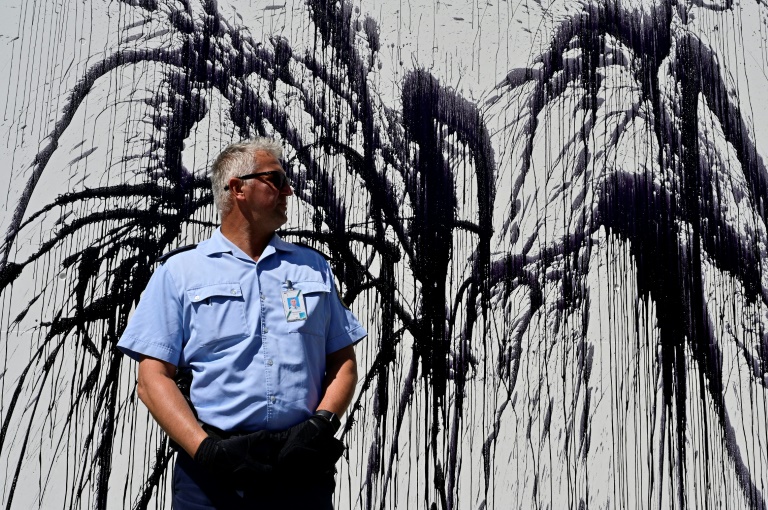
This week, around a dozen activists sprayed a black liquid that looked like oil on the chancellery in Berlin and stood in front of the building with a banner that read: “Save oil instead of drilling.”

Dressed in orange high-visibility jackets and hard hats, the protesters were members of Letzte Generation (“Last Generation”) — a radical protest group that has become the new face of environmental activism in Germany.

“The government has ignored everything else: petitions have been written, a million people have taken to the streets,” said Lina Joansen, a 24-year-old student taking part in the protest. 

The activists want a promise from the government that it will not drill for oil in the North Sea. 

“We know that fossil fuels can only aggravate the climate catastrophe that is already happening,” said law student Myriam Herrmann, 25. 

Six months ago, a new coalition government was elected in Germany on a promise to make climate change one of its top priorities.

The Greens entered power for the first time in more than two decades, forming a coalition with the Social Democrats (SPD) under Chancellor Olaf Scholz and the liberal FDP.

– Ambitious climate plans –

Green party Economy Minister Robert Habeck announced an ambitious 60 billion euro ($68 billion) climate investment plan and promised that Germany would end coal power and generate 80 percent of electricity from renewables by 2030.

But since then, climate concerns have been overshadowed by the war in Ukraine, an acute energy crisis and record inflation.

Germany has accelerated plans to import liquefied natural gas (LNG) by sea, wants to explore new oil and gas reserves in the North Sea, and has even decided to reactivate mothballed coal-fired power plants.

The government has said it is still on target to meet its 2030 climate targets, but the protesters are not convinced.

Herrmann is “incredibly disappointed”, especially with Habeck. “We don’t have time for stopgap solutions any more,” she said.

Letzte Generation was born following a hunger strike last year by activists demanding a law to ban supermarkets from destroying unsold food products.

Earlier this year, small groups of Letzte Generation protesters blocked busy roads in Berlin by sitting down and glueing their hands to the tarmac. More than 100 were arrested.

A few days after the oil protest, the group once again employed these tactics, with about 65 protesters blocking the Frankfurter Tor intersection in Berlin’s Friedrichshain.

– ‘Legitimate means’ –

Civil disobedience is “an established mode of protest in the German environmental movement”, sociologist Michael Neuber told AFP, recalling the anti-nuclear movement of the 1970s and blockades by the Extinction Rebellion in 2019.

Such protests have been overshadowed over the past two to three years by the massive student-led demonstrations of the Fridays for Future movement, but have more recently started to make a comeback. 

“Civil disobedience attracts more attention than demonstrations,” said sociologist Dieter Rucht.

“I see civil disobedience as a legitimate means of political protest, when it is peaceful,” 27-year-old Green party politician Deborah Duering told RBB radio this week, claiming to share the “anxiety” of the activists.

In February, by contrast, many voices within the Green party had criticised Letzte Generation for blocking the roads in Berlin. 

For Herrmann, if politicians want the protests to stop, there is an easy solution.

“It is enough for Scholz and Habeck to declare that they no longer want to encourage oil drilling in the North Sea,” she said.

Two killed in Norway 'terror' shooting

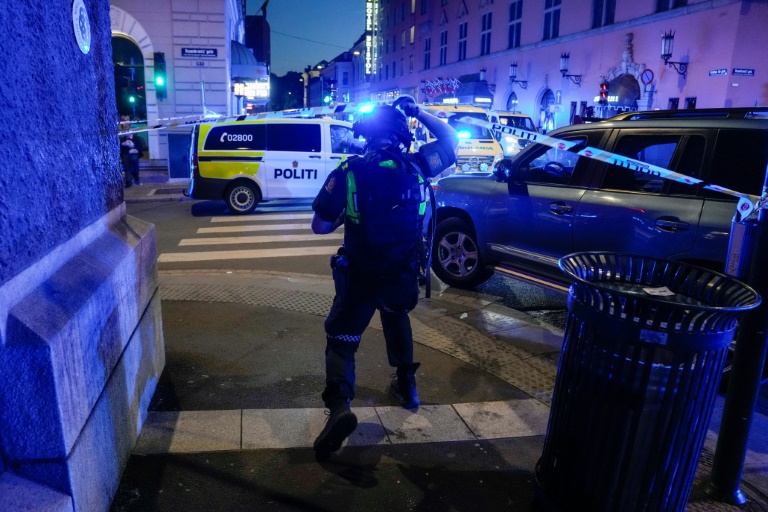
Two people were killed and at least 21 others wounded in shootings near bars in central Oslo early Saturday that police were treating as a “terrorist attack”.

Police said a suspect had been arrested following the shootings, which occurred around 1:00 am (2300 GMT Friday) in three locations, including a gay bar, close together in the centre of the Norwegian capital.

“The police are investigating the events as a terrorist attack,” police said in a statement.

A Pride march that was due to take place in the capital on Saturday afternoon was called off following the violence in the normally tranquil city.

“All events linked to Oslo Pride have been cancelled” following “clear” recommendations by police, the organisers wrote on Facebook.

Police said two people had died and 21 were wounded, including 10 seriously in the attacks, and said two weapons had been seized.

Police said the suspect arrested was a Norwegian national of Iranian descent.

“Now everything indicates that there was only one person who committed this act,” police official Tore Barstad earlier told a press briefing.

Police presence was boosted throughout the capital  to deal with other incidents, he added.

Police received the first reports at 1:14 am and the suspect was arrested five minutes later, he said.

The shootings happened near the London Pub gay club, the Herr Nilsen jazz club and a takeaway food outlet.

Heavily armed police equipped with bulletproof vests and helmets were patrolling the scene of the shootings.

– ‘Bleeding man on the ground’ –

“He looked very determined about where he was aiming. When I realised it was serious, I ran. There was a bleeding man lying on the ground,” a woman who saw the incident told the Verdens Gang newspaper.

Another witness quoted by the paper mentioned the use of an automatic weapon — which the police did not confirm.

“There were a lot of injured people on the ground who had head injuries,” he said.

According to an NRK radio journalist present at the time of the shooting, the shooter arrived with a bag from which he pulled out a weapon and started firing.

Eight people were taken to hospital and six others were taken care of by a medical service.

“Some are described as seriously injured, others as more lightly injured,” said Barstad. 

Generally peaceful Norway was the scene of bloody attacks on July 22, 2011 when right-wing extremist Anders Behring Breivik killed 77 people.

He first detonated a bomb near the government headquarters in Oslo, killing eight people. 

He then disguised himself as a policeman and went on a shooting spree at a summer camp for left-wing youth on the island of Utoya, killing another 69 people — most of them teenagers.

Quake-hit Afghan village struggles back to life as aid trickles in

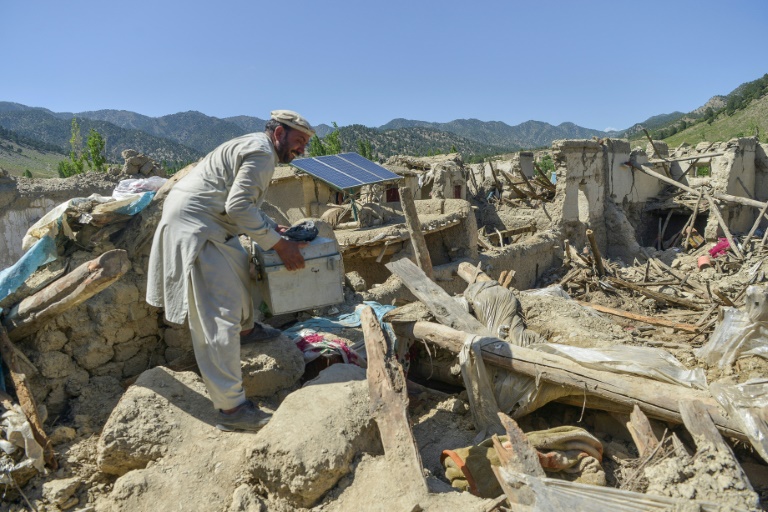
A ruined village in eastern Afghanistan, just 10 kilometres (six miles) from the epicentre of this week’s deadly earthquake, is struggling back to life as aid trickles into the isolated region.

Wuchkai, three hours away from the nearest town of any substance, can only be reached by a narrow, rutted dirt road — with space for just one vehicle in places.

Isolated, without electricity and water, the village sprawls over a large basin surrounded by imposing hills and bisected by an almost-dry river. 

Many of the village dwellings, workshops and stores were destroyed by Wednesday’s 5.9-magnitude earthquake, whose epicentre was recorded on the other side of the hills that flank it.

More than 1,000 people were killed in the quake — the country’s deadliest in over two decades — with Wuchkai alone accounting for at least three dozen.

Now the survivors are trying to find shelter in the ruins of their homes, desperately dependent on the aid convoys that have started to arrive.

“I ask and expect the world and the government to provide us with the basic things we need to live,” says Raqim Jan, 23.

– Almost every family lost someone –

Jan lost 11 members of his extended family when their single-storey dwelling caved in on them as they slept early Wednesday.

Almost every family lost at least one member — and most lost many more — so they are coming together to share resources.

Jan now lives with four other families — including 15 women and about 20 children — in three large tents set up near their ruined homes.

Help has arrived, but he worries for how long it will last.

“The tents, food and flour that we have received for a few days are not enough,” Jan says, as a communal fire for cooking sends smoke spiralling above the makeshift campsite.

Nearby, children are playing — seemingly oblivious to their plight — while babies wail for attention.

A cow tied to a pole ruminates as chickens strut around the dusty compound, pecking at nothing in the dust.

The village men make occasional forays into the ruins of their houses, looking to salvage whatever valuables can be found in the debris.

But they tread gingerly, as any walls still standing are cracked — threatening to collapse at any moment — and aftershocks are still being felt. 

A violent tremor killed five people in the same district early Thursday.

– Aid vehicles arriving –

In the centre of Wuchkai, a steady stream of aid vehicles arrive, kicking up clouds of dust from roads that are finally drying after days of torrential rain.

While the big operators appear organised — such as the World Food Program and Doctors Without Borders — smaller Afghan-led distribution is more chaotic.

Tempers flared as dozens of villagers scrambled over the back of a truck Thursday, trying to grab bags of beans that had been donated by a businessman from Kabul.

A platoon of armed Taliban grabbed one particularly exuberant young man and roughed him away in their vehicle.

Not far away, bent double under the weight of the bundle, Kawsar Uddin, 20, and his uncle carry a tent that will become the family’s temporary home.

Faced with the influx of aid that is now arriving, Uddin is sceptical of the motivation and accuses aid organisations of staging “photo ops”.

“They have distributed food and tents… but some are doing business on the blood of Afghans,” he says.

Chinese leader Xi Jinping to attend Hong Kong handover celebration

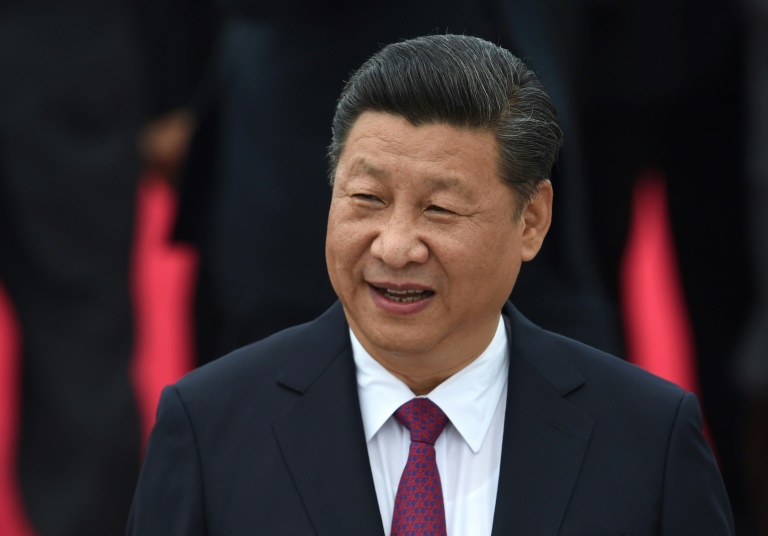
Chinese President Xi Jinping will attend events to celebrate 25 years since Hong Kong’s handover to China, state media reported Saturday, with the Communist Party looking to showcase its control over the city after crushing a democracy movement.  

If Xi attends in person, the trip would be his first outside of the Chinese mainland since the pandemic began. But state media and Hong Kong officials did not explicitly say whether he would travel to the city or attend virtually. 

A trip would also coincide with the inauguration of Hong Kong’s new administration, led by former security chief John Lee.

The Chinese Communist Party places great importance on anniversaries, and Hong Kong’s handover presents Xi with an opportunity to emphasise China’s authority over Hong Kong after three years of political upheaval there.

Hong Kong is at the halfway point of the “One Country, Two Systems” political model, which promised that the former British colony’s way of life would remain unchanged for 50 years after its handover.

But a national security law imposed after huge and often violent pro-democracy protests in 2019 has seen dissent quashed, with scores of opposition figures arrested in an ongoing political crackdown.

The new Hong Kong government, to be sworn in on July 1, will be led by Lee, who oversaw the controversial police response to the democracy protests.

Lee on Saturday said he was delighted by the news of Xi’s attendance and thanked the Chinese leader for his “caring and support” for Hong Kong.

“Hong Kong is at the crucial stage of advancing from chaos to governance, and gradually towards prosperity,” Lee said in a statement.

– Covid concerns –

Xi last visited Hong Kong in 2017 to swear in city leader Carrie Lam, a three-day trip marked by heavy public police presence.

China’s top leaders have attended the swearing-in of every Hong Kong chief executive since the 1997 handover, but Xi has not left the mainland since January 2020, when the coronavirus first emerged from the central Chinese city of Wuhan.

Ongoing virus outbreaks in both mainland China and Hong Kong have prompted doubts over whether Xi would risk travelling, with Beijing committed to a zero-Covid strategy.

State news agency Xinhua reported on Saturday that Xi “will attend a meeting celebrating the 25th anniversary of Hong Kong’s return to the motherland”, but did not specify whether it would be in person.  

Two top officials in the incoming Hong Kong administration tested positive for the coronavirus on Thursday and had to go into quarantine.

Daily case numbers in Hong Kong have climbed to nearly 2,000, though hospitalisations have remained low, with outgoing city leader Lam earlier reassuring the public that the situation was “not an alarm bell”.

Hong Kong has its own version of zero-Covid, which has kept the international business hub isolated for much of the pandemic, but it is less strict than what is practised in the mainland.

The difference in policy means Hong Kongers coming into close contact with Chinese officials will likely be required to undergo quarantine.

Senior government officials have entered a “closed-loop” system to minimise infection risk ahead of their attendance of handover celebration events, according to local media.

Last month, Lee was chosen as Hong Kong’s leader by a small group of political elites, after being the sole candidate in the race and facing no opposition.

Xi and Lee have already met, when the latter travelled to Beijing to receive the central government’s blessing. 

“I believe that the administration of the new government will definitely bring forth a new atmosphere, and compose a new chapter in Hong Kong’s development,” Xi said at the time, according to Xinhua.

'Deepest shipwreck': US WWII ship found off Philippines

A US navy destroyer sunk during World War II has been found nearly 7,000 metres (23,000 feet) below sea level off the Philippines, making it the world’s deepest shipwreck ever located, an American exploration team said.

The USS Samuel B Roberts went down during a battle off the central island of Samar on October 25, 1944 as US forces fought to liberate the Philippines — then a US colony — from Japanese occupation.

A crewed submersible filmed, photographed and surveyed the battered hull of the “Sammy B” during a series of dives over eight days this month, Texas-based undersea technology company Caladan Oceanic said.

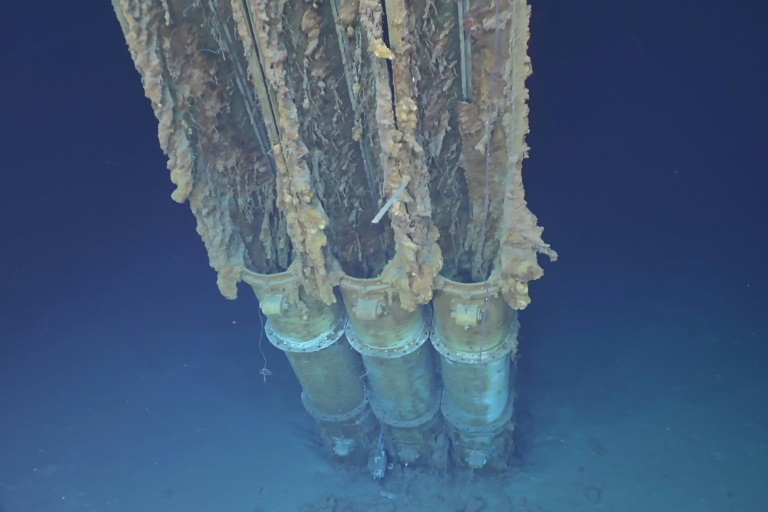
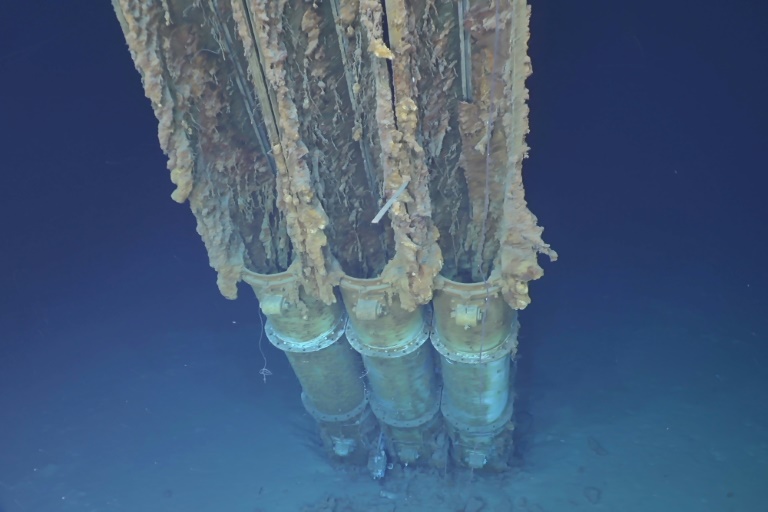
Images showed the ship’s three-tube torpedo launcher and gun mount.

“Resting at 6,895 meters, it is now the deepest shipwreck ever located and surveyed,” tweeted Caladan Oceanic founder Victor Vescovo, who piloted the submersible.

“This small ship took on the finest of the Japanese Navy, fighting them to the end,” he said.

According to US Navy records, Sammy B’s crew “floated for nearly three days awaiting rescue, with many survivors perishing from wounds and shark attacks”. Of the 224 crew, 89 died.

The battle was part of the larger Battle of Leyte, which saw intense fighting over several days between US and Japanese forces.

Sammy B was one of four US ships sunk in the October 25 engagement.  

The USS Johnston, which at nearly 6,500 metres was previously the world’s deepest shipwreck identified, was reached by Vescovo’s team in 2021. 

In the latest search, the team also looked for the USS Gambier Bay at more than 7,000 metres below sea level, but was unable to locate it. 

It did not search for the USS Hoel due to the lack of reliable data showing where it may have gone down.

The wreck of the Titanic lies in about 4,000 metres of water.

'Deepest shipwreck': US WWII ship found off Philippines

A US navy destroyer sunk during World War II has been found nearly 7,000 metres (23,000 feet) below sea level off the Philippines, making it the world’s deepest shipwreck ever located, an American exploration team said.

The USS Samuel B Roberts went down during a battle off the central island of Samar on October 25, 1944 as US forces fought to liberate the Philippines — then a US colony — from Japanese occupation.

A crewed submersible filmed, photographed and surveyed the battered hull of the “Sammy B” during a series of dives over eight days this month, Texas-based undersea technology company Caladan Oceanic said.

Images showed the ship’s three-tube torpedo launcher and gun mount.

“Resting at 6,895 meters, it is now the deepest shipwreck ever located and surveyed,” tweeted Caladan Oceanic founder Victor Vescovo, who piloted the submersible.

“This small ship took on the finest of the Japanese Navy, fighting them to the end,” he said.

According to US Navy records, Sammy B’s crew “floated for nearly three days awaiting rescue, with many survivors perishing from wounds and shark attacks”. Of the 224 crew, 89 died.

The battle was part of the larger Battle of Leyte, which saw intense fighting over several days between US and Japanese forces.

Sammy B was one of four US ships sunk in the October 25 engagement.  

The USS Johnston, which at nearly 6,500 metres was previously the world’s deepest shipwreck identified, was reached by Vescovo’s team in 2021. 

In the latest search, the team also looked for the USS Gambier Bay at more than 7,000 metres below sea level, but was unable to locate it. 

It did not search for the USS Hoel due to the lack of reliable data showing where it may have gone down.

The wreck of the Titanic lies in about 4,000 metres of water.

Summer travel misery ahead as industry workers in revolt

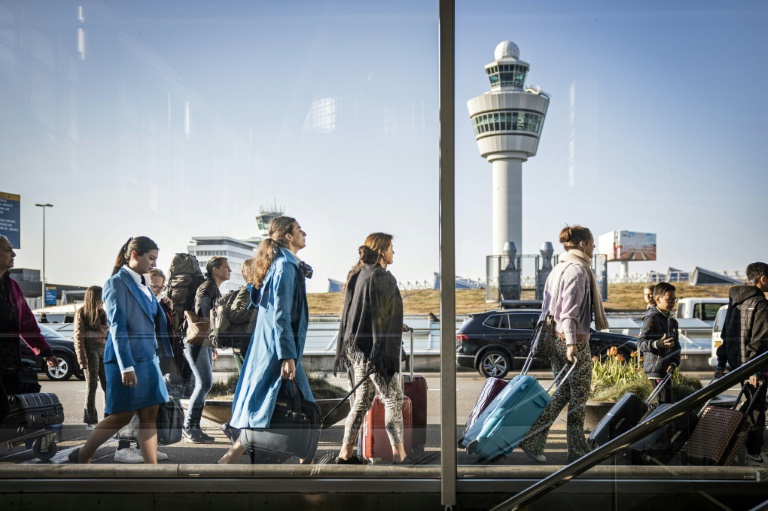
A spiral of worker strikes in Europe’s crucial aviation sector and cancelled flights at a time when millions of travellers are looking to escape for the summer, threaten the sector’s tentative recovery.

Airports and airlines are buckling under the pressure of demand pent up during the pandemic that has been unleashed on understaffed and stretched operations across Europe.

– Cabin crew –

A coordinated strike by Ryanair flight attendants in five European countries has thrown a spotlight on volatile labour relations at low cost airlines. 

“It’s June and colleagues are already exhausted,” said Damien Mourgues, SNPNC trade union representative at Ryanair. 

“Our basic salary is 854 euros ($900) with variables of 8.50 euros per hour” flown, he said. 

In Spain, “we have a basic salary of only 950 euros” and “when you don’t fly, you earn 950 euros, that’s all,” complained Pier Luigi Copellon, a steward based in Barcelona for 14 years. 

At France’s Transavia and Spain’s Volotea the prospect of summer strikes is a growing possibility. 

At Brussels Airlines, which is on strike on Friday, “a crew member works between 50-60 hours over five days on average,” said Claudia de Coster, a cabin purser and a representative of Belgium’s Setca-FGTB union. 

– Airport security officers –

Frontline airport security is suffering more than any other aviation workforce from understaffing as traffic picks up. 

Baggage and passenger screening  officers at inspection points are being forced to manage massive footfall with fewer hands on deck than before. 

“We end up with two or three instead of five per security checkpoint,” said Said Abdou, a Securitas employee at Paris Orly airport and a representative of the CGT union. 

“The pace is so fast. Securitas had hired 17 people recently, they did a day and they didn’t come back — it was too hard,” he said. 

Eight of his colleagues suffered burn-out, he said, because they were refused leave this summer. 

Said Abdou earns 1,500 euros after taxes and deductions, paid 13 times a year, and an individual performance bonus of 500 euros per year after 18 years of service. 

On Monday, a strike by security staff at Brussels’ Zaventem airport led to the cancellation of all the day’s flights. 

– Baggage handlers –

“Among the baggage handlers, there are those who put the luggage on the carousel, those who are squatting in the aircraft hold to pack it up, it’s very tiring,” said Luc Atlan, an organiser in the airport branch of France’s Unsa union. 

Baggage handling companies, which depend on major contracts from the likes of Air France, massively reduced staff at the height of the pandemic. 

The sudden rise in the rate of growth leads to “working under pressure. And with the lack of personnel you go fast and you get hurt. There’s going to be an increasing rate of absences”, said Atlan. 

– Chaperones –

They are less prominent than other front-line workers in the aviation ecosystem, but vital to the smooth running of the airport.

The people charged with accompanying people with reduced mobility are no less essential to the travelling public. 

“We have a lot of delays, a lot of mistakes,” said Ali Khiati, a member of the SUD union’s aviation section. 

“There are people waiting for an hour on the plane,” forcing the plane to remain grounded. 

“When you arrive after an hour, you are shouted at by the captain, by the customers, even though you only got the order five minutes previously,” said Khiati.

“I feel the summer will be catastrophic,” he said, adding that he had never seen anything like it in his 18-year career. 

“A week ago, 21 people in the same day missed their plane. There were 16 who were leaving for Algiers, we put them in a (waiting area) — but there was so much work that the dispatcher forgot about them,” he said . 

Close Bitnami banner
Bitnami