World

Life on pause in Ecuadoran capital gripped by protests

Quito is a city beleaguered — its shops shuttered and streets empty of all but thousands of Indigenous protesters clamoring for a better life, and the police and soldiers keeping them in check.

Some 10,000 demonstrators have gathered in the Ecuadoran capital from all over the country to protest high fuel prices and rising living costs.

And they have vowed to stay until the government meets their demands, or falls.

“It could be a month, it could be two… The war will come but here we will fight,” said Maria Vega, 47, who ekes out a living doing odd jobs — one of about a third of Ecuadorans living in poverty.

Nearly a third do not have full-time work.

Demanding jobs, fuel price cuts, better healthcare and education, they arrived in Quito on foot or on the backs of trucks, many from hundreds of kilometers away.

At night, after long hours on the streets, they recharge, housed austerely at two university campuses and relying in large part on food handouts from church and other groups.

– Shields, sticks and flags –

In the mornings, they set out in groups bearing sticks, makeshift shields fashioned from traffic signs or rubbish bins, and the wiphala — the multicolored flag of the native peoples of the Andes.

Traditional red ponchos stand out among the aggrieved crowds, who set up road barricades with burning tires and tree branches, building bonfires in broad daylight.

Access to the presidency is blocked by metal fences, razor wire and stern lines of security personnel.

“They have weapons. How can one compare a weapon to a stick or a stone? We are not on an equal footing,” protester Luzmila Zamora, 51, complained of the show of force.

President Guillermo Lasso, a former banker who took office a year ago, sees in the revolt an attempt to overthrow him.

Ecuador has a reputation for ungovernability following the departure of three presidents between 1997 and 2005 under pressure from Indigenous people — who make up more than a million of Ecuador’s 17.7 million people.

In 2019, protests led by the Confederation of Indigenous Nationalities of Ecuador (Conaie) — which also called the latest demonstrations — forced the government to abandon plans to eliminate fuel subsidies.

They seem as determined this time around: standing firm in spite of a state of emergency in six of Ecuador’s 24 states, a night-time curfew in Quito, a massive military deployment and insults hurled at them from residents whose lives and livelihoods have been thrown into turmoil.

“We want a government that works for the people, for all of Ecuador, not only for the upper class,” insisted protester Zamora.

Another, 40-year-old pastor Marco Vinicio Morales, said he could not understand how in a country with vast oil, gold and silver resources, people were falling ever further behind.

“If there is no answer (to the protesters’ demands), Lasso will have dug his own grave,” he said.

– Diners flee teargas –

Business owners, shopkeepers and workers in the capital, just starting to recover from closures due to the coronavirus pandemic, are not pleased.

Efren Carrion, a 42-year-old chef, said his restaurant normally sells about 120 meals on a week day. “These days, it has been 10 or 25 maximum,” he said.

And due to the ubiquitous teargas in the air, “clients often leave running, without paying.”

For Carrion, workers like him should not have to pay the price for the protest.

“The best revolution is to work and reach an agreement, to negotiate,” he said.

So far, no talks have been scheduled as both side dig in their heels.
Five dead, 35 hospitalized after Buenos Aires fire

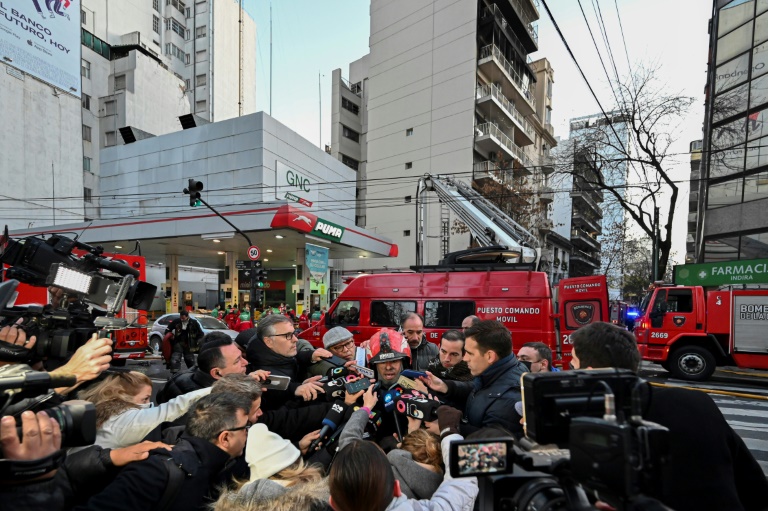
Two women and three children died in a Buenos Aires apartment building fire Thursday that saw 35 others rushed to several hospitals, emergency services said. 

The fire broke out at around 6:00 am on the seventh floor of a building in the central Recoleta neighborhood, and spread rapidly to the eighth floor, fire officer Pablo Giardina said.

Two women and three children who were evacuated alive died on their way to hospital of smoke inhalation and burns, added SAME emergency services head Alberto Crescenti.

Thirty-five others were receiving treatment for various injuries. One, a 52-year-old man, was in serious condition.

The cause of the fire in the 14-story building is not yet known. 

Germany raises gas alert level after Russia cuts supply

Germany moved closer to rationing natural gas on Thursday as it raised the alert level under an emergency plan after Russia slashed supplies to the country.

“Gas is now a scarce commodity in Germany,” Economy Minister Robert Habeck told reporters at a press conference.

Russia was using gas “as a weapon” against Germany in retaliation for the West’s support for Ukraine following Moscow’s invasion, Habeck said, with the aim of “destroying” European unity.

But the Kremlin dismissed Germany’s suggestion there were political motives behind the limits to supply as “strange”.

Germany, like a number of other European countries, is highly reliant on Russian energy imports to meet its needs.

Triggering the “alarm” level — the second of three steps under the emergency plan — brings Germany a step closer to the final stage that could see gas rationing in Europe’s top economy.

The increased level reflected a “significant deterioration of the gas supply situation”, Habeck said.

“If we do nothing now, things will get worse,” Habeck said.

– Russian rebuttal –

Russian energy giant Gazprom cut supplies to Germany via the Nord Stream pipeline by 60 percent last week, blaming the new limits on delayed repairs.

Germany has dismissed the technical justification provided by Gazprom, instead calling the move a “political decision”. 

Kremlin spokesman Dmitry Peskov said Thursday there was “no double meaning” in the supply decision.

“Our German partners are well aware of the technological servicing cycles of a pipeline,” he said.

“It’s strange to call it politics.”

In recent weeks, Gazprom has stopped deliveries to a number of European countries, including Poland, Bulgaria, Finland and the Netherlands.

Supplies of gas to Europe’s largest economy were “secure”, Habeck said, but action was still required to prepare for the winter ahead.

To mitigate the risks from a supply cut, the government mandated gas storage facilities be filled to 90 percent by the beginning of December.

Currently, the country’s stores stand just under 60 percent full, above the average level of previous years.

In France, the government said Thursday it aimed to fill its natural gas reserves by autumn as it too braces for a drop in supply from Russia.

France will also build a new floating terminal to receive more liquefied natural gas (LNG) supplies by ship, Prime Minister Elisabeth Borne announced.

“We can do without Russian gas,” French Energy Transition Minister Agnes Pannier-Runacher said later on BFM Business TV.

That depends on the floating terminal beginning operating as planned and France filling its strategic reserve, she added.

The European Bank for Reconstruction and Development (EBRD) meanwhile said it would lend 300 million euros to Moldova to for gas purchases.

– Supply stoppage –

The German government expects supply to stop between July 11 and July 25 for annual maintenance on the Nord Stream pipeline.

If deliveries do not resume after the service period, Germany could face a shortage of gas as soon as “mid-December”.

Since the outbreak of the war in Ukraine, Germany has managed to reduce the share of its natural gas supplied by Russia from 55 percent to around 35 percent.

The government has found new sources of supply, accelerated plans to import gas in the form of LNG by sea, and put aside 15 billion euros ($15.8 billion) to buy gas to fill storage facilities.

Germany also decided to reactivate mothballed coal-fired power plants to take the burden for electricity generation off gas.

In contrast, the government shrugged off calls to extend the operational lifetime of its nuclear power plants.

Prolonging the use of the final reactors set to be taken off the grid at the end of the year was “not an option”, it said Wednesday.

Germany had to look to see what “energy saving potential” existed, Habeck said Thursday. 

Households could “make a difference” by conserving energy, after Germany launched a campaign to encourage fuel-saving measures, he said, while industry could also make a further contribution.

US orders all Juul vaping products off the market

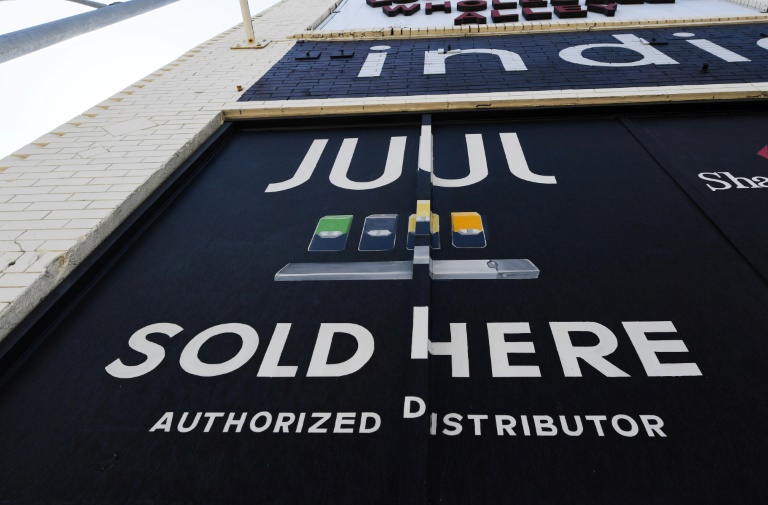
The US Food and Drug Administration on Thursday said it was ordering all products produced by Juul Labs off the market after finding the vaping giant had failed to address certain safety concerns.

The decision, which Juul said it would appeal, clears the way for rival brands to increase their share of the market it once dominated.

It is also a blow for tobacco giant Altria, maker of Marlboro cigarettes, which acquired a 35 stake in Juul in 2018 to diversify its business strategy in the face of falling smoking rates.

“Today’s action is further progress on the FDA’s commitment to ensuring that all e-cigarette and electronic nicotine delivery system products currently being marketed to consumers meet our public health standards,” said FDA Commissioner Robert Califf in a statement. 

Products affected include the Juul device and its pods, which currently come in the flavors Virginia tobacco and in menthol, at nicotine concentrations of five and three percent.

After completing a two-year review of the company’s marketing application, the FDA found the data presented “lacked sufficient evidence regarding the toxicological profile of the products,” it said.

“In particular, some of the company’s study findings raised concerns due to insufficient and conflicting data – including regarding genotoxicity and potentially harmful chemicals leaching from the company’s proprietary e-liquid pods,” it added.

Juul said in a statement that it “respectfully” disagrees with the FDA’s findings and that its products met the statutory standard of being “appropriate for the protection of the public health.”

“We intend to seek a stay and are exploring all of our options under the FDA’s regulations and the law, including appealing the decision and engaging with our regulator,” Juul’s chief regulatory officer Joe Murillo said.

Juul was blamed for a surge in youth vaping over its marketing of fruit and candy flavored e-cigarettes, which it stopped selling in 2019.

In January 2020, the FDA said sale of e-cigarettes in flavors other than tobacco or menthol would be illegal unless specifically authorized by the government.

– Ban is ‘uncertain’ –

The agency has approved some e-cigarette products from other makers such as Reynolds American, the current market leader, NJOY and Logic Technology Development.

Juul has argued that vaping products can provide a solution to the harmful health impacts from conventional cigarettes.

Juul’s products “exist only to transition adult smokers away from combustible cigarettes,” Chief Executive KC Crosthwaite said on the company’s website, adding that the company is “working hard” to rebuild its reputation following an “erosion of trust over the past few years.”

The impact of the FDA’s decision is “far from certain” given the likelihood of an appeal, Goldman Sachs said in an analysis issued before the announcement. “There are already several precedents for reversal” of such orders, it noted.

Juul currently holds around 36 percent share of the US vaping market, a substantial reduction on the roughly 70 percent it held before the FDA’s actions on flavored e-cigarettes, the Goldman Sachs note said.

On Tuesday, President Joe Biden’s administration announced it would develop a new policy requiring cigarette producers to reduce nicotine to non-addictive levels, a move that, if successful could upend the tobacco industry.

Forever young: Many cold-blooded creatures don't age, studies show

Scientists have discovered the secret to eternal youth: be born a turtle.

Two studies published in the journal Science on Thursday revealed scant evidence of aging among certain cold-blooded species, challenging a theory of evolution which holds that senescence, or gradual physical deterioration over time, is an inescapable fate.

Although there have been eye-catching individual reports — such as that of Jonathan the Seychelles tortoise who turns 190 this year — these were considered anecdotal and the issue had not been studied systematically, Penn State wildlife ecologist David Miller, a senior author of one of the papers, told AFP.

Researchers have “done a lot more comparative, really comprehensive work with birds and animals in the wild,” he said, “but a lot of what we knew about amphibians and reptiles were from a species here, a species there.”

For their paper, Miller and colleagues collected data from long-term field studies comprising 107 populations of 77 species in the wild, including turtles, amphibians, snakes, crocodilians and tortoises.

These all used a technique called “mark-recapture” in which a certain number of individuals are caught and tagged, then researchers follow them over the years to see if they find them again, deriving mortality estimates based on probabilities.

They also collected data on how many years the animals lived after achieving sexual maturity, and used statistical methods to produce aging rates, as well as longevity — the age at which 95 percent of the population is dead.

“We found examples of negligible aging,” explained biologist and lead investigator Beth Reinke of Northeastern Illinois University. 

Though they had expected this to be true of turtles, it was also found in one species of each of the cold-blooded groups, including in frogs and toads and crocodilians.

“Negligible aging or senescence does not mean that they’re immortal,” she added. What it means is that there is a chance of dying, but it does not increase with age.

By contrast, among adult females in the US, the risk of dying in a year is about one in 2,500 at age 10, versus one in 24 at age 80. 

The study was funded by the US National Institutes of Health which is interested in learning more about aging in ectotherms, or cold-blooded species, and applying them to humans, who are warm blooded.

– It’s not metabolism –

Scientists have long held ectotherms — because they require external temperatures to regulate their body temperatures and therefore have lower metabolisms —- age more slowly than endotherms, which internally generate their own heat and have higher metabolisms.

This relationship holds true within mammals. For example mice have a far higher metabolic rate than humans and much shorter life expectancy. 

Surprisingly, however, the new study found metabolic rate was not the major driver it was previously thought.

“Though there were ectotherms that age slower and live longer than endotherms, there were also ectotherms that age faster and live shorter lives,” after controlling for factors such as body size.

The study also threw up intriguing clues that could provide avenues for future research. For example, when the team looked directly at average temperatures of a species, as opposed to metabolic rate, they found that warmer reptiles age faster, while the opposite was true of amphibians.

One theory that did prove true: those animals with protective physical traits, such as turtle shells, or chemical traits like the toxins certain frogs and salamanders can emit, lived longer and aged slower compared to those without.

“A shell is important for aging and what it does is it makes a turtle really hard to eat,” said Miller.

“What that does is it allows animals to live longer and for evolution to work to reduce aging so that if they do avoid getting eaten, they still function well.”

A second study by a team at the University of Southern Denmark and other institutions applied similar methods to 52 turtle and tortoise species in zoo populations, finding 75 percent showed negligible aging.

“If some species truly escape aging, and mechanistic studies may reveal how they do it, human health and longevity could benefit,” wrote scientists Steven Austad and Caleb Finch in a commentary about the studies.

They did note, however, that even if some species don’t have increasing mortality over the years, they do exhibit infirmities linked to age.

Jonathan the tortoise “is now blind, has lost his olfactory sense, and must be fed by hand,” they said, proving the ravages of time come for all.

Shocked quake survivors wander through ruined Afghan villages

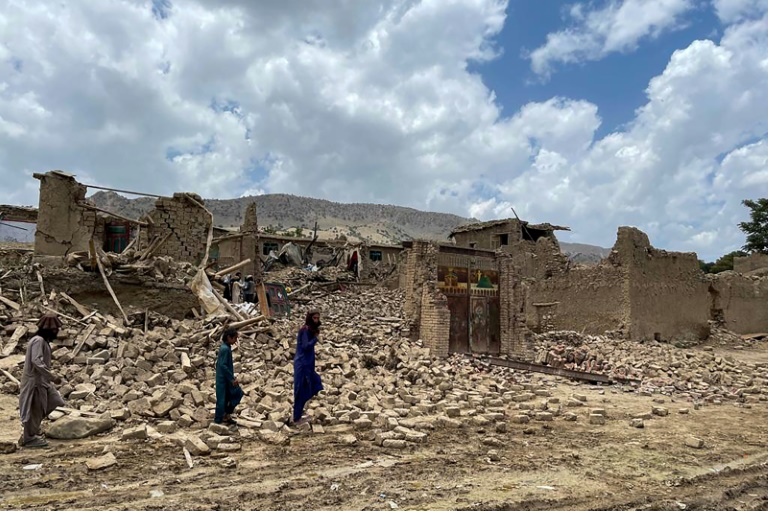
The rubble outline of collapsed walls and roofs is all that remains of the village where Zaitullah Ghurziwal lives, ravaged by a ruinous earthquake in Afghanistan that has left at least 1,000 people dead.

Survivors in Ghurza wander around in shock, looking for a place of shelter — or to the sky in hope that aid will be delivered by aircraft.

“There are no blankets or tents… there’s no shelter. People are lying on open ground,” Ghurziwal tells AFP, pointing to the crumbled dwelling where he now holds out with six other families.

“We need food and water. Our entire water distribution system is destroyed. Everything is devastated.”

Wednesday’s 5.9-magnitude quake — Afghanistan’s deadliest in years — struck hardest in rugged east Paktika province. In addition to damaging or destroying thousands of earthen homes and other structures, it downed mobile phone towers and power lines while triggering rock and mudslides which blocked mountain roads.

The disaster poses a huge logistical challenge for Afghanistan’s new Taliban government, which has isolated itself from much of the world by introducing hardline Islamist rule that subjugates women and girls.

International aid agencies trying to help are also stretched thin.

Remote Ghurza is one of many small mountain villages in Bermal district, one of the wost-affected areas.

Aid is beginning to trickle into the valley –- a military helicopter seen flying overhead dropped food to hard-to-reach places and collected some injured to deliver them to hospital — but an AFP team saw no United Nations presence on Thursday. 

– ‘Helpless’ –

After the horror of the first hours, villagers have already dried their tears — misfortune is well known in this area, one of the poorest in a country ravaged by humanitarian crises, neglect and decades of war.

On Wednesday the villagers buried about 60 people, and 30 more followed on Thursday.

“We didn’t even have a shovel to dig with, no equipment, so we used a tractor,” says Ghurziwal.

In the middle of a courtyard, his octogenarian mother, slightly injured, is lying on a bed, sheltered from the sun by a sheet.

The previous night children took refuge from the heavy rain in a wheel-less car.

Nawab Khan tells AFP he lost seven members of his family: his wife and six children.

Nearby, a tent is erected next to a levelled house, providing shelter for about 15 women and children. 

Another elderly woman, wearing a floral red velvet dress and a long green shawl, lost four relatives.

“I buried them today,” she says, giving her name as Zulfana.

Now, there is nothing to be done but wait for aid and rescuers to arrive.

“I feel so helpless, I don’t have a single penny,” she sighs.

Journalists killed, wounded in Ukraine honoured in Kyiv

Journalists killed or wounded during Russia’s invasion of Ukraine were honoured Thursday in an exhibition in Kyiv, months into Moscow’s war.

“The war continues, the war is not over. And this is a war in which our citizens are dying, in which Ukrainian and foreign journalists are dying,” said Tetyana Teren, executive director of PEN Ukraine, one of the organisers of the exhibition.

“That is why we ask foreign media to tell the truth about this war and continue to tell the world about Russia’s crimes in our country,” she told AFP.

Portraits of reporters and media workers who have become victims of the conflict stare down at passers-by from large black and white boards in the capital’s centre.

The exhibition is entitled “The War Is Not Over Yet” and organised by Kyiv city authorities with human rights and press advocacy groups.

It tells the stories of reporters who have been killed, wounded, or persecuted after Russia invaded its pro-EU neighbour on February 24.

“The Russian occupiers killed the American journalist, director and producer Brent Renaud,” one of the large panels installed in a park central Kyiv reads. 

Renaud, who died on March 13, was the first foreign journalist to be killed by Russian forces after the invasion on February 24, exhibition organisers said. 

Other journalists who have lost their lives during the war, include Franco-Irish Fox News cameraman Pierre Zakrzewski who died on March 14 alongside Ukrainian producer Oleksandra Kuvshynova.

Their vehicle was struck by incoming fire, injuring correspondent Benjamin Hall, in Horenka outside the Ukrainian capital.

Frenchman Frederic Leclerc-Imhoff, died on May 30 accompanying civilians on board an evacuation bus in the east of Ukraine.  

“Now that four months have passed since the beginning of the full-scale invasion, it is more important than ever to intensify the world’s focus on Ukraine,” the organisers said in a statement.

“This exhibition is an expression of solidarity with Ukrainian media professionals who fight for the truth, risking their own lives,” they added.

Media rights group Reporters Without Borders said Wednesday that Russian soldiers killed Ukrainian photojournalist Maks Levin in March, possibly after having tortured him.

The international advocacy group says that eight reporters have been killed and 16 more injured since the start of Russia’s invasion.

Supreme Court says Americans have right to carry guns in public

The US Supreme Court ruled on Thursday that Americans have a fundamental right to carry a handgun in public, a landmark decision with far-reaching implications for states and cities across the country struggling with a surge in gun violence.

The 6-3 decision strikes down a more than century-old New York law that required a person to prove they had a legitimate self-defense need, or “proper cause,” to receive a permit to carry a handgun outside the home.

Several other states, including California, have similar laws — and the court’s ruling will curb their ability to restrict people from carrying guns in public.

Democratic President Joe Biden denounced the decision, saying it “contradicts both common sense and the Constitution, and should deeply trouble us all.”

“We must do more as a society -— not less -— to protect our fellow Americans,” Biden said. “I call on Americans across the country to make their voices heard on gun safety.”

Despite a growing call for limits on firearms after two horrific mass shootings in May, the court sided with advocates who said the US Constitution guarantees the right to own and carry guns.

The ruling is the first by the court in a major Second Amendment case in over a decade, when it ruled in 2008 that Americans have a right to keep a gun at home for self-defense.

It was a stunning victory for the National Rifle Association lobby group, which brought the case along with two New York men who had been denied gun permits.

“Today’s ruling is a watershed win for good men and women all across America and is the result of a decades-long fight the NRA has led,” NRA executive vice president Wayne LaPierre said in a statement.

“The right to self-defense and to defend your family and loved ones should not end at your home.”

– ‘Dark day’ –

New York Governor Kathy Hochul called it a “dark day,” while California’s leader Gavin Newsom termed the decision “shameful.”

“It is outrageous that at a moment of national reckoning on gun violence, the Supreme Court has recklessly struck down a New York law that limits those who can carry concealed weapons,” Hochul said.

“This is a dangerous decision from a court hell bent on pushing a radical ideological agenda and infringing on the rights of states to protect our citizens from being gunned down in our streets, schools, and churches,” Newsom tweeted.

Justice Clarence Thomas wrote the majority opinion and was joined by the other five conservatives on the nine-member court, three of whom were nominated by former Republican president Donald Trump.

Thomas said the New York law prevents “law-abiding citizens with ordinary self-defense needs from exercising their Second Amendment right to keep and bear arms in public for self-defense.”

“We conclude that the State’s licensing regime violates the Constitution,” Thomas said.

The ruling comes as the US Senate is considering a rare bipartisan bill that includes modest gun control measures.

Democratic Senator Dick Durbin said the ruling “makes it all the more important for Congress to take actionable steps to protect our kids and communities from this nation’s gun violence epidemic.

“In a nation of almost 400 million firearms, this Supreme Court decision is an invitation for more gun deaths and chaos in America’s neighborhoods,” he said.

On May 14, an 18-year-old used an AR-15-type assault rifle to kill 10 African Americans at a supermarket in Buffalo, New York.

Less than two weeks later 19 children and two teachers were shot and killed at an elementary school in Uvalde, Texas, by another teen with the same type of high-powered, semi-automatic rifle.

In the decision, Justice Samuel Alito dismissed arguments that guns outside of homes lead to great violence, including when it comes to mass shootings.

“Why, for example, does the dissent think it is relevant to recount the mass shootings that have occurred in recent years?,” he wrote.

– Liberals dissent –

The New York law said that to be given a permit to carry a firearm outside the home, a gun owner must clearly demonstrate that it is explicitly needed for self-defense.

Gun-rights advocates said that violated the Second Amendment of the Constitution, which says “the right of people to keep and bear arms shall not be infringed.”

The three liberal justices on the Supreme Court dissented from the ruling.

“Many states have tried to address some of the dangers of gun violence,” Justice Stephen Breyer said.

“The Court today severely burdens states’ efforts to do so.”

More than half of US states already allow permitless carry of firearms, most of them only doing so in the past decade.

The New York state law dated to 1913 and had stood based on the understanding that individual states had the right to regulate gun usage and ownership.

Over the past two decades more than 200 million guns have hit the US market, led by assault rifles and personal handguns, feeding a surge in murders, mass shootings and suicides.

Fed chief says pandemic aid not primary driver of US inflation

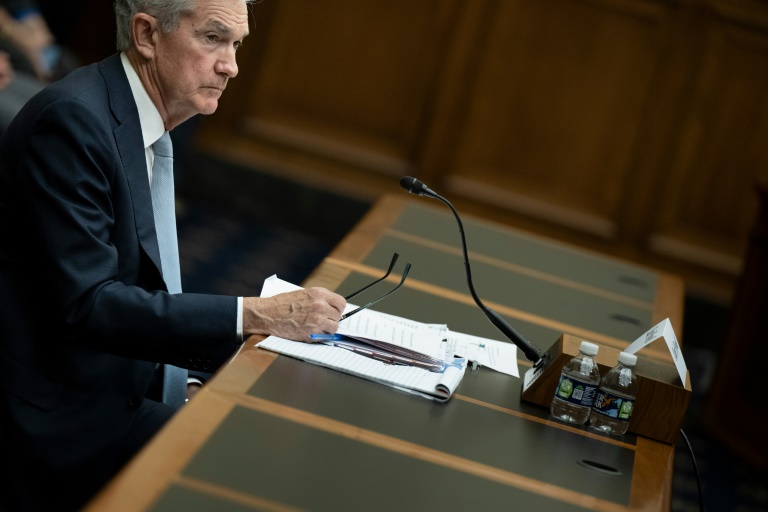
Federal Reserve Chair Jerome Powell on Thursday downplayed the idea that government pandemic aid was the key factor fueling US inflation, instead blaming a confluence of global issues including the war in Ukraine.

While stimulus spending was a factor, “a great deal of the price increases that you saw were a matter of supply being unable to meet demand” and “when demand hits fixed supply, what happens is prices go up,” Powell told lawmakers.

US inflation has surged to a 40-year high, picking up speed in recent months as the fallout from Russia’s invasion of Ukraine has sent fuel and food prices soaring, with gas at more than $5 a gallon for the first time — putting strain on American families.

Opposition Republicans have blamed President Joe Biden’s $1.9 trillion American Rescue Plan approved last year for the blistering price increases.

But Powell, who was testifying Thursday before a House committee, and others have noted that inflation is a global issue.

Democratic lawmaker Gregory Meeks noted that price hikes were caused mostly by “the supply chain, the China shutdown — the complete shutdown, zero Covid policy, Russia’s war in Ukraine, Covid.”

“Isn’t it just a massive storm of everything, is what contributes to inflation and causes it all over the world?” Meeks asked.

“Pretty much. That’s a pretty good description,” Powell said in the second day of his semi-annual testimony to Congress.

And, some of those factors are “out of our control — for example, the price of oil and most of the price of food.”

– ‘Unconditional’ battle on inflation –

The Fed for months said price pressures were expected to be transitory, but Powell admitted that in hindsight, the Fed underestimated rising inflation.

The US central bank last week announced the sharpest interest rate increase in nearly 30 years and promised additional similar moves as part of its aggressive push to douse the inflation fires.

The moves have raised concerns the Fed could trigger a recession in the world’s largest economy. 

Powell said the commitment to bringing inflation back down to two percent from 8.6 percent in May is “unconditional” but he cautioned that the Fed does not have “precision tools” and acknowledged there is a risk of a downturn.

Avoiding that “has become significantly more challenging with the events of the past few months, particularly the war,” he said.

But even if unemployment moves above the current historic low of 3.6 percent, even a jobless rate of 4.3 percent “is still a very strong labor market.” he noted.

And the United States, unlike some other countries, has “a very strong economy” and Fed policymakers “have tools to deal with demand,” Powell said.

Lebanese billionaire Mikati picked to form new govt

Lebanon’s lawmakers designated incumbent Prime Minister Najib Mikati to form a new government Thursday, more than a month after parliamentary elections that yielded no clear majority.

The 66-year-old billionaire, who had been widely expected to keep his job, secured 54 votes during parliamentary consultations, giving him a clear edge over other potential nominees.

President Michel Aoun subsequently asked him to form a new government, a task analysts fear could take weeks, if not months, despite the economic emergency facing the country.

Lebanon defaulted on its debt in 2020, the local currency has lost around 90 percent of its value on the black market, and the UN now considers four in five Lebanese to be poor.

By convention, Lebanon’s prime ministerial position is reserved for a Sunni Muslim, the presidency goes to a Maronite Christian and the post of speaker to a Shiite Muslim.

His nearest rival for the post of prime minister-designate was former ambassador to the United Nations Nawaf Salam, who only received 25 votes.

Most of the deputies in Lebanon’s 128-seat parliament chose not to designate any candidate.

The powerful Iran-backed Hezbollah movement, whose political alliance lost the clear majority it had in the previous parliament, threw its weight behind Mikati.

The Tripoli native, who is the richest man in bankrupt Lebanon, has already headed three governments since 2005.

Analysts expect him to struggle to reach a deal for a fourth administration. The current cabinet was formed in September last year after a 13-month wait.

The International Monetary Fund announced in April that a conditional agreement had been reached to provide Lebanon with $3 billion in aid and help its economy recover.

The institution warned, however, that its approval hinged on the timely implementation of reforms by Lebanon, whose main power brokers are widely considered as corrupt.

In a statement after his designation on Thursday, Mikati called for “cooperation with parliament to approve the reforms.”

“Without an IMF deal, there can be no rescue plan,” he said in the statement issued by his office.

Close Bitnami banner
Bitnami