World

Big Oil meeting with US govt cordial but no miracle gas price fix

Biden administration officials and oil industry executives huddled in Washington on Thursday to discuss potential steps to address runaway gasoline prices, and while both sides called the talks constructive, no concrete plans for relief emerged.

High prices at the pump are weighing on American consumers — and damaging President Joe Biden’s approval rating.

Heading into the gathering, Energy Secretary Jennifer Granholm said she hoped the meeting would result in refiners boosting gasoline supplies to lower prices for the summer vacation driving season.

Afterwards, the Energy Department said the talks had had a “productive focus on dissecting the current global problems of supply and refining,” and promised “ongoing dialogue” to “alleviate the current supply and price challenges.” 

Similarly, the American Petroleum Institute and American Fuel & Petrochemical Manufacturers called the meeting a “constructive discussion about ways to address rising energy costs and create more certainty for global energy markets.”

Chevron, Phillips 66 and Shell all released upbeat statements, with Shell US President Gretchen Watkins praising Granholm for setting a “collaborative tone” by noting that Shell and others had shifted some refining capacity to produce biofuels.

But no practical steps to immediately boost supply were revealed.

White House press secretary Karine Jean-Pierre called the gathering a “first step.”

“Clearly we want to come up with solutions,” Jean-Pierre told a press briefing. “There’s going to be other steps to get there.”

– Uneasy ties –

Biden and the oil industry have an uneasy relationship, in part over the White House’s efforts to restrict drilling in some federal areas due to environmental concerns, and decisions like canceling the Keystone pipeline project on his first day in office.

The US president has also blasted industry leaders in recent days over skyrocketing profits and their reluctance to boost capital spending. 

Industry leaders released a letter to Biden ahead of Thursday’s meeting that alluded to his upcoming trip to Saudi Arabia, urging him to visit US refineries and other industry sites to understand the potential for “American-made energy solutions.”

But with Biden’s approval ratings plunging due to soaring inflation, the president has turned to the industry for relief.

– Short-term solutions? –

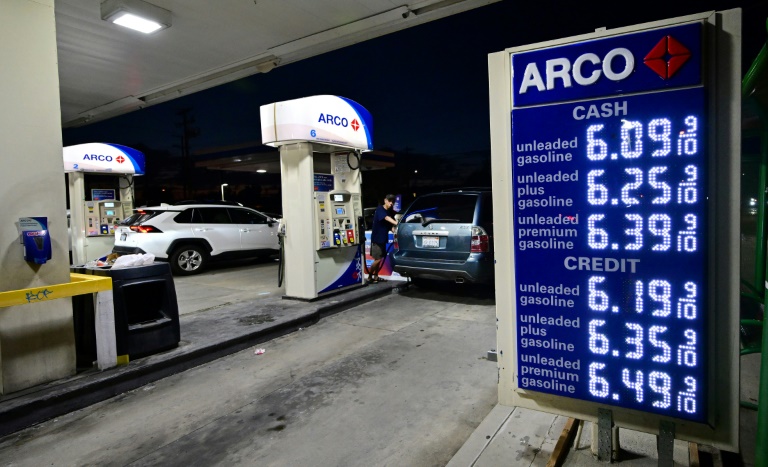
Gasoline prices currently stand at $4.94 a gallon, a bit below all-time highs, but up more than 60 percent from the year-ago level.

In a letter earlier this month to oil giants, Biden said high fuel prices were a key factor in the “intense financial pain the American people and their families are bearing.”

He urged ExxonMobil, Chevron and other industry players to “provide concrete, near-term solutions that address the crisis.”

In response, Chevron Chief Executive Mike Wirth pledged to work with the administration, but faulted Biden’s comments that “at times vilify” the industry — drawing a Biden quip that Wirth was being “mildly sensitive.”

The price surge follows Russia’s invasion of Ukraine, which exacerbated an already tight energy supply situation, sending crude oil prices sharply higher. 

The rise in prices also reflects the diminished state of refining capacity after the industry mothballed some plants during Covid-19 lockdowns, and did not reopen them amid uncertain long-term growth prospects with the buildup of electric vehicles.  

Biden’s policy thus far has centered on a huge increase in crude oil from the Strategic Petroleum Reserve. 

On Wednesday, the US president proposed a temporary fuel tax break, a measure that received a lukewarm reception on Capitol Hill.

For energy specialist Andrew Lebow of the Commodity Research Group consultancy, “there is very little refiners can do at this point.”

“If they could produce more, certainly they would be given that the margins are incredible,” he said.

On Wednesday, Granholm acknowledged that building new refineries could not be done overnight, but said the administration wanted answers about plants that had been taken offline.

She also wanted to talk about supply chain issues, questioning if the industry could help on that front.

Kevin Book, head of research at Clearview Energy Partners, said there were areas where the government could provide aid, such as facilitating procurement of truck drivers and sand for fracking. 

Adopting a broadly constructive tone on regulation could also boost investment, he said.

Major US banks can weather severe economic downturn: Fed

The largest banks operating in the US market have sufficient resources to withstand a severe economic downturn and continue providing financing to American families and firms, the Federal Reserve said Thursday.

The Fed subjected 33 banks to its annual “stress test” exercise, to gauge whether they would be able to weather a steep global recession.

In the hypothetical crisis, financial markets plummet, commercial real estate and corporate debt markets face substantial strain, US unemployment reaches 10 percent and the economy contracts by 3.5 percent.

The results “showed that banks continue to have strong capital levels, allowing them to continue lending to households and businesses during a severe recession,” the Fed said. 

The scenario for this year’s test was even bleaker than the one used last year, but the outcome was the same, showing all the banks would maintain a sufficient “cushion” despite total projected losses of $612 billion, according to the report.

“Despite the larger post-stress decline this year… capital ratios remain well above the required minimum levels throughout the projection horizon” of nine quarters, the report said.

The stress tests, implemented in the wake of the 2008 global financial crisis, apply to banks with at least $100 billion in total assets, including the top tier designated as “global systemically important banks.”

Smaller banks are only subjected to the stress tests every two years, so the results are not directly comparable to 2021, which tested 23 institutions.

Among the banks examined in both years, there were an additional $50 billion in losses under the tougher scenario, a Fed official told reporters.

However, the official stressed that the dire case applied is only hypothetical and not a forecast.

With the results in hand, banks can announce any plans for dividend payments and share buybacks starting Monday at 2030 GMT, the official said.

The Fed ordered limits to such distributions in June 2020 as the coronavirus pandemic caused a sharp economic downturn, but relaxed the restrictions in December 2020 before removing them following last year’s tests.

Apple, Android phones targeted by Italian spyware: Google

An Italy-based firm’s hacking tools were used to spy on Apple and Android smartphones in Italy and Kazakhstan, Google said Thursday, casting a light on a “flourishing” spyware industry.

Google’s threat analysis team said spyware made by RCS Lab targeted the phones using a combination of tactics including unusual “drive-by downloads” that happen without victims being aware.

Concerns over spyware were fueled by media outlets reporting last year that Israeli firm NSO’s Pegasus tools were used by governments to surveil opponents, activists and journalists.

“They claim to only sell to customers with legitimate use for surveillanceware, such as intelligence and law enforcement agencies,” mobile cybersecurity specialist Lookout said of companies like NSO and RCS.

“In reality, such tools have often been abused under the guise of national security to spy on business executives, human rights activists, journalists, academics and government officials,” Lookout added.

Google’s report said the RCS spyware it uncovered, and which was dubbed “Hermit”, is the same one that Lookout reported on previously.

Lookout researchers said that in April they found Hermit being used by the government of Kazakhstan inside its borders to spy on smartphones, just months after anti-government protests in that country were suppressed.

“Like many spyware vendors, not much is known about RCS Lab and its clientele,” Lookout said. “But based on the information we do have, it has a considerable international presence.”

– Growing spyware industry –

Evidence suggests Hermit was used in a predominantly Kurdish region of Syria, the mobile security company said.

Analysis of Hermit showed that it can be employed to gain control of smartphones, recording audio, redirecting calls, and collecting data such as contacts, messages, photos and location, Lookout researchers said.

Google and Lookout noted the spyware spreads by getting people to click on links in messages sent to targets.

“In some cases, we believe the actors worked with the target’s ISP (internet service provider) to disable the target’s mobile data connectivity,” Google said.

“Once disabled, the attacker would send a malicious link via SMS asking the target to install an application to recover their data connectivity.”

When not masquerading as a mobile internet service provider, the cyber spies would send links pretending to be from phone makers or messaging applications to trick people into clicking, researchers said.

“Hermit tricks users by serving up the legitimate webpages of the brands it impersonates as it kickstarts malicious activities in the background,” Lookout researchers said.

Google said it has warned Android users targeted by the spyware and ramped up software defenses. Apple told AFP it has taken steps to protect iPhone users.

Google’s threat team is tracking more than 30 companies that sell surveillance capabilities to governments, according to the Alphabet-owned tech titan.

“The commercial spyware industry is thriving and growing at a significant rate,” Google said.

Tunisia ex-PM Jebali arrested: lawyer

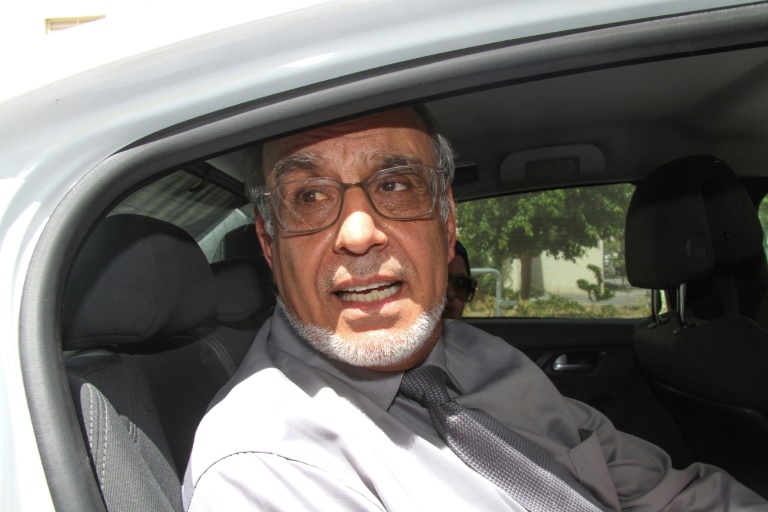
Tunisian police on Thursday arrested former prime minister Hamadi Jebali, an ex-senior figure in the Ennahdha party which is the nemesis of current President Kais Saied, Jebali’s lawyer said.

He could not say why Jebali was detained.

“The police arrested Mr Jebali in his car in Soussa, then took him to Tunis,” Zied Taher said.

For more than a month, Jebali has been under investigation over activities at his boiler factory in Soussa, a coastal city south of the capital, Taher said.

The arrest comes with civil society and Saied’s opponents fearing a slide back to the authoritarianism seen under long-time dictator Zine El Abidine Ben Ali, toppled in a 2011 revolution.

Ennahdha was the dominant force in a parliament dissolved by Saied after he sacked the government and seized wide-ranging powers last July.

Private radio station Mosaique FM said Jebali had been remanded in custody by anti-terrorist police “on suspicion of money-laundering”.

Jebali led the Tunisian government from December 2011, a year after the start of the country’s revolution, until his resignation in early 2013 following the murder of leftist activist Chokri Belaid. 

In 2014 he quit politics and left Ennahdha.

A solar engineer and former journalist, Jebali was sentenced to 16 years behind bars under Ben Ali as anti-Islamist repression intensified. 

He served a large part of his sentence in an isolation cell before being pardoned in 2006.

Road shelled as Russian forces battle for devastated Ukraine city

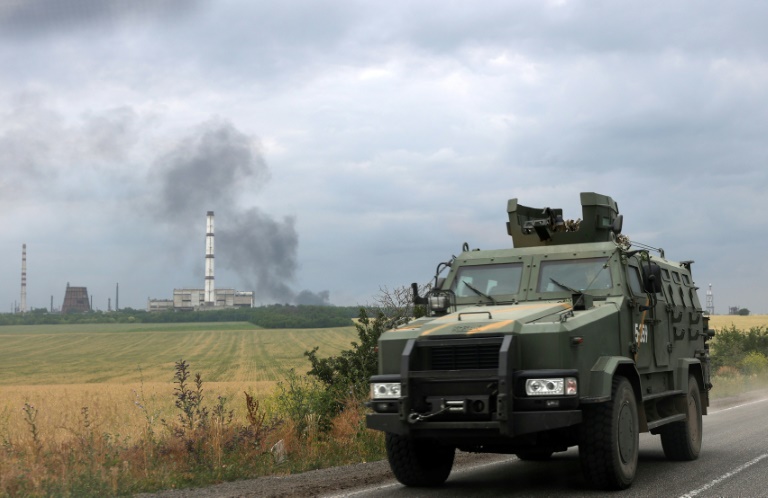
Driving out of the devastated eastern Ukrainian city of Lysychansk Thursday, AFP journalists twice had to jump out of cars and lie on the ground as Russian forces shelled the city’s main supply road.

Soon after noon (0900 GMT), an AFP team saw dark smoke rising over the road ahead.

They heard artillery fire and saw flashes of light, while the road was strewn with trees felled by shelling.

They twice saw a salvo of Grad rockets exploding both sides of the key supply road as Moscow’s troops intensify their onslaught.

Twice, drivers braked swiftly and the team jumped out and lay in the grass on the roadside, to the sound of hissing and detonation.

The three shelling incidents took place on a stretch of road approximately 5 kilometres (3 miles) long.

One journalist suffered a scraped arm and a car windscreen was slightly damaged.

This happened on the road between the towns of Siversk and Bakhmut, now the main route being used to reach the city of Lysychansk, since a highway has long been under shelling.

The road was busy at that time with tanks on transporters, armoured personnel carriers, jeeps and ambulances travelling back and forth. 

Earlier Thursday, there were also vapour trails in the sky from missiles and a possible jet plane.

A huge cloud of smoke rose into the sky from the vicinity of a disused oil refinery near Lysychansk.

– ‘We’re here’ –

As the city faces an increasingly desperate battle for its control, the main police station had locked its doors Thursday after suffering fresh shelling, following an earlier direct hit on Monday, AFP journalists saw.

The entrance steps to the building were scattered with strips of siding from the destroyed porch and sand from torn sandbags. There was also fresh damage to the building’s side wall.

The police station had been a hub for locals left in the city to find help to evacuate or register deaths. It was still functioning Tuesday.

“People are saying they (police) have all left,” said a firefighter called Andriy at the main fire station.

Outside, people were filling plastic bottles with water for household use from a fire engine in the yard.

“We’re here… We’re working,” Andriy stressed.

Just 17 people left in an evacuation Thursday morning, he said.

At the entrance to the city, soldiers were digging fresh trenches in apparent preparation for any Russian attempt to storm the city.

A World War II-era tank painted with a red star had even been removed from the pedestal war memorial and placed on a central street.

A soldier who gave his name as Oleksandr, who was shopping for food nearby, said he was not clear on the reason.

“It’s incredible: why they did it, I don’t know. That’s a tank from World War II, a T34-85 tank. It fought for the motherland, for the USSR. These are already different countries now.”

– ‘Won’t abandon city’ –

Oleksandr denied police had exited the city, saying he had seen them that day.

Asked if the army was preparing for street fighting, he declined to answer.

“We are defending our motherland,” he said, smiling.

“I can’t say anything concrete.”

Liliya Nesterenko, 39, was cycling along a street near the closed police station.

“They (police) must be in another place, they won’t abandon the city,” she said. 

Dressed in a summer top and shorts, she was upbeat about the city’s defences and said she was not planning to evacuate.

“I believe in our Ukrainian army, they should cope,” she said.

“They’ve prepared already.”

Like other locals, she said her house had no gas, water or electricity and she and her mother were cooking on a campfire. She had come out to feed a friend’s pets.

The firefighter Andriy said that shelling had been intense that morning.

“There are a lot of injured,” he said.

“People were going out to shop and they started shelling.”

Locals could be seen at a market and walking and cycling along the streets, some with children.

One older woman was walking along wearing a smart jacket, hat and amber necklace.

“It’s necessary,” she said of keeping up appearances.

“Say hi to France. You’ll never see the like of this.”

Minutes later, the team came under fire. 

Venezuela opposition wife at White House after summit sidelining

The wife of Venezuela’s opposition leader met at the White House on Thursday with President Joe Biden, after he declined to invite him to an Americas summit.

Fabiana Rosales, the wife of Juan Guaido, posted pictures of herself meeting both Biden and First Lady Jill Biden and said she “spoke out for all Venezuelans.”

She spoke to the Bidens about “the defense of human rights, protection of migrants, freedom for political prisoners and the need to hold a free and fair election in Venezuela,” said a statement from her office.

Jill Biden on Twitter called Rosales “a courageous First Lady and mother fighting for a better future for all Venezuelans.”

The invitation came two weeks after President Biden welcomed the hemisphere’s leaders to Los Angeles for the Summit of the Americas but did not invite Guaido, although he spoke to him by telephone.

The United States considers Guaido to be the interim president of Venezuela after Nicolas Maduro was declared the winner of a 2019 election marred by widespread allegations of irregularities.

But Maduro has managed to hold on to power even with a collapsing economy that has caused millions to flee Venezuela.

The United States has faced rising calls in the region to change a strategy set by former president Donald Trump that sought to topple Maduro through sweeping sanctions.

The White House said it did not invite Guaido as it wanted to encourage a resumption of dialogue between the opposition and Maduro.

The United States also faced concerns that a number of nations, including in the Caribbean, would not attend if Guaido were invited to represent Venezuela.

Mexican President Andres Manuel Lopez Obrador ultimately boycotted the Summit of the Americas citing Biden’s refusal to invite Maduro and the presidents of Cuba and Nicaragua on the grounds that the three leftists are authoritarians.

Rescuers scramble to reach Afghan quake survivors as foreign aid arrives

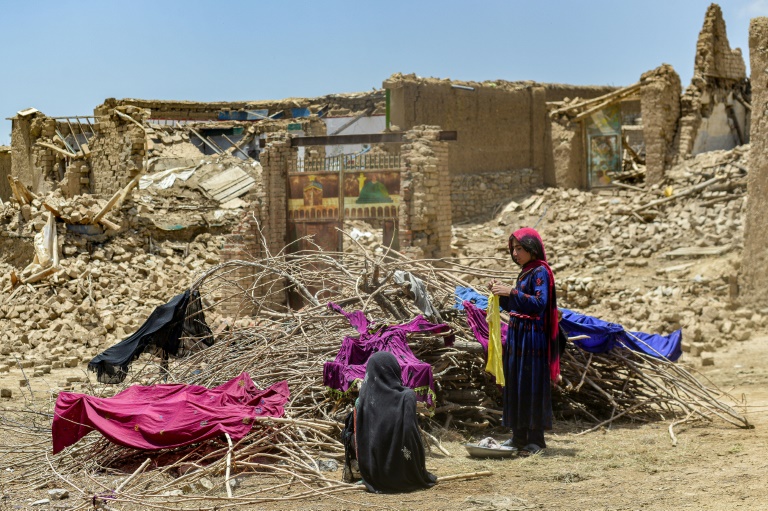
Desperate rescuers battled against the clock and heavy rain Thursday to reach cut-off areas in eastern Afghanistan after a powerful earthquake killed at least 1,000 people and left thousands more homeless.

Wednesday’s 5.9-magnitude quake struck hardest in the rugged east, downing mobile phone towers and power lines while triggering rock and mudslides which blocked mountain roads, further hampering rescue operations.

Entire villages have been levelled in some of the worst affected districts, where survivors said they were struggling to find equipment to bury their dead.

“When I came out of my house it was quiet because all the people were buried under their homes. Nothing is left here,” said 21-year-old Zaitullah Ghurziwal.

Afghanistan’s deadliest earthquake in more than two decades poses a huge logistical challenge for the new Taliban government, which has isolated itself from much of the world by introducing hardline rule.

“Getting information from the ground is very difficult because of bad networks,” Mohammad Amin Huzaifa, head of information for badly hit Paktika province, told AFP Thursday.

“The area has been affected by floods because of heavy rains last night… It is also difficult to access the affected sites.” 

Authorities say the temblor left at least 3,000 people wounded.

The aid-dependent country saw the bulk of its foreign assistance cut off following the Taliban takeover last August, and even before the earthquake the United Nations warned of a humanitarian crisis that threatened the entire population.

UN Secretary-General Antonio Guterres said the global agency has “fully mobilised” to help. 

According to his office, refugee agency UNHCR has dispatched tents, blankets and plastic sheeting; the World Food Programme has delivered food stock for about 14,000 people in Paktika province; and the World Health Organization has provided 10 tonnes of medical supplies sufficient for 5,400 surgeries.

– ‘Nothing to eat’ –

Survivors in Bermal district, a collection of remote mountain villages, said they were struggling to find food, shelter, and equipment to dig graves.

“We did not have even a shovel to dig… so we used a tractor. We buried 60 people yesterday and 30 more are still remaining to be buried,” said Ghurziwal.

“There are no blankets, tents, there’s no shelter. Our entire water distribution system is destroyed. Everything is devastated, houses are destroyed. There is literally nothing to eat.”

Afghan government officials said Thursday that aid flights had landed from Qatar and Iran, while Pakistan had sent trucks carrying tents, medical supplies and food across the border.

“The teams of IEA are on the ground … we are using helicopters and roads to take the aid to affected areas,” government spokesman Bilal Karimi told AFP.

An AFP correspondent reported a military helicopter flying over villages devastated by the earthquake in Bermal. 

The earthquake struck areas already suffering the effects of heavy rain, causing rockfalls and mudslides that wiped out hamlets perched precariously on mountain slopes.

Officials say nearly 10,000 houses were destroyed, an alarming number in an area where the average household size is more than 20 people.

“Seven in one room, five in the other room, four in another, and three in another have been killed in my family,” Bibi Hawa told AFP from a hospital bed in the Paktika capital.

“I can’t talk anymore, my heart is getting weak.”

Save the Children said more than 118,000 children were impacted by the disaster.

“Many children are now most likely without clean drinking water, food and a safe place to sleep,” the international charity said. 

– Limited capacity –

Even before the Taliban takeover, Afghanistan’s emergency response teams were stretched to deal with the natural disasters that frequently strike the country.

But with only a handful of airworthy planes and helicopters left since they returned to power, any immediate response to the latest catastrophe is further limited.

“We hope that the International Community & aid agencies will also help our people in this dire situation,” tweeted Anas Haqqani, a senior Taliban official.

The United States, whose troops helped topple the initial Taliban regime and remained in Afghanistan for two decades until Washington pulled them out last year, said it was “deeply saddened” by the earthquake and would look for ways to help, including through potential talks with Taliban rulers.

Afghanistan is frequently hit by earthquakes, especially in the Hindu Kush mountain range, near the junction of the Eurasian and Indian tectonic plates.

Scores of people were killed in January when two quakes struck the western province of Badghis.

Afghanistan’s deadliest recent earthquake killed 5,000 in 1998 in the northeastern provinces of Takhar and Badakhshan.

Rescuers scramble to reach Afghan quake survivors as foreign aid arrives

Desperate rescuers battled against the clock and heavy rain Thursday to reach cut-off areas in eastern Afghanistan after a powerful earthquake killed at least 1,000 people and left thousands more homeless.

Wednesday’s 5.9-magnitude quake struck hardest in the rugged east, downing mobile phone towers and power lines while triggering rock and mudslides which blocked mountain roads, further hampering rescue operations.

Entire villages have been levelled in some of the worst affected districts, where survivors said they were struggling to find equipment to bury their dead.

“When I came out of my house it was quiet because all the people were buried under their homes. Nothing is left here,” said 21-year-old Zaitullah Ghurziwal.

Afghanistan’s deadliest earthquake in more than two decades poses a huge logistical challenge for the new Taliban government, which has isolated itself from much of the world by introducing hardline rule.

“Getting information from the ground is very difficult because of bad networks,” Mohammad Amin Huzaifa, head of information for badly hit Paktika province, told AFP Thursday.

“The area has been affected by floods because of heavy rains last night… It is also difficult to access the affected sites.” 

Authorities say the temblor left at least 3,000 people wounded.

The aid-dependent country saw the bulk of its foreign assistance cut off following the Taliban takeover last August, and even before the earthquake the United Nations warned of a humanitarian crisis that threatened the entire population.

UN Secretary-General Antonio Guterres said the global agency has “fully mobilised” to help. 

According to his office, refugee agency UNHCR has dispatched tents, blankets and plastic sheeting; the World Food Programme has delivered food stock for about 14,000 people in Paktika province; and the World Health Organization has provided 10 tonnes of medical supplies sufficient for 5,400 surgeries.

– ‘Nothing to eat’ –

Survivors in Bermal district, a collection of remote mountain villages, said they were struggling to find food, shelter, and equipment to dig graves.

“We did not have even a shovel to dig… so we used a tractor. We buried 60 people yesterday and 30 more are still remaining to be buried,” said Ghurziwal.

“There are no blankets, tents, there’s no shelter. Our entire water distribution system is destroyed. Everything is devastated, houses are destroyed. There is literally nothing to eat.”

Afghan government officials said Thursday that aid flights had landed from Qatar and Iran, while Pakistan had sent trucks carrying tents, medical supplies and food across the border.

“The teams of IEA are on the ground … we are using helicopters and roads to take the aid to affected areas,” government spokesman Bilal Karimi told AFP.

An AFP correspondent reported a military helicopter flying over villages devastated by the earthquake in Bermal. 

The earthquake struck areas already suffering the effects of heavy rain, causing rockfalls and mudslides that wiped out hamlets perched precariously on mountain slopes.

Officials say nearly 10,000 houses were destroyed, an alarming number in an area where the average household size is more than 20 people.

“Seven in one room, five in the other room, four in another, and three in another have been killed in my family,” Bibi Hawa told AFP from a hospital bed in the Paktika capital.

“I can’t talk anymore, my heart is getting weak.”

Save the Children said more than 118,000 children were impacted by the disaster.

“Many children are now most likely without clean drinking water, food and a safe place to sleep,” the international charity said. 

– Limited capacity –

Even before the Taliban takeover, Afghanistan’s emergency response teams were stretched to deal with the natural disasters that frequently strike the country.

But with only a handful of airworthy planes and helicopters left since they returned to power, any immediate response to the latest catastrophe is further limited.

“We hope that the International Community & aid agencies will also help our people in this dire situation,” tweeted Anas Haqqani, a senior Taliban official.

The United States, whose troops helped topple the initial Taliban regime and remained in Afghanistan for two decades until Washington pulled them out last year, said it was “deeply saddened” by the earthquake and would look for ways to help, including through potential talks with Taliban rulers.

Afghanistan is frequently hit by earthquakes, especially in the Hindu Kush mountain range, near the junction of the Eurasian and Indian tectonic plates.

Scores of people were killed in January when two quakes struck the western province of Badghis.

Afghanistan’s deadliest recent earthquake killed 5,000 in 1998 in the northeastern provinces of Takhar and Badakhshan.

War in Ukraine: Latest developments

Here are the latest developments in the war in Ukraine:

– Ukraine granted ‘historic’ EU candidacy –

European Union leaders agree to grant “candidate status” to war-torn Ukraine and neighbouring Moldova, in a show of support in the face of Russia’s war, EU chief Charles Michel says. 

“A historic moment. Today marks a crucial step on your path towards the EU,” Michel writes on Twitter during a summit in Brussels. 

Ukrainian President Volodymyr Zelensky hails the EU candidacy status as “historic”.

Securing candidate status is the first step on the road to EU membership, a process that can take years.

– Russian tightens grip in east –

Russia closes in on the strategically important cities of Severodonetsk and Lysychansk in Ukraine’s embattled eastern Donbas region.

Taking the two cities would give Moscow control of the whole of Lugansk, one of two regions with neighbouring Donetsk that make up Ukraine’s industrial heartland of Donbas.

Sergiy Gaiday, governor of the Lugansk region, says Ukrainian troops have lost control over two settlements southeast of Lysychansk, Loskutivka and Rai-Oleksandrivka.

The regional regional of Donetsk, Pavlo Kyrylenko, says no town there is safe for residents as fighting intensifies between Ukrainian and Russian troops.

“It is extremely dangerous for residents to stay in any places of the region” given the current scale of fighting around Lysychansk and Severodonetsk, he says.

– Germany and France act on gas shortage –

Germany takes a step closer to rationing its gas supplies following a sharp reduction in deliveries from Russia. 

“Gas is now a scarce commodity in Germany,” Economy Minister Robert Habeck says, announcing plans to raise the alert level under the country’s emergency gas plan to the second-highest level.

Russian energy giant Gazprom last week cut its supplies via the Nord Stream pipeline to Germany by 60 percent, in what Berlin called a political move but Gazprom said was due to repairs.

Several EU members have already had their Russian gas supplies cut off for refusing to pay in rubles.

The French government aims to have its natural gas storage reserves at full capacity by autumn, Prime Minister Elisabeth Borne says, adding France will also build a new floating methane terminal to receive more energy supplies by ship.

– Ukraine welcomes US precision artillery systems –

Ukraine says that it has taken delivery of HIMARS advanced multiple-rocket launchers from the United States.

“Himars have arrived to Ukraine…. Summer will be hot for Russian occupiers. And the last one for some of them,” Ukraine Defence Minister Oleksiy Reznikov writes on Twitter.

Kyiv had pleaded for the new rocket systems, which have greater range than those it is currently using, in order to be able to strike Russian targets from safe positions.

– G7 to step up pressure on Russia – 

US President Joe Biden and other world leaders will announce new punitive measures against Russia at a G7 summit starting Sunday in Germany, a senior US official says.

“We will roll out a concrete set of proposals to increase pressure on Russia,” the official says. 

Biden will meet with the leaders of Britain, Canada, France, Germany, Italy, and Japan at the summit in Bavaria before travelling to Madrid for a NATO summit.

Zelensky will address both summits by video link.

– Putin looks to BRICS –

Russian President Vladimir Putin calls on the leaders of Brazil, India, China and South Africa — Russia’s partners in the so-called BRICS club — to cooperate as Moscow is pummelled by Western sanctions over Ukraine.

Unprecedented sanctions by the United States and European Union over Russia’s invasion of Ukraine have prompted Putin to seek new markets and strengthen ties with countries in Africa and Asia.

– Nike quits Russia –

US sports apparel giant Nike says it will be permanently leaving the Russian market and will not reopen its stores after temporarily shuttering them shortly after Moscow sent troops into Ukraine.  

burs-cb-jmy/har

War in Ukraine: from Russia's invasion to EU candidacy

Russia invaded Ukraine in the early hours of February 24, setting off the worst conflict in Europe in decades.

As EU members agree to make Ukraine a candidate for membership of the bloc, we look back on four months of fighting that have killed tens of thousands of civilians and destroyed entire cities.

– February 24: Russia invades – 

Russian President Vladimir Putin announces a “special military operation” to “demilitarise” and “de-Nazify” the former Soviet state and protect Russian speakers there.

A full-scale invasion starts with air and missile strikes on several cities. Ukrainian President Volodymyr Zelensky pledges to stay in Kyiv to lead the resistance.

– February 26: Massive sanctions –

The West adopts unprecedented sanctions against Russia and offers Ukraine military aid. 

Air spaces are closed to Russian aircraft and Russia is kicked out of sporting and cultural events.

– February 27: Nuclear threat –

Putin puts Russia’s nuclear forces on high alert, in what is seen as a warning to the West not to intervene in Ukraine. 

– February 28: First talks – 

During the first peace talks between Kyiv and Moscow, Russia demands recognition of its sovereignty over Crimea, the “demilitarisation” and “de-Nazification” of Ukraine and a guarantee Ukraine will never join NATO. Ukraine demands a complete Russian withdrawal.

– March 3: Kherson falls –

Russian troops attack Ukraine’s south coast to try to link up territory held by pro-Moscow rebels in eastern Ukraine with the Russian-annexed Crimea peninsula. 

On March 3, Kherson in the south becomes the first city to fall. Russian forces relentlessly shell the port of Mariupol.

– March 4: Media crackdown –

Russia passes a law punishing what it calls “fake news” about its offensive — such as referring to its “special military operation” as an invasion — with up to 15 years in prison.

– March 16: Mariupol theatre razed – 

Russian air strikes raze a Mariupol theatre, killing an estimated 300 people sheltering inside. Moscow blames the attack on Ukraine’s nationalist Azov battalion.

– March 16: Zelensky lobbies Congress – 

Zelensky tells the US Congress to “remember Pearl Harbor” as he lobbies one Western parliament after another via video-link for weapons to fight Russia’s advance. 

– April 2-3: Horror in Bucha –

After a month of fighting, Russia withdraws from northern Ukraine, announcing it will focus its efforts on conquering the eastern Donbas region.

On April 2 and 3, Ukrainians find dozens of corpses of civilians scattered on the street or buried in shallow graves in the Kyiv suburb of Bucha, which Russian forces had occupied.

Moscow dismisses accusations of Russian war crimes, saying the images of the bodies are fakes.

– April 8: Train station carnage –

A rocket attack on a train station in the eastern city of Kramatorsk kills at least 57 civilians being evacuated from the Donbas.

– April 12: Biden speaks of ‘genocide’ –

Biden accuses Russia of “genocide”, saying Putin appears intent on “trying to wipe out the idea of even being able to be a Ukrainian”.

– April 14: Flagship sinks –

Ukrainian missiles hit and sink Russia’s missile cruiser Moskva in the Black Sea, a major setback for Moscow.

– May 11: $40 billion in US aid –

US lawmakers back a huge $40-billion package of military, economic and humanitarian aid for Ukraine.

– May 16: Kharkiv retreat –

Ukraine says its troops have driven Russian forces back from the outskirts of the country’s second-largest city, Kharkiv, to the Russian border.

– May 18: Sweden, Finland apply to NATO –

Finland and Sweden apply to join NATO, reversing decades of military non-alignment because of Russia’s invasion of Ukraine. 

– May 23: First war crimes conviction –

A Ukrainian court finds a 21-year-old Russian soldier guilty of war crimes and hands down a life sentence for shooting dead a 62-year-old civilian in northeastern Ukraine in the opening days of the war. He has appealed.

– May 21: Battle for Mariupol ends – 

Russia declares it is in full control of Mariupol after Ukraine ordered troops holding out for weeks in the Azovstal steelworks to lay down their arms to save their lives.

Nearly 2,500 soldiers surrender and are taken prisoner by Russia. 

– May 30: EU bans most Russian oil –

EU leaders overcome resistance from Hungary to agree a partial ban on most Russian oil imports as part of a sixth wave of sanctions.

The deal bans oil imports delivered by tanker but allows landlocked countries such as Hungary to continue receiving Russian oil by pipeline.

– May 31: Russia seizes part of eastern city –

After weeks of bombardments Russian troops seize part of the key eastern Ukrainian city of Severodonetsk.

– June 9: Britons, Moroccan sentenced to death –

Two British citizens and a Moroccan who were captured by Russian troops while fighting for Ukraine are sentenced to death by pro-Russian separatists.

Aiden Aslin and Shaun Pinner of Britain and Brahim Saadun of Morocco are accused of acting as mercenaries. Britain says they are members of the Ukrainian army and should be treated as prisoners of war.

– June 12: Ukraine loses central Severodonetsk –

The Ukrainian army says it has been driven from the centre of Severodonetsk. The fight continues at a chemical plant, where hundreds of civilians are sheltering.

– June 23: EU grants Ukraine candidate status  –

The leaders of the 27-member European Union agree to accept Ukraine and neighbouring Moldova as candidates for EU membership. 

Zelensky hails Ukraine’s EU candidacy status as “historic”.

doc-jmy-cb-cdw/ah

Close Bitnami banner
Bitnami