World

Pope's July trip to Canada confirmed despite knee issues

Pope Francis will make a highly sensitive visit to Canada as planned next month, the Vatican confirmed Thursday, despite problems with his knee that caused him to postpone a trip to Africa.

The programme was released for the July 24-30 visit to Edmonton, Quebec and Iqaluit, where the pontiff will meet with Indigenous survivors of abuse committed at residential schools run by the Catholic Church.

The 85-year-old has cancelled numerous events in recent months due to pain in his right knee that has forced him to use a wheelchair at official events, prompting intense speculation about his health — and his future.

However, the trip to Canada is an important step in his efforts to address the global scandal over sexual abuse of children by clergy and decades of cover-up.

Pope Francis is expected to repeat an apology he delivered to Canadian delegations who visited the Vatican in April.

“We know that the Holy Father was deeply moved by his encounter with Indigenous Peoples in Rome earlier this year, and that he hopes to build on the important dialogue that took place,” said Canadian Archbishop Richard Smith, who is coordinating the visit.

“We pray this pilgrimage will serve as another meaningful step in the long journey of healing, reconciliation and hope.”

Around 150,000 First Nations, Metis and Inuit children were enrolled from the late 1800s to the 1990s in 139 residential schools across Canada, as part of a government policy of forced assimilation.

They spent months or years isolated from their families, language and culture, and many were physically and sexually abused by headmasters and teachers.

Thousands are believed to have died of disease, malnutrition or neglect. More than 1,300 unmarked graves have been discovered since May 2021 at the schools.

– Pope’s ‘limitations’ –

During what will be the first papal trip to Canada since John Paul II visited in 2002, and the fourth ever, Francis will travel to the west of the country, the east and far north.

Canada’s Catholic Bishops Conference said the “very busy schedule” would focus on reconciliation but also provide a chance for the wider Catholic faithful to meet their spiritual leader.

It added: “Due to his advanced age and limitations, it is expected that participation by Pope Francis at public events will be limited to approximately one hour.”

Francis suffers chronic arthritis in his knee, according to Vatican sources, and has also spoken of an injured ligament.

On June 10, the Vatican postponed a trip scheduled for early July to South Sudan and the Democratic Republic of Congo “at the request of his doctors”, to avoid jeopardising ongoing therapy on his knee.

A scheduled trip to Lebanon in June was also postponed due to health reasons, according to that country’s government — although the Vatican had never confirmed the visit.

The schedule changes have sparked fresh speculation about the future of Francis, who was elected pope in 2013 after his predecessor Benedict XVI resigned. The German pope had cited his declining mental and physical health.

However, a Vatican source told AFP earlier this month that speculation Francis might also be considering stepping down was far-fetched.

“In the pope’s entourage, the majority of people don’t really believe in the possibility of a resignation,” the source said.

Rumours that he might step down also flared last year after the pope underwent colon surgery,  prompting him to tell a Spanish radio station that the idea “hadn’t even crossed my mind”. 
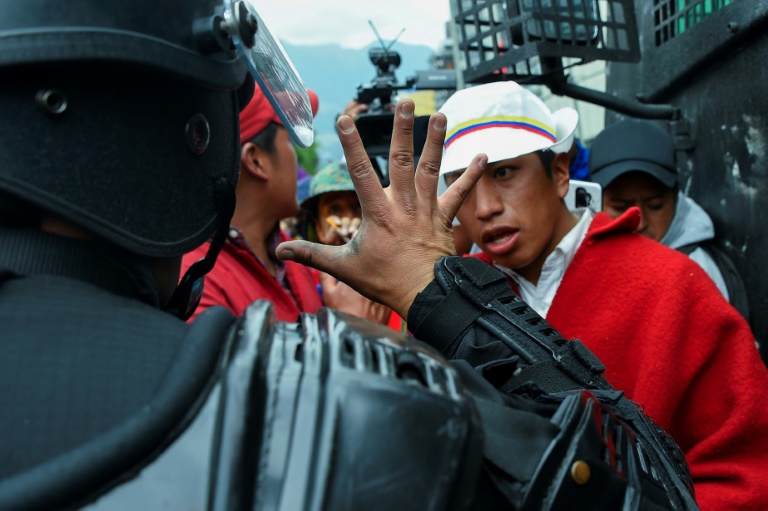
Death toll rises with no end in sight for Ecuador protests

The death toll from 11 days of Indigenous demonstrations in Ecuador over fuel prices has risen to three, a rights group said Thursday, after another protester died in clashes with police.

Dozens of people have also been injured in the countrywide demonstrations that Indigenous groups have vowed to continue until their demands are met.

In the southern town of Tarqui, a 38-year-old protester died Wednesday, the Alliance of Human Rights Organizations reported on Twitter, accusing the security forces of using violent tactics.

“A tear gas cannister was found next to” the body of Marcelino Villa, the organization said.

The police, for its part, said Villa had died of a medical condition that occurred “in the context of the demonstrations.”

According to the medical report, it added, bruises to the man’s stomach and right knee were “several days old.”

Two other people died on Monday and Tuesday, according to the Alliance, which also reported 92 wounded and 94 civilians arrested since the protests — concentrated in the capital Quito — started on June 13.

Officials say 117 in the ranks of police and soldiers have been injured.

– Mass discontent –

Thousands prepared Thursday for another day of revolt, which has seen main roads barricaded with burning tires and tree branches amid a state of emergency in six of the country’s 24 provinces.

The government has rejected demands to lift the emergency measures that were imposed due to the sometimes violent demonstrations called by the powerful Confederation of Indigenous Nationalities of Ecuador (Conaie).

Conaie led two weeks of protests in 2019 in which 11 people died and more than 1,000 were injured, and which resulted in the then-president abandoning plans to reduce fuel price subsidies.

An estimated 14,000 protesters are taking part in the mass show of discontent nationwide — the bulk, some 10,000 of them — in Quito.

The capital is under a night-time curfew.

Ecuador, a small South American country riddled with drug trafficking and related violence, has been hard hit by rising inflation, unemployment and poverty — all exacerbated by the pandemic.

The protesters’ demands include a cut in fuel prices which have risen sharply in recent months, jobs, food price controls, and more public spending on healthcare and education.

Conaie — credited with ending three presidencies between 1997 and 2005 — insists the state of emergency be lifted before it will negotiate, but the government has said this “would leave the capital defenseless.”

Official data showed the economy was losing about $50 million per day due to the protests, not counting oil production — the country’s main export product.

State-owned Petroecuador has reported almost 64,300 barrels in lost production with more than 230 wells shuttered by demonstrations in the Amazon.

And Chinese company PetroOriental said protesters had occupied and paralyzed some of its wells in the Amazonian Orellana province.

Producers of flowers, another of Ecuador’s main exports, have also complained about their wares rotting as trucks cannot reach their destinations.

US orders all Juul vaping products off the market

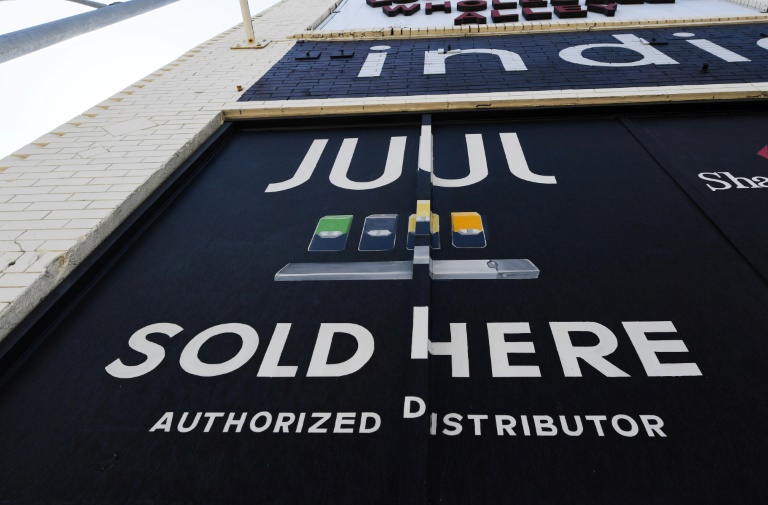
The US Food and Drug Administration on Thursday said it was ordering all vaping products produced by Juul Labs off the market after finding the former industry leader had failed to address certain safety concerns.

The decision clears the way for rival brands to increase their share of the market, which Juul once dominated.

“Today’s action is further progress on the FDA’s commitment to ensuring that all e-cigarette and electronic nicotine delivery system products currently being marketed to consumers meet our public health standards,” said FDA Commissioner Robert Califf in a statement. 

Products affected include the Juul device and its pods, which currently come in the flavors Virginia tobacco and in menthol, at nicotine concentrations of five and three percent.

After completing a two-year review of the company’s marketing application, the FDA found the data presented “lacked sufficient evidence regarding the toxicological profile of the products,” it said.

“In particular, some of the company’s study findings raised concerns due to insufficient and conflicting data – including regarding genotoxicity and potentially harmful chemicals leaching from the company’s proprietary e-liquid pods,” it added.

Juul was blamed for a surge in youth vaping over its marketing of fruit and candy flavored e-cigarettes, which it stopped selling in 2019.

In January 2020, the FDA said sale of e-cigarettes in flavors other than tobacco or menthol would be illegal unless specifically authorized by the government.

The agency has approved some e-cigarette products from other makers such as Reynolds American, the current market leader, NJOY and Logic Technology Development.

Juul has argued that vaping products can provide a solution to the harmful health impacts from conventional cigarettes.

Juul’s products “exist only to transition adult smokers away from combustible cigarettes,” Chief Executive KC Crosthwaite said on the company’s website, adding that the company is “working hard” to rebuild its reputation following an “erosion of trust over the past few years.”

On Tuesday, President Joe Biden’s administration announced it would develop a new policy requiring cigarette producers to reduce nicotine to non-addictive levels.

The initiative requires the FDA to develop and then publish a rule, which will likely be contested by industry.

Germany raises gas alert level after Russia cuts supply

Germany moved closer to rationing natural gas on Thursday as it raised the alert level under an emergency plan after Russia slashed supplies to the country.

“Gas is now a scarce commodity in Germany,” Economy Minister Robert Habeck told reporters at a press conference.

Russia was using gas “as a weapon” against Germany in retaliation for the West’s support for Ukraine following Moscow’s invasion, Habeck said, with the aim of “destroying” European unity.

But the Kremlin dismissed Germany’s suggestion there were political motives behind the limits to supply as “strange”.

Germany, like a number of other European countries, is highly reliant on Russian energy imports to meet its needs.

Triggering the “alarm” level — the second of three steps under the emergency plan — brings Germany a step closer to the final stage that could see gas rationing in Europe’s top economy.

The increased level reflected a “significant deterioration of the gas supply situation”, Habeck said.

“If we do nothing now, things will get worse,” Habeck said.

– Russian rebuttal –

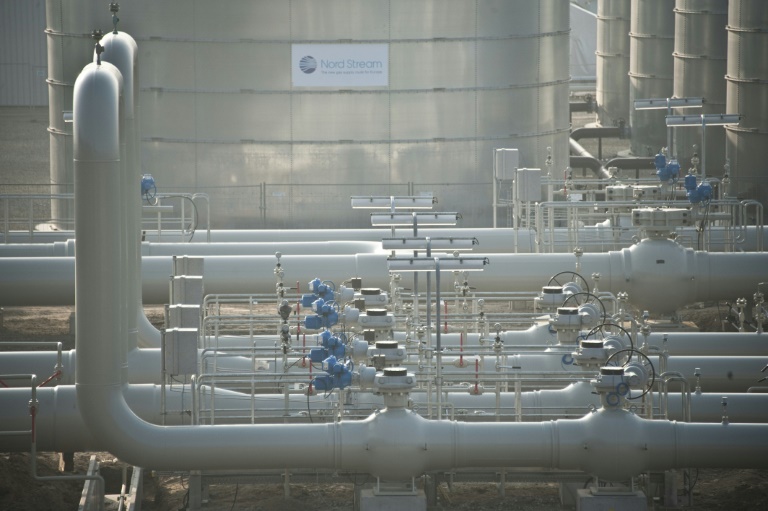
Russian energy giant Gazprom cut supplies to Germany via the Nord Stream pipeline by 60 percent last week, blaming the new limits on delayed repairs.

Germany has dismissed the technical justification provided by Gazprom, instead calling the move a “political decision”. 

Kremlin spokesman Dmitry Peskov said Thursday there was “no double meaning” in the supply decision.

“Our German partners are well aware of the technological servicing cycles of a pipeline,” he said.

“It’s strange to call it politics.”

In recent weeks, Gazprom has stopped deliveries to a number of European countries, including Poland, Bulgaria, Finland and the Netherlands.

Supplies of gas to Europe’s largest economy were “secure”, Habeck said, but action was still required to prepare for the winter ahead.

To mitigate the risks from a supply cut, the government mandated gas storage facilities be filled to 90 percent by the beginning of December.

Currently, the country’s stores stand just under 60 percent full, above the average level of previous years.

In France, the government said Thursday it aimed to fill its natural gas storage reserves by autumn as it too braces for a drop in supply from Russia.

France will also build a new floating methane terminal to receive more energy supplies by ship, Prime Minister Elisabeth Borne announced.

– Supply stoppage –

The German government expects supply to stop between July 11 and July 25 for annual maintenance on the Nord Stream pipeline.

If deliveries do not resume after the service period, Germany could face a shortage of gas as soon as “mid-December”.

Since the outbreak of the war in Ukraine, Germany has managed to reduce the share of its natural gas supplied by Russia from 55 percent to around 35 percent.

The government has found new sources of supply, accelerated plans to import gas in the form of LNG by sea, and put aside 15 billion euros ($15.8 billion) to buy gas to fill storage facilities.

Germany also decided to reactivate mothballed coal-fired power plants to take the burden for electricity generation off gas.

In contrast, the government shrugged off calls to extend the operational lifetime of its nuclear power plants.

Prolonging the use of the final reactors set to be taken off the grid at the end of the year was “not an option”, it said Wednesday.

Germany had to look to see what “energy saving potential” existed, Habeck said Thursday. 

Households could “make a difference” by conserving energy, after Germany launched a campaign to encourage fuel-saving measures, he said, while industry could also make a further contribution.

Ukraine hopes for EU nod as Russia warns resistance 'futile'

EU leaders met Thursday to discuss Ukraine’s long-sought bid to join the bloc, even as tensions between Brussels and Moscow deepened over gas supplies and Russia closed in on key cities in the embattled Donbas region.

“This is a decisive moment for the European Union… A choice must be made today that will determine the future of the union, our stability, our security and our prosperity,” EU council president Charles Michel told journalists ahead of the talks.

“We are waiting for the green light, Ukraine has earned candidate status,” the head of the Ukrainian presidency Andriy Yermak said on Telegram.

But joining the EU is still years away, and the potential consequences for Ukraine’s allies loomed large over the talks, and ahead of the G7 and NATO meetings in the following days.

Western officials denounced Moscow’s “weaponising” of its key gas and grain exports in the conflict, with a US official warning of further retaliatory measures at the G7 summit in Germany starting Sunday.

Germany ratcheted up an emergency gas plan to its second alert level, just one short of the maximum that could require rationing in Europe’s largest economy after Russia slashed its supplies.

“Gas is now a scarce commodity,” Economy Minister Robert Habeck told reporters, urging households to cut back on use.

France is now aiming to have its gas storage reserves at full capacity by early autumn, and will build a new floating methane terminal to get more energy supplies by sea, Prime Minister Elisabeth Borne said.

A Kremlin spokesman reiterated its claim that the supply cuts were due to maintenance and that necessary equipment from abroad had not arrived.

In Ankara meanwhile, British Foreign Secretary Liz Truss accused Russian President Vladimir Putin of “weaponising hunger” by preventing grain shipments from leaving Ukraine ports, raising the spectre of shortages particularly in Africa and the Middle East.

“We are very clear that this grain crisis is urgent, that it needs to be solved within the next month. Otherwise we could see devastating consequences,” Truss said after talks with her Turkish counterpart Mevlut Cavusoglu.

– Russia presses gains –

On the ground in the Donbas, the situation was becoming increasingly urgent as Russian forces tightened their grip on the strategically important cities of Severodonetsk and its twin Lysychansk across the Donets river.

Taking the cities would give Moscow control of the whole of Lugansk, allowing Russia to press further into the Donbas and potentially further west.

Ukraine acknowledged Thursday that it had lost control of two areas from where it was defending the cities, with Russian forces now closer to encircling the industrial hubs.

Britain’s defence ministry said some Ukrainian units had probably been forced to withdraw “to avoid being encircled” as troops advanced slowly but steadily toward Lysychansk.

“Russia’s improved performance in this sector is likely a result of recent unit reinforcement and heavy concentration of fire,” it said in its latest intelligence update.

A representative of pro-Russian separatists in Ukraine told AFP the resistance of Ukrainian forces trying to defend Lysychansk and Severodonetsk was “pointless and futile.”

“At the rate our soldiers are going, very soon the whole territory of the Lugansk People’s Republic will be liberated,” said Andrei Marochko, a spokesman for the army of Lugansk.

The Russian army also said Thursday that its bombings in the southern city of Mykolaiv had destroyed 49 fuel storage tanks and three tank repair depots, after strikes killed several Ukrainian troops Wednesday.

But Kyiv, which is urging allies to send heavier weaponry, welcomed Thursday the delivery of high-precision Himars rocket artillery from the US.

“Himars have arrived to Ukraine… Summer will be hot for Russian occupiers. And the last one for some of them,” Ukraine’s Defence Minister Oleksiy Reznikov wrote on Twitter.

– ‘Only grannies left’ –

After being pushed back from Kyiv and other parts of Ukraine in the initial weeks of the invasion launched on February 24, Moscow is seeking to seize a vast eastern swathe of the country.

But daily bombardments also continue elsewhere.

The northeastern city of Kharkiv near the Russian border was near empty on Wednesday, AFP reporters said, a day after shelling by Moscow’s forces killed five people there.

“Last night the building next to mine collapsed from the bombardment while I was sleeping,” said Leyla Shoydhry, a young woman in a park near the opera house.

Roman Pohuliay, a 19-year-old in a pink sweatshirt, said most residents had fled the city.

“Only the grannies are left,” he said.

In the central city of Zaporizhzhia, meanwhile, women were training to use Kalashnikov assault rifles in urban combat as Russian forces edged nearer.

“When you can do something, it’s not so scary to take a machine gun in your hands,” said Ulyana Kiyashko, 29, after moving through an improvised combat zone in a basement.

– Lithuania in cross-hairs –

Away from the battlefield, Moscow this week summoned Brussels’ ambassador in a dispute with EU member Lithuania over the country’s restrictions on rail traffic to the Russian outpost of Kaliningrad.

The coastal territory, annexed from Germany after World War II, is about 1,000 miles (1,600 kilometres) from Moscow, and borders Lithuania and Poland but has no land border with Russia.

By blocking goods arriving from Russia, Lithuania says it is simply adhering to European Union-wide sanctions on Moscow.

The United States made clear its commitment to Lithuania as a NATO ally, while Germany urged Russia not to “violate international law” by retaliating.

burs-sr/js/jh/gw

Tunisia trade unions chief rejects IMF reforms

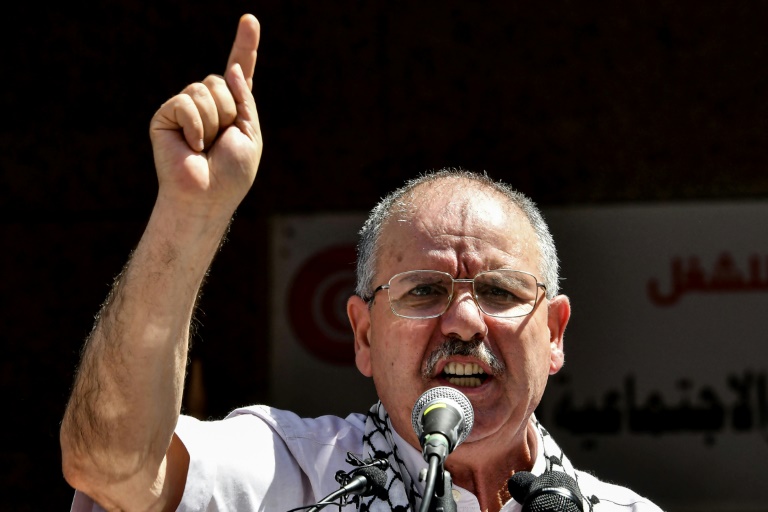
The head of Tunisia’s powerful UGTT trade union on Thursday rejected International Monetary Fund conditions for a new loan to bail out the country’s struggling economy and questioned the government’s authority to negotiate.

Noureddine Taboubi’s comment came a day after an IMF official said the global lender is ready to begin formal talks on a new financial aid package for Tunisia.

“We reject the conditions set by the IMF, given Tunisians’ low salaries, lack of means, rising poverty and unemployment,” Taboubi told reporters, a week after the UGTT staged a nation-wide public sector strike that saw flights cancelled, public transport halted and government offices closed.

The North African country, already heavily indebted and reeling from price hikes on imports like oil and wheat since Russia invaded Ukraine, is angling for a two billion-euro loan, according to a source with knowledge of preliminary talks.

The global lender has conditioned such a bailout on “ambitious reforms” to rein in public spending and reform Tunisia’s state-owned companies.

But on Thursday Taboubi rejected “the painful options they’re talking about”.

“We support reforms, but we don’t share the vision of reforms supported by this government,” he said.

The IMF’s regional chief Jihad Azour said Wednesday that the fund was set to begin formal talks on a new financial aid package “in the coming weeks”. 

Economic fallout from the Ukraine war made it ever more pressing, he said.

Tunisia “needs to urgently tackle its fiscal imbalances” including by “containing the large civil service wage bill, replacing generalized subsidies with transfers targeting the poor”, said Azour, a Lebanese economist and former minister.

He also urged it to open up its economy to private sector investment and “(reform) its loss-making state-owned enterprises”.

The UGTT has demanded guarantees that publicly owned firms will remain state property.

– Casting doubt –

During a visit to Tunisia this week, Azour met officials including President Kais Saied, and welcomed government plans to start tackling dire economic issues.

In Wednesday’s statement, he urged the government to discuss proposed reforms “with all stakeholders”, echoing previous comments by IMF officials indicating that UGTT consent was vital for a bailout deal.

Saied told Azour, during a meeting on Tuesday, that he “recognised the need to introduce major reforms” but insisted that such changes must “take social impacts into account”, according to a statement from the president’s office.

Taboubi cast doubt on the government’s mandate to negotiate a deal at all.

“This government was appointed temporarily, by decree,” he said.

“When there is a government produced by institutions and elections, it will have the legitimacy to start negotiations over reforms.”

Saied in July last year sacked the previous administration and suspended parliament in moves opponents have called a coup against the only democracy to emerge from the Arab Spring uprisings more than a decade ago.

The UGTT initially backed Saied’s moves but has become increasingly critical as Saied extended his power grab.

It has also turned down calls to take part in Saied’s “national dialogue” on the grounds that it excludes other key actors including political parties and much of civil society.

The union is not the president’s only domestic headache.

Judges across the country began a strike on June 6 to protest Saied’s sacking of 57 of their colleagues and what they called his “continued interference in the judiciary”.

Saied had in February scrapped an independent judicial watchdog and replaced it with a body under his own control, a move critics decried as his latest blow to democracy.

On Thursday, dozens of judges demonstrated outside the main courthouse in Tunis to demand their colleagues be reinstated.

Some held up placards demanding an end to “decree-laws and the destruction of the rule of law”.

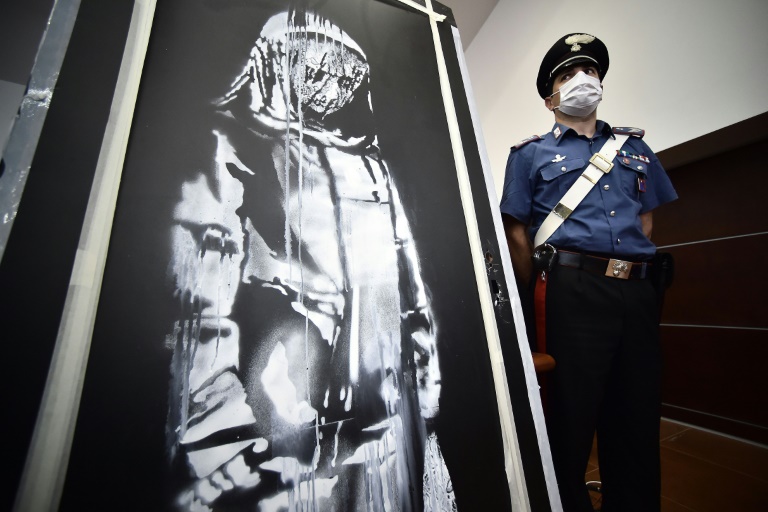
French court convicts 8 for stealing Banksy from Paris attack site

A French court on Thursday convicted eight men for the theft and handling of a Banksy painting paying homage to the victims of the 2015 attack on the Bataclan concert hall in Paris.

Three men in their 30s who admitted to the 2019 theft were given prison sentences, one of four years and two of three, although they will be able to serve them wearing electronic tracking bracelets rather than behind bars.

Another man, a 41-year-old millionaire lottery winner and street art fan accused of being the mastermind of the heist, was given three years in jail for handling stolen goods after judges found the main allegation unproven. His sentence will also be served with a bracelet.

Elsewhere in the capital, the defence was making its final arguments in the trial of the surviving suspects in the 2015 Paris attacks themselves, with a verdict expected on June 29.

– ‘Acted like vultures’ –

British street artist Banksy painted his “sad girl” stencil on the metal door of the Bataclan in memory of the 90 people killed there on 13 November 2015.

A white van with concealed numberplates was seen stopping on January 26, 2019 in an alleyway running alongside the central Paris music venue.

Many concertgoers fled via the same alley when the Bataclan became the focal point of France’s worst ever attacks since World War II, as Islamic State group jihadists killed 130 people at a string of sites across the capital.

On the morning of the theft, three masked men climbed out of the van, cut the hinges with angle grinders powered by a generator and left within 10 minutes, in what an investigating judge called a “meticulously prepared” heist.

Prosecutor Valerie Cadignan told the court earlier this month that the perpetrators had not sought to debase the memory of the attack victims, but “being aware of the priceless value of the door were looking to make a profit”.

She said the thieves “acted like vultures, like people who steal objects without any respect for what they might represent”.

During the trial, Bataclan staff said the theft sparked “deep indignation”, adding that the painted door was a “symbol of remembrance that belongs to everyone, locals, Parisians, citizens of the world”.

Investigators pieced together the door’s route across France and into Italy, where it was found in June 2020 on a farm in Sant’Omero, near the Adriatic coast.

Three men involved in transporting the door were each jailed for 10 months, while a 58-year-old Italian man who owns a hotel where it was temporarily stored received a six-month suspended sentence.

Instagram trials AI tool to verify age of users

Photo sharing platform Instagram said on Thursday it was starting to trial a tool that relies on artificial intelligence (AI) to confirm the age of users in the United States.

Lawmakers across the world have been vocal in demanding that the social media service, owned by US tech giant Meta, protect young people from adult content and invasions of their privacy.

It’s a thorny issue that tech companies say is not easily solved, but could be tackled with broader technological changes like birthdates being tied to a person’s cell phone.

Meta announced testing of new verification tools for anyone trying to change their age from under 18 to over 18 on the platform, including recording a video selfie or asking friends to verify their age.

“We’re testing this so we can make sure teens and adults are in the right experience for their age group,” Meta said.

The video selfies will be sent to British firm Yoti, which has developed an AI tool that it says can work out the age of under-20s to within 1.5 years.

Though Yoti’s own data suggests its tool is generally worse at verifying the ages of women and girls, and people with darker skin.

Both Yoti and Meta said the selfies would be deleted after the check.

Last year, Instagram boss Adam Mosseri told US lawmakers he felt it was not Instagram’s job to check the age of users.

“I believe it would be much more effective to have age verification at the device level,” he said.

He suggested parents should make sure the child’s phone knew the age “as opposed to having every app, and there’s millions of apps out there, trying to verify age on their own”.

Instagram was rocked last year by revelations from whistleblower Frances Haugen that suggested executives were aware the platform could harm the mental health of young people, particularly teenage girls.

It has since rolled out several features aimed at protecting younger users.

Ukraine hopes for EU nod as Russia warns resistance 'futile'

EU leaders met on Thursday to discuss Ukraine’s bid to join the bloc, even as tensions between Brussels and Moscow deepened over gas and Russia closed in on key cities in the embattled Donbas.

“This is a decisive moment for the European Union… A choice must be made today that will determine the future of the union, our stability, our security and our prosperity,” EU council president Charles Michel told journalists ahead of the talks.

Ukrainian President Volodymyr Zelensky said he conducted a “telephone marathon” ahead of the meeting, and approval is likely even though actual membership in the bloc remains years away.

“We are waiting for the green light, Ukraine has earned candidate status,” the head of the Ukrainian presidency Andriy Yermak said on Telegram.

But the potential consequences for Ukraine’s allies loomed large over the talks, and ahead of the G7 and NATO meetings in the following days.

Western officials denounced Moscow’s “weaponising” of its key gas and grain exports in the conflict, with a US official warning of further retaliatory measures at the G7 summit in Germany starting Sunday.

Germany ratcheted up an emergency gas plan to its second alert level, just one short of the maximum that could require rationing in Europe’s largest economy after Russia slashed its supplies.

“Gas is now a scarce commodity,” Economy Minister Robert Habeck told reporters, urging households to cut back on use.

A Kremlin spokesman called Berlin’s statements “strange,” insisting that the supply cut was to carry out maintenance and that necessary equipment from abroad had not arrived.

In Ankara meanwhile, British Foreign Secretary Liz Truss accused Russian President Vladimir Putin of “weaponising hunger” by preventing grain shipments from leaving Ukraine ports, raising the spectre of shortages worldwide.

“We are very clear that this grain crisis is urgent, that it needs to be solved within the next month. Otherwise we could see devastating consequences,” Truss said after talks with her Turkish counterpart Mevlut Cavusoglu.

Moscow and Ankara have negotiated for weeks on getting millions of tonnes of desperately needed grain out of the war zone and on to Africa and the Middle East, so far to no avail.

– Russia presses gains –

On the ground in the Donbas, the situation was becoming increasingly urgent as Russian forces tightened their grip on the strategically important cities of Severodonetsk and twin Lysychansk across the Donets river.

Taking the two cities would give Moscow control of the whole of Lugansk, allowing Russia to press further into Donbas and potentially farther west.

Ukraine acknowledged Thursday that it had lost control of two areas from where it was defending the cities, with Russian forces now closer to encircling the industrial hubs.

Britain’s defence ministry said some Ukrainian units had probably been forced to withdraw “to avoid being encircled” as troops advanced slowly but steadily toward Lysychansk.

“Russia’s improved performance in this sector is likely a result of recent unit reinforcement and heavy concentration of fire,” it said in its latest intelligence update.

A representative of pro-Russian separatists in Ukraine told AFP the resistance of Ukrainian forces trying to defend Lysychansk and Severodonetsk was “pointless and futile.”

“At the rate our soldiers are going, very soon the whole territory of the Lugansk People’s Republic will be liberated,” said Andrei Marochko, a spokesman for the army of Lugansk.

– ‘Only grannies left’ –

After being pushed back from Kyiv and other parts of Ukraine in the initial weeks of the invasion launched on February 24, Moscow is seeking to seize a vast eastern swathe of the country.

But daily bombardments also continue elsewhere.

The northeastern city of Kharkiv near the Russian border was near empty on Wednesday, AFP reporters said, a day after shelling by Moscow’s forces killed five people there.

“Last night the building next to mine collapsed from the bombardment while I was sleeping,” said Leyla Shoydhry, a young woman in a park near the opera house.

Roman Pohuliay, a 19-year-old in a pink sweatshirt, said most residents had fled the city.

“Only the grannies are left,” he said.

Zelensky again pressed allies Wednesday for the rapid supply of more arms, having earlier accused the Russian army of “brutal and cynical” shelling in the eastern Kharkiv region, where the governor said 15 people had been killed in a day.

In the central city of Zaporizhzhia, meanwhile, women were training to use Kalashnikov assault rifles in urban combat as Russian forces edged nearer.

“When you can do something, it’s not so scary to take a machine gun in your hands,” said Ulyana Kiyashko, 29, after moving through an improvised combat zone in a basement.

– Lithuania in cross-hairs –

Away from the battlefield, Moscow this week summoned Brussels’ ambassador in a dispute with EU member Lithuania over the country’s restrictions on rail traffic to the Russian outpost of Kaliningrad.

The coastal territory, annexed from Germany after World War II, is about 1,000 miles (1,600 kilometres) from Moscow, and borders Lithuania and Poland but has no land border with Russia.

By blocking goods arriving from Russia, Lithuania says it is simply adhering to European Union-wide sanctions on Moscow.

The United States made clear its commitment to Lithuania as a NATO ally, while Germany urged Russia not to “violate international law” by retaliating.

burs-sr/js/ech/gw

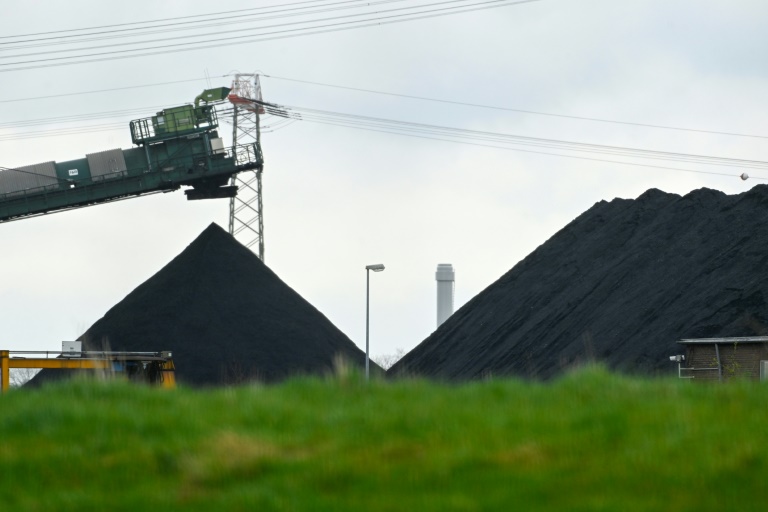
As Russia cuts gas, coal makes a comeback in Europe

Russia’s gas cuts to Europe have prompted a clutch of countries to revert to burning coal, raising concerns as the EU seeks to become climate neutral by 2050.

Here is a look at the situation:

– Coal still here, but declining –

Globally, coal is the main source of energy for electricity production, but it is also the top producer of greenhouse gases.

Its use is declining in the European Union, where 202 coal-fired plants with production capacity of 111 gigawatts were in operation earlier this year, according to the Global Energy Monitor, a US-based non-governmental organisation.

Germany is home to the most plants with 63, followed by 44 in neighbouring Poland and 24 in the Czech Republic.

But their use is falling in the 27-nation EU, with coal behind 13 percent of electricity production in 2020, compared to 25 percent in 2013, thanks in part to the rising cost of CO2 emission permits.

“Since 2015, all European countries have gradually pledged to abandon coal, including Poland which was very opposed to that,” noted Nicolas Berghmans at the Paris-based Institute for Sustainable Development and International Relations.

There are no new coal projects underway in Europe, unlike other regions such as Asia.

Some countries, like Portugal, have completely eliminated the use of the fossil fuel.

– A temporary reprieve –

Russia’s halt in natural gas deliveries threatens to rapidly create shortages, so several countries have announced temporary measures in favour of coal.

One such country is Germany, where coal-fired electricity plants will operate longer than planned. Berlin has insisted this does not change its plans to exit coal in 2030.

Austria, Italy and the Netherlands have made similar announcements.

Germany has already stepped up coal use: in the first five months of the year, electricity produced by coal jumped 20 percent, according to Rystad Energy, a research and business intelligence firm.

The EU has decided to ban Russian coal from the month of August, so it will need to import hard coal supplies from elsewhere. Europe is nearly sufficient in brown coal, which is the most polluting.

The German association of hard coal importers estimated in March that Russian imports could be quickly replaced by supplies from countries such as the United States, Colombia, South Africa, Australia, Mozambique and Indonesia.

– A bit of elbow room –

EU officials have called for using the crisis to push forward in the transition to clean energy rather than reverting to dirty fuels.

Berghmans noted that using coal plants would cause a temporary rise in carbon emissions.

“Nevertheless, the advantage of calling upon these plants that were due to close is that there is no investment in new capacity,” he said.

Europe is thus in a completely different situation than Asia, where projects for new coal-fired electricity plants are still being undertaken. These facilities will likely be in operation for decades.

The International Energy Agency (IEA) has flagged a worrying increase in investment in coal projects, a 10 percent rise in 2021 centred in Asia. A similar gain is expected in 2022.

EU members are currently discussing a plan called RepowerEU that would accelerate the push towards renewable energy sources and reduce overall demand.

Berghmans expressed confidence that renewables and demand reduction would allow Europe to “turn the corner” and achieve its climate objectives.

The IEA, which has presented a plan to help Europe reduce its dependence upon Russian gas, believes there is a bit of room for the continent to revert to coal use without increasing carbon emissions.

According to its calculations, Europe can replace about 14 percent of imported Russian gas with coal-fired electricity without producing more pollution.

Close Bitnami banner
Bitnami