World

Rescuers scramble to reach Afghan quake survivors as foreign aid arrives

Desperate rescuers battled against the clock and heavy rain Thursday to reach cut-off areas in eastern Afghanistan after a powerful earthquake killed at least 1,000 people and left thousands more homeless.

Wednesday’s 5.9-magnitude quake struck hardest in the rugged east, downing mobile phone towers and power lines while triggering rock and mudslides which blocked mountain roads.

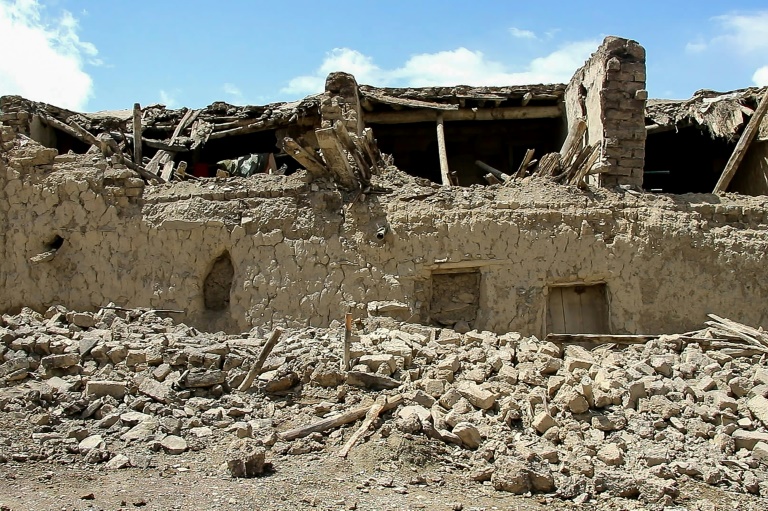
Entire villages have been levelled in some of the worst affected districts, where survivors said they were struggling to find equipment to bury their dead.

“When I came out of my house it was quiet because all the people were buried under their homes. Nothing is left here,” said 21-year-old Zaitullah Ghurziwal.

The disaster poses a huge logistical challenge for Afghanistan’s new Taliban government, which has isolated itself from much of the world by introducing hardline Islamist rule that subjugates women and girls.

“Getting information from the ground is very difficult because of bad networks,” Mohammad Amin Huzaifa, head of information for badly hit Paktika province, told AFP Thursday.

“The area has been affected by floods because of heavy rains last night… it is also difficult to access the affected sites.” 

The aid-dependent country saw the bulk of its foreign assistance cut off in the wake of the Taliban takeover last August, and even before the earthquake the United Nations warned of a humanitarian crisis that threatened the entire population.

UN Secretary-General Antonio Guterres said the global agency has “fully mobilised” to help, deploying health teams and supplies of medicine, food, trauma kits and emergency shelter to the quake zone.

– ‘Like a tsunami’ –

Survivors in Bermal district, a collection of remote mountain villages, said they were struggling to find equipment to dig graves.

“We did not have even a shovel to dig… so we used a tractor. We buried 60 people yesterday and 30 more are still remaining to be buried. People are working continuously,” said Ghurziwal.

“There are no blankets, tents, there’s no shelter. Our entire water distribution system is destroyed. Everything is devastated, houses are destroyed. There is literally nothing to eat.”

Afghan government spokesman Zabihullah Mujahid tweeted Thursday that aid flights had landed from Qatar and Iran, while Pakistan had sent trucks carrying tents, medical supplies and food across the land border.

The earthquake struck areas that were already suffering the effects of heavy rain, causing rockfalls and mudslides that wiped out hamlets perched precariously on mountain slopes.

The UN humanitarian coordinator for Afghanistan, Ramiz Alakbarov, told reporters nearly 2,000 homes were likely destroyed — a huge number in an area where the average household size is more than 20 people.

“Seven in one room, five in the other room, four in another, and three in another have been killed in my family,” Bibi Hawa told AFP from a hospital bed in the Paktika capital.

“I can’t talk any more, my heart is getting weak.”

The healthcare system in Afghanistan was already on the verge of collapse. 

“Our country is poor and lacks resources,” said hospital director Mohammad Yahya Wiar. “This is a humanitarian crisis. It is like a tsunami.”

– Trench graves –

Even before the Taliban takeover, Afghanistan’s emergency response teams were stretched to deal with the natural disasters that frequently strike the country.

But with only a handful of airworthy planes and helicopters left since they returned to power, any immediate response to the latest catastrophe is further limited.

“The government is working within its capabilities,” tweeted Anas Haqqani, a senior Taliban official.

“We hope that the International Community & aid agencies will also help our people in this dire situation.”

The United States, whose troops helped topple the initial Taliban regime and remained in Afghanistan for two decades until Washington pulled them out last year, was “deeply saddened” by the earthquake, the White House said.

“President Biden is monitoring developments and has directed USAID (US Agency for International Development) and other federal government partners to assess US response options to help those most affected,” National Security Advisor Jake Sullivan said in a statement.

– Prayers for victims –

Afghanistan is frequently hit by earthquakes, especially in the Hindu Kush mountain range, which lies near the junction of the Eurasian and Indian tectonic plates.

Scores of people were killed in January when two quakes struck the western province of Badghis.

In 2015, more than 380 people were killed in Pakistan and Afghanistan when a 7.5-magnitude earthquake ripped across the two countries.

Afghanistan’s deadliest recent earthquake killed 5,000 in May 1998 in the northeastern provinces of Takhar and Badakhshan.

From the Vatican, Pope Francis offered prayers for victims of the latest quake.

“I express my closeness with the injured and those who were affected,” the 85-year-old pontiff said concluding his weekly audience.
Germany raises gas alert level after Russia cuts supply

Germany moved closer to rationing natural gas on Thursday as it raised the alert level under an emergency plan after Russia slashed supplies to the country.

“Gas is now a scarce commodity in Germany,” Economy Minister Robert Habeck told reporters at a press conference.

Russia was using gas “as a weapon” against Germany in retaliation for the West’s support for Ukraine following Moscow’s invasion, Habeck said, with the aim of “destroying” European unity.

But the Kremlin dismissed Germany’s suggestion there were political motives behind the limits to supply as “strange”.

Germany, like a number of other European countries, is highly reliant on Russian energy imports to meet its needs.

Triggering the “alarm” level — the second of three steps under the emergency plan — brings Germany a step closer to the final stage that could see gas rationing in Europe’s top economy.

The increased level reflected a “significant deterioration of the gas supply situation”, Habeck said.

“If we do nothing now, things will get worse,” Habeck said.

– Russian rebuttal –

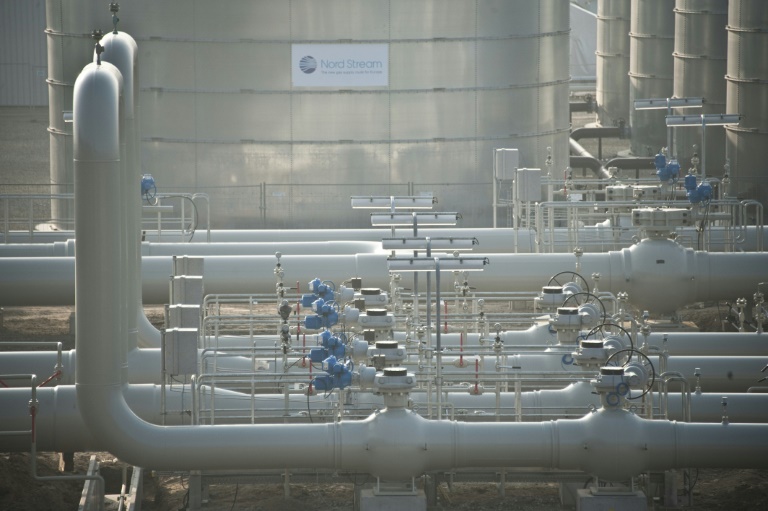
Russian energy giant Gazprom cut supplies to Germany via the Nord Stream pipeline by 60 percent last week, blaming the new limits on delayed repairs.

Germany has dismissed the technical justification provided by Gazprom, instead calling the move a “political decision”. 

Kremlin spokesman Dmitry Peskov said Thursday there was “no double meaning” in the supply decision.

“Our German partners are well aware of the technological servicing cycles of a pipeline,” he said.

“It’s strange to call it politics.”

In recent weeks, Gazprom has stopped deliveries to a number of European countries, including Poland, Bulgaria, Finland and the Netherlands.

Supplies of gas to Europe’s largest economy were “secure”, Habeck said, but action was still required to prepare for the winter ahead.

To mitigate the risks from a supply cut, the government mandated gas storage facilities be filled to 90 percent by the beginning of December.

Currently, the country’s stores stand just under 60 percent full, above the average level of previous years.

The targets would, however, be hard to hit if exports onwards to other countries were not limited — a move that could prove difficult within Europe.

Were these to return to the level they were at before the most recent supply squeeze, Germany could face an acute gas shortage in February 2023. A further supply cut could make the situation even worse.

– Supply stoppage –

The German government expects supply to stop between July 11 and July 25 for annual maintenance on the Nord Stream pipeline.

If deliveries do not resume after the service period, Germany could face a shortage of gas as soon as “mid-December”.

Since the outbreak of the war in Ukraine, Germany has managed to reduce the share of its natural gas supplied by Russia from 55 percent to around 35 percent.

The government has found new sources of supply, accelerated plans to import gas in the form of LNG by sea, and put aside 15 billion euros ($15.8 billion) to buy gas to fill storage facilities.

Germany also decided to reactivate mothballed coal-fired power plants to take the burden for electricity generation off gas.

In contrast, the government shrugged off calls to extend the operational lifetime of its nuclear power plants.

Prolonging the use of the final reactors set to be taken off the grid at the end of the year was “not an option”, it said Wednesday.

Germany had to look to see what “energy saving potential” existed, Habeck said Thursday. 

Households could “make a difference” by conserving energy, after Germany launched a campaign to encourage fuel-saving measures, he said, while industry could also make a further contribution.

Euro, pound drop as recession prospects grow

The euro and pound retreated against the dollar Thursday as economic data pointed to increased prospects of recession in Europe.

Global stock markets recovered some ground after another battering this week, while oil prices extended losses.

Economic growth in the eurozone plummeted in June, a key survey showed, as high prices took the wind out the strong recovery from the deep lows of the coronavirus pandemic.

The closely-watched monthly purchasing managers’ index by S&P Global slumped to 51.9 from 54.8 in May. A figure above 50 indicates growth.

PMI data also revealed that Britain’s private sector business activity is languishing at its lowest level for more than a year on decades-high inflation.

The surveys weighed on Europe’s major currencies, with foreign exchange markets seen as a clearer indicator of a country’s economic health compared with stock markets that feature many multinationals.

“The global economy continues to be afflicted by severe supply shocks, which are pushing up inflation and driving down growth,” noted Citi analyst Nathan Sheets, adding the likelihood of recession had reached 50 percent. 

Commentators have warned for some time that the world economy could be heading for contracting growth owing to the sharp increase in global interest rates aimed at cooling inflation.

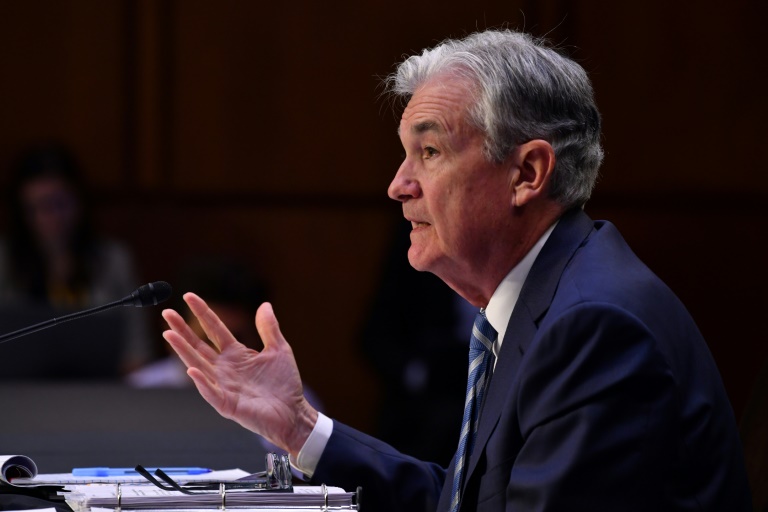
Federal Reserve boss Jerome Powell on Wednesday said recession in the short term was “certainly a possibility”.

He said “inflation has obviously surprised to the upside over the past year, and further surprises could be in store”.

The Fed this month hiked US interest rates by 75 basis points and is expected to do the same in July, with some observers predicting two more such moves after that.

Deutsche Bank CEO Christian Sewing also said there was a 50 percent chance of a contraction next year.

Elon Musk, JP Morgan boss Jamie Dimon and economist Nouriel Roubini are among several others to have made similar forecasts.

The prospect of a retreat in the global economy continued to drag on oil prices as traders fretted over slowing demand. 

Brent and WTI have slumped over the past week, even with sanctions on Russian crude exports and China’s gradual reopening from lockdowns.

Adding to the selling of crude was data Wednesday indicating a jump in US stockpiles.

“A slowdown in global growth is a risk to oil demand, which could help ease some of the tightness in the market,” said Warren Patterson of ING Group. 

“Already, we have seen demand estimates revised lower.”

– Key figures at around 1115 GMT –

London – FTSE 100: UP 0.2 percent at 7,105.32 points

Frankfurt – DAX: DOWN 0.4 percent at 13,089.22

Paris – CAC 40: UP 0.4 percent at 5,941.75

EURO STOXX 50: UP 0.2 percent at 3,472.03

Euro/dollar: DOWN at $1.0499 from $1.0570 late Wednesday

Pound/dollar: DOWN at $1.2204 from $1.2263

Euro/pound: DOWN at 86.02 pence from 86.17 pence

Dollar/yen: DOWN at 135.34 yen from 136.22 yen 

Tokyo – Nikkei 225: UP 0.1 percent at 26,171.25 (close)

Hong Kong – Hang Seng Index: UP 1.3 percent at 21,273.87 (close)

Shanghai – Composite: UP 1.6 percent at 3,320.15 (close)

New York – Dow: DOWN 0.2 percent at 30,483.13 (close)

Brent North Sea crude: DOWN 0.3 percent at $111.44 per barrel

West Texas Intermediate: DOWN 0.4 percent at $105.77 per barrel

Pfizer sets sights on elimination of blinding disease trachoma by 2030

Pfizer on Thursday said it would extend until 2030 a drug donation programme aimed at eliminating trachoma, an eye disease responsible for blinding or visually impairing nearly two million people worldwide.

The US pharmaceutical company co-founded the International Trachoma Initiative (ITI) in 1998, and has already donated nearly a billion doses of the antibiotic Azithromycin, contributing to a 90 percent reduction in the number of people impacted.

“We are so close to getting where we need to be with the elimination of this disease that we couldn’t give up now,” Pfizer chief sustainability officer and senior vice president Caroline Roan told AFP.

The announcement was made in Kigali, Rwanda at the Summit on Malaria and Neglected Tropical Diseases.

Trachoma is caused by infection with the bacterium Chlamydia trachomatis, and is spread through personal contact (such as through hands, clothes or bedding), and by flies that have been in contact with discharge from the eyes or nose of an infected person, according to the World Health Organization. 

Africa is the most affected continent, and women are blinded up to four times more often than men, likely as a result of greater contact with infants. Repeated infections draw the eyelashes inward where they rub against the eye, causing pain and permanent damage to the cornea, says the WHO.

Some 136 million people live in trachoma-endemic areas and are at risk.

The ITI had initially hoped to eliminate the disease by 2020, but is now setting its sights on 2030. Thanks to the progress already made, trachoma no longer represents a public health problem in 13 countries (including China, Morocco, Ghana and elsewhere). 

Individual districts are assessed and if more than 5 percent of the children are infected, then the antibiotic is offered to the entire local population, once a year, for both treatment and prevention.

“Some of the campaigns will literally treat 10 million people in a week, and that really knocks down that infectious reservoir,” ITI director Paul Emerson told AFP.

The challenge today is to reach isolated populations, including nomadic people, as well as combining the drug with the promotion of hygiene measures such as frequent washing of the face in areas where water may be scarce. 

Today, the disease persists in 44 countries.

“Conflicts are a big factor,” said Emerson. “In a perfect world, where there was no interruption in available funds, and there was no war, we probably could have eliminated trachoma by 2020.”

Of the new 2030 goal, Roan said: “We think it is realistic and ambitious.”

War in Ukraine: Latest developments

Here are the latest developments in the war in Ukraine:

– ‘Historic’ day for Ukraine EU candidacy  –

EU chief Charles Michel says he expects the bloc’s leaders to take the “historic” decision to accept war-torn Ukraine and its neighbour Moldova as candidates for EU membership.

EU leaders are meeting in Brussels to discuss the move, which would send a strong message of support for Ukraine, four months into the war.

Ukrainian President Volodymyr Zelensky tells the nation to get ready for a “historic decision”.

Securing candidate status is the first step on the road to EU membership, a process that can take years.

Albanian Prime Minister Edi Rama warned Ukraine to have “no illusions” about the process, noting that his country’s application had been languishing for eight years.

– ‘Hell’ in the east –

A Ukrainian official describes the situation in the battleground eastern city of Severodonetsk, where Ukrainian forces are making a last stand at a chemical plant after being driven out of the centre, as “hell”.

“It’s just hell out there,” Lugansk governor Sergiy Gaiday says, while assuring: “Our boys are holding their positions and will continue to hold on as long as necessary.”

In the neighbouring city of Lysychansk, which remains in Ukrainian hands, Russian shelling is “destroying everything”, he says.

Taking the two cities would give Moscow control of the whole of Lugansk, one of two regions with neighbouring Donetsk that make up Ukraine’s industrial heartland of Donbas.

Britain’s defence ministry says in an intelligence note that while the Russian army is “putting the Lysychansk-Sieverodonetsk pocket under increasing pressure… its efforts to achieve a deeper encirclement to take western Donetsk Oblast remain stalled.”

– Gas grows scarce in Germany –

Germany takes a step closer to rationing its gas supplies following a sharp reduction in deliveries from Russia. 

“Gas is now a scarce commodity in Germany,” Economy Minister Robert Habeck says, announcing plans to raise the alert level under the country’s emergency gas plan to the second-highest level.

Russian energy giant Gazprom last week cut its supplies via the Nord Stream pipeline to Germany by 60 percent, in what Berlin called a political move but Gazprom said was due to repairs.

Several EU members have already had their Russian gas supplies cut off for refusing to pay in rubles.

– 152 heritage sites destroyed –

The UN’s cultural agency UNESCO says 152 cultural and heritage sites in Ukraine have been partially or completely destroyed since Russia invaded.

They include museums and monuments, churches and other religious buildings, and libraries and other exceptional buildings but so far do not include any of Ukraine’s seven World Heritage Sites.

UNESCO is helping Ukraine mark landmarks with its distinctive blue shield, designed to protect them from attack.

– No deal yet on grain talks: Kyiv –

Ukraine plays down the chances of reaching a UN-brokered agreement with Russia on unblocking millions of tonnes of grain blocked by the war in its silos and ports.

“Consultations are ongoing. Yet no concrete agreements on holding talks with Ukraine, Russia, Turkey and UN have been reached so far,” Ukrainian foreign ministry spokesman Oleg Nikolenko says.

On Wednesday, Turkey, which is mediating in the dispute, said a Turkish cargo ship had been able to leave a Russian-occupied Ukrainian port for the first time since the war began.

– G7 to step up pressure on Russia – 

US President Joe Biden and other world leaders will announce new punitive measures against Russia at a G7 summit starting Sunday in Germany, a senior US official says.

“We will roll out a concrete set of proposals to increase pressure on Russia,” the official said. 

Biden will meet with the leaders of Britain, Canada, France, Germany, Italy, and Japan at the summit in Bavaria before travelling to Madrid for a NATO summit.

Zelensky will address both summits by video link.

burs-cb/dl

Myanmar's Suu Kyi moved to solitary confinement in prison

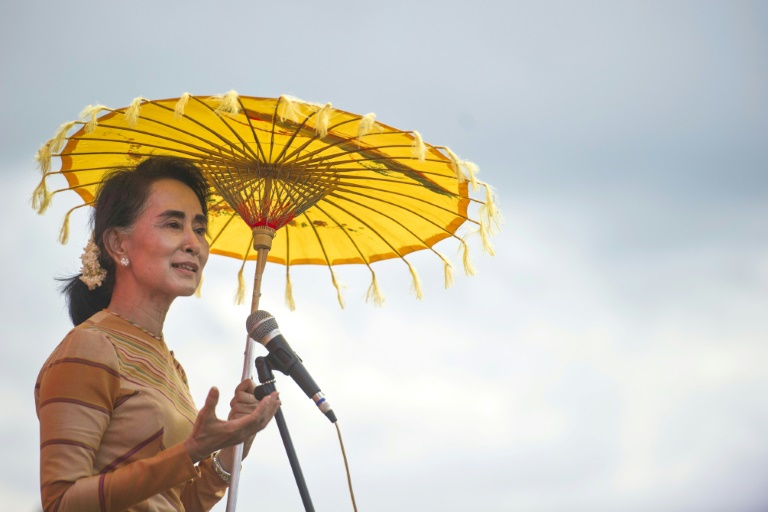
Ousted Myanmar leader Aung San Suu Kyi remained in strong spirits after being transferred from house arrest to prison, a source with knowledge of the case said Thursday, and would “calmly” face her new solitary confinement.

Since being deposed in a coup last year, Suu Kyi had been under house arrest at an undisclosed location in Naypyidaw, accompanied by several domestic staff and her dog, according to sources with knowledge of the matter.

The Nobel laureate, 77, left those premises only to attend hearings for her numerous trials in a junta court that could see her handed a prison sentence of more than 150 years.

On Wednesday, she was transferred from house arrest to “solitary confinement in prison”, junta spokesman Zaw Min Tun said in a statement.

Her future trial hearings would take place inside a courtroom within the prison compound, he added.

Suu Kyi was in “strong spirits” after the transfer, a source with knowledge of the case told AFP on Thursday.

“She acts like before and is in strong spirits,” said the source, who requested anonymity. “She is used to facing any kind of situation calmly.”

A source with knowledge of the case said Suu Kyi’s domestic staff and her dog had not accompanied her when she was moved on Wednesday, and that security around the prison compound was “tighter than before”.

“Aung San Suu Kyi is in good health as far as we know,” they added, speaking on condition of anonymity.

Suu Kyi will be provided with three female staff from inside the prison to look after her, said another source with knowledge of the matter, without specifying whether they would be convicts or prison wardens.

Since seizing power, Myanmar’s military government has detained thousands of pro-democracy protesters, with many facing secret trials that rights groups have decried as politically motivated.

Suu Kyi’s lawyers have been banned from speaking to the media, with journalists barred from her trial and the junta rebuffing requests by foreign diplomats to meet her.

“For the sake of the country and people, she (Suu Kyi) has sacrificed everything, but the wicked people are ungrateful and cruel,” one social media user posted on Facebook following Thursday’s announcement.

– ‘Punitive’ –

“What we are seeing is the Myanmar junta moving towards a much more punitive phase, towards Aung San Suu Kyi,” said Phil Robertson, deputy Asia director for Human Rights Watch.

“They are obviously trying to intimidate her and her supporters.”

Under a previous junta regime, Suu Kyi spent long spells under house arrest in her family mansion in Yangon, Myanmar’s largest city.

In 2009, she spent around three months in Yangon’s Insein prison while she went on trial after being accused of harbouring an American man who swam across a lake to visit her while she was under house arrest.

Under the current junta, she has already been convicted of corruption, incitement against the military, breaching Covid-19 rules and breaking a telecommunications law, with a court sentencing her to 11 years so far.

Suu Kyi turned 77 on Sunday and brought a birthday cake to court to eat with her lawyers ahead of a hearing on Monday, according to a source with knowledge of the matter.

The coup last year sparked widespread protests and unrest that the military has sought to crush by force.

Fighting has flared with established ethnic rebel groups in border areas, and across the country “People’s Defence Forces” have sprung up to fight junta troops.

According to local monitoring group Assistance Association for Political Prisoners, the crackdown has left more than 2,000 civilians dead while more than 14,000 have been arrested.

Diplomatic efforts to end the crisis led by the Association of Southeast Asian Nations bloc, of which Myanmar is a member, have floundered.

Tom Andrews, the UN Special Rapporteur on the situation of human rights in Myanmar, on Thursday called for the bloc to increase pressure on the junta.

“The longer we wait, the more inaction that there is, the more people are going to die, the more people are going to suffer,” he said.

WHO emergency committee meets on monkeypox

A World Health Organization committee of experts will meet on Thursday to discuss the monkeypox outbreak for the first time and decide whether it constitutes a global health emergency.

The one-day meeting, being held in private, was due to start at 1000 GMT, with a statement on the outcome likely to be issued on Friday.

A surge of monkeypox cases has been detected since May outside of the West and Central African countries where the disease has long been endemic. Most of the new cases have been in Western Europe.

WHO chief Tedros Adhanom Ghebreyesus has convened an emergency committee to assess whether the outbreak constitutes a public health emergency of international concern.

A PHEIC is the highest alarm that the WHO can sound, under the International Health Regulations — the legally-binding framework agreed by 196 countries on handling public health events that could cross borders.

Besides providing a PHEIC assessment, the committee members are set to give the WHO and its member states advice on how to better prevent the spread of the disease and manage their response.

“The emergency committee will provide a recommendation to the director-general based on scientific principles, and an assessment of the risk to human health, the risk of international spread and the risk of interference with international traffic,” the WHO said.

Tedros then makes the final determination on whether a PHEIC should be declared, based on their advice.

There have been six PHEIC declarations since 2009, the last being for Covid-19 in 2020 — though the sluggish global response to the alarm bell still rankles at the WHO’s Geneva headquarters.

Emergency committee meetings on the new coronavirus outbreak were held on January 22 and 23, 2020 but the panel could not agree at that time that the PHEIC threshold had been reached.

A PHEIC was declared after a third meeting on January 30. But it was only after March 11, when Tedros described the rapidly-worsening situation as a pandemic, that many countries seemed to wake up to the danger.

– More than 2,000 cases –

This year, as of June 15, some 2,103 laboratory-confirmed cases and one probable case of monkeypox, including one death, have been reported to the WHO from 42 countries.

But the WHO’s Europe office and the EU health agency ECDC said that 2,746 cases had been recorded in Europe alone as of Tuesday.

“The outbreak of monkeypox continues to primarily affect men who have sex with men who have reported recent sex with new or multiple partners,” the WHO said.

Some 84 percent of the cases have been found in Europe, with the most cases being reported from Britain, Spain, Germany, Portugal, Canada and France.

The WHO says there may have been undetected transmission for some time before its unexpected appearance in multiple countries.

The UN health agency currently assesses the global risk level as moderate, considering the low mortality rate.

Tedros announced on June 14 that he would convene an emergency committee, describing the outbreak as “unusual and concerning”.

Macron 'compromise' call meets opposition resistance

France risked prolonged political deadlock Thursday after opposition parties gave a frosty reception to President Emmanuel Macron’s call for “compromises” to keep France governable after an indecisive parliamentary election.

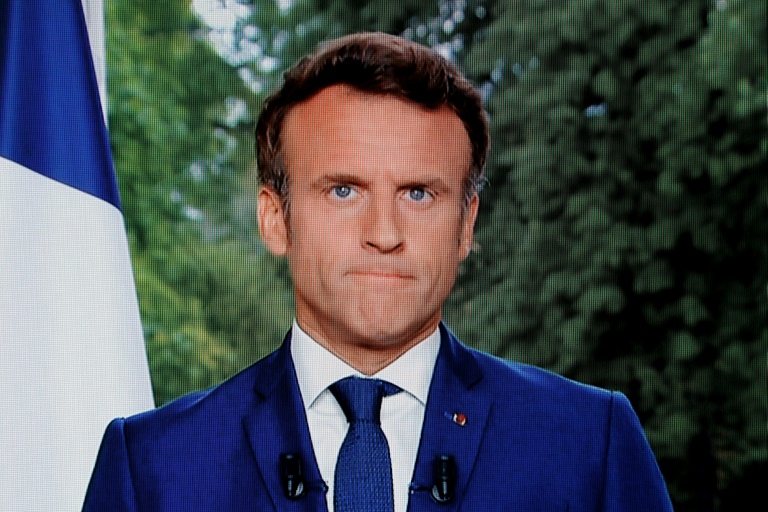
Macron made his plea in an address to the nation late Wednesday days after failing to retain a majority in parliament, a setback that threatens to cripple his ability to carry out his planned reforms.

His centrist alliance finished Sunday’s parliamentary elections 44 seats short of a majority in the National Assembly, as a new left-wing coalition and the far right made major gains.

The situation has called into question Macron’s plans for reform in his second term after his April presidential re-election — including a key measure to raise the retirement age — and risks denting his international stature.

Breaking three days of silence in the wake of the elections, Macron ruled out a national unity government but appeared upbeat on the chances for progress, even if he did not offer any concrete solutions. 

Macron said France’s political forces must “collectively learn to govern and legislate differently” by building “compromises, additions and amendments but doing so in complete transparency, for the sake of national unity”.

He indicated two possible ways forward — either a formal coalition government deal with another party or by “creating majorities bill-by-bill” in the parliament.

– ‘Back to the wall’ –

The main opposition parliamentary groups, feeling triumphant after upsetting the president’s party, seemed in no mood, however, to help out Macron whom they accused of putting them on the spot.

“He’s the one with his back to the wall, not us,” said Socialist deputy Valerie Rabault, whose party is part of the new leftist NUPES alliance that enjoyed a surprise surge in the vote.

“If he tries to push through his programme without an absolute majority he will be stuck,” she said. 

“He will be responsible for paralysing France.”

She demanded a “course correction” by the government, notably in favour of a higher minimum wage and of measures to offset rising costs of living.

The conservative Republicans (LR) party, seen by many as Macron’s most suitable potential ally, meanwhile rejected any formal coalition agreement, with LR Senator Bruno Retailleau saying it would examine Macron’s policies on a “case-by-case” basis.

The interim president of Marine Le Pen’s far-right RN party, Jordan Bardella, said it was up to Macron to “take the first step” by telling the opposition which policies he was ready to back away from in exchange for their support.

Over the previous two days, Macron had sounded out opposition leaders at the Elysee Palace, meeting with Le Pen on Tuesday, while the head of the NUPES alliance, hard-leftist Jean-Luc Melenchon, sent lawmaker Adrien Quatennens to represent him.

Despite little obvious progress, Macron said Wednesday the opposition were ready “to advance on major topics” such as the cost of living, jobs, energy, climate and health”.

– ‘No ultimatum’ –

Macron, who is attending an EU summit in Brussels on Thursday and Friday, a G7 summit in Germany from Sunday and a NATO summit in Madrid from Tuesday, in his TV address appeared to give the opposition a 48-hour deadline to make their positions clear.

But when questioned Thursday about the apparent ultimatum, government spokeswoman Olivia Gregoire insisted there was no such deadline.

“Let me be very clear this morning,” she told FranceInfo radio. “There is no ultimatum, and no question of 48 hours.”

Instead, negotiations could take “several days, maybe even several weeks, but certainly not 48 hours”, she said.

“The president is holding his hand out to all those who want the country to move forward,” she said.

Talks would begin as soon as Macron returns from the EU headquarters, she said.

“We’re opening negotiations, it’s the start of consensus and of compromise,” she said. 

“An ultimatum would be the end.”

burs-jh-sjw/jv

EU weighs Ukraine candidacy as Russia inflicts 'hell' in east

EU leaders met in Brussels on Thursday to discuss making Ukraine a candidate to join the bloc, a “decisive” moment likely to infuriate Russia as its forces battled stiff resistance to advance in the embattled eastern Donbas region.

Western officials also denounced Moscow’s “weaponising” of its key gas and grain exports, with a US official warning of further retaliation measures at a G7 summit in Germany starting Sunday.

Germany ratcheted up an emergency gas plan to its second alert level, just one short of the maximum that could require rationing in Europe’s largest economy after Russia slashed its supplies.

“Gas is now a scarce commodity,” Economy Minister Robert Habeck told reporters, urging households to cut back on use.

In Ankara meanwhile, British Foreign Secretary Liz Truss accused Russian President Vladimir Putin of “weaponising hunger” by preventing grain shipments from leaving Ukraine ports, raising the spectre of shortages worldwide.

“We are very clear that this grain crisis is urgent, that it needs to be solved within the next month. Otherwise we could see devastating consequences,” Truss said after talks with her Turkish counterpart Mevlut Cavusoglu.

Moscow and Ankara have negotiated for weeks on getting millions of tonnes of desperately needed grain out of the war zone and on to Africa and the Middle East, so far to no avail.

The potential consequences for Ukraine’s allies loomed large over the country’s EU candidate status talks in Brussels, and the G7 and NATO meetings in the following days.

Ukrainian President Volodymyr Zelensky said he had conducted a “telephone marathon” ahead of the meeting, making his case to 11 European leaders on Wednesday alone.

“This is a decisive moment for the European Union, this is also a geopolitical choice that we will make today,” EU council president Charles Michel told journalists ahead of the summit.

– Russian gains –

While the European Commission-backed candidacy is widely expected to be approved, some members have been lukewarm about Ukraine’s status, and any accession process is likely to take years if not decades.

On the ground in the Donbas, the situation was becoming increasingly urgent as Russian forces tightened their grip on the strategically important city of Severodonetsk, as well as its twin city of Lysychansk across the Donets river.

Taking the two cities would give Moscow control of the whole of Lugansk, allowing Russia to press further into Donbas.

Britain’s defence ministry said some Ukrainian units had probably withdrawn “to avoid being encircled” as Russian troops advanced slowly but steadily toward Lysychansk.

“Russia’s improved performance in this sector is likely a result of recent unit reinforcement and heavy concentration of fire,” it said in its latest intelligence update.

“The Russian army is… just destroying everything” in Lysychansk, said Sergiy Gaiday, governor of the Lugansk region.

“It’s just hell out there,” after four months of shelling in Severodonetsk, he wrote later, vowing that “Our boys are holding their positions and will continue to hold on as long as necessary.”

– ‘Only grannies left’ –

After being pushed back from Kyiv and other parts of Ukraine in the initial weeks of the invasion launched on February 24, Moscow is seeking to seize a vast eastern swathe of the country.

But daily bombardments also continue elsewhere.

The northeastern city of Kharkiv near the Russian border was near empty on Wednesday, AFP reporters said, a day after shelling by Moscow’s forces killed five people there.

“Last night the building next to mine collapsed from the bombardment while I was sleeping,” said Leyla Shoydhry, a young woman in a park near the opera house.

Roman Pohuliay, a 19-year-old in a pink sweatshirt, said most residents had fled the city.

“Only the grannies are left,” he said.

Zelensky again pressed allies Wednesday for the rapid supply of more arms, having earlier accused the Russian army of “brutal and cynical” shelling in the eastern Kharkiv region, where the governor said 15 people had been killed in a day.

In the central city of Zaporizhzhia, meanwhile, women were training to use Kalashnikov assault rifles in urban combat as Russian forces edged nearer.

“When you can do something, it’s not so scary to take a machine gun in your hands,” said Ulyana Kiyashko, 29, after moving through an improvised combat zone in a basement.

– Lithuania in cross-hairs –

Away from the battlefield, Moscow this week summoned Brussels’ ambassador in a dispute with EU member Lithuania over the country’s restrictions on rail traffic to the Russian outpost of Kaliningrad.

The coastal territory, annexed from Germany after World War II, is about 1,000 miles (1,600 kilometres) from Moscow, and borders Lithuania and Poland but has no land border with Russia.

By blocking goods arriving from Russia, Lithuania says it is simply adhering to European Union-wide sanctions on Moscow.

The United States made clear its commitment to Lithuania as a NATO ally, while Germany urged Russia not to “violate international law” by retaliating.

burs-sr/js/sjw/dl

Inflation 'shock' punishes Eurozone economy in June: survey

Economic growth in the eurozone plummeted in June, a key survey showed on Thursday, as high prices took the wind out the strong recovery from the deep lows of the coronavirus pandemic.

The closely-watched monthly purchase managers’ index (PMI) by S&P Global fell from 54.8 in May to 51.9. A figure above 50 indicates growth.

The slowdown, caused by a “cost-of-living shock”, is “the most abrupt recorded by the survey since the height of the global financial crisis in November 2008”, excluding the pandemic lockdown, said Chris Williamson, Chief Business Economist at S&P Global.

Since the beginning of the year, the European economy has recovered strongly from the lifting of restrictions linked to the Covid-19 pandemic, which revived tourism to countries like Spain and Greece as well as transport. 

It also benefited from household spending, as consumers burned through savings accumulated during many months of confinement, offsetting the negative impact of the war in Ukraine. 

But in June, the “tailwind” of this pent-up demand “is already fading”, Williamson warned.

The latest data “is now consistent with Gross Domestic Product (GDP) growth of just 0.2 percent for the second quarter, compared to quarterly growth of 0.6 percent at the start of the year”, he said.

“The situation is likely to deteriorate in the second half of the year”, he added, raising the spectre of negative growth and recession.

Close Bitnami banner
Bitnami