World

Markets struggle as recession fears weigh heavily

Equities struggled Wednesday after a brief respite from last week’s painful rout across world markets, with recession fears continuing to build as central banks hike interest rates to combat decades-high inflation.

While Asia, Wall Street and Europe all enjoyed healthy gains on Tuesday, analysts warned the downbeat mood on trading floors means the selling is unlikely to end any time soon.

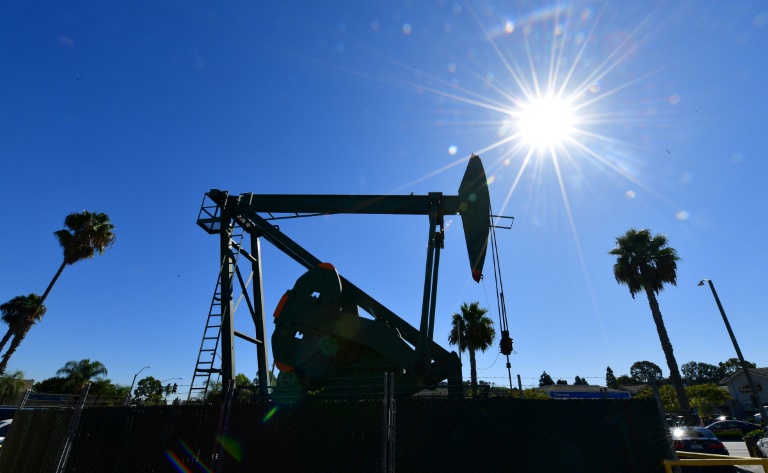
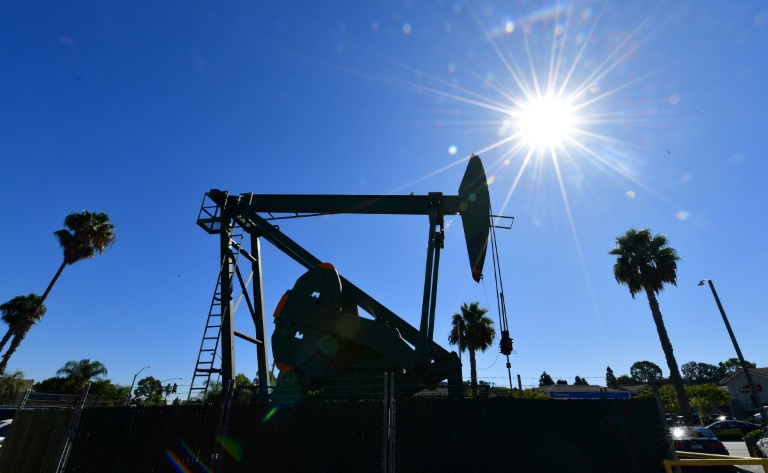
Fears about a global contraction have also put downward pressure on oil prices, despite China’s reopening moves, the US holiday driving season and tight supplies. 

Federal Reserve boss Jerome Powell’s two-day testimony to Congress this week will be pored over for an idea about officials’ plans for fighting runaway prices, which are being fanned by supply chain snarls, China’s lockdowns and the war in Ukraine.

Most observers expect them to hike rates by three-quarters of a point several more times this year, having announced such a move in June — the sharpest lift in almost 30 years.

However, while many believe the Fed’s front-loaded tightening drive is needed — allowing it to begin cutting sooner as price rises settle back — there is a building consensus that the world’s top economy is heading for a contraction next year.

“The Fed has entered into a policy cocktail that we would describe as hammer time,” Gene Tannuzzo, at Columbia Threadneedle Investments, told Bloomberg Television.

“You have to be planning defensively at this point. There are a lot of questions on all risk assets.”

– Crude prices drop –

In early Asian trade, Hong Kong, Singapore, Sydney, Seoul, Taipei, Jakarta and Manila all fell, while Tokyo and Shanghai were barely moved. There were small gains in Wellington.

Stephen Innes at SPI Asset Management said that while the selling from last week had abated, traders continued to fret over a recession and the prospect of more rate hikes, adding that the Fed could be more compelled to respond if oil prices surge again and push up inflation further.

“Even more worryingly from a policy perspective is that virtually every recession in the past three decades has been a function of a demand shock, but this is a supply shock; hence monetary policy is less potent,” he added.

“Despite the uptick in risk sentiment, it still feels we are eons away from shaking the event-driven bear market blues due to prevailing recession obsession headwinds.”

Oil prices were feeling the heat from recessionary fears, with both main contracts down more than three percent Wednesday, though Goldman Sachs said that with demand still outpacing supplies, the market remains tight.

“Investors should remember that Fed-induced slowdowns are simply a short-term abatement of the symptom, inflation, and not a cure for the problem, underinvestment,” it added.

Bets on the Fed’s rate hikes, and the Bank of Japan’s refusal to move from its policy of ultra-low rates, continues to pile pressure on the yen, which is sitting at a 24-year low above 136.50 to the dollar.

Japanese Prime Minister Fumio Kishida’s comment that it “is up to the central bank” how to maintain its easy money policy adding to pressure on the country’s unit though famed economist Nouriel Roubini said he expects Tokyo to take action if the yen hits 140.

“If you go well above 140, the BoJ will have to change policy and the first change in policy is going to be yield curve control,” he said referring to a policy of keeping long-term rates artificially at a chosen level.

“So I think another 10 percent fall in the yen will imply a change in policy,” he told Bloomberg Television at the Qatar Economic Forum.

– Key figures at around 0230 GMT –

Tokyo – Nikkei 225: FLAT at 26,255.95 (break)

Hong Kong – Hang Seng Index: DOWN 0.6 percent at 21,424.70

Shanghai – Composite: FLAT at 3,307.00

Euro/dollar: DOWN at $1.0508 from $1.0535 late Tuesday

Pound/dollar: DOWN at $1.2238 from $1.2273

Euro/pound: UP at 85.87 pence from 85.80 pence

Dollar/yen: DOWN at 136.25 yen from 136.64 yen

West Texas Intermediate: DOWN 3.5 percent at $105.70 per barrel

Brent North Sea crude: DOWN 3.4 percent at $110.76 per barrel

New York – Dow: UP 2.2 percent at 30,530.25 (close)

London – FTSE 100: UP 0.4 percent at 7,152.05 (close)
Markets struggle as recession fears weigh heavily

Equities struggled Wednesday after a brief respite from last week’s painful rout across world markets, with recession fears continuing to build as central banks hike interest rates to combat decades-high inflation.

While Asia, Wall Street and Europe all enjoyed healthy gains on Tuesday, analysts warned the downbeat mood on trading floors means the selling is unlikely to end any time soon.

Fears about a global contraction have also put downward pressure on oil prices, despite China’s reopening moves, the US holiday driving season and tight supplies. 

Federal Reserve boss Jerome Powell’s two-day testimony to Congress this week will be pored over for an idea about officials’ plans for fighting runaway prices, which are being fanned by supply chain snarls, China’s lockdowns and the war in Ukraine.

Most observers expect them to hike rates by three-quarters of a point several more times this year, having announced such a move in June — the sharpest lift in almost 30 years.

However, while many believe the Fed’s front-loaded tightening drive is needed — allowing it to begin cutting sooner as price rises settle back — there is a building consensus that the world’s top economy is heading for a contraction next year.

“The Fed has entered into a policy cocktail that we would describe as hammer time,” Gene Tannuzzo, at Columbia Threadneedle Investments, told Bloomberg Television.

“You have to be planning defensively at this point. There are a lot of questions on all risk assets.”

– Crude prices drop –

In early Asian trade, Hong Kong, Singapore, Sydney, Seoul, Taipei, Jakarta and Manila all fell, while Tokyo and Shanghai were barely moved. There were small gains in Wellington.

Stephen Innes at SPI Asset Management said that while the selling from last week had abated, traders continued to fret over a recession and the prospect of more rate hikes, adding that the Fed could be more compelled to respond if oil prices surge again and push up inflation further.

“Even more worryingly from a policy perspective is that virtually every recession in the past three decades has been a function of a demand shock, but this is a supply shock; hence monetary policy is less potent,” he added.

“Despite the uptick in risk sentiment, it still feels we are eons away from shaking the event-driven bear market blues due to prevailing recession obsession headwinds.”

Oil prices were feeling the heat from recessionary fears, with both main contracts down more than three percent Wednesday, though Goldman Sachs said that with demand still outpacing supplies, the market remains tight.

“Investors should remember that Fed-induced slowdowns are simply a short-term abatement of the symptom, inflation, and not a cure for the problem, underinvestment,” it added.

Bets on the Fed’s rate hikes, and the Bank of Japan’s refusal to move from its policy of ultra-low rates, continues to pile pressure on the yen, which is sitting at a 24-year low above 136.50 to the dollar.

Japanese Prime Minister Fumio Kishida’s comment that it “is up to the central bank” how to maintain its easy money policy adding to pressure on the country’s unit though famed economist Nouriel Roubini said he expects Tokyo to take action if the yen hits 140.

“If you go well above 140, the BoJ will have to change policy and the first change in policy is going to be yield curve control,” he said referring to a policy of keeping long-term rates artificially at a chosen level.

“So I think another 10 percent fall in the yen will imply a change in policy,” he told Bloomberg Television at the Qatar Economic Forum.

– Key figures at around 0230 GMT –

Tokyo – Nikkei 225: FLAT at 26,255.95 (break)

Hong Kong – Hang Seng Index: DOWN 0.6 percent at 21,424.70

Shanghai – Composite: FLAT at 3,307.00

Euro/dollar: DOWN at $1.0508 from $1.0535 late Tuesday

Pound/dollar: DOWN at $1.2238 from $1.2273

Euro/pound: UP at 85.87 pence from 85.80 pence

Dollar/yen: DOWN at 136.25 yen from 136.64 yen

West Texas Intermediate: DOWN 3.5 percent at $105.70 per barrel

Brent North Sea crude: DOWN 3.4 percent at $110.76 per barrel

New York – Dow: UP 2.2 percent at 30,530.25 (close)

London – FTSE 100: UP 0.4 percent at 7,152.05 (close)
US lawmakers agree bipartisan bill on gun safety

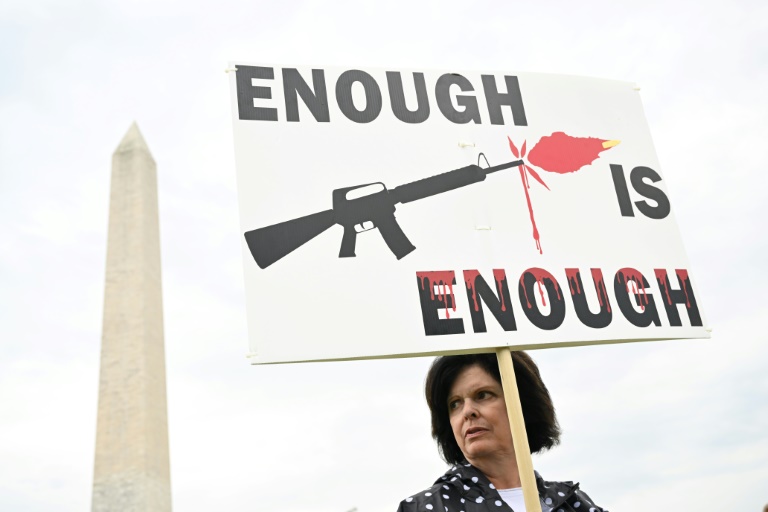
US senators unveiled a bill Tuesday addressing the epidemic of gun violence plaguing the country as they locked down a narrow set of reforms that were nevertheless hailed as the first significant firearms controls in a generation.

The cross-party group, which had been working for weeks on the wording of the legislation, voiced confidence that it would have enough support to pass the Senate, and it could be signed into law by President Joe Biden as soon as next week.

The limited proposals don’t go as far as reforms called for by Biden, such as an all-out ban on assault rifles.

But Chris Murphy, the senator leading negotiations for Democrats, hailed the bill as the “most significant piece of anti-gun violence legislation in nearly 30 years.”

“This bill is going to save thousands of lives,” he tweeted.

The lawmakers had been up against the clock — aware that any delay risked losing the sense of urgency ignited by the fatal shooting of 19 children in Uvalde, Texas and of 10 Black people at a supermarket in Buffalo, upstate New York, both last month.

The last significant federal gun control legislation was passed in 1994, banning the manufacture for civilian use of assault rifles and large capacity ammunition clips.

But it expired a decade later and there has been no serious effort at reform since, despite rising gun violence.

“This bipartisan gun-safety legislation is progress and will save lives. While it is not everything we want, this legislation is urgently-needed,” Democratic Senate leader Chuck Schumer said in a statement.

A cross-party group of senators agreed on a framework on June 12 that includes enhanced background checks for buyers aged under 21, $11 billion in funding for mental health and $2 billion for school safety programs.

The blueprint also calls for funding to incentivize states to implement “red flag” laws to remove firearms from people considered a threat.

However the National Rifle Association, America’s powerful gun rights lobby, rejected the deal.

“We will oppose this gun control legislation because it falls short at every level,” the NRA said in a statement. “It does little to truly address violent crime while opening the door to unnecessary burdens on the exercise of Second Amendment freedom by law-abiding gun owners.”

– Gun rights –

Multiple issues had been holding up the talks but appeared to have been resolved, with both sides making concessions.

The first was “red flag” programs that many conservatives see as violating the due process rights of those accused of being a threat.  

The Senate Democrats agreed the final gun control bill would extend funding for states with red flag policies to also include states with other crisis intervention programs.

And Democrats got the Republicans to agree to closing the so-called “boyfriend” loophole.

Under federal law, individuals are banned from buying firearms if they are convicted of domestic violence and have been married to, lived with or have a child with the victim.

Democrats ensured that law will now include other kinds of dating partners.

“I am proud that this mental health and school safety bill places NO NEW RESTRICTIONS on law-abiding gun owners,” said lead Republican negotiator, Texas Senator John Cornyn.

The Senate Democratic leadership is hoping to pass the bill by the weekend, when members leave town for a two-week recess. 

The House — which is also off next week — would likely stay in session into the weekend or bring representatives back during the break to send the legislation to Biden. 

Republicans in Texas booed Cornyn as he tried to defend the bill at a convention over the weekend, underlining the peril conservatives face in appearing open to any gun control reform.

Biden had pushed for more substantial reforms, including a ban on assault rifles — which were used in both the Texas and New York shootings — and high-capacity magazines.

But the political challenge of legislating in a 50-50 Senate, where most bills require 60 votes to pass, means that more wide-ranging reforms are unrealistic.

Saudi crown prince pays first visit to Turkey since Khashoggi murder

Saudi Arabia’s de facto ruler will on Wednesday take another step towards breaking his international isolation by paying his first visit to Turkey since the murder in 2018 of journalist Jamal Khashoggi in the kingdom’s Istanbul consulate.

The talks in Ankara between Crown Prince Mohammed bin Salman and Turkish President Recep Tayyip Erdogan come one month before a visit to Riyadh by US president Joe Biden, for a regional summit focused on the energy crunch caused by Russia’s invasion of Ukraine.

Erdogan’s decision to revive ties with one of his biggest rivals is also driven in large part by economics and trade.

Turks’ living standards are imploding one year before a general election that poses one of the biggest challenges of Erdogan’s mercurial two-decade rule.

After Khashoggi’s death, Erdogan’s Islamic-rooted government released drip-by-drip details of the gruesome murder that deeply embarrassed the Saudi crown prince.

But it is now drumming up investment and central bank assistance from the very countries it opposed on ideological grounds in the wake of the Arab Spring revolts.

“I think this is probably one of the most significant visits to Ankara by a foreign leader in almost a decade,” said the Washington Institute’s Turkey specialist Soner Cagaptay.

“Erdogan is all about Erdogan. He’s all about winning elections and I think he has decided to kind of swallow his pride.”

Cagaptay said Prince Mohammed is also trying to see whether he can win broader backing ahead of a possible new nuclear agreement between world powers and the Saudis’ arch-nemesis Iran.

“I think the Saudis are hedging their bets,” Cagaptay said.

– ‘You should be ashamed’ –

Turkey’s rapprochement with the Saudis began with an Istanbul court decision in April to break off the trial in absentia of 26 suspects accused of links to Khashoggi’s killing and to transfer the case to Riyadh.

US intelligence officials have determined that Prince Mohammed approved the plot against Khashoggi — something Riyadh denies.

The court’s decision drew strong protests from Khashoggi’s Turkish fiancee, Hatice Cengiz.

But it paved the way for a visit to Saudi by Erdogan three weeks later, when he hugged the crown prince.

“He gets off the plane and hugs the killers,” fumed Turkey’s main opposition leader, Kemal Kilicdaroglu — Erdogan’s likely chief rival in the presidential race.

“You should be ashamed.”

Ankara expects the mending of fences between the two Sunni powers to help prop up the Turkish economy at a crucial stage of Erdogan’s rule.

A Turkish official said the sides will discuss a range of issues that include cooperation between banks and support for small and medium-size businesses.

– Lack of trust –

Erdogan’s unconventional economic approach has set off an inflationary spiral that has seen consumer prices almost double in the past year.

Analysts believe the resulting drop in Erdogan’s public approval and the depletion of state reserves means the Turkish leader can ill afford to maintain his hostile stance toward the petrodollar-filled Gulf states.

Turkey’s problems with the Saudis began when Ankara refused to accept Egyptian President Abdel Fattah al-Sisi’s ouster of the Muslim Brotherhood from power in Cairo in 2013.

The Saudis and other Arab kingdoms viewed the Brotherhood as an existential threat.

Those rivalries intensified after Turkey tried to break the nearly four-year blockade the Saudis and their allies imposed on Qatar in 2017.

Analysts believe that Washington is watching this gradual return of regional calm with an approving nod.

“Encouraged by the United States, this rapprochement is relaxing tensions and building diplomacy across the region,” said Gonul Tol, Turkish studies director at the US-based Middle East Institute.

But Tol questioned whether Prince Mohammed was prepared to fully trust Erdogan.

The crown prince “will not easily forget the attitude adopted by Turkey after the Khashoggi affair”, she said.

“In the short term, I do not think there will be a dramatic improvement in the Turkish economy.”

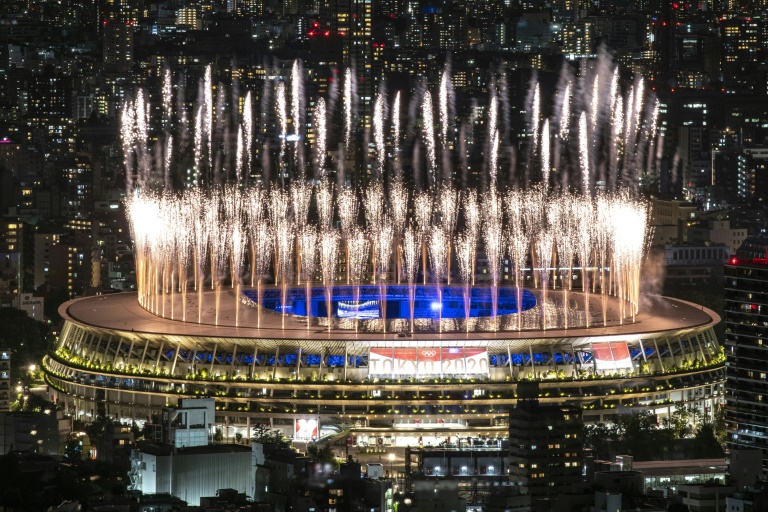
Delayed Tokyo 2020 Olympics cost double original estimate

The final price tag for last year’s Tokyo Olympics was more than double the city’s original 2013 estimate after a one-year coronavirus postponement added to the already hefty bill.

The organising committee said Tuesday the Games had cost 1.42 trillion yen, the equivalent of $13 billion at the time. At today’s rates, with the yen at a 24-year low against the dollar, the figure would be $10.4 billion.

Tokyo 2020 was held a year later than planned because of the pandemic — the first Olympics postponed in peacetime — and spectators were banned from nearly all events, which were held under strict Covid-19 countermeasures.

The Games cost twice the 734 billion yen that the Tokyo Games organisers had predicted in their bid to the International Olympic Committee in 2013, but less than the final pre-Games budget unveiled in December 2020.

Despite losing out on ticket sales, organisers saved some cash by simplifying events and avoiding the cost of hosting millions of fans.

The organising committee, which disbands at the end of June, said the event’s final cost was 200 billion yen less than projected in its pre-Games budget in 2020 and 29 billion yen less than the final slimmed-down costs prediction in December 2021.

“It’s up to everyone involved in this event to pass on the legacy of the Tokyo Olympics to the next generation,” said Tokyo 2020 chief Seiko Hashimoto.

Tokyo experienced a Covid-19 surge last year as the Olympics approached, fuelling fears the event could worsen outbreaks in Japan and possibly the world.

The northern Japanese city of Sapporo is bidding to host the Winter Olympics in 2030.

A March survey of Sapporo and the surrounding region showed that a majority of the public are in favour of holding the event.

Officials have ruled out holding a public referendum on the 2030 bid.

Two kidnapped Chibok girls freed in Nigeria after eight years

Nigerian troops have found two former schoolgirls who were abducted by Boko Haram jihadists eight years ago, the military said Tuesday, freeing some of the last victims of the 2014 Chibok abduction.

The two women each carried babies on their laps as they were presented by the military, after captivity with militants who stormed their school in April, 2014 in northeast Nigeria in a mass kidnapping that sparked international outrage.

Major-General Christopher Musa, the military commander of troops in the region, told reporters the girls were found on June 12 and 14 in two different locations by troops. 

“We are very lucky to have been able to recover two of the Chibok girls,” Musa said.  

Dozens of Boko Haram militants stormed the Chibok girls’ boarding school in 2014 and packed 276 pupils, aged 12-17, at the time into trucks in the jihadist group’s first mass school abduction.

Fifty-seven of the girls managed to escape by jumping from the trucks shortly after their abduction while 80 were released in exchange for some detained Boko Haram commanders following negotiations with the Nigerian government.

In the recent releases, one of the women, Hauwa Joseph, was found along with other civilians on June 12 around Bama after troops dislodged a Boko Haram camp, while the other, Mary Dauda, was found later outside Ngoshe village in Gwoza district, near the border with Cameroon. 

On June 15 the military said on Twitter that they had found one of the Chibok girls named Mary Ngoshe. She turned out to be Mary Dauda.

“I was nine when we were kidnapped from our school in Chibok and I was married off not long ago and had this child,” Joseph told reporters at the military headquarters. 

Joseph’s husband and father-in-law were killed in a military raid and she was left to fend for herself and her 14-month-old son. 

“We were abandoned, no one cared to look after us. We were not being fed,” she said. 

Thousands of Boko Haram fighters and families have been surrendering over the last year, fleeing government bombardments and infighting with the rival group Islamic State West Africa Province.

The conflict has killed more than 40,000 people and displaced 2.2 million more since 2009. 

Dauda, who was 18 when she was kidnapped was married at different times to Boko Haram fighters in the group’s enclave in the Sambisa forest. 

“They would starve and beat you if you refused to pray,” Dauda said about life under Boko Haram. 

She decided to flee and told her husband she was visiting another Chibok girl in Dutse village near Ngoshe, close to the border with Cameroon.

With the help of an old man who lived outside the village with his family, Dauda trekked all night to Ngoshe where she surrendered to troops in the morning. 

“All the remaining Chibok girls have been married with children. I left more than 20 of them in Sambisa, she said. “I’m so happy I’m back.”

After the Chibok school mass abduction jihadists carried out several mass abductions and deadly attacks on schools in the northeast.

In 2018, Islamic State West Africa Province (ISWAP) fighters kidnapped 110 schoolgirls aged 11–19 years from Government Girls Science and Technical College (GGSTC) Dapchi in neighbouring Yobe state. 

All the schoolgirls were released a month later except Leah Sharibu, the only Christian among the girls, who was held by the group for refusing to renounce her faith. 

Australian activists file legal bid to stop gas project

Australian conservationists have launched a legal bid to block a massive gas project, saying it would harm the Great Barrier Reef by warming the planet.

Claiming gas giant Woodside Energy’s Scarborough project would generate 1.37 billion tonnes of greenhouse emissions and likely harm the World Heritage-listed reef, the Australian Conservation Foundation applied on Tuesday for an injunction to halt the work.

The proposed, Aus$16 billion ($11 billion) Scarborough project would be located off the coast of Western Australia, thousands of kilometres from the Great Barrier Reef.

But the foundation argued gas drilled from Scarborough would fuel climate change to such an extent — raising global temperatures by 0.0004 degrees Celsius (32 Fahrenheit) — that it would have a “significant impact” on the natural wonder.

Climate change stress has already caused four “mass bleaching” events on the Great Barrier Reef since 2016, including this year when 91 percent of its corals were drained of their vibrant colours.

“Scarborough’s gas is a climate bomb about to be detonated,” said Australian Conservation Foundation Chief Executive Kelly O’Shanassy.

“We must not fall for the accounting trick that suggests these emissions won’t affect reefs in Australia simply because the gas will mostly be burned overseas,” she said.

“The reef is not concerned with the source of the greenhouse gases that damage it.”

The foundation’s projections for the climate impact of Scarborough, drawn from research by non-profit Climate Analytics, were significantly higher than Woodside’s estimate of 878 million tonnes, which was approved by the regulator.

Woodside’s chief executive Meg O’Neill said the company would “vigorously defend” itself against the court proceedings.

She said the project had received all primary environmental approvals and was “proceeding to schedule”.

The lawsuit was lodged as Greenpeace Australia released a report on Wednesday about Woodside’s Burrup Hub, of which the Scarborough gas project is a part.

Greenpeace claimed a “credible” spill scenario could reach the West Australian coast and as far north as Indonesia, concluding that the Burrup project was “too risky to proceed” because of the climate impact and Woodside’s safety record.

A Woodside spokesperson said the company “has an established track record of safe and reliable operations”.

Australian activists file legal bid to stop gas project

Australian conservationists have launched a legal bid to block a massive gas project, saying it would harm the Great Barrier Reef by warming the planet.

Claiming gas giant Woodside Energy’s Scarborough project would generate 1.37 billion tonnes of greenhouse emissions and likely harm the World Heritage-listed reef, the Australian Conservation Foundation applied on Tuesday for an injunction to halt the work.

The proposed, Aus$16 billion ($11 billion) Scarborough project would be located off the coast of Western Australia, thousands of kilometres from the Great Barrier Reef.

But the foundation argued gas drilled from Scarborough would fuel climate change to such an extent — raising global temperatures by 0.0004 degrees Celsius (32 Fahrenheit) — that it would have a “significant impact” on the natural wonder.

Climate change stress has already caused four “mass bleaching” events on the Great Barrier Reef since 2016, including this year when 91 percent of its corals were drained of their vibrant colours.

“Scarborough’s gas is a climate bomb about to be detonated,” said Australian Conservation Foundation Chief Executive Kelly O’Shanassy.

“We must not fall for the accounting trick that suggests these emissions won’t affect reefs in Australia simply because the gas will mostly be burned overseas,” she said.

“The reef is not concerned with the source of the greenhouse gases that damage it.”

The foundation’s projections for the climate impact of Scarborough, drawn from research by non-profit Climate Analytics, were significantly higher than Woodside’s estimate of 878 million tonnes, which was approved by the regulator.

Woodside’s chief executive Meg O’Neill said the company would “vigorously defend” itself against the court proceedings.

She said the project had received all primary environmental approvals and was “proceeding to schedule”.

The lawsuit was lodged as Greenpeace Australia released a report on Wednesday about Woodside’s Burrup Hub, of which the Scarborough gas project is a part.

Greenpeace claimed a “credible” spill scenario could reach the West Australian coast and as far north as Indonesia, concluding that the Burrup project was “too risky to proceed” because of the climate impact and Woodside’s safety record.

A Woodside spokesperson said the company “has an established track record of safe and reliable operations”.

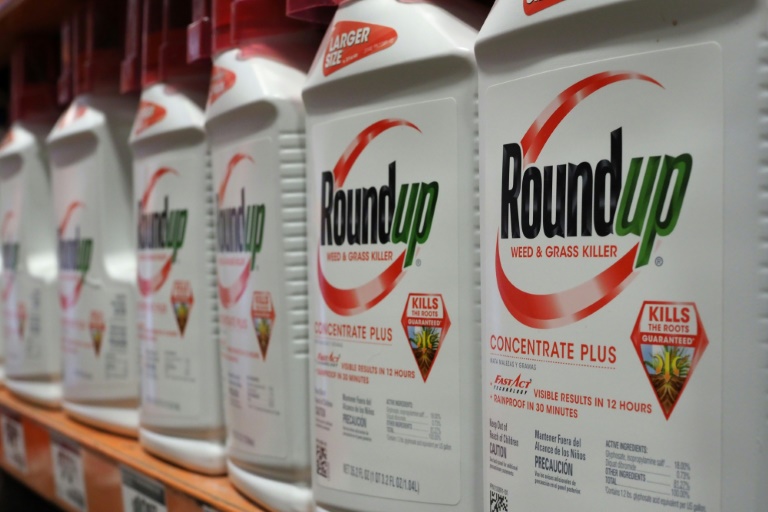
US high court denies Bayer bid to block Roundup weedkiller lawsuits

The US Supreme Court on Tuesday declined an appeal from Bayer-owned Monsanto that aimed to challenge thousands of lawsuits claiming its weedkiller Roundup causes cancer — a potentially costly ruling.

The high court did not explain its decision not to take the case, which left intact a $25 million ruling in favor of a California man who alleged he developed cancer after using the chemical for years.

The decision marks a major blow to the German conglomerate’s legal fight against some 31,000 Roundup-related cases.

“Bayer respectfully disagrees with the Supreme Court’s decision,” the company said in a statement.

“The company believes that the decision undermines the ability of companies to rely on official actions taken by expert regulatory agencies,” it added, referring to a 2020 federal finding that Roundup’s active ingredient is not risky.

Plaintiffs’ attorneys welcomed the justices’ decision as setting a clear path for people to seek compensation in these cases.

Matthew Stubbs said his firm Duncan Stubbs “continues to represent thousands of Roundup plaintiffs, with a wave of cases set for trial in the coming months and more behind them for as long as Bayer wants to delay.”

Bayer has been plagued by problems since it bought Monsanto, which owns Roundup, in 2018 for $63 billion and inherited its legal woes around the chemical’s ingredient glyphosate.

The German firm says it has not committed any wrongdoing, and maintains that scientific studies and regulatory approvals show glyphosate is safe.

Glyphosate is nonetheless classified as a “probable carcinogen” by the International Agency for Research on Cancer at the World Health Organization (WHO).

However, the United States Environmental Protection Agency, on its website, says “there are no risks of concern to human health when glyphosate is used in accordance with its current label.”

A California-based appeals court last week ordered the EPA to reconsider that finding.

– Billions at stake –

The Supreme Court’s ruling not to intervene leaves in place a judgment in the lawsuit filed by Edwin Hardeman, who was diagnosed with non-Hodgkin’s lymphoma in 2015.

In addition to the some 31,000 cases about alleged health problems against the weedkiller, Bayer’s own shareholders have taken legal action as well.

Investors are seeking 2.2 billion euros ($2.5 billion) in damages in a German court for losses incurred following its troubled takeover of Monsanto, their lawyers said in January.

The investors accuse Bayer of having “misled capital markets about the economic risks from pending consumer lawsuits in the United States in connection with glyphosate and the herbicide Roundup,” law firm Tilp said in a statement.

Tilp said around 320 investors have submitted complaints, most of them institutional investors such as banks, wealth managers, insurers and pension funds.

In the United States, Bayer signed a $10 billion settlement with plaintiffs in June 2020, with the parties agreeing to add $2 billion to settle future claims, but this part of the agreement was rejected by a California judge. 

In an attempt to put an end to all proceedings, the firm presented a five-point plan in the summer of 2021 stating that if it lost the Hardeman case in the Supreme Court, it would begin discussions on the claims not included in the 2020 agreement.

Bayer said it is transitioning its glyphosate-based products in the US residential market to new formulations that have alternative active ingredients beginning in 2023.

“The company is taking this action exclusively to manage litigation risk in the US and not because of any safety concerns,” it said in a statement.

Bayer says it has resolved around 107,000 of a total of 138,000 cases related to the herbicide.

Bayer’s share price closed down about two percent after the court’s decision on Tuesday.

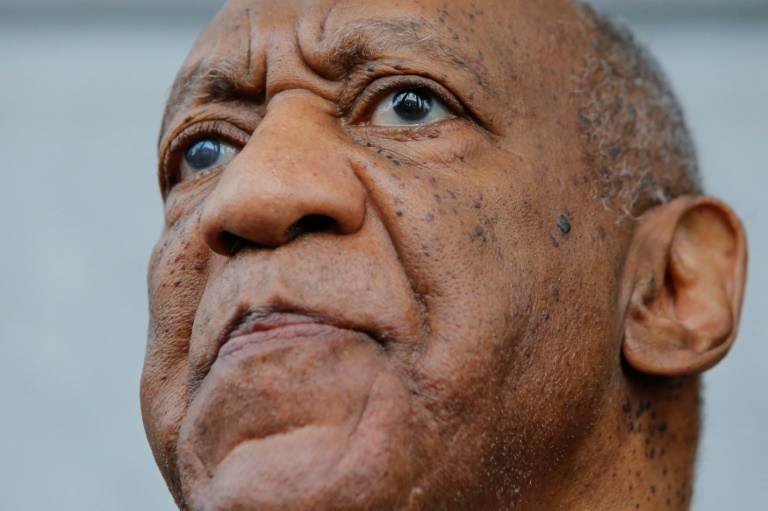
US jury finds Bill Cosby sexually assaulted teen in 1970s

Bill Cosby sexually assaulted a teenager at the Playboy Mansion almost 50 years ago, a jury in California found Tuesday, in the first civil ruling against the veteran entertainer following dozens of allegations.

Judy Huth, now aged 64, was awarded $500,000 in damages after the jury in Santa Monica determined that Cosby had molested her in 1975 when she was just 16 years old after meeting her on a movie set and plying her with alcohol.

The case is the only successful legal action against Cosby, 84, who has been accused of using his fame to prey on women over several decades.

The man formerly known as “America’s Dad” was jailed in Pennsylvania for drugging and molesting a woman in a separate criminal case in 2018, but was freed last year when his conviction was overturned on a technicality.

Over a two-week civil hearing, which Cosby did not attend, lawyers said he escorted Huth and her then-17-year-old friend, Donna Samuelson, to Hugh Hefner’s mansion after meeting them on a movie set.

The jury heard how when Huth was alone with Cosby, the actor began kissing her and tried to put his hands inside her clothes.

They were told how he then allegedly pulled down his own trousers and forced her to perform a sex act on him.

Lawyer Nathan Goldberg said for many years Huth had repressed memories of the assault but that it came to the fore for her when other women began accusing him of assaulting them.

– Much-loved star –

“It was like a cork popped out of a bottle,” said Goldberg at the start of the case. “Memories came rushing to the surface… she became overwhelmed by memories of Mr Cosby and what he had done.”

She originally filed her lawsuit in December 2014, but the case was put on hold while various criminal investigations played out.

The civil trial was shown a videotaped deposition of Cosby taken in 2015 in which he denied the assault, and insisted that he would never engage in sexual activity with an underage girl.  

His lawyers made much of apparent discrepancies in Huth’s story, including that both teens spent up to 12 hours at the mansion after the alleged assault.

They also argued that Huth originally claimed the attack happened in 1974 when she was 15, but later said it had happened the following year.

The case was never prosecuted criminally as the statute of limitations had passed by the time Huth spoke to police.

California law allows adults who say they were sexually abused as minors, but have only recently become aware of the damage, to bring civil cases years after the statute of limitations would normally have expired.

Cosby was a towering figure in late-20th century American popular culture, and hit the big time as affable obstetrician and father Cliff Huxtable on “The Cosby Show,” which ran from 1984-92.

But around 60 women, many of them onetime aspiring actresses and models, have publicly branded Cosby a calculating, serial predator who plied victims with sedatives and alcohol to bed them over four decades.

Close Bitnami banner
Bitnami