World

'We are ready', Ukraine towns insist as Russians advance

“The city is ready to defend itself,” insists Vadym Lyakh, mayor of Sloviansk in eastern Ukraine which could soon become a fighting hotspot as Moscow’s troops advance from the north. 

Outside his office in this small leafy city in the Donetsk region, people were on Monday filling up bottles from a large water barrel.

The situation “is complex, because the front in recent weeks has come closer, to within 15-20 kilometres (9-12 miles),” Lyakh told AFP, dressed in a military-style khaki T-shirt.

Hopefully, “the new weaponry that our army needs will come soon”, he said.

The fighting has already affected people in Sloviansk.

“There’s no (mains) water, no gas, but at least we have electricity,” said Yuriy, 66, as he filled a five-litre bottle with water to flush the toilet.

Due to heavy fighting in areas with pumping stations, “there’s no (mains) water at all at the moment, only natural springs and tankers,” the mayor said. 

Although the electricity supply was “unstable”, a third of the shops were open and aid was coming in, he said. 

Despite the hardships, Yuriy’s 63-year-old wife Valentina was upbeat about the prospects for Ukraine’s forces.

“We believe they’ll beat the Russian scum,” she said.

If it comes to it, it won’t be the first time there’s been a battle for control of Sloviansk, as its recent history shows. 

It was seized by Russia-backed separatists in 2014 and then retaken by Ukrainian forces after a lengthy siege.

– ‘They know what’s best’ –

On Monday, the distant thud of artillery could be heard in the main square.

As municipal chief, the mayor says he doesn’t interfere in military matters although he is in contact with the army every day. 

“If it’s necessary for defence, it will be done, regardless of who objects,” he said.

“They know best what is necessary for military operations.”

The Donetsk regional governor Pavlo Kyrylenko also speaks with President Volodymyr Zelensky.

Lyakh said he hadn’t spoken to officials in war-torn cities further east, such as Severodonetsk and Lysychansk.

“The algorithm is clear: everything will depend on the situation on the front,” he said.

Preparations include setting up “working spaces… in bomb shelters and hospital basements to give emergency care even under bombing”.

Before the war, Sloviansk had a population of some 100,000 people but now only has a quarter of that, which Lyakh said was still “a lot”.

“We’re putting more emphasis on evacuation… Unfortunately people don’t always listen,” he said.

– ‘Awaiting a miracle’ –

In Kramatorsk, another city facing a possible Russian onslaught, the atmosphere was more bustling, with crowds of soldiers in supermarkets and cafes. 

“For now, it’s more or less quiet,” mayor Oleksandr Goncharenko told AFP.

“In the evenings or at night you can see some explosions about 40-45 kilometres away.”

The Russians were coming “closer but our army is trying to hold the positions now,” he added.

In recent months, the authorities and the army had helped build up the defences and Kramatorsk was “more or less” ready, he said. 

“We’re all waiting for a miracle, we’re hoping for peace, for this fratricidal war to end soon,” said Valentina, 57, selling Caucasian-style bread and cheese at the city’s indoor market.

“So far everything is OK here but it’s very hard psychologically when you see on TV what is happening in other cities,” said Svitlana, 48, a butcher at the market. 

The city still has mains water and electricity, despite occasional power cuts. 

“The only thing we don’t have in the Donetsk region is gas, because of the broken pipes from the Kharkiv and Lugansk regions,” Goncharenko said, referring to war-torn areas.

Some 30 percent of the residents — around 60,000 people — were still living in the city, with phone records showing that 10,000 people who had left had recently come back, he said. 

“If something happens or the war comes closer, it would be more dangerous for them,” he said, warning that “Russian terrorists” could use the local population as human shields.


Mahatma Gandhi's grandson bows out of Indian presidential race

The grandson of India’s independence leader Mahatma Gandhi has dropped out of the race to become president after his name was proposed by an alliance of opposition parties.

Gopalkrishna Gandhi, 77, a diplomat turned politician said he had declined the request of the 17-party alliance to be their nominee for the largely ceremonial role.

“I am most grateful to them. But having considered the matter deeply I see that the Opposition’s candidate should be one who will generate a national consensus and a national atmosphere beside Opposition unity,” Gandhi said in a statement on Monday.

National and state lawmakers are slated to vote on a new president on July 18.

The Indian head of state enjoys certain constitutional powers but largely acts on the advice of the government, making it more of a titular position.

But agreeing on a candidate and getting him or her elected would be a symbolic victory for India’s splintered opposition after eight years of rule by Prime Minister Narendra Modi’s Bharatiya Janata Party (BJP).

The BJP is likely to announce its own candidate this week and may again put forward the incumbent, Ram Nath Kovind, a member of India’s marginalised Dalit community, to serve another term.

Gandhi, who was governor of West Bengal state between 2004 and 2009 after being appointed by the then-ruling Congress party, ran for vice-president in 2017 but lost out to a BJP candidate.

The paternal grandson of India’s freedom movement icon is considered a vocal critic of Modi’s Hindu nationalist policies and has accused the government of crushing dissent in the world’s largest democracy.

Gandhi is the third person to decline an offer by the opposition to be their candidate.

The Gandhi dynasty of assassinated former prime ministers Indira and Rajiv Gandhi, and of current opposition figure Rahul Gandhi, are descended from India’s first premier Jawaharlal Nehru and not from Mahatma Gandhi.

Most markets climb as calm returns after sharp sell-off

Equities rose in most cities Tuesday in Asia as some stability returned to markets after last week’s upheaval, but analysts warned of further pain for traders after central bank officials hinted at more interest rate hikes to reel in inflation.

While there was no catalyst from Wall Street owing to a public holiday, a healthy performance across Europe provided a little boost and bargain-buying was also lending support.

However, there remains an overarching sense of gloom as traders speculate that the sharp lift in borrowing costs around the world will tip economies into recession.

Focus this week is on Federal Reserve boss Jerome Powell’s two days of testimony to lawmakers in Washington, which will be closely watched for insight into the bank’s thinking and possible clues about its plans for fighting surging prices.

The Fed announced a three-quarter point lift last week, after inflation data days earlier had smashed forecasts and hit a four-decade high.

“While (investors do) not expect Powell to reinvent the policy wheel, we could expect him to reinforce the idea that the Fed is in data-dependent mode,” said Stephen Innes of SPI Asset Management. 

“Hence, any shift in Fed rhetoric will be a function of incoming data, virtually all of which now presents event risk. From that perspective, further evidence of persistent inflation will trigger policy panic, while any signs of sluggish growth momentum will confirm the recession narrative.

“Neither suggests that now is the time to board the rally wagon.”

Tokyo, Hong Kong, Sydney, Seoul, Singapore, Wellington, Taipei, Mumbai, Bangkok and Jakarta all rose but Shanghai and Manila slipped.

London opened barely moved, while Paris and Frankfurt edged up.

“There might be a narrative that we’ve hit a bottom, we are oversold, the Fed is taking inflation seriously and that might be slightly bullish in the interim,” Frances Stacy, of Optimal Capital, told Bloomberg TV.

However, while the volatility of last week has gone, banks’ intention to continue hiking rates could cause fresh ructions.

Several officials — including at the Fed, Bank of England, Reserve Bank of Australia and European Central Bank — have come out in recent days to flag a further tightening of borrowing costs.

In commodities markets, oil extended gains as traders moved back in after Friday’s plunge fuelled by concerns over a possible recession.

The gains have been helped by optimism for a boost to demand as China gradually eases out of its period of Covid containment, while the US summer driving period picks up.

“The physical market is as tight as ever, and thus, the speculative capitulation in futures markets (on Friday) probably shouldn’t be taken as a picture of the reality on the ground in the real world,” said OANDA’s Jeffrey Halley.

“The bottom line seems to be that until we see physical demand destruction, oil and other energy markets are as tight as ever.”

– Key figures at around 0720 GMT –

Tokyo – Nikkei 225: UP 1.8 percent at 26,246.31 (close)

Hong Kong – Hang Seng Index: UP 1.5 percent at 21,478.68

Shanghai – Composite: DOWN 0.3 percent at 3,306.72 (close)

London – FTSE 100: FLAT at 7,121.21

Dollar/yen: UP at 135.21 yen from 135.06 yen

Pound/dollar: UP at $1.2268 from $1.2243

Euro/dollar: DOWN at $1.0526 from $1.0528 Monday

Euro/pound: DOWN at 85.80 pence from 86.02 pence

West Texas Intermediate: UP 1.8 percent at $111.52

Brent North Sea crude: UP 0.5 percent at $114.70 per barrel

New York – Dow: DOWN 0.1 percent at 29,888.78 (close)

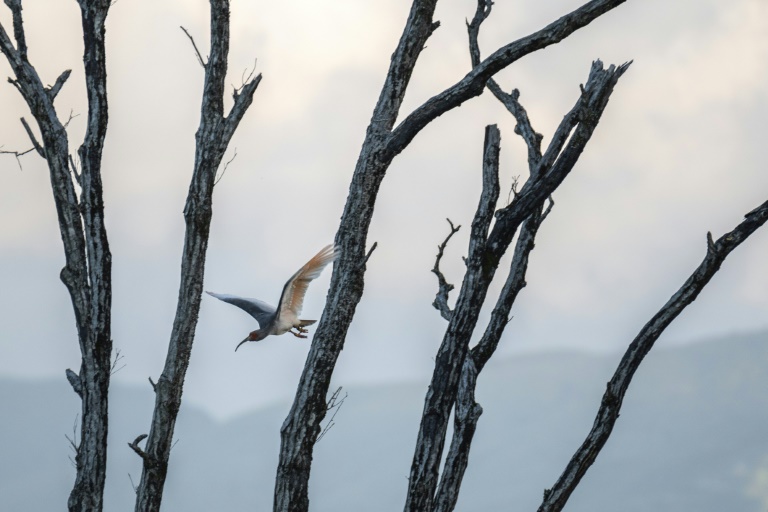
Modern phoenix: The bird brought back from extinction in Japan

Every day for the past 14 years, 72-year-old Masaoki Tsuchiya has set out before sunrise to search for a bird rescued from extinction in Japan.

Starting his car under star-dotted skies unpolluted by light, he works alone in the pre-dawn chill, marking sightings or absences in a planner, interrupted only by the crackle of a walkie-talkie.

The bird he is looking for is called “toki” in Japanese, and its presence on his home of Sado island is testament to a remarkable conservation programme.

In just under two decades, Japan’s population of wild toki has gone from zero to nearly 500, all on Sado, where the bird’s delicate pink plumage and distinctive curved beak now draw tourists.

It’s a rare conservation success story when one in eight bird species globally are threatened with extinction, and involved international diplomacy and an agricultural revolution on a small island off Japan’s west coast.

– A cautionary tale –

Tsuchiya, stocky and spry with an impish grin, doesn’t eat breakfast until he has made all his stops, and after years of practice he can spot chicks hidden in nests through the monocular attached to his rolled-down car window.

He points to virtually imperceptible marks on a road or a wall that help him remember where to park and start surveying.

“The number I see at this spot depends on the season,” he explains.

Some days dozens of the birds appear in one area, something unimaginable in 2003, when a toki called Kin or “gold” died in a cage on Sado at the record-breaking age of 36.

Her death meant not a single wild-born toki was left in Japan, despite the bird being so synonymous with the country that it is also known as the Japanese crested ibis.

“I knew the day was coming. She was very old and frail,” Tsuchiya said. “But it was still a real pity.”

Efforts to get Kin to mate with Sado’s last wild-born male toki Midori — meaning “green” — had long since failed, and she lived out her last years as a curiosity and a cautionary environmental tale.

Her death made national headlines and appeared to mark the end of a long and seemingly futile battle to protect the toki in Japan, where its feathers even inspire the word for peach pink: “toki-iro”.

But now so many roam the skies and rice paddies of Sado that local officials have gone from discouraging eager birdwatchers to training guides to help visitors spot the local icon, and the government is even studying reintroducing the bird elsewhere.

– Wiped out –

Wild toki once lived across Japan, as well as in Russia, Taiwan and South Korea.

They were considered a pest that damaged rice plants, but during Japan’s Edo era, from 1603 to 1867, hunting restrictions meant only high-ranking officials could actively pursue birds like toki.

That changed in the Meiji era and as guns became more available. Toki meat was believed to have health benefits, and its feathers were favoured for everything from dusters to decorative flourishes on hats.

“Over just 40 years, the toki basically disappeared,” said Tsuchiya on an observation deck where visitors now try to spot the bird.

By the early 1930s, only a few dozen toki remained in Japan, mostly on Sado and the nearby Noto peninsula, and the species won protected status.

A fresh threat then emerged during Japan’s post-war drive for growth: rising use of chemical fertilisers and pesticides.

Toki feed primarily in rice paddies that mimic marshy wetland habitats and they are undiscriminating diners, eating everything from insects to small crabs and frogs.

The chemicals affected the birds and their food, and by 1981 just five wild toki remained in Japan, all on Sado, where officials took them into protective captivity.

But by bizarre coincidence, the same year a population of seven wild toki was discovered in a remote area of China’s Shaanxi province, reviving hopes for the bird’s survival.

Sado’s captive birds failed to mate, but China’s programme had more success, and when then-Chinese president Jiang Zemin made a historic first state visit in 1998 he offered Japan the gift of a pair of toki.

You You and Yang Yang arrived the following year on first-class seats, producing their first chick months later in an event that led national television broadcasts.

Other birds arrived from China, and with time Sado had a large enough population to consider reintroducing the toki to the wild.

But first they had to tackle the use of chemical fertilisers and pesticides on Sado.

“Back then people didn’t think about the environment when farming. Their priorities were selling products at a high price and harvesting as much as possible,” said Shinichiro Saito, a 60-year-old rice farmer.

Farmers were asked to cut chemical fertilisers and pesticides by half from the level allowed by local rules, but there was pushback.

Fewer chemicals meant smaller harvests, lost income, and more weeding.

And some farmers couldn’t see the point of other proposals like underground channels connecting rice fields to rivers to increase the flow of aquatic life.

– ‘Toki-friendly’ –

Local officials used a carrot-and-stick approach, refusing to buy rice from farmers who rejected the new chemical limits and creating a new premium brand of “toki-friendly” rice for those who did.

But Saito, who was an early adopter, said the real difference came when the first birds were released in 2008.

“It was the toki that changed their minds,” he said, with a lop-sided grin.

Even farmers reluctant to adapt were “delighted” to see a bird with almost mythical status on Sado wandering through their fields.

“This is a true story. The toki was almost like an environmental ambassador, it helped create a good environment for itself.”

Tsuchiya’s daily rounds began with the 2008 release. 

He has since witnessed triumphs including the first wild-born chick, and the first chick born to wild-born birds — moments he describes with the proud anxiety of a parent sending a child off to school for the first time.

He still runs his own business, though the toki feather tucked into his car’s folding mirror makes clear where his heart lies.

And the breeding programme has continued, supplemented by birds from China that help broaden the gene pool.

Around 20 birds are released twice a year after graduating from a three-month training programme that prepares them for life outside a cage.

“They learn how to fly, how to find food and to get used to being around humans,” explained Tomoki Tsuchiya, who works with Sado’s local government to make the island toki-friendly.

City officials even farm around the birds to acquaint them with the sound.

– ‘Like family’ –

When the first toki were released on Sado, there were so many gaps in knowledge about the species that volunteers analysed their droppings to find out what the birds were eating.

There were missteps: officials prepared a remote mountain location for the release, believing the birds would prefer seclusion, but the toki instead flew down to fields that were frequented by farmers.

Tomoki Tsuchiya’s interest in toki was fostered by his father, Masaoki.

But it is a fascination shared by many on Sado, where the bird is rendered in cute mascot form on everything from T-shirts to milk cartons.

“How can I express it? The toki is so important for people on Sado,” the 42-year-old said.

“It’s like family.”

Even after training, a toki’s future is precarious: only about half survive predators like snakes and weasels, and the survival rate for newborn chicks is similar.

But enough have thrived that Japan may expand the Sado programme, and there have been successes elsewhere. 

China’s wild population now numbers over 4,450, and a South Korean project released 40 toki for the first time in 2019.

For Saito, who speaks as toki squawk nearby, the bird’s resurrection is part of a bigger achievement on Sado — a new approach to farming and the environment.

“When this project started, what I dreamed of the most was seeing toki flying overhead while I farmed,” he said.

“An environment that is good for toki is an environment that is also safe for humans, and that’s something people on Sado can be proud of.”

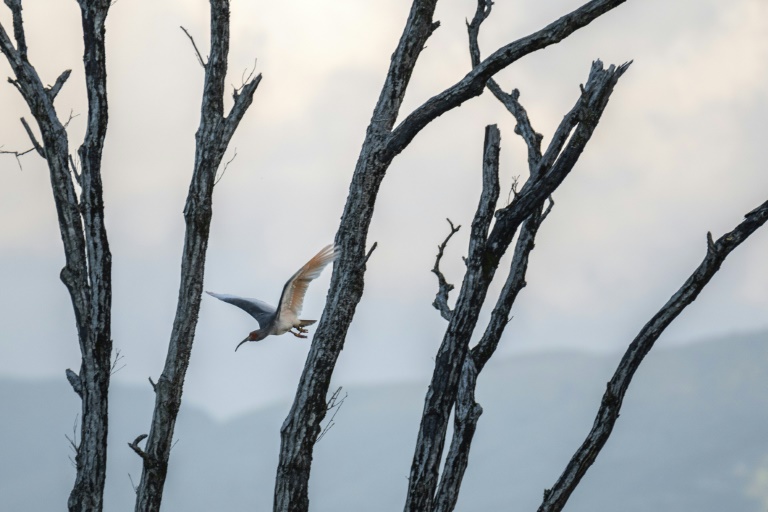
Modern phoenix: The bird brought back from extinction in Japan

Every day for the past 14 years, 72-year-old Masaoki Tsuchiya has set out before sunrise to search for a bird rescued from extinction in Japan.

Starting his car under star-dotted skies unpolluted by light, he works alone in the pre-dawn chill, marking sightings or absences in a planner, interrupted only by the crackle of a walkie-talkie.

The bird he is looking for is called “toki” in Japanese, and its presence on his home of Sado island is testament to a remarkable conservation programme.

In just under two decades, Japan’s population of wild toki has gone from zero to nearly 500, all on Sado, where the bird’s delicate pink plumage and distinctive curved beak now draw tourists.

It’s a rare conservation success story when one in eight bird species globally are threatened with extinction, and involved international diplomacy and an agricultural revolution on a small island off Japan’s west coast.

– A cautionary tale –

Tsuchiya, stocky and spry with an impish grin, doesn’t eat breakfast until he has made all his stops, and after years of practice he can spot chicks hidden in nests through the monocular attached to his rolled-down car window.

He points to virtually imperceptible marks on a road or a wall that help him remember where to park and start surveying.

“The number I see at this spot depends on the season,” he explains.

Some days dozens of the birds appear in one area, something unimaginable in 2003, when a toki called Kin or “gold” died in a cage on Sado at the record-breaking age of 36.

Her death meant not a single wild-born toki was left in Japan, despite the bird being so synonymous with the country that it is also known as the Japanese crested ibis.

“I knew the day was coming. She was very old and frail,” Tsuchiya said. “But it was still a real pity.”

Efforts to get Kin to mate with Sado’s last wild-born male toki Midori — meaning “green” — had long since failed, and she lived out her last years as a curiosity and a cautionary environmental tale.

Her death made national headlines and appeared to mark the end of a long and seemingly futile battle to protect the toki in Japan, where its feathers even inspire the word for peach pink: “toki-iro”.

But now so many roam the skies and rice paddies of Sado that local officials have gone from discouraging eager birdwatchers to training guides to help visitors spot the local icon, and the government is even studying reintroducing the bird elsewhere.

– Wiped out –

Wild toki once lived across Japan, as well as in Russia, Taiwan and South Korea.

They were considered a pest that damaged rice plants, but during Japan’s Edo era, from 1603 to 1867, hunting restrictions meant only high-ranking officials could actively pursue birds like toki.

That changed in the Meiji era and as guns became more available. Toki meat was believed to have health benefits, and its feathers were favoured for everything from dusters to decorative flourishes on hats.

“Over just 40 years, the toki basically disappeared,” said Tsuchiya on an observation deck where visitors now try to spot the bird.

By the early 1930s, only a few dozen toki remained in Japan, mostly on Sado and the nearby Noto peninsula, and the species won protected status.

A fresh threat then emerged during Japan’s post-war drive for growth: rising use of chemical fertilisers and pesticides.

Toki feed primarily in rice paddies that mimic marshy wetland habitats and they are undiscriminating diners, eating everything from insects to small crabs and frogs.

The chemicals affected the birds and their food, and by 1981 just five wild toki remained in Japan, all on Sado, where officials took them into protective captivity.

But by bizarre coincidence, the same year a population of seven wild toki was discovered in a remote area of China’s Shaanxi province, reviving hopes for the bird’s survival.

Sado’s captive birds failed to mate, but China’s programme had more success, and when then-Chinese president Jiang Zemin made a historic first state visit in 1998 he offered Japan the gift of a pair of toki.

You You and Yang Yang arrived the following year on first-class seats, producing their first chick months later in an event that led national television broadcasts.

Other birds arrived from China, and with time Sado had a large enough population to consider reintroducing the toki to the wild.

But first they had to tackle the use of chemical fertilisers and pesticides on Sado.

“Back then people didn’t think about the environment when farming. Their priorities were selling products at a high price and harvesting as much as possible,” said Shinichiro Saito, a 60-year-old rice farmer.

Farmers were asked to cut chemical fertilisers and pesticides by half from the level allowed by local rules, but there was pushback.

Fewer chemicals meant smaller harvests, lost income, and more weeding.

And some farmers couldn’t see the point of other proposals like underground channels connecting rice fields to rivers to increase the flow of aquatic life.

– ‘Toki-friendly’ –

Local officials used a carrot-and-stick approach, refusing to buy rice from farmers who rejected the new chemical limits and creating a new premium brand of “toki-friendly” rice for those who did.

But Saito, who was an early adopter, said the real difference came when the first birds were released in 2008.

“It was the toki that changed their minds,” he said, with a lop-sided grin.

Even farmers reluctant to adapt were “delighted” to see a bird with almost mythical status on Sado wandering through their fields.

“This is a true story. The toki was almost like an environmental ambassador, it helped create a good environment for itself.”

Tsuchiya’s daily rounds began with the 2008 release. 

He has since witnessed triumphs including the first wild-born chick, and the first chick born to wild-born birds — moments he describes with the proud anxiety of a parent sending a child off to school for the first time.

He still runs his own business, though the toki feather tucked into his car’s folding mirror makes clear where his heart lies.

And the breeding programme has continued, supplemented by birds from China that help broaden the gene pool.

Around 20 birds are released twice a year after graduating from a three-month training programme that prepares them for life outside a cage.

“They learn how to fly, how to find food and to get used to being around humans,” explained Tomoki Tsuchiya, who works with Sado’s local government to make the island toki-friendly.

City officials even farm around the birds to acquaint them with the sound.

– ‘Like family’ –

When the first toki were released on Sado, there were so many gaps in knowledge about the species that volunteers analysed their droppings to find out what the birds were eating.

There were missteps: officials prepared a remote mountain location for the release, believing the birds would prefer seclusion, but the toki instead flew down to fields that were frequented by farmers.

Tomoki Tsuchiya’s interest in toki was fostered by his father, Masaoki.

But it is a fascination shared by many on Sado, where the bird is rendered in cute mascot form on everything from T-shirts to milk cartons.

“How can I express it? The toki is so important for people on Sado,” the 42-year-old said.

“It’s like family.”

Even after training, a toki’s future is precarious: only about half survive predators like snakes and weasels, and the survival rate for newborn chicks is similar.

But enough have thrived that Japan may expand the Sado programme, and there have been successes elsewhere. 

China’s wild population now numbers over 4,450, and a South Korean project released 40 toki for the first time in 2019.

For Saito, who speaks as toki squawk nearby, the bird’s resurrection is part of a bigger achievement on Sado — a new approach to farming and the environment.

“When this project started, what I dreamed of the most was seeing toki flying overhead while I farmed,” he said.

“An environment that is good for toki is an environment that is also safe for humans, and that’s something people on Sado can be proud of.”

Patten hits outs at China's 'vengeful' acts in Hong Kong

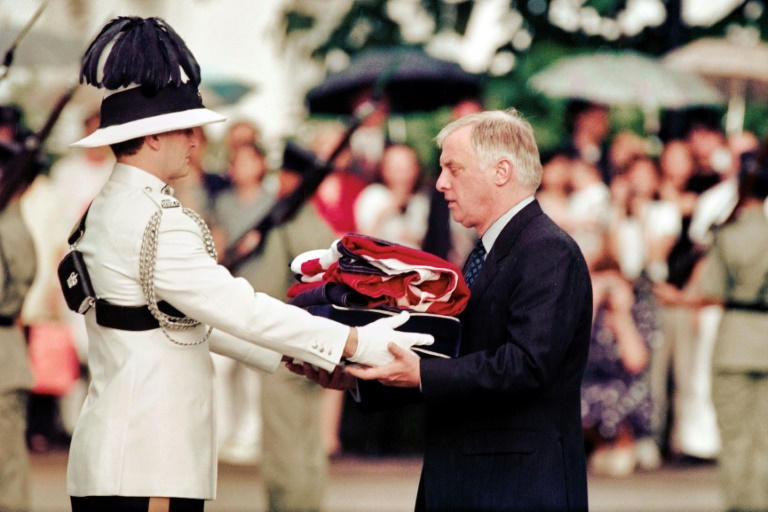
On June 30, 1997, Britain’s last governor of Hong Kong Chris Patten left Government House for the final time, struggling to contain his emotions as the “Last Post” played and the Union flag was lowered.

The 25th anniversary is approaching of that rainy day and the midnight handover to China on July 1 that the BBC at the time called “the epilogue of empire”.

For Patten, now 78, the memory of his departure is still vivid.

“It was a big wrench. I had five extremely enjoyable and fruitful years in Hong Kong and I miss it,” he told AFP on Monday.

But in the intervening years, his “sadness” has been replaced by anger at Beijing and President Xi Jinping, whom he accuses of “vengefully” targeting the city’s freedoms.

Under the Sino-British Joint Declaration, China agreed Hong Kong could keep some freedoms and autonomy for 50 years under a “One Country, Two Systems” model.

But a National Security Law imposed by China in 2020 has eroded those freedoms, targeting pro-democracy activists and local media.

Hong Kong once had a raucous law-making chamber but now only those who are loyal can stand for office to join a body which passes new laws.

– The ‘dictator’ –

“China has ripped up the joint declaration and is vengefully and comprehensively trying to remove the freedoms of Hong Kong because it regards them as a threat, not to the security of China but to the ability of the Chinese Communist Party to hang on to power,” he said.

Some critics say Britain could have done more for Hong Kong before the handover, but Patten insisted the country did not betray the finance hub.

“Whatever we had done in terms of changes before 1997 were unlikely to have affected the way that the Chinese Communist Party behaved after the arrival of Xi Jinping in the top job,” Patten said.

“I think the big changes have come since 2012, 2013, 2014 since Xi Jinping’s been the dictator.” 

Xi, the son of a revered communist revolutionary, was named general secretary of the Chinese Communist Party in 2012 before becoming president the following year.

– ‘Constrain China’ –

The 25th anniversary marks the halfway point of Beijing’s “One Country, Two Systems” promise for Hong Kong, a deal that was enshrined in the 1984 joint declaration signed by British prime minister Margaret Thatcher and Chinese premier Zhao Ziyang. 

Recent coronavirus outbreaks in the territory have overshadowed plans for celebrations and it is still unclear if Xi will attend them in person.

During the launch Monday of “The Hong Kong Diaries”, his book based on his time as governor, Patten told reporters, “the most difficult part of the job was… negotiating with China to try to safeguard ‘One Country Two Systems’.”

In his farewell speech in 1997, Patten said it had been “the greatest honour and privilege” of his life to have been governor and to have “some responsibility for Hong Kong’s future”.

“Now Hong Kong people are to run Hong Kong. That is the promise and that is the unshakeable destiny,” he added.

But China, Patten now says, has breached the declaration “comprehensively”.

The former Conservative party chairman said things went “downhill” in the city partly because Xi and his colleagues were “terrified” of what Hong Kong actually stands for.

But while Patten said it was necessary to “constrain China”, he admitted it was also necessary to deal with China to tackle climate change and epidemics.

“But I don’t think we should delude ourselves; I think we have to be pretty clear about what is our real interest, and we have to constrain China, not contain it.”

– Fears over Taiwan –

After Russia’s invasion of Ukraine in February, there have been heightened fears over similar action by China against self-governed democratic Taiwan.

Beijing claims all of the island as its own territory, and has said it is determined to retake it, by force if necessary.

Patten said Xi must learn “what an incredibly dangerous enterprise it would be” after seeing the difficulties the Russian army has faced in Ukraine and the world’s reaction.

“My gut instinct is it’s so dangerous for Xi Jinping to try that I hope the system will encourage him not to do it,” he said.

Dead rivers: The cost of Bangladesh's garment-driven economic boom

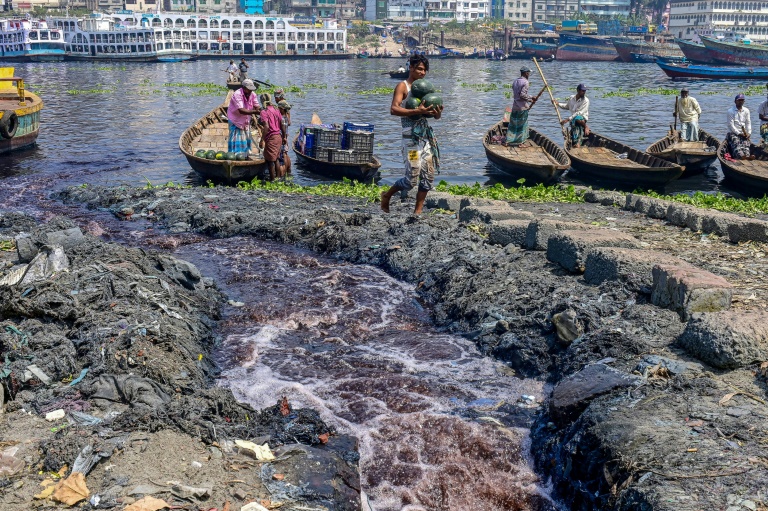
Bangladeshi ferryman Kalu Molla began working on the Buriganga river before the patchwork of slums on its banks gave way to garment factories — and before its waters turned pitch black.

The 52-year-old has constant cough, allergies and skin rashes, and doctors have told him the vile-smelling sludge that has also wiped out marine life in one of Dhaka’s main waterways is to blame.

“Doctors told me to leave this job and leave the river. But how is that possible?” Molla told AFP near his home on the industrial outskirts of the capital Dhaka. “Ferrying people is my bread and butter.”

In the half-century since a devastating independence war left its people facing starvation, Bangladesh has emerged as an often unheralded economic success story.

The South Asian country of 169 million has overtaken its neighbour India in per capita income and will soon graduate from the United Nations’ list of the world’s least developed countries.

Underpinning years of runaway growth is the booming garment trade, servicing global fast-fashion powerhouses, employing millions of women and accounting for around 80 percent of the country’s $50 billion annual exports.

But environmentalists say the growth has come at an incalculable cost, with a toxic melange of dyes, tanning acids and other dangerous chemicals making their way into the water.

Bangladesh’s capital Dhaka was founded on the banks of the Buriganga more than 400 years ago by the Mughal empire.

“It is now the largest sewer of the country,” said Sheikh Rokon, the head of the Riverine People environmental rights group.

“For centuries people built their homes on its banks to bask in the river breeze,” he added. “Now the smell of toxic sludge during winter is so horrible that people have to hold their noses as they come near it.”

Water samples from the river found chromium and cadmium levels over six times the World Health Organization’s recommended maximums, according to a 2020 paper by the Bangladeshi government’s River Research Institute. 

Both elements are used in leather tanning and excessive exposure to either is extremely hazardous to human health: chromium is carcinogenic, and chronic cadmium exposure causes lung damage, kidney disease and premature births. 

Ammonia, phenol and other byproducts of fabric dyeing have also helped to starve the river of the oxygen needed to sustain marine life. 

– ‘They are powerful people’ –

In Shyampur, one of several sprawling industrial districts around Dhaka, locals told AFP that at least 300 local factories were discharging untreated wastewater into the Buriganga river.

Residents say they have given up complaining about the putrid smell of the water, knowing that offending businesses are easily able to shirk responsibility.

“The factories bribe (authorities) to buy the silence of the regulators,” said Chan Mia, who lives in the area. 

“If someone wants (to) raise the issue to the factories, they’d beat them up. They are powerful people with connections.” 

The crucial position of the textile trade in the economy has created a nexus between business owners and the country’s political establishment. In some cases, politicians themselves have become powerful industry players. 

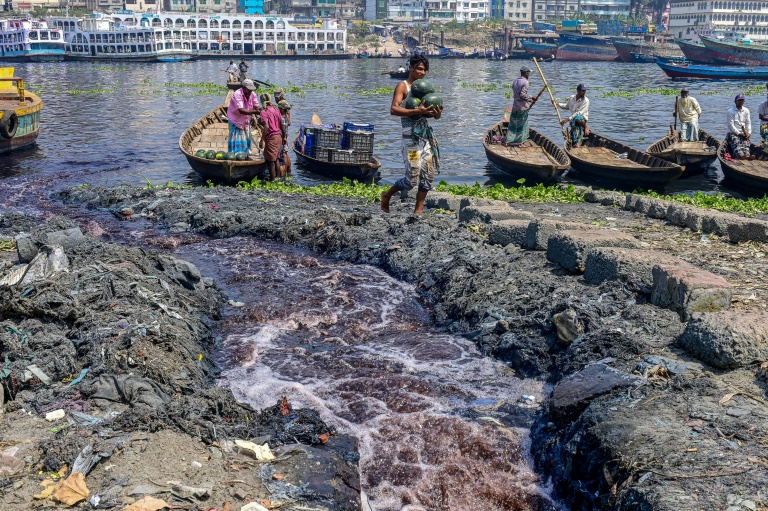
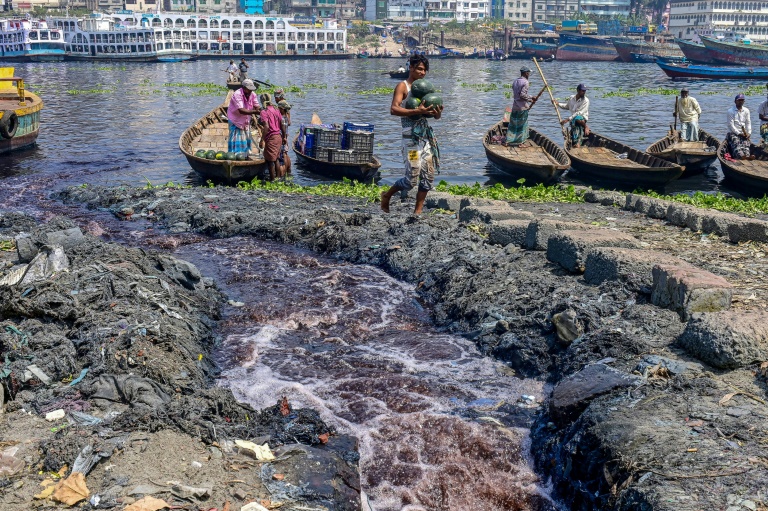
Further south, in Narayanganj district, residents showed AFP a stream of crimson-coloured water draining into stagnant canals from a nearby factory. 

“But you cannot say a word about it loudly,” an area resident told AFP, speaking on condition of anonymity. “We only suffer in silence.”

The Bangladesh Garment Manufacturers and Exporters Association (BGMEA), which represents the interests of around 3,500 top factories, defends its record by pointing out the environmental certifications given out to its members.

“We are going green — that’s why we are witnessing big jumps in export orders,” BGMEA president Faruque Hassan told a recent press conference.

But smaller factories and sub-contractors operating on the industry’s razor thin margins say they are unable to afford the cost of wastewater treatment.

A top garment official in the Savar industrial district, speaking to AFP on condition of anonymity, said even most high-end factories serving major US and European brands often do not turn on their treatment machinery. 

“Not everyone regularly uses it. They want to save costs,” he said.

– ‘Facing the same fate’ –

Bangladesh is a delta country criss-crossed by more than 200 waterways, each of them connected to the mighty Ganges and Brahmatura rivers that course from the Himalayas and through the South Asian subcontinent.

More than a quarter of them are now heavily contaminated with industrial pollutants and need to be “urgently” saved, said an April legal notice sent to the government by the Bangladesh Environmental Lawyers Association (BELA). 

Authorities have established a commission tasked with saving key water bodies, upon which close to half the country’s population depend for farming, according to the UN Food and Agriculture Organization. 

The National River Commission has launched several high profile drives to fine factories found to have polluted rivers.

Its newly appointed chief, Manjur Chowdhury, said “greedy” industrialists were to blame for the state of the country’s waterways.

But he also admitted that the enforcement of existing penalties was inadequate to address the scale of the problem.

“We have to frame new laws to face this emergency situation. But it will take time,” he told AFP.

Any action will be too late for the five rivers that circle Dhaka and its industrial outskirts.

All are already technically dead, meaning they are completely devoid of marine life, said prominent environmental activist Sharif Jamil. 

“With factories now moving deep into the rural heartland, rivers across the country are facing the same fate,” he told AFP.

Dead rivers: The cost of Bangladesh's garment-driven economic boom

Bangladeshi ferryman Kalu Molla began working on the Buriganga river before the patchwork of slums on its banks gave way to garment factories — and before its waters turned pitch black.

The 52-year-old has constant cough, allergies and skin rashes, and doctors have told him the vile-smelling sludge that has also wiped out marine life in one of Dhaka’s main waterways is to blame.

“Doctors told me to leave this job and leave the river. But how is that possible?” Molla told AFP near his home on the industrial outskirts of the capital Dhaka. “Ferrying people is my bread and butter.”

In the half-century since a devastating independence war left its people facing starvation, Bangladesh has emerged as an often unheralded economic success story.

The South Asian country of 169 million has overtaken its neighbour India in per capita income and will soon graduate from the United Nations’ list of the world’s least developed countries.

Underpinning years of runaway growth is the booming garment trade, servicing global fast-fashion powerhouses, employing millions of women and accounting for around 80 percent of the country’s $50 billion annual exports.

But environmentalists say the growth has come at an incalculable cost, with a toxic melange of dyes, tanning acids and other dangerous chemicals making their way into the water.

Bangladesh’s capital Dhaka was founded on the banks of the Buriganga more than 400 years ago by the Mughal empire.

“It is now the largest sewer of the country,” said Sheikh Rokon, the head of the Riverine People environmental rights group.

“For centuries people built their homes on its banks to bask in the river breeze,” he added. “Now the smell of toxic sludge during winter is so horrible that people have to hold their noses as they come near it.”

Water samples from the river found chromium and cadmium levels over six times the World Health Organization’s recommended maximums, according to a 2020 paper by the Bangladeshi government’s River Research Institute. 

Both elements are used in leather tanning and excessive exposure to either is extremely hazardous to human health: chromium is carcinogenic, and chronic cadmium exposure causes lung damage, kidney disease and premature births. 

Ammonia, phenol and other byproducts of fabric dyeing have also helped to starve the river of the oxygen needed to sustain marine life. 

– ‘They are powerful people’ –

In Shyampur, one of several sprawling industrial districts around Dhaka, locals told AFP that at least 300 local factories were discharging untreated wastewater into the Buriganga river.

Residents say they have given up complaining about the putrid smell of the water, knowing that offending businesses are easily able to shirk responsibility.

“The factories bribe (authorities) to buy the silence of the regulators,” said Chan Mia, who lives in the area. 

“If someone wants (to) raise the issue to the factories, they’d beat them up. They are powerful people with connections.” 

The crucial position of the textile trade in the economy has created a nexus between business owners and the country’s political establishment. In some cases, politicians themselves have become powerful industry players. 

Further south, in Narayanganj district, residents showed AFP a stream of crimson-coloured water draining into stagnant canals from a nearby factory. 

“But you cannot say a word about it loudly,” an area resident told AFP, speaking on condition of anonymity. “We only suffer in silence.”

The Bangladesh Garment Manufacturers and Exporters Association (BGMEA), which represents the interests of around 3,500 top factories, defends its record by pointing out the environmental certifications given out to its members.

“We are going green — that’s why we are witnessing big jumps in export orders,” BGMEA president Faruque Hassan told a recent press conference.

But smaller factories and sub-contractors operating on the industry’s razor thin margins say they are unable to afford the cost of wastewater treatment.

A top garment official in the Savar industrial district, speaking to AFP on condition of anonymity, said even most high-end factories serving major US and European brands often do not turn on their treatment machinery. 

“Not everyone regularly uses it. They want to save costs,” he said.

– ‘Facing the same fate’ –

Bangladesh is a delta country criss-crossed by more than 200 waterways, each of them connected to the mighty Ganges and Brahmatura rivers that course from the Himalayas and through the South Asian subcontinent.

More than a quarter of them are now heavily contaminated with industrial pollutants and need to be “urgently” saved, said an April legal notice sent to the government by the Bangladesh Environmental Lawyers Association (BELA). 

Authorities have established a commission tasked with saving key water bodies, upon which close to half the country’s population depend for farming, according to the UN Food and Agriculture Organization. 

The National River Commission has launched several high profile drives to fine factories found to have polluted rivers.

Its newly appointed chief, Manjur Chowdhury, said “greedy” industrialists were to blame for the state of the country’s waterways.

But he also admitted that the enforcement of existing penalties was inadequate to address the scale of the problem.

“We have to frame new laws to face this emergency situation. But it will take time,” he told AFP.

Any action will be too late for the five rivers that circle Dhaka and its industrial outskirts.

All are already technically dead, meaning they are completely devoid of marine life, said prominent environmental activist Sharif Jamil. 

“With factories now moving deep into the rural heartland, rivers across the country are facing the same fate,” he told AFP.

Dead rivers: The cost of Bangladesh's garment-driven economic boom

Bangladeshi ferryman Kalu Molla began working on the Buriganga river before the patchwork of slums on its banks gave way to garment factories — and before its waters turned pitch black.

The 52-year-old has constant cough, allergies and skin rashes, and doctors have told him the vile-smelling sludge that has also wiped out marine life in one of Dhaka’s main waterways is to blame.

“Doctors told me to leave this job and leave the river. But how is that possible?” Molla told AFP near his home on the industrial outskirts of the capital Dhaka. “Ferrying people is my bread and butter.”

In the half-century since a devastating independence war left its people facing starvation, Bangladesh has emerged as an often unheralded economic success story.

The South Asian country of 169 million has overtaken its neighbour India in per capita income and will soon graduate from the United Nations’ list of the world’s least developed countries.

Underpinning years of runaway growth is the booming garment trade, servicing global fast-fashion powerhouses, employing millions of women and accounting for around 80 percent of the country’s $50 billion annual exports.

But environmentalists say the growth has come at an incalculable cost, with a toxic melange of dyes, tanning acids and other dangerous chemicals making their way into the water.

Bangladesh’s capital Dhaka was founded on the banks of the Buriganga more than 400 years ago by the Mughal empire.

“It is now the largest sewer of the country,” said Sheikh Rokon, the head of the Riverine People environmental rights group.

“For centuries people built their homes on its banks to bask in the river breeze,” he added. “Now the smell of toxic sludge during winter is so horrible that people have to hold their noses as they come near it.”

Water samples from the river found chromium and cadmium levels over six times the World Health Organization’s recommended maximums, according to a 2020 paper by the Bangladeshi government’s River Research Institute. 

Both elements are used in leather tanning and excessive exposure to either is extremely hazardous to human health: chromium is carcinogenic, and chronic cadmium exposure causes lung damage, kidney disease and premature births. 

Ammonia, phenol and other byproducts of fabric dyeing have also helped to starve the river of the oxygen needed to sustain marine life. 

– ‘They are powerful people’ –

In Shyampur, one of several sprawling industrial districts around Dhaka, locals told AFP that at least 300 local factories were discharging untreated wastewater into the Buriganga river.

Residents say they have given up complaining about the putrid smell of the water, knowing that offending businesses are easily able to shirk responsibility.

“The factories bribe (authorities) to buy the silence of the regulators,” said Chan Mia, who lives in the area. 

“If someone wants (to) raise the issue to the factories, they’d beat them up. They are powerful people with connections.” 

The crucial position of the textile trade in the economy has created a nexus between business owners and the country’s political establishment. In some cases, politicians themselves have become powerful industry players. 

Further south, in Narayanganj district, residents showed AFP a stream of crimson-coloured water draining into stagnant canals from a nearby factory. 

“But you cannot say a word about it loudly,” an area resident told AFP, speaking on condition of anonymity. “We only suffer in silence.”

The Bangladesh Garment Manufacturers and Exporters Association (BGMEA), which represents the interests of around 3,500 top factories, defends its record by pointing out the environmental certifications given out to its members.

“We are going green — that’s why we are witnessing big jumps in export orders,” BGMEA president Faruque Hassan told a recent press conference.

But smaller factories and sub-contractors operating on the industry’s razor thin margins say they are unable to afford the cost of wastewater treatment.

A top garment official in the Savar industrial district, speaking to AFP on condition of anonymity, said even most high-end factories serving major US and European brands often do not turn on their treatment machinery. 

“Not everyone regularly uses it. They want to save costs,” he said.

– ‘Facing the same fate’ –

Bangladesh is a delta country criss-crossed by more than 200 waterways, each of them connected to the mighty Ganges and Brahmatura rivers that course from the Himalayas and through the South Asian subcontinent.

More than a quarter of them are now heavily contaminated with industrial pollutants and need to be “urgently” saved, said an April legal notice sent to the government by the Bangladesh Environmental Lawyers Association (BELA). 

Authorities have established a commission tasked with saving key water bodies, upon which close to half the country’s population depend for farming, according to the UN Food and Agriculture Organization. 

The National River Commission has launched several high profile drives to fine factories found to have polluted rivers.

Its newly appointed chief, Manjur Chowdhury, said “greedy” industrialists were to blame for the state of the country’s waterways.

But he also admitted that the enforcement of existing penalties was inadequate to address the scale of the problem.

“We have to frame new laws to face this emergency situation. But it will take time,” he told AFP.

Any action will be too late for the five rivers that circle Dhaka and its industrial outskirts.

All are already technically dead, meaning they are completely devoid of marine life, said prominent environmental activist Sharif Jamil. 

“With factories now moving deep into the rural heartland, rivers across the country are facing the same fate,” he told AFP.

Eighth day of Indigenous fuel price protests in Ecuador

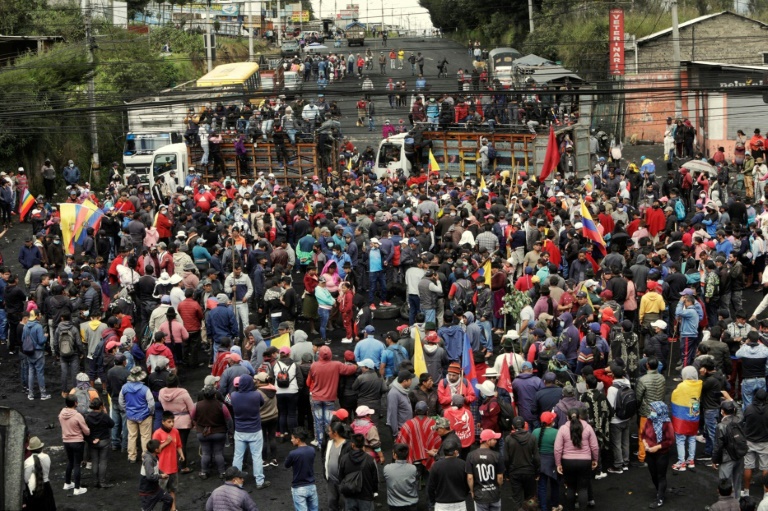
Thousands of Indigenous people and members of other disgruntled groups marched into Ecuador’s capital on the eighth day of fuel price protests Monday, accused by the president of seeking only “chaos” and his removal.

President Guillermo Lasso extended a state of emergency to cover six provinces, with a nighttime curfew in Quito, as he seeks to curtail demonstrations that have seen roads barricaded countrywide, cost the economy tens of millions of dollars and left dozens of people injured.

“With this decision, the welfare of citizens is safeguarded in the face of violence. At the same time, the rights of those who demonstrate peacefully are protected,” the government said.

On foot, on motorcycles and in crowded trucks, the Indigenous protesters began a peaceful march towards the city center from Cutuglagua, an area in southern Quito where they have been steadily growing in number since Sunday.

A hundred Indigenous people also entered the city from the north.

The powerful Confederation of Indigenous Nationalities of Ecuador (Conaie) — credited with helping topple three presidents between 1997 and 2005 — called the protest as Ecuadorans increasingly struggle to make ends meet.

Indigenous people comprise more than a million of Ecuador’s 17.7 million inhabitants, and their protest has since been joined by students, workers and others feeling the economic pinch.

“We have reached out, we have called for dialogue, but they do not want peace,” Lasso said in a video on Twitter Monday.

“They seek chaos. They want to eject the president.”

Police say 63 personnel have been wounded in clashes and 21 others briefly held hostage since the protests began, while human rights observers reported 79 arrests and 55 civilians wounded.

– ‘Zone of peace’ –

A state of emergency declared last Friday allowed Lasso to mobilize the armed forces to maintain order, suspend certain civil rights and declare curfews.

On Sunday, Ecuadoran police requisitioned an Indigenous cultural center in Quito to use as a base for protest monitoring.

The center had sheltered thousands of Indigenous people during 2019 anti-government demonstrations that left 11 dead and more than 1,000 injured but forced then-president Lenin Moreno to abandon plans to eliminate fuel subsidies.

The Salesian University, in the north of the capital, decided on Monday to “open the doors” of its facilities as a “zone of peace and humanitarian shelter” for the indigenous people and called “to stop actions and attitudes that interfere or alter the processes of dialogue and the search for solutions.”

Oil producer Ecuador has been hit by rising inflation, unemployment and poverty exacerbated by the coronavirus pandemic.

Fuel prices have risen sharply since 2020, almost doubling for diesel from $1 to $1.90 per gallon and rising from $1.75 to $2.55 for gasoline.

Conaie demands a price cut to $1.50 a gallon for diesel and $2.10 for gasoline.

It also wants food price controls and a commitment to renegotiating the personal bank loans of about four million families.

Close Bitnami banner
Bitnami