World

No relief as heat wave in US moves east

A heat wave that baked much of the central United States last week will start to move eastward with dangerously high temperatures, forecasters said Monday.

The National Weather Service told Americans to gird for another day of well above normal, near-record or even record-breaking heat from the central Plains to the Upper Midwest.

“Dangerous heat will continue to make headlines,” the service said in an advisory.

The scorching blast will start to drift eastward Tuesday into the Great Lakes region with highs in the upper 90s Fahrenheit (mid 30s Celsius) — which is up to 20 degrees F above normal.

Around 120 million people were under some sort of advisory last week as a heat wave burned the Upper Midwest and the Southeast. 

This stemmed from what forecasters called a dome of high pressure, with wild weather such as thunderstorms, flash flooding and extreme rainfall erupting around its edges.

Yellowstone National Park, the oldest in the United States, closed down last week because of extensive flood damage as roads were washed away.

Torrential rainfall and snowmelt sent months’ worth of run-off into rivers in just a couple of days. The sprawling park sits mainly in Wyoming and is home to the Old Faithful geyser.

Helicopters were used to rescue nearly 90 people.

The park said its southern section will reopen to visitors on Wednesday, but officials say other parts will remain closed for the rest of the season.

As heat scorched the southwest, a wildfire burning its way up a mountainside in Arizona consumed four buildings at the Kitt Peak National Observatory but they apparently did not contain telescopes or other scientific equipment, officials said.

“This is the most threatening fire I can remember at Kitt Peak in the last 25 years,” said Buell Jannuzi, who heads the University of Arizona astronomy department, according to ABC News. 

The university is a tenant at the observatory, which is operated by the National Science Foundation.

A fire was raging meanwhile in the Wharton State Forest in the northeastern state of New Jersey, officials said.

The New Jersey Forest Fire Service said the blaze, which began on Sunday, had consumed 7,200 acres (2,900 hectares) by Monday and was 45 percent contained.

It said 18 structures were threatened but no injuries have been reported.

Wildfires are common in the western United States during the summer but are unusual in the east of the country.
Dutch join Germany, Austria, in reverting to coal

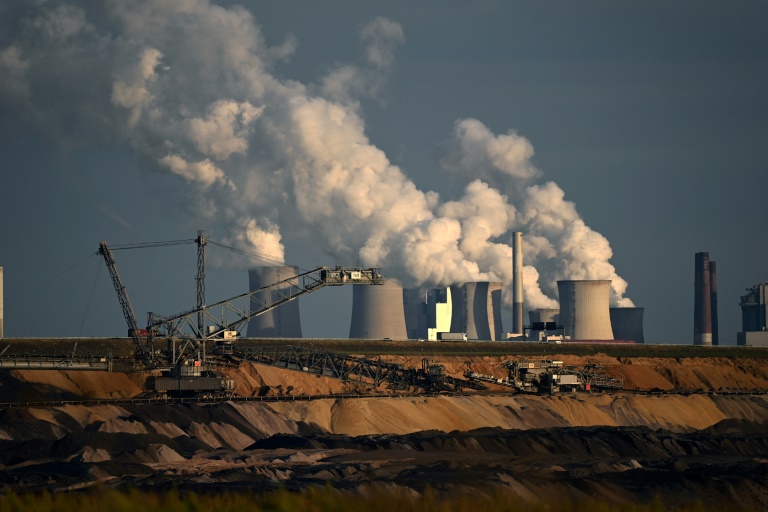
The Dutch joined Germany and Austria in reverting to coal power on Monday following an energy crisis provoked by Russia’s invasion of Ukraine.

The Netherlands said it would lift all restrictions on power stations fired by the fossil fuel, which were previously limited to just over a third of output.

Berlin and Vienna made similar announcements on Sunday as Moscow, facing biting sanctions over Ukraine, cuts gas supplies to energy-starved Europe.

“The cabinet has decided to immediately withdraw the restriction on production for coal-fired power stations from 2002 to 2024,” Dutch climate and energy minister Rob Jetten told journalists in The Hague.

The Dutch minister said his country had “prepared this decision with our European colleagues over the past few days”.

Germany however said it still aimed to close its coal power plants by 2030, in light of the greater emissions of climate-changing CO2 from the fossil fuel.

“The 2030 coal exit date is not in doubt at all,” economy ministry spokesman Stephan Gabriel Haufe said at a regular news conference.

The target was “more important than ever”, he added.

– ‘More countries being squeezed’ –

Russia’s invasion of its pro-Western neighbour has sent global prices for energy soaring and raised the prospect of shortages if supplies were to be cut off. 

Russian energy giant Gazprom has already stopped deliveries to a number of European countries, including Poland, Bulgaria, Finland and the Netherlands.

Germany’s reliance on Russian energy imports has made it particularly vulnerable as Moscow looks for leverage against the West.

The Dutch are less reliant, depending on Russia for around 15 percent of their gas supplies compared to the EU average of 40 percent. But they are still concerned.

“I want to emphasise that at the moment there’s no acute gas shortage,” Dutch minister Jetten said. “However, more countries are now being squeezed (by Russia). That worries us.” 

The Dutch government said it was also making an “urgent appeal” to companies and business to save as much energy as possible ahead of the winter.

Germany’s decision to power up its coal power plants came after Gazprom cut deliveries to Germany via the Nord Stream gas pipeline last week.

The move, presented by Gazprom as a technical issue, has been criticised as “political” by Berlin. 

German Economy Minister Robert Habeck, a Green party politician, described the decision to revert to coal as “bitter, but indispensable for reducing gas consumption”.

– ‘Unexpected situation’ –

Austria’s government meanwhile announced Sunday that it would reopen a mothballed coal power station because of power shortages arising from reduced deliveries of gas from Russia.

The authorities would work with the Verbund group, the country’s main electricity supplier, to get the station in the southern city of Mellach back in action, said the Chancellery.

The European Commission noted Monday that “some of the existing coal capacities might be used longer than initially expected” because of the new energy landscape in Europe.   

“We know that the energy mix and the plans of member states will adjust slightly because we are in an unexpected situation,” Commission spokesman Tim McPhie said at a press briefing. 

Germany, Europe’s largest economy, has managed to reduce the share of its natural gas supplied by Russia from 55 percent before the invasion to 35 percent.

The government has also mandated the filling of gas reserves to 90 percent ahead of the European winter at the end of the year, to hedge against a further reduction in supply.

Germany’s government, a coalition between the Social Democrats, Liberals and Greens, aims “ideally” to close all coal power plants by 2030.

Their agreement, reached at the end of last year, brought forward the previous government’s aim to shut the plants by 2038.

burs-dk/jhe/jj

Dutch join Germany, Austria, in reverting to coal

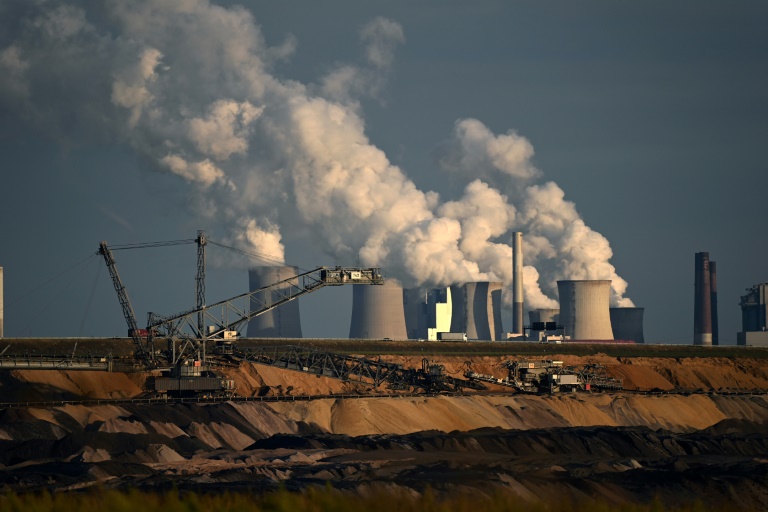
The Dutch joined Germany and Austria in reverting to coal power on Monday following an energy crisis provoked by Russia’s invasion of Ukraine.

The Netherlands said it would lift all restrictions on power stations fired by the fossil fuel, which were previously limited to just over a third of output.

Berlin and Vienna made similar announcements on Sunday as Moscow, facing biting sanctions over Ukraine, cuts gas supplies to energy-starved Europe.

“The cabinet has decided to immediately withdraw the restriction on production for coal-fired power stations from 2002 to 2024,” Dutch climate and energy minister Rob Jetten told journalists in The Hague.

The Dutch minister said his country had “prepared this decision with our European colleagues over the past few days”.

Germany however said it still aimed to close its coal power plants by 2030, in light of the greater emissions of climate-changing CO2 from the fossil fuel.

“The 2030 coal exit date is not in doubt at all,” economy ministry spokesman Stephan Gabriel Haufe said at a regular news conference.

The target was “more important than ever”, he added.

– ‘More countries being squeezed’ –

Russia’s invasion of its pro-Western neighbour has sent global prices for energy soaring and raised the prospect of shortages if supplies were to be cut off. 

Russian energy giant Gazprom has already stopped deliveries to a number of European countries, including Poland, Bulgaria, Finland and the Netherlands.

Germany’s reliance on Russian energy imports has made it particularly vulnerable as Moscow looks for leverage against the West.

The Dutch are less reliant, depending on Russia for around 15 percent of their gas supplies compared to the EU average of 40 percent. But they are still concerned.

“I want to emphasise that at the moment there’s no acute gas shortage,” Dutch minister Jetten said. “However, more countries are now being squeezed (by Russia). That worries us.” 

The Dutch government said it was also making an “urgent appeal” to companies and business to save as much energy as possible ahead of the winter.

Germany’s decision to power up its coal power plants came after Gazprom cut deliveries to Germany via the Nord Stream gas pipeline last week.

The move, presented by Gazprom as a technical issue, has been criticised as “political” by Berlin. 

German Economy Minister Robert Habeck, a Green party politician, described the decision to revert to coal as “bitter, but indispensable for reducing gas consumption”.

– ‘Unexpected situation’ –

Austria’s government meanwhile announced Sunday that it would reopen a mothballed coal power station because of power shortages arising from reduced deliveries of gas from Russia.

The authorities would work with the Verbund group, the country’s main electricity supplier, to get the station in the southern city of Mellach back in action, said the Chancellery.

The European Commission noted Monday that “some of the existing coal capacities might be used longer than initially expected” because of the new energy landscape in Europe.   

“We know that the energy mix and the plans of member states will adjust slightly because we are in an unexpected situation,” Commission spokesman Tim McPhie said at a press briefing. 

Germany, Europe’s largest economy, has managed to reduce the share of its natural gas supplied by Russia from 55 percent before the invasion to 35 percent.

The government has also mandated the filling of gas reserves to 90 percent ahead of the European winter at the end of the year, to hedge against a further reduction in supply.

Germany’s government, a coalition between the Social Democrats, Liberals and Greens, aims “ideally” to close all coal power plants by 2030.

Their agreement, reached at the end of last year, brought forward the previous government’s aim to shut the plants by 2038.

burs-dk/jhe/jj

Outgoing Colombian president vows transparent transition

Colombia’s outgoing conservative President Ivan Duque on Monday promised a “transparent and efficient” transition to the new administration led by Gustavo Petro.

Ex-guerrilla Petro, 62, made history on Sunday when he was elected as the first left-wing president in the crisis-torn South American country’s history.

But with Duque and Petro occupying polar opposites on the political spectrum, there are fears the transition could be tense.

“Yesterday, we Colombians went to the polls, we expressed our points of view and the first thing one must recognize to defend democracy is the popular will,” said Duque on Twitter.

“To the new president @petrogustavo, I expressed my support for a transparent and efficient transition.”

Petro garnered 50.4 percent of the vote in Sunday’s runoff, with millionnaire businessman Rodolfo Hernandez on 47.3 percent, missing out by 700,000 votes.

Hernandez immediately recognized his defeat as Petro ended 200 years of conservative and liberal political dominance.

In his victory speech, Petro promised “real change” for his country, based on “peace, social justice and environmental justice.”

He vowed to “leave hatred behind, leave sectarianism behind.”

Petro celebrated his victory in a huge theater in Bogota while thousands of his supporters descended on a rainy historic square in the center of the capital to rejoice.

The announcement of environmental activist and feminist Francia Marquez as the new vice-president was met with joy in her home town of Suarez in the southwestern department of Cauca.

As the first black woman to be elected to that post, her success was celebrated throughout communities with significant populations of Afro-descent, who make up around 10 percent of the country’s 50 million people.

On Monday morning, El Espectador ran a headline lauding the “historic change,” while also pointing to the many challenges facing Petro.

Former president Alvaro Uribe (2001-10), speaking on behalf of the traditional right-wing, which suffered a humbling first round defeat last month, said Petro would face determined opposition.

“To defend democracy, you have to respect it. Gustavo Petro is the president. One feeling must guide us: Colombia first,” said Uribe on Twitter.

“A difficult stage in the national life is about to begin and we must prepare to face it with the necessary tenacity to defend our principles and values,” added senator Maria Fernanda Cabal.

“It is not the time to conform, it is time to fight for our freedom.”

Petro will assume office on August 7.

Russian Nobel laureate auctioning medal to benefit Ukraine

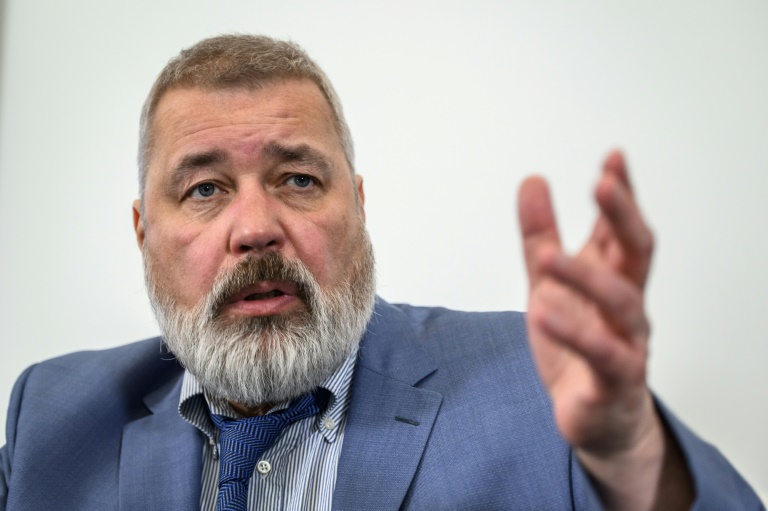
Dmitry Muratov, the Russian editor in chief of the independent newspaper Novaya Gazeta, on Monday will auction off his Nobel Peace Prize gold medal to benefit children displaced by the war in Ukraine.

Muratov won the prize in 2021 alongside journalist Maria Ressa of the Philippines, with the committee honoring them “for their efforts to safeguard freedom of expression.”

Muratov’s paper in March suspended operations in Russia, after Moscow adopted legislation providing for tough jail terms against anyone criticizing the Kremlin’s bloody military campaign in Ukraine.

Muratov was among a group of journalists who founded Novaya Gazeta in 1993 after the fall of the Soviet Union. This year it became the only major newspaper left voicing criticism of President Vladimir Putin and his tactics inside and outside the country.

The announcement that it was suspending operations came more than a month into Moscow’s invasion of Ukraine.

Heritage Auctions is handling the sale of Muratov’s Nobel Medal, which is on the block both online and in person, with the final sale slated for Monday evening in Manhattan.

As of Monday morning the bid stood at $550,000. The proceeds will go to UNICEF’s Humanitarian Response for Ukrainian Children Displaced by War.

In April Muratov was assaulted on a train when a person threw oil-based paint mixed with acetone on him, causing his eyes to burn.

Since 2000, six of Novaya Gazeta’s journalists and collaborators have been killed in connection with their work, including investigative reporter Anna Politkovskaya.

Muratov has dedicated his Nobel Prize to their memory.

“This newspaper is dangerous for people’s lives,” Muratov told AFP last year. “We are not going anywhere.”

Speaking in a video released by Heritage, the prominent journalist said that winning the Nobel “gives you an opportunity to be heard.”

“The most important message today is for people to understand that there’s a war going on and we need to help people who are suffering the most,” he continued, pointing specifically to children in refugee families.

Petrobras CEO quits in fuel price standoff with Bolsonaro

The CEO of Brazil’s state-owned oil company Petrobras, who has stayed in his post despite being fired by Jair Bolsonaro in May, resigned Monday after a new fuel price hike that enraged the far-right president.

Jose Mauro Coelho is the third Petrobras CEO to leave since February last year in a stand-off between the company and Bolsonaro over fuel prices.

Petrobras announced Coelho’s resignation on Monday.

The company said Fernando Borges — its head of exploration and production — would take over temporarily until government pick Caio Paes de Andrade, an economy ministry official, assumes the top job.

Coelho was appointed for a one-year term in April after Bolsonaro fired his predecessor Joaquim Silva e Luna in March after slightly more than a year in the post.

The far-right president said then that the price of petrol — set by Petrobras but tied to international market movement — was “unaffordable” and amounted to a “crime” against Brazilians.

Silva e Luna, in turn, had replaced Roberto Castello Branco, fired by Bolsonaro in February 2021.

– ‘Absurd’ profits –

In May, Bolsonaro dismissed Coelho after just 40 days on the job. He had been waiting to be formally removed at the company’s next shareholders’ meeting, scheduled for July.

Bolsonaro, seeking reelection in October, is widely blamed by voters for double-digit inflation, polls show, on the back of skyrocketing global and local fuel prices.

Bolsonaro faces an uphill battle against leftist ex-president Luiz Inacio Lula da Silva (2003-2010), remembered for presiding over a booming economy.

Brazil has seen fuel prices surge by over 33 percent in a year, according to official figures.

Inflation stands at 11.73 percent, far above the central bank’s target of 3.5 percent.

Russia’s war in Ukraine has led to a sharp rise in crude prices in recent weeks, adding to the pressure.

On Friday, Petrobras announced a 5.18-percent hike in gasoline prices and more than 14 percent for diesel, blaming “a challenging scenario in Brazil and the world.”

Bolsonaro reacted angrily, saying Petrobras “could sink Brazil in chaos.”

The company reported a net profit of 44.6 billion reais (about $8,6 billion) in the first quarter of this year — about 38 times the result of a year earlier.

Arthur Lira, the president of Brazil’s chamber of deputies and a Bolsonaro ally, has proposed raising taxes on Petrobras profits — which he has described as “absurd.”

Congress is also mulling a Bolsonaro proposal to lower the tax on fuel.

Petrobras shares fell two percent on the Sao Paulo Stock Exchange after a temporary halt to morning trading on news of Coelho’s resignation.

Biden says 'not likely' to visit Ukraine on upcoming Europe trip

US President Joe Biden said Monday he will probably not visit Ukraine during a trip to Europe that starts this week.

Biden first said “that depends” when asked if he planned to visit Ukraine.

But then he said “on this trip, not likely,” as he spoke to reporters who pressed him about such a possibility as he strolled on the beach during a long holiday weekend.

Biden is among a shrinking number of major Western leaders who have not yet visited Ukraine to show support against the Russian invasion.

Last week, French President Emmanuel Macron joined the prime ministers of Germany and Italy in visiting Ukraine, and Prime Minister Boris Johnson has been there twice.

Biden did go as far as Poland, which borders Ukraine to the west, in late March.

Biden is heading to Germany on Saturday for a Group of Seven Summit, then on to Madrid for a meeting of NATO leaders.

He told reporters a visit to Ukraine would depend on “a lot of things, whether or not it causes more difficulties for Ukrainians, whether it distracts from what’s going on.”

Then he said such a trip is unlikely during this tour of Europe.

Biden said he is close contact with Ukrainian President Volodymyr Zelensky, speaking to him “almost four times a week.”    

European stocks rise despite recession worries

Europe’s main stock markets rebounded on Monday after a mixed Asian session following tumultuous sessions last week over recession fears.

Bitcoin regained $20,000 after sinking to an 18-month low of $17,599 in weekend deals because risk-averse investors had shunned the world’s most popular cryptocurrency.

London’s FTSE 100 rallied to close 1.5 percent higher, with sentiment boosted by news of a blockbuster takeover offer for publisher Euromoney.

Frankfurt stocks finished 1.1 percent higher while Paris gained 0.6 percent after French President Emmanuel Macron and his allies faced political deadlock after losing their parliamentary majority in weekend elections.

Wall Street, shut on Monday for a US public holiday, had risen on Friday, though the broad-based S&P 500 lost 5.8 precent for the week, its worst performance since 2020.

“Stability often comes before recovery and markets being more composed would suggest investors are no longer panicking,” said Russ Mould, investment director at broker AJ Bell.

Markets were rocked last week by a fierce selloff after the US Federal Reserve’s sharp interest rate hike — the biggest in nearly 30 years — and a warning of more to come as inflation soars.

The Fed’s move was followed by the fifth straight rate increase in Britain and the Swiss central bank’s first hike since 2007, raising concerns that such moves will drive countries into recession.

“There has undoubtedly been a shift in the market mindset over the last week and a half that has weighed heavily on risk assets,” said Craig Erlam, analyst at OANDA online trading platform.

“The prospect of a recession is being considered far more broadly and what’s more, central banks are increasingly resisting the urge to push back against it,” he said.

Cleveland Fed chief Loretta Mester added to the worry, warning that the risk of a US recession was increasing and it would take several years to bring inflation down from four-decade highs to the bank’s two-percent target.

She told CBS’s “Face The Nation” on Sunday that while she was not predicting a contraction, the Fed’s decision not to act sooner to fight rising prices was hurting the economy.

Analysts warned there was likely to be more pain ahead for traders as the Ukraine war — which has sent energy and food prices soaring this year — drags on and uncertainty continues to reign.

Oil prices stabilised on Monday after Friday’s hefty losses on demand worries caused by the prospect of a world recession.

However, US Energy Secretary Jennifer Granholm said prices could continue to surge if the European Union cut off imports of the commodity from Russia in response to the Ukraine war.

– Key figures at around 1620 GMT –

London – FTSE 100: UP 1.5 percent at 7,121.81 points (close)

Frankfurt – DAX: UP 1.1 percent at 13,265.60 (close)

Paris – CAC 40: UP 0.6 percent at 5,920.09 (close)

EURO STOXX 50: UP 0.9 percent at 3,469.33

Tokyo – Nikkei 225: DOWN 0.7 percent at 25,771.22 (close)

Hong Kong – Hang Seng Index: UP 0.4 percent at 21,163.91 (close)

Shanghai – Composite: FLAT at 3,315.43 (close)

New York – Dow: DOWN 0.1 percent at 29,888.78 (close)

Euro/dollar: UP at $1.0528 from $1.0499 late Friday

Pound/dollar: UP at $1.2243 from $1.2241

Euro/pound: UP at 86.02 pence from 85.77 pence

Dollar/yen: UP at 135.06 yen from 135.02 yen

Brent North Sea crude: UP 0.6 percent at $113.78 per barrel

West Texas Intermediate: UP 0.5 percent at $108.52

burs-lth/jj

Assange's family call on Germany to take up his cause

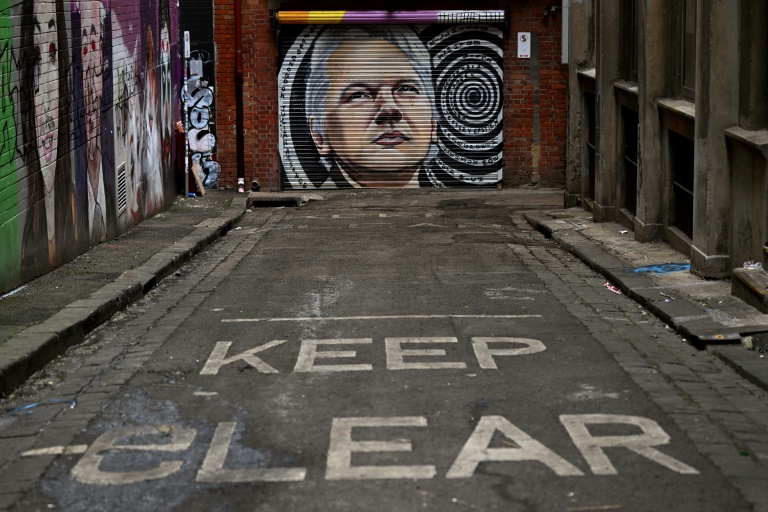
Julian Assange’s father and brother on Monday called on the German government to ask US President Joe Biden to drop the case against the WikiLeaks founder.

“The German government should express to President Biden their concern about this case and they should request that it should be dropped,” said Gabriel Shipton, Assange’s brother, at a press briefing in Berlin. 

The British government on Friday approved Assange’s extradition to the United States, to the dismay of his supporters and free press campaigners.

He is wanted to face trial for violating the US Espionage Act by publishing military and diplomatic files in 2010 and could face up to 175 years in jail if found guilty.

The Assange case has become a cause celebre for media freedom and his supporters accuse Washington of trying to muzzle reporting of legitimate security concerns.

“I’ve always felt that acquiescence, doing nothing, is complicity. Being invisible in the case of Julian Assange is complicity,” said Assange’s father John Shipton, also at the press briefing.

The pair called on Germany to use its influence in NATO and the upcoming Group of Seven leaders’ meeting in Bavaria to push Assange’s cause.

“When you’re attempting to speak to Russia about press freedom (but also) endorsing the extradition of a journalist and publisher for doing their job, you lose standing in these situations,” Gabriel Shipton added.

– A ‘legal process’ –

Assange’s brother and father were due to attend a meeting in the German foreign ministry later on Monday and on Tuesday will meet members of a parliamentary group formed in support of Assange. 

But government spokesman Steffen Hebestreit on Monday said he could not see how Germany would intervene on a political level in legal proceedings in another country.

“This is a legal process that is already in motion, so I would be a little wary of political intervention,” he said, adding that Germany would continue to keep a close eye on the case.

Assange has been held on remand at a top-security jail in southeast London since 2019 for jumping bail in a previous case accusing him of sexual assault in Sweden.

Before that he spent seven years at Ecuador’s embassy in London to avoid being removed to Sweden.

He was arrested when the government changed in Quito and his diplomatic protection was removed.

No relief as heat wave in US moves east

A heat wave that baked much of the central United States last week will start to move eastward with dangerously high temperatures, forecasters said Monday.

The National Weather Service told Americans to gird for another day of well above normal, near-record or even record-breaking heat from the central Plains to the Upper Midwest.

“Dangerous heat will continue to make headlines,” the service said in an advisory.

The scorching blast will start to drift eastward Tuesday into the Great Lakes region with highs in the upper 90s Fahrenheit (mid 30s Celsius) which is up to 20 degrees F above normal.

Around 120 million people were under some sort of advisory last week as a heat wave burned the Upper Midwest and the Southeast. 

This stemmed from what forecasters called a dome of high pressure, with wild weather such as thunderstorms, flash flooding and extreme rainfall erupting around its edges.

Yellowstone National Park, the oldest in the United States, closed down last week because of extensive flood damage as roads were washed away.

Torrential rainfall and snowmelt sent months’ worth of run-off into rivers in just a couple of days. The sprawling park sits mainly in Wyoming and is home to the Old Faithful geyser.

Helicopters were used to rescue nearly 90 people.

The park said its southern section will reopen to visitors on Wednesday. Park officials say other parts will remain closed for the rest of the season.

As heat scorched the southwest, in Arizona a wildfire burning its way up a mountainside consumed four buildings at the Kitt Peak National Observatory but they apparently did not contain telescopes or other scientific equipment, officials said.

“This is the most threatening fire I can remember at Kitt Peak in the last 25 years,” said Buell Jannuzi, who heads the University of Arizona astronomy department, according to ABC News. 

The university is a tenant at the observatory, which is operated by the National Science Foundation.

Close Bitnami banner
Bitnami