World

No relief as heat wave in US moves east

A heat wave that baked much of the central United States last week will start to move eastward with dangerously high temperatures, forecasters said Monday.

The National Weather Service told Americans to gird for another day of well above normal, near-record or even record-breaking heat from the central Plains to the Upper Midwest.

“Dangerous heat will continue to make headlines,” the service said in an advisory.

The scorching blast will start to drift eastward Tuesday into the Great Lakes region with highs in the upper 90s Fahrenheit (mid 30s Celsius) which is up to 20 degrees F above normal.

Around 120 million people were under some sort of advisory last week as a heat wave burned the Upper Midwest and the Southeast. 

This stemmed from what forecasters called a dome of high pressure, with wild weather such as thunderstorms, flash flooding and extreme rainfall erupting around its edges.

Yellowstone National Park, the oldest in the United States, closed down last week because of extensive flood damage as roads were washed away.

Torrential rainfall and snowmelt sent months’ worth of run-off into rivers in just a couple of days. The sprawling park sits mainly in Wyoming and is home to the Old Faithful geyser.

Helicopters were used to rescue nearly 90 people.

The park said its southern section will reopen to visitors on Wednesday. Park officials say other parts will remain closed for the rest of the season.

As heat scorched the southwest, in Arizona a wildfire burning its way up a mountainside consumed four buildings at the Kitt Peak National Observatory but they apparently did not contain telescopes or other scientific equipment, officials said.

“This is the most threatening fire I can remember at Kitt Peak in the last 25 years,” said Buell Jannuzi, who heads the University of Arizona astronomy department, according to ABC News. 

The university is a tenant at the observatory, which is operated by the National Science Foundation.

East Africa leaders meet on DR Congo conflict

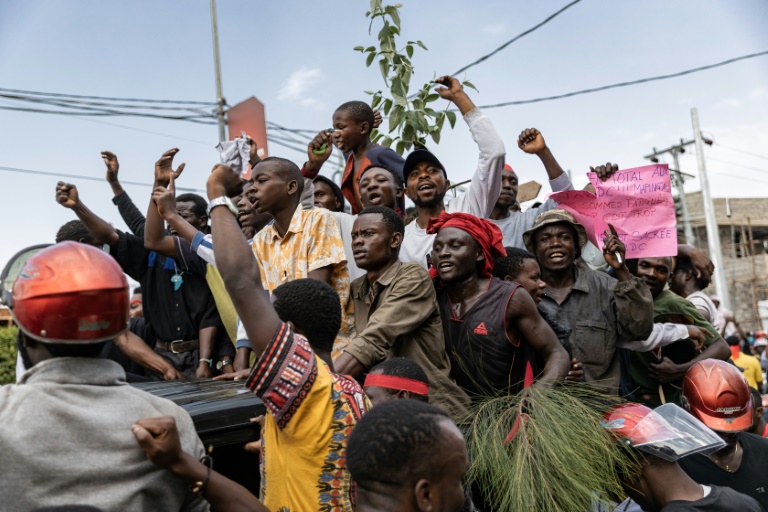
East African leaders met in Kenya on Monday to discuss the security situation in the Democratic Republic of Congo’s violence-torn east.

The meeting comes as heavy fighting revives decades-old animosities between Kinshasa and Kigali, with the DRC blaming neighbouring Rwanda for the recent resurgence of the M23 militia.

Rwanda has repeatedly denied backing the rebels, while both countries have accused each other of carrying out cross-border shelling.

After weeks of sabre-rattling, the leaders of six of the seven nations in the East African Community (EAC) met in the Kenyan capital Nairobi to discuss the way forward.

Rwandan President Paul Kagame and DRC President Felix Tshisekedi joined the leaders of Burundi, Kenya, South Sudan and Uganda as well as Tanzania’s ambassador to Nairobi.

“The crisis in Congo need(s) a collective approach from all regional members of the East African Community,” Ugandan President Yoweri Museveni said on Twitter after the meeting got under way.

“We must insist on working together because these people have suffered a lot,” said Museveni.

His government has sent in troops to help Congolese forces fight the Allied Democratic Forces, a militia group blamed for thousands of deaths in eastern Congo and a string of bombings in the Ugandan capital Kampala.

– Call for British pressure –

After M23 rebels captured the border town of Bunagana, Kenyan President Uhuru Kenyatta called for the deployment of a regional EAC force in eastern DRC to restore peace, but Kinshasa said it would not accept Rwanda’s participation in the operation.

Tshisekedi has accused Rwanda of seeking “to occupy our land, rich in gold, coltan and cobalt, for their own exploitation and profit” and urged the international community to condemn Kigali.

He has urged Britain particular to “pressure Rwanda to withdraw its troops from our land”, noting London’s controversial agreement to send asylum seekers to Kigali.

“Given the UK’s recent $150 million immigration deal struck with Rwanda, we hope that Prime Minister Boris Johnson will be able to leverage his influence,” Tshisekedi said.  

Rwanda is due to host the Commonwealth Heads of Government Meeting this week.

The mineral-rich DRC is struggling to contain dozens of armed groups in the east of the vast nation, many of which are a legacy of two regional wars a quarter of a century ago.

A primarily Congolese Tutsi militia, the M23 or “March 23 Movement” leapt to global prominence in 2012 when it captured Goma.

It was forced out shortly afterwards in a joint offensive by UN troops and the Congolese army.

The group took up arms again in late November, having accused the Kinshasa government of failing to respect a 2009 agreement that involved incorporating its fighters into the army.

Relations between Kinshasa and Kigali have been strained since the mass arrival in the DRC of Rwandan Hutus accused of slaughtering Tutsis during the 1994 Rwanda genocide.  

Air industry could fly back into black next year, IATA says

Global air transport is on course to return to profit after two pandemic-battered years but the war in Ukraine and the cost-of-living crisis lurk as threats, the industry’s world body said on Monday.

Renewed profitability “appears within reach” in 2023, the International Air Transport Association said, predicting a rebound in passenger levels to 83 percent of pre-pandemic levels this year.

Industry losses are expected to drop to $9.7 billion in 2022, a “huge improvement” from $137.7 billion in 2020 and $42.1 billion in 2021, IATA said in an upgraded industry outlook at its annual general meeting in Doha.

“Airlines are resilient. People are flying in ever greater numbers. And cargo is performing well against a backdrop of growing economic uncertainty,” IATA director general Willie Walsh said.

The air industry was sent reeling by the pandemic, with passenger numbers plunging 60 percent in 2020 and remaining 50 percent down in 2021. Airlines lost nearly $200 billion over two years.

While some firms in the sector went bankrupt, others — often those backed by states — have emerged with profits intact.

IATA said there were positive signs in the latest figures, with North American carriers expected to return an $8.8 billion profit this year.

More than 1,200 aircraft are expected to be delivered in 2022, while cargo volumes should reach a record 68.4 million tonnes “despite economic challenges”, it added.

“Strong pent-up demand, the lifting of travel restrictions in most markets, low unemployment in most countries, and expanded personal savings are fuelling a resurgence in demand that will see passenger numbers reach 83 percent of pre-pandemic levels in 2022,” IATA said.

– Clouds on the horizon –

Turnover should reach 93 percent of 2019 levels this year or $782 billion, a rebound of 54.5 percent on 2021, as revenues from passenger flights more than double to $498 billion.

Cargo, a rare bright spot for air transport in the depths of the pandemic, will retreat slightly with revenues of $191 billion — still double the level of 2019.

Clouds remain on the horizon, however, especially the war in Ukraine after the closure of Russian airspace to several long-haul carriers forced them into costly detours.

Airlines, desperate to put the coronavirus pandemic behind them, are facing a potential summer of chaos with shortages and strikes that could threaten their recovery.

In the past few weeks, delays and cancellations caused by a lack of staff at airports and strikes for better pay have wreaked havoc upon travellers.

The problems originate with the pandemic when airlines and airports laid off thousands of workers during its worst-ever crisis. Now, they are scrambling for employees.

However, Walsh played down the difficulties, saying they weren’t widespread and should ease in time.

High inflation will also erode the purchasing power of consumers, although airlines could profit from rising prices and interest rates as their debts are locked in at lower levels.

Meanwhile, the industry remains wary of new coronavirus variations that could close borders once again. 

China is still bound up with restrictions that are depressing the world’s second-biggest domestic market and are creating “chaos” in global logistics, said IATA’s chief economist Marie Owens Thomsen.

IATA originally planned to hold its annual general meeting in Shanghai, but moved it to Qatar as China, pursuing its “zero-Covid” policy, continues to grapple with the pandemic.

War in Ukraine: Latest developments

Here are the latest developments in the war in Ukraine:

– Russia intensifies fighting –  

Russia steps up its shelling in Ukraine’s Kharkiv and Donetsk regions, after Ukrainian President Volodymyr Zelensky warns to expect intensified hostilities ahead of an expected European Union decision on Kyiv’s bid for candidate status.

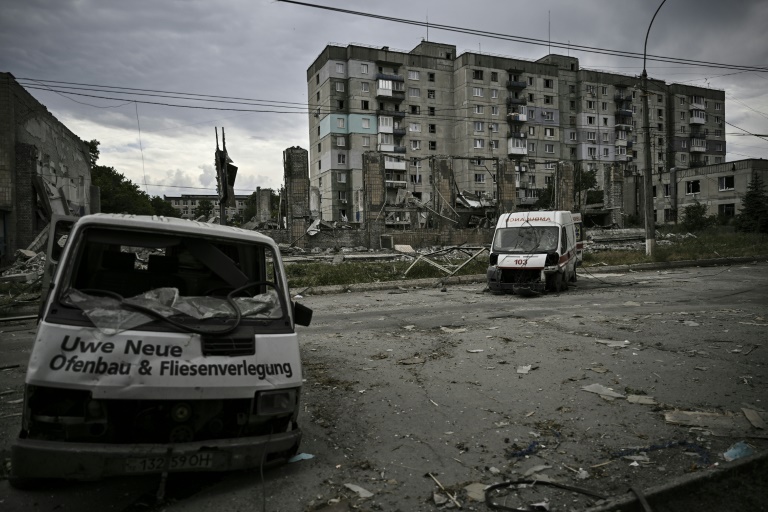
Fighting also continues in the key eastern industrial city of Severodonetsk, with Ukraine saying it has lost control of the adjacent village of Metyolkine.

Moscow’s forces have been pounding eastern Ukraine for weeks as they try to seize the key industrial Donbas region, after being repelled from other parts of the country following their February invasion.

Regional governor Sergiy Gaiday also says on social media that the Azot chemical plant in Severodonetsk, where hundreds of civilians are said to be sheltering, is being shelled by Russian forces “constantly”.

– China’s Russian oil imports rise –

China’s imports of oil from Russia rose 55 percent in May, according to new customs data, helping to offset losses from Western sanctions over the invasion of Ukraine.

The world’s second-biggest economy imported around 8.42 million tonnes of oil from Russia last month, surpassing its shipments from Saudi Arabia.

Last week, President Xi Jinping assured Russian counterpart Vladimir Putin of China’s support on Russian “sovereignty and security”. Beijing has also been accused of providing diplomatic cover for Moscow by blasting Western sanctions and arms sales to Kyiv.

– Standoff with Lithuania –

Russia threatens to retaliate against Lithuania’s “openly hostile” restrictions on the rail transit of EU-sanctioned goods to Moscow’s exclave of Kaliningrad, wedged between Lithuania and Poland.

“Russia reserves the right to take actions to protect its national interests” if cargo transit from Kaliningrad to the rest of the country via Lithuania is not restored in full soon, the foreign ministry says in a statement.  

The Baltic nation of Lithuania announced last week that it was banning the rail transit of goods that are subject to EU sanctions from mainland Russia to Kaliningrad.

“It’s not Lithuania doing anything — it’s European sanctions that started working from the 17th of June,” Lithuania’s Foreign Minister Gabrielius Landsbergis told journalists in Luxembourg on Monday. 

– Negotiations on grain blockage –

Ukraine is engaged in “complex negotiations” to release its ports from Russia’s blockade, Zelensky says. 

“There is no progress yet… That is why the global food crisis will continue as long as this colonial war continues,” he says in a video address to the African Union.

He was speaking after EU foreign policy chief Josep Borrell said that Russia should be held “accountable” if it continues blocking the export of grain from Ukraine.

“One cannot imagine that millions of tonnes of wheat remain blocked in Ukraine while in the rest of the world people are suffering hunger. This is a real war crime,” Borrell said at a meeting of EU foreign ministers. 

– Quick NATO membership hopes fade for Finland, Sweden –

NATO Secretary General Jens Stoltenberg meets with representatives from Finland, Sweden and Turkey to try to make progress on the Nordic nations’ membership applications, which have been blocked by Ankara, ahead of a summit next week.

Germany on Monday dampened hopes of a deal being reached quickly.

Ankara has accused Finland and Sweden of providing a safe haven for the Kurdistan Workers’ Party (PKK), listed as a “terrorist” group by Turkey and its Western allies.

burs/jmy/imm

Macron's domestic travails to sap European leadership

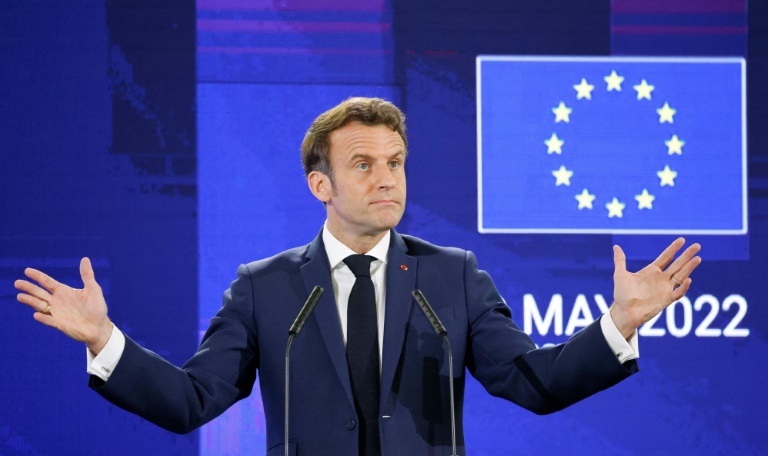
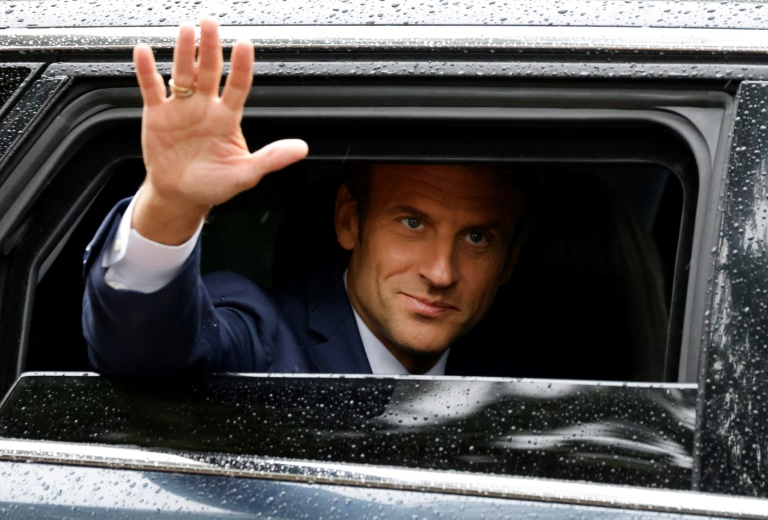
Emmanuel Macron’s loss of his overall majority risks further weakening European leadership, with the French leader set to be distracted by domestic troubles even while retaining formal control over foreign policy.

The loss of the majority in parliamentary elections Sunday represented a major personal blow for Macron as he seeks a springboard for reform after winning a second term in April.

His first presidential term from 2017 had been marked by France positioning itself as a major player on the global stage. Many observers see Macron as Europe’s number one figure in the wake of Brexit and the departure of German chancellor Angela Merkel.

But the parliamentary election debacle caps a tricky period for Macron in recent weeks following his presidential triumph over the far right, which fans celebrated as a victory for the democratic centre against populism.

A heavy-handed police crackdown at the Champions League football final in Paris dented France’s reputation abroad and raised questions over its ability to host events.

Macron faced accusations he did not want Ukraine to defeat Russia in its fight against the invasion, after arguing that the West should take care not to humiliate Moscow.

And while the president in theory retains full control over foreign policy, there will now be weeks of political horsetrading that will take the lustre off his reputation as an indispensable European leader.

– ‘Possible weakening’ –

“The results of the legislative elections affect the political credibility of the president” said Thierry Chopin, special adviser at the Institute Jacques Delors. This “has a negative impact on his influence on the European scene”, he added. 

“From a strictly institutional point of view, European issues remain the strong prerogative of the president.

“But if the president is prevented from carrying out structural reforms expected by European partners, this could have a negative effect,” he told AFP.

A particular blow for a president who prides himself as being an anti-populist champion was the success of the far right, which under their resurgent leader Marine Le Pen now boast 89 seats in the National Assembly.

“We see trends in other member states of the European Union where a number of forces tend to destroy the EU from within”, said Tara Varma of the European Council on Foreign Relations (ECFR).

Le Pen is herself eyeing control of the parliament’s finance committee, and members of her National Rally (RN) could also play a role on its powerful foreign affairs committee.

“There will be a lot of business with groups that are not known for their European sympathy, it will give rise to lively exchanges,” said Pascale Joanin of the Robert Schuman Foundation.

Paolo Mattera, a professor of contemporary history at the Universita Roma Tre in the Italian capital, said a change in France’s foreign policy was “likely impossible” but a weakening was now “possible”.

“Macron hoped to entrust domestic politics to a trusted prime minister to devote himself to international politics,” Mattera said. 

But Macron now risks devoting “a lot of time and energy to domestic issues, to the detriment of foreign policy”, he said.

– Draghi centre stage –

Europe now finds itself short of national leaders with the charisma and political space to champion its values on the global stage.

German Chancellor Olaf Scholz has faced a difficult start to his tenure, dogged by complaints that Berlin’s support for Ukraine has not been sufficient.

The vacuum gives extra prominence to Italian Prime Minister Mario Draghi, the former European Central Bank chief who, like Macron, is seen as a bulwark against populism.

Draghi accompanied the French leader and Scholz on a trip to Kyiv last week.

“The case can be made that the anti-establishment is once again on the rise, and this would of course be bad news for Draghi, who is the quintessential embodiment of the establishment,” said analysts at the Policy Sonar risk consulting firm in Rome.

“On the other hand, with Macron somewhat crippled, Draghi gains centre stage at EU level in the months to come,” they said.

Africa needs $25 bn a year for full electricity access: IEA

The number of Africans with access to electricity fell during the Covid pandemic, but $25 billion in annual investments could bring full coverage by 2030, the International Energy Agency said Monday.

The IEA said 600 million people, or 43 percent of the continent’s population, lack access to electricity — mostly in sub-Saharan Africa.

The number of people living without electricity increased by four percent, or 25 million people, between 2019 and 2021, after a decade of progress.

Before Covid, there had been “lots of good developments in countries such as Ghana, Kenya, Rwanda,” IEA chief Fatih Birol told AFP ahead of the release of the Paris-based agency’s African Energy Outlook 2022.

“But because of Covid and the economic difficulties, we see that this positive trend is reversing now,” Birol said.

Russia’s invasion of Ukraine has added to the economic strains on Africa from the Covid pandemic, as the conflict has sent the prices of energy, food and other commodities soaring, according to the IEA.

“When I look at 2022, with the high energy prices and the economic burden on the African countries, I don’t see many reasons to be hopeful,” Birol said.

But Africa could get universal access to electricity by the end of the decade with $25 billion in annual investment, according to the IEA.

Countries need to give international financial institutions, especially development banks, a “strong mandate” to make Africa and clean energy on the continent “an absolute priority”, Birol said.

“It’s not the case now,” he added.

Africa is facing more severe effects from climate change than most other parts of the world, despite emitting less energy-related carbon dioxide (CO2) than any other region, the IEA said.

“We have to see a huge amount of investment coming in Africa in all parts of the energy system, but the most important one will be clean energy options,” Birol said.

“We would need to double the energy investments to reach our energy and climate goals.”

Renewables — including solar, wind, hydropower and geothermal — could account for over 80 percent of new power generation capacity in Africa by 2030, the IEA report said.

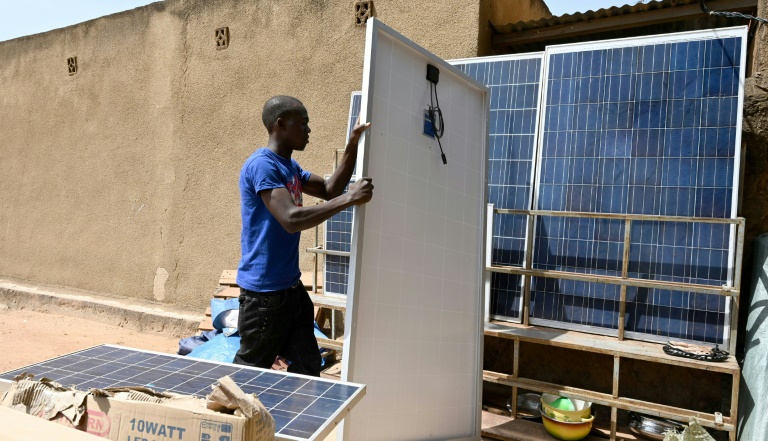
While Africa is home to 60 percent of the best solar resources worldwide, it only has one percent of installed solar energy capacity, according to the report.

Macron seeks to salvage power after France vote upset

French President Emmanuel Macron and his allies were scrambling Monday for a way to avert political deadlock after losing their majority in parliament, a stunning blow for the president and his reform agenda.

Macron’s Ensemble (Together) coalition emerged as the largest party in Sunday’s National Assembly vote, but was dozens of seats short of keeping the absolute majority it has enjoyed for the last five years.

A surge by the far right and wins by a united left-wing destroyed the dominant position of Macron’s deputies, who for five years had backed the president’s policies without fail.

The left-leaning Liberation daily called the result a “slap in the face” for Macron, while the conservative Figaro said he was now “faced with an ungovernable France”.

Macron’s Together alliance won 244 seats, far short of the 289 needed for an overall majority, in a low-turnout vote that resulted in an abstention rate of 53.77 percent.

Macron, who has not yet commented on the results, met Monday with his embattled Prime Minister Elisabeth Borne and two top allies, former premier Edouard Philippe and centrist leader Francois Bayrou.

The election saw the new left-wing alliance NUPES become the main opposition force along with its allies on 137 seats, according to the Interior Ministry.

But it appears unlikely the coalition of Socialists, Communists, Greens and the hard-left France Unbowed will be able to retain common cause in the legislature.

Jean-Luc Melenchon, the France Unbowed chief who orchestrated the alliance, called its results “fairly disappointing” and proposed Monday to make NUPES a permanent left-wing bloc.

He said it would not be a full-on merger but simply an effective “alternative” force in parliament, though the offer was immediately rejected by the three other NUPES parties.

– Premier vulnerable? –

Meanwhile the far-right under Marine Le Pen posted the best legislative performance in its history, becoming the strongest single opposition party with 89 seats, up from eight in the outgoing chamber.

A confident Le Pen said her party would demand to chair the National Assembly’s powerful finance commission, as is tradition for the biggest opposition party.

“The country is not ungovernable, but it’s not going to be governed the way Emmanuel Macron wanted,” Le Pen told reporters Monday.

Melenchon meanwhile said he would bring a motion of no confidence against Prime Minister Borne in early July, when she is to lay out her policy priorities for the next five years.

Borne, who was elected to parliament in her first-ever political race, could now be vulnerable as Macron faces a new cabinet shake-up after several of his top allies lost their seats.

His health and environment ministers were beaten and by tradition will have to resign, as did the parliament speaker and the head of Macron’s parliament group.

“For now the prime minister remains the prime minister,” government spokeswoman Olivia Gregoire defiantly told France Inter radio Monday. 

“My fear is that the country is paralysed.”

The outcome tarnished Macron’s April presidential election victory when he defeated Le Pen, becoming the first French president to win a second term in over two decades.

“It’s a turning point for his image of invincibility,” said Bruno Cautres, a researcher at the Centre for Political Research of Sciences Po.

– ‘A lot of imagination’ –

The options available to Macron range from seeking to form a new coalition alliance, passing legislation based on ad hoc agreements, or even calling new elections.

The most likely option would be an alliance with the Republicans, the traditional party of the French right, which has 61 MPs. 

But LR president Christian Jacob insisted that his party intended to “stay in opposition”.

“We are entering into a period that is unprecedented and uncertain,” Jean-Daniel Levy of Harris Interactive France told AFP. “There is no ready made deal for a government.”

Macron had hoped to stamp his second term with an ambitious programme of tax cuts, welfare reform and raising the retirement age. All that is now in question.

A prominent MP from Melenchon’s party, Alexis Corbiere, said Macron’s plan to raise the French retirement age to 65 had now been “sunk”.

In a rare bit of good news for the president, Europe Minister Clement Beaune and Public Service Minister Stanislas Guerini — both young pillars of his party — won tight battles for their seats.

burs-jh-js/sjw/jv

'No future for us,' say Afghan Sikhs after temple attack

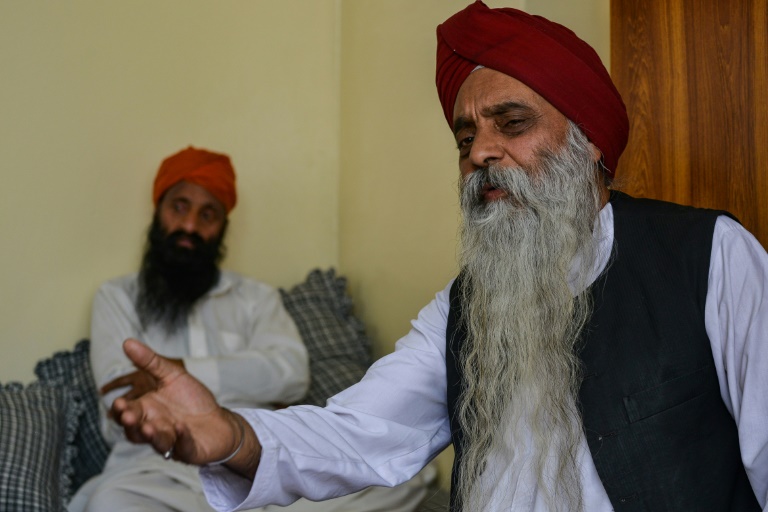
A dozen Afghan Sikhs gathered Monday in a room behind the charred ruins of their temple in Kabul, hoping to be swiftly evacuated having finally given up on the country of their birth.

“There is no future for us here. I have lost all hope,” said Ragbir Singh, who was wounded when gunmen stormed the temple Saturday in an attack claimed by the Islamic State group.

“Everywhere we are under threat.”

When the Taliban seized power in August, many Sikhs sought refuge at the complex, living communally or in family groups scattered around the building.

The Sikh community had been a target before.

In March 2020, at least 25 people were killed when gunmen stormed a different temple in Kabul.

And in 2018 at least 19 people, most of them Sikhs, were killed by a suicide bombing in the eastern city of Jalalabad.

Both attacks were claimed by IS, which regularly targets members of Afghanistan’s minority communities — including Shiites and Sufis.

The number of Sikhs and Hindus living in Afghanistan had dwindled to around 200 by late last year, compared with about half a million in the 1970s.

Most of those who remained were traders involved in selling herbal medicines and electronic goods brought from India and Pakistan.

For Manmohan Singh Sethi, who was born in Afghanistan, the temple was not just a place of worship, but home to the entire Sikh community.

– Meeting as family –

“This used to be the main gurdwara (Sikh temple) where we all used to meet as a family,” said Sethi, who is in his 70s.

But the peace was shattered Saturday with one member of the community killed and seven others — including Singh — wounded in the early-morning raid.

A Taliban fighter also died, in a counter-operation launched soon after.

Gunmen first fired at the main gate of the complex, killing a guard, before storming inside, shooting, and throwing grenades, survivors said.

Minutes later a car bomb exploded outside the complex, shattering walls and windows of nearby buildings.

When the raid began, some escaped through a back door and took refuge in nearby buildings.

In the ensuing chaos, Singh — who was on the fourth floor of the complex — fell to the ground, injuring his legs and a hand.

Now, several rooms and the main prayer hall of the complex are heavily damaged by bullets, grenades and a fire that engulfed a section during the raid.

The attack came days after a delegation from New Delhi visited Kabul to discuss the possibility of reopening the Indian embassy.

Indian government sources told AFP in Delhi that emergency visas had been given to around 100 Afghan Hindus and Sikhs but Sethi said none in the frightened community were aware of the offer.

He said the community was now unsure where even to pray for their future.

“If we all gather to perform rituals at a specific place we might face another such incident,” he said.

“We have been attacked thrice already… We can’t be careless.”

“The latest incident has impacted us in a big way,” said Sethi.

“Afghanistan is my homeland and I never wanted to leave… but now I am leaving.”

Sanctioned Russia becomes China's main source of oil

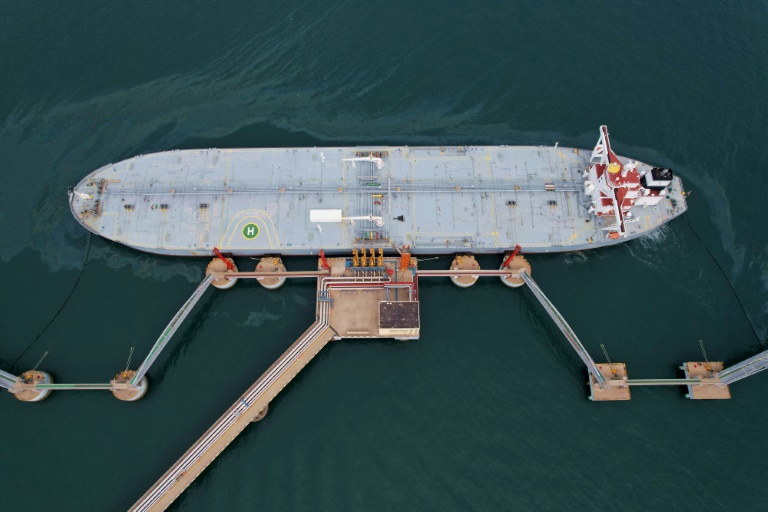
China ramped up crude oil imports from Russia in May, customs data showed Monday, helping to offset losses from Western nations scaling back Russian energy purchases over the invasion of Ukraine.

The spike means Russia has overtaken Saudi Arabia to become China’s top oil provider as the West sanctions Moscow’s energy exports.

The world’s second-biggest economy imported around 8.42 million tonnes of oil from Russia last month — a 55 percent rise on-year.

Beijing has refused to publicly condemn Moscow’s war and has instead exacted economic gains from its isolated neighbour.

It imported 7.82 million tonnes of oil from Saudi Arabia in May.

China bought $7.47 billion worth of Russian energy products last month, about $1 billion more than in April, according to Bloomberg News.

The new customs data comes four months into the war in Ukraine, with buyers from the United States and Europe shunning Russian energy imports or pledging to slash them over the coming months.

Asian demand is helping to staunch some of those losses for Russia, especially buyers from China and India.

India bought six times more Russian oil from March to May compared with the same period last year, while imports by China during that period trippled, data from research firm Rystad Energy shows.  

“For now, it is just pure economics that Indian and Chinese refiners are importing more Russian-origin crude oil… as such oil is cheap,” said analyst Wei Cheong Ho.

According to the International Energy Agency’s latest global oil report, India has overtaken Germany in the last two months as the second-largest importer of Russian crude.

China has been Russia’s biggest market for crude oil since 2016.

– ‘No limits’ –

Days before Moscow’s invasion of Ukraine, China’s President Xi Jinping greeted his Russian counterpart Vladimir Putin in Beijing where the two countries declared a bilateral relationship of “no limits”.

Although demand in China remains muted due to Covid restrictions, there has been some improvement in the past month as cities loosen controls after the country’s worst outbreak since the early days of the pandemic.

This has allowed supply chain problems to ease and industrial production to pick up, official data shows.

China’s overall imports from Russia spiked 80 percent in May from a year ago to $10.3 billion, according to customs data.

Beijing’s purchases of Russian liquefied natural gas surged 54 percent on-year to 397,000 tonnes, even as overall imports of the fuel fell.

China has been accused of providing a diplomatic shield for Russia by criticising Western sanctions on Moscow and arms sales to Kyiv.

– Joint goals –

Once bitter Cold War rivals, Beijing and Moscow have stepped up cooperation in recent years as a counterbalance to what they see as US global dominance.

This month they unveiled the first road bridge linking the countries, connecting the far eastern Russian city of Blagoveshchensk with the northern Chinese city of Heihe.

Last week Xi assured Putin of China’s support on Russian “sovereignty and security” in a call between the two leaders. 

The Kremlin said the pair had agreed to ramp up economic cooperation in the face of “unlawful” Western sanctions.

The West has implemented unprecedented sanctions on Russia in retaliation for its war in Ukraine, forcing Moscow to find new markets and suppliers to replace foreign firms that have left Russia following the invasion.

The 27-nation European Union agreed in late May to a package of sanctions that would halt the majority of Russian oil imports.

The United States has already banned all Russian oil but European nations are much more dependent on these imports.

Energy is a major source of income for Putin’s government, and Western nations are trying to isolate Moscow and impede its ability to continue the war.

Sanctioned Russia becomes China's main source of oil

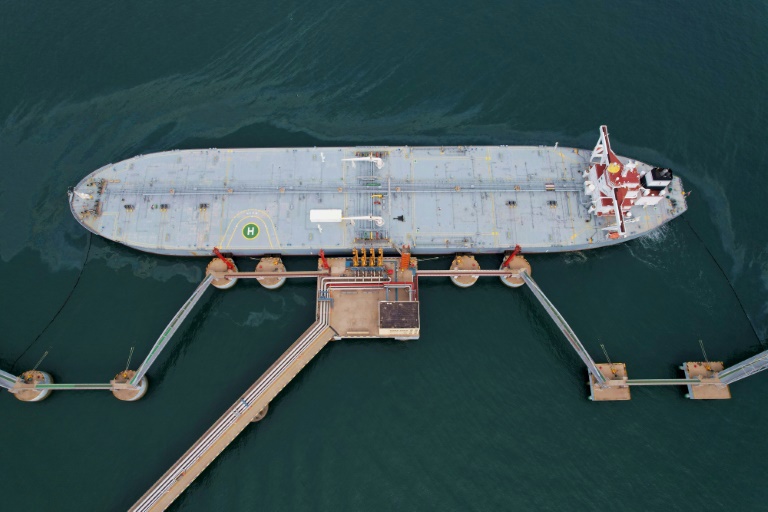
China ramped up crude oil imports from Russia in May, customs data showed Monday, helping to offset losses from Western nations scaling back Russian energy purchases over the invasion of Ukraine.

The spike means Russia has overtaken Saudi Arabia to become China’s top oil provider as the West sanctions Moscow’s energy exports.

The world’s second-biggest economy imported around 8.42 million tonnes of oil from Russia last month — a 55 percent rise on-year.

Beijing has refused to publicly condemn Moscow’s war and has instead exacted economic gains from its isolated neighbour.

It imported 7.82 million tonnes of oil from Saudi Arabia in May.

China bought $7.47 billion worth of Russian energy products last month, about $1 billion more than in April, according to Bloomberg News.

The new customs data comes four months into the war in Ukraine, with buyers from the United States and Europe shunning Russian energy imports or pledging to slash them over the coming months.

Asian demand is helping to staunch some of those losses for Russia, especially buyers from China and India.

India bought six times more Russian oil from March to May compared with the same period last year, while imports by China during that period trippled, data from research firm Rystad Energy shows.  

“For now, it is just pure economics that Indian and Chinese refiners are importing more Russian-origin crude oil… as such oil is cheap,” said analyst Wei Cheong Ho.

According to the International Energy Agency’s latest global oil report, India has overtaken Germany in the last two months as the second-largest importer of Russian crude.

China has been Russia’s biggest market for crude oil since 2016.

– ‘No limits’ –

Days before Moscow’s invasion of Ukraine, China’s President Xi Jinping greeted his Russian counterpart Vladimir Putin in Beijing where the two countries declared a bilateral relationship of “no limits”.

Although demand in China remains muted due to Covid restrictions, there has been some improvement in the past month as cities loosen controls after the country’s worst outbreak since the early days of the pandemic.

This has allowed supply chain problems to ease and industrial production to pick up, official data shows.

China’s overall imports from Russia spiked 80 percent in May from a year ago to $10.3 billion, according to customs data.

Beijing’s purchases of Russian liquefied natural gas surged 54 percent on-year to 397,000 tonnes, even as overall imports of the fuel fell.

China has been accused of providing a diplomatic shield for Russia by criticising Western sanctions on Moscow and arms sales to Kyiv.

– Joint goals –

Once bitter Cold War rivals, Beijing and Moscow have stepped up cooperation in recent years as a counterbalance to what they see as US global dominance.

This month they unveiled the first road bridge linking the countries, connecting the far eastern Russian city of Blagoveshchensk with the northern Chinese city of Heihe.

Last week Xi assured Putin of China’s support on Russian “sovereignty and security” in a call between the two leaders. 

The Kremlin said the pair had agreed to ramp up economic cooperation in the face of “unlawful” Western sanctions.

The West has implemented unprecedented sanctions on Russia in retaliation for its war in Ukraine, forcing Moscow to find new markets and suppliers to replace foreign firms that have left Russia following the invasion.

The 27-nation European Union agreed in late May to a package of sanctions that would halt the majority of Russian oil imports.

The United States has already banned all Russian oil but European nations are much more dependent on these imports.

Energy is a major source of income for Putin’s government, and Western nations are trying to isolate Moscow and impede its ability to continue the war.

Close Bitnami banner
Bitnami