World

Sanctioned Russia becomes China's main source of oil

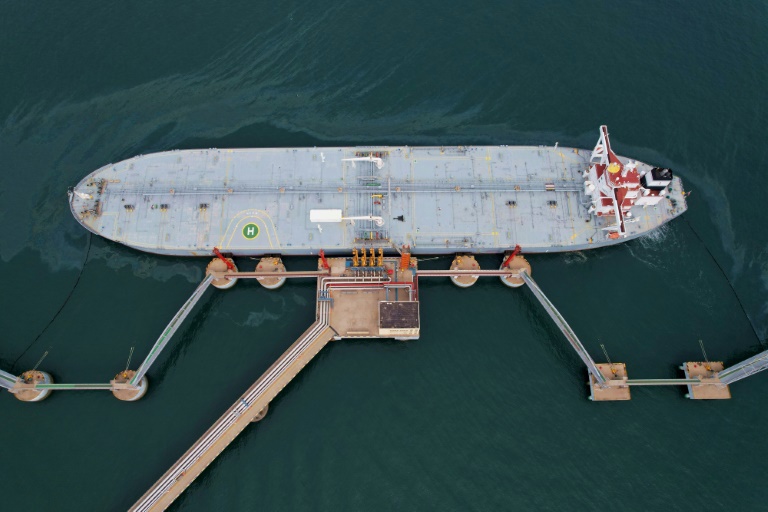
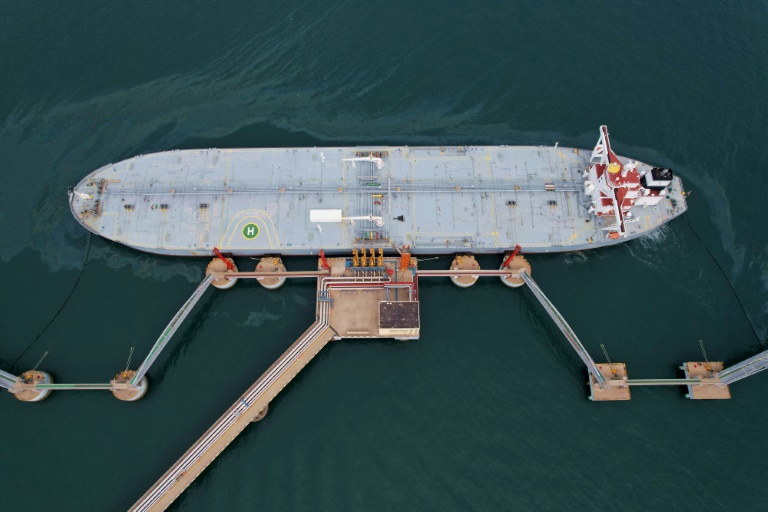
China ramped up crude oil imports from Russia in May, customs data showed Monday, helping to offset losses from Western nations scaling back Russian energy purchases over the invasion of Ukraine.

The spike means Russia has now overtaken Saudi Arabia to become China’s top oil provider as the West continues to sanction Moscow’s energy exports.

The world’s second-biggest economy imported around 8.42 million tonnes of oil from Russia last month — a 55 percent on-year rise — as Beijing continues to refuse to publicly condemn Moscow’s war while exacting economic gains from its isolated neighbour.

China imported 7.82 million tonnes of oil from Saudi Arabia in May.

In total, China bought $7.47 billion worth of Russian energy products last month, about $1 billion more than April, according to Bloomberg News.  

The new customs data comes four months into the war in Ukraine, with buyers from the US and Europe shunning Russian energy imports or pledging to slash them over the coming months.

But while European powers are scaling back and Russia’s energy exports are falling, Asian demand is helping to staunch some of those losses, especially in China and India.

According to the International Energy Agency’s latest global oil report, India has overtaken Germany as the second-largest importer of Russian crude in the last two months. 

China has been Russia’s biggest market for crude oil since 2016. 

– ‘No limits’ –

Days before Moscow’s invasion of Ukraine, China’s President Xi Jinping greeted his Russian counterpart Vladimir Putin in Beijing, with the two countries declaring a bilateral relationship of “no limits”. 

Although demand in China remains muted, there has been some improvement in the past month as cities began to loosen virus restrictions after the country’s worst Covid outbreak since the early days of the pandemic.

This has allowed some supply chain problems to ease and industrial production to pick up, official data showed.

China’s overall imports from Russia spiked 80 percent from a year ago in May to $10.3 billion, customs data added.

Apart from oil, Beijing’s purchases of liquefied natural gas from Russia also surged 54 percent on-year in May to 397,000 tonnes, even as overall imports of the fuel fell.

Beijing — which has repeatedly refused to condemn Moscow’s bloody invasion of Ukraine — has also been accused of providing a diplomatic shield for Russia by blasting Western sanctions and arms sales to Kyiv.

Once bitter Cold War enemies, Beijing and Moscow have stepped up cooperation in recent years as a counterbalance to what they see as US global dominance.

– Joint goals –

Earlier this month they unveiled the first road bridge linking the two countries, connecting the far eastern Russian city of Blagoveshchensk with the northern Chinese city of Heihe.

Last week, President Xi Jinping assured President Vladimir Putin of China’s support on Russian “sovereignty and security” on a call between the two leaders. 

The Kremlin said the pair had agreed to ramp up economic cooperation in the face of “unlawful” Western sanctions.

The West has adopted unprecedented sanctions against Russia in retaliation for its war in Ukraine, and Moscow is looking for new markets and suppliers to replace the major foreign firms that left Russia following the invasion.

The 27-nation European Union agreed in late May to a package of sanctions that would halt the majority of Russian oil imports.

While the United States had already banned Russian oil, European nations are much more dependent on those imports.

Energy is a major source of income for Putin’s government, and Western nations are trying to isolate Moscow and impede Moscow’s ability to continue the war.
Sanctioned Russia becomes China's main source of oil

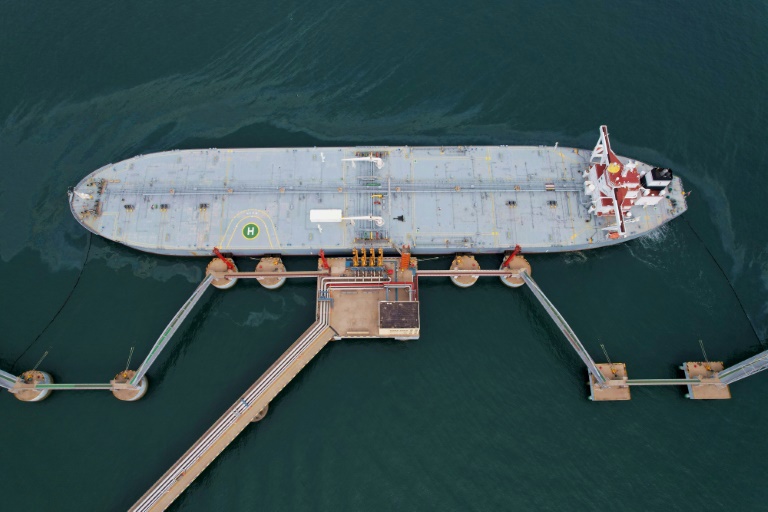
China ramped up crude oil imports from Russia in May, customs data showed Monday, helping to offset losses from Western nations scaling back Russian energy purchases over the invasion of Ukraine.

The spike means Russia has now overtaken Saudi Arabia to become China’s top oil provider as the West continues to sanction Moscow’s energy exports.

The world’s second-biggest economy imported around 8.42 million tonnes of oil from Russia last month — a 55 percent on-year rise — as Beijing continues to refuse to publicly condemn Moscow’s war while exacting economic gains from its isolated neighbour.

China imported 7.82 million tonnes of oil from Saudi Arabia in May.

In total, China bought $7.47 billion worth of Russian energy products last month, about $1 billion more than April, according to Bloomberg News.  

The new customs data comes four months into the war in Ukraine, with buyers from the US and Europe shunning Russian energy imports or pledging to slash them over the coming months.

But while European powers are scaling back and Russia’s energy exports are falling, Asian demand is helping to staunch some of those losses, especially in China and India.

According to the International Energy Agency’s latest global oil report, India has overtaken Germany as the second-largest importer of Russian crude in the last two months. 

China has been Russia’s biggest market for crude oil since 2016. 

– ‘No limits’ –

Days before Moscow’s invasion of Ukraine, China’s President Xi Jinping greeted his Russian counterpart Vladimir Putin in Beijing, with the two countries declaring a bilateral relationship of “no limits”. 

Although demand in China remains muted, there has been some improvement in the past month as cities began to loosen virus restrictions after the country’s worst Covid outbreak since the early days of the pandemic.

This has allowed some supply chain problems to ease and industrial production to pick up, official data showed.

China’s overall imports from Russia spiked 80 percent from a year ago in May to $10.3 billion, customs data added.

Apart from oil, Beijing’s purchases of liquefied natural gas from Russia also surged 54 percent on-year in May to 397,000 tonnes, even as overall imports of the fuel fell.

Beijing — which has repeatedly refused to condemn Moscow’s bloody invasion of Ukraine — has also been accused of providing a diplomatic shield for Russia by blasting Western sanctions and arms sales to Kyiv.

Once bitter Cold War enemies, Beijing and Moscow have stepped up cooperation in recent years as a counterbalance to what they see as US global dominance.

– Joint goals –

Earlier this month they unveiled the first road bridge linking the two countries, connecting the far eastern Russian city of Blagoveshchensk with the northern Chinese city of Heihe.

Last week, President Xi Jinping assured President Vladimir Putin of China’s support on Russian “sovereignty and security” on a call between the two leaders. 

The Kremlin said the pair had agreed to ramp up economic cooperation in the face of “unlawful” Western sanctions.

The West has adopted unprecedented sanctions against Russia in retaliation for its war in Ukraine, and Moscow is looking for new markets and suppliers to replace the major foreign firms that left Russia following the invasion.

The 27-nation European Union agreed in late May to a package of sanctions that would halt the majority of Russian oil imports.

While the United States had already banned Russian oil, European nations are much more dependent on those imports.

Energy is a major source of income for Putin’s government, and Western nations are trying to isolate Moscow and impede Moscow’s ability to continue the war.
Sanctioned Russia becomes China's main source of oil

China ramped up crude oil imports from Russia in May, customs data showed Monday, helping to offset losses from Western nations scaling back Russian energy purchases over the invasion of Ukraine.

The spike means Russia has now overtaken Saudi Arabia to become China’s top oil provider as the West continues to sanction Moscow’s energy exports.

The world’s second-biggest economy imported around 8.42 million tonnes of oil from Russia last month — a 55 percent on-year rise — as Beijing continues to refuse to publicly condemn Moscow’s war while exacting economic gains from its isolated neighbour.

China imported 7.82 million tonnes of oil from Saudi Arabia in May.

In total, China bought $7.47 billion worth of Russian energy products last month, about $1 billion more than April, according to Bloomberg News.  

The new customs data comes four months into the war in Ukraine, with buyers from the US and Europe shunning Russian energy imports or pledging to slash them over the coming months.

But while European powers are scaling back and Russia’s energy exports are falling, Asian demand is helping to staunch some of those losses, especially in China and India.

According to the International Energy Agency’s latest global oil report, India has overtaken Germany as the second-largest importer of Russian crude in the last two months. 

China has been Russia’s biggest market for crude oil since 2016. 

– ‘No limits’ –

Days before Moscow’s invasion of Ukraine, China’s President Xi Jinping greeted his Russian counterpart Vladimir Putin in Beijing, with the two countries declaring a bilateral relationship of “no limits”. 

Although demand in China remains muted, there has been some improvement in the past month as cities began to loosen virus restrictions after the country’s worst Covid outbreak since the early days of the pandemic.

This has allowed some supply chain problems to ease and industrial production to pick up, official data showed.

China’s overall imports from Russia spiked 80 percent from a year ago in May to $10.3 billion, customs data added.

Apart from oil, Beijing’s purchases of liquefied natural gas from Russia also surged 54 percent on-year in May to 397,000 tonnes, even as overall imports of the fuel fell.

Beijing — which has repeatedly refused to condemn Moscow’s bloody invasion of Ukraine — has also been accused of providing a diplomatic shield for Russia by blasting Western sanctions and arms sales to Kyiv.

Once bitter Cold War enemies, Beijing and Moscow have stepped up cooperation in recent years as a counterbalance to what they see as US global dominance.

– Joint goals –

Earlier this month they unveiled the first road bridge linking the two countries, connecting the far eastern Russian city of Blagoveshchensk with the northern Chinese city of Heihe.

Last week, President Xi Jinping assured President Vladimir Putin of China’s support on Russian “sovereignty and security” on a call between the two leaders. 

The Kremlin said the pair had agreed to ramp up economic cooperation in the face of “unlawful” Western sanctions.

The West has adopted unprecedented sanctions against Russia in retaliation for its war in Ukraine, and Moscow is looking for new markets and suppliers to replace the major foreign firms that left Russia following the invasion.

The 27-nation European Union agreed in late May to a package of sanctions that would halt the majority of Russian oil imports.

While the United States had already banned Russian oil, European nations are much more dependent on those imports.

Energy is a major source of income for Putin’s government, and Western nations are trying to isolate Moscow and impede Moscow’s ability to continue the war.
Macron seeks to salvage power after France vote upset

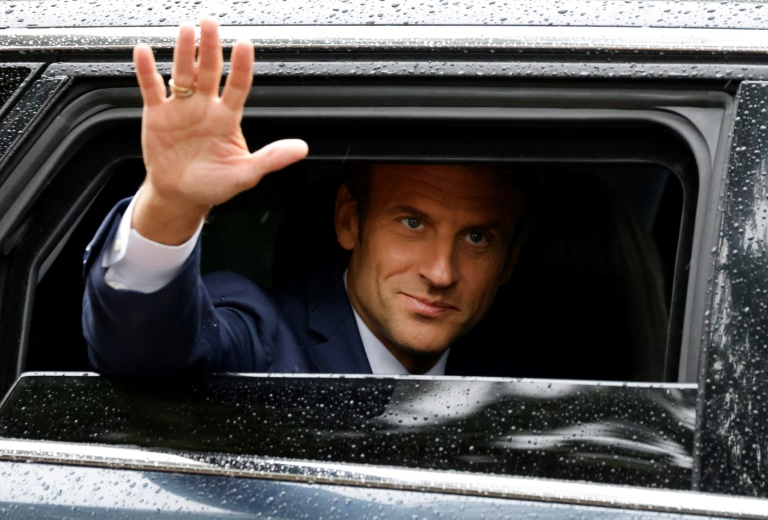
French President Emmanuel Macron and his allies on Monday were scrambling for a way out of political deadlock after losing their parliamentary majority in a stunning blow for the president and his reform plans.

Macron’s Ensemble (Together) coalition emerged as the largest party in Sunday’s National Assembly vote, but was dozens of seats short of keeping the parliamentary majority it had enjoyed for the last five years.

Surges on the left and the far-right destroyed the dominant position of Macron’s deputies who, for the past five years, had backed the president’s policies without fail.

Turnout was low, with the abstention rate recorded at 53.77 percent.

The left-leaning Liberation daily called the result a “slap in the face” for Macron, while the conservative Le Figaro said he was now “faced with an ungovernable France”.

Macron’s Together alliance won 244 seats, far short of the 289 needed for an overall majority.

The election saw the new left-wing alliance NUPES make gains to become the main opposition force along with its allies on 137 seats, according to the Interior Ministry.

But it is unclear if the coalition of Socialists, Communists, Greens and the hard-left France Unbowed will remain a united bloc in the National Assembly.

Meanwhile the far-right under Marine Le Pen posted the best legislative performance in its history, becoming the strongest single opposition party with 89 seats, up from eight in the outgoing chamber.

A confident Le Pen said her party would demand to chair the National Assembly’s powerful finance commission, as is tradition for the biggest opposition party.

“The country is not ungovernable, but it’s not going to be governed the way Emmanuel Macron wanted,” Le Pen told reporters Monday.

Le Pen said she would now give up her party’s leadership and focus instead on running her parliamentary group.

– ‘Cannot just continue’ –

Hard-left firebrand Jean-Luc Melenchon, who leads the NUPES alliance, said he would bring a motion of no confidence against Macron’s Prime Minister Elisabeth Borne as early as July.

“The government formed by Emmanuel Macron cannot just continue as if nothing had happened,” Melenchon ally Manuel Bompard said Monday.

Borne, who was elected to parliament in her first-ever political race, was seen as vulnerable as Macron faces a new cabinet shake-up after several of his top allies lost their seats.

His health and environment ministers lost their seats and by tradition will have to resign, as did the parliament speaker and the head of Macron’s parliament group.

“For now the prime minister remains the prime minister,” government spokeswoman Olivia Gregoire defiantly told France Inter radio Monday. “My fear is that the country is paralysed.”

The outcome tarnished Macron’s April presidential election victory when he defeated Le Pen, becoming the first French president to win a second term in over two decades.

“It’s a turning point for his image of invincibility,” said Bruno Cautres, a researcher at the Centre for Political Research of Sciences Po.

‘A lot of imagination’

The options available to Macron, who has yet to publicly comment on the result, range from seeking to form a new coalition alliance, passing legislation based on ad hoc agreements to even calling new elections.

The most likely option would be an alliance with the Republicans, the traditional party of the French right, which has 61 MPs. 

LR president Christian Jacob however said his party intended to “stay in opposition”.

Economy Minister Bruno Le Maire admitted “a lot of imagination will be needed” from Macron’s party in what Le Figaro said was “a jump into the unknown”.

“We are entering into a period that is unprecedented and uncertain,” said Jean-Daniel Levy of Harris Interactive France. “There is no ready made deal for a government,” he told AFP.

Macron had hoped to stamp his second term with an ambitious programme of tax cuts, welfare reform and raising the retirement age. All that is now in question.

A prominent MP from Melenchon’s party, Alexis Corbiere, said Macron’s plan to raise the French retirement age to 65 had now been “sunk”.

In a rare bit of good news for the president, Europe Minister Clement Beaune and Public Service Minister Stanislas Guerini — both young pillars of his party — won tight battles for their seats.

On the left, Rachel Keke, a former cleaning lady who campaigned for better working conditions at her hotel, was also elected, defeating Macron’s former sports minister Roxana Maracineanu.

Financial markets took the news of the result in their stride, with little reaction seen Monday on stock or debt markets.

“It’s not a scenario that’s excessively negative,” said Xavier Chapard, an analyst at Banque Postale. “The government will still be centrist, and it will still be pro-European.”

burs-jh-js/sjw/yad

War in Ukraine: Latest developments

Here are the latest developments in the war in Ukraine:

– Russia to ‘intensify’ fighting –  

Ukrainian President Volodymyr Zelensky warns that Russia is likely to intensify its “hostile activity” this week, as Kyiv awaits a decision from the European Union on its bid for membership candidate status.

“Only a positive decision is in the interests of the whole of Europe,” he says in his evening address on Sunday, ahead of a summit of EU leaders on Thursday and Friday.

“Obviously, we expect Russia to intensify hostile activity this week… We are preparing. We are ready,” he says. 

Moscow’s forces have been pounding eastern Ukraine for weeks as they try to seize the key industrial Donbas region, after being repelled from other parts of the country following their February invasion.

– China’s Russian oil imports rise –

China’s imports of oil from Russia rose 55 percent in May, according to new customs data, as the West sanctions fuel imports from Moscow over its invasion of Ukraine.

The world’s second-biggest economy imported around 8.42 million tonnes of oil from Russia last month, surpassing its shipments from Saudi Arabia.

Last week, President Xi Jinping assured Russian counterpart Vladimir Putin of China’s support on Russian “sovereignty and security”. Beijing has also been accused of providing diplomatic cover for Moscow by blasting Western sanctions and arms sales to Kyiv.

– Grain blockage a ‘war crime’, EU says –

EU foreign policy chief Josep Borrell says that Russia should be held “accountable” if it continues blocking the export of grain from Ukraine.

“One cannot imagine that millions of tonnes of wheat remain blocked in Ukraine while in the rest of the world people are suffering hunger. This is a real war crime,” Borrell says at a meeting of EU foreign ministers. 

The West has demanded Moscow stop blockading Ukraine’s Black Sea ports to allow vast stores of grain to be taken to world markets as fears rise of famines in vulnerable regions.

– Ukraine loses eastern village –

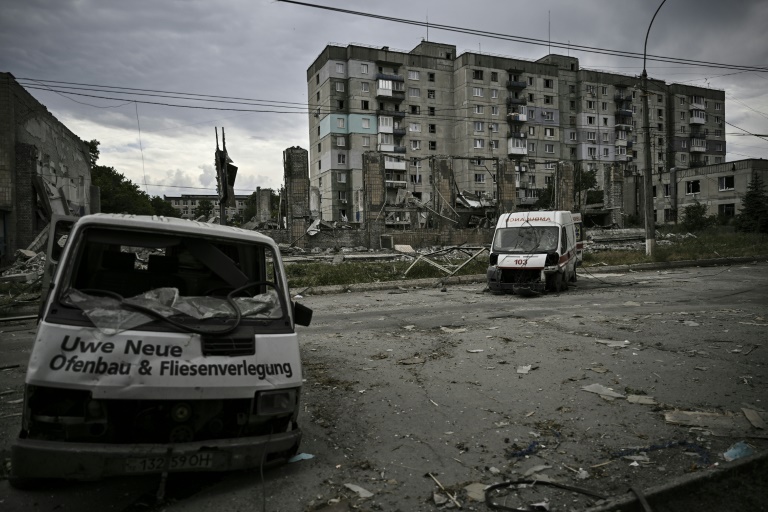
Ukraine says it has lost control of a village, Metyolkine, next to the eastern industrial city of Severodonetsk, the centre of weeks of fierce fighting with Russian troops.

Russia’s capture of the hamlet with a pre-war population of around 1,000 people, is the latest around Severodonetsk, where Moscow’s army has met tough Ukrainian resistance.

Regional governor Sergiy Gaiday also says on social media that the Azot chemical plant in Severodonetsk, where hundreds of civilians are said to be sheltering, is being shelled by Russian forces “constantly”.

Evacuations from Severodonetsk not been possible for days, after a last bridge across the river connecting it to Lysychansk was blown up.

The head of the Severodonetsk’s administration, Oleksandr Stryuk tells Ukrainian television that Moscow’s army controls most of the city’s residential areas, with more than a third controlled by Ukraine’s armed forces.

burs/jmy/jm

Stock markets mixed as recession worries persist

Markets were mixed Monday having pared earlier losses but sentiment continues to be clouded by fears that central bank moves to rein in soaring inflation will induce a recession.

The tepid performances come after a sell-off last week fuelled by the Federal Reserve’s sharp interest rate hike — the biggest in nearly 30 years — and a warning of more to come, while increases in Britain and Switzerland added to the gloom.

And while the S&P 500 and Nasdaq saw gains on Friday, there is a sense that indexes still have some way down to go before they find a bottom, with economic data suggesting economies are beginning to feel the pinch.

Cleveland Fed chief Loretta Mester added to the worry, saying that the risk of a recession in the United States was increasing and it would take several years to bring inflation down from four-decade highs to the bank’s two percent target.

She told CBS’s “Face The Nation” on Sunday that while she was not predicting a contraction, the Fed’s decision not to act sooner to fight rising prices was hurting the economy.

In Asian trade Monday, Tokyo, Shanghai Sydney, Seoul, Taipei, Bangkok and Wellington were all in the red, though there were gains in Hong Kong, Mumbai, Singapore, Manila and Jakarta.

London edged up, Paris fell and Frankfurt was flat.

Analysts warned there was likely to be more pain ahead for traders as the Ukraine war drags on and uncertainty continues to reign.

“Central banks’ hawkish rhetoric and concerns over a global economic slowdown/recession (are) not helping sentiment and at this stage it is hard to see a turn in fortunes until we see evidence of a material ease in inflationary pressures,” said National Australia Bank’s Rodrigo Catril.

And Stephen Innes of SPI Asset Management added: “Most of these major central banks are praying for some relief from inflation and hoping the data falls in line, but unless there is a detente in the Ukraine-Russia war, escalation will continue to drive energy price fears so it could be a tough road ahead.”

Oil prices were also mixed Monday after suffering a hefty drop Friday over demand worries caused by a possible recession.

However, US Energy Secretary Jennifer Granholm said prices could continue to surge if the European Union cuts off imports of the commodity from Russia in response to the Ukraine war.

She said Joe Biden had called on global suppliers to ramp up output to help temper the price rises, with the president to discuss the issue during an upcoming visit to Saudi Arabia next month.

Bitcoin remained stuck below $20,000 but was up from the $17,599 touched at the weekend, its lowest level since December 2020.

“Rising interest rates, an acute risk-off mood across markets, a thinning of liquidity is all to blame: in short the end of free money from the Fed means the artificial pump that created these assets is no longer working,” said Neil Wilson at Markets.com.

– Key figures at around 0810 GMT –

Tokyo – Nikkei 225: DOWN 0.7 percent at 25,771.22 (close)

Hong Kong – Hang Seng Index: UP 0.4 percent at 21,163.91 (close)

Shanghai – Composite: FLAT at 3,315.43 (close)

London – FTSE 100: UP 0.1 percent at 7,023.44

Dollar/yen: DOWN at 134.73 yen from 134.99 yen late Friday

Pound/dollar: UP at $1.2227 from $1.2221

Euro/dollar: UP at $1.0513 from $1.0493

Euro/pound: UP at 85.97 pence from 85.83 pence

West Texas Intermediate: UP 0.3 percent at $109.85

Brent North Sea crude: DOWN 0.1 percent at $113.00 a barrel

New York – Dow: DOWN 0.1 percent at 29,888.78 (close)

— Bloomberg News contributed to this story —

Japan court rules same-sex marriage ban constitutional

A Japanese court ruled on Monday that the country’s failure to recognise same-sex marriage is constitutional, in a setback for activists after a landmark verdict last year found the opposite.

The district court in western Japan’s Osaka rejected arguments made by three same-sex couples as part of a series of suits filed by activists seeking marriage equality.

“From the perspective of individual dignity, it can be said that it is necessary to realise the benefits of same-sex couples being publicly recognised through official recognition,” the court ruling said.

But the present failure to recognise such unions is “not considered to violate… the Constitution”, the ruling added, saying “public debate on what kind of system is appropriate for this has not been thoroughly carried out”.

The verdict comes after a district court in northern Sapporo last year found the opposite, ruling that the government’s failure to allow same-sex marriage violated the constitution’s provision guaranteeing equality under the law.

That ruling was welcomed by campaigners as a major victory that would pile pressure on lawmakers to accept same-sex unions.

Japan’s constitution stipulates that “marriage shall be only with the mutual consent of both sexes”.

But in recent years, local authorities across the country have made moves to recognise same-sex partnerships, although such recognition does not carry the same rights as marriage under the law.

The prefecture of Tokyo last month said it would begin recognising same-sex partnerships from November, revising current rules.

More than a dozen couples filed suits seeking marriage equality in 2020 in district courts across Japan. They said the coordinated action was intended to put pressure on the only G7 government that does not recognise gay unions.

26 more dead in India monsoon fury, waters recede in Bangladesh

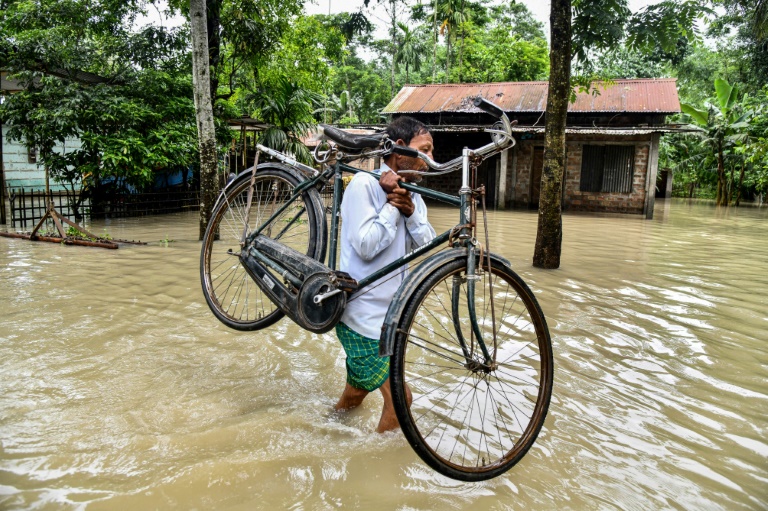
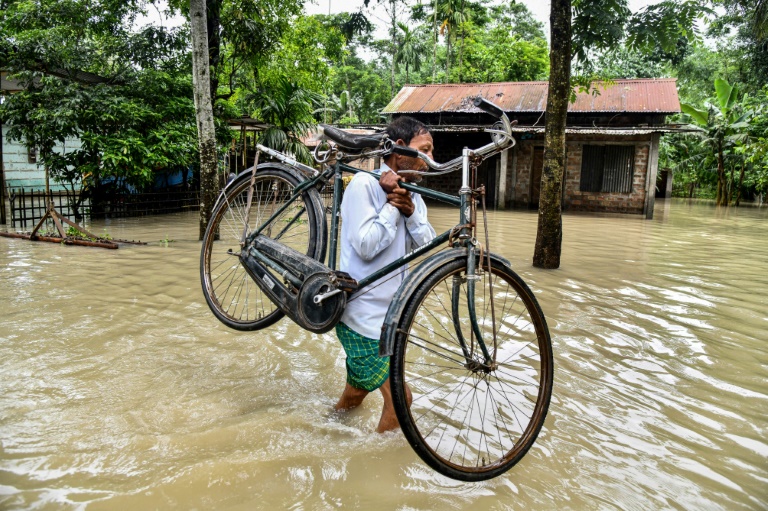
At least 26 more people have died in monsoon flooding and lightning strikes in India, as millions remained marooned in the country and neighbouring Bangladesh, authorities said Monday.

Floods are a regular menace in India and Bangladesh, but experts say climate change is increasing their frequency, ferocity and unpredictability for the two countries’ 1.6 billion people.

In India’s northeastern state of Assam, three people were killed in landslides while six others died in flood waters, disaster management authorities said.

In the eastern state of Bihar, lightning triggered by storms killed at least 17 people, according to local disaster management minister Renu Devi.

Assam continued to reel under severe flooding, with 5,140 villages across the state’s 33 districts submerged by surging waters.

More than 100,000 villagers are taking refuge in relief shelters.

The state was first hit in April when pre-monsoon rains arrived, causing floods that killed 44 people.

The floodwaters receded after a few weeks, only to rise again in June at the start of the annual monsoon season and taking the state toll to 71 so far.

In neighbouring Meghalaya state, at least 16 people have been killed since last Thursday after landslides and surging rivers that submerged roads.

Monsoon storms have also unleashed devastating floods in Bangladesh that have left millions stranded and killed dozens so far.

On Monday, flood water was gradually receding from the northeastern district of Sylhet, though millions are still marooned, said Mosharraf Hossain, the chief administrator of the district.

“The relief shelters are full of affected people. There’s a huge crisis of food and drinking water. Many are scared to return home while many lost their houses in floodwater,” he told AFP.

But the receding water is flooding districts further downstream in Habiganj and Brahmanbaria, officials said.

In Jamalpur district, an eight-year-old girl was swept away by strong currents from her inundated backyard and later found dead, police officer Aminul Islam told AFP.

Heavy rainfall also continued in the southeastern Chittagong Hills districts leading to waterlogging in the port city and exacerbating risks of landslides.

26 more dead in India monsoon fury, waters recede in Bangladesh

At least 26 more people have died in monsoon flooding and lightning strikes in India, as millions remained marooned in the country and neighbouring Bangladesh, authorities said Monday.

Floods are a regular menace in India and Bangladesh, but experts say climate change is increasing their frequency, ferocity and unpredictability for the two countries’ 1.6 billion people.

In India’s northeastern state of Assam, three people were killed in landslides while six others died in flood waters, disaster management authorities said.

In the eastern state of Bihar, lightning triggered by storms killed at least 17 people, according to local disaster management minister Renu Devi.

Assam continued to reel under severe flooding, with 5,140 villages across the state’s 33 districts submerged by surging waters.

More than 100,000 villagers are taking refuge in relief shelters.

The state was first hit in April when pre-monsoon rains arrived, causing floods that killed 44 people.

The floodwaters receded after a few weeks, only to rise again in June at the start of the annual monsoon season and taking the state toll to 71 so far.

In neighbouring Meghalaya state, at least 16 people have been killed since last Thursday after landslides and surging rivers that submerged roads.

Monsoon storms have also unleashed devastating floods in Bangladesh that have left millions stranded and killed dozens so far.

On Monday, flood water was gradually receding from the northeastern district of Sylhet, though millions are still marooned, said Mosharraf Hossain, the chief administrator of the district.

“The relief shelters are full of affected people. There’s a huge crisis of food and drinking water. Many are scared to return home while many lost their houses in floodwater,” he told AFP.

But the receding water is flooding districts further downstream in Habiganj and Brahmanbaria, officials said.

In Jamalpur district, an eight-year-old girl was swept away by strong currents from her inundated backyard and later found dead, police officer Aminul Islam told AFP.

Heavy rainfall also continued in the southeastern Chittagong Hills districts leading to waterlogging in the port city and exacerbating risks of landslides.

Air industry recovery gathering pace despite uncertainty: IATA

Air passengers are expected to hit 83 percent of pre-pandemic levels this year and the aviation industry’s return to profit is “within reach” in 2023 despite ongoing uncertainty, the International Air Transport Association said on Monday.

Industry losses are expected to drop to $9.7 billion this year, a “huge improvement” from $137.7 billion in 2020 and $42.1 billion in 2021, IATA said in an upgraded industry outlook ahead of its annual general meeting in Doha.

“Airlines are resilient. People are flying in ever greater numbers. And cargo is performing well against a backdrop of growing economic uncertainty,” the document quoted IATA director general Willie Walsh as saying.

The aviation industry was sent reeling by the pandemic, with passenger numbers plunging 60 percent in 2020 and remaining 50 percent down in 2021. Airlines lost nearly $200 billion over two years.

While some firms in the sector went bankrupt, others — backed often by states — have emerged from the pandemic with profits intact.

IATA said industry-wide profitability “appears within reach” in 2023, adding that North American airlines were expected to return an $8.8 billion profit this year.

More than 1,200 aircraft are expected to be delivered in 2022, while cargo volumes should reach a record 68.4 million tonnes “despite economic challenges”, it added.

“Strong pent-up demand, the lifting of travel restrictions in most markets, low unemployment in most countries, and expanded personal savings are fueling a resurgence in demand that will see passenger numbers reach 83 percent of pre-pandemic levels in 2022,” IATA said.

Airlines, desperate to put the coronavirus pandemic behind them, go into the talks in Doha ahead of a potential summer of chaos with shortages and strikes that could threaten their recovery.

While trade is roaring back to life, representatives from the aviation sector meeting until Tuesday in Qatar have a packed agenda with multiple geopolitical crises including the war in Ukraine and the environment.

Cracks are already showing in the sector’s recovery, though industry figures are optimistic about the future despite the issues.

In the past few weeks, delays and cancellations caused by a lack of staff at airports and strikes for better pay have wreaked havoc upon travellers.

The problems originate with the pandemic when airlines and airports laid off thousands of workers during its worst-ever crisis. Now, they are scrambling for employees.

Also reflecting the enduring disruption, IATA was forced to move its annual general meeting from Shanghai to Qatar as China continues to grapple with the pandemic.

The global association represents 290 airlines, accounting for 83 percent of air travel worldwide.

Close Bitnami banner
Bitnami